The accessories slot is where most men leave the biggest visible improvement unclaimed. A man can spend hundreds on a sport coat and miss most of the impact because his wrist is bare, his belt doesn't match his shoe, and the sunglasses on the table are a logo'd plastic pair. Accessories are the smallest pieces of the wardrobe and, dollar for dollar, the most visible.
The line this guide holds: one well-chosen accessory beats three thoughtless ones every time. A man wearing nothing at the wrist looks unfinished. A man wearing a $40 logo'd plastic watch looks less considered than a man wearing nothing. A man wearing a quiet, well-made watch he chose carefully looks like a man who chooses everything carefully. That's the entire game.
1. The watch
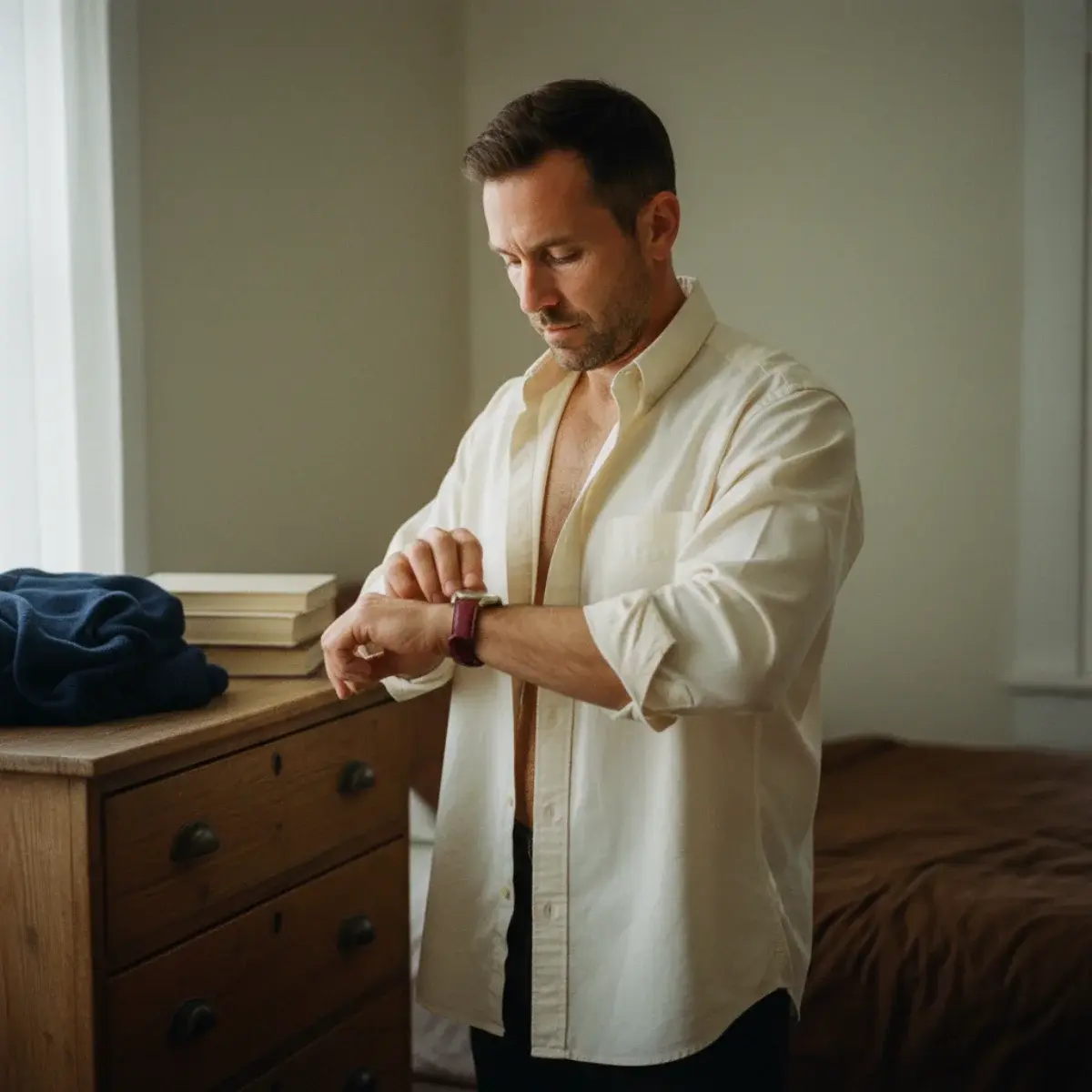
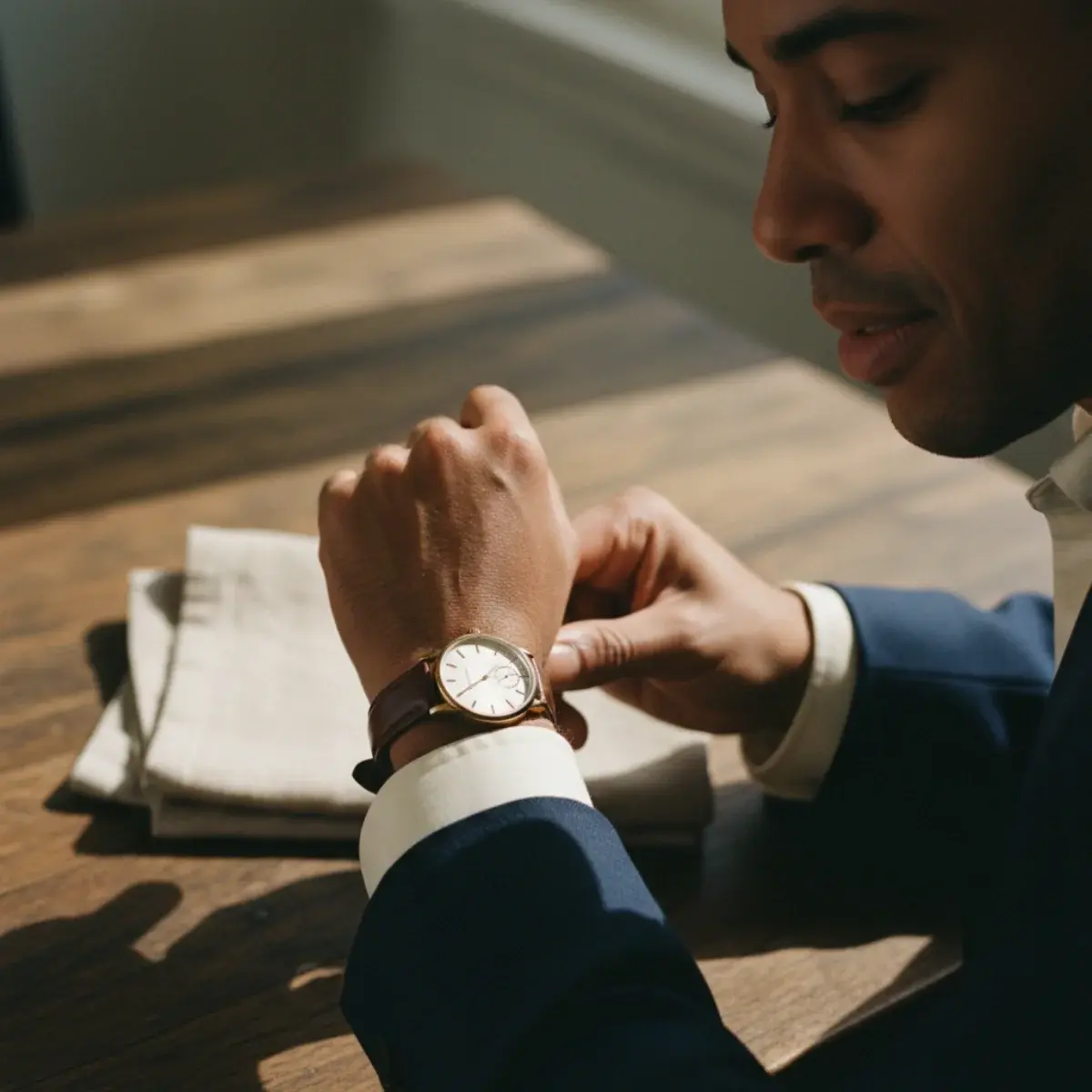
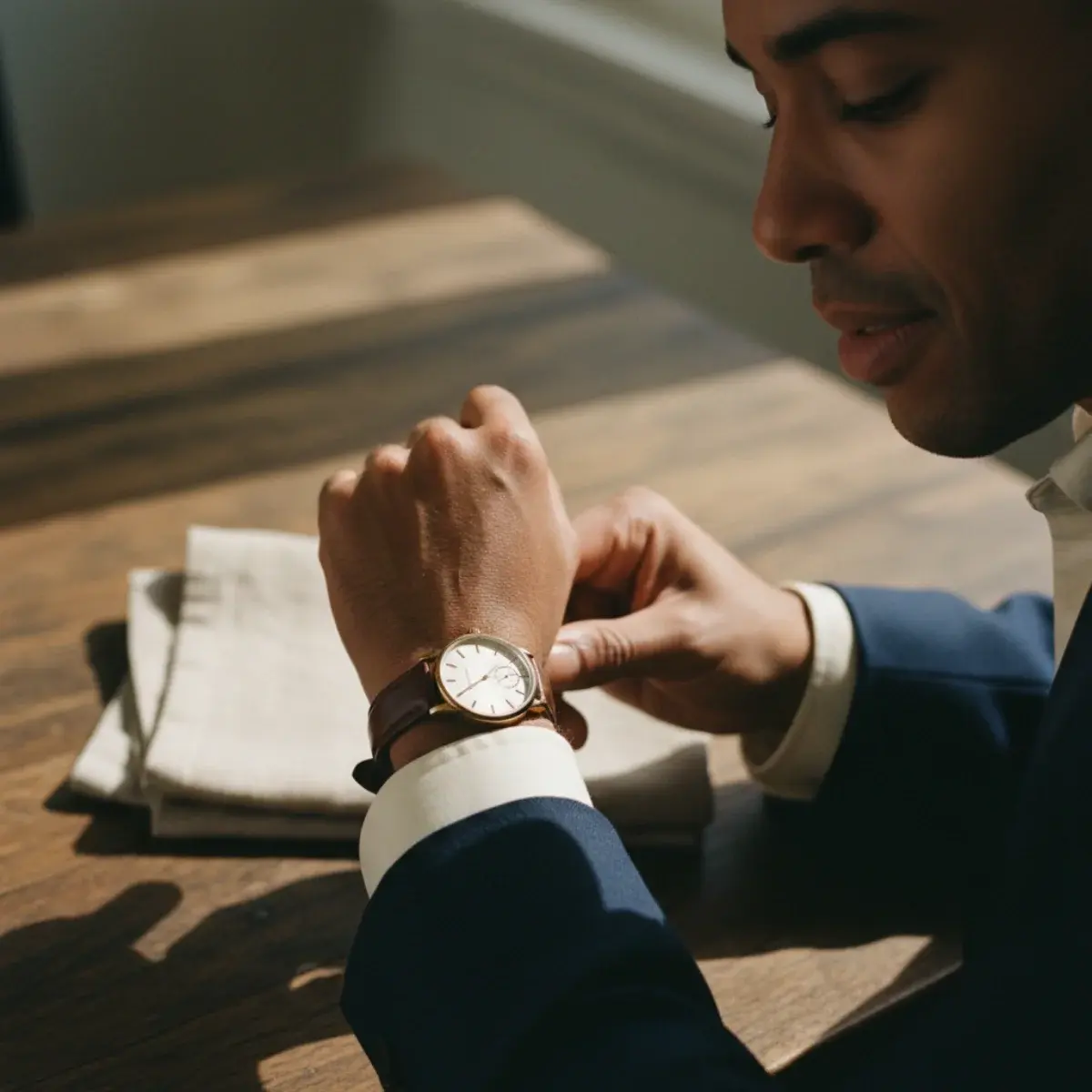
The most visible accessory a man wears, and the one that does the most work to lift a casual outfit toward considered. A watch finishes the wrist — even on a t-shirt-and-jeans look, the watch is what signals I dressed today.
 1600×1067
What to look for. A clean dial under 40mm (38mm is the sweet spot for most wrists), a plain face with minimal text, slim hands, and either a leather or metal bracelet — not a rubber or NATO strap as the daily watch, those read sporty. The case can be polished steel, brushed steel, or gold-tone if the rest of your jewellery is gold.
What to skip. Anything that screams the brand from across a room. Smartwatches in social settings — they're useful and unattractive; consider switching to a quiet mechanical or quartz watch for evenings out. Anything with a chunky bezel meant for diving you don't actually do.
Spend bracket. Below $100 buys reliable Japanese movements (Seiko, Citizen, Timex) with honest design — the right entry. $200–$600 buys mechanical watches that age well (Seiko 5, Hamilton Khaki, Tissot). Above that, the watch becomes a hobby; spend deliberately or not at all.
2. The belt
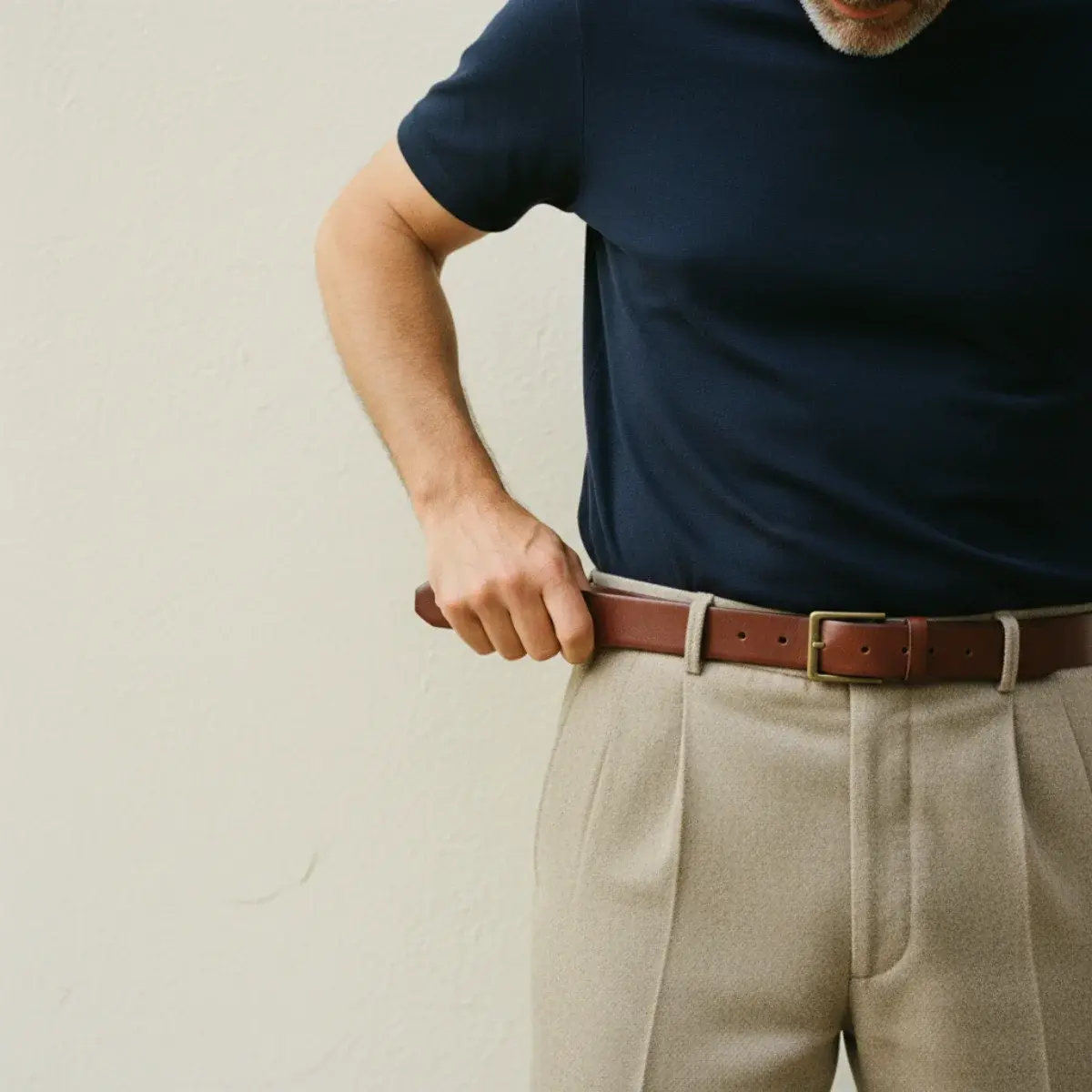
Match the leather to the shoe — this is the only firm rule of men's accessory dressing. A brown belt with brown shoes; a black belt with black shoes. Mixing leathers (brown belt, black shoes) is the most common visual mistake men make in otherwise good outfits, and it reads instantly to anyone who notices clothes.
 1600×1067
What to look for. Full-grain leather (not bonded or "genuine" leather, which is the lowest grade), a stitched edge, a simple buckle in brushed silver or brass — not polished or oversized. 35mm width for daily wear, 30mm for formal trousers.
Buy in this order. Medium-brown belt first (pairs with the brown shoes that dominate a modern wardrobe — see the men's footwear guide). Black belt second, only when a black dress shoe enters the rotation. A casual woven or canvas belt in tan or olive third, for summer chinos and shorts.
What to skip. Reversible belts (the leather is always thinner and the construction always weaker); any belt with a designer logo on the buckle; braided rope belts unless you live somewhere genuinely coastal.
3. Sunglasses
The accessory that does the most for a man's face after the haircut. The right frame shape flatters the face geometry; the wrong frame fights it. The principle is contrast — a soft round face wants more angular frames; an angular square face wants softer frames; an oval face takes most shapes. The sunglasses by face shape guide walks each combination.
 1600×1067
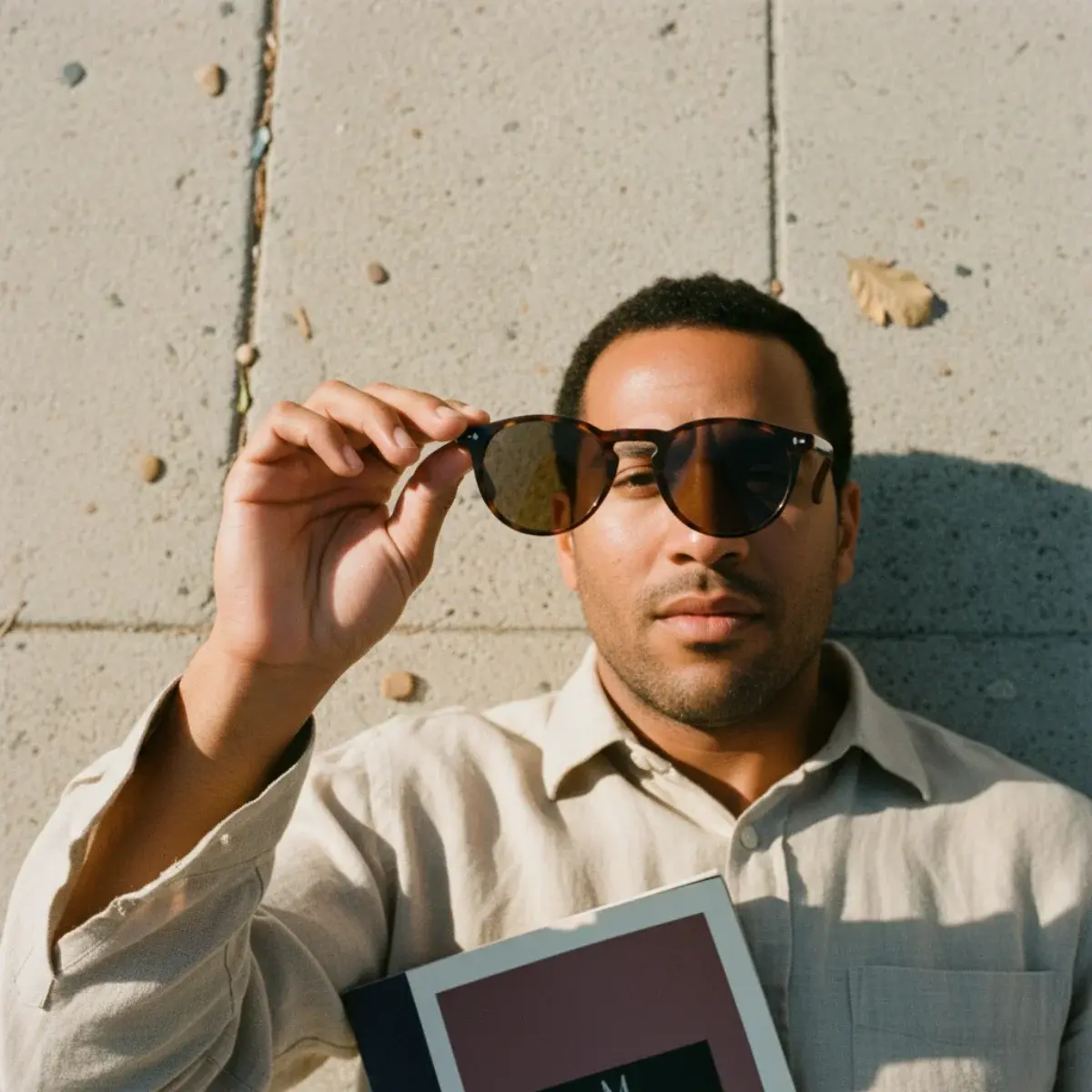
Three frames cover most men. A slim Wayfarer-style acetate in tortoise or black (the most universally flattering). A thin metal aviator in gold or silver (more relaxed). A square acetate in dark tortoise (best for rounder faces). Choose one as the daily; add others if you wear sunglasses constantly.
What to look for. Acetate (a cellulose-based plastic that ages better than injection-moulded plastics), polarised lenses if you spend time outdoors or drive a lot, and proper UV protection (the cheap dark lenses without UV blocking dilate the pupil and increase sun damage to the retina).
What to skip. Anything with a visible designer logo across the temple. Mirrored lenses unless that's clearly part of a deliberate sportier styling. Frames so small they sit above the cheekbones — this is the 2024-2026 micro-frame trend that flatters very few faces.
Accessories aren't decoration. They're the punctuation that tells the reader you wrote the sentence on purpose.
4. Leather gloves
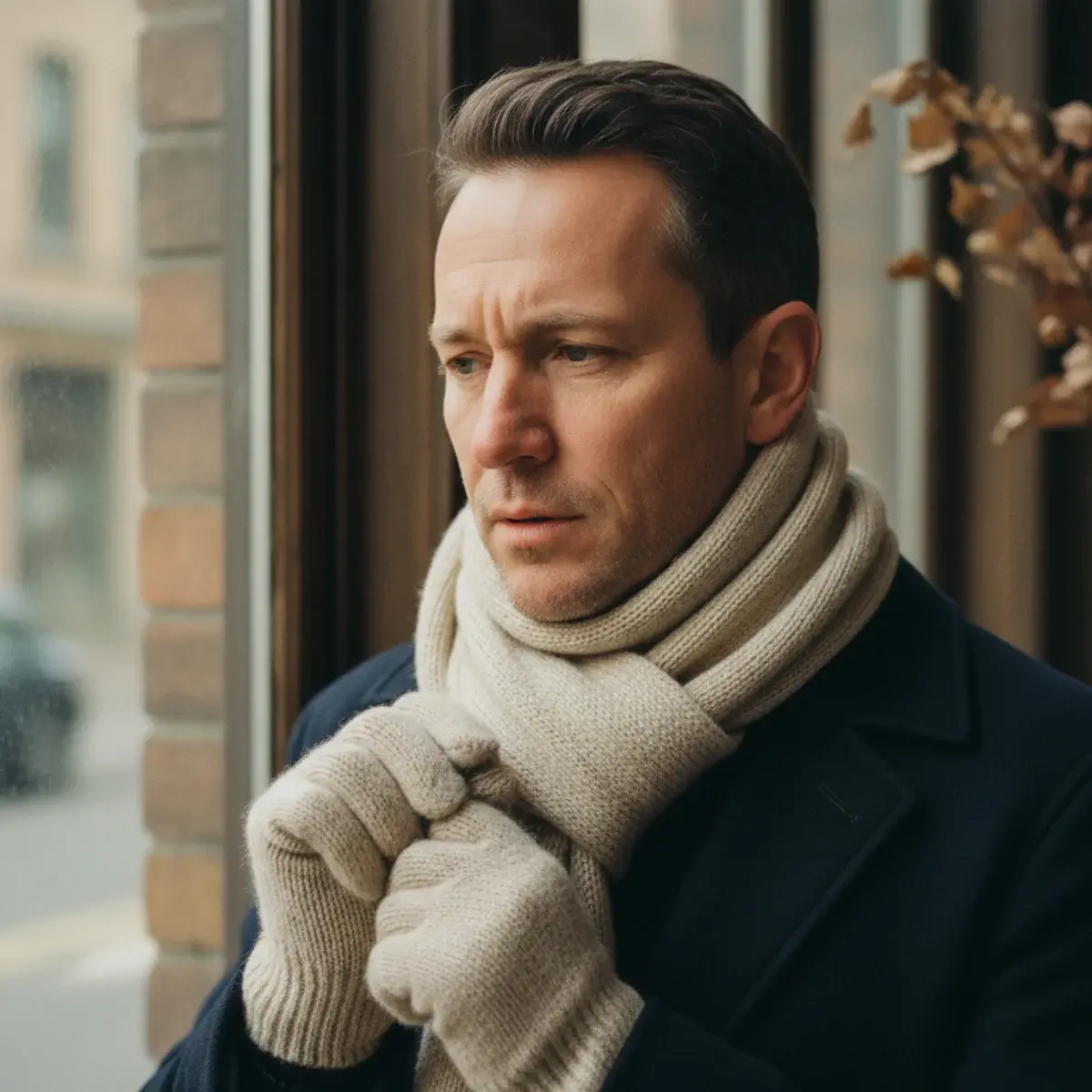
In cooler climates, leather gloves finish a winter coat the way a watch finishes a shirt sleeve. A pair of slim, unlined or lightly-lined leather gloves in a brown or black that matches your outerwear stops the wrist from looking unfinished when the cuff sits between a coat and a bare hand. The look only fails when the gloves are bulky ski-glove construction or a poor colour match.
 1600×1067
What to look for. Slim cut (gloves should fit the hand closely; bulk reads sporty), unlined or with a fine cashmere lining (not bulky fleece), and a plain finish — no exposed buckles, no contrast stitching in a bold colour. Dents 1830 are the classic English archetype; affordable equivalents from Echtleder or even Uniqlo's smart-leather range work for the daily.
What to skip. Touchscreen-compatible gloves with the visible silver thread at the fingertip; they always look like a compromise. Buy a proper pair, accept that you take them off to text.
5. Ties
Two cover almost every occasion a modern man encounters.
 1600×1067
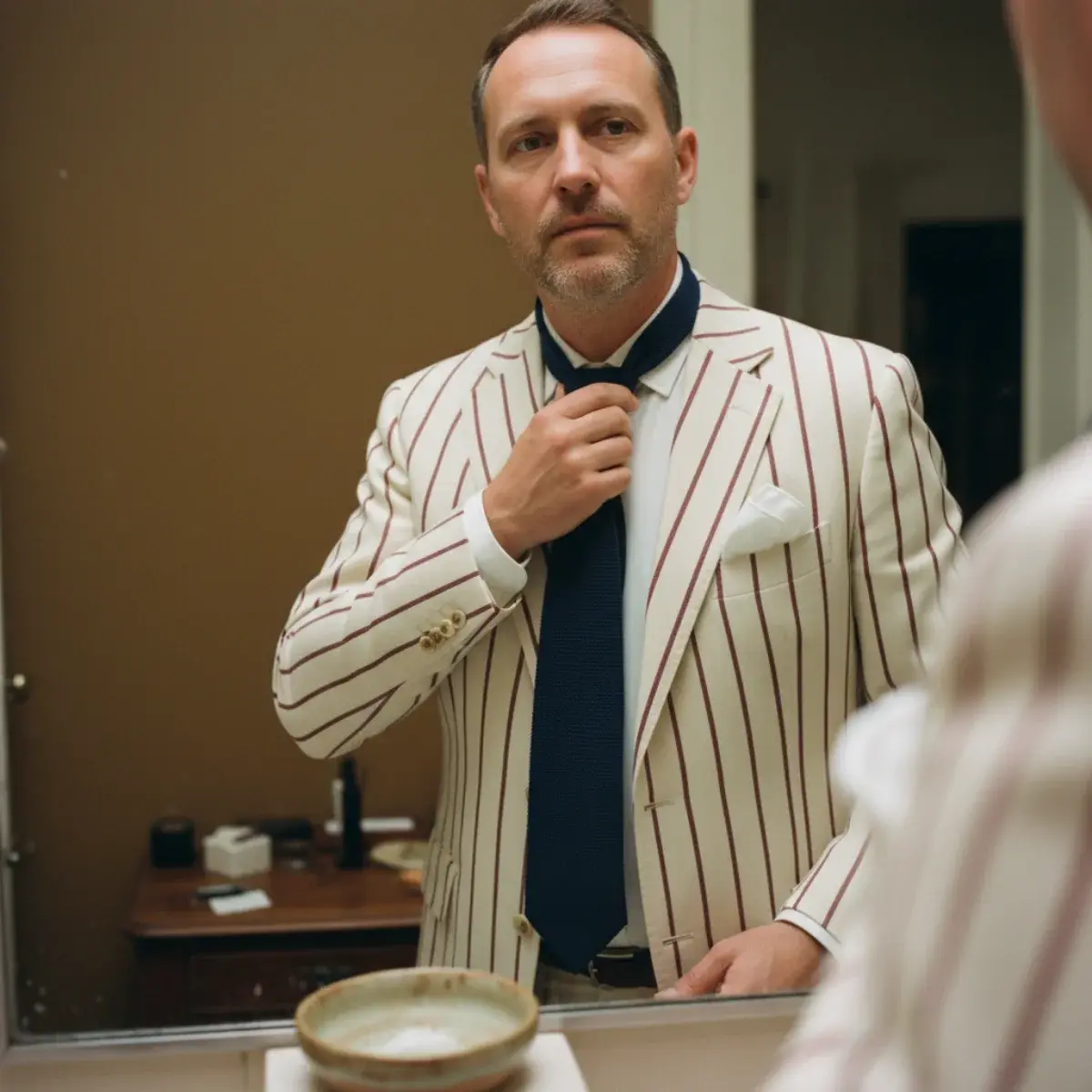
Tie #1 — the navy grenadine or knit silk. This is the workhorse. A grenadine (gauze-weave silk that reads as a subtle texture) or knit silk in solid navy works for a wedding, a funeral, an interview, a formal dinner, a court appearance. It's the most useful single piece of formalwear a man can own.
Tie #2 — a small-patterned silk in a deeper colour. Foulards, micro-dots, or a small geometric in forest, oxblood, dark brown, or charcoal. This handles dressier social events — a dinner, a christening, a casual wedding, a date night that calls for a tie.
What to look for. 100% silk, hand-rolled edges, an interlining that gives the tie body without stiffness. A tie should hold its dimple at the knot. Length: the tip of the tie should hit the top of the belt buckle when worn. Width: 7–8cm (2.75–3.15 inches) is the modern standard; anything wider reads dated, anything narrower reads costume.
What to skip. Synthetic ties (they read cheap in any photo with flash); pre-tied or clip-on ties unless you're under twelve; novelty ties.
6. The wallet
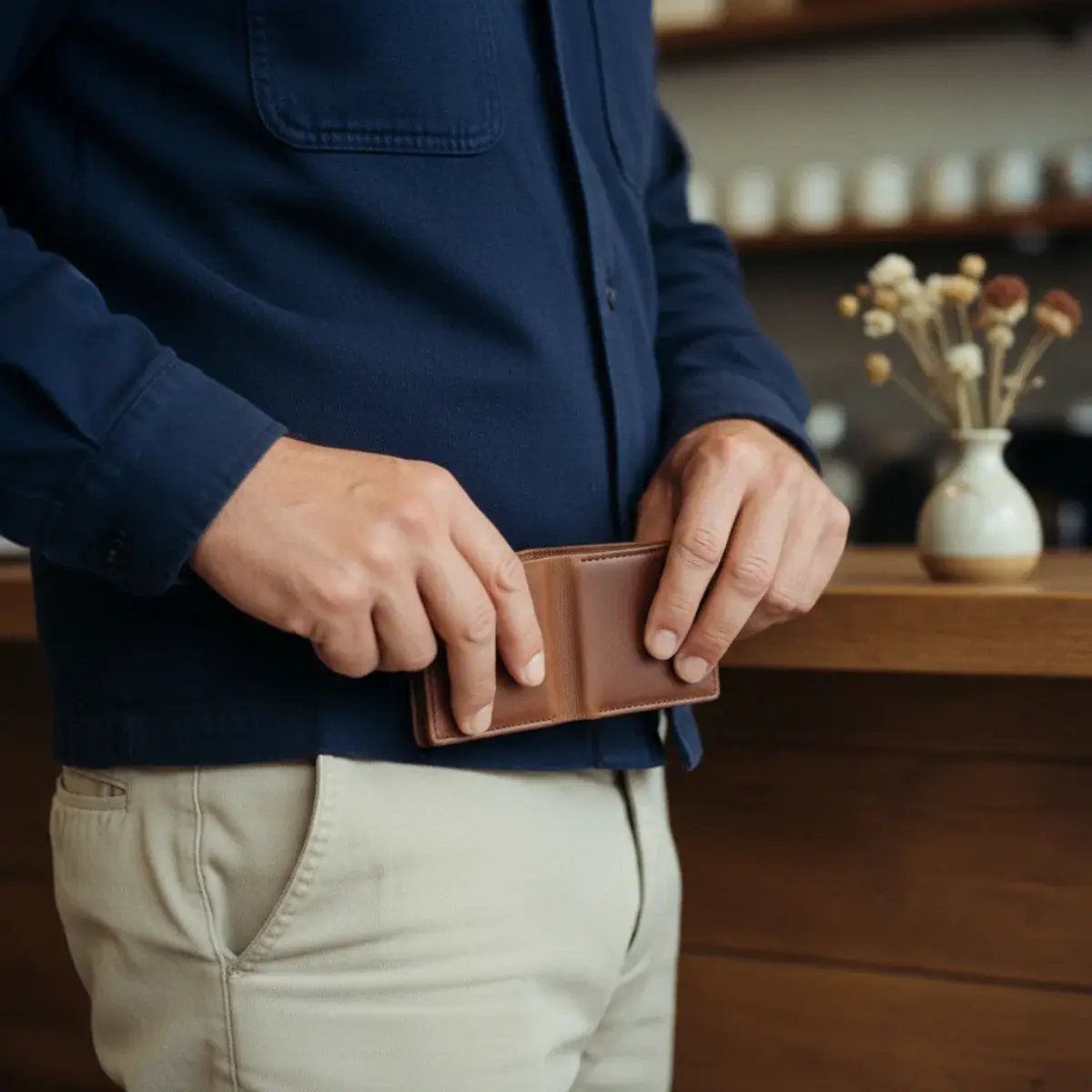
Nobody should be carrying a five-inch bifold full of receipts and store cards in 2026. A slim cardholder wallet — six to ten cards, a single small bill compartment, no chain — fits flat in a front pocket and doesn't deform the line of a trouser. The bulky back-pocket bifold is the single most overlooked outfit-killer in men's accessories; it ages a man visually by twenty years and ruins the cut of every trouser.
 1600×1067
What to look for. Full-grain leather, hand-stitched edges, slim profile (under 1cm thick when populated), and either a clean unbranded finish or a small understated maker's mark inside.
7. One piece of jewellery — optional but worth doing
A single small piece of jewellery worn every day adds a layer of intentional that no other accessory matches. The rule is one, small, worn always. The pieces that work:
 1600×1067
A slim chain in silver or gold (match your watch metal), sitting close to the collar — about 45cm length. Visible only when the top button is undone or with a t-shirt; reads quietly considered.
A signet ring on the little finger of either hand. Plain face or with a small monogram. In silver, gold, or steel. The most quietly elegant single piece of men's jewellery there is.
A thin bracelet — a black leather cord, a slim chain, or a beaded piece in natural stone (lava rock, tiger's eye, dark wood). Worn close to the wrist on the opposite hand to the watch.
What to skip. Multiple bracelet stacks unless that's a deliberate aesthetic. Earrings on most men (they work for some — be honest about whether they suit you specifically). Anything in rose gold unless that's clearly the considered choice. Religious symbols worn purely as fashion.
Key takeaways
- 1Seven accessories cover virtually every situation: watch, belt, sunglasses, gloves (winter), two ties, slim wallet, and one optional piece of jewellery.
- 2Match the belt leather to the shoe leather — always. Brown shoes need a brown belt; black shoes need a black belt. Mixing is the most common men's accessory mistake.
- 3A watch under 40mm with a plain dial does more for a casual outfit than any other accessory.
- 4Acetate sunglasses in tortoise or black, with proper UV protection, beats anything with a visible logo.
- 5One small piece of jewellery worn every day reads more considered than three flashy pieces worn sometimes.
- 6Skip the bulky bifold — a slim front-pocket cardholder doesn't deform the line of a trouser.
What to skip entirely
The categories of men's accessories that almost never improve an outfit:
Tie clips and bars — they were never standard menswear; they're a fashion-cycle import. Skip unless you specifically love the look.
Pocket squares as a daily thing — fine for weddings and formal events; a daily pocket square in a casual context reads like a costume.
Logo'd anything — the moment a brand name is visible on the accessory, the accessory stops working as accessory and starts working as advertising. There's no exception.
Multiple watches stacked or worn on one wrist — a deliberate aesthetic choice for very few men. Not a default.
Lanyard wallets, neck wallets, fanny packs as accessories — these are utility items disguised as fashion in certain trend cycles. Buy if useful; skip as an accessory choice.
Hats as an indoor item — the indoor hat reads costume in 99% of contexts. Outdoors, in proper sun or proper cold, a hat is functional; indoors it's a statement most men can't carry. See the outfit-building guide for where the line sits.
Where to spend, where to save
| Accessory | Spend bracket | Why |
|---|---|---|
| Watch | $100–$600 | Above that, the watch becomes a hobby; entry-level Japanese mechanicals look as good as luxury at arm's length. |
| Belt | $80–$200 | Full-grain construction at $80 outlasts bonded leather at any price. |
| Sunglasses | $120–$350 | Acetate construction and proper UV are the spend; above $350, brand premium. |
| Gloves | $80–$200 | Lambskin lined at $150 beats unlined cheap leather. |
| Tie | $60–$150 | A silk tie at $100 photographs equally well as one at $300. |
| Wallet | $60–$180 | Full-grain at $80 lasts a decade. |
| Jewellery | $40–$300 | Silver pieces at $40 look as good as $300 ones at conversational distance. |
The general principle: spend on construction quality, save on brand premium. A $150 belt from a maker who hand-stitches the edge outlasts a $400 designer belt with the same materials.
The wardrobe in order
If building from scratch, buy in this sequence — each piece earns its place faster than the next:
- Leather-strap watch — used every day, biggest single visual improvement
- Medium-brown belt — needed the moment a brown shoe enters the wardrobe
- Slim cardholder wallet — replaces the bulky bifold immediately
- Acetate sunglasses — needed any sunny day, lasts a decade
- Navy grenadine tie — when the first dressy occasion arrives
- Leather gloves — first winter
- Small-patterned second tie — when wedding season starts
- One piece of jewellery — last, as a refinement, not a foundation
Eight pieces. The whole accessory wardrobe of a well-dressed modern man, with no gaps and no excess. The closet of a man who buys two belts a year for a decade has twenty belts and wears two; the closet of a man who buys the right belt once has that one.
The single biggest visual mistake
If you take only one principle from this guide: match the leather. Brown belt with brown shoes; black belt with black shoes; if you're wearing a brown watch strap, the belt and shoes should be brown. This rule resolves more visual problems in a men's outfit than any other single decision, and most men ignore it. A mismatched leather wardrobe is the most common reason men in expensive clothes look unfinished. Match the leather and half the work of "looking considered" is done before you put the shirt on.
See all men's outfit guides → · The accessories styling guide → · Sunglasses by face shape →
Frequently asked
- What accessories should every man own?
- Seven items cover almost every situation: a leather-strap watch with a plain dial, one structured leather belt that matches a brown shoe, one acetate sunglasses in tortoise or black, one pair of leather gloves for winter, two ties (one navy grenadine, one in a small-patterned silk), one slim leather wallet, and — optionally — one small piece of jewellery (a slim chain or a signet ring). Skip anything else until those seven are right.
- Brown or black belt — which first?
- Brown. A medium-dark brown belt pairs with brown shoes (always match leather colours), and the brown-shoe wardrobe is more versatile in a modern men's closet. Buy a quality brown belt first; add a black belt only when your shoes require it (typically alongside a black derby or oxford for formal events).
- How wide should a men's belt be?
- 35mm (about 1.4 inches) is the modern standard for most casual and smart-casual outfits. 30mm is the formal width — pair with a slim dress shoe and a slim suit trouser. Anything wider than 38mm (1.5 inches) is a workwear or western belt; reserve for that styling specifically. The buckle should be proportionate to the strap — narrow strap, narrow buckle.
- Can men wear jewellery without it looking like too much?
- Yes — the rule is *one piece, well chosen, that you wear every day*. A slim chain at the collar, a signet ring on the little finger, or a thin bracelet that disappears under a cuff. The error is wearing several at once, or buying something flashy worn occasionally. One quiet piece worn always reads more confident than three loud ones worn sometimes.
- Are bracelets acceptable for men?
- A single discreet bracelet — a thin leather cord, a slim chain, or a beaded piece in natural stone — works well, especially in summer when sleeves are rolled. Avoid stacks of multiple bracelets unless that's clearly part of a deliberate aesthetic. The bracelet should sit close to the wrist and not slide past the wristbone.
- What sunglasses suit most men?
- Three frame shapes cover almost every face: a slim acetate Wayfarer-style in tortoise or black (most universally flattering), a thin metal aviator in gold or silver (more relaxed), and a square acetate frame in dark tortoise (works on rounder faces). The rule of contrast applies — angular face wants softer frames, softer face wants more angular frames. See [the sunglasses by face shape guide](/sunglasses-by-face-shape) for the full breakdown.
- Do I need a tie if I work in a casual office?
- Probably not as a daily item, but owning two is still worth it. A solid navy knitted or grenadine silk tie handles weddings, funerals, interviews, and the occasional formal evening; a small-patterned silk tie in a deeper colour (forest, oxblood, charcoal) handles dressier social events. Two ties, both quality, beats six cheap ones.
Written by Theo Ashworth, looksyra editorial. Last updated May 2026.