A scarf is the most versatile accessory there is — the one piece that can warm your neck in winter, add a pop of colour to a plain outfit, tie back your hair, dress up a bag, and signal polish, all depending on how you wear it. That versatility is also why people often own scarves they never quite use: faced with a beautiful silk square or a long wool wrap and unsure what to do with it, they leave it in the drawer. The fix is knowing a handful of ways to wear each, matched to the season. This guide covers exactly that — how to style scarves across the seasons, on the neck, head, bag, and more. It builds on the principles in our accessories styling guide.
The principle this guide will hold: the scarf's fabric and size decide what it's for — light silk for polish and warm weather, substantial wool for warmth and cold — and a handful of ways to wear each covers every look. Match the scarf to the season and learn a few techniques, and the most versatile accessory becomes the most useful.
Silk scarves vs wool scarves: two different tools
Scarves divide into two broad families that serve different purposes, and knowing which you have decides how to wear it. Lightweight silk (and similar) scarves — squares and light oblongs — add colour, polish, and personality rather than warmth, suiting warm weather and as a finishing accent year-round. They're worn neatly: knotted at the neck, in the hair, on a bag, or draped, reading polished and often retro. Substantial wool, cashmere, and knit scarves — longer and wider — add warmth as well as style, suiting cold weather, worn wrapped, looped, or draped around the neck for insulation and a finishing layer.
This silk-versus-wool distinction is the most useful thing to know about scarves, because it tells you immediately what a given scarf is for and how to wear it — a silk square for a polished warm-weather touch, a wool wrap for cold-weather warmth. The two families don't really overlap: you wouldn't wrap a silk square for warmth or tie a chunky wool scarf neatly on a bag. So a versatile scarf wardrobe includes both — a silk square or two for polish and warm weather, a wool or cashmere wrap for cold — each worn in the ways that suit its fabric and size. Understanding that scarves are really two different tools, with different purposes and techniques, is the foundation, and the ways to wear each follow from it.
 1600×1067
Ways to wear a silk scarf at the neck
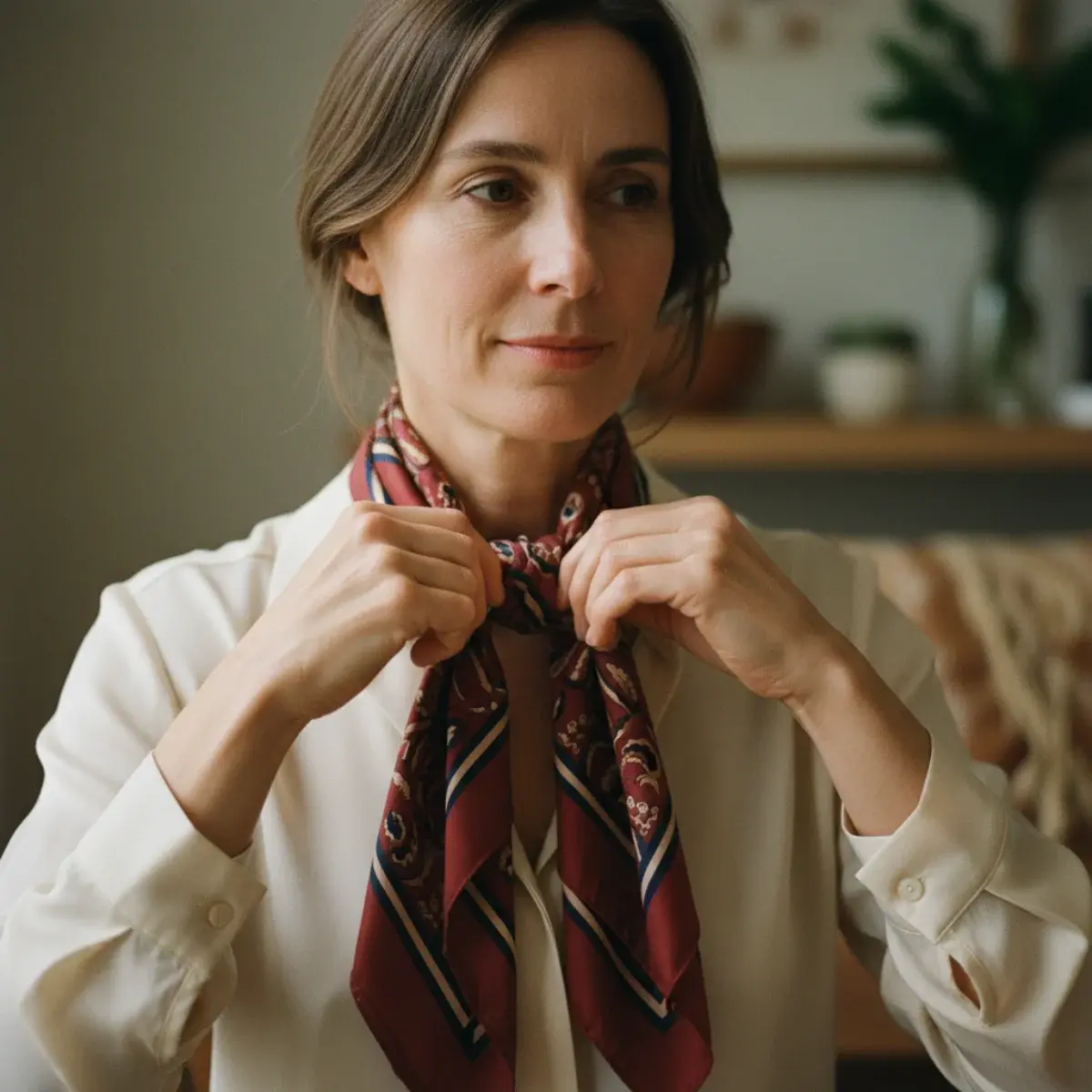
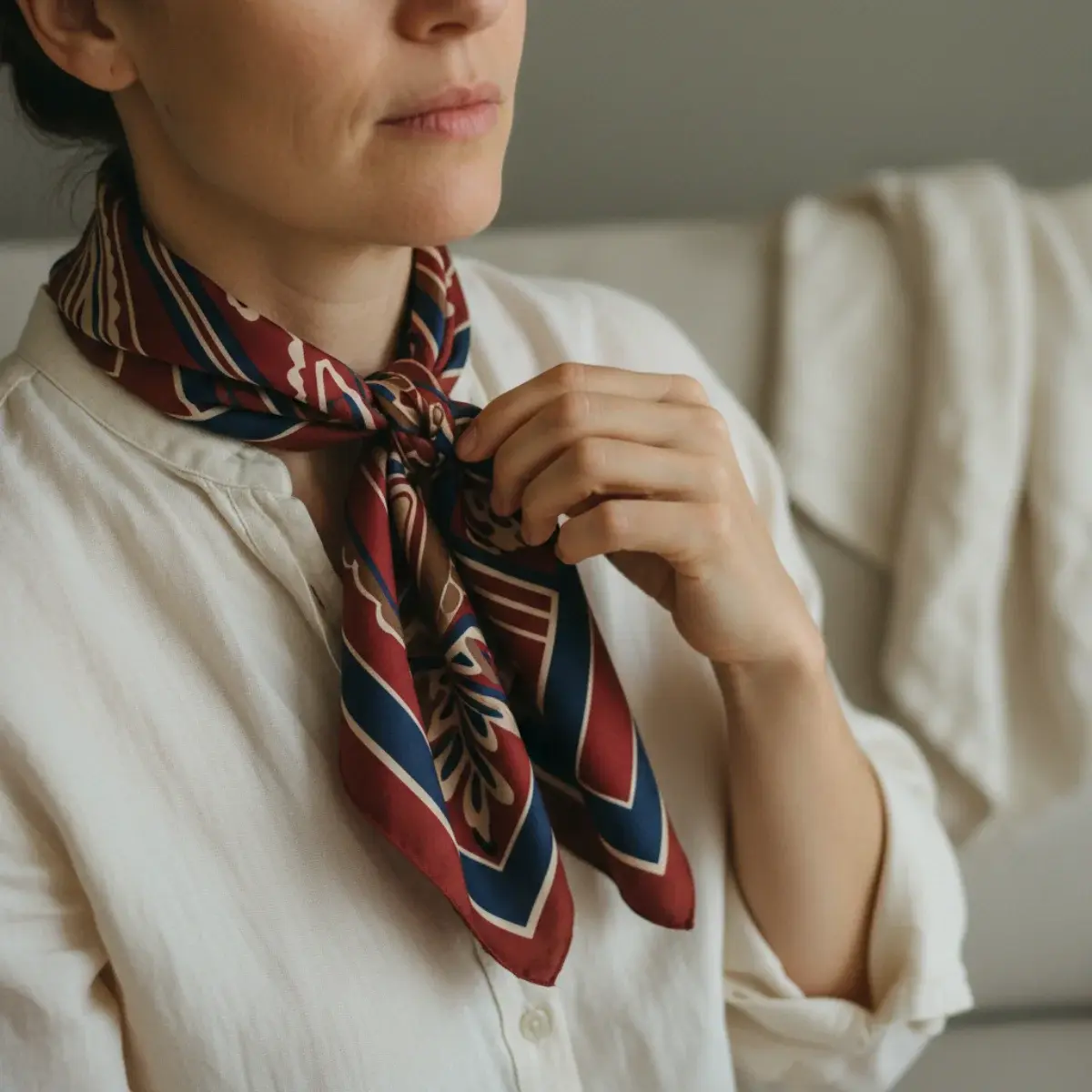
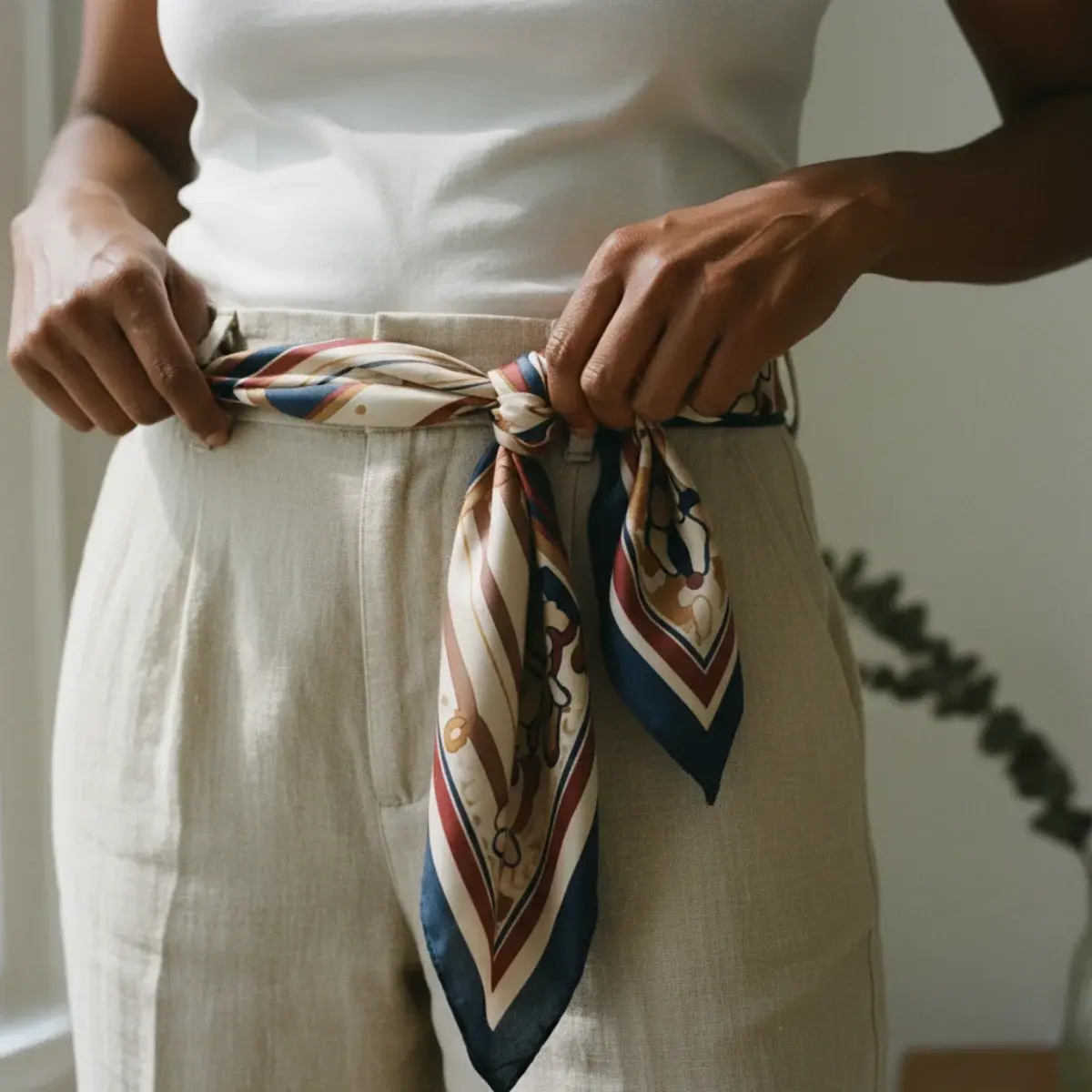
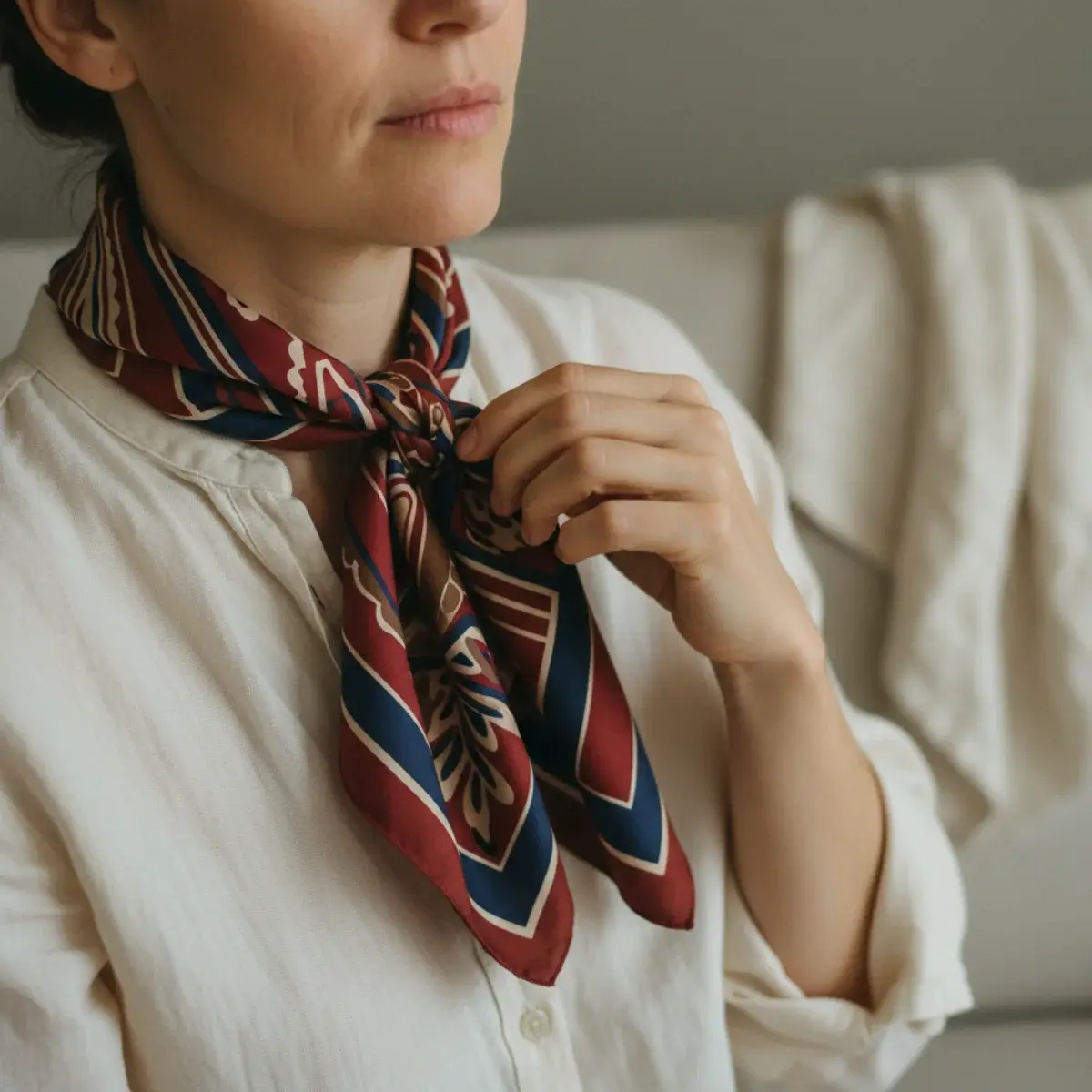
A silk scarf at the neck adds polish and a hit of colour, and a few ways to tie one cover most looks. A small square knotted at the neck — folded into a triangle or bias strip and tied in a neat knot, sitting close to the throat — reads classic, polished, and slightly retro, a timeless way to wear a silk square. Draped and loosely knotted — a longer silk scarf hung around the neck with a loose knot — reads relaxed and elegant. Tied to one side or worn as a neckerchief adds a chic, deliberate touch. Each adds colour and polish at the neckline without warmth, suiting lighter outfits and warm weather.
The silk neck scarf is a classic finishing accent: a patterned silk square knotted at the neck of a plain top or under a collar lifts a simple outfit with colour and a retro elegance, the focal-accent role the accessories styling guide describes. Coordinating the scarf's colours with the outfit — picking up an accent or providing a deliberate pop against neutrals — ties it together, and a bold or patterned silk scarf can be the outfit's focal point with the rest kept simple. The neck is the silk scarf's classic home, and a neat knot or an elegant drape is the most recognisable way to wear one, adding polish and personality to an otherwise plain look. A few silk squares in versatile prints make this an easy, elegant finishing move.
 1600×1067
Silk scarves in the hair and on a bag
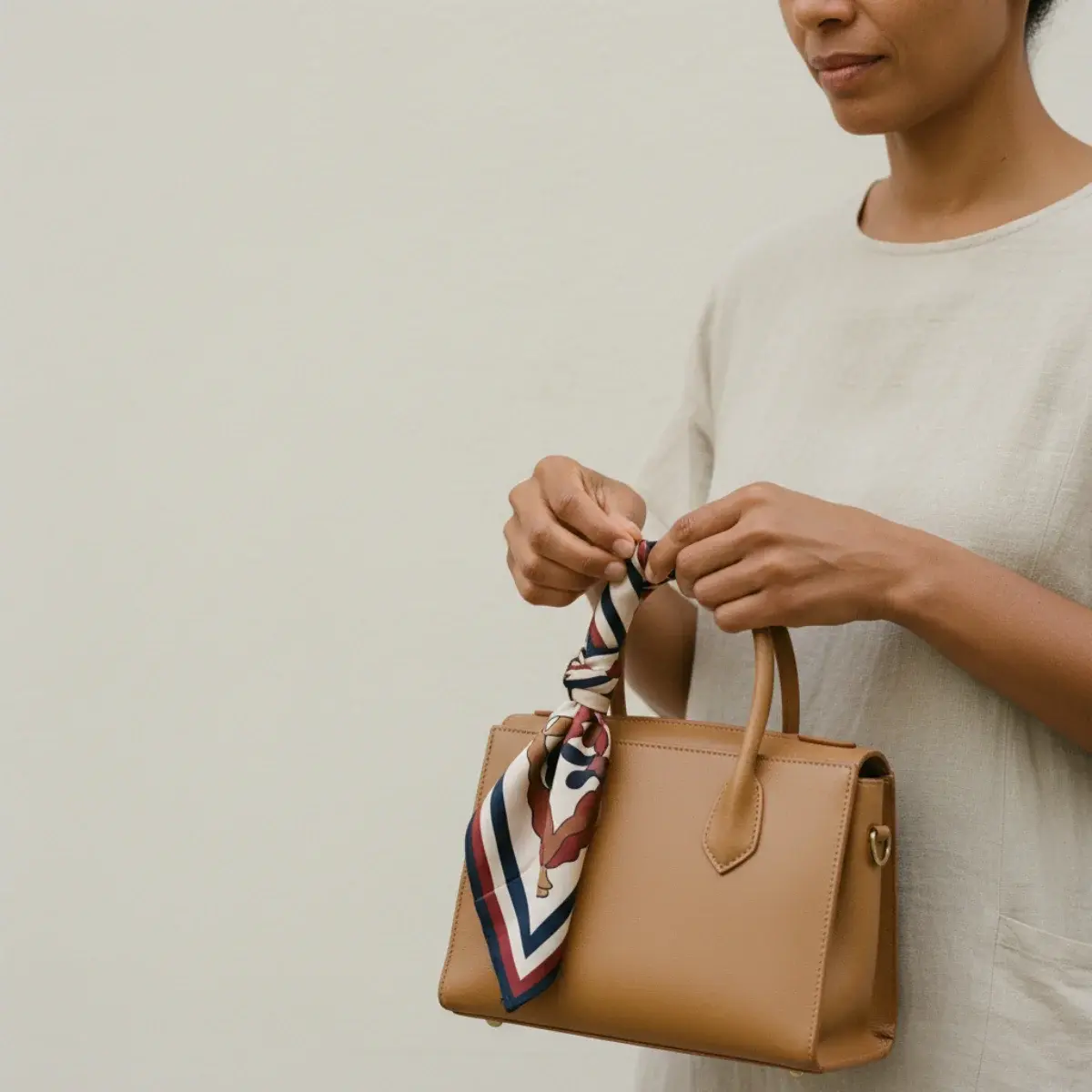
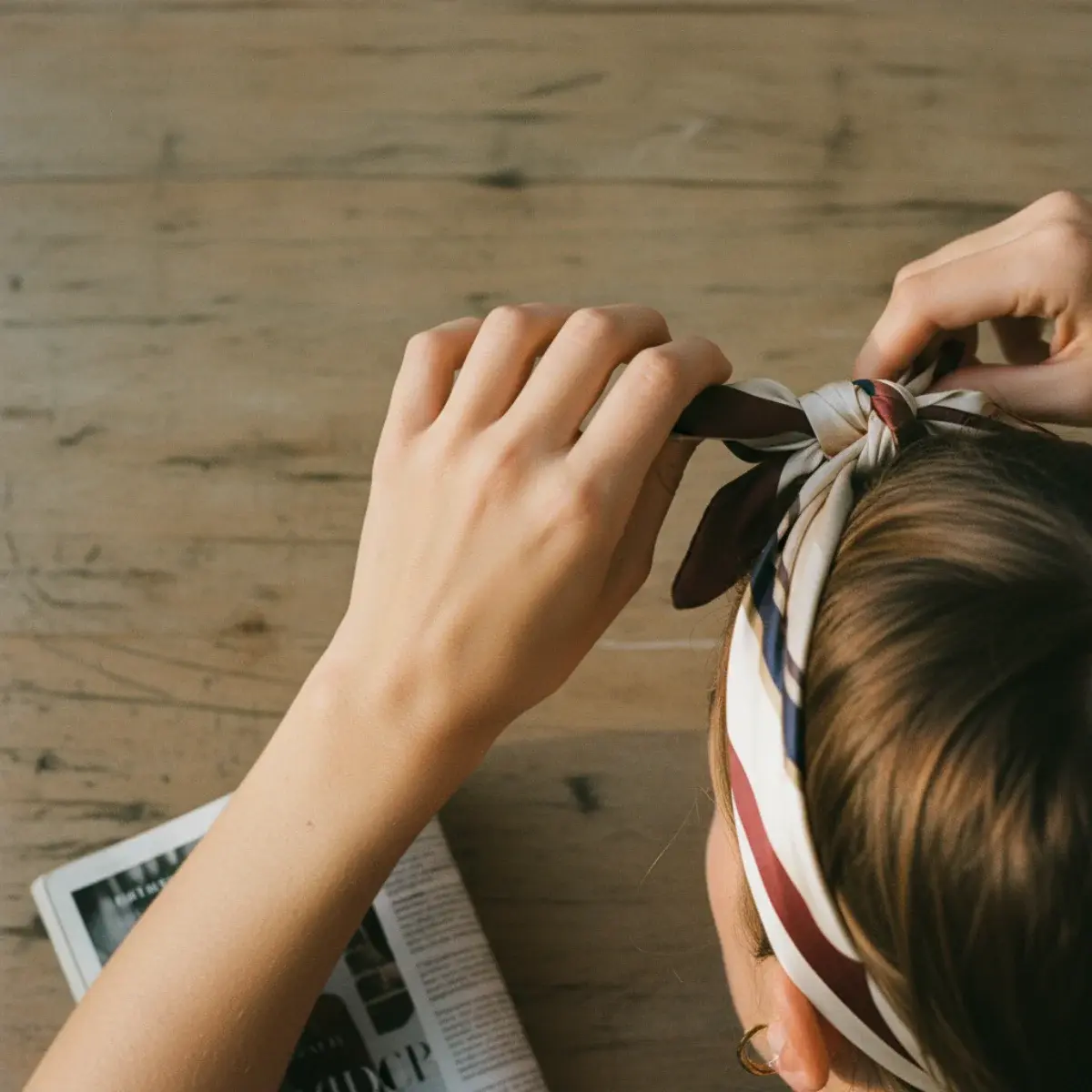
Beyond the neck, a silk scarf shines in the hair and on a bag, two classic, easy ways to wear one. In the hair, fold a silk scarf into a band and tie it around the head as a headband, wrap it around a ponytail or bun, or tie it as a scrunchie or around a hair tie — all polished, retro touches that add colour and personality at the hair. A silk scarf as a headband or tied around an updo is an elegant, distinctive way to finish a look, especially in warm weather. On a bag, fold or roll a silk scarf and tie it around the bag handle in a knot or bow, which adds colour and personality to the bag and ties it to the outfit's palette.
These uses extend the silk scarf well beyond the neck, and they're among the easiest, most stylish ways to wear one — a scarf tied on a bag handle is a classic, polished detail, and a silk headband adds a retro elegance. Both add a focal touch of colour and personality, coordinating the scarf with the outfit or bag, the finishing-accent role from the accessories styling guide, and the bag-scarf detail ties to the bag styling guide. They're also forgiving and quick — no precise tying required — making them accessible ways to use a silk scarf you might otherwise leave in the drawer. A silk square is genuinely multi-purpose: neck, hair, or bag, it adds the same polished hit of colour, which is what makes it such a versatile, useful accessory.
 1600×1067
Ways to wear a wool or winter scarf
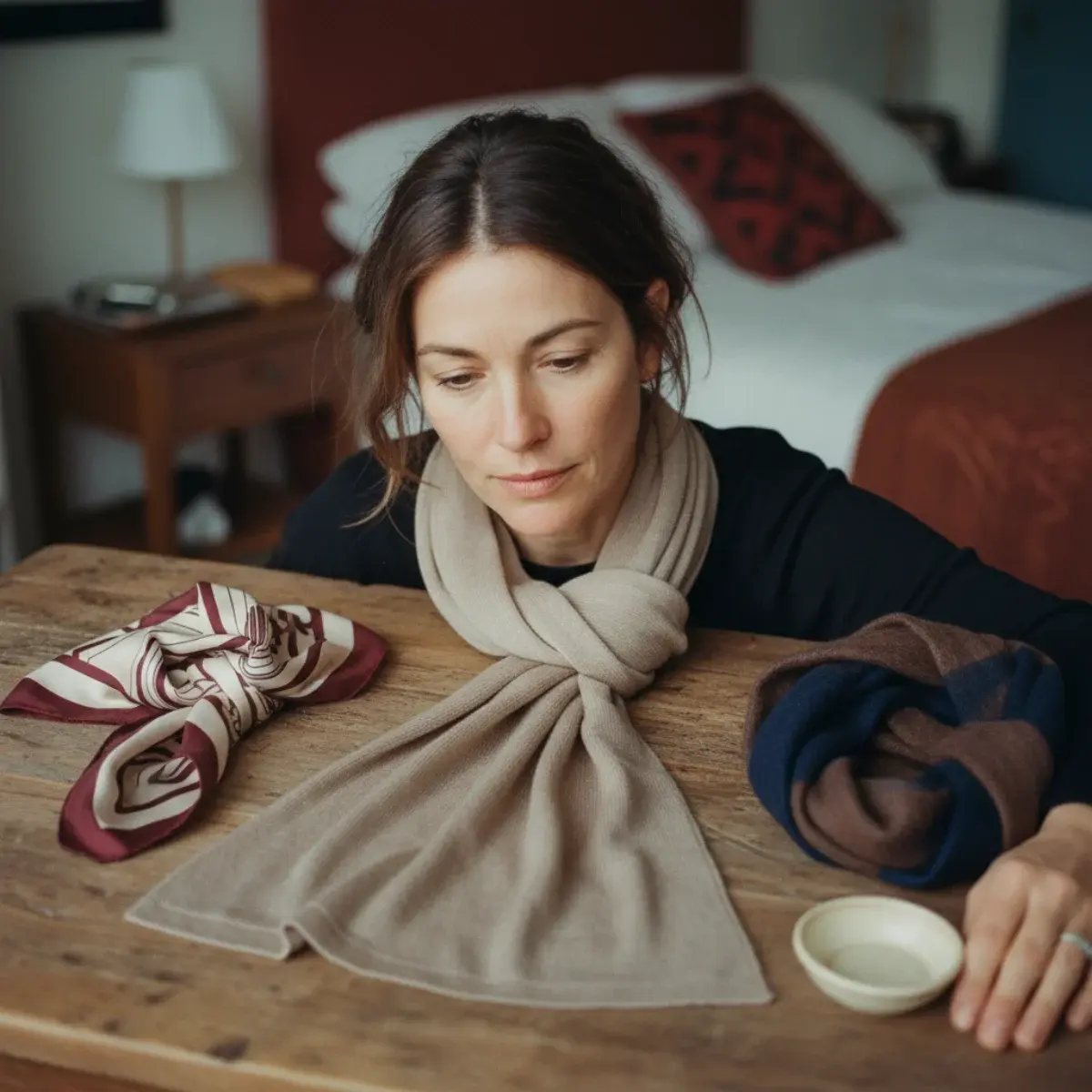
A wool, cashmere, or knit scarf is worn for warmth as well as style, and a few ways to wear one cover the cold months. Draped — hung loose around the neck under a coat — reads relaxed and adds a finishing layer. The European loop — folded in half lengthwise, draped around the neck, and the loose ends pulled through the folded loop — is the neat, classic, secure way to wear a long scarf, polished and warm. Wrapped — wound fully around the neck — maximises warmth for cold days. Looped twice around the neck reads cosy and substantial. Each adds warmth and a finishing layer to a cold-weather outfit.
The winter scarf is both functional and a key finishing piece of a cold-weather look, the layering the fall outfits guide describes, where the cold gives the scarf a clear reason to exist. Choosing a substantial scarf in the season's deep palette and coordinating it with the coat and outfit ties the look together, and a chunky or richly-coloured scarf can be a focal point against a neutral coat. The European loop is the most useful technique to know — neat, secure, warm, and polished — while a simple drape or full wrap suits relaxed or very cold days respectively. A long wool or cashmere wrap, worn looped or draped, is the practical, polished winter scarf, adding both warmth and a finishing layer, and it's one of the most useful cold-weather accessories there is, as the accessories styling guide notes for seasonal pieces.
 1600×1067
Scarves through the seasons
Scarves serve different roles across the seasons, shifting with the weather. In spring, lightweight silk and fine scarves return for polish and a light layer, in fresh tones, worn at the neck, in the hair, or on a bag as the weather warms. In summer, light silk scarves add colour and polish — at the neck, as a headband, on a bag — and a light scarf can double as sun cover, with the focus on style over warmth. In autumn, scarves turn substantial — wool and cashmere wraps for warmth and the season's deep palette, worn looped and draped over layers, the fall outfits guide approach. In winter, heavy wool, cashmere, and knit scarves lead for warmth, wrapped and looped against the cold.
The scarf wardrobe genuinely shifts with the seasons — light silk for warm months and polish, substantial wool for cold months and warmth — though a versatile silk square works year-round as a finishing accent. The principle is to match the scarf's fabric and weight to the season: silk and light scarves for warmth and warm weather, wool and cashmere for cold, the seasonal-accessory logic the accessories styling guide describes. Building a scarf wardrobe that covers the seasons — a silk square or two for polish and warm weather, a wool or cashmere wrap for cold — means you can finish outfits appropriately year-round, with the silk pieces adding polish and the wool pieces adding warmth as the weather demands. The scarf is a year-round accessory whose role simply changes with the season.
 1600×1067
Choosing scarves that finish a look
The right scarves depend on use, and a few features guide the choice. Fabric and weight set the purpose: lightweight silk for polish and warm weather, substantial wool or cashmere for warmth and cold, the silk-versus-wool distinction at the heart of this guide. Size matches the use: a small-to-medium silk square (around 20-35 inches) for neck knots, hair, and bag styling; a large silk or light scarf for draping; a long, wide wool wrap for winter wrapping and looping. Colour and pattern drive versatility: a neutral or classic-patterned scarf goes with the most outfits, while a bold or vivid one is a focal accent, the neutral-foundation-plus-accent logic from the accessories styling guide.
For the most versatile scarves to own, a silk square in a classic print and a neutral wool or cashmere wrap cover warm and cold weather and coordinate with most looks — the core of a scarf wardrobe, with bold or seasonal scarves added as focal accents. Quality matters and rewards investment, since a silk or cashmere scarf lasts for years and reads expensive, the buy-well-for-the-foundation thinking the old money outfits guide describes, and scarves are excellent second-hand buys. Choosing scarves by fabric (for purpose), size (for use), and colour (for versatility), and prioritising a versatile silk square and a neutral wool wrap, ensures a scarf wardrobe that finishes outfits across the seasons. A few well-chosen scarves — one for polish, one for warmth — go a long way, which is part of what makes the scarf such an economical, useful accessory.
 1600×1067
Scarf outfit ideas
These looks span the seasons and ways to wear a scarf.
- A patterned silk square knotted at the neck of a plain white shirt and trousers.
- A neutral wool wrap in the European loop over a coat, knit, and jeans for winter.
- A silk scarf tied as a headband with a summer dress.
- A silk scarf knotted on a bag handle, coordinating with a casual outfit.
- A long cashmere scarf draped over a tailored coat and roll-neck for autumn.
- A bold silk scarf as the focal point against an all-neutral outfit.
- A silk scarf tied around a ponytail with a smart-casual look.
- A chunky knit scarf wrapped over a winter coat for warmth and a cosy finish.
Each look matches the scarf to the season and purpose — silk for polish in warm weather, wool for warmth in cold — uses a way to wear it that suits the scarf's size, and coordinates the colour. A bold scarf leads as the focal point with the rest kept simple, the balance the whole accessories silo turns on.
 1600×1067
Scarf styling mistakes to avoid
A few errors keep scarves from finishing a look well. Using the wrong fabric for the purpose — a silk square for warmth, a chunky wool scarf tied neatly on a bag — mismatches, where matching silk to polish and warm weather and wool to warmth and cold fixes it. A bulky or fussy tie that overwhelms the look reads heavy, where a clean technique suited to the scarf's size keeps it polished. A clashing colour that fights the outfit jars, where coordinating within the palette ties it together. And leaving scarves unworn because of uncertainty wastes them, where knowing a few ways to wear each makes them useful.
Two more round it out. Over-accessorising around a scarf — a bold scarf plus competing bold pieces — reads cluttered, where letting a focal scarf lead with the rest simple reads elegant, the focal-point rule from the accessories styling guide, and neglecting care — creased silk, a snagged or pilled wool scarf — undercuts the look, where proper storage and cleaning keep scarves reading well. Each resolves the same way: match the scarf's fabric to its purpose, use a clean technique suited to its size, coordinate the colour, let a bold scarf lead, and care for the pieces. The scarf is the most versatile accessory there is, and styling it well comes down to matching silk or wool to the season and look, and knowing a handful of ways to wear each — at which point the most versatile accessory becomes the most useful.
Key takeaways
- 1Scarves are two tools: lightweight silk for colour and polish in warm weather, substantial wool for warmth in cold.
- 2Wear a silk scarf knotted at the neck, as a headband or in the hair, or tied on a bag handle for a polished, retro touch.
- 3Wear a wool scarf draped, in the European loop, or wrapped for warmth — the European loop is the neatest, most versatile technique.
- 4A versatile silk square and a neutral wool wrap cover the seasons; let a bold or patterned scarf be the focal point.
- 5Match the scarf's fabric to its purpose, use a clean technique suited to its size, and coordinate the colour with the outfit.
Where to go from here
The scarf is the most versatile accessory. For others, read belt styling ideas for defining the waist and sunglasses by face shape for flattering frames. For the accessory principles beneath them, see the accessories styling guide; for the other finishing layers, the jewellery styling guide and bag styling guide; for cold-weather scarf layering, the fall outfits guide. Vogue and Who What Wear publish reliable scarf styling coverage.
Frequently asked
- How do you style a scarf?
- Match the scarf to the season and look: a lightweight silk scarf tied at the neck, in the hair, or on a bag for warm weather and polish, or a wool or cashmere scarf wrapped, looped, or draped for warmth in cold weather. Choose a way to wear it that suits the scarf's size and your outfit, coordinate the colour within your palette, and let a patterned or bold scarf be the focal point with the rest of the look kept simple.
- What are the main ways to tie a scarf?
- Common ways include draped (hanging loose around the neck), the loop or European loop (folded in half and pulled through), wrapped (around the neck for warmth), knotted at the neck (a silk square), tied in the hair as a headband or scrunchie, and tied onto a bag handle. Lightweight silk scarves suit neat neck knots, hair, and bag styling; larger wool scarves suit wrapping, looping, and draping for warmth.
- How do you wear a silk scarf?
- A silk scarf is versatile: tie a small square knotted at the neck for a polished retro touch, wear it as a headband or tied in the hair, knot it onto a bag handle, or drape a larger one over the shoulders. Silk scarves add colour and polish rather than warmth, so they suit lighter looks and warm weather. A knotted silk neck scarf or one tied on a bag is a classic, elegant way to wear one.
- How do you wear a winter scarf?
- A winter scarf — wool, cashmere, or a chunky knit — is worn for warmth: draped and looped around the neck, wrapped fully for cold, or in the European loop (folded in half, ends pulled through the fold). Choose a substantial scarf in the season's palette, coordinate it with your coat and outfit, and let it add both warmth and a finishing layer. A looped or wrapped wool scarf is the practical, polished winter choice.
- What scarf goes with everything?
- A scarf in a neutral or versatile colour — cream, grey, camel, navy, black — or a classic pattern goes with the most outfits, much like a neutral in any accessory. A versatile silk square in a classic print and a neutral wool or cashmere wrap cover warm and cold weather and coordinate with most looks. Neutral and classic scarves are the versatile foundation, with bold or patterned ones added as focal accents.
- How do you wear a scarf in your hair or on a bag?
- For hair, fold a silk scarf into a band and tie it around the head as a headband, wrap it around a ponytail or bun, or tie it as a scrunchie — a polished, retro touch. For a bag, fold or roll a silk scarf and tie it around the handle in a knot or bow, which adds colour and personality to the bag. Both are easy, classic ways to wear a silk scarf beyond the neck.
- What size scarf should I get?
- It depends on use: a small-to-medium silk square (around 20-35 inches) suits neck knots, hair, and bag styling; a large silk or lightweight scarf suits draping and wrapping; and a long, wide wool or cashmere scarf suits winter wrapping and looping for warmth. For versatility, a medium silk square (for polish and warm weather) and a long wool wrap (for warmth) cover most needs across the seasons.
Written by Marguerite Sterns, looksyra editorial. Last updated May 2026.