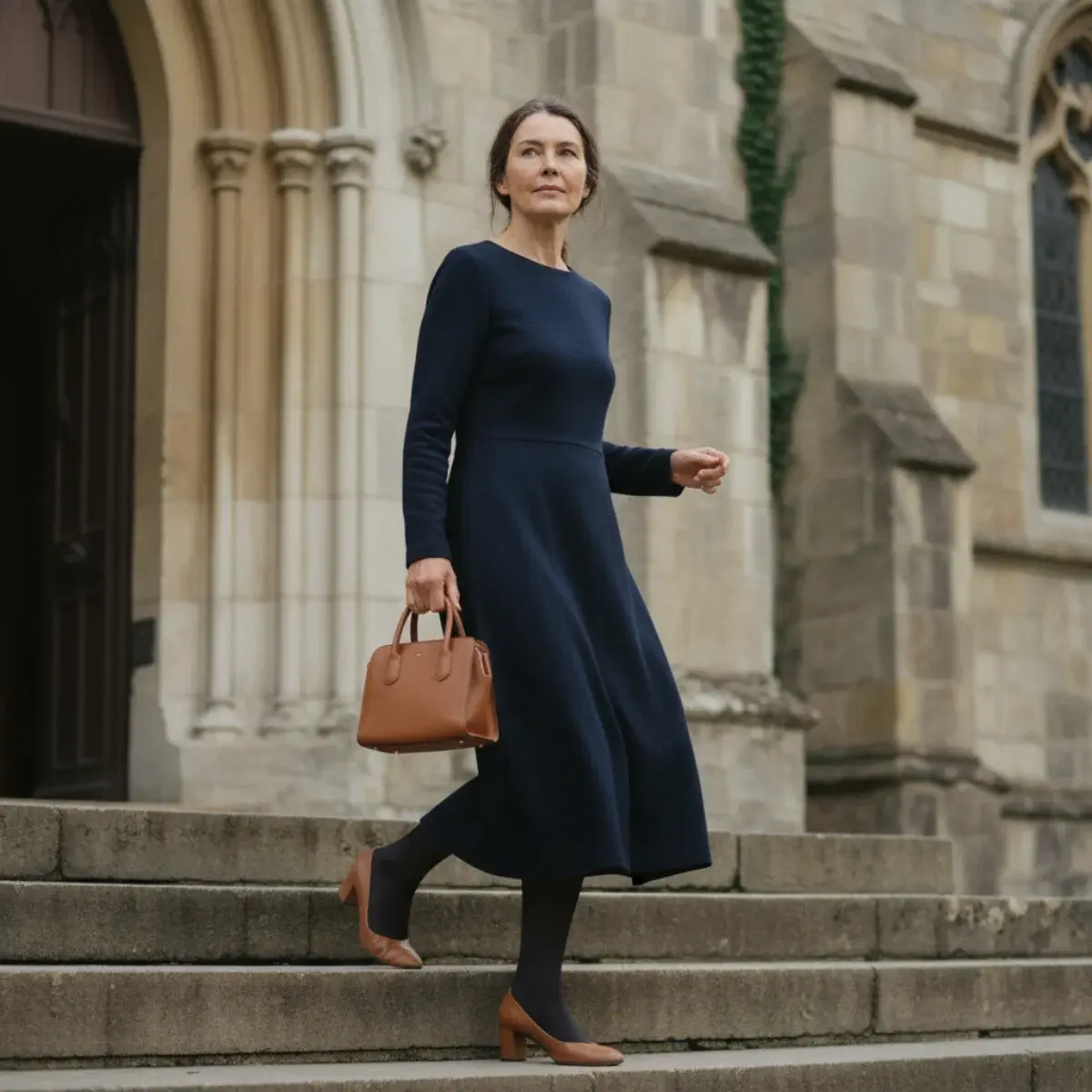
The church outfit is the wardrobe category most affected by setting and least by trend. What works for a Sunday morning service has held its shape for decades — modest, considered, comfortable enough to sit through ninety minutes, neither showy nor sloppy. Where most women trip up is one of two extremes: too dressy (full cocktail attire to a regular service, reading like a wedding guest who got the time wrong), or too casual (jeans and a hoodie that suit a coffee shop better than a sanctuary). This guide is ten outfits for the middle space, built around the same handful of pieces, sized to fit any modern Christian service from a city parish to a small-town chapel.
The line this guide holds: church outfits reward restraint over decoration. A woman in a clean wool midi dress, low pumps, and a single pearl necklace reads more considered than a woman in a bold floral dress with statement earrings, a fascinator, and shoes she can't kneel in. The principle is reverence translated into clothing — fewer pieces, better fabrics, restrained palette. Ten outfits follow, each built to honour the setting without becoming costume.
1. The wool midi dress
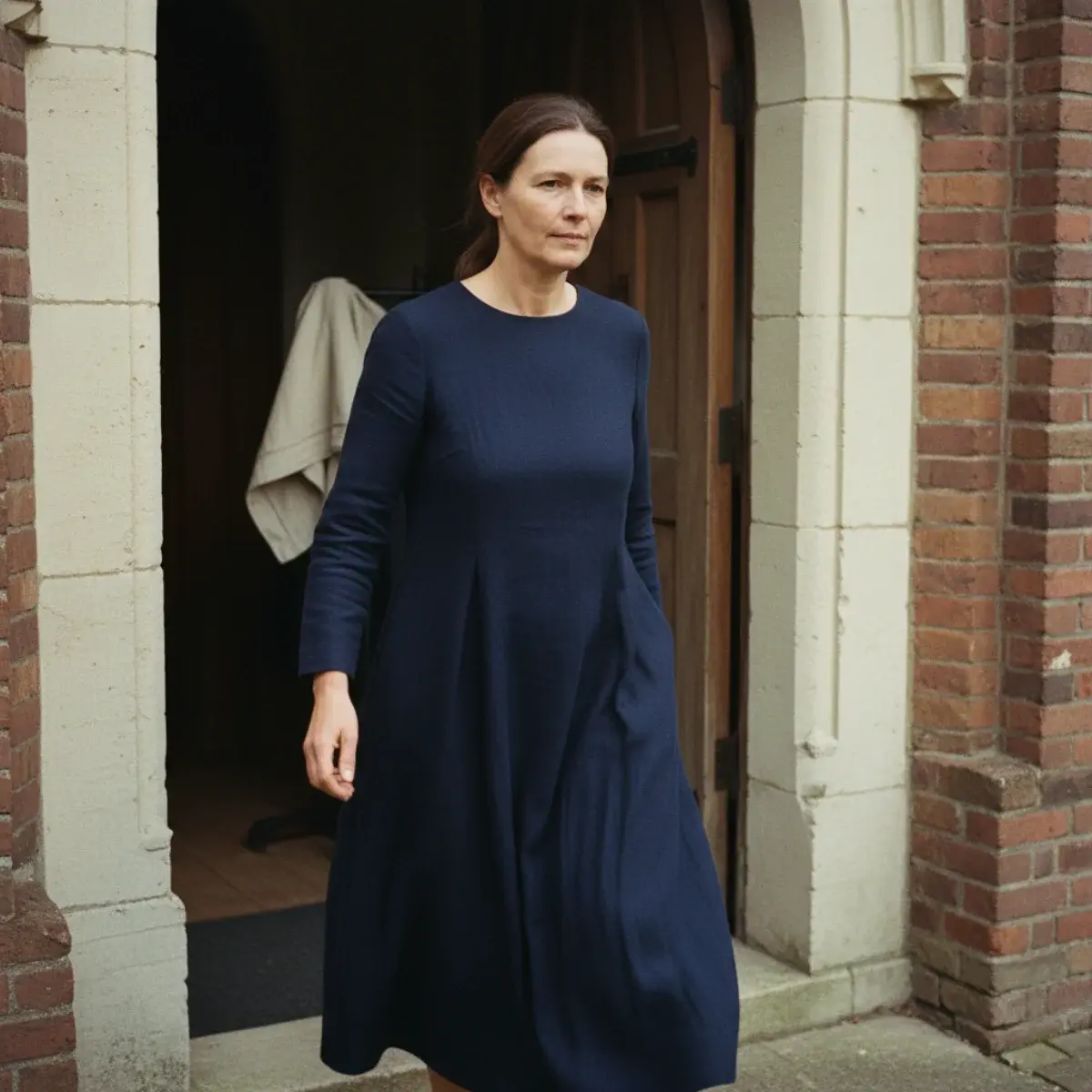
The cleanest church outfit there is. A long-sleeve wool or wool-blend midi dress in navy, charcoal, or a deeper neutral, worn with low-heeled leather pumps (5-6cm block heel) in tan or black, opaque tights for cooler seasons, and a small structured leather handbag. A pearl pendant or a fine cross at the neck. A fine wool or cashmere wrap over the shoulders for the service.
 1600×1067
Why it works. The dress is one piece — no separating elements to misalign. The wool drapes rather than clings. The midi length is universally appropriate. The sleeve handles the shoulder requirement. The shoe is practical for the standing-sitting-kneeling rhythm of a service.
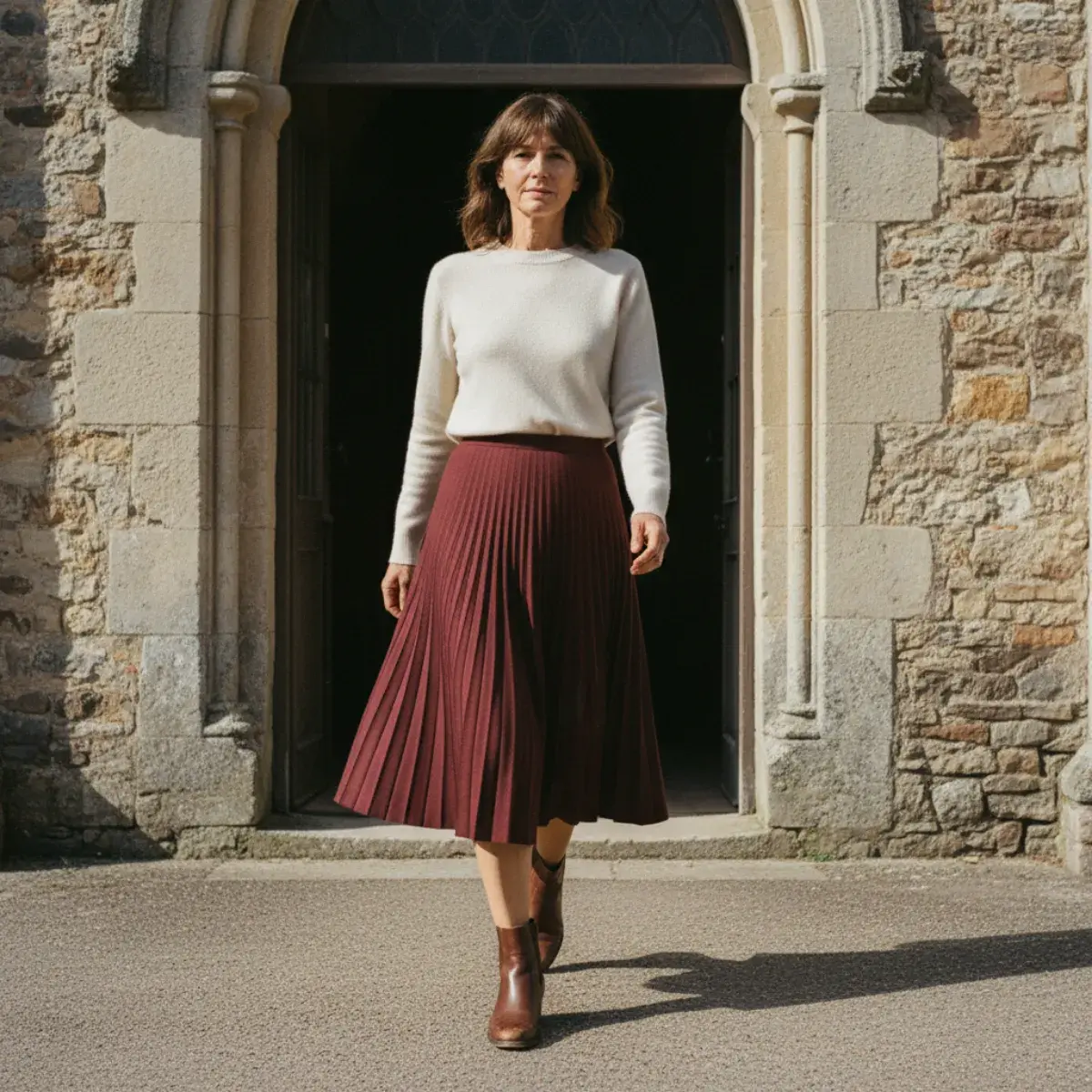
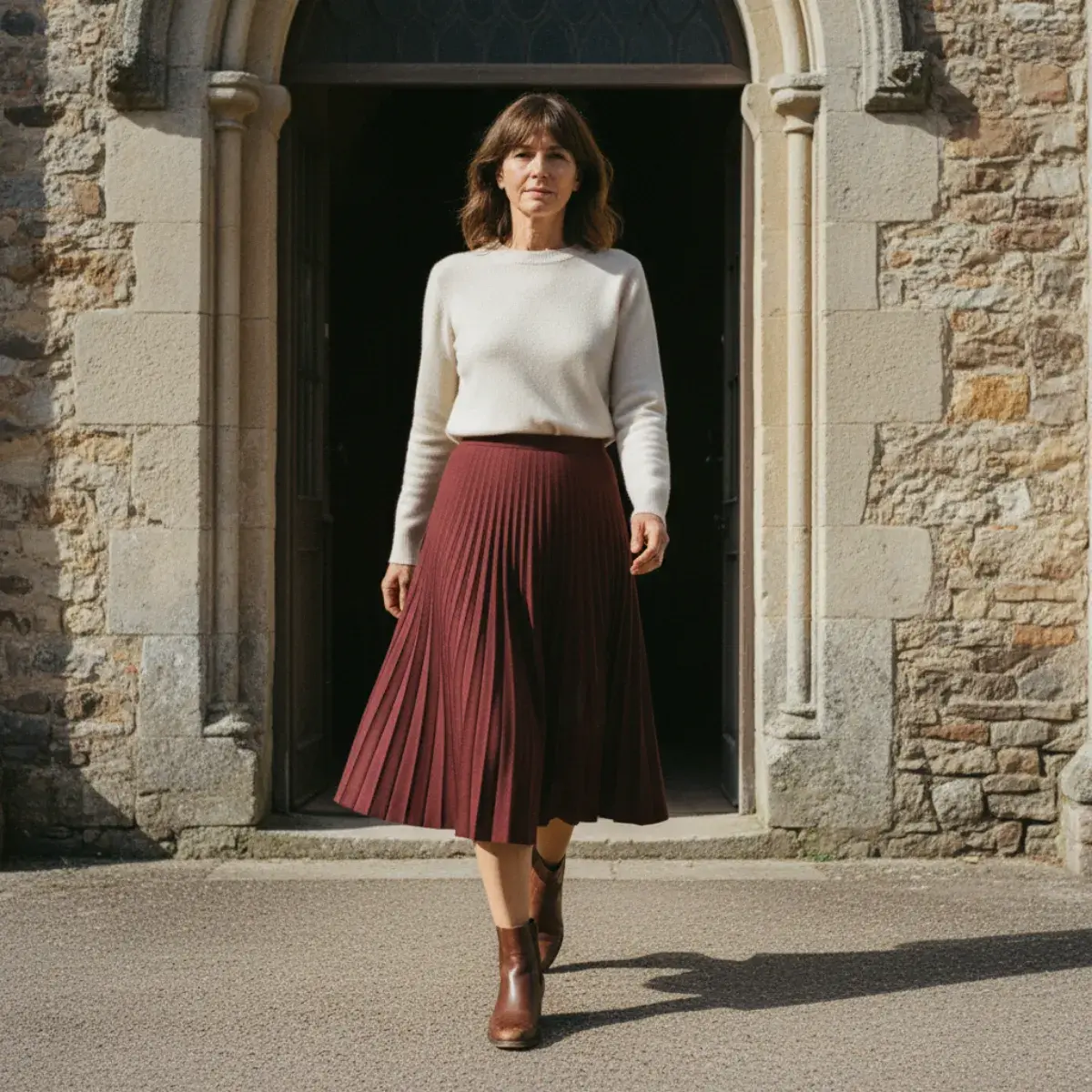
2. The pleated midi skirt and fine knit
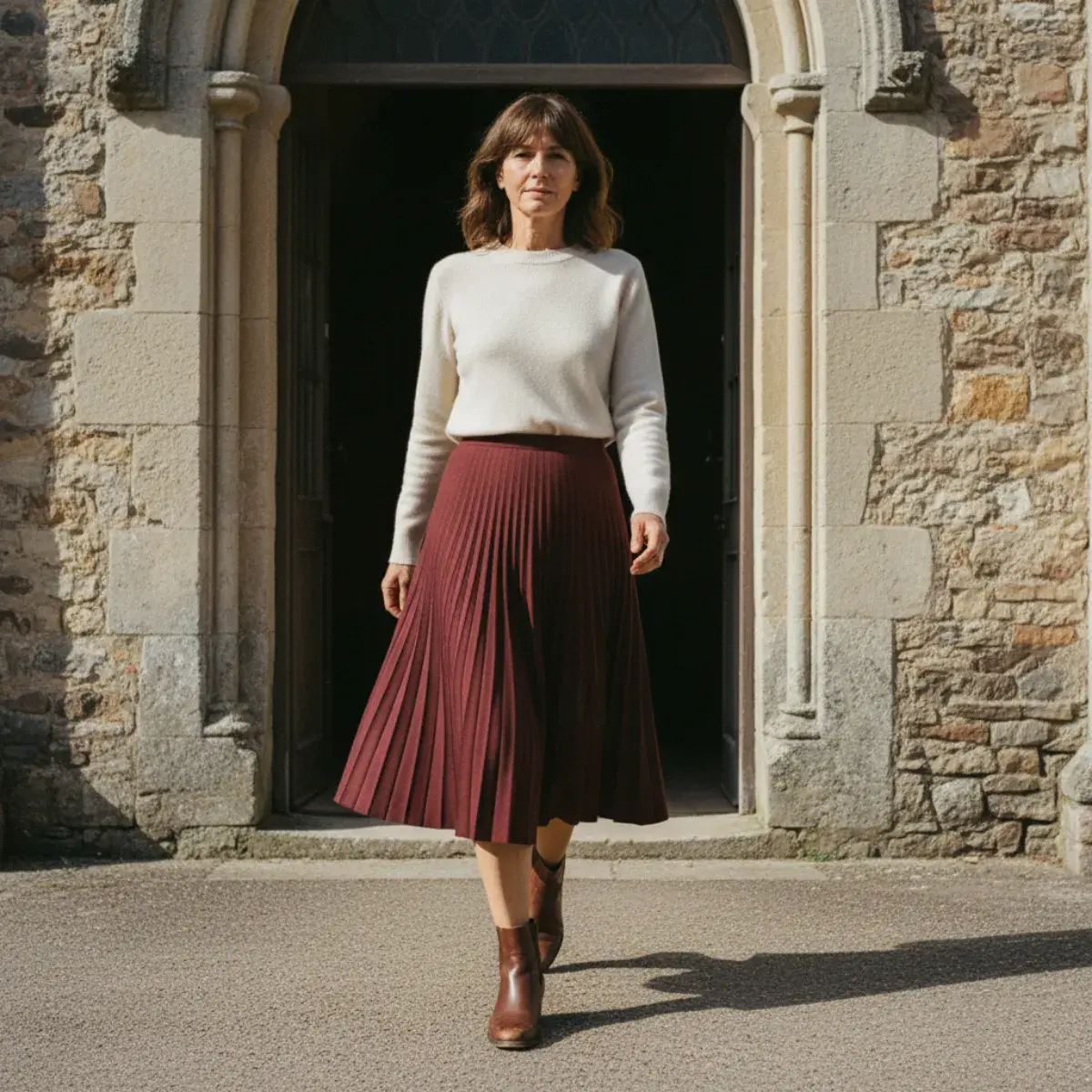
A two-piece church outfit. A pleated midi skirt in navy, charcoal, or a small print (small geometric, fine floral, classic plaid), paired with a fine-gauge merino or cashmere crewneck in cream, oatmeal, or a complementary tone (tucked in), opaque tights for cool weather, low leather pumps or ankle boots, and a small leather bag. A delicate chain at the neck.
 1600×1067
3. The shirt-dress
The everyday Sunday workhorse. A cotton or silk shirt-dress in stone, faded indigo, or a small classic print, with a fabric belt at the waist, knee or below-knee length, modest neckline. Low leather pumps or refined flats; a small leather bag. For cooler weather: a fine-knit cardigan or fine wool blazer layered over.
 1600×1067
4. The trouser-and-blouse outfit
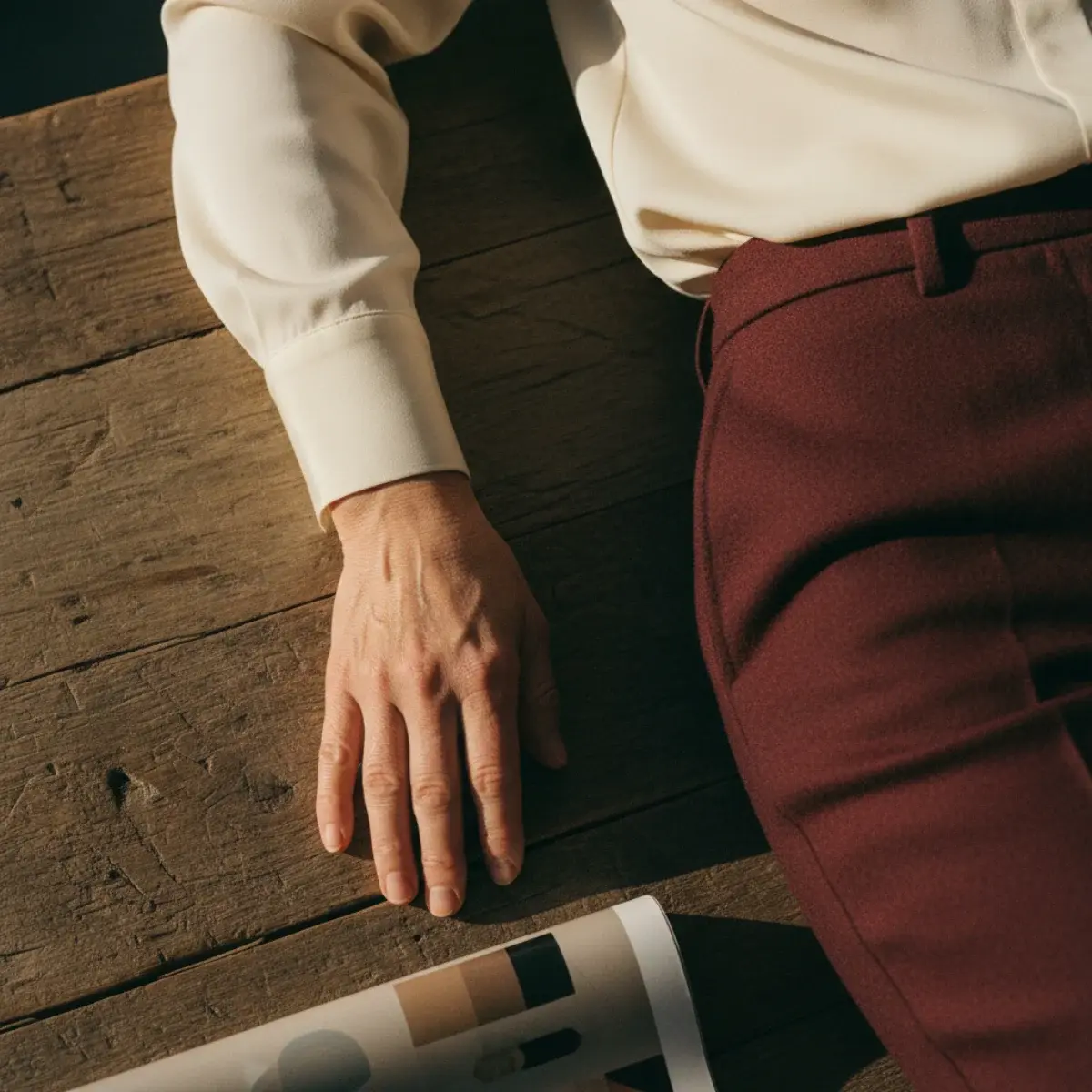
Where trousers are accepted (most modern Christian denominations). High-rise straight-leg or wide-leg trousers in wool flannel, lightweight wool, or fine cotton (mid-grey, navy, or charcoal), paired with a silk or fine cotton blouse in cream, white, or a soft tone (tucked), low leather pumps or refined ankle boots, and a small structured leather bag. A fine chain at the neck.
 1600×1067
Fit notes. The trouser sits at the natural waist, not the hip. The leg breaks once at the shoe. The blouse fits through the body without straining. The whole look reads grown-up rather than borrowed-from-the-office.
5. The wool suit (for special services)
The Easter Sunday, Christmas service, or wedding-at-church outfit. A wool suit in navy, cream, or a deeper neutral — single-breasted blazer with a midi skirt or wide-leg trouser — worn with a fine silk camisole or fine-knit top underneath, low leather pumps in tan or black, and a small structured leather bag. Pearl earrings and a single fine chain.
 1600×1067
The church outfit isn't about being seen. It's about not distracting from the reason you're there.
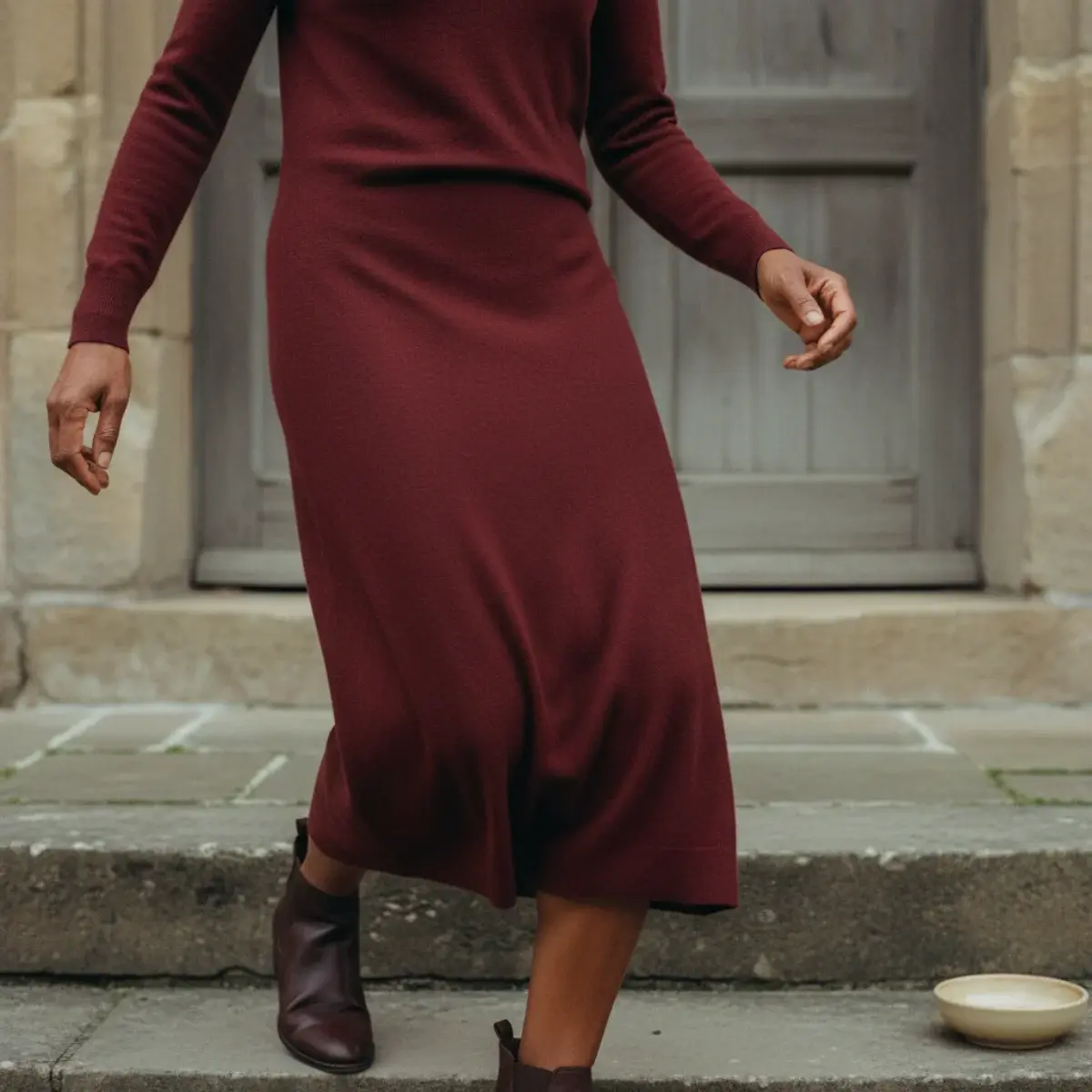
6. The fine-knit dress and ankle boots
The cooler-weather Sunday outfit. A fine-gauge cashmere or merino knit dress in midi length, with a modest neckline and long sleeves (oxblood, navy, charcoal, or cream), opaque tights, knee-high or refined ankle leather boots in brown or black, a leather belt at the waist where the knit dress allows. A small leather bag and pearl earrings.
 1600×1067
7. The midi-skirt-and-blouse combination
The smart-casual Sunday outfit. A wool or wool-blend midi A-line skirt in navy, charcoal, or a soft solid, paired with a silk blouse or fine cotton button-up in cream or pale blue (tucked), opaque tights for cool weather, low leather pumps or refined flats, and a small structured bag. A fine chain or a small pearl pendant.
 1600×1067
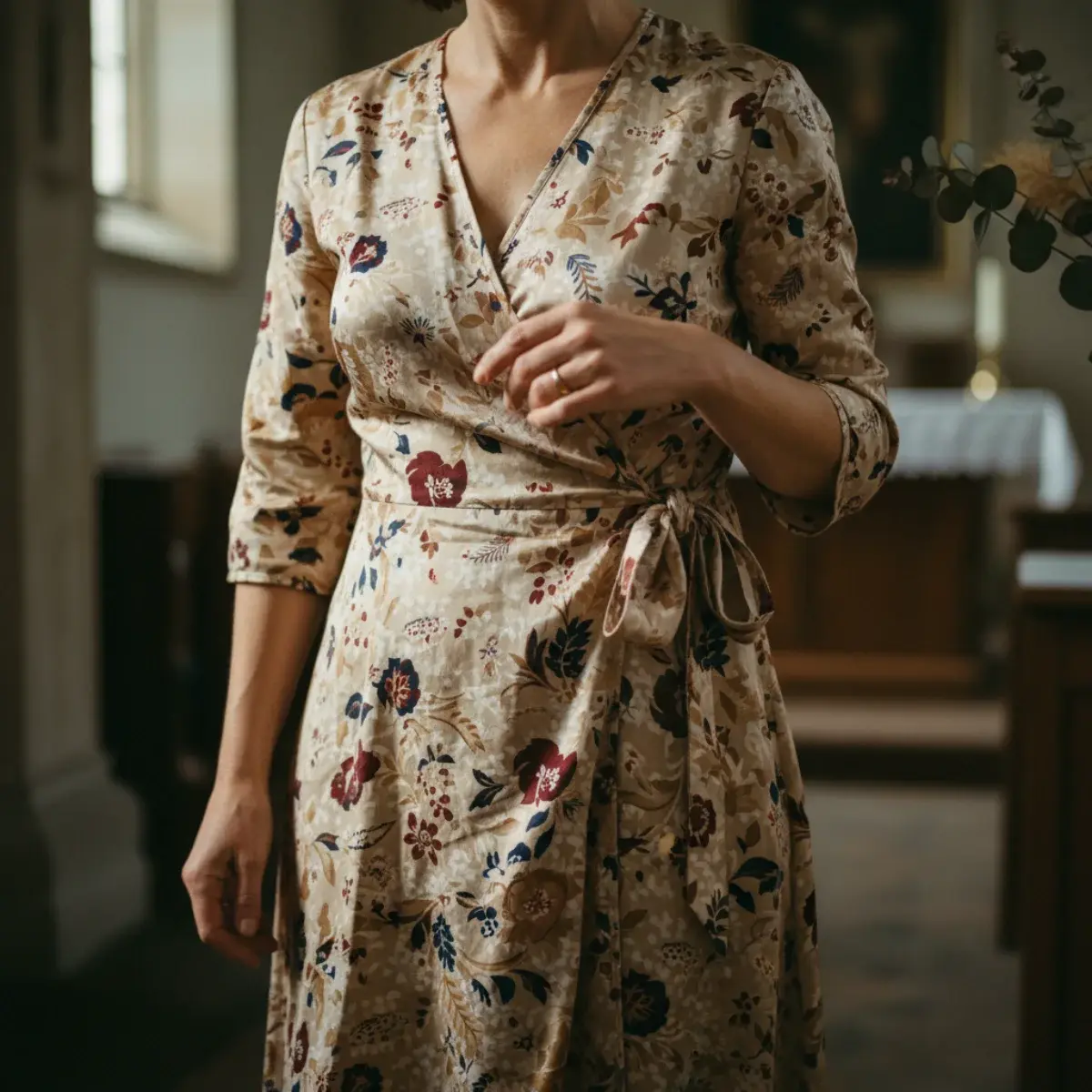
8. The wrap dress
A wrap dress in silk, silk-blend, or fine wool — knee-length or midi — in a small print or soft solid. The defined waist of the wrap reads flattering on most builds. Low leather pumps; opaque tights if cool. A fine-knit cardigan or silk wrap available for the service if shoulders aren't already covered.
 1600×1067
9. The all-cream church outfit
A specific kind of reverent elegance. A cream wool or wool-blend midi dress, or cream wide-leg trousers with a cream silk blouse, paired with low tan leather pumps or refined flats, a tan leather belt, and a small tan or chocolate leather bag. One warm-tone accent — pearl earrings, a tobacco wrap, a leather watch on a brown strap. Particularly suited to Easter, baptisms, and christenings.
 1600×1067
10. The dressed-down Sunday outfit
For genuinely casual congregations (small evangelical churches, contemporary services, jeans-Sunday churches). A fine-knit crewneck or fine cotton blouse in cream, oatmeal, or sage, paired with dark indigo straight-leg jeans (clean hem, no distressing — see business casual with jeans), and refined leather ankle boots or low leather loafers. A fine-knit cardigan over the top, a small leather bag, and a fine chain. The whole outfit reads dressed-down-but-considered — works where the service code is genuinely casual but you still want to look intentional.
 1600×1067
Key takeaways
- 1Three principles carry every church outfit: modest, considered, comfortable enough to sit through the service.
- 2Knee-length or midi length is the safest hem rule across denominations. Shorter reads too casual; floor-length reads costume.
- 3Cover the shoulders or have a wrap available. A pashmina or fine-knit cardigan in your bag handles every cover requirement.
- 4Low pumps (5-6cm block heel or kitten heel), refined leather flats, or refined leather ankle boots — all kneel-friendly.
- 5Restrained jewellery beats statement pieces. One small considered piece — pearl earrings, a fine chain — reads more reverent than a full stack.
- 6Special services (Easter, Christmas, weddings, funerals) call for one notch dressier than regular Sunday. The everyday Sunday wardrobe rotates; the special-service piece is worth investing in.
The denominational range
Christian denominations vary widely in dress code expectations. The general continuum:
Most formal range (Eastern Orthodox, traditional Catholic parishes, conservative Anglican):
- Long skirts or midi dresses
- Sleeves and high necklines
- Head covering for women in some Orthodox settings (a lace mantilla or simple scarf)
- Restrained jewellery
- Closed-toe shoes
Middle range (most Catholic, mainline Protestant, Episcopalian, mainline Methodist):
- Midi or knee-length dresses, skirts, or trousers
- Sleeveless tops accepted with a wrap during service
- Smart casual to business casual
- Standard restrained jewellery
- Heels or flats both fine
Most casual range (contemporary evangelical, non-denominational, small community churches):
- Dark jeans accepted, sometimes nice tops with anything
- Sleeveless tops accepted without covering
- Sneakers or casual flats accepted
- Personal style mostly accepted
How to read the local code. Visit once before committing to an outfit choice. What the women your age wear sets the actual local norm. The most-formal visible woman is the upper limit; the most-casual is the floor. Dress somewhere in the middle for the first few visits, then calibrate.
The fabric and silhouette guide
Three fabric categories carry almost every church outfit:
Drape fabrics — silk, fine wool, wool-blend knits, soft cotton blends. Move with the body without clinging. The most-versatile category. Use for dresses, skirts, blouses.
Structured fabrics — wool flannel, tweed, structured cotton, ponte. Hold shape without becoming stiff. Use for suits, blazers, tailored trousers.
Knit fabrics — fine-gauge cashmere, merino. Provide warmth and shape together. Use for crewnecks, fine cardigans, knit dresses.
Skip: very thin jersey (clings to undergarments), satin in a daytime setting (reads cocktail), heavy denim (reads weekend), athletic fabrics in any form.
The colours that work
The church palette runs warm and restrained. Five anchor colours cover almost every situation:
Navy — the most-versatile workhorse. Pairs with every other piece. Charcoal — slightly more formal than navy. Cream — the soft alternative. Particularly suited to spring and summer services. Oatmeal / soft beige — warmer than cream, equally restrained. Oxblood / deep wine — the autumn and winter accent.
Supporting tones: soft sage, dusty pink, navy floral, fine-stripe shirting blues.
Skip: bright primary colours (read sporty), neon (read unsuitable for any reverent setting), all-white in summer (reads bridal in some contexts).
The shoes that earn their place
Three pairs cover almost every church outfit:
Low-heeled leather pumps — 5-6cm block heel or kitten heel, in tan, oxblood, navy, or black. The dressier workhorse. Comfortable enough to stand for the service and walk to the parking lot.
Refined leather flats — pointed-toe or almond-toe loafers, ballet flats, low penny loafers. For warmer weather and casual services.
Refined leather ankle boots — brown or black, low or block heel. For cooler weather and dressier services.
Where to avoid: stilettos (impractical for kneeling, sink into church carpet), athletic sneakers, flip-flops, casual slides, anything visibly worn-out. The footwear styling guide covers the broader year-round wardrobe.
Comparison: regular Sunday vs special services
| Element | Regular Sunday | Easter / Christmas / Wedding | Funeral |
|---|---|---|---|
| Dress / outfit | Midi dress, skirt + blouse, trousers + blouse | Wool suit, dressier midi dress, special-occasion dress | Black or dark navy midi dress, dark suit |
| Fabric | Wool blend, fine cotton, silk | Wool, silk, finer fabrics | Wool, matte fabrics — no sheen |
| Colour | Navy, charcoal, sage, cream, dusty pink | Lighter and brighter for celebrations | Black, charcoal, very dark navy |
| Shoes | Low pumps, flats, ankle boots | Low pumps in coordinated tone | Black or dark leather low pumps |
| Bag | Small structured leather | Small structured leather, slightly dressier | Black or dark structured leather |
| Jewellery | Fine chain, small pearls | Pearl strand or fine chain + small pearl earrings | One small piece only — wedding band, small pearl studs |
| Hat | Optional in traditional churches | Optional / encouraged for Easter in some traditions | Avoid unless tradition specifically calls for it |
The level of formality shifts; the principles hold. Modest, considered, restrained.
The church wardrobe in seven pieces
If building from scratch:
- One navy or charcoal wool midi dress — the everyday Sunday workhorse
- One wool or wool-blend pleated midi skirt in a small print or solid
- One pair of wool trousers in mid-grey or navy
- Two fine blouses — one white or cream silk, one pale blue cotton
- One fine-knit cardigan in cream or oatmeal
- One pair of low-heeled tan leather pumps
- One small structured leather bag in tan or chocolate
Add: a wool suit (or wool blazer + matching skirt) for special services, a pashmina or fine wool wrap for the shoulder cover, and a fine pearl necklace or single delicate chain. Seven pieces, ten outfits, every church situation a modern woman encounters across the year covered.
The accessories that finish
Restrained beats decorated. The pieces that work:
Jewellery. A fine chain or a single pearl pendant at the neck. Small pearl stud earrings or a delicate gold drop. A wedding band and a watch. One bracelet at most, and only fine. See the jewellery styling guide for fuller treatment.
A small structured leather bag. Top-handle or small shoulder bag in tan, chocolate, oxblood, or black. Big enough for keys, phone, a small wallet, and a folded pashmina or wrap. Skip oversized totes; the church handbag is deliberately compact.
A pashmina, fine wool wrap, or silk scarf. For shoulder covering during the service or extra warmth in a cold sanctuary. Folded small in the bag when not in use.
A hat (occasional and tradition-dependent). In Catholic, Orthodox, and traditional Anglican settings, head coverings range from optional to expected. A simple felt or straw hat in a quiet colour, a fine mantilla, or a fascinator for very dressy occasions. Worth understanding the local norm before assuming.
Where church outfits go wrong
Three common failures:
Over-dressing for a regular Sunday. A cocktail dress, fascinator, and statement heels at a 10am family service reads like you mistook the time of the wedding. Match the formality to the service, not to the upper limit of the wardrobe.
Under-dressing for a special service. Jeans and a sweater at Easter Sunday or a christening reads like you didn't realise it was a special occasion. The dress-code-up notch matters more than usual.
Forgetting the shoulder cover. Wearing a sleeveless dress to a Catholic or Orthodox church without a pashmina or cardigan in your bag means scrambling at the door or sitting through the service self-conscious. The cover layer should be packed regardless of which church you're visiting, until you know the local norm.
The general principle: church is one of the few remaining contexts where restraint reads as the highest form of consideration. A woman in a clean wool midi dress, low pumps, and a fine chain reads more thought-through than a woman in three statement pieces fighting each other. Build small, build deliberately, and the wardrobe lasts decades because the principles do.
See all women's outfit guides → · Old money outfits for women → · Quiet luxury outfits → · Cocktail attire for women →
Frequently asked
- What's the modern rule for what women wear to church?
- The general principle across most Christian denominations is modest, considered, and comfortable enough to sit through the service. That usually translates to: shoulders covered (or a wrap available), hemline at or below the knee for skirts and dresses, fabrics that drape rather than cling, and shoes you can stand and sit in. The strictness varies dramatically by denomination — some Catholic parishes still expect a head covering for women, most evangelical and mainline Protestant churches accept smart casual. Read the room: what the women your age in the congregation wear sets the actual code.
- Are pants acceptable for women at church?
- In most modern congregations, yes — tailored trousers, wide-leg trousers, or a smart trouser-and-blouse combination is acceptable in most Catholic, Protestant, and most Orthodox settings. The exception: traditional Orthodox and some conservative evangelical churches where women still wear skirts or dresses. When in doubt about a new church, wear a midi dress or skirt for the first visit; switch to trousers once you've read the local norm.
- Do I need to cover my shoulders for church?
- In Catholic churches and most Orthodox churches, yes — bare shoulders are considered too casual or insufficiently modest for the sanctuary. In most Protestant denominations, sleeveless tops or dresses with covered shoulders (small cap sleeves, modest straps) are accepted. The safest approach across denominations: a dress or top with sleeves or short sleeves, or carry a lightweight cardigan, fine-knit shawl, or pashmina that covers the shoulders during the service and can be removed afterwards.
- What shoes work for church?
- Three options cover most situations: low-heeled leather pumps (a 5-6cm block heel or kitten heel, in tan, black, or oxblood), leather ankle boots in brown or black for cooler seasons, or leather flats in a refined cut (pointed-toe or almond-toe loafer, ballet flat). Avoid: stiletto heels (impractical for kneeling and standing), athletic sneakers, flip-flops, and casual slides. The shoe should photograph as considered and let you stand, sit, and kneel without difficulty.
- Can I wear black to church?
- Yes — black is appropriate for most church services, particularly evening services, funerals (always), and Holy Week observances. For Easter Sunday, Christmas services, and weddings held in church, lighter and brighter colours read more celebratory (cream, soft pink, navy, sage). For ordinary Sunday services in most denominations, black, navy, charcoal, and any deeper neutral are all appropriate. Where black might read too severe: a baptism, a christening, a daytime wedding in summer. Match the dress code to the occasion within the church year.
- What's the difference between Sunday church outfits and special service outfits?
- A regular Sunday service usually accepts smart casual — a midi dress or skirt with a fine-knit, tailored trousers with a blouse, or a knit dress with low heels. Special services (Easter, Christmas, weddings, baptisms, funerals) call for one notch dressier — a proper suit, a more formal dress, dressier shoes, sometimes a hat in traditional settings. The everyday Sunday wardrobe can rotate through the year; special-service outfits are worth one or two pieces of higher quality that last decades.
- What jewellery is appropriate for church?
- Restrained jewellery reads most appropriate for church across denominations. A simple cross or religious pendant, a fine chain, pearl earrings (small studs or single-strand necklace), a wedding band, a watch. Avoid: large statement jewellery, very loud bracelets that clatter through quiet moments, anything that overwhelms a modest outfit. The principle: one or two small considered pieces, never the full stack. See [the jewellery styling guide](/style-guide/jewelry) for the broader year-round approach.
Written by Marguerite Sterns, looksyra editorial. Last updated May 2026.