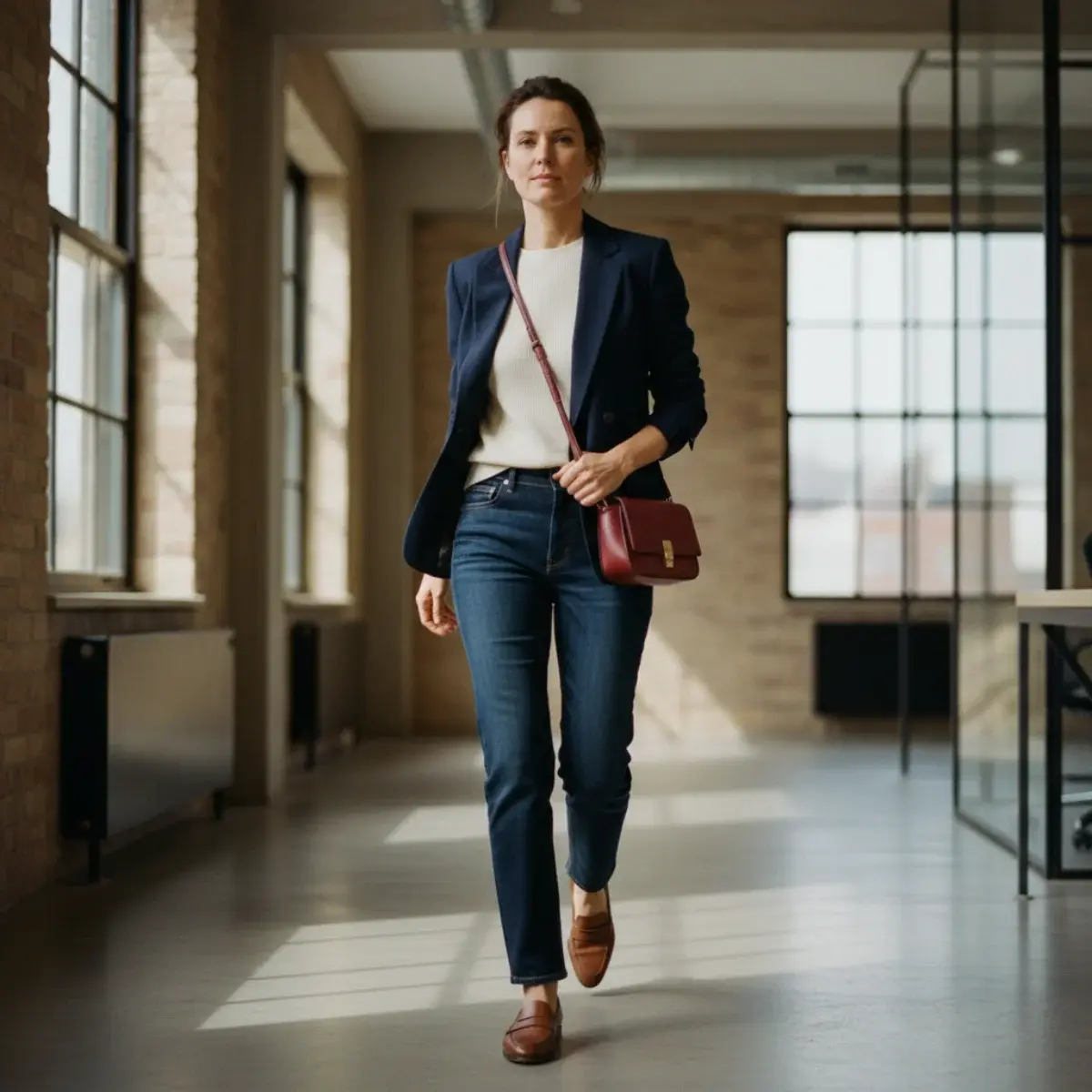
The question "are jeans business casual?" gets asked thousands of times a month, and the honest answer is the one nobody wants: it depends. Denim sits right on the boundary of the office dress code, accepted in some workplaces and quietly frowned on in others, which makes it the single most ambiguous garment in professional dressing. But the ambiguity resolves into clear rules once you separate the two questions hiding inside it — can you wear jeans here, and how do you wear them so they read business casual rather than weekend. This guide answers both. It sits in the casual silo because denim is fundamentally a casual piece dressed up; for the wider workplace code, see our business casual for women guide.
The principle this guide will hold: the question is never just "are jeans allowed" but "do these jeans, styled this way, in this office, read as polished" — and you control two of those three. You cannot change the office's culture, but you fully control which jeans and how you style them, and that is usually enough to make denim work where it is permitted at all.
Are jeans business casual? The real answer
Whether jeans count as business casual comes down to the specific workplace, because the term has no fixed definition and every office interprets it differently. In modern, tech, creative, and startup environments, dark, neat jeans are commonly accepted as business casual, sometimes always and sometimes on designated days. In traditional corporate, finance, legal, and client-facing settings, denim usually falls outside the code regardless of how it is styled, because the culture associates jeans with informality.
So the first move is research, not shopping. Observe what respected colleagues at your level and above actually wear, check any written dress code, and when you are new or genuinely unsure, default to tailored trousers, which are always safe. Once you have confirmed that denim is acceptable in principle, the second question — how to style it so it reads polished — is entirely within your control, and that is where the rest of this guide lives.
 1600×1067
The denim rules that make jeans work
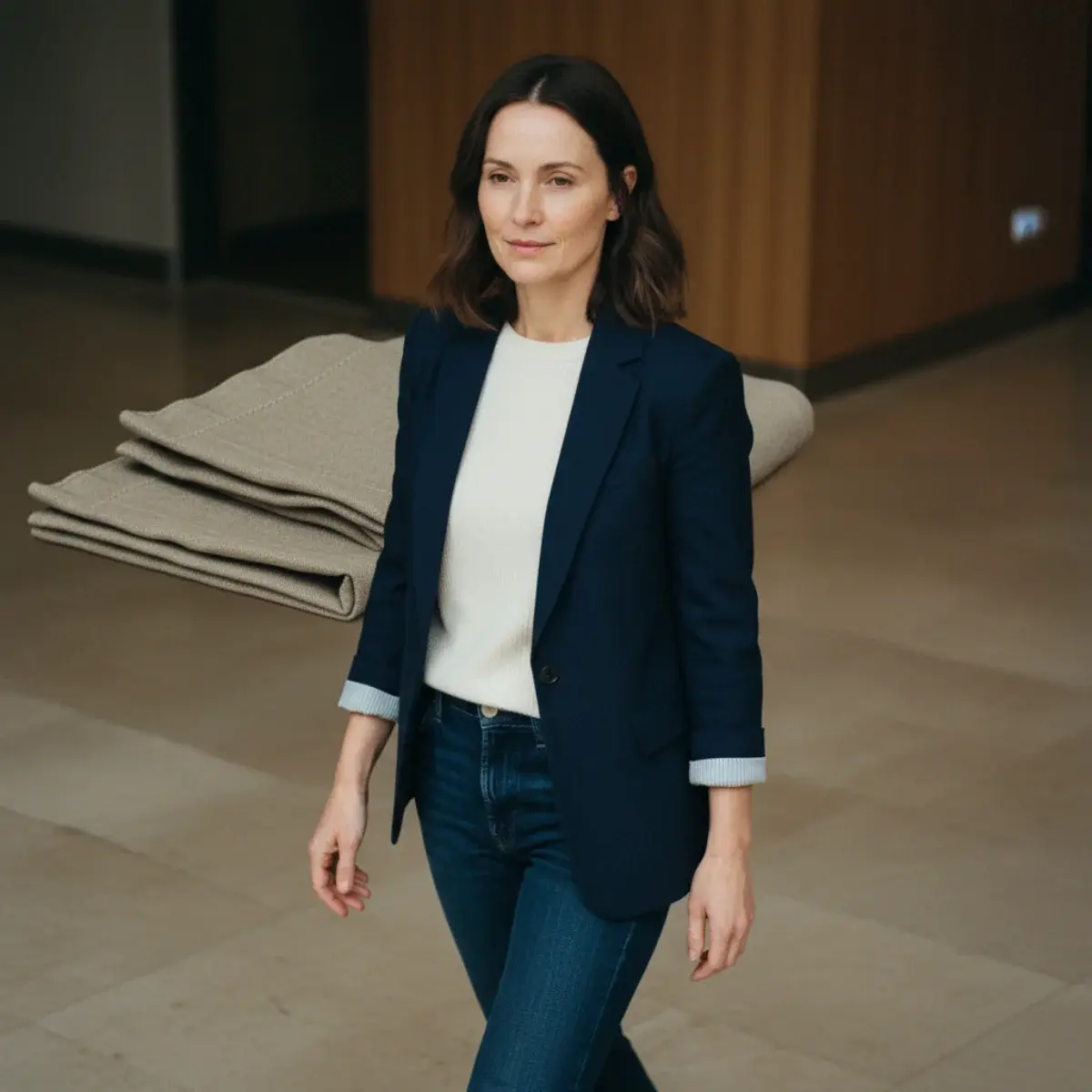
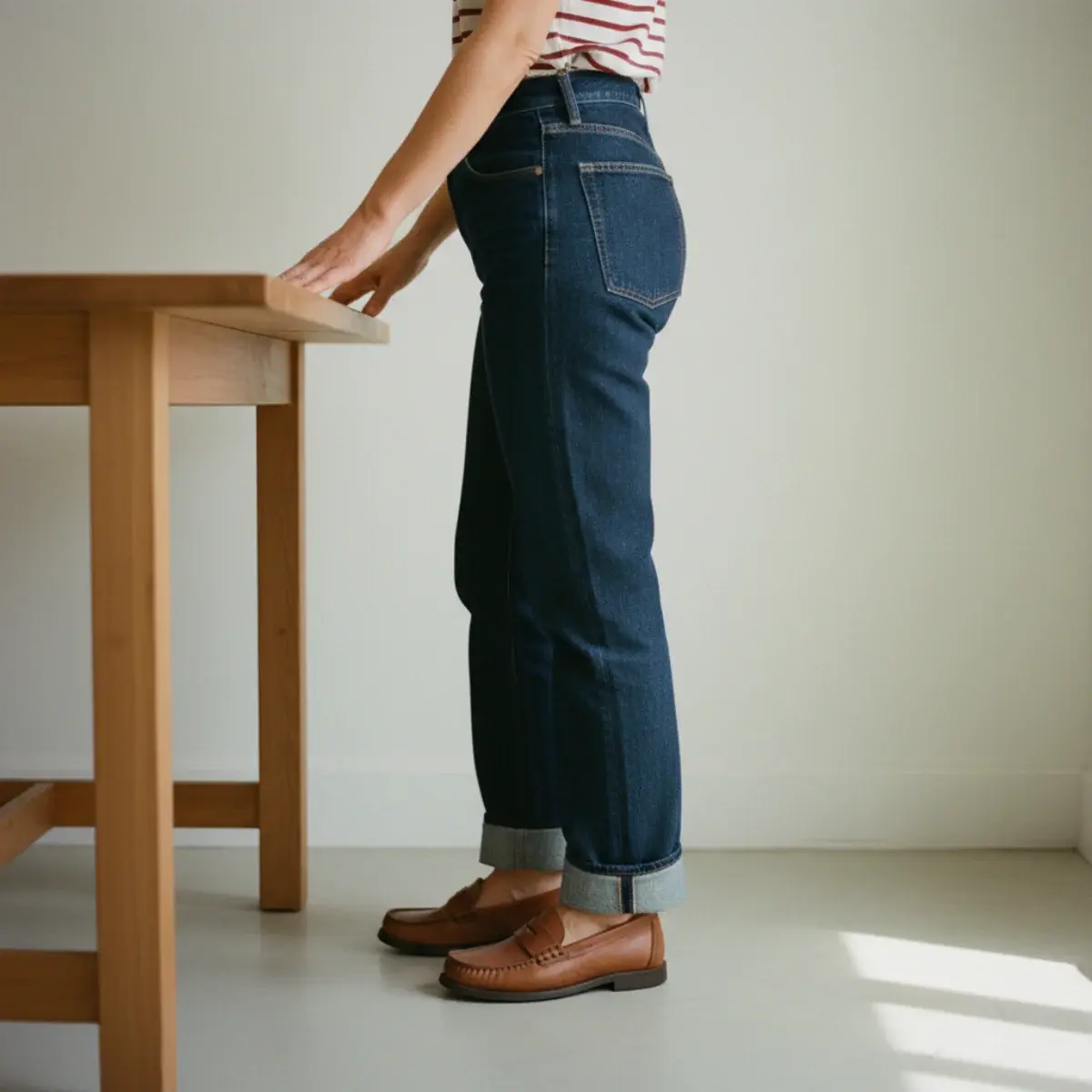
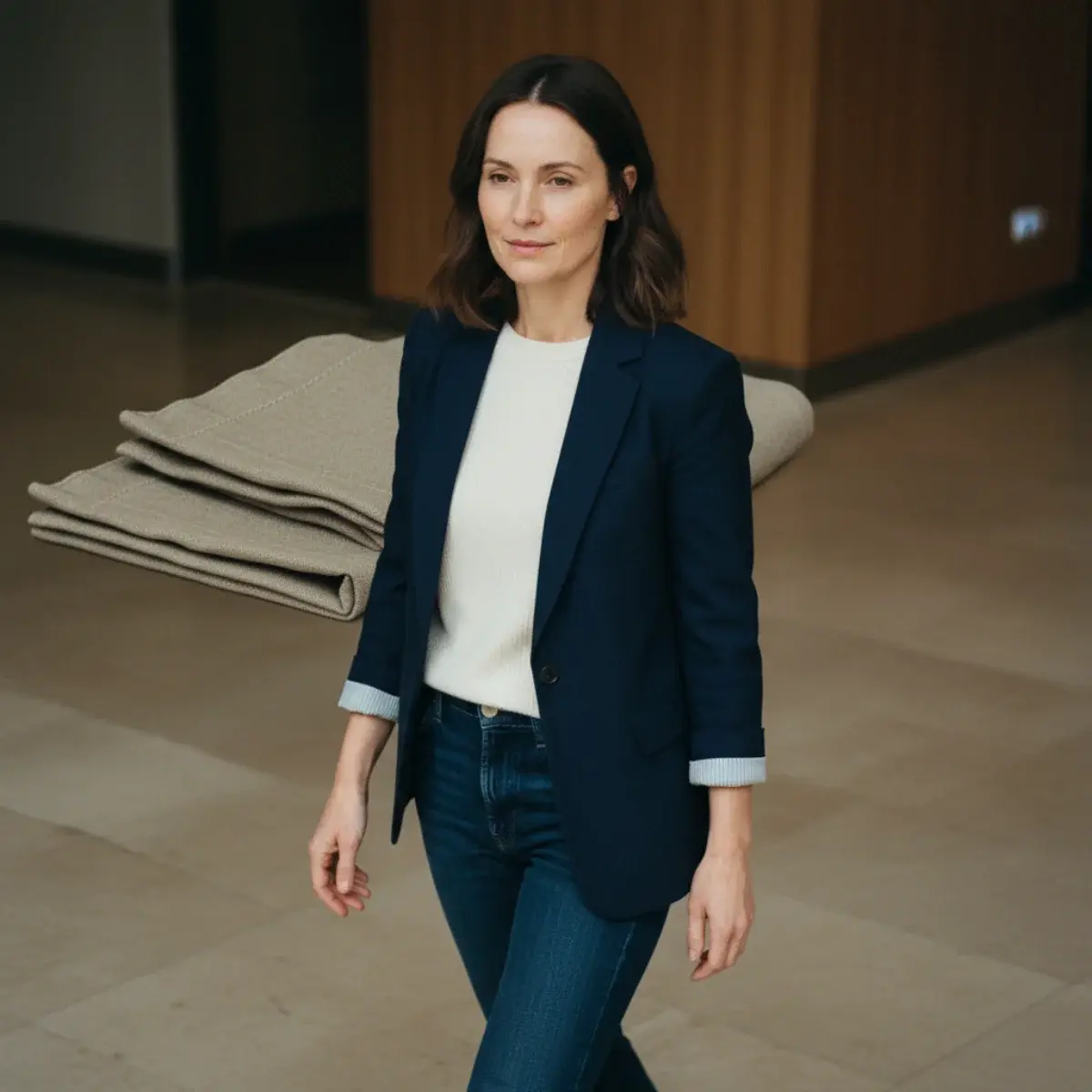
When jeans are allowed, three rules decide whether they read business casual or weekend, and all three are within your control. Wash: choose dark — indigo, deep navy, or black — because a dark, even wash resembles tailored trousers far more than a light or faded one, which reads unmistakably casual. Condition: keep them clean and undistressed, with no rips, no heavy fading, no frayed or raw hems and no decorative damage, since any distressing pulls the look straight back to the weekend. Fit: a tailored straight, slim, or structured wide-leg, hemmed to the right length, because denim that fits well is what makes the whole outfit read intentional rather than off-duty.
Get those three right and you are most of the way there before you choose a single other piece, because the eye reads wash, condition, and fit almost instantly and forms its impression of "polished" or "off-duty" from them alone. A dark, clean, well-fitting jean is the closest denim comes to a trouser, and it gives the styling above and below something polished to build on. Get any of the three wrong — a light wash, a ripped knee, a baggy or too-tight fit — and no blazer or heel will fully rescue it. The jeans themselves have to do their share of the work, which is the part people most often skip — they reach for the blazer and the heels to rescue a light, baggy, or distressed jean, when the faster fix is simply starting with a better pair of jeans in the first place.
 1600×1067
12 business casual outfits with jeans
Once the denim is right, these outfits read polished and office-appropriate.
- Dark straight jeans, a silk blouse, a tailored blazer, and loafers.
- Black slim jeans, a fine merino knit, an ankle boot, and a structured bag.
- Indigo wide-leg jeans, a tucked white shirt, a heeled mule.
- Dark jeans, a knit polo, a longline cardigan, and flats.
- Black jeans, a silk camisole, a blazer, and a low heel — desk to dinner.
- Dark straight jeans, a turtleneck, a tailored coat, and ankle boots for winter.
- Indigo jeans, a structured shirt, a waistcoat, and loafers.
- Black jeans, a fine knit, a trench, and a heeled boot for transitional weather.
- Dark jeans, a blouse with a bow neck, a blazer, and pointed flats.
- Black wide-leg jeans, a tucked fine knit, a belt, and a heeled mule.
- Dark jeans, a silk shirt, a sleeveless tailored vest, and loafers for summer.
- Indigo jeans, a roll-neck, a wool blazer, and ankle boots.
The pattern across all twelve is constant: dark clean denim plus a smart top plus a tailoring layer plus a polished shoe. Swap the pieces within those slots and the outfits multiply, exactly as a capsule wardrobe is designed to do. Notice how often the blazer appears — it is the piece that does the most work, turning what would otherwise be a weekend outfit into a clearly considered one, which is why a single good blazer is the highest-value addition to a denim-friendly work wardrobe. Notice too that the tops are never plain tees: a silk blouse, a fine knit, a structured shirt, or a roll-neck is what keeps the eye reading the outfit as office-appropriate rather than off-duty.
 1600×1067
How to style jeans up for the office
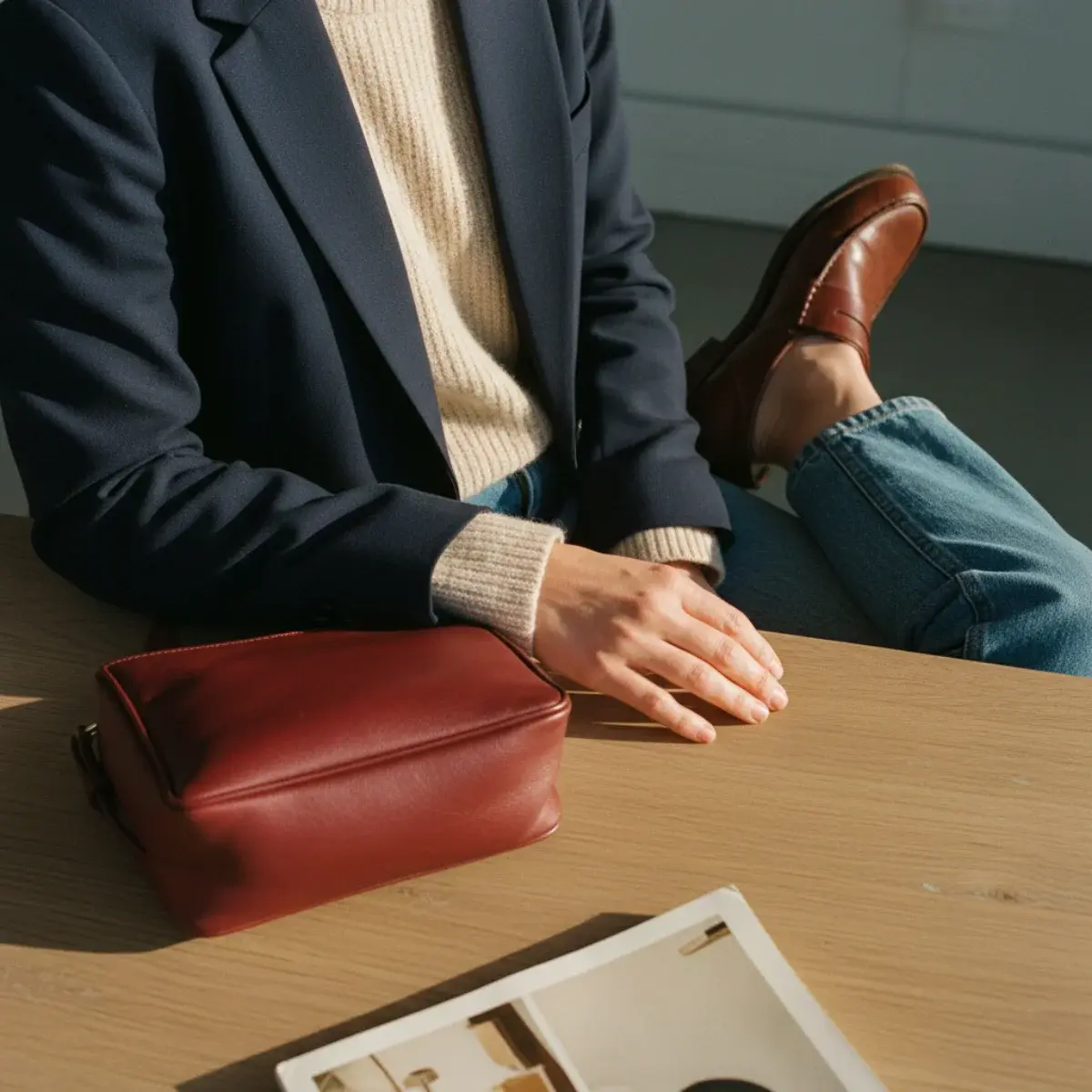
The styling is what transports denim from casual to business casual, and a few moves do the heavy lifting. The blazer or tailoring layer is the most powerful — a structured blazer, a waistcoat, or a tailored coat instantly signals intention and is the fastest way to office-ify jeans. The top matters next: a silk blouse, a fine knit, or a structured shirt reads far more polished than a tee, and tucking it defines the waist and lifts the whole look. The shoe seals it: loafers, ankle boots, heeled mules, or low heels read business casual where trainers and casual sandals do not.
Two finishing touches complete the shift. A structured leather bag in place of a slouchy or sporty one pulls the outfit upward, as the bag styling guide explains, and considered details — a belt, a fine necklace, a neat watch — signal care. The throughline is that the denim provides the relaxed base while everything else provides the polish, which is the same relaxed-base-plus-polished-accent structure that defines smart casual dressing generally.
 1600×1067
Which offices to skip jeans in
Reading the workplace correctly is as important as styling the jeans well, and some settings call for leaving denim out regardless of how polished it looks. Traditional corporate, finance, and legal environments generally exclude jeans from business casual, expecting tailored trousers or skirts instead. Client-facing roles often require dressing to the most conservative client's expectations, which usually means no denim. Interviews are their own case — even at an office that allows jeans day-to-day, an interview calls for dressing a notch up, so trousers are safer, a point our job interview outfit guide covers in detail.
When in doubt, or when you are new and have not yet read the room, default to tailored trousers, which are universally safe and never misjudge the code. You can always introduce jeans later, once you have seen what senior colleagues actually wear and confirmed that denim is genuinely accepted. The cost of erring toward trousers is nothing; the cost of being the only person in jeans at a formal office is a small, lingering impression you would rather avoid. There is also no rush: it is far easier to introduce denim once you have established yourself and read the culture than to walk back an early misjudgement, so when you are new, let the trousers do the work for the first few weeks.
 1600×1067
Business casual jeans through the seasons
Denim works year-round at the office, with the styling layers shifting by season. In spring and summer, keep the jeans dark and the layers light — a silk shirt, a fine cotton knit, a lightweight blazer, or a sleeveless tailored vest — with loafers or a heeled mule, and lean on fabric quality rather than bulk for the polish. A dark, clean jean with a crisp silk top and a structured bag reads business casual even on a warm day.
In fall and winter, layering does the polishing work: a roll-neck under a wool blazer, a tailored coat over the top, and an ankle or knee boot, with deeper tones suiting the season as our fall outfits hub describes. A scarf adds warmth and a finishing detail. The constant across seasons is the dark, clean, well-fitting jean as the base; only the weight and number of the polishing layers change with the temperature.
 1600×1067
Key takeaways
- 1Whether jeans are business casual depends on the workplace — common in modern and creative offices, usually out in traditional ones.
- 2Three denim rules make jeans work: a dark wash, a clean undistressed condition, and a tailored fit.
- 3Style denim up with a blazer or tailoring layer, a smart tucked top, polished shoes, and a structured bag.
- 4Skip jeans in traditional, corporate, legal, and client-facing offices, and for interviews — default to trousers when unsure.
- 5Dark indigo, navy, and black washes read most polished; light and faded washes read casual and are riskier.
The best jeans to buy for the office
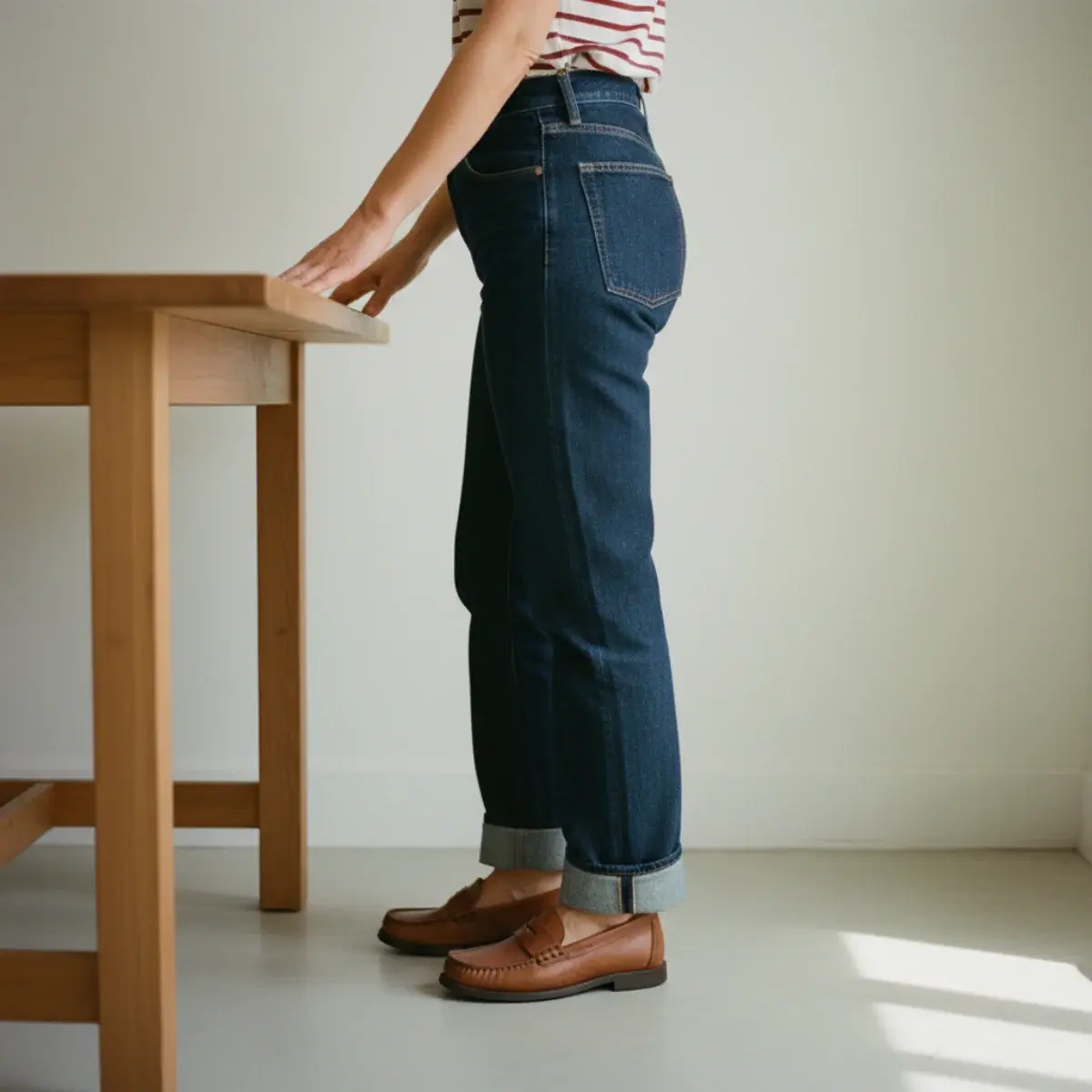
If denim is allowed at your workplace, it pays to keep one or two pairs reserved as office jeans, chosen specifically to read polished, so they stay pristine rather than doubling as weekend wear that fades and frays. Prioritise the wash first: a dark, even indigo, a deep navy, or a true black resembles a tailored trouser far more than a mid or light wash, and a clean, uniform colour with no whiskering or fading reads most professional. Avoid anything with visible distressing, decorative rips, or heavy contrast stitching, all of which signal casual no matter how they are styled.
Cut and fit decide the rest. A straight leg, a clean slim, or a structured wide-leg all read office-appropriate when tailored to the right length — a hem that pools or rides up undoes the polish, so a quick alteration is worth it. Choose a fabric with enough structure to hold its shape through a workday rather than a soft, stretchy denim that bags at the knee by afternoon. Reserve these jeans for work, hang them rather than crumpling them, and they will keep reading business casual for years. The principle is the same one behind the old money outfits guide: buy fewer, better pieces, fit them well, and maintain them, and inexpensive jeans will out-dress pricier ones that are badly cut or carelessly worn.
 1600×1067
Where to go from here
Business casual jeans sit where casual and the office meet. Read business casual for women for the full workplace code, smart casual outfits for women for the broader relaxed-but-polished register, and the casual outfits guide for the denim-led base it all builds on. For interviews specifically, see the job interview outfit guide. Who What Wear and Harper's Bazaar publish reliable workwear and denim coverage each season.
Frequently asked
- Are jeans business casual?
- Sometimes. Dark, undistressed, well-fitting jeans can read business casual in many modern, creative, and tech workplaces, especially when paired with a blazer, a smart top, and polished shoes. More traditional, corporate, legal, and client-facing offices usually exclude denim entirely. Whether jeans count as business casual depends on the specific workplace, so the safe move when unsure is tailored trousers.
- What kind of jeans are business casual?
- Dark-wash jeans — indigo, navy, or black — in a clean, undistressed condition and a tailored fit: straight, slim, or a structured wide-leg. No rips, heavy fading, frayed hems, or very casual styles. The darker and cleaner the wash and the better the fit, the more the jeans read as business casual rather than weekend wear.
- How do you style jeans for business casual?
- Pair dark, clean jeans with a smart top or fine knit, add a blazer or a structured cardigan, and finish with loafers, ankle boots, or low heels. Tuck the top, add a structured bag, and keep the palette neutral. The blazer and polished shoes do most of the work of lifting denim into business casual territory.
- Can you wear jeans to an office job?
- It depends on the office's culture and dress code. Many modern, tech, creative, and casual workplaces allow dark, neat jeans, often on certain days or generally. Traditional corporate, finance, legal, and client-facing environments typically do not. Observe what senior colleagues wear, check any written dress code, and default to trousers if denim is uncertain or you are new.
- What shoes go with business casual jeans?
- Loafers, ankle boots, low or block heels, heeled mules, and clean leather flats all pair well with business casual jeans. Avoid trainers in more traditional offices and very casual sandals anywhere business casual is expected. A loafer or ankle boot is the most versatile, reading polished while staying comfortable.
- Should you wear jeans to a job interview?
- Generally no, unless the company is a deliberately casual startup or creative studio where you have confirmed denim is the norm. For most interviews, tailored trousers or a skirt read safer and more polished, since an interview calls for dressing a notch above the everyday code. When in doubt, leave the jeans for after you have the job and seen how people actually dress.
- What colours of jeans work best for the office?
- Dark indigo, deep navy, and black read most polished and most reliably business casual, because they resemble tailored trousers more than casual denim does. Mid and light washes read more casual and are riskier in a business casual setting. A dark, clean, well-fitting jean in a neutral wash is by some distance the safest office choice.
Written by Marguerite Sterns, looksyra editorial. Last updated May 2026.