There is a quiet maths to an interview outfit: it cannot win you the job, but it can lose it in the first eight seconds, before you have said a word. That is the entire reason "what to wear to an interview" is one of the most searched questions in fashion — the stakes are real and the rules feel opaque. They are not. The right interview outfit does one job: it gets out of the way, so the interviewer remembers you and not your clothes. This guide covers what to wear by industry, the details that decide it, and the mistakes that quietly sink candidates. For the wider context, see our complete dress code guide.
The principle this guide will hold: dress for the company you are interviewing with, not the one you wish you were. Research the culture, match it, then add one notch of polish. An outfit that fits the room signals that you already belong in it.
The one rule: match the culture, plus one notch
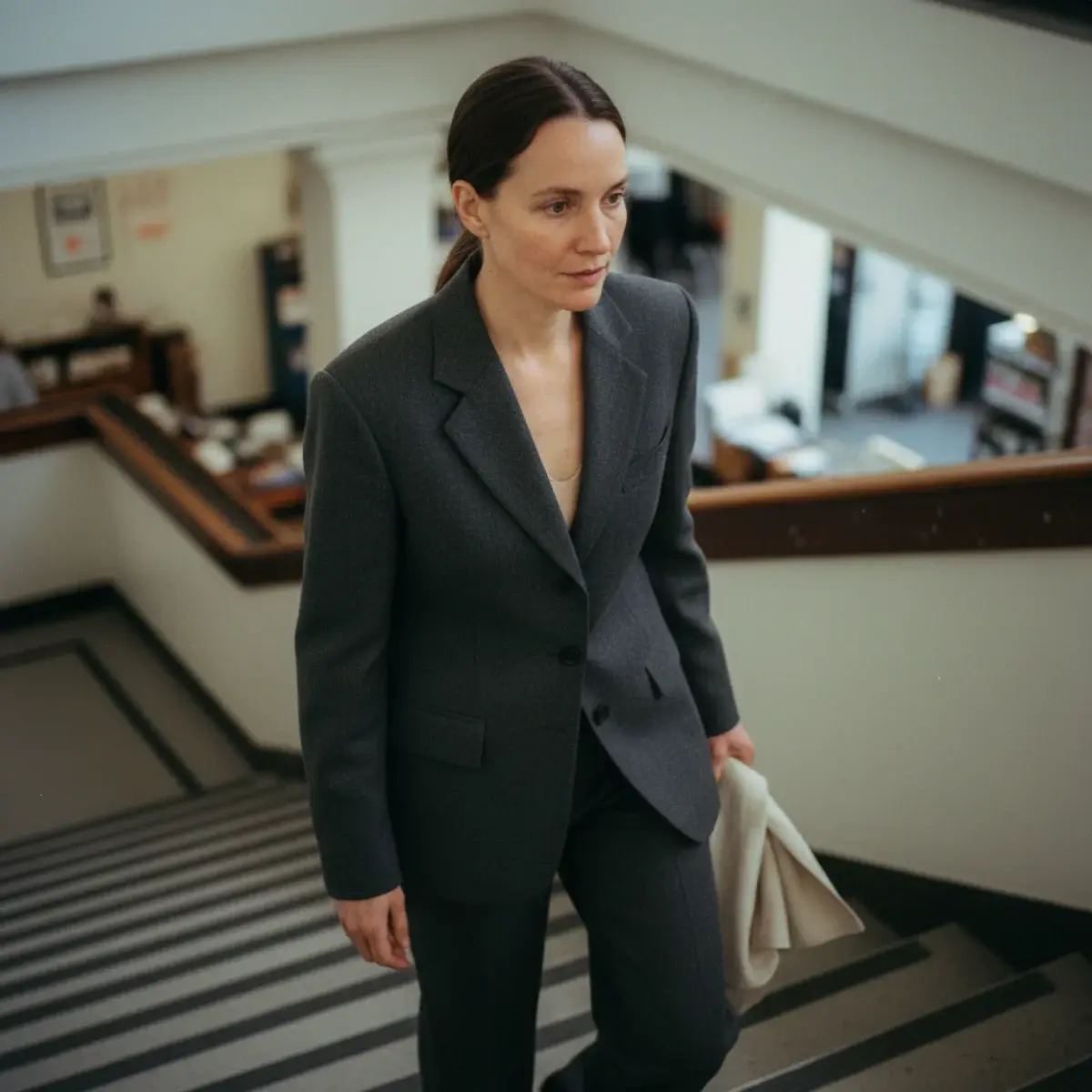
Every other piece of advice flows from a single move — find out how people at the company actually dress, then go slightly above it. A law firm or a bank runs on business professional, so you wear a suit or its equivalent. A design studio runs on smart casual, so you wear polished smart casual and skip the stiff suit that would mark you as a poor cultural fit. A corporate office sits on business casual, so you arrive in sharp business casual or a notch above.
How do you find out? Check the company's website and social media, look at how current employees present themselves, and when in doubt, ask the recruiter directly — it is a normal, smart question. Absent any signal, default to business professional, because being slightly too sharp is a far cheaper mistake than being too casual.
 1600×1067
Interview outfit ideas by industry
The right outfit shifts by field. Here are reliable looks for the major ones.
Corporate, finance, and law (business professional):
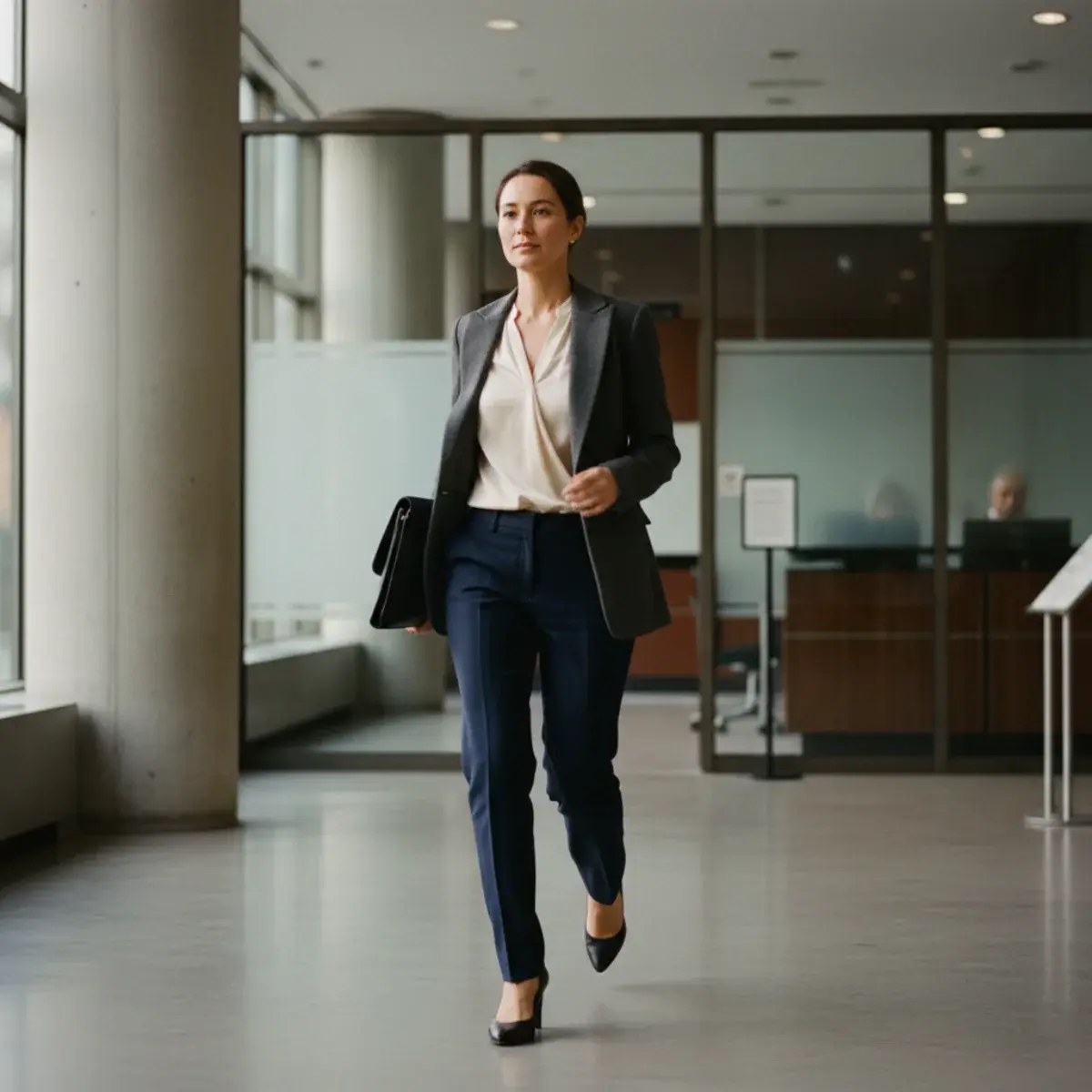
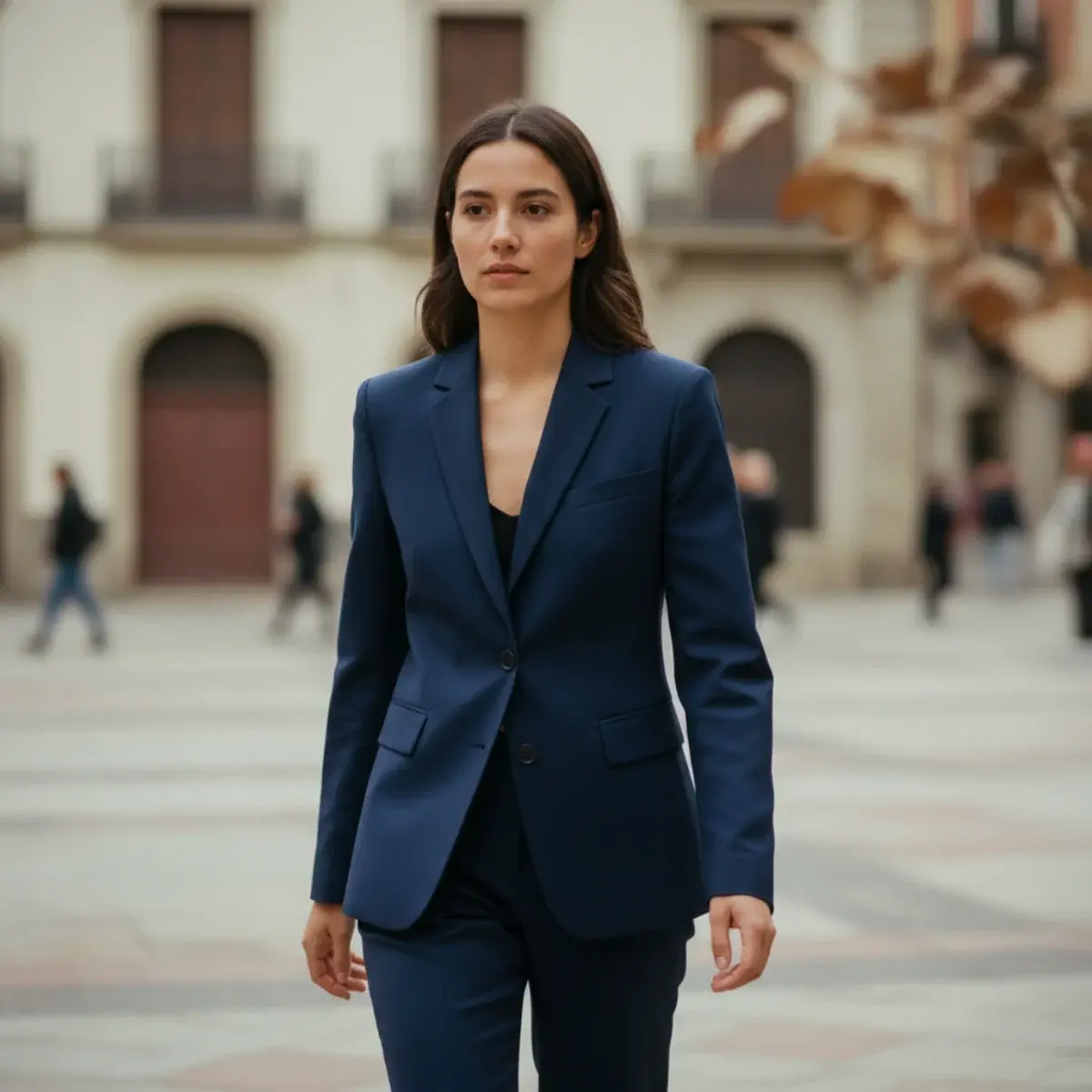
- A tailored navy or charcoal trouser suit over a white or pale-blue blouse, with a low leather pump.
- A structured sheath dress with a matching or coordinating blazer and closed heels.
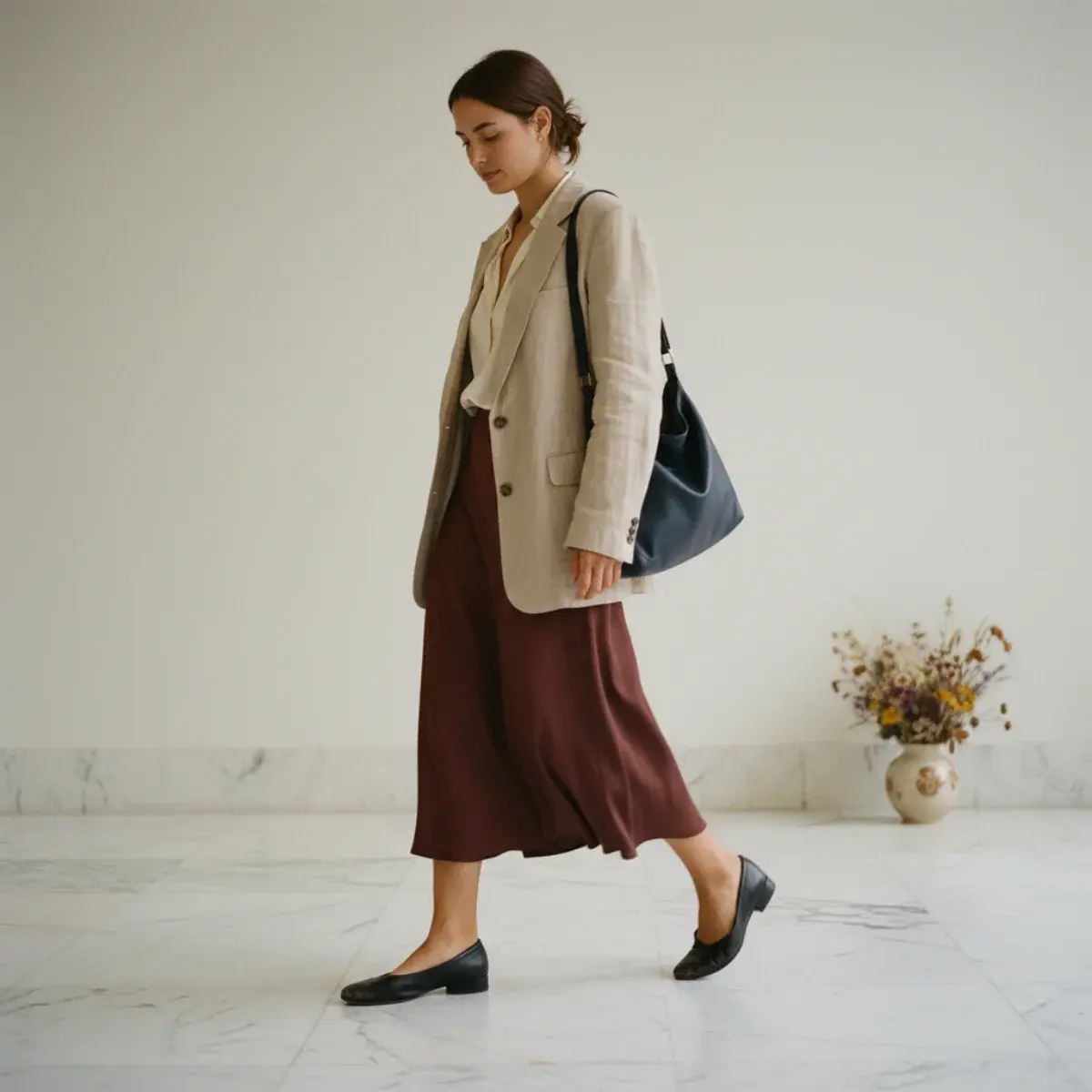
- A knee-length pencil skirt, a silk blouse, a tailored blazer, and a refined flat.
Corporate and general office (polished business casual):
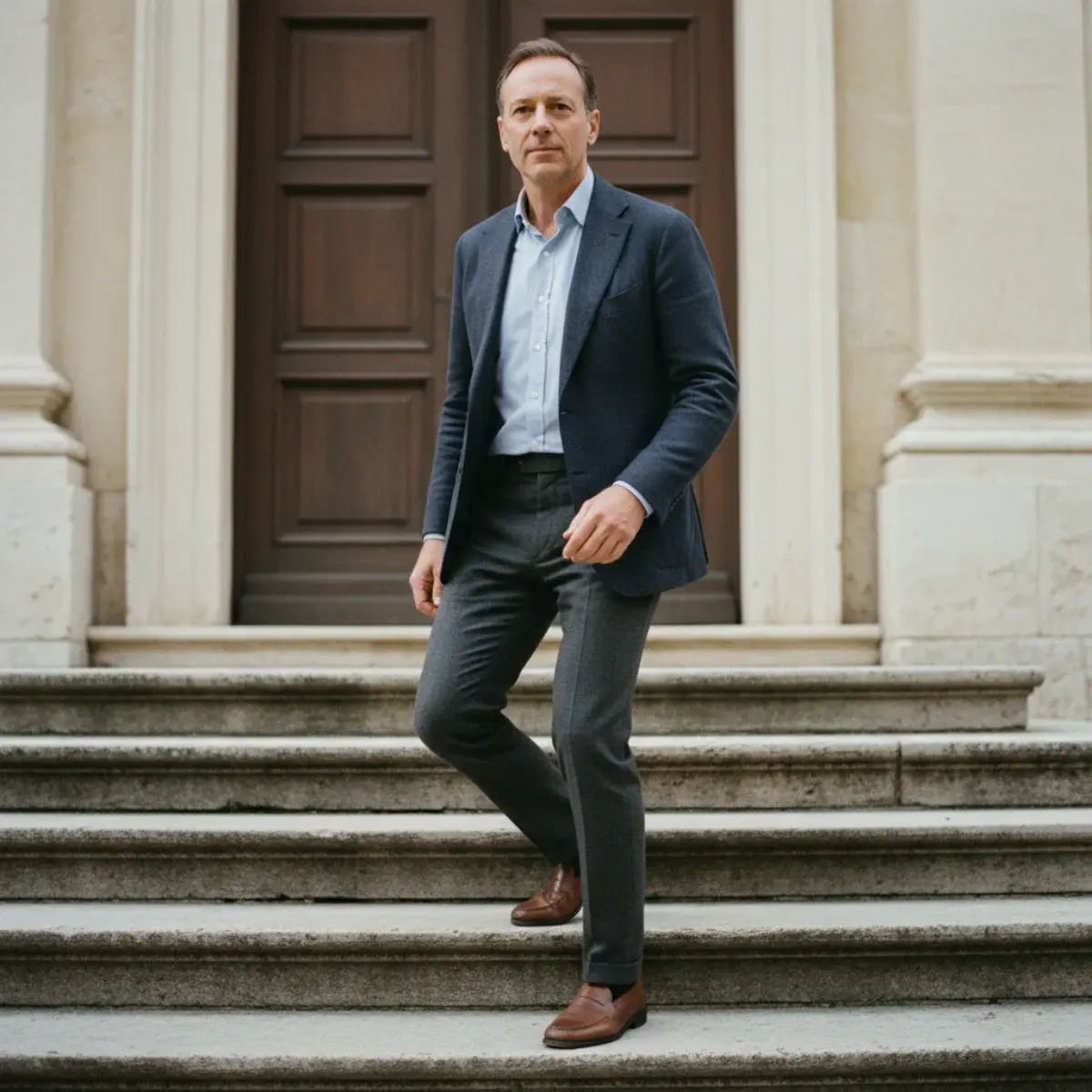
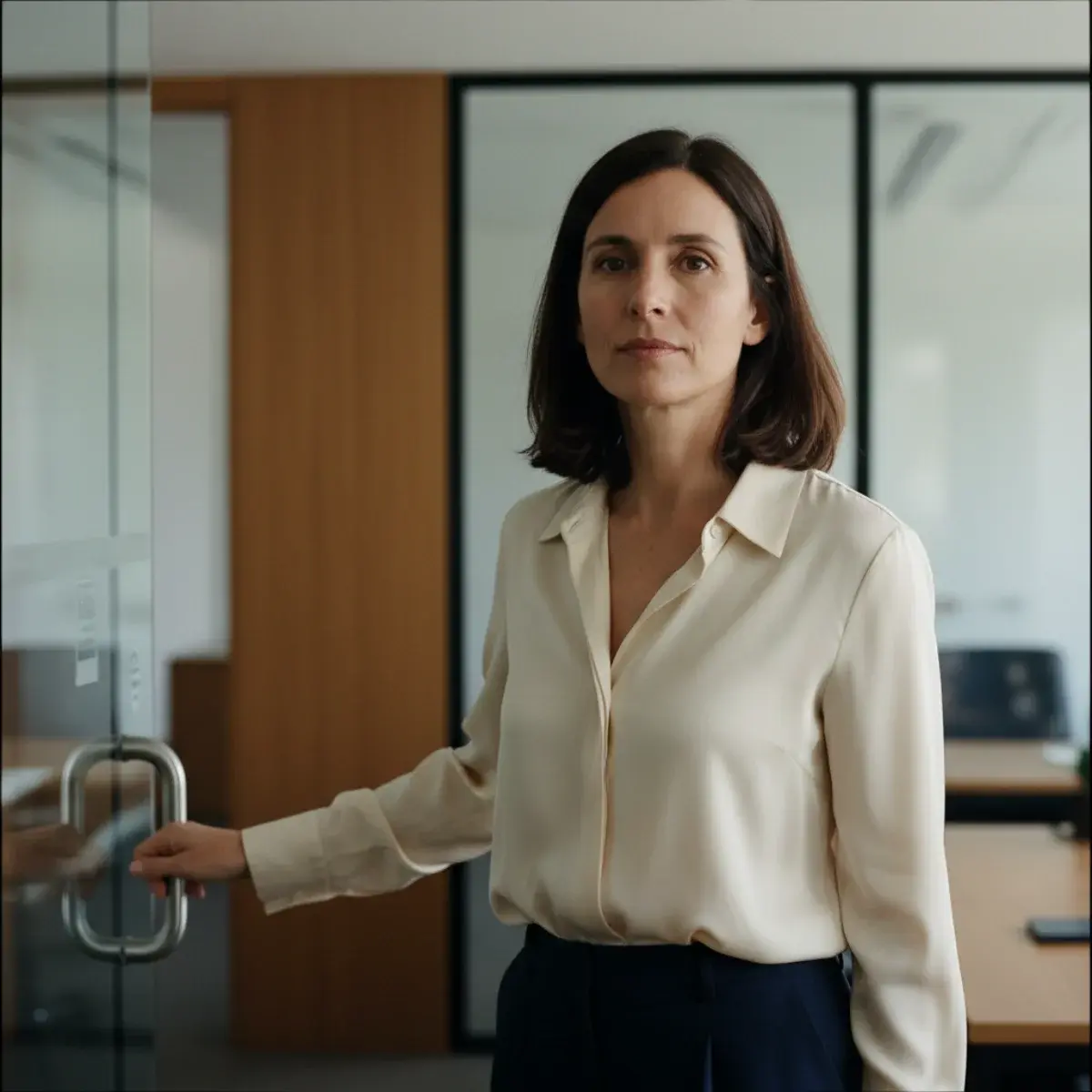
- Tailored trousers, a fine knit, and a blazer in coordinating neutrals.
- A knee-length skirt with a smart blouse and a structured cardigan.
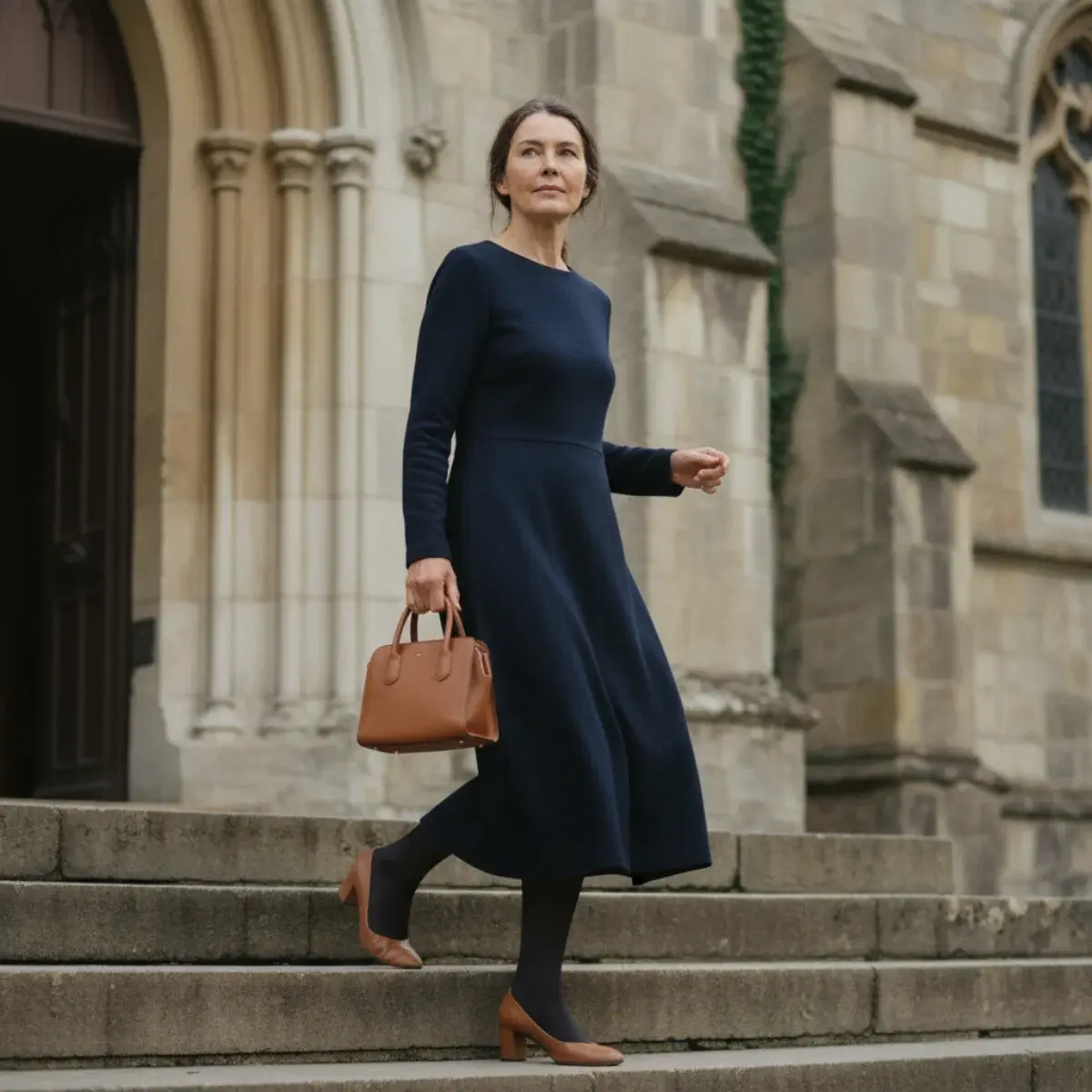
- A midi shirt-dress with a belt and a clean loafer.
Creative, tech, and startups (smart casual, elevated):
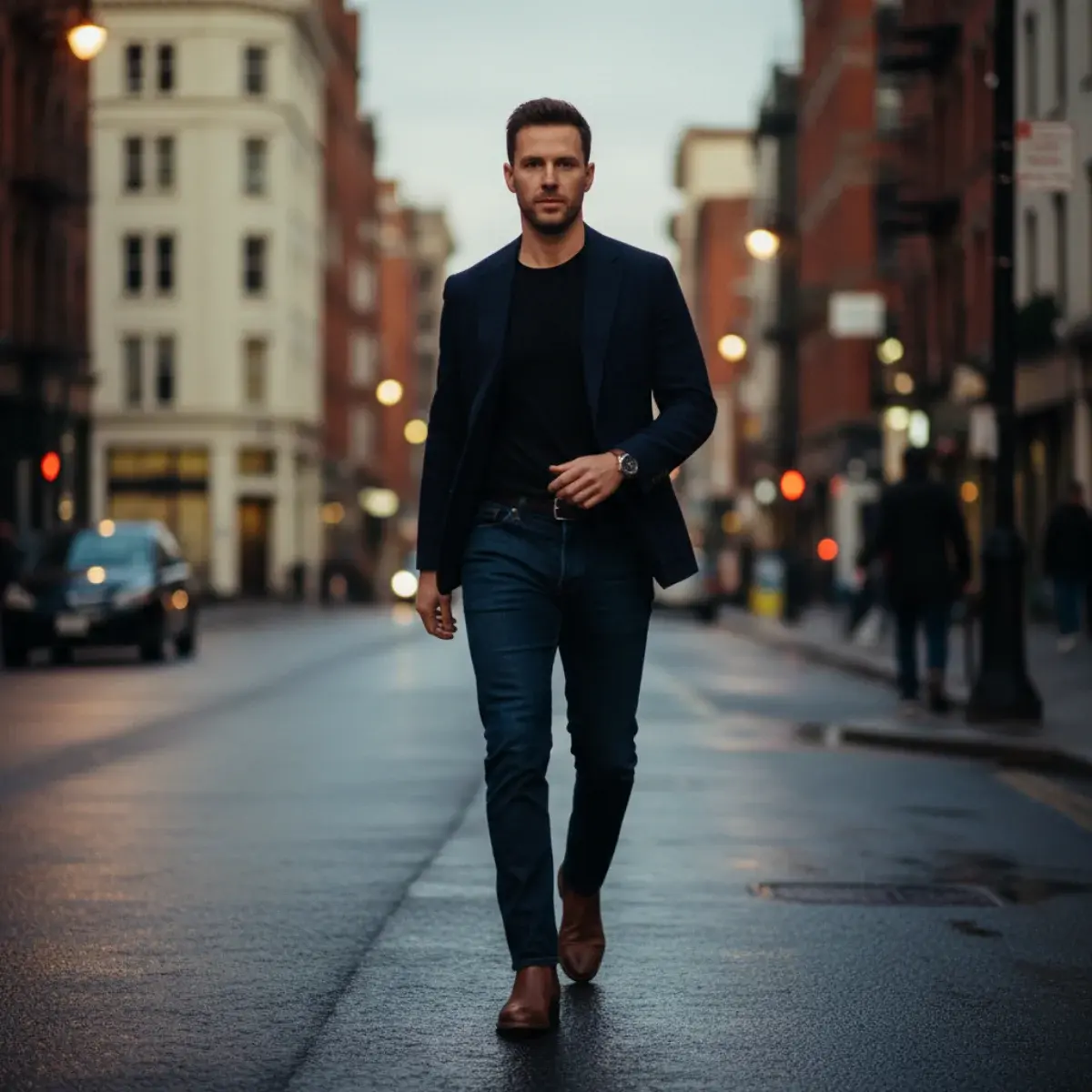
- Dark, undistressed jeans, a silk top, and a sharp blazer with loafers or clean flats.
- Tailored wide-leg trousers, a tucked tee or fine knit, and a statement-but-restrained accessory.
- A simple midi dress with a denim or structured jacket and clean shoes.
For the fuller treatment of the everyday office wardrobe these draw on, see our guide to business casual for women, and for the timeless, well-cut basics that anchor any professional look, the old money outfits guide.
 1600×1067
Colours that read competent
Colour does quiet work in an interview. Neutral, low-distraction tones — navy, charcoal, grey, black, beige, white — read as professional and keep the focus on you. Navy is the standout: widely associated with trust, competence, and reliability, it is the single safest interview colour. Black reads sharp and authoritative; grey and beige read calm and considered.
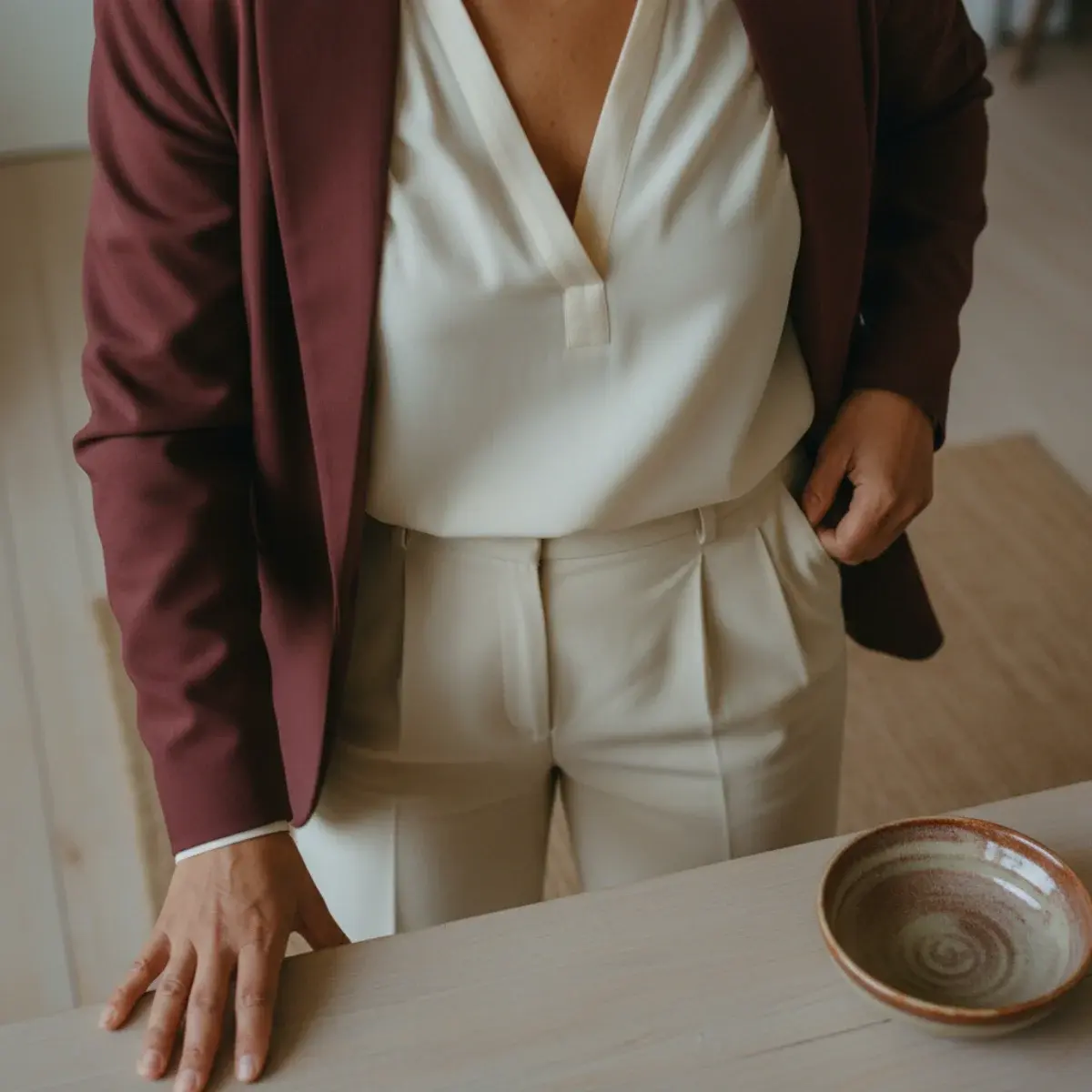
This does not mean colourless. A single restrained accent — a burgundy blouse under a grey blazer, a forest-green silk top, a considered scarf — adds personality without pulling focus. The rule is one point of colour against a neutral base, never a head-to-toe statement that the interviewer remembers instead of your answers.
 1600×1067
The details that quietly decide it
Beyond the outfit itself, a handful of details separate a candidate who looks ready from one who looks rushed. Fit comes first: a well-fitted inexpensive blazer reads sharper than an expensive one that gapes, so a quick visit to a tailor is the highest-value preparation you can do. Grooming matters as much as the clothes — clean, pressed garments, polished shoes, tidy hair, and minimal, quiet fragrance, because strong scent in a small room works against you.
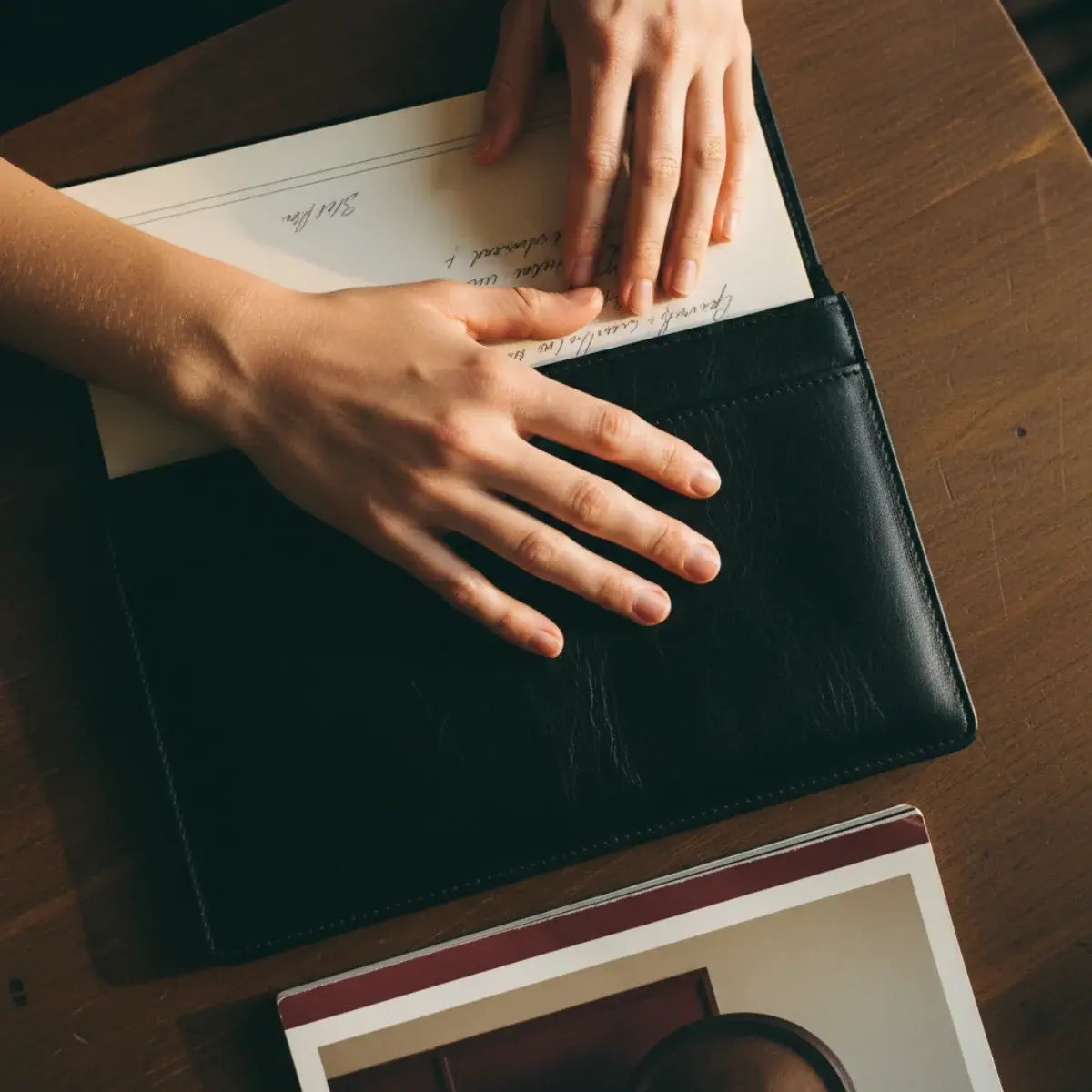
Accessories stay minimal: a watch, small earrings, a single fine necklace, and a structured bag large enough to carry a folder and a notebook, covered in our bag styling guide. And makeup, if you wear it, reads polished and natural rather than dramatic — our natural makeup notes cover a face that looks composed under office lighting. None of these win the interview alone, but together they signal that you prepared, which is precisely the message you want sent before you speak.
 1600×1067
Mistakes that sink interview outfits
 1600×1067
A few errors do real damage. Dressing too casually for the field tops the list — trainers, distressed denim, or a graphic tee for a professional role signals a misread of the room. Anything revealing or distracting pulls focus from your answers, whether that is a loud print, jangling jewellery, or strong perfume. Wrinkled or ill-fitting clothes undo an otherwise good outfit, because they read as a lack of care. And for video interviews, dressing only from the waist up, or wearing a busy pattern that shimmers on camera, are the common traps — dress fully, choose solids, and test your framing first.
Every one of these has the same correction: simplify, press, fit, and remove anything that competes with you. When in doubt about a single piece, leave it off.
Key takeaways
- 1Match the company's everyday dress code and go one notch up; business professional is the safe default.
- 2Navy is the strongest interview colour, read as trust and competence; keep bold colour to one restrained accent.
- 3Fit and grooming decide more than the garment's price — a tailored inexpensive blazer beats an unfitted expensive one.
- 4Keep accessories minimal and carry a structured bag big enough for a folder and notebook.
- 5Dress fully for video interviews, choose solid colours over busy patterns, and test the framing and lighting first.
Interview outfits by season
The interview formula holds year-round, but the fabrics and layers shift with the season, and getting that right signals attention to detail. In spring and summer, choose breathable fabrics — a lightweight blazer, a cotton or fine-knit top, a midi in a tropical-weight wool — and avoid anything that wrinkles in transit or shows heat. A structured short-sleeve dress with a blazer carried over the arm reads polished without overheating.
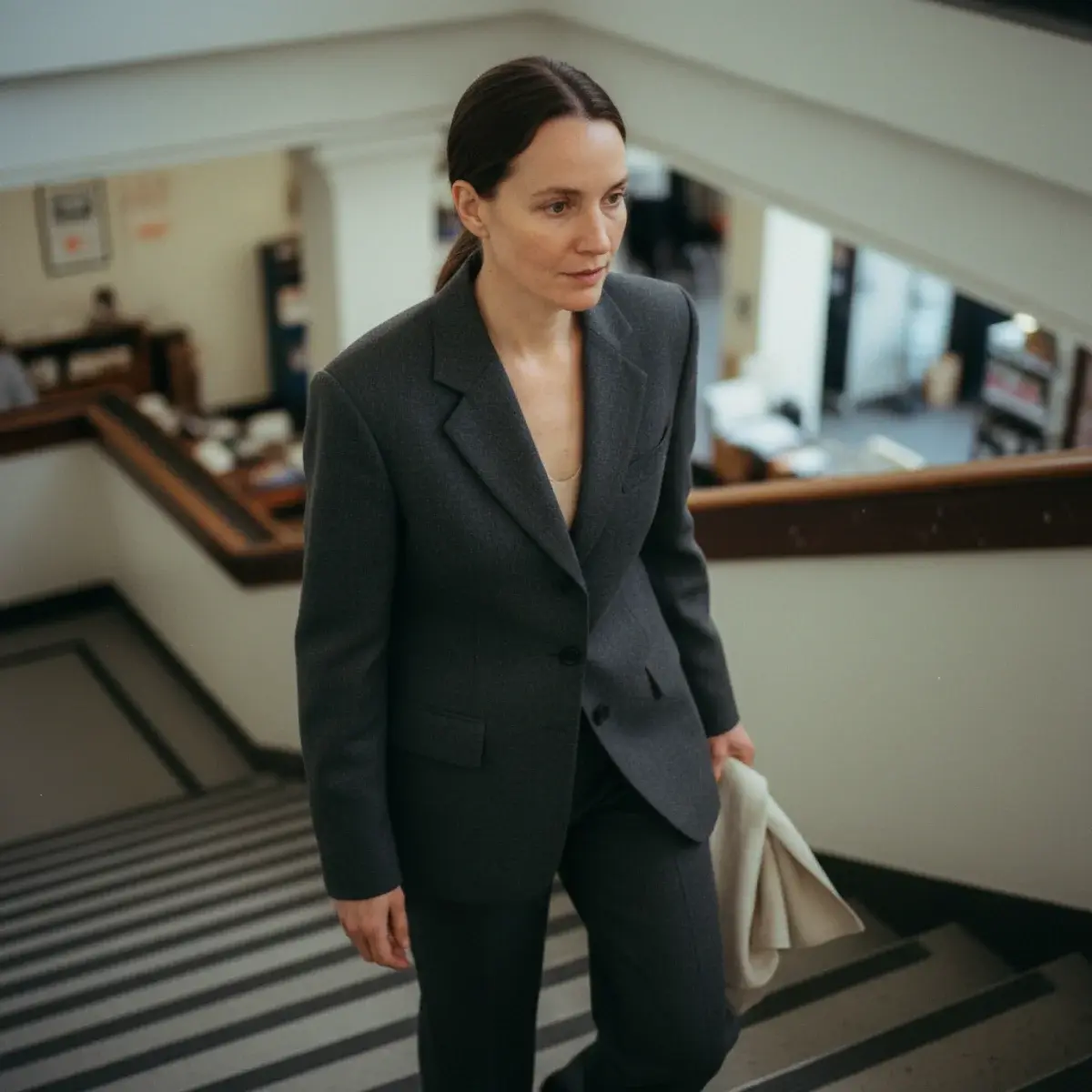
In fall and winter, layering becomes the asset: a fine roll-neck under a blazer, tailored trousers, and a wool coat for the commute that comes off cleanly at the door. Keep the layers in coordinating neutrals so the outfit reads as one composed look rather than several things piled on, exactly as our fall outfits hub describes. Whatever the season, arrive with the outer layer manageable — a coat you can fold and a bag that holds it — so you walk into the room looking unhurried rather than windblown. It is worth doing a full dress rehearsal the day before: put on the entire outfit, sit, stand, walk, and check it in a mirror and on your phone camera, since a hem that rides up when seated or a top that gapes when you reach is far better discovered at home than in the waiting room.
 1600×1067
Building a small interview-ready capsule
If you are job-hunting, it pays to assemble a tiny capsule you can mix for back-to-back interviews rather than scrambling each morning. Five pieces cover it: a tailored blazer in navy or charcoal, two tops (a white shirt and a coordinating blouse), one pair of tailored trousers and one knee-length skirt or sheath dress, and a pair of closed leather shoes. In neutral, coordinating tones, these recombine into a week of distinct, professional outfits.
The advantage is consistency under pressure: when the wardrobe is pre-decided, you spend your energy preparing answers rather than choosing clothes. It is the professional version of a capsule wardrobe, and because the pieces are timeless neutrals, they keep working long after the offer arrives — straight into the business casual rotation of the new job. Buy them to fit, have them tailored, and the capsule earns its keep across years, not just a job search.
Treat the capsule as a small, deliberate investment rather than a stopgap. A second-hand blazer fitted by a tailor, a good white shirt, and a pair of polished leather shoes will outlast a dozen fast-fashion buys and read sharper at every interview. If the budget is tight, prioritise in this order: the blazer first, because it carries the whole look; then the shoes, because worn footwear is the detail interviewers notice; then the trousers or skirt; and tops last, since a plain white shirt costs little and works everywhere. Assembled this way, the capsule is ready before the first interview is even booked.
 1600×1067
What your interview outfit communicates
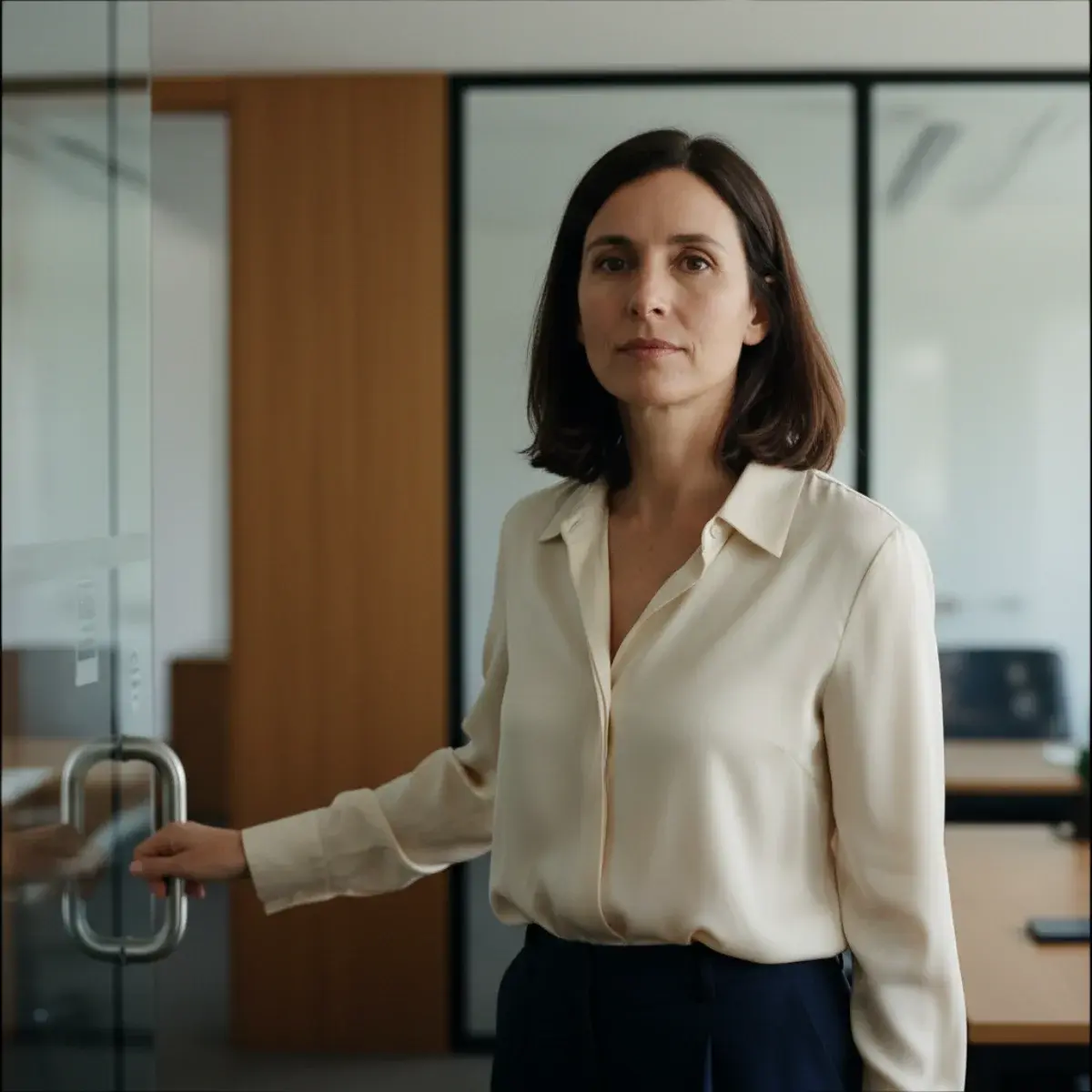
An interview outfit is a message sent before you speak, and understanding what it says helps you send the right one. Research on first impressions consistently finds that judgments form within seconds and are hard to revise, which means your clothes do real work in the moments before your qualifications get a hearing. A well-fitted, appropriate outfit communicates three things at once: that you respect the opportunity, that you understand the company's culture, and that you can be trusted to read a situation correctly. None of these is about fashion; all of them are about judgment.
This is why matching the company's register matters more than looking impressive. Arriving overdressed for a deliberately casual studio can signal that you misread the culture, just as arriving underdressed for a law firm signals the same in the other direction. The outfit that says "I belong here" is the one calibrated to the room, which is the entire reason the research step — checking how employees actually dress — pays off. You are not trying to stand out on appearance; you are trying to remove appearance as a variable so your answers carry the interview.
The details extend the message. Polished shoes and pressed clothes say you prepared; a structured bag that holds your documents says you are organised; minimal, quiet accessories say you can prioritise. Even colour speaks — the navy that reads as trustworthy, the neutral palette that keeps attention on your face. The goal throughout is coherence: every element pointing at the same impression of someone competent, prepared, and easy to picture in the role. Get that coherence right and the outfit disappears, which is exactly what you want it to do.
 1600×1067
Where to go from here
An interview is the dressiest end of professional dressing. Read business casual for women for the everyday office wardrobe, the complete dress code guide for every other occasion, and the old money outfits guide for the timeless basics that anchor a professional closet. For research-backed advice on professional presentation, Harper's Bazaar and Who What Wear publish reliable workwear coverage.
Frequently asked
- What should you wear to a job interview?
- Match the company's everyday dress code and go one notch up. For most corporate, finance, and legal roles, that means business professional — a tailored blazer, a blouse or shirt, tailored trousers or a knee-length skirt, and closed leather shoes, in neutral colours. Creative and startup environments allow polished business casual. When unsure, business professional is the safer default.
- What colours are best for a job interview?
- Neutral, low-distraction colours read most professional: navy, charcoal, grey, black, beige, and white. Navy in particular is associated with trust and competence. Keep bold colour to a single restrained accent — a blouse or a scarf — rather than a head-to-toe statement, so the focus stays on you rather than the outfit.
- Is business casual okay for an interview?
- It depends on the company. For startups, creative agencies, and casual workplaces, polished business casual — tailored trousers, a smart top, a blazer — is appropriate and matching the culture is a plus. For corporate, finance, legal, and conservative fields, business professional is safer. When you cannot tell, dress one level above the everyday code you observed.
- What shoes should you wear to an interview?
- Closed-toe leather shoes in a neutral colour: a low or mid pump, a loafer, or a clean flat. They should be polished, comfortable enough to walk and stand in confidently, and free of scuffs. Avoid very high heels, open toes, trainers, and anything distracting. The shoe should read professional and disappear into the outfit.
- What should you avoid wearing to a job interview?
- Avoid anything revealing, distressed, wrinkled, or overly trend-driven, along with strong perfume, noisy jewellery, and distracting prints. Skip casual items like trainers, flip-flops, and graphic tees for professional roles. The goal is for the interviewer to remember you, not your outfit, so anything that pulls focus works against you.
- What do you wear to a virtual or video interview?
- Dress fully as you would in person, not just on top — it affects how you carry yourself and avoids mishaps if you stand. On camera, choose solid colours over busy patterns, which can shimmer or distract, and a top that contrasts with your background. A blazer or structured top reads sharp on video. Test the lighting and framing before the call.
- Should you overdress or underdress for an interview?
- Overdress, slightly. Arriving more polished than the everyday dress code signals that you take the opportunity seriously, and it is far easier to be remembered for being sharp than to recover from looking too casual. The exception is a deliberately casual culture where overdressing can read as a poor fit — research the company first when you can.
Written by Priya Venkataraman, looksyra editorial. Last updated May 2026.