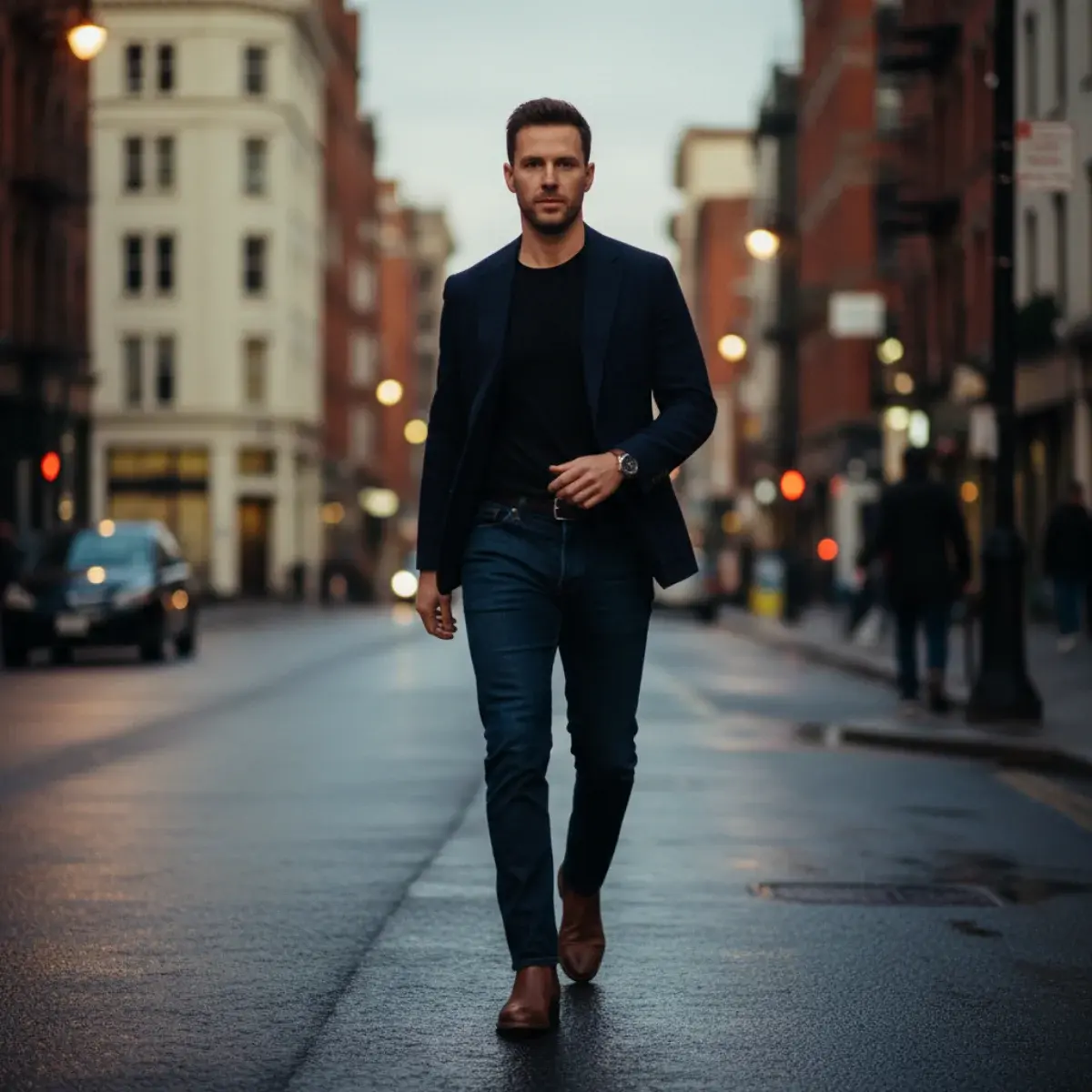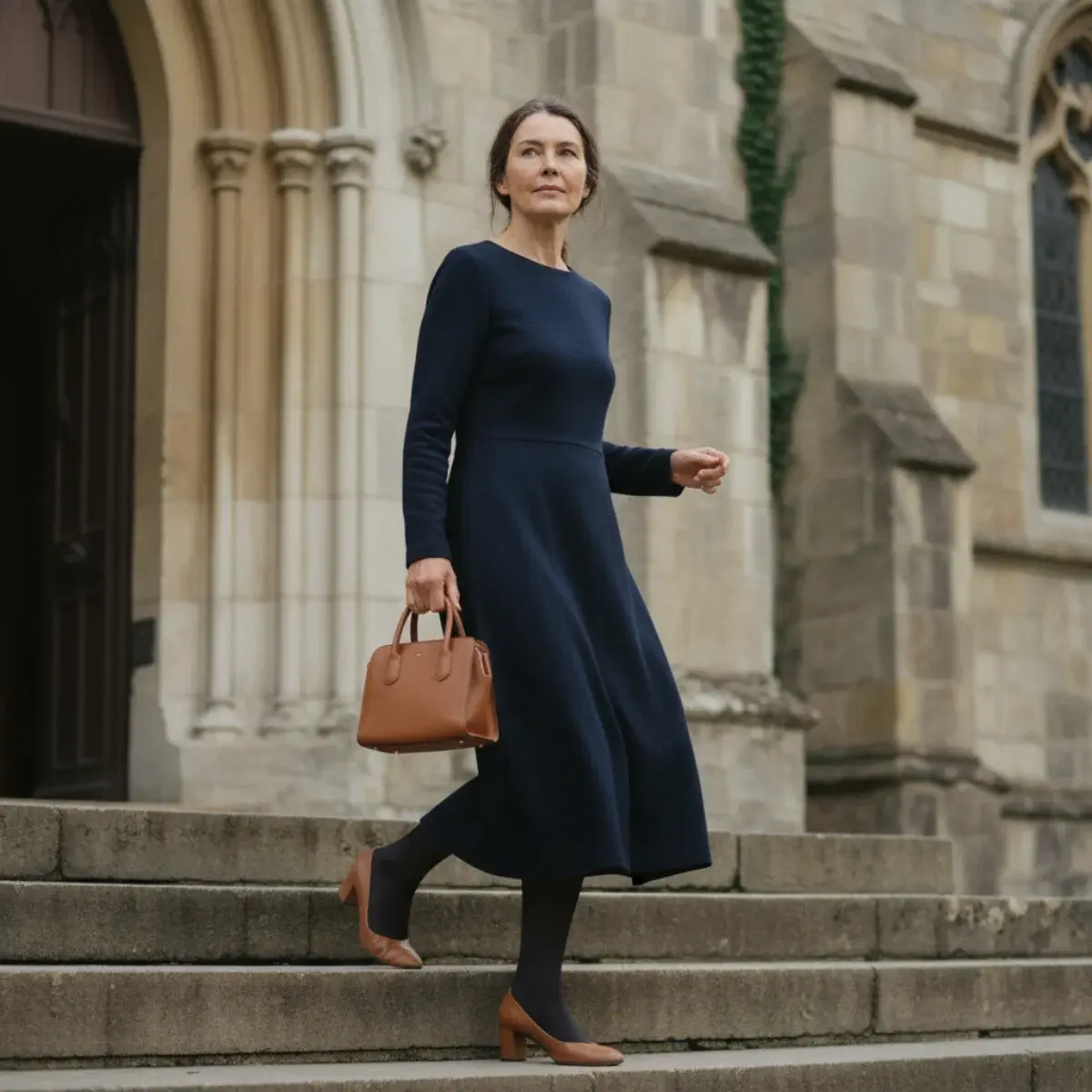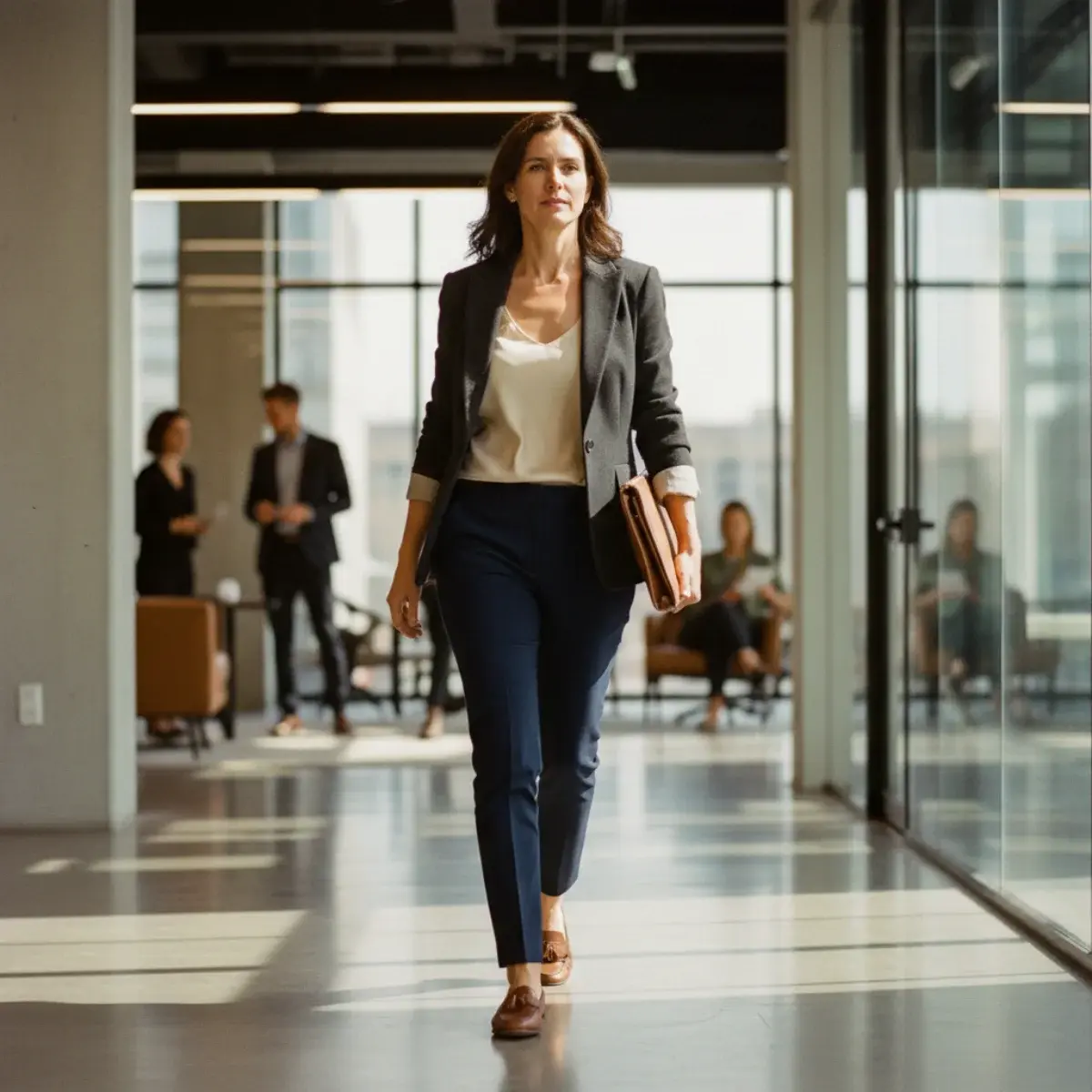
Of every phrase a workplace can put in an offer letter, "business casual" generates the most quiet confusion, because it describes a middle ground without drawing its edges. It is the most-searched office dress code for exactly that reason: everyone is told to dress this way, and almost no one is told precisely what it means. This guide draws the edges. It defines business casual, says plainly what it includes and excludes, hands you a reliable everyday formula, and adapts that formula across industries, seasons, and the modern hybrid week. For where this code sits among all the others, see our complete dress code guide.
The principle this guide will hold: business casual is "professional minus the suit," and the safest reading is always the slightly sharper one. When a piece could go either way — office or weekend — treat it as weekend and leave it for Saturday. The cost of being a touch too polished at work is nothing; the cost of being too casual is a quiet, lingering impression you cannot see forming.
What business casual actually means
Business casual emerged in the late twentieth century as offices loosened from the obligatory suit, and it has been drifting and fragmenting ever since, which is why no two workplaces define it identically. At its core, though, it is a stable idea: clothing that looks professional and considered without the formality of a full business suit. It keeps the polish — tailoring, structure, neutral colour, closed shoes — while dropping the strictest elements, so a blazer becomes optional, a fine knit replaces a stiff shirt, and a loafer replaces a formal heel.
The clearest way to hold it is by contrast with its neighbours on the dress-code ladder. Above it sits business professional, the suit-and-formal-shoes standard for law, finance, and interviews. Below it sits smart casual, which allows dark denim and a more relaxed top. Business casual lives between them: more than smart casual, less than a suit. Place any outfit on that short stretch of ladder and you will know instantly whether it fits.
 1600×1067
What counts and what does not
Because the line is fuzzy, a plain inventory helps more than a definition. The table below sorts the common pieces into what reads business casual and what crosses out of it, so you can build outfits without second-guessing each item.
| Reads business casual | Crosses the line |
|---|---|
| Tailored trousers, chinos | Distressed or ripped jeans |
| Knee-length or midi work dress | Mini dresses, beachy sundresses |
| Blouse, fine knit, smart top | Graphic tees, crop tops |
| Blazer, structured cardigan | Hoodies, sportswear |
| Pencil or A-line skirt | Very short or athletic skirts |
| Loafers, flats, low heels, ankle boots | Trainers, flip-flops, beach sandals |
| Dark, clean denim (in some offices) | Leggings as trousers |
The grey area is real and worth naming. Dark, well-fitting denim sits on the boundary — fine in many modern offices, out in traditional ones. The deciding question is always the specific workplace: what have you actually seen senior colleagues wear? When you cannot answer that yet, default to the left column and the safer choice.
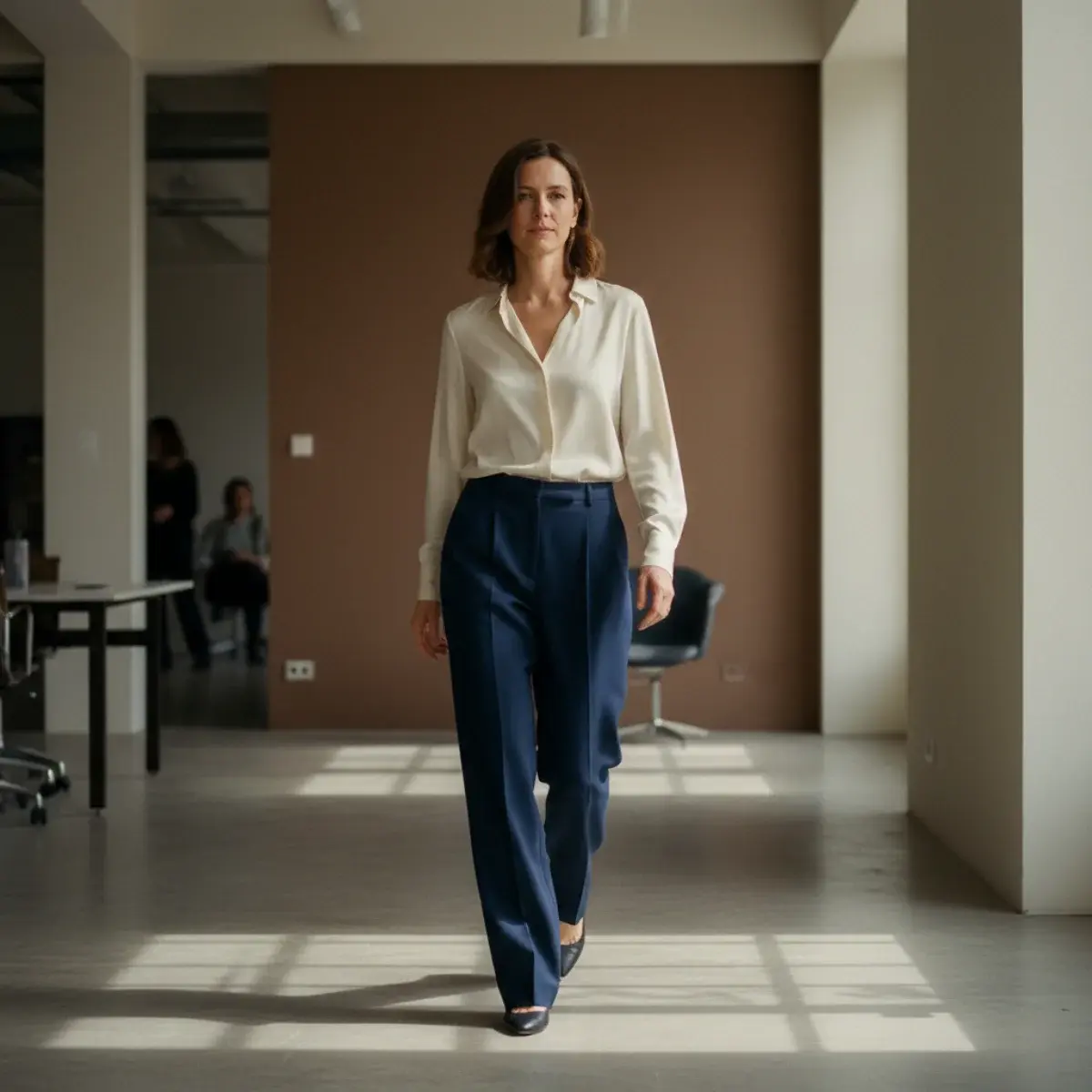 1600×1067
The everyday business casual formula
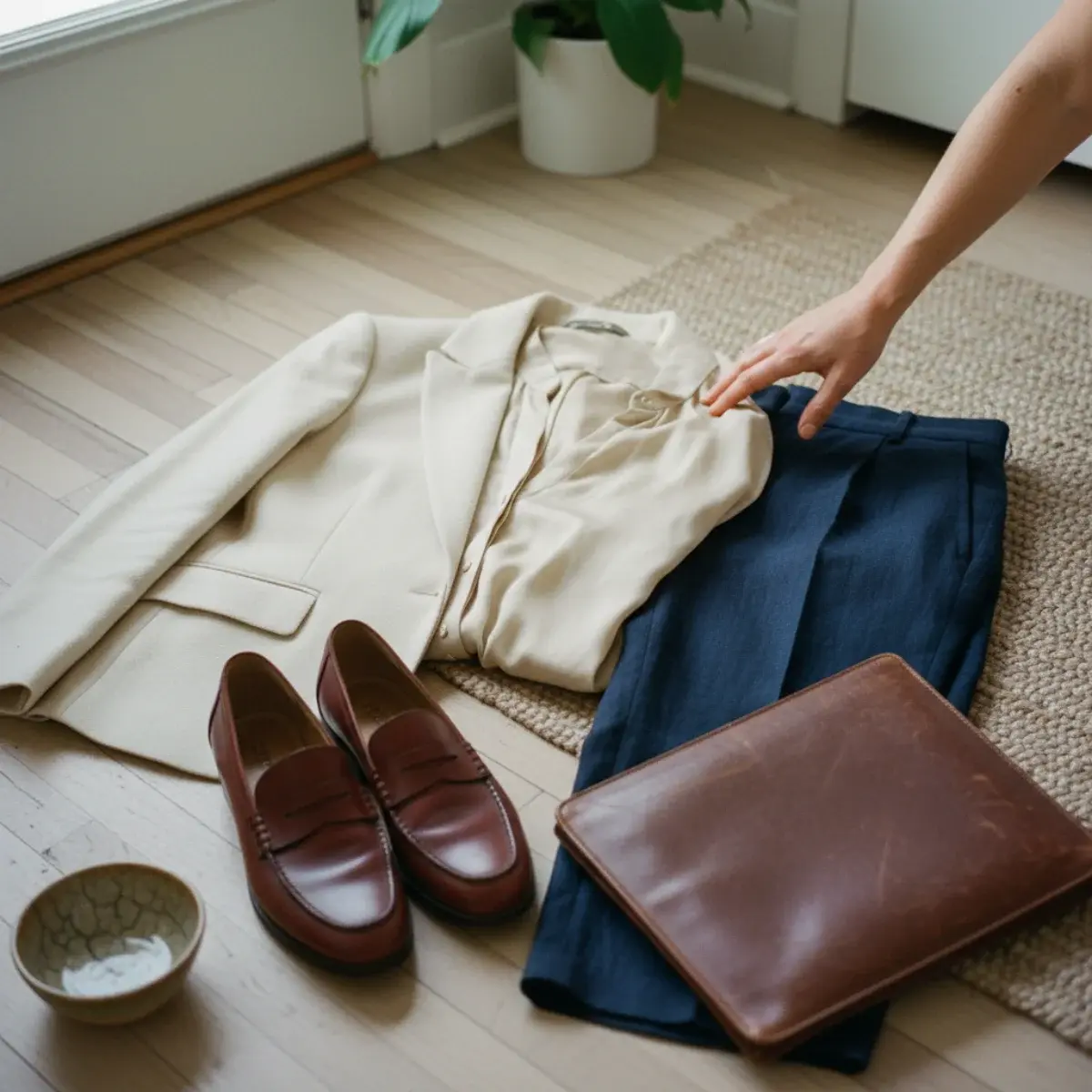
Most business casual outfits reduce to a single dependable structure: a polished bottom, a smart top, an optional third layer, and a closed shoe. Start with the bottom — tailored trousers, a knee-length skirt, or a work dress that handles both halves at once. Add a top with some structure: a blouse, a fine merino or cotton knit, a smart shell. Layer a blazer or a structured cardigan when you want more polish or warmth. Finish with a loafer, a low pump, a flat, or an ankle boot.
The reason this formula works is that every element is interchangeable within the same palette, so a small wardrobe yields many outfits. Tailored trousers swap for a skirt; the blouse swaps for a knit; the blazer comes on or off to move the whole look up or down a notch. This is the office expression of a capsule wardrobe, and once the pieces share a palette, getting dressed for work becomes a matter of recombining rather than deciding. Our guide on how to put together an outfit covers the mixing logic in full.
 1600×1067
The pieces worth investing in
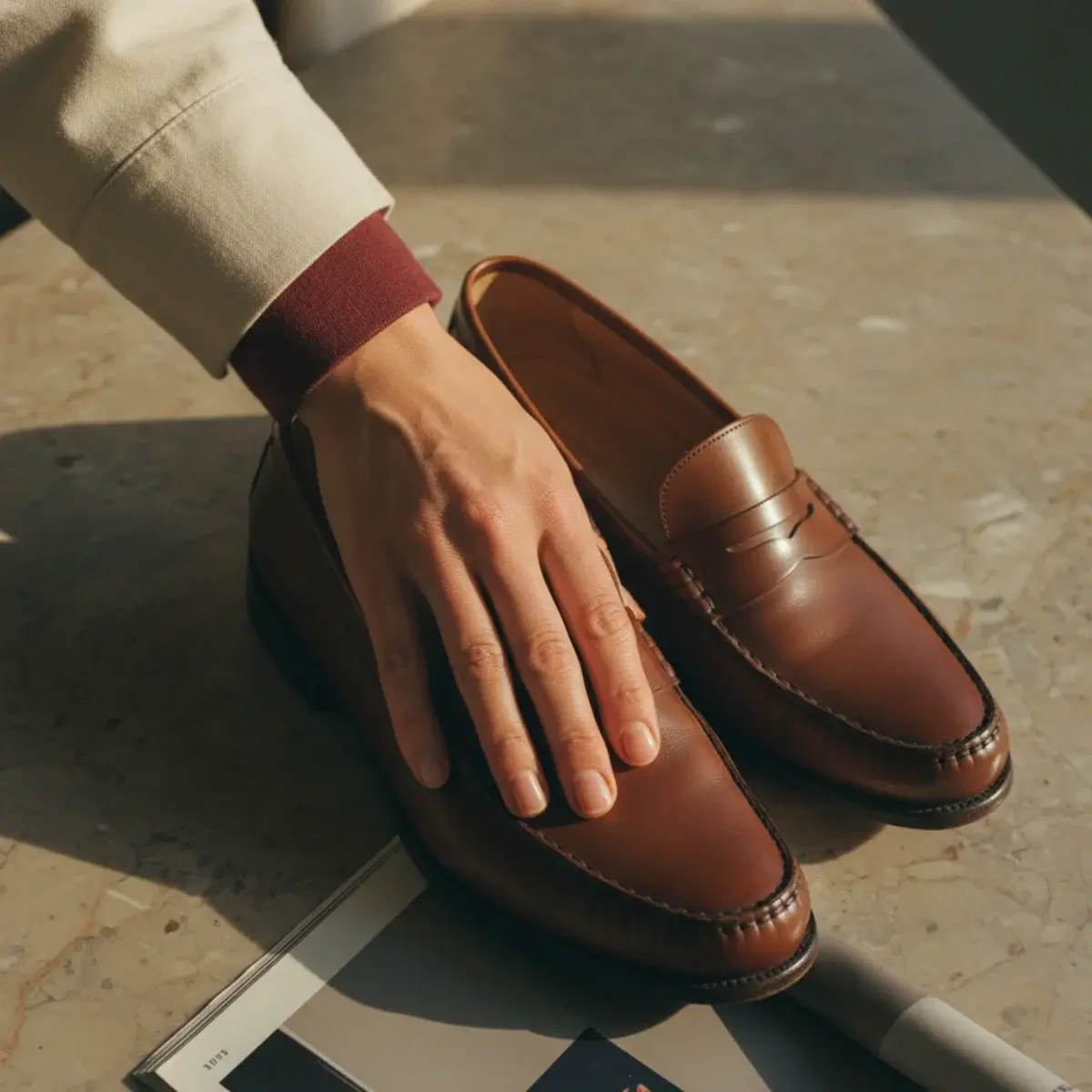
A business casual wardrobe rewards buying a few good things over many mediocre ones, because the same pieces appear week after week and fit matters more than variety. Seven items carry most of it. A tailored blazer in navy or grey lifts any outfit and is the highest-value single purchase. Two pairs of tailored trousers, in two neutrals, anchor the bottom half. A knee-length skirt and a work dress add one-piece options that need no styling. Several smart tops — a white shirt, a silk blouse, a couple of fine knits — rotate through the week. And one good pair each of loafers or flats and a low heel or ankle boot cover the footwear.
Buy these in natural fabrics where you can — wool, cotton, merino, silk — because they hold their shape, breathe through a long day, and read more expensive than synthetics. The same logic that drives the old money outfits guide applies here: fit and fabric over logo and trend. A well-cut, well-fitted inexpensive blazer outperforms a designer one that does not sit right at the shoulder, so budget for a tailor before you budget for a label.
 1600×1067
Business casual by industry
The same code reads differently across fields, and calibrating to yours is what separates looking appropriate from looking generic. In finance, law, and corporate settings, business casual sits at its sharpest — a blazer is close to expected, denim is usually out, and the look leans toward the business-professional edge. In tech, creative, and startup environments, it relaxes considerably: dark denim, smart knitwear, and clean trainers in some offices all pass, and over-formality can read as a poor cultural fit. In education, healthcare administration, and the public sector, a practical middle holds — comfortable, modest, and polished, built for long days on your feet.
The move, in every case, is the same one that governs interviews: read the room and match it. Observe how respected colleagues at your level and above actually dress, and aim a notch sharper than the median rather than the minimum. If you are dressing for an interview in any of these fields rather than the daily grind, our job interview outfit guide covers the step up that the occasion calls for.
 1600×1067
Business casual through the seasons
Season changes the fabrics and layers more than the formula itself. In spring and summer, lighten the materials — cotton, linen-blend trousers, breathable knits, a short-sleeve work dress — and keep a light blazer or cardigan for over-air-conditioned offices, which run cold regardless of the weather outside. Open-toe is a grey area; many offices accept a refined sandal in summer, but a closed flat is always safe.
In fall and winter, layering becomes the asset and the pleasure. A fine roll-neck under a blazer, tailored trousers, and a wool coat for the commute reads polished and stays warm, and deeper tones — charcoal, burgundy, forest — suit the lower light, as our fall outfits hub lays out. Keep the layers in coordinating neutrals so the outfit reads as one composed look rather than several piled on, and choose an ankle boot over a sandal once the temperature drops. The throughline across all seasons is to keep the silhouette tailored even as the fabrics change weight.
 1600×1067
Dressing business casual for hybrid and remote work
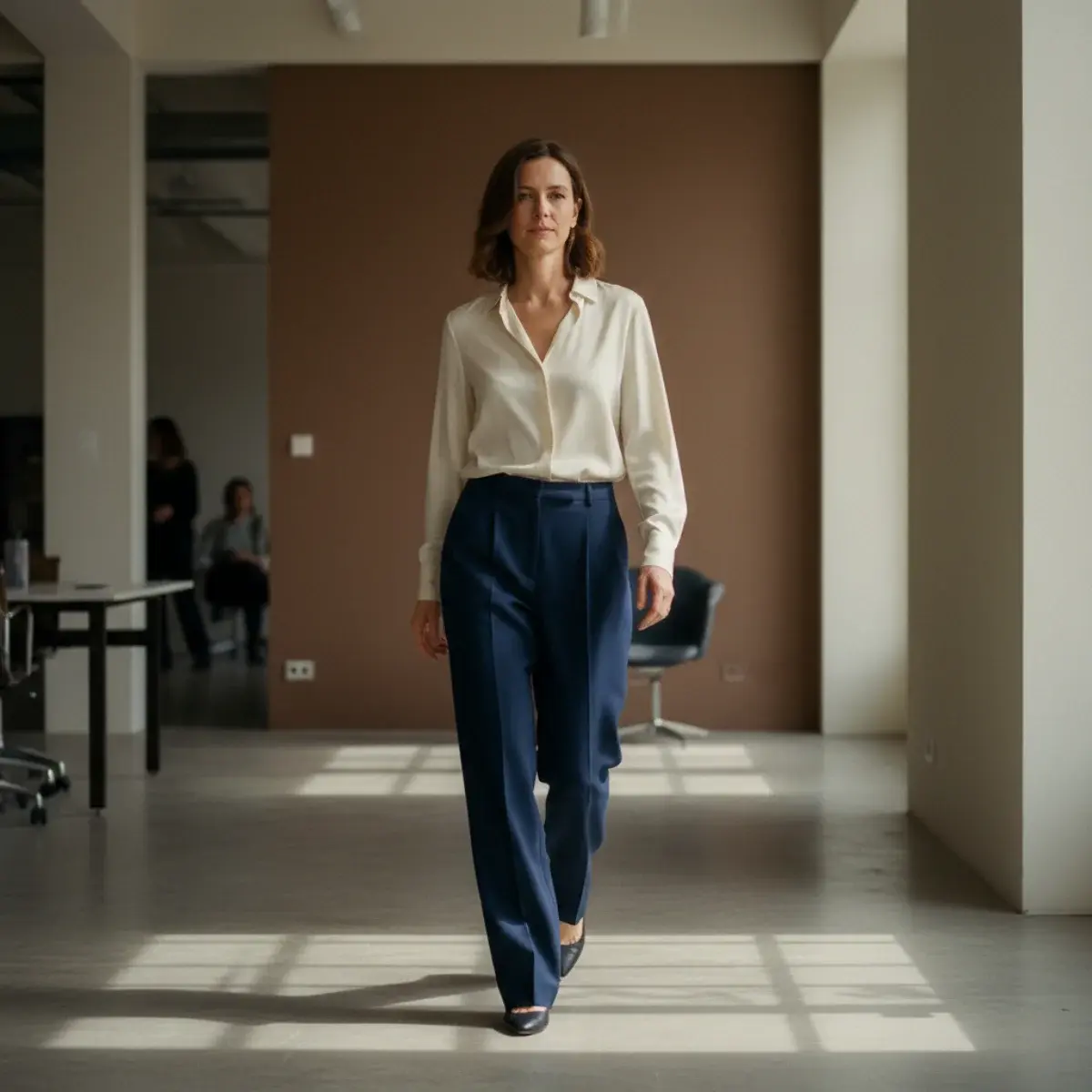
The hybrid week added a wrinkle the original code never anticipated: dressing for a camera as much as a room. The workable approach is to keep camera-ready on top and comfortable throughout. For video calls and office days, a structured top in a solid colour reads sharp on screen, where busy patterns can shimmer and distract, and a blazer thrown on instantly lifts a call. Below the camera line, comfortable tailored trousers or smart knit bottoms keep home days livable without sacrificing the option to stand up mid-meeting.
The deeper point is that getting properly dressed, even at home, changes how you carry yourself, and a small rotation of polished pieces makes that easy rather than effortful. Keep a few go-to combinations pre-decided so a home day does not default to loungewear by accident. And on the days you do go in, treat the commute layer — a good coat, a bag that carries a laptop, covered in our bag styling guide — as part of the outfit, so you arrive looking composed rather than thrown together.
 1600×1067
How to take business casual from desk to dinner
One of the quiet advantages of a good business casual wardrobe is how easily it shifts into the evening, which matters on the days that run from a morning meeting straight into after-work drinks or dinner. The trick is to build the daytime outfit on a versatile base and change one or two elements rather than the whole look. Swap the loafer for a heeled mule or an ankle boot, trade the structured tote for a small clutch carried in your bag all day, and the desk outfit reads as an evening one.
The top half does the rest of the work. A silk blouse worn under the blazer at the office becomes the whole outfit once the blazer comes off; a fine knit dressed up with a statement earring you slipped into your bag that morning shifts register instantly. Keep a compact evening kit — a bolder lip, the heel, the clutch, one piece of jewellery — in a drawer or a bag, and any business casual outfit converts to a dinner or a date-night look in the time it takes to visit the restroom. It is the same recombining logic that runs through the whole code, applied to the clock instead of the week.
 1600×1067
Business casual mistakes to avoid
A handful of errors recur. The most common is reading the code too casually — leggings, hoodies, trainers, and beachy sandals are weekend wear, not office wear, however comfortable. The opposite error, over-formality in a relaxed office, is subtler but real; a stiff suit in a creative studio can read as a misjudged culture. Poor fit undoes good pieces, since a gaping blouse or a too-long trouser reads careless no matter the quality. And flimsy or wrinkled fabric sabotages the polish that defines the code — structure and a quick press do more than price.
Each of these resolves the same way: keep the silhouette tailored, the fabric structured, the palette neutral, and the choice a notch sharper than the minimum. When a single piece feels borderline, leave it for the weekend and reach for the safe alternative.
Key takeaways
- 1Business casual is 'professional minus the suit' — more polished than smart casual, less formal than a business suit.
- 2Tailored trousers or a skirt, a smart top, an optional blazer, and a closed or low shoe is the dependable formula.
- 3Dark, clean denim is a grey area — fine in some modern offices, out in traditional ones; tailored trousers are always safe.
- 4Build a small neutral wardrobe of good pieces; fit and fabric matter more than label or variety.
- 5For hybrid weeks, dress camera-ready on top in solid colours and keep the rest comfortable.
Where to go from here
Business casual is the everyday end of professional dressing. Read the complete dress code guide for every other occasion, the job interview outfit guide for the dressier step up, and the old money outfits guide for the timeless, well-cut basics that anchor any office wardrobe. For ongoing workwear coverage, Harper's Bazaar and Who What Wear publish reliable office-style edits each season.
Frequently asked
- What is business casual for women?
- Business casual for women combines professional and relaxed pieces: tailored trousers or a knee-length skirt with a blouse, a fine knit, or a smart top, often layered with a blazer or cardigan, finished with closed or low-heeled shoes. It is less formal than a business suit but more polished than weekend casual, and it excludes distressed denim, trainers, and anything revealing or beachy.
- What is the difference between business casual and business professional?
- Business professional means a tailored suit, a sheath dress, or a skirt-suit with formal shoes — the dress code for law, finance, interviews, and court. Business casual relaxes that by one level: no full suit required, blazers optional, knitwear and smart blouses allowed, and lower or closed shoes rather than formal heels. Business casual is the everyday office standard; business professional is the dressed-up version.
- Can you wear jeans for business casual?
- Sometimes. Dark, undistressed, well-fitting jeans can read business casual in many modern and creative offices, especially when paired with a blazer, a smart top, and polished shoes. More traditional or client-facing workplaces still exclude denim. When unsure, choose tailored trousers, which are always safe, and save jeans for offices where you have seen colleagues wear them.
- What shoes are business casual for women?
- Loafers, ballet flats, low or mid pumps, ankle boots, and clean leather mules are all business casual. They should be closed or low, in leather or a smart fabric, and in neutral tones. Avoid trainers, flip-flops, very high stilettos, and beach sandals. A loafer or a low block heel is the most versatile, comfortable everyday choice.
- Are dresses business casual?
- Yes. A knee-length or midi work dress — a sheath, a shirt dress, a wrap dress, or a fine-knit dress — is fully business casual and one of the easiest one-piece options. Keep the neckline and hemline modest, the fabric structured rather than flimsy, and add a blazer or cardigan for a more polished or cooler-weather look.
- What colours work for business casual?
- Neutrals form the base — navy, grey, black, beige, white, and cream — because they mix easily and read professional. Add colour through a blouse, a knit, or an accessory in muted or jewel tones rather than head-to-toe brights. A neutral foundation with one considered colour per outfit is the most reliable and re-wearable approach.
- How do you dress business casual for a hybrid or work-from-home week?
- Keep a small set of polished pieces for office days and video calls — a blazer, a few smart tops, tailored trousers — and dress the top half sharply for camera even on home days. A structured top in a solid colour reads well on video, while comfortable tailored trousers or smart knit bottoms keep home days livable. The aim is camera-ready on top, comfortable throughout.
Written by Priya Venkataraman, looksyra editorial. Last updated May 2026.