Dressing a young boy is one of the most-overcomplicated wardrobe categories in modern retail. The market is flooded with novelty pieces, character prints, trend-cycle graphics, and clothes that look fine in a marketing photograph and last three washes. The honest middle is the same as adult dressing — a small, durable wardrobe of classic pieces that survives the way kids actually live, in fabrics that handle the wash cycle, with cuts that allow free movement. This guide is ten practical outfits parents reach for repeatedly, built around the same handful of pieces that handle a typical week in a young boy's life.
The line this guide holds: a kids' wardrobe is a tool for living, not a styling statement. The pieces that earn their place are the ones a child can climb a climbing frame in, fall asleep on the sofa in, get muddy at the park in, and wash on Tuesday for Wednesday. Trend pieces sit in the closet because they're either too precious to play in or too costume-like to read normal. The wardrobe of a child who plays well is small, durable, and built around classic cuts. Ten outfits follow.
1. The school-day daily
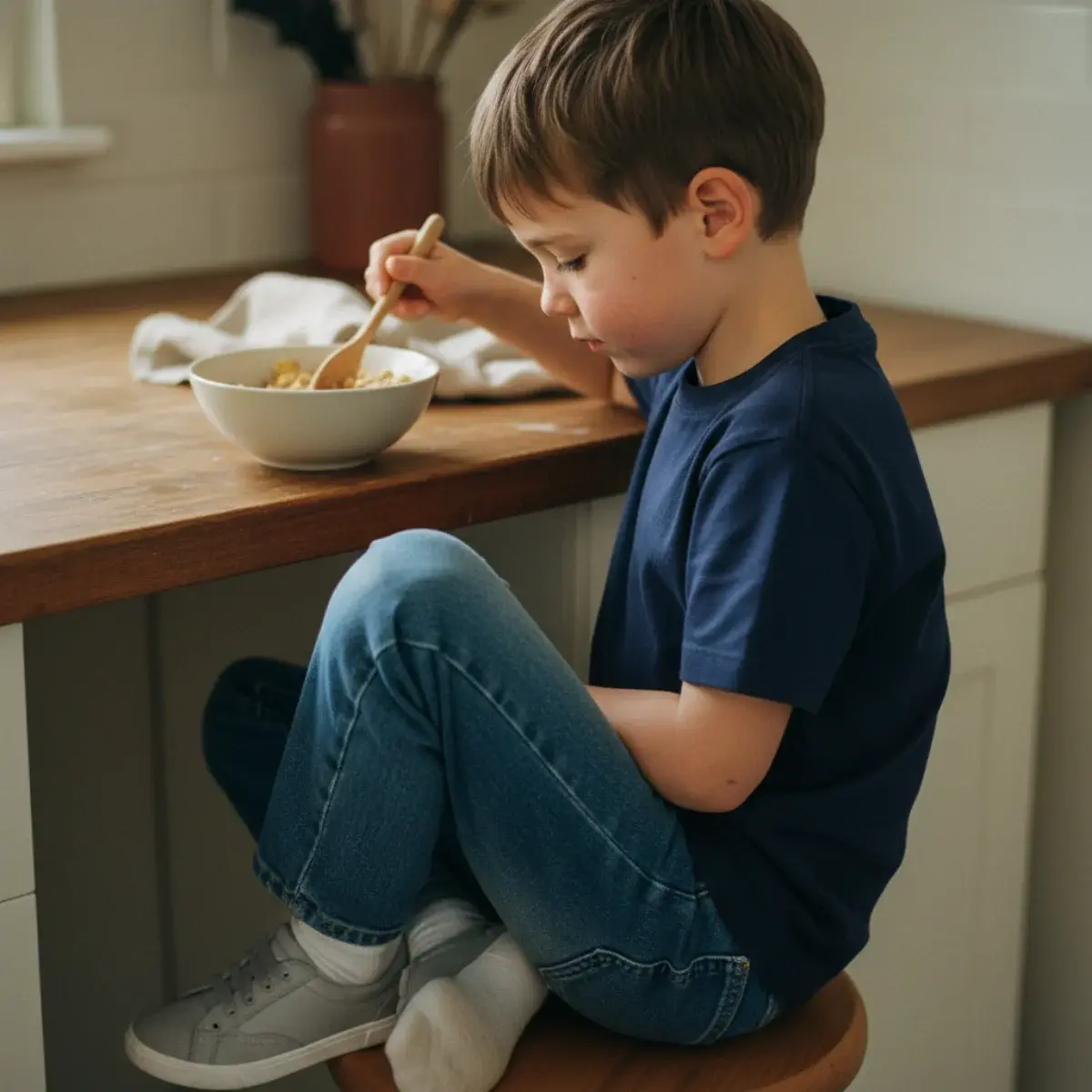
A heavyweight cotton t-shirt in a solid colour (navy, charcoal, forest, oxblood) or a simple stripe, paired with sturdy stretch-denim jeans in mid or dark indigo, cotton socks, and proper trainers with arch support. A fine-knit jumper or cardigan in a complementary tone packed in the school bag for cooler classroom moments.
 1600×1067
Why it works. The fabric weight handles a full day of activity without sagging. The stretch denim allows movement without restriction. The trainers support the foot. The jumper in the bag handles a classroom that may be cooler than expected. The whole outfit takes thirty seconds to assemble and survives ten washes without obvious wear.
2. The play-outside outfit
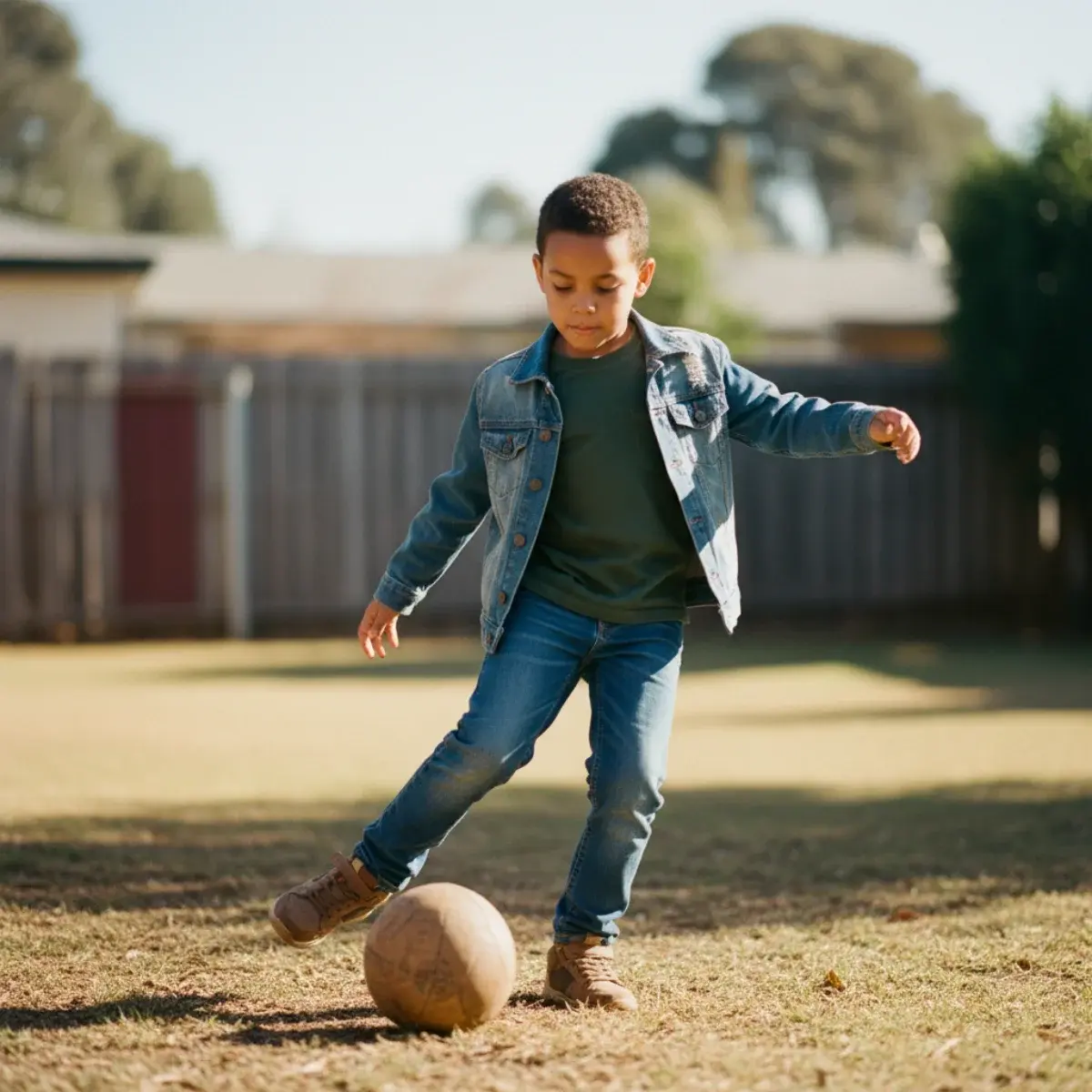
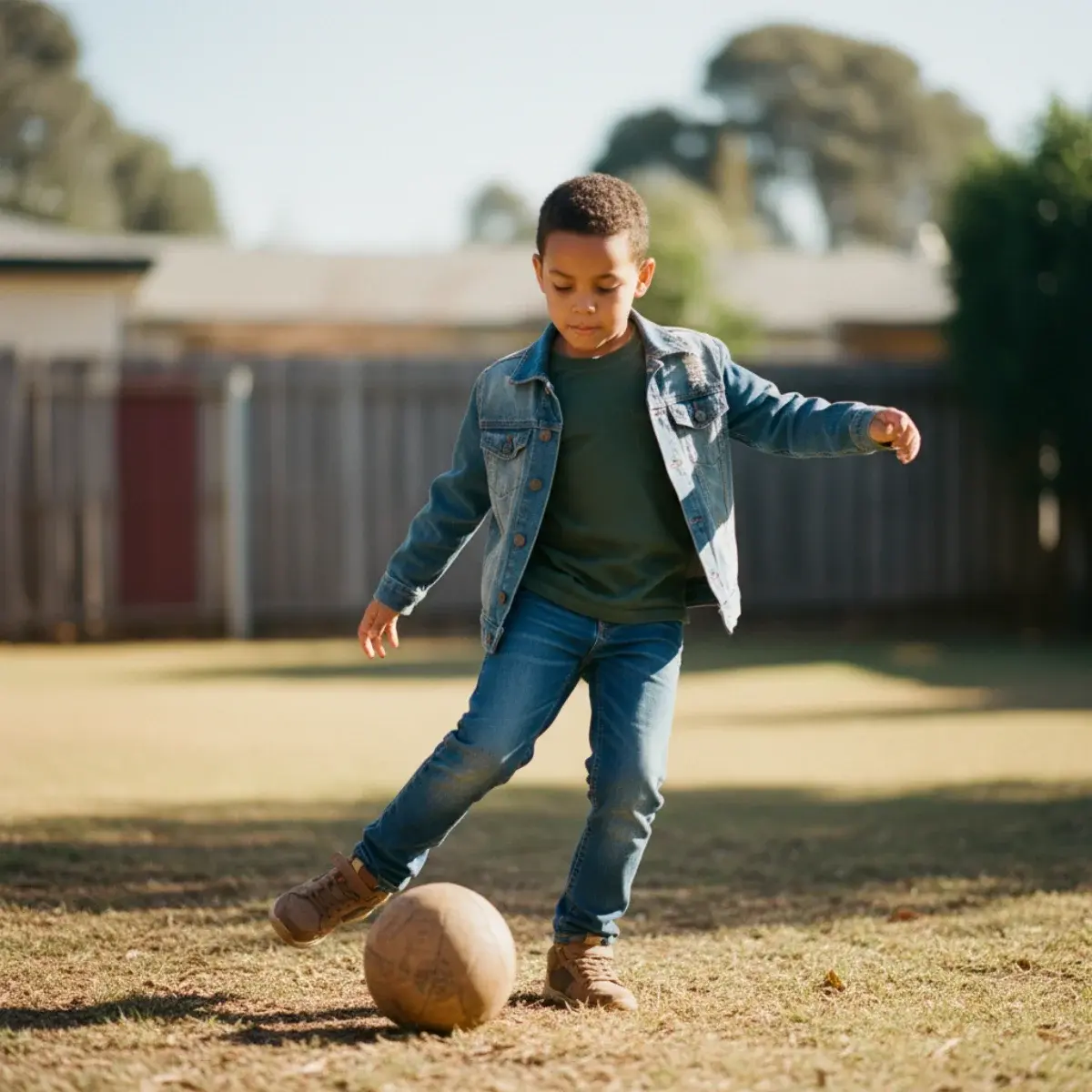
For the park, the playground, the backyard. A long-sleeve cotton t-shirt in a colour that hides dirt (charcoal, navy, dark green, or any small busy print), paired with sturdier jeans (denim that holds up to climbing and scuffing), proper outdoor trainers, and a denim jacket layered over for cooler weather. The whole outfit is built for activity — no precious pieces, nothing that can't go through a normal wash.
 1600×1067
3. The cosy weekend outfit
For Saturday mornings at home. A soft fine-knit jumper or sweatshirt in a warm tone (oatmeal, forest, navy), worn with comfortable jersey trousers or soft cotton joggers, and house slippers. The whole outfit lives in soft fabrics — comfortable for long stretches of indoor play, reading, or screen time.
 1600×1067
4. The smart-casual outfit
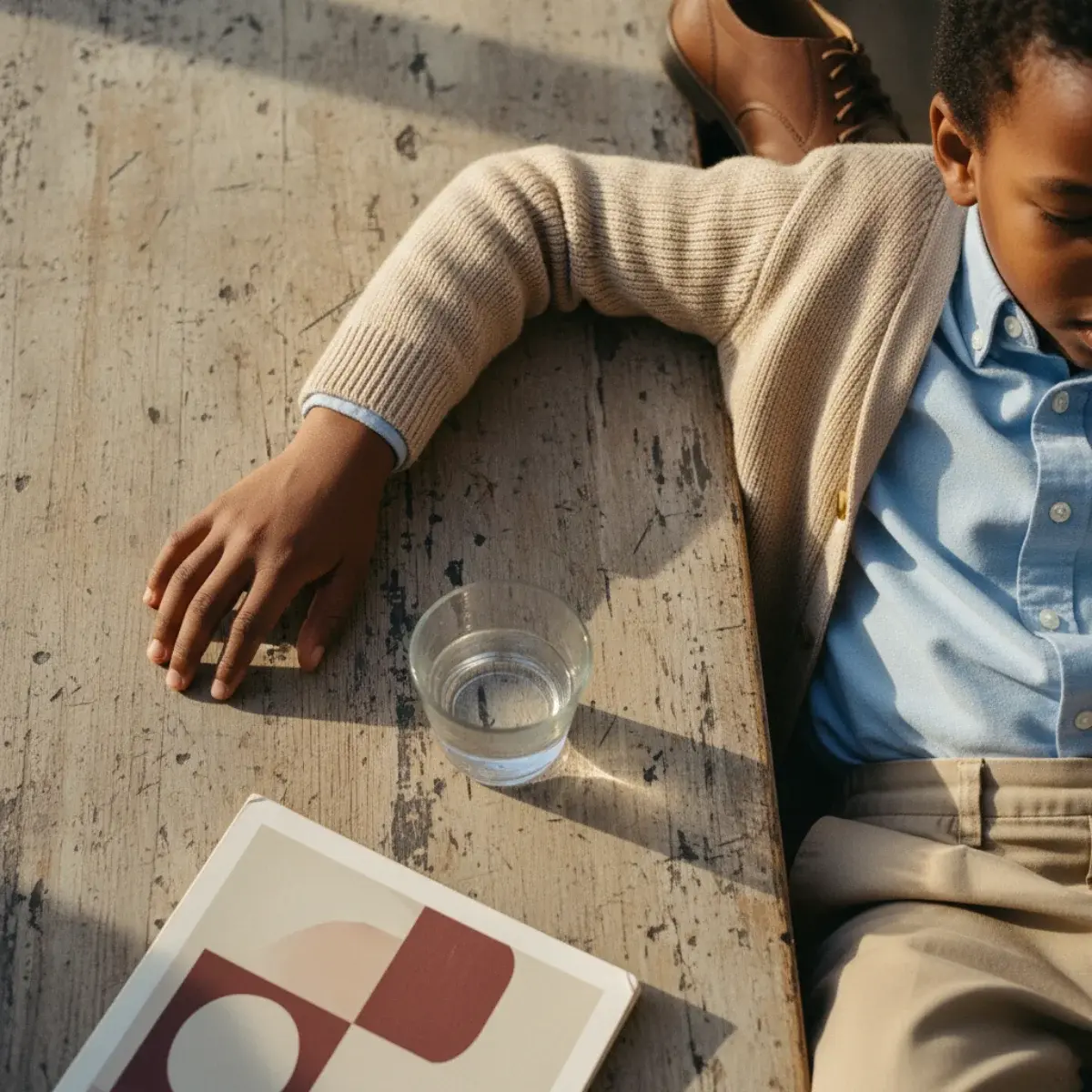
For family dinners, restaurant visits, school events. A button-up cotton shirt in white, pale blue, or a small classic check, worn over an undershirt if needed, with sturdy cotton chinos in stone or tobacco, leather school shoes, and a leather belt. A fine-knit cardigan or pullover in a complementary tone for cooler weather.
 1600×1067
5. The cooler-weather school outfit
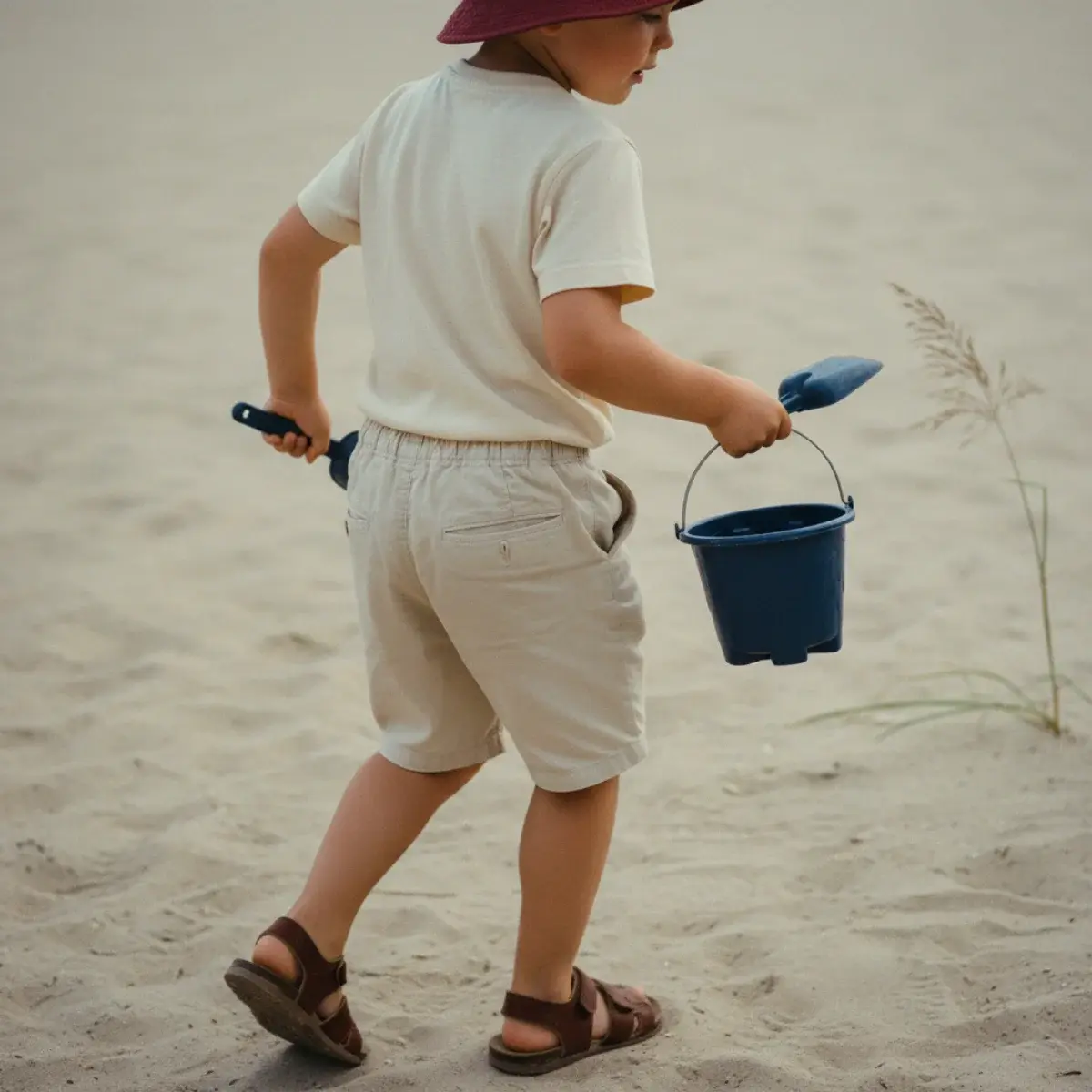
A soft fine-knit jumper or quarter-zip in a warm tone, layered over a fitted long-sleeve cotton t-shirt, paired with sturdy jeans, warm socks, and proper trainers. A denim jacket or a heavier wool jacket added for the walk to school in cold weather. The whole outfit handles the morning chill and the warmer classroom temperature with a layer the child can take off independently.
 1600×1067
A boy's wardrobe is built to be played in. Precious pieces sit unworn; durable classics get worn through.
6. The summer outfit
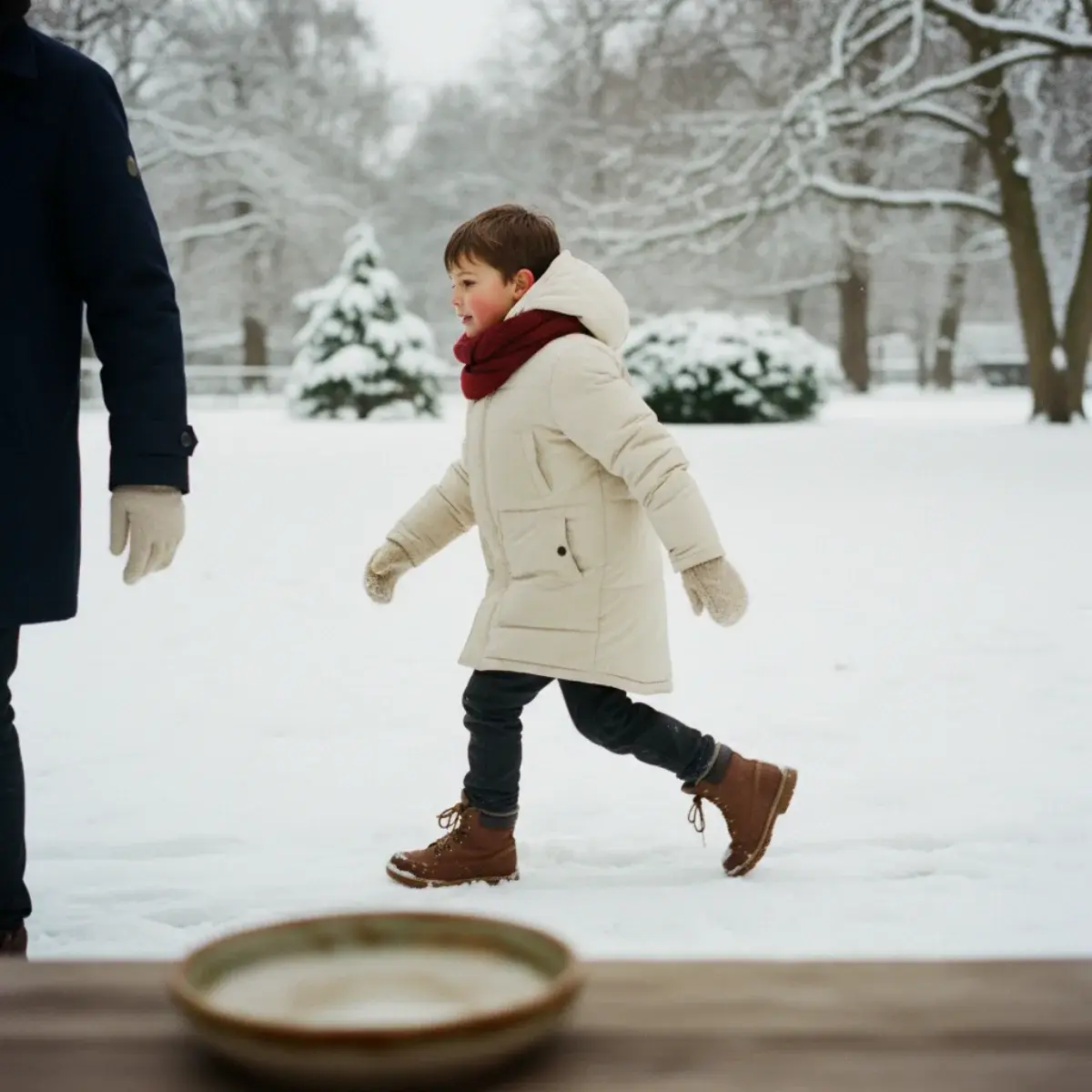
A short-sleeve cotton t-shirt in a soft solid or simple stripe, paired with sturdy cotton shorts (mid-thigh to just-above-the-knee — modern length, not 1990s long shorts), proper trainers or leather sandals, and a sun hat for outdoor wear. The principle: cotton fabrics that breathe, classic cuts that handle the playground.
 1600×1067
7. The birthday party outfit
For a friend's birthday at home or at an activity venue. A clean cotton t-shirt or fine-knit polo in a solid or small stripe, paired with cotton chinos or jeans, proper trainers or polished leather school shoes. A fine-knit jumper or cardigan layered over for cooler weather.
For active-venue parties (a soft play, a trampoline park, an outdoor activity): swap the chinos for sturdy jeans or sweatpants — venues like this typically require closed-toe shoes and clothes built for activity. The outfit reads as deliberate even though it's practical.
 1600×1067
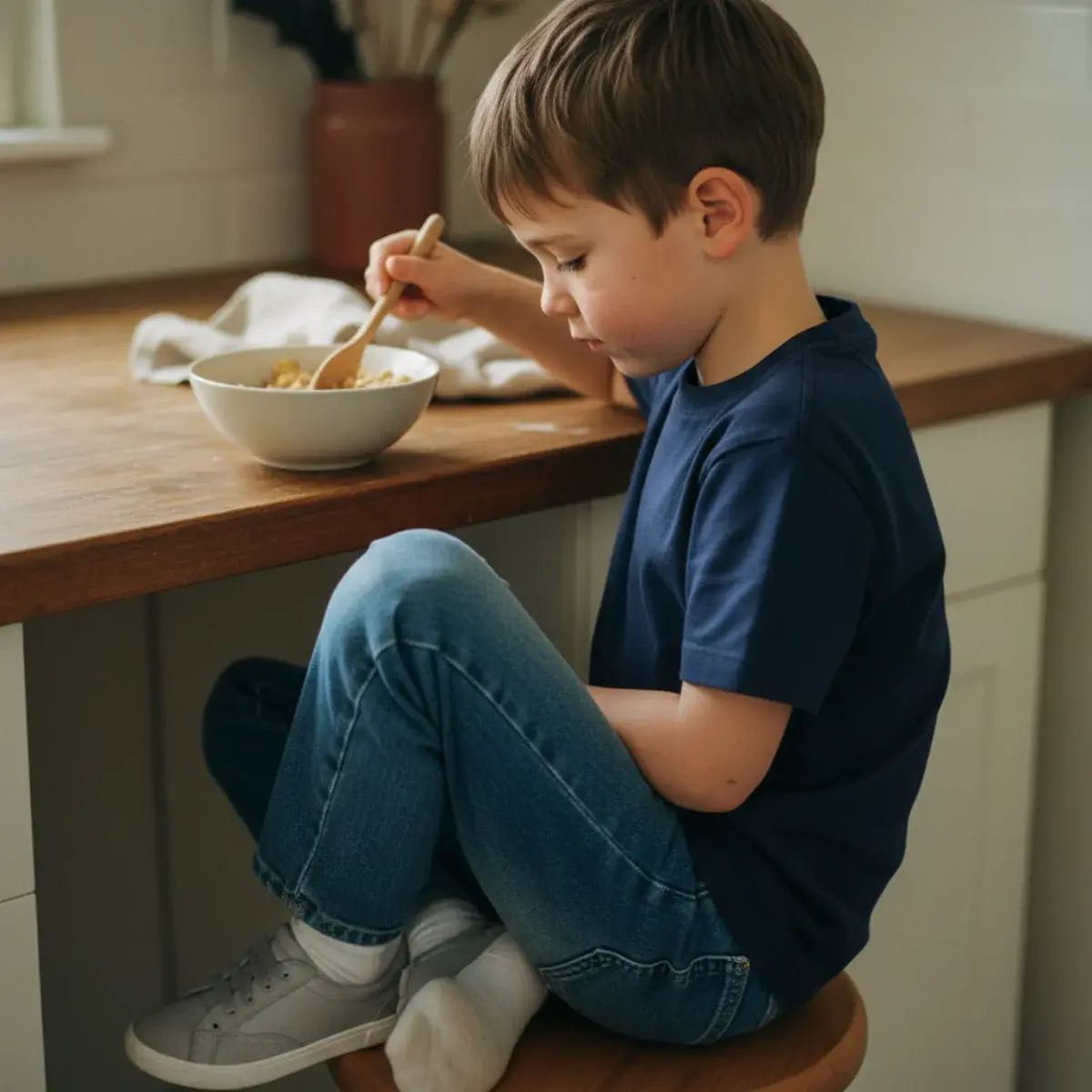
8. The walking-to-school cold-weather outfit
For winter mornings. A warm parka or wool jacket over the day's outfit, a knit wool scarf, knit gloves, and warm boots or insulated trainers. A wool beanie if it's particularly cold. The whole layered system handles the walk to school and peels off cleanly once indoors.
 1600×1067
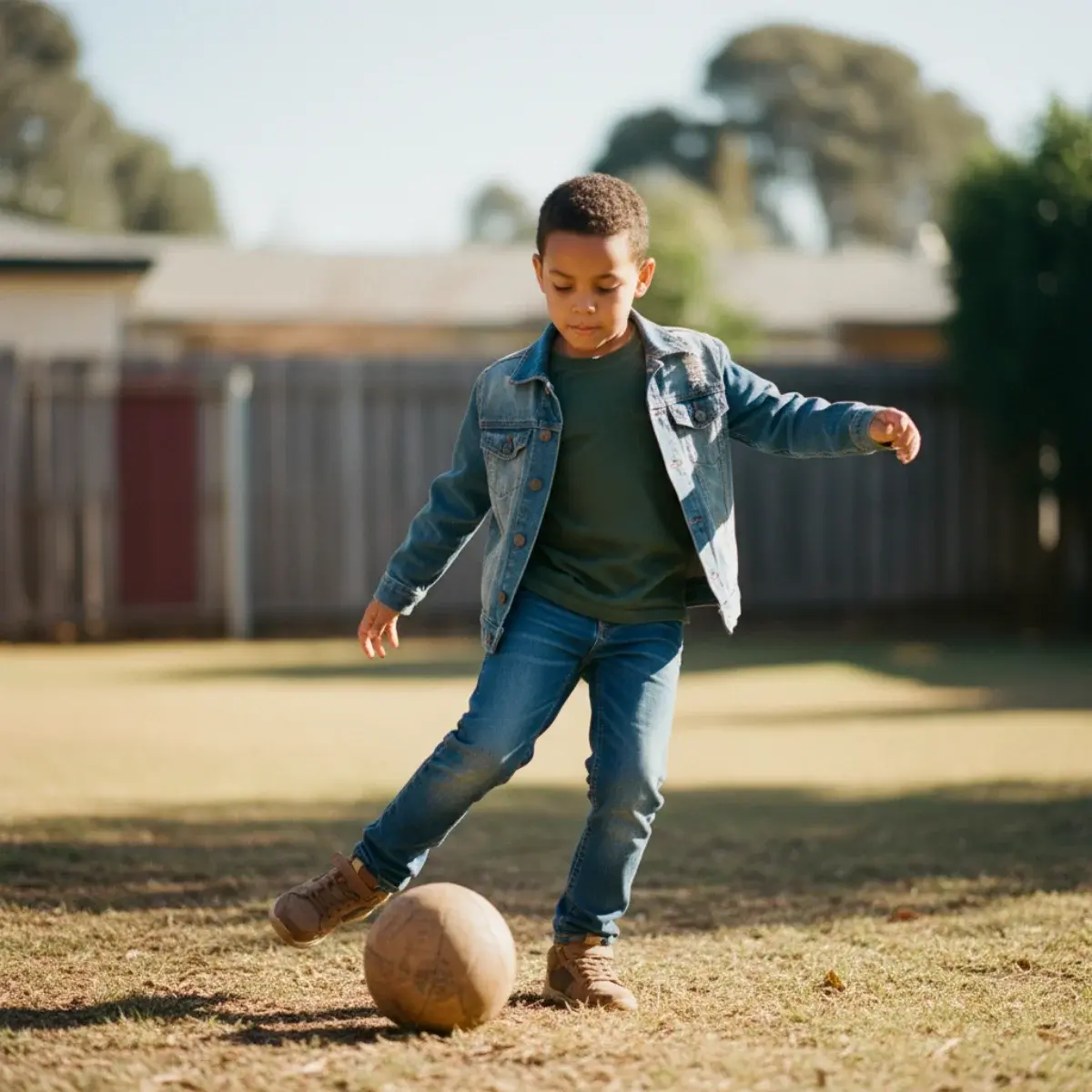
9. The wedding or formal event outfit
For a wedding, a christening, a formal family gathering. A wool or wool-blend sport coat (navy, charcoal, or tweed) over a button-up cotton shirt (white or pale blue), with dark wool trousers or proper chinos, and brown or black leather lace-up shoes. A clip-on tie or a properly-tied tie depending on age and patience. A leather belt matching the shoes.
 1600×1067
What to skip at kids' formal events: novelty bow ties as a daily accessory, miniature adult three-piece suits worn at a four-year-old (the proportions never work), and anything that limits the child's ability to sit through the ceremony comfortably. The principle is age-appropriate dressy: the outfit is special, the cut is age-appropriate, and the child can still move and sit comfortably.
10. The lazy-day-at-home outfit
For the genuine pyjamas-but-not-quite category. A soft cotton or merino t-shirt and matching soft cotton or fleece trousers (proper loungewear, not actual pyjamas), with cosy socks and house slippers. A soft cardigan or pullover for warmth. The whole outfit is comfortable enough for napping on the sofa and considered enough for unexpected visitors.
 1600×1067
Key takeaways
- 1The kids' wardrobe is small, durable, and built around classic cuts. Skip trend pieces and character prints; they age fast.
- 2Heavy cotton, sturdy stretch denim, and soft merino are the three fabrics that earn their place. They handle wash cycles and active wear.
- 3Stretch denim solves the older mobility problem. Boys can climb, run, and tumble freely without restrictive rigid denim.
- 4Three shoes cover everything: proper trainers (PE and active play), leather school shoes (uniform and dressier days), and house slippers (indoors).
- 5Pre-pair outfits the night before. Hang two or three pre-paired choices for the child to pick among — independence with bounded options.
- 6Buy one size up for jumpers and jackets to get two seasons of wear. Check shoes every three months; small feet outgrow fast.
The growing-fast problem, addressed
The single biggest practical challenge of dressing a young boy is that he'll grow out of every piece within twelve to eighteen months. The wardrobe strategies that work:
Buy slightly larger, not too large. A jumper one size up gets two seasons of wear; two sizes up swims on the child for the first season. Use the seam-position test: the shoulder seam at the actual shoulder, the inseam clearing the floor when standing barefoot.
Buy classic cuts that age within the wardrobe. A navy denim jacket fits a four-year-old the same way it fits a six-year-old — just in different sizes. A trendy print piece looks dated halfway through its growth cycle.
Pass clothes down or sideways. A small group of friends or relatives with boys of slightly different ages can rotate higher-quality pieces through three or four children. The economics work out dramatically better than buying everything new.
Skip the precious pieces. A $35 cotton t-shirt earns its keep through three children; a $90 designer t-shirt worn twice doesn't.
The fabrics that earn their place
Three fabric categories carry almost every boys' outfit:
Heavy cotton (200–300gsm). The wardrobe workhorse. Used for t-shirts, polos, light jackets, and most everyday pieces. Wash-resistant, doesn't pill quickly, breathes well, takes colour and print well.
Sturdy stretch denim. For jeans and jackets. The right weight (a true denim with stretch, not a thin denim-look fabric) handles playground wear while allowing movement. Rigid traditional denim is too stiff for active play; thin denim-look trousers shred too fast.
Soft merino or fine cotton-blend knits. For jumpers, cardigans, and warmer layers. The merino regulates temperature better than acrylic (and doesn't itch the way coarser wool can). Fine cotton-blends are softer than pure cotton and warmer.
Skip: very thin polyester that pills within months, anything labelled "dry clean only" for daily wear (it won't get cleaned at the rate it needs to be), and itchy synthetic wool blends that get rejected at the first wear.
The shoes that earn their place
Three pairs cover almost every situation:
Proper trainers for school PE, active play, and outdoor wear. Arch support, a real sole, and a fit that allows toes to spread. Replace as outgrown — children's feet grow in spurts and a tight shoe is a foot-development problem, not a fit problem.
Leather school shoes for uniform requirements, dressier days, and weddings. Black or brown leather in a polished cut that ages well across multiple children. The leather develops character; the synthetic-look "school shoe" reads dated within a year.
House slippers for indoor wear. Soft soles, fit close to the foot, in a colour that the child can identify as theirs.
Optional fourth: rain boots if you live somewhere wet. Bright colour for visibility; a height that clears typical puddle depth.
What to avoid. Cheap fashion sneakers in tiny sizes that don't offer proper foot support; very stiff adult-style dress shoes worn daily; flip-flops outside the beach (no foot support); anything that's a smaller version of an adult-fashion trend the child won't enjoy walking in.
The kids' wardrobe in twelve pieces
If building from scratch for a 4-to-10-year-old boy:
- Six t-shirts — solid colours (white, navy, forest, oxblood, charcoal) and one simple stripe
- Two long-sleeve cotton tops in solid colours
- Three pairs of jeans in sturdy stretch denim — mid and dark indigo
- Two pairs of cotton chinos — stone and tobacco
- Two pairs of cotton shorts for summer
- Two soft fine-knit jumpers or cardigans in warm tones
- One denim jacket in mid or faded indigo
- One warm winter parka or wool coat
- One button-up cotton shirt in white or pale blue for special days
- One pair of proper trainers with arch support
- One pair of leather school shoes
- One pair of house slippers
Plus seasonal additions — wool socks and a knit hat for winter, a sun hat for summer, a properly-tied or clip-on tie for the rare formal event. Twelve core pieces, ten outfits, every situation a young boy encounters across the year covered.
Comparison: school day vs special event
| Element | School day | Special event |
|---|---|---|
| Top | Cotton t-shirt or long-sleeve | Button-up cotton shirt |
| Bottom | Sturdy stretch denim jeans | Wool trousers or chinos |
| Layer | Jumper in school bag | Sport coat (for formal) or fine knit |
| Shoes | Trainers or school shoes | Polished leather school shoes |
| Accessories | None | Belt matching the shoes; optional tie for formal |
| Fabric tolerance | Built for activity | Built for sitting through a ceremony |
The level of formality shifts; the principles hold. Comfort, durability, classic cuts.
Where boys' outfits go wrong
Three common parental mistakes:
Buying too many trend pieces. A novelty t-shirt worn twice, a character print obsolete within six months, a trendy pair of trousers that looks dated within a year — they all accumulate in a closet that's full but offers nothing wearable. Classic cuts in good fabrics get worn repeatedly.
Treating boys' clothes like miniature adult clothes. Miniature designer sneakers worn daily, tiny three-piece suits at a four-year-old, age-inappropriate "fashion" cuts. The clothes that work are age-appropriate first and stylish within those bounds. A child should look like a child wearing nice clothes, not a small adult in fashion.
Skipping the stretch denim conversion. Rigid 100% cotton denim was the standard for kids' clothes for decades, and it's still sold widely. Stretch denim is dramatically better for active boys — allows climbing, running, and falling without the trousers fighting the body. The change is one of the easiest upgrades to make to a boy's wardrobe.
The general principle: a kids' wardrobe is a tool. The wardrobe that works rotates the same pieces through the week, survives the wash, allows free movement, and reads age-appropriate. Build small, build durable, and the closet that opens on Monday morning still serves on Sunday evening — and on through the next year, until the child has outgrown the size, at which point the same classics get bought in a larger size.
See all men's outfit guides → · Men's casual outfits → · Men's footwear guide → · Kids outfits for girls →
Frequently asked
- What are the wardrobe basics for a young boy?
- A small set of durable, machine-washable pieces handles almost every situation. Six t-shirts in different colours, three pairs of jeans or sturdy cotton trousers, two pairs of cotton shorts, two cosy fine-knit jumpers, a denim jacket, a warm winter parka, proper trainers, leather school shoes, and house slippers. The wardrobe rotates faster than an adult's because kids grow, but the categories stay the same. Buy in classic cuts; resist trend pieces that age fast.
- How do I make morning dressing easier?
- Pre-pair outfits the night before. Lay out a complete outfit (top, bottom, socks, shoes) where the child can see it. Better yet, hang two or three pre-paired outfits in a designated corner of the closet and let the child choose among them — independence with bounded options. The mistake to avoid: a full closet of independent pieces that requires daily decisions; pre-pairing removes the morning friction.
- What fabrics are best for boys' clothes?
- Three categories handle almost every kid's outfit. Heavy cotton (250gsm+) for t-shirts — survives forty washes, doesn't pill quickly. Sturdy denim for jeans and jackets — holds up to playground wear and the inevitable scuffing. Soft merino or fine cotton for jumpers and cardigans — comfortable across temperature swings, no itchiness complaints. Avoid: thin polyester that pills quickly, anything labelled 'dry clean only' for daily wear, and itchy synthetic wool blends.
- Are jeans practical for active boys?
- Yes — modern stretch denim solves the older mobility problem. A pair of stretch denim jeans in mid or dark indigo holds up to playground wear, climbing, and running without restricting movement. Rigid traditional denim is too stiff for active play; thin denim-look trousers shred too fast. The sweet spot is sturdy stretch denim — the same construction adults wear, scaled down. Buy in classic cuts (straight or slim-straight); skip skinny cuts and elaborate distressing.
- What shoes do boys actually need?
- Three pairs cover almost every situation. Proper trainers (with arch support and a sole built for actual running) for school PE and outdoor play. Leather school shoes for uniform requirements and dressier days. House slippers for indoor wear. Add: rain boots if you live somewhere wet. Skip: anything that doesn't allow proper foot development, including very stiff dress shoes worn daily and adult-style fashion sneakers in tiny sizes. Replace as outgrown — check fit every three months.
- How do I handle the growing-fast problem?
- Buy slightly larger but not too large. A jumper one size up gets two seasons of wear; two sizes up swims on the child. Use the inseam-and-shoulder-seam test: the shoulder seam at the actual shoulder; the inseam clearing the floor when standing barefoot. Buy classic cuts that age well — a navy denim jacket fits the same way at four as at six, just bigger; a trendy print piece will look outdated halfway through its growth cycle.
- What should boys wear to special events?
- Depends on the event. A wedding or formal event: a wool sport coat, a button-up shirt, dark trousers, and proper leather shoes. A birthday party at a friend's house: a clean t-shirt or jumper with jeans or chinos, plus proper shoes. A school event: typically smart-casual — a clean polo or button-up with trousers. The principle: one or two specifically-special-event pieces in the closet handle the year; everyday clothes shouldn't try to be formalwear.
Written by Theo Ashworth, looksyra editorial. Last updated May 2026.