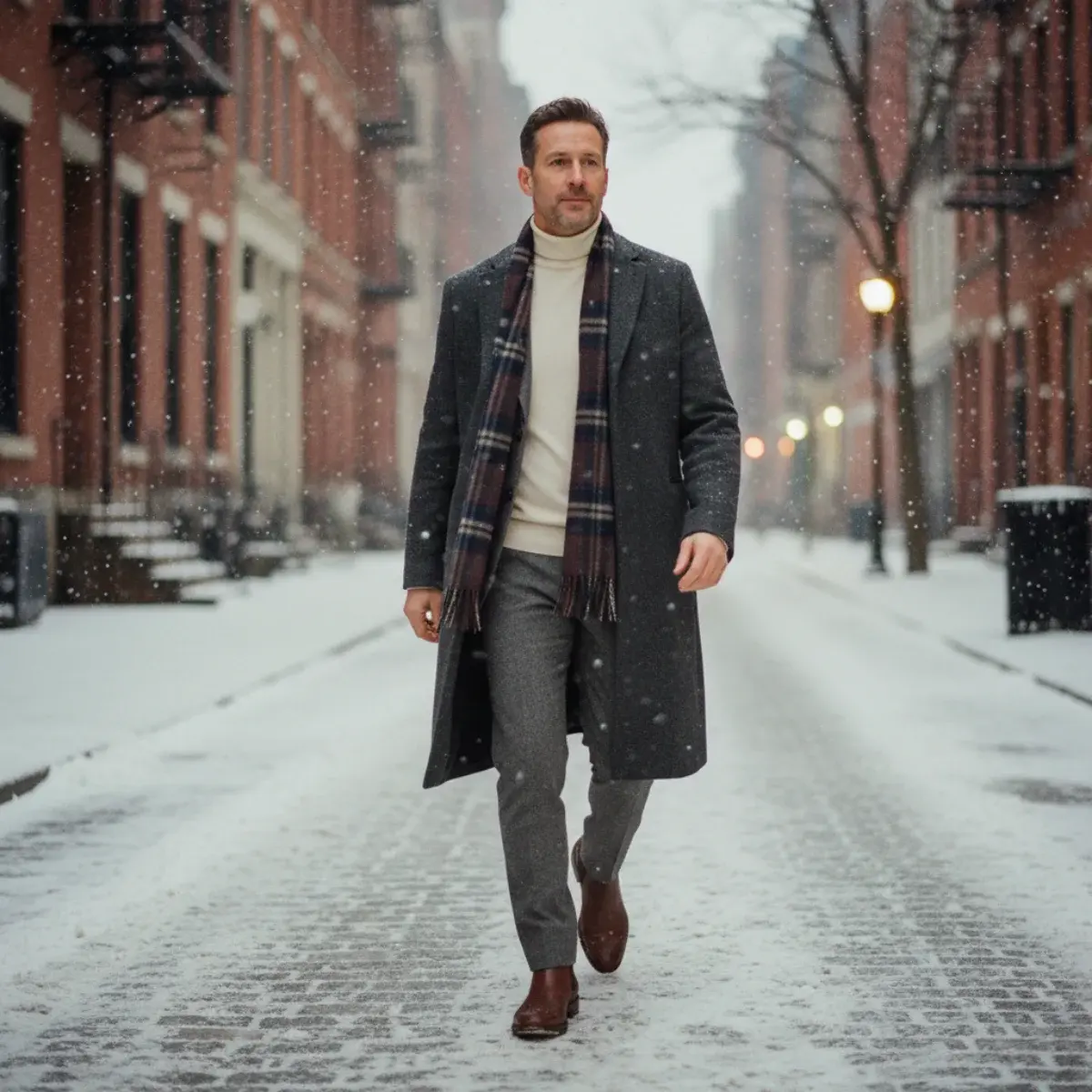
Winter is the season where the closet either earns its keep or doesn't. A man can get away with a flawed casual outfit in May — light fabrics, fewer pieces, more grace. By December, every choice matters more: the coat, the layer underneath it, the boots, the scarf. The temperature drops and the wardrobe has to do more work. This guide walks twelve looks for the season when dressing well becomes the difference between looking like winter and looking defeated by it.
The line this guide holds: winter style is about shape, not bulk. A man who looks good in winter isn't wearing less than the man bundled into a shapeless puffer; he's wearing approximately the same warmth, distributed across pieces that each hold their own line. The overcoat has shoulders. The trouser has a defined leg. The boot has a structured toe. Every piece does its job without bunching against the next one.
1. The wool overcoat over a knit and jean
The cleanest winter look there is. A single-breasted wool overcoat in navy, charcoal, or camel, worn open over a fine-gauge merino crewneck in oatmeal, a dark indigo straight-leg jean, and brown leather Chelsea boots. A knit scarf in a complementary colour at the neck, leather gloves in a colour matching the boots. The whole outfit is five pieces; each piece is specifically right.
 1600×1067
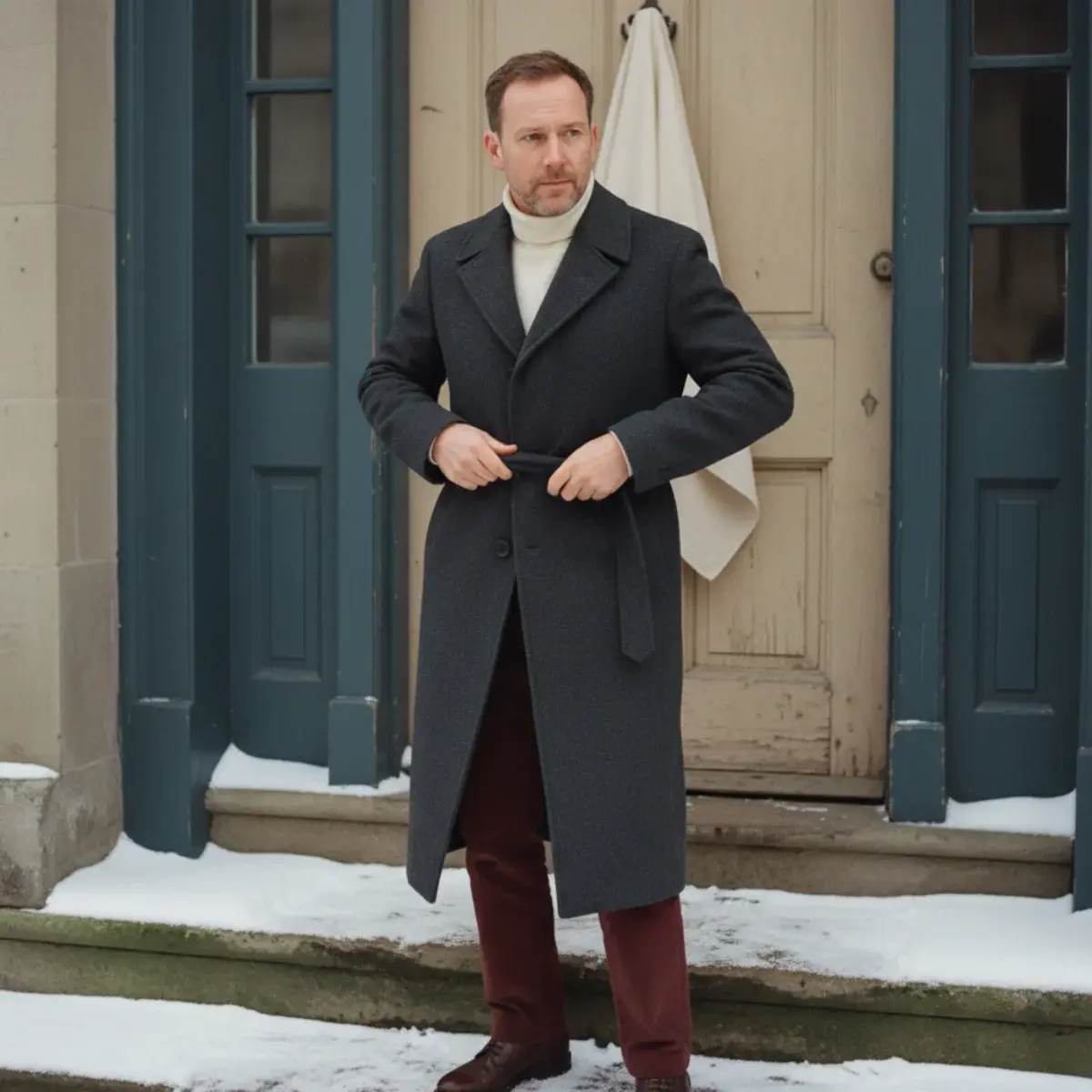
2. The roll-neck under the overcoat
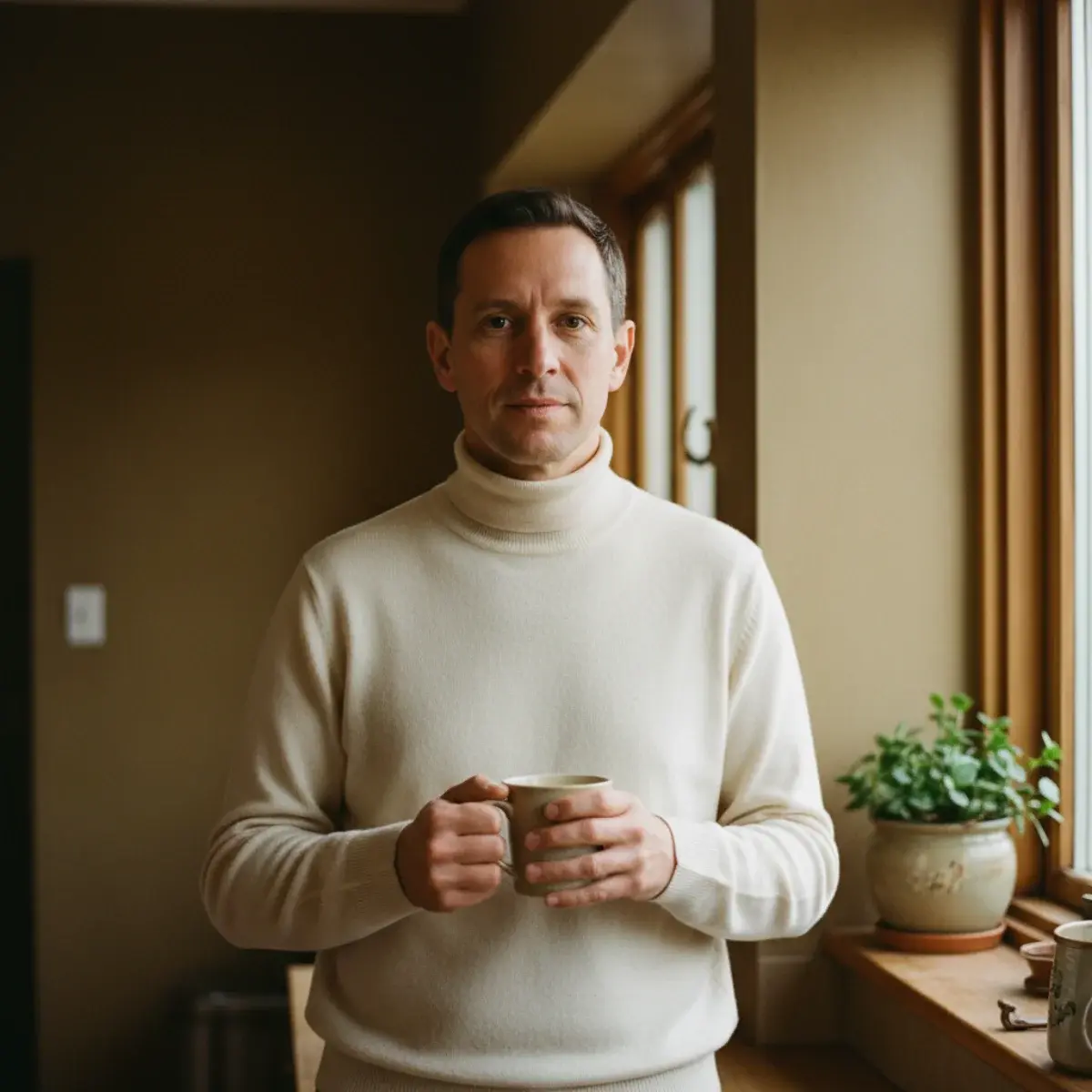
A fine-gauge merino or cashmere roll-neck (turtleneck) in black, navy, charcoal, or oatmeal, worn alone under a wool overcoat with charcoal wool trousers and brown or oxblood derby boots. The turtleneck removes the need for a scarf — the collar handles the warmth at the neck — and reads cleaner than a layered approach.
 1600×1067
Where it works. Dinner, a winter wedding without a strict tie code, a dressier social event, a creative-industry office. The whole outfit reads more European than the knit-and-jean baseline; both are valid.
3. The chore coat layered over a hoodie
The casual winter look. A heavyweight chore coat or chunky overshirt in chocolate moleskin or charcoal wool, worn over a fitted hoodie or heavy crewneck sweatshirt, paired with straight-leg jeans or heavy cotton trousers, and brown leather boots. A beanie in a complementary colour.
 1600×1067
Why it works in cold. The chore coat acts as the wind-blocker; the hoodie is the insulating layer; a base merino t-shirt under both handles moisture. The result is genuinely warm without the overcoat formality.
4. The shacket and jeans
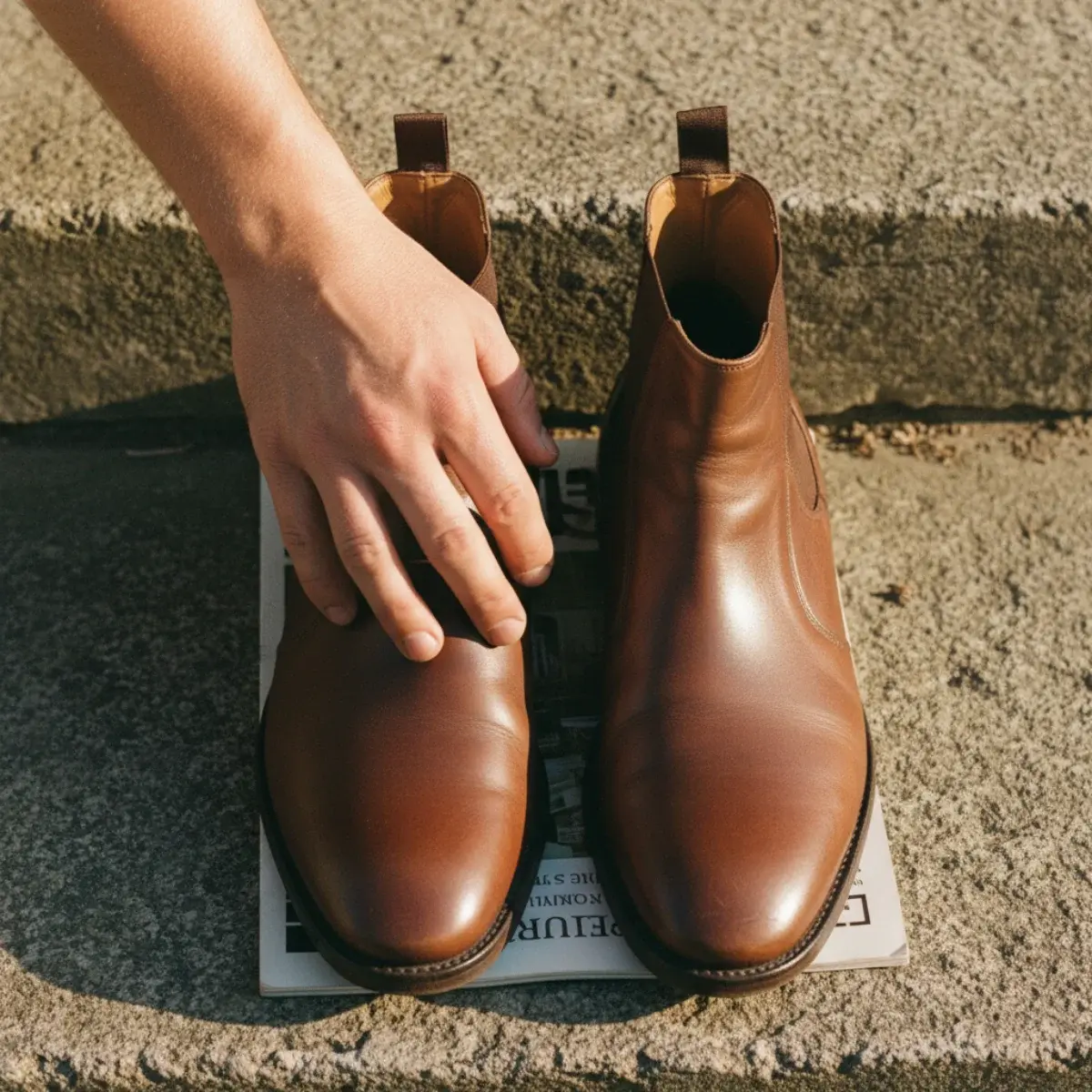
A heavier overshirt in flannel, wool, or moleskin (sometimes called a shacket — a shirt-jacket hybrid), worn over a fine-knit or henley, with straight-leg dark jeans and brown suede chukka boots. The shacket gives the look structure that a cardigan can't, while staying more casual than a proper jacket. In tobacco, dark olive, oxblood, or chambray-grey.
 1600×1067
5. The down vest over a wool knit
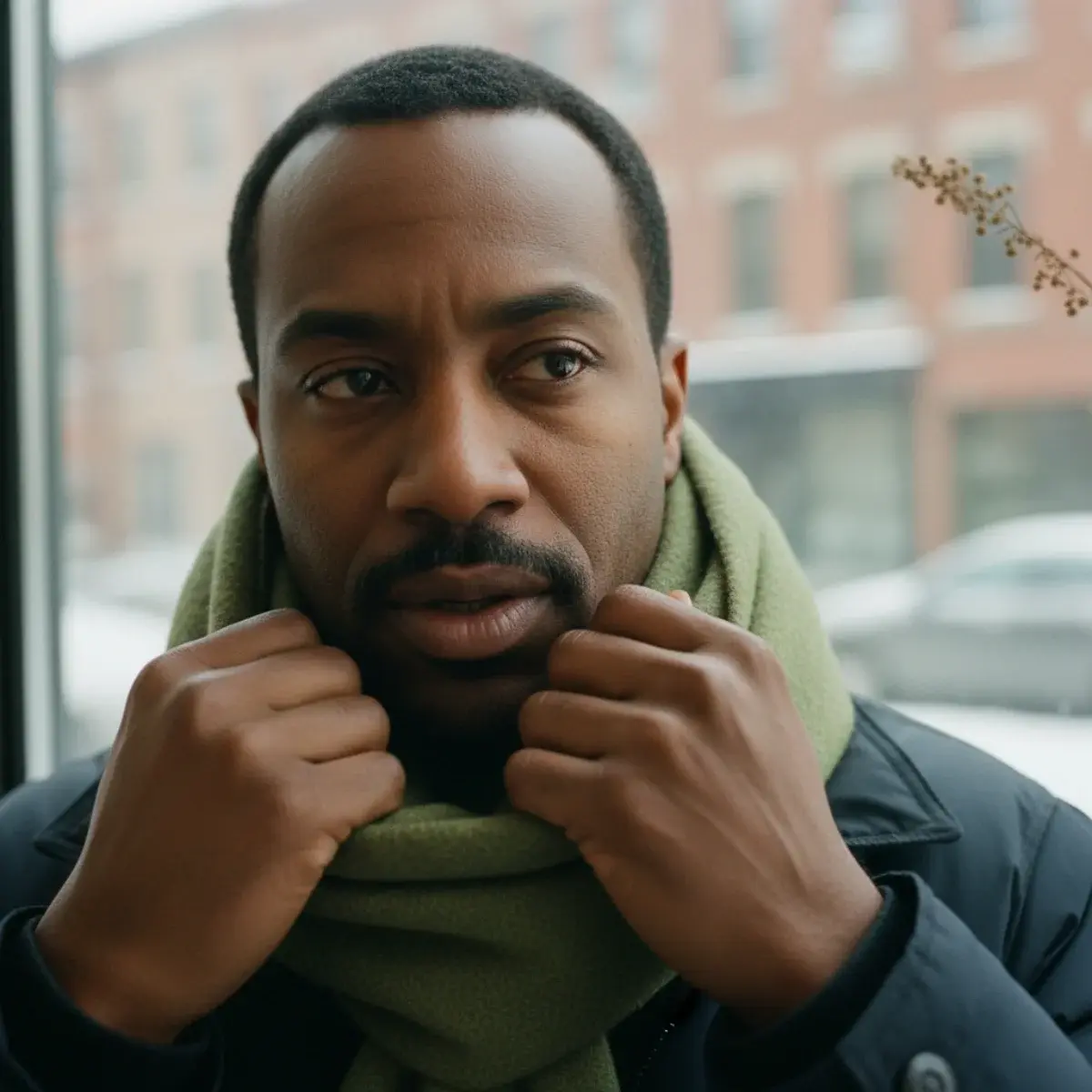
A winter-casual move that adds warmth without adding bulk to the arms. A quilted down vest (slim, not the chunky one) in navy or charcoal, worn over a heavy wool crewneck or roll-neck, with straight-leg cotton trousers or selvedge jeans, and brown leather boots. The vest provides core warmth; the knit handles the sleeves. The whole outfit reads outdoorsy-considered rather than sportswear.
 1600×1067
6. The full suit with overcoat
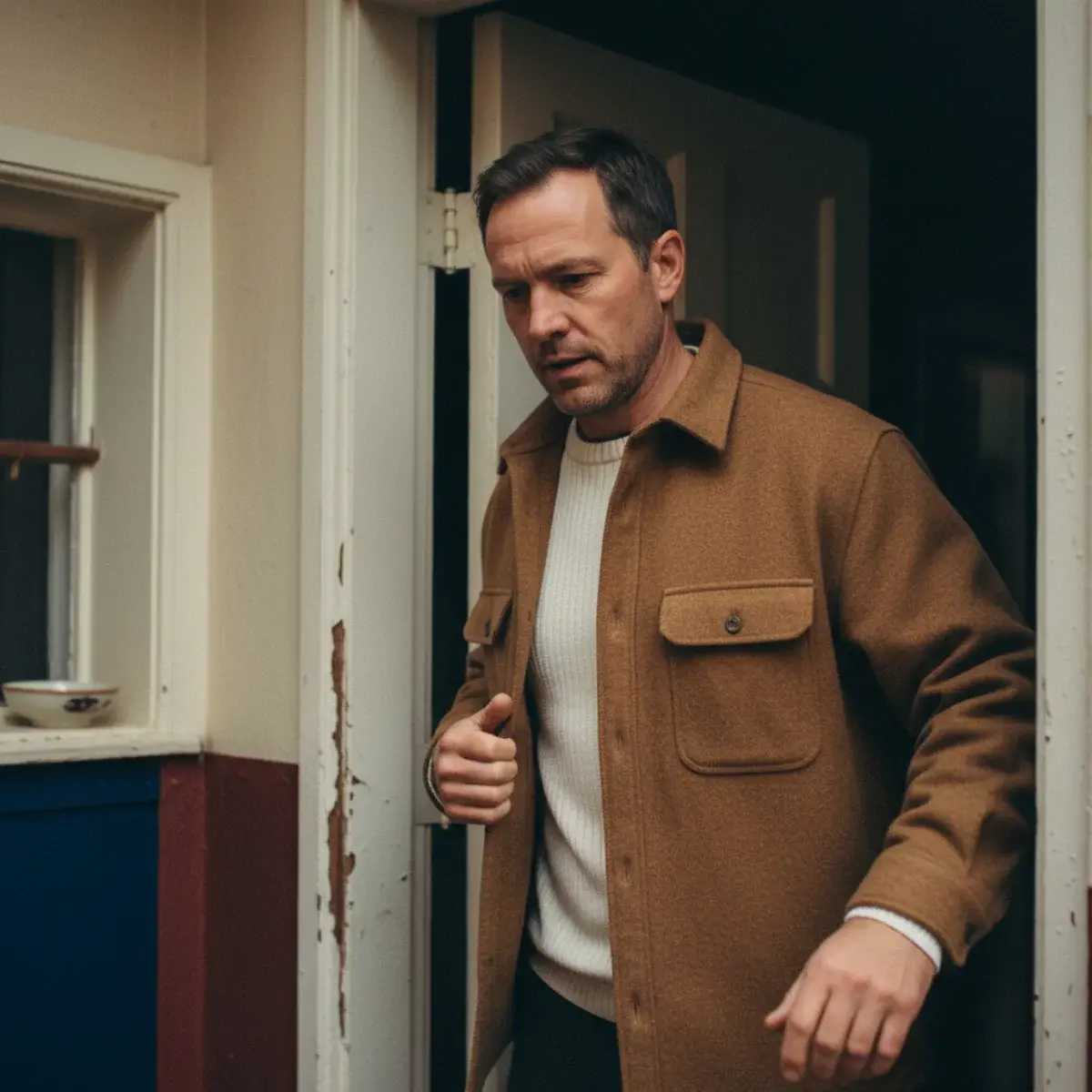
The dressier winter outfit. A wool suit in charcoal or navy under a navy or camel wool overcoat, worn with a fine cotton or twill shirt, a knit silk or wool tie (textured ties read winter-appropriate), and dark leather derby boots or oxford boots. A leather glove and a wool scarf in a contrasting tone (oxblood or forest against a navy coat) finish the look.
 1600×1067
Winter clothes can hide a man or define him. The pieces that define him are the ones with shape and structure — every single time.
7. The shawl-collar cardigan outfit
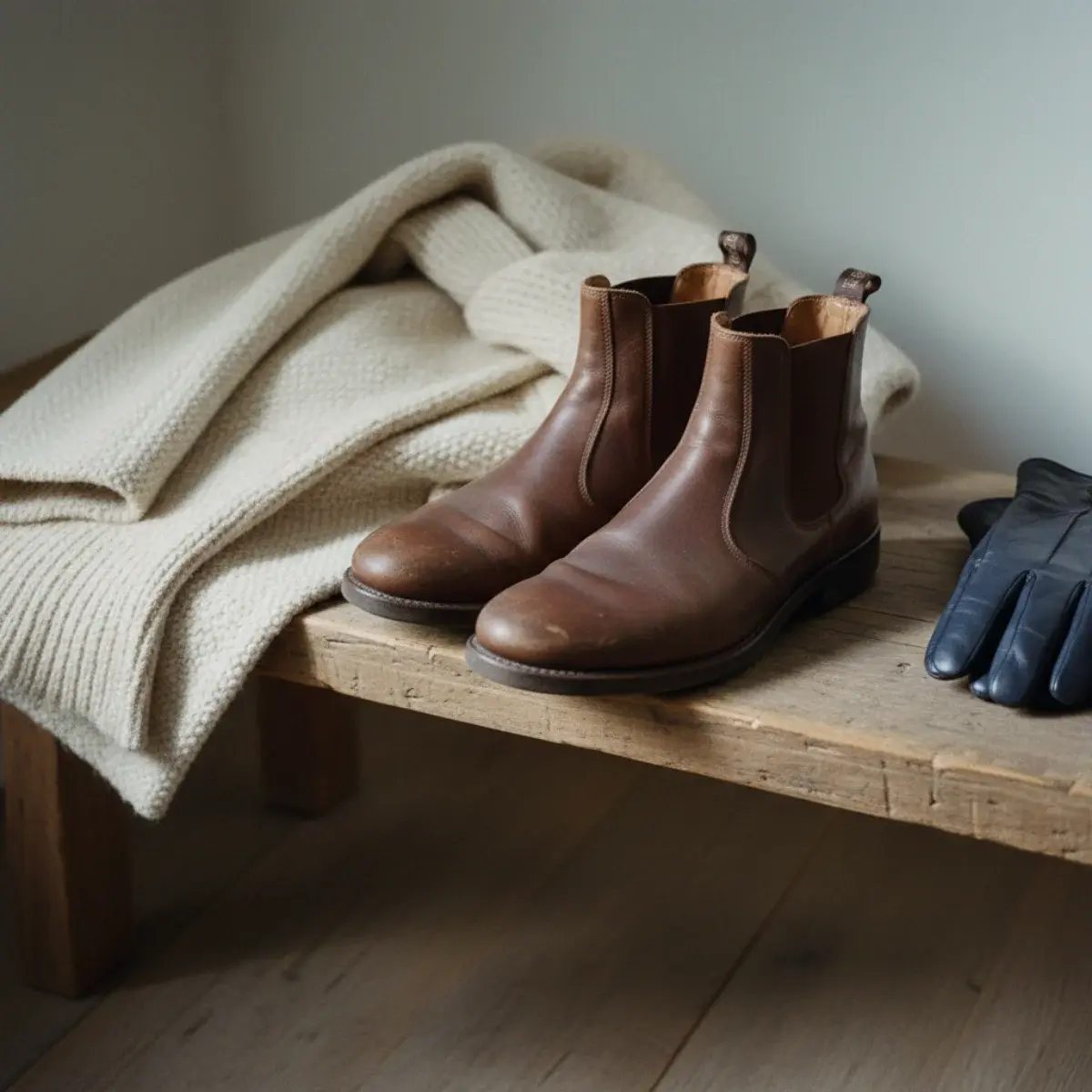
A heavyweight shawl-collar cardigan in oatmeal, charcoal, or oxblood, worn over a fitted t-shirt or fine knit, with dark wool trousers or heavy cotton chinos, and brown leather boots. The cardigan provides indoor warmth without an outer layer; pairs under a wool overcoat for outdoor use. Reads quietly literary — the closest a modern man comes to a tailored cardigan-suit hybrid.
 1600×1067
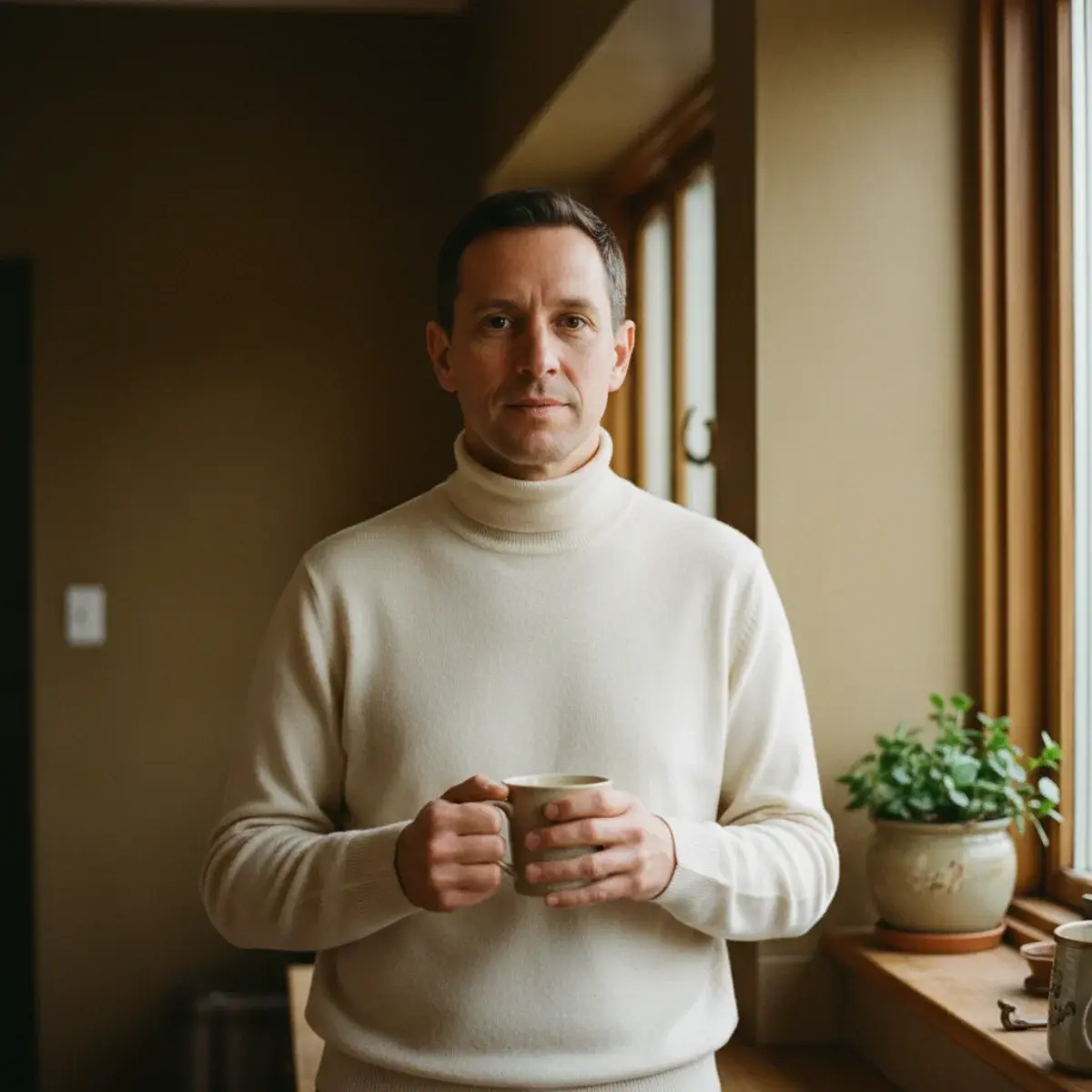
8. The puffer + knit + jean (done right)
The casual winter look most men get wrong, and worth getting right. A slim-profile black or navy quilted puffer (not the oversized moon-suit version), worn over a heavy crewneck or knit, with straight-leg dark jeans and a leather Chelsea boot or weather-rated chukka. The whole outfit lives in dark colours; one warm-tone accent (a tobacco scarf, an oxblood beanie) breaks the monochrome.
What separates good puffer outfits from bad ones. Profile (slim, not balloon), colour (single solid dark tone, not multi-panelled), and the rest of the outfit (it has to have shape — paired with sweatpants and sneakers, the puffer looks teenage; paired with a proper knit, jean, and boot, it looks intentional).
 1600×1067
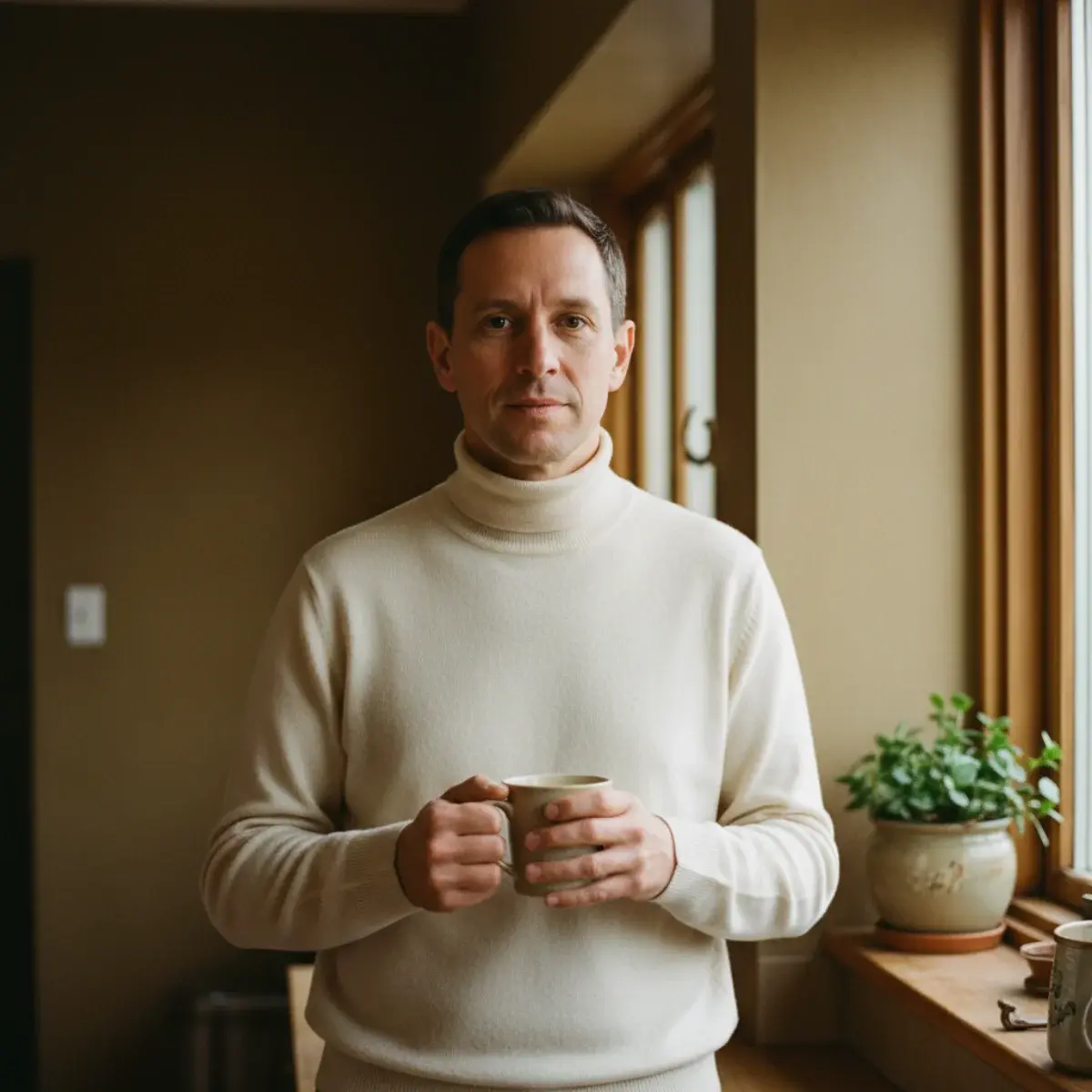
9. The parka outfit (for serious cold)
When the temperature drops below the wool overcoat's effective range, a real insulated parka becomes necessary. The look stays good if the parka itself stays good: olive, navy, or black, with a fur-free or detachable-fur hood, and a slim cut that doesn't tent past the hip. Under it, the same layering: base merino, heavy knit, and either straight-leg wool trousers or thick straight-leg jeans, finishing in a weatherproof leather or rubber-soled boot.
 1600×1067
10. The all-black winter outfit
The cold-weather equivalent of the all-black casual look. A black wool overcoat over a black fine-gauge merino crewneck or turtleneck, black wool trousers or dark indigo (almost-black) jeans, and black leather boots. One detail in a warm tone — an oxblood watch strap, a tobacco scarf, or brown leather gloves — keeps the look from reading severe.
 1600×1067
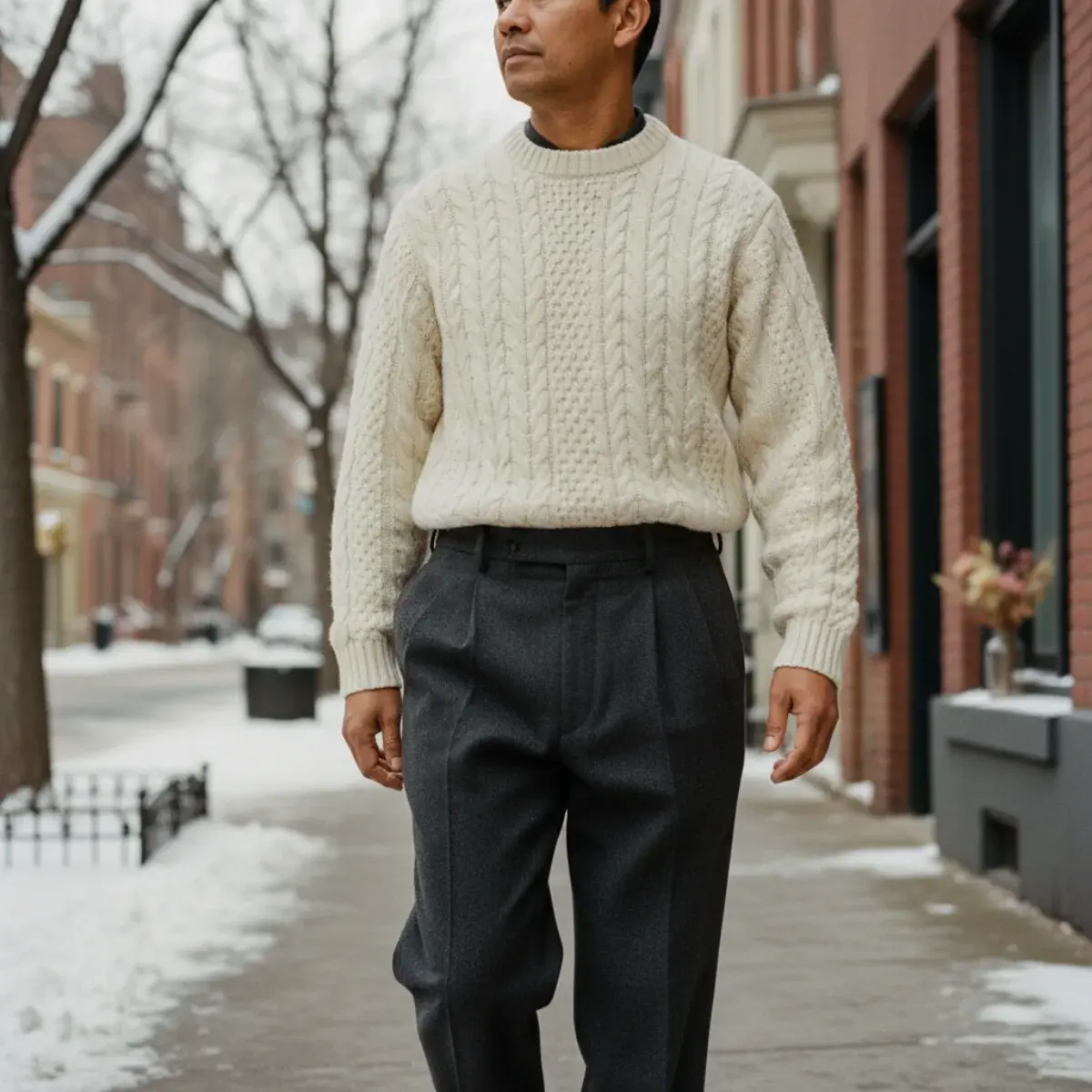
11. The chunky knit + tailored trouser
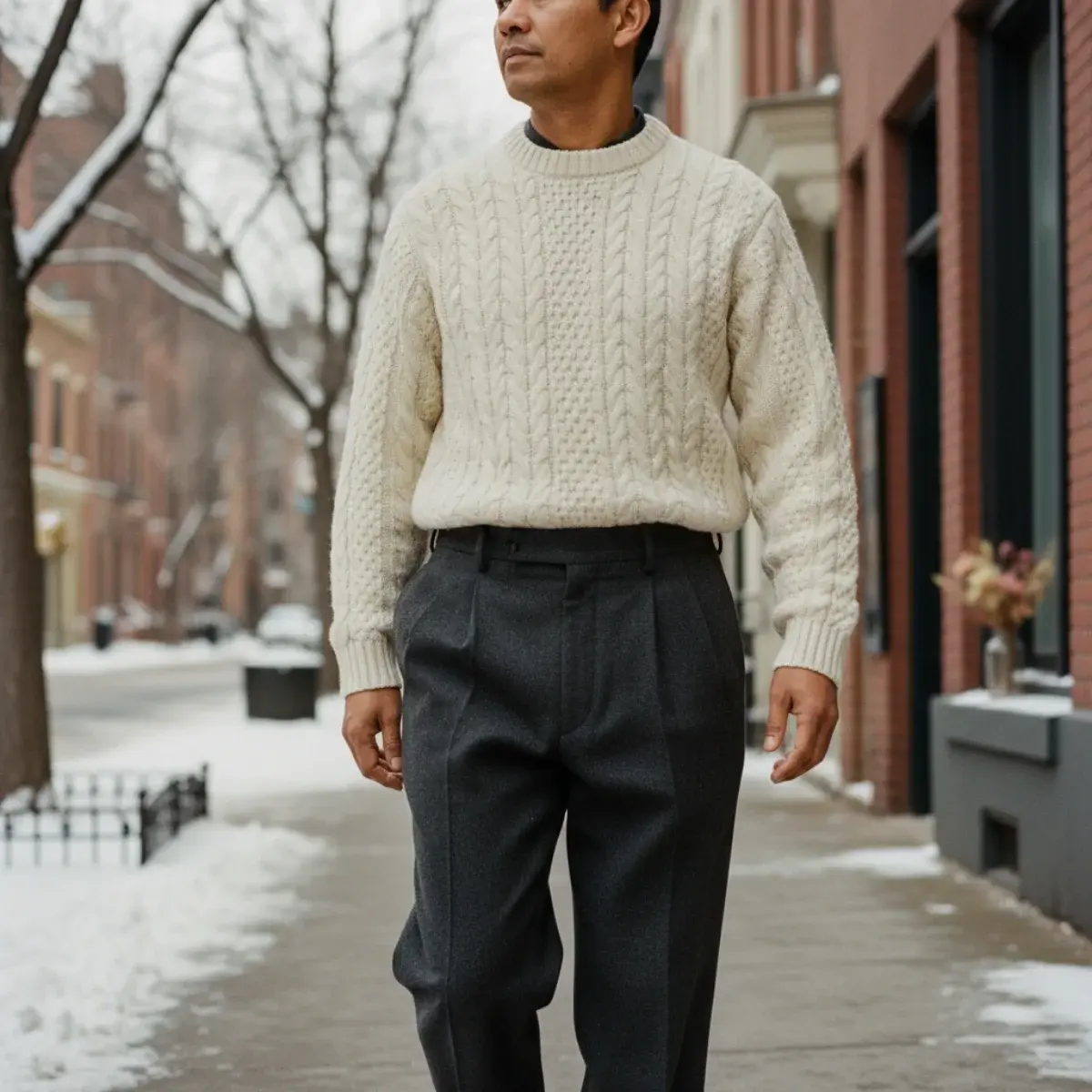
A heavier-gauge knit (chunky merino, lambswool, or fisherman-cable) in oatmeal, oxblood, forest, or navy, worn alone with charcoal wool trousers and brown or oxblood derby boots. Indoor outfit; pair with an overcoat for outside. Reads countryside-considered — the look of a man who owns a fireplace and uses it well.
 1600×1067
12. The peacoat outfit
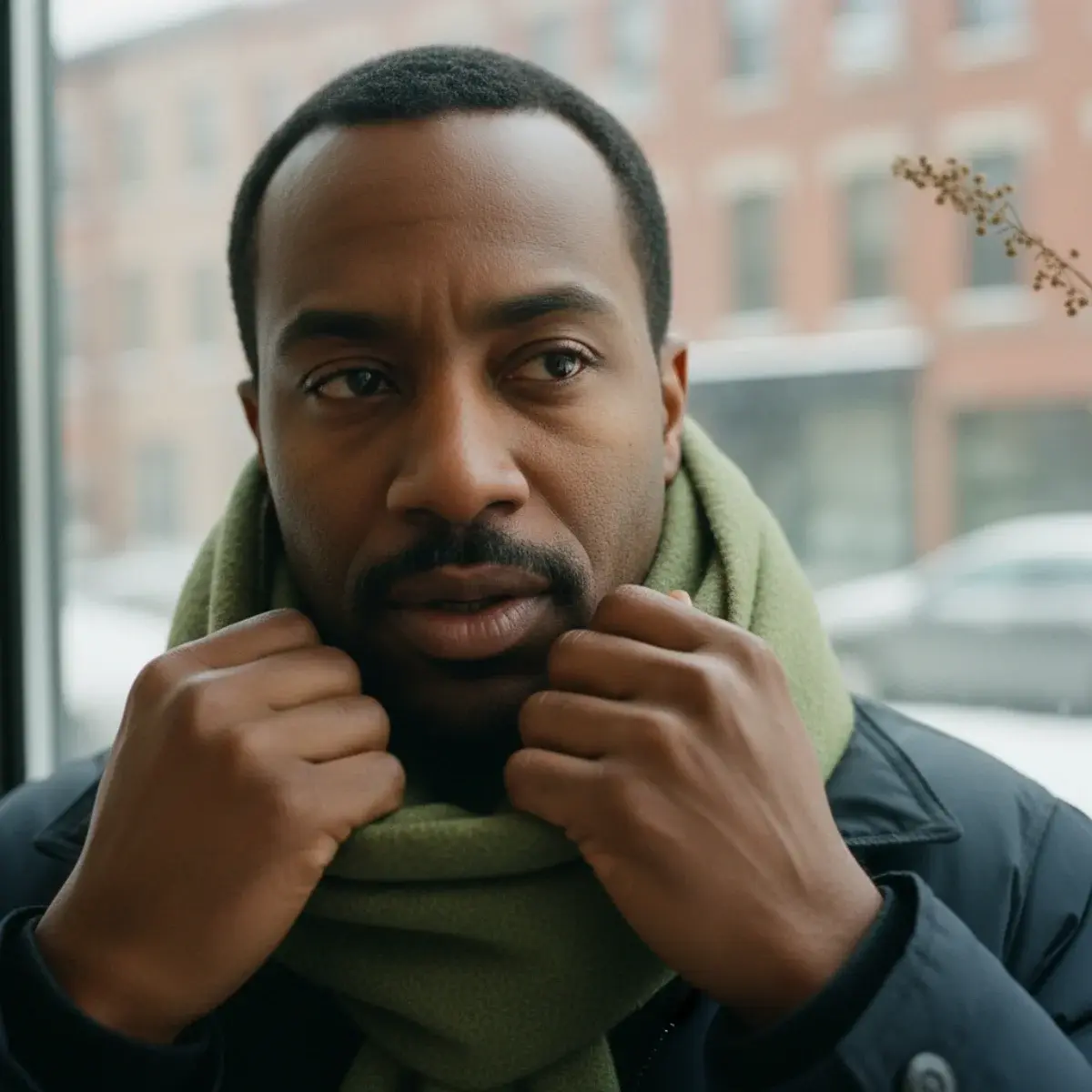
A navy peacoat — the classic naval double-breasted wool coat — over a heavy turtleneck or crewneck, with straight-leg charcoal trousers or dark jeans, and brown or black leather Chelsea boots. The peacoat is shorter than an overcoat and more structured than a chore coat; it occupies a useful middle ground for in-and-out winter wear that doesn't need full overcoat formality.
 1600×1067
Key takeaways
- 1Three layers — base (merino), mid (knit or fleece), outer (overcoat or parka) — handle real cold without bulk.
- 2Three coats cover most winters: wool overcoat, slim-profile insulated parka or puffer, and a chore-coat-or-peacoat for everyday in-and-out wear.
- 3Navy, charcoal, and camel are the most versatile overcoat colours. Black reads severe in daylight.
- 4The base layer must be merino or technical — never cotton. Cotton against the skin under wool ends up colder.
- 5Slim profile beats bulky every time. A fitted overcoat over thin warm layers out-dresses a balloon coat over a t-shirt.
- 6One warm-tone accent (tobacco, oxblood, camel) in an otherwise-dark winter outfit prevents the look from reading severe.
The winter coat wardrobe
If building from scratch, the order:
1. A wool overcoat in navy, charcoal, or camel. Single-breasted, knee-length or just-above. The dressier-and-casual workhorse. Buy this first; spend more than feels comfortable, and it lasts a decade.
2. A slim-profile insulated jacket or puffer. For days the wool overcoat alone won't handle. Dark colour, slim cut, minimal branding.
3. A casual jacket — a heavy chore coat, a peacoat, or a wool shacket. For everyday wear when the overcoat is overdressed.
4. (Subzero climates only) A serious parka. When -15°C or lower happens often, a real technical parka becomes necessary.
Most men in moderate winters need only the first three. Those in genuine cold need all four.
The layers underneath
What sits between the skin and the coat decides whether the outfit reads warm-considered or warm-defeated.
The base layer. A fine-gauge merino t-shirt or henley. Merino because it wicks moisture (sweat against the skin is what makes cold genuinely cold) and regulates temperature in both directions. Light grey, oatmeal, charcoal, or black; the colour matters less since it's mostly hidden.
The mid layer. A heavy crewneck or roll-neck in wool, merino, or lambswool. This is the visible knit when the coat opens; spend more here than on the base layer because it's the layer the outfit is read on.
The trouser. Straight-leg or slim-straight, in wool flannel, heavy cotton twill, or dark denim. Avoid joggers under a winter overcoat — the contrast in formality kills the look. Avoid skinny jeans paired with chunky knits — the proportion fights itself.
The scarf. A knit wool, merino, or cashmere scarf in a complementary tone to the coat. Tied loose (folded once, looped through itself at the neck) or draped open under the coat. Patterned scarves work; busy patterns under busy coats don't.
The boots question
Three boots cover almost every winter situation:
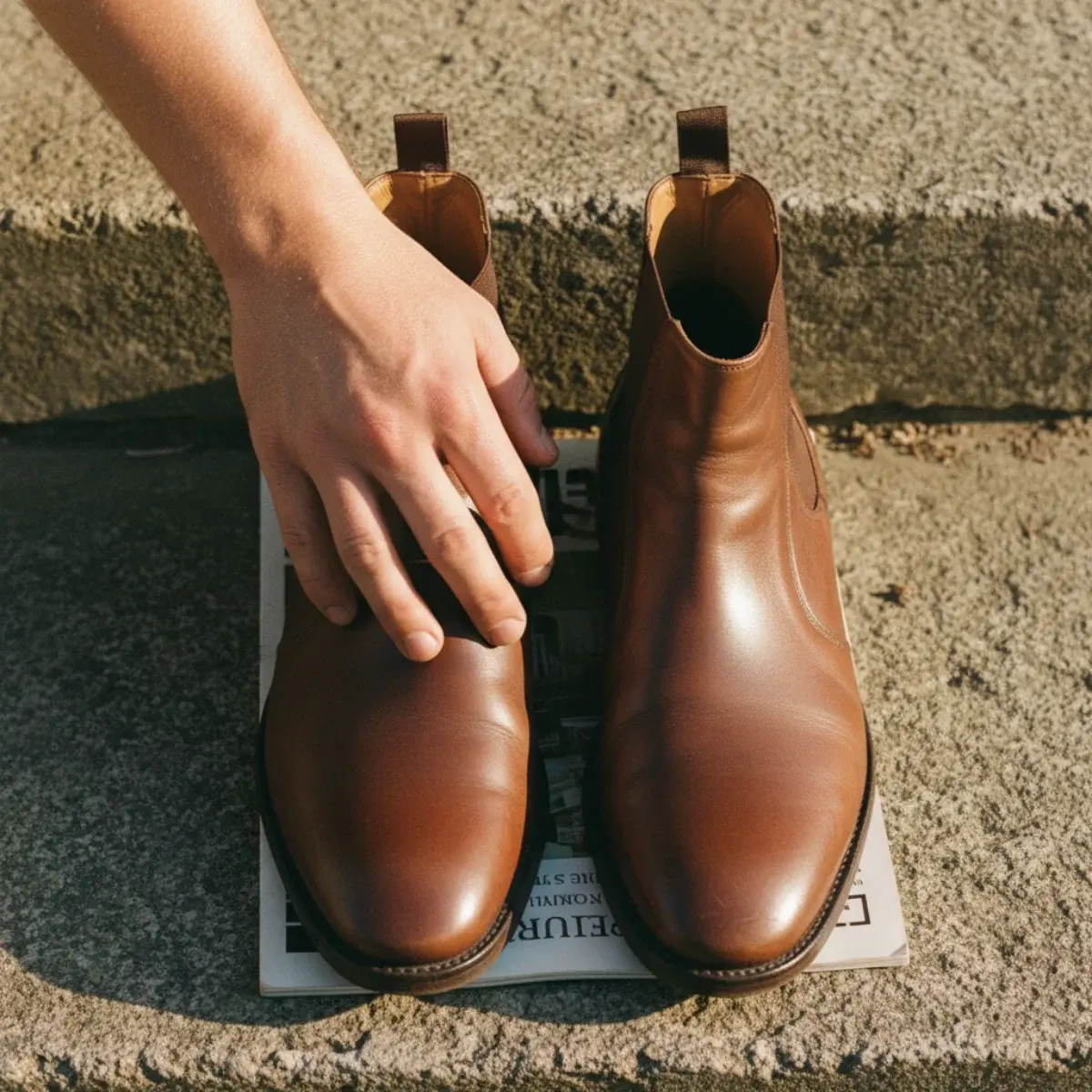
Brown leather Chelsea boots — the workhorse. Pairs with jeans, chinos, wool trousers, and any of the overcoat outfits above. Dark walnut or oxblood-brown is more versatile than black.
Brown suede chukka or desert boots — for milder winter days. Spray with protector aggressively; suede dies in salt without it.
A weather-rated leather boot with a rubber sole — for wet, snowy, salty conditions. Think Red Wing Iron Ranger, Crockett & Jones Coniston, Vass Norweger. Built for the weather but still photograph as proper leather boots, not workwear caricatures.
Black dress boots earn their place only if your work or social calendar genuinely needs formal footwear in winter. Most modern men don't.
The warm-tone accent
Every winter outfit on this list benefits from one piece in a warmer colour breaking up the dark palette. The options:
- A camel overcoat as the focal piece (whole outfit goes dark around it)
- A tobacco, oxblood, or rust knit scarf at the neck
- Brown leather gloves when most of the leather in the outfit is brown
- An oxblood watch strap that catches at the cuff
- A pair of oxblood or warm-brown boots under a dark-toned outfit
One warm-tone piece is enough. Two starts to read styled rather than considered. The principle is one note of warmth in a winter song.
Comparison: dressier vs casual winter
| Dressier winter | Casual winter | |
|---|---|---|
| Outer | Wool overcoat, peacoat | Puffer, chore coat, shacket |
| Mid | Fine knit, turtleneck | Heavy crewneck, hoodie, cardigan |
| Base | Merino tee or fine cotton shirt | Merino tee or henley |
| Trouser | Wool flannel, dark jean | Heavy cotton, jean, structured chino |
| Shoe | Leather Chelsea, derby boot, dress boot | Suede chukka, rubber-soled leather boot, work boot |
| Where it works | Dinner, work, dressier social | Errands, weekend, casual everyday |
The line shifts in winter more than in any other season — the same overcoat reads dressy with wool trousers and a turtleneck, casual with jeans and a heavy crewneck. Trust the under-layers to set the dress code; the coat is mostly the same in both registers.
The eight-piece winter wardrobe
If starting from zero:
- One wool overcoat in navy, charcoal, or camel
- One slim-profile insulated jacket for harder cold
- Two fine-gauge merino crewnecks or roll-necks in oatmeal and charcoal
- One heavy lambswool or chunky knit in oxblood, forest, or oatmeal
- One pair of charcoal wool trousers
- One pair of dark indigo straight-leg jeans
- One pair of brown leather Chelsea boots
- One knit scarf and one pair of leather gloves matched to the boot leather
Eight pieces, twelve outfits, every winter situation a non-arctic man encounters. Add the parka and a weather-rated boot if your climate genuinely demands it.
See all men's outfit guides → · Men's casual outfits → · Men's footwear guide → · Men's accessories →
Frequently asked
- What coats should a man own for winter?
- Three coats cover almost every winter situation: a wool overcoat (navy, charcoal, or camel — most versatile, dressy-to-casual range), a heavier insulated parka or down coat (subzero days, no exceptions for warmth), and a casual jacket or shorter wool car coat for everyday in-and-out wear. A man in a major-cold climate might also need a technical mid-layer; in milder winters two coats and a heavy knit cover it.
- How should I layer for winter?
- Three layers, in this order: a base layer (fine merino t-shirt or henley — wicks moisture, regulates temperature), an insulating mid-layer (heavy knit, fleece, or quilted vest), and a wind/cold-blocking outer (overcoat, parka, or heavy wool jacket). The trick is base + mid + outer, never two outer layers stacked, and never skipping the base layer — a cotton t-shirt under a wool sweater traps sweat against the skin and ends up colder.
- What's the best winter coat colour for a man?
- Navy first — pairs with every other piece in the year-round wardrobe, photographs well, and reads more grown-up than black. Charcoal second — slightly more formal, equally versatile. Camel third — distinctive but unmistakably elegant; the right choice if your existing wardrobe leans heavily into brown, navy, and cream. Black overcoats look severe in daylight; buy black only if it's specifically the look you want.
- Are puffer jackets appropriate for adult outfits?
- Yes, in the right context and the right cut. A black, navy, or olive puffer with a slim profile (not the moon-suit silhouette) over a knit and jeans reads as a deliberate winter casual look. A logo-heavy oversized puffer with a fur-trim hood reads sportier and works only with that aesthetic. For dressier winter occasions — dinner, a wedding, a formal event — wear a proper wool overcoat instead.
- How do I avoid looking shapeless in heavy winter clothes?
- Three things keep winter outfits looking intentional. First, the outer layer must have shape — a fitted overcoat that follows the line of the body, not a tent-shaped puffer. Second, ground the look with a defined trouser leg — straight or slim straight, hemmed cleanly, paired with a proper boot rather than a chunky sneaker. Third, expose one warm-tone detail at the neck (a knit scarf, a contrasting collar) to break up the dark winter palette.
- Can I wear a turtleneck without looking dated?
- Yes — a fine-gauge merino or cashmere turtleneck in a single colour (black, navy, charcoal, oatmeal) reads cleanly modern. Worn under a wool overcoat or alone with trousers and loafers. Where it dates: chunky cable-knit turtlenecks in cream, heavy ribbed turtlenecks in 1970s burnt-orange tones, anything oversized. Fine knit, fitted, dark colour — and it ages well.
- What shoes work for winter?
- A pair of brown leather Chelsea boots (most versatile — casual to smart casual), a pair of weatherproofed leather boots or a Chukka with a rubber sole (for wet/snowy days), and a clean leather dress shoe if your work calls for one. Avoid suede in heavy rain or snow without a strong protector spray; avoid pure-rubber boots outside of actual outdoor work. The [men's footwear guide](/mens-footwear-guide) covers the broader shoe wardrobe.
Written by Theo Ashworth, looksyra editorial. Last updated May 2026.