
If you could own only one pair of boots, it should be ankle boots — no other footwear is as versatile across outfits, occasions, and seasons. They pair with jeans, dresses, skirts, and trousers; they read casual or dressy depending on the style; and they anchor a wardrobe through autumn, winter, and transitional weather. But that versatility comes with one catch: ankle boots are the boot most likely to look slightly off if the proportion is wrong, because of how they interact with the hemline at the ankle. This guide covers how to wear them with everything, and the proportion rules that keep them flattering. It builds on the footwear principles in our how to style shoes guide.
The principle this guide will hold: the ankle boot lives or dies on the gap between the hem and the boot — close it cleanly and the boot flatters; leave a wide stretch of bare ankle and it cuts the leg. Almost every ankle-boot styling rule comes back to managing that small transition well.
Why the ankle gap matters
The defining challenge of ankle boots is the transition at the ankle, where the boot ends and the leg or hem begins, because this small zone determines whether the boot lengthens or shortens the leg. A clean transition — the hem grazing the boot, a cropped hem ending just above it, or tights unifying leg and boot — keeps the leg line long and the outfit flattering. A wide gap of bare ankle between a longer hem and the boot top visually cuts the leg at its narrowest point, shortening the silhouette, which is why some ankle-boot outfits feel off without an obvious reason.
Understanding this single principle resolves most ankle-boot styling questions. The aim is always to manage the ankle transition so the leg reads long: close the gap, match colours to unify, or use a hem that ends at the boot. Everything that follows — how to wear them with jeans, dresses, skirts, and trousers — is really an application of this one rule to different hemlines. Once you see the ankle gap as the key variable, ankle boots become easy to style, because every decision is just "how do I keep this transition clean." The boot itself is endlessly versatile; the gap is the thing to mind.
 1600×1067
How to wear ankle boots with jeans
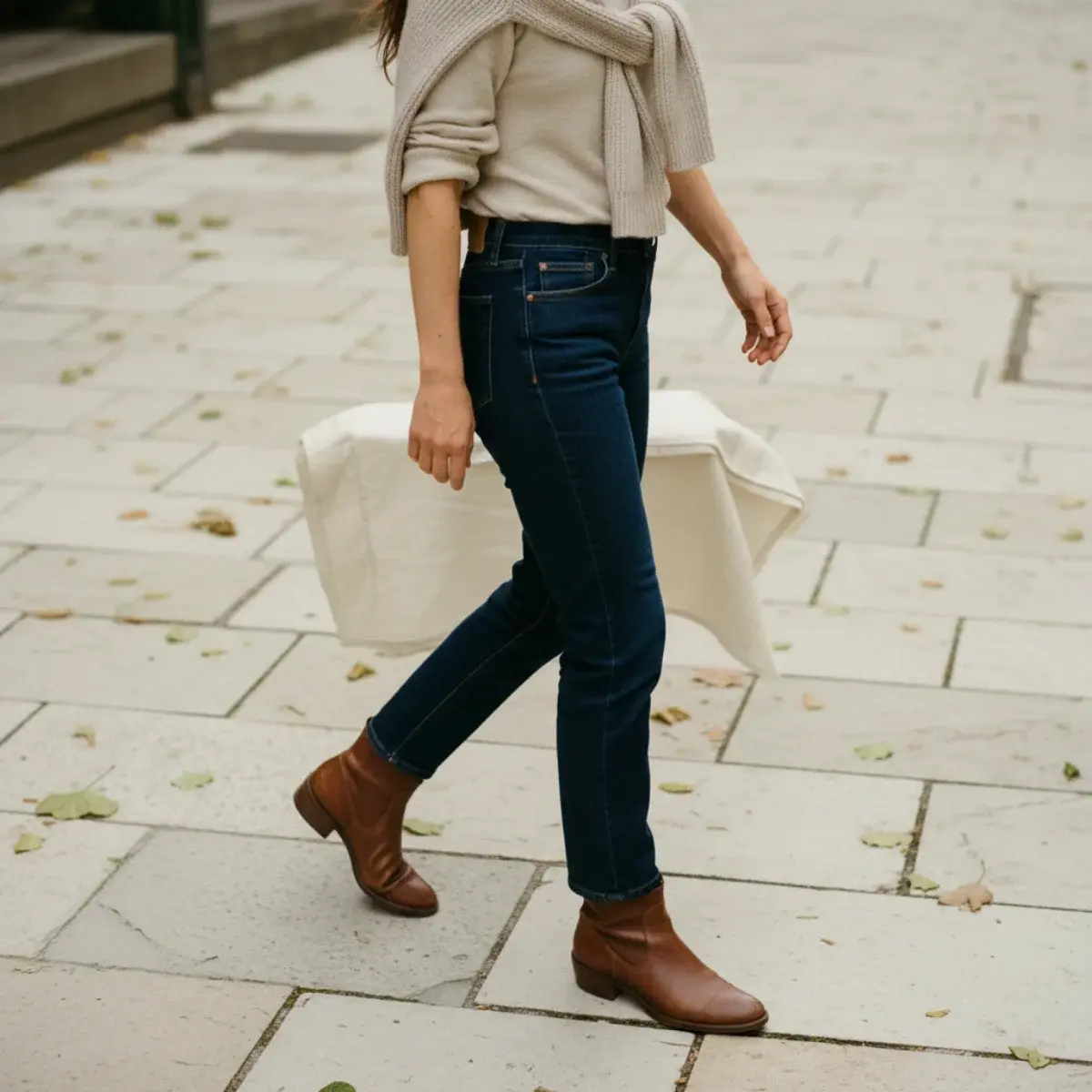
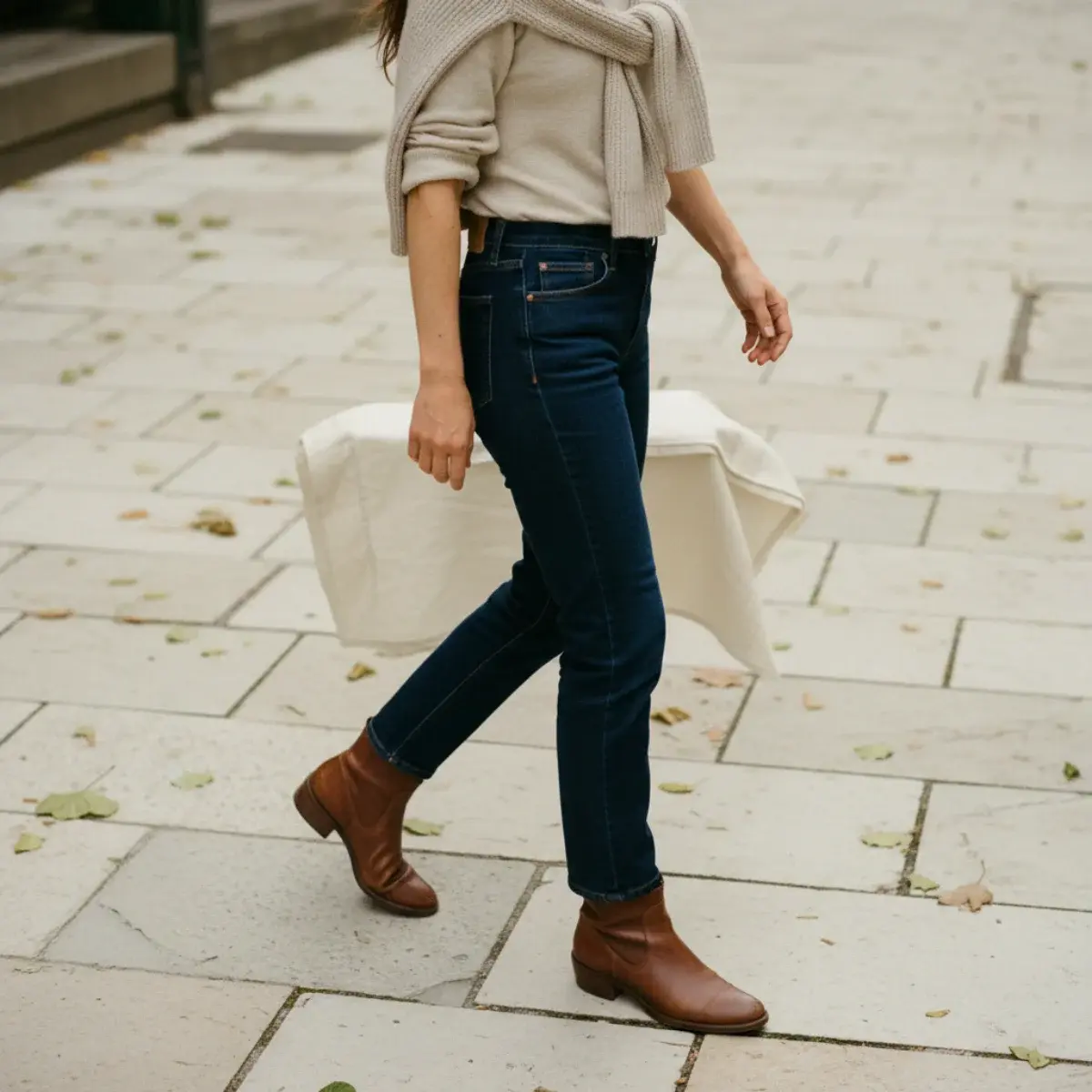
Jeans and ankle boots are the everyday cold-weather pairing, and the jean cut determines how to manage the ankle transition. Cropped and ankle-length jeans are the easiest, ending just above the boot with a clean transition and no gap — this is the most foolproof ankle-boot-and-jean pairing. Straight jeans work with the hem grazing the boot top or cuffed just above it, keeping the line clean. Slim jeans can graze the boot or be cuffed. Skinny jeans either tuck into the boot or sit over it, both of which avoid a gap. Wide-leg jeans work with a heeled ankle boot worn underneath, the hem grazing the floor.
The recurring move is closing or cleanly meeting the gap: cuff the hem, choose a cropped length, or let the hem graze the boot, so there's no awkward expanse of bare ankle. For the casual and smart-casual outfits this creates, the casual outfits and smart casual guides cover the full looks, with the ankle boot grounding them for autumn and winter. Cropped jeans with ankle boots is the single easiest version to get right, which is why it's become such a reliable everyday outfit. Mind the hem, and jeans are the simplest base to wear with ankle boots.
 1600×1067
How to wear ankle boots with dresses and skirts
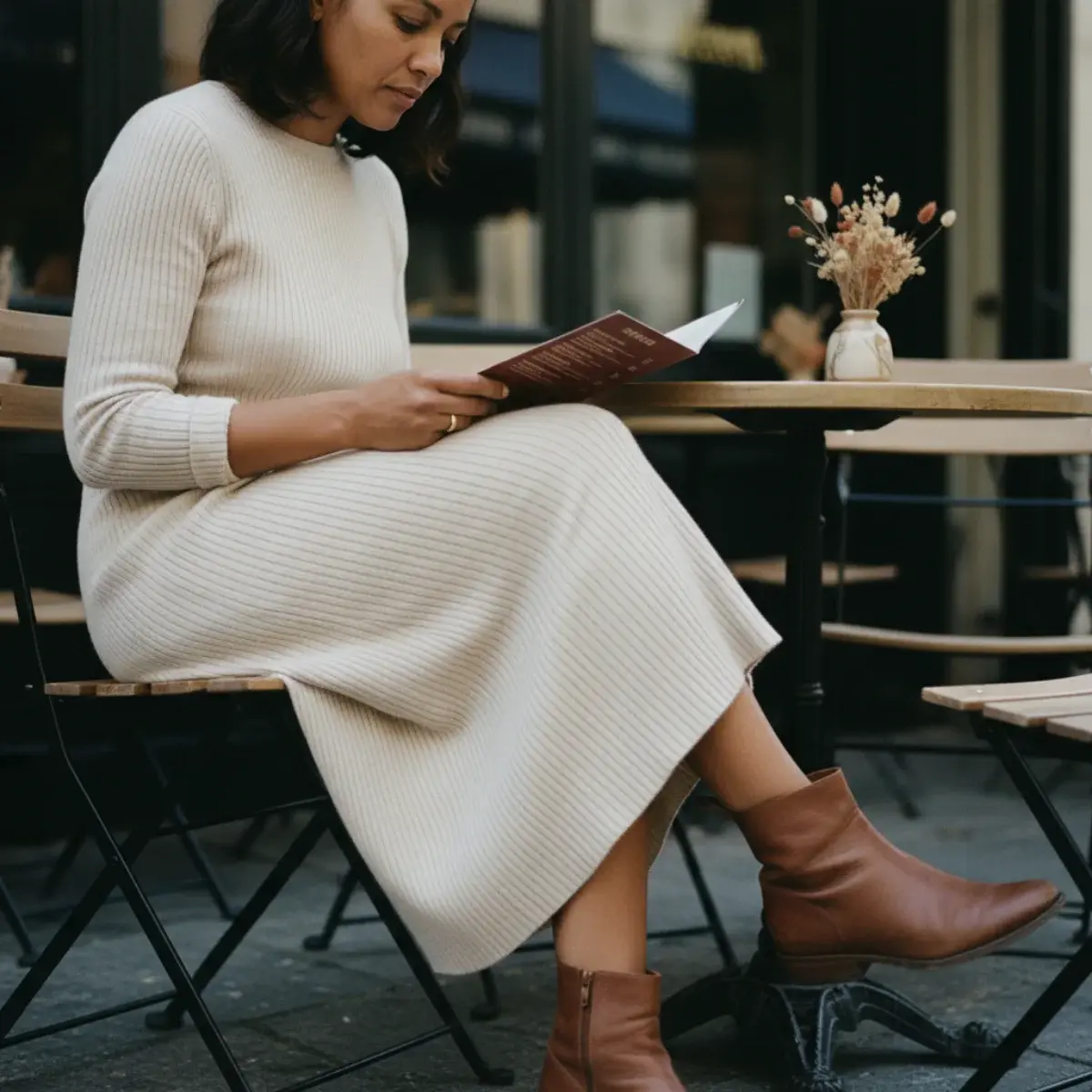
Ankle boots turn dresses and skirts into autumn and winter outfits, adding a grounded, slightly edgy polish. With a mini dress or skirt, ankle boots read youthful and easy, with bare legs in warmer weather or tights in the cold. With a midi dress or skirt, ankle boots ground the look, and here the ankle gap matters most — opaque tights that match or tone with the boot unify the leg and avoid a stark transition, which is the key to the midi-and-ankle-boot combination working. A knit or shirt dress with ankle boots and tights is one of the easiest, most reliable cold-weather outfits there is.
The unifying tool, again, is tights: opaque tights in black, charcoal, or a tonal shade blend leg, gap, and boot into one continuous line, which is both warming and leg-lengthening, and they make the midi-plus-ankle-boot pairing flattering rather than choppy. Matching the tights to the boot colour creates the longest line. Layer a coat over the top and the dress becomes a full cold-weather outfit, as the fall outfits guide describes. Ankle boots with dresses and skirts is how those pieces carry through the cold months, and tights are what make the proportion work.
 1600×1067
How to wear ankle boots with trousers
Ankle boots and tailored trousers make a polished, practical pairing for work and elevated casual. With straight or tailored trousers, the ankle boot is worn under the hem, which grazes the top of the boot for a clean line — this reads sharp for the business casual office. With cropped or ankle-length trousers, the boot sits neatly below the hem, the exposed transition kept clean. With slim or cigarette trousers, the boot works under the hem or with the trouser tucked in for a sleek line. With wide-leg trousers, a heeled ankle boot worn beneath the hem maintains the long line, hidden under the wide leg.
The principle is the same as with jeans: the hem should graze or cleanly meet the boot, with no awkward gap, which is where tailoring the trouser hem to the boot height pays off. Worn under tailored trousers, ankle boots add warmth and structure without breaking the line, making them a cold-weather office and smart-casual staple, as the how to put together an outfit guide's proportion principles describe. A heeled ankle boot under wide-leg trousers is a particularly polished combination, the heel hidden but lengthening the leg. Keep the boot under a clean hem, and trousers and ankle boots read sharp and seasonal.
 1600×1067
Choosing the right ankle boot
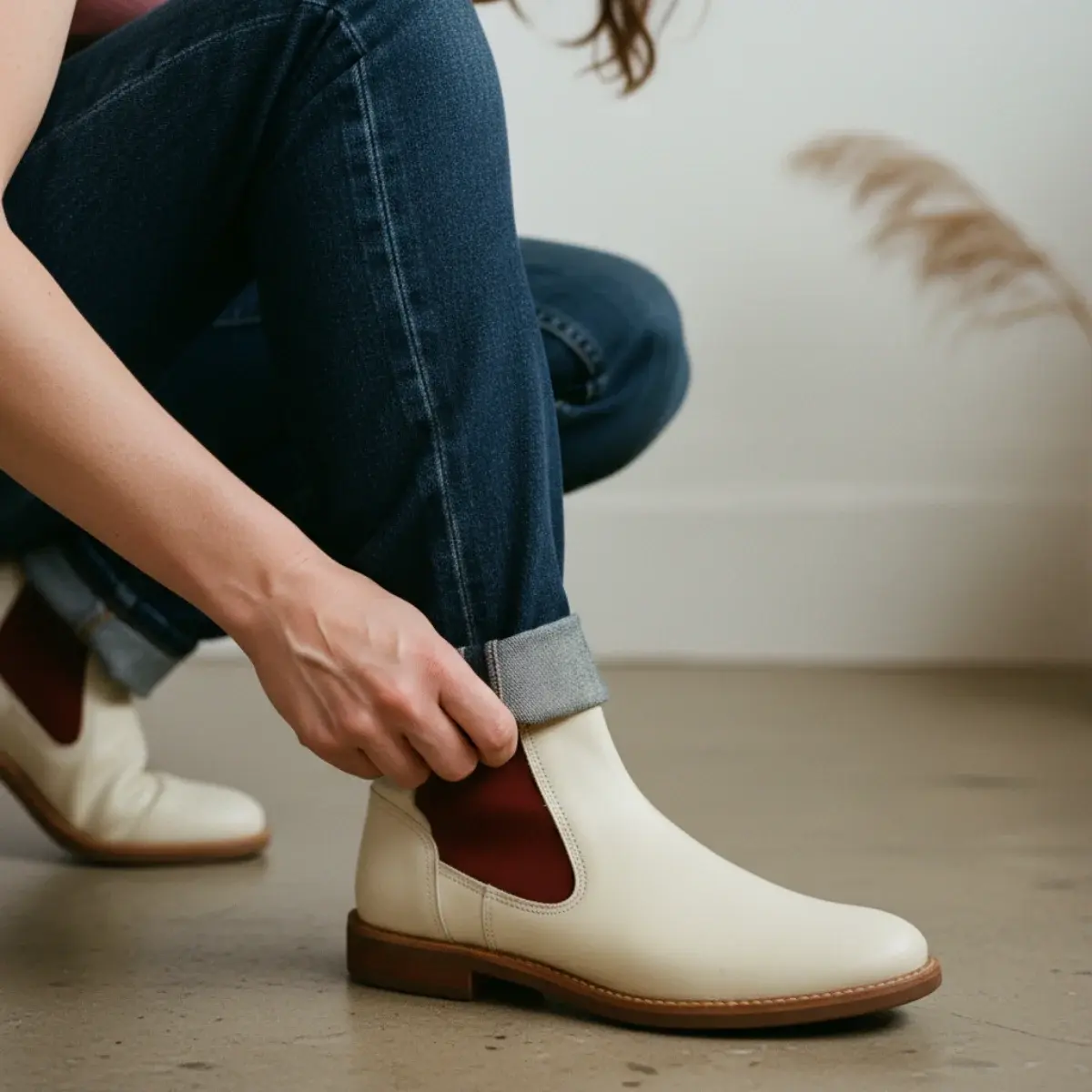
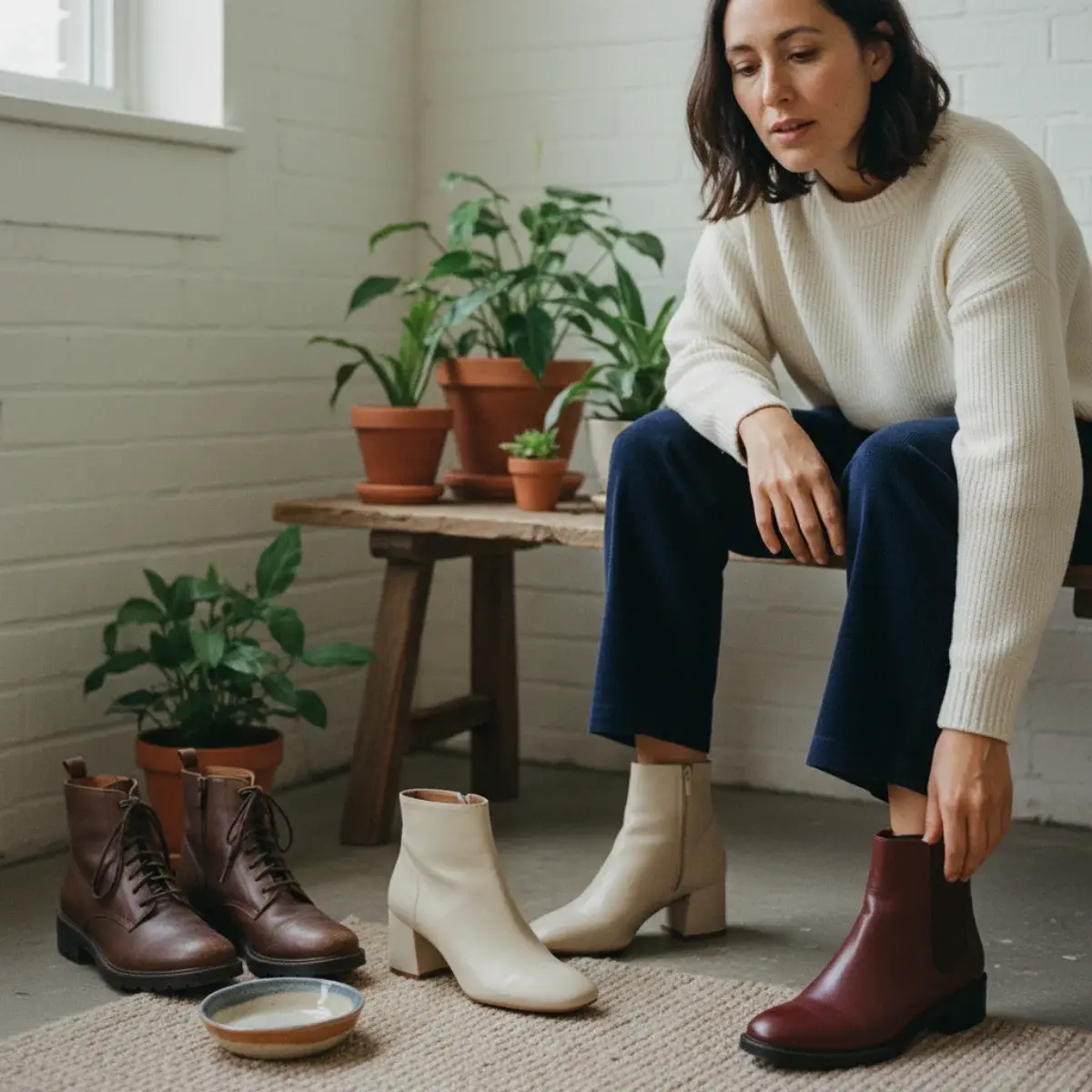
Not all ankle boots are equal, and a few choices make one more versatile and flattering. Heel sets the dressiness and the leg-lengthening: a flat or block-heel ankle boot reads casual and comfortable, while a heeled ankle boot dresses up and elongates. Toe shape matters too — a pointed or almond toe lengthens the leg, while a round or square toe reads more casual and can shorten it slightly. Shaft height affects proportion: a lower-cut ankle boot flatters more leg lengths, while a higher shaft can cut a shorter leg.
Colour drives versatility: black, brown, and tan leather ankle boots are the most versatile, pairing with the most outfits, while a boot matched to skin tone or trouser colour lengthens the leg most. For the most versatile single ankle boot, a black or brown leather pair with a low block heel and an almond or pointed toe pairs with nearly everything and flatters most legs — a true wardrobe workhorse, in line with the essential-shoe thinking of the how to style shoes guide. Suede ankle boots add texture and suit autumn, while heeled and pointed styles dress up. Choose neutral, classic, and flattering for the foundation pair, then add others as accents.
 1600×1067
Ankle boot outfit ideas
These looks apply the proportion rules across the seasons.
- Cropped straight jeans, a fine knit, suede ankle boots, and a trench.
- A knit midi dress, tonal opaque tights, leather ankle boots, and a wool coat.
- Tailored trousers, a silk blouse, a blazer, and heeled ankle boots for work.
- A mini shirt dress, bare legs or tights, and flat ankle boots.
- Wide-leg jeans, a roll-neck, and heeled ankle boots worn underneath.
- A midi skirt, a tucked knit, tonal tights, and ankle boots.
- Skinny jeans tucked into ankle boots, an oversized knit, and a coat.
- A slip dress, a leather jacket, and heeled ankle boots for evening.
- Cigarette trousers, a fine knit, and pointed heeled ankle boots.
- A knit dress, tights, flat ankle boots, and a scarf for easy autumn.
Each look manages the ankle transition cleanly — cropped hems, grazing hems, or unifying tights — and matches the boot's dressiness to the outfit. The boot grounds every one of them for cold weather, and the proportion principle runs through all ten.
 1600×1067
Ankle boots through the seasons
Ankle boots bridge seasons better than most boots, which is part of what makes them so versatile. In early autumn and spring, suede and lighter leather ankle boots suit dry, transitional weather, worn with cropped jeans, midi dresses, and light layers. In mid autumn, leather ankle boots in brown, tan, and oxblood anchor the season's layered outfits, as the fall outfits guide describes. In winter, weatherproof and lined ankle boots handle cold and wet, worn with tights, knits, and coats, while heeled styles are reserved for events rather than icy pavements.
The ankle boot's season-spanning versatility is why it's the most useful boot to own — a single pair of leather ankle boots works across most of the cold half of the year, with suede added for dry transitional days and weatherproof styles for deep winter. Matching the boot material to the conditions — suede when dry, treated leather when wet — keeps them practical as well as stylish. Because ankle boots overlap so many seasons, one or two versatile pairs cover most needs, supplemented seasonally, which is the footwear expression of the overlapping seasonal wardrobe the capsule wardrobe guide describes.
 1600×1067
Ankle boot mistakes to avoid
A few errors recur. The bare-ankle gap is the biggest — a wide stretch of bare leg between a longer hem and the boot, which cuts the leg, where a cropped hem, a grazing hem, or tights closes it. Wrong dressiness — a chunky flat boot with a formal look or a delicate heeled boot with athleisure — mismatches the outfit, where matching the boot's energy fixes it. Skipping tights with midis in the cold leaves a stark transition and a cold leg, where tonal tights unify and warm it. And a too-high shaft on a shorter leg can cut the line, where a lower-cut boot flatters more.
Two more round it out. Wrong material for the weather — suede in the wet — is impractical, where treated leather handles it. And a boot that contrasts sharply with the leg or hem can shorten the line, where matching the boot to skin tone or trouser colour lengthens it. Each resolves the same way: manage the ankle transition cleanly, match the boot's dressiness and material to the outfit and weather, and mind the proportion so the leg reads long. The ankle boot is the most versatile boot there is, and styling it well comes down almost entirely to managing that small but crucial transition at the ankle.
Key takeaways
- 1The ankle gap is everything — close the transition between hem and boot cleanly to keep the leg line long.
- 2Cropped and ankle-length jeans are the most foolproof pairing, ending just above the boot with no gap.
- 3With midi dresses and skirts, tonal opaque tights unify leg and boot into one flattering, warming line.
- 4Choose a black or brown leather pair with a low heel and almond or pointed toe as the versatile workhorse.
- 5Ankle boots bridge seasons best of any boot — one leather pair covers most of the cold half of the year.
Where to go from here
Ankle boots are the most versatile boot. For the wider range, read outfit ideas with boots; for other styles, how to wear cowboy boots, how to style loafers, and how to style sneakers. For the footwear principles beneath them, see the how to style shoes guide; for the outfits ankle boots complete, the fall outfits guide and casual outfits guide. Who What Wear and Vogue publish reliable ankle-boot styling coverage.
Frequently asked
- How do you wear ankle boots?
- Ankle boots pair with almost everything: jeans (with the hem grazing or cuffed just above the boot), dresses and skirts (with or without tights), and tailored trousers (worn under the hem). The key is the transition between the hem and the boot — avoid an awkward gap of bare ankle, which shortens the leg. Match the boot's dressiness to the outfit, from casual flat boots to dressy heeled ones.
- What jeans look best with ankle boots?
- Straight, slim, and cropped jeans all work well with ankle boots. With straight or slim jeans, let the hem graze the boot top or cuff it just above. Cropped or ankle-length jeans are ideal, since the hem hits just above the boot with a clean transition. Skinny jeans can tuck into the boot or sit over it. Avoid hems that leave a wide gap of bare ankle below the jean.
- How do you wear ankle boots with a dress?
- Ankle boots work with mini and midi dresses for a put-together, slightly edgy look, especially in autumn and winter. Add opaque tights for warmth and to unify the leg, and layer a coat over the top. A knit or shirt dress with ankle boots and tights is an easy, reliable cold-weather outfit. With a midi, the boot grounds the look; with a mini, it adds an autumn edge.
- Should ankle boots be worn over or under jeans?
- It depends on the jean: straight and cropped jeans are worn over the boot with the hem grazing or sitting just above it, while skinny jeans can be tucked into the boot or worn over. The goal is a clean transition with no awkward bunching or a gap of bare ankle. Cropped and ankle-length jeans are the easiest, ending neatly just above the boot.
- Do ankle boots make your legs look shorter?
- They can if there's a gap of bare skin between the boot and the hem, which visually cuts the leg, but worn correctly they don't. To keep the leg long, match the boot to skin tone or trouser colour, wear cropped hems that end at the boot, or use tights to unify the leg with dresses and skirts. A pointed-toe or heeled ankle boot lengthens the leg further.
- Can you wear ankle boots with tights?
- Yes — ankle boots with opaque tights are a key autumn and winter combination, especially with dresses and skirts. Tights in black, charcoal, or a tonal shade unify the leg and the boot into one line, which is both warming and leg-lengthening. Matching the tights to the boot colour creates the longest, most flattering line. It's one of the most useful cold-weather ankle-boot pairings.
- What season are ankle boots for?
- Ankle boots are a year-round-leaning shoe that's most at home in autumn, winter, and transitional spring weather. Suede and lighter leather ankle boots suit dry transitional days, while weatherproof and lined styles handle winter. They anchor autumn outfits especially well and bridge seasons better than most boots, making them the most versatile boot to own.
Written by Marguerite Sterns, looksyra editorial. Last updated May 2026.