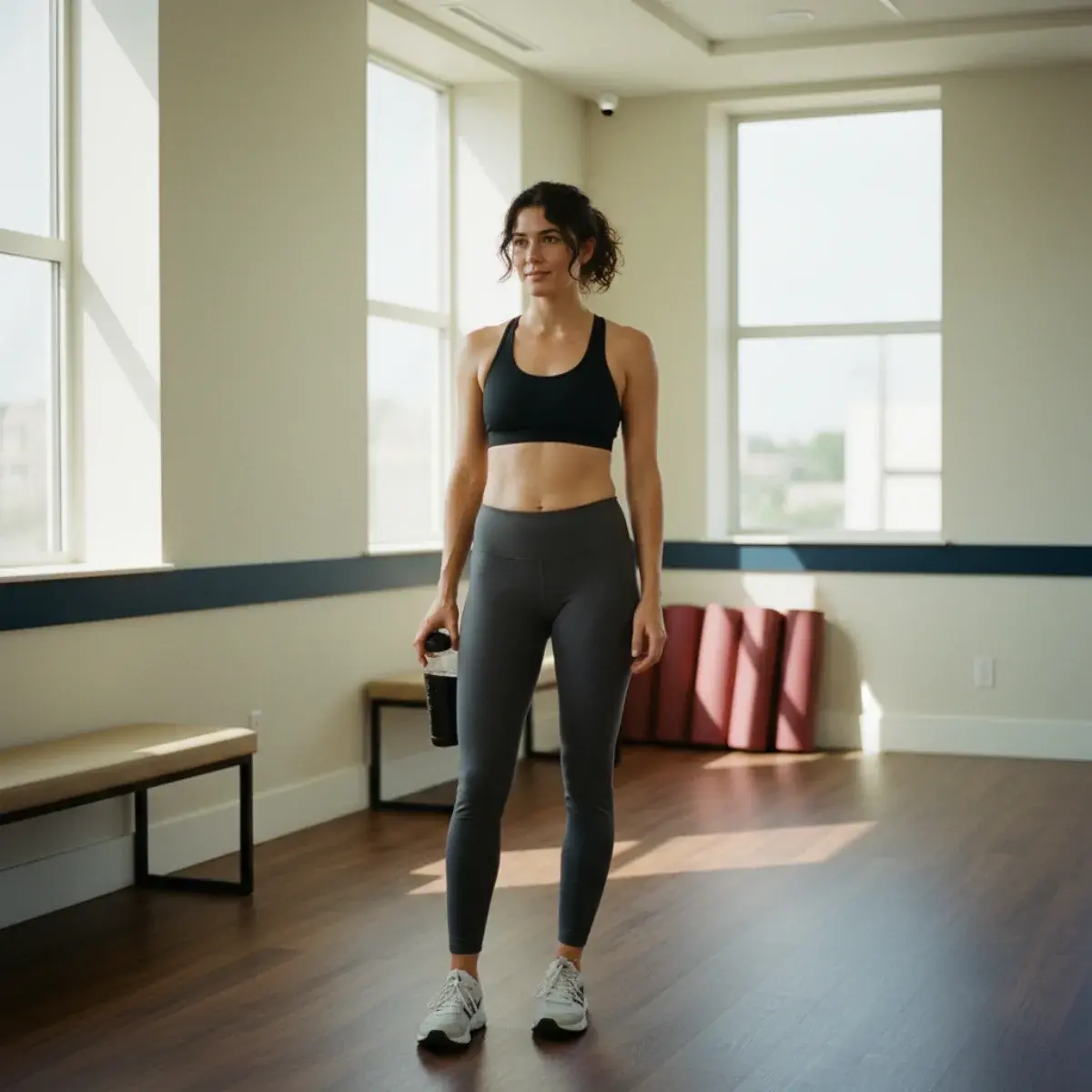
The gym outfit is one of the most-overlooked categories in women's wardrobes — and one where most women own too much, in the wrong cuts and the wrong colours, replaced every year because nothing lasts. The fix is a small, considered set of pieces in the right fabrics, the right fits, and a coherent palette. This guide walks ten outfits built around the same dozen pieces, sized to work for everything from a 6am Pilates class to a heavy lifting session to the walk to the coffee shop afterwards.
The line this guide holds: gym style is casual style's distant cousin, and the same fit principles apply. A woman in well-fitting leggings, a clean fitted top, and proper trainers looks intentional whether she's training, walking, or grabbing coffee. A woman in oversized cotton shirts and basketball-cut shorts looks like she's wearing her bedroom around. The pieces are cheaper than streetwear; the rules for choosing them are the same. Ten outfits follow.
1. The base gym uniform
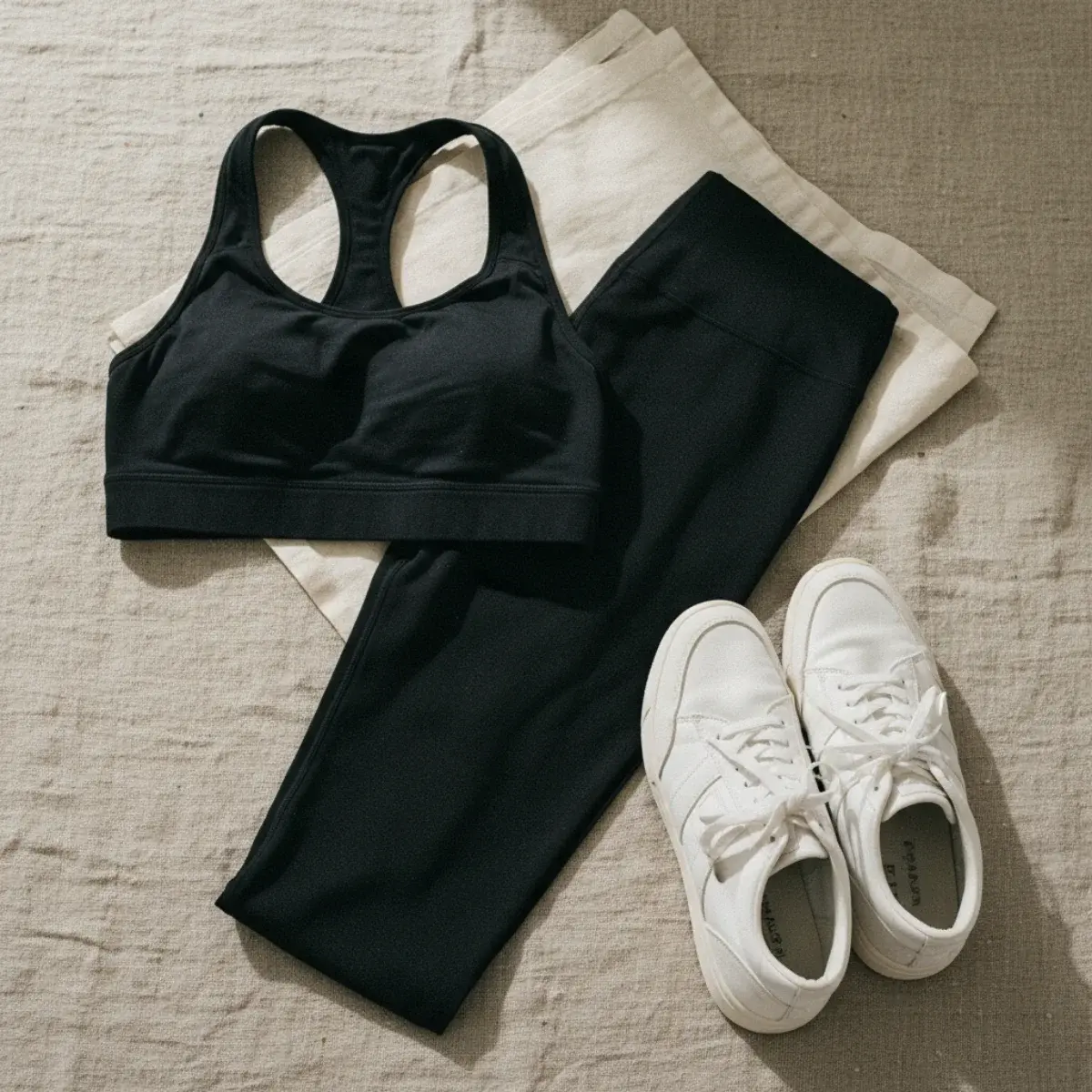
A medium-support sports bra in black or navy, full-length or 7/8 leggings in matching tone, a fitted technical t-shirt or tank in a complementary neutral, and proper training shoes for the activity. Hair pulled back, watch on (silicone or sport strap so sweat doesn't damage leather), no other jewellery. That's it — the complete gym outfit, ready to walk out of the locker room and into a working set.
 1600×1067
The fit window. Leggings should fit close to the body without restricting movement — no bunching at the knee or ankle, no waistband digging or rolling. A technical tank or t-shirt should skim the chest and waist without straining or bagging. A medium-support bra should hold the chest without compression discomfort.
Why dark colours. Sweat shows on light fabrics — grey is the worst offender — and reads less considered. A dark tone hides sweat, holds shape longer through wash cycles, and pairs more easily with the rest of a gym wardrobe.
2. The matching set
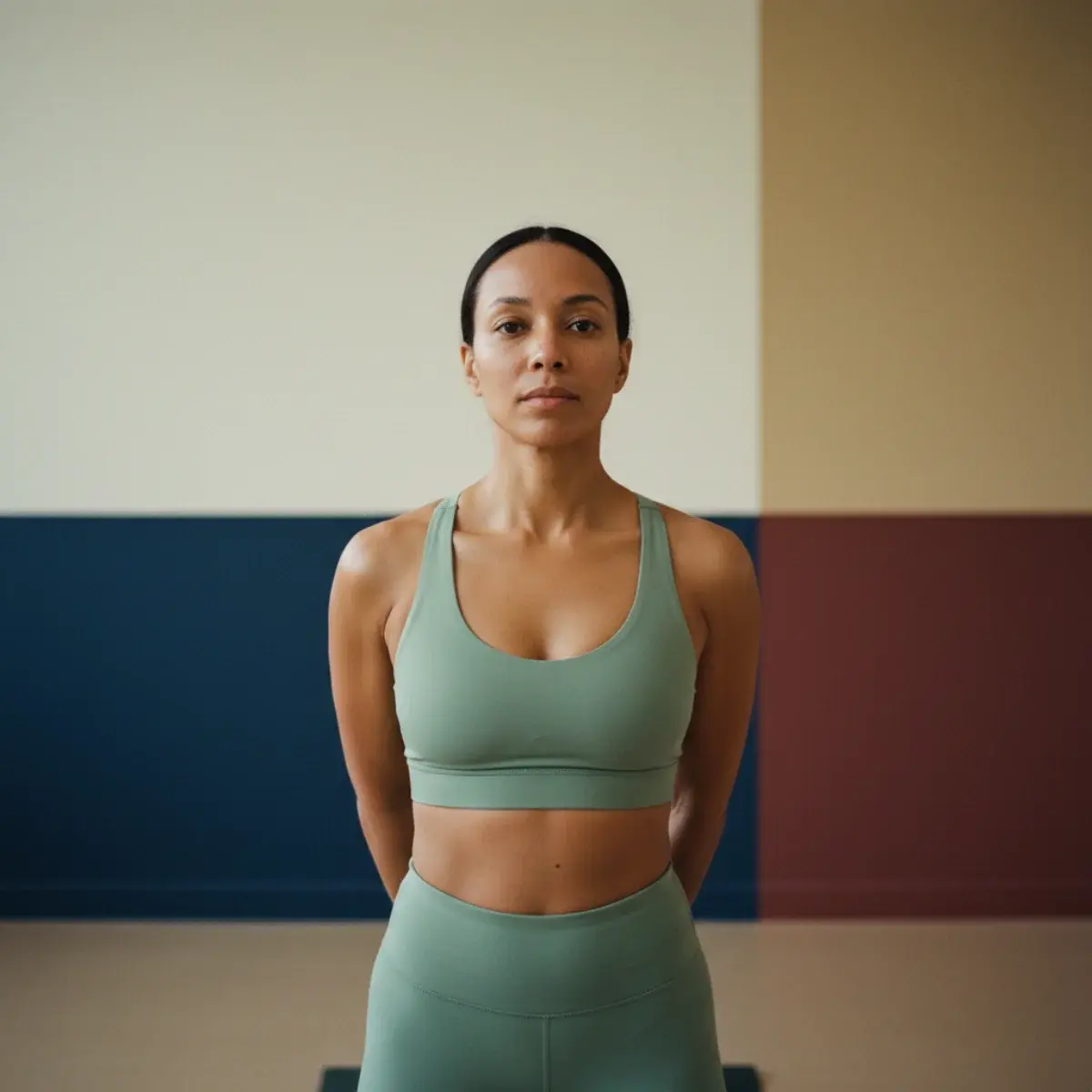
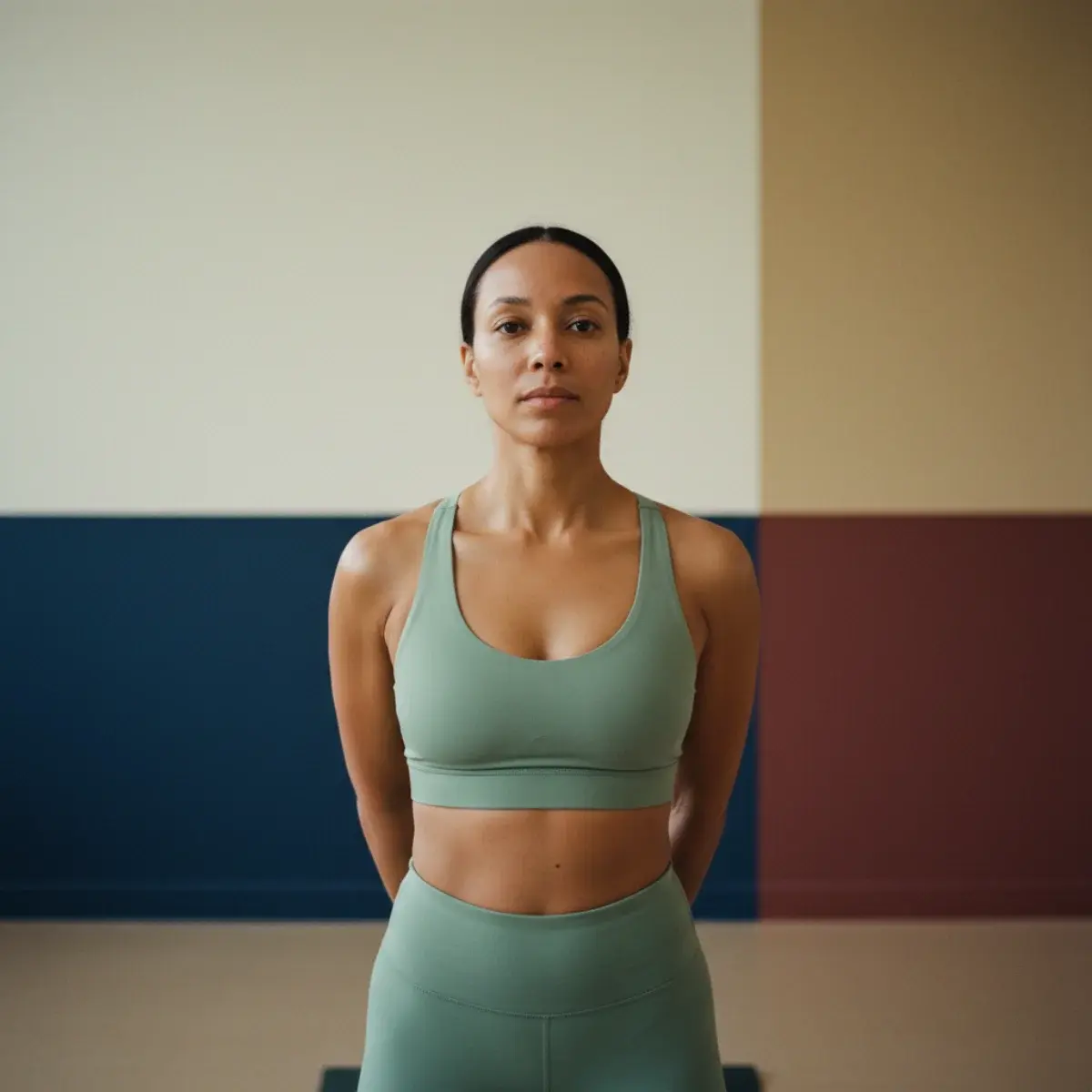
The cleanest gym look there is. A matched set in the same colour family — sports bra and leggings in identical or coordinating tones (black + black, navy + navy, sage + sage), worn alone for the workout or with a fitted cropped pullover layered over for the walk in. Proper trainers, hair back, one small piece of jewellery (a fitted chain or small studs that won't catch).
 1600×1067
Where it works. Most workouts where the bra-and-leggings combination is appropriate — Pilates, yoga, lifting, light cardio. Where to skip the bra-as-top look: gyms with a no-bra-as-top dress code, very public outdoor workouts, contexts where modesty is preferred.
3. The cropped pullover and leggings
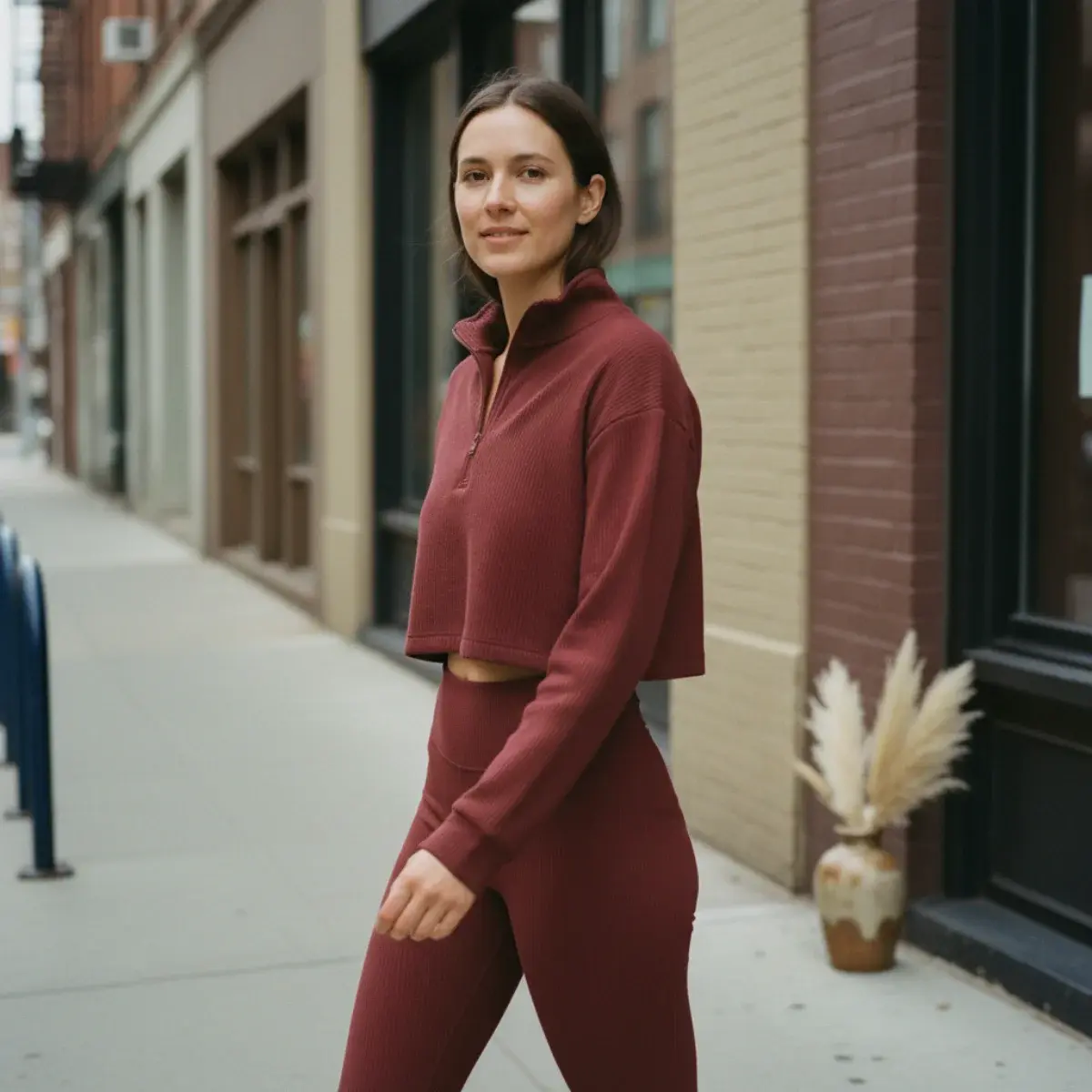
The cooler-weather workout look. A fitted technical cropped pullover (quarter-zip or hoodie) in black, navy, or sage, worn over a sports bra and matched with full-length leggings in a complementary tone. Proper trainers, hair back. The pullover handles the warm-up; comes off once the workout heats up.
 1600×1067
4. The bike shorts and fitted tank
The hot-weather workout outfit. Mid-thigh fitted bike shorts in black or charcoal, paired with a fitted technical tank or t-shirt in a complementary tone, proper trainers, and a structured headband or visor if the workout is outdoors. The bike shorts are the modern alternative to the short loose shorts of the 2010s; the fitted cut reads more current and stays put through every range of motion.
 1600×1067
5. The all-black gym outfit
The cleanest gym look. All-black: sports bra, leggings, technical top (or skip the top and wear just the bra in supportive contexts), proper trainers. Looks intentional, photographs well, hides sweat better than any other combination, and works across every type of training. The single most-reliable choice for a woman who doesn't want to think about gym outfits ever again — buy three of the same kit, rotate them, never repeat the decision.
 1600×1067
The fastest way to look like you're not serious about training is to dress like you're not serious about anything else.
6. The structured jogger and crop top
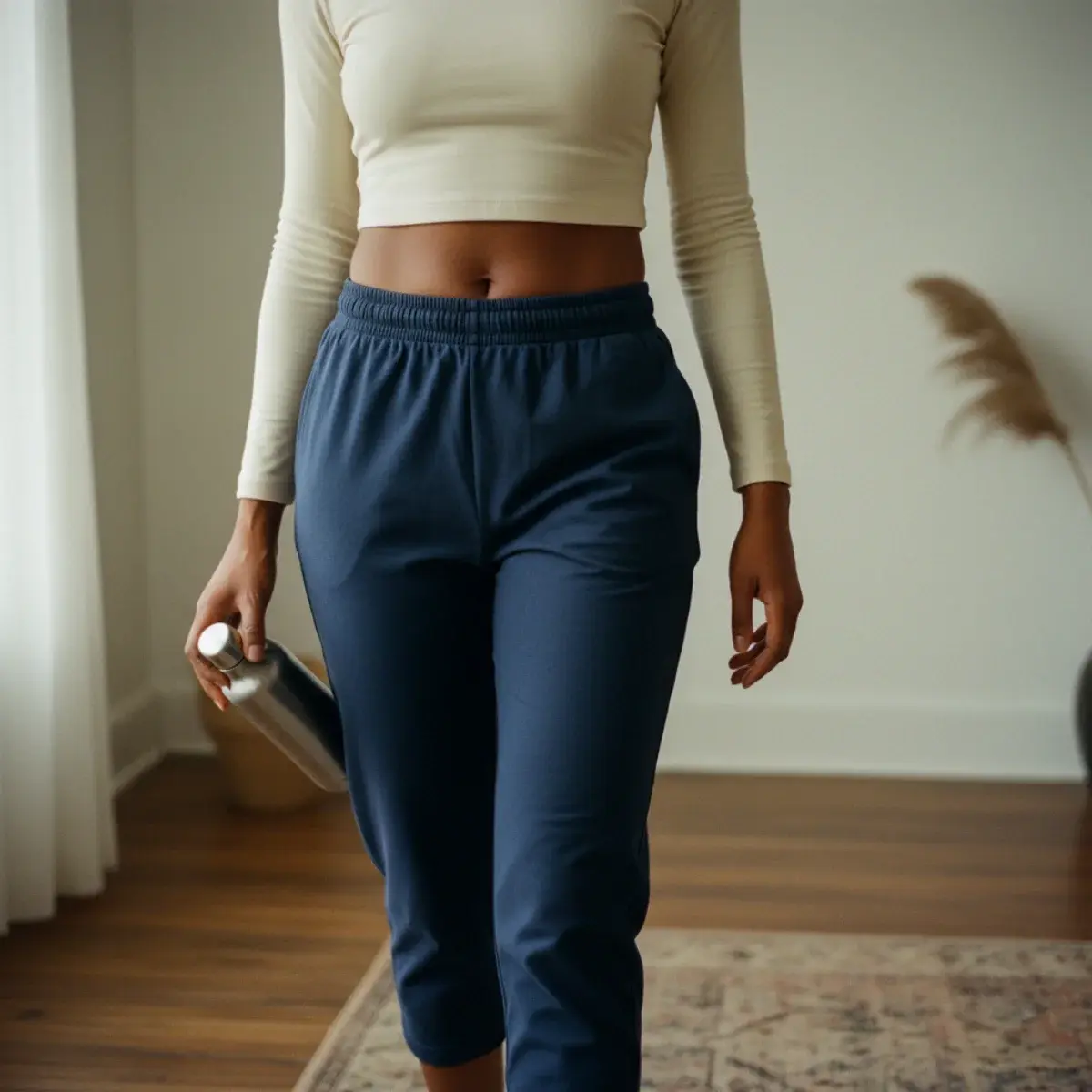
The pre/post-workout outfit. Structured tapered joggers in heavyweight fleece (navy, charcoal, or black), worn with a fitted cropped pullover or a fitted long-sleeve top, and a low-profile training shoe or clean white minimalist leather sneaker. A small structured leather bag or athletic tote. This is the in-between outfit: not the workout, not the rest of the day. It's also the look that translates best from gym to errands, gym to coffee, gym to walking the dog.
 1600×1067
Structured vs. baggy. The whole difference between gym joggers that work as semi-casualwear and gym joggers that read as bedroom clothes is the fabric weight and the leg taper. Heavyweight fleece holds a defined line down the leg; thin grey jersey bunges at the knee. Buy heavyweight; skip thin.
7. The yoga or pilates outfit
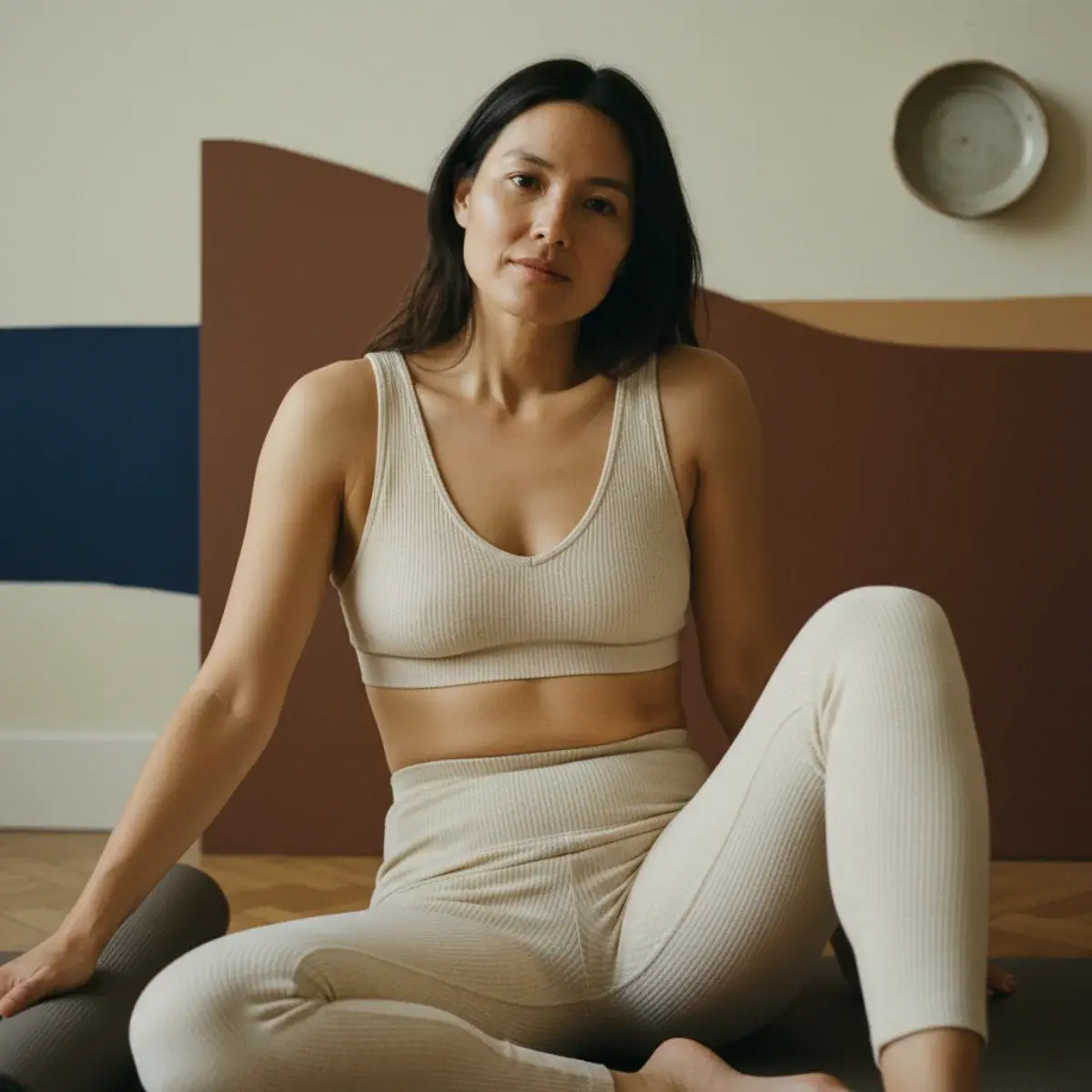
The minimalist workout outfit. A fitted bralette or low-impact sports bra in a single tone, paired with high-rise full-length leggings in the same or coordinating tone, no shoes (bare feet or grip socks for mat work), one small piece of jewellery (a fine chain or small studs). The principle: nothing baggy that bunches in inversions, nothing tight enough to restrict breath. The fit should be close but flowing.
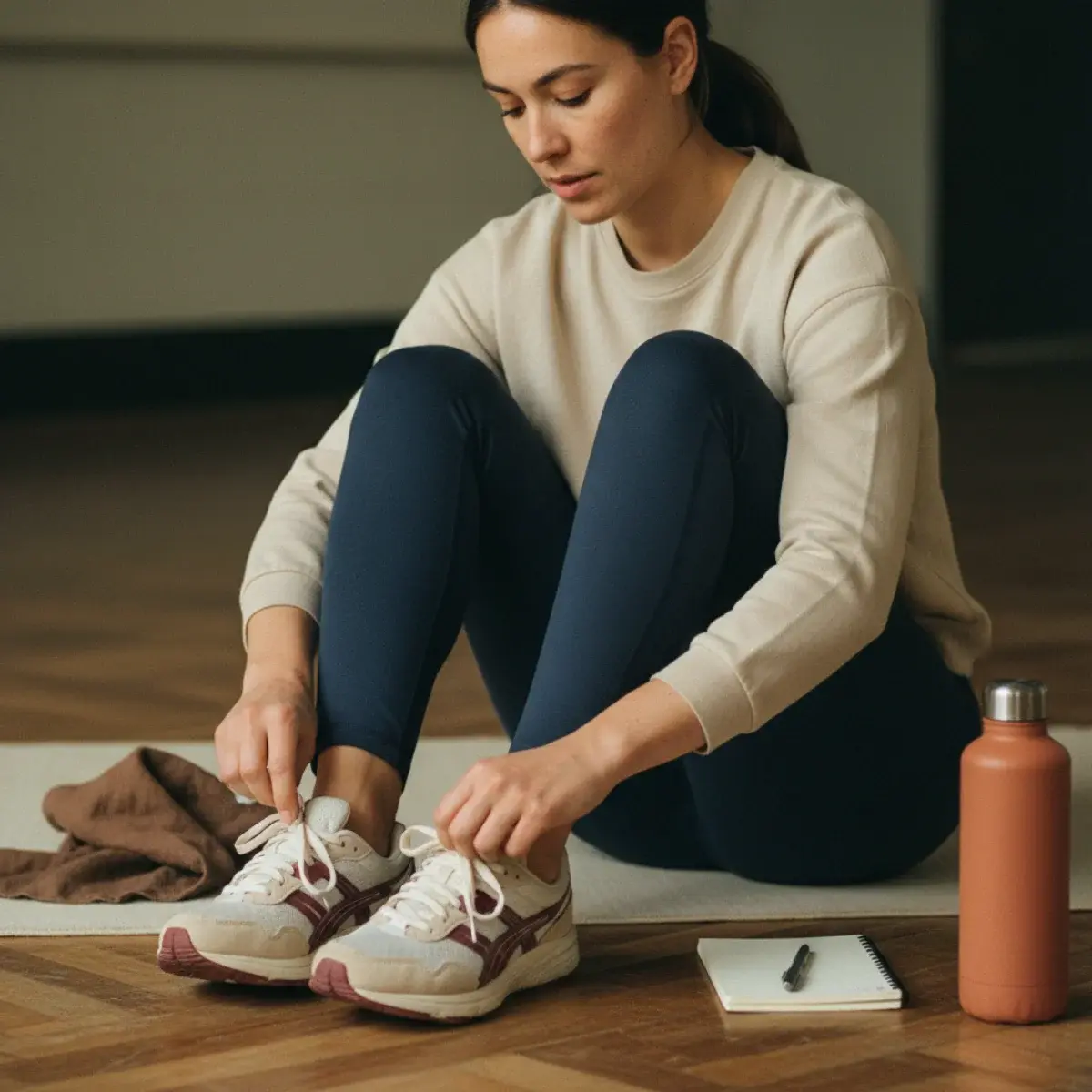 1600×1067
8. The running outfit (cooler weather)
Full-length running tights, a fitted long-sleeve technical top in a complementary tone, a structured technical jacket or vest in cold weather, proper running shoes replaced on schedule, and reflective elements for low-light runs. Hair back, no jewellery. The whole outfit should be functional first — fabric that breathes, no chafing seams, layers that adjust to the run.
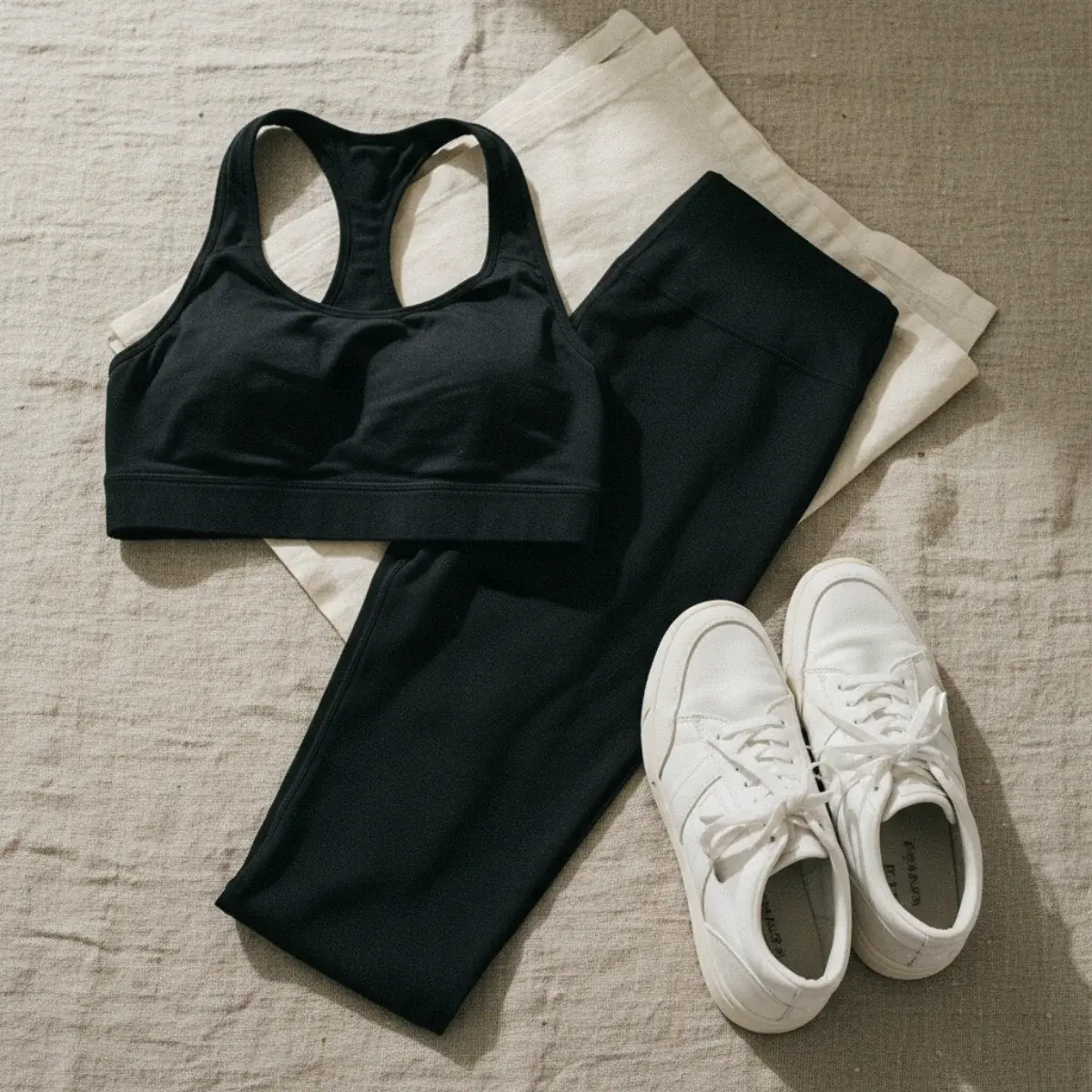 1600×1067
9. The summer outdoor workout outfit
The hot-weather outdoor session. A fitted technical tank or sports bra (with proper UV-protective fabric or covered with a tank), bike shorts or 7/8 leggings depending on temperature, a structured visor or headband, acetate sunglasses with proper UV, and proper training shoes for the surface (trail shoes for trails, road runners for road). Hair back, sunscreen visible.
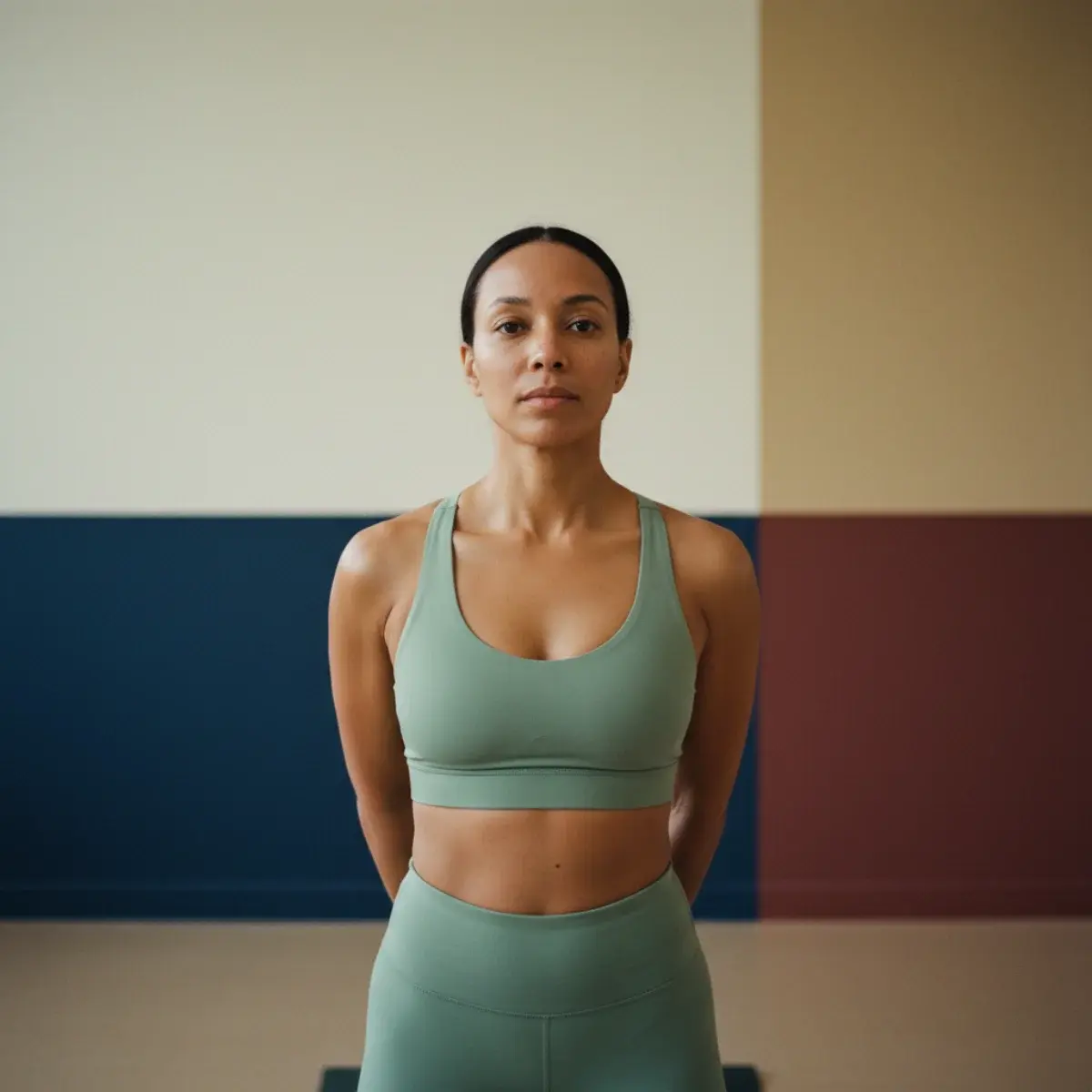 1600×1067
10. The athleisure post-workout outfit
The walk-from-the-gym-to-the-cafe outfit. Structured tapered joggers or fitted lounge trousers, a fitted long-sleeve top or quarter-zip pullover, clean white minimalist leather sneakers (not the workout trainers — switch shoes after the session), a structured leather or canvas tote bag, acetate sunglasses, and one piece of considered jewellery (gold hoops or a fine chain). This is the outfit that takes a post-workout flush and a slightly-damp ponytail and makes them look like the deliberate look they kind of are.
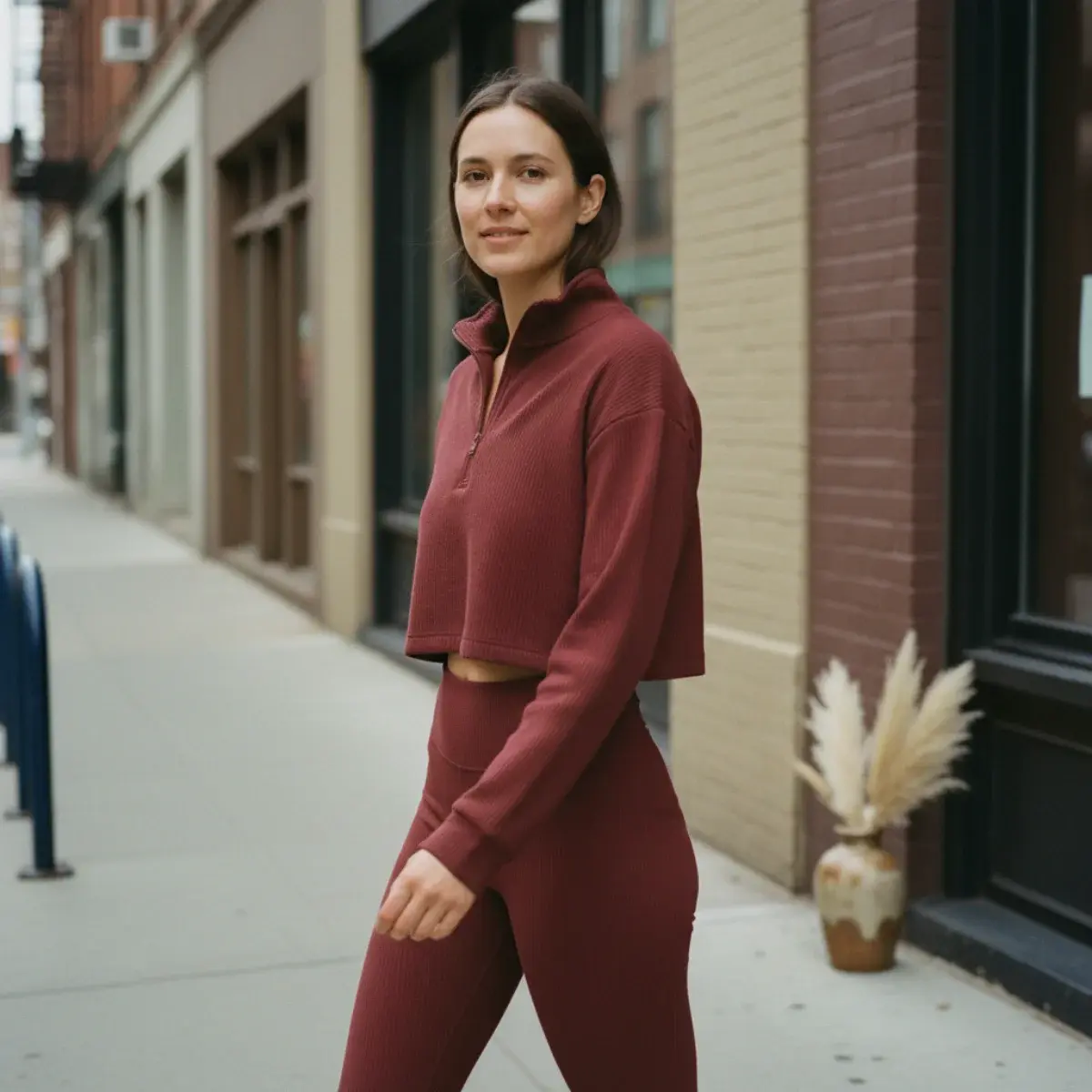 1600×1067
Key takeaways
- 1Four pieces cover the base gym uniform: sports bra matched to impact, fitted leggings or bike shorts, fitted technical top, proper training shoe.
- 2Match the sports bra to the workout's impact — low, medium, or high. Most women own two levels at most.
- 3Dark colours (black, navy, charcoal) hide sweat better, hold shape longer, and pair more easily across the wardrobe.
- 4Match the shoe to the workout. Flat for lifting, cushioned for running, cross-trainer for HIIT. Never swap them.
- 5Structured tapered joggers cross into casualwear; baggy thin sweats do not. The difference is fabric weight.
- 6All-black is the failsafe — looks intentional, photographs well, removes the daily outfit decision.
The fabrics that earn their place
Three fabric categories carry almost every gym outfit:
Technical synthetics (nylon, polyester, spandex blends) — the everyday gym workhorse. Wicks moisture, dries fast, holds shape. Look for: at least 15% spandex for stretch recovery, four-way stretch construction, flat-locked seams to prevent chafing. Brands that do this well at the mid-range: Lululemon, Athleta, Nike, Outdoor Voices, Beyond Yoga.
Technical wool (lightweight merino, ~150-200gsm) — the unexpected gym fabric. Naturally cooling, odour-resistant, regulates temperature better than synthetics. Slightly more expensive but lasts longer. Use for fitted long-sleeve tops, cooler-weather running base layers.
Heavy structured cotton or fleece — for the pre/post-workout layers. Joggers, hoodies, quarter-zips. Skip thin jersey; buy heavyweight (320gsm+ for fleece).
Skip: thin cotton t-shirts for high-sweat workouts (cotton holds water and stays heavy), very thin polyester that pills within months, any technical fabric labelled "antimicrobial" that loses the treatment after ten washes.
The shoes question, expanded
Three pairs cover almost every workout type:
For lifting and most strength training: a flat, hard-soled shoe. The classic Converse Chuck Taylor or Vans Authentic works; dedicated lifting flats (Nike Romaleos, Adidas Powerlift) work better. The flat sole grounds the foot and improves force transfer.
For running and most cardio: actual running shoes with cushioning matched to your gait and weekly mileage. Replace every 500–800 miles or every 12–18 months. The dead running shoe is the leading preventable cause of recreational running injuries.
For mixed training, HIIT, dance-based classes: a cross-trainer with moderate cushioning (Nike Metcon, Reebok Nano). Versatile enough to handle the variety; not specialised at any one activity.
For yoga and pilates: bare feet or grip socks. No shoes.
Court shoes (Stan Smith, Reebok Club C, Adidas Sambas) cross into casualwear cleanly — they're the only gym-adjacent shoe that walks out of the gym and into the rest of the wardrobe without looking like it forgot to change. The footwear styling guide breaks down the broader shoe wardrobe.
The accessories that matter
Less than the rest of the wardrobe, but each piece does specific work:
A structured hair tie or band — for keeping hair off the face. Spiral hair ties don't dent; standard elastics damage long hair over time.
Acetate sunglasses with UV protection — for outdoor workouts. Skip the cheap dark lenses without UV blocking; they dilate the pupil and increase sun damage.
One small piece of jewellery you can train in — small stud earrings, a fitted chain that doesn't swing. Skip dangling earrings, multiple bracelets, anything that catches on equipment or moves through a workout.
A structured leather or canvas tote — for the walk in and out. Big enough for a change of clothes, a water bottle, and a small wallet. Brown leather, black canvas, or natural canvas reads more considered than logo'd athletic totes. The bag styling guide covers the broader wardrobe.
A water bottle that doesn't look like sports equipment — a stainless-steel or glass bottle in a neutral colour reads more considered than the multi-coloured plastic ones from the supplements aisle.
What to skip
The gym-wear categories that almost never improve a workout outfit:
Pastel athleisure sets that read athleisure-as-fashion rather than functional gym wear — they're built for the photograph, not the workout, and the fabric usually shows it. Where they work: very light yoga, photo opportunities. Where they fail: real strength training, sweat-heavy cardio.
Crop tops with sleeves longer than the body length — the proportion fights itself and looks costume.
Athletic shoes with chunky soles worn under casual outfits — they kill the line of any trouser or skirt. Save athletic shoes for the gym; carry a clean leather sneaker for the rest of the day.
Visible designer logos in the gym — the gym is not a runway. Logos read as theatre; restraint reads as serious.
Loose oversized sweatpants worn outside the gym — bedroom wear. Switch to structured joggers for any outside-the-gym wear.
Where gym outfits go wrong
Three common failures:
Wrong sports bra for the workout. A low-impact bralette for high-impact running causes pain, sometimes long-term damage. A high-support bra for yoga compresses uncomfortably. Match the support to the impact every time.
Cotton t-shirts in heavy-sweat workouts. Cotton holds water, stays heavy, chafes once saturated. Technical synthetic or fine merino handles sweat properly. Save cotton for the walk-in layer or the post-workout pullover.
Athletic shoes worn on the wrong activity. Running shoes under a heavy squat is genuinely unsafe (the soft sole destabilises the lift). Flat lifting shoes for distance running offers zero shock absorption. The shoes matter more than any other piece for injury prevention; get them specific.
The gym wardrobe in eight pieces
If building from scratch for the season:
- Two sports bras — one medium-impact, one high-impact, both in black
- Two pairs of full-length leggings — both in black or one black and one navy
- One pair of bike shorts in black for hot-weather workouts
- Two fitted technical tanks or t-shirts — black and a contrasting neutral (white, sage, or oxblood)
- One cropped pullover or fitted long-sleeve in black or navy
- One pair of structured tapered joggers in heavyweight fleece, navy or charcoal
- One pair of training shoes matched to the dominant activity (lifting flat, running cushion, or cross-trainer)
- One pair of clean white minimalist leather sneakers for the walk in and out (separate from workout trainers)
Eight items. The whole gym wardrobe sits in one drawer. Replace pieces as they wear out — sports bras every 12-18 months once they lose support, leggings when they pill or thin, running shoes by mileage. The wardrobe of a woman who buys gym clothes impulsively is twelve sets she doesn't reach for; the wardrobe of a woman who chose carefully is the eight she wears every week.
Comparison: by activity
| Activity | Top | Bottom | Bra | Shoe |
|---|---|---|---|---|
| Strength training | Fitted tank or tee | Full-length leggings or bike shorts | Medium support | Flat or cross-trainer |
| Running | Fitted tech tee (long-sleeve in cold) | Full-length running tights or split shorts | High support | Cushioned running shoe |
| HIIT | Fitted tank or tee | Bike shorts or 7/8 leggings | Medium to high support | Cross-trainer |
| Yoga / Pilates | Fitted bralette or fitted top | Full-length leggings | Low support | None — bare or grip socks |
| Cycling (indoor) | Fitted top | Padded cycling shorts or fitted shorts | Medium support | Cycling shoe or flat trainer |
| Outdoor walking | Fitted long-sleeve | Leggings or joggers | Low to medium | Walking shoe or trail runner |
The pieces overlap heavily; only the support level and shoe specifically change.
See all women's outfit guides → · Home outfits for women → · Summer outfits for women → · Smart casual outfits →
Frequently asked
- What should a woman wear to the gym?
- The base uniform: a supportive sports bra matched to the impact of the activity, fitted leggings (full-length, 7/8, or biker shorts), a fitted technical t-shirt or tank top, and proper training shoes matched to the activity. Add a cropped pullover or fitted long-sleeve for cooler weather. Avoid: cotton-heavy fabrics for high-sweat workouts, very baggy sweats that bunch and snag, and any shoe not designed for the activity you're doing.
- How do I choose the right sports bra?
- Match the support level to the impact of the workout. Low-impact (yoga, pilates, light strength training) — a soft fitted bralette or low-impact sports bra is enough. Medium-impact (most strength training, light cardio, dance) — a medium-support bra with adjustable straps and a real chest band. High-impact (running, HIIT, jumping) — a high-impact bra with structured cups, wide straps, and a snug chest band. Most women own bras in two impact levels at most; the rest is over-buying.
- Are leggings or shorts better for the gym?
- Both work; the choice depends on the workout. Leggings: better for lifting (no bunching during squats), yoga (full coverage for inversions), cold gyms, and cardio sessions where chafing is a concern. Shorts: better for hot gyms, summer outdoor workouts, and any activity where you want maximum mobility through the hip. Most women own both; one of each pair (leggings + bike shorts) covers virtually every gym situation.
- What's the right legging length?
- Full-length leggings (ankle-length) are the most-versatile — work for lifting, yoga, cycling, cold-weather running. 7/8-length leggings (hitting just above the ankle) are the modern smart-casual gym choice, more flattering on shorter builds. Capri-length (mid-calf) reads dated; skip. Bike shorts (mid-thigh, fitted) work for hot-weather workouts and lifting. Avoid full-length leggings that bunch at the ankle — proper fit means a clean line from waist to ankle.
- Can I wear gym clothes outside the gym?
- Some pieces, yes — and the fit matters more than the brand. A fitted technical tank or t-shirt with a structured cropped pullover and proper leggings reads as deliberate athleisure when paired with a leather slide, a structured tote, and acetate sunglasses. What doesn't travel: bike shorts alone (gym-only or beach-only), baggy gym t-shirts, athletic shoes with visible cushioning under any non-gym outfit. The line is: would you wear it to a coffee shop on a Saturday morning? If yes, it crosses over. If no, change.
- What shoes for what workout?
- For lifting and most strength training: a flat-soled shoe (Converse, Vans, or dedicated lifting flats). For running: actual running shoes with proper cushioning matched to your gait, replaced every 500–800 miles or every 12–18 months. For yoga: bare feet or grip socks; no shoes. For cycling: cycling shoes if your bike has clipless pedals; flat trainers otherwise. Cross-trainers (Nike Metcon, Reebok Nano) work for mixed sessions but specialise at nothing.
- How do I look put-together for a video gym class?
- Three things: a fitted top (not oversized — the camera reads loose fabric as messy), a matching or coordinating bottom (same colour family or two clean neutrals), and a single piece of jewellery you can wear safely through the workout (small studs, a fitted chain that won't swing into the screen). Hair pulled back. The whole outfit should photograph as intentional from the chest up — that's what the camera sees.
Written by Marguerite Sterns, looksyra editorial. Last updated May 2026.