
The gold-versus-silver question is the oldest in jewellery, and most people answer it by habit or guesswork rather than by the one factor that actually predicts which flatters them: their skin's undertone. The good news is that finding your undertone takes about thirty seconds, and once you know it, choosing the metal that makes your skin glow becomes simple. The better news is that undertone is a guide, not a cage — everyone can wear both, and mixing is a modern look. This guide covers how to choose your most flattering metal by undertone, how to find your undertone, and why you can wear and mix both. It builds on the principles in our jewellery styling guide.
The principle this guide will hold: undertone predicts your most flattering metal, but it's a starting point, not a restriction — the best metal is the one that makes your skin glow and that you love wearing. Find your undertone for a reliable default, then wear and mix whatever looks and feels right.
What undertone is and why it matters
Skin has two layers of colour: the surface tone, which tans and changes, and the undertone beneath, which stays constant and determines which colours and metals flatter you. Undertones fall into three broad categories. Warm undertones have a golden, peachy, or olive cast. Cool undertones have a pink, rosy, or blue-based cast. Neutral undertones balance the two or sit between them. This undertone, not the surface tone, is what makes a particular metal or colour make your skin look bright and even, or sallow and tired.
Undertone matters for jewellery because metals carry their own warmth or coolness, and a metal that echoes your undertone harmonises with your skin while one that clashes can fight it. Warm metals like gold flatter warm undertones; cool metals like silver flatter cool undertones; neutral undertones suit both. This is the same undertone logic that guides which clothing colours flatter you, applied to metals. Understanding that it's the constant undertone, not the changeable surface tone, that determines your best metal is the foundation of choosing jewellery that makes your skin glow. And because undertone stays constant, once you know yours, it's a reliable guide for life.
 1600×1067
How to find your undertone
A few quick tests reveal your undertone reliably, especially used together. The vein test is the easiest: look at the veins on your inner wrist in natural light — greenish veins suggest a warm undertone, bluish or purple veins suggest cool, and veins you can't clearly call either way suggest neutral. The metal test is the most direct for jewellery: hold a gold piece and a silver piece against your skin near your face and notice which makes your skin look brighter and more even — the flattering metal points to your undertone.
The colour test adds confirmation: notice whether you look better in warm colours like cream, peach, and earth tones (suggesting warm) or cool colours like white, blue, and pink (suggesting cool). The jewellery memory test is simple too — recall which metal you've always gravitated to and received compliments in, which often tracks your undertone. Used together, these tests give a confident read: consistent greenish veins, a glow in gold, and a preference for warm colours all point to warm; the cool equivalents point to cool; and mixed results point to neutral. Finding your undertone takes minutes and gives you a reliable default metal, though, as we'll see, it's a starting point rather than the last word.
 1600×1067
If you have a warm undertone
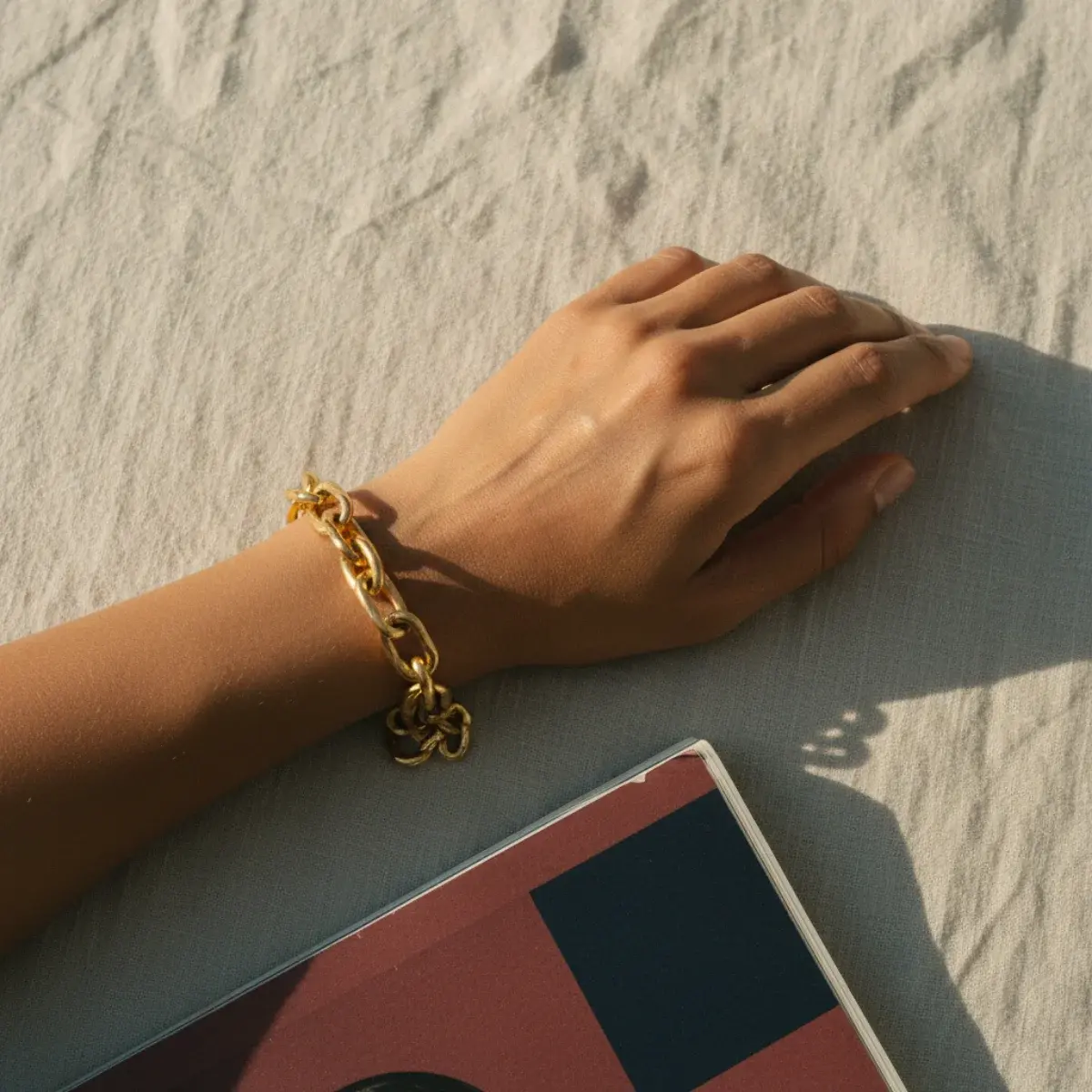
Warm undertones — skin with a golden, peachy, or olive cast, where the wrist veins look greenish and warm colours flatter — are typically most flattered by warm metals. Gold is the natural go-to, its warmth echoing the skin and making it glow; yellow gold especially harmonises with warm undertones. Rose gold, brass, and copper also suit, sharing the warm cast. These metals make warm skin look bright and healthy, where a cool metal can leave it looking slightly sallow by comparison.
For gemstones, warm undertones are flattered by warm-toned stones — amber, citrine, warm earth tones, and golden hues — which echo the same warmth. When building a jewellery capsule, a warm undertone suggests centring it on gold as the primary metal, with warm gemstones as accents, the capsule approach the jewellery styling guide describes. That said, a warm undertone can absolutely wear silver, especially in a deliberate gold-and-silver mix, and personal preference always matters — some warm-undertoned people love and look great in silver. But for the most reliably flattering default, gold and warm metals are the choice for warm undertones, the metal that most makes warm skin glow.
 1600×1067
If you have a cool undertone
Cool undertones — skin with a pink, rosy, or blue-based cast, where the wrist veins look bluish or purple and cool colours flatter — are typically most flattered by cool, white metals. Silver is the natural go-to, its coolness complementing the skin; white gold and platinum also suit, sharing the cool, bright cast. These metals make cool skin look bright and even, where a warm metal can sometimes look slightly off against it, though the effect is gentler than the reverse.
For gemstones, cool undertones are flattered by cool-toned stones — sapphire, amethyst, blue and purple hues, and clear stones — which echo the coolness. A jewellery capsule for a cool undertone centres on silver or white metals as the primary, with cool gemstones as accents. As with warm undertones, this is a flattering default rather than a restriction: cool-undertoned people can wear gold beautifully, especially in a deliberate mix or in warmer gold shades, and personal taste leads. But for the most reliably flattering metal, silver and white metals are the choice for cool undertones, the metals that most complement cool skin. The symmetry with warm undertones is clean: each undertone has a natural metal family, and wearing it is the simplest route to skin that looks bright and even.
 1600×1067
If you have a neutral undertone (or rose gold)
Neutral undertones — where the tests give mixed results, the veins are hard to call, and both warm and cool colours suit — have the easiest job: they're flattered by both gold and silver, and can choose freely based on the outfit and mood. This is a genuine advantage, since a neutral undertone can build a jewellery capsule across both metals and mix them at will, never constrained to one family. Choosing by the outfit and occasion, rather than by undertone, becomes the guiding logic.
Rose gold deserves its own mention here, because its warm-pink hue makes it one of the most universally flattering metals, suiting warm, cool, and neutral undertones alike — warm undertones love its warmth, cool undertones appreciate the pink, and neutral undertones suit it easily. For anyone unsure of their undertone or wanting a metal that flatters broadly, rose gold is a reliable choice. The takeaway for neutral undertones is freedom: wear gold, silver, rose gold, or any mix, guided by the outfit rather than a rule. And for everyone, rose gold is a versatile bridge metal that flatters across the board, a useful piece in any jewellery capsule, as the jewellery styling guide notes.
 1600×1067
Why undertone is a guide, not a rule
Undertone reliably predicts your most flattering metal, but it's important to hold it lightly, because several other factors matter and plenty of people wear the "opposite" metal beautifully. Personal preference leads — if you love silver and feel best in it, that confidence reads more than any undertone rule, and the same for gold. The outfit matters too: a metal can be chosen to coordinate with an outfit's palette or hardware regardless of undertone, and the jewellery's job is to finish the look as much as to flatter the skin. Confidence is itself flattering, so the metal you wear with assurance often looks best.
The most useful way to treat undertone is as a reliable default, not a restriction: it tells you which metal will most reliably make your skin glow, which is genuinely useful, especially for investment fine-jewellery pieces you'll wear constantly. But for fun, fashion, and mixing, wear whatever you love. Mixing metals deliberately, as both this guide and the jewellery styling guide describe, lets anyone wear both regardless of undertone. So use undertone to choose your everyday capsule's primary metal and your key investment pieces, then feel free beyond that. The rule is that there is no rule, only a helpful default — your most flattering metal is a strong starting point, not a boundary.
 1600×1067
How to mix gold and silver well
Since anyone can wear both metals, mixing them is worth doing well, and a few principles make it read intentional. Use a two-tone piece to bridge the metals — a watch, ring, or necklace combining gold and silver gives the eye a reason to read the mix as deliberate and ties everything together. Balance the metals — include at least a couple of pieces in each, rather than one lone odd-metal item among matched ones, so the mix reads chosen. Mix within a stack — a stack of rings or bracelets in mixed metals reads cohesive because the stacking itself signals intention.
The key throughout is that the mix must look deliberate rather than accidental, which is the difference between modern metal-mixing and a styling oversight. A single silver ring among all-gold pieces reads like a mistake; a balanced, two-tone-anchored mix reads current and stylish. Mixing metals frees you from choosing one and lets you wear pieces you love regardless of undertone, which is part of why it's become a favoured modern look, as the jewellery styling guide describes. Start with a two-tone anchor piece and build a balanced mix around it, and combining gold and silver becomes an easy, intentional way to wear both — the practical resolution of the whole gold-versus-silver question.
 1600×1067
Gold vs silver: mistakes to avoid
A few errors complicate the metal question. Ignoring undertone entirely means missing the simple guide to your most flattering metal, where a quick undertone check gives a reliable default. Treating undertone as an absolute rule is the opposite error — refusing to wear a metal you love because it's "wrong" for your undertone, where confidence and preference matter and anyone can wear both. Accidental metal mixing — one odd-metal piece among matched ones — reads as an oversight, where deliberate, balanced mixing reads intentional. And buying investment pieces in the less flattering metal without thought wastes the chance to choose the metal that suits you for pieces you'll wear daily.
Two more round it out. Forgetting the outfit — choosing metal only by undertone and ignoring how it coordinates with a look — misses that jewellery finishes the outfit too, and overthinking it can paralyse, where the simple answer is to use undertone as a default and wear what you love beyond that. Each resolves the same way: find your undertone for a reliable default, choose your everyday and investment pieces in your most flattering metal, then wear and mix both freely with intention. The gold-versus-silver question, which feels weighty, has a light answer: undertone points the way, and confidence and intention do the rest.
Key takeaways
- 1Undertone predicts your most flattering metal: warm undertones suit gold, cool undertones suit silver, neutral suits both.
- 2Find your undertone with the vein test, the metal test, and the colour test used together for a confident read.
- 3Undertone is a reliable default, not a rule — confidence, the outfit, and personal preference matter, and anyone can wear both.
- 4Rose gold is one of the most universally flattering metals, suiting warm, cool, and neutral undertones alike.
- 5Mix gold and silver deliberately — use a two-tone anchor piece and balance the metals so the mix reads intentional.
Where to go from here
Choosing your metal sets up the rest of your jewellery. For the full approach, read the jewellery styling guide; for related techniques, how to layer necklaces, statement earrings styling, and pearl jewellery outfit ideas. For building a jewellery capsule around your metal, see the capsule wardrobe guide; for the quiet, fine-jewellery aesthetic, the old money outfits guide. Vogue and Who What Wear publish reliable jewellery and undertone coverage.
Frequently asked
- Should I wear gold or silver jewellery?
- It largely comes down to your skin's undertone: warm undertones (golden, peachy, olive) tend to be flattered by gold and warm metals, while cool undertones (pink, rosy, blue-based) tend to be flattered by silver and white metals. Neutral undertones suit both. That said, undertone is a guide, not a rule — personal preference and the outfit matter too, and many people happily wear and mix both metals.
- How do I know my skin undertone?
- Check the veins on your inner wrist: greenish veins suggest a warm undertone, bluish or purple veins suggest cool, and a mix suggests neutral. You can also test which metal makes your skin look brighter by holding gold and silver against it, or notice whether you look better in warm colours (suggesting warm) or cool colours (suggesting cool). These tests together give a reliable sense of your undertone.
- What jewellery suits a warm undertone?
- Warm undertones — golden, peachy, or olive skin where veins look greenish — are typically flattered by gold, yellow gold, rose gold, brass, and copper, which echo the skin's warmth and make it glow. Warm-toned gemstones like amber, citrine, and warm earth tones also suit. Gold is usually the go-to metal, though warm undertones can still wear silver, especially mixed with gold.
- What jewellery suits a cool undertone?
- Cool undertones — pink, rosy, or blue-based skin where veins look bluish — are typically flattered by silver, white gold, platinum, and other white metals, which complement the skin's coolness. Cool-toned gemstones like sapphire, amethyst, and blue and purple stones also suit. Silver is usually the go-to metal, though cool undertones can wear gold too, especially in a deliberate mix.
- Can you wear both gold and silver?
- Yes — anyone can wear both, and mixing them is a modern, intentional look. Neutral undertones suit both metals especially easily, but everyone can wear and mix gold and silver with the right styling. The key to mixing is intention: combine them deliberately, ideally with a two-tone piece to tie them together, so the mix reads chosen rather than accidental.
- Does skin tone really determine which metal looks best?
- Undertone influences which metal is most flattering, but it's a helpful guide rather than a strict rule. The most flattering metal is often the one that makes your skin look brightest and most even, which undertone predicts well, but personal preference, the outfit, and confidence matter too. Plenty of people wear the 'opposite' metal beautifully, so treat undertone as a starting point, not a restriction.
- What about rose gold — who does it suit?
- Rose gold, with its warm pink hue, is one of the most universally flattering metals, suiting warm, cool, and neutral undertones because its pink-warm tone bridges the two. Warm undertones love its warmth, cool undertones appreciate the pink, and neutral undertones suit it easily. It's a versatile choice and a good option for anyone unsure between gold and silver, or wanting a metal that flatters broadly.
Written by Marguerite Sterns, looksyra editorial. Last updated May 2026.