1. Ivory dress shirt with midnight navy suit and burgundy tie
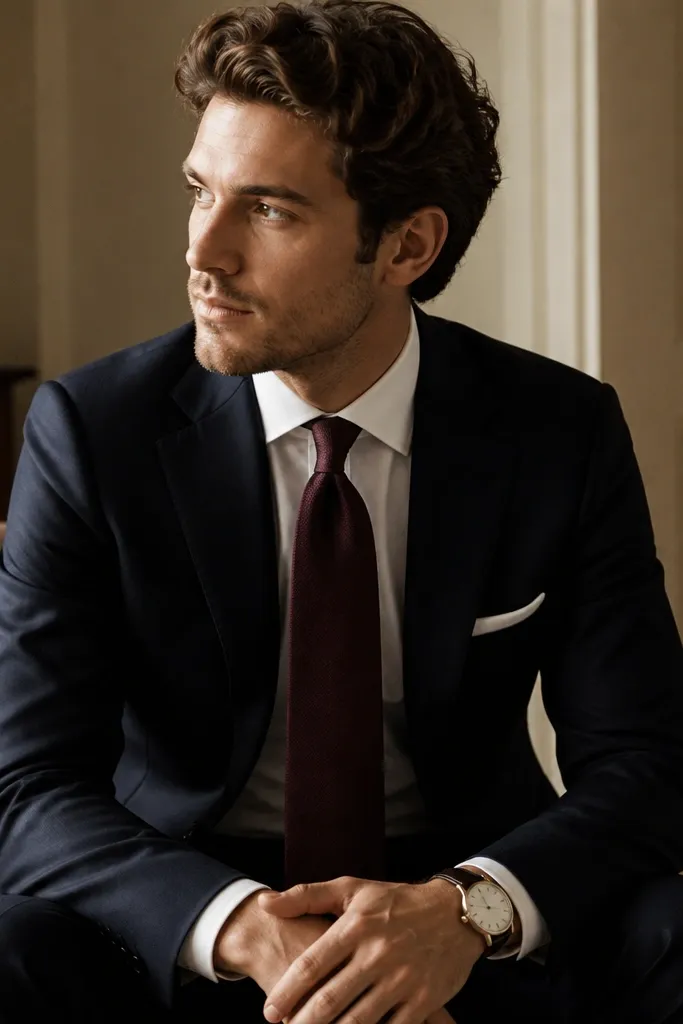
Ivory against midnight navy gives you that crisp formal look without the harshness of pure white. Burgundy adds depth and warmth, so the tie doesn't look like a random accent. The combination reads classic in wedding photos because the ivory catches light while the navy holds the frame.
Use a navy suit with either a subtle worsted texture or a slight sheen on the lapel. Keep the tie medium-width (around 3.25-3.5 inches) and choose a matte silk so it doesn't glare under flash. For the pocket square, go white with a simple fold, not a patterned one.
Pro tipIf you're wearing this to a nighttime event, add a black oxford lace-up shoe - the whole palette tightens.
AvoidAvoid pairing ivory with a bright white pocket square that looks too blue - it can look mismatched under indoor lights.
2. Charcoal suit with crisp white shirt and black tie
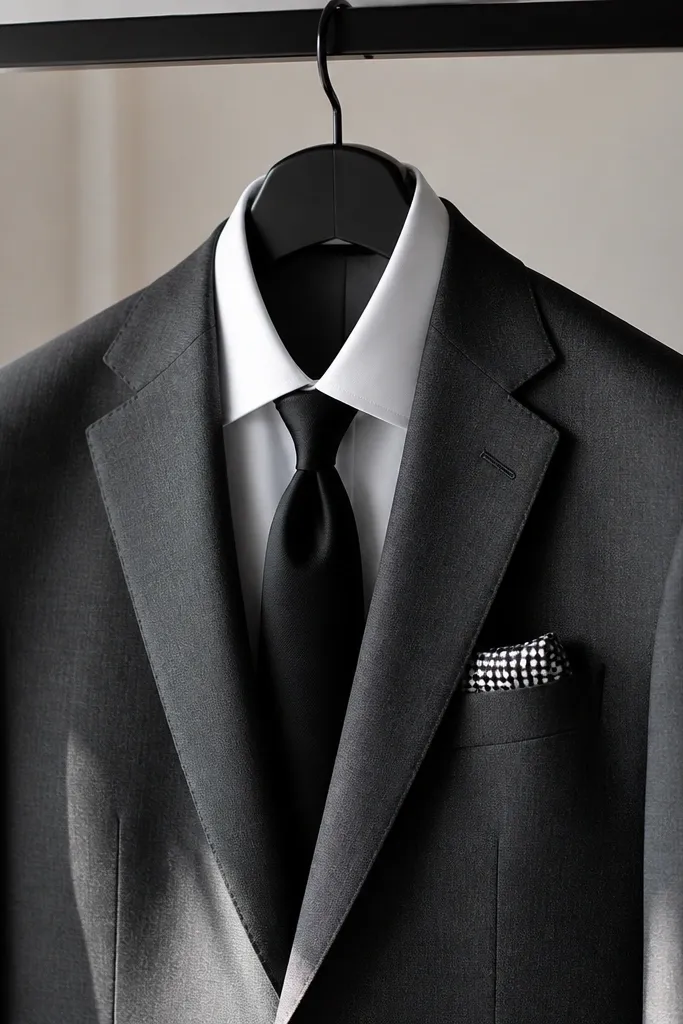
This is the "camera-friendly" combo because charcoal has enough depth to look premium, and the white shirt keeps it clean. The black tie anchors the look so the gray doesn't turn flat or gray-green. When you wear it with a satin watch strap or a polished belt buckle, it reads formal immediately.
Choose a charcoal suit that's slightly darker than your shirt - aim for a two-step difference. Keep the shirt collar crisp (a medium spread collar looks best with a tie). If the tie is satin, keep the pocket square plain white to avoid competing shine.
Pro tipWear black leather shoes with a bit of shine, like a cap-toe oxford, to keep the contrast strong.
AvoidAvoid charcoal that's too light (steel gray) with a bright white tie - it looks washed out on stage lighting.
3. Black suit with white shirt and a silver-gray patterned tie
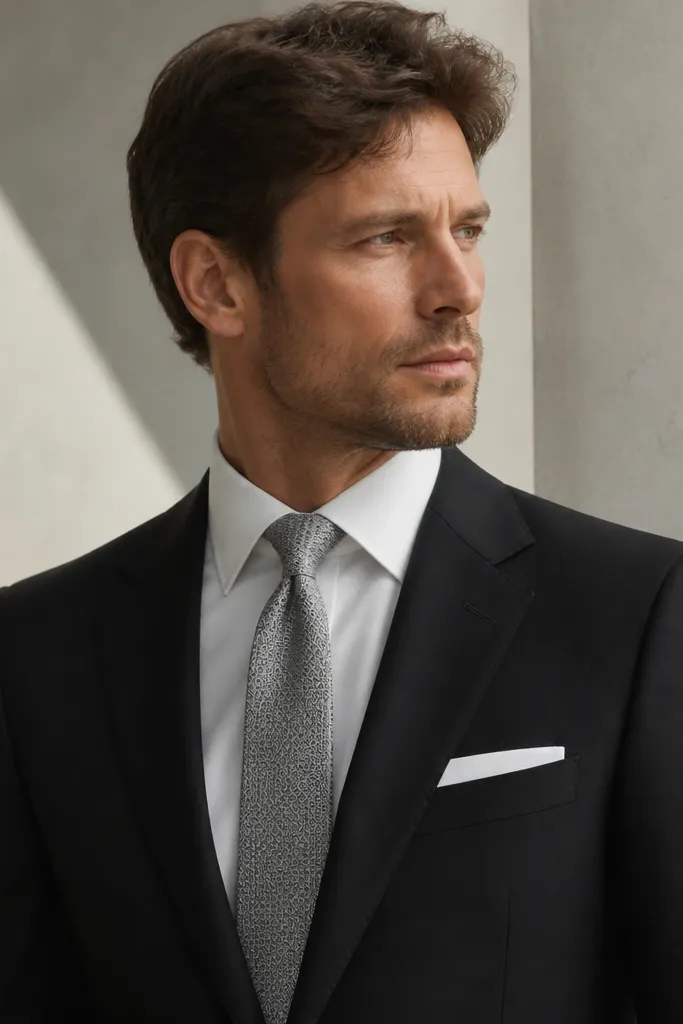
Black and white is the base, and the silver-gray tie gives you texture without adding a loud color. The pattern keeps the tie from looking like basic job interview black. Under event lighting, the gray threads catch light and make your outfit look "finished."
Pick a tie with a small-scale pattern (micro dots or tiny diagonals) so it stays formal. Use a white linen pocket square, not cotton - linen has that dry, structured look that reads upscale. Keep the shirt placket clean and ironed.
Pro tipIf your event is outdoors at night, this combo looks great with a watch that has a silver case.
AvoidAvoid large bold patterns on the tie - they read casual even if the suit is black.
4. Forest green suit with cream shirt and deep brown tie
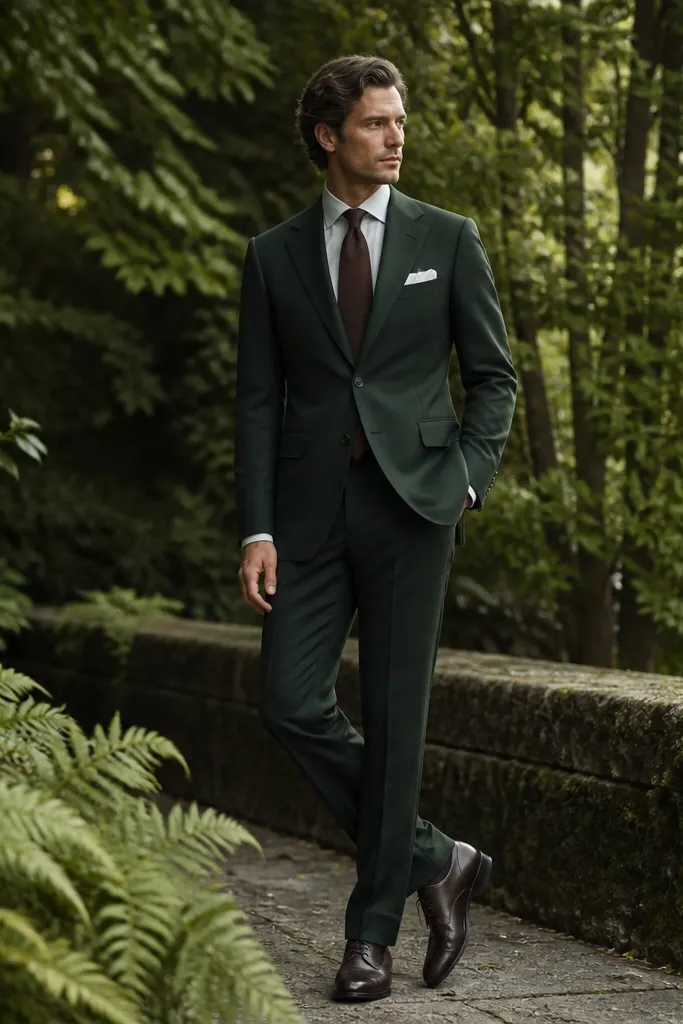
Forest green looks expensive when you keep the rest warm and grounded. Cream softens the green and makes the tie look rich instead of heavy. Deep brown ties in particular make this palette feel old-school formal, like a fall wedding invitation in clothing form.
Choose a green suit that leans slightly blue-green, not olive. The cream shirt should be off-white, not bright white - it keeps the color harmony. For shoes, use dark brown leather with a bit of burnish.
Pro tipAdd a subtle texture pocket square like twill or linen so the outfit doesn't look too smooth.
AvoidAvoid pairing forest green with a cool gray tie - it can make the green look dull.
5. Olive blazer with black trousers and a rust tie
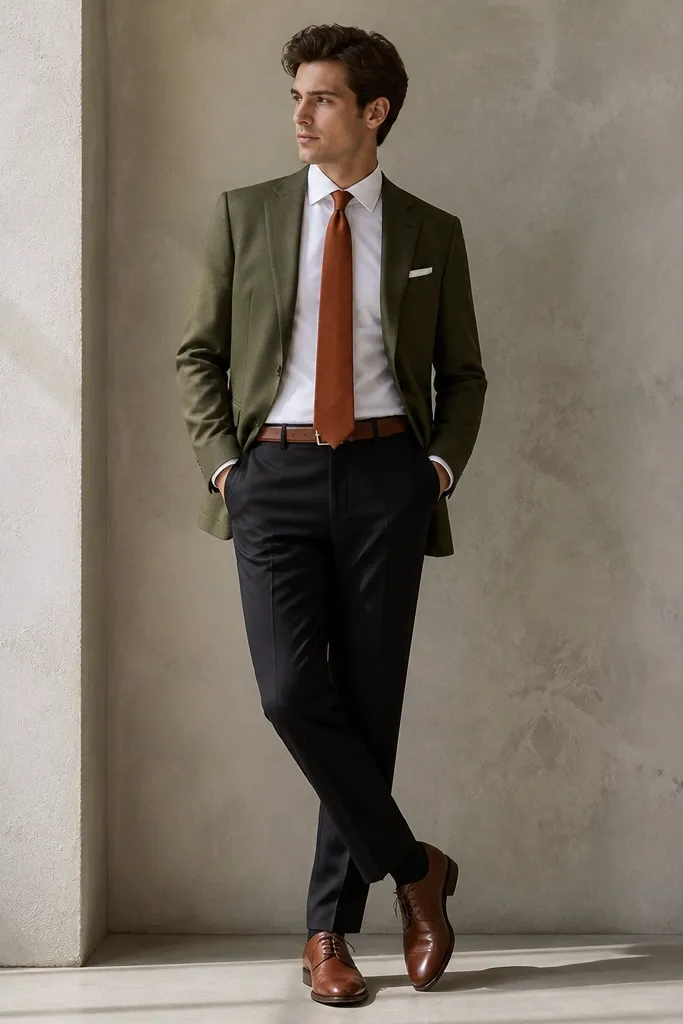
This combo works because olive and black create a strong contrast, and rust is a warm accent that flatters warm undertones. It reads formal because the shapes are sharp, and the color choices stay intentional. I used this for a rehearsal dinner and got compliments within minutes.
Keep the blazer structured with a clean shoulder and a close waist seam. The rust tie should be medium thickness and matte. If you're worried about color, start with a rust tie that leans terracotta rather than bright orange.
Pro tipUse a brown belt with the same finish as your shoes - match the sheen, not just the color.
AvoidAvoid mixing olive with tan shoes - it can make the outfit feel like a casual weekend look.
6. Navy suit with light blue shirt and silver tie
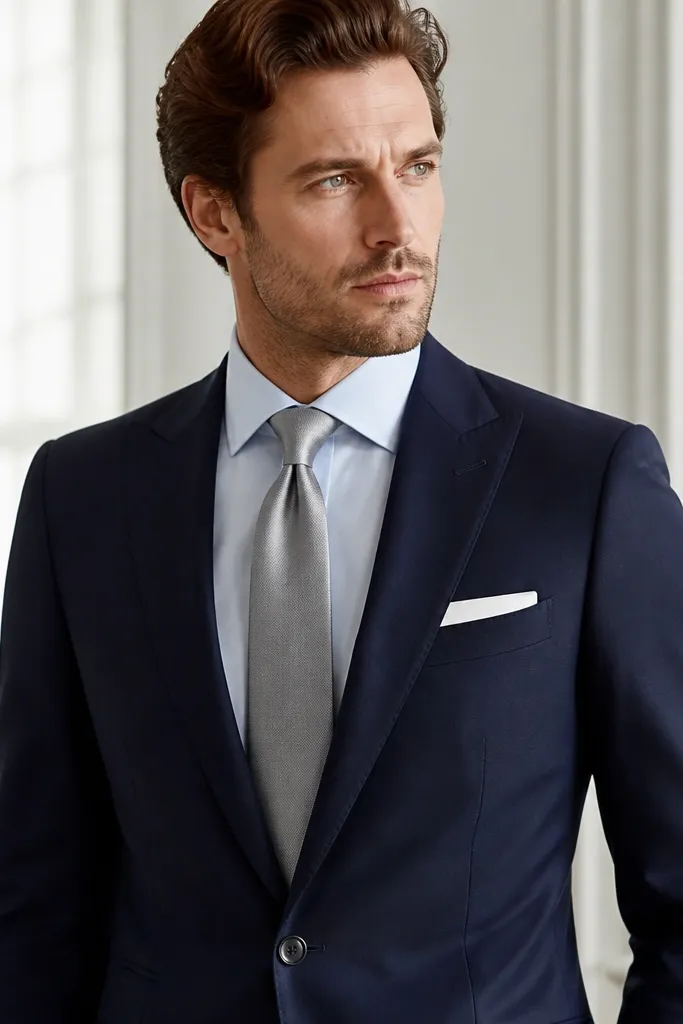
Navy plus light blue is a clean, friendly formal palette that still photographs well. The silver tie adds a cool metallic accent without turning the look into a party outfit. It's a strong option when you want to look sharp but not overly dramatic.
Pick a light blue shirt that isn't icy - aim for a soft sky tone. The silver tie should have a tight weave so it looks smooth, not chunky. Keep the pocket square white and plain to let the tie do the work.
Pro tipIf your event is daytime, swap the silver tie for a pale gray tie and keep everything else the same.
AvoidAvoid light blue shirt shades that are too close to the navy - you want separation.
7. Steel gray suit with pale blue shirt and navy pocket square
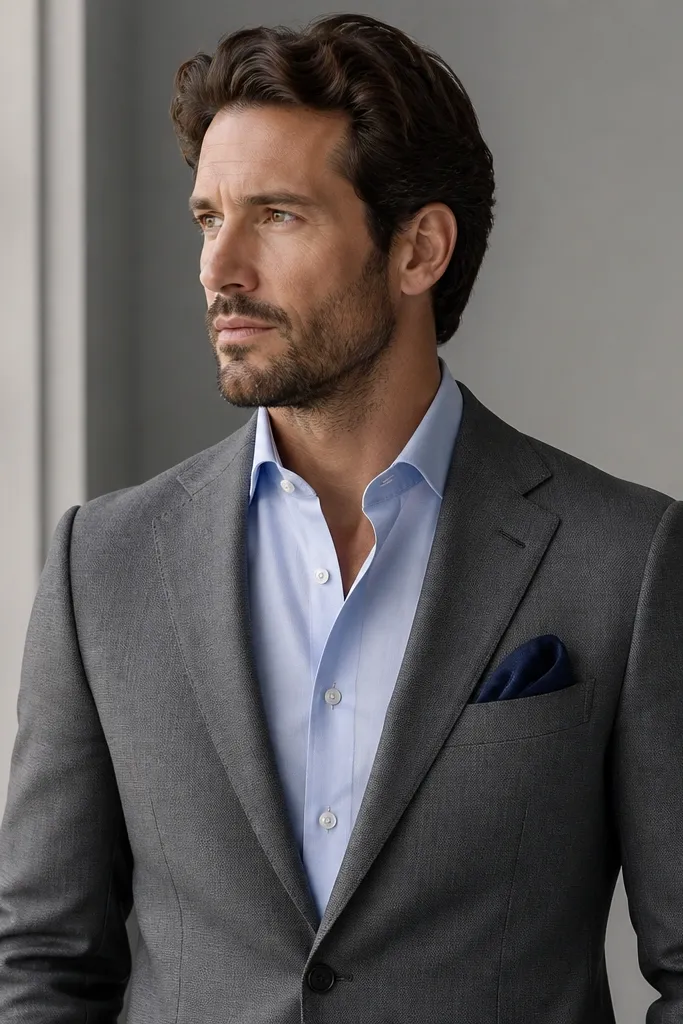
Close-tone gray and blue can look sleek if you add one darker navy accent. The pocket square creates a focal point and keeps the outfit from looking like a monotone office suit. I like this for formal dinners because it looks composed even when you loosen your top button.
Use a steel gray suit with a subtle weave (herringbone or micro-pattern). The pale blue shirt should be crisp cotton with a slightly stiff collar. The navy pocket square should be solid, not patterned, and folded neatly.
Pro tipIf you skip the tie, wear a structured belt and a watch with a dark strap to keep the look formal.
AvoidAvoid wearing a soft, wrinkly shirt with this - the gray will show every crease.
8. Burgundy suit with white shirt and black satin tie
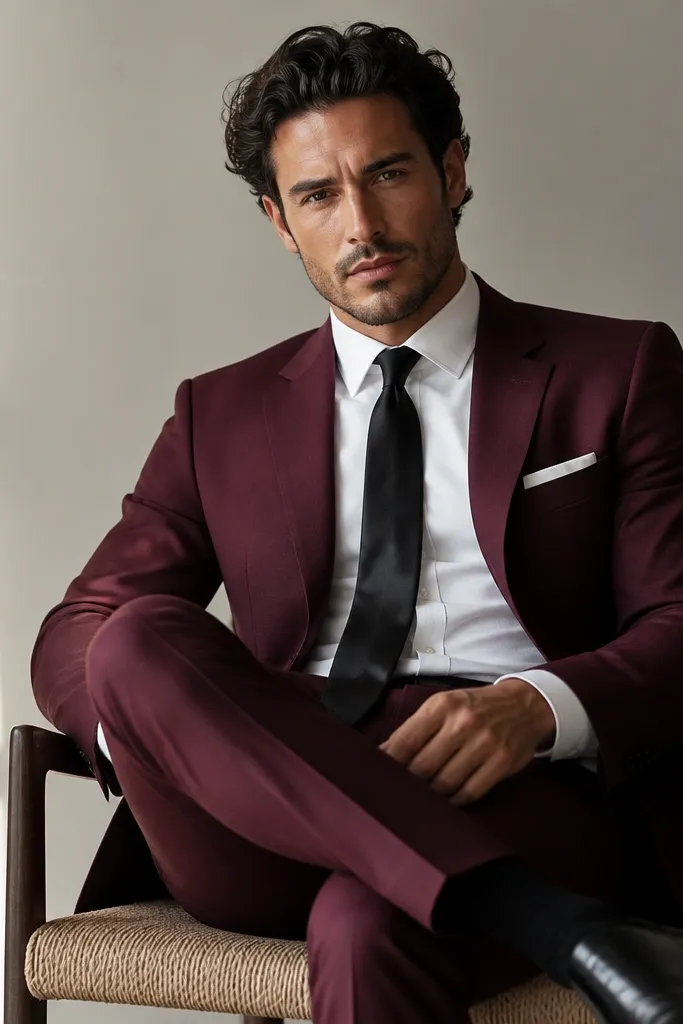
Burgundy reads formal because it's deep, not loud. Pair it with a white shirt so the burgundy stays rich, then add a black satin tie for contrast and shine. This combo looks especially good in evening lighting because burgundy warms up and the satin tie catches highlights.
Choose a burgundy suit with a matte finish, not a shiny velvet unless the venue suits it. Keep the satin tie smooth and dark, and avoid adding extra patterns. Shoes should be black leather to keep the palette from turning brown-heavy.
Pro tipMatch your belt buckle to the watch case - silver buckle with silver watch, black buckle with black watch.
AvoidAvoid burgundy with a brown tie - it can tip the outfit into "holiday party" territory.
9. Royal blue suit with white shirt and navy tie
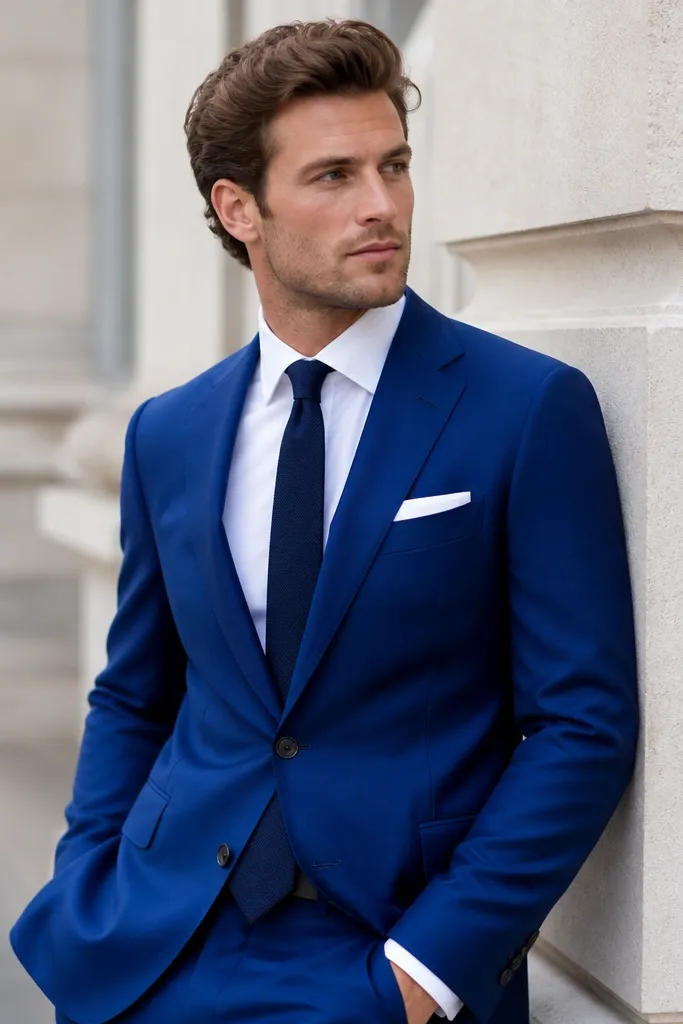
Royal blue is bold enough for a wedding guest and clean enough for a formal dinner. The navy tie keeps it from looking like a costume because it deepens the palette. With a white shirt, the whole look stays crisp and not overly saturated.
Pick a royal blue suit that leans slightly dark, not bright cobalt. The navy tie should be solid and matte silk. Keep the pocket square white with a simple fold, and ensure your shirt collar sits flat.
Pro tipWear dark brown shoes only if the venue is daytime; otherwise go black for stronger contrast.
AvoidAvoid pairing royal blue with a bright red tie - it looks like a sports event outfit.
10. Brown tweed jacket with cream shirt and dark green tie
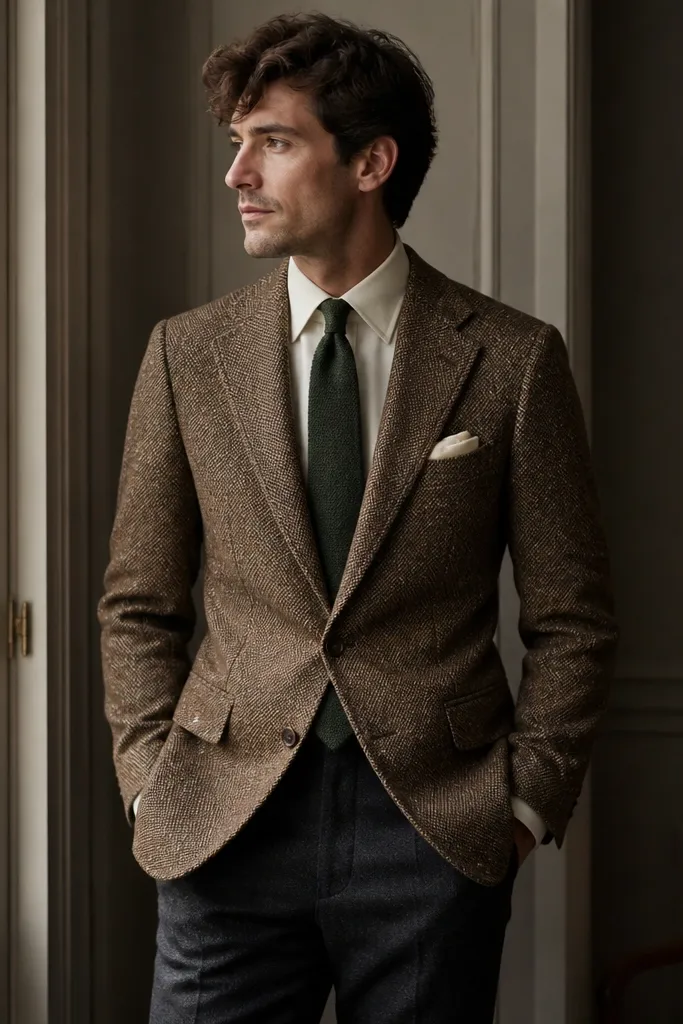
Tweed brings texture, and texture lets you play with color without losing formality. Cream and dark green make the brown tweed feel intentional, not messy. This is one of the few combos that works for winter weddings without looking like you tried too hard.
Choose a tweed jacket with a tight weave and visible flecking in tan and brown. The cream shirt should be thick cotton or oxford cloth so it matches the jacket's hand-feel. The dark green tie should be smooth and solid so it doesn't compete with the tweed.
Pro tipAdd a leather belt with a matte finish; shiny belts look out of place with tweed.
AvoidAvoid pairing tweed with a thin, shiny tie - the materials will fight.
11. Light gray suit with black shirt and silver tie
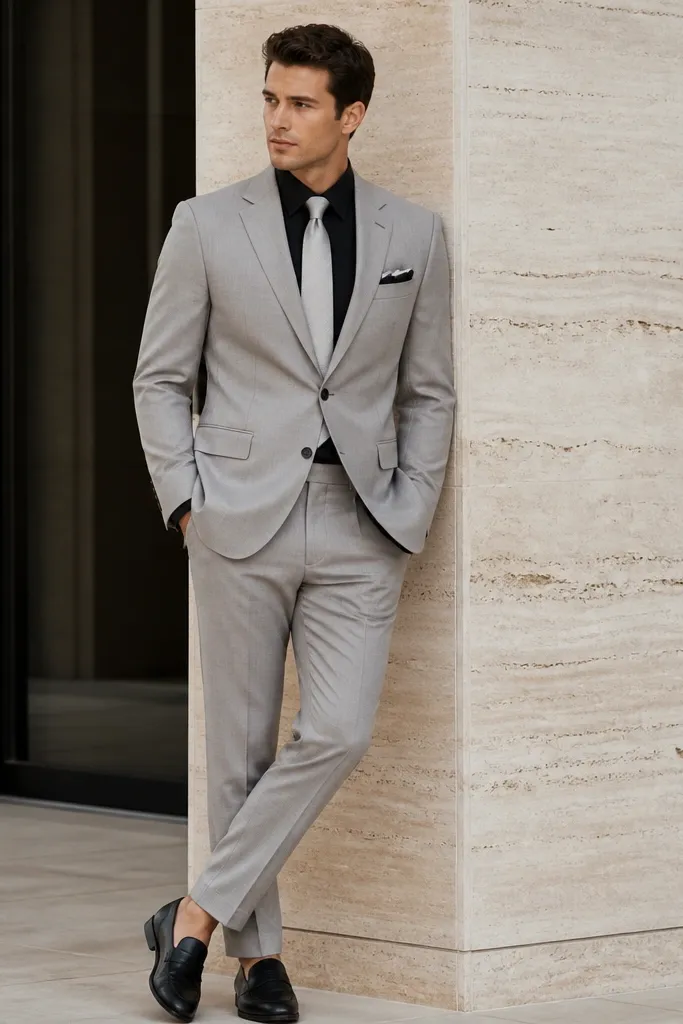
Light gray gives you softness, black shirt gives you contrast, and silver tie ties it together with a clean metallic note. This combo looks sharp at night because the black shirt makes the gray feel brighter and the tie adds a controlled flash. It's a good alternative when you want something different from white shirts.
Pick a light gray suit that's not too pale - medium light gray keeps it formal. The black shirt should be smooth and structured, not jersey. Choose a silver tie with a simple weave so it doesn't look sparkly.
Pro tipKeep accessories minimal: black shoes and a black belt make the palette feel deliberate.
AvoidAvoid black shirts with heavy wrinkles - light gray makes creases stand out.
12. Camel overcoat with navy suit and burgundy pocket square
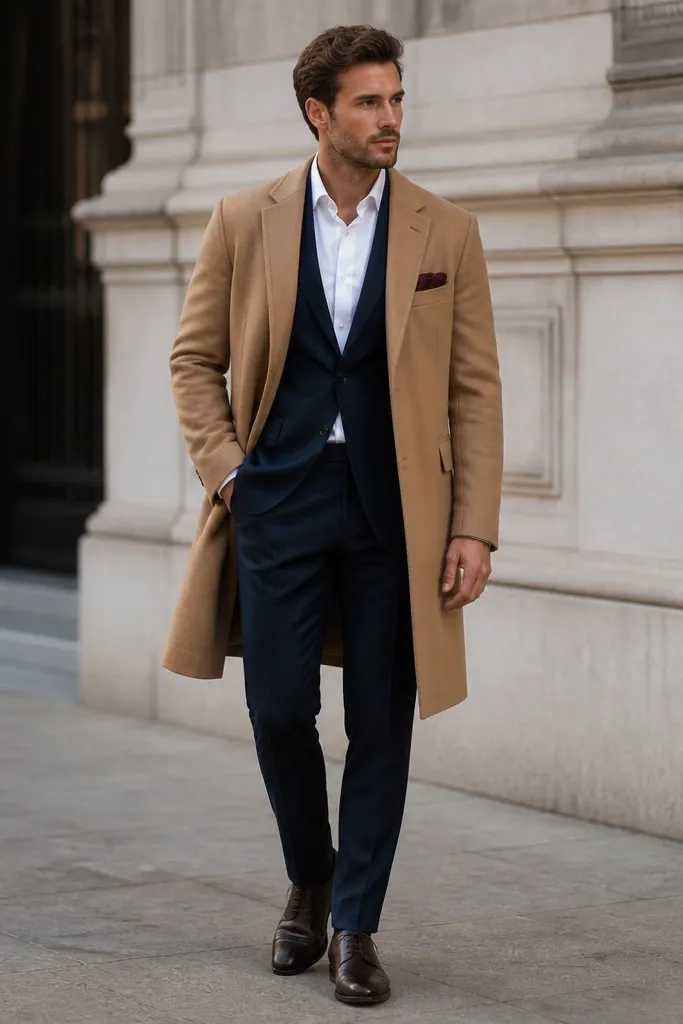
Camel over a navy suit looks expensive because it's warm without being loud. The burgundy pocket square adds a pop that matches the warmth of camel and keeps the look from feeling flat. This is my go-to for formal events when the weather forces an outer layer.
Use a camel overcoat with a wool or wool-cashmere blend so it holds shape. Underneath, keep the suit navy and the shirt crisp white. The pocket square should be a small fold - you want a hint, not a banner.
Pro tipMatch shoe color to the camel's undertone: dark brown works better than tan.
AvoidAvoid camel with an all-black interior - it can look like two separate outfits.
13. Deep emerald suit with white shirt and gold tie bar
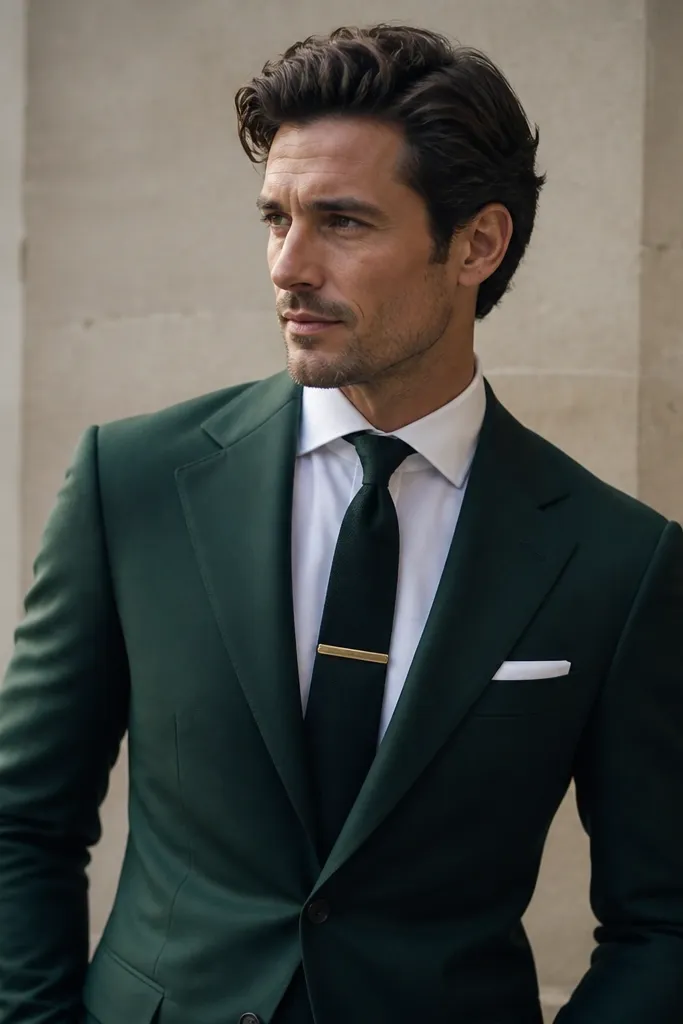
Emerald is one of the few colors that reads formal without needing a loud pattern. Keep the shirt white and the tie dark so emerald stays the star. The gold tie bar adds warmth and makes the outfit look dressed-up even from a distance.
Choose emerald that's deep - think jewel tone, not green grass. Use a white shirt with a crisp collar and a dark tie with matte finish. If you're using a tie bar, keep it centered and sized to the tie width.
Pro tipWear brown leather shoes or black if the venue is dark; either works as long as your belt matches.
AvoidAvoid emerald with a silver tie bar - the color contrast can feel off in photos.
14. Black tuxedo with white shirt and textured black bow tie
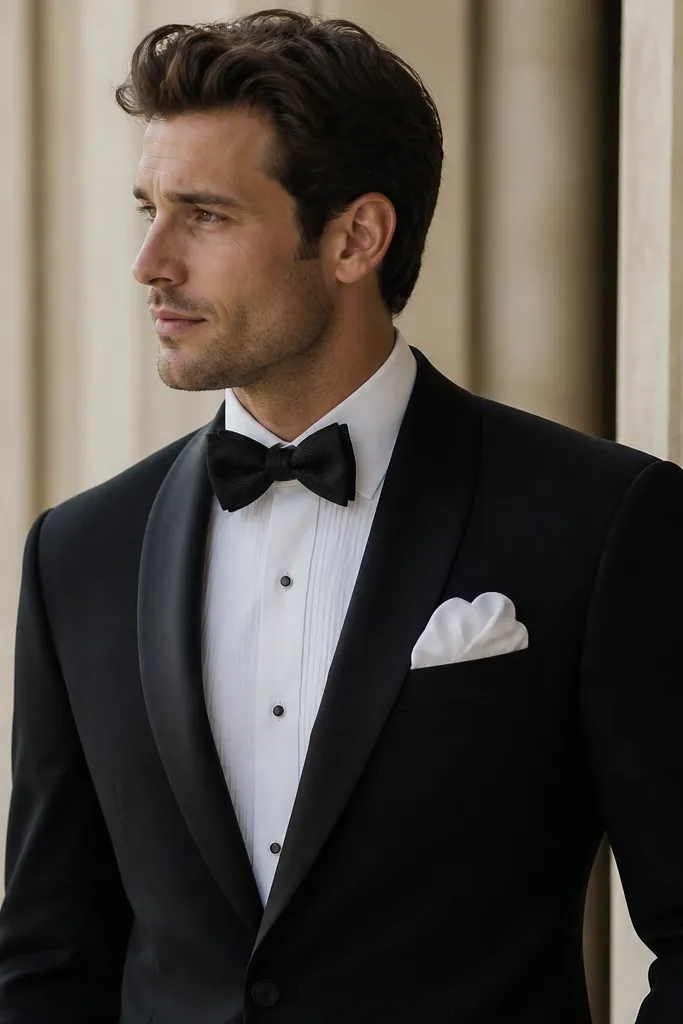
A tux is about contrast and finishing details. White shirt plus satin lapel gives you the classic formal look, while a textured black bow tie adds depth so it doesn't look like a flat costume. The whole combo reads polished at formal dinners and black-tie weddings.
Use a tux with satin or grosgrain lapels - the sheen is part of the look. Keep the bow tie black and textured (like a subtle pique). Pocket square should be white and structured so it stands up cleanly.
Pro tipIf you want extra sharpness, add cufflinks and keep your shirt front perfectly smooth.
AvoidAvoid matte lapels with a satin bow tie - the mismatch looks accidental.
15. Navy suit with gray shirt and teal tie
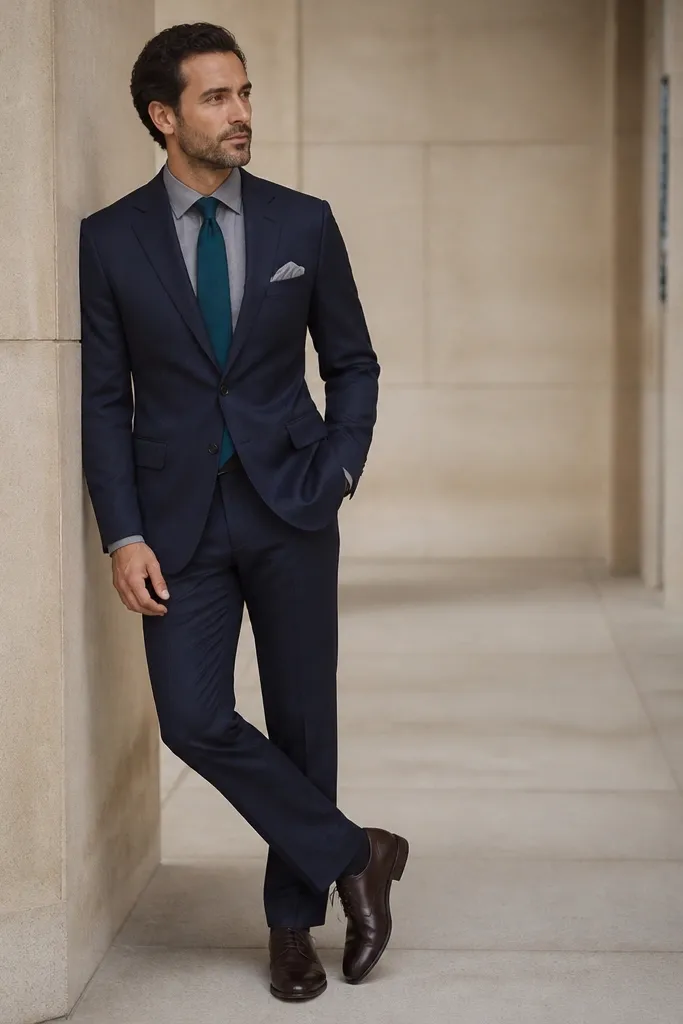
Gray and navy are calm together, and teal adds a modern accent that still reads formal. This combo works because teal sits between blue and green, so it doesn't clash with navy's cool tone. I've worn it to a corporate awards dinner and it looked more interesting than plain navy-and-white.
Choose a gray shirt that's medium, not pale - pale gray can blend into navy. The teal tie should be deep enough to feel evening-appropriate. Keep the pocket square light gray and plain, and make sure the shoes are dark brown or black, not tan.
Pro tipIf you're unsure about teal, start with a darker teal tie and keep everything else neutral.
AvoidAvoid bright turquoise - it reads casual under stage lights.
16. Charcoal suit with burgundy shirt and black shoes
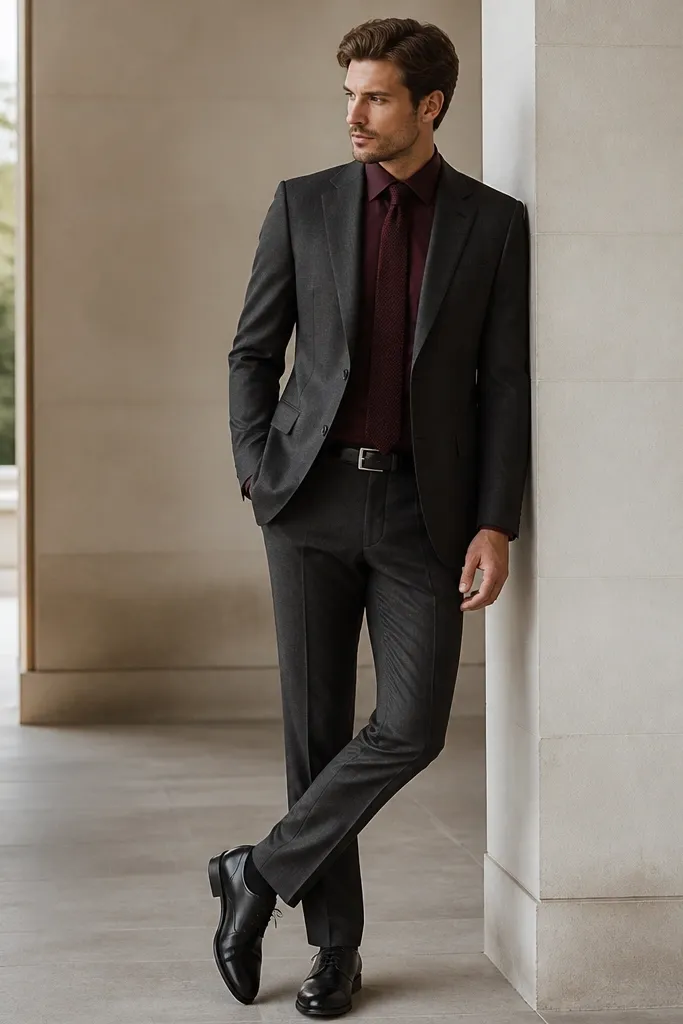
Burgundy shirt under charcoal looks rich without needing a patterned tie. The darker base keeps it formal, and burgundy adds warmth that doesn't look like a red suit. This pairing also hides sweat better than white shirts in warm venues.
Use a burgundy shirt with a matte finish and a collar that holds shape. If you add a tie, go dark burgundy knit so it blends rather than shouting. Black shoes and a black belt keep the palette clean.
Pro tipPick socks that match the burgundy shirt, not the charcoal - it makes the color feel intentional.
AvoidAvoid burgundy shirts that are too bright; they can look like a novelty top.
17. Navy blazer with tan chinos and a navy knit tie
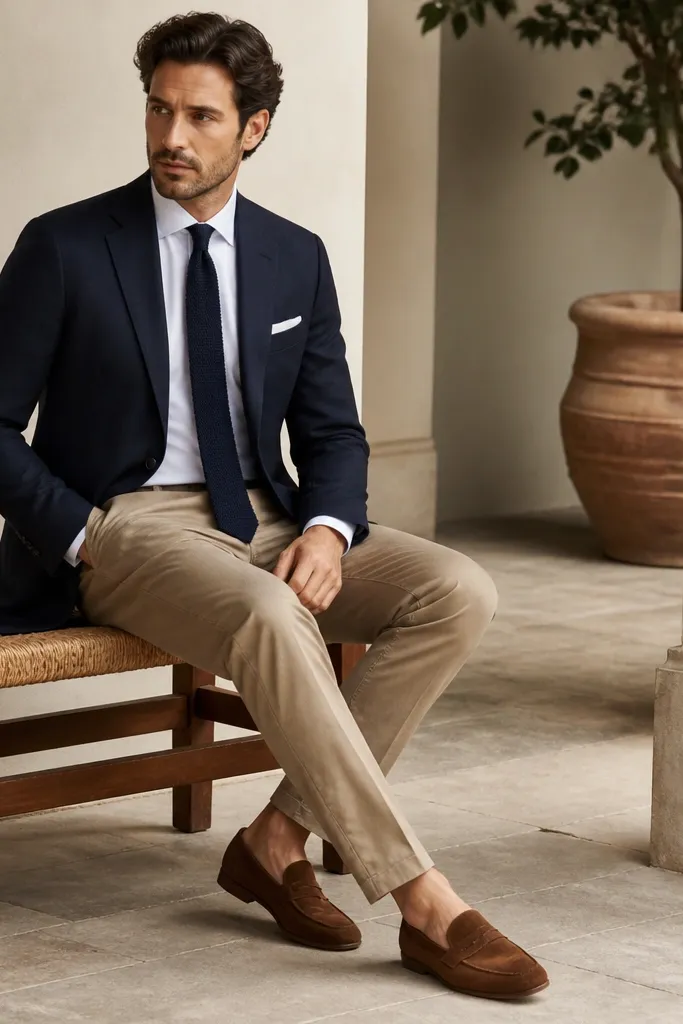
This is a "formal enough" palette for events that aren't strict black tie. Navy plus tan looks sharp, and a navy knit tie keeps the look relaxed but still dressed. I use this when the venue is a restaurant with warm lighting and people dress slightly more casual than the invite.
Use a blazer with structured shoulders and a clean sleeve finish. Tan chinos should be tailored and not too light - medium tan reads better than pale beige. Choose brown suede loafers to match the warmth.
Pro tipRoll the tie knot slightly tighter than usual so it sits high and looks intentional with chinos.
AvoidAvoid pairing tan chinos with a shiny silk tie - it clashes with the relaxed fabric.
18. White suit with light blue shirt and navy pocket square
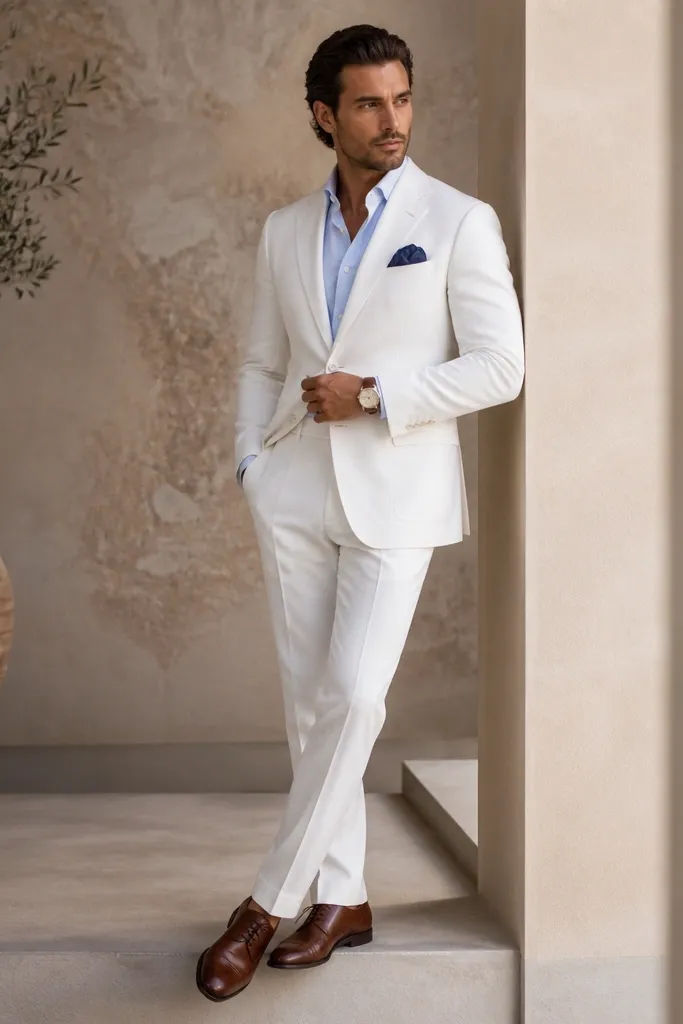
A white suit can look formal and modern if you keep the accents controlled. Light blue adds softness, and navy pocket square gives contrast without turning it into beachwear. Under daylight, it looks crisp; under indoor lighting, the pocket square keeps it from looking too plain.
Choose a white suit in a slightly textured fabric like seersucker or a subtle weave so it doesn't look like plain office wear. The light blue shirt should be smooth and crisp. Keep the pocket square solid navy with a straight or presidential fold.
Pro tipWear dark brown shoes instead of black if you want a softer, more summery formal vibe.
AvoidAvoid white on white with a white pocket square - you need one darker anchor.
19. Sand suit with dark brown shirt and cream tie
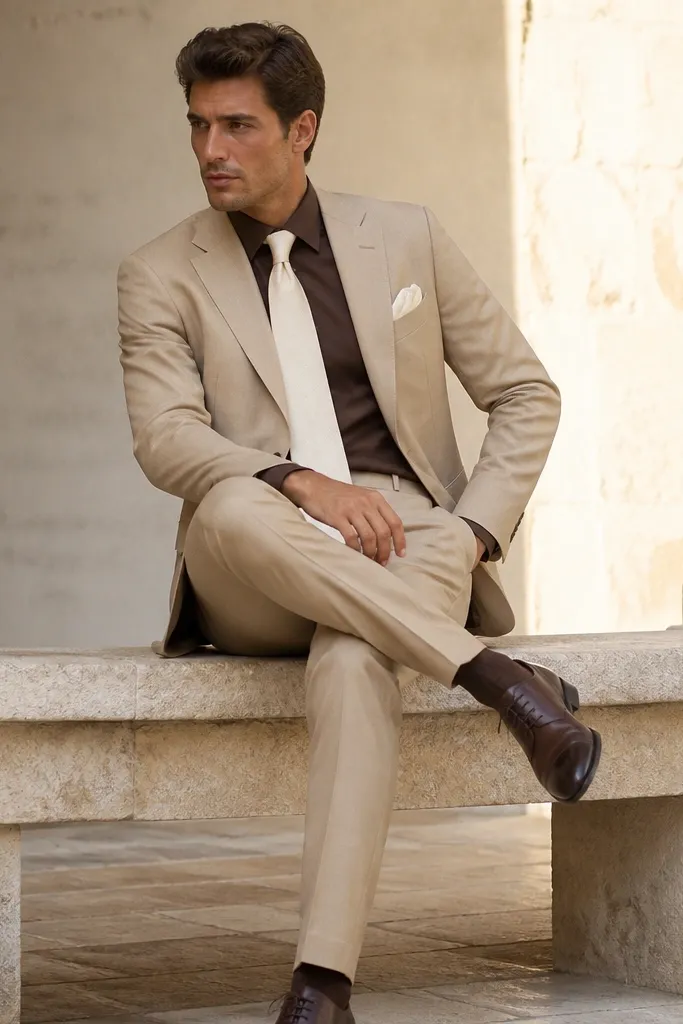
Sand plus dark brown feels warm and expensive, and the cream tie keeps it from turning too heavy. This palette looks great for fall events because it mimics natural tones. It also photographs well because the cream tie creates a clear focal point.
Pick a sand suit that leans beige, not yellow. The dark brown shirt should be matte and structured, like an oxford. The cream tie should be a knit or matte silk so it doesn't glare.
Pro tipMatch your belt and shoes to the dark brown shirt - it makes the outfit look built, not thrown together.
AvoidAvoid sand with a bright white shirt - it can look stark and less flattering.
20. Plum suit with black shirt and plum satin pocket square
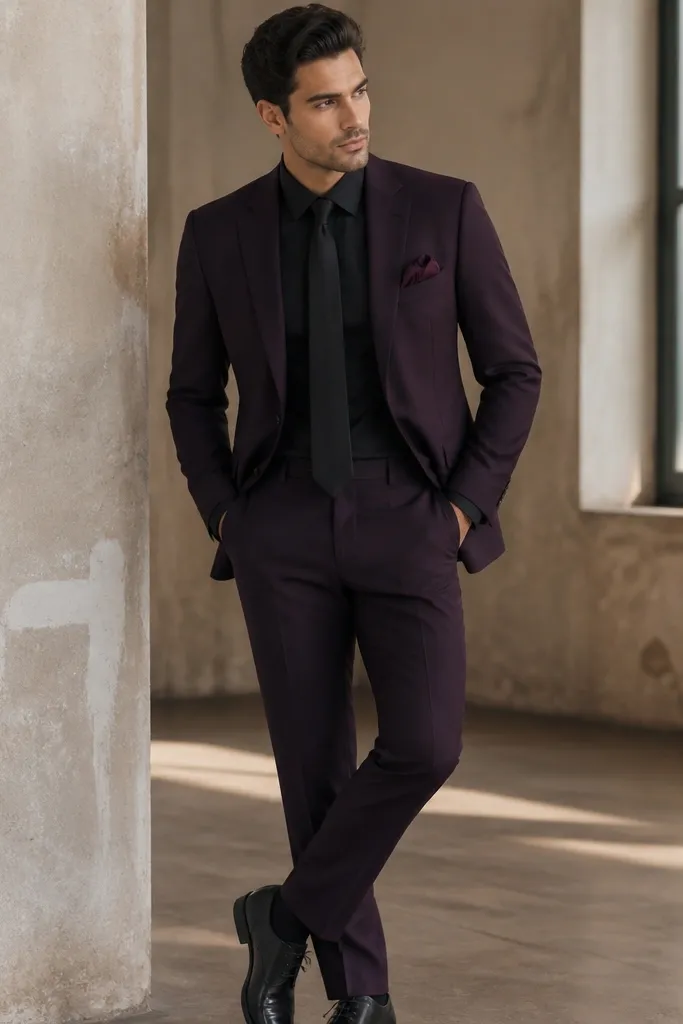
Plum is a softer alternative to burgundy, and black shirt makes it look extra sleek. The satin pocket square adds just a touch of shine so your outfit looks "event-ready" without adding another color. I wore this to a winter holiday gala and it looked dramatic in the best way.
Choose a plum suit with a matte finish. Keep the black shirt smooth and structured, and use a black tie or skip the tie with a clean collar. The satin pocket square should be one shade lighter or darker, not a different hue.
Pro tipIf you use satin anywhere else, keep the rest matte so it reads intentional.
AvoidAvoid plum with a gray shirt - it can make the plum look tired.
21. Navy suit with white shirt and red silk pocket square
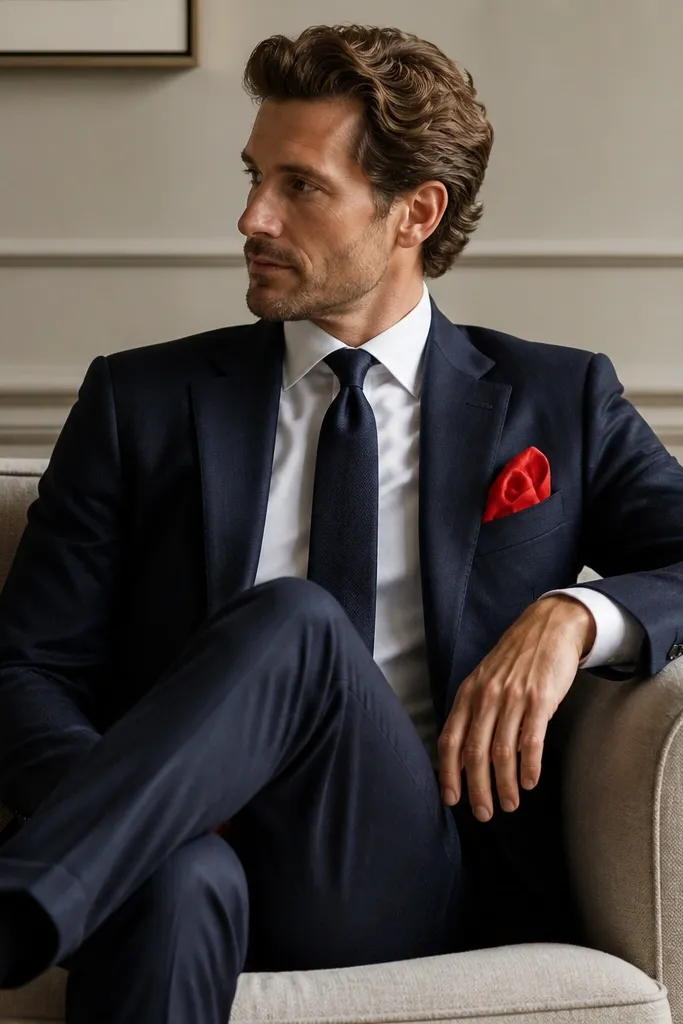
A red pocket square is the simplest way to add personality while keeping the suit formal. Navy and white are the structure; the red silk is the spark that shows up clearly in photos. This works when you want a classic suit but you're tired of black ties and boring whites.
Use a plain navy tie or no tie if your event is not strict black tie. The pocket square should be silk, not cotton, and the fold should be crisp. Keep red to one item only so it doesn't look like a costume.
Pro tipMatch your red to nothing else except maybe a watch strap edge or cufflink - let it stay as the accent.
AvoidAvoid red pocket squares with red ties unless you're doing a full matching set.
22. Olive suit with white shirt and black tie
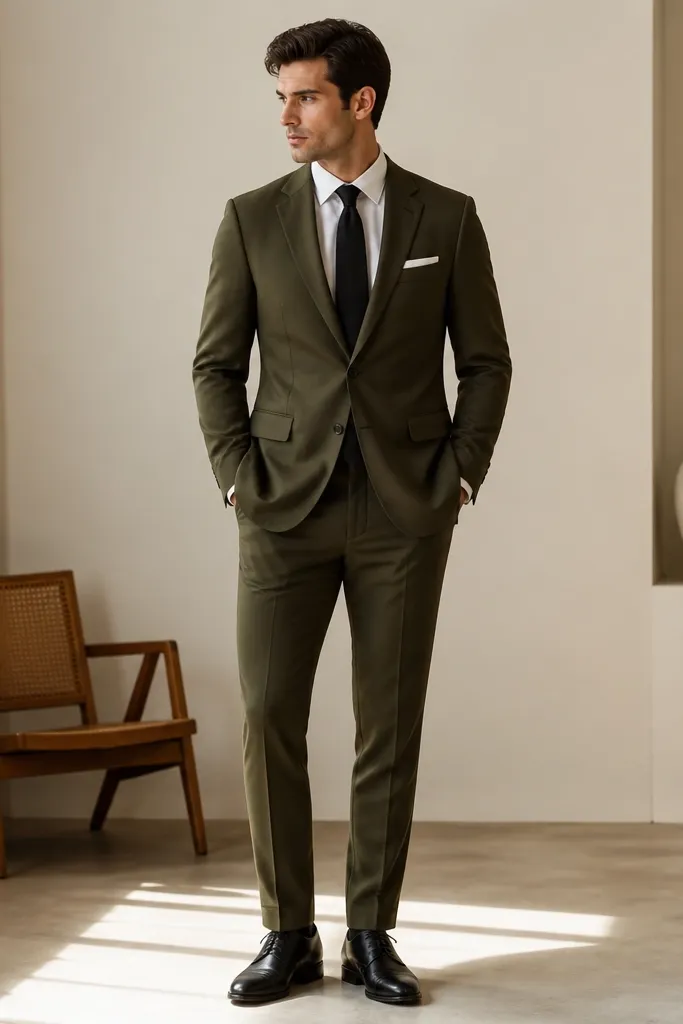
Olive plus white keeps the look clean, and black tie adds formality without fighting the green. This combo looks especially good in spring because olive reads natural and relaxed, but the black tie makes it event-appropriate. It's a strong alternative when you want color but don't want to go bright.
Pick an olive suit that's darker than your shirt - aim for a deep olive, not light khaki. The black tie should be matte so it doesn't look like a party accessory. Keep pocket square white and simple.
Pro tipWear black leather shoes with a slight shine and black socks that match the suit tone.
AvoidAvoid olive that's too light with black accessories - it can look like mismatched uniforms.
23. Gray check suit with white shirt and burgundy tie
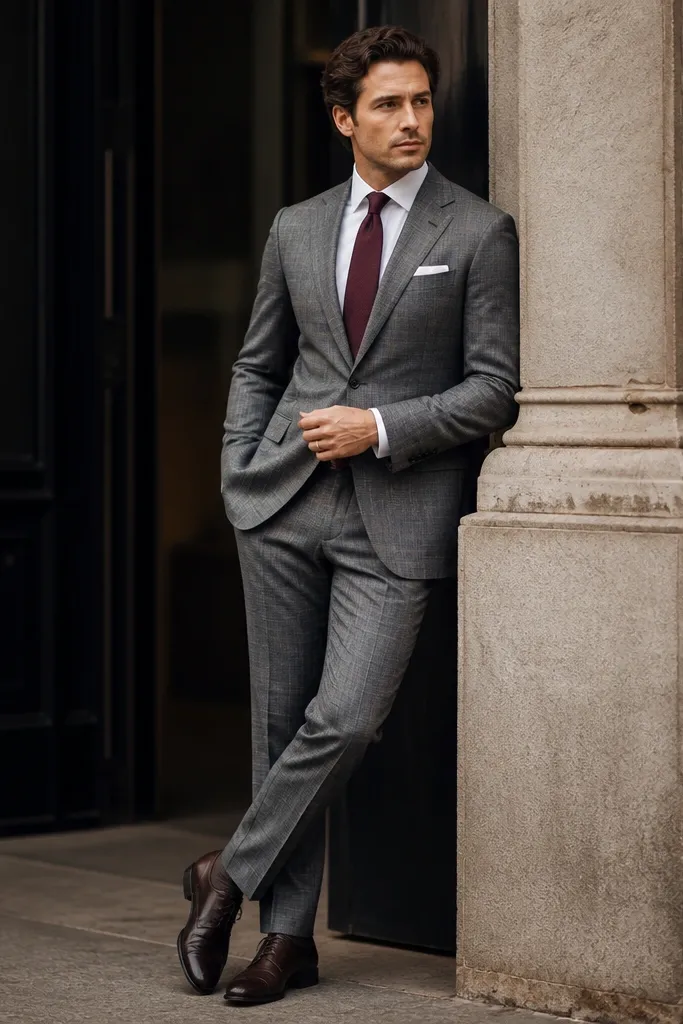
Checks add texture, so you can keep the palette simple and still look styled. White shirt keeps it crisp, and burgundy tie warms the gray so it doesn't look cold. In photos, the check pattern gives depth while the burgundy gives a clear focal point.
Choose a check that's small scale - big checks read casual faster. The burgundy tie should be solid and matte, not patterned, so it doesn't compete with the suit. Brown shoes work well here if the burgundy reads warm.
Pro tipIf the check has blue in it, go with burgundy rather than red; it looks more balanced.
AvoidAvoid pairing check suits with patterned pocket squares - it turns busy.
24. Black and gray tuxedo with white shirt and silver bow tie
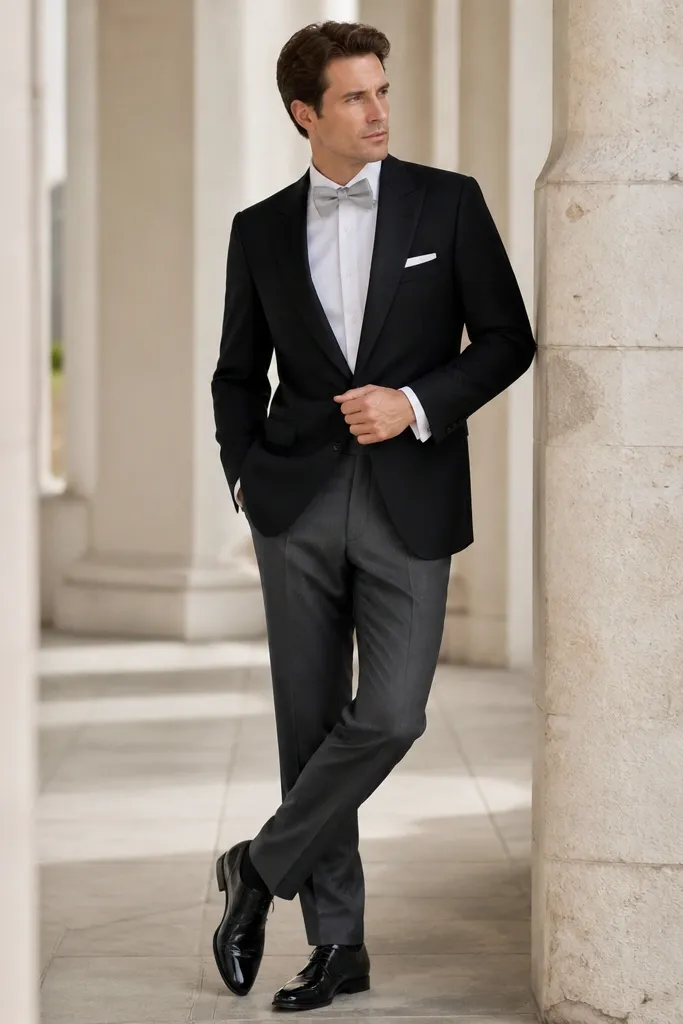
This combo plays with tux traditions without going full monochrome. The gray trousers break up the black and make the outfit look tailored and intentional. Silver bow tie adds a formal metallic note that looks great under flash photography.
Use a tux jacket with satin lapels and keep the trousers a true medium gray. The white shirt should be clean and smooth. Silver bow tie should be satin or grosgrain, and keep the pocket square white and structured.
Pro tipIf you wear patent shoes, keep your belt matte or matching black so you don't over-shine everything.
AvoidAvoid silver bow ties with overly bright silver cufflinks - too much sparkle reads costume.
25. Tan suit with navy shirt and white knit tie
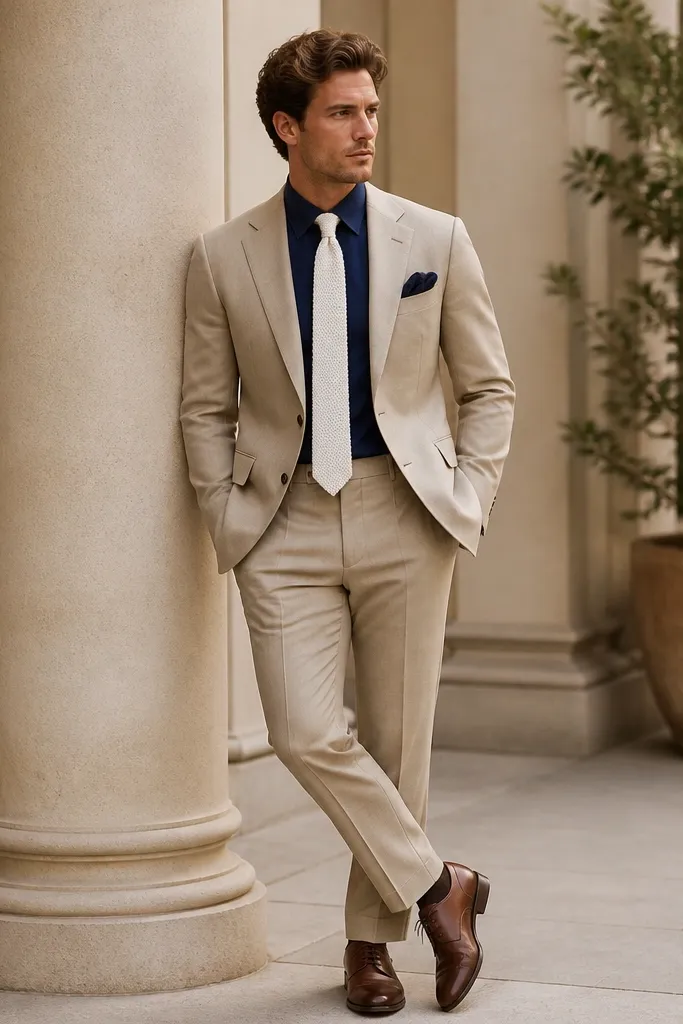
Tan and navy is a smart contrast that reads formal without being too loud. The white knit tie softens the look and adds texture, so the outfit doesn't feel flat. This is one of the best color combinations for daytime formal events because it looks fresh and still dressed.
Choose a tan suit in medium sand or light camel, not bright mustard. The navy shirt should be deep enough to show contrast under the suit. The white knit tie should be thick enough to hold shape and keep the knot from collapsing.
Pro tipMatch your pocket square to the navy shirt and keep it solid for a clean finish.
AvoidAvoid thin, watery knit ties - they look cheap fast against a tailored suit.