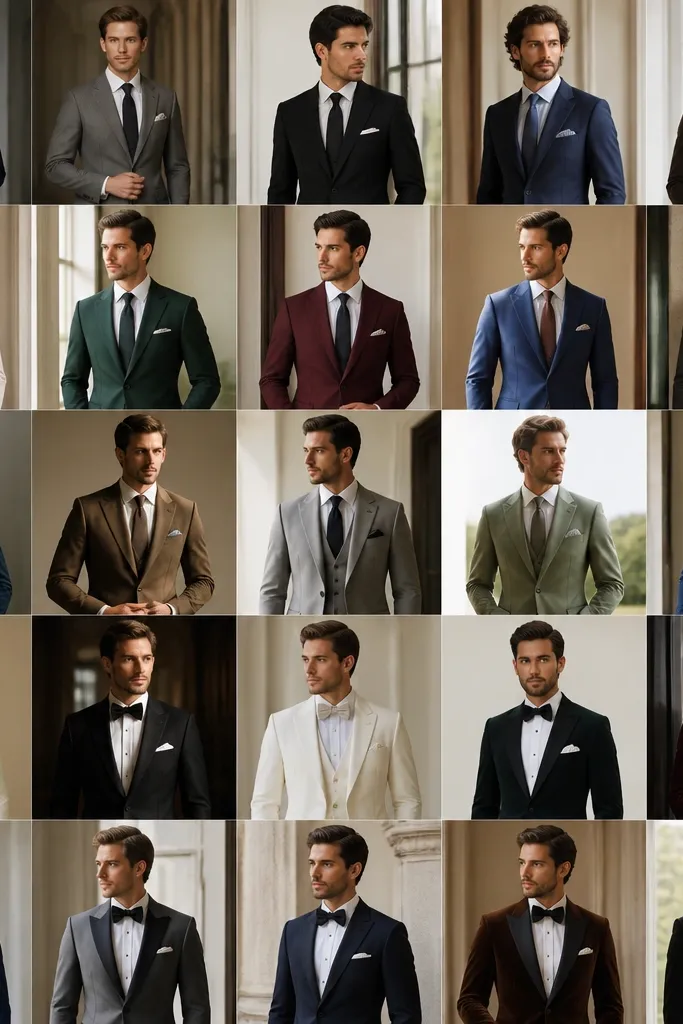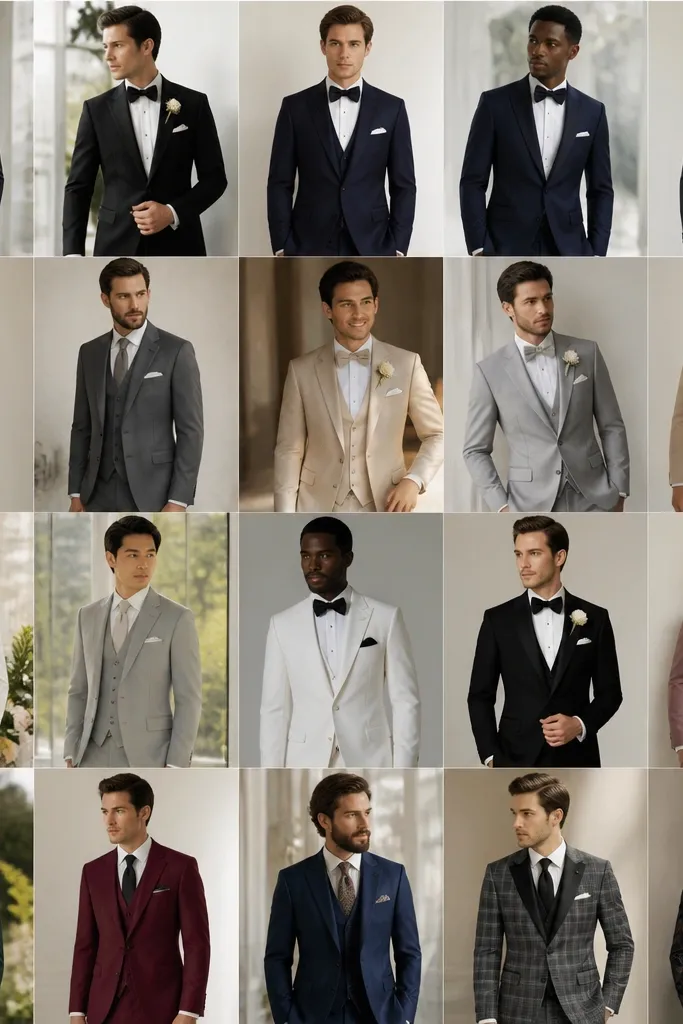
1. Charcoal Wool Three-Piece Suit
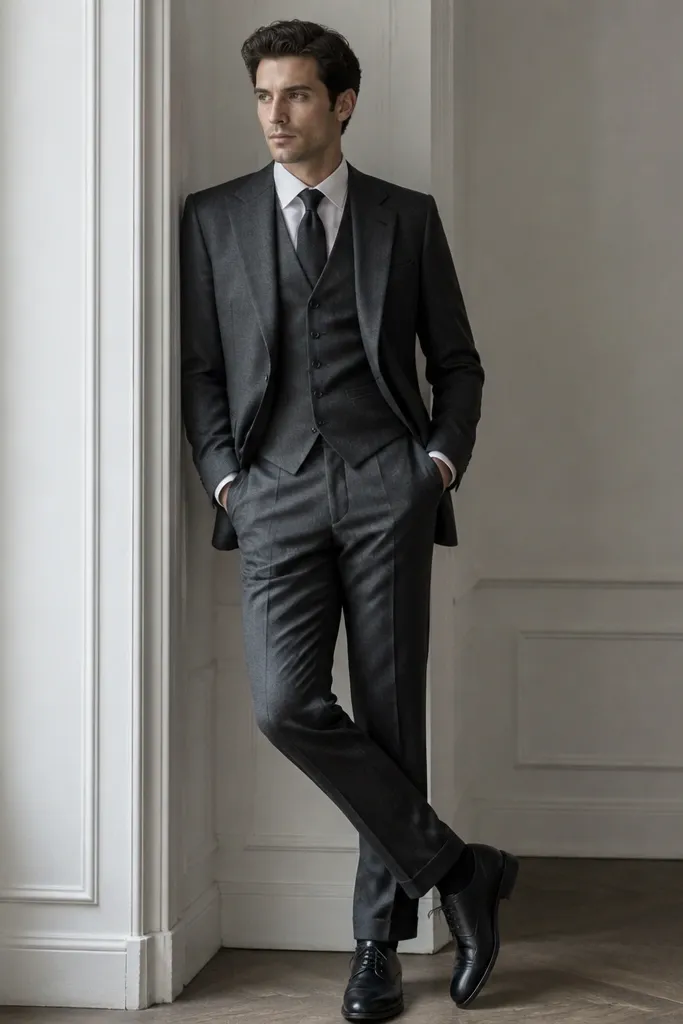
This is the fastest way I have found to get formal winter energy without feeling overdressed. Charcoal wool hides wrinkles, and the waistcoat creates a defined torso line so the suit does not hang loosely. The open jacket also frames your face through the white shirt and tie. I like it most in deep winter because quality wool does not reflect light the way cheaper polyester does. Look for a suit weight that feels substantial, not like thin office suiting. Button the waistcoat comfortably at the natural waist, then let the jacket fall cleanly over straight or slightly tapered trousers. Pair it with black leather Chelsea boots and a matte black overcoat if you are stepping outside.
Look for a dress weight that feels like suiting, not coat lining. Belt it at the natural waist, then let the skirt fall straight to mid-calf or slightly below. Pair with black leather Chelsea boots and a matte black overcoat if you're stepping outside.
Pro tipAdd a thin wool scarf in the same family of gray so everything looks planned, not layered by accident.
AvoidAvoid silky wrap dresses with visible sheen - they photograph cheap under indoor lighting.
2. Navy Suit with Camel Overcoat
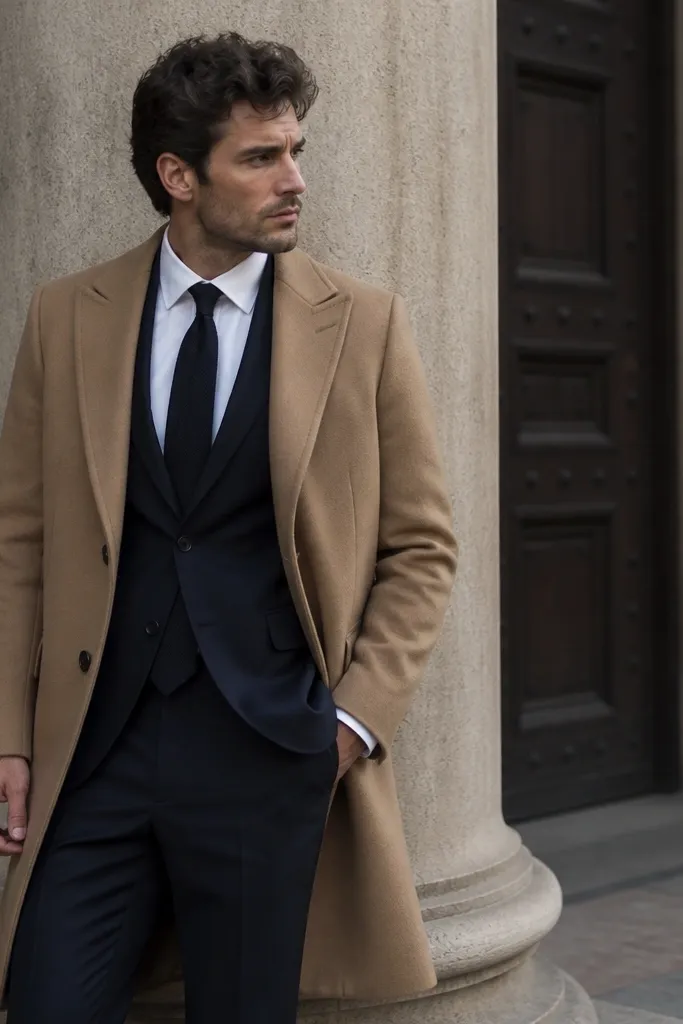
A navy suit can read highly formal when the construction is crisp. The camel overcoat keeps the overall color contrast clean, which matters because winter lighting exaggerates mismatched tones. Navy also stays flattering when skin appears paler in cold weather. This combination works when you want formalwear but still need enough comfort and warmth for dinner or speeches. Choose a suit fabric with structure-think wool twill with a little natural flexibility or a heavier worsted wool. Wear the overcoat comfortably; too tight makes the layers look bulky. Keep the lapels flat and the trouser line straight, then finish with dark brown or black lace-up boots.
Choose a fabric blend that has structure - think cotton twill with a bit of stretch or a heavier poplin. Belt it lightly; too tight makes it look like a uniform. Keep the collar flat and the hem straight, then wear it with dark brown or black lace-up boots.
Pro tipShow a small section of the shirt cuff-it makes the outfit look tailored even when the suit is simple.
AvoidSkip thin, see-through shirt-dresses - the layering will look patchy.
3. Black Turtleneck with Double-Breasted Suit
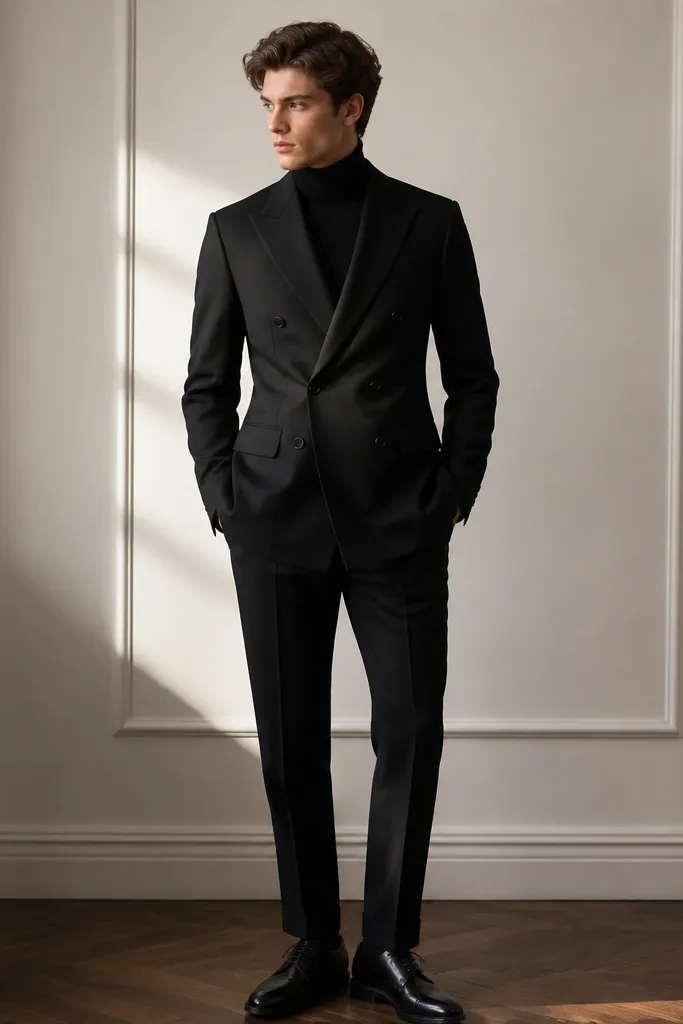
If you want formalwear that looks expensive, this combination does it. The monochrome shape reduces visual bulk and makes your torso line look longer, which is flattering when you are wearing winter layers. The black wool gives a controlled depth, so it reads “event” without looking like ordinary businesswear. I have seen versions of this at winter weddings where everyone else wore shirts and ties-it still held its own. Pick a suit with enough thickness that it does not collapse around the shoulders. Keep the turtleneck fitted but not tight, and make sure it sits smoothly under the jacket. Wear it with a long wool coat in black or charcoal and finish with black leather dress shoes or sleek boots.
Pick a dress with enough thickness that it doesn't cling to your legs. Keep the neckline modest and the sleeves fitted but not tight. Wear it with a long wool coat in black or charcoal and finish with black leather dress shoes or sleek boots.
Pro tipUse a matte black belt only if the trousers require one; otherwise, side adjusters keep the clean line intact.
AvoidAvoid jersey that looks like workout fabric - it kills the formal read.
4. Burgundy Velvet Dinner Jacket
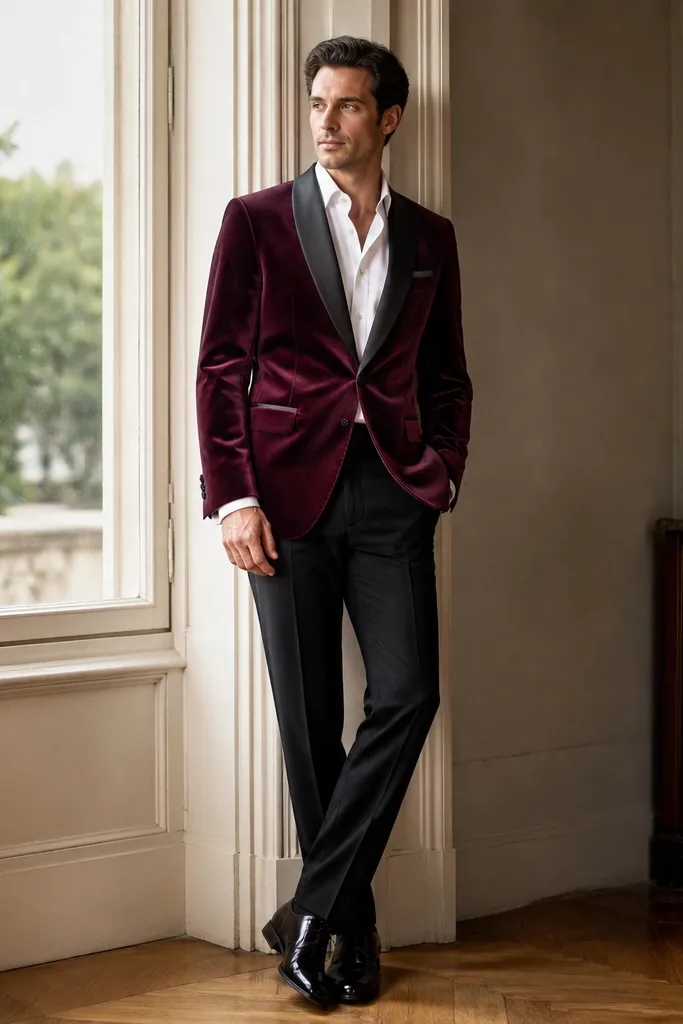
Burgundy velvet looks deep and expensive in winter because it works beautifully with darker daylight. The contrasting black trousers add movement and prevent the velvet jacket from feeling too heavy. Dense velvet keeps the shoulders structured, so the lapels stay neat as you sit and stand. This is my go-to for holiday dinners when you want something more interesting than black. Aim for a jacket length that covers the upper seat without extending too far, depending on your height. Let the black satin lapels sit flat so they frame the shirt cleanly. Pair it with polished black shoes and a black bow tie or pocket square to keep the color story cohesive.
Aim for a hem around mid-calf or just above, depending on your height. Let the slit sit at a comfortable point so you can walk without flashing. Pair with cognac leather boots and a dark green scarf or gloves to keep the color story cohesive.
Pro tipKeep the jacket unbuttoned while sitting so the velvet does not pull or crease around the waist.
AvoidSkip wraps that need constant adjusting - if it gaps when you raise your arms, it won't stay formal.
5. Dark Brown Tweed Suit
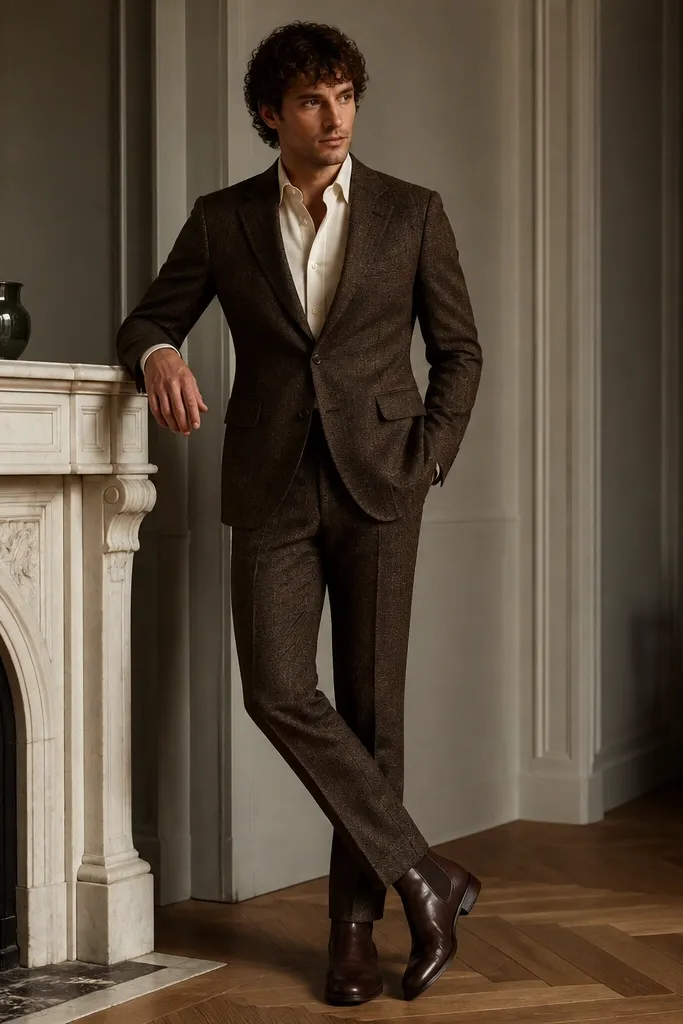
This is a strong winter color that still reads classy and controlled. The tailored waist is what makes it formal; without it, tweed suits can look like casual country clothing. Dark brown also hides minor texture differences in the fabric, so it looks good even if the weave is not perfectly smooth. I like it for holiday parties when you want to stand out without wearing a bright shade. Choose a suit with structured shoulders and clean lapels-it helps the tweed hold its shape. Keep the trouser hem straight and wear a waistcoat underneath only if you need additional warmth. Finish with dark brown boots and a matching coat so the textured suit remains the hero.
Choose a tunic with a structured shoulder and a clean collar - it helps the dress hold shape. Keep the hem straight and wear it with slim dark trousers underneath only if the slit is high. Finish with black boots and a dark coat so the red stays the hero.
Pro tipAdd a slim leather belt in dark brown so the waist and trouser line stay visually crisp.
AvoidAvoid tunic dresses with sloppy hems - uneven length makes the whole outfit look casual.
6. Midnight Blue Suit with Wool Overcoat
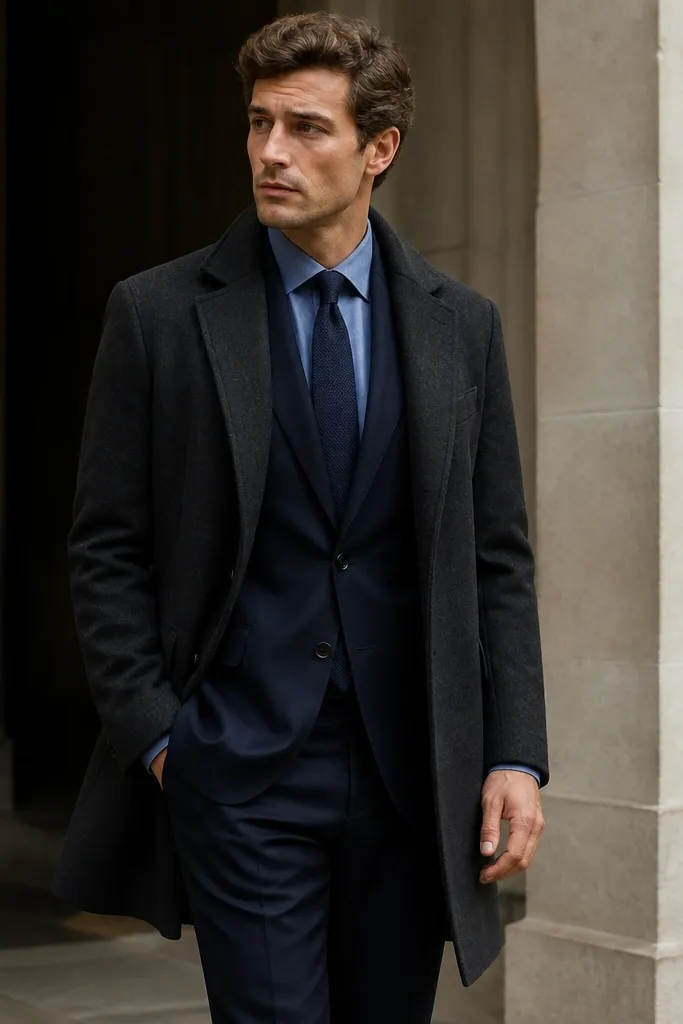
Thick wool can look formal when it is dense and has clean finishing. Structured cuffs give shape and keep the sleeves from bunching, which is where winter suits often look sloppy. Midnight blue photographs well in winter because it does not make your skin look washed out like very pale gray can. This combination is comfortable enough for long dinners but still looks properly dressed up. Pick wool that has a little flexibility but returns to shape when you pinch the fabric-that is the difference between “quality wool” and a baggy mistake. Keep the shirt and tie simple, and let the overcoat reach at least the knee. Wear the outfit with a dark wool scarf and polished ankle boots.
Pick a knit that has some stretch but snaps back when you pull the fabric - that's the difference between "nice knit" and "baggy mistake." Keep the neckline simple, and let the hem reach at least mid-calf. Wear with a long wool coat and dark ankle boots.
Pro tipSteam the suit and overcoat before wearing; heavy wool creases settle quickly when the fabric is thick.
AvoidAvoid thin knit that clings at the hips - it reads casual and shows lines.
7. Forest Green Three-Piece Winter Suit
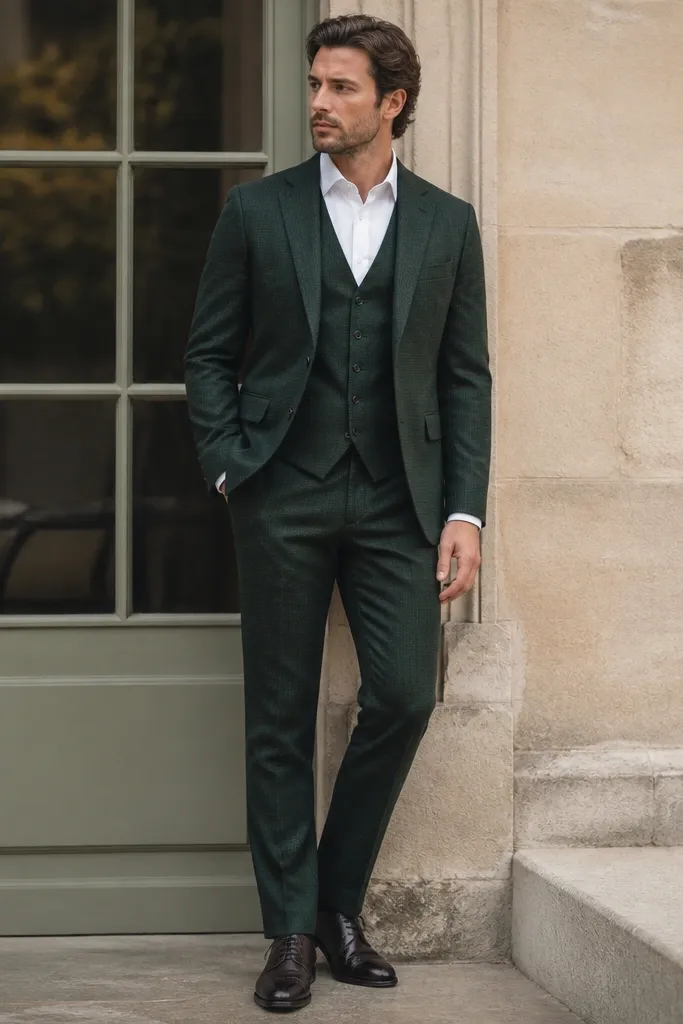
A subtle weave is how you get depth without using bright colors. The forest green surface catches winter light, so the suit looks more interesting than a plain black outfit. It also hides small imperfections in fit because the fabric has visual texture. I have found it works especially well for indoor events where the lighting is flat. Choose a wool fabric with a tight weave so it does not feel scratchy. Keep the silhouette streamlined-straight or lightly tapered-so the color and waistcoat do not overwhelm you. Pair it with matte black boots and a simple coat; do not add competing textures like heavy suede.
Choose a jacquard with a tight weave so it doesn't feel scratchy. Keep the silhouette streamlined - straight or slight A-line - so the pattern doesn't overwhelm. Pair with matte black boots and a simple coat; don't add competing textures like suede on suede.
Pro tipMatch your belt to the darkest tone in the suit so the green fabric remains the focus.
AvoidSkip loud, high-contrast jacquard - it reads costume at winter weddings and dinners.
8. Black Suit with Long Charcoal Coat
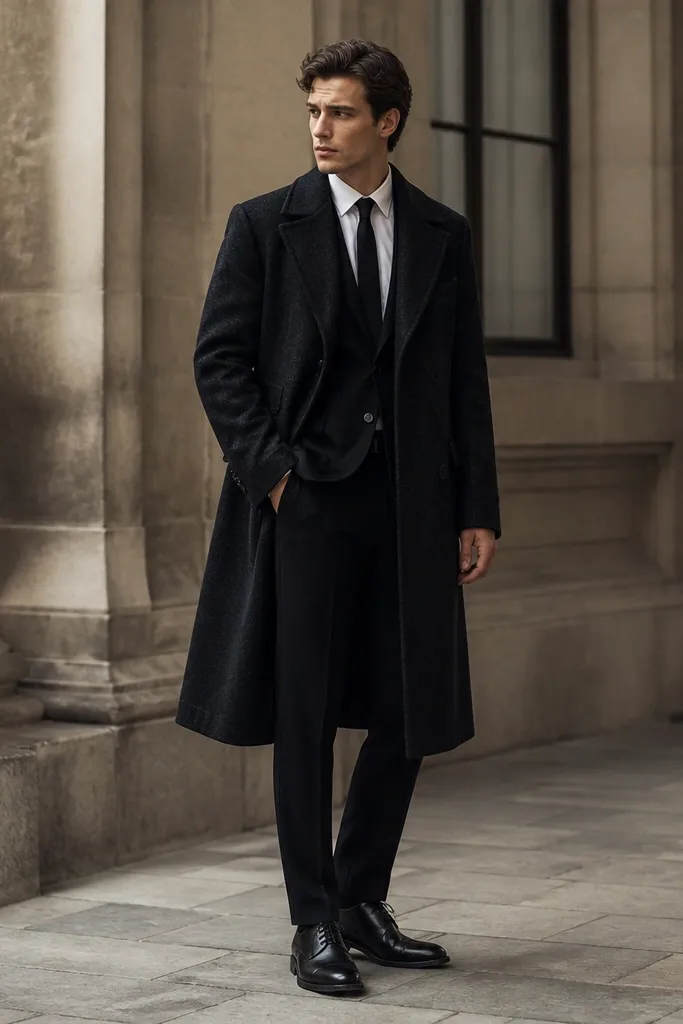
A charcoal wool coat looks warm and refined even when the rest of your outfit is black. The long structured shape makes the combination feel like formal winterwear instantly. Dense wool has a clean drape and does not lose its shape like lighter blends, so it holds up through repeated winter wear. This is the one I choose when I need to look polished but still want comfort in cold air. Look for a coat that closes securely over the suit-you want comfortable overlap, not strained buttons. Keep the hem below the knee so the long layer does not feel too casual. Pair it with black leather gloves and boots to maintain the dark, controlled palette.
Look for a wrap that closes securely at the waist - you want overlap, not a flimsy tie. Keep the hem below the knee so the color doesn't feel too casual. Pair with black or dark brown leather gloves and boots to ground the warmth.
Pro tipWear a thin wool scarf underneath in black or charcoal for a clean neckline stack.
AvoidAvoid thin camel knits - they show every crease and look worn fast.
9. Gray Flannel Suit with Black Turtleneck
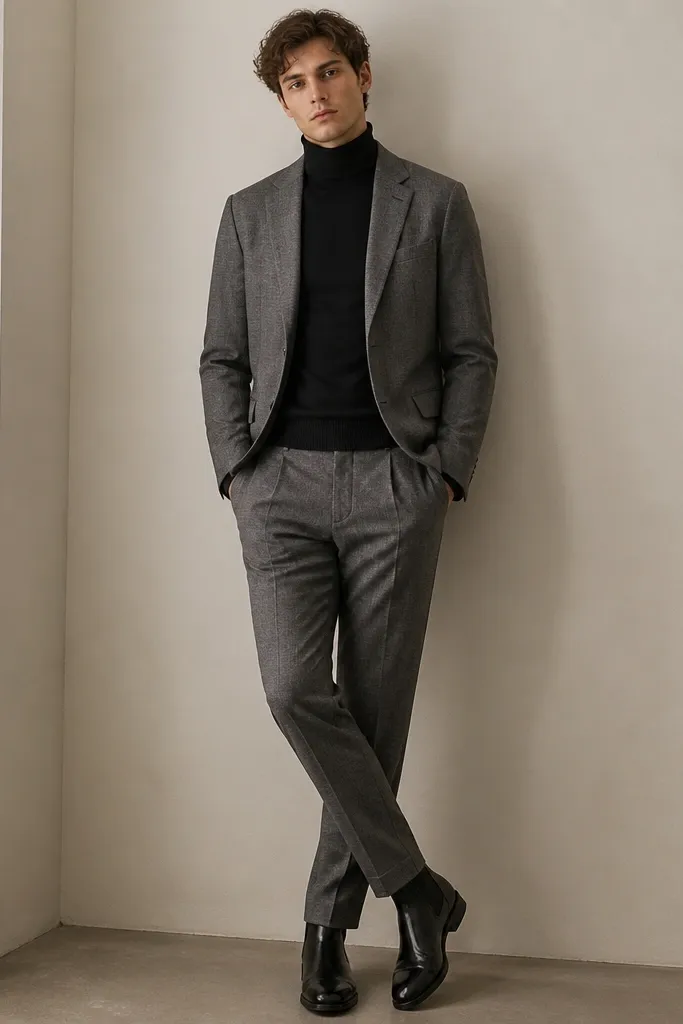
Flannel reads winter formal because it has texture even when the color is simple. Gray flannel is especially wearable because it does not look as severe as an all-black suit. The tapered trouser hem keeps it modern, and the black turtleneck makes it feel intentional for cold weather. I wore a similar combination to a December banquet and received compliments from people in full tuxedos. Pick flannel with a dense, smooth surface so it does not look fuzzy. Keep the turtleneck minimal and avoid heavy accessories. Pair it with black boots and a matte black coat; add a silver watch to catch the light without looking flashy.
Pick velvet with a dense pile so it doesn't look flat. Keep the neckline minimal and avoid heavy embellishment. Pair with black boots and a matte black coat; add a silver watch to catch light without going flashy.
Pro tipBrush the flannel gently with a soft clothes brush before leaving home so the surface looks even
AvoidSkip short velvet dresses - they skew party-only and feel off for winter events.
10. Camel Wool Suit with Brown Dress Shoes
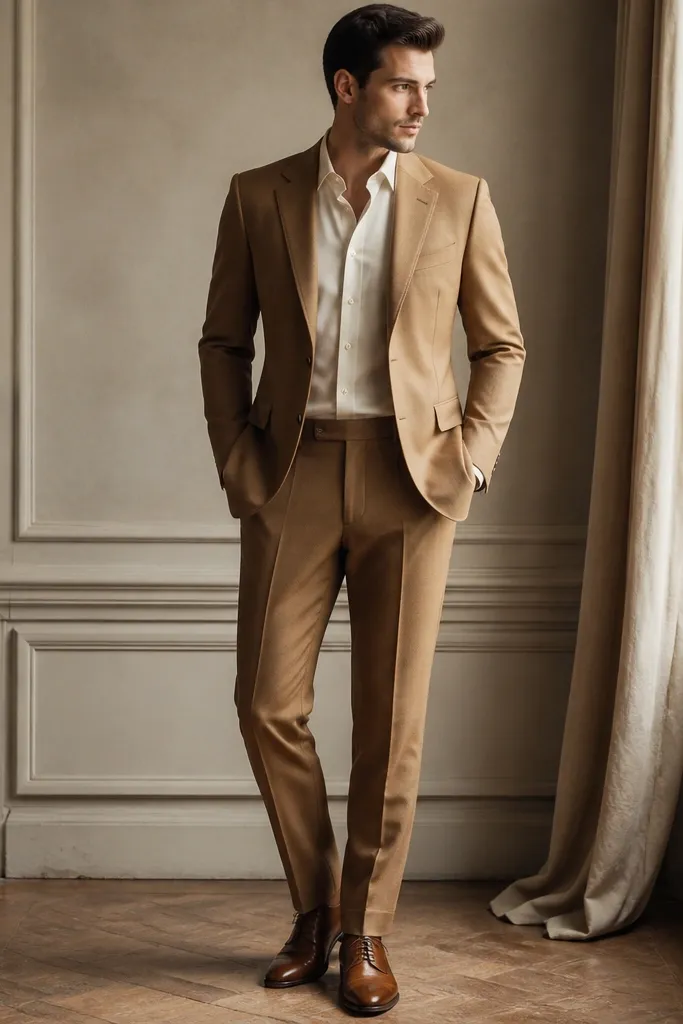
Camel looks richer than light beige and still feels classic for winter. The wool gives you a polished surface that looks good under chandeliers, and the tailored waist keeps the silhouette sharp. Cuff details matter because they frame your hands-and hands appear in photos constantly. This suit works for holiday parties, formal dinners, and events with a dress code that says “formal” without being strictly black tie. Choose a suit with natural waist shaping so it does not balloon around the torso. Keep the trousers full length with a clean break for a formal finish. Wear it with brown leather shoes and a camel or dark brown overcoat, depending on how cold it is.
Choose a dress with a waist seam or a belt so it doesn't balloon around the torso. Keep the hem at or below the knee for a formal read. Wear with black leather shoes and a burgundy or black overcoat depending on how cold it is.
Pro tipAdd a thin brown turtleneck only for a more relaxed event; keep the ivory shirt for formal ceremonies.
AvoidAvoid glossy satin that looks like cheap gift-wrap - it shows wrinkles and looks plastic.
11. Navy Pinstripe Suit with Peacoat
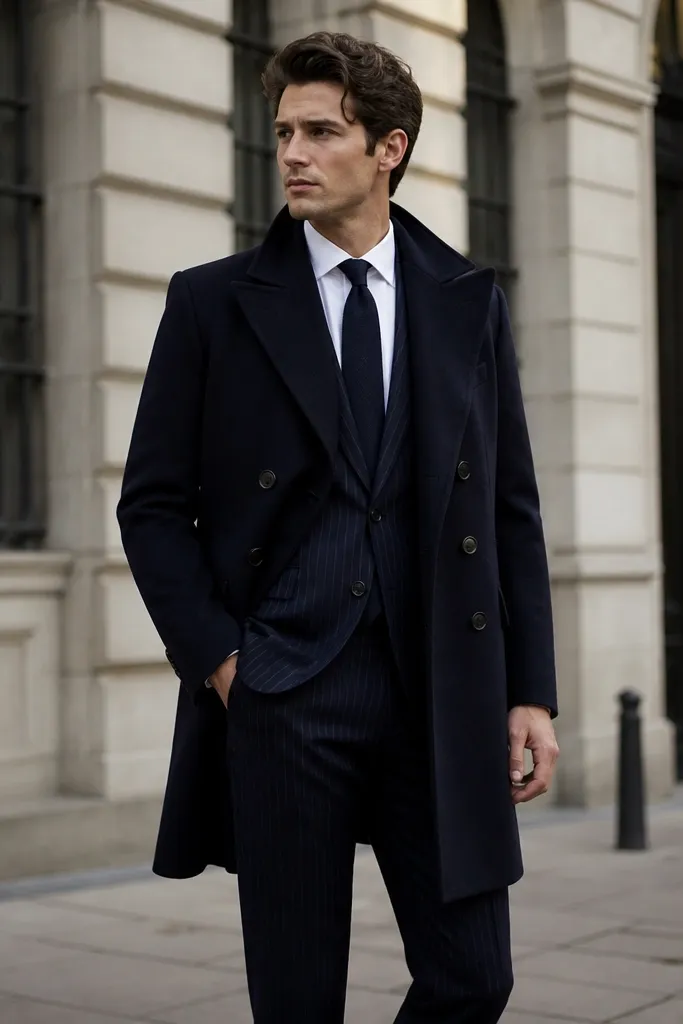
Pinstripe patterns can look formal in winter when the spacing is narrow and the color is restrained. Navy pinstripes give texture without turning the outfit into casual businesswear. Notch lapels are important because they read as classic tailoring rather than costume styling. I like this for winter weddings because it stands out from plain black while still looking appropriate. Pick pinstripes that appear subtle from a few feet away; if you can see thick lines across the room, the suit may not read as refined. Keep the shirt and tie neutral beneath the jacket. Pair it with black boots and a solid navy peacoat to keep the pattern controlled.
Pick a check that's subtle from a few feet away; if you can see big blocks from across the room, it won't read formal. Belt it at the waist and keep your underlayer neutral. Pair with black boots and a solid charcoal coat to keep the pattern controlled.
Pro tipMatch your belt to the darkest stripe tone so the pattern does not split the silhouette.
AvoidAvoid oversized checks - they make the dress look like a scarf turned into clothing.
12. Black Velvet Tuxedo with Bow Tie
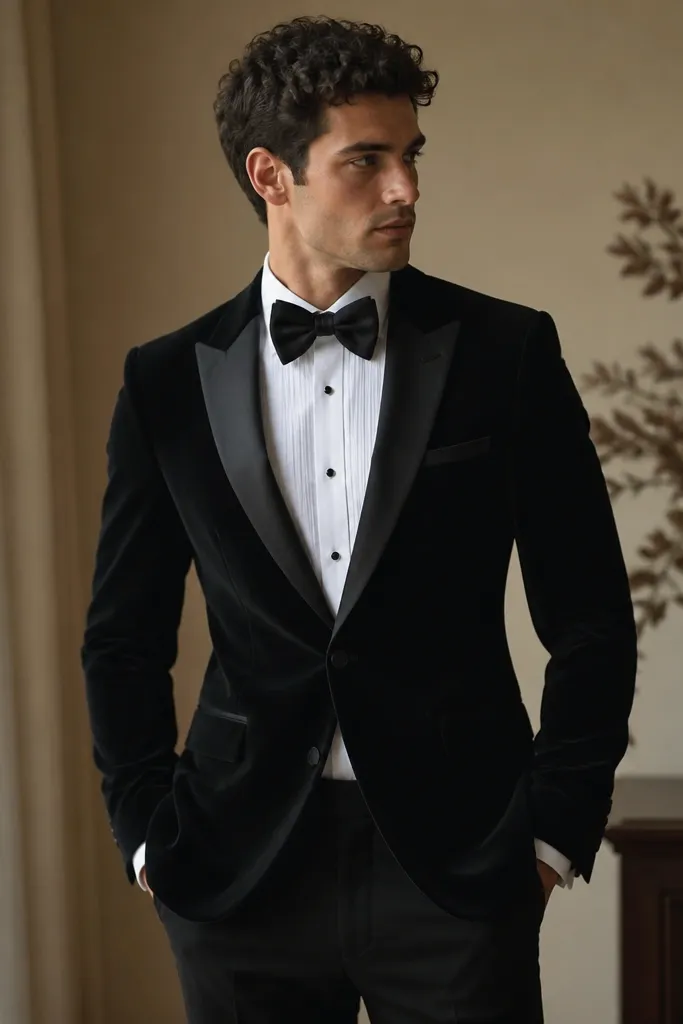
Velvet gives structure and visual depth, which is perfect when winter outfits can otherwise look flat. The white shirt brightens your face in cold-weather lighting, and the black bow tie keeps the outfit controlled and formal. A fitted waist creates a clear body line, so the tuxedo reads intentional instead of shapeless. This one is ideal for evening winter events like gala dinners or formal wedding receptions. Choose velvet that looks like formal tailoring, not upholstery; the surface quality matters. Keep the trousers matte and wear slim black shoes so the velvet does not reflect too much light. Add a black overcoat and simple gloves in the same dark tone.
Choose a fabric that looks like suiting, not upholstery; the hand matters. Keep the hem mid-calf and wear slim black boots so the cream doesn't bounce too much. Add a black overcoat and a simple beanie in the same black tone.
Pro tipUse black accessories only-bow tie, shoes, belt or side adjusters-so the velvet remains crisp instead of cluttered.
AvoidAvoid cream fabrics that stain easily - you'll regret it after one snowy day.
13. Chocolate Brown Suit with Cream Shirt
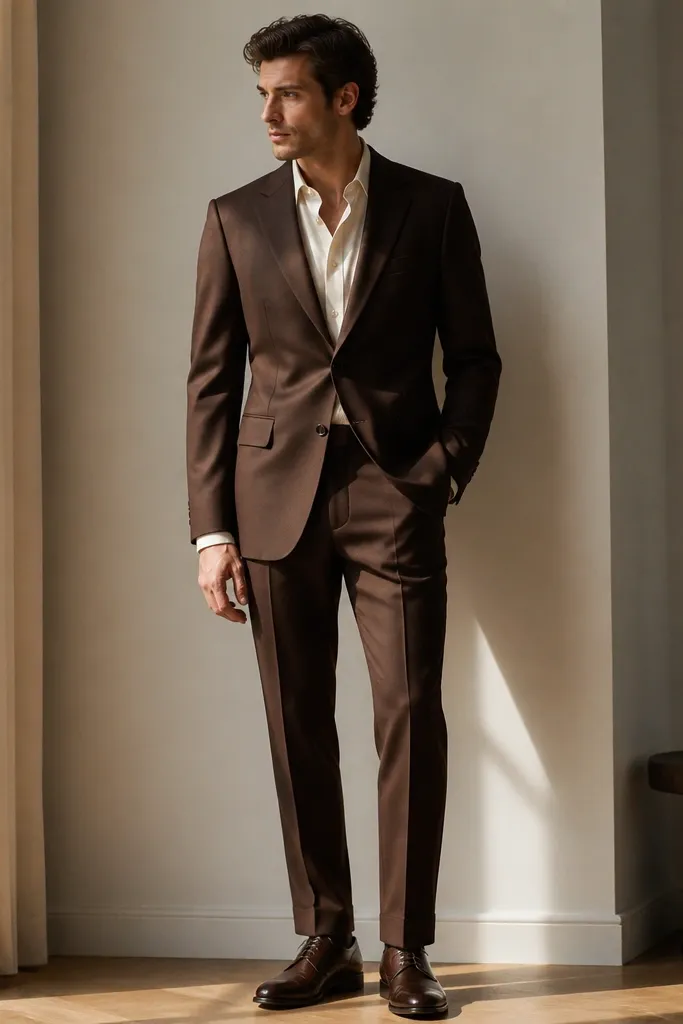
The cream shirt gives winter warmth without turning the whole outfit into a costume. Because it is limited to the shirt, the rest stays clean and formal. The fitted brown suit keeps the silhouette flattering, and the matte base fabric prevents the cream from looking like a separate piece added at random. This is ideal for evening events where you will be photographed close-up. Pick a suit with a secure front closure so the jacket does not pull or gape. Keep the cream shirt smooth and lightly textured so it does not look like casual knitwear. Pair it with brown shoes and a dark coat; avoid adding other contrasting colors.
Pick a dress with a secure wrap closure so the neckline doesn't gape. Keep the fur trim subtle and short-pile so it doesn't look like a Halloween jacket. Pair with black boots and a dark coat; avoid adding other animal textures.
Pro tipPress the shirt collar once and keep it protected-the cream fabric shows folds and marks quickly.
AvoidAvoid long fur panels down the front - that reads winter party, not formal.
14. Slate Gray Double-Breasted Suit
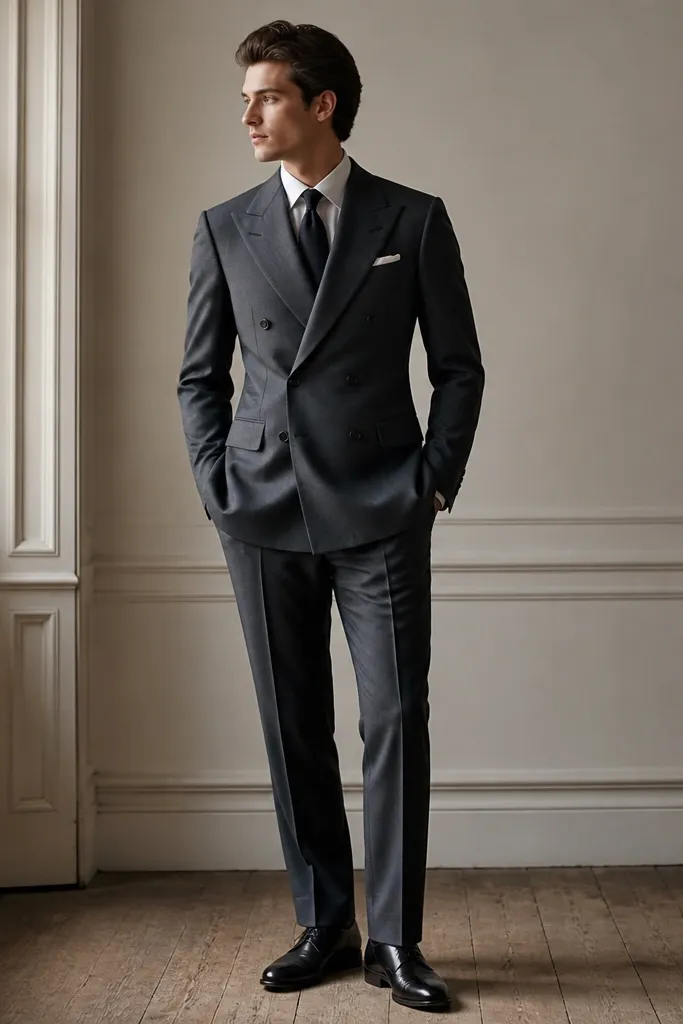
Slate gray wool can look formal when it is cut with intention. The tailored side shaping slims the body line and keeps the fabric from looking bulky over winter layers. Slate gray is a smart choice when you want a neutral color that still looks grounded and grown-up. I have worn this style to indoor holiday parties where everyone else chose black-it photographed well without looking loud. Choose wool that is dense and matte, not shiny like inexpensive suiting. Keep the lapels structured and the sleeves close to the arm. Pair it with black leather shoes and a charcoal or black coat to balance the cool gray.
Choose jersey that is dense and matte, not shiny like clubwear. Keep the neckline structured and the sleeves close to the arm. Pair with brown leather boots and a cream or camel coat to balance the green.
Pro tipAdd a structured overcoat instead of a puffy jacket; the contrast makes the double-breasted suit look dressier.
AvoidSkip shiny jersey - it makes the dress look like it belongs at a nightclub, not a formal event.
15. Olive Wool Blazer with Charcoal Trousers
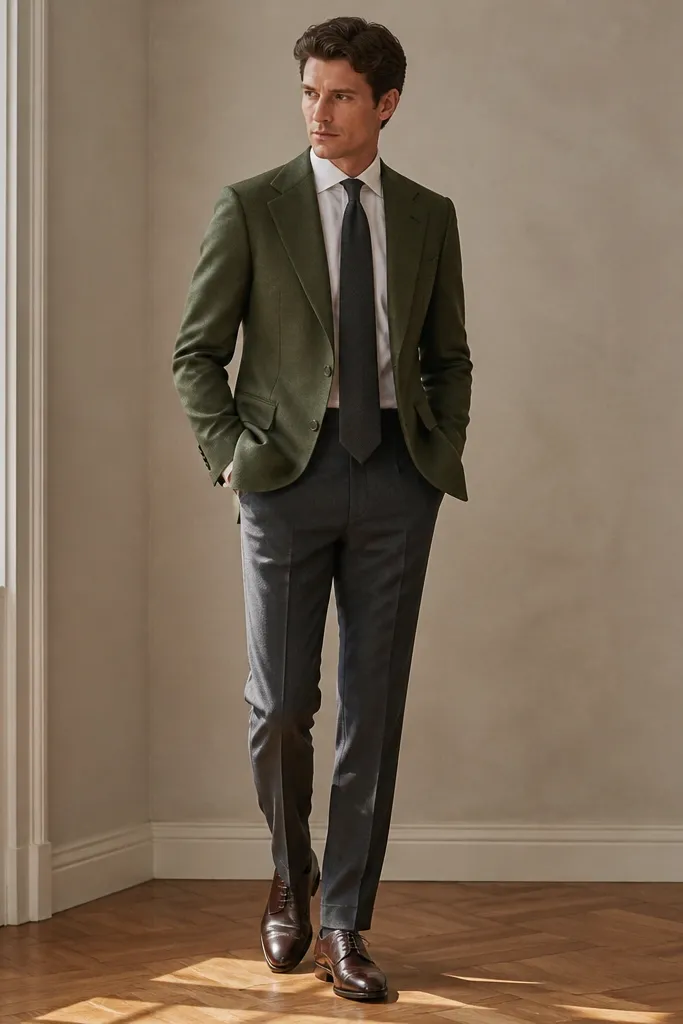
A removable tie lets this outfit shift from formal dinner to ceremony-level dressed up. Olive is warmer and more distinctive than navy, and it looks great in winter indoor light where darker colors can appear flat. The separate blazer and trousers also let you control how “dressy” you feel without buying another full suit. It is a good option when you want a formal look but dislike feeling boxed in. Look for a blazer with a clean front so the tie and shirt sit neatly beneath it. Keep the trousers full length and the sleeves properly tailored. Wear it with dark brown shoes and a charcoal overcoat; if the tie is satin, keep the shoes matte to avoid shine overload.
Look for a dress with a clean front placket so the tie neck sits neatly. Keep the hem mid-calf and the sleeves full length. Wear with black boots and a dark overcoat; if the tie neck is satin, keep your shoes matte to avoid shine overload.
Pro tipTie the necktie with a compact knot so it sits high and does not overwhelm the shirt collar.
AvoidAvoid stiff tie neck pieces that scratch - you'll keep adjusting it all night.