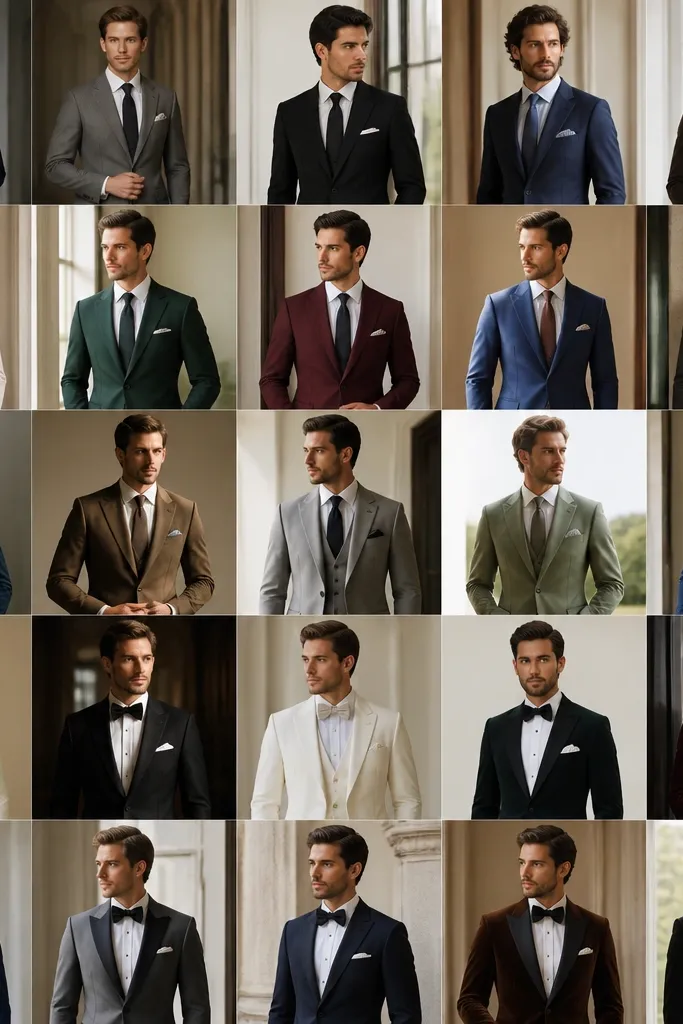
1. Classic Black Three-Piece Suit
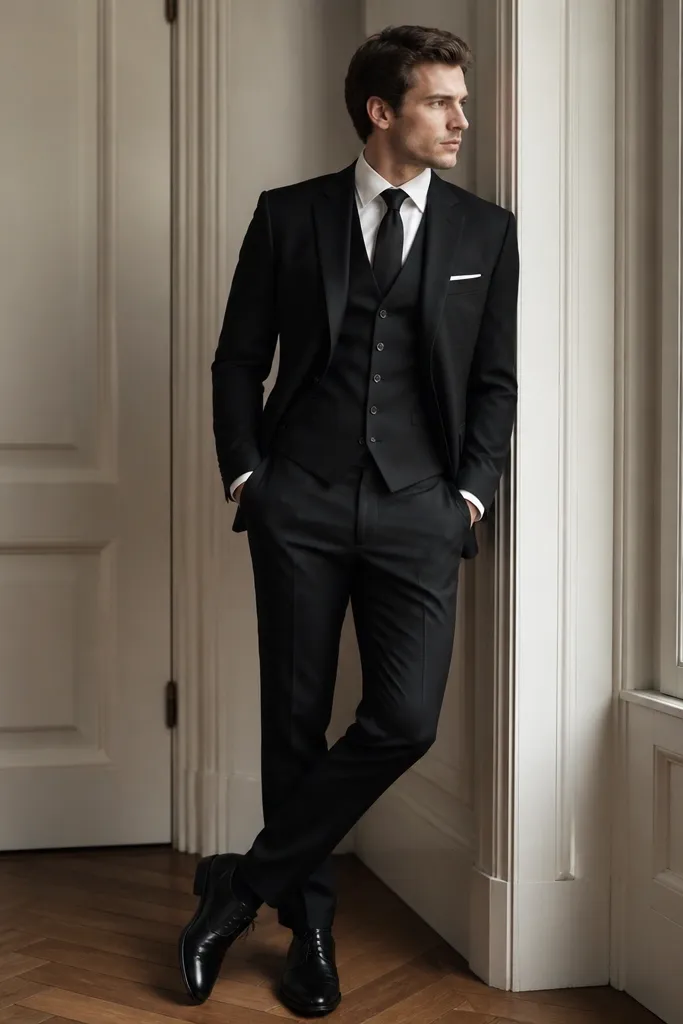
This is a clean way to get a "formal dresses for men wedding" look without going too experimental. The matte black base keeps it formal and flattering, while the matching waistcoat adds depth under warm venue light. Because every piece stays within the same color family, the look reads tailored instead of flashy. It also photographs well because the white shirt pulls focus toward the face and shoulders. Aim for a fitted jacket silhouette that reaches just below the hips, with lapels that frame the shirt collar cleanly. Pair it with tapered black trousers and a waistcoat that sits flat without bunching at the waist. Choose a suit fabric like matte wool blend or structured suiting; the shirt should be crisp cotton with a tight weave.
Aim for a long coat silhouette that reaches the top of the ankle or just past it, with a lapel width that frames the collarbone. Pair with a fitted black trouser or a narrow underlay so there's no bunching at the hem. Choose a coat fabric like matte wool blend or structured crepe; the trim should be a true satin or satin-look with a tight weave.
Pro tipAsk the tailor to press a crisp shoulder line and keep the waistcoat flat-wrinkles around the buttons show up fast in photos.
AvoidSkip thin, shiny polyester that looks like it was meant for a club.
2. Navy Blue Wedding Suit
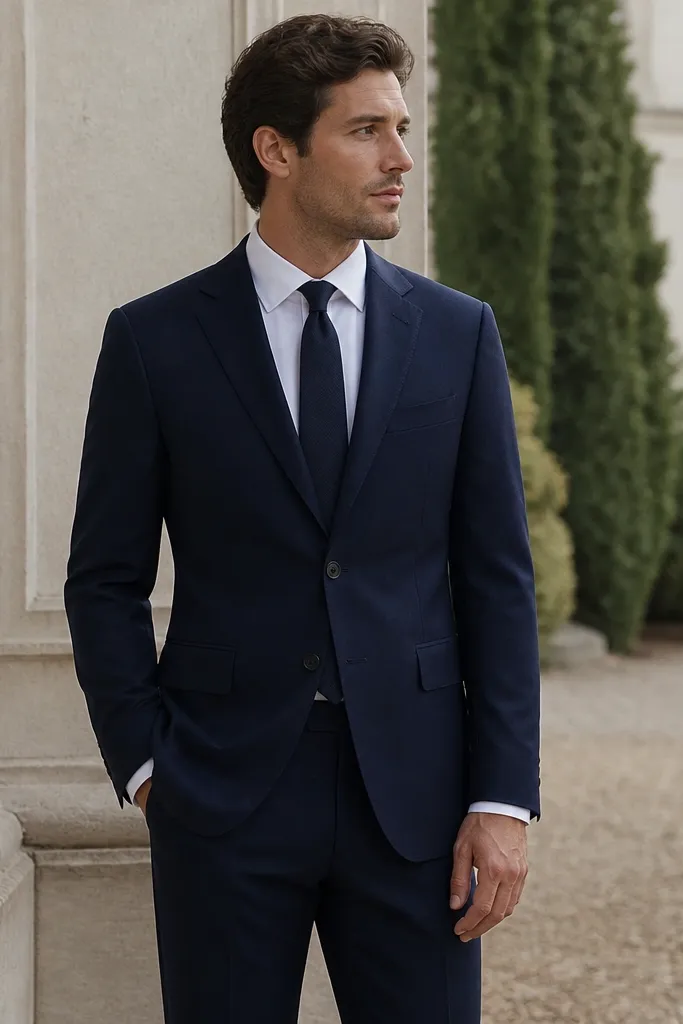
A tailored navy suit is flattering because it creates a defined silhouette without needing a rigid or overly formal structure. Midnight navy reads softer than black but still wedding-formal, especially under indoor lighting. A dense wool blend holds the jacket shape so it does not sag or wrinkle easily. The end result looks intentional and expensive. Look for a jacket waist that sits slightly above your natural hips, not too low on the body. The trousers should be slim and matte to avoid shine conflicts. Keep the jacket closure comfortable enough that it stays smooth when you sit or lean forward.
Look for a wrap front with a belt that sits slightly above your natural waist, not on your hips. The underlayer should be slim and matte to avoid shine conflicts. Keep the wrap overlap wide enough that you're covered when you sit or lean forward.
Pro tipAdd a small interior button adjustment so the jacket stays aligned during photos and dancing.
AvoidDon't choose a wrap with a flimsy belt - it will twist and loosen all night.
3. Charcoal Gray Double-Breasted Suit
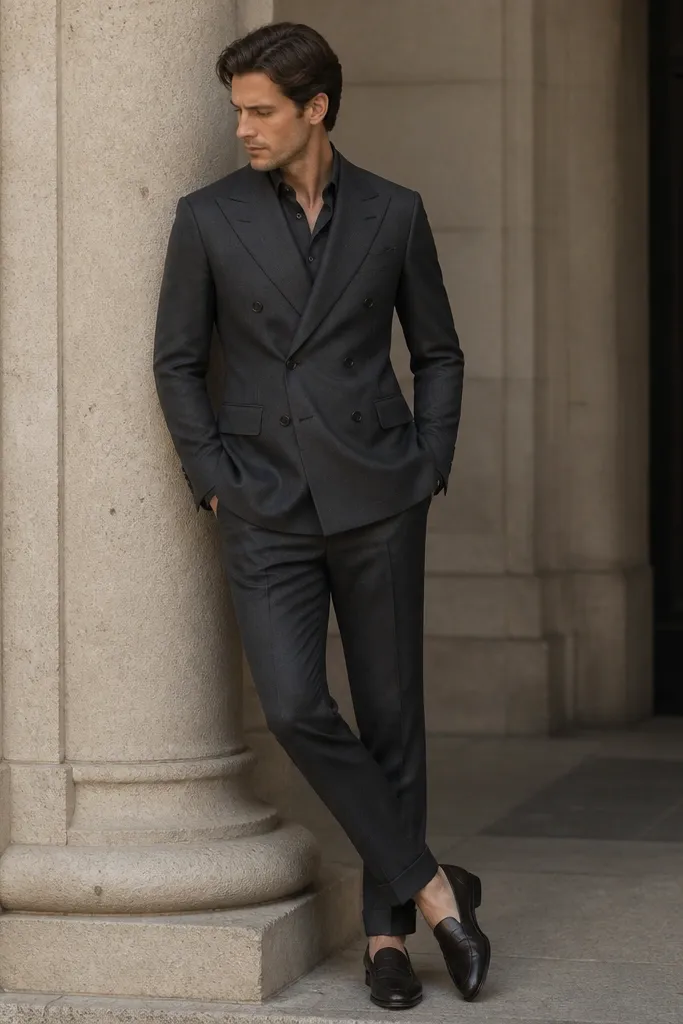
Textured fabric gives you depth without needing loud color. Charcoal is forgiving on different skin tones and blends beautifully with both warm and cool wedding lighting. The double-breasted shape keeps you looking formal and not overdone, especially for daytime ceremonies. Small dark buttons add structure and create a neat vertical line. Choose a jacket length that covers the seat for most builds, then adjust it through tailoring for your height. Keep the waist shaped so the silhouette stays sleek. The best textures feel tight and dense, like fine twill or a subtle weave that is not fuzzy.
Choose a length that hits mid-calf for most builds, then adjust with tailoring for your height. Use a narrow belt so the silhouette stays sleek. The best textures feel tight and dense, like fine twill or a subtle boucle that isn't fuzzy.
Pro tipMatch your belt and shoes in the same tone family so the outfit reads cohesive even in candid photos.
AvoidSkip large shiny buttons - they look costume-level in daylight.
4. Ivory Tuxedo with Black Lapels
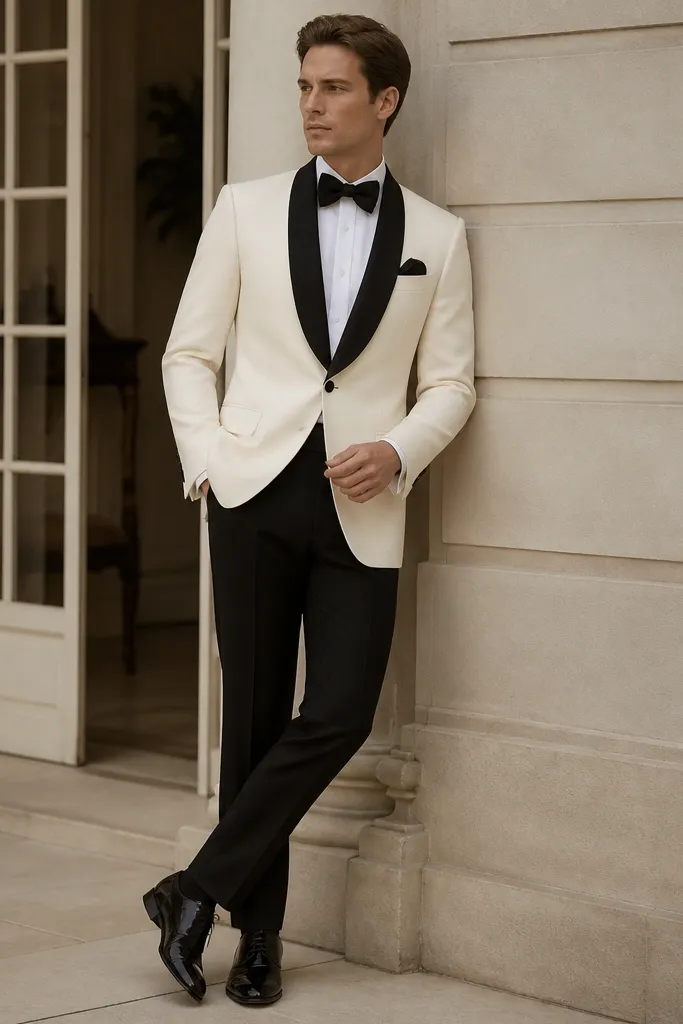
For warm-weather weddings, an ivory tuxedo is a real move because it feels light and still looks formal when it is cut cleanly. Ivory reads elevated when the fabric is structured and not see-through. The black trouser pairing keeps it from looking like casual resort wear. This look works especially well for outdoor ceremonies and garden venues. Pick a wool-blend or formal suiting fabric with enough weight to drape without clinging. Keep the black lapels crisp and the jacket fitted around your natural waist. Complete it with slim, opaque trousers and polished leather shoes that look dressy, not casual.
Pick a linen blend with enough weight to drape without clinging. Keep the shirt dress collar crisp and the belt placed at your natural waist. Underlayer with slim, opaque trousers and finish with leather sandals or loafers that look dressy, not beachy.
Pro tipPress the front panels with a warm iron before you leave-the ivory fabric only looks sharp when the main lines are crisp.
AvoidDon't wear unlined ivory if the venue is bright and sunny - thin linen flashes through.
5. Burgundy Wedding Suit
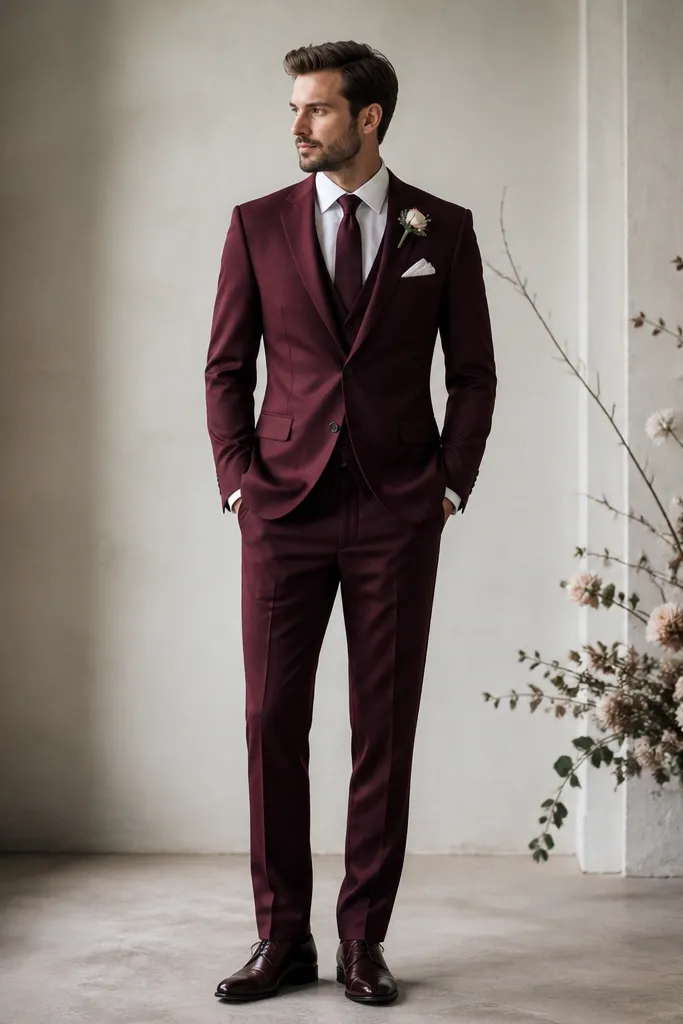
Burgundy creates instant ceremony-level dressiness and is a standout color that does not fight most wedding palettes. A tailored silhouette keeps it classy, so the rich shade does not look like a costume. The notch lapels frame the face cleanly, and the dense fabric hides minor texture differences in photos. This is the look you wear when you want people to remember you without relying on loud patterns. Choose burgundy suiting with a dense weave that does not look flattened or overly shiny. Keep the suit shape straight and fitted, and let the color be the hero instead of adding extra trim. Pair it with black or dark brown shoes and a simple matching belt.
Choose velvet with a dense pile that doesn't look flattened. Keep the dress shape straight and let the fabric be the hero, not extra trim. Pair with black or dark brown shoes and a simple belt if the dress includes one.
Pro tipBring a lint roller and check the shoulders before entering-dark burgundy fabric shows lint easily.
AvoidSkip crushed velvet with uneven sheen - it looks worn even when it's new.
6. Emerald Green Formal Suit
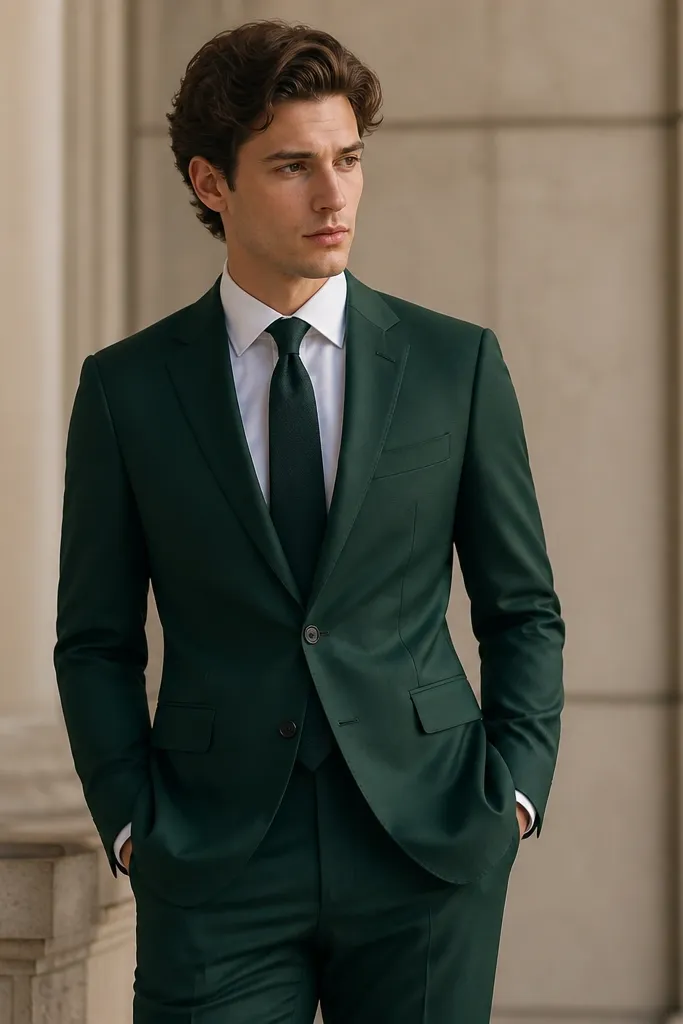
Matte suiting gives you that expensive, controlled drape that does not cling in awkward ways. Emerald green is dramatic but still wedding-appropriate, especially for fall and winter. The dark tie at the neck adds a focal point so the outfit looks styled, not plain. Structured suiting also handles movement well, so you will not feel like you are wearing armor. Look for a shirt collar and tie combination that sits securely and stays flat, not bulky. The jacket body should have light tapering, and the sleeves should be fitted enough to avoid bunching at the wrists. Add a pocket square or lapel detail only if it is subtle-you want clean lines.
Look for a neckline that ties securely and sits flat, not bulky. The body should fall with light tapering, and the sleeves should be fitted enough to avoid bunching at the wrists. Pair with a belt or seam detailing only if it's subtle - you want clean lines.
Pro tipPosition the tie knot slightly relaxed rather than overly tight for a more natural look in candid photos.
AvoidDon't pick crepe that's too thin - it will show lines and cling where you don't want it to.
7. Midnight Blue Tuxedo
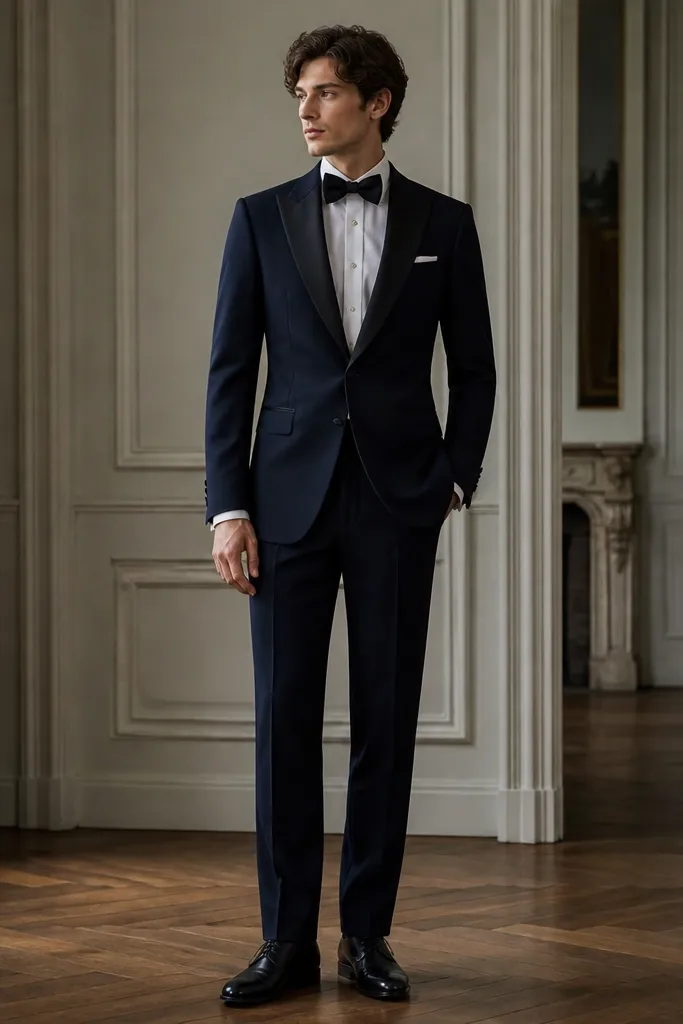
Tonal satin detailing looks special because the contrast appears through texture, not loud color. Midnight blue stays formal and looks rich without going too dark or too flashy. The structured shoulders keep the silhouette sharp, which matters for men's wedding photos. It also resists looking flat better than a plain black suit under evening lighting. Choose a tuxedo fabric that feels firm when you pinch it-if it feels flimsy, it will not hold its shape. Keep the silhouette straight or lightly tapered so the satin lapels read as sophistication. Pair it with simple dark shoes and avoid competing textures like shiny belts.
Choose a jacquard weight that feels firm when you pinch the fabric - if it feels flimsy, it won't hold shape. Keep the silhouette straight or lightly tapered so the pattern reads as sophistication. Pair with simple dark shoes and avoid competing textures like shiny belts.
Pro tipUse a matte belt or tuxedo side adjusters and avoid shiny accessories so the lapels remain the hero.
AvoidSkip loud contrast jacquard unless the wedding theme is clearly fashion-forward.
8. Beige Linen Wedding Suit
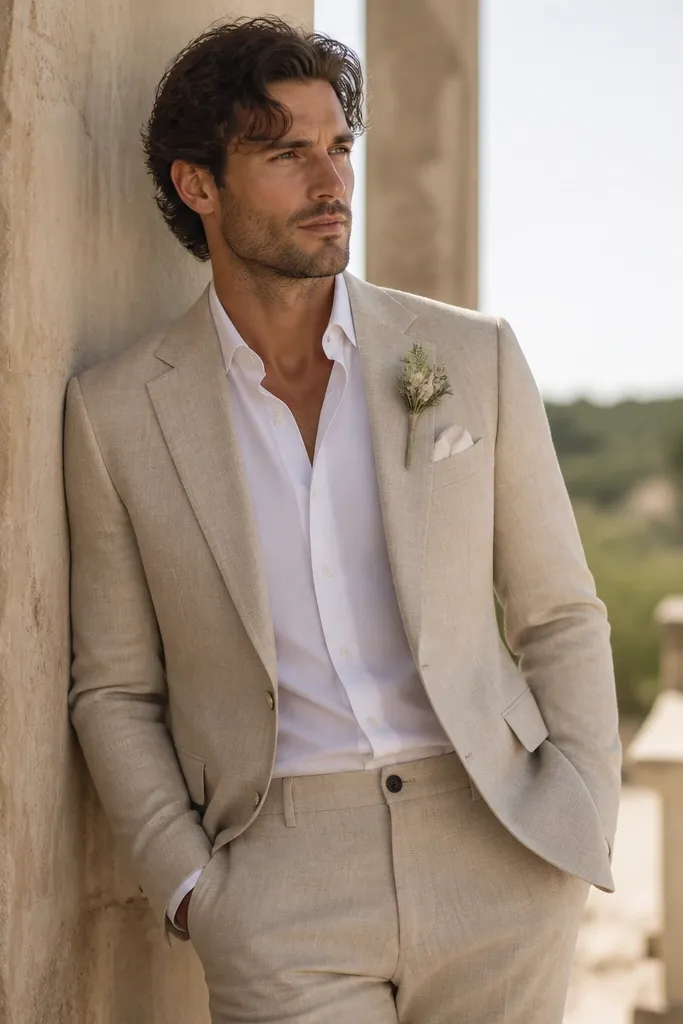
This is for the couple who wants an elegant warm-weather wedding look. The trick is keeping the linen structured so it frames your body and does not become too casual. Beige linen reads classy and shows up naturally in photos without looking too bright. The tailored jacket construction keeps the fabric from looking messy. Pick a suit with a lightly lined jacket, clean cuffs, and neatly tapered trousers. The trouser hem should touch the top of the shoes so the outfit remains polished. Wear it with simple brown dress shoes and a clean hairstyle because the light-colored suit already draws attention.
Pick a dress with sequin trim on cuffs and the hem, with a matte underlayer. The length should hit the ankle so the sparkles land where the camera sees them. Wear with simple black dress shoes and a clean hairstyle because the outfit is already doing the talking.
Pro tipWear a breathable undershirt beneath the linen if the day is hot-you want comfort, not visible perspiration.
AvoidDon't choose all-over sequins - they look cheap fast and snag on chairs.
9. Cream Suit with Brown Accessories
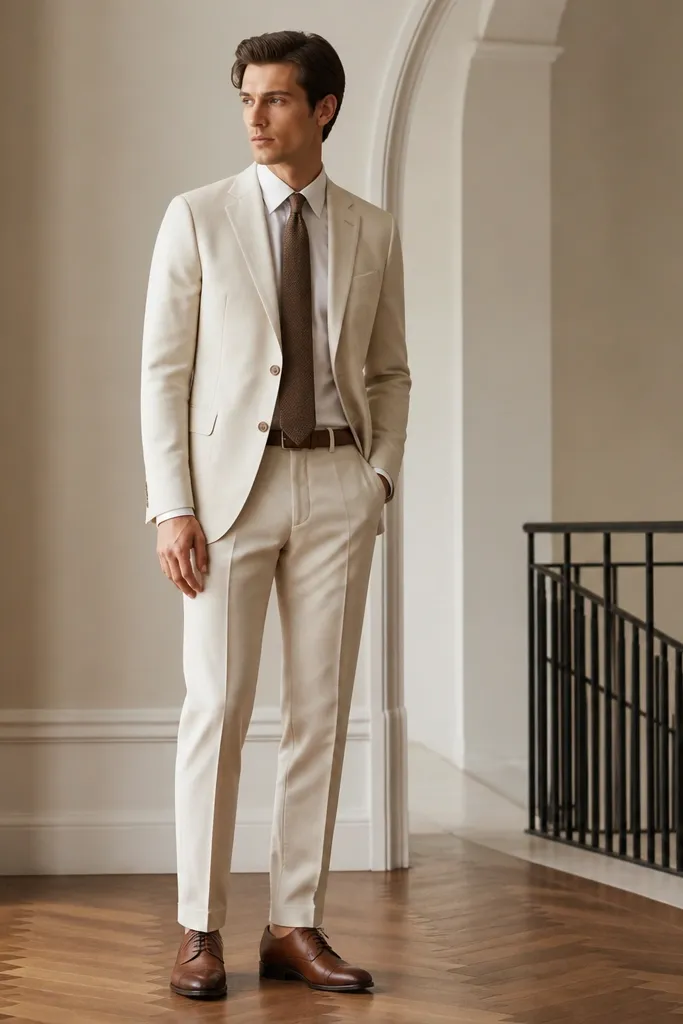
Structured suiting is crisp, holds its shape, and looks formal when the cut is clean. Cream is warm and flattering in outdoor light, especially for daytime ceremonies. Brown accessories keep the outfit balanced, so the look reads tailored rather than overly bright. The fabric's structure also makes the suit feel reliable for a long event. Choose cream suiting with a tight weave so it does not feel thin or papery. Keep the lapels, collar, and cuffs crisp, and make sure the shoulder seam sits where your arm meets your torso. Pair it with a belt and dress shoes in the same brown tone family.
Choose a poplin with a tight weave so it doesn't feel papery. Keep the collar and cuffs crisp, and make sure the shoulder seam sits where your arm meets your torso. Pair with a belt in the same tone family and leather dress shoes in tan or brown.
Pro tipSteam the jacket front after traveling-cream suiting looks best when the surface is completely smooth.
AvoidSkip thin poplin that wrinkles instantly when you sit.
10. White Dinner Jacket with Black Trousers
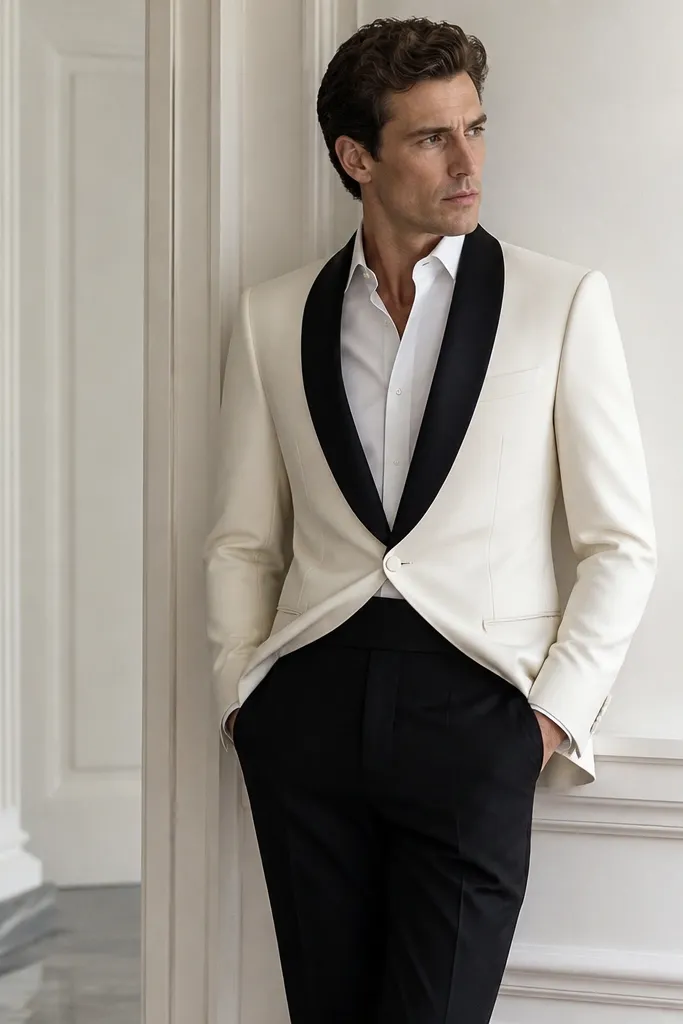
A white dinner jacket looks formal because it is classic, not trendy. The black trousers keep it wedding-friendly and work with almost any wedding color palette. The contrasting combination adds shape without adding bulk, which helps the outfit look sharp rather than plain. The straight trouser line keeps the color contrast from becoming too busy. Use a jacket cut with a defined waist and a clean, straight hem. Keep the lapel width medium-too wide looks loud, while very narrow lapels can look flat on camera. Pair it with solid black shoes and black accessories, not contrasting colored pieces.
Use a dress cut with a defined waist seam and a straight hem. Keep the check size medium - too big looks loud, too small turns flat on camera. Pair with solid monochrome shoes and a matching tie belt color, not a contrasting one.
Pro tipChoose shoes in the same black shade family as the trousers and let the white jacket be the only major contrast.
AvoidDon't mix it with another pattern like a patterned tie or shirt - it gets busy quickly.
11. Chocolate Brown Three-Piece Suit
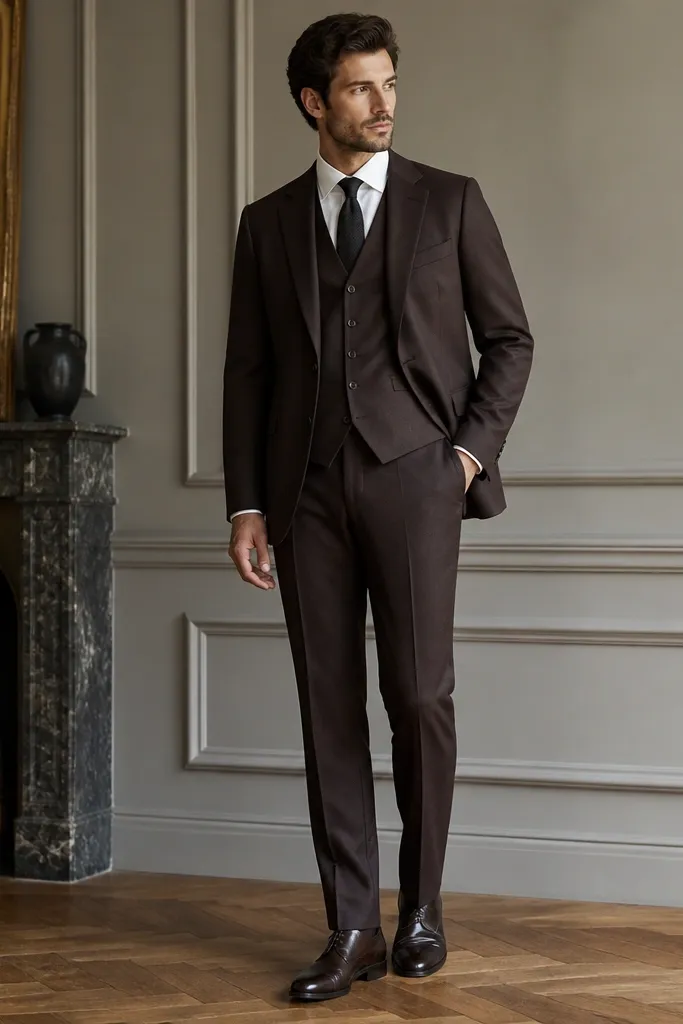
The waistcoat makes the outfit feel distinctive while staying formal. Matte brown suiting keeps the shape controlled, and the tapered trousers help movement without turning casual. This look is great when you want something different from plain black suits but still wedding-appropriate. It also photographs well because the layered pieces create depth around your torso and face. Aim for a jacket length that covers the seat, then tailor the trousers for your natural stride. The waistcoat should be anchored close to the body so it does not shift when you sit. Wear it with minimal accessories and solid shoes so the three-piece construction stays the focus.
Aim for midi length around mid-calf for most heights, then tailor for your stride. The wrap panel should be anchored at the waist so it doesn't shift when you sit. Wear with minimal jewelry and solid shoes so the diagonal detail stays the focus.
Pro tipPractice sitting in it once before the wedding-check that the waistcoat does not pull or gap around the buttons.
AvoidSkip crepe that stretches too much - it will lose shape by hour two.
12. Light Gray Wedding Suit
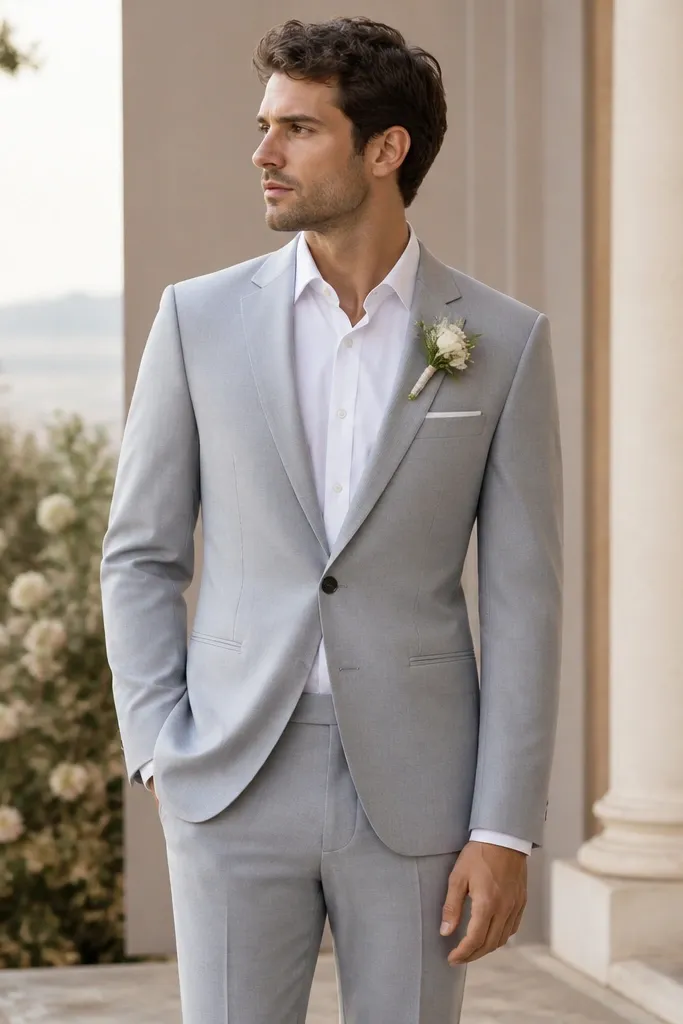
Light gray suiting looks gorgeous at daytime venues because it reflects light in a controlled way. The long sleeves and structured jacket keep it formal and balanced-no overly casual summer vibe. The straight trouser fall makes it feel like a true wedding suit, not an office outfit. This is the kind of look that stands out in photos without needing bold color. Choose suiting with a tight weave that does not look thin or cheap. The lapels should be simple and structured so they do not collapse. Pair it with neutral shoes like dark brown or black, and keep your accessories minimal.
Choose a satin-look with a tight weave that doesn't look slippery or cheap. The neckline should be simple and structured so it doesn't collapse. Pair with neutral metallic shoes like gunmetal or dark silver, and keep your accessories minimal.
Pro tipUse a fabric steamer on low and avoid direct heat on the surface to prevent visible press marks.
AvoidDon't wear satin that's too thin - it shows seams and wrinkles fast.
13. Royal Blue Formal Suit
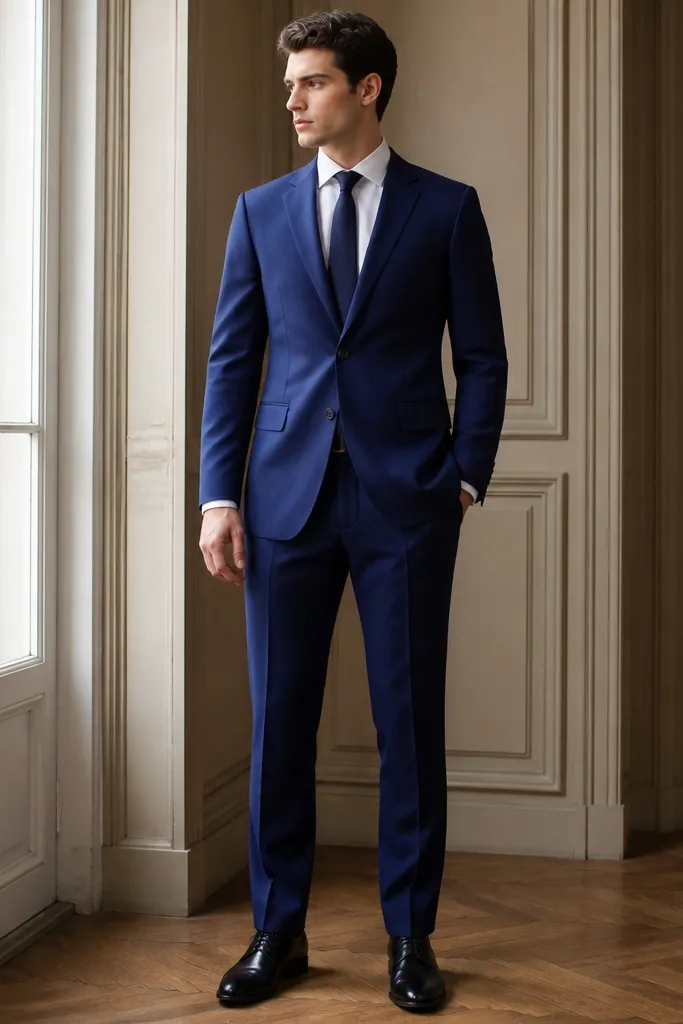
Structured styling reads formal instantly, and royal blue makes the outfit brighter than typical navy. Quality suiting keeps the look sharp, which matters when the wedding includes lots of standing and moving. The front closure creates strong vertical lines, so the outfit looks tailored even without a separate waistcoat. It is a strong choice for spring weddings and evening receptions. Look for a jacket with evenly positioned buttons and a clean front overlap so it sits flat. Keep the trousers straight or gently tapered and let the royal blue color do the work. Pair it with dark dress shoes and a simple belt that matches the shoe color.
Look for a front with evenly spaced buttons and a clean overlap so it sits flat. Keep the skirt straight and let the wool do the work. Pair with dark dress shoes and a simple belt if the dress includes one, matching the shoe color.
Pro tipIf the jacket buttons pull when you sit, ask for a small adjustment at the waist before the event.
AvoidSkip oversized buttons or mismatched button color - it cheapens the whole look.
14. Olive Green Wedding Suit
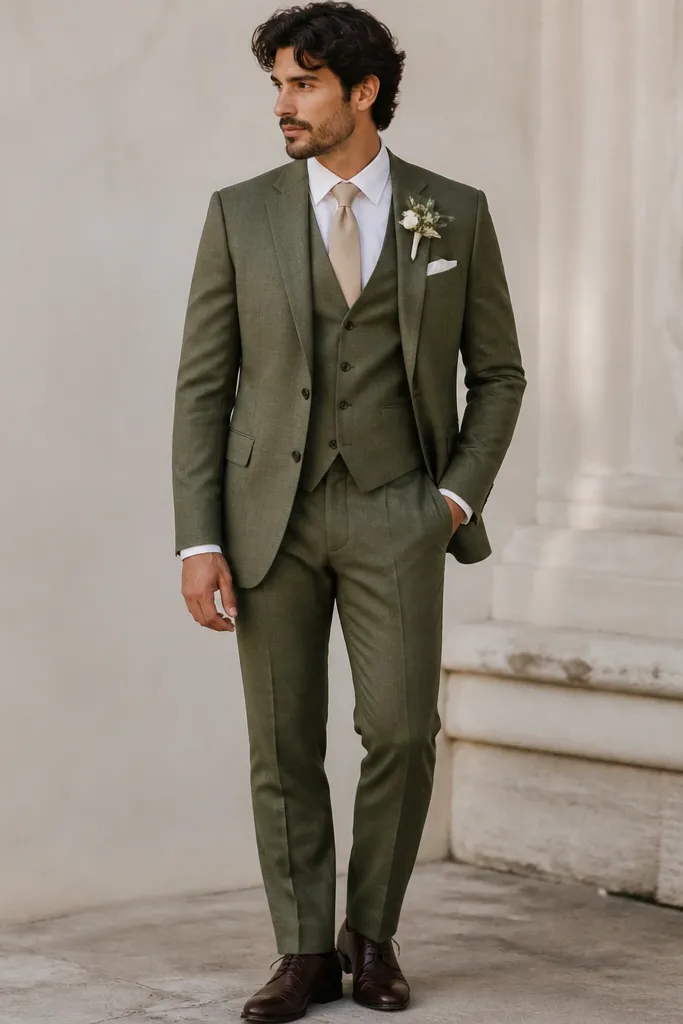
A textured olive suit can look wedding-formal when the fit is tailored and the weave is subtle. Olive is earthy and flattering, especially for spring and outdoor ceremonies. The tailored sleeves make it look intentional, not like a casual everyday suit. Texture adds visual interest without requiring bold accessories. Pick a fabric that is not too thin and has enough weight to hold its shape. The lapels should be structured, and the trouser hem should fall cleanly to avoid a messy drape. Wear it with brown leather dress shoes and keep additional accessories simple.
Pick a knit that isn't see-through and has enough weight to hold shape. The neckline should be structured, and the hem should be straight to avoid a messy drape. Wear with leather dress shoes and keep jewelry simple.
Pro tipSteam the textured fabric gently from a distance so you do not flatten the weave.
AvoidDon't choose a knit that pills easily - it looks rough by mid-event.
15. Black Velvet Blazer with Dress Pants
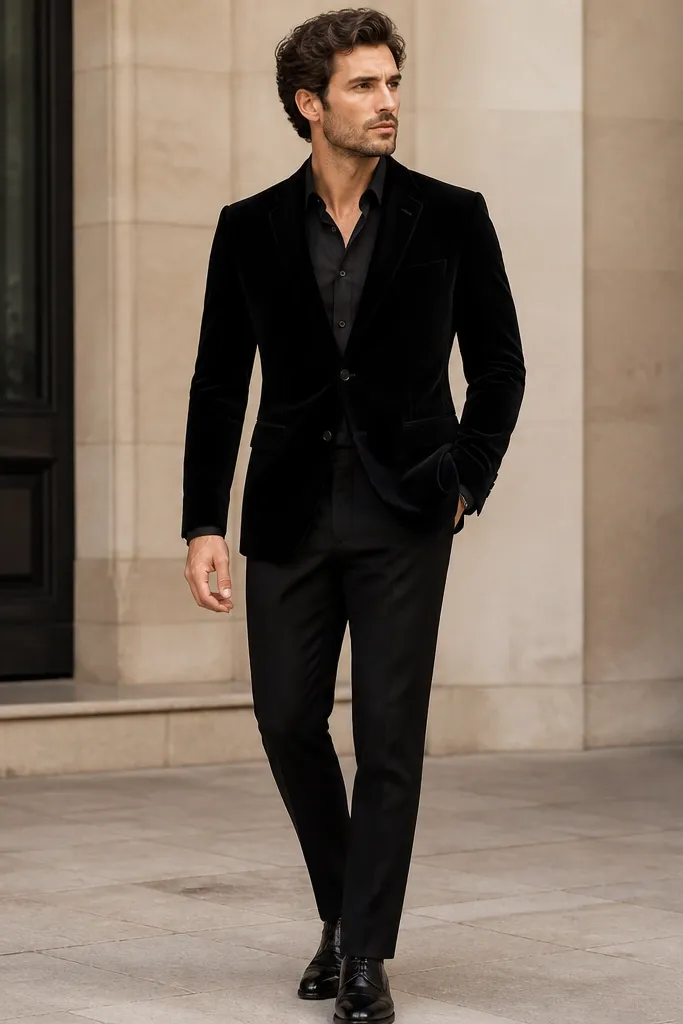
Velvet adds depth and formal structure, while hidden pockets make the whole experience easier. I have seen versions of this at weddings where you are holding a program, checking your phone, and trying not to carry a bag. The matte dress trousers keep the velvet blazer sharp on camera. This is a practical formal outfit that still reads elegant. Choose a blazer with shaping that starts high enough to define the waist, not low where the fabric bunches when you sit. Make sure the pockets lie flat so they do not create bumps. Pair it with polished black shoes and a simple shirt, with no belt if the trousers already use side adjusters.
Choose a dress with pleats that start high enough to define the waist, not low where they bunch when you sit. Make sure pockets are truly hidden and lie flat so they don't create bumps. Pair with polished black shoes and a simple belt or none at all if the seams already define your waist.
Pro tipAsk for a quick pocket check at the tailor-if your hand pulls the velvet fabric, it will show in photos.
AvoidSkip soft, shiny fabric - pleats lose their crisp look.
16. Camel Blazer with Cream Trousers
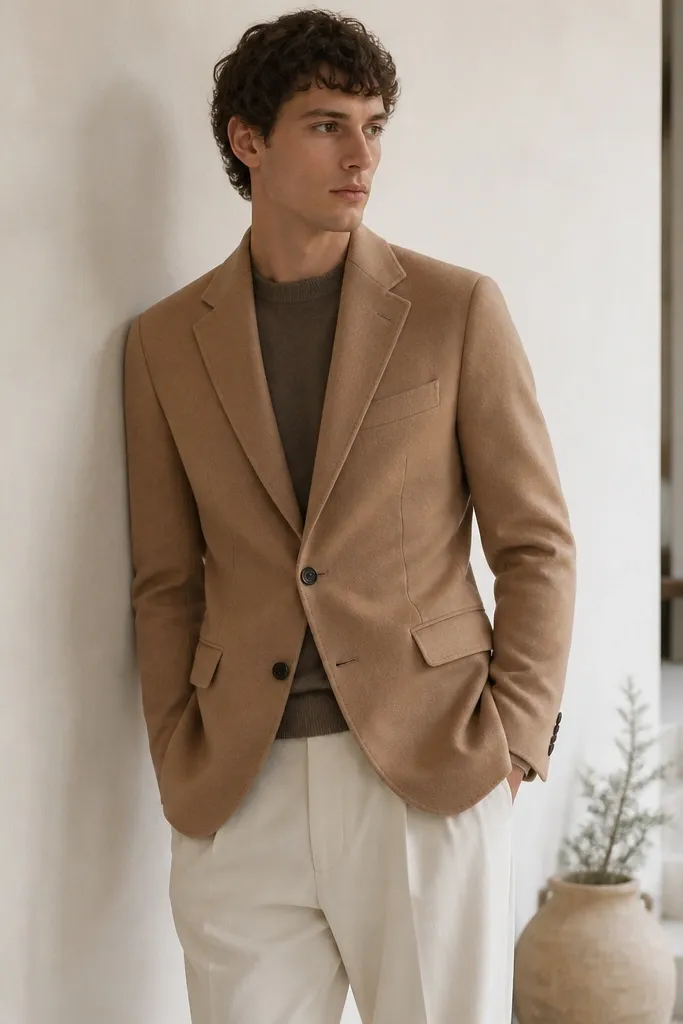
A separate blazer and trouser combination lets you adjust the fit more easily after dinner or when you sit for speeches. Camel styling stays flattering because it naturally warms the torso and frames the upper body. The cream trousers make the outfit formal, and the thick matte blazer keeps it from looking flimsy. Separate pieces also make it easier to tailor the waist without rebuilding the entire suit. Choose a blazer shape that is fitted enough to smooth the front and keep it from looking boxy. The trousers should sit securely at the waist and not rely only on a loose belt. Pair it with a slim shirt layer and keep your shoes brown to match the warm fabric tones.
Choose a belt that's wide enough to smooth the front and keep it from twisting. The wrap overlap should be secure and not rely only on a small hook. Pair with a slim underlayer and keep your shoes dark to match the matte fabric.
Pro tipWear the blazer open during relaxed moments and button it for portraits-it changes the silhouette noticeably.
AvoidDon't use a belt that's the wrong fabric - satin belts on wool wrap dresses look mismatched.
17. Dark Brown Suit with Ivory Shirt
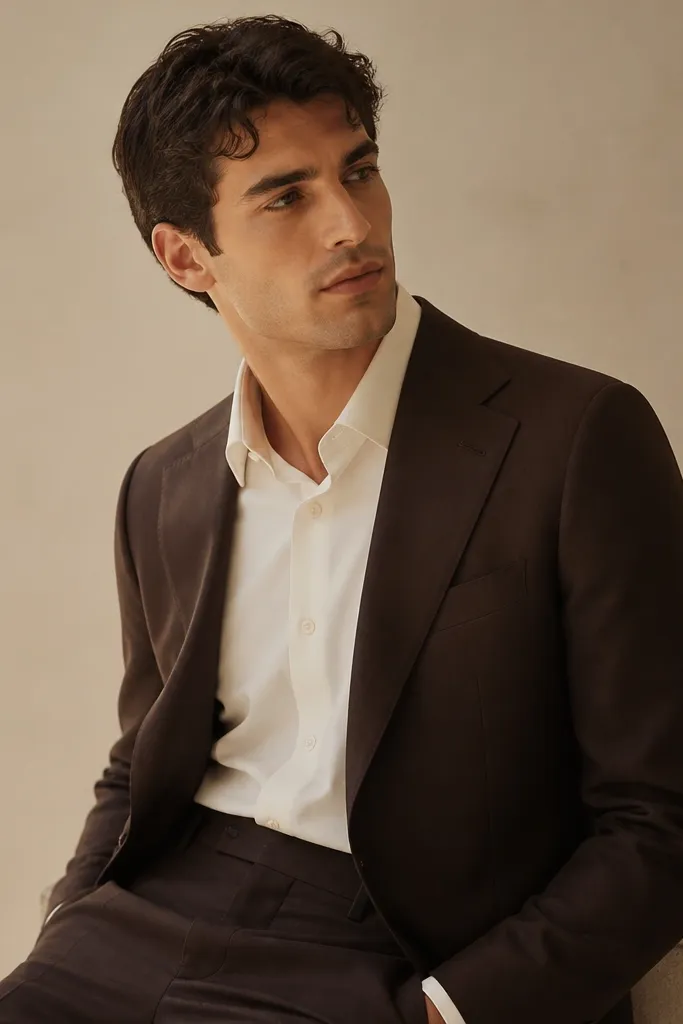
Dark brown suiting looks expensive because the finish is rich, not glittery or overly shiny. The ivory shirt works for evening weddings and indoor receptions because it gives the outfit a soft glow under warm lights. A clean collar keeps the look modern and prevents the brown shade from feeling too heavy. This is a great choice if you want formalwear that still feels different from black. Pick a structured shirt collar so the fabric does not curl beneath the jacket. Keep the suit silhouette straight and let the brown-and-ivory contrast be the hero. Pair it with dark brown or oxblood shoes and avoid metallic accessories that compete with the fabric texture.
Pick a stand collar or simple structured collar so the fabric doesn't curl. Keep the silhouette straight and let the sheen be the hero. Pair with black or charcoal shoes and avoid metallic accessories that fight the fabric texture.
Pro tipBring a lint brush-dark brown fabric attracts dust and can look dull if it gets dirty before photos.
AvoidSkip thick, scratchy mohair if you hate itchy fabric - you'll feel it all night.
18. Wine Red Blazer with Black Dress Pants
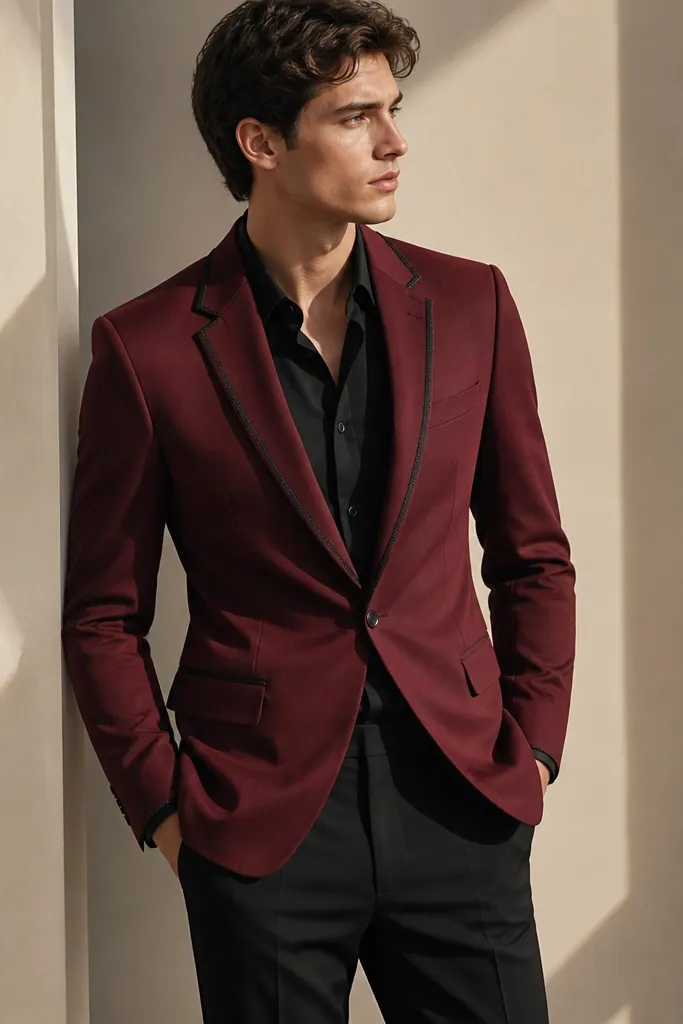
Wine red is underrated for weddings because it looks rich and classy, especially during evening celebrations. Dark detailing adds a subtle tuxedo feel to the blazer, making it read formal even with simple black trousers. The matte base keeps it controlled, and the lapel detail gives you just enough interest near the face and hands. This look is great when you want something styled but not overly flashy. Choose a blazer with crisp seams and slightly structured shoulders. The lapel detailing should be narrow and consistent, not broad or heavily decorated. Pair it with black leather shoes and keep the rest plain.
Choose a dress with crisp seams and a slightly structured shoulder. The corded trim should be narrow and consistent, like a thin braid, not thick rope. Pair with brown leather shoes and keep the rest plain.
Pro tipMatch your shoe finish to the dark lapel detail-it makes the outfit look intentional.
AvoidDon't add multiple trims - one trim zone looks sharp; three looks busy.
19. Slate Gray Suit with Burgundy Tie
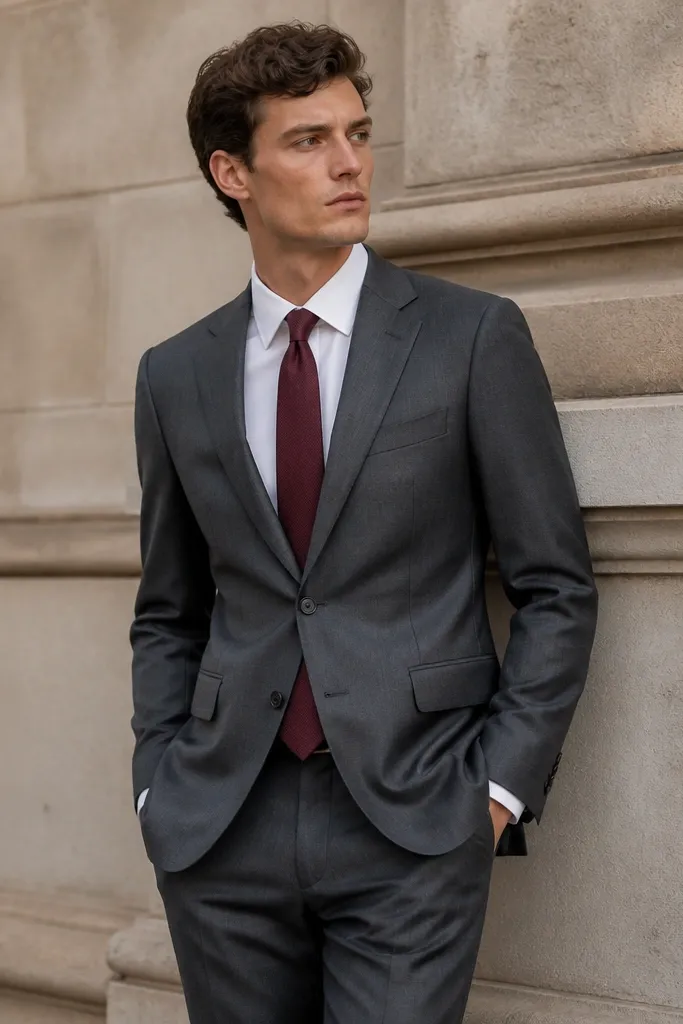
Color contrast is a smart way to create interest without heavy tailoring. The burgundy tie against slate gray creates a flattering visual focal point and catches attention near the face. Tapered trousers add movement so the suit does not feel heavy. This is the kind of wedding look that feels modern, not old-school formal. Pick a suit where the waist shaping runs smoothly from underarm to hip for the most flattering line. Keep the jacket and trousers mostly matte so the tie does not look disconnected. Wear it with fitted dress shoes and a simple pocket square if you want one extra detail.
Pick a dress where the satin panels run from underarm to hip for the most flattering line. Keep the front and back mostly matte so the satin doesn't look like it's painted on. Wear with fitted shoes and a simple clutch or belt bag if you need a place for your phone.
Pro tipIf the tie wrinkles, press it from the back with a protective cloth to preserve the fabric finish.
AvoidAvoid loose satin panels - they bunch and look sloppy in photos.
20. Forest Green Three-Piece Suit
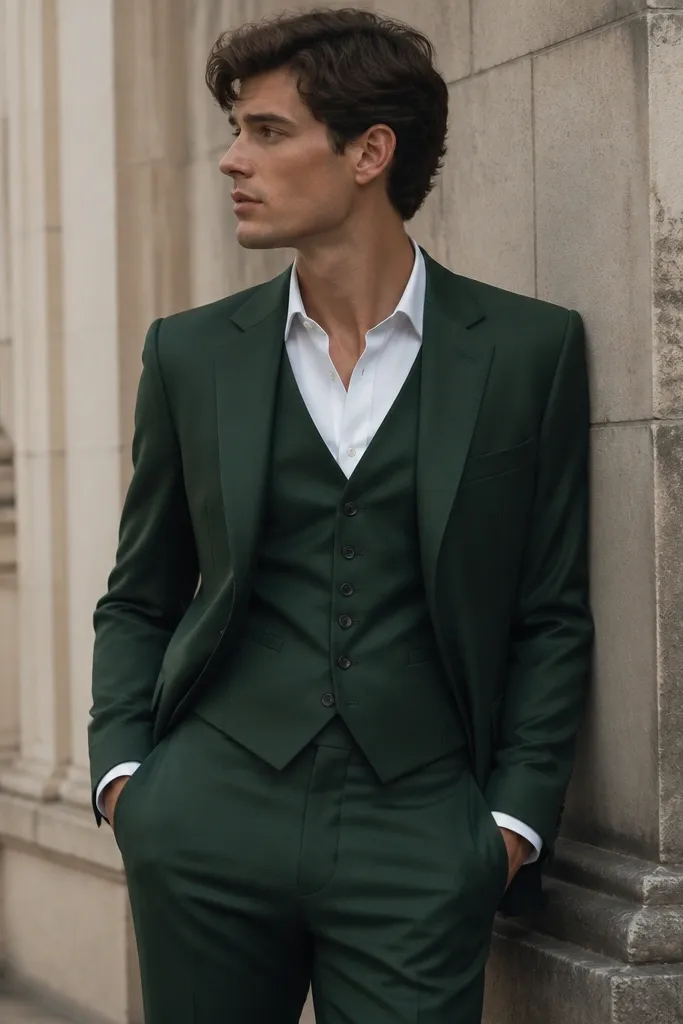
This three-piece style works because the jacket gives you structure at the shoulders and neckline, while the waistcoat adds ceremony-level depth. The forest green color keeps it interesting without turning it into a costume. The waistcoat is what makes it read as formal dresses for men wedding instead of just a standard suit outfit. It also hides minor shirt fit issues because the structured layer sits over them. Use a structured jacket with clean lapels and a fitted waist seam. The waistcoat should fall straight and not twist-check that it sits close to the waist, not loosely around the hips. Pair it with dark dress shoes and keep the rest minimal so the green three-piece combination reads as intentional.
Use a structured shirt front with a clean placket and a defined waist seam. The drape panel should fall straight and not twist - check that it hangs from the waist, not from the hips. Pair with black dress shoes and keep the rest minimal so the drape reads intentional.
Pro tipTuck the shirt cleanly and let only the jacket move-controlled movement looks expensive.
AvoidSkip loose, bulky layers - they make the drape look like fabric leftover.