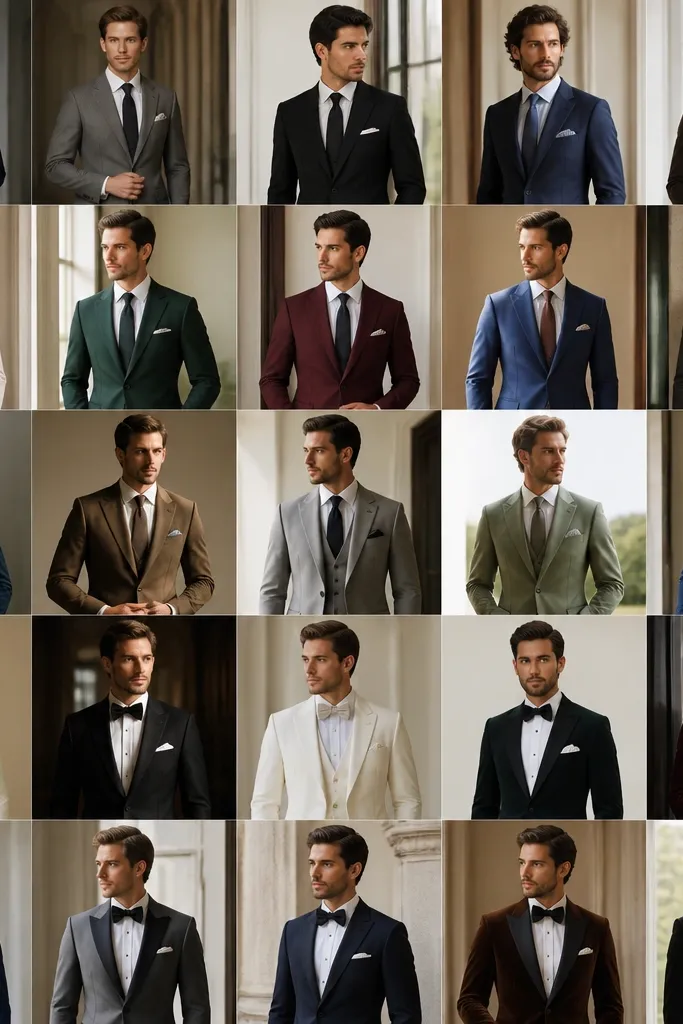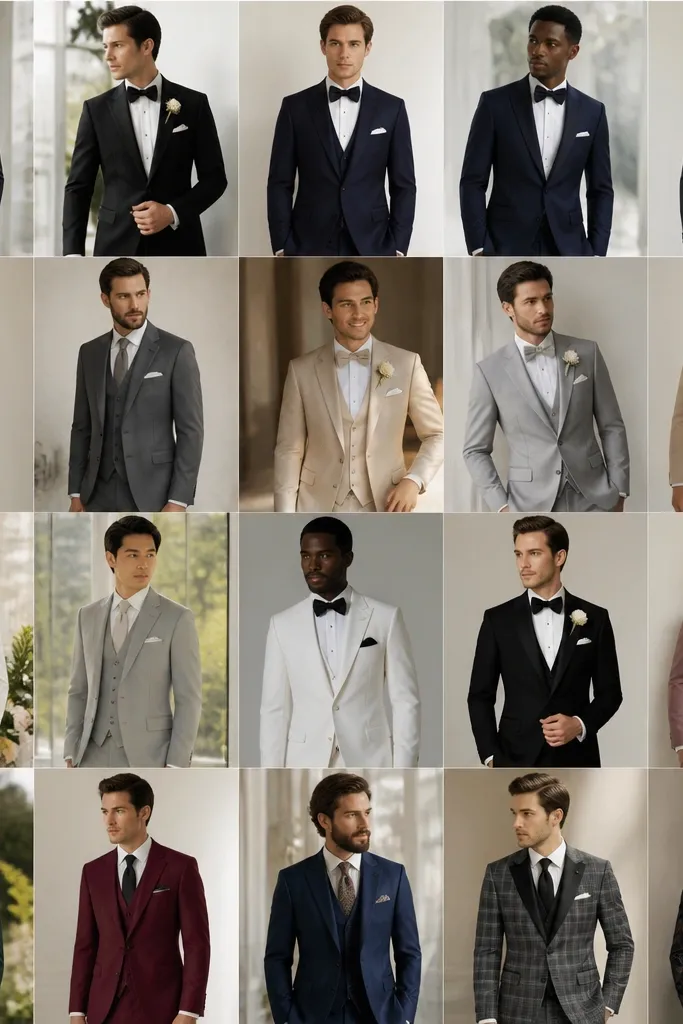
1. Charcoal blazer with white oxford and slim flat-front trousers
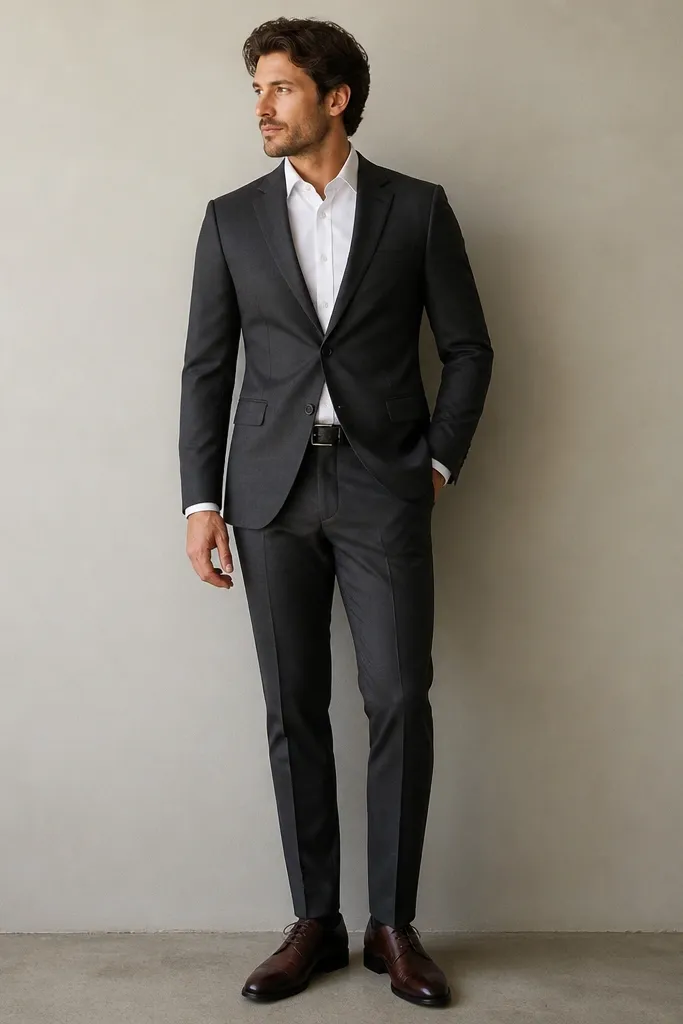
This look works because charcoal absorbs office light and the white oxford adds clean contrast without sparkle. The blazer shoulder line reads structured, and the flat-front trousers keep the silhouette smooth when you sit. I like a white oxford with a medium spread collar because it frames the face and looks sharp with lapels. Finish the look with matte leather - it keeps everything grounded.
Choose a blazer in charcoal wool blend with notch lapels and a two-button closure. Go for trousers in the same charcoal family, not a lighter grey, so the outfit feels like one piece. Wear a belt in black or deep espresso and match it to your shoes; don't mix black belt with brown shoes.
Pro tipIf your shirt wrinkles by noon, steam the collar and cuffs only. That fixes 80% of the "I wore this all day" look.
AvoidAvoid pairing a shiny dress shirt or patent shoes - office lighting makes that look cheap fast.
2. Navy blazer, pale blue shirt, and mid-rise pleat-front trousers
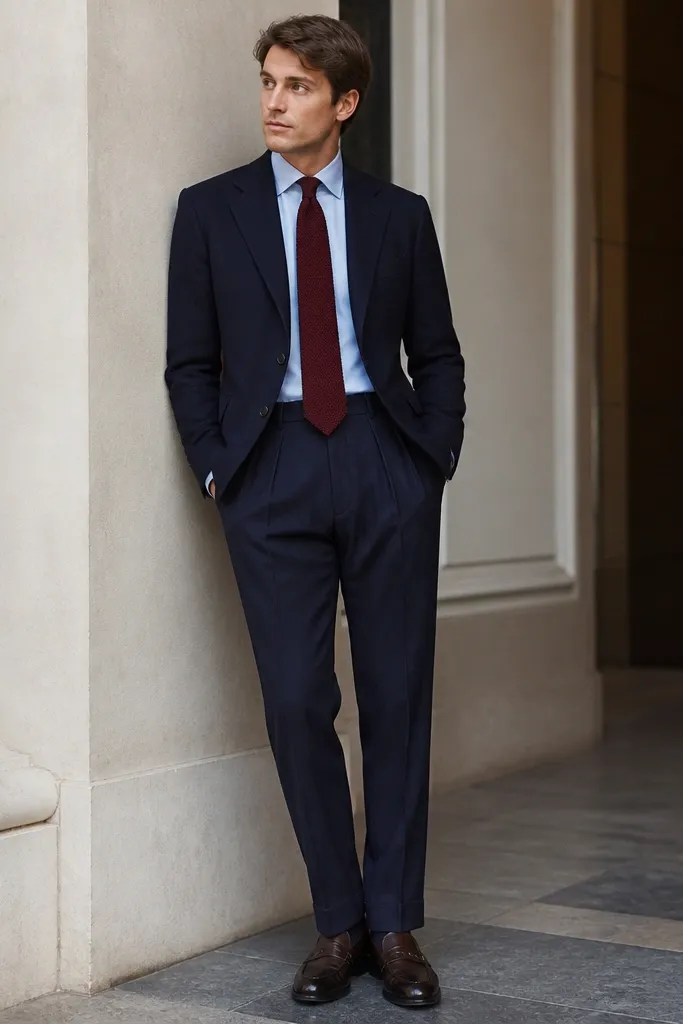
Navy plus pale blue is a reliable combo that looks calm and professional. Pleats add a little room through the thigh and seat, which helps when you're sitting through long meetings. A burgundy knit tie brings warmth without screaming for attention. The knit texture also hides minor fabric wrinkles better than a glossy tie.
Pick trousers with a single pleat and a tapered leg so they don't balloon around the ankle. Keep the shirt collar crisp and the tie width medium, around 3.25 to 3.5 inches at the widest point. Shoes should be dark brown to balance the burgundy.
Pro tipRoll the blazer sleeves to a clean one-inch cuff only when you're in a casual meeting. Keep it straight for client calls.
AvoidSkip ultra-skinny trousers with pleats - it looks like the waist and leg proportions don't belong together.
3. Forest green overshirt with grey chinos and a leather watch strap
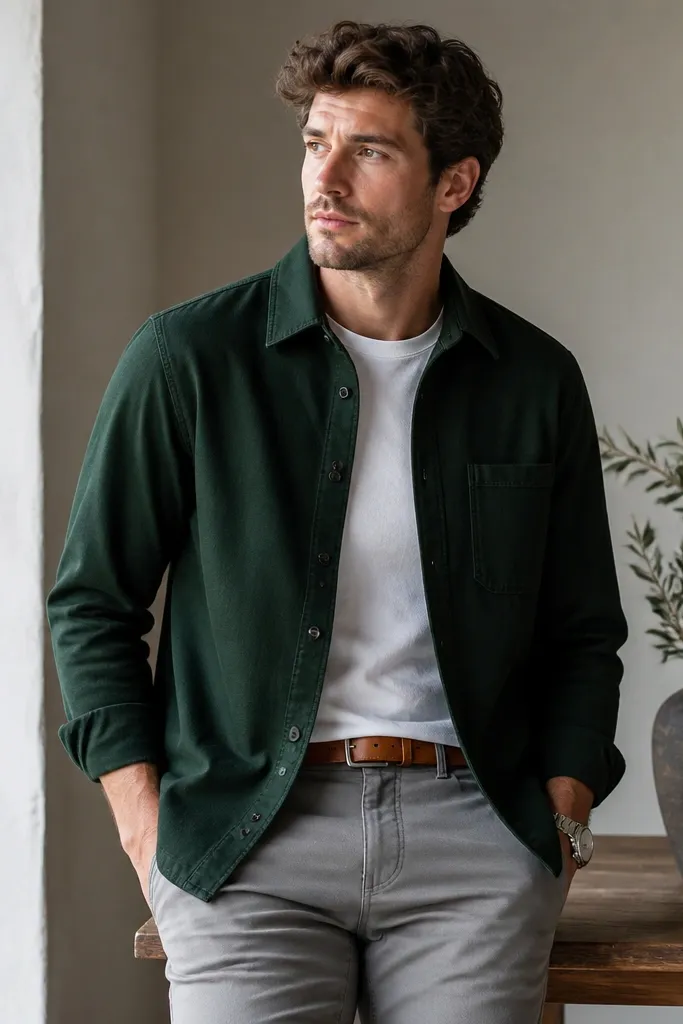
An overshirt in a heavy woven gives you the formal look without the full blazer weight. Forest green reads more interesting than black while staying office-safe. Grey chinos keep it grounded and comfortable, and the white tee under it keeps the outfit sharp and modern. A tan belt and leather watch strap tie the tones together.
Choose an overshirt that hits around mid-hip and has slightly structured shoulders. Grey chinos should be flat-front or a very mild taper; avoid loud patterns. Wear a simple leather belt in tan or cognac and keep the shoes in the same family.
Pro tipButton the overshirt to the second button only. That creates a neat V shape and looks more styled than fully closed.
AvoidDon't use a thin, silky overshirt - it collapses and reads casual even when you're trying to be formal.
4. Oxblood blazer with cream shirt and matching oxblood belt
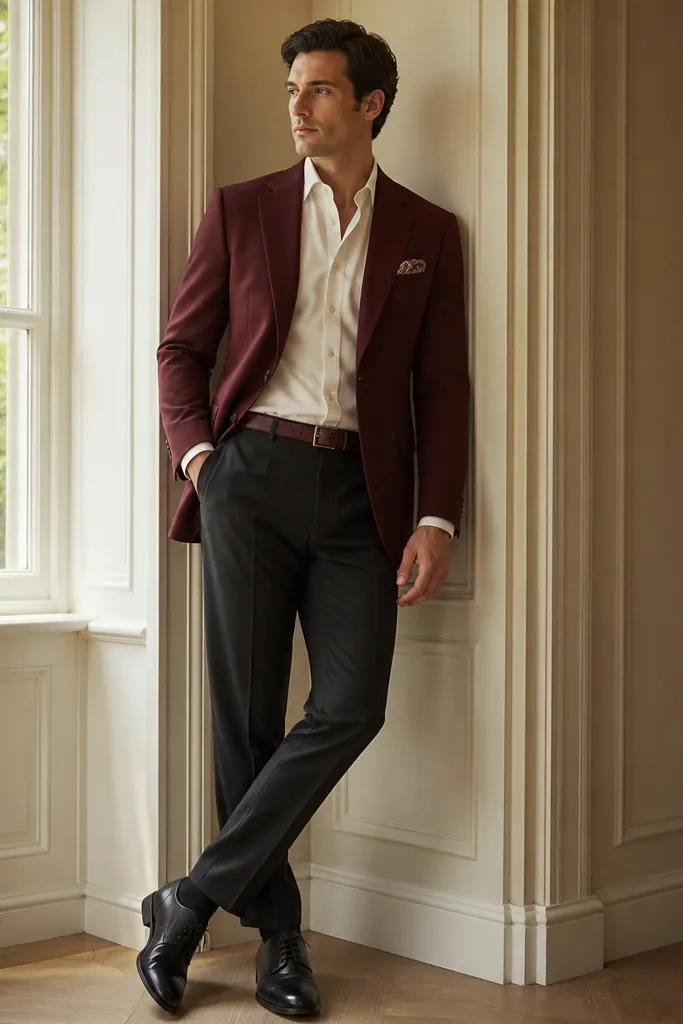
Oxblood is the "formal but different" color that still looks serious in an office. The cream shirt brightens the face and avoids the harsh contrast you get with stark white. Matching the belt to the blazer color makes the outfit look designed. This is especially good for evening meetings or holiday office events.
Go for a blazer with a medium notch lapel and a tailored waist. Keep the cream shirt solid and matte - no shiny spread-collar fabric. Choose black shoes if you want extra contrast, but keep the belt oxblood so the eye stays on the center.
Pro tipUse a pocket square in white linen with a faint dot or micro pattern. One small detail beats a loud print.
AvoidAvoid pairing oxblood with bright blue denim or sneakers. It drags the whole look down.
5. Light grey suit with navy tie and white pocket square
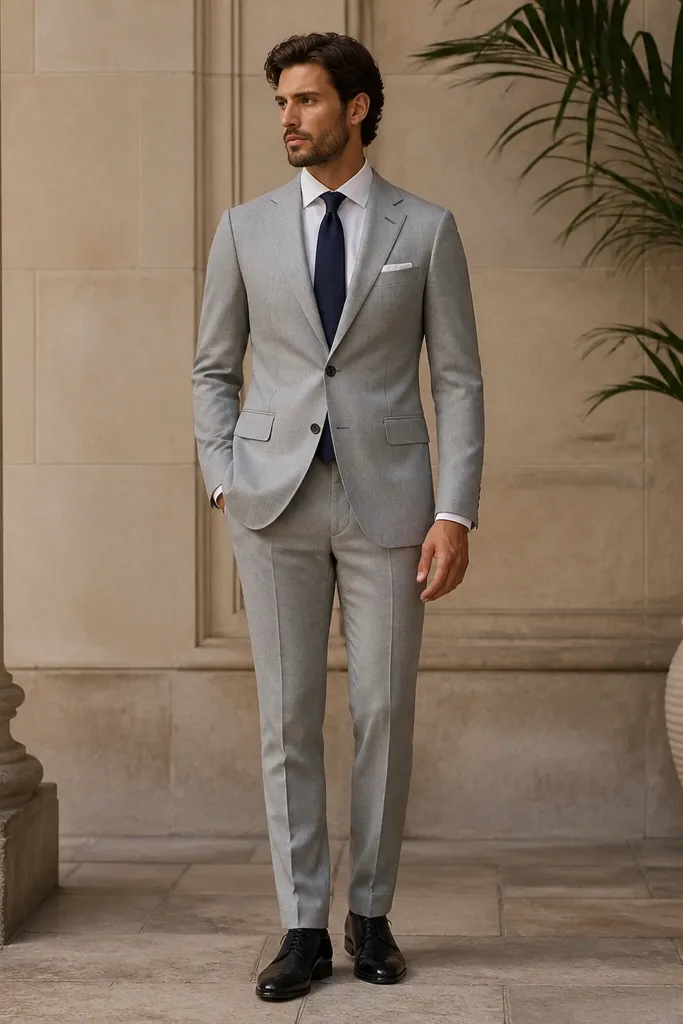
A light grey suit reads formal instantly, and the navy tie keeps it from looking washed out. The white pocket square adds crisp structure at the chest without adding clutter. I like this combo for office weeks when you need "clean and confident" more than "fashion experiment.". The subtle weave keeps it from looking flat on camera.
Choose a suit with a jacket length that covers the seat by a few inches. Keep the tie matte and medium width, around 3.25 inches. Shoes should be black or dark oxblood, and the belt should match the shoes.
Pro tipSteam the suit jacket shoulders before you leave. Office air conditioning makes the jacket crease fast.
AvoidSkip super-thin ties and overly shiny fabric - they look wrong under office lighting.
6. Charcoal turtleneck under tailored blazer with dark trousers
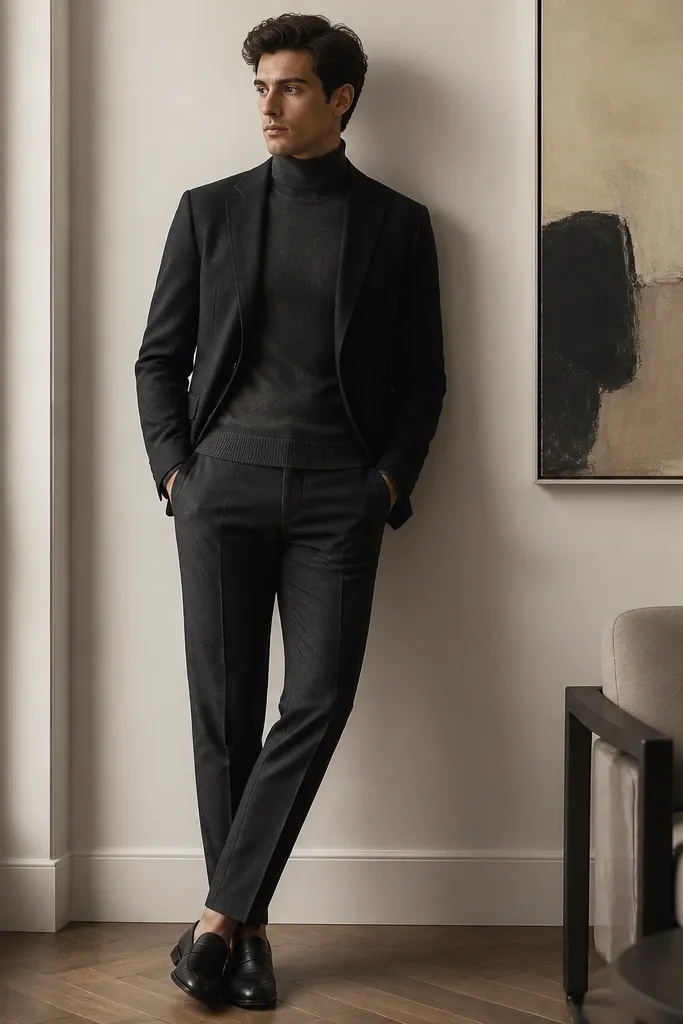
A turtleneck under a blazer gives you that "dressed" feeling without a tie. Charcoal and black layering looks sharp and modern, and the turtleneck keeps the collar area clean. The blazer adds structure; the sweater adds comfort. This is one of my go-to looks for office days when I want to feel put-together fast.
Pick a turtleneck in a knit that is firm at the neck, not stretchy and flimsy. The blazer should be tailored through the arms so the sweater doesn't bunch at the cuff. Keep trousers dark and matte, and use black loafers or oxfords.
Pro tipMake sure the turtleneck hem sits flat under the blazer - tug it into place with your fingers.
AvoidAvoid thin, see-through knits. If your undershirt shows through, the whole look reads sloppy.
7. White shirt, navy knit blazer, and stone chinos
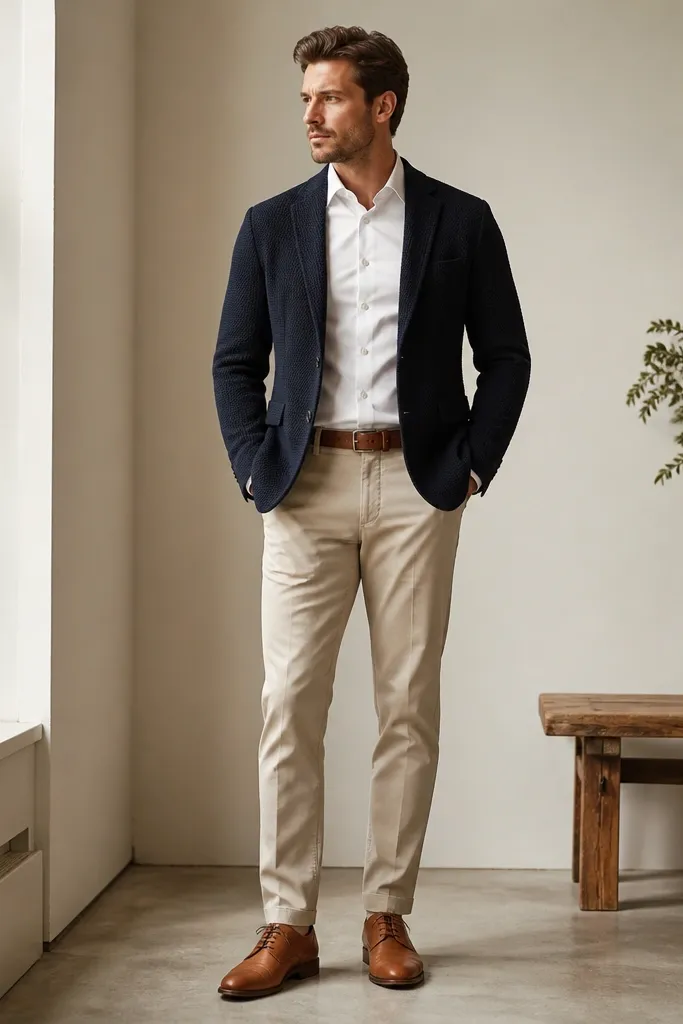
A knit blazer is softer than a wool suit jacket but still reads formal when you keep the shirt crisp. Navy knit plus stone chinos is clean, bright, and easy for warmer office days. The textured knit adds depth so the outfit doesn't look flat. Brown leather ties the lighter tones together.
Choose a knit blazer with a structured collar and real buttons. Keep the chinos in stone or light sand, flat-front if possible. Wear a white shirt with a medium spread collar and keep the tie optional; this looks great with no tie for casual-formal offices.
Pro tipAdd a simple watch with a brown leather strap to make the outfit feel intentional.
AvoidSkip sneakers with this. Even clean white leather sneakers ruin the "office formal" read.
8. Black blazer with light blue shirt and subtle micro-pattern tie
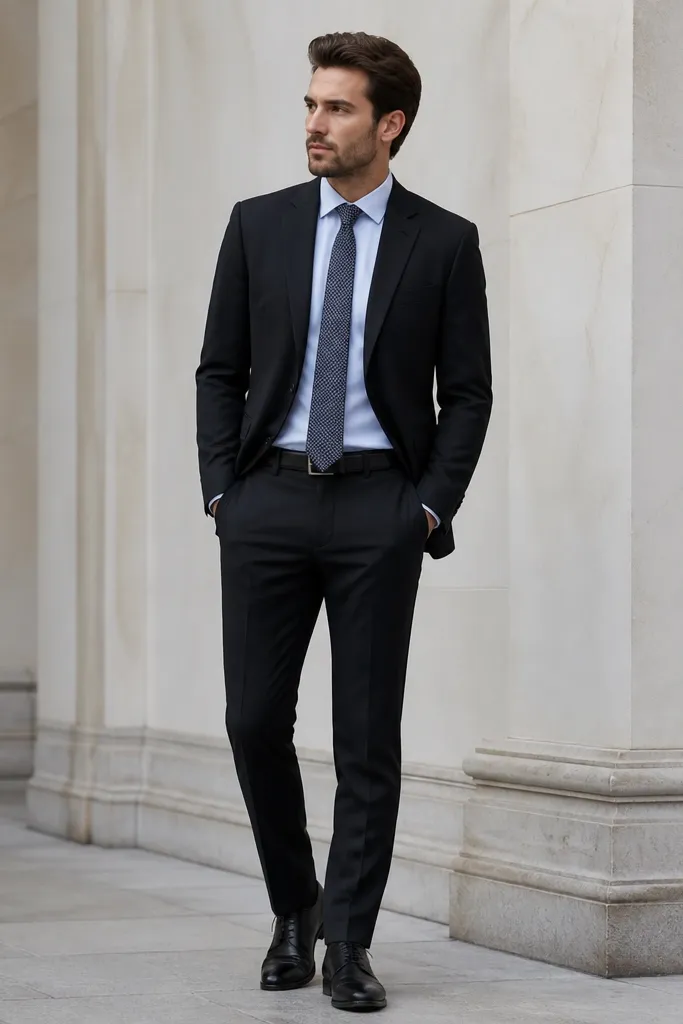
Black blazer + light blue shirt is a sharp combo that works year-round. The micro-pattern tie adds interest while staying office-appropriate because the pattern is small and controlled. I like this when you have a meeting with someone senior - it reads polished without being loud. Keep the rest simple so the tie pattern is the only "visual event."
Use a tie with a matte finish and small repeating pattern. The shirt collar should be crisp and not floppy; press it before you leave. Pants should be black or near-black, and the shoes should match the belt tone.
Pro tipTie the knot slightly tighter than you think so the tie doesn't droop when you sit.
AvoidAvoid big loud tie patterns with black - it looks like you're trying too hard.
9. Camel overcoat look with navy suit trousers and white shirt
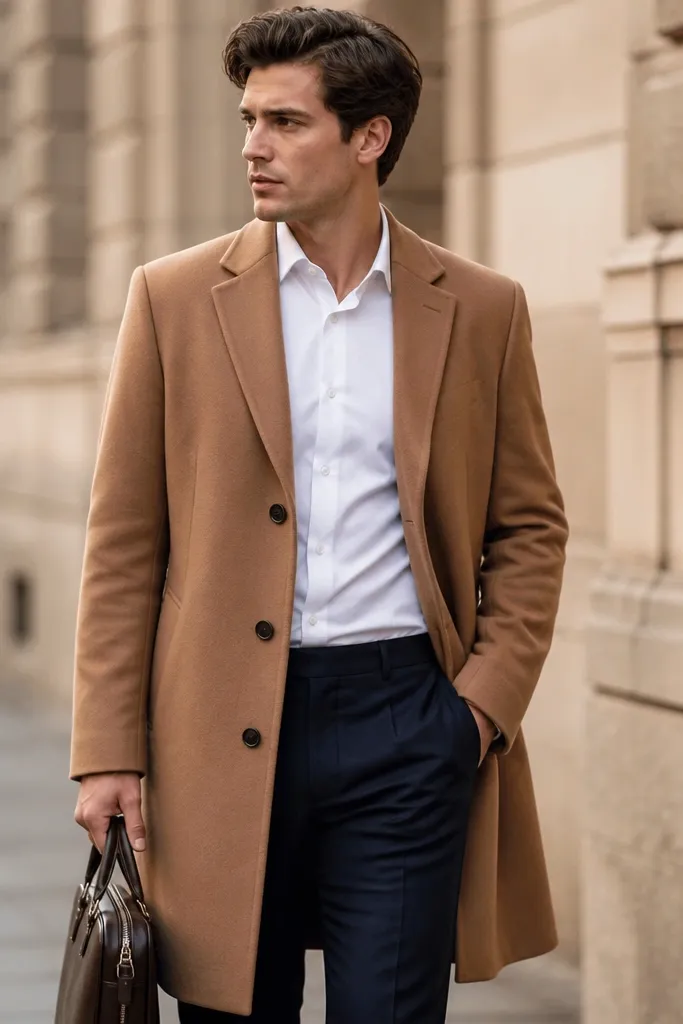
This is the "office formal" look that works when you commute and need one piece that does the heavy lifting. Camel overcoats photograph well and read expensive when the fabric is wool and the buttons are solid. Keeping the trousers navy keeps the outfit grounded and prevents the camel from looking too casual. A white shirt keeps it clean and crisp.
Choose an overcoat that hits around the mid-thigh, with sleeves that end near the base of your thumb when standing relaxed. Pair with navy flat-front trousers and a white shirt. Use dark leather shoes and a matching belt.
Pro tipButton the overcoat only when you're in a building. Outside, wear it open so the silhouette looks natural.
AvoidSkip polyester overcoats that shine in daylight - camel + shine looks cheap fast.
10. Navy dress shirt with burgundy waistcoat and matching trousers
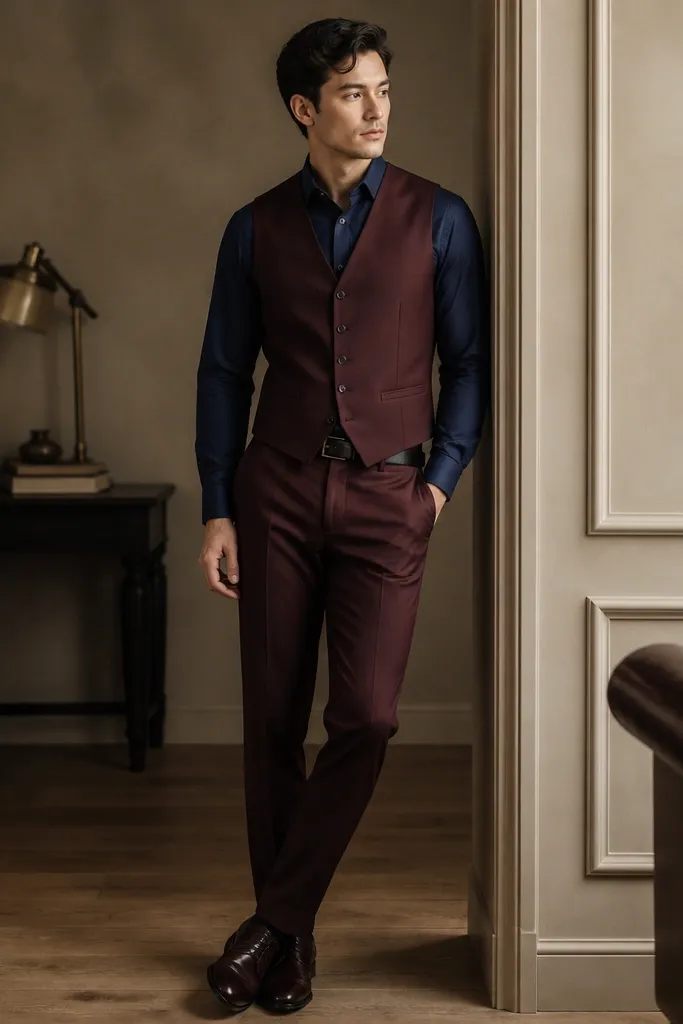
A waistcoat makes office dressing feel intentional because it adds an extra layer at the torso. Burgundy against navy looks rich without needing bright colors. The key is fit: a waistcoat should lie flat and close cleanly, not gap at the buttons. When it fits right, it instantly upgrades a basic shirt-and-trouser combo.
Use a waistcoat with a V neckline and side adjusters that let you fine-tune the waist. Wear it buttoned in the office so the front stays smooth. Keep trousers in the same burgundy family and use dark shoes to avoid the "full burgundy" overload.
Pro tipAdd a white pocket square in cotton with a soft fold. It breaks up burgundy without looking busy.
AvoidAvoid waistcoats that are too long. If it covers the hips too much, it makes the whole outfit look off.
11. Grey check blazer with solid white shirt and black trousers
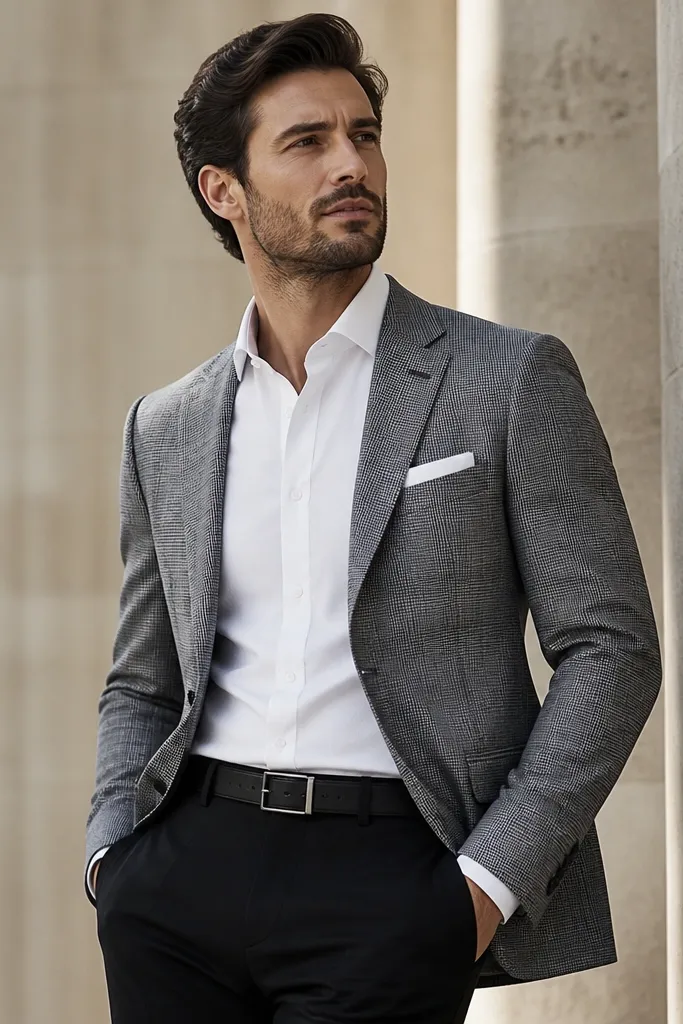
A grey check blazer gives you structure and pattern without turning your office look into a loud suit. The white shirt keeps the pattern from feeling heavy. Black trousers anchor the outfit and make the check read modern. This is a great option when you want to look different for a presentation but still professional.
Choose a check with small or medium scale - big checks look too casual for most offices. Keep the shirt plain, and go for black trousers with a clean hem break. Shoes should be black or dark brown leather depending on your belt.
Pro tipMatch your pocket square to the shirt, not the blazer. White linen always looks crisp with checks.
AvoidAvoid adding a patterned tie with a patterned blazer unless the tie pattern is extremely small.
12. Olive blazer with cream knit polo and tapered trousers
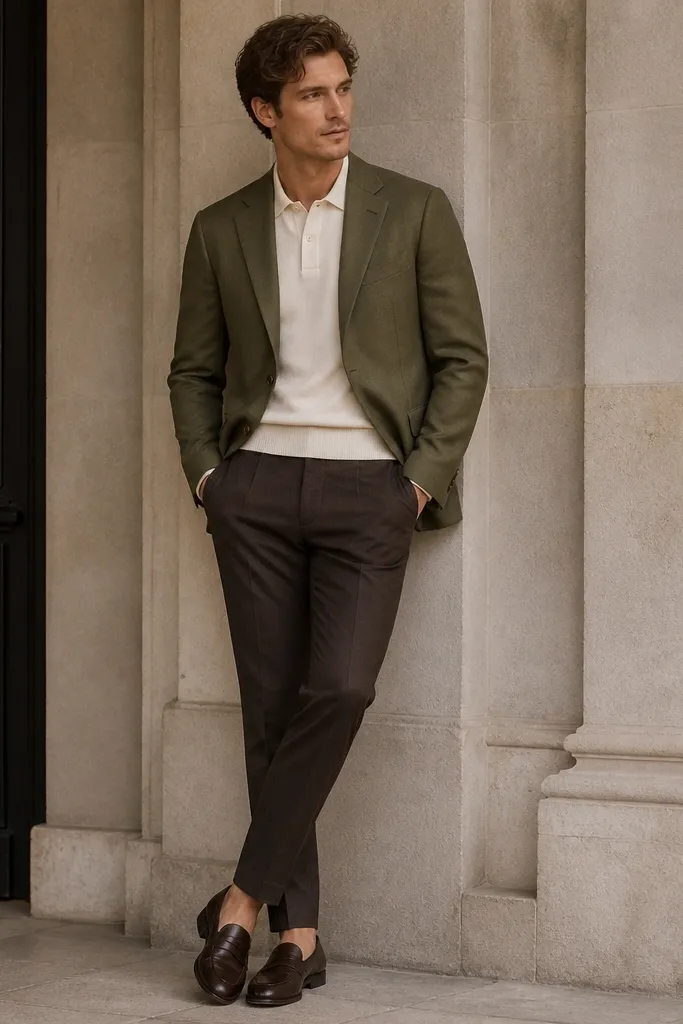
This is how I dress when I need "formal" but the office is more relaxed. Olive blazer adds depth, and the cream knit polo keeps the look warm and approachable. Tapered trousers keep the silhouette sharp. It's a good compromise between button-down formality and casual comfort.
Use a knit polo with a structured collar and no shiny finish. The blazer should be tailored enough that the polo doesn't make the front look bulky. Choose trousers in dark brown, espresso, or charcoal and keep the shoes leather.
Pro tipRoll one inch of blazer sleeve only if the office dress code allows. Otherwise keep it straight for a clean cuff line.
AvoidSkip thin jersey polos - they cling and make the whole outfit look underdressed.
13. Navy shirt dress for men look with tailored belt and leather shoes
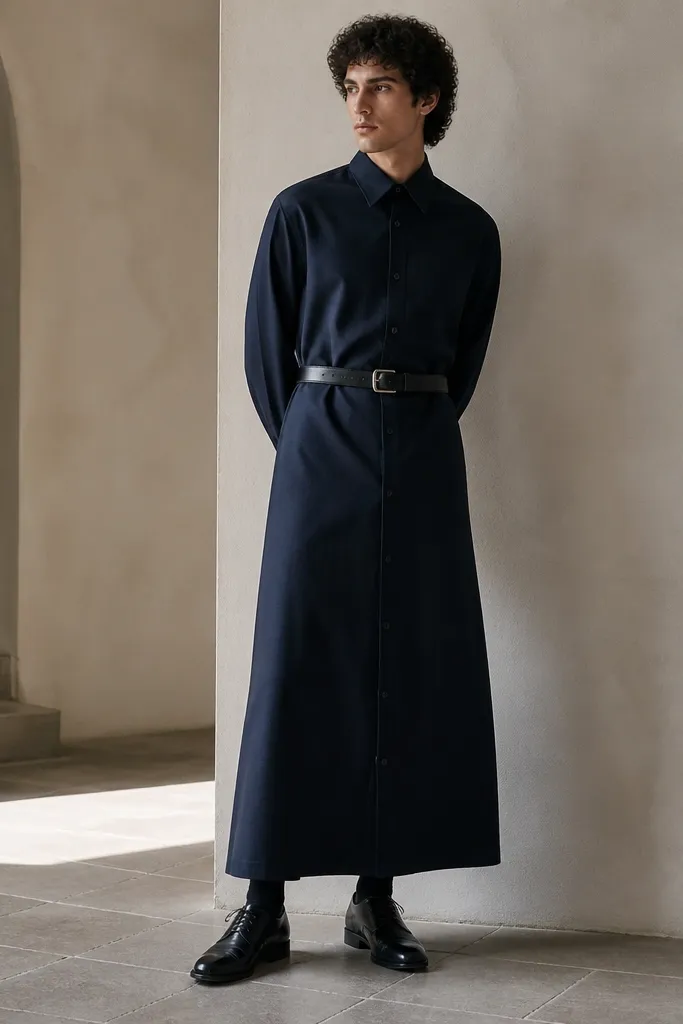
A shirt-dress silhouette can look office-formal when the fabric is structured and the waist is defined. Navy is the safest color because it reads serious, and the belt makes the line intentional instead of "oversized shirt.". If you match the shoes and belt tone, the whole look feels designed.
Choose a shirt-dress length that hits just above the knee or mid-thigh, depending on your height. The collar should be crisp and the cuffs should hit the wrist area. Use a belt that sits snug at the waist, not low on the hips.
Pro tipPress the front placket and keep the top two buttons closed for a clean office read.
AvoidAvoid thin, drapey fabric. If it hangs like a tee, it won't read formal.
14. Brown suede blazer with chambray shirt and dark jeans
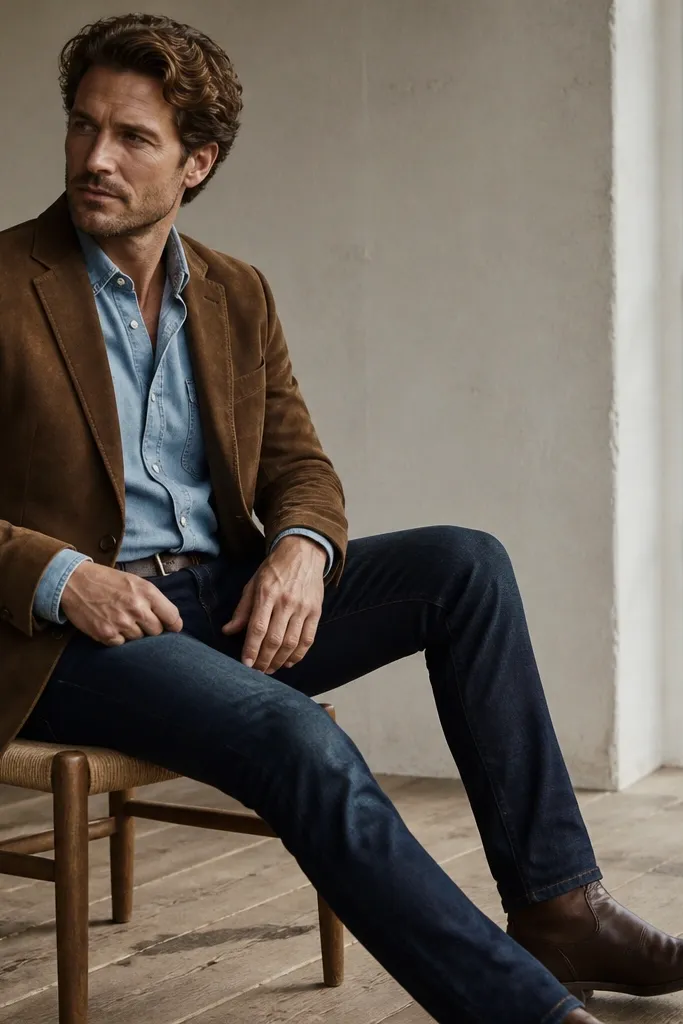
Suede adds texture, and texture reads "event" even at the office. Chambray keeps the look softer than a crisp white shirt, and dark indigo jeans keep it modern instead of too stiff. I like this for offices that lean creative but still expect polish. The matte suede avoids the shine problem that happens with some faux materials.
Pick suede in a medium brown, not very light tan. Jeans should be dark with minimal fading and a straight or mild taper leg. Keep boots in dark brown and avoid heavy scuffing.
Pro tipUse a lint roller on the blazer before you wear it. Suede shows dust fast under indoor lights.
AvoidSkip distressed jeans or overly worn suede - it makes the outfit look tired.
15. Cream overshirt with charcoal trousers and black derby shoes
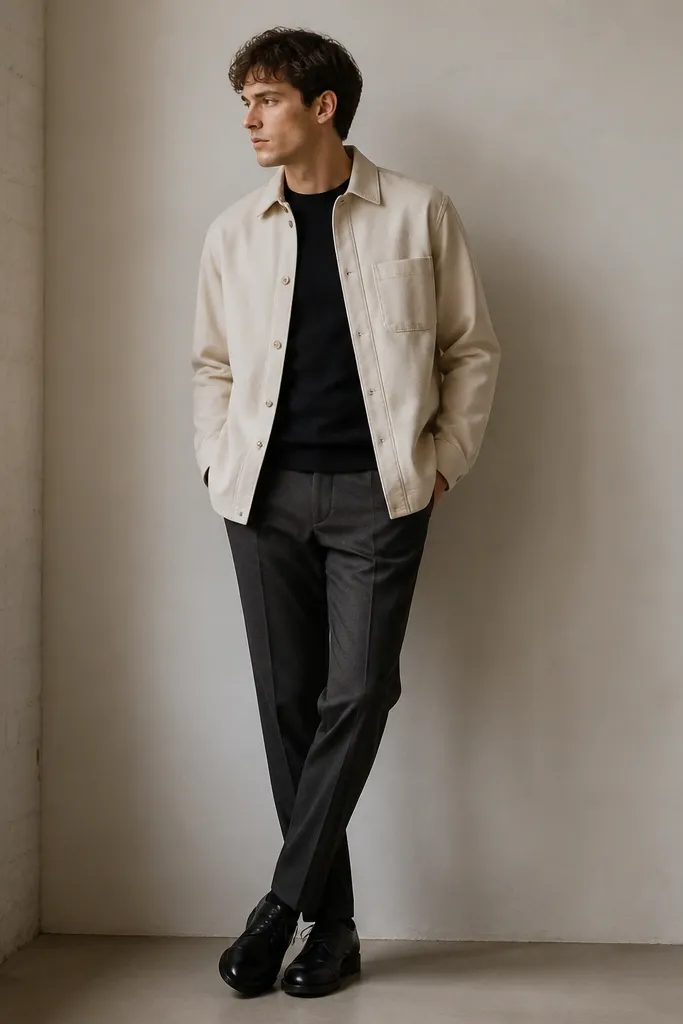
Cream on top with charcoal below gives a clean contrast that still reads professional. The black sweater adds depth and keeps the outfit from looking too light. Overshirts are great when you want a blazer-like structure without the full suit feel. This combo looks especially good in spring office days.
Choose an overshirt with a thicker cotton twill so it holds shape. Charcoal trousers should be flat-front with a smooth finish. Black derbies keep the look formal and consistent.
Pro tipTuck the sweater neckline neatly so it doesn't bunch under the overshirt collar.
AvoidAvoid cream overshirts that are thin and see-through - the shirt underneath will show.
16. Black taffeta-like dress shirt under charcoal suit jacket
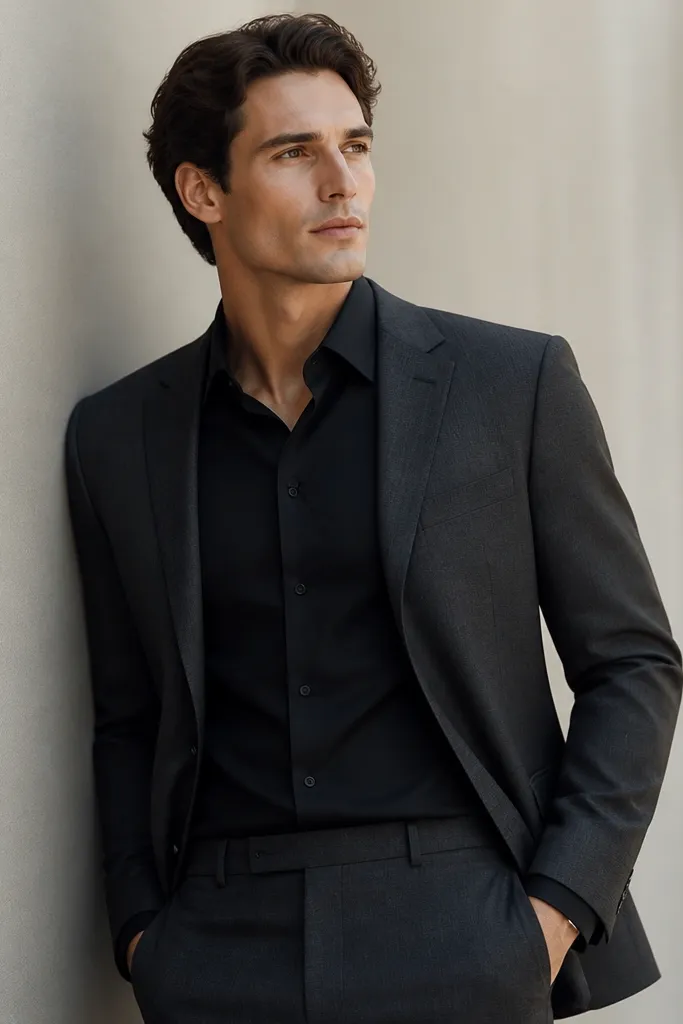
A dress shirt with a subtle texture makes the outfit feel more formal than a flat cotton shirt. Charcoal suit keeps it serious, and the black shirt gives a sleek center. This is a good choice when you have an after-work dinner and you don't want to change clothes. The key is keeping the rest matte so the shirt texture is the only shine.
Wear a charcoal jacket with a clean notch lapel. The shirt collar should be crisp, and the cuffs should align with your jacket sleeve. Keep trousers in the same charcoal shade and choose matte leather shoes.
Pro tipIf the shirt looks too shiny in daylight, swap to a matte tie or skip the tie and let the jacket do the work.
AvoidAvoid pairing a shiny shirt with patent shoes. The combined shine looks flashy in a bad way.
17. Navy cardigan blazer hybrid with white shirt and wool trousers
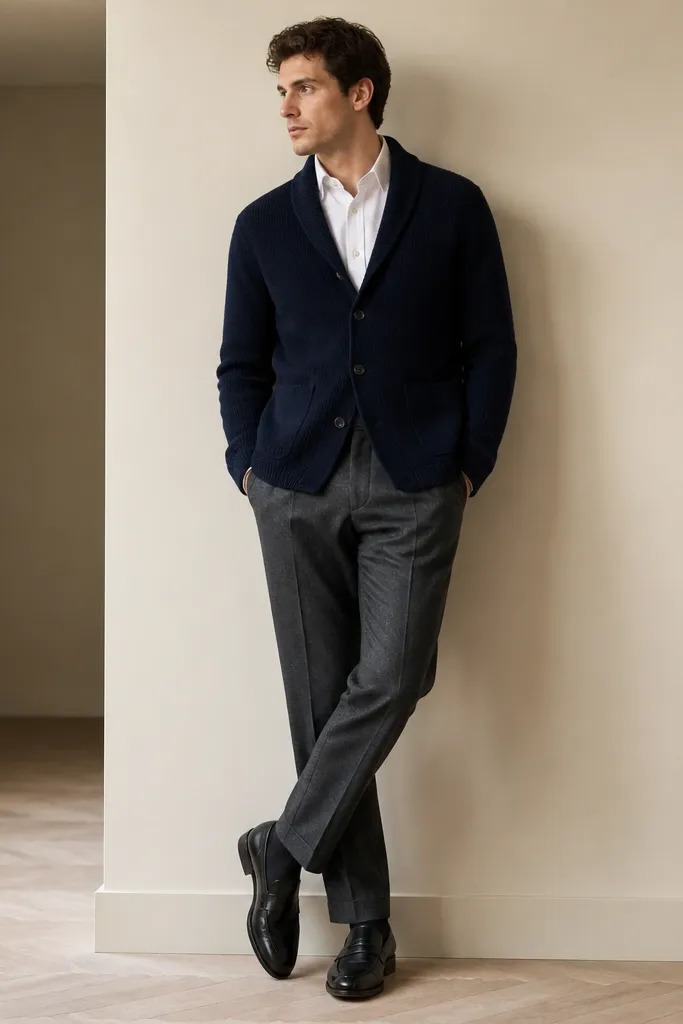
This hybrid style is my favorite for offices that want formal but hate heavy jackets. The knit lapels give you structure, and the wool trousers keep the look sharp. White shirt keeps the collar crisp and clean. It's comfortable enough for long workdays but still looks dressed up in photos.
Choose a cardigan blazer in navy with real buttons and lapel shaping that holds its line. Pair with wool trousers in charcoal or dark grey. Shoes should be loafers or oxfords in matte leather.
Pro tipUse a medium spread collar and keep the shirt tucked all the way in. Loose tuck makes knits look messy.
AvoidSkip cardigans that are too thin - they sag and make the outfit look underfit.
18. Burgundy longline blazer with black crewneck and slim trousers
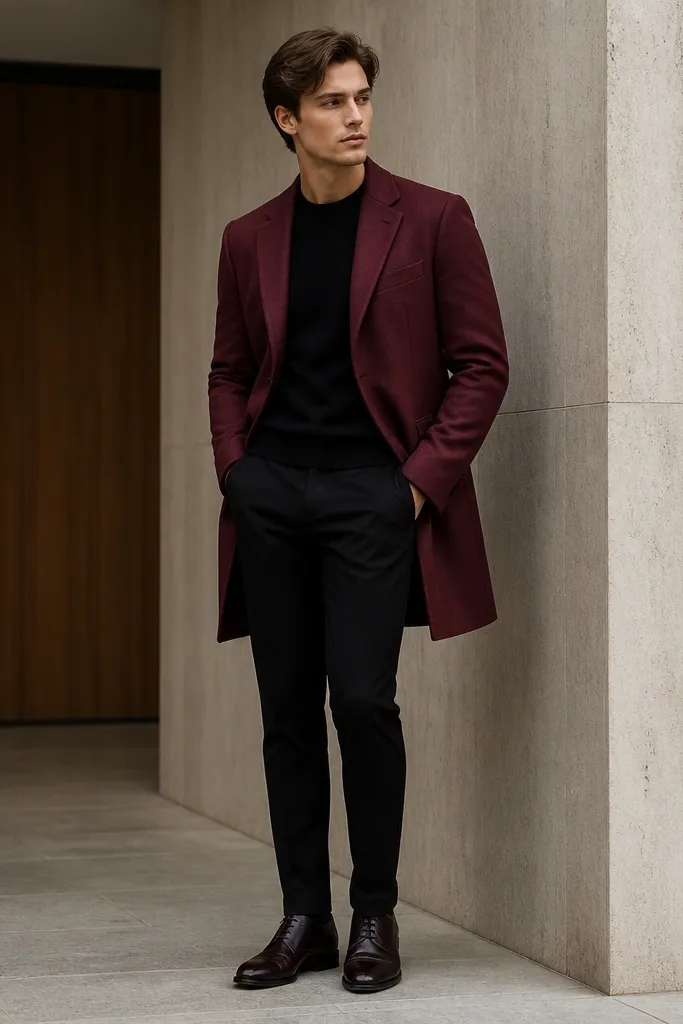
A longline blazer changes the whole shape of your outfit. Burgundy is warm and office-friendly, and the black crewneck keeps it modern and low-fuss. Slim trousers balance the longer jacket so the silhouette doesn't look heavy. This is the look I reach for when I need to stand out in a meeting without wearing a bright tie.
Pick a blazer that ends around mid-seat to upper thigh, not halfway down your calves. The crewneck should be thick enough to keep its collar shape. Trousers should be slim but not skinny, and shoes should be dark leather.
Pro tipRoll the blazer front slightly by pressing the lapels flat. Longline jackets look best with crisp edges.
AvoidAvoid thin crewnecks that stretch at the neck. It makes the burgundy look sloppy.
19. Grey wool vest with navy dress shirt and black trousers
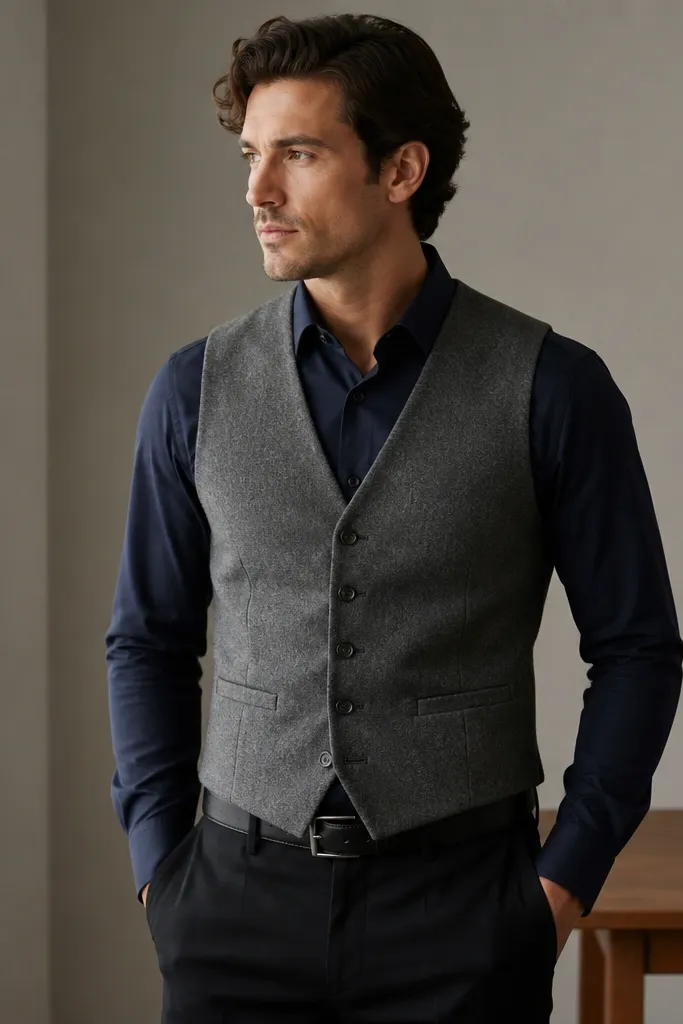
A wool vest adds formal structure even without a full suit jacket. Grey vest over navy shirt gives a controlled, classic contrast. Black trousers keep the look sharp and make the vest stand out. This is a great office option when you want to feel dressed but the day is warm.
Choose a vest in wool or wool blend with welt pockets and a matte finish. Keep the shirt collar crisp and the vest buttoned so the front stays smooth. Pair with black trousers with a clean hem break and matte shoes.
Pro tipUse a simple watch and keep the belt width around 1 inch so it matches the vest proportions.
AvoidSkip vests that gap at the buttons. If you see light through the front, it will look cheap.
20. Navy suit with white shirt and no-tie neckline
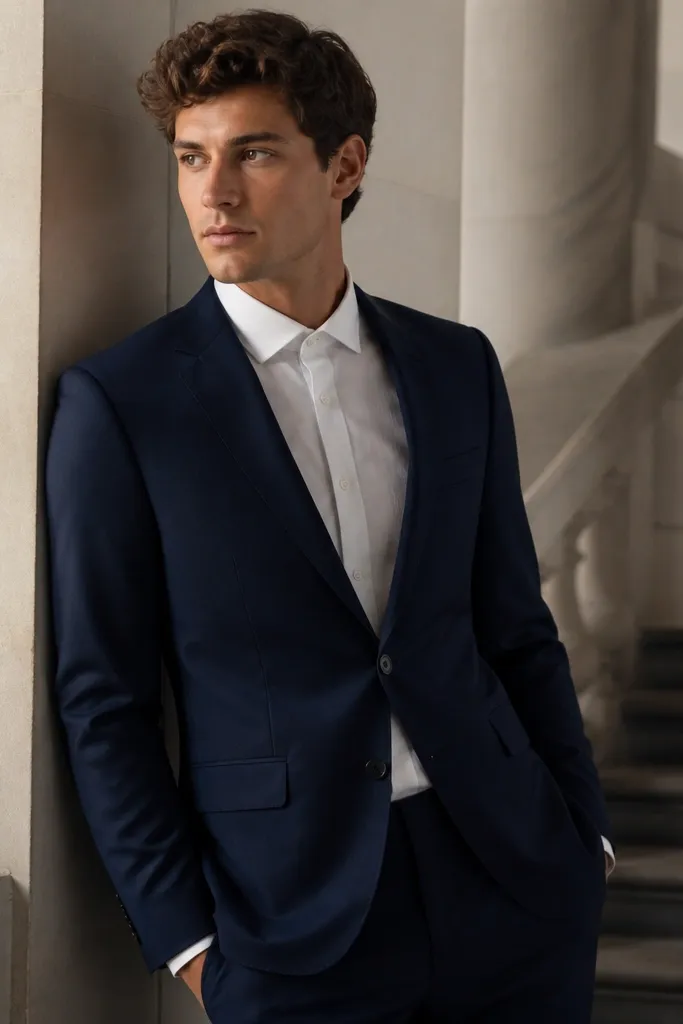
Going no-tie looks formal when the shirt collar is right and the suit fits cleanly. Navy is the most forgiving color for office wear, and white keeps it bright. I like this combo for days when you want the "suit" effect but you're not in a meeting that requires a tie. The key is a structured shirt and a jacket that doesn't pull at the buttons.
Wear a white shirt with a structured collar and keep the top button fastened if you have a spread collar that stays flat. Use navy trousers with a smooth seat and minimal wrinkles. Shoes should be polished leather in black or oxblood.
Pro tipButton the jacket and keep your shirt collar pressed. That's what reads formal without a tie.
AvoidAvoid soft collar shirts that flare - open collars make the suit look casual.
21. Tan blazer with white linen shirt and navy trousers
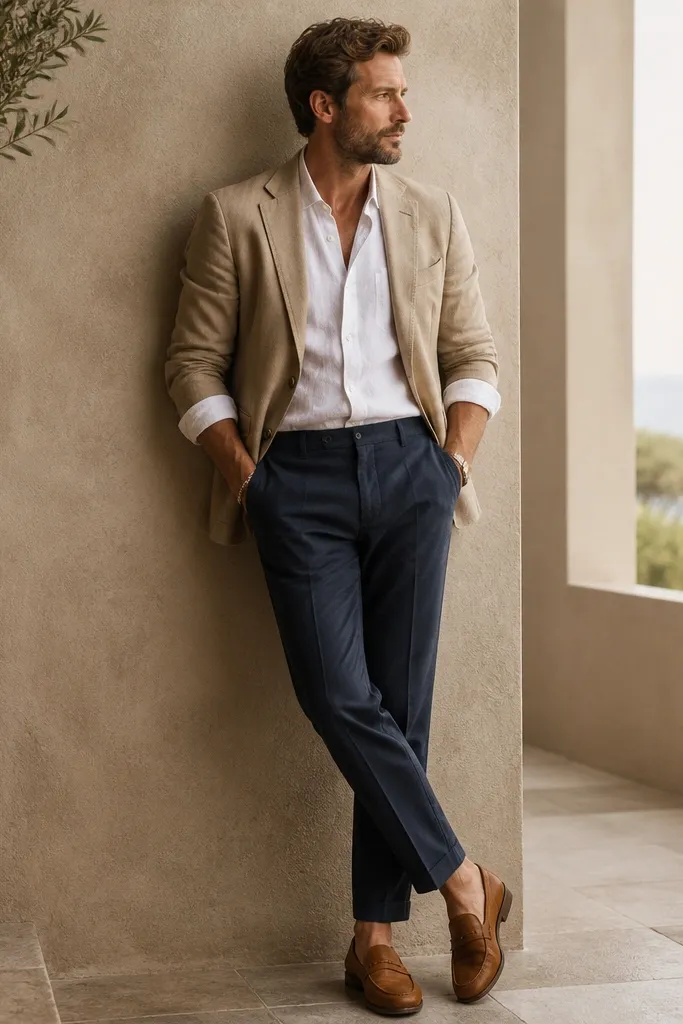
Tan blazer + navy trousers gives you a clean warm-cool contrast that looks great in spring and summer office days. A white linen shirt is breathable, but you need it to look intentional - press the placket and keep the collar crisp. The rolled sleeves add a relaxed touch while the blazer keeps it formal. Cognac loafers finish it with warmth.
Choose a tan blazer with a matte weave and structured shoulder. Keep linen shirt slightly textured and avoid overly wrinkled chaos by pressing the front. Navy trousers should be flat-front and tailored.
Pro tipRoll the sleeves to one fixed height and tuck the roll edge flat with a quick press.
AvoidSkip cheap linen that looks translucent. If you can see through it, the whole outfit fails.
22. Black satin-finish shirt with charcoal suit and black loafers
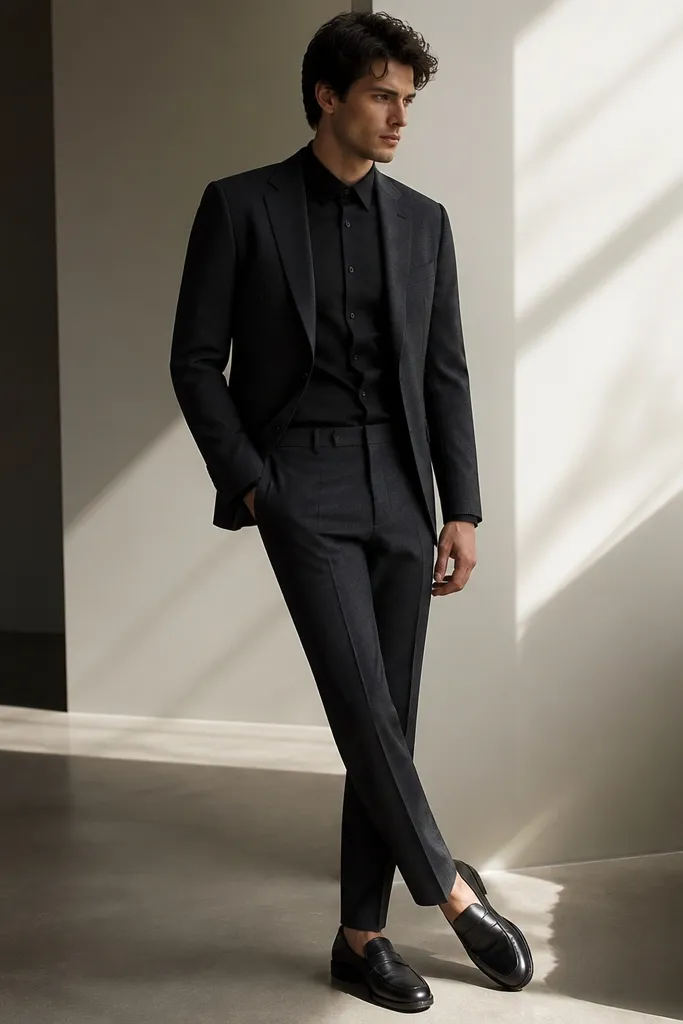
A shirt with a satin finish looks sharp because the fabric catches light subtly, not loudly. Charcoal suit keeps it from becoming too evening. This is my pick for office events where people dress up but you still need to look like you belong in the room. Black loafers keep the formality without adding bulk.
Use a charcoal jacket with clean lapels and trousers in the same shade. Keep the shirt collar crisp and the shirt front smooth. Loafers should be matte black leather or leather-like with minimal shine.
Pro tipIf the satin shirt looks too reflective in fluorescent lights, skip the tie and keep the shirt collar closed.
AvoidAvoid pairing satin shirts with glossy belts or patent shoes.
23. White shirt with navy double-breasted blazer and grey trousers
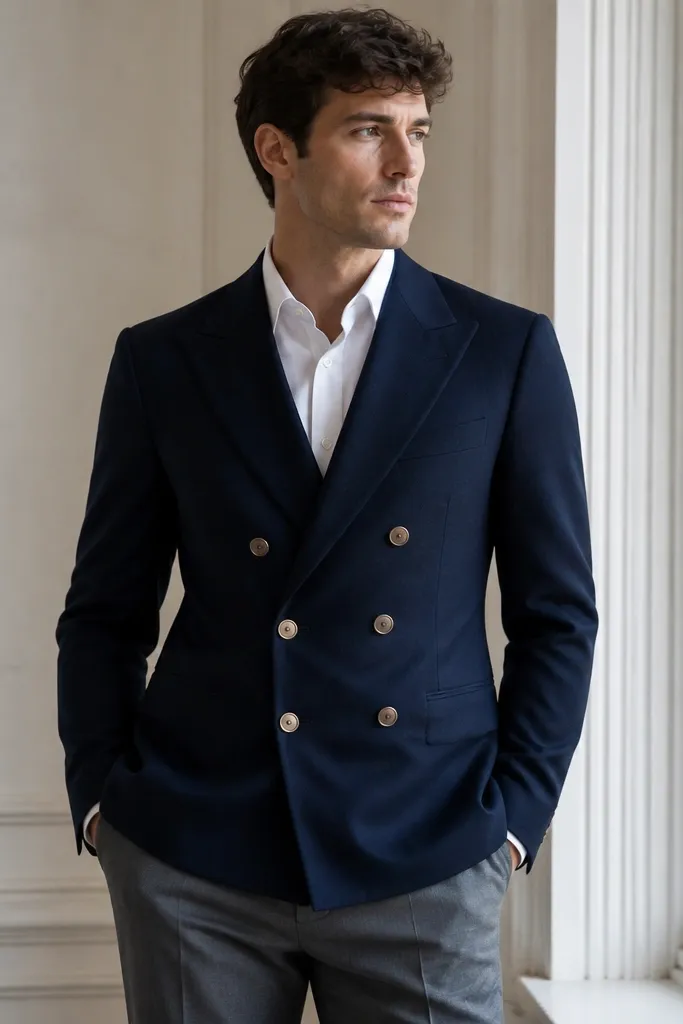
Double-breasted blazers make a big difference because the button stance creates a strong vertical line. Navy keeps it classic, and grey trousers soften the contrast so it stays office-friendly. A white dress shirt makes the collar area look crisp and gives you a clean center. This outfit reads formal even if you skip a tie.
Choose a double-breasted blazer with the right button spacing so the lapels don't gap. Grey trousers should be tailored through the thigh with a gentle taper. Keep shoes in dark brown or black depending on your belt.
Pro tipWhen you button a double-breasted jacket, use only the top button in each column for a cleaner drape.
AvoidAvoid oversized lapels and long jackets. The double-breasted silhouette magnifies bad proportions.
24. Midnight blue suit with burgundy pocket square and brown shoes
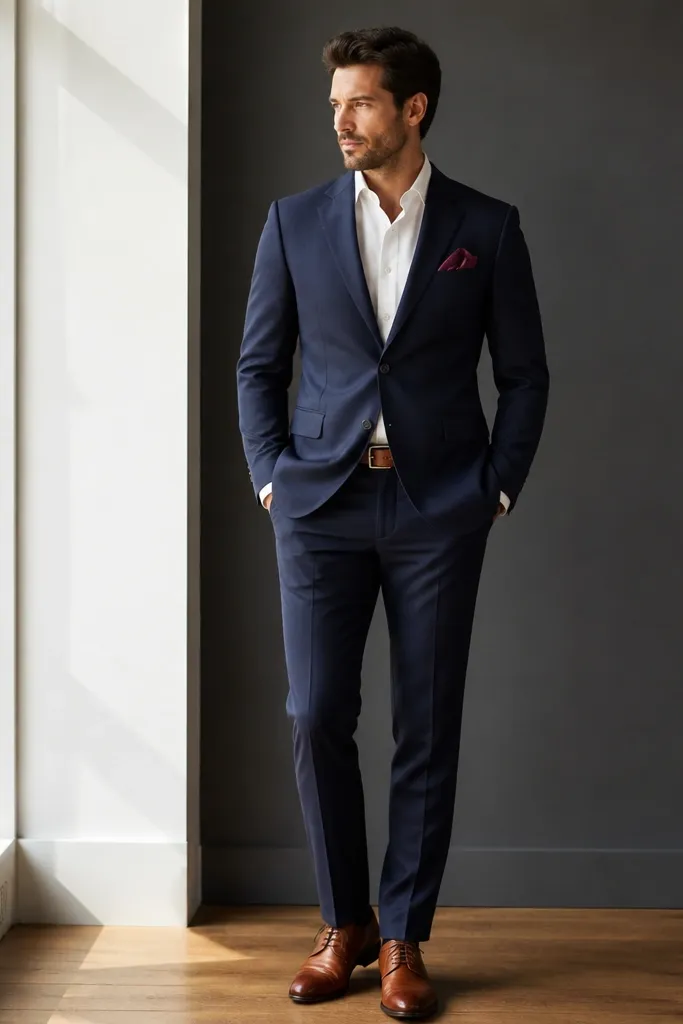
Midnight blue is darker and more formal-looking than standard navy, especially in indoor lighting. A burgundy pocket square adds a warm accent that shows you paid attention. Brown shoes and belt break up the dark suit in a classy way - it keeps the outfit from looking flat. This is a great "office formal" choice when you want to look more intentional than plain black.
Use a suit in midnight blue with a matte finish. Keep the shirt white and the tie optional; the pocket square does the styling work. Match your belt to the shoe color and choose shoes with minimal scuffing.
Pro tipFold the pocket square so it shows one clean edge line. Messy folds look sloppy next to a dark suit.
AvoidAvoid bright red pocket squares - burgundy looks more office-appropriate and less costume-like.
25. Navy t-shirt under blazer with tailored trousers and leather sneakers
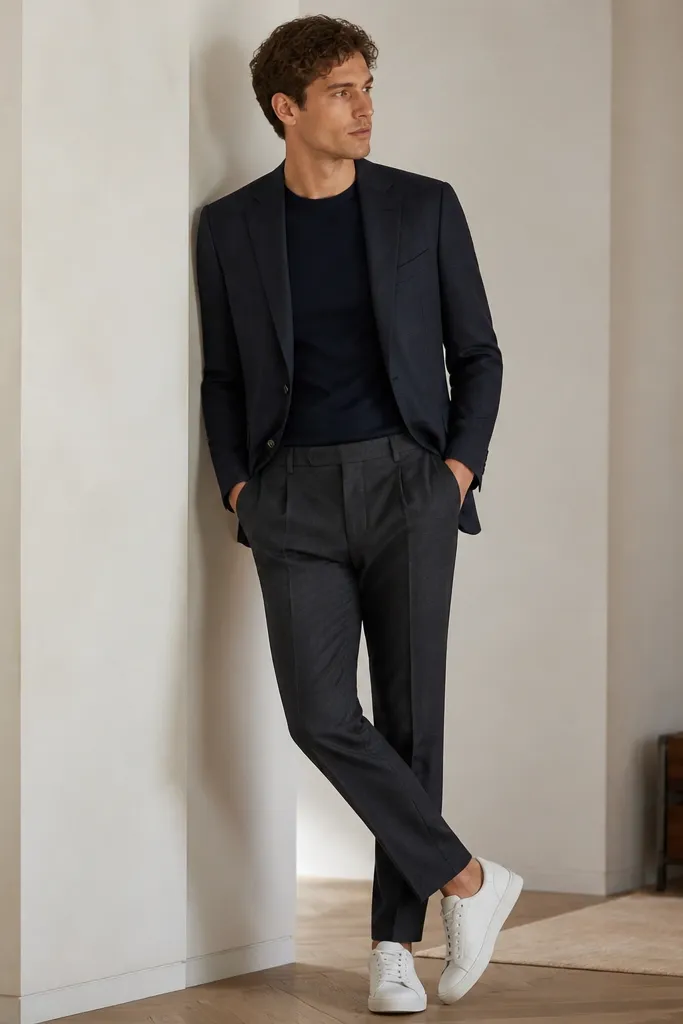
This is the modern version of office formal when your workplace is strict about "no jeans" but not strict about ties. The navy tee keeps it simple, and the blazer makes it office-appropriate. Tailored trousers are the difference between "smart casual" and "formal enough for work.". Clean leather sneakers are okay only if they look brand-new and matte.
Use a tee with a thick knit that holds its shape. Tailored trousers should be flat-front and not too loose, with a clean hem. Sneakers should be minimal - no bold logos, no chunky soles.
Pro tipTuck the tee fully and smooth the fabric at the waistband. Blazer + untucked tee looks sloppy fast.
AvoidAvoid distressed sneakers or tees with worn collars.