1. Burgundy Wool Wrap Dress with Straight-Tie Belt
A wool wrap dress looks formal because the fabric holds the wrap line and keeps the V from collapsing. Burgundy reads richer than black in photos, and the wrap construction gives you a built-in waist even if the vintage size runs big. The straight tie belt keeps the look grounded and stops it from turning into a costume. Pair it with matte accessories so the wool stays the focus.
Wear a fitted black or dark plum long-sleeve base layer under it if the neckline dips when you move. Add a belt that matches the dress tone - burgundy leather or a matching fabric belt. Hem it so the front falls just above the knee and the back sits slightly longer for a subtle coat effect. This one works for winter dinners and gallery openings.
Pro tipPin the wrap at the waist before you buy or tailor - you want the V to sit centered when you stand with your shoulders relaxed.
AvoidAvoid glossy belts or shiny undershirts that reflect light and make the dress look less "tailored."
2. Charcoal Column Dress with White Button Placket
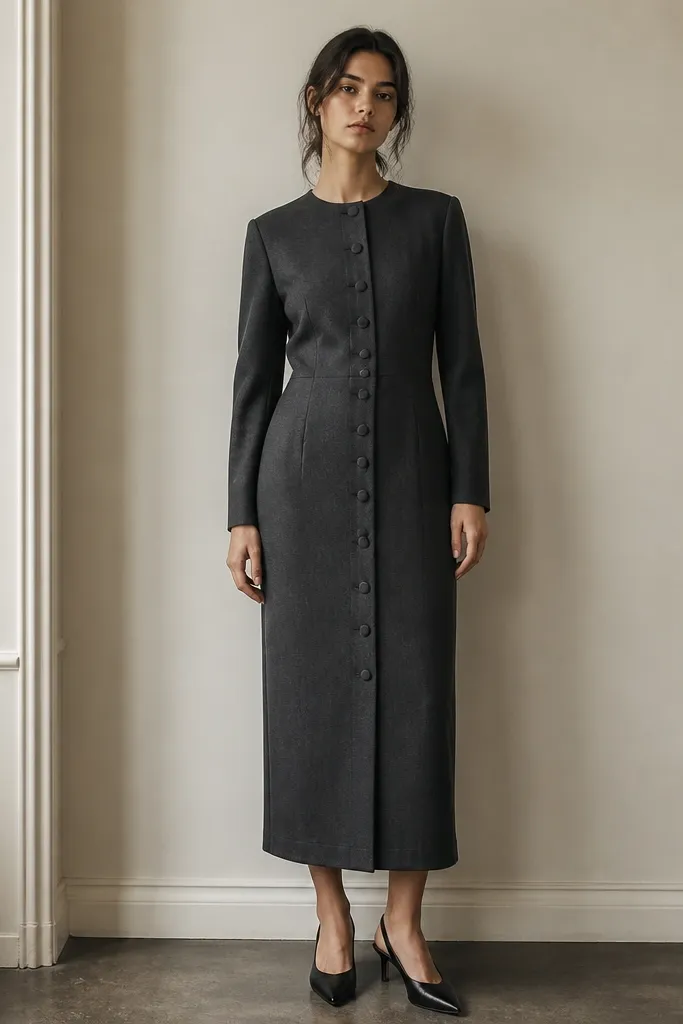
A charcoal column dress gives you that "grown-up formal" look because it stays vertical and doesn't fight your proportions. The white button placket creates a crisp focal line that reads like a tailored shirt even though the main piece is a dress. Dense fabric prevents cling at the hips, which is the difference between classy and costume. This style works great if you want a menswear feel with a full-length silhouette.
Wear a white or cream fitted shirt underneath only if the dress neckline is low, otherwise skip it. Keep shoes dark and simple - black leather oxfords or cap-toe derbies. Add a thin black belt only if the dress has no waist shaping; otherwise let it hang cleanly. For warm settings, choose a lighter charcoal suiting instead of heavy wool.
Pro tipPress the placket flat with a steam iron before you go - the crisp front line makes the whole outfit look intentional.
AvoidDon't pair it with bulky sneakers; the column shape needs structured shoes.
3. Navy Silk-Blend Slip Dress with Black Turtleneck Base
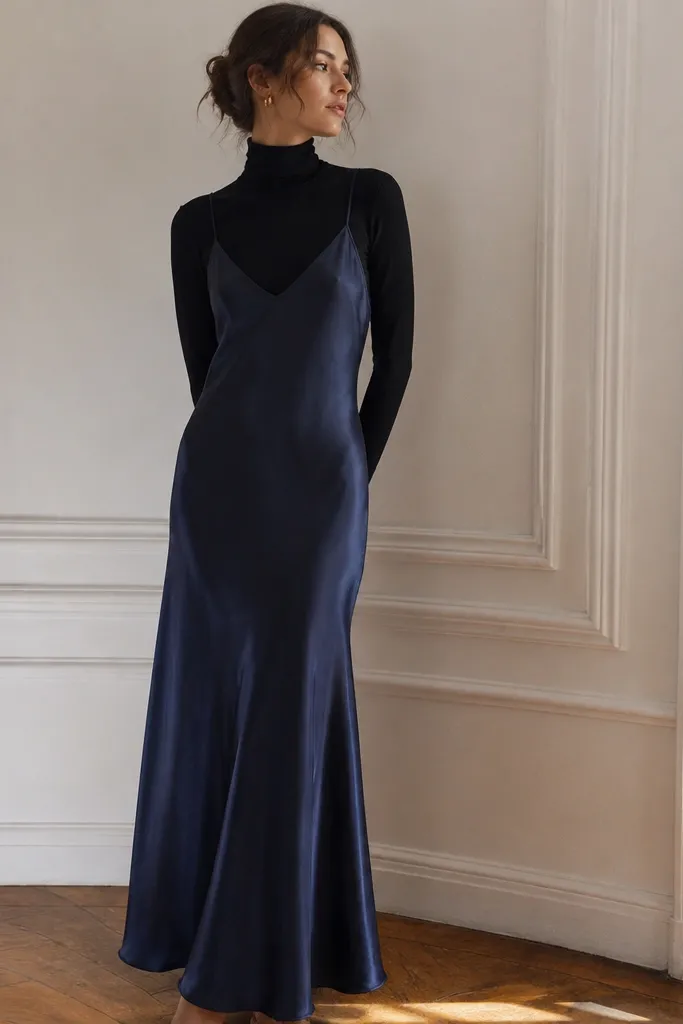
A silk-blend slip dress reads formal when you control the neckline with a base layer. Navy silk has depth - it doesn't look flat like some blacks, and the slight sheen gives you evening energy. By adding a black turtleneck, you turn the slip into a structured, colder-weather outfit. This is the easiest way to wear a vintage dress without worrying about fit at the chest.
Choose a turtleneck that fits close at the neck and upper chest so it doesn't bunch under the straps. Let the slip fall freely - no belt. Shoes: black Chelsea boots or sleek loafers. This outfit is perfect for date nights, low-lit restaurants, and late shows.
Pro tipUse fashion tape at the strap line if the slip shifts when you walk.
AvoidSkip body-hugging knit underlayers with a loud texture; they can make the slip look wrinkled.
4. Forest Green Velvet Shift with Gold Clip Earrings
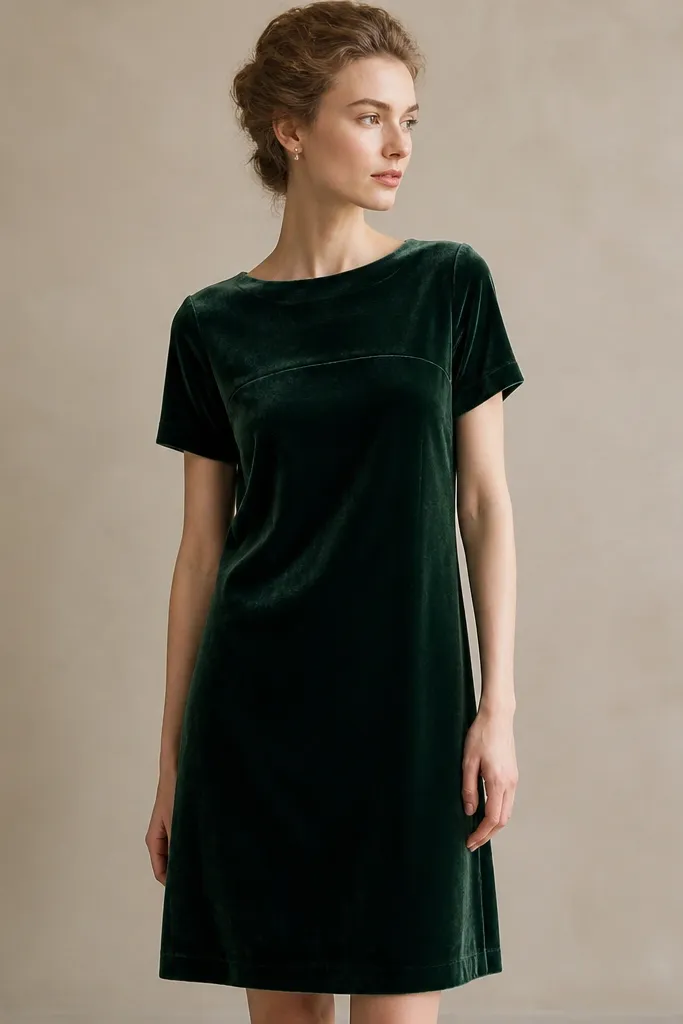
Velvet shifts look luxurious because the fabric changes color with movement. Forest green feels formal without being as harsh as emerald, and it photographs well under warm lighting. A shift cut keeps the silhouette clean, and you can build the "menswear" vibe with structured shoes and a fitted collar layer if needed. The goal here is a smooth, heavy surface plus small warm-metal accents.
Wear a thin black turtleneck or a fitted crew-neck knit under it if the neckline is wide. Keep the jewelry simple: gold clip earrings and a slim watch. Choose black or dark brown loafers with a leather sole. This works for holiday parties and weddings where you want to stand out without loud patterns.
Pro tipBrush the velvet gently with a soft clothes brush before you leave; it evens out the pile direction.
AvoidDon't steam velvet directly - water spots ruin the nap.
5. Black Eyelet Lace Dress with Long-Sleeve Mock Neck
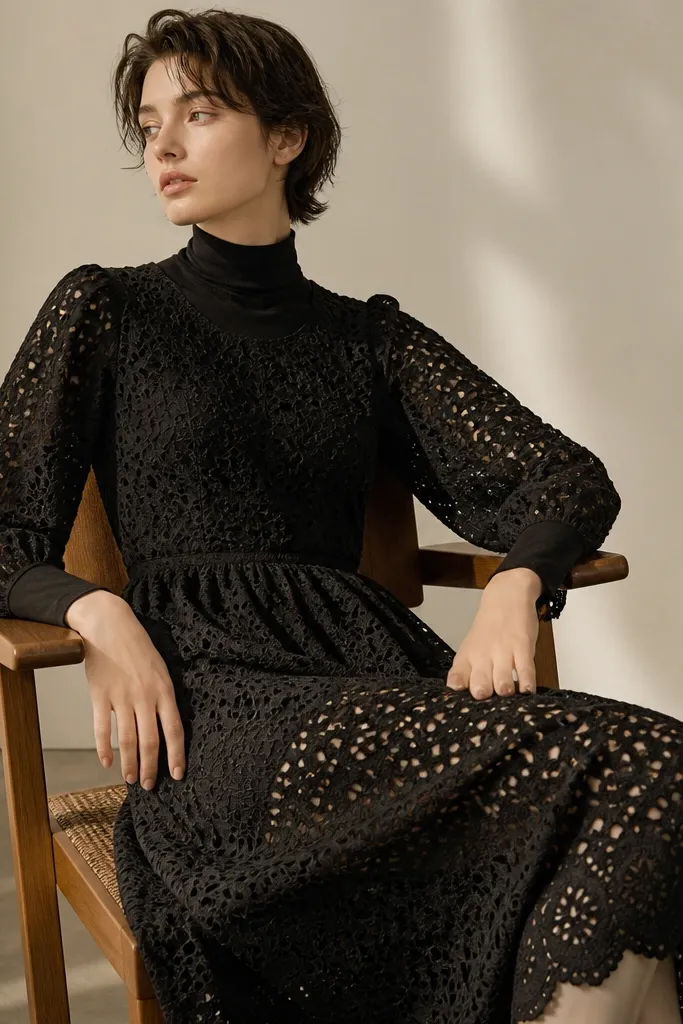
Eyelet lace looks formal when it sits over a solid base. The mock neck keeps it from reading beachy, and the black-on-black contrast gives you a clean silhouette. Vintage eyelet often has a tighter, more structured weave than modern lace, so it holds its shape. This is a great option if you want a dress that looks intentional in daylight and still feels evening-ready.
Pick a mock neck top in the same black family as the lace - matte black to avoid clashing shine. Let the lace dress fit close through the shoulders; if it's loose, tailor the side seams. Shoes: black leather lace-up boots or smooth dress shoes. Wear this for daytime weddings and museum events.
Pro tipCheck the hem lining - if it's scratchy or thin, add a soft slip layer so the lace doesn't cling.
AvoidAvoid pairing with bright belts; lace needs tonal accessories.
6. Plaid Wool Jumper Dress with Crisp White Shirt
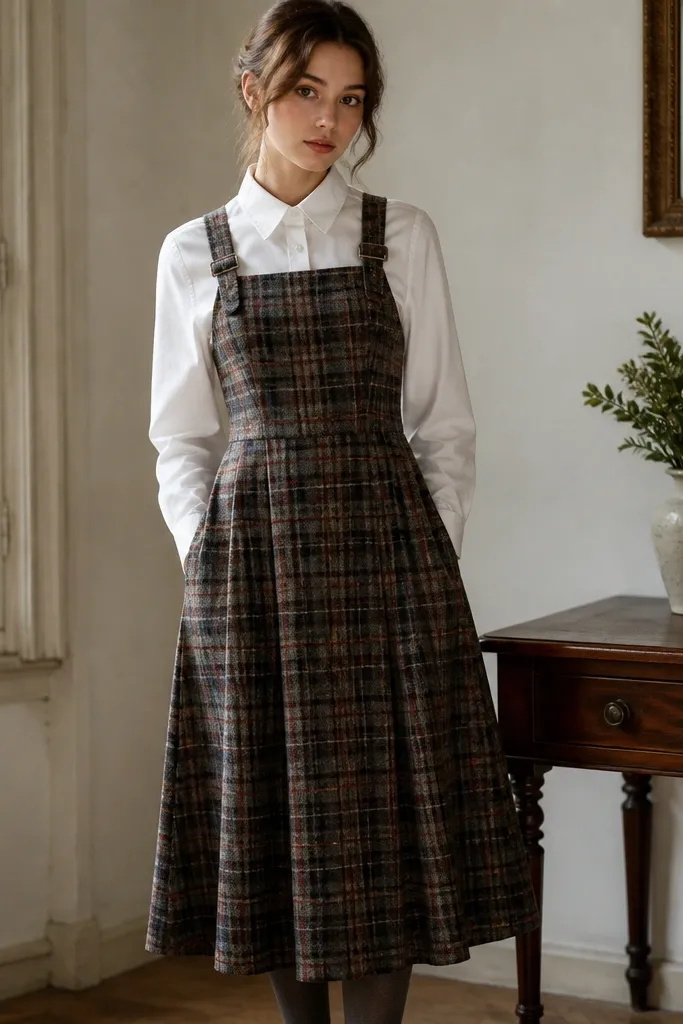
A plaid jumper dress is formal when the shirt underneath is sharp. The wool keeps it structured, and the crisp white collar reads like tailoring. Vintage plaid also has a soft, slightly faded tone that looks more expensive than new high-contrast patterns. This look is a "quiet statement" for events where you want to look styled without going full evening gown.
Wear a white shirt with sleeves that end cleanly at the wrist under the straps. Keep the jumper snug at the waist - if it gaps, add a thin belt or take in the back. Choose dark oxfords or brogues. For fall and early spring, this is a lifesaver.
Pro tipPress the shirt collar hard so it frames the dress neckline cleanly in photos.
AvoidSkip oversized shirts under it; bulk makes the plaid look sloppy.
7. Cream Brocade Dress with Black Patent Belt
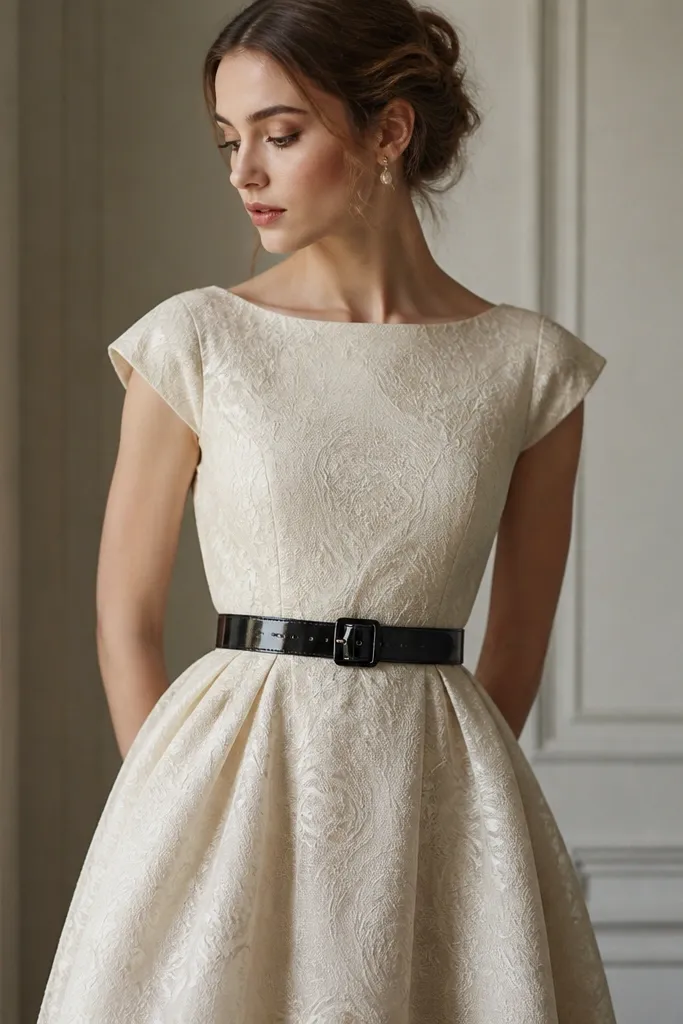
Brocade works because it already has texture, so you don't need extra pattern elsewhere. Cream brocade can look bridal if it's too light, but a black patent belt grounds it instantly. The waist cinch turns the dress into a tailored shape, not a shapeless fabric block. This is one of the best choices for formal dinners where the room is dim and the fabric texture shows.
Wear a black or deep espresso long-sleeve base only if the neckline is too open. Keep outer layers off - brocade is heavy and can feel bulky with coats. Shoes: black dress shoes with a low shine, not glitter. This is great for winter holiday parties and upscale birthdays.
Pro tipIf the brocade is stiff, loosen one button at the back and let the fabric fall - it looks more natural than fully tight.
AvoidAvoid matching the belt color to the brocade; contrast is what keeps it stylish.
8. Dusty Rose Satin Dress with Gray Wool Overcoat
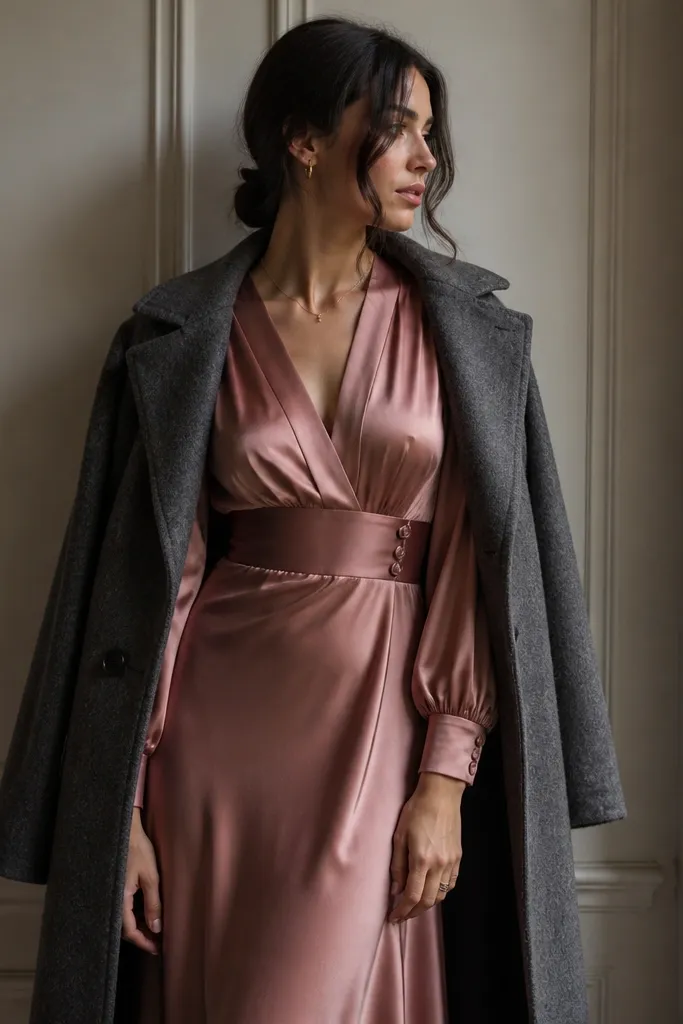
Dusty rose satin looks romantic, but it becomes formal when you pair it with a structured wool coat. The gray overcoat makes the satin feel intentional instead of "going out" casual. Long sleeves on the dress help it read mature, and the V neckline adds shape without needing jewelry. This combo is what you wear when you want to look good walking from the car to the venue.
Choose a gray overcoat that hits around mid-thigh so it frames the dress waist. Wear simple earrings or skip them and rely on the coat collar line. Shoes: black leather boots or sleek loafers. If the satin is slippery, use a slip lining or fashion tape at the side seams.
Pro tipTest in front of a mirror with the coat on - you want the coat opening to reveal the V, not hide it completely.
AvoidSkip chunky scarves; they fight the clean satin lines.
9. Indigo Denim Dress with Leather Suspenders
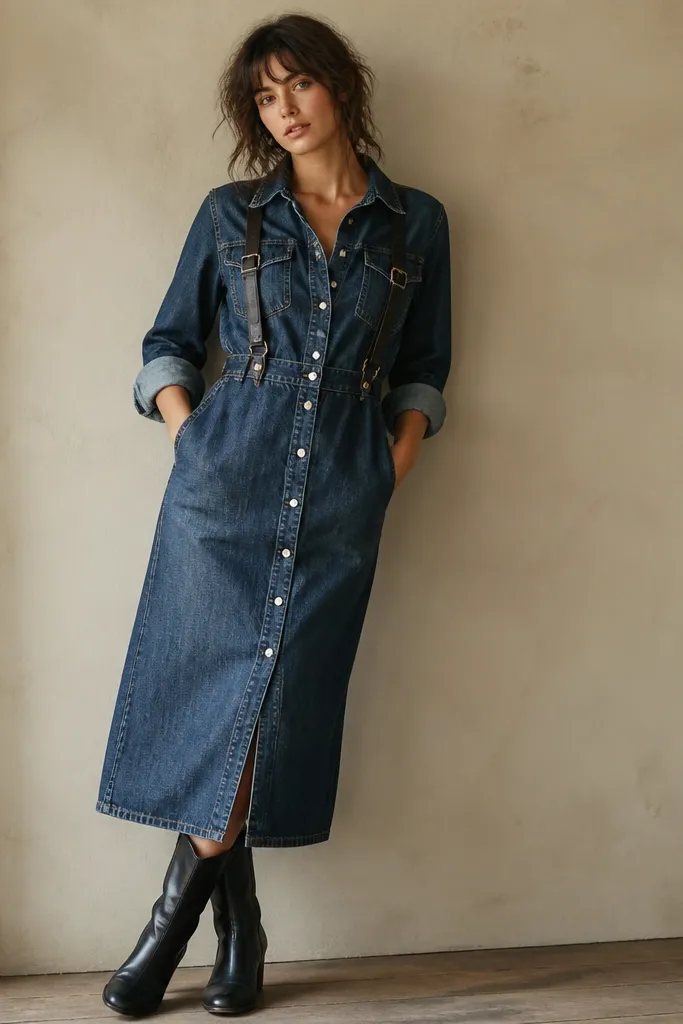
Denim can look formal when the cut is dressy and the styling is menswear sharp. Indigo has that deep color that reads more serious than light blue, and suspenders add structure along the shoulders. This is a good choice when the venue is outdoors or the dress code is "dressy casual" but you want to stand out. The trick is to keep everything else matte and clean.
Wear a fitted black or white shirt under the denim dress if the neckline is wide. Suspenders should sit close to your shoulders so the torso line stays straight. Belt off - let suspenders do the job. Shoes: black leather derbies or dark brown boots.
Pro tipIron the denim dress on the reverse side so the creases look crisp, not shiny.
AvoidAvoid distressed denim and heavy patches; formal denim needs clean surfaces.
10. Tobacco Brown Taffeta Dress with Matching Tie Waist
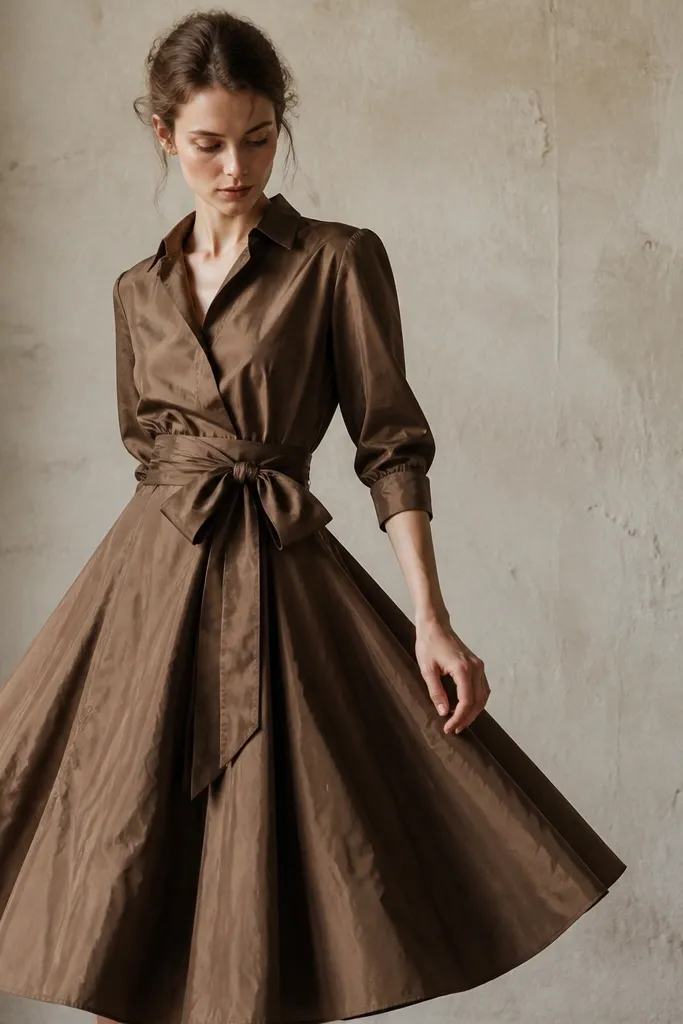
Taffeta has that crisp, structured feel that makes a dress look event-ready. Tobacco brown reads warm and expensive, and the tie waist gives you a clear silhouette without adding a separate belt. The light flare creates movement when you walk, and that motion looks good in photos. Pair it with restrained accessories so the dress fabric stays the main character.
Add a thin long-sleeve base in cream or deep brown if the neckline is open. Keep the sleeves fitted; if the dress sleeves are too loose, take them in at the cuff. Shoes: oxblood or dark brown leather lace-ups. This works for fall weddings and evening parties in cooler weather.
Pro tipHold the tie waist in the mirror while you stand - adjust until the waist hits the narrowest part of your torso.
AvoidAvoid overly shiny shoes; taffeta already has crisp texture.
11. Black Crepe Midi with One-Button Cape Collar
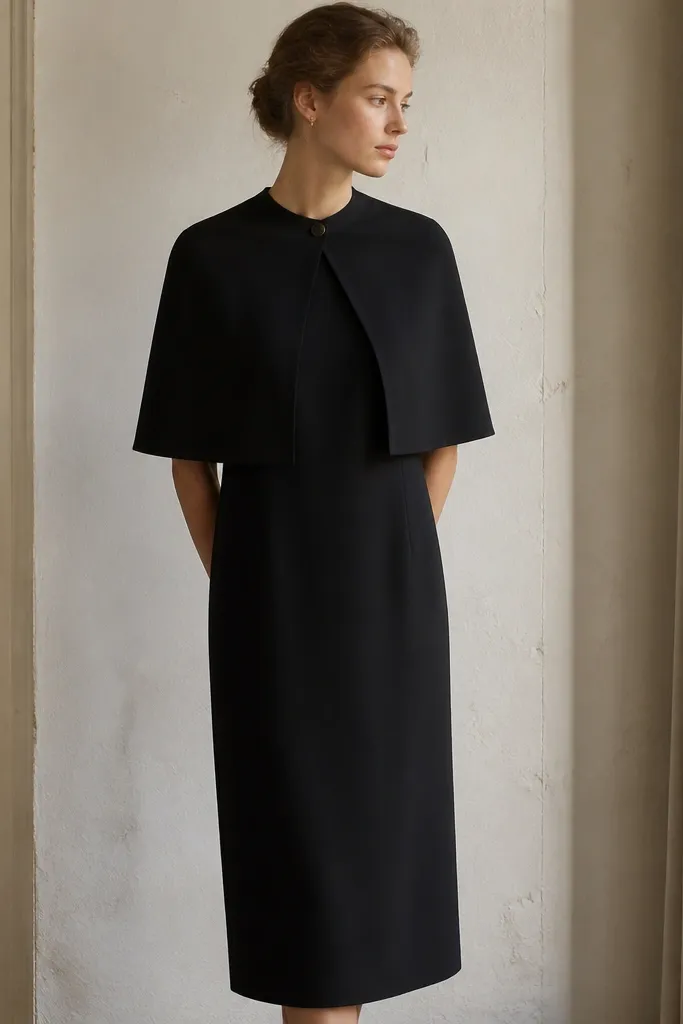
Crepe gives you that tailored drape without shine, and the cape collar makes it feel formal fast. The one-button neck keeps the look clean, like a long coat that happens to be a dress. When the collar sits flat on your shoulders, the whole outfit looks intentional. This one is perfect for events where you want to look sharp in low light.
Keep underlayers minimal: a fitted black crew-neck top if needed. Hem should hit mid-calf or slightly above depending on your height so the collar effect stays the focus. Shoes: black Chelsea boots or sleek dress shoes. Add a small clutch bag only if you're actually carrying one - otherwise skip it.
Pro tipPress the collar flat with a steam iron and let it cool on a hanger so it holds its shape.
AvoidAvoid bulky scarves - the cape collar already frames your neck.
12. Ivory Lace-Trim Dress with Dark Suspenders
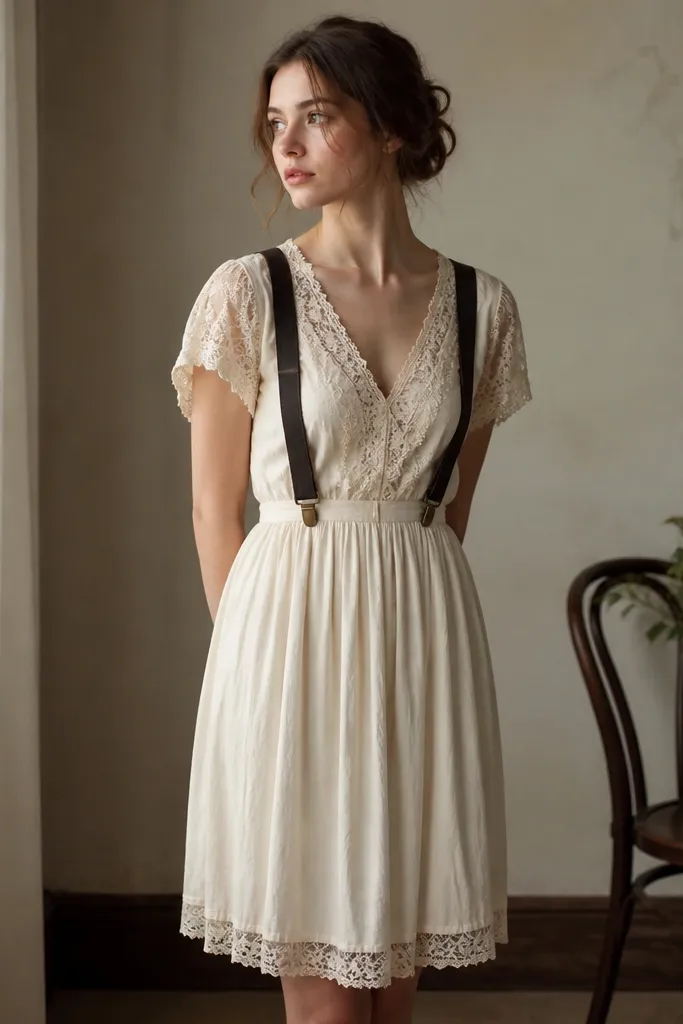
Ivory lace trim can read formal when you add a menswear structure on top. The suspenders create a straight line from shoulder to waist, which balances the delicate trim. Lace is visually light, so the dark suspenders add contrast and keep the outfit from feeling too soft. This works beautifully for spring events where you want to look airy but still dressed.
Wear a plain black or deep charcoal shirt under the dress so the lace trim stands out. Suspenders should be fitted and straight; don't let them twist. Shoes: black leather loafers or oxford flats with a low heel. This is great for daytime receptions and garden parties.
Pro tipIf the dress is see-through at the lace sections, use a nude or charcoal camisole that matches the trim tone.
AvoidSkip patterned socks; keep socks solid so the lace and suspenders stay clear.
13. Emerald Green Satin Halter Dress with Leather Bracelet
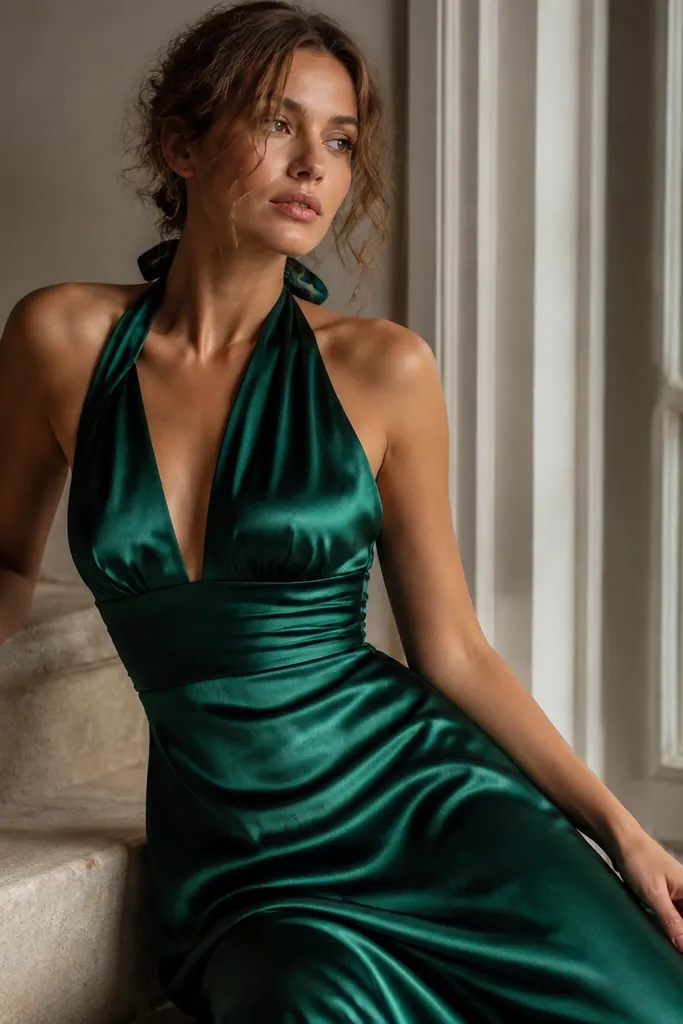
Emerald satin is the kind of color that looks rich in real life, not just in photos. The halter neckline shows clean skin lines and makes the dress feel like eveningwear. The key is keeping accessories grounded: leather bracelet, dark shoes, and no extra shine. This look is a strong choice for parties, concerts, and formal nights where you want color without a print.
Wear a strapless or seamless base underneath if the dress is lower cut in the front. Keep your shoes dark - black or dark brown - so the green stays the focal point. If you need to adjust fit, take in at the sides rather than tightening the halter too much. Hem should skim the knee or hit mid-calf depending on your comfort.
Pro tipTie the halter so it sits high on the neck - low ties make satin look casual.
AvoidAvoid silver accessories with emerald satin; the finish clash reads cheap.
14. Olive Wool A-Line Dress with Clean Crew-Neck
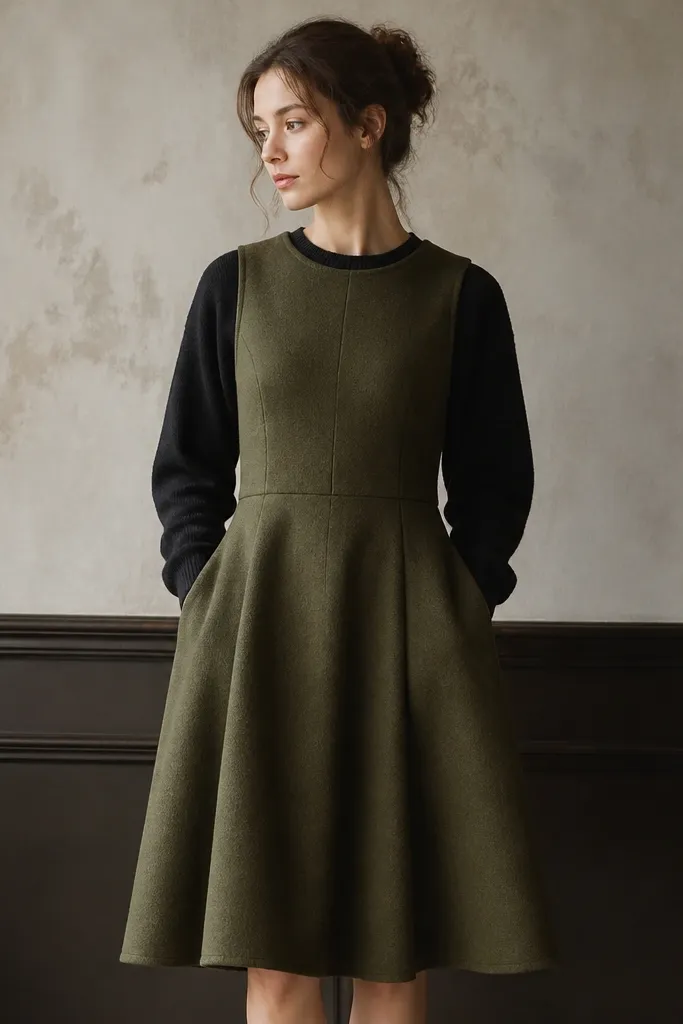
Wool A-line dresses look formal because they hold shape through the skirt and don't cling. Olive reads grounded and works with a lot of skin tones, especially under warm indoor lighting. A crew-neck base layer adds a menswear feel and keeps the neckline from looking too soft. This is a dependable choice when you want comfort and still look dressed.
Choose a crew-neck in black, charcoal, or cream depending on the dress tone. Keep the base layer thin so it doesn't add bulk at the waist. Shoes: dark brown loafers or ankle boots. Add a simple watch and stop there.
Pro tipIf the dress flares too much, take in the side seams at the upper skirt - you don't need to change the whole cut.
AvoidAvoid thin, stretchy belts on wool; they make the waist look flimsy.
15. Red Velvet Wrap Dress with Black Lace-Up Boots
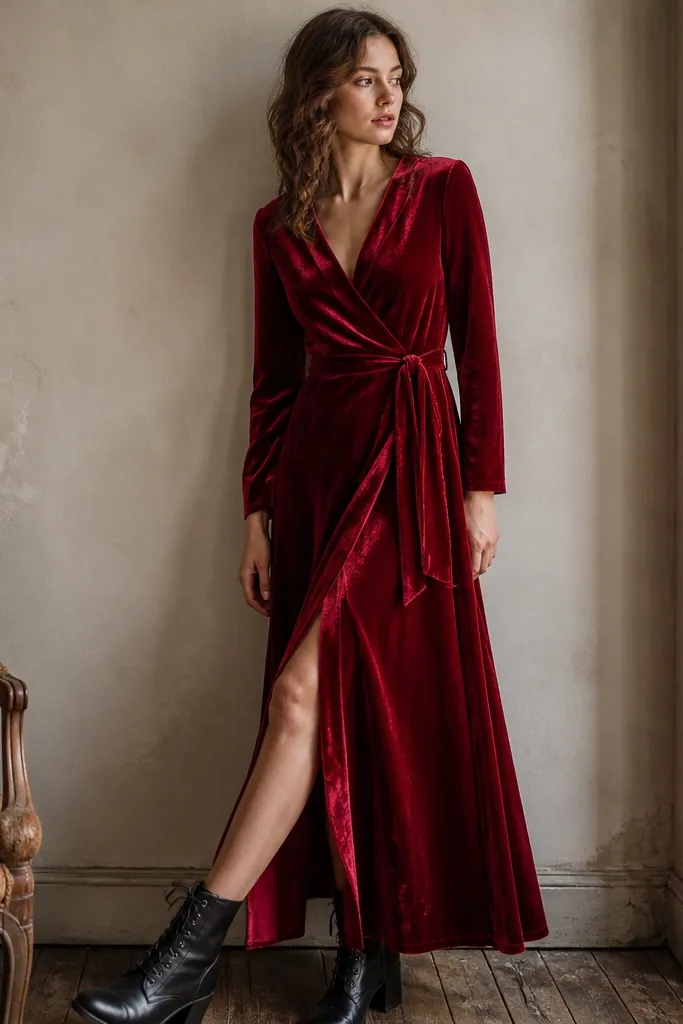
A red velvet wrap dress is the fastest route to "evening" because velvet already reads special. The wrap creates shape, and the long sleeves keep it polished. Black lace-up boots add a grounded, masculine edge, so the dress doesn't feel like it's trying too hard. This combination looks great in photos because velvet catches light in patches as you move.
Wear a thin black top under the wrap if the neckline opens too wide. Keep the belt tie centered and snug at the waist so the wrap doesn't shift. Boots should be matte leather, not patent. This works for winter dinners and holiday parties.
Pro tipTest walking - if the wrap opens, add one interior snap at the waist seam.
AvoidAvoid bright red shoes; it makes the outfit look like a theme.
16. Gray Pinstripe Shirt-Dress with No Belt
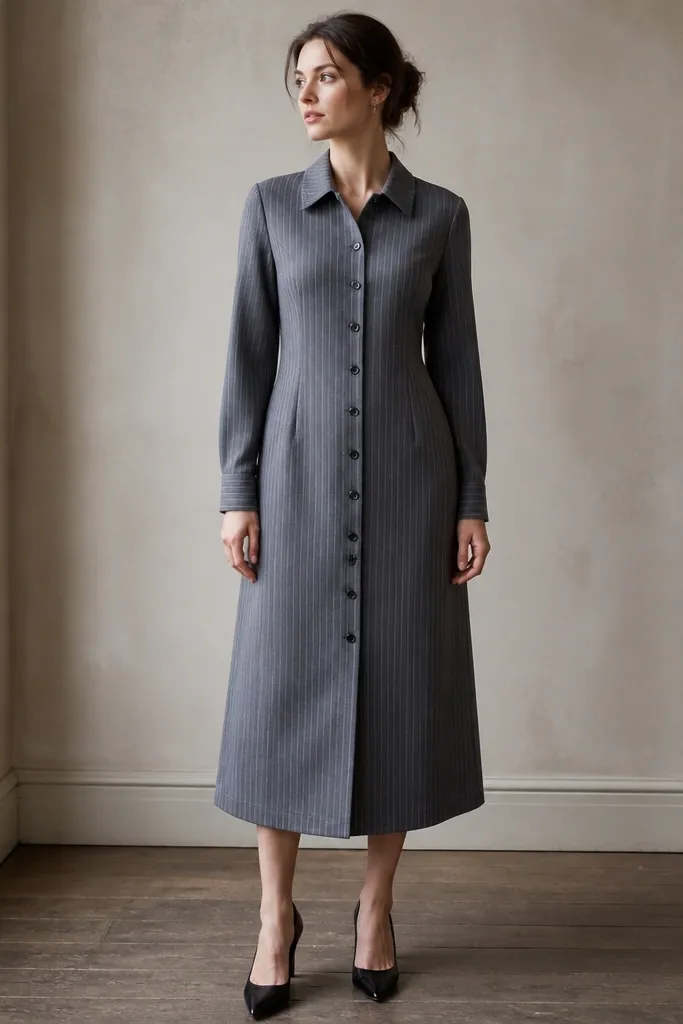
A shirt-dress with pinstripes can look formal because the pattern mimics tailoring. Skipping a belt keeps the silhouette straight and lets the vertical pinstripes do the work. If the dress has a proper collar stand and crisp cuffs, it reads like a tailored garment. This is one of the easiest ways to wear a dress without overthinking it.
Button it cleanly, then roll sleeves once at the forearm for a slightly relaxed vibe. Choose a slim tie only if the event is strict; otherwise skip it and let the collar line sit right. Shoes: black oxfords or simple loafers. Hem should hit mid-calf for the best proportions.
Pro tipPress the collar with starch or a light spray so it stays upright in pictures.
AvoidDon't wear a chunky belt with pinstripes; it breaks the vertical line.
17. Blue Floral Print Wrap Dress with Solid Black Shoes
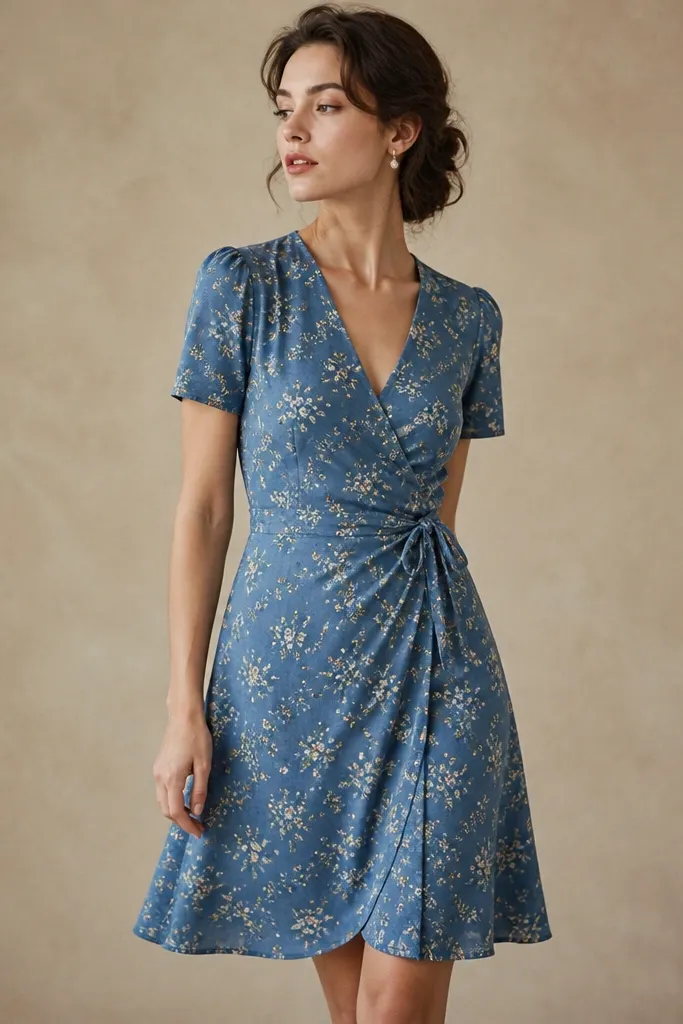
Small-scale floral on a wrap dress looks formal when the base color is deep and the print is tight. The wrap keeps it structured, so the flowers don't read like casual summer fabric. Solid black shoes calm the pattern and give you a clean finish. This is a good choice for spring weddings when the dress code says formal but you still want personality.
Wear the belt at the natural waist, not the hip. Keep the underlayer plain - black or navy - so the floral stays the only pattern. Choose black leather loafers or oxford shoes. If the neckline is low, add a fitted mock neck underlayer in black.
Pro tipWhen you pick the print, hold the dress up next to your shoes - you want the shoe color to be one of the dominant tones in the fabric.
AvoidAvoid patterned socks; match socks to shoe color instead.
18. Tan Leather-Trim Capelet Dress with Cream Shirt
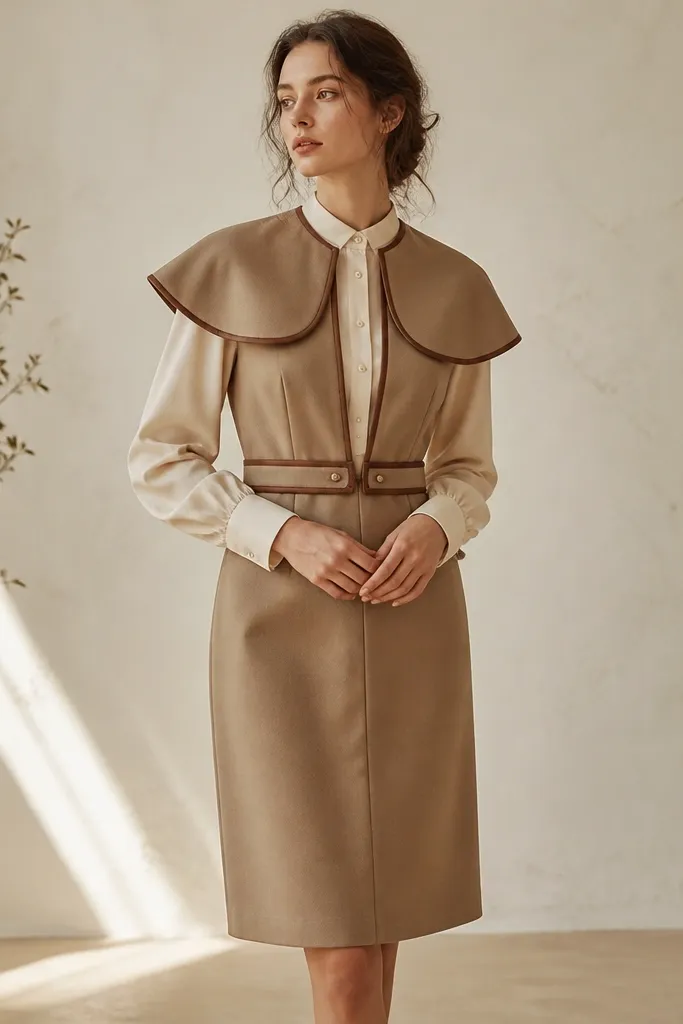
Leather trim turns a simple dress into something event-ready because it adds hardware and shape. The capelet shoulder panel creates a strong line across your upper body, which makes the dress look tailored even if the waist fit is vintage-random. Cream shirt underneath keeps contrast soft and makes the tan look intentional. This is a great option for formal nights where you want a menswear silhouette with a twist.
Choose a cream shirt with a stiff collar so it holds under the capelet. Keep the buttons minimal and let the leather trim frame the front. Shoes: dark brown leather boots with clean soles. Belt: optional - if the dress already has a defined waist, skip it.
Pro tipCondition the leather trim once before wearing so it doesn't look dry or patchy in photos.
AvoidAvoid over-accessorizing; with leather trim, one watch is enough.
19. Black Sheer-Overlay Dress with Built-In Lining
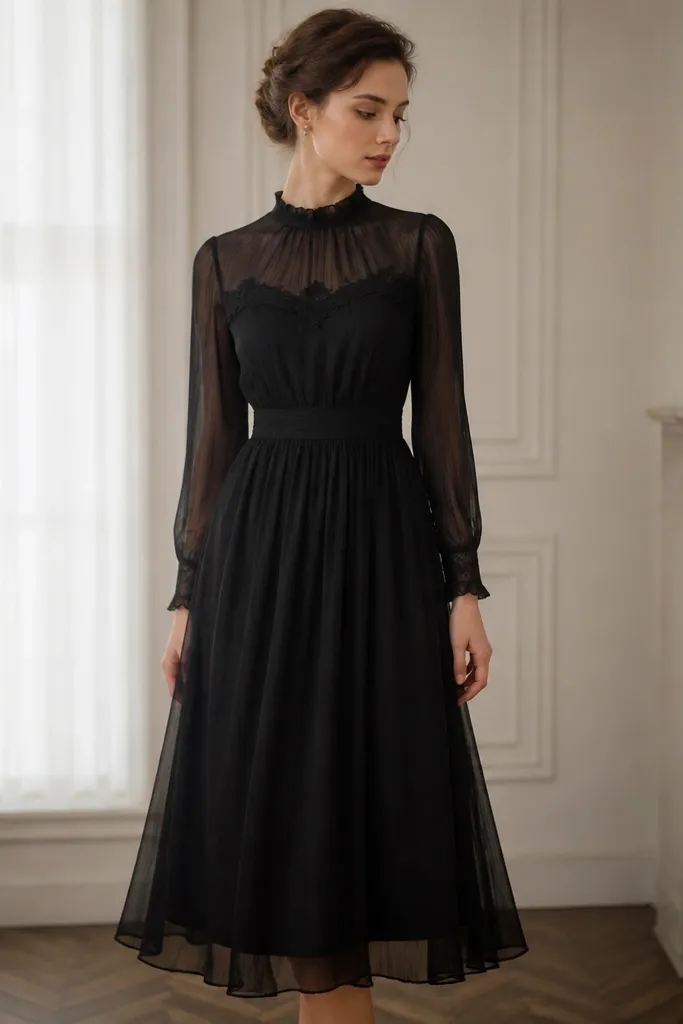
Sheer overlay dresses can look classy when the lining is opaque and the silhouette stays covered. The trick is choosing vintage pieces where the lining is built-in and the sheer layer has a pattern that doesn't feel lingerie-like. A higher neckline keeps it formal, and the dark overlay makes it look sleek. This outfit works when you want drama without showing too much.
Wear either nothing under the lining or a seamless base if the lining shifts at the neckline. Keep shoes matte and simple - black leather. Add a thin chain or small studs only. Hem should skim above the ankle or hit mid-calf depending on your height.
Pro tipCheck the lining seams - if they're loose, tack them so the sheer overlay doesn't ride up.
AvoidDon't pair sheer overlays with bright underwear layers; visible seams ruin the look.
20. White Eyelet Shirt-Dress with Black Pocket Handkerchief
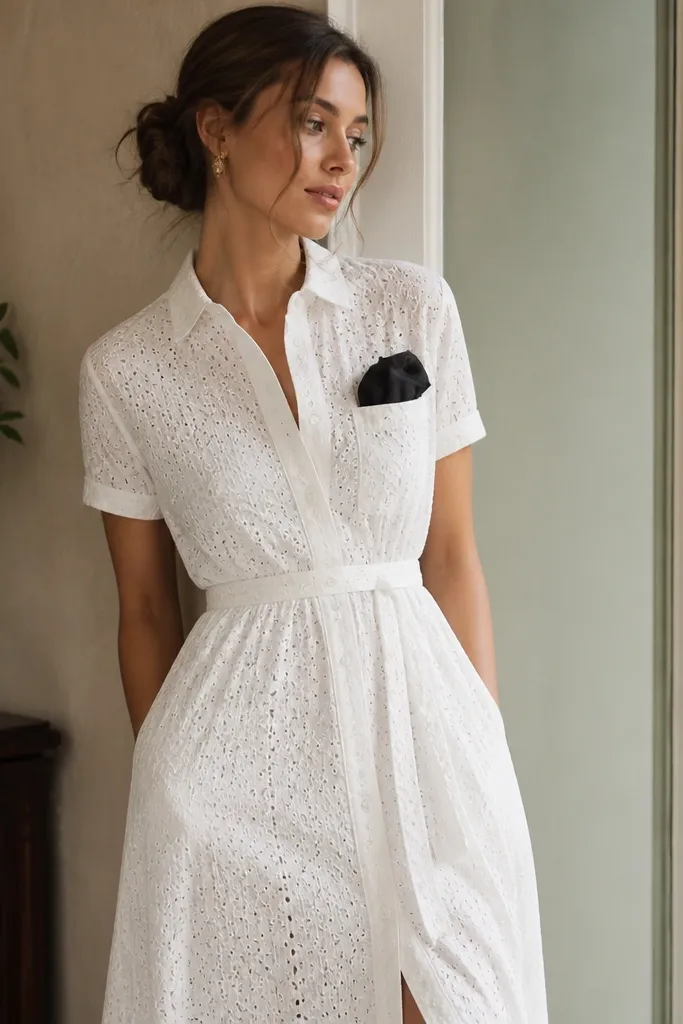
A white eyelet shirt-dress looks formal because it has structure like a shirt. The button front creates a built-in menswear reference, and the eyelet texture keeps it from looking plain. Adding a black pocket handkerchief gives you a tailored accent that makes the outfit feel "put together" in a way that matches formal rules. Keep the rest monochrome so the white stays crisp.
Wear a white or light-cream base under it if the eyelet shows through at the lower half. Roll sleeves once and keep the collar flat. Shoes: black loafers or oxfords. For events, this works for summer dinners and daytime ceremonies.
Pro tipUse a fabric-safe starch spray on the collar and placket so the eyelet stays sharp in photos.
AvoidAvoid thin, see-through undershirts that create dark patches under white eyelet.