1. Midnight satin wrap dress with matching belt
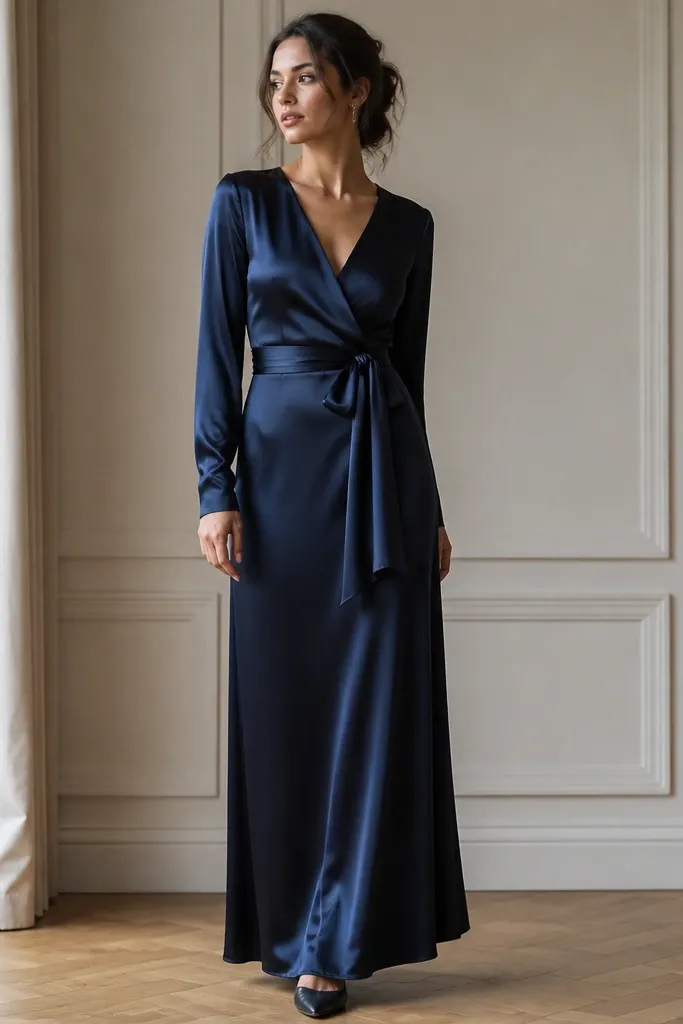
A wrap style gives you shape without bulk, and satin makes it feel engagement-night ready. Midnight navy satin looks expensive because it absorbs light instead of glittering. The tied belt lets you control the waist line, which is the difference between "dressy" and "random." Keep the neckline clean so the satin reads refined.
Choose a satin with a smooth face and a weight that drapes, not a thin slippery one. Put the belt knot slightly off-center for a natural look, and keep the skirt hem 1-2 inches above the shoe top. Pair with black leather loafers or low-heel dress shoes and a simple watch band in the same tone.
Pro tipIf you can, steam the wrap seam before wearing so the satin doesn't kink at the tie point.
AvoidAvoid satin that wrinkles easily - it looks cheap fast in restaurant lighting.
2. Stone crepe column dress with notch collar
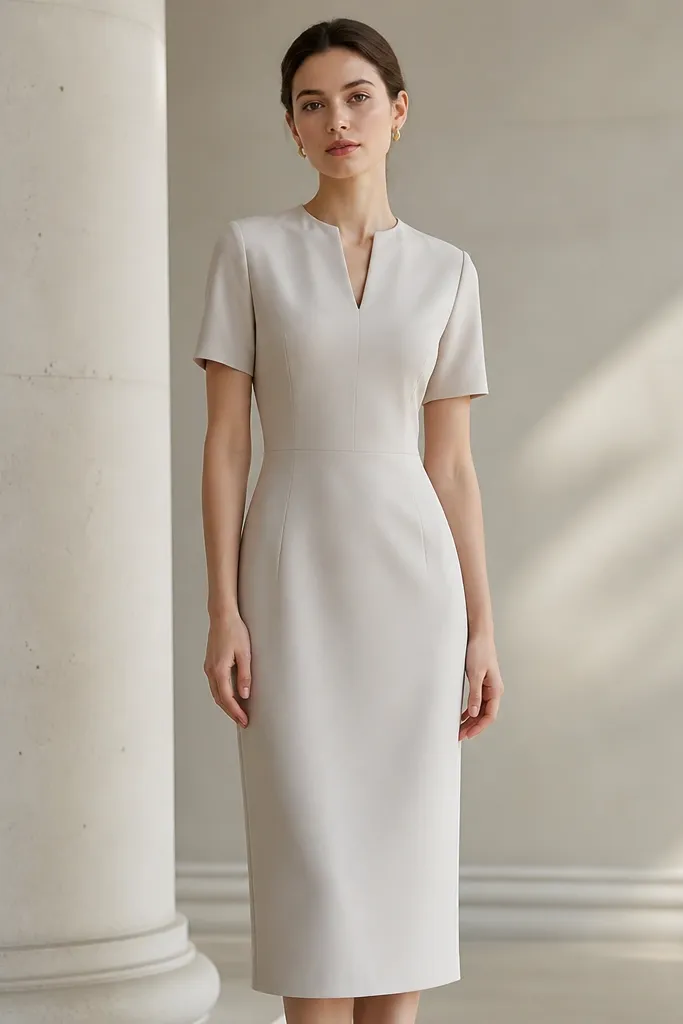
Crepe is your friend when you want formal without shine. A column silhouette keeps the line sleek, and the notch collar adds a tailored vibe that reads like a suit, not a costume. Stone color works for daytime engagement dinners because it doesn't look too heavy or too party-like. The matte surface hides minor texture issues in the fabric and looks clean in photos.
Pick a crepe that has body - it should stand slightly away from the body at the seams. Keep the neckline structured and the sleeves fitted, not loose. Hem at 1-2 inches above the shoe top, then wear dark brown or black oxfords to anchor the look.
Pro tipUse a medium-width belt in the same color family only if the dress is too straight - a belt can define your waist without changing the whole outfit.
AvoidSkip thin crepe that clings and shows every crease - it makes the whole look feel unfinished.
3. Black taffeta corset-style dress with structured seams
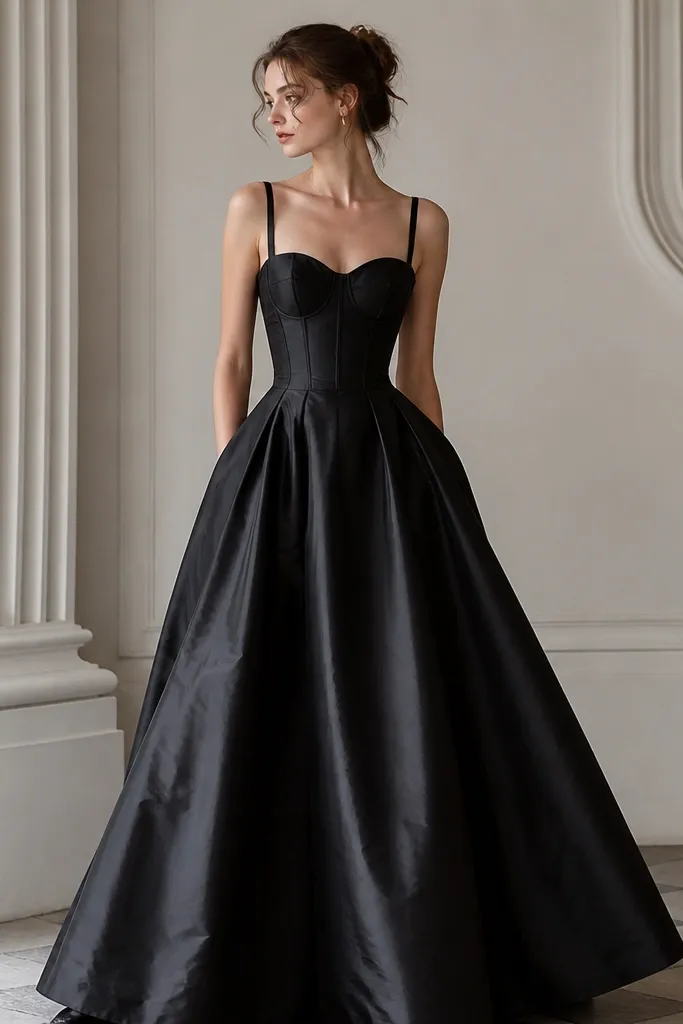
Taffeta holds shape, so you get that formal "event" energy even in a simple color. The corset-style seam lines create waist definition and chest support, which makes the dress flattering for a lot of body types. Black taffeta reads polished because it has body and a crisp finish. This is the one I reach for when the engagement is in a venue with strong overhead lighting.
Look for boning or internal structure at the bodice seams. Keep the skirt volume controlled - a full skirt should fall in a smooth curve, not look like a party gown. Pair with matte black pumps or sleek dress shoes and a satin pocket square if you want a wink of formality.
Pro tipIf you have to choose between zipper and corset lacing, pick zipper if you want quick wear and consistent fit.
AvoidDon't choose taffeta that feels scratchy at the inner seams - it will ruin your comfort in photos.
4. Deep green velvet one-shoulder dress
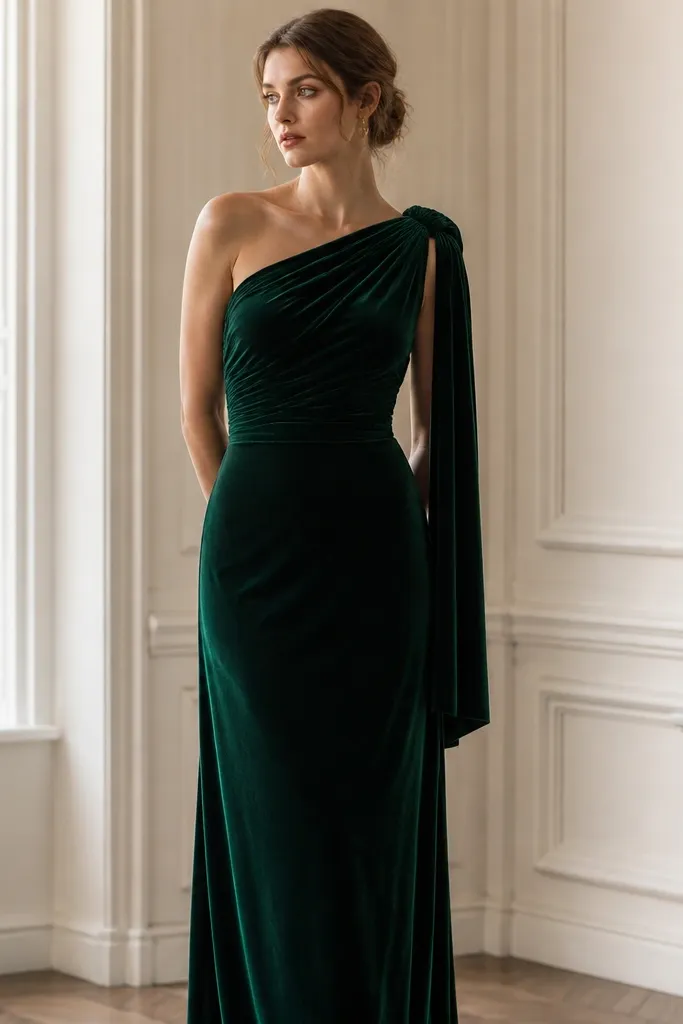
Velvet changes the whole mood. Deep green velvet looks rich without needing heavy decoration, and it photographs with depth because the pile catches light in a subtle way. A one-shoulder cut adds structure and keeps the look modern. This style works especially well for evening engagements because it reads warm and intentional under low lights.
Choose velvet with a consistent pile - uneven velvet looks patchy in photos. Keep the skirt straight or slightly A-line so it doesn't balloon. Wear black or dark brown dress shoes and keep jewelry minimal: one ring or a small bracelet.
Pro tipUse a lint roller right before you leave - velvet picks up fuzz fast and it shows.
AvoidAvoid velvet with a shiny coating - it can look plasticky under flash.
5. Burgundy satin midi dress with clean crew neckline
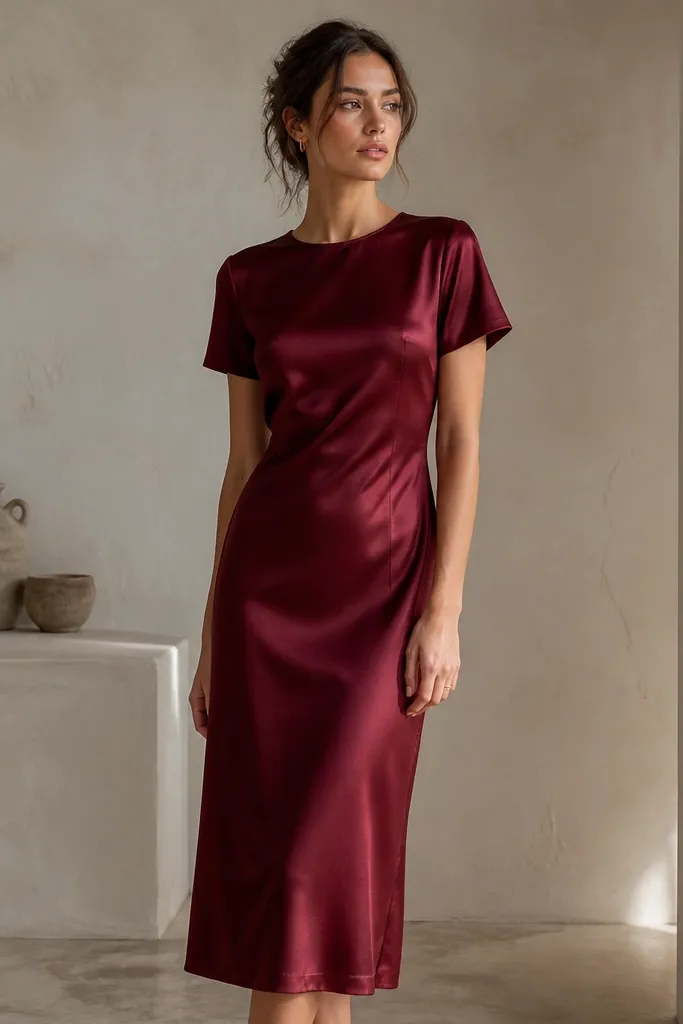
Burgundy satin sits between red and wine, which makes it feel romantic but still grown-up. A crew neckline keeps the dress formal and avoids the "too sexy" vibe that can happen with deep V cuts. Midi length works when you want coverage and a refined silhouette. The satin sheen stays classy when the cut is simple.
Aim for midi hem at mid-calf, not ankle length. Keep sleeves fitted and smooth to avoid puckering. Pair with black leather loafers and a burgundy or oxblood belt if the dress has belt loops.
Pro tipHem accuracy matters more with satin - if it's uneven, it will catch light and show immediately.
AvoidSkip satin with loud contrast piping - it draws attention away from your face.
6. Navy embroidered organza overlay over slip dress
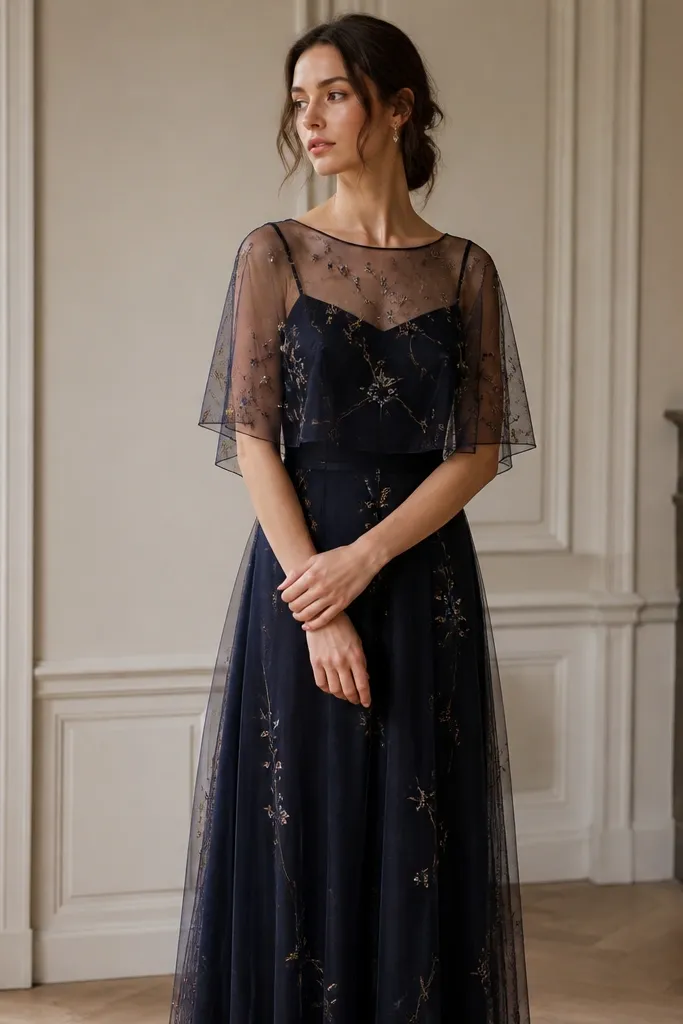
This is the "dress within a dress" trick. A slip base gives you the solid, formal foundation, and an organza overlay adds texture without turning it into a full-on gown. Small embroidery feels engagement-appropriate when it's concentrated on the upper area. Navy keeps it elegant, and the sheer layer reads airy instead of heavy.
Choose an organza overlay that is breathable and not scratchy. Let the slip hem match the overlay hem or sit 1-2 inches shorter for a layered effect. Wear nude-to-skin hosiery if needed, and keep shoes neutral - black or deep navy.
Pro tipIf the overlay is sheer, add a plain slip with matching tone so you don't see accidental contrast seams.
AvoidAvoid big, scattered embroidery across the entire dress - it looks like eventwear for the wrong reason.
7. Light grey wool blend dress with side vents
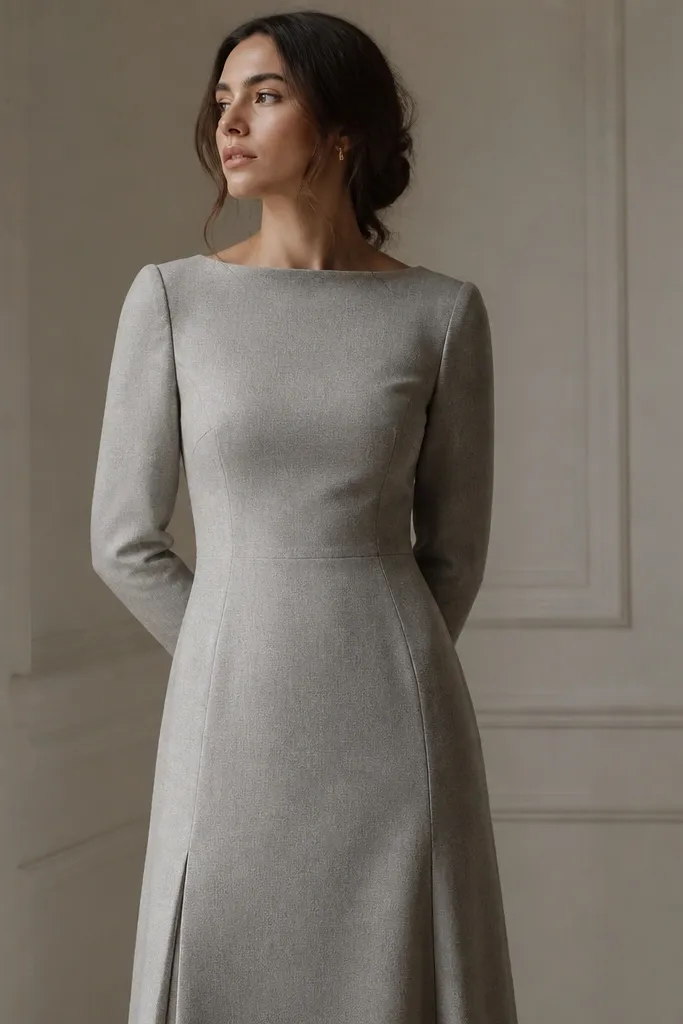
Wool blends make formal dresses feel grounded and expensive, especially in spring or fall engagements. Side vents help movement so the dress doesn't feel like a straight jacket. Light grey is flattering and looks clean in photos because it doesn't fight with warm candlelight. The tailored bodice gives you that suit-like structure without needing to wear a jacket.
Pick a wool blend with a tight weave so it doesn't look fuzzy. Keep the shoulders structured and the waist line slightly defined. Hem at 1-2 inches above the shoe top, and pair with dark charcoal or black dress shoes.
Pro tipPress the vents with steam before you go - the fabric should fall open slightly, not collapse.
AvoidSkip thin wool that drapes like a curtain - it loses shape and reads casual.
8. White eyelet shirt dress style for daytime engagement
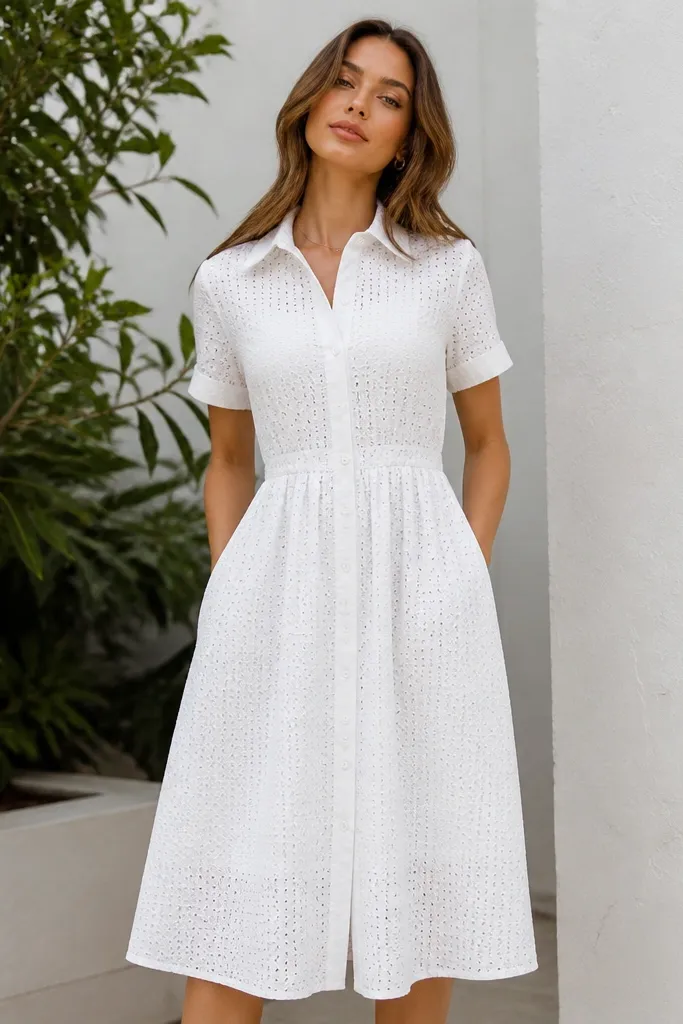
Eyelet reads festive without being loud. A button-front shirt dress silhouette gives you familiar comfort while still looking formally styled. White is bright for day engagements and looks crisp in outdoor photos. The uniform eyelet pattern keeps it clean and intentional.
Choose eyelet with a solid lining so you don't see through in sunlight. Keep the collar flat and the buttons neat - uneven button spacing ruins the look. Style with a tan leather belt and tan or off-white dress shoes for a cohesive daytime palette.
Pro tipIron the eyelet lightly with a press cloth so you don't crush the texture.
AvoidAvoid unlined eyelet - it will show awkward shadows and look messy.
9. Black satin slip dress with high neck and long sleeves
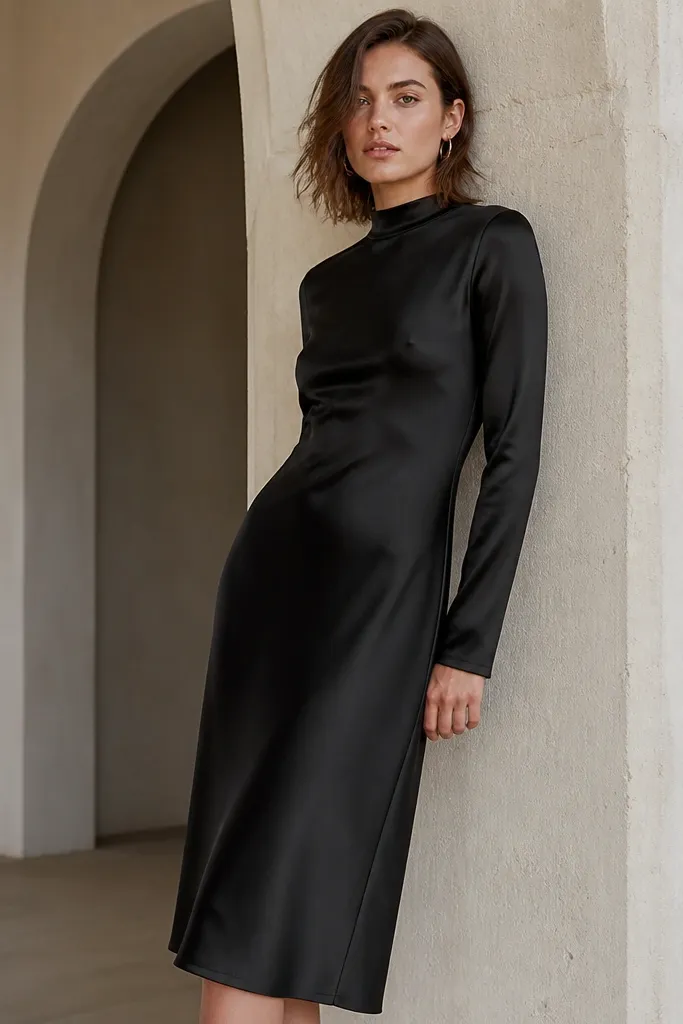
High neck + long sleeves keeps a slip dress formal and wearable, even for people who worry about "dress" stigma. Satin slip dresses look best when they sit flat along the body instead of clinging - that's why fabric weight matters. Straight midi hem gives a clean profile without extra volume. This one is my go-to when the engagement is indoors and you want a sleek look.
Pick a satin with enough body to hold shape at the neckline. Hem at 1-2 inches above the shoe top for formal balance, or mid-calf if you're wearing taller footwear. Add one structured accessory: a black leather belt bag worn low or a slim clutch.
Pro tipUse fashion tape at the neckline if the satin wants to shift - it keeps the high neck crisp.
AvoidSkip slip dresses with spaghetti straps - they read casual fast.
10. Camel knit midi dress with wrap tie and ribbed cuffs
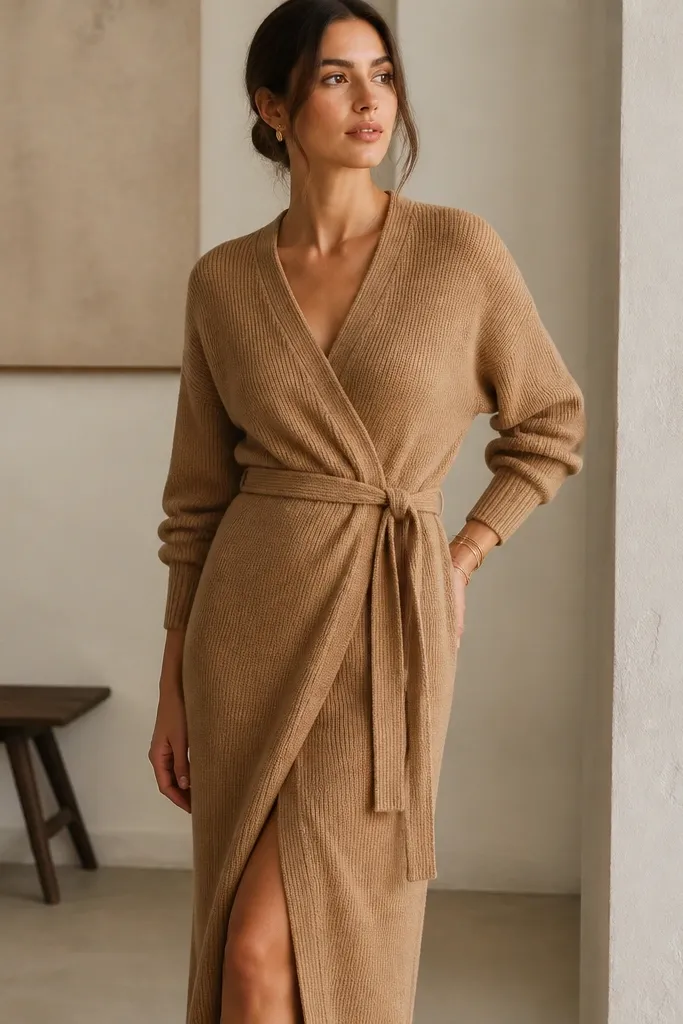
Knit dresses can look formal when the knit is thick and structured. Camel is warm and flattering, and it pairs well with engagement colors like cream, gold, and deep green. A wrap tie creates waist definition, while ribbed cuffs add polish. The knit texture reads "intentional" because it looks tailored, not like a sweater dress.
Choose a knit with a tight gauge so it doesn't stretch out at the elbows or neckline. Tie the wrap so the overlap is consistent across the chest. Hem at mid-calf and pair with brown leather boots or sleek loafers depending on season.
Pro tipIf the knit stretches, tack the tie point with a small stitch so it stays put all night.
AvoidAvoid thin jersey knit - it wrinkles and looks casual after an hour.
11. Navy pleated satin dress with boxy shoulders
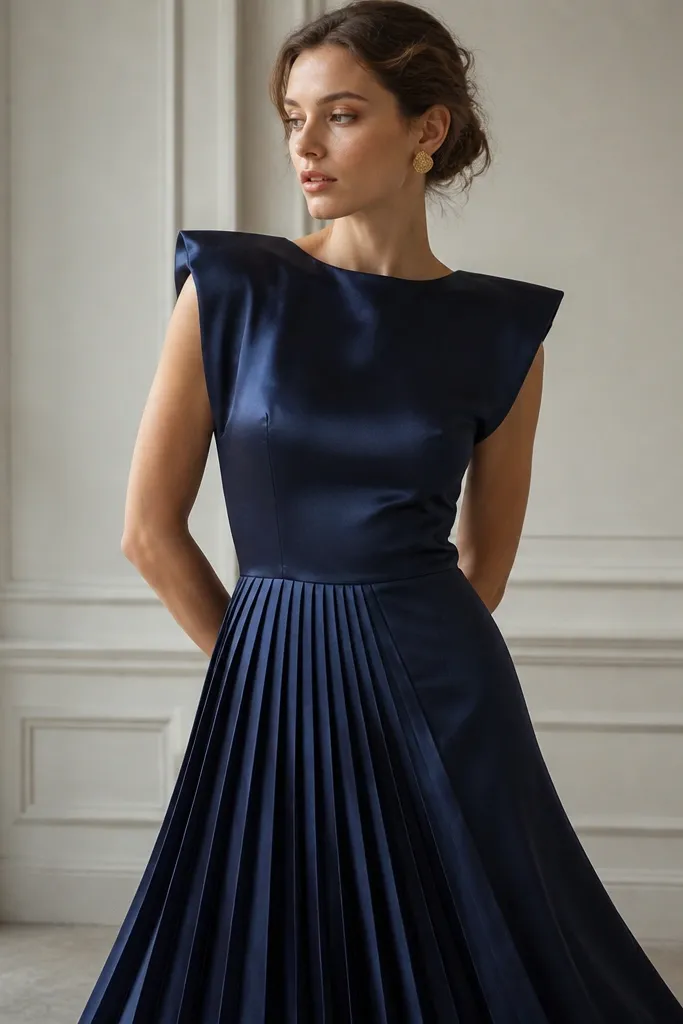
Pleats add movement, and satin makes those pleats look controlled instead of sloppy. Boxy shoulders keep the dress from looking too soft, so it reads formal rather than lounge. Navy is forgiving in photos and works for both indoor and outdoor engagement dinners. This is a great option when you want to look elevated but still comfortable walking and greeting people.
Look for pleats that start at the waist or high hip, not low on the skirt. Keep the bodice smooth and fitted so the pleats are the only "busy" element. Pair with silver-toned cufflinks or a single chain necklace and black shoes.
Pro tipLet the pleats hang for a few minutes after steaming - they settle into cleaner lines.
AvoidAvoid random pleating that puckers at the seams - it looks homemade.
12. Black crepe halter dress with corset-like back
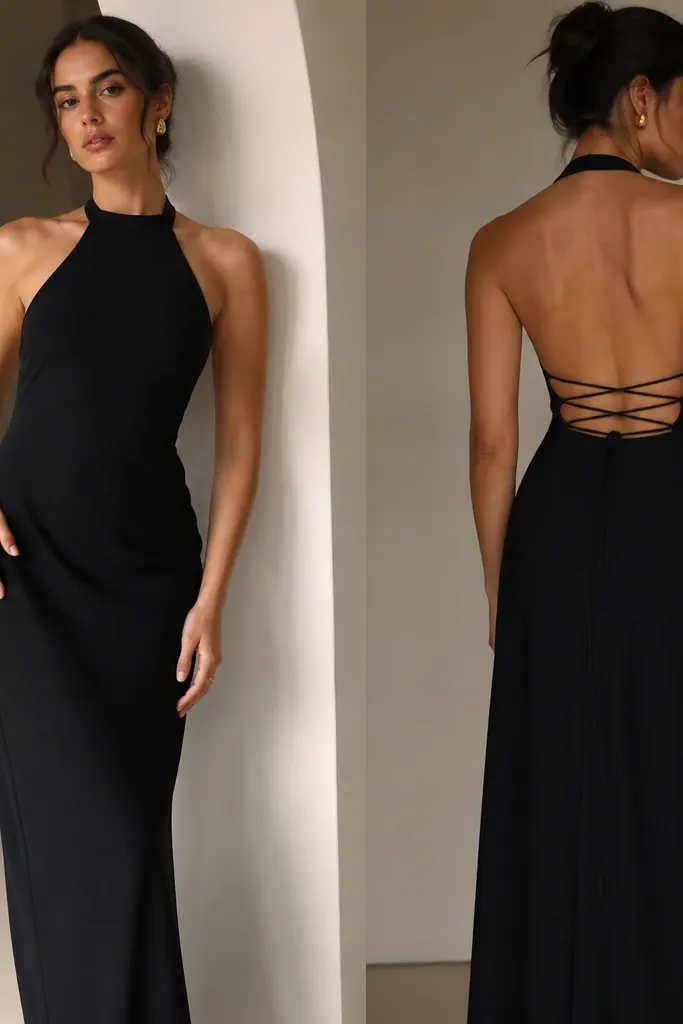
A halter front is sleek, and the corset-like back adds shape without needing heavy embellishment. Crepe keeps it matte and classy, and it hides minor body lines better than silk blends. The straight skirt keeps everything formal and makes the halter look intentional. This dress is ideal for engagements where you'll be taking lots of photos from the front and the back.
Adjust the halter so it doesn't pull your neck forward. Make sure the back lacing is secure enough that you can move without loosening. Hem at 1-2 inches above the shoe top and wear black dress shoes with a clean toe.
Pro tipPractice tying the back laces at home and mark the tie tension with a small piece of tape on the cord.
AvoidAvoid crepe that stretches out - the halter will sag halfway through dinner.
13. Forest green jacquard wrap dress with subtle texture
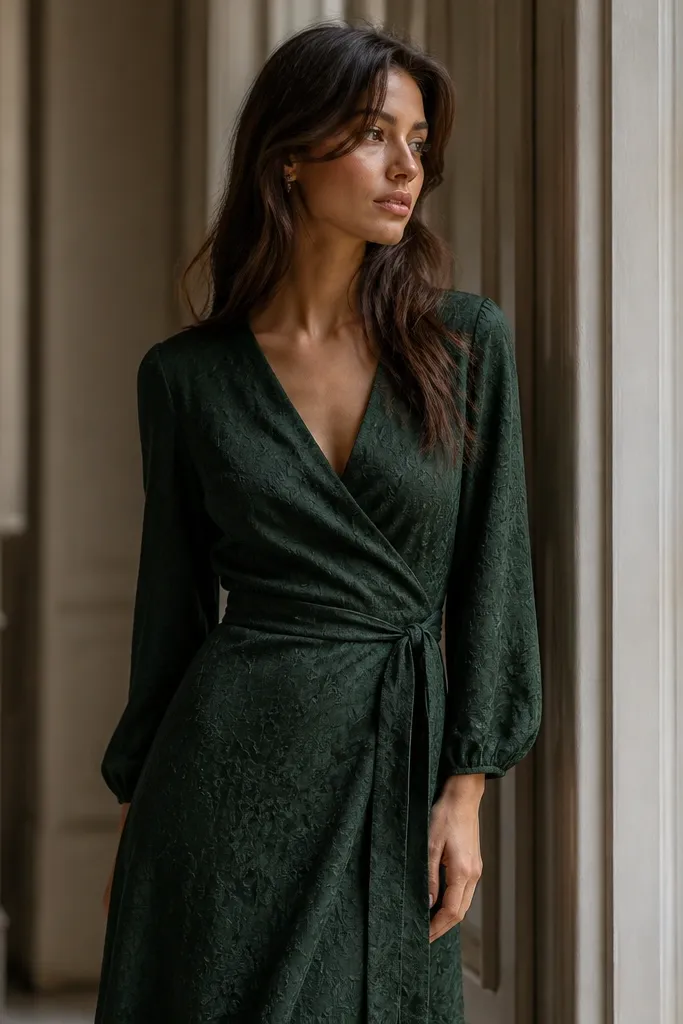
Jacquard gives you pattern and depth without looking like printed fabric. Forest green is flattering and feels engagement-appropriate because it looks natural and rich. A wrap front adds waist definition, and long sleeves make it suitable for cooler venues. The texture does the heavy lifting, so you don't need extra jewelry.
Choose a jacquard with a tight weave so it doesn't look bulky at the wrap overlap. Keep the wrap panel overlap consistent and press it flat. Pair with dark brown shoes and a simple belt in matching green only if the dress has belt loops.
Pro tipIf the wrap panel gapes, add one hidden snap inside - it keeps the V clean in every photo.
AvoidAvoid loud metallic jacquard - it can look party-like under warm lighting.
14. Nude-beige chiffon cape dress over tailored trousers
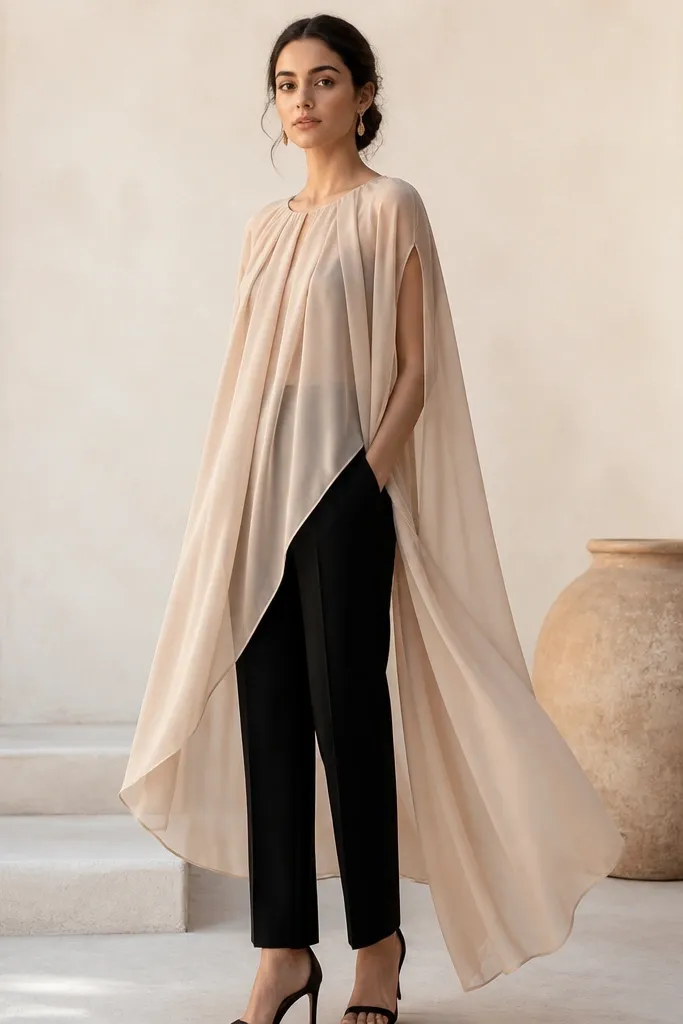
This is the "formal dress look" approach for people who want coverage and comfort. Chiffon cape layers read dressy because the fabric moves, but the tailored trousers keep the outfit grounded. Nude-beige makes it feel light and romantic without turning it into a wedding guest costume. It's also forgiving if you're still figuring out sleeve and shoulder preferences.
Wear a solid, fitted base underneath: black tailored trousers and a simple fitted top that matches the chiffon tone. Let the cape fall to mid-calf, and keep the front length symmetrical. Finish with black dress shoes and a belt only if the chiffon has a natural waist seam.
Pro tipPin the cape at the shoulder points for the first 30 minutes - chiffon shifts as it warms up.
AvoidAvoid chiffon that is too see-through - you'll end up adjusting all night.
15. Black and grey herringbone dress with belted waist
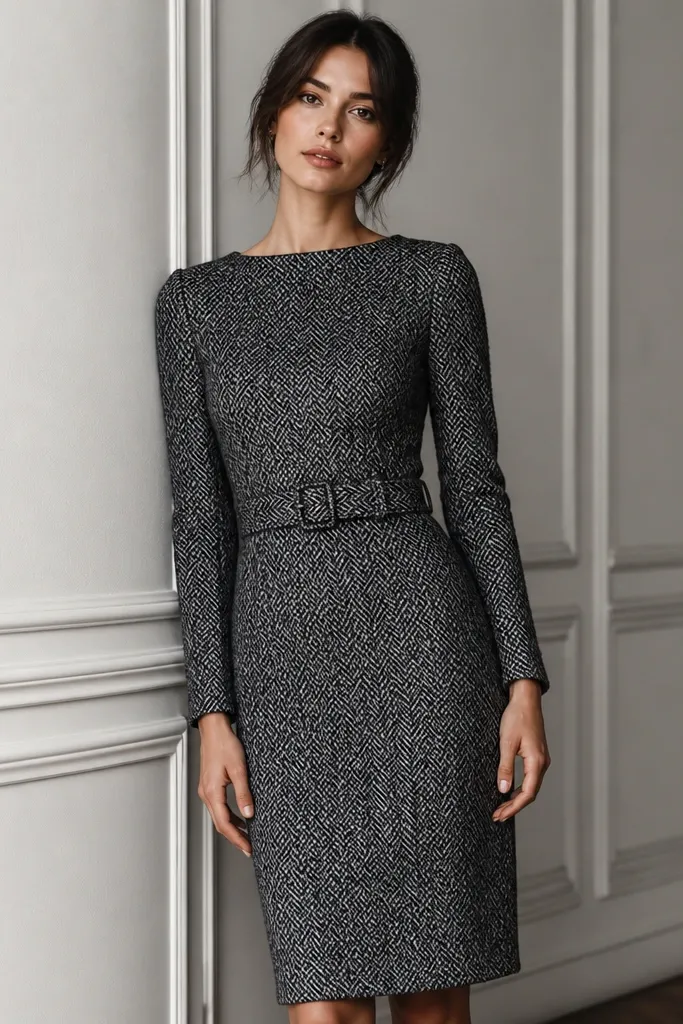
Herringbone looks formal because it reads like suiting fabric. The pattern adds interest without needing bright color, and the belted waist creates a defined silhouette that looks sharp in motion. Black-and-grey also works for engagement photos because it doesn't clash with skin tones or venue decor. This dress is a smart pick when you want the dress to feel like "tailored clothing" instead of "special outfit."
Choose a woven herringbone with enough structure to keep the waist line from collapsing. Use a belt in black leather or a matching fabric belt if the dress includes one. Hem at 1-2 inches above the shoe top and wear black leather oxfords.
Pro tipWhen you style patterned fabric, keep your shirt or base layer solid - no stripes next to herringbone.
AvoidAvoid printed herringbone - it looks flat and cheap under flash.