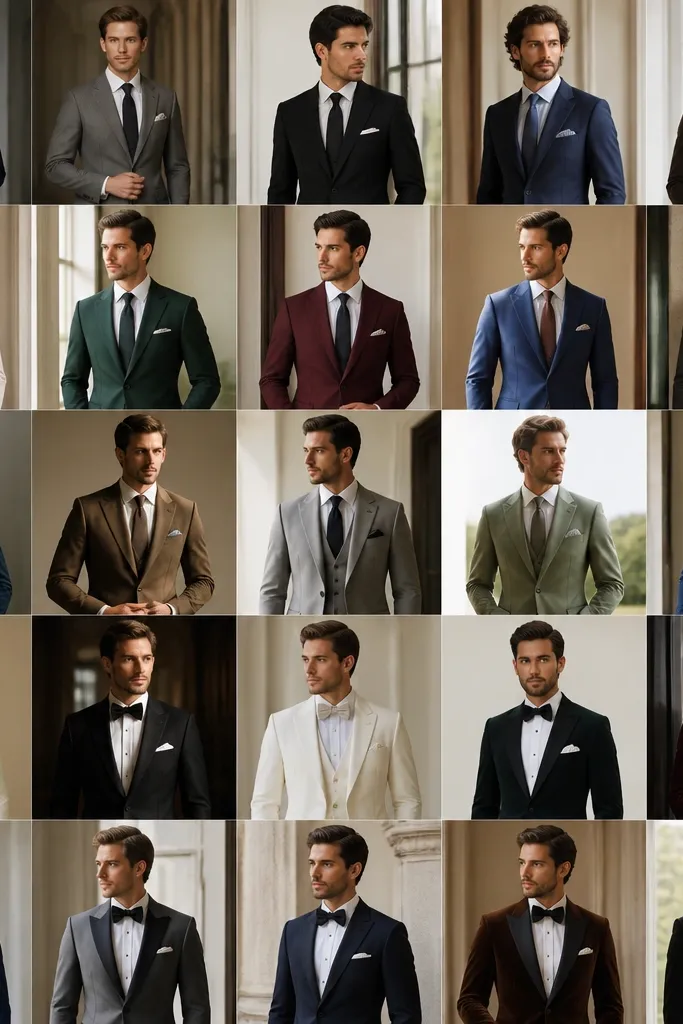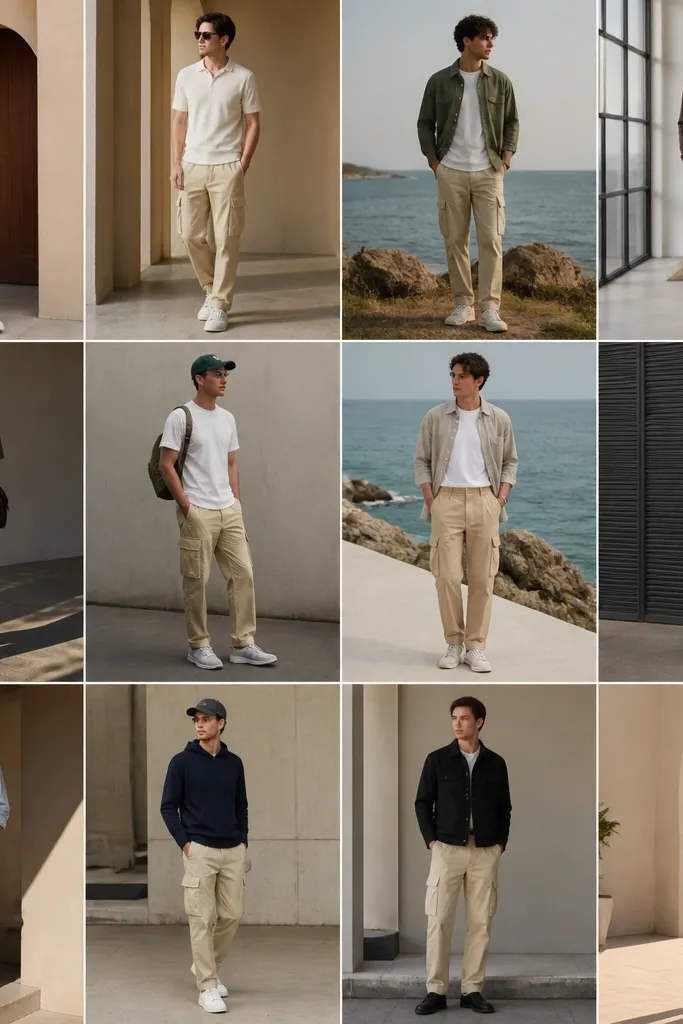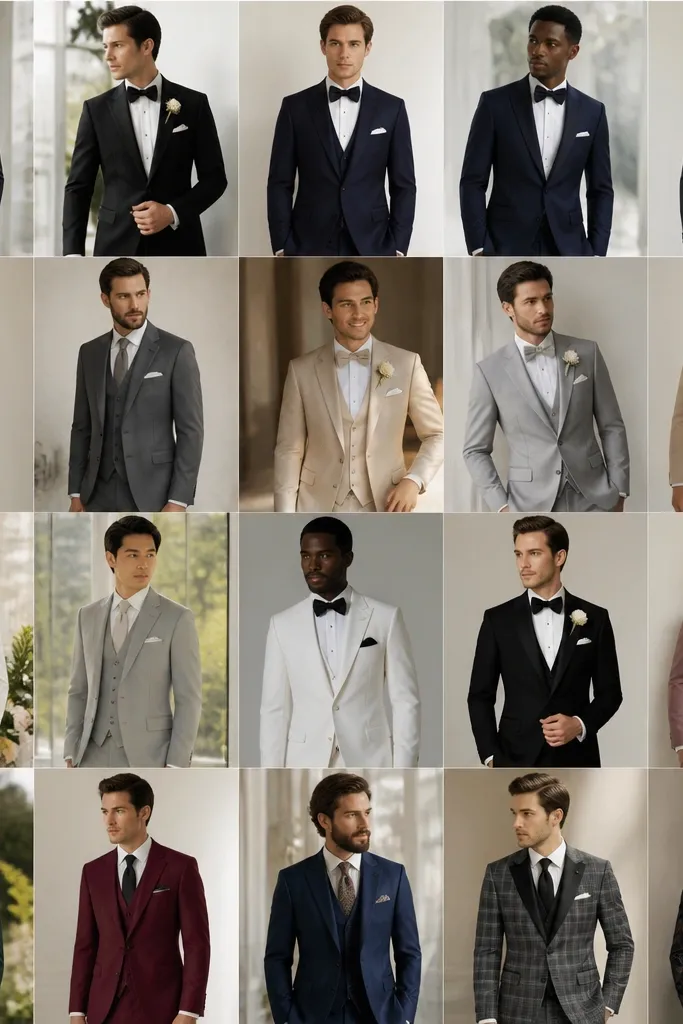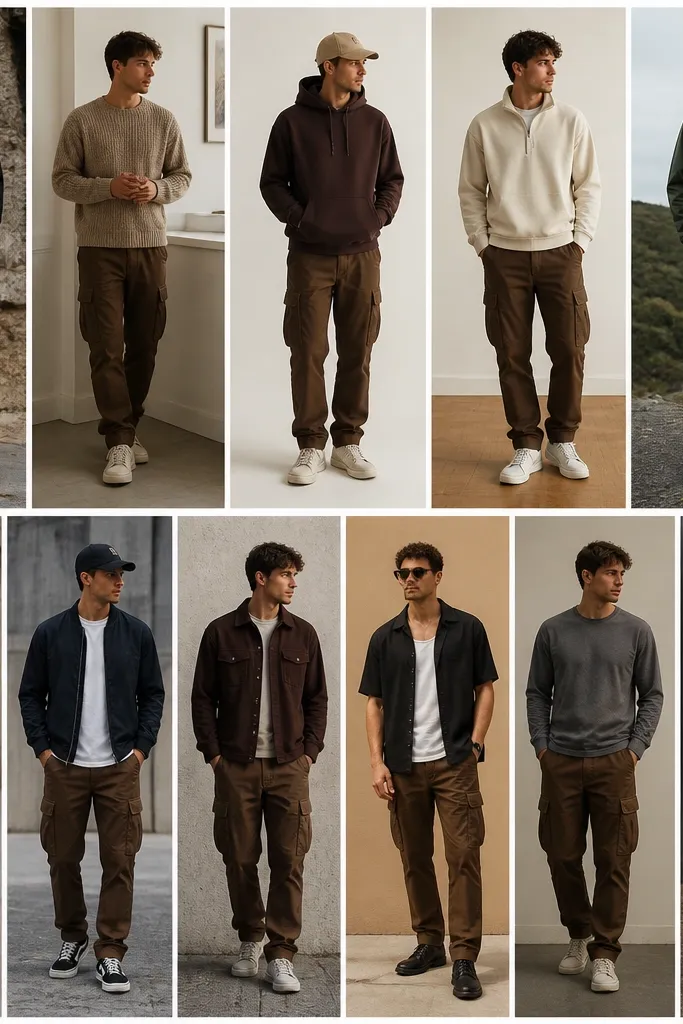
1. Midnight Charcoal Overcoat Dress Look
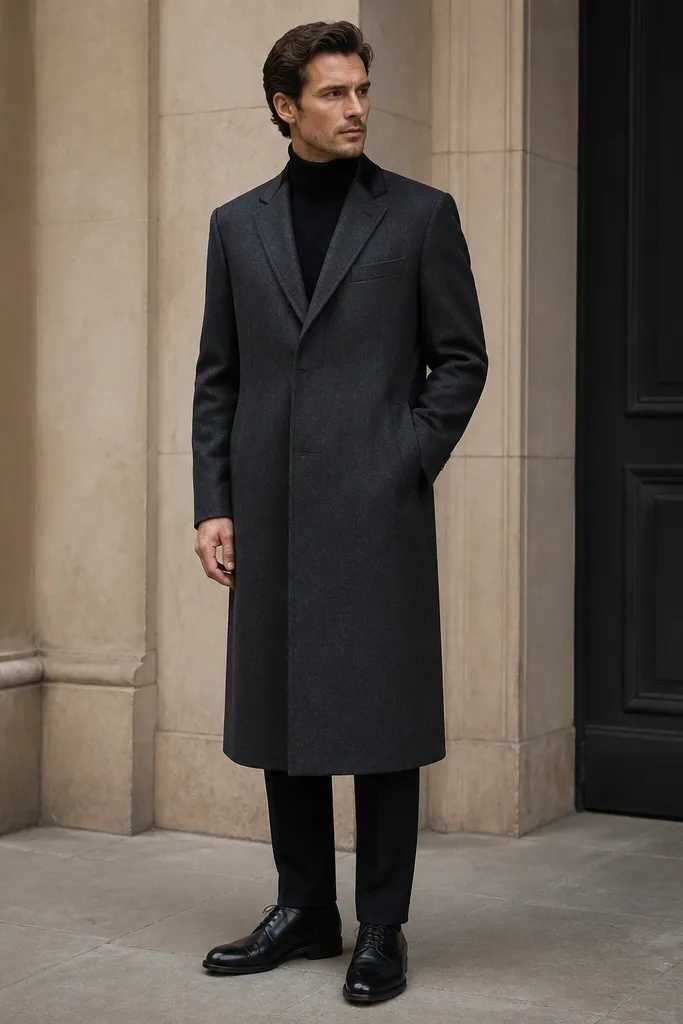
This look works because the long overcoat creates an instant "dress" silhouette without needing a literal dress. Charcoal reads formal in daylight and still looks deep under indoor lights. The satin-like lapel trim catches light in a controlled way, so you get a dressy effect without a flashy shirt. Keep everything else matte to let the coat's structure do the talking.
Choose a coat with a real shoulder seam and a waist that can be left slightly fitted, not boxy. Pair with flat-front or lightly pressed trousers in black or charcoal and a white or off-white poplin shirt. Hem the trousers so they sit cleanly above the shoe tongue, and aim for coat sleeves that cover the wrist bone by about 1 cm.
Pro tipUse a medium-width black belt only if the coat has belt loops; otherwise, skip it and let the coat line stay uninterrupted.
AvoidAvoid coats with shiny buttons and a wrinkly drape - they read costume fast in photos.
2. Navy Wool Suit with Longline Waistcoat Layer
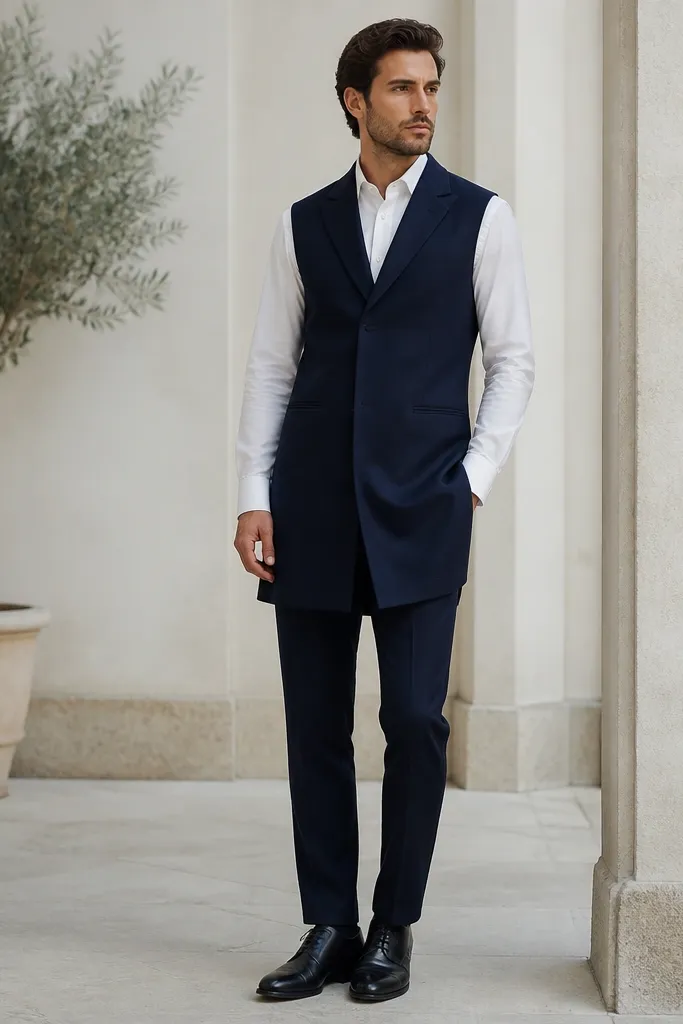
The longline waistcoat gives you the formal "dress" feeling by adding vertical structure. Navy wool looks expensive because it stays matte and clean, even under flash photography. The white shirt keeps the contrast sharp so the outfit doesn't blend into one dark block. This is a great option when you want formal but not robe-like.
Pick a vest that ends around mid-thigh for a strong proportion against tailored trousers. Use a navy wool or wool-blend fabric with a tight weave, not a thin knit. Keep the shirt collar crisp and choose a simple tie or no tie if the event is semi-formal.
Pro tipIf you skip the tie, do one top button open and add a pocket square in white linen for a clean finish.
AvoidDon't use a stretch-knit vest - it collapses and makes the whole look feel casual.
3. Black Satin-Trim Robe Coat with White Shirt
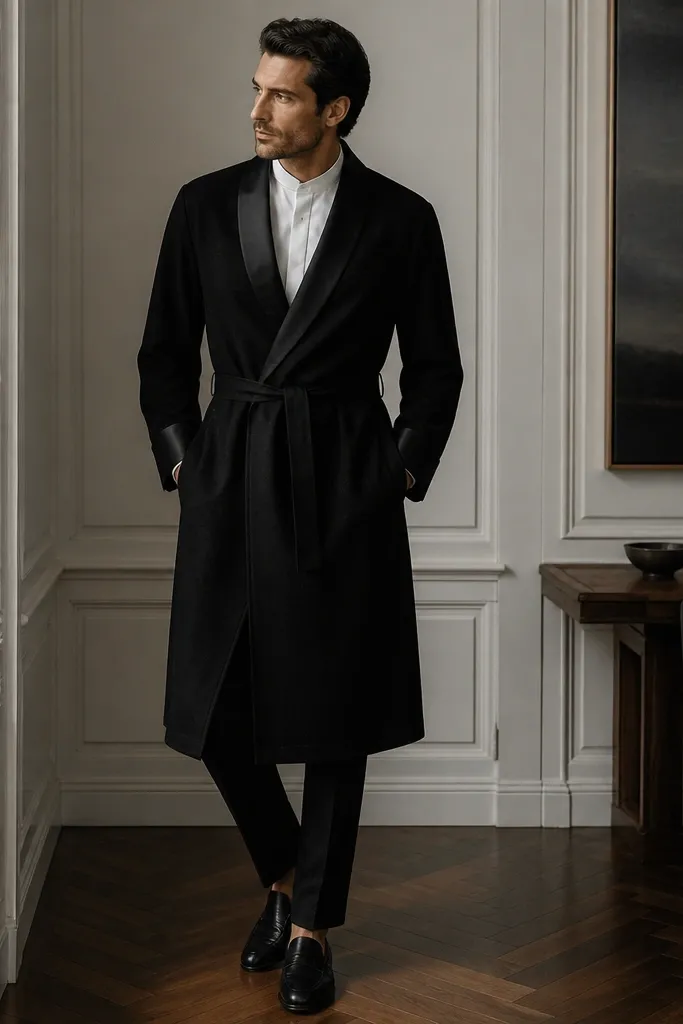
This is the dressiest option that still looks wearable. The robe silhouette creates a deliberate V-shape and draws attention to the waist, which is the fastest way to look "dressed" instead of just layered. Black satin trim gives a refined sheen at the edges, and the white shirt keeps contrast bright. It photographs well because the trim outlines the garment rather than scattering light.
Choose a robe coat with a belt that cinches - you want the waist defined, not loose. Wear a white poplin shirt with structured cuffs so the robe doesn't look like pajamas. Keep trousers slim but not skinny, and use black leather loafers or oxfords with a clean shine.
Pro tipTie the belt so the knot sits slightly off-center and the ends hang evenly; asymmetry reads intentional.
AvoidAvoid thin, slippery fabric that clings - it shows every wrinkle and makes the trim look cheap.
4. Emerald Long Tunic with Matching Tapered Trousers
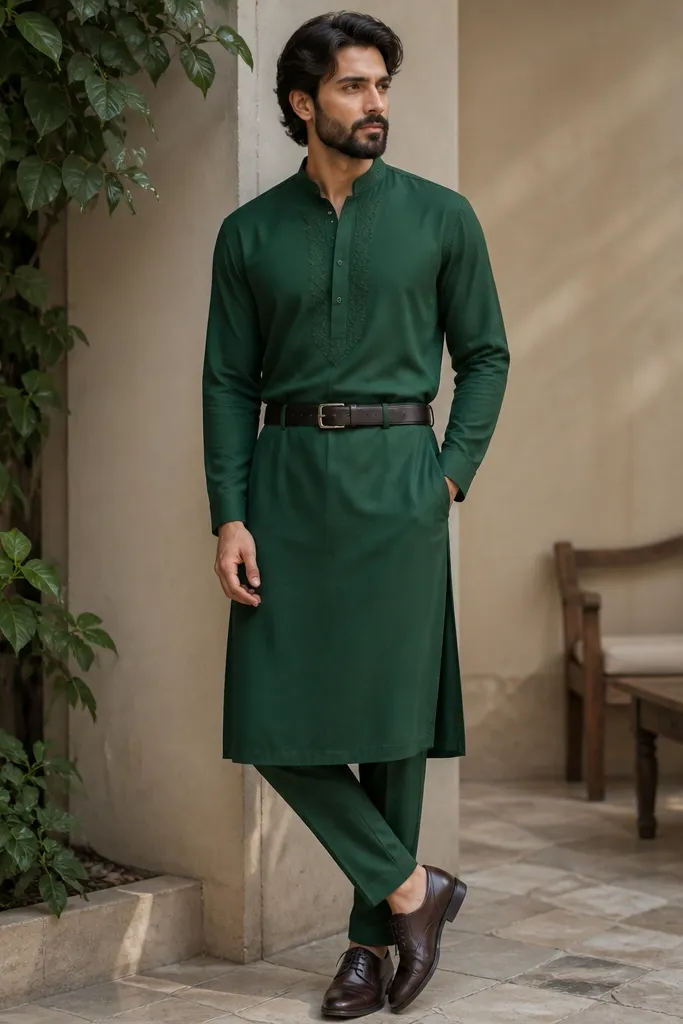
A long tunic is the most direct way to get a dress look on men without forcing a gown shape. Emerald reads bold but still formal when the fabric is structured and the embroidery is tonal. Matching trousers keep the line clean so the tunic doesn't balloon. The stand collar adds a framed, tailored look right at the face.
Look for a tunic with a stand collar and a placket that buttons cleanly - no gap. Fabric matters: choose a cotton-silk blend or a heavy cotton weave that holds shape. Add a leather belt at the waist and keep shoes polished in dark brown or black.
Pro tipRoll the tunic sleeves once so the cuff sits about 2 cm above the wrist bone - it adds tailoring without fuss.
AvoidAvoid tunics with loud contrasting embroidery - it turns formal into festival fast.
5. Stone Linen Two-Piece with Long Shirt Jacket
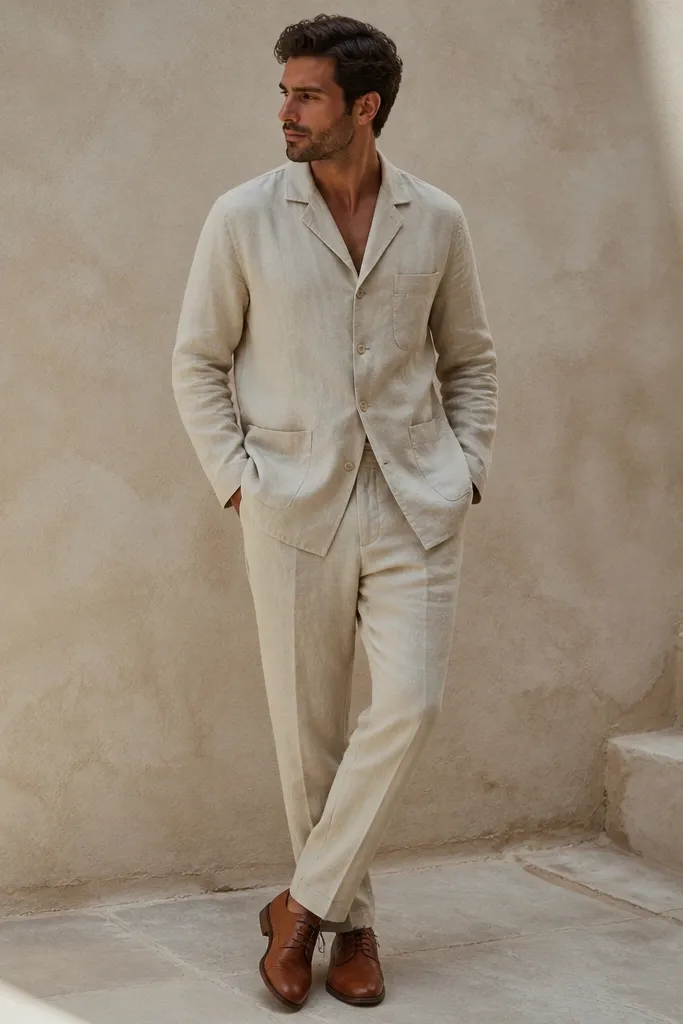
For hot weather formal events, linen is your friend when it's cut and weighted correctly. Stone linen reads classy because it's neutral, and the long shirt jacket creates the dress silhouette. Keep it monochrome so the wrinkles don't look messy; tonal dressing makes texture look intentional. This is the outfit I reach for at outdoor dinners when you still want to look dressed at 7 pm.
Pick a long shirt jacket that ends around mid-thigh to mid-calf depending on your height, with a clean placket. Choose trousers in the same fabric or a matching stone shade. Wear leather oxfords or loafers in tan or dark brown, and skip bright belts.
Pro tipPress the jacket seams with steam right before you leave; linen loves a fresh crease.
AvoidAvoid paper-thin linen that collapses - it looks like beachwear.
6. Burgundy Velvet Blazer with Charcoal Trousers
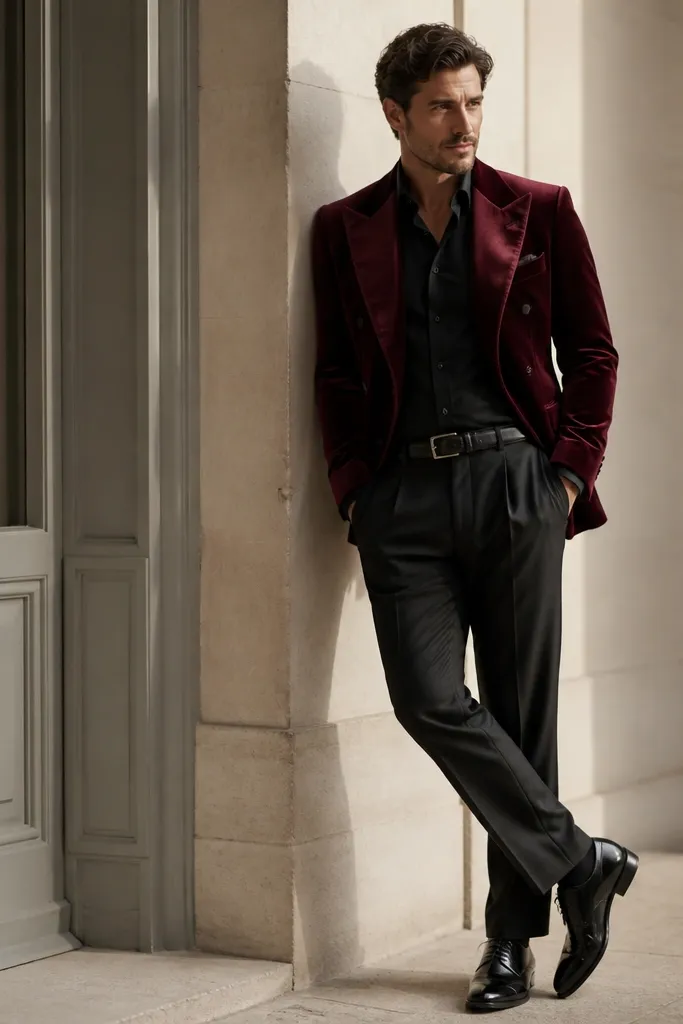
Velvet is one of the few fabrics that looks instantly formal without trying too hard. Burgundy velvet adds depth on camera, and the charcoal trousers ground it so the outfit doesn't look festive. The peak lapels make the chest area look structured, which reads dressy. This is a strong option for winter galas and holiday parties.
Choose velvet with a dense pile so it looks smooth, not fuzzy. Pair with a charcoal or black trouser in a wool blend and a crisp white or cream shirt. Keep the tie in black silk or skip it with a well-fitted open collar if the event is more relaxed.
Pro tipBrush the velvet lightly with a soft clothing brush before wearing so the nap sits evenly.
AvoidAvoid crushed velvet and shiny satin ties - the combo looks like a costume store.
7. White Poplin Shirt with Wide Black Sash and Slim Trousers
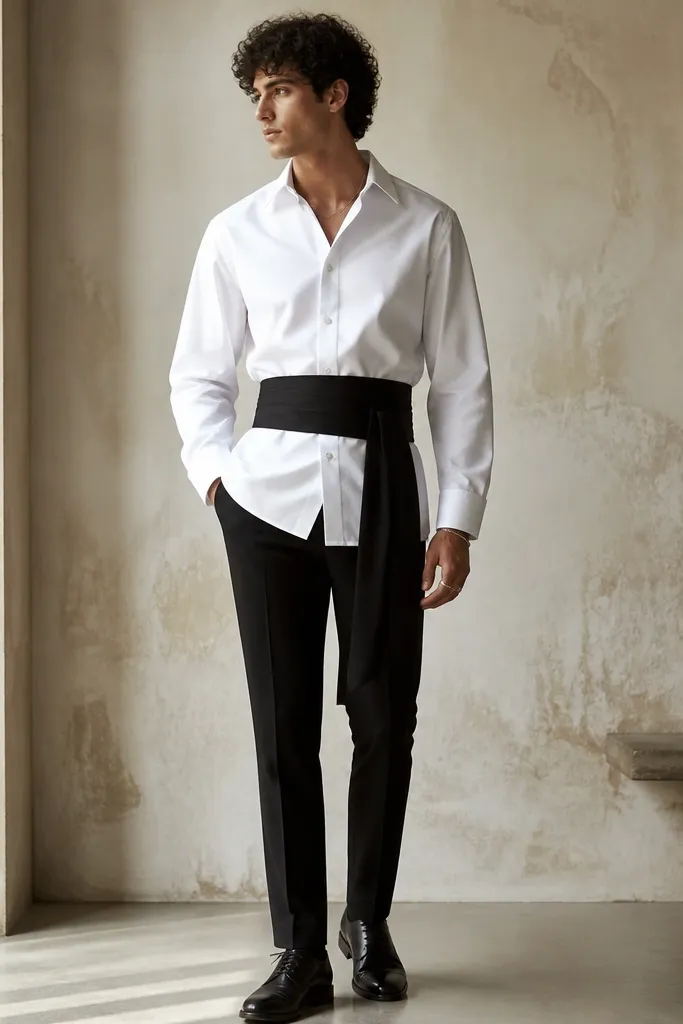
This is my "no complicated tailoring" dress trick. The wide sash creates a dress-like waistline and turns a normal shirt into a formal silhouette. White poplin holds structure and looks clean under flash, while black trousers keep the look grounded. You get that structured, event-ready shape without buying a whole outfit.
Use a poplin shirt with a structured collar and enough length to drape slightly over the sash. The sash should be wide - about 5 to 7 cm - and made of leather or thick fabric so it lays flat. Tuck or half-tuck depending on your body; I like a clean tuck at the sides and a slight drape in the center.
Pro tipChoose a sash that matches your shoe color exactly for a crisp, finished look.
AvoidAvoid thin belts that roll or twist - they ruin the dress illusion.
8. Tan Trench Dress with Hidden Button Placket
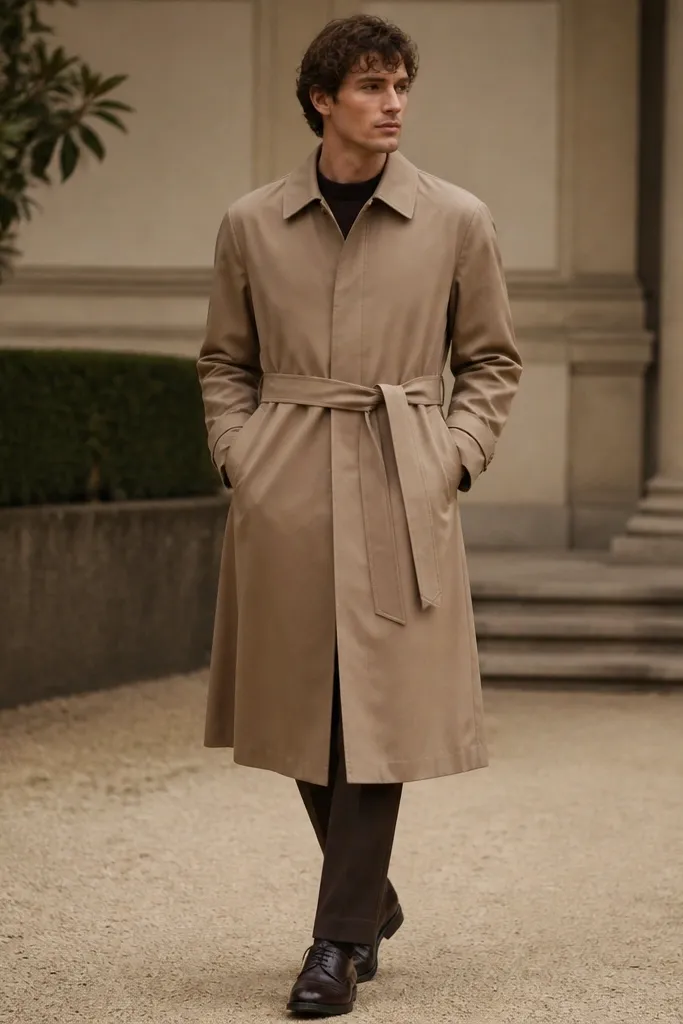
A trench coat in formal fabric weight can read like a dress because of the long line and the belt tie. Tan looks warm and polished, especially with dark layers underneath for contrast. The hidden placket gives a sharper, less utilitarian look than classic trenches with exposed buttons. This is a great option for evening events when it might be chilly and you want one piece to carry the outfit.
Pick a trench in wool blend or heavy cotton with a smooth finish. Wear it over a dark crewneck sweater or a thin turtleneck, then add trousers in charcoal or deep brown. Tie the belt so the coat waist sits at your natural waist - not low on the hips.
Pro tipKeep the collar crisp and skip bulky scarves; a thin scarf in charcoal looks cleaner with trench lines.
AvoidAvoid shiny rain-coat material - it reflects light and makes the look cheap.
9. Steel Grey Three-Piece with Long Tie-Back Waistcoat
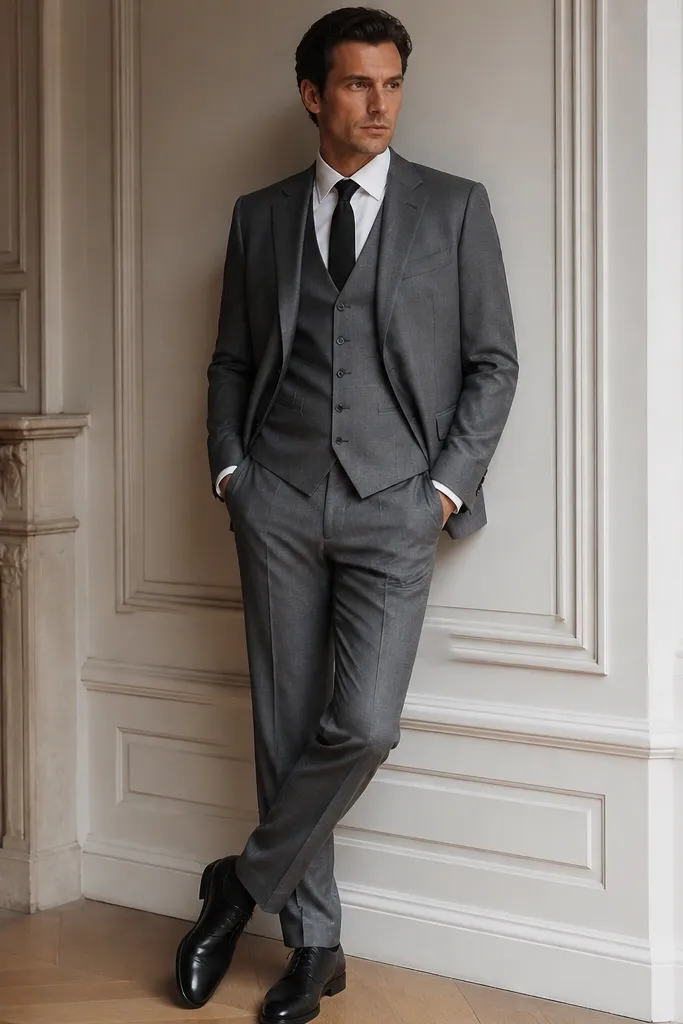
This outfit works because the long waistcoat ties the front line together and makes your torso look longer. Steel grey reads modern and formal, and the three-piece structure keeps the look dressy even if you're not wearing a robe or tunic. The tie-back waistcoat detail lets you fine-tune fit, and fit is everything for a formal dress effect. I've worn this to a city wedding where everyone else looked like they came from a catalog - and it still felt personal.
Use a waistcoat that reaches close to mid-thigh. Choose a suit with a bit of structure in the shoulders and a clean sleeve pitch. Keep the tie slim and black, and don't overdo the pocket square - a simple folded white linen square is enough.
Pro tipAdjust the waistcoat tie-back so there's no gap at the front buttons, even when you sit.
AvoidAvoid waistcoats that ride up - they ruin the dress silhouette instantly.
10. Royal Blue Embroidered Kurta with Matching Belt
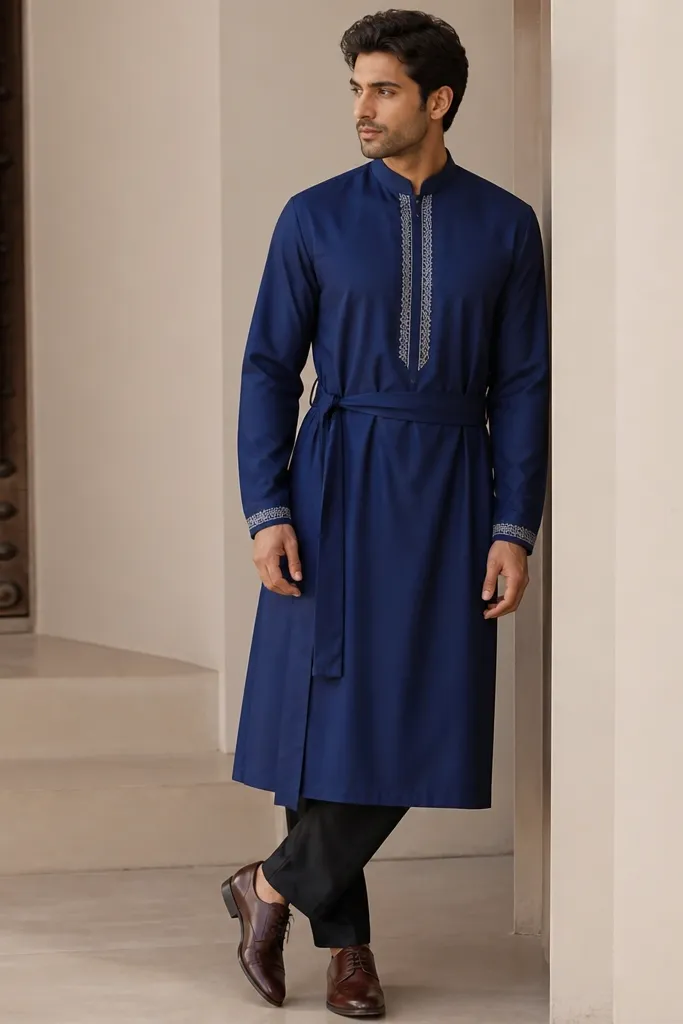
Kurta-style dressing is formal when the embroidery is controlled and the fabric has weight. Royal blue is bold without being loud when the pattern stays small and placed. A matching belt defines the waist, so the kurta doesn't look like a loose shirt. The black trousers keep it event-appropriate and prevent the outfit from looking purely traditional.
Pick a kurta with a straight hem and a stand collar, then keep the embroidery to the placket and cuffs. Choose fabric like cotton-silk or a heavier kurta cotton that doesn't cling. Wear black trousers that are tapered and cropped to show the shoe top.
Pro tipButton the top two buttons and skip a necklace; embroidery on the chest already draws the eye.
AvoidAvoid big all-over prints - they look casual even if you wear formal shoes.
11. Black Longline Double-Breasted Blazer with Belted Waist
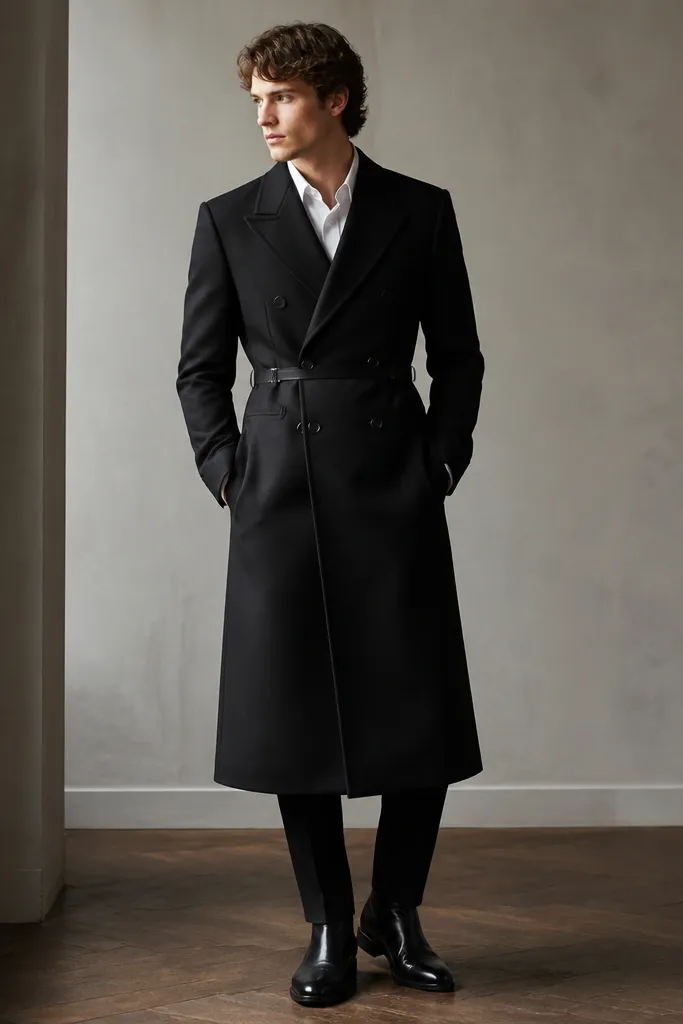
Double-breasted coats look formal because the button stance creates a strong vertical line. The longline hem turns a blazer into a dress-like layer, especially when it reaches mid-calf. A belt at the waist keeps the silhouette shaped instead of straight-up-and-down. This outfit is for nights when you want drama but still want to look clean and sharp.
Choose a blazer with structured shoulders and a second button line that sits flat. Wear a white shirt with a low-profile collar and skip loud patterns. Trousers should be slim through the thigh with a clean break at the shoe. Boots work best if they're polished and not rugged.
Pro tipLet the belt sit on top of the shirt, not tucked under fabric - it keeps the waist line crisp.
AvoidAvoid oversized lapels and too-long sleeves - both make it look like a hand-me-down.
12. Ivory Satin-Look Shirt Dress Style with Tailored Outer Layer
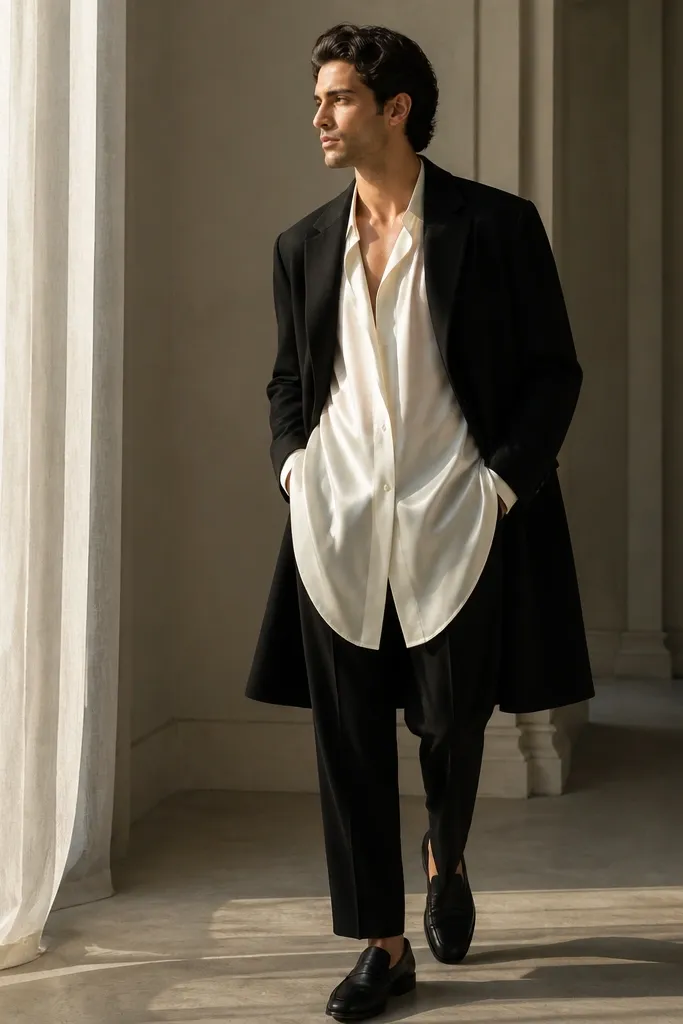
Satin-look fabric gives you that dress shine, but it needs structure to look classy. Pairing the ivory shirt-dress style with a tailored outer layer makes it feel intentional and formal instead of lingerie-ish. The black coat frames the ivory so the sheen doesn't look too bright. This is a strong option for indoor events where lighting is flattering and you want a soft, expensive look.
Choose a longer button-up with a clean placket and sleeves that hit the wrist bone. Wear a black overcoat open so the ivory stays visible. Keep trousers dark and minimal, and pick loafers or oxfords in black leather.
Pro tipUse a matte black belt only if the shirt has belt loops; otherwise let the coat keep the shape.
AvoidAvoid satin-look that's too thin - it shows wrinkles and looks slick in a bad way.
13. Olive Wool Wrap Coat with Crisp White Trousers
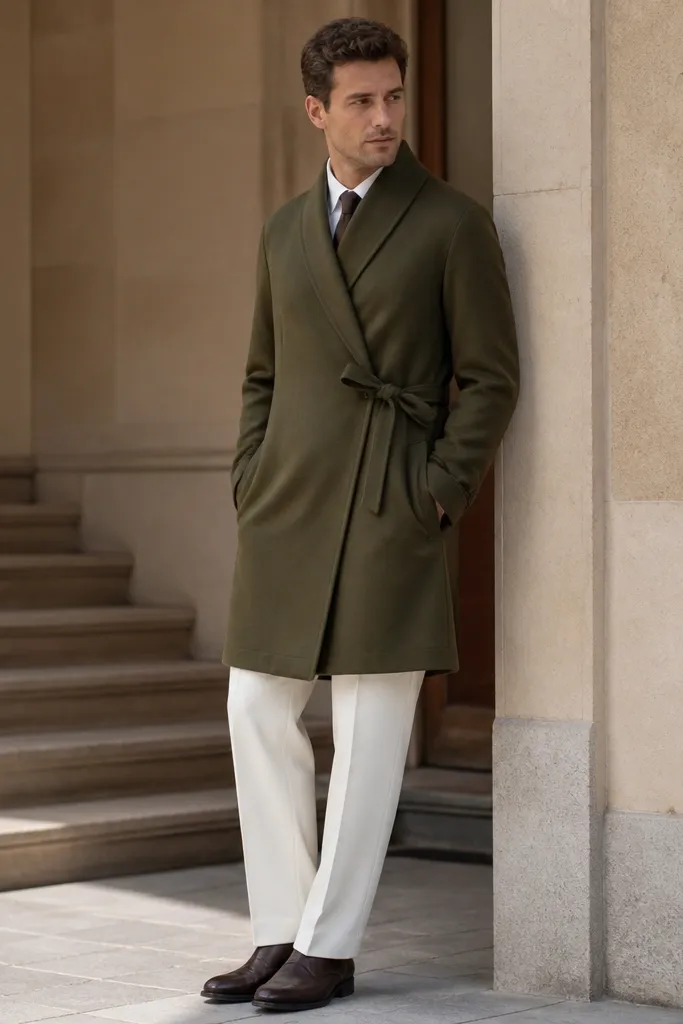
Wrap coats look dressy because the tie creates a clear waist and the collar frames your face. Olive wool gives a grounded, sophisticated color that still feels modern. White trousers add contrast and make the whole outfit read intentional - especially in evening photos. The combination is bold but controlled because both pieces are wool and structured.
Choose an olive wrap coat in wool blend with a thick weight so it holds shape. Wear crisp white trousers in a cotton-wool blend that doesn't go see-through and has a clean press. Keep shoes dark brown or black to balance the light pants.
Pro tipPress the trousers the night before and steam the coat collar; both are visible in most event photos.
AvoidAvoid off-white trousers with yellow undertones - they can look dingy under warm indoor lighting.
14. Black and Gold Formal Jumpsuit Cut with Tailored Belt
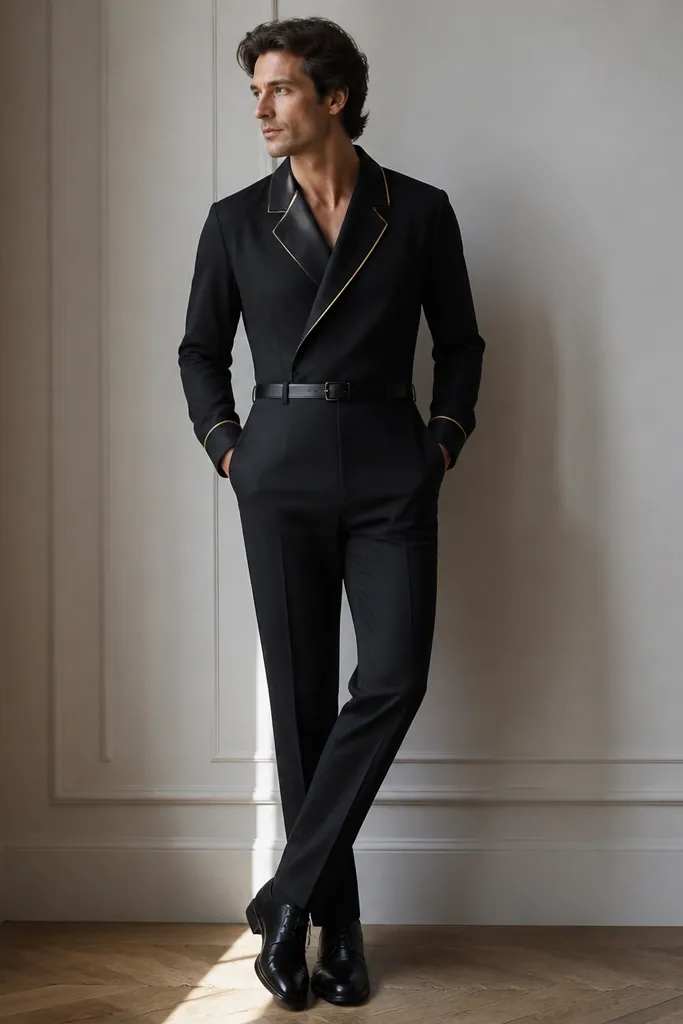
This is the "I want to look different but still formal" pick. A tailored jumpsuit reads dress-like because it's one continuous silhouette, and the belt creates waist definition. Black keeps it serious, while small gold trim adds festive formality without turning it into a party costume. If you choose the right fabric weight, it looks sharp in motion, not just posed.
Look for a jumpsuit with a structured neckline and a belt that cinches. Fabric should be medium-weight suiting or a structured crepe blend that doesn't cling. Pair with black leather shoes and keep accessories minimal - one watch and a simple ring.
Pro tipHem the inseam so the shoe breaks cleanly once - no pooling at the ankle.
AvoidAvoid jumpsuits with a low-quality stretch waist - it wrinkles and ruins the tailored look.