1. Navy Blazer + Black Crepe Sheath Dress (Mid-Knee)
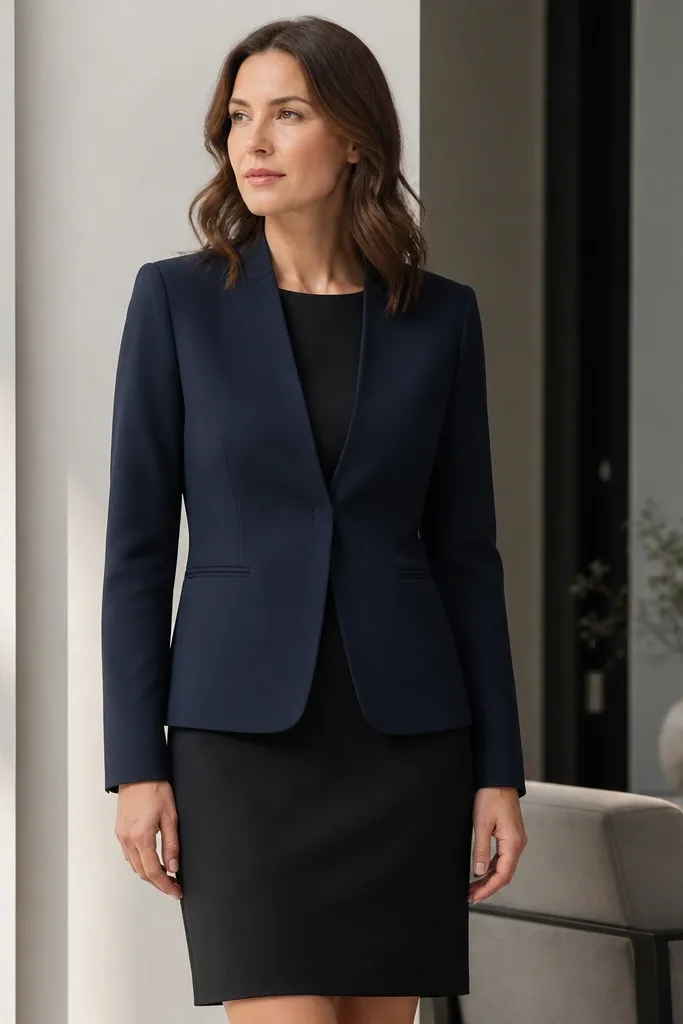
This combo works because black crepe holds shape and doesn't cling where the blazer is creating structure. The navy blazer adds softness and depth, so the outfit doesn't look like a funeral suit. A mid-knee sheath gives you a formal vertical line while keeping the legs visible enough for a confident stance. In indoor lighting, crepe stays matte, so it avoids that shiny, cheap-looking reflection.
Choose a blazer with a clean shoulder and a two-button front. For the dress, pick a sheath with darts or a defined waist seam so it doesn't turn into a straight tube. Keep the sleeve length to at least the mid-forearm so the blazer sleeve doesn't feel like it's floating.
Pro tipWear a belt only if the dress has belt loops or an existing waist seam - otherwise skip it to keep the line uninterrupted.
AvoidAvoid thin jersey sheath dresses with a shiny finish - they show every crease under a blazer.
2. Charcoal Blazer + Emerald Wrap Dress (Knee-Length)
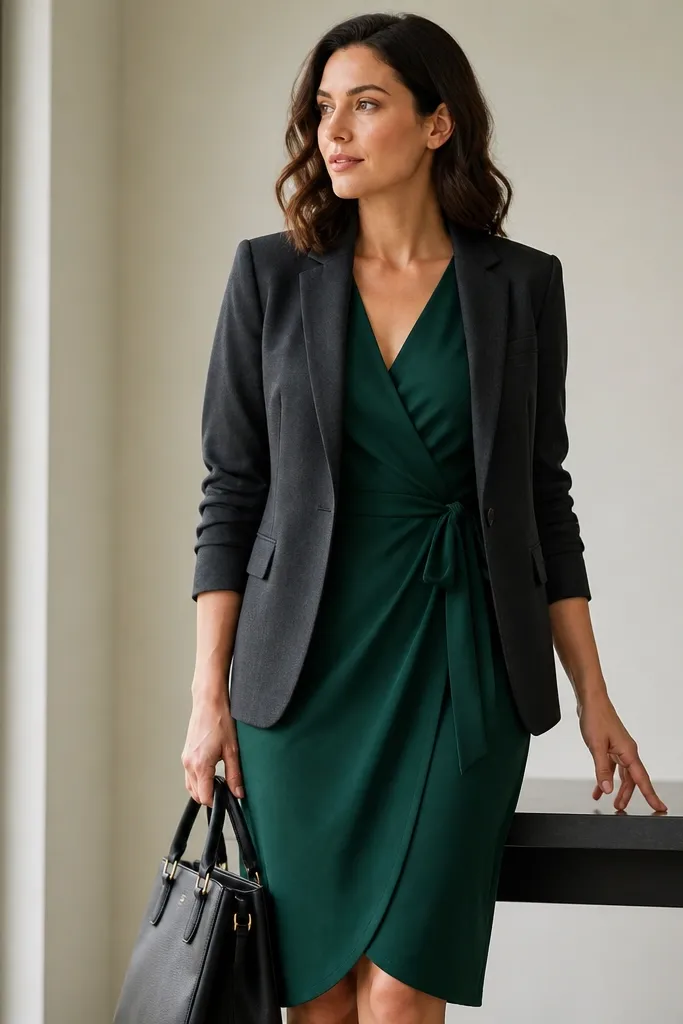
Wrap dresses already create a waist, so your blazer doesn't have to do all the work. Emerald reads expensive in photos against charcoal because it has enough saturation to pop without looking loud. The V-neck gives you a longer torso line, and the wrap front adds movement, which makes the outfit feel alive when you walk.
Pick a blazer in charcoal wool or a wool-blend with a matte finish. Choose a wrap dress with enough overlap so it doesn't gap when you sit. Keep the tie at the side or center so the waist knot stays flat.
Pro tipAdd a slim black belt only if the wrap tie doesn't stay closed - stitch the ends temporarily before you go out.
AvoidDon't choose a wrap dress with a flimsy lining that pulls open at the midsection.
3. Black Blazer + Burgundy Shirt Dress (Long-Sleeve, Button Front)
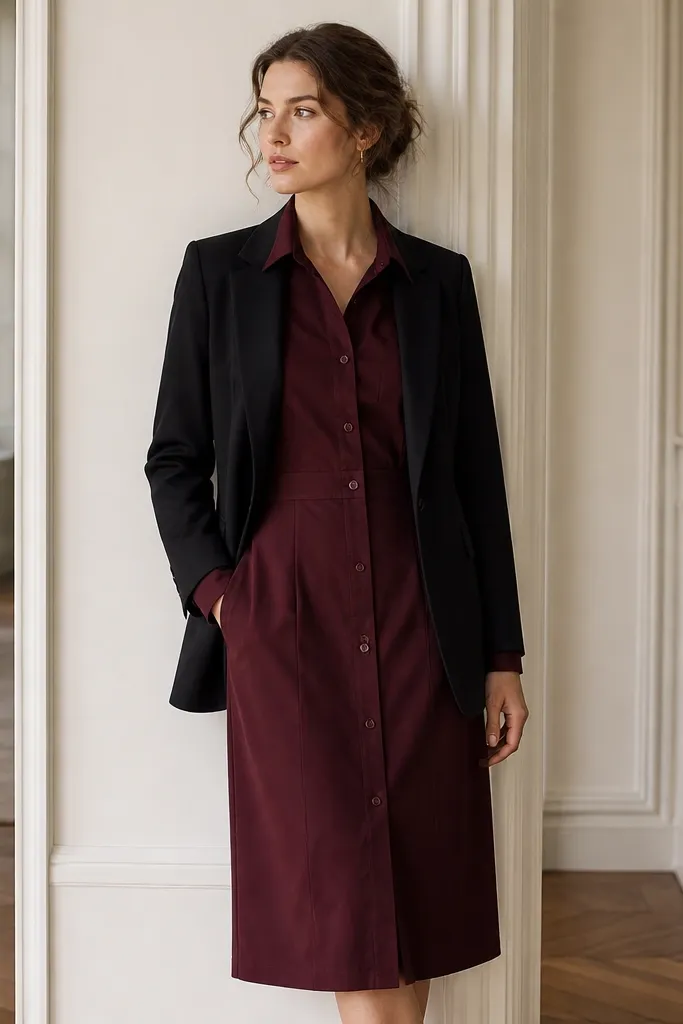
A shirt dress gives you built-in structure and a clear vertical line from collar to buttons. Burgundy is a warmer formal color than wine-red that can look flat under cool lighting, but it looks rich when paired with black. The collar shape also plays nicely with blazer lapels because the dress collar sits under the jacket without fighting for attention.
Choose a shirt dress with a waist seam or adjustable belt. Keep the blazer slightly longer than the dress waist so the jacket frames the top half. Button the shirt dress to the second-to-top button for a clean neck line under the blazer.
Pro tipPress the dress front flat before you put the blazer on - button fronts show wrinkles faster than you think.
AvoidAvoid shirt dresses with oversized patch pockets - they interrupt the blazer's clean silhouette.
4. Olive Blazer + Oatmeal Pleated Midi Dress (Small Knife Pleats)
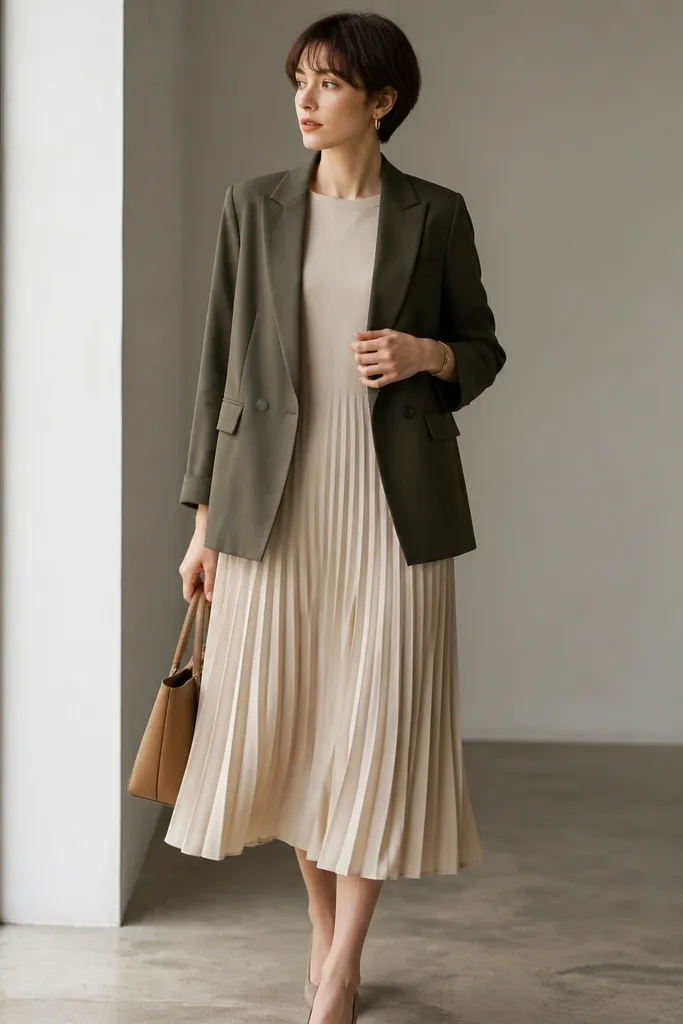
Pleats add motion and make a dress look intentional, not "borrowed." Oatmeal with olive is a grounded, formal combo that works for garden weddings and evening dinners. The midi length keeps it elegant, and the small pleats stay neat enough to pair with a tailored blazer without looking too casual.
Use an olive blazer with a bit of structure in the shoulders. For the dress, pick pleats that start near the waist, not the hip, so the fabric doesn't balloon. Keep the neckline simple so the pleats do the talking.
Pro tipIf the pleats flare when you walk, steam the dress lightly and hang it overnight before your event.
AvoidAvoid shiny satin pleats - they read partywear against an office-style blazer.
5. Light Gray Blazer + White Eyelet Dress (Short Sleeve, Knee)
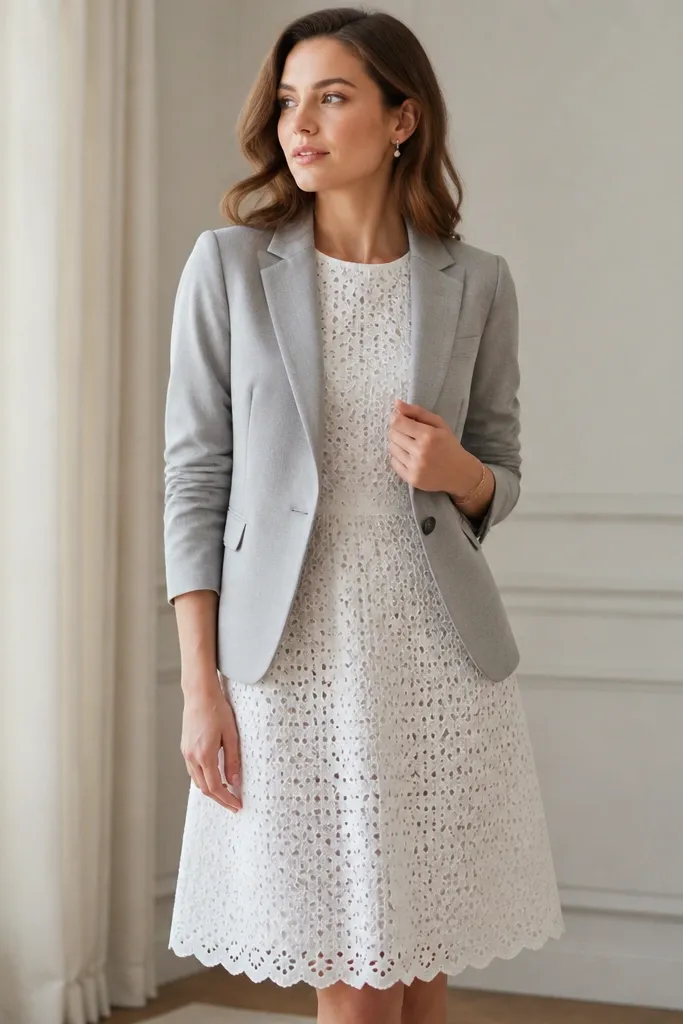
Eyelet looks formal when it's dense and tailored. Against a light gray blazer, the white dress doesn't feel bridal if you keep the neckline modest and the sleeves structured. The fitted waist keeps the silhouette sharp, and the knee length keeps it within "formal dress" territory rather than casual summer.
Choose a blazer with a smooth weave and no loud texture. Under the eyelet, wear nude or white seamless undergarments so the pattern doesn't show weird lines. Keep accessories minimal because the dress texture already adds detail.
Pro tipAdd a slip underneath if the eyelet is slightly sheer - it keeps the dress looking crisp in photos.
AvoidAvoid deep scoop neck eyelet dresses under a blazer - the gap looks sloppy fast.
6. Tan Suede Blazer + Black Ponte Column Dress (Mid-Calf)
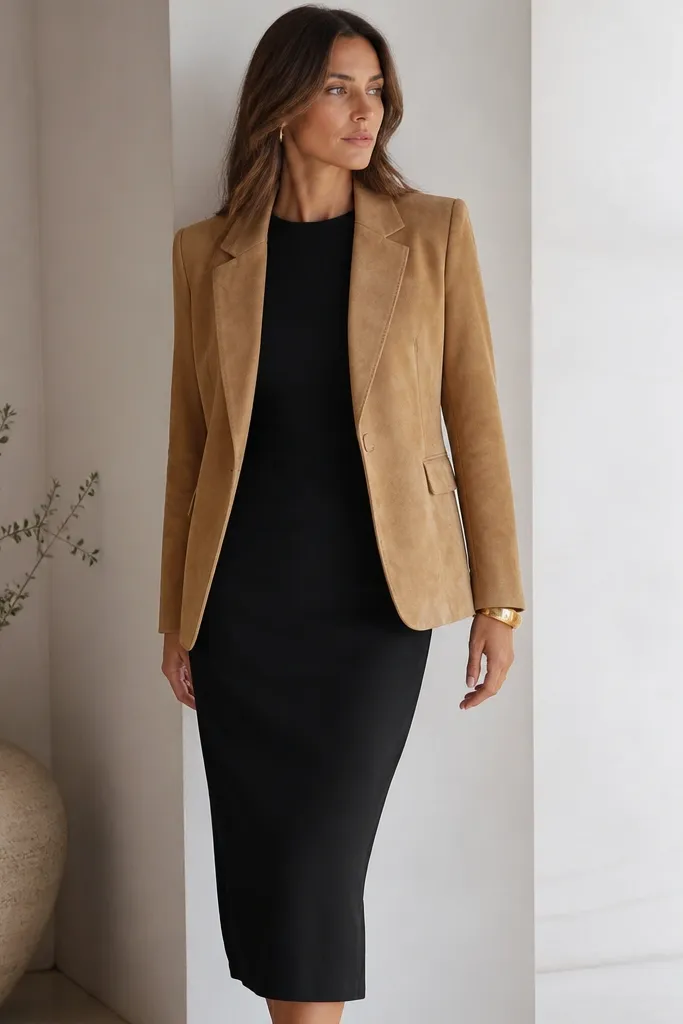
Suede adds warmth and texture, and ponte keeps the dress structured without needing heavy tailoring. The black column dress holds a straight line, so your blazer texture becomes the focal point. Mid-calf length makes this feel formal without needing a dramatic skirt flare.
Pick a suede blazer that fits close in the chest; oversized suede looks bulky. Choose a ponte dress with a subtle stretch so it doesn't wrinkle when you sit. Keep the neckline simple - crew or shallow V - so the suede doesn't compete with lacey details.
Pro tipUse a lint roller on the suede right before leaving; fingerprints show more than you'd think.
AvoidAvoid a column dress that's too thin - thin knit column dresses show under-blazer lines.
7. Navy Blazer + Navy-and-White Striped Wrap Dress (Midi)
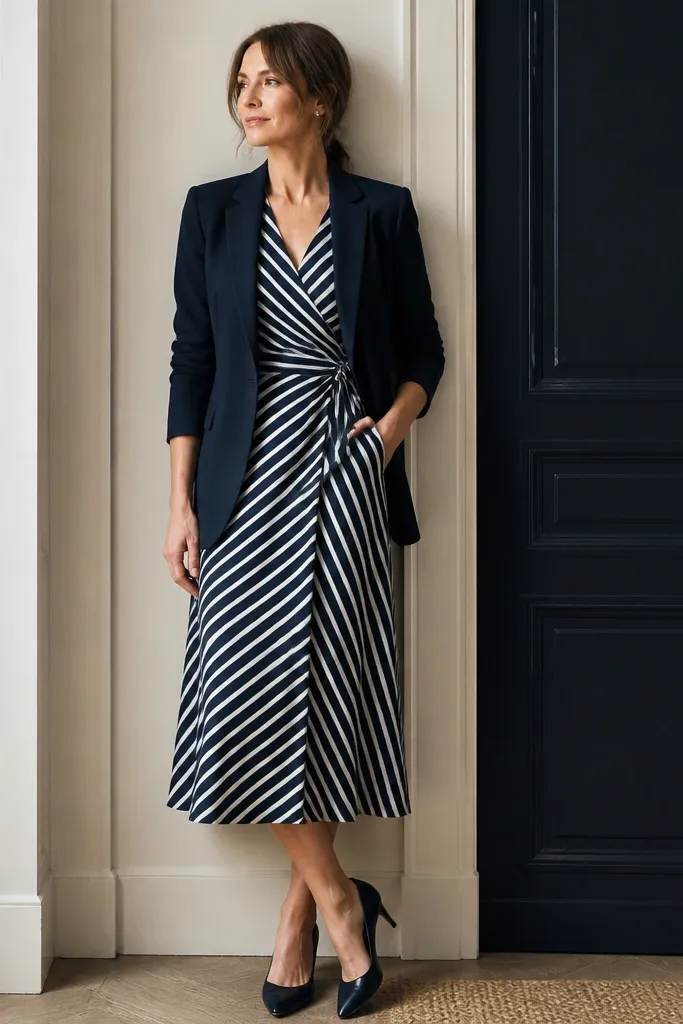
Stripes look sharp under a blazer when the fabric has enough weight to keep the lines straight. The wrap front gives you waist definition, and the midi length keeps it formal. Navy-and-white reads cleaner than random color prints, especially under event lighting.
Choose blazer lapels that aren't too wide so the stripes stay the main visual pattern. Make sure the wrap overlap is deep enough to stay closed in motion. Keep the dress sleeves either elbow-length or full length so the arms don't look disconnected.
Pro tipIf the stripes look crooked when the dress hangs, steam and smooth the wrap tie so the pattern aligns down the center.
AvoidSkip thin, wrinkly striped fabrics - they twist the stripes and make the look messy.
8. Black Blazer + Navy Satin-Blend Slip Dress (With Tailored Bra Cups)
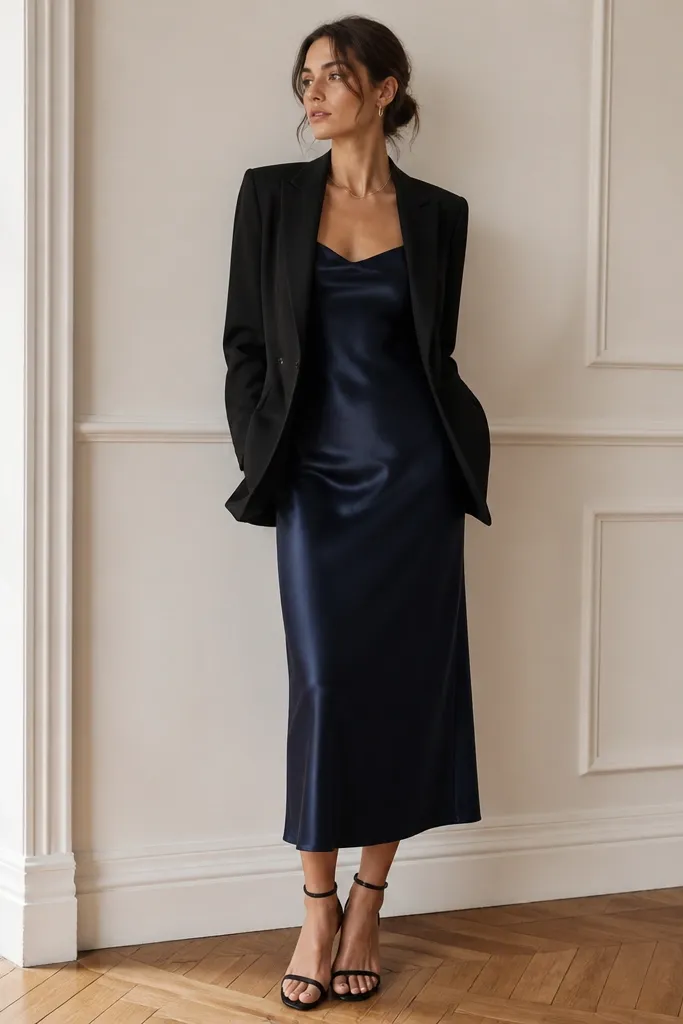
A slip dress can work for formal events when it has structure at the bust and a clean hem. The blazer hides the "bare" feel and turns it into a layered, evening look. Dark navy satin-blend catches light in a controlled way - it looks intentional rather than flashy.
Wear a slip dress with built-in cups or use a strapless bra with molded cups so the blazer sits flat at the chest. Choose a blazer with a bit of padding in the shoulders so the straps don't pull. Keep the slip hem slightly above the blazer hem gap so you see a neat line of fabric.
Pro tipTuck the slip straps slightly under the blazer edge so they don't show unevenly.
AvoidAvoid slip dresses with thin straps that dig into your shoulders - the blazer won't fix that.
9. Forest Green Blazer + Black Lace-Trim Sheath Dress (Knee)
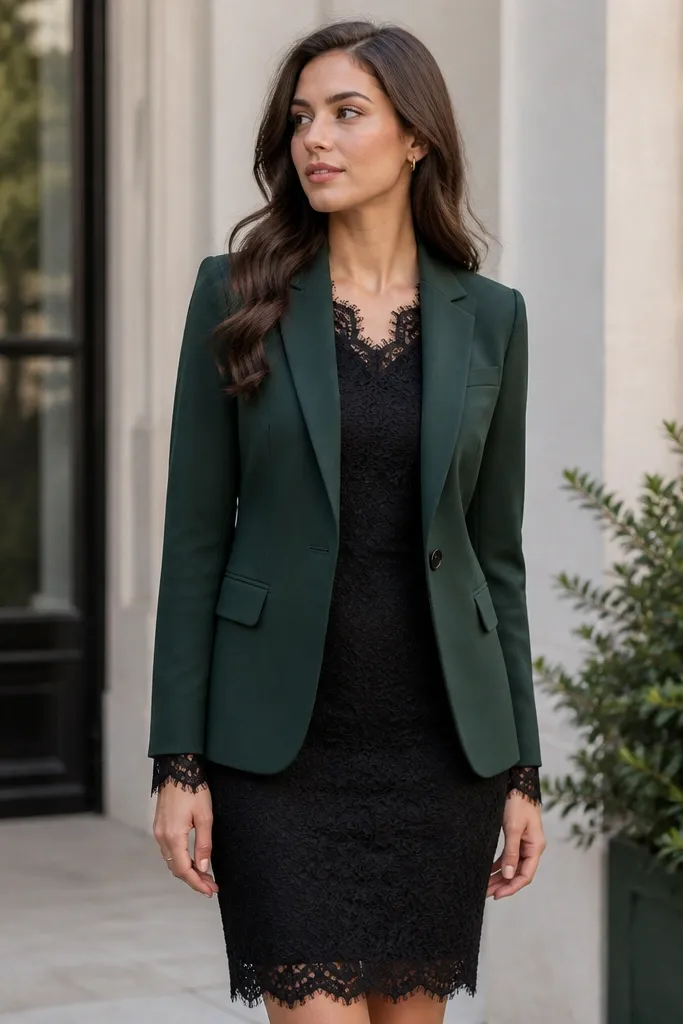
Lace trim looks formal when it's used as an edge, not an all-over cover. Forest green blazer makes the black lace feel more modern than a plain black-on-black pairing. The sheath shape keeps the outfit from looking costume-like, and the knee length keeps it wearable for dinners.
Pick a blazer with smooth lapels and a matte finish so the lace remains the detail. The dress should have a lined bodice so the lace doesn't show uneven skin tone. Keep the neckline modest so the blazer doesn't bunch at the chest.
Pro tipUse fashion tape at the neckline or side seams to stop lace from shifting when you sit.
AvoidSkip all-over lace dresses under a blazer - they can look busy and cheap fast.
10. Brown Wool Blazer + Camel Wrap Dress (Midi, Tie Waist)
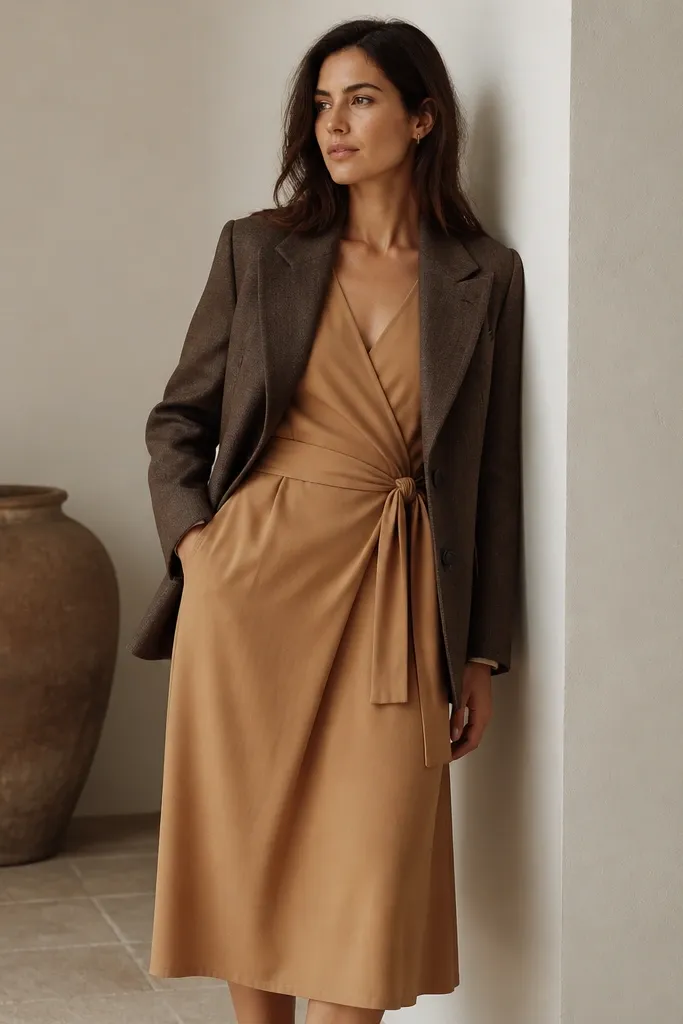
Camel and brown is a classic menswear color pairing that looks expensive without trying. The wrap dress creates a waist and keeps the midsection tidy under the blazer. Midi length adds formality and makes the outfit feel "intentional" even with minimal accessories.
Choose a blazer with a structured shoulder and flat front. The wrap dress should have an overlap panel at least 3 inches wide so it stays closed. Keep the hem at mid-calf and avoid maxi - maxi under a blazer can swallow your proportions.
Pro tipMatch your belt color to your blazer (dark brown belt with brown blazer) so the waist reads clean.
AvoidAvoid wrap dresses with overly thin ties - they loosen and make the front look uneven.
11. Burgundy Blazer + Black Knit Midi Dress (Ribbed, High Neck)
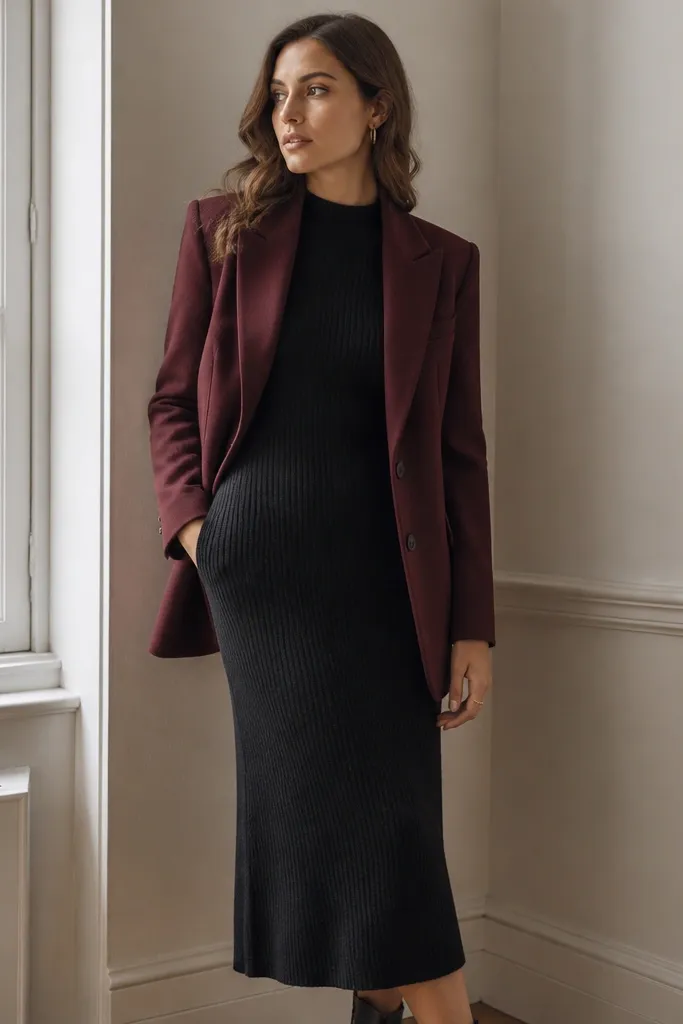
Ribbed knit can look formal if it's thick enough to hold shape and the neckline is high. Burgundy blazer adds warmth and gives the black dress a richer frame. The straight midi line keeps it sleek, and the high neck makes the outfit feel structured rather than casual.
Pick a blazer that closes without pulling - knit dresses cling more around the bust. Choose a rib knit that's at least mid-weight so it doesn't show a shiny stretch. Keep the hem straight; a dress with a flared hem can fight the blazer's clean shape.
Pro tipUse a steamer on the knit right before wearing; ribs show creases under jacket light.
AvoidSkip thin black knit dresses - they look like loungewear under formal tailoring.
12. Navy Blazer + Blush Chiffon Overlay Sheath (Midi)
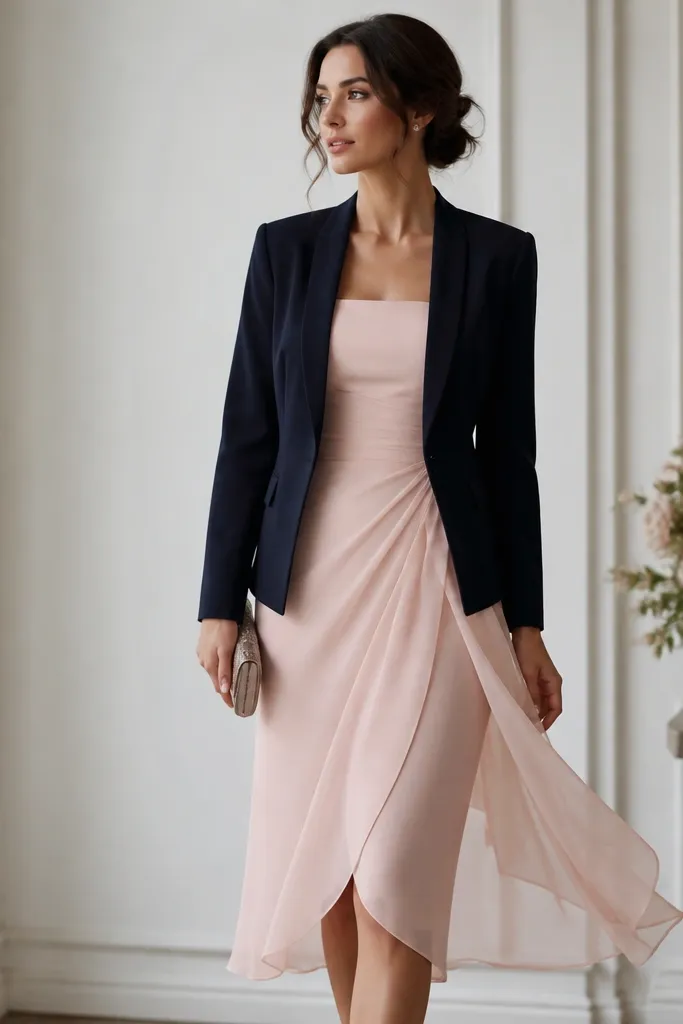
A chiffon overlay adds movement without turning the outfit into partywear. The key is that the base dress must be fitted and stable so the blazer doesn't look like it's sitting on a wrinkly cloud. Navy blazer grounds the blush and makes it feel more formal than pairing blush with beige.
Choose a sheath base that hits mid-calf and an overlay that falls in panels, not random lumps. Keep the neckline simple since chiffon can get messy around detailed collars. Wear nude underlayers so the overlay doesn't show patchy shadows.
Pro tipPin or tape the overlay at the side seam so it doesn't billow when you walk.
AvoidAvoid chiffon dresses with no lining - they cling and catch on blazer edges.