1. Midnight Black Tailored Shirt-Dress Over Tapered Trousers
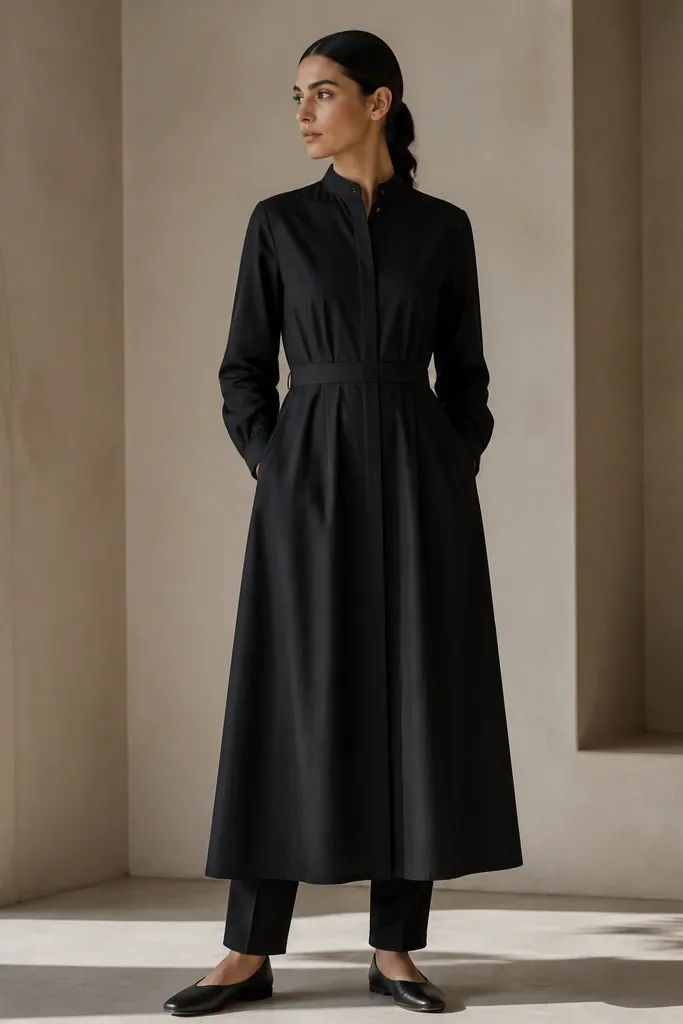
This look works because the shirt-dress gives you that "formal dress" silhouette while the tailored trousers keep the proportions male and sharp. Midnight black reads dressy in both daylight and evening, and matte fabric avoids the flash glare that satin sometimes causes. The stand collar frames your face and reduces the "robe" feel.
Choose a shirt-dress with a defined waist seam or a built-in belt channel. Aim for shoulders that sit flat - no puckering at the collar - and a hem that lands around 2-3 fingers above your ankle bone. Wear with tapered trousers in the same black or a near-black (charcoal if the dress is true black) and finish with sleek leather loafers or oxford shoes.
Pro tipPress the front placket and collar with steam before photos; it changes the whole look more than adding accessories. If the wedding is outdoors, add a lightweight wool overcoat in black at the ceremony time.
AvoidAvoid thin, shiny black fabric - it looks like nighttimewear under indoor lighting.
2. Ivory Silk-Cotton Short-Sleeve Caftan With Matching Trousers
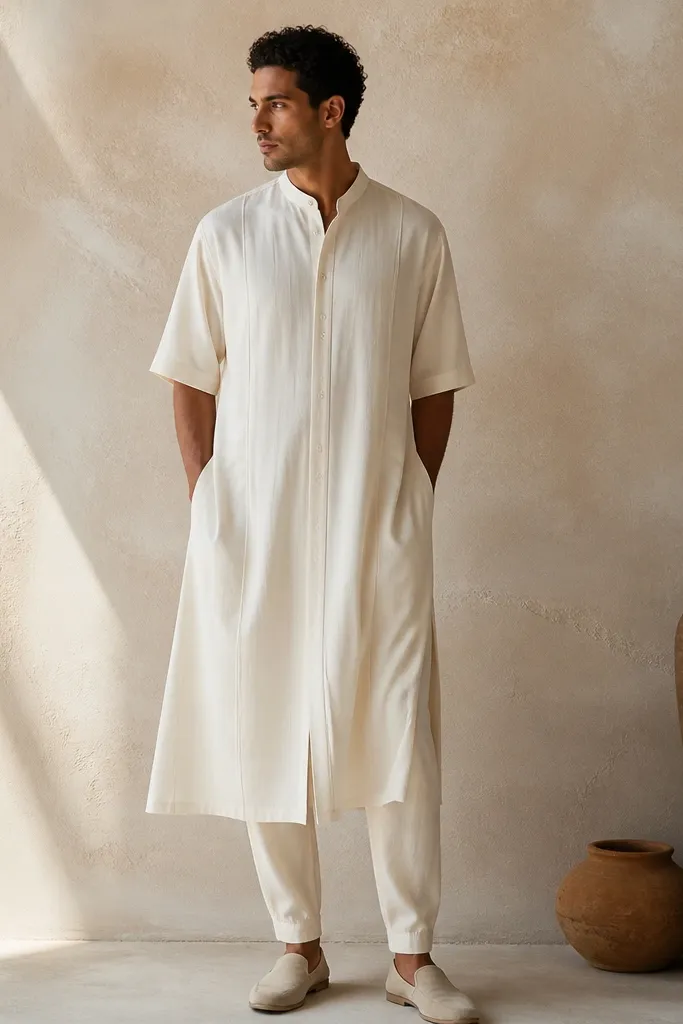
Caftans look intentional when the structure is built into the seams. The vertical paneling lengthens your torso, and the ivory tone looks bridal-adjacent without being white-white. Silk-cotton or cotton-silk blends drape well and don't cling like cheap satin.
Pick a caftan with a center placket or at least a defined front line so it doesn't look like a robe. Keep the hem around mid-ankle and avoid super-baggy sleeves; you want the sleeve opening to sit neat around your upper arm. Match the trousers to the caftan for a clean column effect.
Pro tipAdd a narrow leather belt only if the caftan has belt loops or a waist seam; tighten it just enough to define the waist, not enough to crease aggressively.
AvoidSkip heavy brocade caftans for daytime heat; they feel stiff and look bulky in motion.
3. Deep Teal Wrap Dress With One-Sided Draped Front
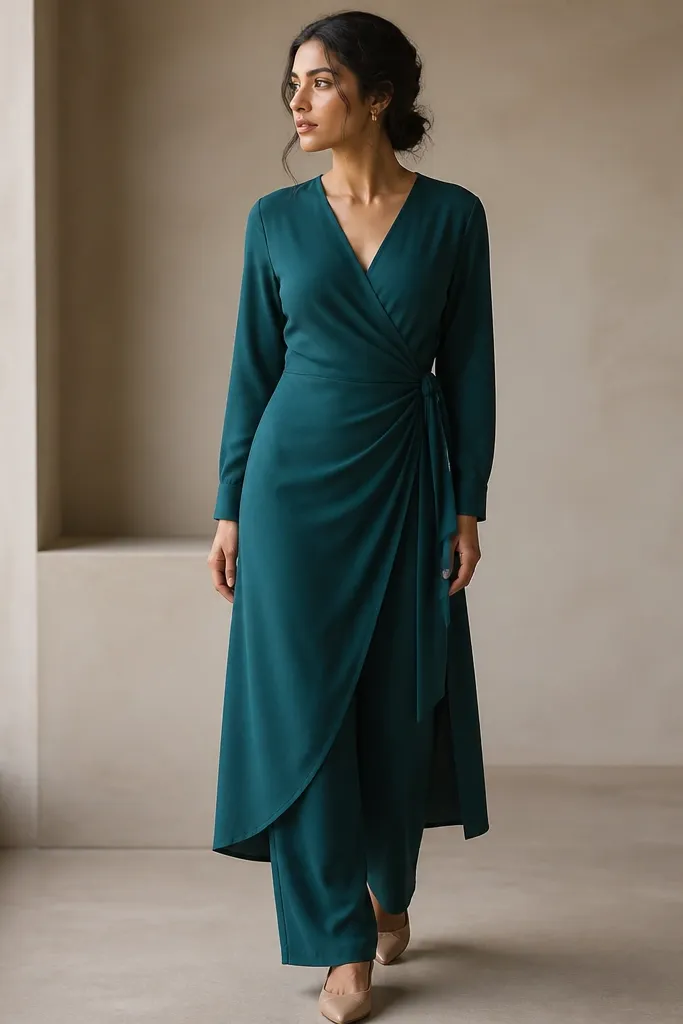
Wrap silhouettes flatter because the diagonal line creates shape and draws the eye toward your center. Deep teal photographs beautifully - it reads richer than navy and doesn't go flat like some greens. A matte wrap fabric looks expensive and hides wrinkles better than glossy satin.
Choose a wrap dress length that hits mid-calf or just above the ankle. Use a fabric with a bit of weight, like crepe or matte viscose blend, so the drape falls cleanly. Secure the wrap with inner ties or a hidden snap so it doesn't shift when you sit.
Pro tipTest the wrap at the widest part of your hips: if you can pinch the fabric and it pulls, size up or pick a wider wrap panel.
AvoidAvoid thin jersey wraps; they stretch out fast and start gaping at the neckline.
4. Charcoal Jacquard Long Tunic With Tonal Buttons
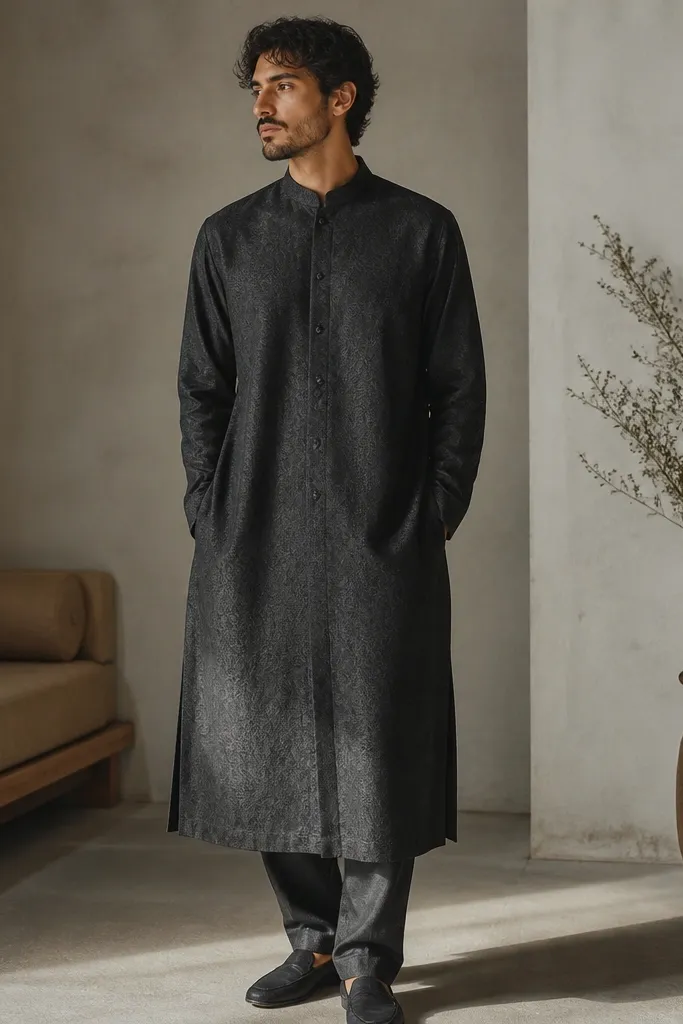
Jacquard gives you "formal dress" texture without loud prints. Tonal buttons keep the look clean and prevent the outfit from looking costume-y. Charcoal is forgiving on skin tones and works for weddings where the dress code is formal but not black-tie.
Look for a tunic with a band collar and a straight hem with a slight taper at the sides. The jacquard should be subtle - you want texture, not big raised motifs. Pair with trousers in the same charcoal family and keep the shoe black or dark espresso.
Pro tipIf the jacquard is thick, steam the front panels before wearing; it relaxes the weave so the tunic hangs smoothly.
AvoidSkip tunics with loud shiny threads; they flash bright in photos and look cheap.
5. Burgundy Velvet-Blend Long Shirt Dress
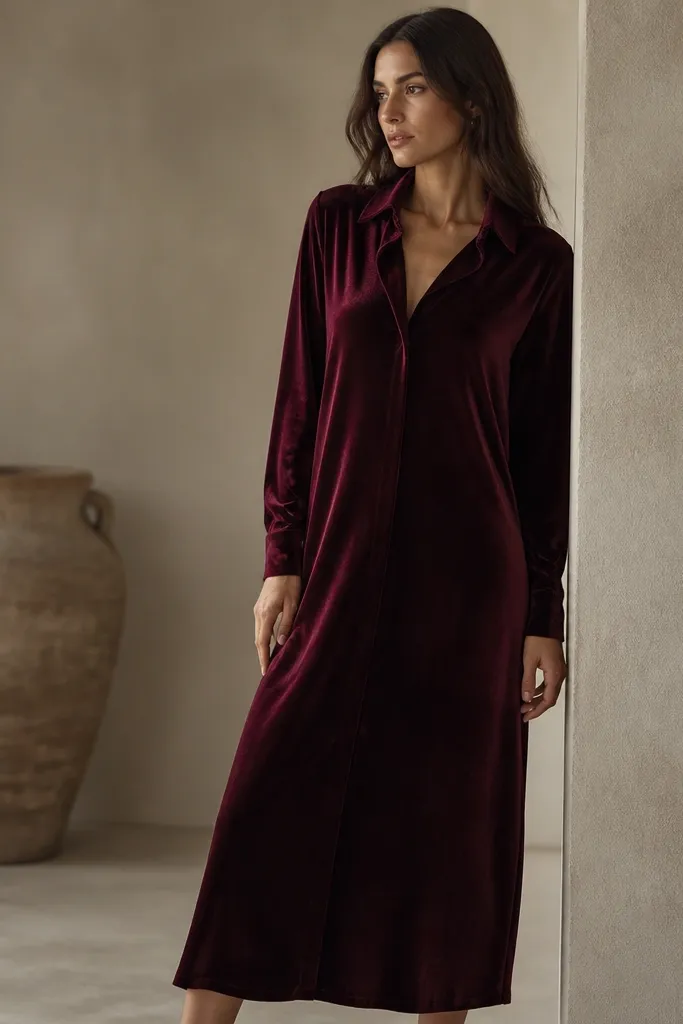
Velvet-blend looks rich in evening light and gives you that "dress" presence even without heavy accessories. Burgundy flatters most skin tones and reads wedding-formal without needing sequins. The key is choosing a blend that stays smooth - not fuzzy - so it looks tailored.
Pick a long shirt dress with a defined waist seam or a belt option. Keep the sleeve length full or at least to the wrist - short sleeves in velvet can look off. Wear with black leather boots or dark oxfords, and choose a belt in the same tone as your shoes.
Pro tipUse a lint roller right before you leave; velvet picks up lint and hair fast.
AvoidAvoid crushed velvet that looks wrinkled out of the bag.
6. Sage Green Satin-Crepe Slip Dress Cut for Men
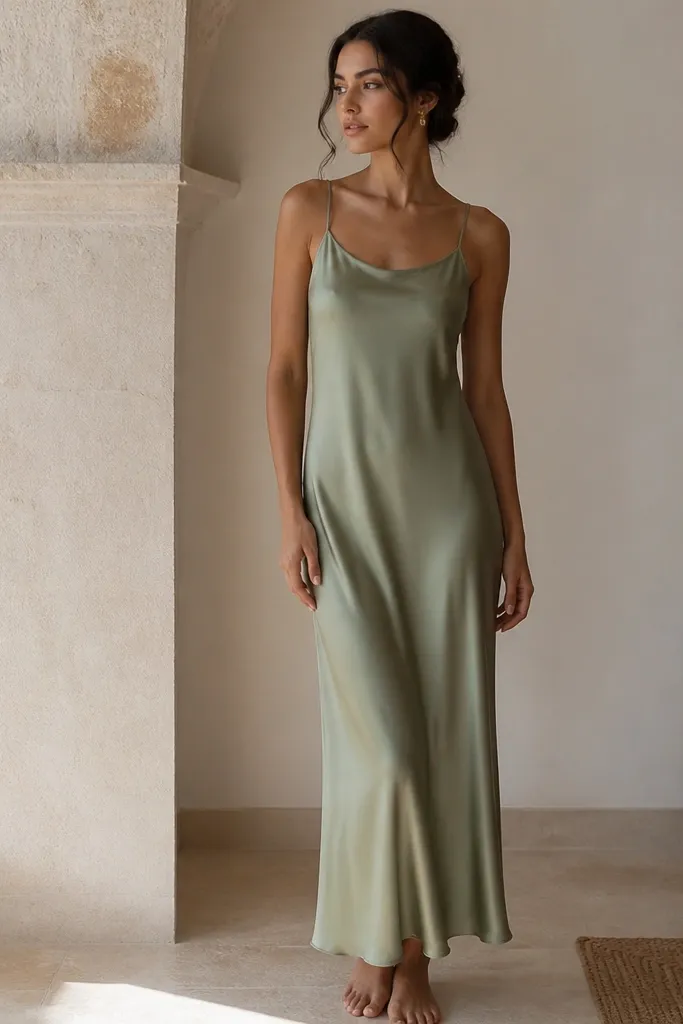
Slip silhouettes look stunning when the fabric drapes in long lines. Sage green feels wedding-appropriate because it's softer than emerald and not as harsh as neon green. Satin-crepe gives sheen without that overly wet look cheap satin has.
Choose a cut that has darts or a fitted waist so it doesn't look like a nightgown. Pair with a tailored longline blazer for ceremony photos, or keep it dress-only for a reception look. Shoes should be sleek and minimal - black or deep brown.
Pro tipIf you're worried about strap movement, add a thin inner strap grip or safety pin at the side seam before photos.
AvoidSkip mirror-shiny satin; it throws bright highlights under flash.
7. Navy Linen-Blend Long Dress With Rolled Cuffs
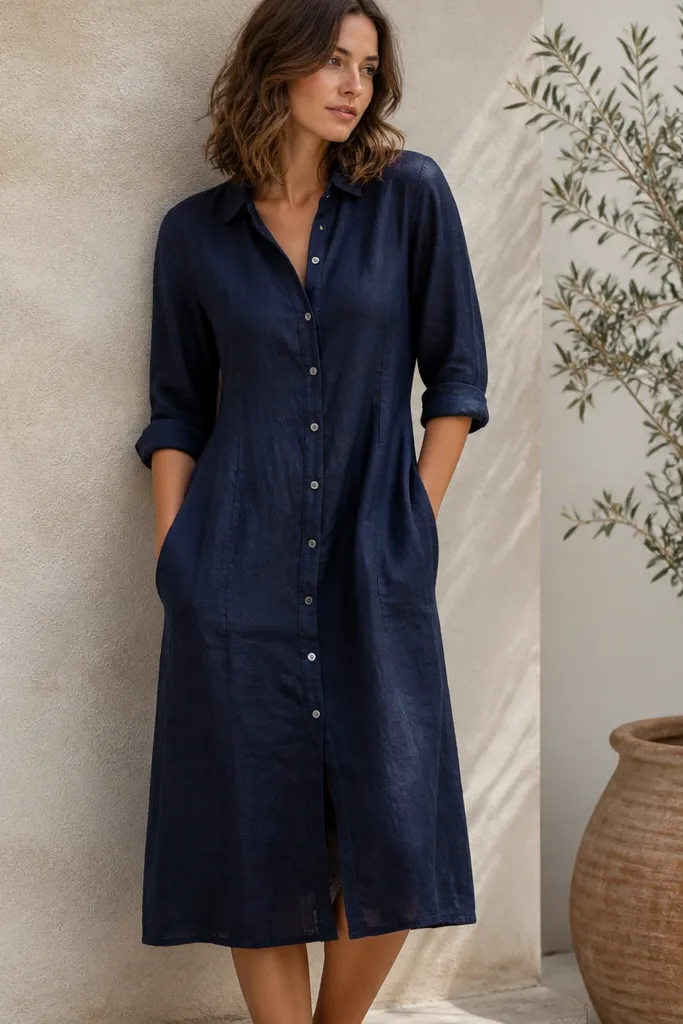
Linen-blend is the answer when the wedding is outdoors and the dress code is formal-ish. The natural creasing looks intentional when the cut is clean. Navy stays classic and doesn't go muddy in daylight.
Pick a navy long dress with a structured collar and a button placket so it reads formal. Aim for mid-calf length if you're in a warm climate - it keeps you cool and prevents ankle dragging on grass. Pair with leather sandals only if the venue is beach-casual; otherwise, use loafers or oxfords.
Pro tipSteam the collar and front placket only. Too much steaming across linen makes it look flat instead of textured.
AvoidAvoid fully unlined thin linen; it turns see-through when you move.
8. Sand Beige Pleated Front Dress Shirt Style
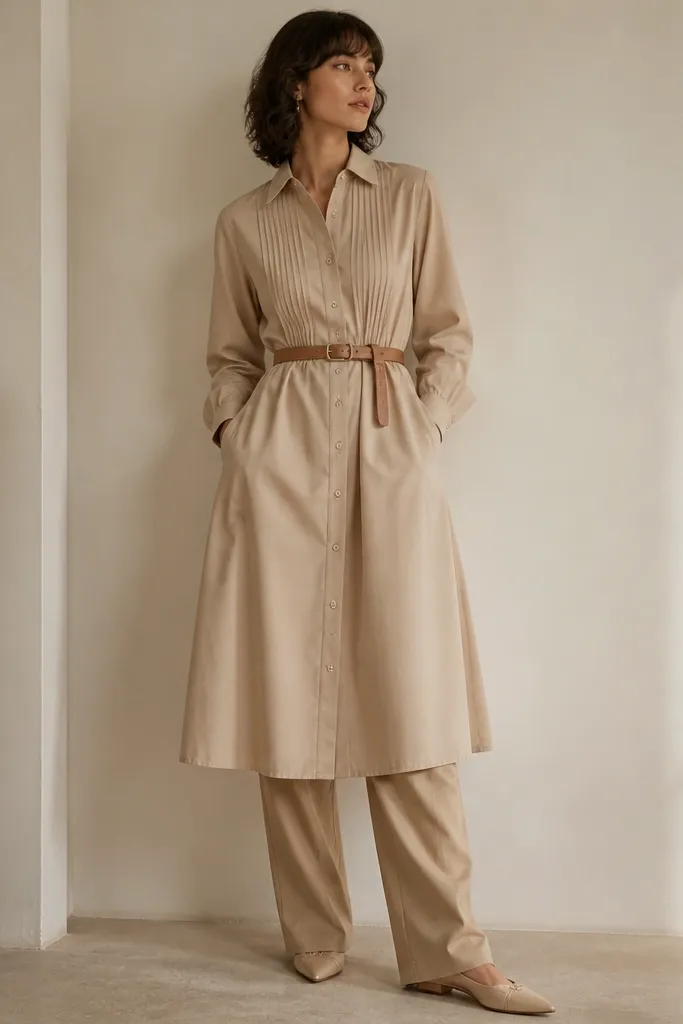
Pleats add shape and keep the shirt-dress from looking like a standard long shirt. Sand beige is wedding-friendly because it photographs softer than white and still reads formal. Poplin holds crisp lines and doesn't cling to sweat like jersey.
Choose a dress with pleats that end around the mid-chest so your torso looks framed. Keep the collar crisp - it should stand without collapsing. Wear with matching trousers or slim tapered pants in a slightly darker beige for contrast.
Pro tipUse a belt that matches shoe color exactly; tan-on-tan looks planned and cohesive in photos.
AvoidSkip wrinkly polyester poplin; it looks creased even after ironing.
9. Black and Silver Sequin-Trim Longline Tunic
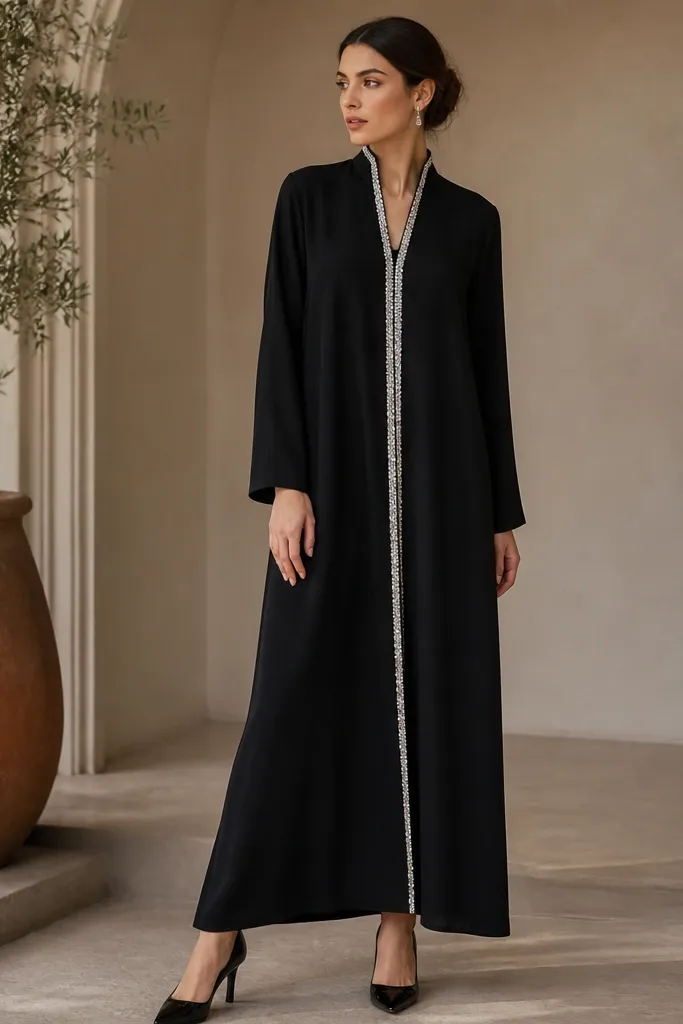
Sequin trim gives you wedding sparkle without turning the whole outfit into a disco ball. Black keeps it grounded, and the silver trim reads modern under evening lighting. This is the safest way to do "dressy" if you're not trying to wear full sequins head-to-toe.
Pick trim placement that stays narrow: collar, placket edges, and maybe one cuff stripe. Keep the base fabric matte so the sequins are the only shine. Pair with slim black trousers and a black shoe with a clean toe.
Pro tipWear a plain black undershirt or fitted base layer; it prevents sequin snagging and reduces itch.
AvoidAvoid all-over sequins; they snag on chairs and look messy after an hour.
10. White-Gray Textured Jacquard Column Dress
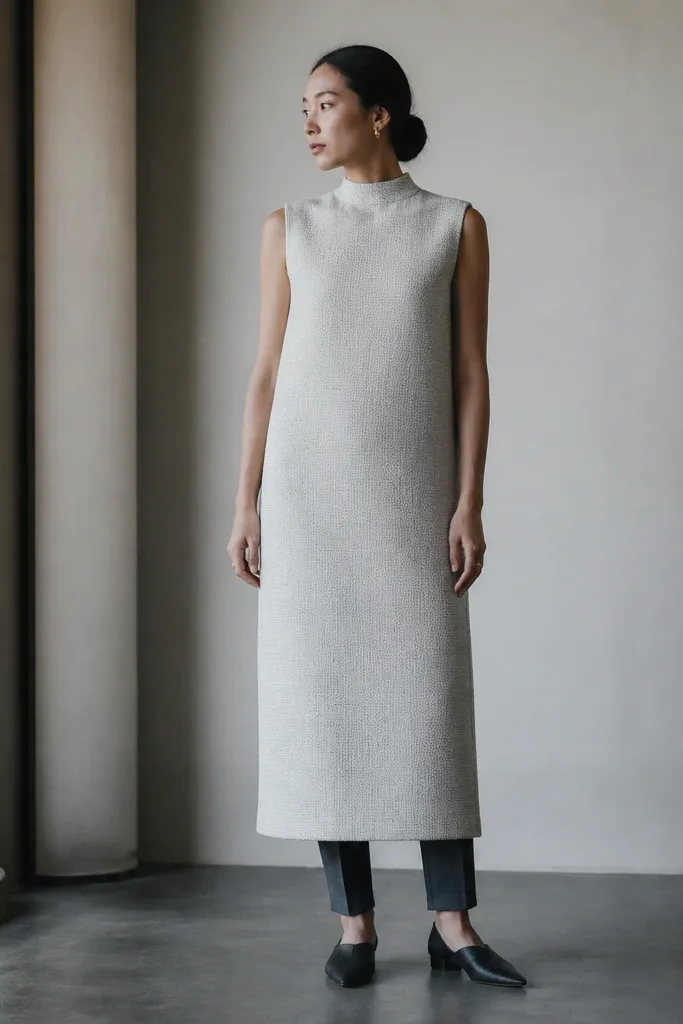
A column silhouette looks sharp in formal settings because it keeps lines straight and calm. White-gray texture reads elevated without shouting "bridal." The woven pattern adds interest that doesn't disappear in flash.
Choose a dress with a high neckline or a structured collar to keep it from reading casual. Let the hem sit just above the ankle so shoes show. Wear with dark trousers so the outfit doesn't blend into your skin tone.
Pro tipIf the fabric is textured, skip heavy jewelry and let the weave do the work.
AvoidAvoid flat white smooth fabric; flash makes it look washed out.
11. Forest Green Stretch Crepe Wrap Dress With Belted Waist
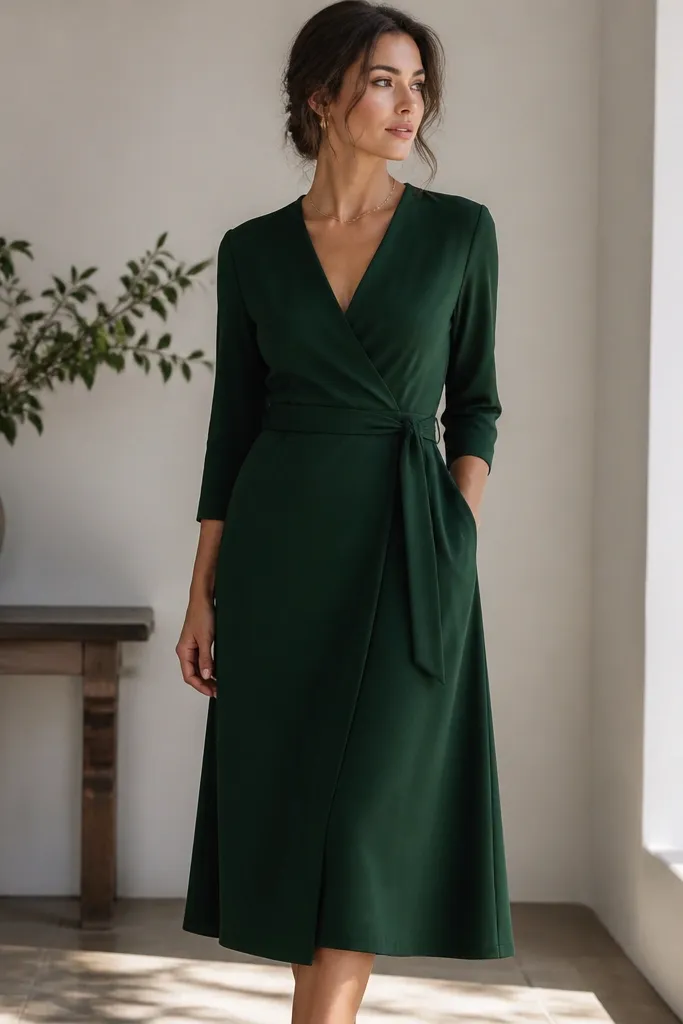
Stretch crepe holds shape while still moving when you walk. Forest green looks premium and pairs well with gold-toned accents. A belted waist gives you a defined silhouette that looks intentional in motion.
Choose a wrap with a belt that sits at your natural waist, not low on the hips. Three-quarter sleeves are a safe bet for photos because your arms look proportionate. Pair with dark brown leather shoes for warmth against green.
Pro tipDo a sit test: wrap dresses need enough overlap at the front; if you see daylight, add an inner snap.
AvoidAvoid wraps with too-short overlap; you'll feel exposed when you sit.
12. Royal Blue Tailored Kaftan With Slim Cuff Trousers
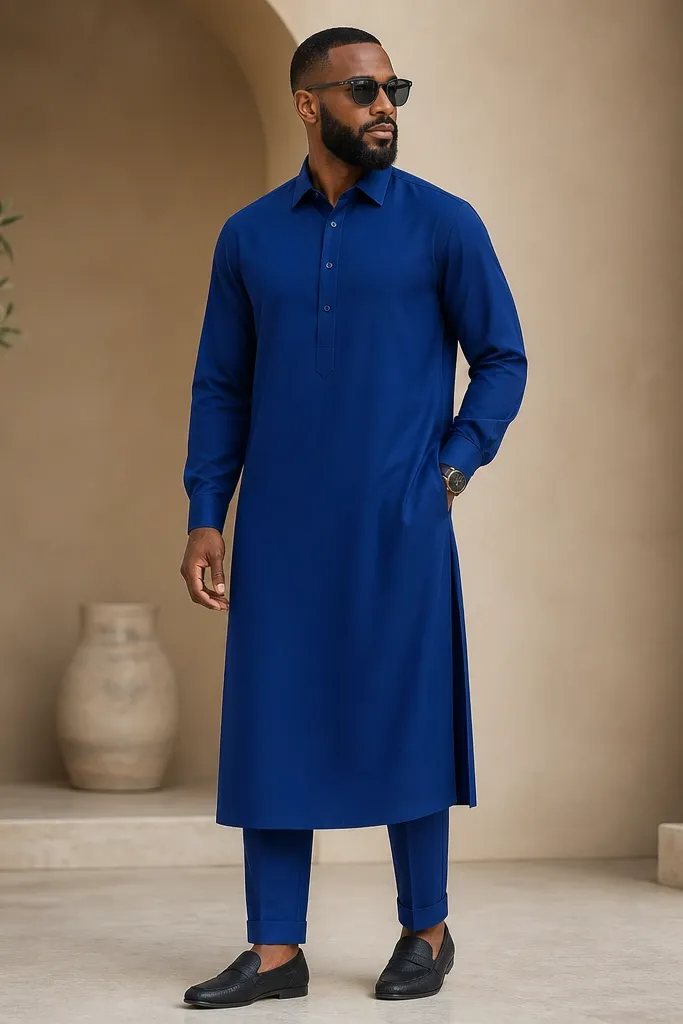
Tailored kaftans work when the sleeve and shoulder are shaped, not just loose. Royal blue is a wedding power color - it stands out in group photos without looking childish. The tapered cuff keeps the overall look crisp.
Pick a kaftan with structured front panels and a collar that doesn't collapse. Keep the hem at the ankle so your proportions stay long. Pair with slim trousers that show a clean line at the shoe.
Pro tipChoose one metal tone - either silver watch and belt buckle or gold - and keep it consistent.
AvoidAvoid kaftans that hang from the chest; they make you look top-heavy.