1. Cream cardigan + straight denim + gold hardware
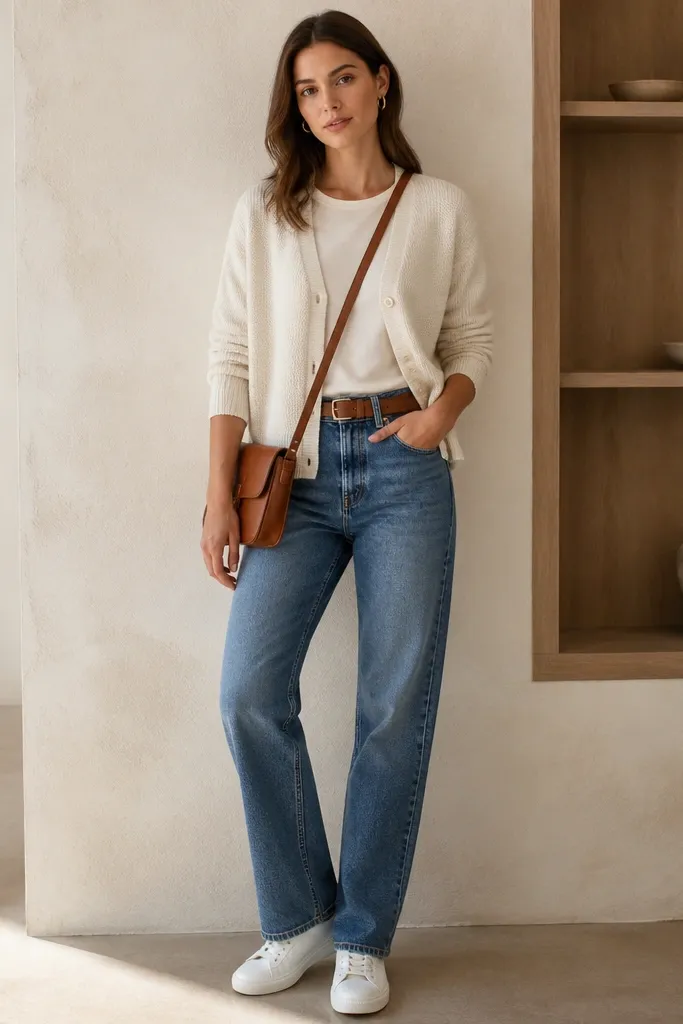
This outfit works because the cream cardigan softens your silhouette and the straight-leg jeans keep it grounded. The gold hardware adds warmth without needing a flashy top. I like ivory and cream together because they read clean in daylight and don't look "yellow" the way some cheap creams do. The texture mix is knit + denim, which looks expensive even when pieces are basic.
Choose a cardigan that hits mid-hip and has sleeves that reach your wrist bone. Jeans should sit at your natural waist and fall straight from thigh to hem. Keep the top under it simple - ivory crewneck or thin long-sleeve - so the cardigan stays the star. Wear white sneakers or off-white boots for a crisp contrast.
Pro tipIf your cardigan looks too big, do a half-tuck at the front to create a waist line.
AvoidAvoid cardigans that are see-through thin - they make the whole outfit look like an old layer.
2. Navy flannel over fitted tee + tapered chinos
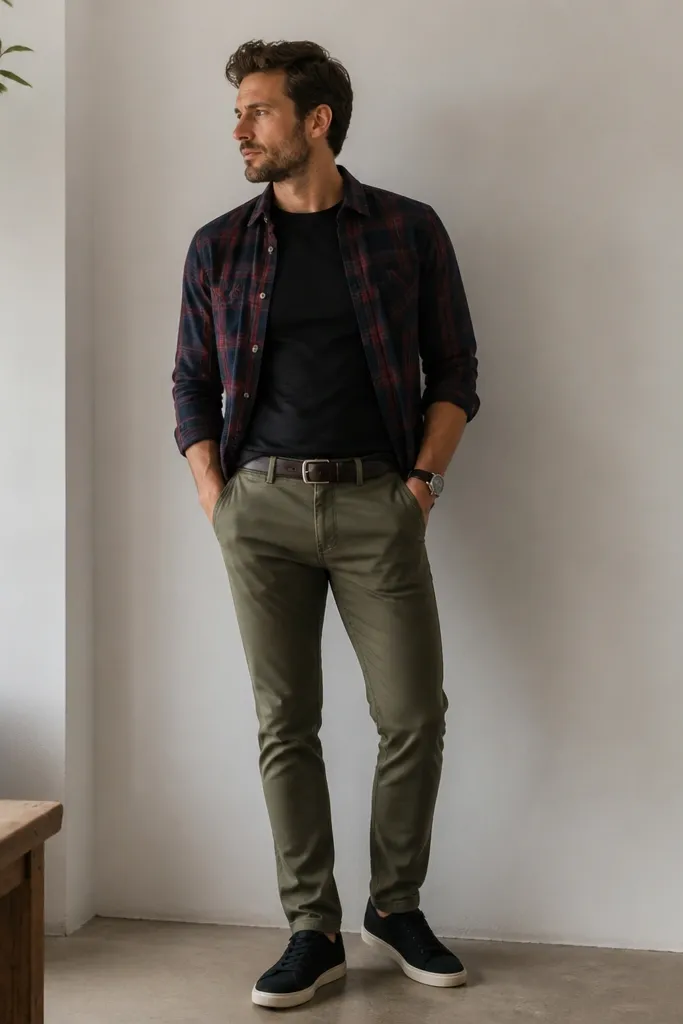
Flannel over a fitted tee creates instant structure without adding bulk. Navy and olive are a classic fall combo because they look natural together in low autumn light. The fitted tee stops the flannel from looking like a blanket. Tapered chinos give you that clean ankle shape that makes the outfit look intentional on campus steps.
Pick a flannel that's long enough to cover your seat but not so long it pools. Roll the sleeves once so the cuff sits around mid-forearm. Chinos should have a small taper and a light break, not puddling at the ankles. Keep shoes dark - black or deep brown - so the pants don't compete.
Pro tipUse the flannel's red line as your accent: add a red beanie, red socks, or a red backpack strap.
AvoidSkip flannel that's too short - it makes your torso look chopped.
3. Camel wool coat + black turtleneck + gray jeans
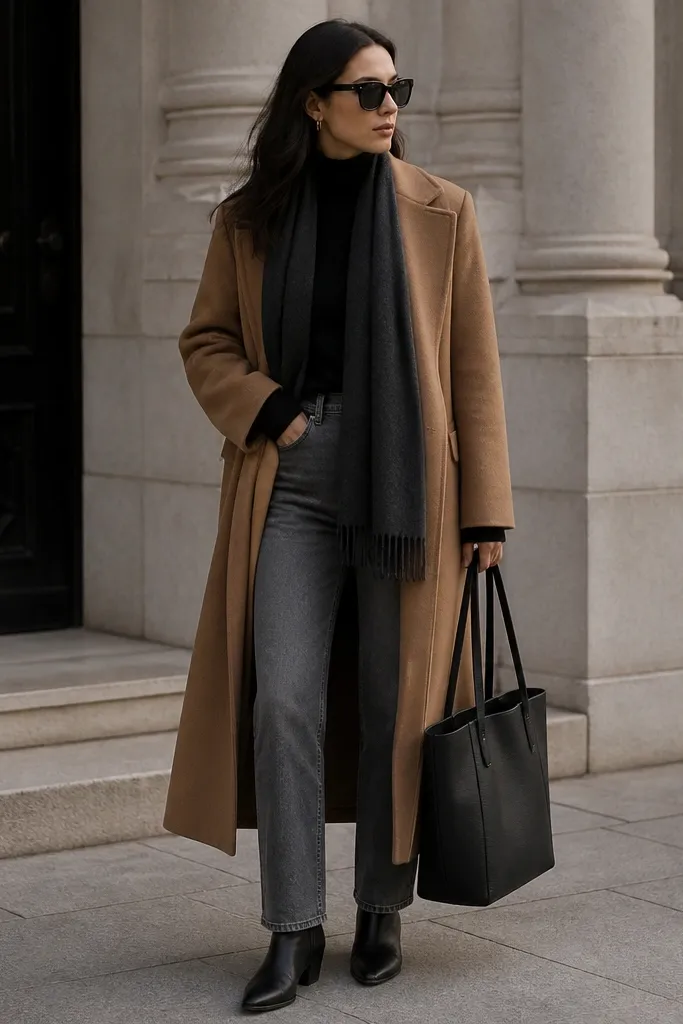
A camel wool coat instantly upgrades everything because wool has that soft, matte depth. The black turtleneck keeps the look sleek and warm. Gray jeans are the bridge - they don't fight the coat the way light blue can. This is my go-to "morning class, afternoon meeting" look because it looks dressed even when you're carrying a tote and rushing.
Choose a coat with a clean collar and a waist seam or belt-like shaping. Turtleneck should be fitted through the chest and not bunch at the neck. Gray jeans should be straight or slim-straight and hit the top of your boot. Keep scarf ends short and tied close to the neck.
Pro tipIf your coat is long, wear ankle boots so the hem doesn't swallow your legs.
AvoidAvoid shiny outerwear - it cheapens the coat effect fast.
4. Burgundy hoodie + light-wash overshirt + chunky sneakers
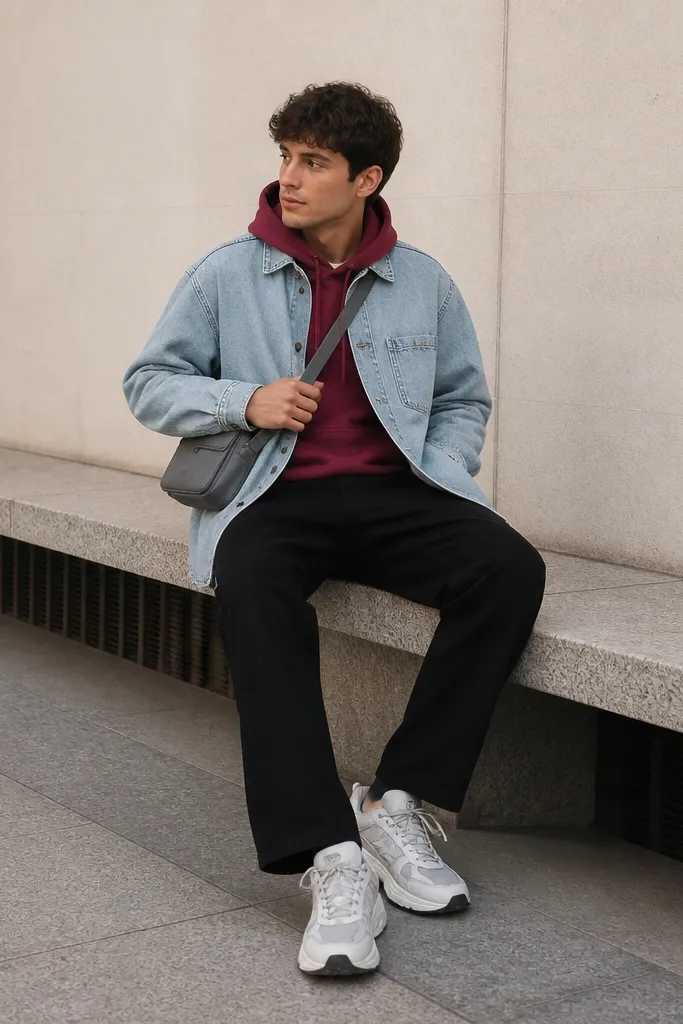
This combo looks good because the burgundy hoodie gives you depth and the light overshirt adds brightness at the shoulders. Denim on top of a hoodie is a fall staple, but the overshirt has to be structured so it doesn't turn into a messy pile. Black jeans anchor the colors. Chunky sneakers add a modern campus feel.
Overshirt length should land around mid-hip. Button it one or two buttons for a cleaner line, not fully closed. Keep hoodie color rich - burgundy, not wine-red that looks faded. Use black jeans with minimal distressing so the look stays sharp.
Pro tipMatch your crossbody hardware to your sneakers' hardware - it makes the whole outfit feel tied together.
AvoidAvoid too many distressed areas - hoodie + heavily ripped denim makes it look worn out.
5. Forest green sweater vest + white button-down + khaki pants
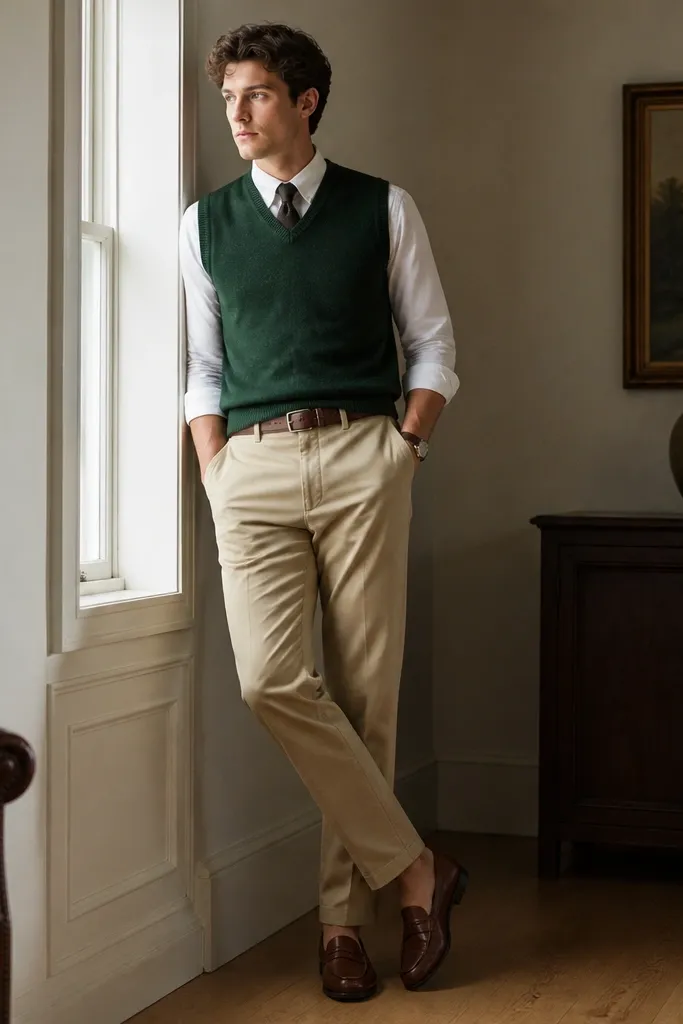
Sweater vests make you look like you have your life together, but the secret is the shirt choice. A crisp white button-down with a collar that sits flat makes the vest look tailored. Forest green reads college-fall without being too loud. Khaki trousers add warmth and keep the outfit from looking overly dark.
Pick a vest that fits close through the torso and doesn't gap at the armholes. Leave the button-down slightly open at the top for comfort, but keep the collar clean. Trousers should have a straight leg with a gentle break at the shoe. Loafers or simple derbies work best.
Pro tipPress the button-down collar once with steam before you leave - it changes everything.
AvoidSkip vests that are too long - they bunch and make the torso look heavier.
6. Charcoal quarter-zip + black jeans + gray beanie
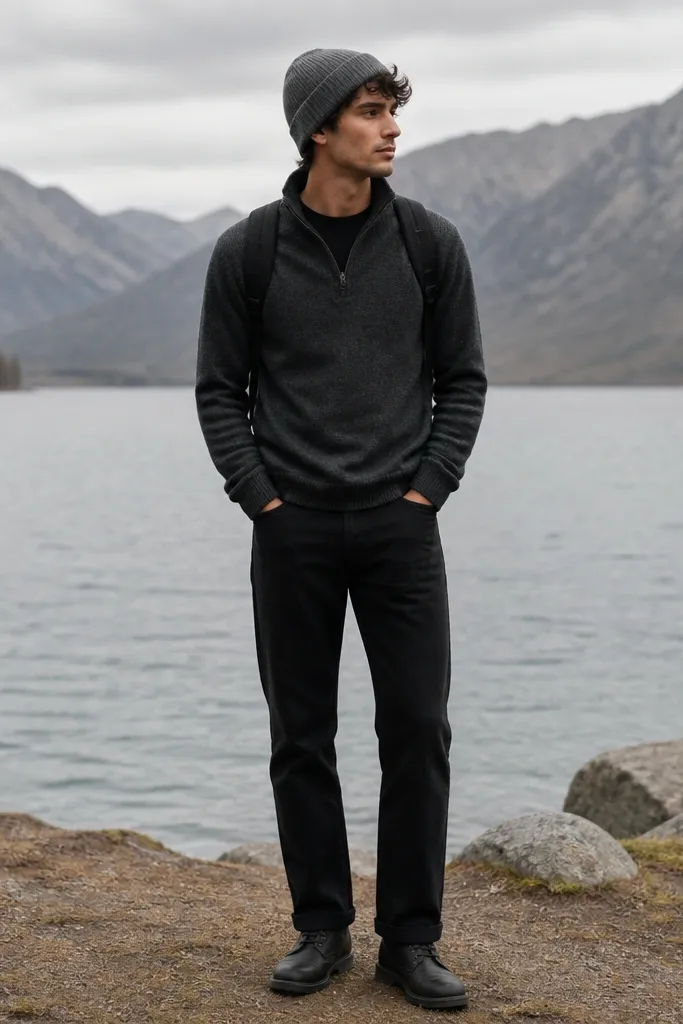
Quarter-zips are the easiest "after" upgrade because they look athletic but not sloppy. Charcoal is a better base than black when you're wearing dark jeans - it adds depth. This outfit looks pulled together because everything stays in the same value family: charcoal, black, gray. The beanie adds a clean top layer that frames your face.
Quarter-zip should close without pulling across the chest. Long-sleeve underlayer should show slightly at the cuffs. Pants should be straight or slim-straight and not overly tight at the knee. Boots should be matte leather or suede, not shiny.
Pro tipChoose a quarter-zip with a slightly thicker knit so it holds shape when you sit in class.
AvoidAvoid thin quarter-zips - they collapse and look like gym wear.
7. Satin bomber + graphic tee + dark denim
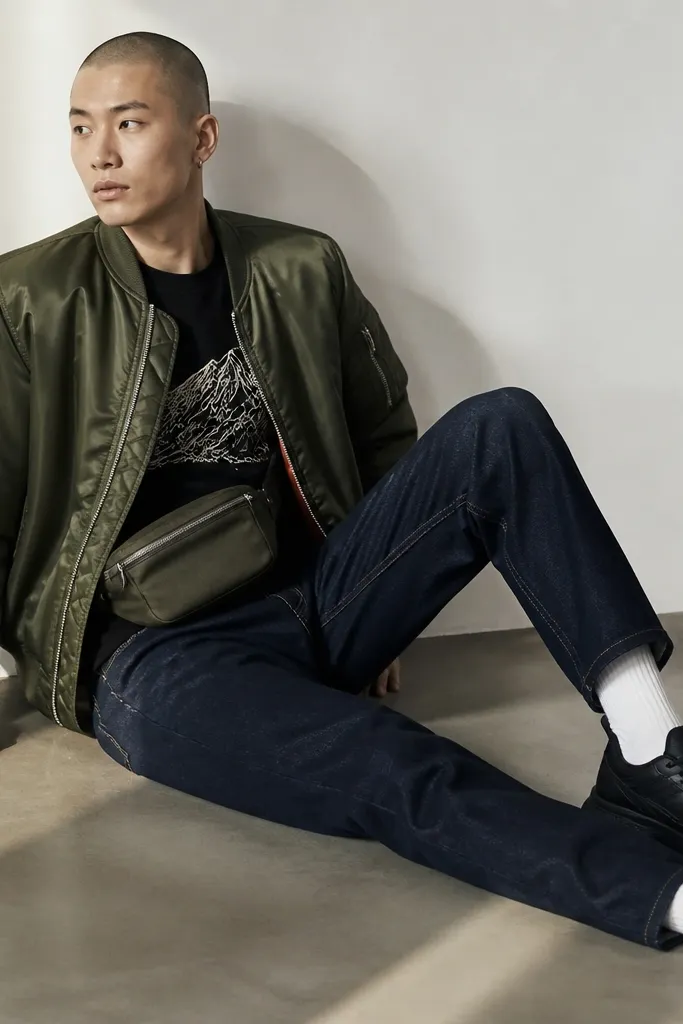
The trick with bomber jackets is shine control. Satin in muted olive catches light without screaming "party." A simple graphic tee keeps it casual, while dark denim keeps the bomber from looking like costume. This outfit works because the jacket adds movement and the rest stays clean and simple. It's a good pick for campus events where you want to look styled without overdressing.
Bomber should hit at the waist and have ribbing that sits flat at the wrists. Graphic tee should not be oversized - let the hem hit the waistband. Dark denim should be straight and clean around the thigh. Keep accessories minimal: belt bag and one watch.
Pro tipMatch your bag color to the bomber ribbing, not the shirt graphic.
AvoidAvoid loud neon bomber colors - they make dark campus lighting look harsher.
8. Brown suede jacket + striped tee + dark chinos
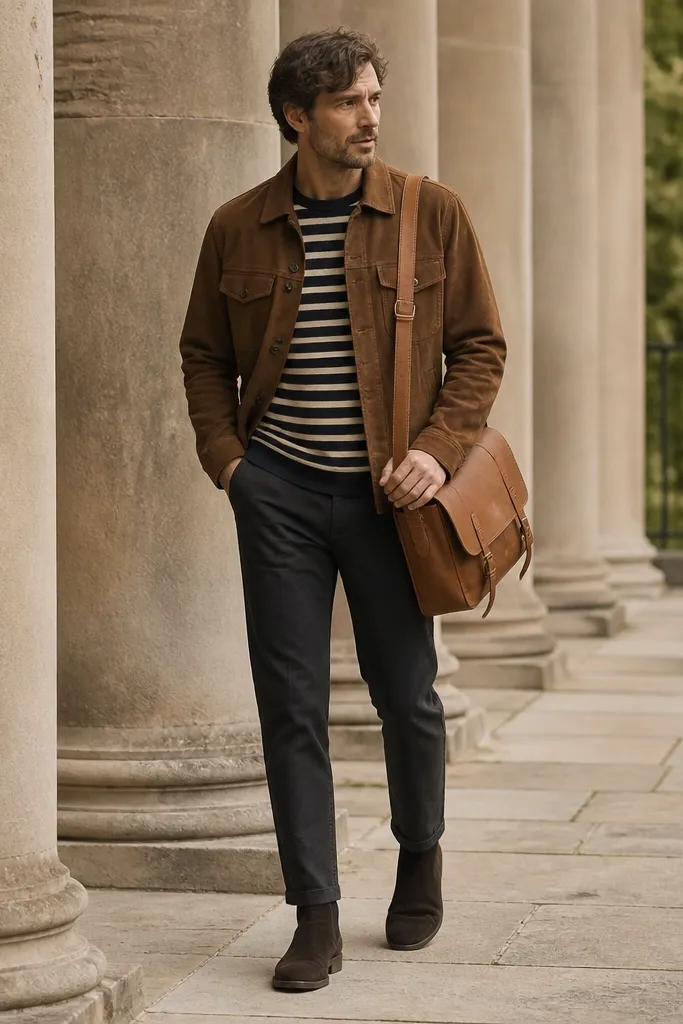
Suede is the fastest way to make a basic tee look like an outfit. Brown suede plus navy-and-cream stripes creates that old-school college vibe. Dark charcoal chinos keep it modern and stop the brown from turning too warm. The textures here are suede + cotton jersey + smooth chino - it reads layered and intentional.
The suede jacket should fit close at the shoulders and have sleeves that end at the wrist. Striped tee should be thin enough to drape, not stiff. Chinos should sit at the waist and taper slightly for a clean hem. Choose boots in the same brown family as the jacket for cohesion.
Pro tipUse suede-friendly brush on the jacket before wearing - it removes surface dust so it looks new.
AvoidAvoid suede that's heavily scuffed - it drags the whole outfit down.
9. Black midi skirt + ribbed long-sleeve + knee boots
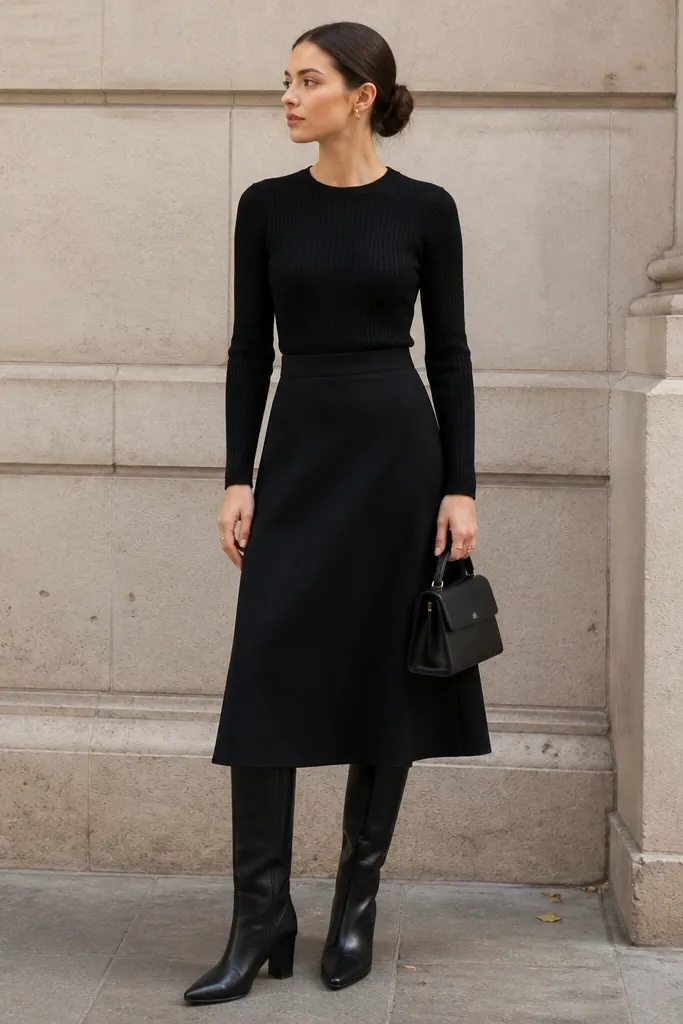
A midi skirt makes your silhouette look finished in photos and in motion. The ribbed long-sleeve gives you shape, and the tuck matters - it creates a waist line instead of a blob. Knee boots add a strong vertical line that makes legs look longer. This is one of my favorite "before and after" upgrades because it turns basic tops into a full outfit with one change.
Skirt length should hit mid-calf for most people on campus so you don't step on it. Fabric should have some stretch but hold its shape, like ponte or cotton-blend with elastane. Top should be fitted through the torso and not too thin. Boots should have a stable heel or flat sole for walking.
Pro tipIf the skirt rides up when you walk, pin the side seam once inside - it stops the constant adjusting.
AvoidAvoid skirts that are too shiny - they look cheap in indoor lighting.
10. Oat overshirt + black leggings + tall rain boots
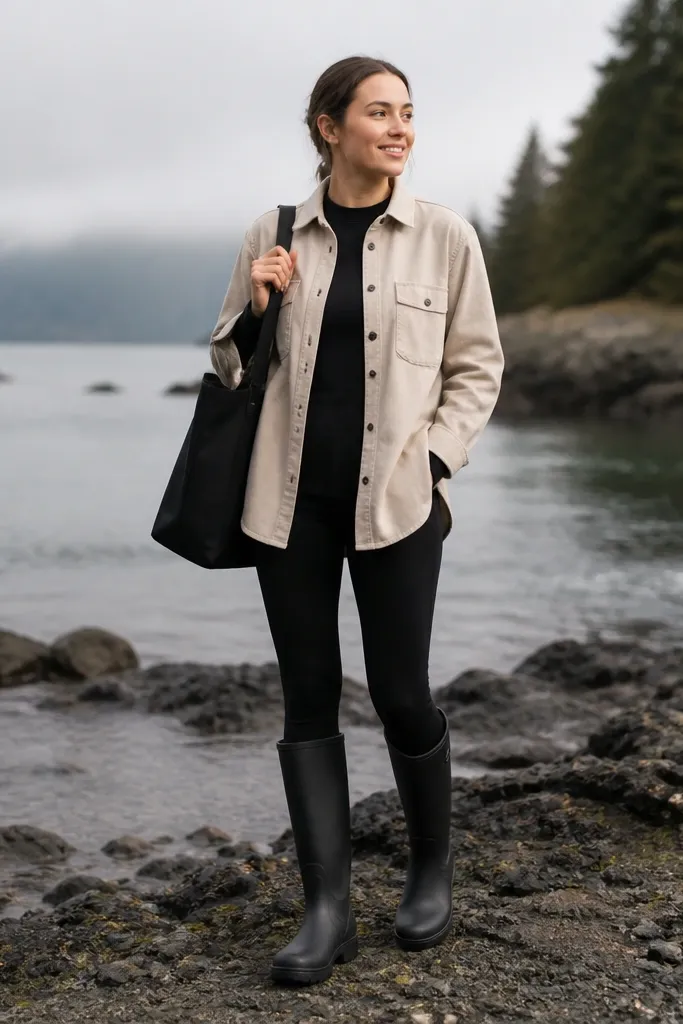
This outfit is built for rainy fall days when you still want to look put together. The oat overshirt gives a warm neutral layer that stands out against black leggings. Tall rain boots keep your feet dry and make the look practical. The whole thing works because the outfit stays monochrome at the bottom and uses one warm top layer for contrast.
Overshirt should be mid-hip and buttonable. Fabric should be thicker like cotton twill or brushed flannel, not thin poplin. Leggings should be opaque - you want no shine and no sheerness. Choose rain boots in matte black so they don't look like a novelty.
Pro tipAdd a knit beanie in cream or gray to echo the overshirt color.
AvoidAvoid leggings with a shiny finish - they turn the outfit into gymwear instantly.
11. Camel hoodie + plaid scarf + dark straight jeans
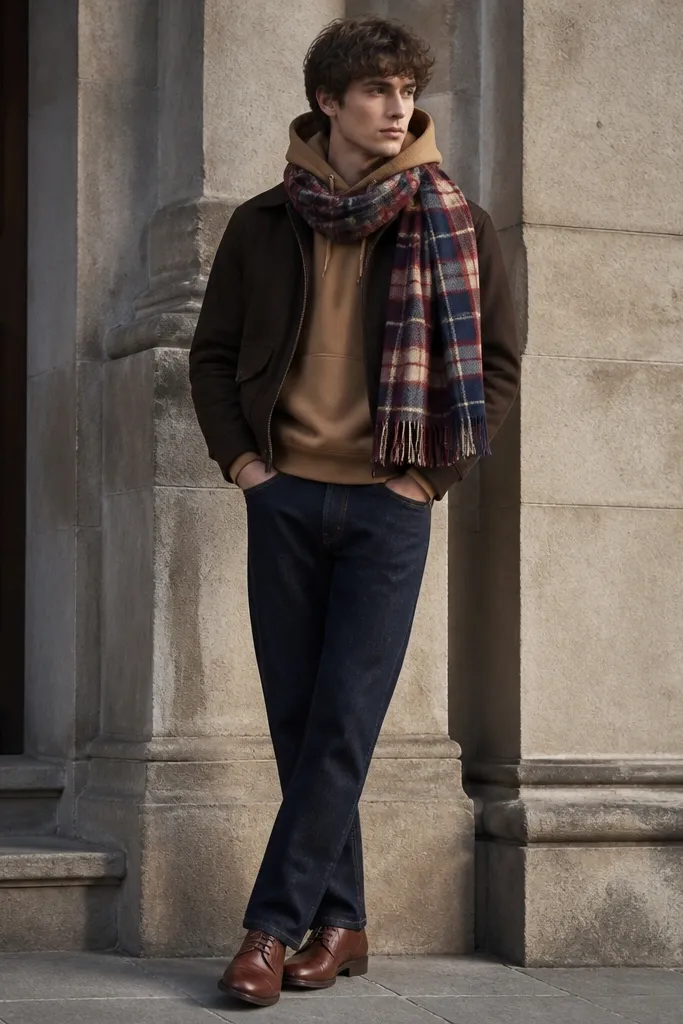
Camel hoodie is a sleeper pick. It looks softer than black but still reads fall. The plaid scarf adds color depth and gives you a focal point when you're wearing simple jeans. A short jacket above the hoodie keeps the proportions right - it stops the hoodie from taking over your whole frame. This is my go-to "I want comfy but not sloppy" outfit for campus travel days.
Pick a camel hoodie that fits the shoulders properly - no droopy neckline. The jacket should land at the belt line so your legs still look long. Jeans should be straight and dark with minimal fading. Keep shoes in brown leather or suede to match the warm tones.
Pro tipTie the scarf with a shorter wrap so it doesn't bunch under your jacket collar.
AvoidAvoid scarves that are too large and floppy - they swallow your upper body.