1. Midnight Wool Shirt-Dress + Black Grenadine Tie
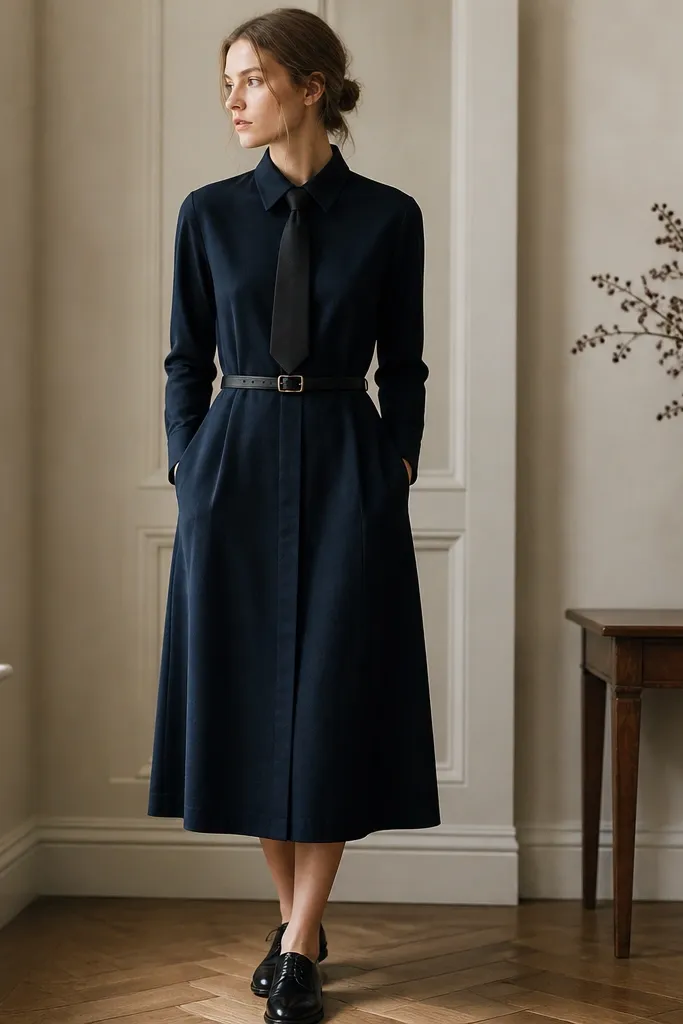
This combo works because the wool shirt-dress gives you structure without looking like a robe. Midnight navy reads formal under indoor lighting, and grenadine tie fabric has enough grain to look expensive against matte wool. The tie stays textured, so you don't get that shiny, cheap look that happens with thin polyester.
Choose a shirt-dress with a waist seam or subtle darts so the fabric doesn't hang like a tunic. Aim for the hem to hit just above the knee or slightly below, depending on your height, and keep sleeves tailored at the wrist. Knot size should be medium - four-in-hand if your collar is narrow, half-Windsor if your collar opens wider.
Pro tipIf your dress has buttons that show too much, swap to a tie that matches the button tone (black on black, dark navy on navy) so the center line looks continuous.
AvoidAvoid a skinny, glossy tie with a wool dress - it makes the whole look feel costume-y.
2. Charcoal Wrap Dress + Deep Burgundy Knit Tie
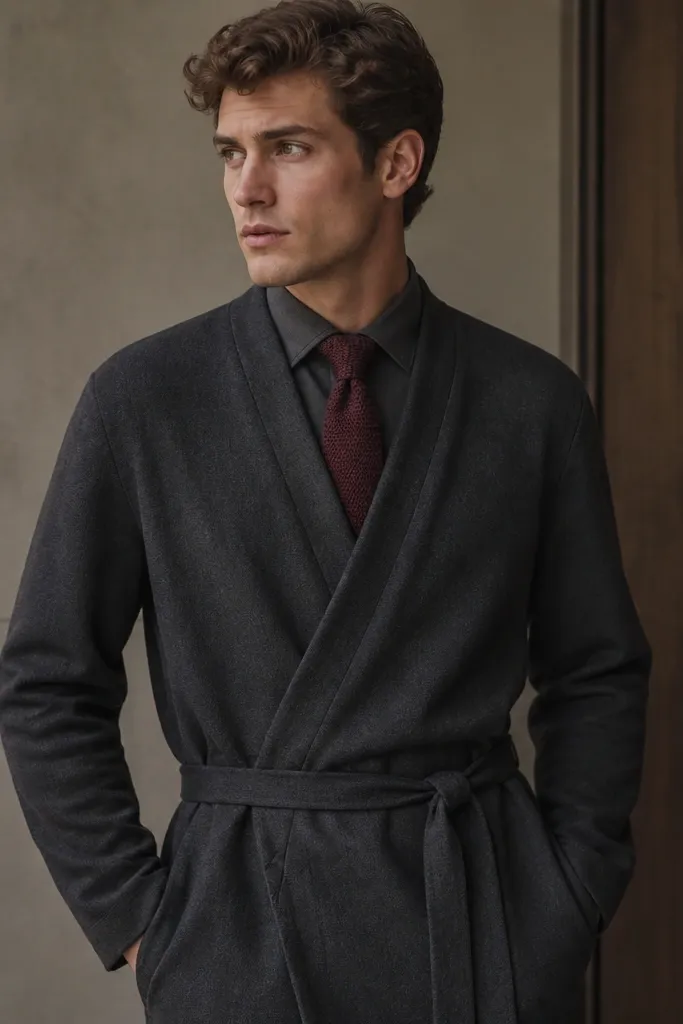
Wrap construction creates a natural focal point at the chest, which makes a tie look intentional instead of random. Charcoal hides wrinkles better than lighter colors, and knit tie texture adds warmth and softness against the wrap drape. Burgundy gives you contrast without screaming red.
Pick a wrap dress with a lining or a fabric that holds shape when it crosses. Keep the tie knot small-to-medium so it doesn't fight the wrap's V. The hem should fall at mid-knee to mid-calf for formal dinners - too short looks casual.
Pro tipUse a tie clip only if you can place it under the wrap overlap without pulling fabric - the tie clip should catch light once, not every second.
AvoidDon't choose a knit tie that's too thick and bulky - it will make the knot mound up in the V.
3. Black Crepe Sheath Dress + Silver Silk Tie
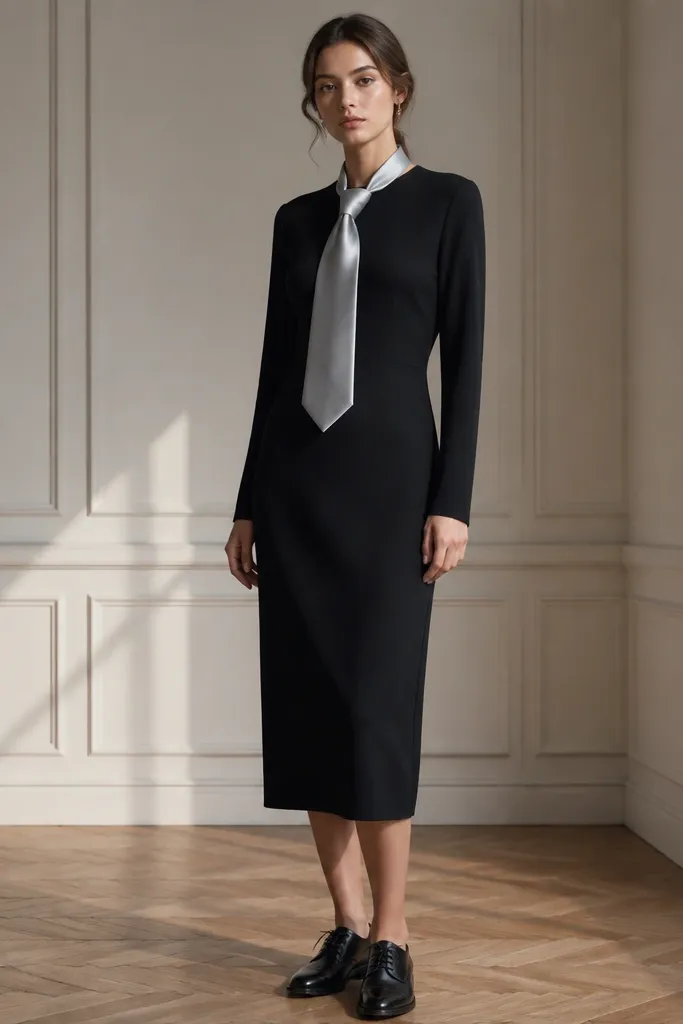
A sheath dress is the easiest way to make "formal dress for men" look like a tailored outfit. Black crepe stays smooth in photos and doesn't grab flash the way shiny fabrics do. A silver silk tie adds just enough reflect to look festive without turning into disco.
Choose a sheath with minimal flare - if it widens at the hip, the tie center looks off. The tie should be medium width and not too narrow; aim for a knot that sits flat against the chest. Keep the dress sleeves fitted enough that cuffs don't bunch under your watch.
Pro tipIf the tie is very shiny, keep the dress matte and skip any extra sheen like satin lapels or glossy shoes.
AvoidAvoid pairing a shiny dress with a shiny tie - the outfit looks cheap under flash.
4. Forest Green Suit-Dress + Dark Emerald Velvet Tie
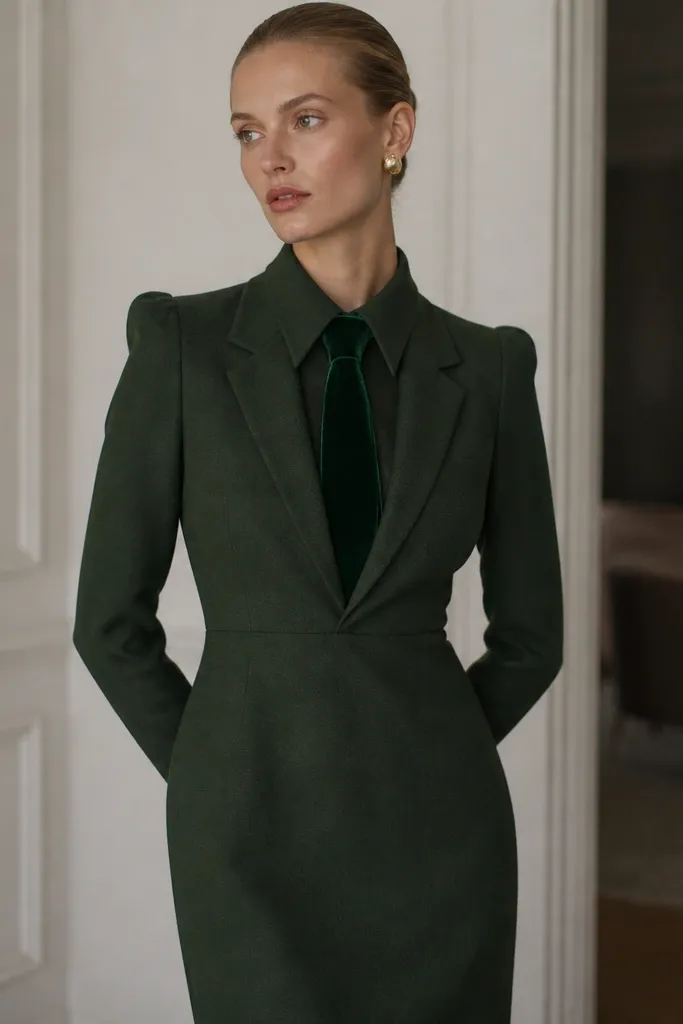
Suit-dress styling gives you that masculine tailoring line, and velvet tie texture looks expensive against wool. Forest green is formal but still different from the usual black/gray, which makes it stand out in wedding photos. The velvet helps the tie hold its shape through the knot.
Look for a dress with lapel-like detailing or a placket that mimics a jacket front. Keep the tie knot slightly larger (half-Windsor works well) so the velvet doesn't collapse. Hem should land around mid-calf if you want full formal impact; knee length works for indoor events.
Pro tipPress the tie lightly with your hand (not an iron directly) before wearing so the velvet pile sits evenly.
AvoidSkip a velvet tie that sheds heavily - you'll see fuzz around the knot by hour two.
5. Navy Pinstripe Wrap + Off-White Woven Tie
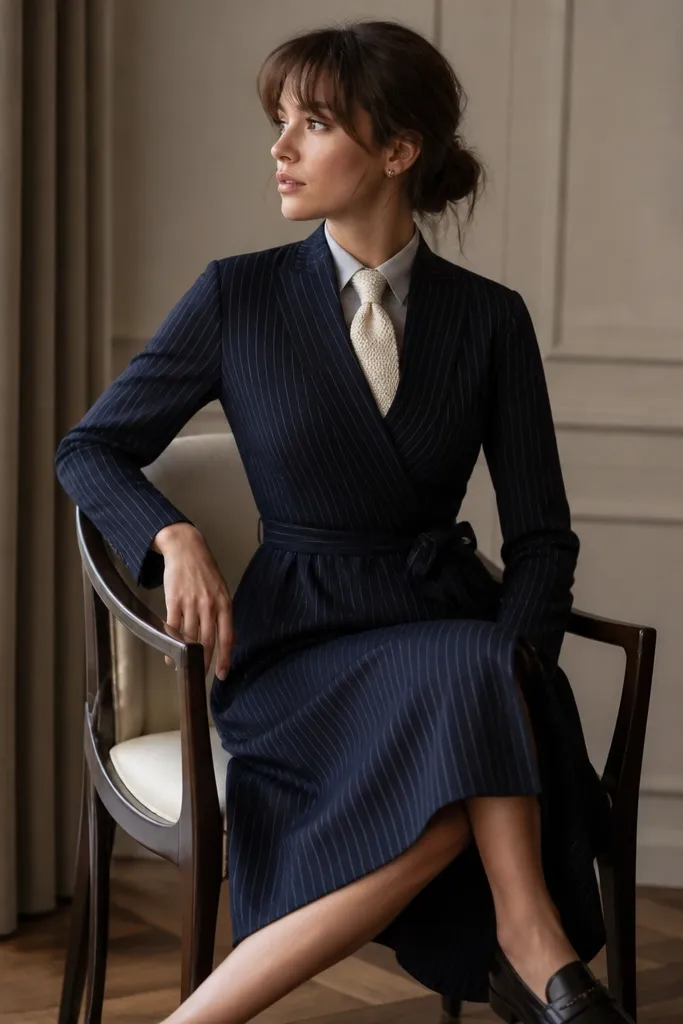
Pinstripes create a built-in "tailored" look, and the wrap keeps the chest visually interesting. Off-white tie color makes the center pop, and woven texture stops the outfit from looking flat. This is a great option when you want formal without going fully black.
Choose pinstripes that are fine (not thick) so the pattern looks sharp, not busy. Keep the belt snug and smooth, then place the tie knot so it doesn't cover the wrap overlap too much. Aim for a hem at the knee or just above for a clean silhouette with dress shoes.
Pro tipIf the dress has a lot of stripe contrast, keep your shoes plain and solid - no patterned socks showing.
AvoidDon't use a glossy tie with pinstripes - the glare competes with the stripe rhythm.
6. Burgundy Midi Shirt-Dress + Black Satin Tie
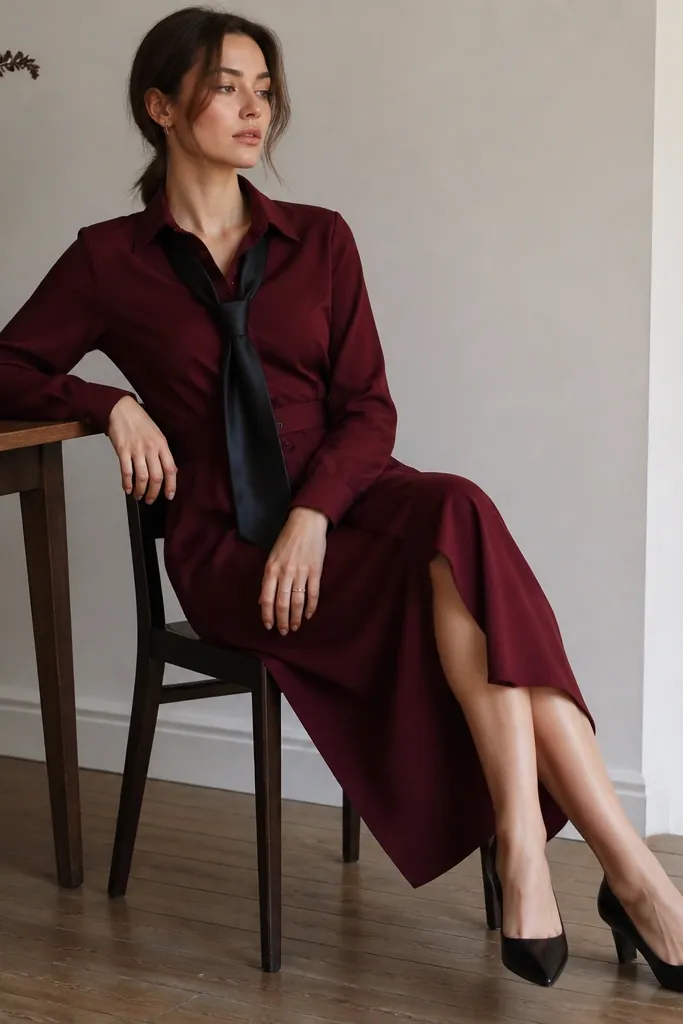
Burgundy shirt-dress fabric looks rich without needing loud patterns. A black satin tie adds formal shine where it matters - right at the centerline. The button front gives you an anchor for tie placement, so the tie doesn't drift downward.
Pick a shirt-dress that has a real collar stand and stays crisp. Keep the dress length midi (around mid-calf) if the event is evening; knee length works for daytime but looks less dramatic. Tie width should be medium; too narrow makes it look like a neck scarf.
Pro tipLet the top button stay open, but only one - it keeps the neckline balanced with the knot.
AvoidAvoid burgundy that's too dark and flat (dead black-red) paired with a very thin tie - it looks like cheap wine-colored polyester.
7. Light Gray Pleated Dress + Navy Silk Tie
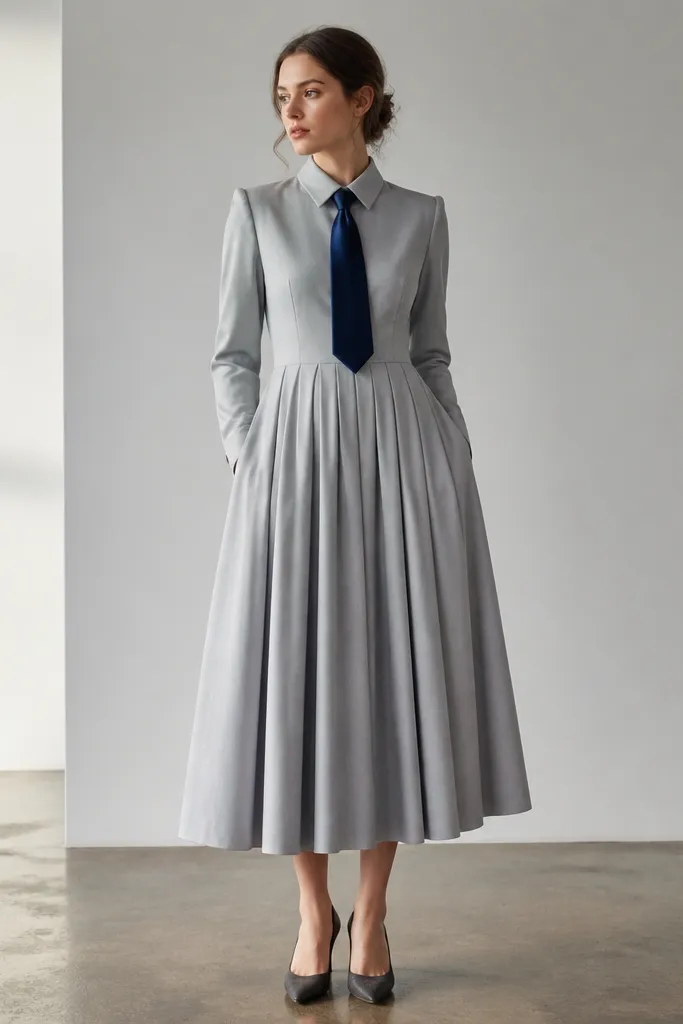
Pleats add movement, and movement reads elegant when the bodice is fitted. Light gray is tricky because it shows shine - that's why you want a silk tie with a controlled sheen and a dress that's matte. Navy creates strong contrast without turning the outfit into a high-contrast costume.
Choose pleats that are small and evenly spaced. The bodice should fit close at the chest and waist so the tie sits centered above the pleat start. Hem should land around the knee if you want a clean silhouette; mid-calf if the event is formal dinner.
Pro tipSteam the pleats from the inside with a hanging steamer so the pleat lines stay crisp for photos.
AvoidSkip a tie that's the same gray family - it blends into the dress and makes the outfit look unfinished.
8. Tan Linen Blend Shift + Olive Woven Tie
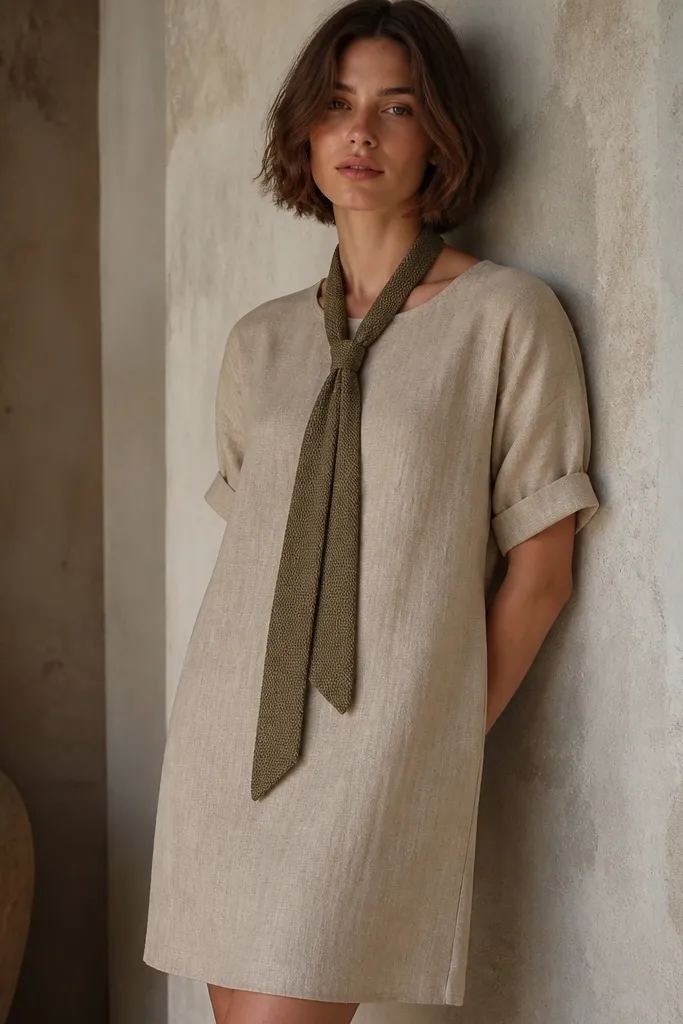
Linen-blend shifts feel breathable but still formal when the tie is woven and the cut is straight. Tan works for daytime events, and olive tie color makes it look styled instead of random. The woven tie texture matches the linen's natural grain, so everything looks intentional.
Look for a shift dress with a structured collar or a neckline that doesn't collapse. Add a belt only if the dress has belt loops and the seam line looks clean; otherwise keep it straight. Hem should hit mid-knee to mid-calf so the outfit reads formal rather than beachy.
Pro tipUse a tie knot that stays flat - four-in-hand works well on woven ties that don't have lots of stretch.
AvoidDon't pair linen with a glossy skinny tie - that mismatch screams "casual summer" even if you're trying to go formal.
9. Black Tux-Style Dress + Black Bow Tie
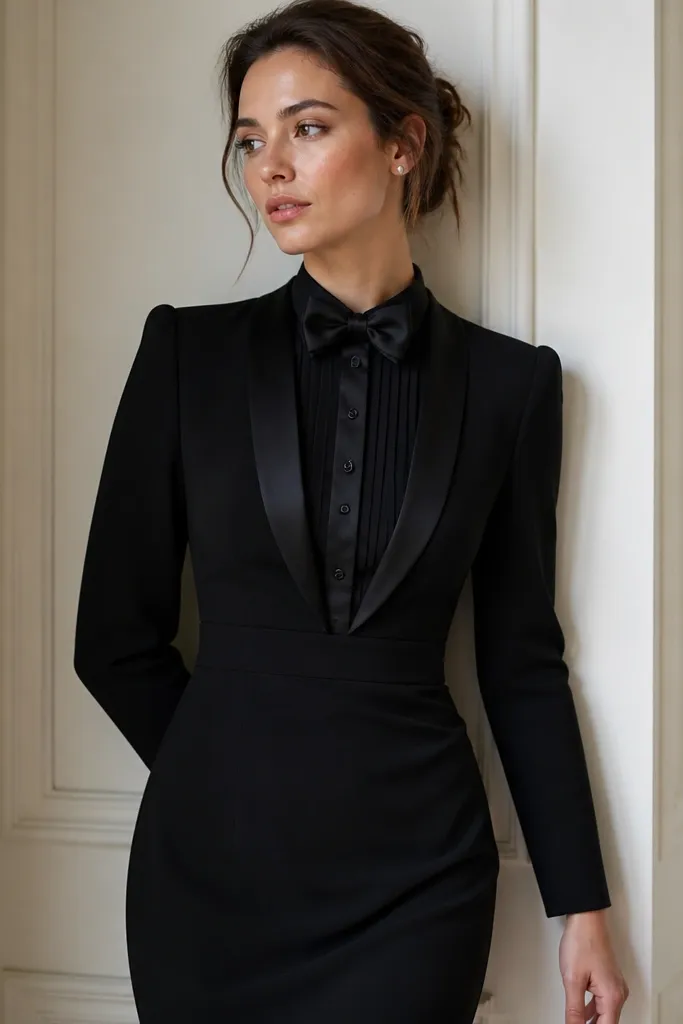
If you want maximum formal impact, a tux-style front with a bow tie is the cleanest look. The satin-faced detail on the placket or collar area gives you the tux signal without needing a separate jacket. The bow tie makes the outfit read "event" instantly in photos.
Choose a dress with satin-faced edging or a front placket that mimics a jacket lapel. Fit matters - the dress should sit close through the chest so the bow tie doesn't float. Hem around the knee or slightly below works best for a tux look; too long can feel like costume if the shoulders aren't structured.
Pro tipKeep the bow tie symmetrical - adjust it before every photo, not after you sit down.
AvoidSkip stretched bow ties - they look wrinkled and off-center by hour one.
10. Navy Jersey Wrap + Navy-and-Red Striped Tie
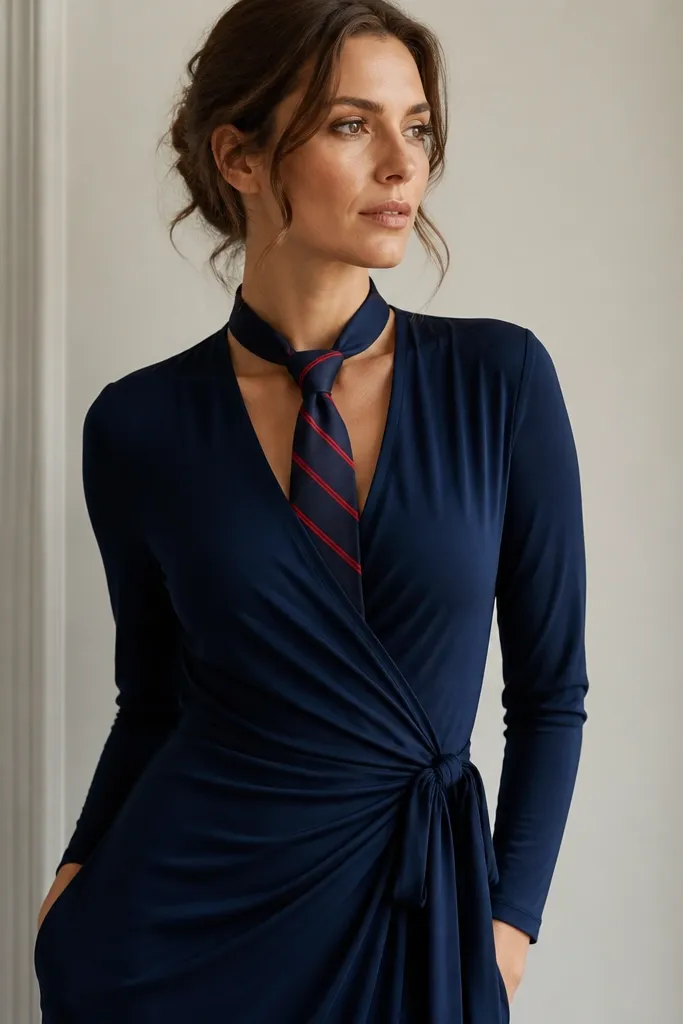
Jersey wrap dresses sound risky, but they work when the tie has visual structure. The striped tie gives the eye a crisp line across the soft drape, and the red accents add energy without turning loud. Navy-on-navy keeps it classy; the red just wakes it up.
Use a wrap jersey that has enough weight to hang cleanly. Tie width should be medium and stripes should be thin-to-medium so they don't fight the wrap's V. Hem should fall at the knee or mid-calf depending on your height; keep it consistent so the drape doesn't pull upward when you move.
Pro tipPin the wrap overlap lightly at the inside seam before you leave - jersey wraps shift when you're walking.
AvoidDon't use a wildly bright tie color on navy jersey - it makes the outfit look like a themed party.
11. Cream Brocade Dress + Black Silk Tie
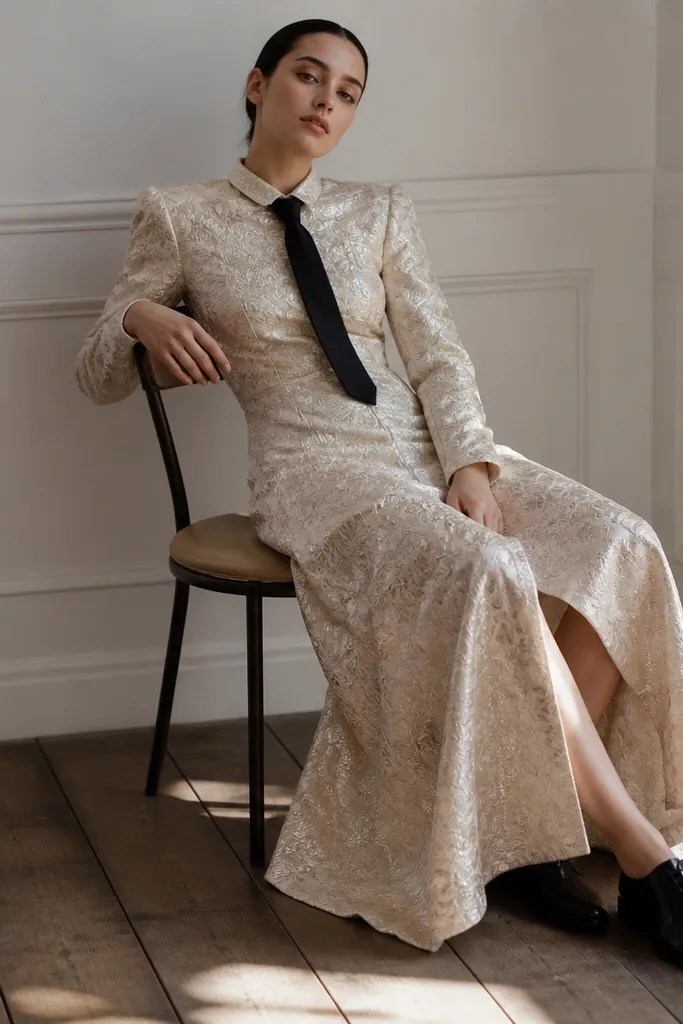
Brocade already has built-in formality, so your job is to keep the tie simple. Cream brocade looks special under warm lighting, and a black silk tie balances the sparkle without adding more texture. This combo reads "formal dress" instead of "dress pretending to be a suit."
Choose brocade with a pattern that isn't too dense; you want visible detail, not a thick carpet effect. Keep the tie knot clean and not oversized, because brocade can look busy. Hem should be knee to mid-calf so the pattern stays the star.
Pro tipMatch your socks or shoe leather to the tie color so the black reads continuous from knot to shoe.
AvoidAvoid adding another patterned element like a patterned pocket square or patterned socks - brocade already does the work.
12. Olive Twill Dress + Tan Leather Tie Clip Pairing
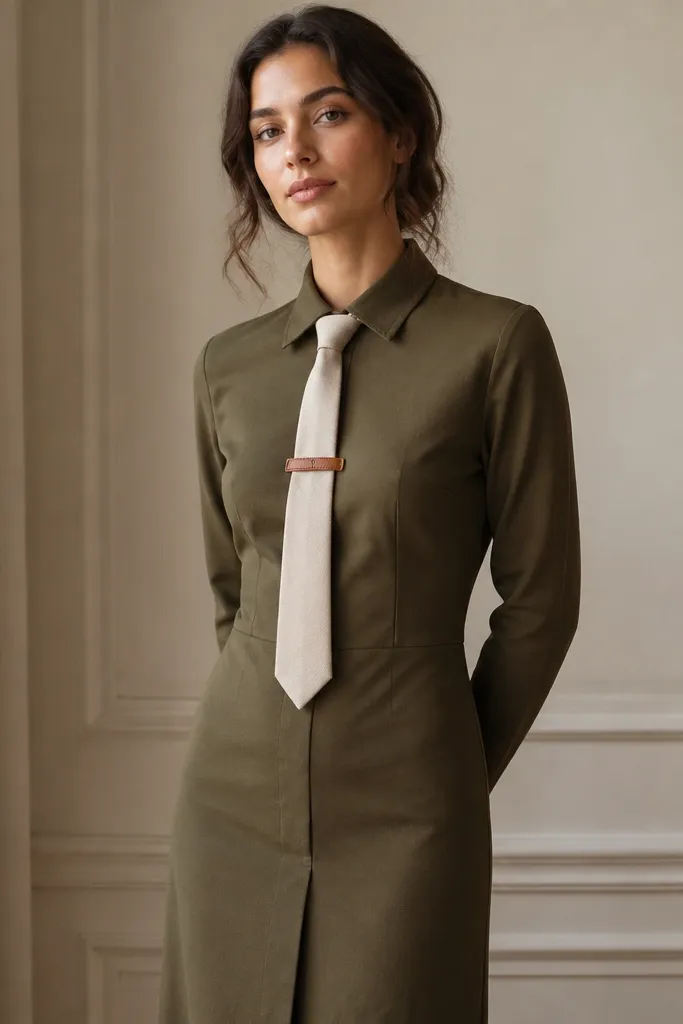
Twill gives you a grounded, tailored texture that reads formal when the dress is cut close. Olive plus warm tan looks sharp in real life and photographs well because the colors sit next to each other naturally. The tie clip detail adds a hands-on "I prepared this outfit" feel.
Use a dress with a neckline that frames the tie knot - a crew neck can work if you can position the knot properly, but a soft spread collar is easier. Choose a tie in cream, light tan, or muted brown and keep width medium. Hem should land around knee level for a clean line with leather shoes.
Pro tipPlace the tie clip right where the knot finishes - around the mid-chest line - so it looks like it belongs to the outfit, not a random accessory.
AvoidSkip cheap plastic tie clips - they reflect light in ugly spots and ruin the "tailored" impression.