1. Charcoal Wrap-Front Dress with Satin Tie Belt
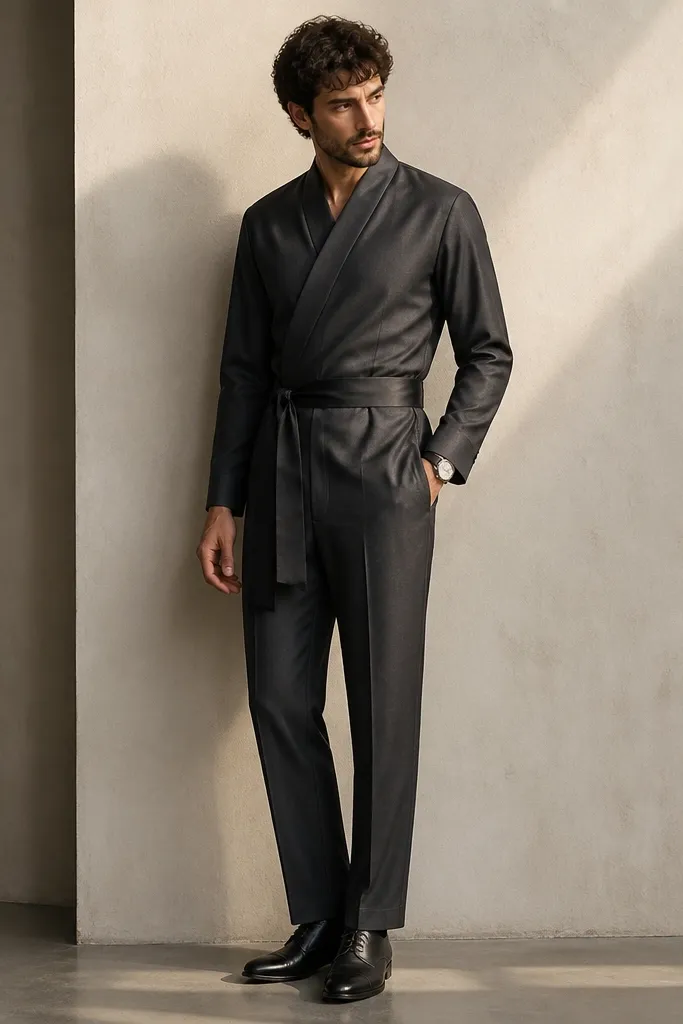
Wrap fronts look intentional because they create a defined waist line even if the body isn't perfectly symmetrical. Charcoal reads sharp on camera and hides minor texture flaws better than pure black. The satin tie adds light at the center, so the outfit feels elevated without needing heavy patterns. Long sleeves keep it formal and balanced with the wrap shape.
Choose a dress with a shoulder seam that sits at your shoulder bone and a hem landing around mid-knee. The satin belt should be about 2.5-3 cm wide, tied in a neat bow or a single wrap knot. Pair with black leather oxfords or derby shoes with a low shine.
Pro tipWear a white or off-white pocket square in the jacketless look - it lifts the face under warm lights.
AvoidAvoid wrap dresses with thin jersey fabric - they cling and wrinkle fast in photos.
2. Deep Navy One-Piece with Buttoned Front and Slim Bib Detail
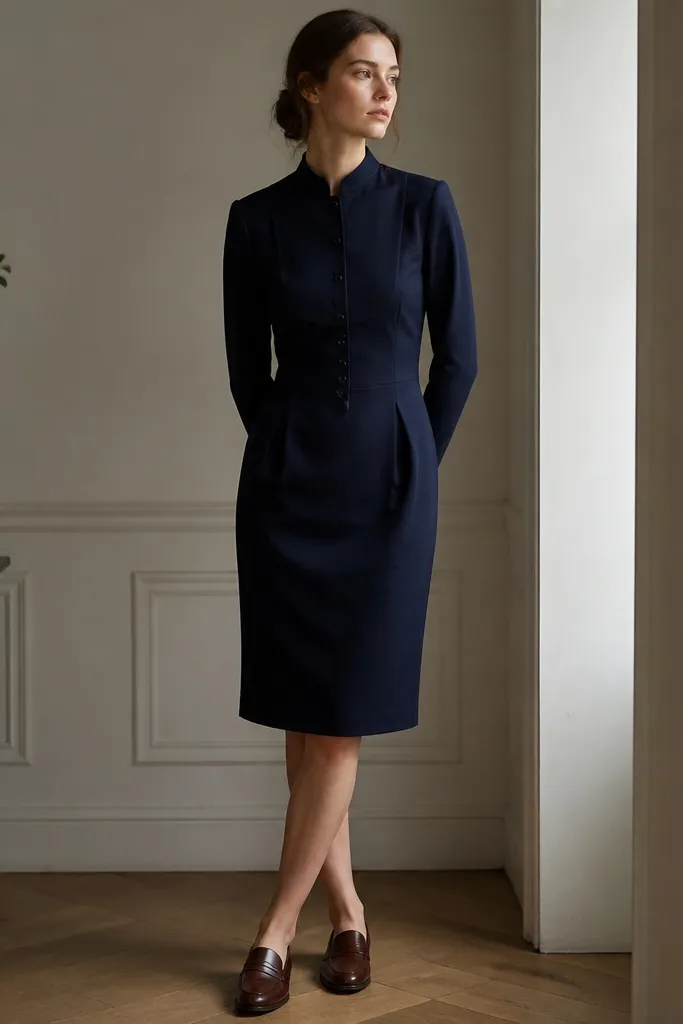
A buttoned front gives you control over the neckline and keeps the look structured. Deep navy stays rich on camera and doesn't turn flat like some greys. The slim bib panel breaks up the chest area so you look more "put together" even without a jacket. Long sleeves keep it farewell-appropriate and clean.
Look for buttons that are matte (not glossy plastic) and a bib panel that lies flat without bunching. For fit, aim for a gentle taper from waist to hem, not a full flare. Shoes: dark brown loafers or low-heel formal shoes to add warmth against navy.
Pro tipPick a belt only if the dress has belt loops; otherwise skip it for a cleaner line.
AvoidAvoid shiny buttons and loose gapping at the placket - that combo looks cheap instantly.
3. Burgundy Jacquard Shirt-Dress Style with Hidden Buttons
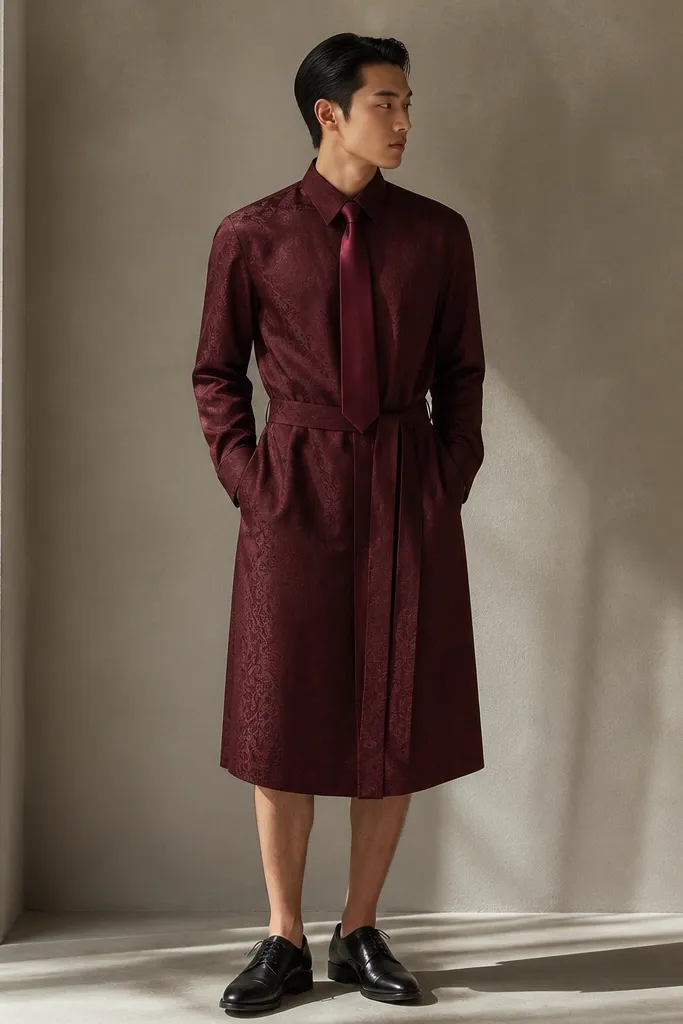
Jacquard adds depth without needing loud prints. Burgundy is one of the most flattering colors for indoor farewell lighting because it stays warm and doesn't wash out. The hidden button placket keeps the front smooth, so the pattern reads premium instead of busy. A belted waist gives shape and stops the dress from hanging like a tunic.
Choose a jacquard that feels firm when you pinch the fabric - it should spring back. Belt width around 3 cm works best; tie it at the natural waist, not the lower abdomen. For styling, add a matching burgundy satin tie or skip the tie and go with a neat collar and plain watch.
Pro tipIf you wear a tie, match its sheen to the jacquard - satin on satin looks intentional.
AvoidAvoid thin jacquard that feels papery - it wrinkles and looks see-through under flash.
4. Emerald Green Maxi Dress with Side Slit and Straight Hem
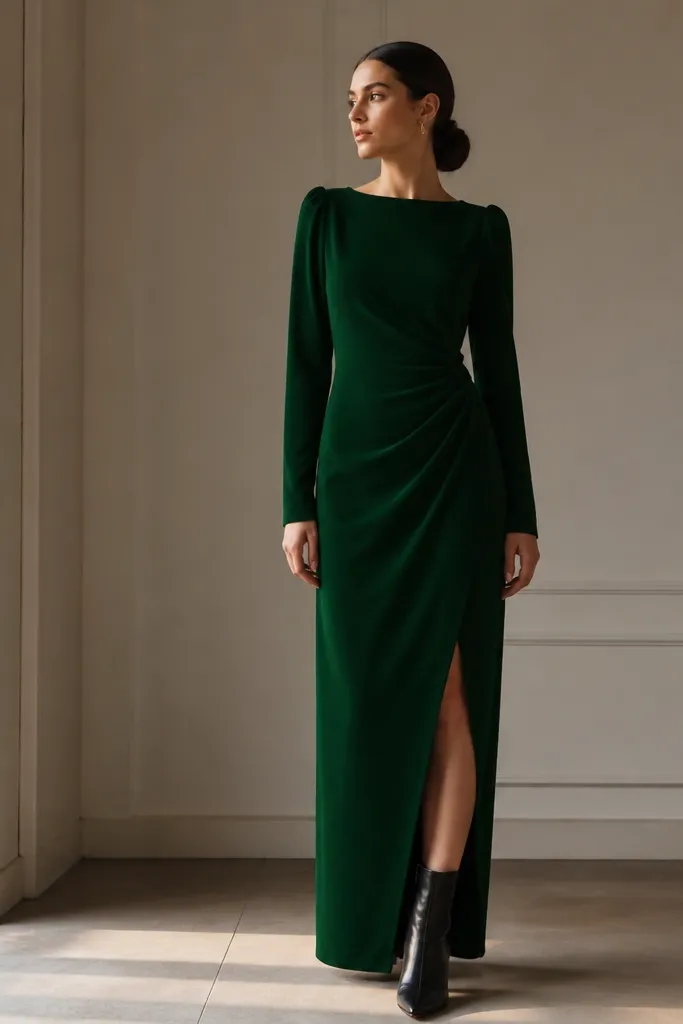
A maxi length gives you that "farewell night" drama without needing sequins. Emerald green looks rich under warm bulbs and turns heads in group photos. The side slit adds movement, but a straight hem keeps the silhouette clean. Long sleeves balance the bold color so it still reads formal.
Pick a slit that opens only about 15-20 cm when you walk - too high looks casual. The dress should skim your body through the hips, not cling. If your boot is bulky, keep the slit modest and the hem straight to avoid a messy visual line.
Pro tipHem it so the dress breaks just above the top of your boot or shoe - that one adjustment changes everything.
AvoidAvoid maxi dresses that pool heavily at the feet - they look messy and catch on chairs.
5. Black-Brown Tuxedo-Style Dress with Contrast Satin Lapel
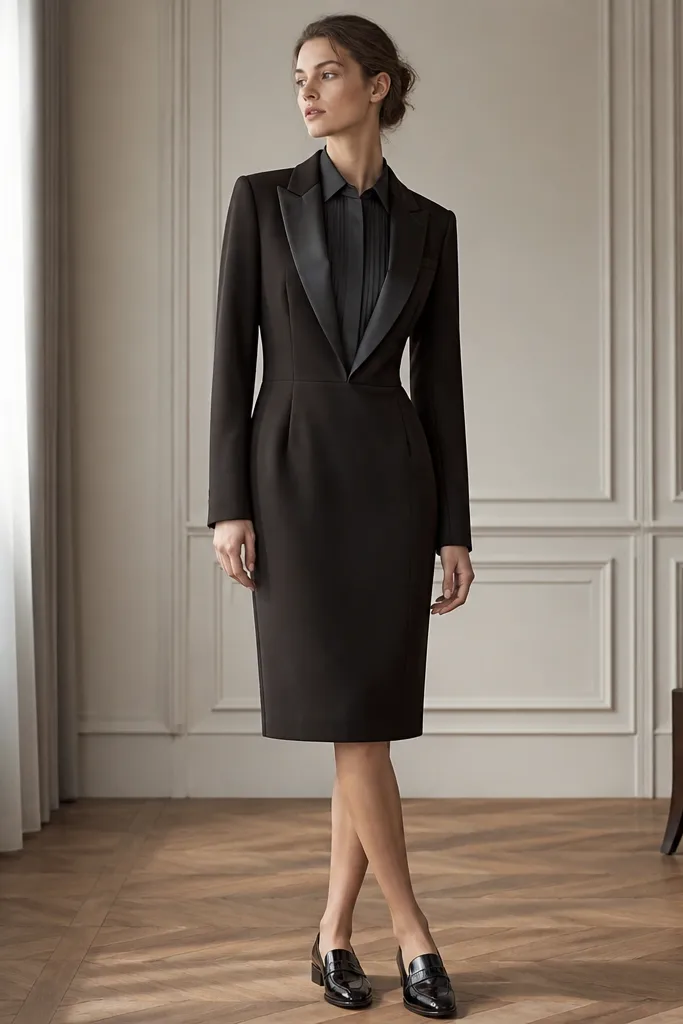
Tuxedo details photograph like confidence. A contrast satin lapel creates a bright frame around your face, especially when you're standing under event lights. Black-brown gives a softer depth than flat black, and it hides minor scuffs on the fabric. Structured collar and cuffs keep it formal even if you skip a jacket.
Choose a dress that has real collar structure - you should feel stiffness when you press the lapel. Hem should hit at mid-knee for most guys; if you're taller, go slightly below knee. Pair with black patent shoes or a glossy leather loafer for the tux vibe.
Pro tipIf your lapel is satin, keep the rest matte - matte fabric + satin trim looks expensive.
AvoidAvoid stretchy "tux" fabric - the lapel collapses and looks like a costume.
6. Stone Grey Pleated Dress with Knife-Pleat Front
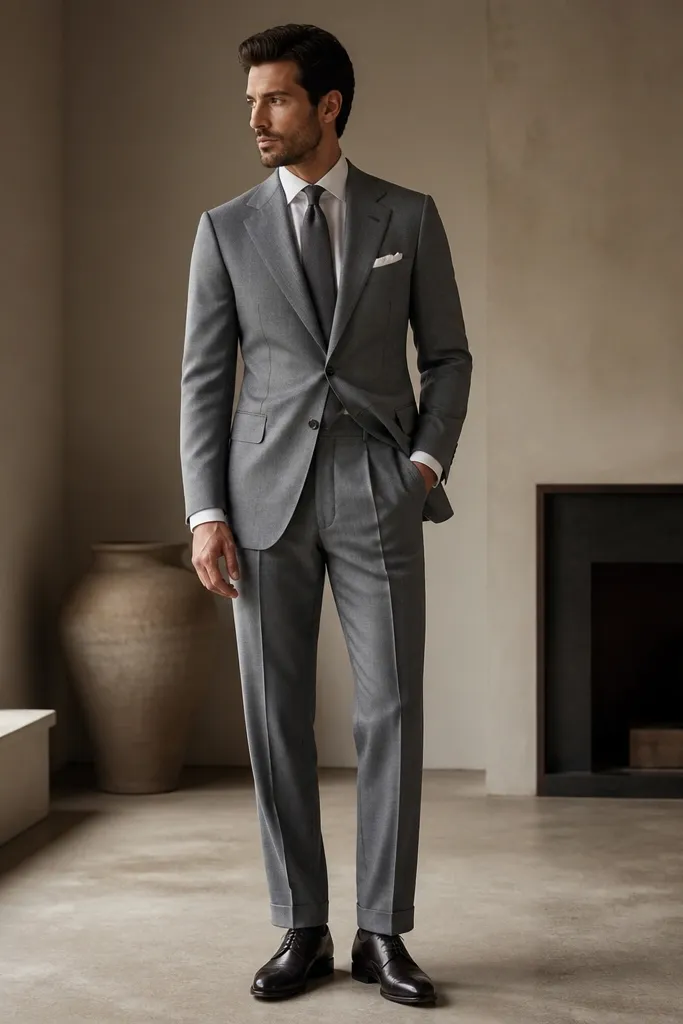
Knife pleats add motion and structure so the dress looks styled even when you're sitting. Stone grey is a safer neutral than light grey because it doesn't glare under flash. The tailored waist prevents the pleats from turning into a tent shape. This look is calm but still looks intentional in photos.
Use pleats that are evenly spaced and pressed - you can check by looking for consistent fold shadows. Waist should be fitted enough that you can lift your hand and the fabric doesn't wrinkle at the sides. Pair with dark charcoal shoes and a crisp white pocket square or a matching light grey scarf.
Pro tipPress the front pleats with steam right before leaving - pleats settle fast in bags.
AvoidAvoid pleats that feel flimsy or "wavy" - that reads like low-quality pressing.
7. Navy Velvet Dress-Collar One-Piece
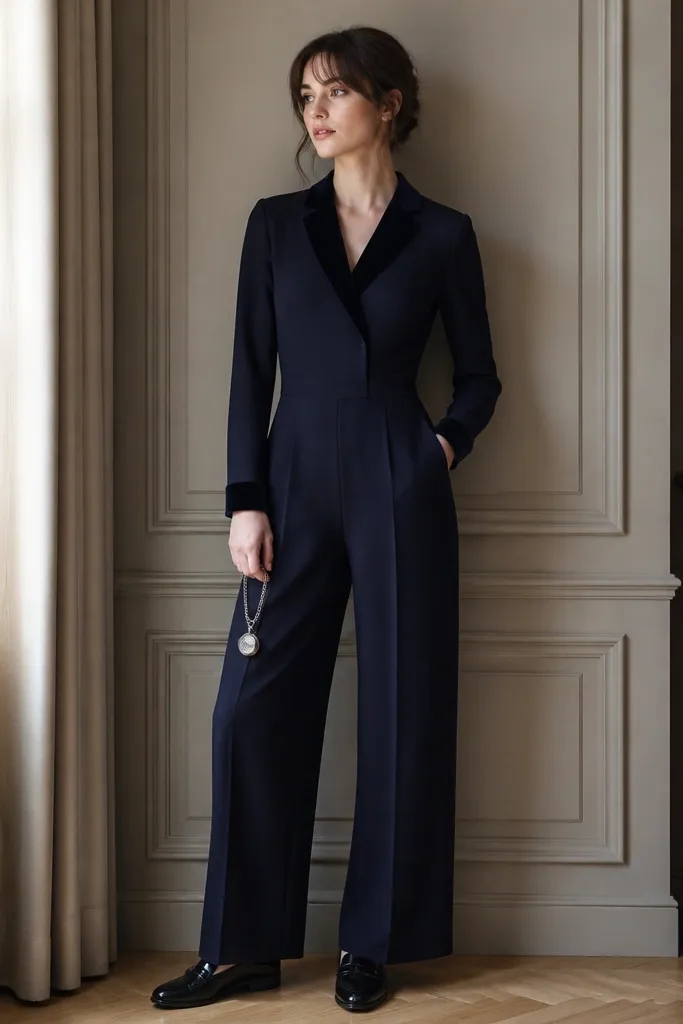
Velvet at the collar is the easiest way to add texture without turning the whole outfit into a heavy winter look. Navy stays classy and the velvet catches light in a controlled way, so you don't get harsh shine like satin. A fitted waist keeps the silhouette modern. This one is great if you want formal but not "tux all the way."
Pick a dress where velvet is limited to collar and cuffs. The main body should be smooth suiting fabric so the contrast looks deliberate. Keep the hem around mid-knee and pair with black loafers or oxfords with a clean toe.
Pro tipUse a lint roller before you go - velvet shows dust in flash.
AvoidAvoid full-velvet dresses if your venue is warm - they get sweaty and cling.
8. Powder Blue Shirt-Dress with Rolled Cuffs and Tie Waist
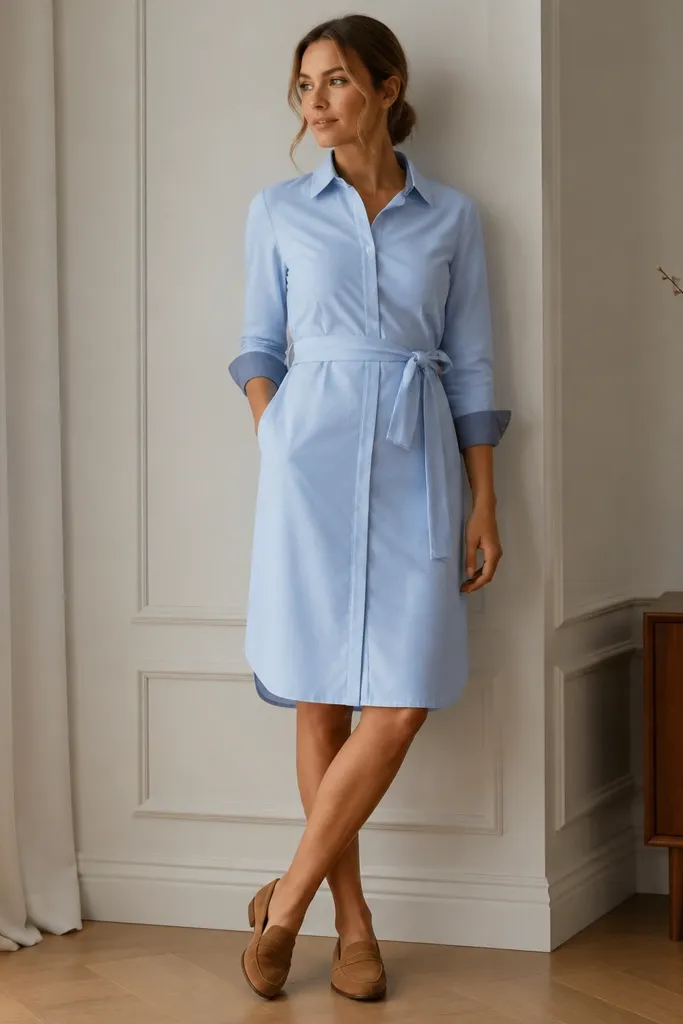
Powder blue reads fresh on camera and looks great with warm skin tones. A shirt-dress format keeps it structured, while rolled cuffs make the outfit feel relaxed but still formal. The tie waist defines your shape and prevents extra bulk around the hips. Tan suede shoes add a softer contrast that looks good in farewell photos.
Choose a cotton sateen or crisp cotton blend so the shirt fabric holds a clean collar. Tie waist belt should be narrow-ish, around 2 cm, for a neat line. Hem around knee length keeps it formal; go too short and it turns casual.
Pro tipRoll cuffs evenly on both arms - uneven rolls look sloppy fast in pictures.
AvoidAvoid wrinkled shirt fabric - powder blue shows creases more than dark colors.
9. Olive Green Belted Wrap Coat-Dress for Evening
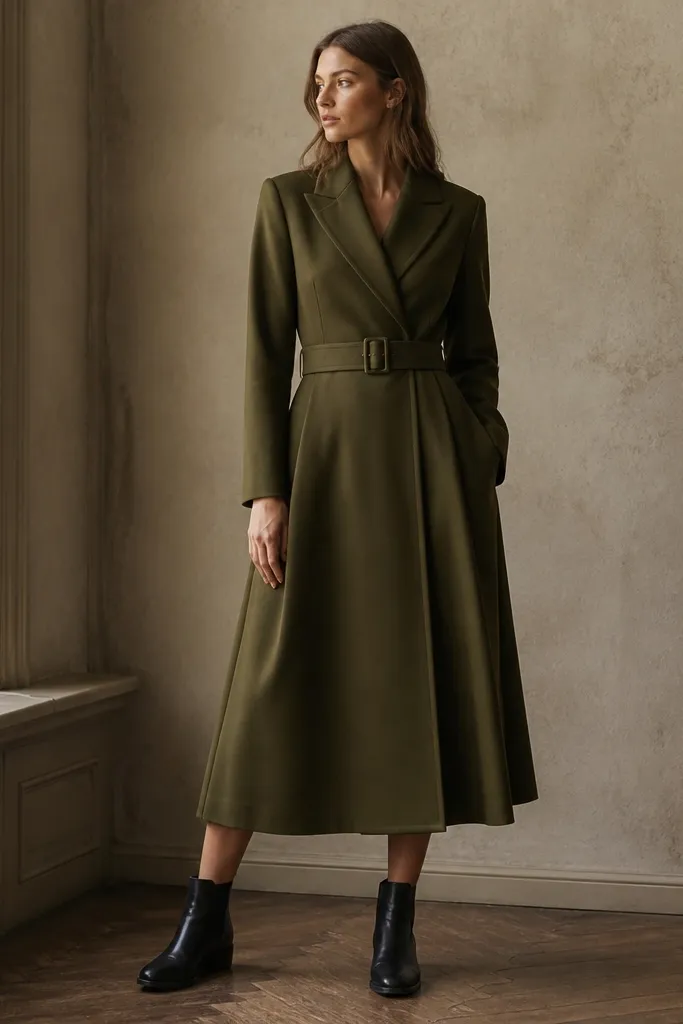
If your farewell is chilly or you want extra presence, a coat-dress is the move. Olive green looks grounded and still feels fashion-forward under indoor lighting. A wide belt creates a strong waist line, and the wrap front helps you adjust fit quickly. The longer hem reads dramatic without going full maxi.
Pick a coat-dress with a mid-calf hem, then adjust if needed so it doesn't drag. The belt should be wide enough to flatten the wrap layers - about 4 cm. Pair with black Chelsea boots so the outfit looks intentional from head to toe.
Pro tipKeep the inner layer simple - a plain fitted t-shirt or thin turtleneck under it looks cleaner than a busy shirt.
AvoidAvoid belts that bunch - the wrap layer should lie flat under the belt.
10. White and Black Two-Tone Panel Dress with Straight Cut
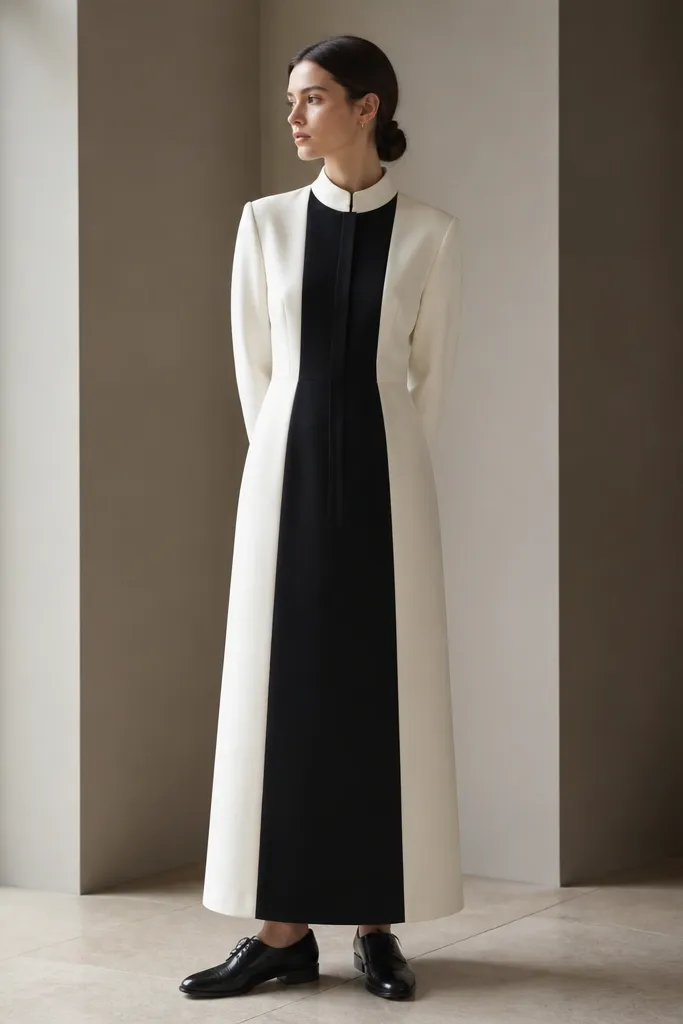
Two-tone paneling gives you built-in tailoring. Vertical lines make the body look longer, and the contrast keeps the outfit graphic in photos. A straight cut keeps it modern and avoids the flare that can look odd in a dress format. Stand collar keeps the front crisp and formal.
Choose panels with clean seams - you should see straight lines, not wavy stitching. Fit matters: the waist seam should sit where your body naturally narrows. Pair with black shoes and a simple watch; skip extra accessories so the paneling stays the focus.
Pro tipWear a plain, matching underlayer so the panel lines stay sharp and don't bunch at the neckline.
AvoidAvoid low-contrast grey-on-white versions - they look washed out under flash.
11. Sand Beige Linen Blend Dress with Flat Front and Minimal Buttons
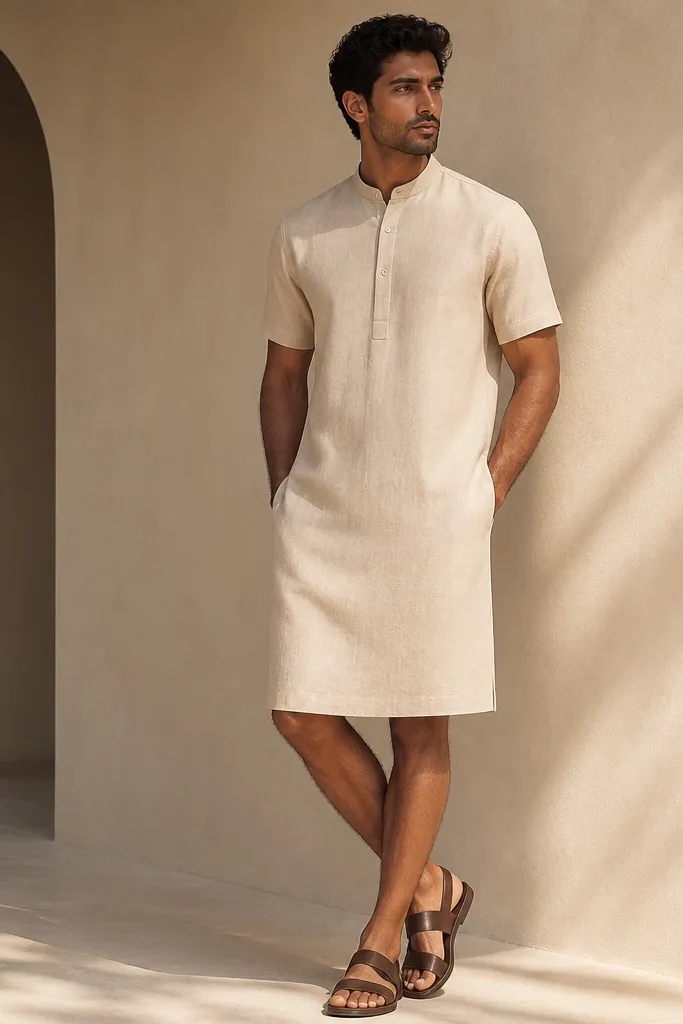
Linen blend looks expensive when it's pressed right, and it's breathable for venues with poor airflow. Sand beige is forgiving and flatters without looking dull. Minimal buttons keep the front clean, and a flat front avoids the "unstructured apron" look. This dress works when you want formal but not heavy.
Choose linen blend with a higher cotton content so it holds shape and doesn't crumple instantly. Hem around knee length and keep the waist fitted with slight structure. Pair with dark brown leather shoes, not bright white sneakers, for a formal read.
Pro tipSteam the front panel and collar before you leave - linen blend shows wrinkles faster than wool.
AvoidAvoid 100% linen if the venue is humid - it creases hard and looks undone.
12. Red Satin Midi Dress with Draped Collar and Matching Pocket Square
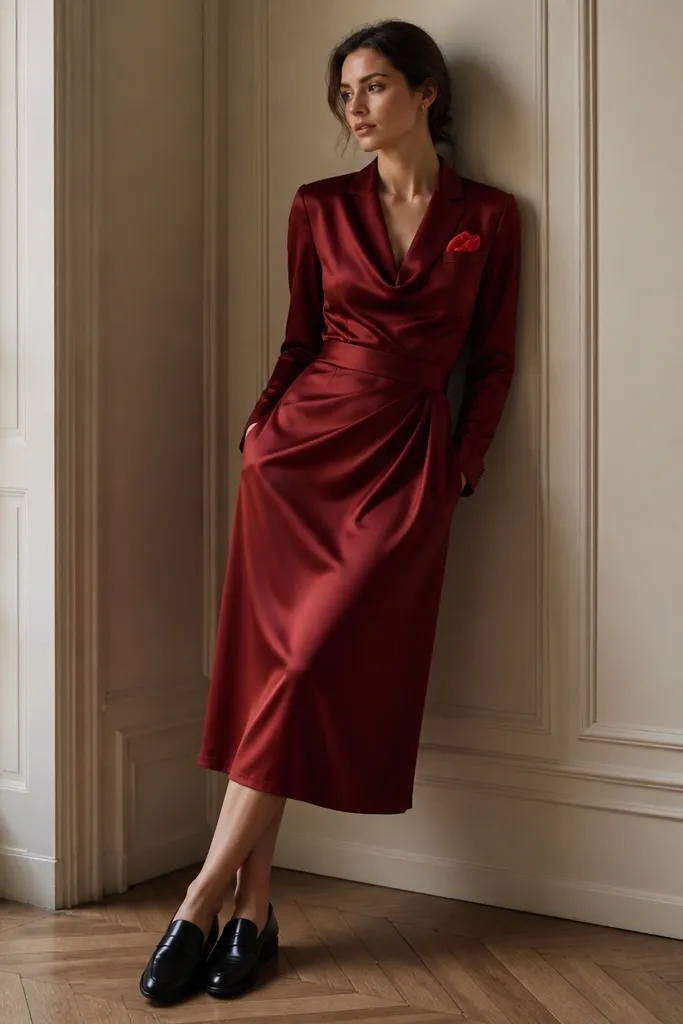
Red satin reads bold, but the draped collar keeps it controlled instead of flashy. Midi length gives you elegance without tripping hazards. The satin reflects warm light beautifully, and a matching pocket square ties the shine into something cohesive. This is the look you wear when you want photos to look cinematic.
Pick satin with a smooth hand, not flimsy polyester. Tailored waist should keep the fabric from pooling at the hips. Choose shoes in black or dark brown to ground the red - avoid red shoes that compete.
Pro tipIf the satin wrinkles easily, hang it in a steamy bathroom for 10 minutes before the event.
AvoidAvoid bright cherry-red satin - it can look neon under indoor lighting.