1. Black Wrap Dress with a Real Waist Tie
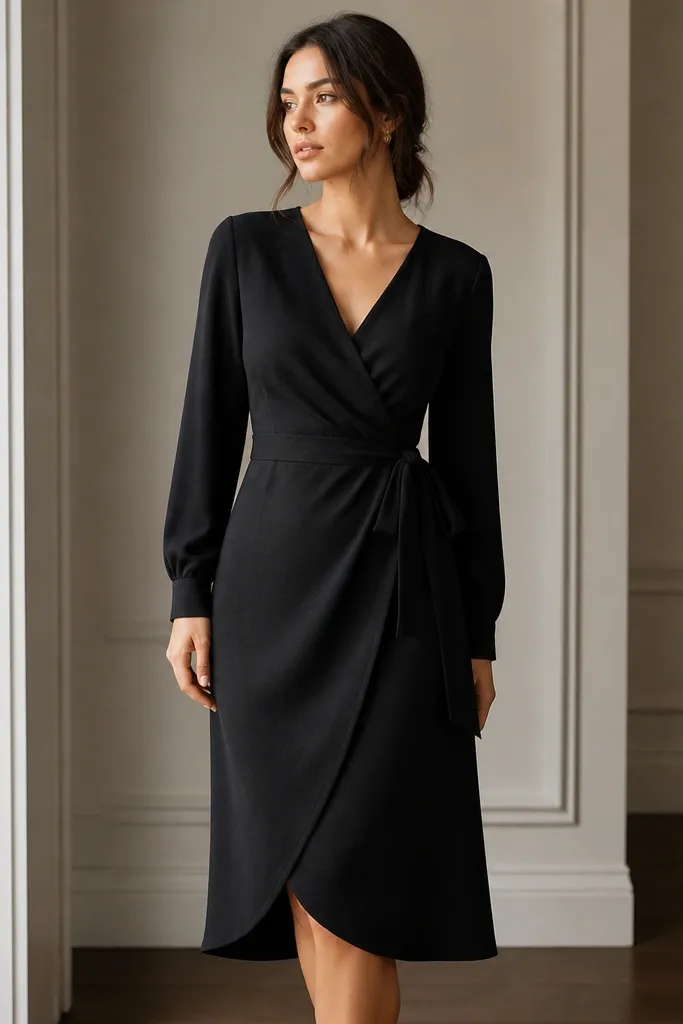
A wrap dress gives you instant structure because the front panels cross and pull in at the waist. I like this version in black because it hides creasing and reads formal even at night. The V-neck creates a long line from collarbone to mid-torso, which makes a big difference on men's proportions. Long sleeves keep it dressy, and the overlap reduces any "gap" at the chest.
Look for a wrap tie that sits at the natural waist, not on your hips. The best length for most bodies is midi - around mid-calf - so you still look tailored with leather shoes. Style it with black leather loafers or oxfords and a narrow belt tie or matching fabric sash if it's loose.
Pro tipHand-check the wrap overlap in the mirror - you want it to stay closed when you raise your arms.
AvoidAvoid thin jersey wrap dresses; they cling and show every line.
2. Navy Crepe Shift Dress with a Faux-Cinched Waist
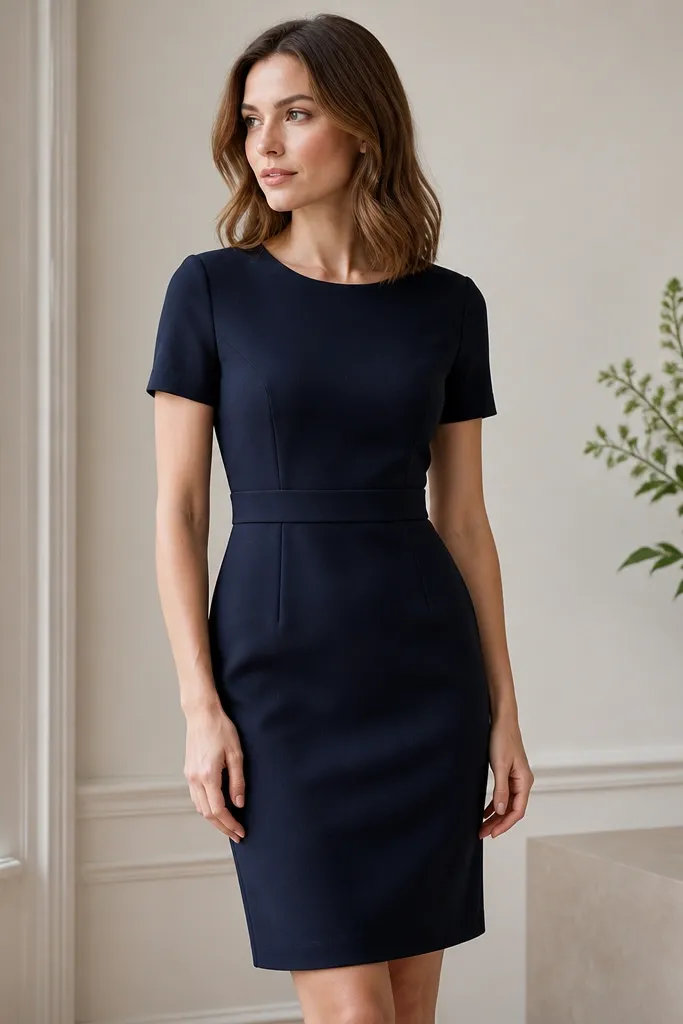
Matte navy crepe looks expensive under indoor lighting and doesn't shine like cheap satin. A shift silhouette works for people who don't want a tight waist, but the trick is adding a seam or structured paneling so you don't look boxy. The rounded neckline reads polished, and the crepe holds shape as you move. Navy also pairs with more shoe colors than black.
Pick a length that hits between knee and mid-calf - too short reads casual, too long can drag on shoes. Add a slim leather belt in navy or dark brown if the dress doesn't cinch enough. Pair with oxblood derbies or dark brown loafers for a warm formal look.
Pro tipSteam the crepe lightly before wearing; it smooths the front panels without flattening the body.
AvoidAvoid shiny polyester crepe; it reflects flash and looks flat in photos.
3. Charcoal Wool-Blend Column Dress
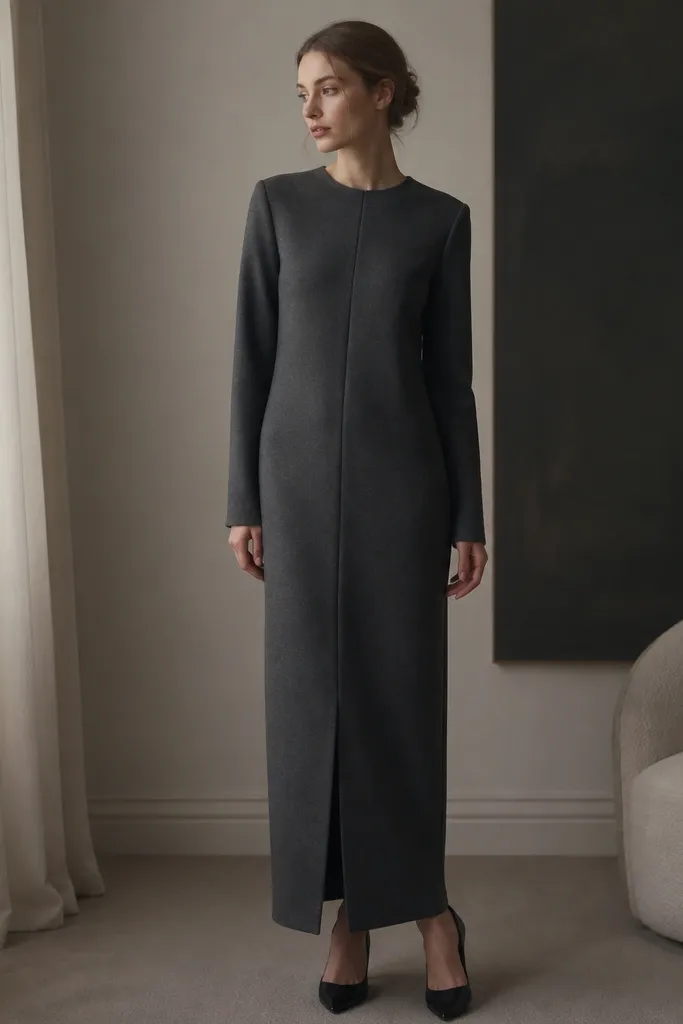
A column dress in a wool-blend fabric gives you a clean, suit-like line. Charcoal is my go-to color because it looks formal without being as harsh as black in daylight. The straight cut makes it easy to style for men who are transitioning into dresses - it doesn't require the wrap or extra volume. A small slit keeps walking comfortable and prevents the hem from bunching.
Choose a fabric that has weight - you should feel it when you lift the dress. Hem should land around mid-calf or slightly above ankle depending on your height, then let it fall straight. Wear it with black leather oxfords and a slim black watch strap or simple metal bracelet.
Pro tipIf it feels too loose at the shoulders, tailor only the sleeve pitch; it changes the whole posture.
AvoidAvoid thin "winter" knits in column styles; they stretch and lose shape fast.
4. Oxblood Satin-Sheen Evening Dress with a Straight Neck
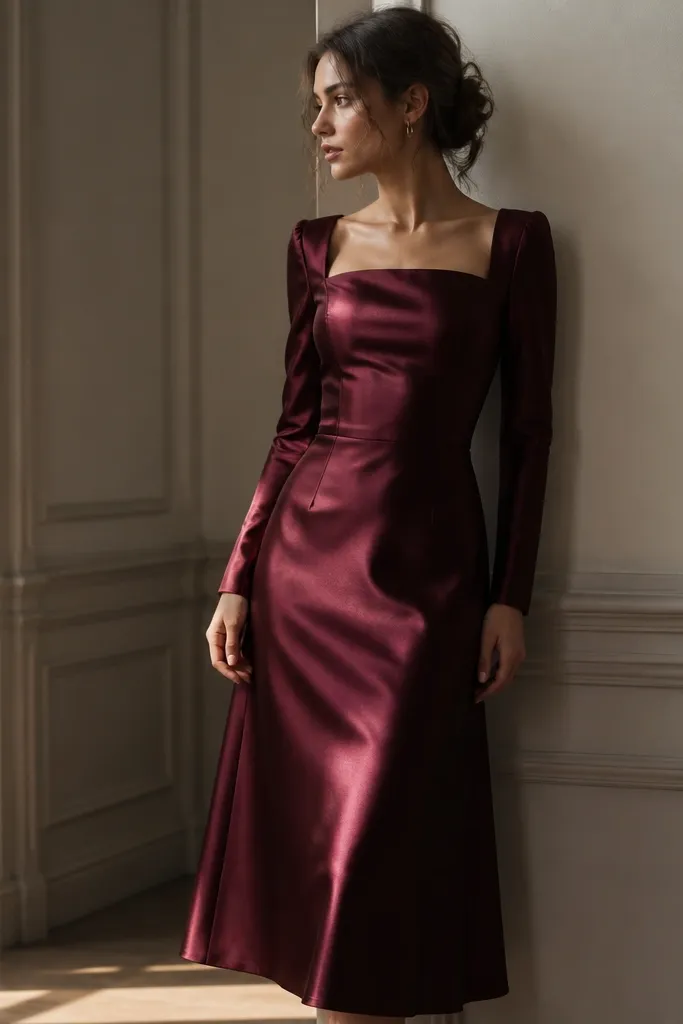
This is the dress I reach for when the room is dim and everyone's wearing dark colors. Oxblood satin sheen reads expensive because the color has depth, not just shine. A straight neckline looks cleaner than a deep V when the fabric is reflective. If the waist is fitted, the satin won't make you look shapeless - it frames the body and keeps the outfit controlled.
Go for a midi hem and a sleeve length that hits your wrist cleanly. Pair with black patent leather loafers or black leather dress shoes with a polished finish. Keep jewelry minimal - one metal watch or small cuff - so the satin stays the star.
Pro tipWear nude or sheer-to-matching undergarments; satin shows contrast fast under flash.
AvoidAvoid silver glitter or loud prints; satin + sparkle can tip into clubwear.
5. Forest Green Velvet Dress with a Hidden Button Front
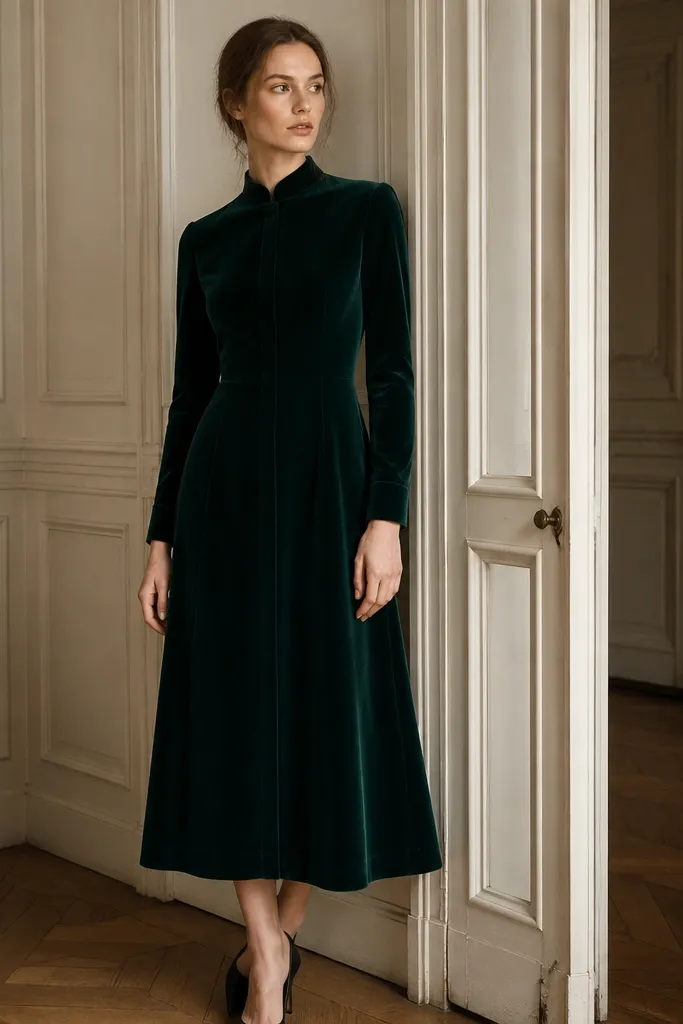
Velvet does something simple and powerful - it turns "just a dress" into eveningwear. Forest green looks richer than emerald because it leans slightly darker and warmer. A hidden button front creates a vertical line and keeps the dress from looking casual. The long sleeves and mid-calf hem make it feel intentional even if you keep styling minimal.
Choose velvet with a dense pile so it doesn't look flat. The best fit is snug through the upper torso, then relaxed at the skirt so you can move. Wear with black dress shoes and a slim black belt if the waist seam isn't pronounced.
Pro tipCheck the velvet nap under indoor lights; if it's patchy, the color will look uneven in photos.
AvoidAvoid crushed velvet; it reads sloppy and cheap in motion.
6. White Poplin Shirt Dress with a Tailored Belt
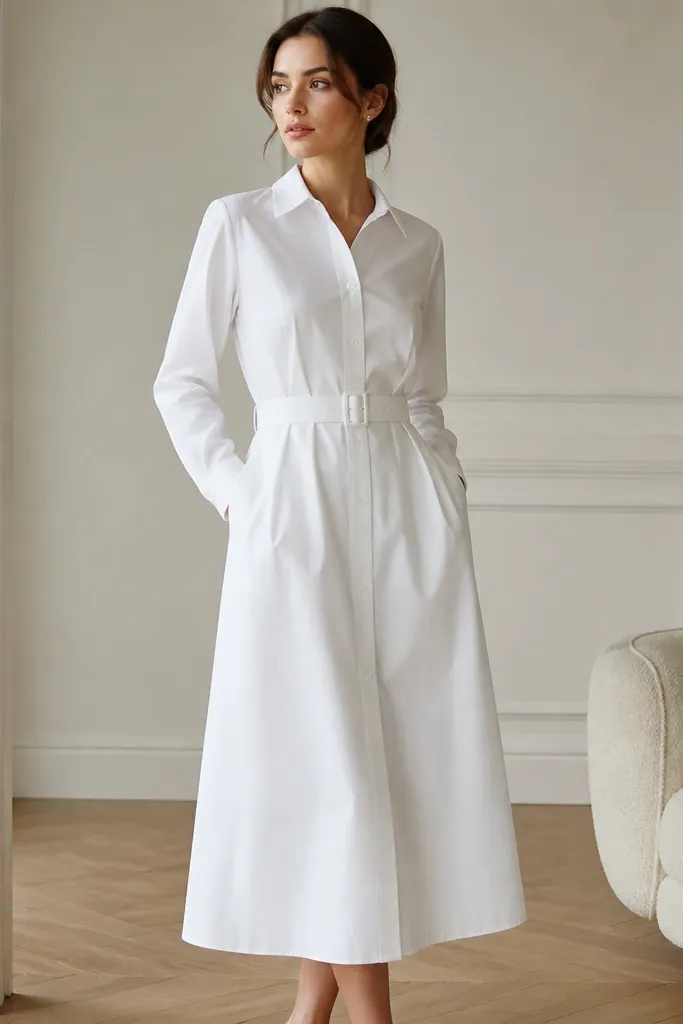
A white poplin dress looks formal because it has structure, not because it's white. The shirt collar frames your face and gives you a familiar men's styling reference. Poplin also resists wrinkling better than many cottons, so it holds its shape during dinners. A tailored belt prevents the shirt dress from turning into a loose tunic.
Pick buttons in a matching tone, not cheap plastic that reflects. Hem at mid-calf and sleeves that sit near your wrist look sharp with leather shoes. Add a dark belt in black or espresso and finish with a simple watch.
Pro tipPress the collar edges with steam so they stand up straight, not curled.
AvoidAvoid thin white cotton that turns see-through under bright lights.
7. Black Tuxedo-Inspired Shirt Dress
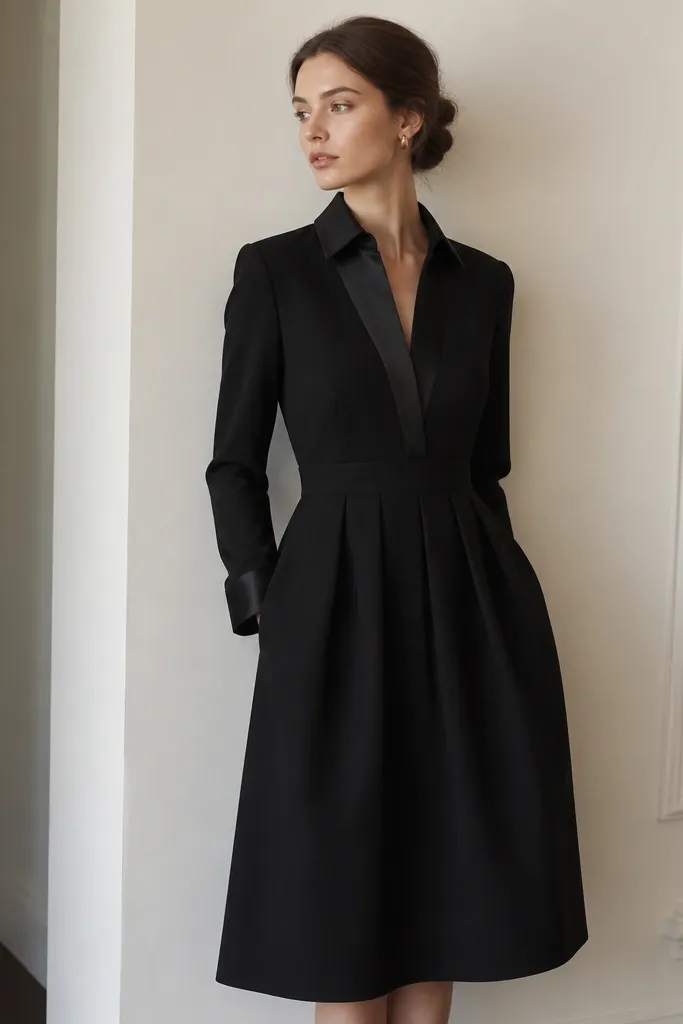
This one reads formal because it borrows tuxedo cues: lapel trim, structured collar, and a defined front. Keeping it a shirt dress means you get easy movement without the bulk of a full jacket. Matte suiting fabric keeps the look grown-up, while satin trim adds just enough contrast. It's a smart choice for men who want the dress vibe but still want "suit energy."
Choose lapel trim that's satin or grosgrain, not shiny costume fabric. Fit the shoulders properly - if the collar sits off your neck, the whole thing looks wrong. Pair with black oxfords and a black tie or neck scarf only if the event calls for it.
Pro tipIf the lapel trim curls at the edges, press it flat with a cloth barrier before you wear it.
AvoidAvoid oversized shirt-dress collars; they make your face look smaller.
8. Tan Linen Blend Dress with a Double-Button Waist
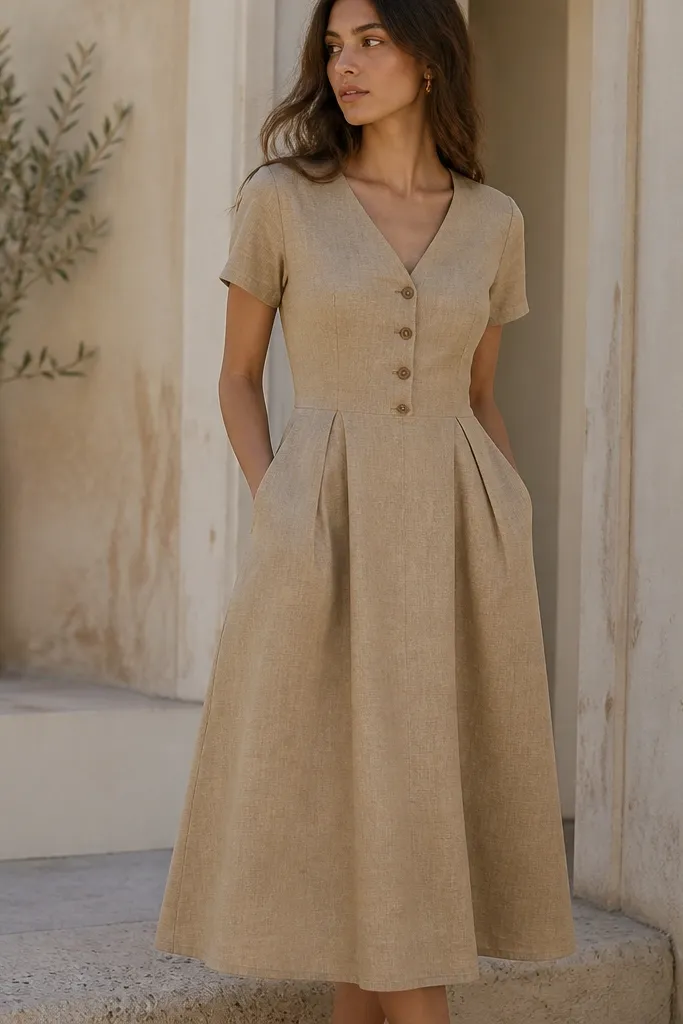
Linen blend works for warm-weather formal events because it breathes, and tan reads softer than white. The double-button waist detail gives you a tailored feel even with a casual fabric texture. The key is keeping the cut clean - no big gathers, no billowy sleeves. The result looks like "intentional summer formal," not beachwear.
Go for midi length and a dress that's fitted through the upper torso. Pair with dark brown leather loafers and a belt that matches the shoes. Add a lightweight pocket square in a muted tone if you're wearing one.
Pro tipLet it wrinkle a little on purpose - press the seams, not the whole surface.
AvoidAvoid pure linen in a clingy fit; it stretches and looks rumpled fast.
9. Midnight Blue Off-Shoulder Dress with a Clean Sleeve Option
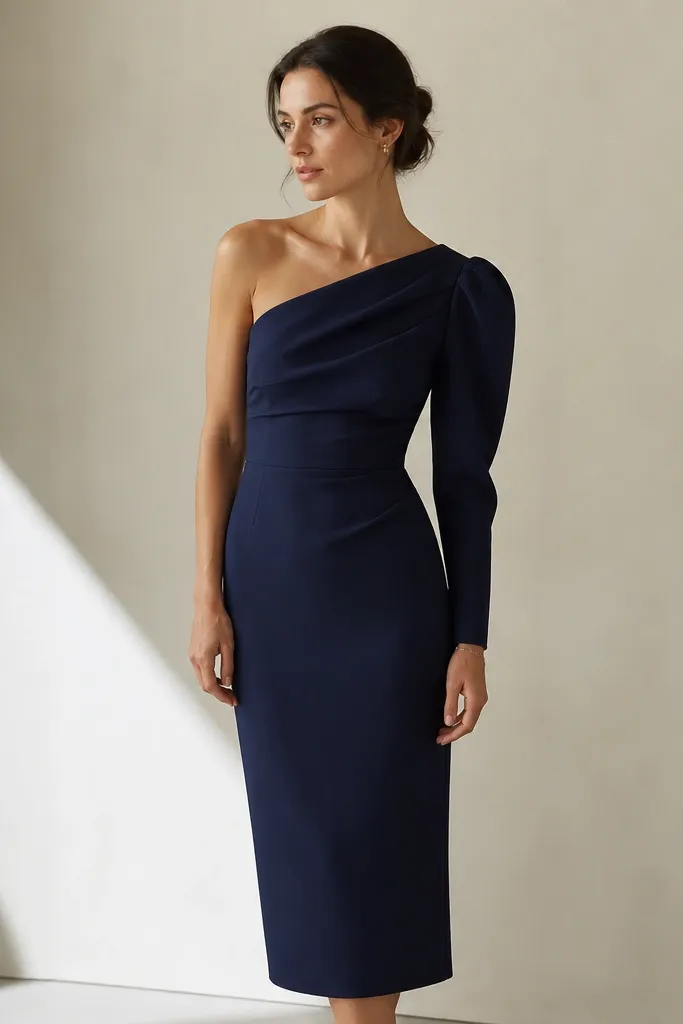
This is for the person who wants to look daring but still classy. Midnight blue stays formal under lighting, and the off-shoulder cut draws attention upward without needing heavy embellishment. The secret is the structured neckline - it should hold its shape so the fabric doesn't slump. A straight skirt keeps it from turning into costume territory.
If you go off-shoulder, keep the rest of the dress simple: no loud prints and no extra ruffles. Wear with black or deep navy leather shoes and keep your hair tidy so the neckline reads intentional. If the dress has one shoulder option, choose the side that sits cleanly on your shoulder bone.
Pro tipUse fashion tape at the neckline if it shifts - it keeps the silhouette crisp.
AvoidAvoid stretchy off-shoulder knits; they sag and show uneven gaps.
10. Sage Green Wrap Dress with Long Belt Ends
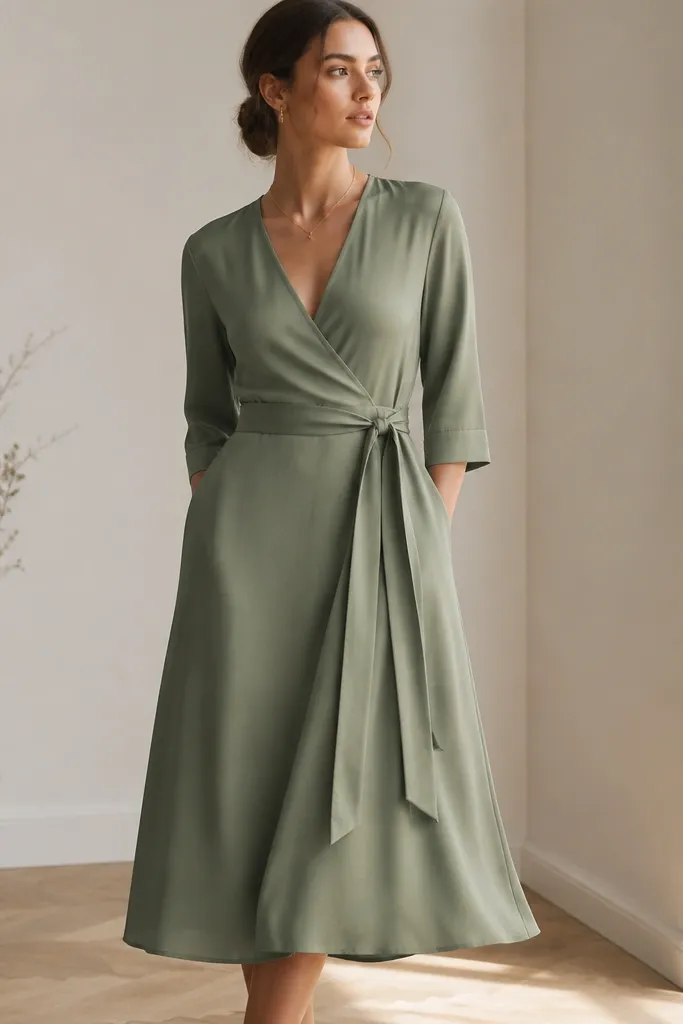
Sage green looks fresh without screaming "casual." The wrap cut gives you that controlled waist, and the long belt ends add movement when you walk. Three-quarter sleeves keep your arms covered while still feeling relaxed. This dress works especially well for daytime formal dinners where black can feel too heavy.
Tie the belt so the knot sits at your natural waist, not higher. Let the belt ends fall in front and avoid bunching at the hip. Pair with tan leather shoes or dark brown loafers and a simple watch.
Pro tipMatch your belt length to your height - trim the belt ends if they hit your knees.
AvoidAvoid high-contrast prints on wrap styles; they fight the clean V-line.
11. Black Lace-Trim Midi Dress with a Full Lining
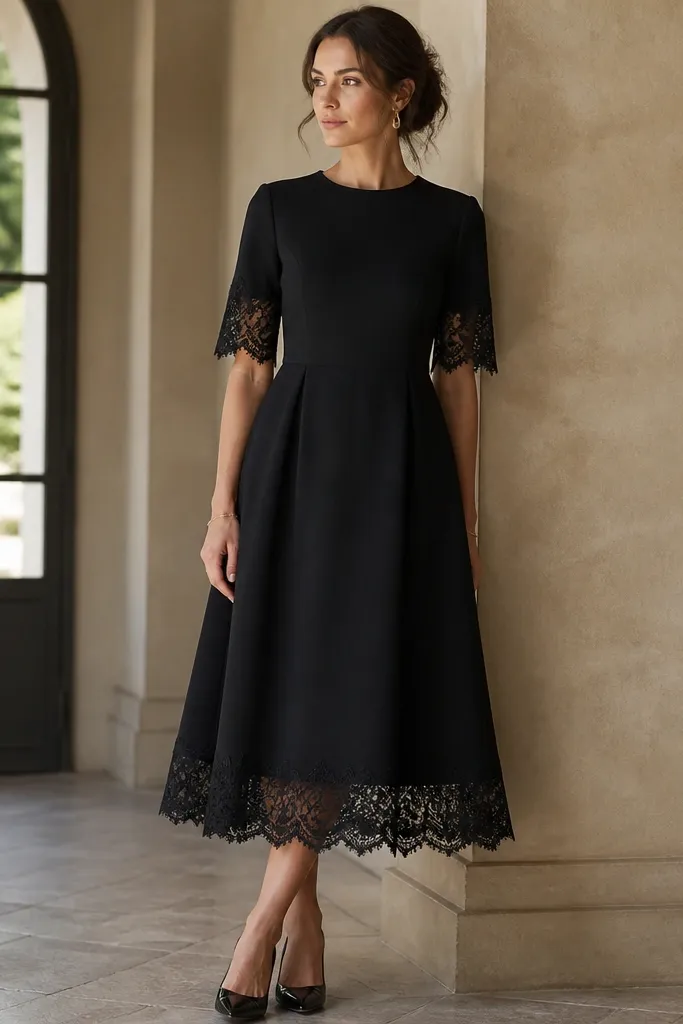
Lace can read cheap if it's thin or underlined poorly. A lace-trim midi with full lining keeps it classy because you only show lace as decoration, not as transparency. Black makes the lace look intentional, especially when the lace is concentrated at the edges. The modest neckline balances the lace so the dress stays formal, not flirty.
Make sure the lining is opaque under flash. Length should hit mid-calf so the lace hem looks deliberate instead of messy. Pair with black leather dress shoes and keep accessories minimal - a watch and one ring.
Pro tipCheck the lining seams at the shoulders; if they pull, the lace will twist.
AvoidAvoid lace dresses with no lining; they look see-through in normal lighting.
12. Grey Herringbone Sleeveless Dress with a Buttoned Vest Layer
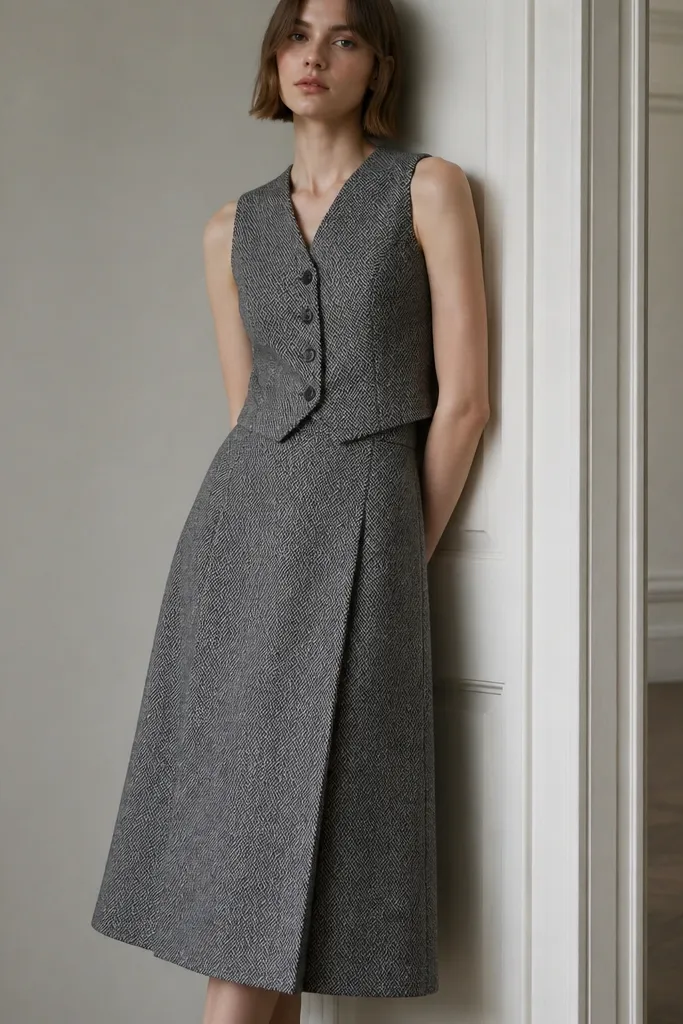
This one is for when you want the dress to look like a complete outfit, not a single garment. Herringbone has a built-in texture that reads formal even without shine. The sleeveless cut shows the vest structure and keeps your torso looking tailored. It also solves a practical problem: you get the dress silhouette without committing to long sleeves in warmer rooms.
Wear a fitted vest in matching grey or charcoal so the lines stay clean. Keep the dress hem mid-calf and avoid anything that hits too high at the shin. Shoes should be leather and polished - black or dark brown derbies look best.
Pro tipPin the vest front so it sits flat; gaps make the whole outfit look undone.
AvoidAvoid mismatched patterns; herringbone plus loud fabric prints looks cluttered.