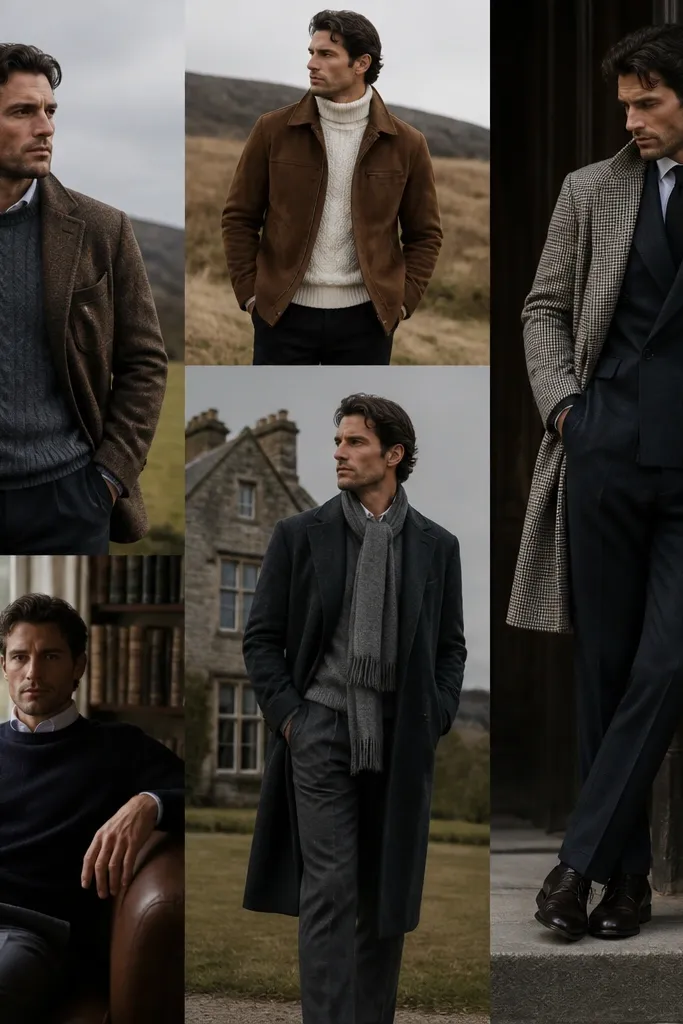
1. Warm cognac boots + cream knit crew
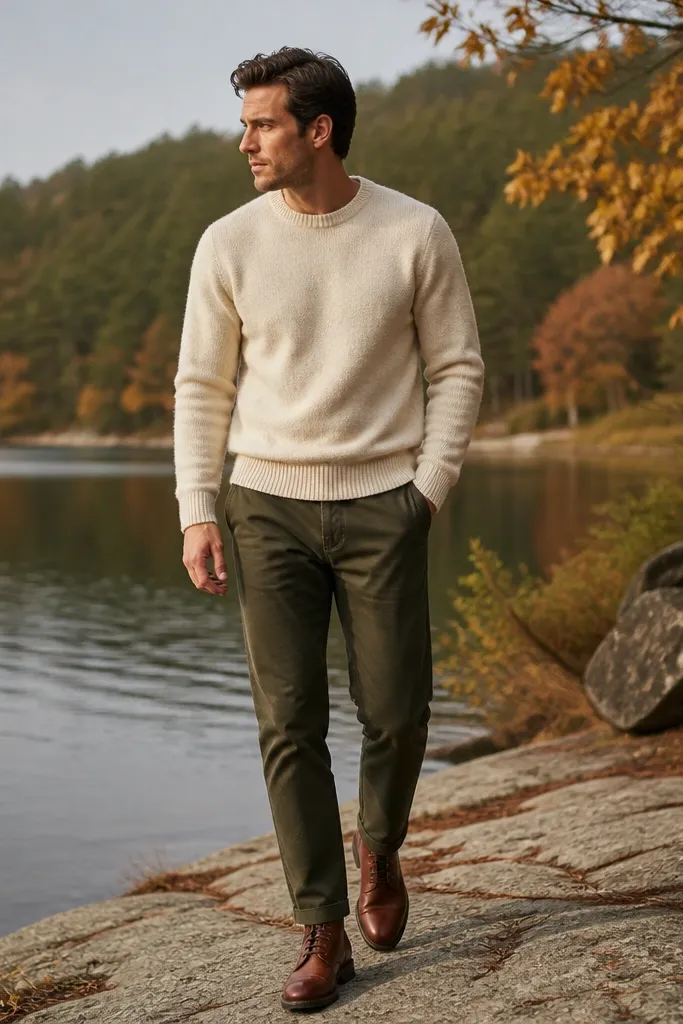
Cognac leather reads warm and slightly orange, so it wakes up the whole outfit. Cream next to it keeps the contrast bright without shouting. Dark olive trousers ground the warmth and stop the look from turning into "beige on beige." This combo also hides texture issues - wool knit + smooth leather always photographs well.
Use a crewneck with a medium-thick knit, not a thin ribbed one. Trousers should skim the shoe with a slight break or a clean cuff - aim for about 1 inch of break. Keep the sweater hem long enough to cover the waistband when you sit.
Pro tipIf your boots are more orange than red, choose cream. If your boots are more red-brown, swap cream for oatmeal.
AvoidAvoid pairing cognac boots with gray-brown chinos - the colors fight and look dusty.
2. Espresso overshirt over a white tee with navy denim
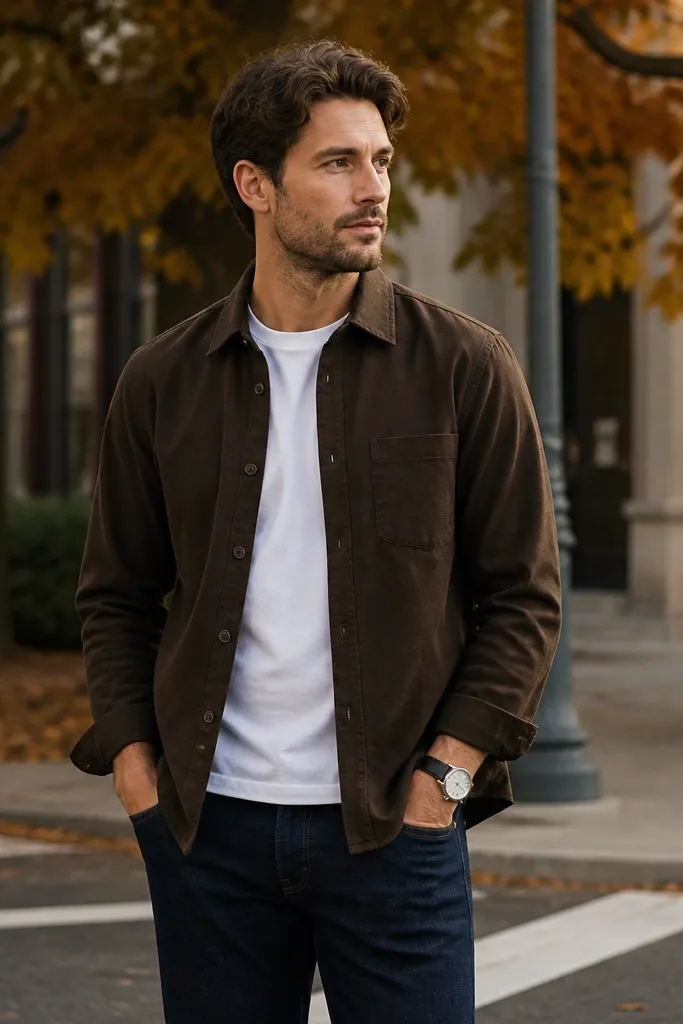
Espresso brown is cooler and deeper, and it loves navy. The white tee adds a clean reset so the brown doesn't swallow your face. Dark navy denim also keeps the outfit from going too "workwear heavy." Overshirts look intentional in fall because you can adjust the layer as the day changes.
Choose an overshirt that has a structured collar and a slight taper at the waist. The sleeve should end at your wrist bone - no bunching. Jeans should be dark enough to stay near-black in shade, with minimal fading at the knees.
Pro tipRoll your sleeves once to show a clean forearm line. It makes the overshirt look tailored even if it's not.
AvoidAvoid tan chinos with an espresso overshirt - it turns muddy fast.
3. Camel overcoat + charcoal trousers
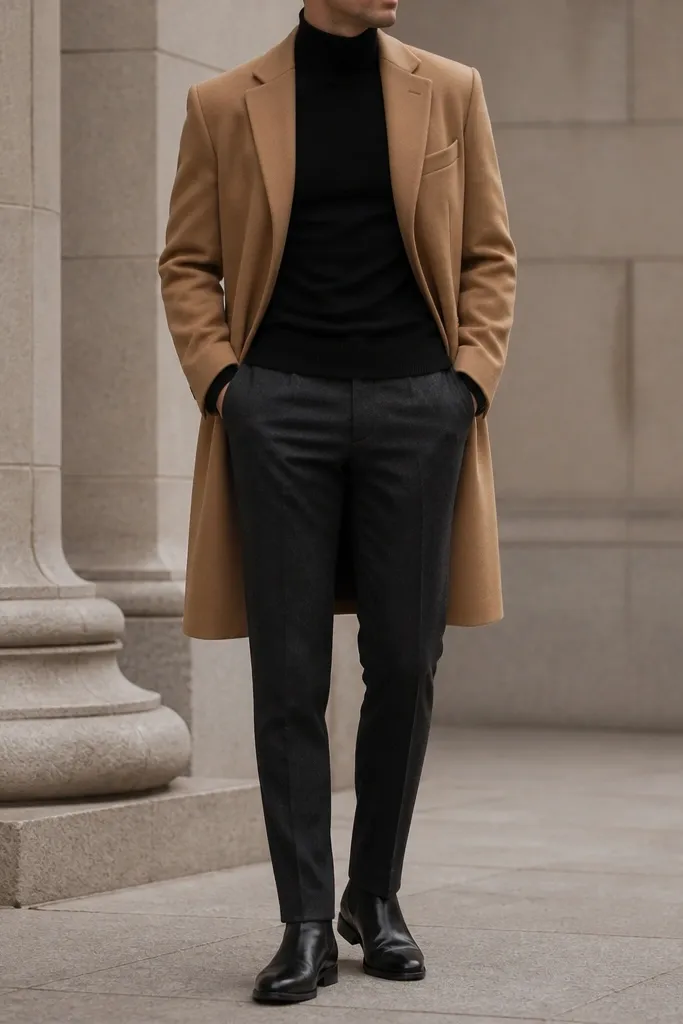
Camel overcoats are warm and bright, and charcoal is the clean counterweight. Charcoal trousers keep the look sharp and stop the coat from looking like a costume. Black turtleneck works because it adds a crisp edge under the camel without adding more brown. This is the "brown that looks expensive" formula I use when the weather turns cold.
Go for an overcoat length that lands around mid-thigh, not below the knee. Trousers should be slim-straight with a break that just touches the top of the shoe. If you hate turtlenecks, swap for a fitted black crewneck in merino.
Pro tipIf the coat looks too light in photos, add a darker inner layer like charcoal or black.
AvoidAvoid pairing camel with light khakis - you get washed-out and flat.
4. Chocolate flannel shirt + olive chore jacket
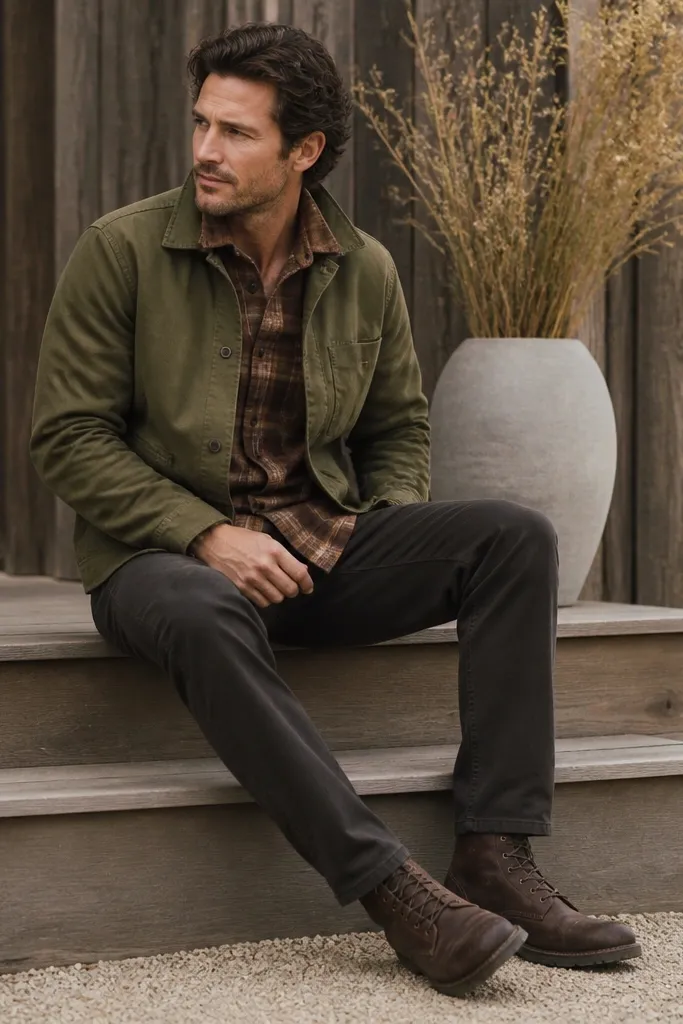
Flannel has a slightly fuzzy surface, and that texture looks good in fall. Chocolate flannel brings warm depth, while an olive jacket adds a second fall color that still feels natural. The key is that both pieces share warmth but different shades, so they stack without blending into one blob. Brown boots tie it together without needing a belt that matches perfectly.
Wear the flannel as the inner layer so it peeks at the collar and cuffs. Choose olive that leans toward muted green, not neon. Trousers should be dark - think blackened brown or deep charcoal - so the jacket stays the hero.
Pro tipKeep the flannel pattern small (micro-plaid or subtle check). Big plaids fight with the jacket texture.
AvoidAvoid layering two patterned browns. You'll end up with visual static.
5. Cinnamon knit polo + dark brown chinos
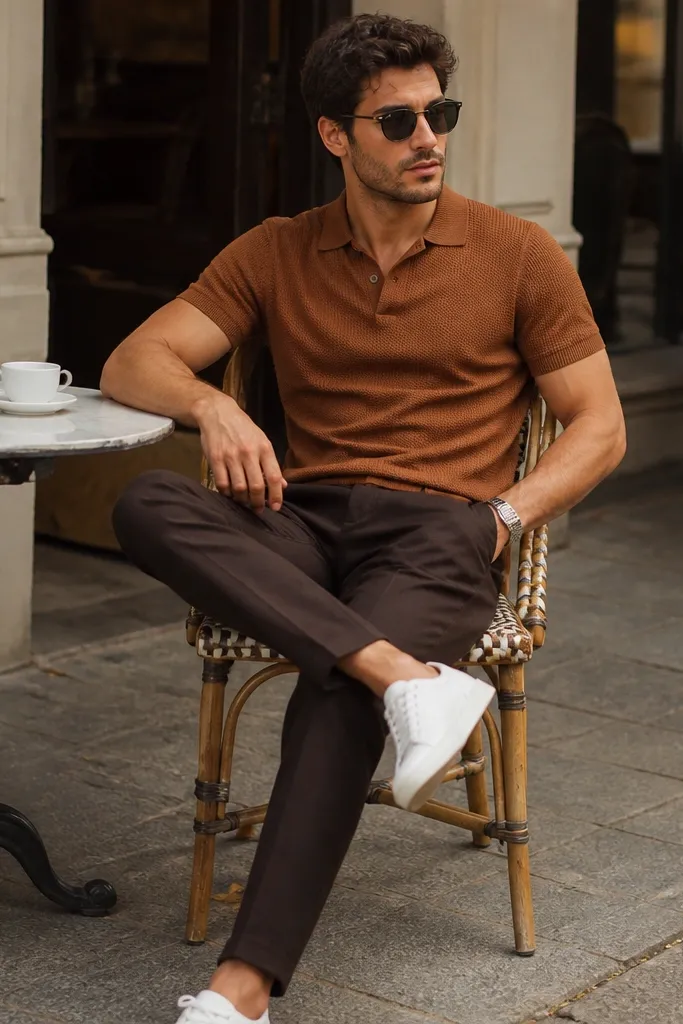
A knit polo in cinnamon reads friendly and fall-ready without looking like a costume. Dark brown chinos keep the palette cohesive, but you need a brighter shoe option to keep it from going heavy. White sneakers add the clean contrast that makes brown look fresh instead of tired. This outfit works for weekends when you want "put together" with minimal effort.
Pick a knit polo with a close collar and sleeves that end mid-bicep. Chinos should sit at your natural waist and have a straight leg, not skinny. If your chinos are very dark, add a slightly lighter belt if you wear one.
Pro tipIf the polo looks too orange in daylight, swap to a more muted toffee brown knit.
AvoidAvoid matching dark brown chinos with dark brown boots and no contrast - it looks heavy from head to toe.
6. Tan suede jacket + black jeans
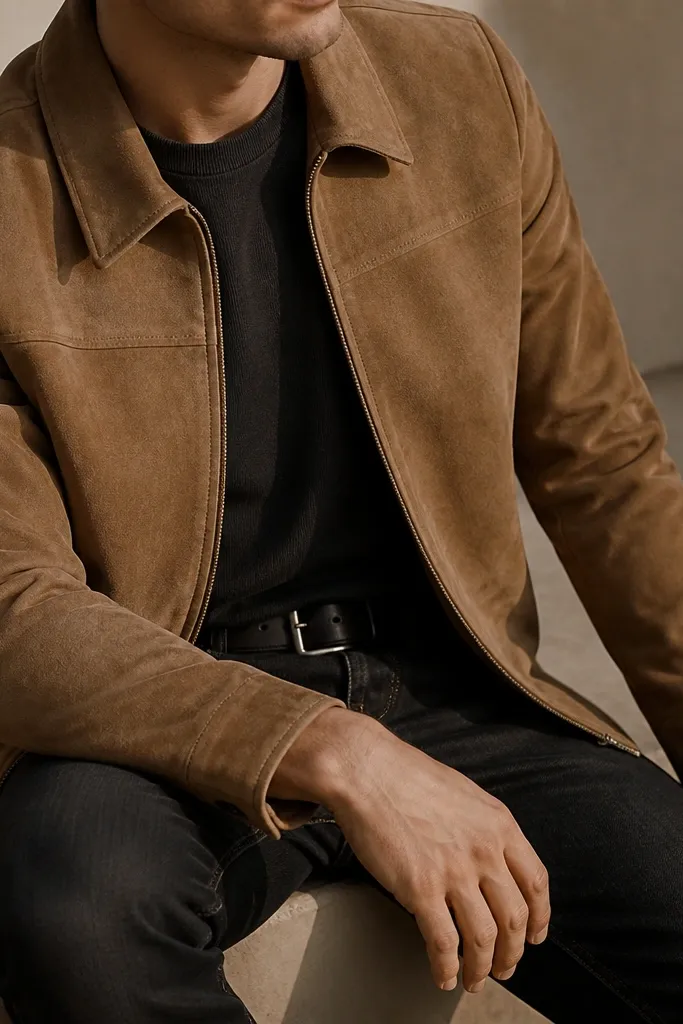
Suede has nap and it catches light in a way smooth leather can't. Tan suede gives a warm glow, and black jeans provide the sharp edge. This contrast is why the outfit looks good even if the rest of your pieces are simple. It's also a great way to wear brown without making everything look like workwear.
Keep the suede jacket unlined or lightly lined if you're layering for mild fall days. Jeans should be black with minimal whiskering. A black tee or crewneck keeps the focus on the suede's color and texture.
Pro tipUse a suede brush once a week. It keeps the nap even so the jacket looks uniform.
AvoidAvoid tan suede with faded blue jeans - the colors compete and look messy.
7. Mocha crewneck + navy trousers + cognac belt
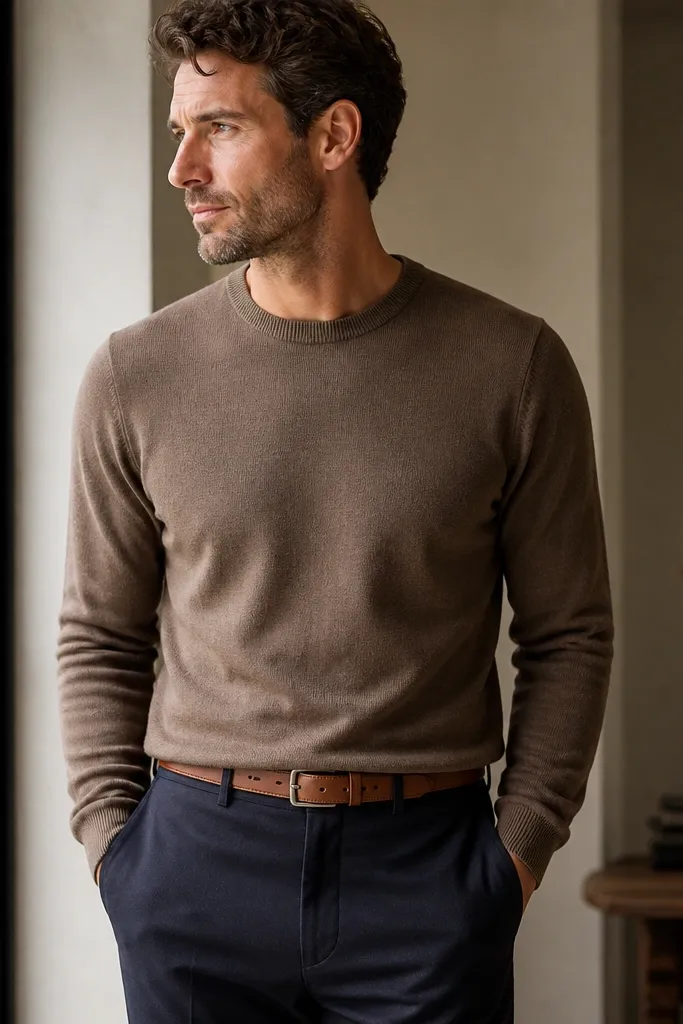
Mocha is a medium brown that sits between warm and cool, which makes it easier to pair. Navy trousers look structured and clean, and they make brown feel intentional instead of casual. Cognac leather belt ties the warm accent back to the sweater without needing matching boots. This is a good "date night fall" setup when you want comfort but not sloppy.
Choose a sweater knit with consistent thickness, not a thin jersey. Trousers should have a bit of structure - wool or wool-blend - and sit straight from hip to hem. The belt width should be around 1 to 1.25 inches so it doesn't look like you borrowed it.
Pro tipIf you wear a watch, match its strap tone to the belt - even a slight match helps.
AvoidAvoid mocha with gray trousers and a brown belt. The belt looks wrong against the cool gray.
8. Dark chocolate turtleneck + olive overshirt
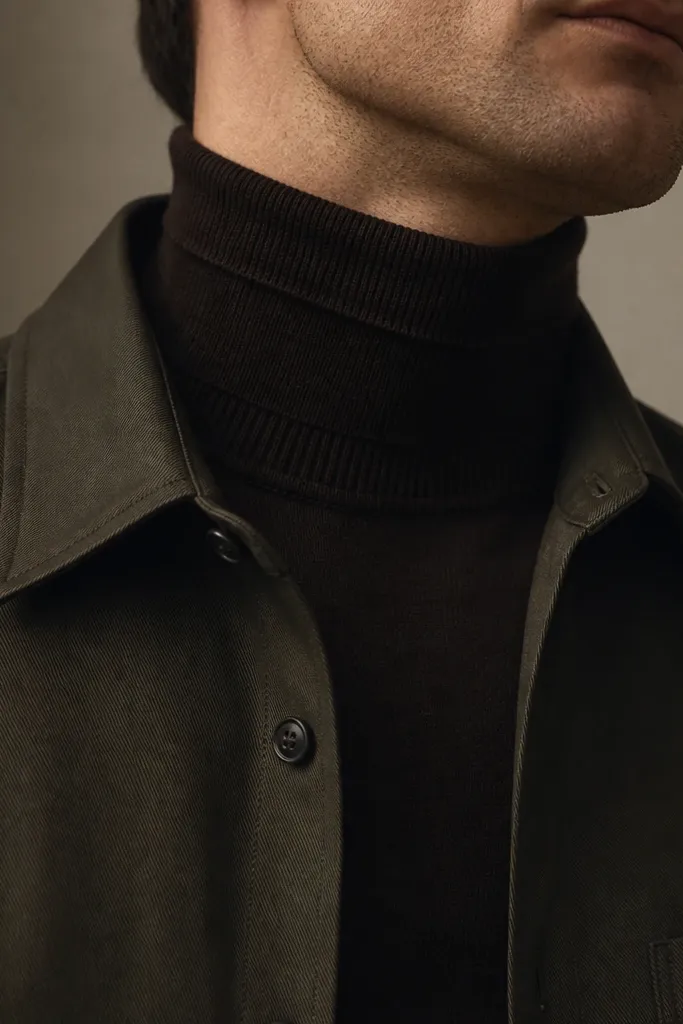
Turtlenecks make brown look sharper because they frame your face and hide layer gaps. Dark chocolate is deep and slightly cool, so it pairs cleanly with olive. An olive overshirt adds fall color without stealing attention from the turtleneck. This outfit looks put together even when you're wearing minimal accessories.
Pick a turtleneck that fits close at the neck but doesn't choke. Olive overshirt should be medium weight so it drapes, not stands away from your body. Keep trousers dark and matte, like black or deep charcoal.
Pro tipLet the turtleneck cuff peek at the wrist by about half an inch.
AvoidAvoid a thin, shiny turtleneck. It reflects light and makes brown look cheap.
9. Brown trench coat + gray knit + black loafers
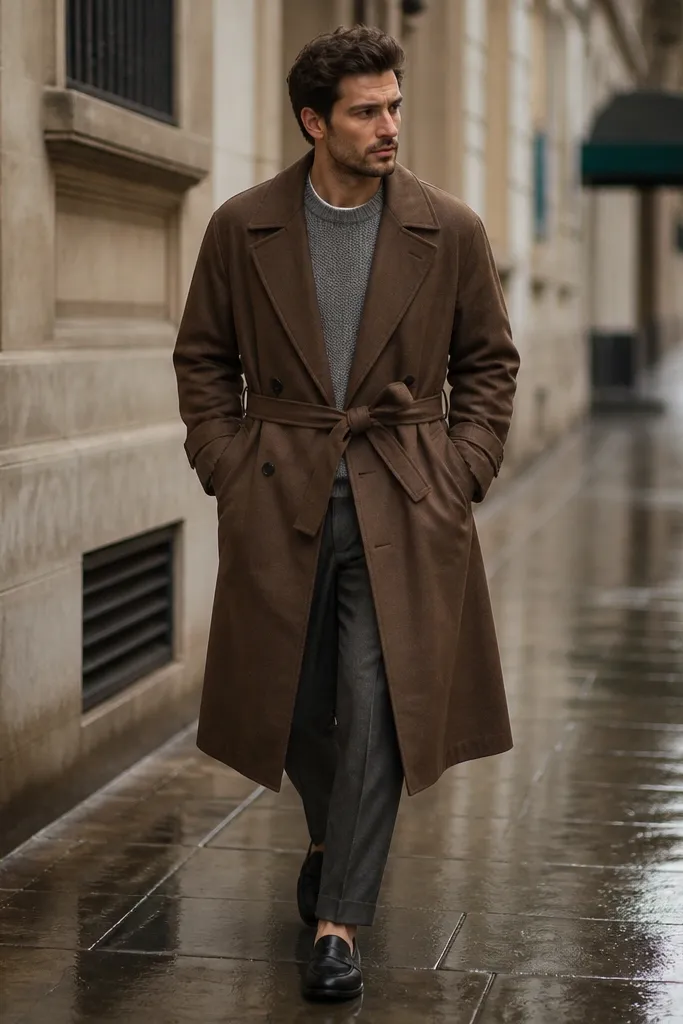
A trench coat in brown gives you a long line that looks sharp in fall rain. Heather gray under it breaks up the brown and keeps the outfit from feeling flat. Black loafers bring contrast without adding more brown. This combo also works for travel days because it's one statement piece with simple layers underneath.
Choose a trench with a belt that can cinch at the waist. The knit should be midweight and slightly textured, like merino or a wool blend. Loafers should be clean and matte; avoid scuffed shoes because the coat makes everything look more detailed.
Pro tipIf the trench looks too dark, wear a lighter gray knit so the face area brightens.
AvoidAvoid matching the trench to brown shoes that are a different shade. The mismatch shows in photos.
10. Rust cardigan + light blue shirt + dark chinos
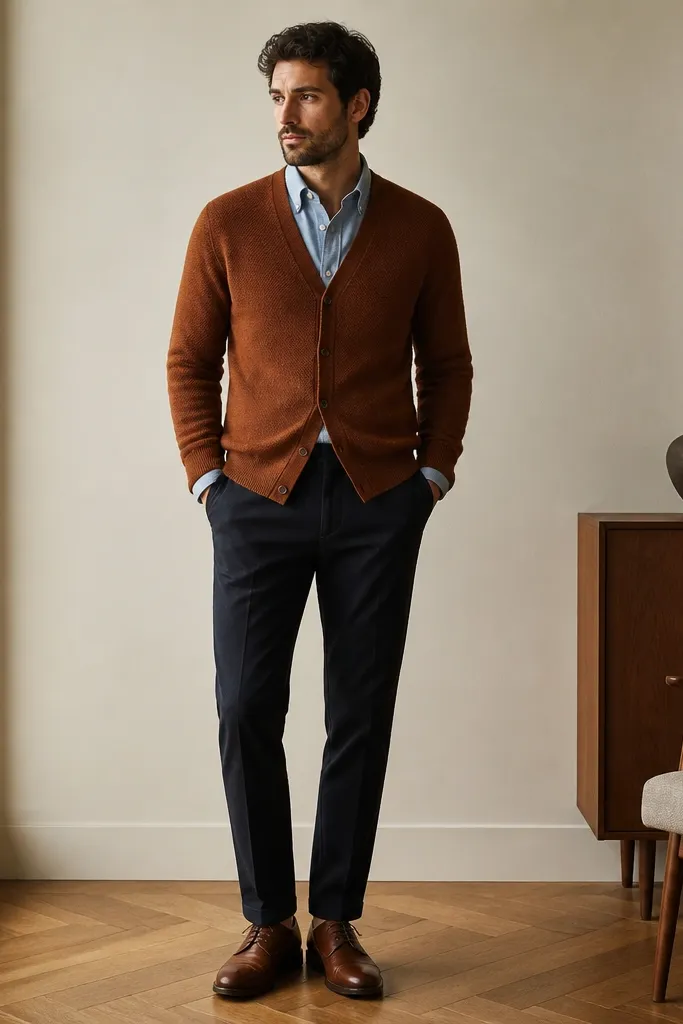
Rust is a brighter brown that brings energy, and it looks great with light blue because the two colors balance warm and cool. A cardigan gives you a softer silhouette than a jacket, which feels good in early fall. Dark chinos keep the outfit grounded and prevent the rust from looking too loud. This is one of my go-to outfits when the weather swings and you want an easy layer.
Use a cardigan with buttons that sit flat - if it gaps at the chest, size down. The light blue shirt should be crisp but not stiff, with a collar that lays flat. Dark chinos should have a straight leg and a clean hem.
Pro tipWear the cardigan slightly open so the blue collar line shows clearly.
AvoidAvoid rust cardigan with tan pants. The outfit turns orange-brown and looks washed out.