1. Crisp poplin tuck with black leather belt
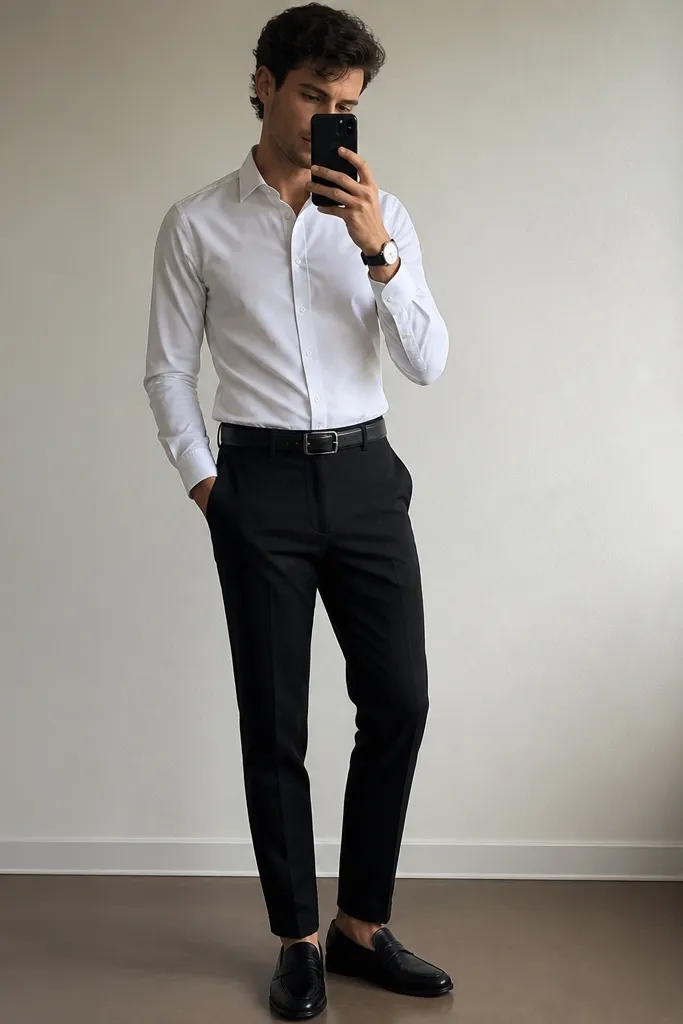
This is the cleanest "I dressed on purpose" version of the combo. Poplin has enough stiffness to keep the front flat, so the tuck looks intentional instead of wrinkled. The black belt ties the whole look together and makes the waistline look defined, even in a small room. Keep accessories minimal so the white stays the bright focal point.
Use a white button-down in poplin or cotton-twill, not a thin tee-like fabric. Tuck it fully, then pull the front flat with your hands before you button - that little step kills the bunching at the waist. Choose black slim or straight trousers with a mid-rise so the belt sits at the natural waist. Wear black loafers or oxfords with a low shine finish (not mirror patent).
Pro tipIf your shirt always shifts after 30 minutes, add a small shirt-stay clip inside the waistband at the sides.
AvoidSkipping the belt or wearing a belt that's too brown makes the whole outfit look like it came from two different wardrobes.
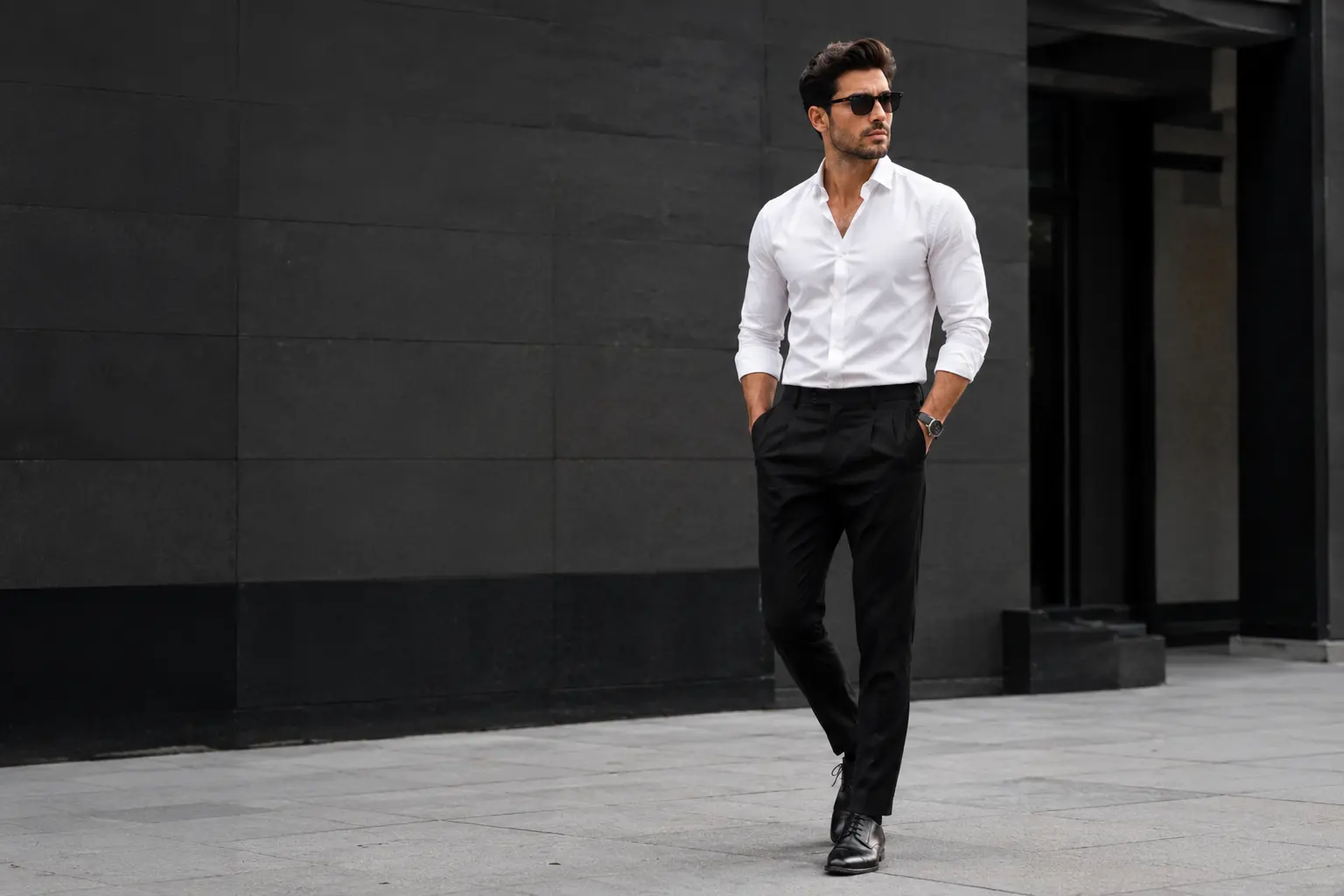
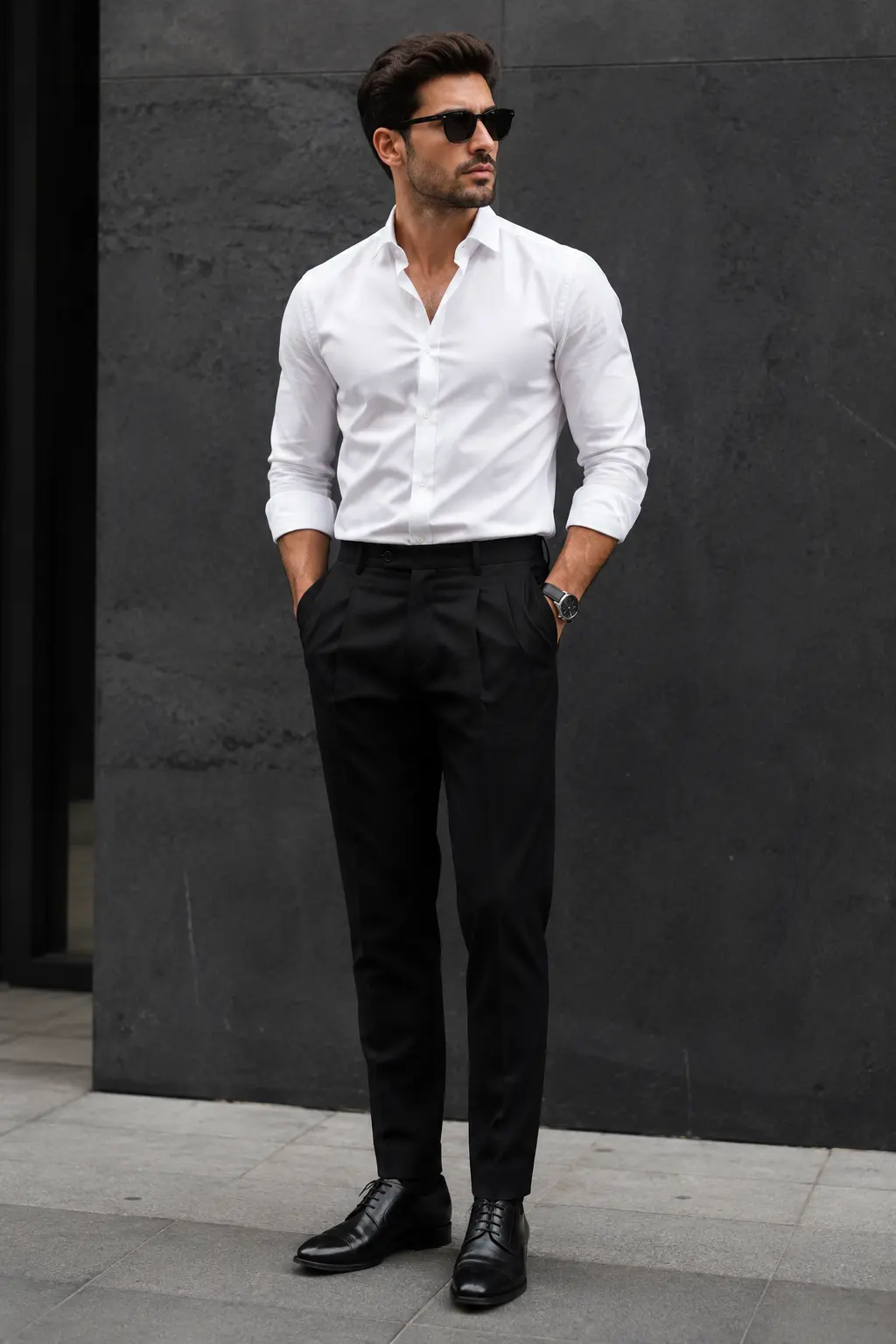
2. White button-down + relaxed pleated black trousers
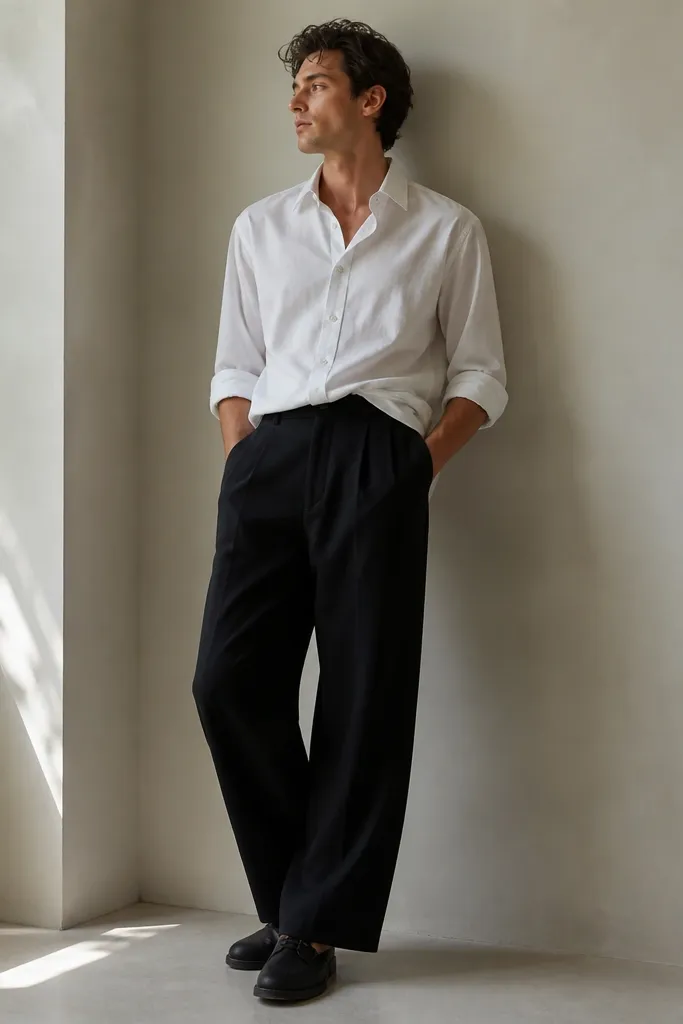
The pleats add shape to black pants, so the white shirt can be a bit looser without looking sloppy. A half-tuck makes the waist look relaxed but still structured. Rolled sleeves add casual texture and help the outfit feel lived-in rather than stiff. Suede shoes soften the contrast and keep it from looking too formal.
Pick black trousers with visible pleats and a slightly wider opening at the ankle. Use a white button-down that is comfortable through the chest and not too billowy - you want "relaxed" not "baggy." Half-tuck the shirt at the front only, then smooth the fabric so it doesn't flare. Roll sleeves once or twice so the cuff sits around mid-forearm.
Pro tipFor the pleat trousers, press the hem with your hand before leaving the house - it keeps the leg line crisp.
AvoidDon't pair pleated pants with a thin, clingy white shirt; the shape mismatch reads cheap fast.
3. Oversized white shirt worn as a short jacket
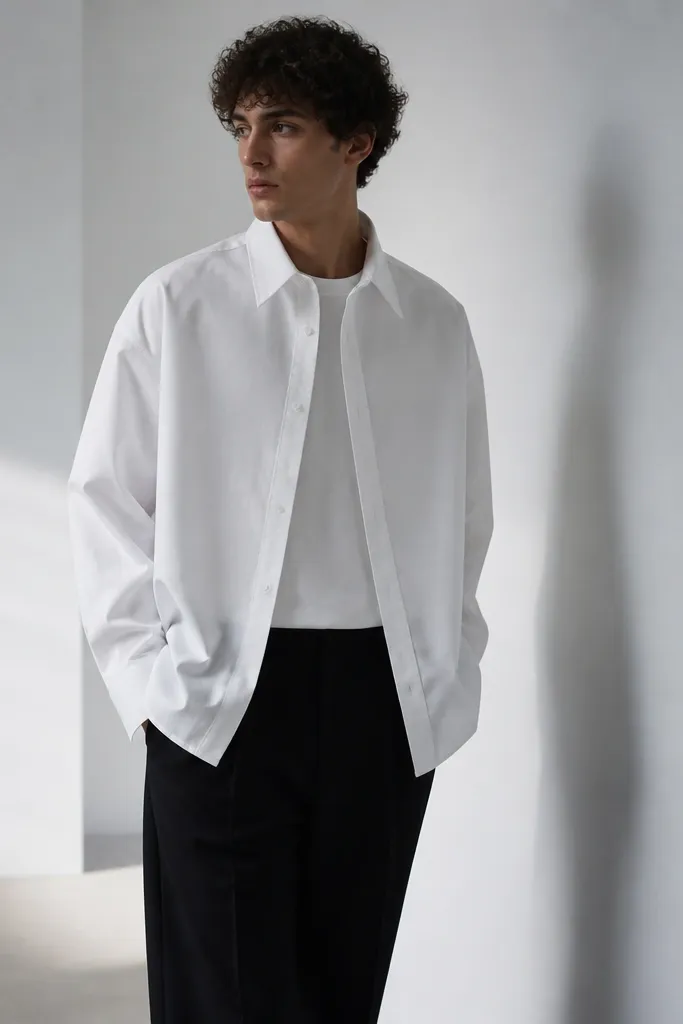
This one works great when your space is small and you need a "layer" without a separate jacket. The oversized shirt adds volume on top, while black pants keep the bottom clean. White-on-black gives a high-contrast silhouette that still looks modern. White sneakers keep it youthful and make the outfit feel lighter.
Choose a white shirt two sizes up, but keep the shoulder seam close to your shoulder so it doesn't look like a costume. Button it at least through the middle to create that jacket shape. Leave the shirt hem covering the top of the waistband, not past mid-thigh. Use black pants that sit smoothly at the waist so the added shirt volume doesn't bunch.
Pro tipIf the oversized shirt gaps at the chest when buttoned, switch to a larger cuff size and keep the body fit closer.
AvoidDon't wear it too long - if the hem hits your upper thigh, the proportions fight each other.
4. White shirt with black trousers, rolled hem, and ankle socks
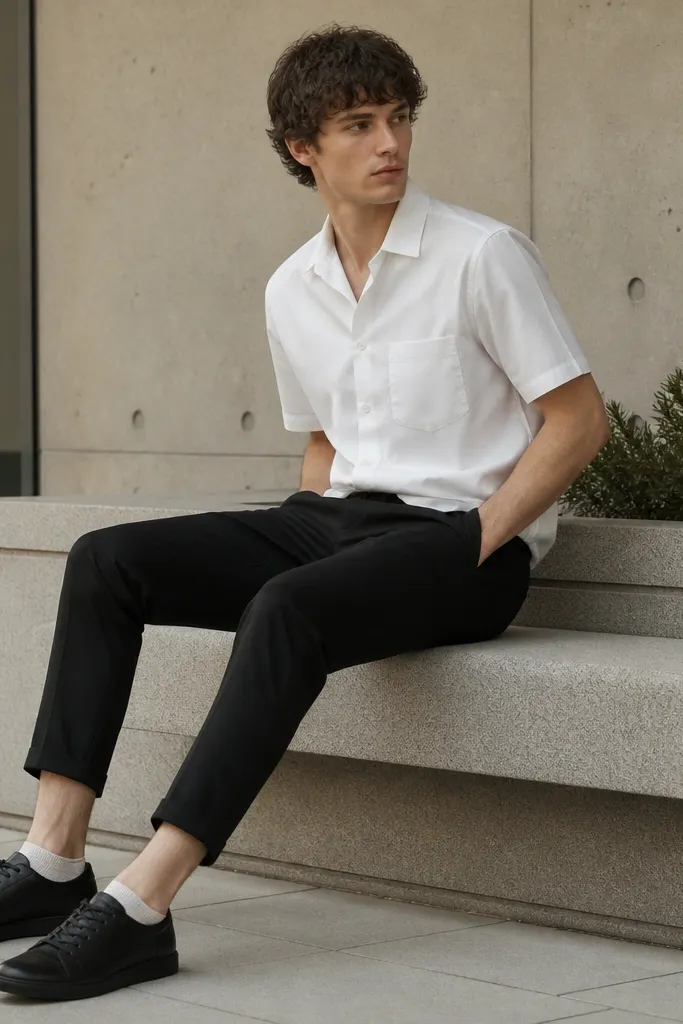
Short sleeves and cropped trousers create a lighter visual line, which helps in small rooms where full-length outfits can feel heavy. The rolled hem detail adds a deliberate casual touch. Ankle socks stop the outfit from looking like you're wearing "whatever" under the pants. Black sneakers keep the look sharp without going formal.
Use a short-sleeve white button-up in cotton or linen-cotton blend. Choose black trousers cropped just above the ankle, then lightly roll the hem once if the fabric allows. Wear thin black or dark charcoal ankle socks - avoid thick ribbed athletic socks. Keep the shoes matte leather or matte sneakers, not high-shine.
Pro tipSteam the shirt sleeves for 20 seconds before you head out; short sleeves wrinkle faster than long ones.
AvoidAvoid white socks with black shoes here - the contrast looks messy next to the white shirt.
5. Semi-formal: white shirt, black pants, and short charcoal blazer
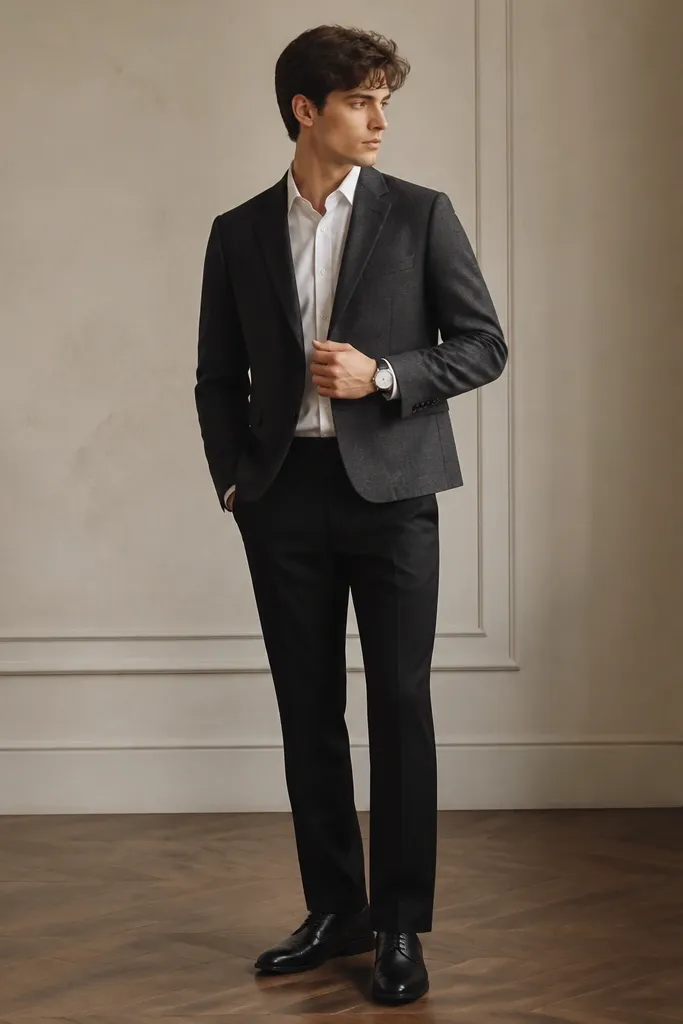
A short blazer is the fastest way to make the combo look "planned" without adding a long coat that dominates a small space. Charcoal sits between black and gray, so it doesn't fight the black pants. The white shirt stays crisp underneath, and the blazer adds a second layer of shape. This is one of my go-to outfits for dinners because it reads polished even when you're seated close to others.
Pick a blazer that ends around mid-hip and has a clean shoulder line. Keep the white shirt collar visible (no bulky tie knot). Wear black straight-leg trousers to keep the silhouette balanced under the blazer. Finish with black oxfords or derby shoes with low shine.
Pro tipIf the blazer feels snug, size for the shoulders and let the waist be a little close; shoulders control how it looks in photos.
AvoidDon't wear a blazer that's too long - it makes you look shorter in tight mirror shots.
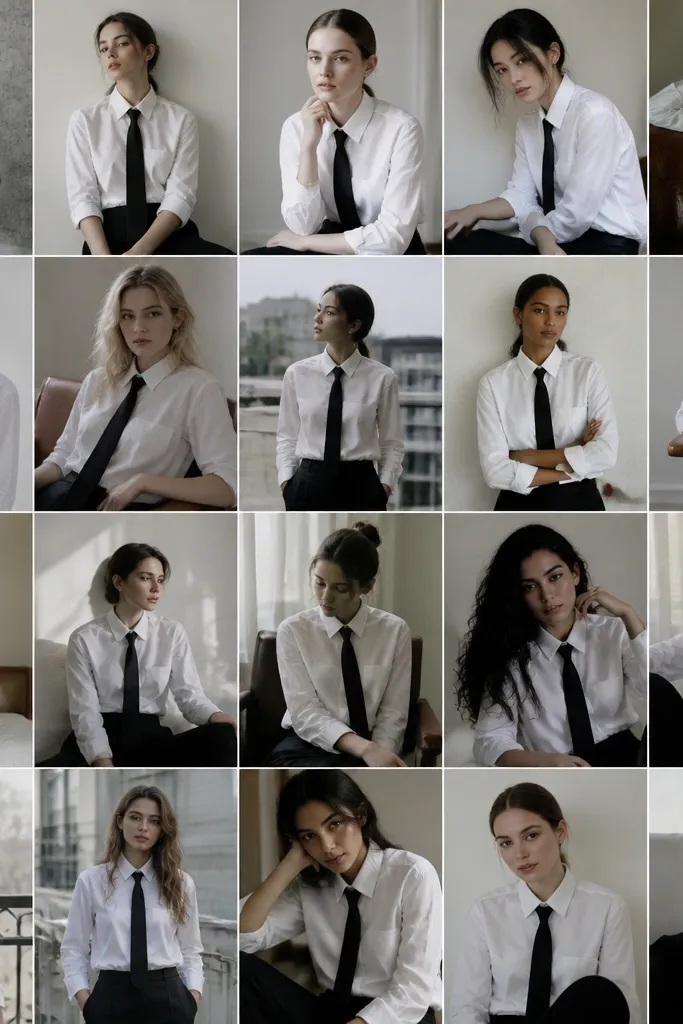
6. White shirt + black pants with a knit tie and no jacket
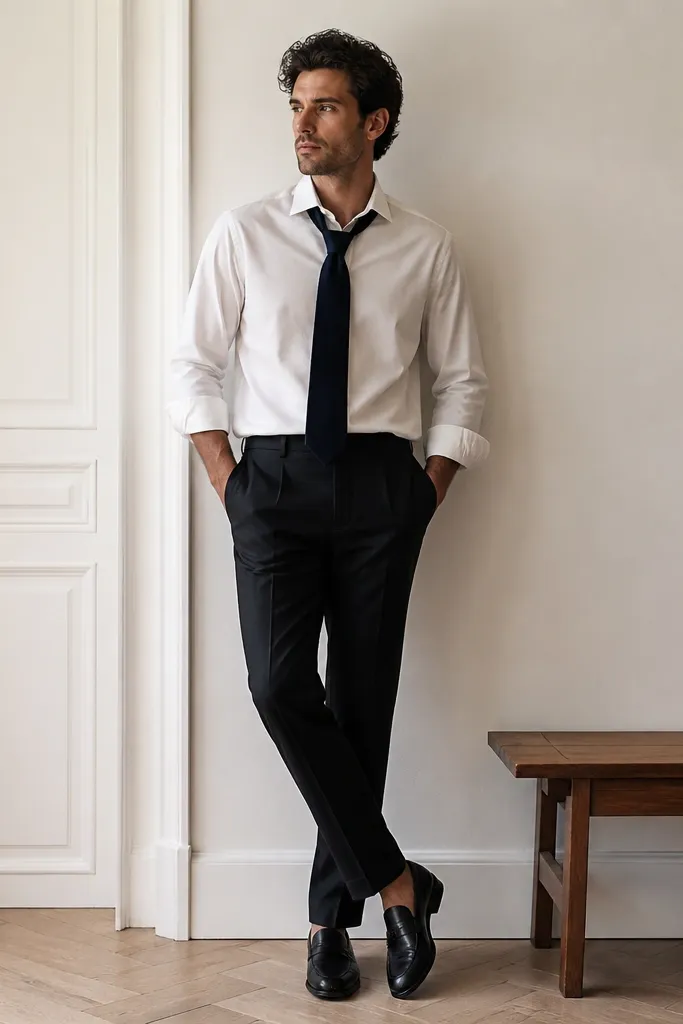
This is office dinner energy without the extra bulk of a jacket. Knit ties have texture, so they don't look flat against a crisp white shirt. Leaving the top button undone keeps the neck area relaxed, which matters if you're dressing in a small bathroom mirror and want a natural look. Dark navy against black pants still feels cohesive.
Choose a knit tie in navy or deep charcoal. Keep the tie knot medium (four-in-hand or half-Windsor) so it doesn't look too large. White shirt should be a structured poplin with a collar that holds shape. Pair with black trousers that sit smooth at the waist and black loafers.
Pro tipMatch your belt color to your shoes - even a slightly different shade shows up in close shots.
AvoidAvoid a thin shiny polyester tie; it looks cheap fast next to a real white shirt.
7. French tuck with white linen shirt and black straight pants
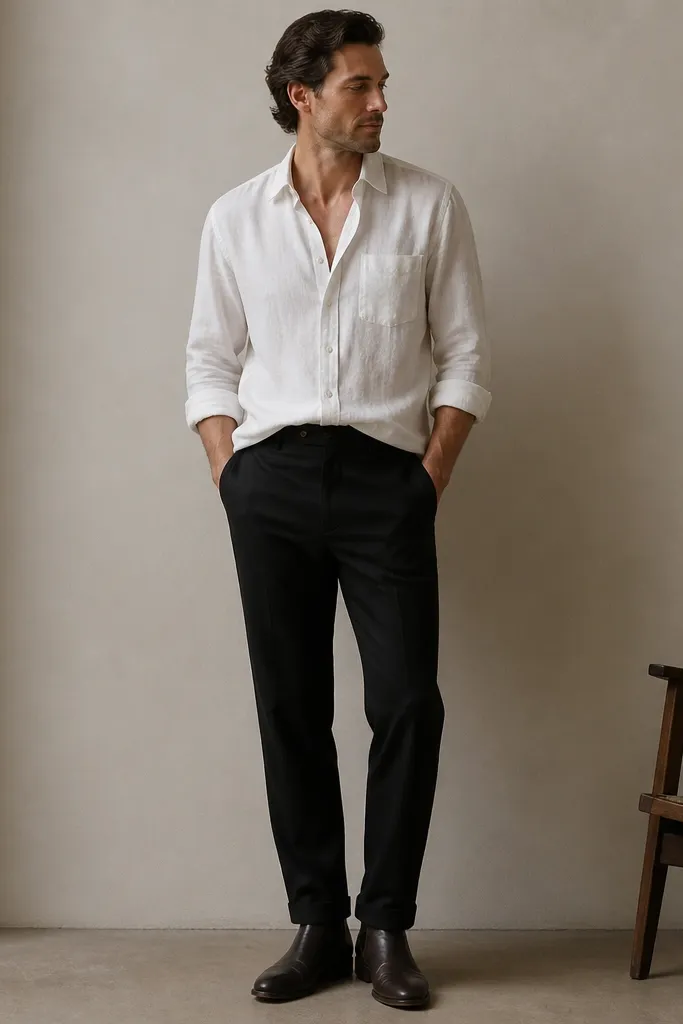
Linen wrinkles are not a flaw here; they make the outfit look relaxed instead of overly stiff. The French tuck gives you waist definition without the strict lines of a full tuck. Straight black pants keep the silhouette grounded. Boots add weight and texture, which looks great if you're walking on uneven sidewalks or heading to a casual pub.
Choose a white linen shirt with a slightly relaxed body and sleeves that aren't too tight. Do a French tuck: tuck only the front edges, then press the fabric flat so it doesn't create a ridge. Wear black straight trousers with a clean hem break. Add dark leather boots and a simple watch.
Pro tipMist the linen with a little water and smooth it with your palm - it looks like intentional texture.
AvoidDon't iron linen until it looks plastic; it loses the relaxed look that makes the outfit work.
8. White shirt, black pants, and a long-sleeve knit polo layer
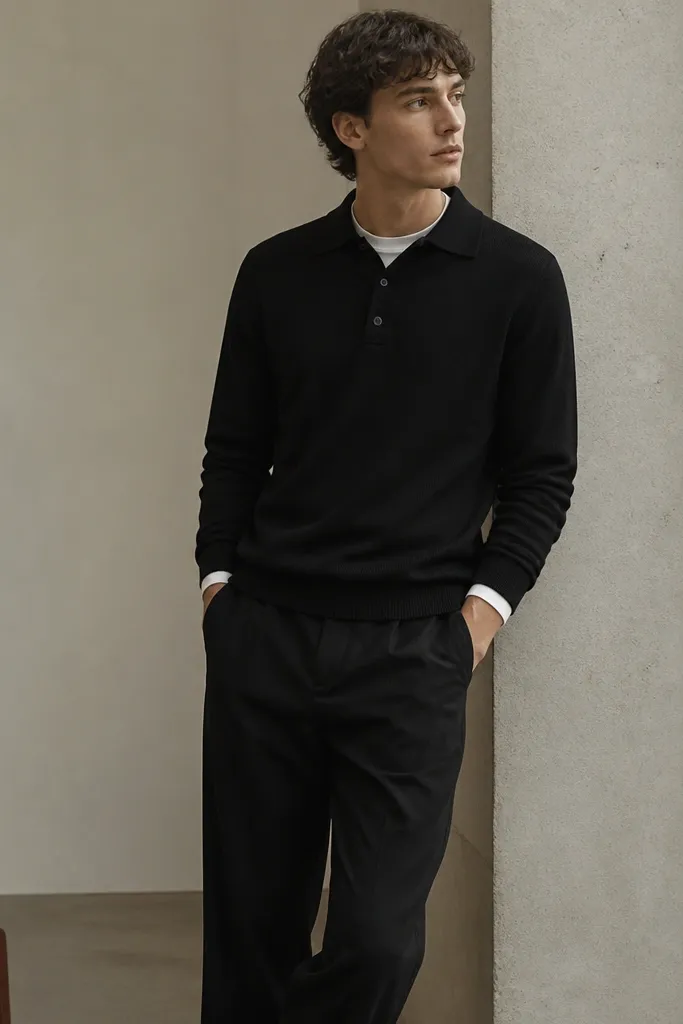
Layering a knit polo over (or under) a white shirt creates depth without going full suit. The knit texture keeps the outfit from looking too stark. When you show a bit of white at the collar, it adds brightness right where the eye lands. This works especially well in small spaces because you're not juggling multiple pieces like a jacket + tie + scarf.
Start with a white shirt that has a collar you like - a standard button-down or a structured collar tee. Add a black knit polo layer with a close neckline so it sits clean. Keep the trousers straight and mid-rise so the layers don't bunch at the waist. Finish with black leather shoes or minimal sneakers depending on the setting.
Pro tipIf the collar peeks look messy, fold the white collar edge flat before you put the knit layer on.
AvoidAvoid bulky layers that bunch at the chest; it makes the silhouette look thicker than it is.
9. White shirt with black pants and a waistcoat vest
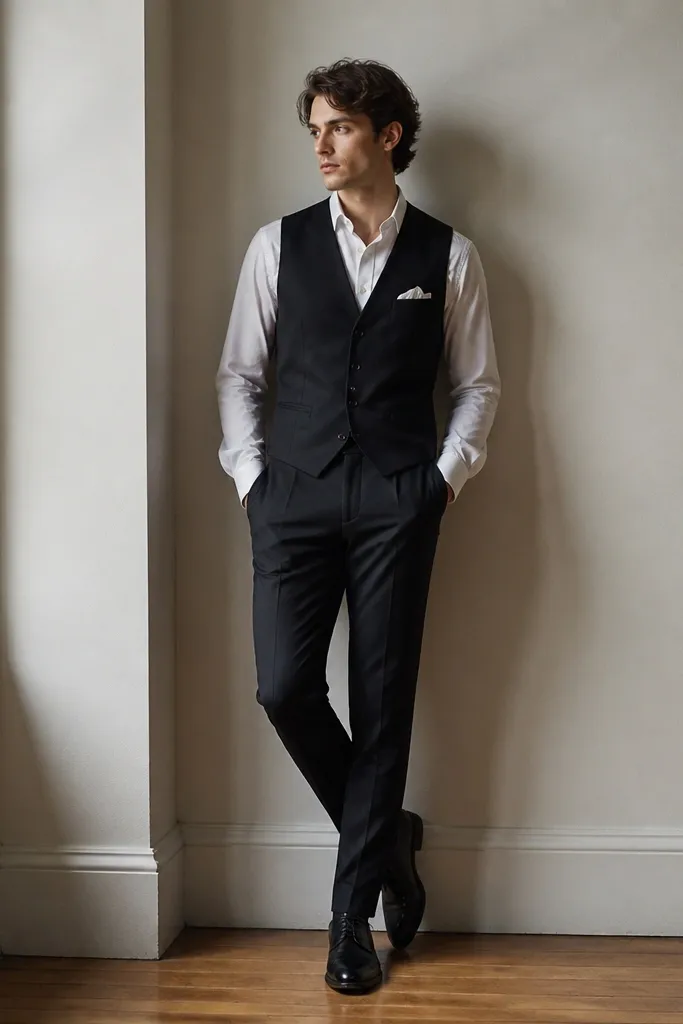
A waistcoat gives you shape and a defined torso line, which is hard to get with only a shirt and pants. The contrast between white shirt and black vest reads sharp, even in low light. I like this for weddings, date nights, or any evening where you want to look dressed without a full formal suit. The vest also hides a lot of fit issues in the midsection.
Use a black waistcoat that fits snug at the shoulders and isn't too long - it should end around the top of your trouser waistband. Wear a white shirt with a collar that sits flat under the vest. Keep buttons fastened so the vest line stays clean. Add a simple pocket square in white cotton if you want extra polish.
Pro tipIf the vest bunches, loosen the back strap slightly and re-check the shoulder fit first.
AvoidDon't wear a waistcoat that's too shiny; it looks like costume fabric under indoor lighting.
10. White shirt with black pants, suspenders, and no tie
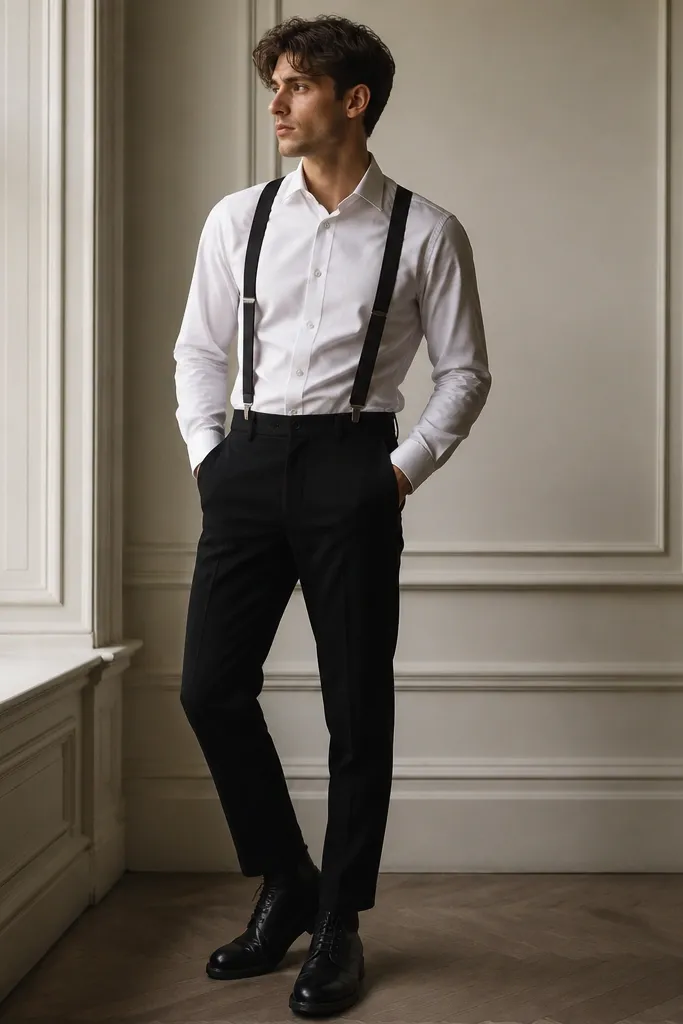
Suspenders change the whole vibe while keeping the same two base pieces. They create vertical lines, which makes you look taller and more intentional in small mirrors. Black suspenders over black pants also reduces clutter around the waist. With no tie, the outfit stays approachable for everyday use.
Use black suspenders with clips that attach at the top of the trousers. Wear a white shirt that isn't too long so it doesn't bunch at the suspenders. Keep trouser waist clean and avoid a visible belt. Finish with black derby boots or loafers for a grounded look.
Pro tipSet the suspender length so the shirt doesn't tug upward - you want a neutral hang at the chest.
AvoidAvoid colorful suspenders with a very bright white shirt; the color distraction makes the combo look off.
11. White shirt + black pants with a light gray overshirt
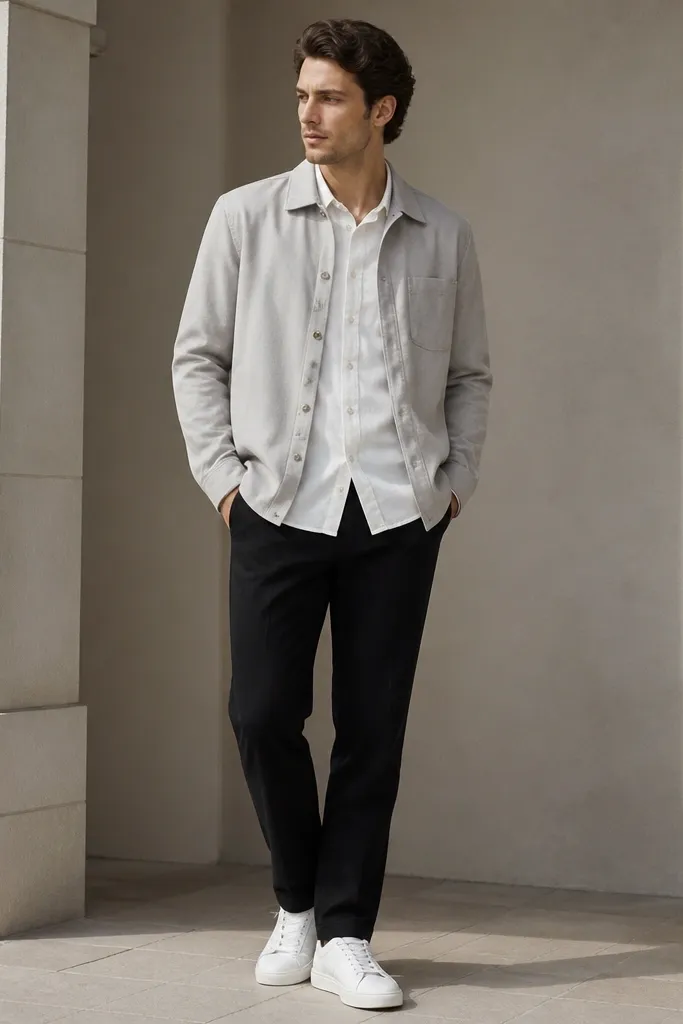
An overshirt adds a middle layer color that's still neutral, so it doesn't fight the black pants. Light gray looks clean under a white shirt and gives depth without turning the outfit too dark. This is a strong "small space" solution because you can hang one overshirt on the back of a door and rotate it fast. White sneakers keep the outfit casual and modern.
Pick a light gray overshirt in brushed cotton or twill. Wear it open if you want more white collar visibility, or button it if you want a more uniform look. Choose black trousers that are straight or slightly tapered. Keep sneaker color white and outsole dark so it still feels grounded.
Pro tipRoll the overshirt sleeve once and keep the cuff neat if you're trying to look relaxed without adding accessories.
AvoidAvoid overshirts in thick fleece; they add bulk and make the outfit feel heavy indoors.
12. White shirt with black pants and a patterned scarf in cold weather
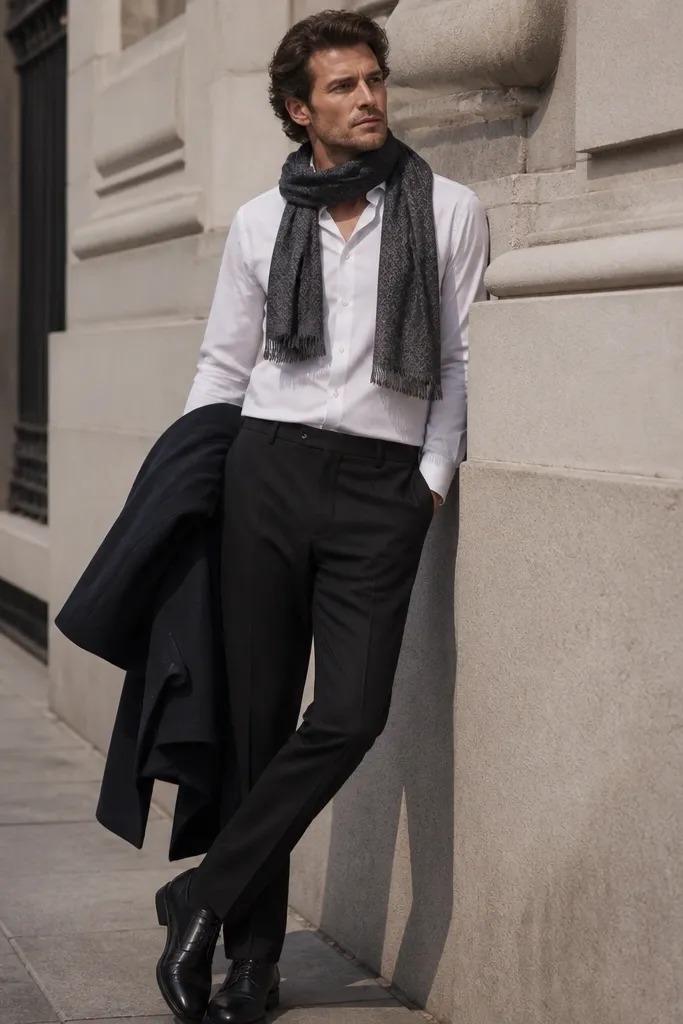
A scarf gives you a second focal point besides the white shirt, which is useful when your space and lighting make everything look flat. Pattern adds motion, but keep it dark so it still matches black pants. I like pairing a white shirt with a charcoal or black scarf that has a small repeating pattern, like micro-check or small dots. In photos, the scarf frames your face and makes the outfit look styled.
Use a scarf in wool or wool-blend, not a thin polyester one. Tie it in a simple loop or a short wrap so it doesn't hang too low with a coat on. Keep the rest minimal: black coat, black shoes, and a white shirt with a firm collar. If your scarf is patterned, keep your shirt plain.
Pro tipSteam the scarf lightly and flatten the knot; a lumpy knot reads messy in close-up mirrors.
AvoidAvoid bright colors like neon yellow - it clashes with the clean black-and-white base in most indoor lighting.