
1. Charcoal wrap shirt-dress with slim belt
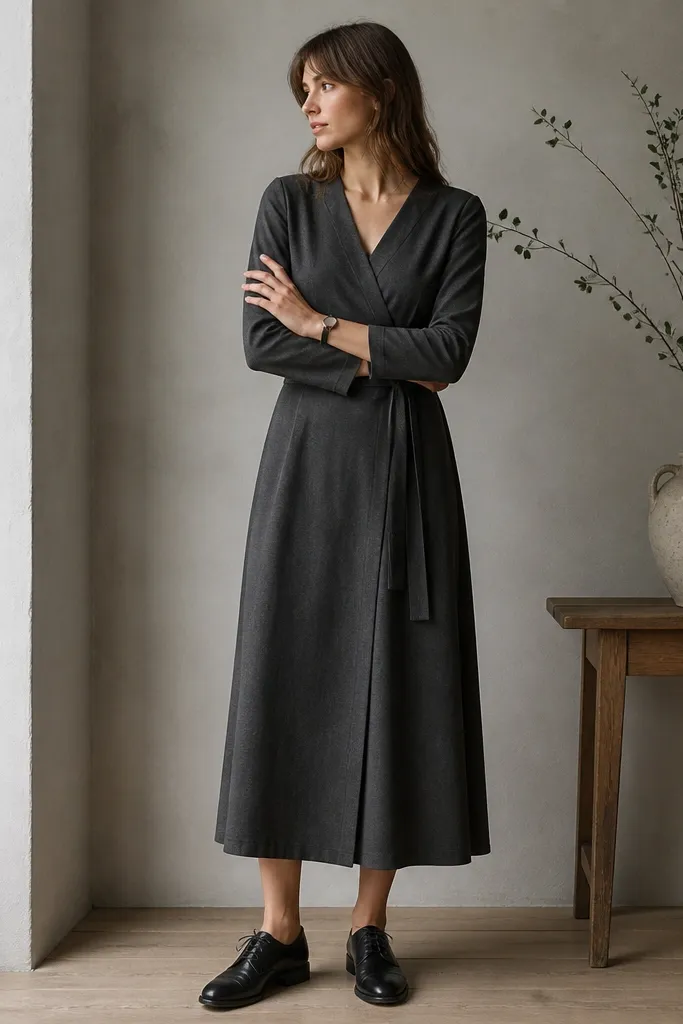
This look works because the wrap construction gives you adjustable waist control, and charcoal reads sharp under fluorescent office lighting. The V neckline keeps it from feeling heavy, while the long sleeves handle AC without needing extra layers. I've worn this to client meetings where everyone else looked "dressed" in suits - it held its own. The matte fabric hides minor wrinkles better than shiny blends.
Go for a midweight charcoal wool blend or cotton-twill with a slight body. Tie the belt so it hits right at your natural waist, not on your hips. The hem should land around mid-calf so it stays clean when you sit. Wear it with black or dark espresso leather shoes.
Pro tipAdd a thin crew-neck tee in off-white underneath only if your office runs cold. Keep the neckline visible so it still reads intentional.
AvoidAvoid wrap dresses with flimsy jersey fabric - they twist around the waist and look sloppy by lunch.
2. Navy poplin button-front dress with rolled sleeves
Crisp poplin makes a button-front dress look like a tailored shirt that just happens to be long. Navy is forgiving and stays professional even when the day gets bright. Rolled sleeves add a relaxed office feel without turning casual. The clean front placket also makes your whole outfit look orderly on camera.
Choose a poplin with a tight weave so it resists bagging at the elbows. Fit the shoulders so the collar sits flat, then let the body fall straight with a slight taper. Roll sleeves to about two turns, and keep the collar points crisp. Pair with a belt in the same tone as your shoes.
Pro tipIron the collar points and first placket area - that's what people notice first.
AvoidDon't pick a dress with oversized buttons and gaps at the button line; it makes the fit look cheap.
3. Black-brown long tunic dress with leather belt
A tunic silhouette reads modern and office-appropriate when the fabric has weight and the belt defines your waist. Black-brown is my go-to for "formal but not too serious" because it doesn't look as stark as black. The stand collar keeps the neckline clean, which matters if you wear glasses. This outfit also hides body changes across the day better than tight sheath styles.
Use a weighted twill, brushed cotton, or a wool-blend tunic fabric with a matte finish. Belt it at the narrowest point - usually just above the waistband seam. Keep the tunic hem around the lower calf so it doesn't hit your knees mid-sit. Wear with Chelsea boots or sleek oxfords.
Pro tipAdd a single pocket square only if the tunic has a chest pocket - otherwise skip it.
AvoidAvoid tunics that are too short - they bunch when you sit and look like a costume.
4. Deep green sheath-style office dress
A sheath-like cut looks sharp because it follows your shape without clinging. Deep green is office-friendly and more interesting than plain navy, especially in winter light. The crew neckline keeps it conservative, and the smooth fabric gives a polished finish even when you're sitting for hours. I like this for days with back-to-back meetings because it stays neat.
Look for a structured stretch-wool or ponte knit with recovery so it doesn't sag at the knees. Choose a fit that skims the hips, not one that hugs every curve. If there's no waist seam, add a narrow belt in matching green-brown leather. Hem should sit just above the ankle or mid-ankle for a tidy line.
Pro tipWear a thin undershirt in the same tone as the dress to prevent any show-through.
AvoidDon't choose glossy satin-like fabric - it catches light in a way that reads evening, not office.
5. Light gray fine-wool shirt-dress with side vents
Light gray works in spring and fall because it looks clean without feeling cold. Fine-wool shirt-dress cuts are my favorite because they combine shirt structure with dress length. Side vents give you movement for walking and sitting, so you don't get that stuck-at-the-hips feeling. It also photographs well because the fabric pattern is subtle.
Pick a fine-wool blend that feels dense but not heavy. The collar should lie flat, and the placket should be straight with no pulling. Button it to the second button if you want a conservative look; leave it open for a slightly softer vibe. Wear with dark loafers or minimalist leather shoes.
Pro tipUse a lint roller before meetings; light gray shows fuzz fast.
AvoidSkip thin, scratchy wool that makes you keep adjusting the sleeves - that always looks uneasy.
6. Sandstone linen-blend dress with matching belt
Linen-blend is the office seasonal evergreen fabric when you accept light wrinkling as part of the look. Sandstone beige keeps it warm without turning into "beach." A matching belt turns a relaxed dress into a deliberate silhouette. I've worn this on humid days where cotton shirts stick to your back - linen-blend stays breathable.
Choose a linen blend with at least some cotton or viscose so it doesn't look too sheer. Belt at the waist and keep the neckline simple, like a button collar or shallow V. Hem should fall mid-calf. Pair with tan suede loafers and a belt that matches in undertone.
Pro tipHang it in the bathroom while you shower for 10 minutes - steam relaxes the worst creases.
AvoidAvoid white linen-blend for office unless you're ready to steam constantly; it looks too casual.
7. Burgundy wrap dress with hidden placket
Burgundy reads expensive when the front overlap is smooth. The hidden placket matters because visible wrap gaps can look like you didn't fasten it. Long sleeves keep it formal, and the wrap gives you control so the waist looks clean. I like this for fall office days when you want color without going loud.
Pick a burgundy wool blend or structured crepe that holds the drape. Secure the wrap so the overlap sits flat, then adjust the belt to sit at your narrowest point. Keep the hem mid-calf to lower calf. Shoes should be black or dark oxblood to avoid clashing.
Pro tipAdd a dark knit tie if your office allows - only if the neckline gives you room. Otherwise skip it.
AvoidDon't choose a slippery satin-like burgundy - it shows every crease and looks evening.
8. Navy midi dress with fold-over collar and buttons
A fold-over collar makes a long office dress look intentional, not generic. Navy with a twill texture catches light gently, so you don't look flat in fluorescent rooms. The button front keeps it structured, and the midi hem makes it easier to wear if you're not used to longer lengths. I like this for days when you need to look polished but not stiff.
Choose twill or micro-satin with a matte finish so it doesn't look shiny. Fit the collar so it sits flat without gaping at the neck. Keep the midi hem just above the ankle or mid-ankle. Monk straps pair well because the strap detail matches the collar structure.
Pro tipHem-check after you sit once; midi dresses can ride up if the fabric is too light.
AvoidAvoid dresses with floppy collars - they collapse and make the whole look look unfinished.
9. Charcoal pinstripe long dress with fitted waist
Pinstripes instantly read office because they mimic tailoring. The fitted waist seam keeps the silhouette from looking like a long shirt. Charcoal pinstripe is especially good because it hides minor stains and doesn't look too loud. I've worn this to interviews and it looked "serious" without wearing a suit jacket.
Use narrow pinstripes on a wool blend or structured suiting fabric. Make sure the waist seam is actually fitted - you want a clean curve, not a straight sack. Hem to mid-calf for maximum formality. Pair with black belt and black shoes so the stripes stay the hero.
Pro tipSteam the seams only, not the whole dress - pinstripes stay crisp when you don't over-steam.
AvoidAvoid thick pinstripes that look like costume suiting; the scale matters.
10. Stone oatmeal dress with mock neck and long sleeves
A mock neck is the easiest way to make a long dress feel office-ready in colder weather. Oatmeal stone is neutral without being boring, and it hides dust and lint better than bright colors. The knit/ponte texture gives comfort for long hours while still looking structured. I've found it works well on days you don't want to think about layers.
Choose a ponte knit or structured knit with good stretch recovery. The mock neck should sit snug but not tight enough to distort the seam. Keep the waist either fitted or with a discreet belt loop. Hem to ankle or mid-ankle and wear with loafers or sleek boots.
Pro tipAdd a thin overcoat or cardigan only if it's tailored at the shoulders - the neckline should stay clean.
AvoidAvoid thin jersey - it stretches at the neck and makes the dress look worn after a few hours.
11. Black long dress with accordion pleat front
Crisp pleats add movement and make the dress look tailored even if the rest is simple. Black keeps it formal, and the pleat front draws the eye to the torso. This is the kind of dress I'd wear when the office has a "formal but not suit" vibe. The pleats also hide minor body shape differences because they create structure.
Look for a fabric that holds pleats - suiting wool or a structured crepe. Keep the pleat panel proportioned: don't make it too wide or it can overwhelm the frame. Sleeve length should be full, and the hem should fall straight without flaring. Pair with polished black shoes and a belt that matches.
Pro tipPress the pleats with a cloth barrier and let them cool before you hang it.
AvoidAvoid pleats made in thin fabric - they collapse and look messy by midday.
12. Olive cotton-twill shirt-dress with epaulets
Epaulets give you a bit of shoulder structure, which makes a long shirt-dress look more formal. Olive is a workhorse color in fall and winter because it looks grounded. Cotton-twill feels comfortable while still looking "made," not casual. I've worn this on office days when you need to look confident but not overdressed.
Choose cotton-twill with enough weight that it stands up at the shoulders. Button it neatly and keep the collar clean - that's where it reads sharp. Add a belt if the dress has belt loops, and keep it to mid-calf length. Shoes: dark brown boots or leather lace-ups.
Pro tipUse a small amount of fabric spray on the shoulders after washing; it helps the fabric resist creasing.
AvoidAvoid olive that's too khaki-yellow - it can look like a uniform.
13. Navy long dress with contrast white piping
Contrast piping makes an office dress look crisp even when the silhouette is simple. Navy plus thin white trim reads tailored and clean, like a well-fitted shirt. This is great for people who want a formal look without heavy patterns. The piping also defines the outline, which helps if your dress fabric tends to cling.
Pick a navy fabric that is smooth but not shiny - think crepe or structured twill. Keep piping narrow so it stays subtle. Wear with a plain undershirt in white or light gray if the neckline allows. Hem mid-calf and pair with dark loafers or oxfords.
Pro tipMatch your watch strap color to the piping - I've found it makes the look feel finished.
AvoidAvoid thick contrast piping; it turns into a nautical or costume vibe fast.
14. Cream sanded twill dress with hidden button placket
Sanded twill has a soft matte look that stays professional in spring. Cream can work in office when the dress has structure and a hidden placket - it looks intentional, not like a casual shirt. The slight collar opening adds interest without breaking dress code. I've used this for office events where you want to look bright but still serious.
Choose a cream that leans warm (not icy white). The fabric should have enough body to hold the collar shape. Keep the hem around lower calf for a formal line. Pair with tan suede or light brown leather shoes and a belt in the same warm family.
Pro tipUse a stain pen on the collar area; cream shows wear first there.
AvoidAvoid translucent fabric - cream should never look see-through under office lights.
15. Black wrap dress with long cuffed sleeves
A black wrap dress is the most forgiving "formal office dress for men" because it adjusts to fit. Cuffed sleeves make it look like a tailored garment, not a generic robe. This one is good for winter because the fabric can be heavier and still looks sleek. I've worn it during conference weeks when the schedule is unpredictable.
Pick a wrap dress in suiting wool blend or structured crepe. Adjust the wrap so the overlap sits flat, then close the hidden snap before you tie the belt. Sleeve cuffs should sit at the wrist when your arm hangs naturally. Hem mid-calf and pair with black boots or lace-ups.
Pro tipKeep the belt knot small and centered - big knots look sloppy in formal settings.
AvoidAvoid wrap dresses with loose tie ends; they swing when you walk.
16. Navy long cardigan-dress with belt tie
If your office dress code is strict but you hate stiff tailoring, this is your workaround. A cardigan-dress with a belt gives the silhouette of a dress while letting the fabric breathe. Navy keeps it formal, and the open front lets you choose a shirt color that matches your vibe. I've used this for days when my shoulders feel tired from suit jackets.
Choose a thick knit or ponte-like cardigan-dress with a defined waist tie or belt loops. Layer a crisp button-down underneath in white, light blue, or a muted gray. Close the front enough that the neckline looks deliberate. Hem to mid-calf and wear with leather shoes, not sneakers.
Pro tipIron the shirt collar and let it peek just a little - that's what sells the formality.
AvoidAvoid thin open-knit cardigans; they look too casual by noon.
17. Steel blue pleated-front dress with straight hem
Pleats at the front add shape without making the whole dress bulky. Steel blue is a clean middle ground between navy and gray, and it reads professional under both warm and cool office lighting. The straight hem keeps the outline simple, so the pleats are the only "detail." This is a good pick for people who want something different but still conservative.
Pick a structured crepe or suiting fabric that holds pleats. Keep the pleat panel narrow - around the center torso area - so it doesn't widen your silhouette. The neckline should be simple, like a crew or shallow V. Hem to lower calf and pair with dark gray shoes and a matching belt.
Pro tipUse a steamer for the pleat panel only. Too much steam outside the pleats makes the fabric look flat.
AvoidAvoid pleats that start too low - they bunch when you sit.
18. Oxblood long dress with notch lapel detail
Oxblood is formal color without screaming. Notch lapel detail gives you suit energy, which helps when you're replacing a jacket. The color also looks great against dark hair and works well for office events, holiday parties, and client dinners. I've found it photographs better than bright burgundy because it stays deep and controlled.
Choose a suiting wool blend or textured crepe in oxblood. Keep the lapel lines neat and symmetrical, and avoid overly wide lapels if you're not tall. Hem mid-calf and use a belt or waist seam to shape the torso. Shoes: black or dark oxblood, but keep the belt tone consistent.
Pro tipAdd a thin black crew-neck underneath if the office is cold. Keep it close to the neckline so it doesn't look layered for effect.
AvoidAvoid oxblood with shiny satin fabric - it looks like evening wear.
19. Forest green cotton-linen dress with rolled collar
Cotton-linen blend gives you breathability, and forest green keeps it serious. A rolled collar adds structure and makes the neckline look finished. This is a strong option for spring office days when the weather swings and everyone is wearing layers. The natural texture also hides small creases from sitting and commuting.
Choose a blend that has enough cotton to keep the fabric from looking too relaxed. Roll the collar so it sits flat, and keep the top button closed or opened by one - either works. Belt at the waist and keep the hem around mid-calf. Shoes: tan loafers or dark brown depending on your belt undertone.
Pro tipHang the dress immediately after drying - linen blends crease less when you don't pile them in a laundry basket.
AvoidAvoid very light green (sage) for office; it reads too casual and soft.
20. Charcoal long dress with contrast cuff stitching
This is for when you want office formal without loud patterns. Contrast stitching on cuffs makes the whole outfit look designed, and charcoal keeps it grounded. The button collar keeps it in the "shirt-dress" family, which is easy to wear for work. I like it because it looks sharp even when the rest of your outfit is minimal.
Use a charcoal suiting fabric or structured cotton-twill. The contrast stitching should be subtle, like a lighter gray thread, not bright white. Keep the fit straight through the body with a slight waist shape. Hem to lower calf and pair with black belt and black shoes.
Pro tipKeep your watch and belt hardware matte. Glossy metal fights the stitching detail.
AvoidAvoid contrast stitching that's too bright - it turns the dress into a uniform look.
21. Midnight navy dress with tie-waist and deep V
A deep V can look formal when the fabric is matte and the waist is tied tight enough to shape the torso. Midnight navy is darker and more office-safe than bright blue. The tie waist creates a clean line, and the long length keeps it conservative. I've worn this to a presentation where everyone expected a suit - it read polished without feeling stiff.
Choose crepe or structured rayon blend with a matte finish. Tie the waist so it sits just above your belt line, then adjust the neckline so it stays modest in movement. Hem should reach mid-calf. Layer with a dark overshirt if you need extra warmth.
Pro tipUse a camisole or thin undershirt in the same navy shade if the V gapes when you sit.
AvoidAvoid deep V dresses in thin fabric - the neckline shifts and looks unplanned.
22. Taupe wool-blend dress with belt loops and center seam
Taupe is underrated for office because it reads neutral but not flat. Belt loops plus a center seam give you built-in tailoring cues. The dense wool blend keeps the dress looking crisp even after a commute. This is a strong seasonal evergreen option for fall and winter because it looks warm without being heavy.
Choose a wool blend with a smooth face and enough weight to hold the center seam. Use a medium brown belt and shoes in the same undertone. Fit the shoulders so the seam sits correctly, then let the body fall straight. Hem to mid-calf and keep the neckline simple - crew or shallow V.
Pro tipPress the center seam once with steam and keep the dress hanging straight so it stays aligned.
AvoidAvoid taupe that leans too pink; it can look off under office lighting.
23. Gray-blue dress with faux wrap front and tie-back
A faux wrap front gives you the look of a wrap without the messy overlap that can shift during the day. The tie-back helps you control the fit without adding bulk at the front. Gray-blue is friendly for office wear because it's not as intense as navy but still professional. I've found this works well for people who hate adjusting belts constantly.
Pick a structured fabric like crepe or suiting stretch with good recovery. Ensure the faux wrap lines are straight and symmetrical. Tie the back to define the waist, then check the hem when seated. Pair with dark loafers and a slim overcoat in charcoal.
Pro tipUse a small stitch or fabric clip to hold the tie-back ends so they don't swing.
AvoidAvoid faux wrap fronts that are too bulky at the overlap; they make the torso look thick.