1. Deep Emerald Column With Watercolor Ferns
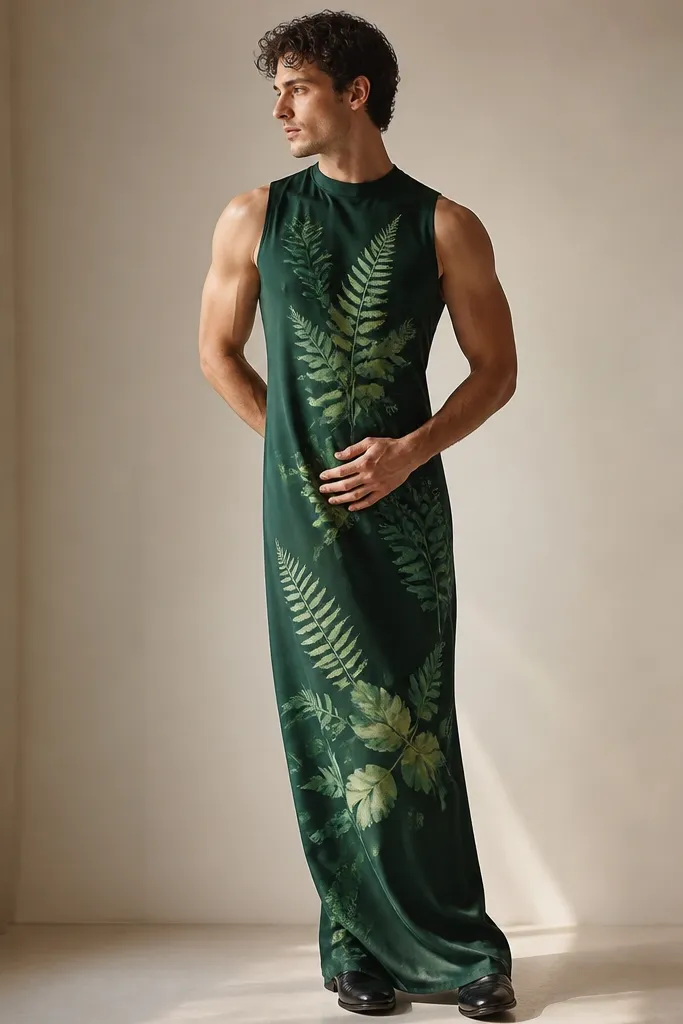
This works because the silhouette is strict and the print is soft. The dress is a deep emerald that reads formal under low light, while the watercolor fern pattern adds motion without looking childish. I like it with a high neckline because it prevents the plant print from turning "summer costume." The slight sheen makes the leaves catch light in photos.
Look for a column dress that skims the body and has at least a 56-60 inch length from shoulder to hem. Choose fabric that feels heavier than thin jersey, like crepe-satin or structured viscose. Style with black leather loafers and a narrow belt in dark green or black.
Pro tipAdd a pocket square in pale sage with no other pattern. It makes the ferns look intentional instead of accidental.
AvoidAvoid a loose, clingy column that shows every crease - it makes the print feel messy.
2. Black Shirt-Dress With Olive Vine Border
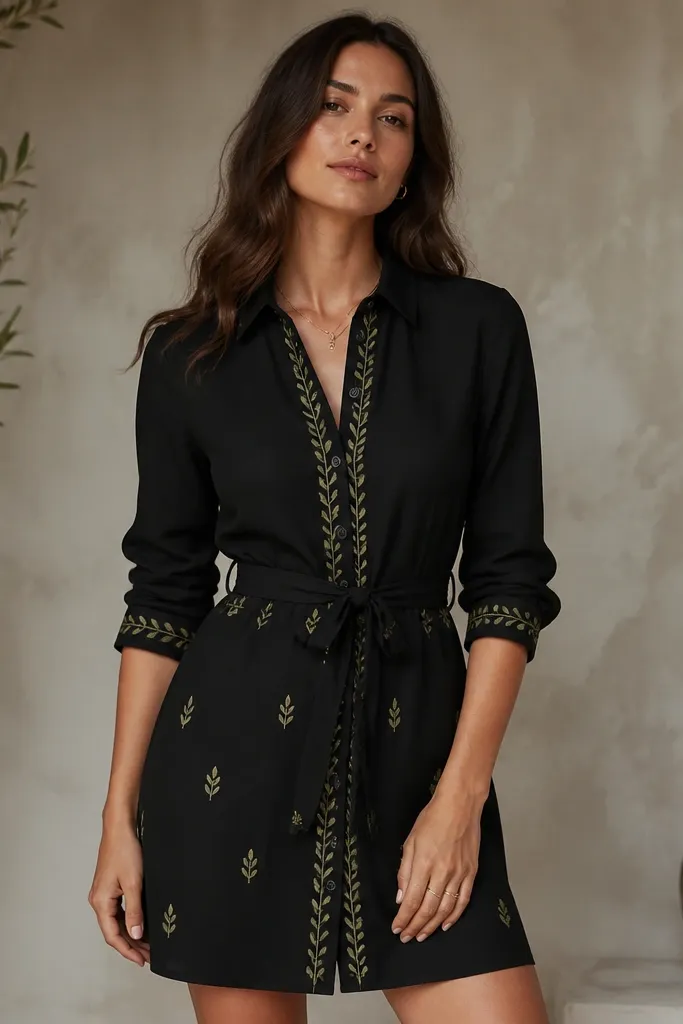
A shirt-dress stays formal when the construction is crisp. The plant detail here is a border and cuff pattern, so you get the botanical vibe without covering the whole garment. Olive-green vines look mature against black, especially when the lines are thin and controlled. The button placket adds structure, which is what keeps it from reading casual.
Choose a length that lands around the knee or slightly above, with a collar that lays flat. Get one with a real belt loop or at least a tie that holds shape. Pair with matte black lace-up shoes and a black watch strap.
Pro tipRoll sleeves once and press the collar - one clean fold makes the whole dress read "event-ready."
AvoidSkip elastic waist shirt-dresses; they make the vine border look like costume trim.
3. Satin Navy Wrap Dress With Brass Leaf Embroidery
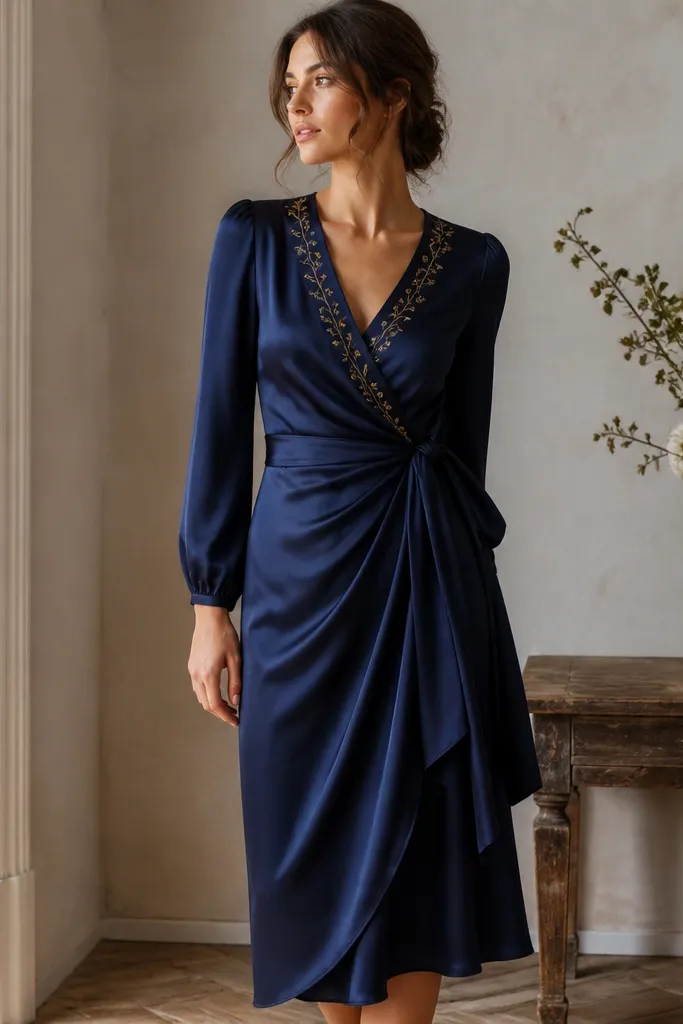
A wrap dress gives you that tailored waist without needing a belt you'll fight all night. Navy satin keeps the look formal, and brass leaf embroidery adds plant detail that feels like jewelry. When the embroidery sits along the edges, it frames your body and photographs beautifully. The wrap also lets you control how much skin shows, which matters for formal settings.
Go for a wrap that has an inner tie and a second closure so it doesn't gap. The embroidery should be concentrated at the bodice, not scattered everywhere. Pair with tan or cognac leather dress shoes to make the brass tones pop.
Pro tipTie the wrap slightly tighter on the side you prefer for photos, then let the skirt fall straight.
AvoidDon't pick satin that's too thin - it clings and the embroidery looks cheap.
4. Sand Linen-Blend Dress With Embossed Leaf Texture
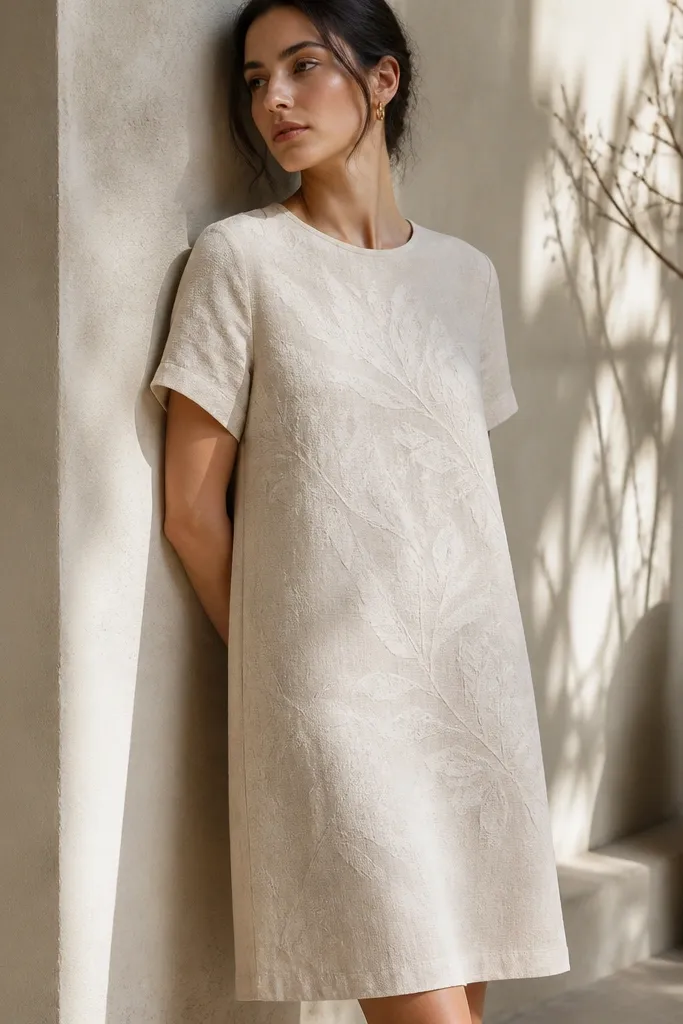
If you want plant vibes in daylight without loud prints, texture is the move. The sand base reads classy and the embossed leaf pattern looks premium because it's not screaming color. Linen-blend also breathes, so you stay comfortable at outdoor events. The straight cut keeps it formal even with a relaxed fabric.
Choose a dress with a mid-calf or just-above-ankle length so it doesn't read like a tunic. The embossed texture should be subtle and consistent, not patchy. Wear with off-white canvas loafers or tan suede slip-ons.
Pro tipUse a slightly matte belt in the same sand tone so the texture stays the hero.
AvoidAvoid bright white - it highlights wrinkles and makes the embossed pattern look less intentional.
5. Charcoal Crepe Column With Large Monstera Panel
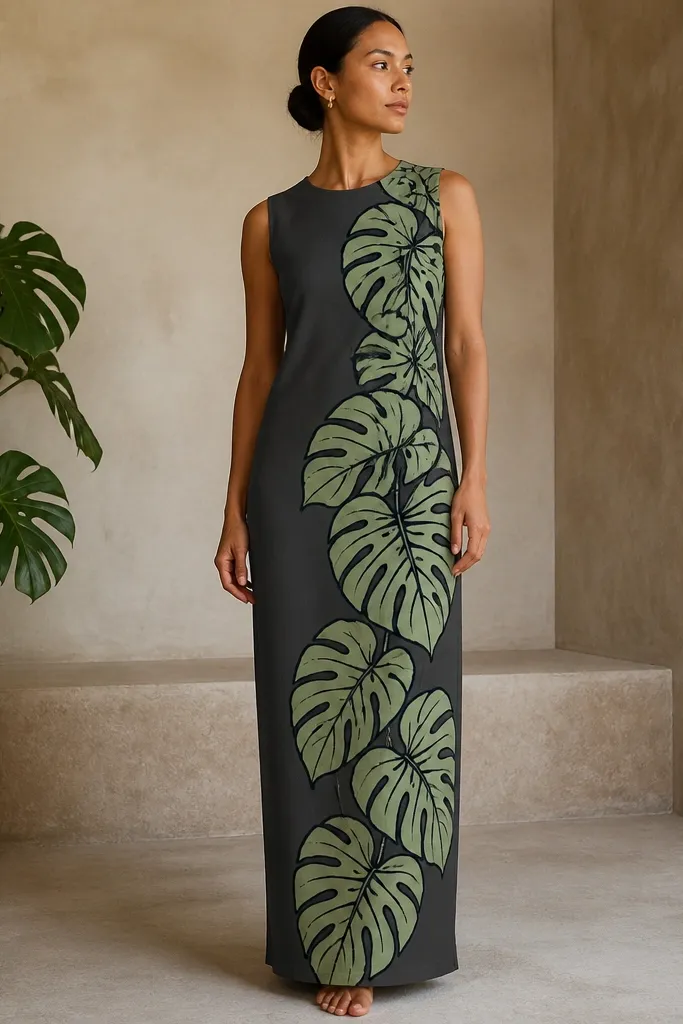
This is dramatic but still formal because the plant is placed like a design feature. The monstera panel creates a vertical line that makes the dress look tailored. Crepe holds shape and hides minor body lines better than thin knit. The charcoal base keeps the contrast elegant instead of loud.
Look for a dress with a panel seam or printed panel running from chest to hem. The print should have clear edges, not blurry. Style with black boots or sleek dress shoes and a minimal silver chain.
Pro tipKeep your shoes and jewelry monochrome; let the monstera panel be the only high-contrast element.
AvoidSkip low-quality prints with fuzzy edges - monstera looks cheap when the lines bleed.
6. Olive Tencel Shirt Dress With Monochrome Leaf Print
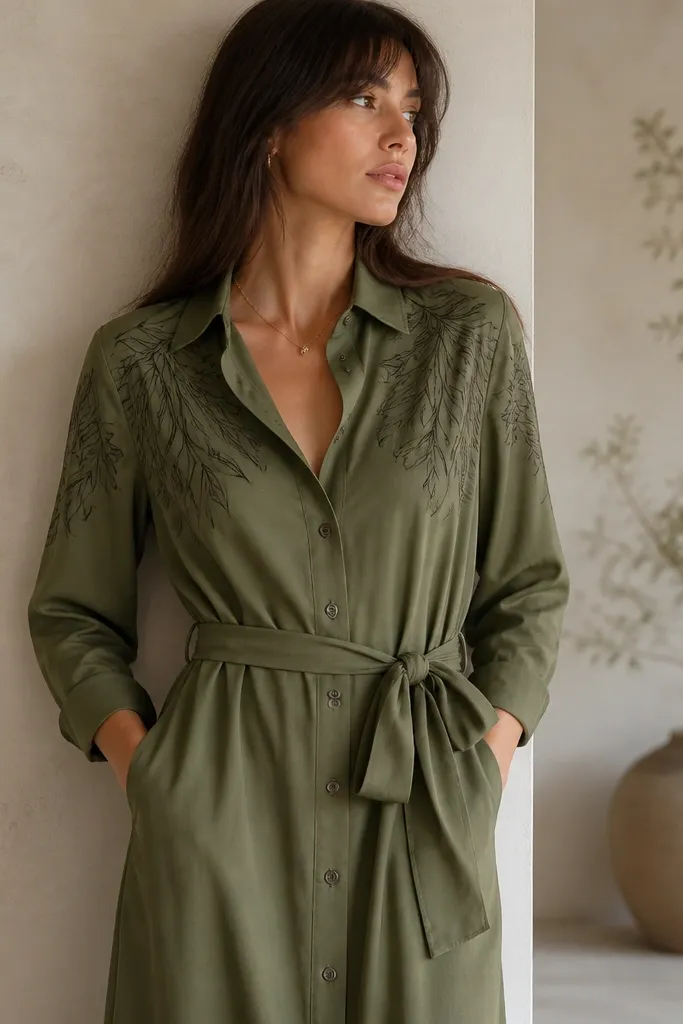
Monochrome leaf art looks adult because it doesn't rely on bright color. Tencel-style fabric drapes cleanly and gives you that "put together" look even when the dress feels soft. The shirt-dress structure keeps it formal, and the tie defines the waist so the print doesn't float on a shapeless body. This is great for garden dinners where you want subtle botanical energy.
Aim for a length between knee and mid-calf. Get a collar that isn't floppy and sleeves that have a clean cuff. Pair with dark brown oxfords and a belt in the same brown shade.
Pro tipWear a thin watch and keep rings minimal - the monochrome print does the talking.
AvoidAvoid oversized leaf motifs on a shirt dress; it reads casual and touristy.
7. Burgundy Velvet Dress With Tiny Pine Needles
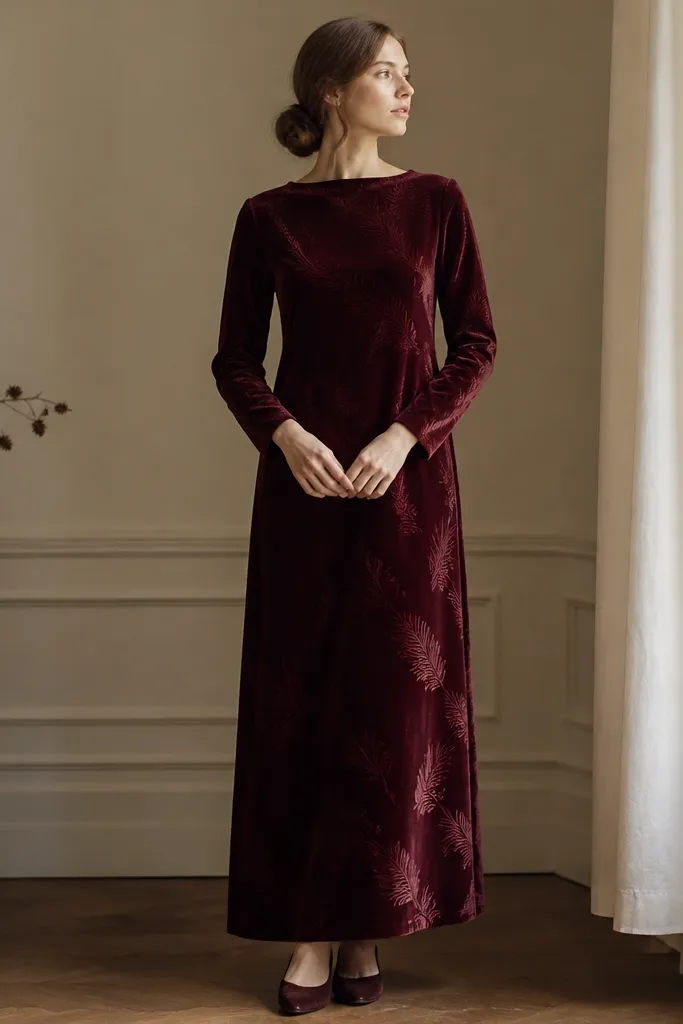
Velvet makes any formal look feel expensive fast, and the pine needle pattern stays tasteful because it's tonal. You get a botanical theme that doesn't look like a cartoon print. The deep burgundy also flatters most skin tones and reads evening even in daylight. In photos, velvet texture creates depth that makes the needles look dimensional.
Pick a velvet with a dense pile so it doesn't shed and doesn't look crushed. Keep the neckline simple - crew or shallow V - so the pattern stays the only interest. Pair with black or oxblood dress shoes and a minimal belt.
Pro tipUse a lint roller before wearing. Velvet shows dust and it ruins the "clean" effect.
AvoidSkip velvet that looks shiny like cheap costume fabric - pine needles won't look subtle, they'll look messy.
8. Ivory Crepe Mini-Collar Dress With Green Leaf Stitching
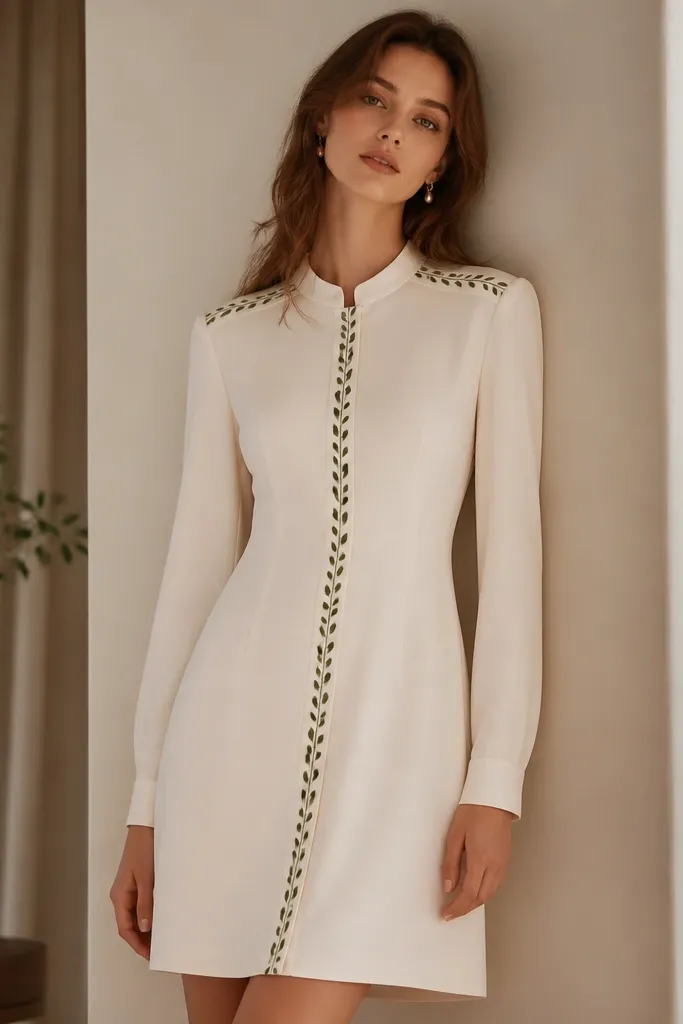
This one is formal because the dress has tailoring cues: mini-collar, crisp placket, and clean seams. The green leaf stitching is restrained and reads like craft detail. Ivory keeps it bright, and crepe holds shape so it doesn't look like a beach cover-up. The stitching gives you plant energy without repeating a full print.
Choose a length around the knee so it stays dressy. Pick a crepe that feels slightly structured, not thin and clingy. Pair with dark navy loafers or black pumps and a green-tinted pocket square.
Pro tipIron the center placket flat. A sharp placket makes stitched leaf details look intentional.
AvoidAvoid ivory dresses that are translucent - the stitching disappears under light and looks unfinished.
9. Forest Green Satin Slip Dress With Leaf Print Side Ruche
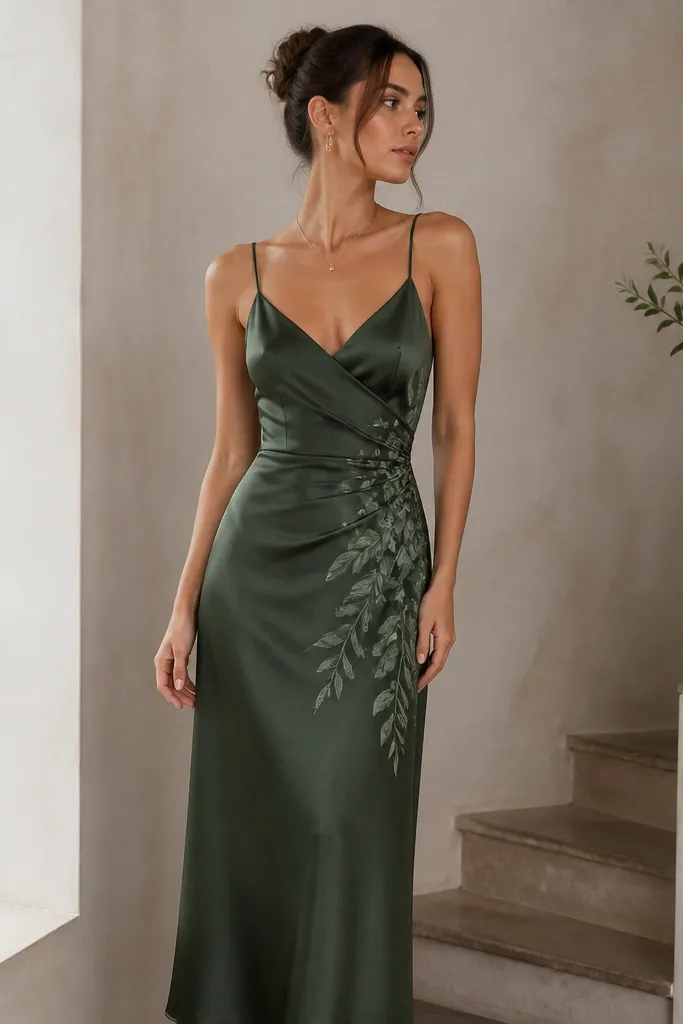
Slip dresses can look formal when the fabric is satin and the construction controls the drape. The side ruche gives shape and makes the leaf print feel like a design panel rather than chaos. Forest green is also a strong plant-adjacent color that doesn't need extra patterns. This is a good pick for indoor events where you want a soft glow in photos.
Pick a slip dress with adjustable straps and a lining that stops cling. The ruched panel should hit at the waist and taper down. Wear with a tailored blazer in black or deep charcoal if the room is chilly.
Pro tipMatch your blazer buttons to your jewelry metal so the outfit feels cohesive.
AvoidDon't choose satin that looks like thin polyester; it reflects too much and cheapens the leaf panel.
10. Powder Blue Wrap Dress With Tiny Botanical Sprigs
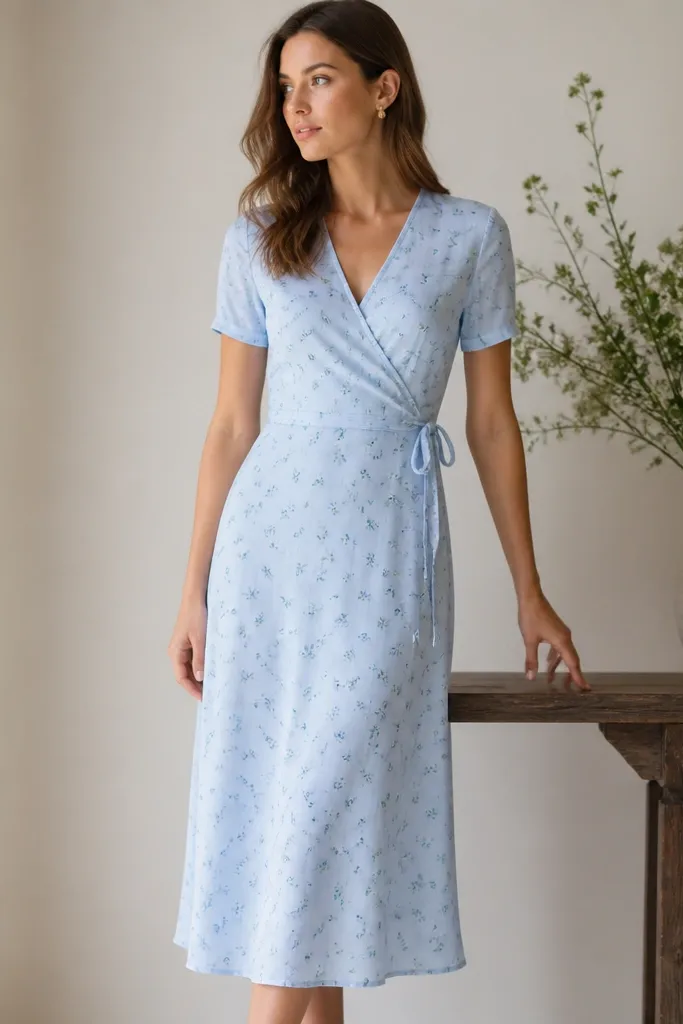
Light blue makes plant prints feel airy, but the wrap keeps it structured. Tiny sprigs spread across the fabric read delicate and formal when the colors are muted. I like this for daytime weddings because it looks fresh without being loud. The wrap also creates a flattering waist line, which makes the dress feel intentional on camera.
Choose a wrap with a V-neck that isn't too deep for formal settings. The sprigs should be small enough that you don't notice them from far away, then notice them up close. Pair with white or light tan dress shoes and a simple silver chain.
Pro tipAdd a belt in a slightly darker powder shade so the tie doesn't look like a random string.
AvoidAvoid neon sprig prints - they read casual and distract from the formal cut.
11. Black Crepe Dress With Embroidered Leaf Collar
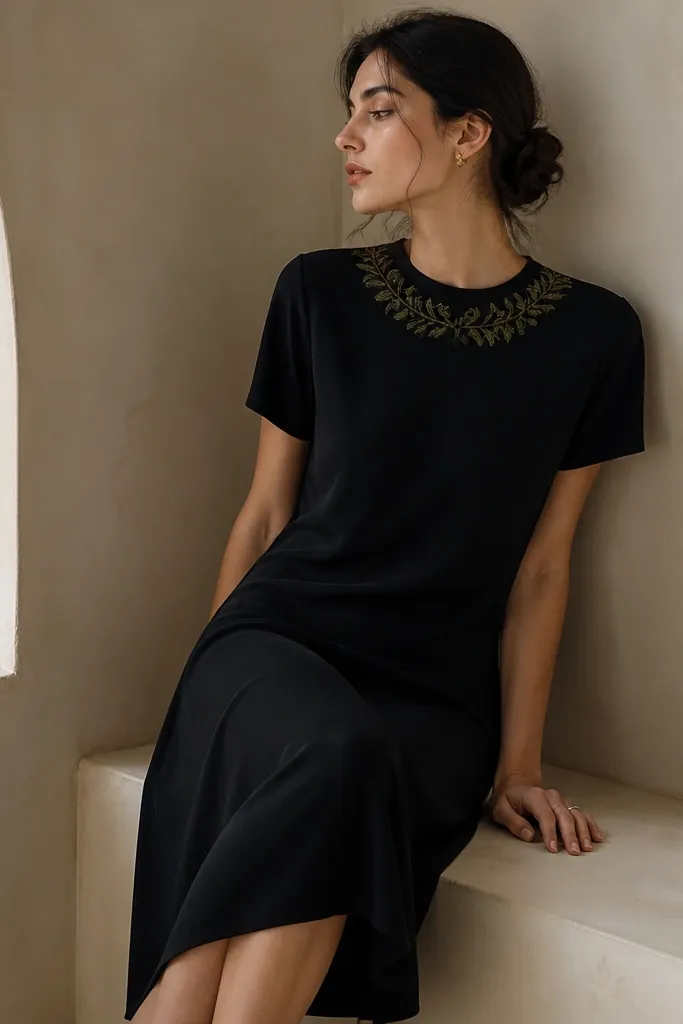
If you want plant details but hate full prints, this is the clean answer. The embroidered leaf collar frames the face and makes the dress look finished, like it belongs in a formal invitation photo. Crepe gives it structure and hides wrinkles better than jersey. Black also makes the embroidery color pop without needing bright accessories.
Pick a midi length around the knee to mid-calf. Make sure the embroidery is dense enough to look raised, not flat thread that disappears. Style with black dress shoes and a watch with green enamel if you want a subtle echo.
Pro tipKeep hair neat and add a small earring. The collar embroidery draws attention upward.
AvoidSkip collar embroidery that's fuzzy or uneven; it looks like costume machine stitching.
12. Teal Jacquard Dress With Raised Leaf Pattern
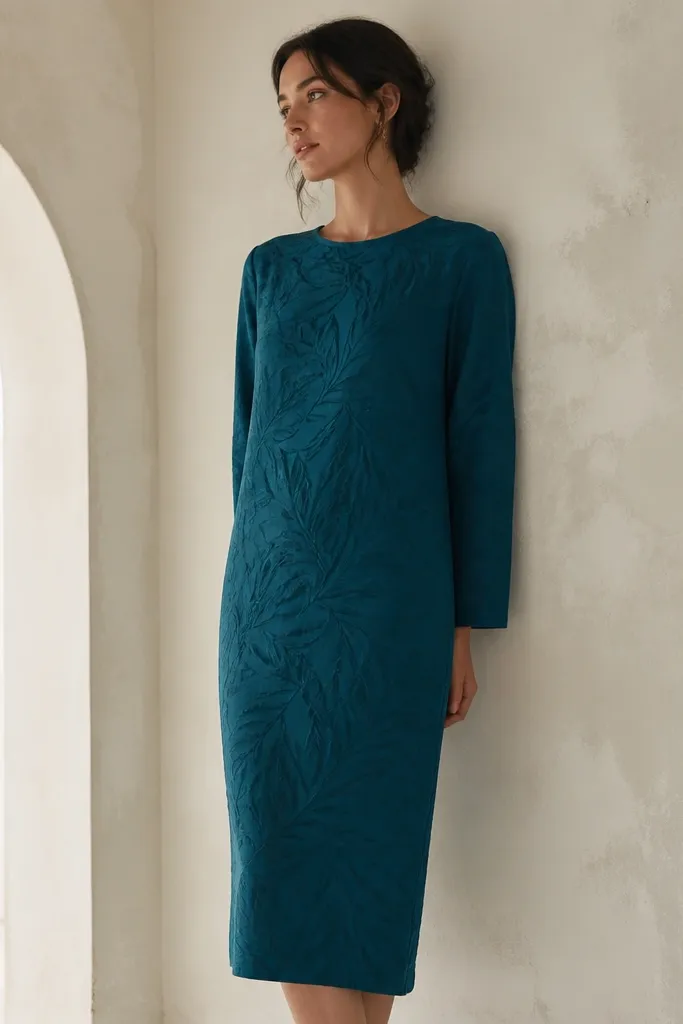
Jacquard is where plant motifs look expensive because the pattern is built into the fabric. The raised leaf texture catches light as you move, giving you that "designer" look without needing a loud print. Teal is also a strong plant-adjacent color that reads modern in photos. The crew neckline keeps it formal and grounded.
Choose a dress that has lining or at least a smooth inner finish so it doesn't scratch. The pattern should be consistent across the whole body, not just on one panel. Pair with black leather shoes and either silver or teal-tinted jewelry.
Pro tipWear it with a plain belt or none at all. Jacquard already has pattern weight.
AvoidAvoid thin jacquard that feels stiff and scratchy; the raised leaves will look cheap.
13. Sandstone Pleated Midi With Botanical Print Hem
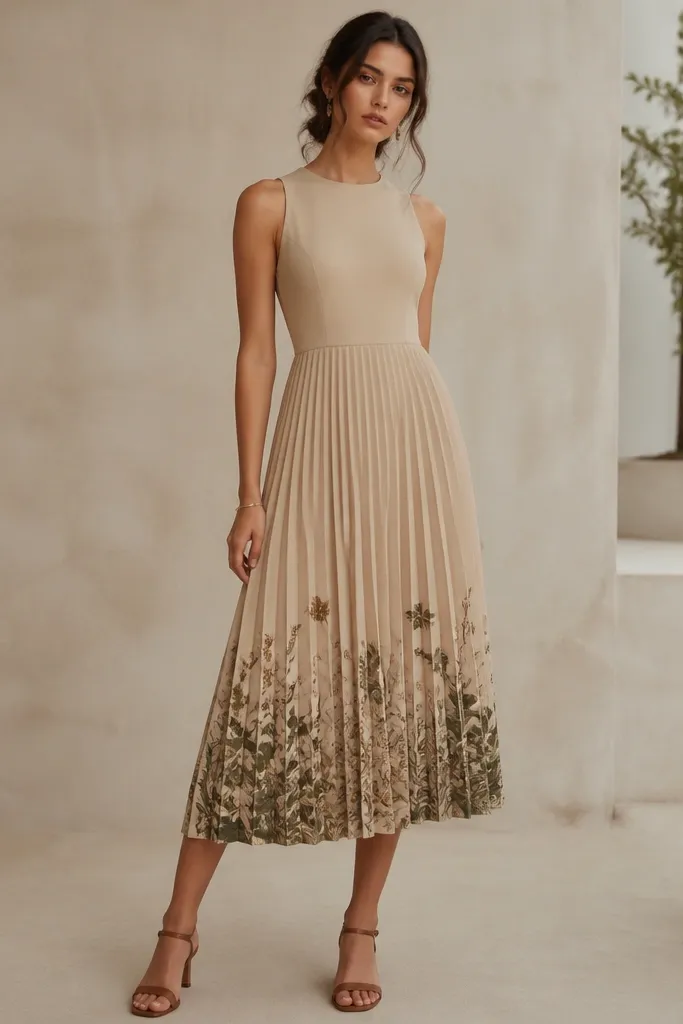
This is my favorite way to do plants without committing to a full botanical look. The solid bodice keeps the outfit formal and controlled, while the printed hem adds movement when you walk. Pleats make the hem pattern visible, and the muted tones keep it from looking like a summer festival dress. It works especially well for ceremonies where you'll be sitting and standing a lot.
Aim for a midi length where the printed hem sits just above the ankle when you're standing. Make sure the pleats are pressed so they don't look wrinkled. Wear with neutral heels or dress shoes in tan or espresso brown.
Pro tipPick shoes that match the darkest botanical color in the hem, not the lighter sand base.
AvoidAvoid pleated dresses with a print that starts too high; it makes the whole dress look like a cheap scarf.
14. Rust Brown Wrap Dress With Green Fig Leaf Motif
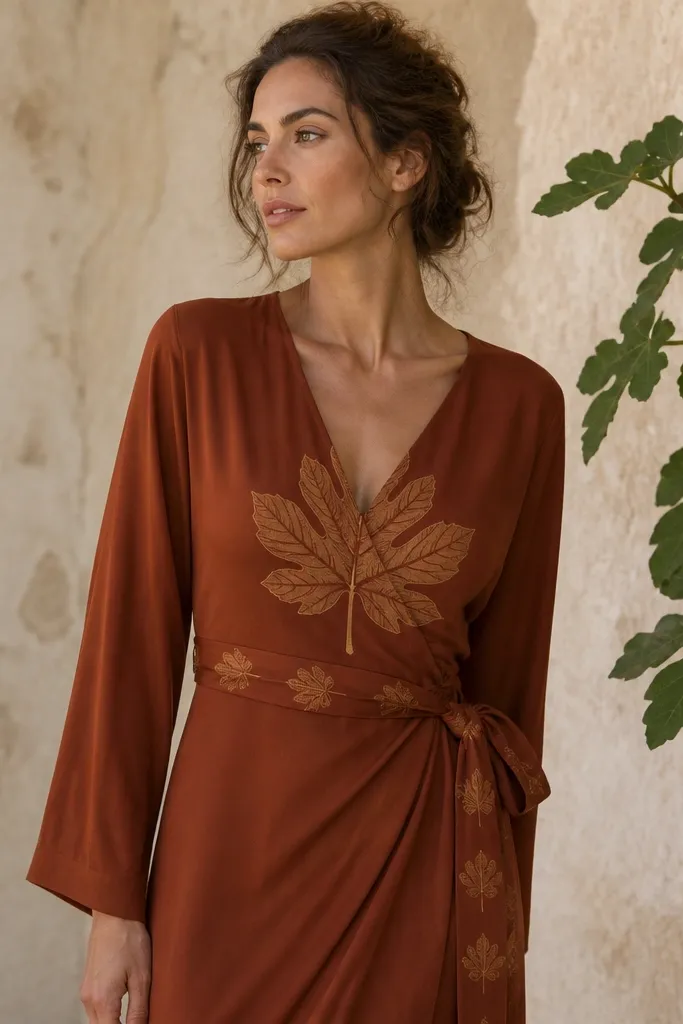
Rust brown is an underrated formal color, and fig leaves look bold without being childish. The wrap shape keeps it tailored, while the centered motif makes the dress feel like a statement piece rather than a print overload. The matte fabric prevents glare and keeps the green motif looking like artwork. This one is great for evening garden parties when you want warmer tones.
Choose a wrap with long sleeves and enough fabric to create a clean V that doesn't gape. The fig leaf print should be crisp and placed on the bodice and waist. Pair with dark brown leather boots or loafers and warm gold jewelry.
Pro tipUse a belt tie in matching rust brown so the wrap line looks intentional.
AvoidSkip wrap dresses with thin ties that barely hold weight - the motif will look crooked.
15. Stone Gray Column With Linear Leaf Print
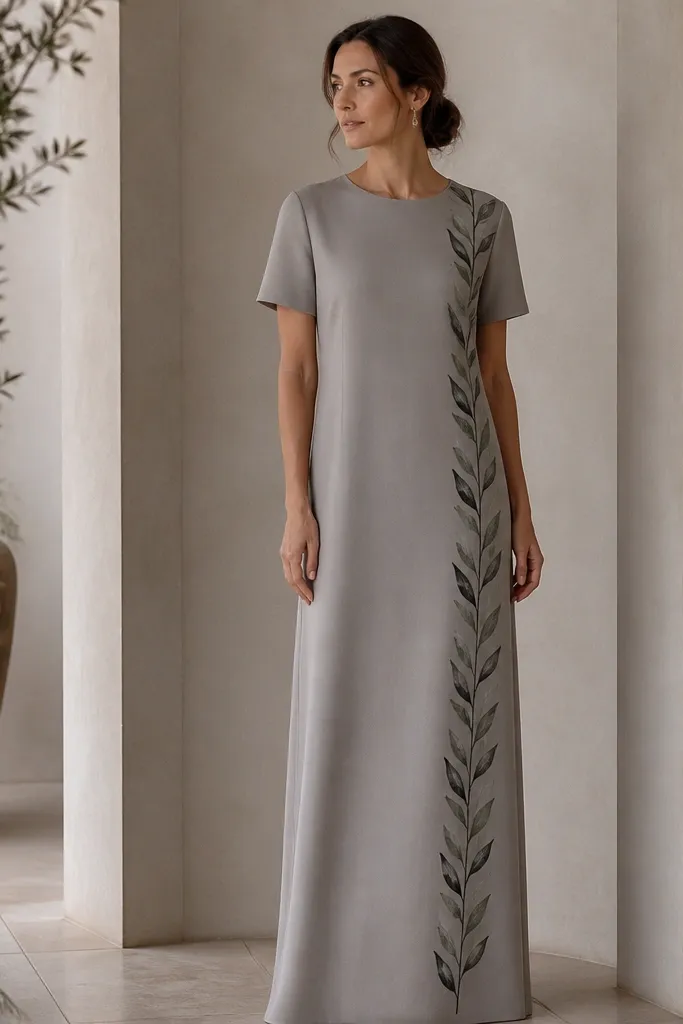
Linear leaf prints make plant themes look graphic and modern. The stone gray base is neutral, so the leaf pattern reads like design, not decoration. This is the "I want plants but I still want to look formal" option. The vertical placement also makes the dress look longer and cleaner.
Pick a column with minimal seam distractions so the leaf line has room to stand out. Keep sleeves short if you want a lighter look, or go long sleeve for cooler weather. Wear with black or charcoal shoes and a single-tone bag.
Pro tipChoose a bag and belt in the same tone as the leaf line (charcoal) so the outfit looks plotted, not random.
AvoidAvoid leaf prints that are scattered in random sizes; they look like a fabric defect.
16. Midnight Green Off-Shoulder Dress With Botanical Lace Trim
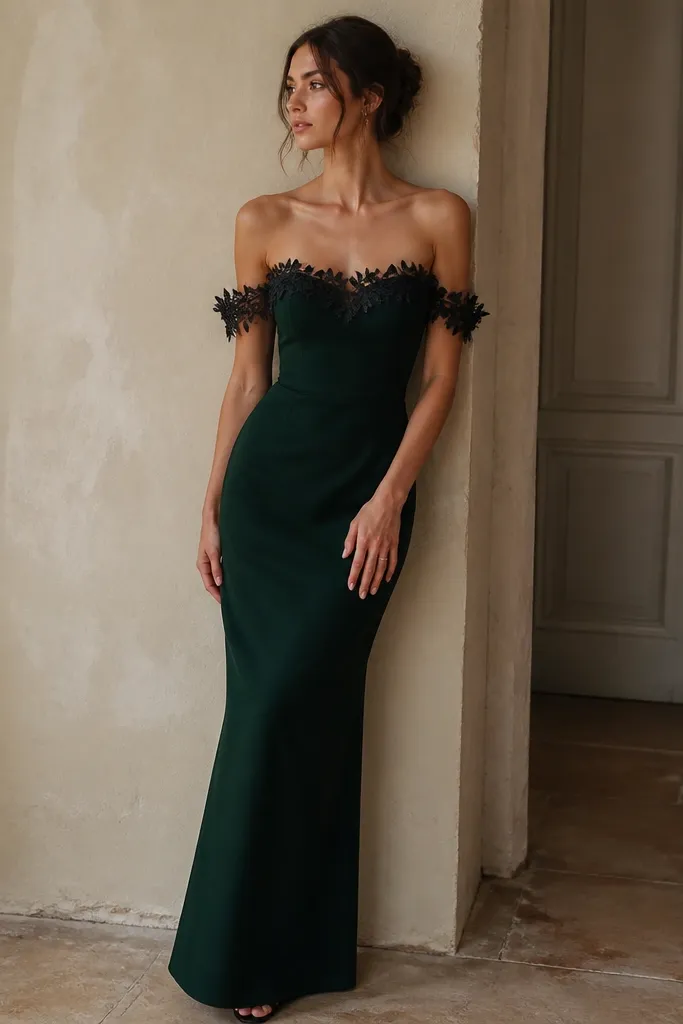
Off-shoulder reads formal when the fabric is structured and the lace trim is clean. Botanical lace at the neckline gives you plant detail without turning the whole dress into a print. Midnight green is deep enough for evening and looks dramatic against skin. This combination also photographs well because the lace creates a fine outline.
Choose a dress with boning or at least a fitted bodice lining so the off-shoulder doesn't slump. The lace trim should be consistent and not frayed. Pair with black pointed-toe shoes and a simple bracelet.
Pro tipKeep hair pulled back and let the lace sit against your collarbones.
AvoidSkip off-shoulder dresses with stretchy neckline banding; it looks sloppy fast.
17. Champagne Silk-Look Dress With Gold Leaf Micro-Print
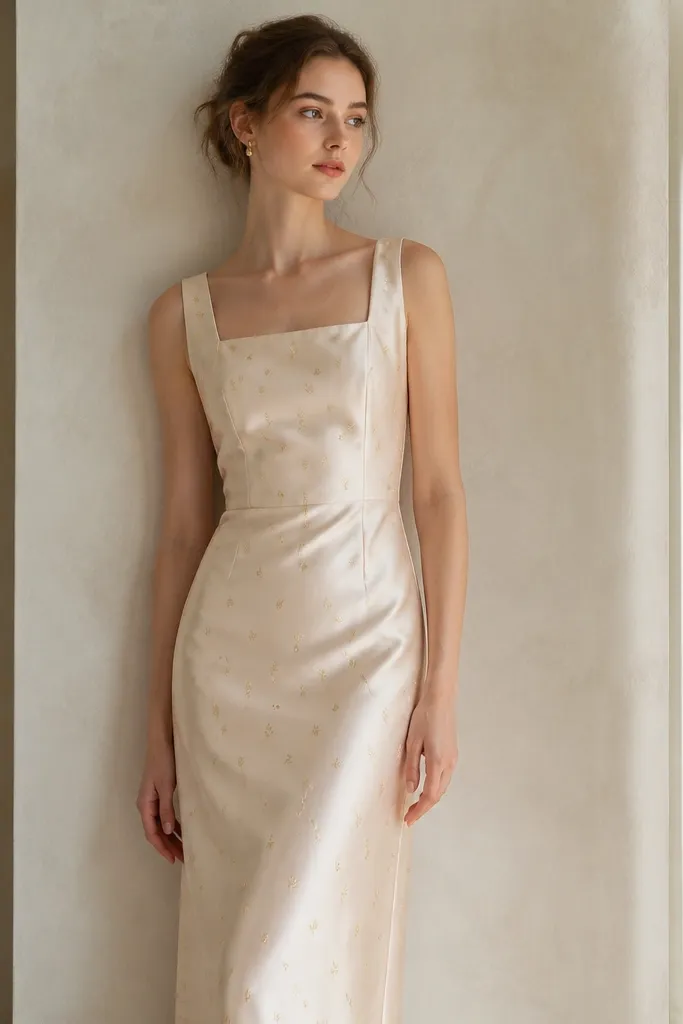
Micro-print is the trick when you want plant detail but don't want people to stare at the print. Champagne with gold leaf feels formal and celebratory, especially under warm indoor lighting. The silk-look sheen gives dimension while the micro leaves stay elegant. The straight cut keeps it grown-up and photo-friendly.
Pick a fabric with a real drape, not stiff satin. The micro-print should be fine and evenly distributed, not clumped. Style with gold-toned accessories and nude or champagne dress shoes.
Pro tipWear a solid-toned belt only if the dress has belt loops; otherwise skip it so the micro-print stays uninterrupted.
AvoidAvoid dresses where the gold leaf print looks like glitter - it reads cheap in daylight.
18. Cream Knit Dress With Olive Cable Leaf Panels
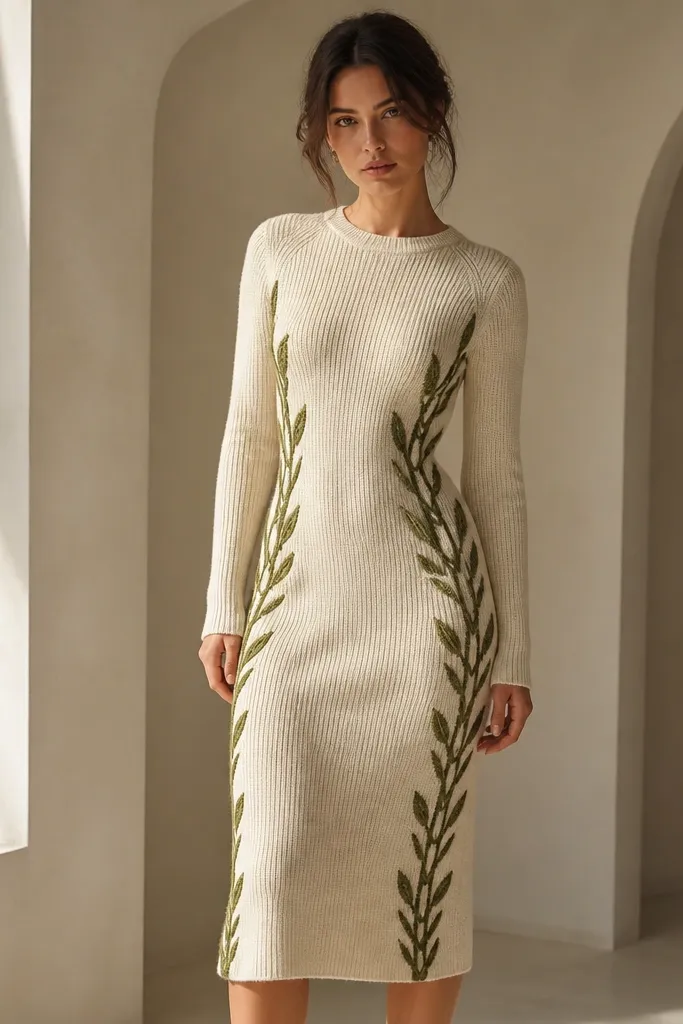
Knits can look formal when the pattern is woven, not printed. Olive cable panels that form leaf shapes give a botanical feel that looks handcrafted. Cream base keeps it soft and clean, and the cable texture creates depth. This is a strong choice for cooler evenings when you want plants but also warmth.
Choose a knit with tight gauge so it doesn't stretch out. The leaf panels should run vertically along the torso for flattering lines. Wear with dark boots and minimal jewelry so the knit texture stays the star.
Pro tipUse a structured coat with sharp shoulders - it balances the knit body.
AvoidSkip loose gauge knits; leaf cable patterns disappear and the dress looks casual.
19. Black Mesh Overlay Dress With Green Vine Appliqué
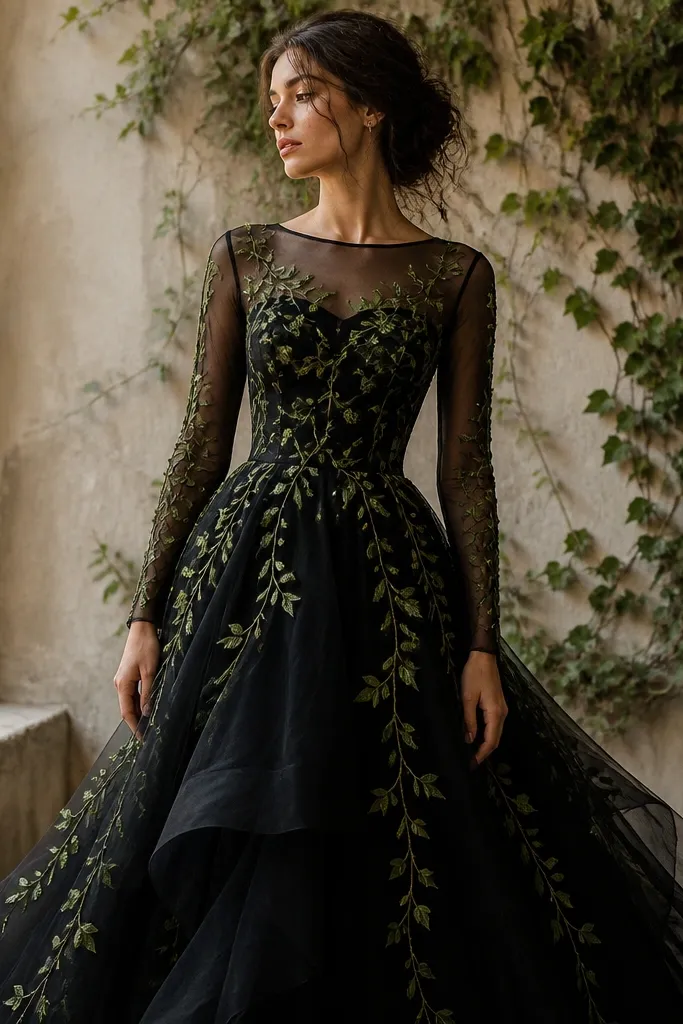
Layering is how you make mesh look formal instead of clubby. The opaque base keeps it dressy, while the green vine appliqué gives the plant theme a hand-applied feel. This look is dramatic and works best when you want attention in photos. The appliqué also creates movement when you turn your torso.
Pick a dress with a solid lining so you're not exposed through the mesh. The vine appliqué should be stitched, not just printed. Pair with black dress shoes and a clean black clutch.
Pro tipKeep your top layer smooth on the shoulders so the vines fall straight.
AvoidAvoid appliqué that's too sparse; it looks like random patches of fabric.
20. Teal Chiffon Skirt Dress With Floral-Leaf Placement Print
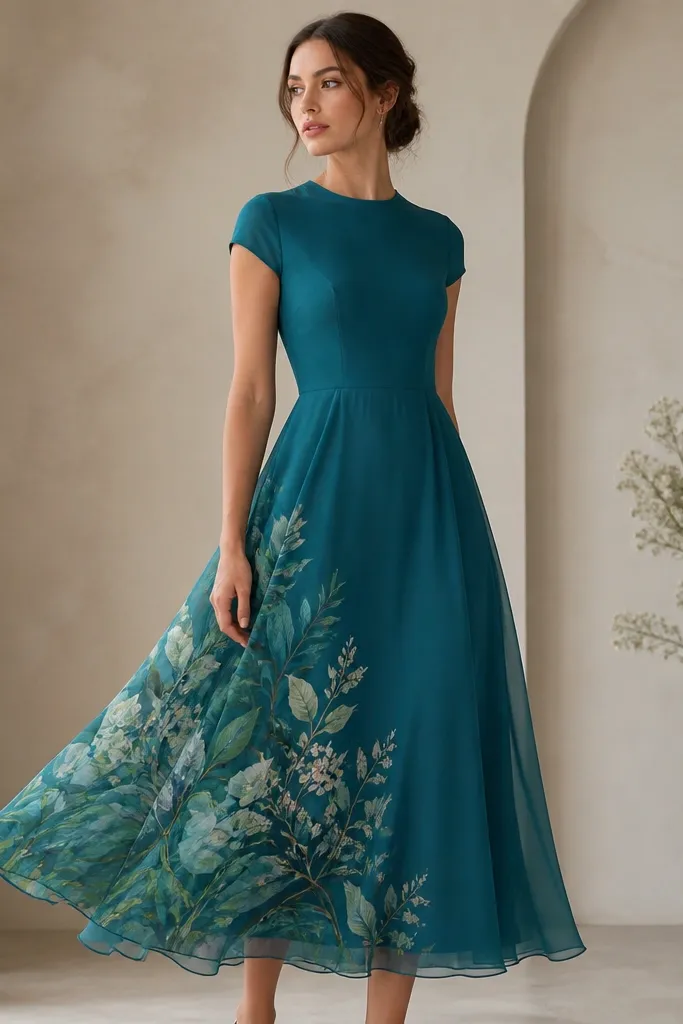
Chiffon adds that airy, formal drama, and placement prints keep it elegant. Concentrating the botanical motif on one side makes the outfit feel designed, not covered. Teal is a strong plant color and looks cool-toned in evening light. The high neckline keeps the look respectful even with a sheer-feeling skirt layer.
Choose a bodice that's lined and fitted, with chiffon that has a full underlayer so it doesn't cling. The print placement should be clear and not smeared by fabric stretch. Wear with sleek black heels or dress shoes and a simple updo.
Pro tipWhen you sit, let the chiffon fall in one direction so the placement print stays visible.
AvoidAvoid chiffon that's too thin without lining; it turns see-through and looks casual.
21. Navy Crepe Dress With Botanical Jacquard Belt
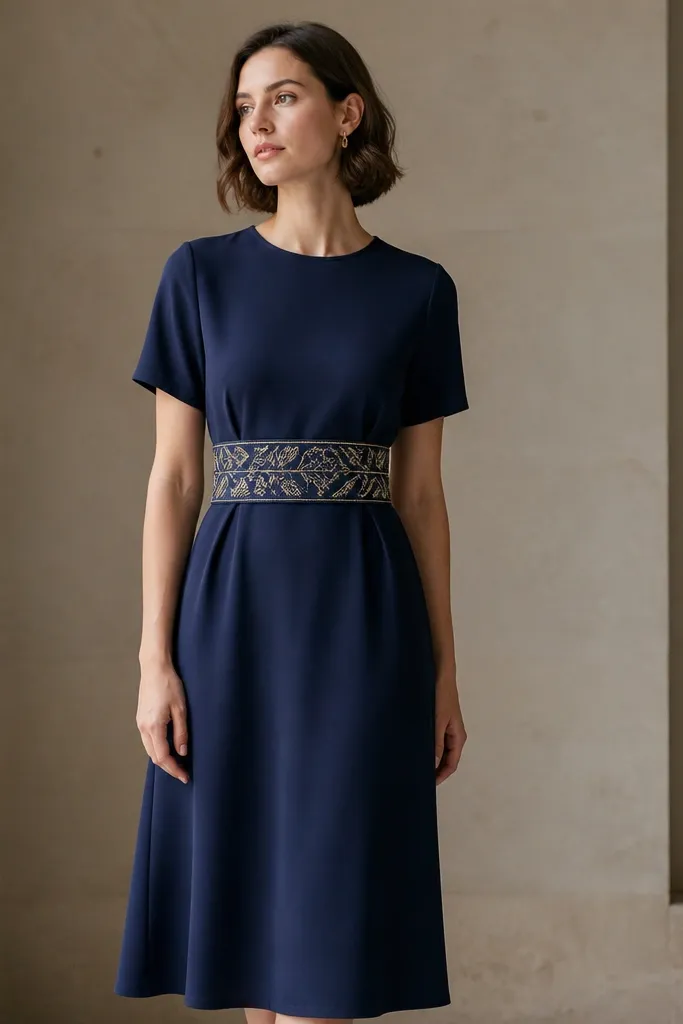
The belt is the hero here, and it's a smart way to include plants without covering the whole dress. Navy crepe stays formal and matte, while the jacquard belt adds texture and light. This setup also helps you define your waist in a controlled way. The leaf belt reads like an accessory, which makes the botanical theme feel intentional.
Pick a belt width around 3-4 inches so it actually holds visual weight. The leaf pattern should be woven or embossed, not printed flat. Pair with navy or gold-toned shoes and keep jewelry in one metal family.
Pro tipMatch your belt thread color to one small accessory, like a tie clip or watch detail.
AvoidSkip belts that are too narrow; the leaf pattern looks like a ribbon, not design.
22. Black Column Dress With Green Leaf Print Lining
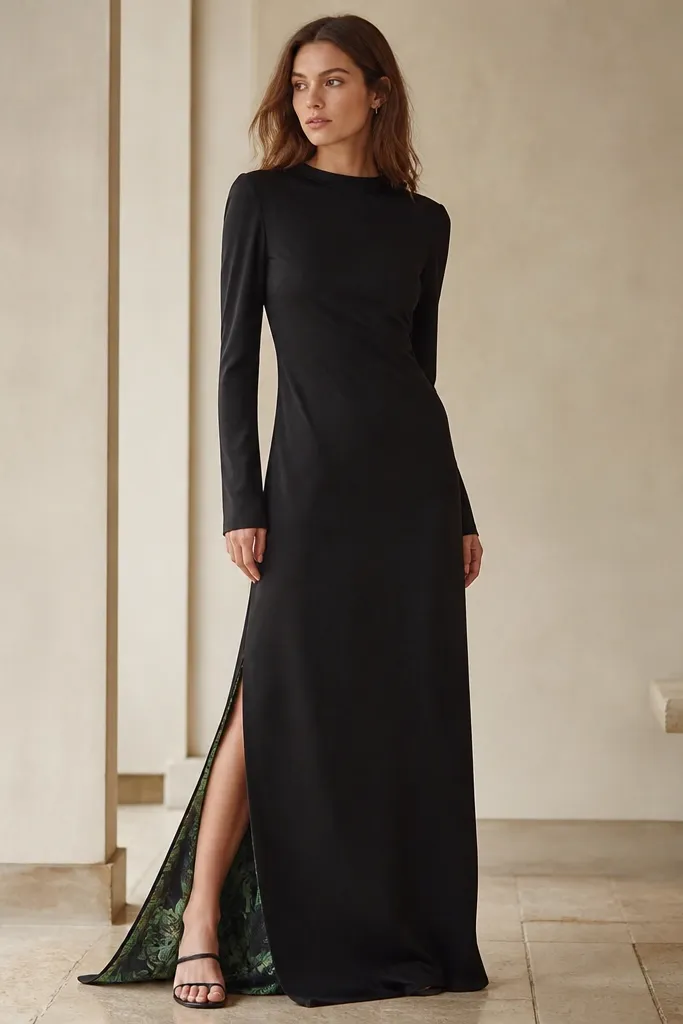
This is the "quiet from the front, fun in motion" trick. From a distance, it reads sleek and formal. Then the slit reveals green leaf lining, so the plant theme appears when you walk or turn. It feels more grown-up than a full front print because the pattern is hidden by default.
Choose a slit that opens enough to show the lining but stays modest when standing. The lining should be a matching weight fabric, not thin and fluttery. Pair with black shoes and a small green accent in a pocket square.
Pro tipPractice your walk once in front of a mirror. If the lining doesn't show, the slit is too small.
AvoidAvoid cheap linings that wrinkle loudly; they ruin the clean reveal effect.
23. Olive Satin Pencil Dress With Botanical Button Placket
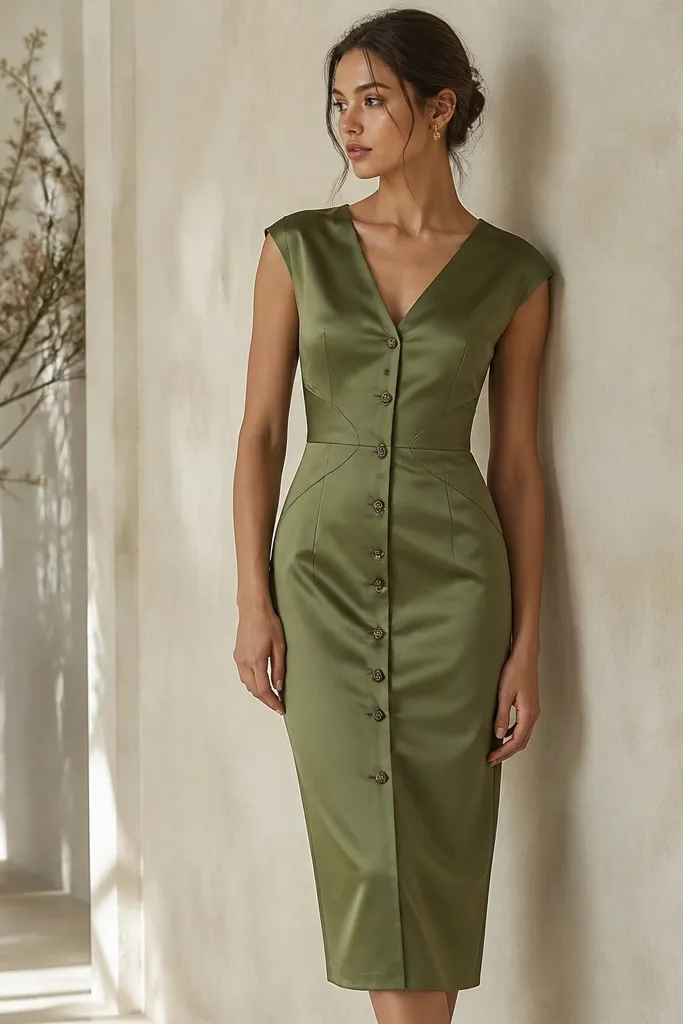
Buttons with leaf shapes make the botanical theme feel like craftsmanship, not a print you bought off a bolt. The satin pencil silhouette stays formal because it's fitted and smooth. Olive satin also looks expensive, especially under warm lighting. The leaf details along the placket give you visual interest without covering the whole dress.
Pick a pencil dress that has enough stretch to sit comfortably but keeps shape. Buttons should be substantial and aligned - mismatched button placement looks messy. Pair with black dress shoes and a thin belt if needed.
Pro tipKeep your hair and makeup simple so the button placket reads clearly in photos.
AvoidSkip satin that looks wrinkled - leaf buttons can't save a creased dress.
24. Stone Gray Wrap Dress With Botanical Print Cuff Panels
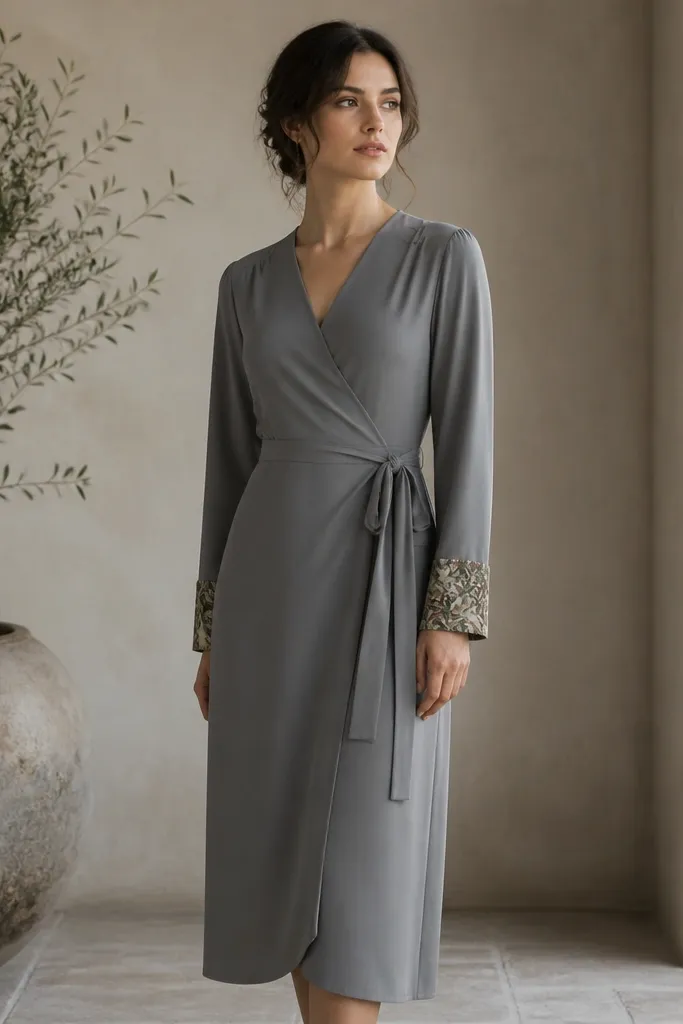
Cuff panels are a small detail that still reads intentional on camera. The stone gray base stays formal and neutral, and the botanical print only appears at the wrists - where people naturally look when you gesture. This is also a great option if you're wearing a formal outer layer like a blazer, since the print stays mostly hidden. The wrap cut gives you that tailored look even with a neutral base.
Choose cuffs that are clearly separate from the main sleeve fabric, with a clean seam line. The print should be muted and not high-contrast neon. Pair with dress shoes in brown leather and a watch with a neutral strap.
Pro tipWhen you wear it, keep your sleeves slightly unrolled so the cuff panels show.
AvoidAvoid cuffs with uneven print alignment; it makes the dress look mass-produced.
25. Burgundy Maxi With Black Leaf Silhouette Print
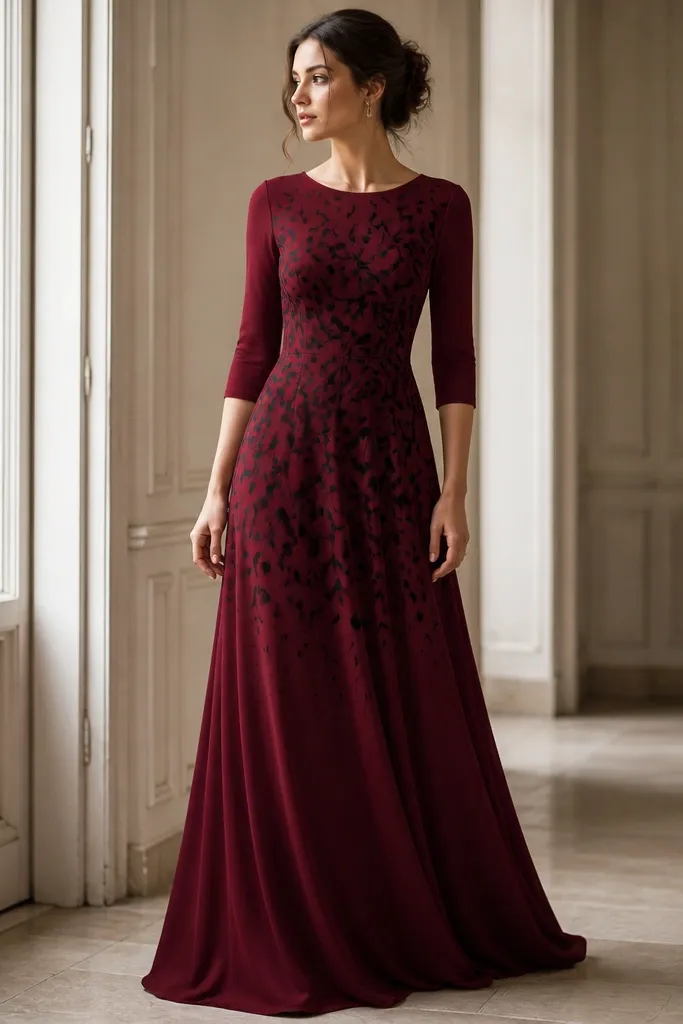
Silhouette prints look more formal than detailed illustrations because they read like pattern design. Burgundy plus black leaf shapes feels like fall fashion, but it still fits plants for garden events. The fitted bodice keeps it structured, and the flowing skirt makes the silhouettes move. This dress also photographs well because the pattern has contrast without bright colors.
Pick a length that hits your ankles or just above. The leaf silhouettes should be consistent in size and spacing so it doesn't look random. Pair with black boots or dark oxblood shoes and a small burgundy bag.
Pro tipKeep your jewelry in black or silver so it matches the leaf silhouettes.
AvoidAvoid prints with many tiny colors; they look messy against a maxi skirt.