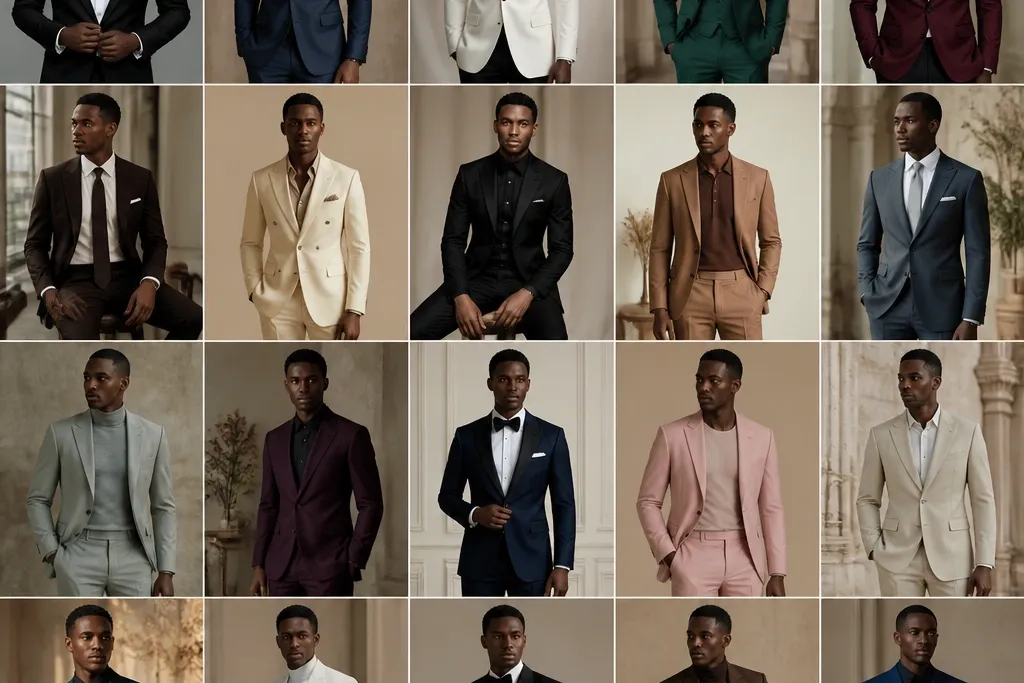
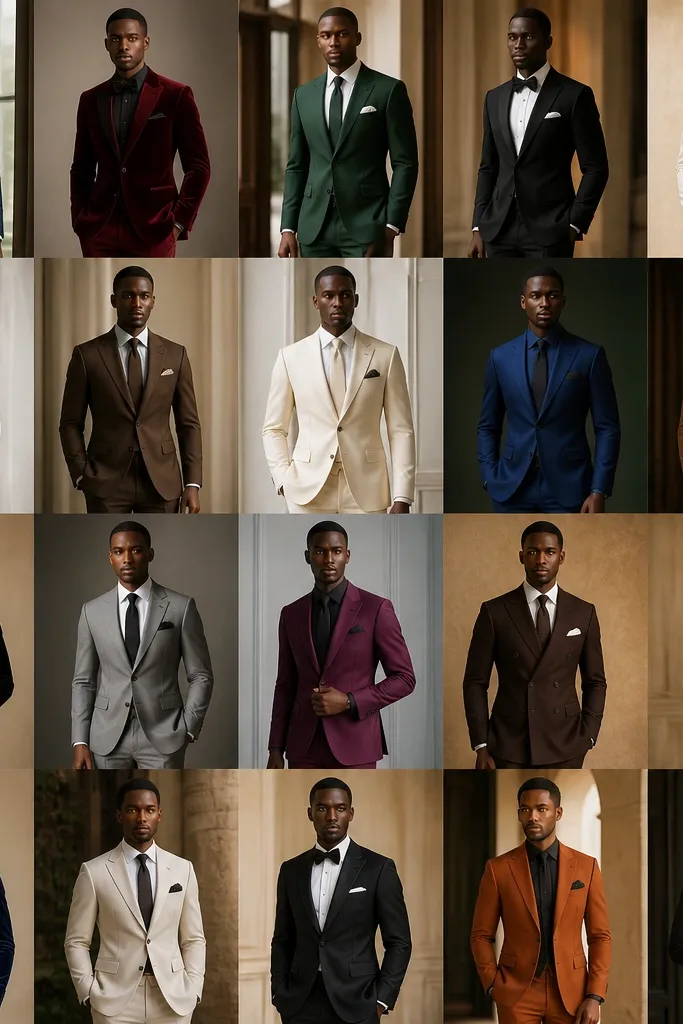
1. Emerald satin long tunic with ivory shirt layer
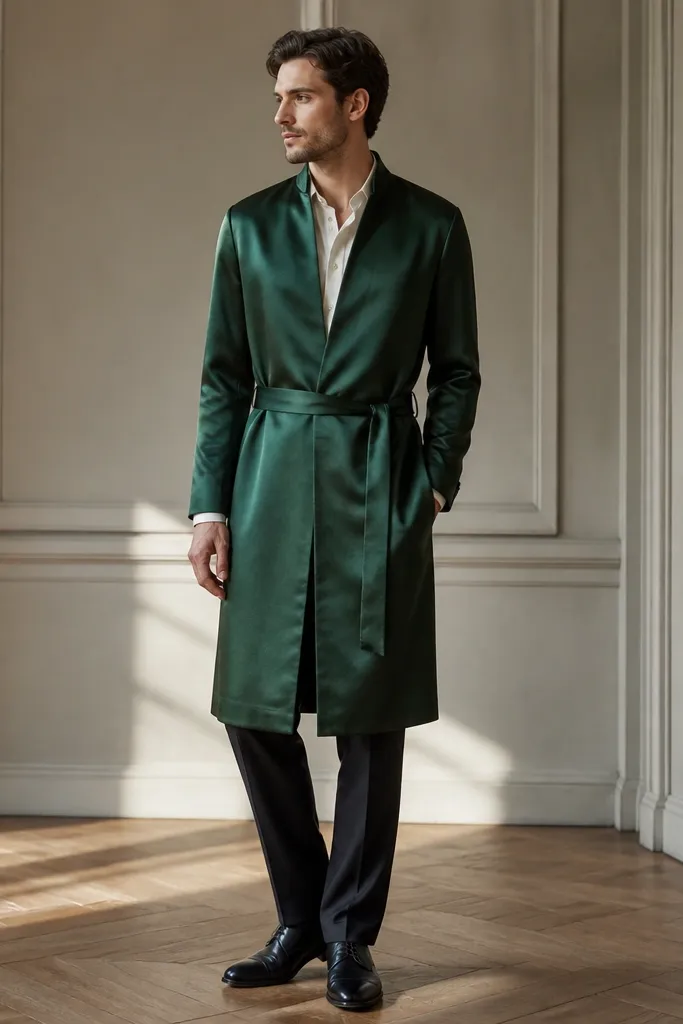
Emerald reads rich on dark skin because it stays saturated under indoor lighting. The satin catch is controlled - not flashy - so the color looks like it has depth. The ivory shirt layer brightens the face area and stops the emerald from feeling heavy. For formal events, this combo looks intentional without needing extra patterns.
Choose a tunic that hits mid-thigh or slightly below knee, with sleeves that reach the wrist. Keep the ivory shirt crisp and matte; avoid shiny white that can look sterile. Pair with black or deep espresso trousers and a belt in the same tone as the tunic.
Pro tipIf the tunic is satin, skip a pocket square that's too busy. Go for a plain ivory folded square or no pocket square at all.
AvoidAvoid emerald that looks green-gray; it usually comes from thin fabric or a washed dye.
2. Burgundy wool suit with off-white dress shirt
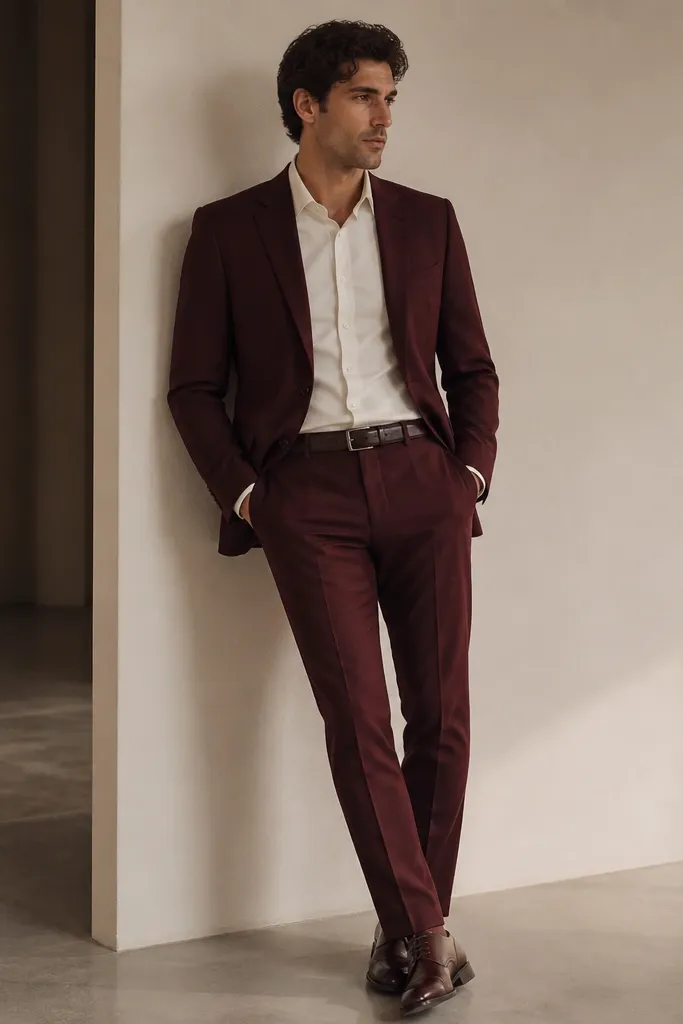
Burgundy flatters dark skin because it sits between red and brown, which harmonizes with warm undertones. Wool gives the color structure - it won't look glossy or cheap like some polyester blends. Off-white keeps the neckline bright and stops the suit from closing in around your face. This is a strong pick for dinners, engagements, and formal photos.
Aim for a jacket that fits the shoulders and chest without pulling. Shirt cuff should show about 0.5 inch past the sleeve. Keep the tie optional; if you wear one, choose a burgundy knit tie in a slightly darker shade.
Pro tipUse a soft pocket square in off-white with a faint burgundy dot or none at all. Too much pattern fights the suit color.
AvoidAvoid burgundy with a glossy finish; it reads like costume fabric under flash.
3. Navy velvet blazer with cream knit tie
Navy velvet looks expensive on dark skin because the texture adds depth without changing the color. The cream tie gives warm contrast and makes your face pop in low light. Velvet also hides minor fabric flaws, so the outfit looks polished even if the fit isn't perfect. This combination works for date nights, award dinners, and church events.
Keep the blazer single-breasted and let the sleeves end at your wrist bone. Choose a shirt with a matte finish, not a shiny collar. Dark brown shoes are the move - black can feel too harsh with navy velvet.
Pro tipBrush the velvet lightly with your hand in one direction before photos. It changes how the color reflects.
AvoidAvoid crushed velvet that looks uneven; it makes the blazer look neglected.
4. Deep teal kaftan with black trousers and white collar pop
Teal is one of the best colors for dark skin because it carries both green and blue - it flatters a wide range of undertones. A kaftan silhouette creates a formal line when the drape is structured and the hem is intentional. The white collar pop frames your face and makes the outfit read "dressed" rather than casual. Add black trousers to keep it grounded.
Look for a kaftan that has at least a half-inch seam structure at the waist so it doesn't look shapeless. The hem should fall around mid-calf for a clean formal length. Pair with tailored black trousers with a slight taper and a belt if the kaftan doesn't have one.
Pro tipRoll the sleeves once and keep cuffs visible. It adds shape and looks better in motion.
AvoidAvoid teal that's too turquoise and bright; it can look loud in indoor lighting.
5. Chocolate-brown satin shirt dress with matching belt
Chocolate brown is a flattering formal color because it blends warmth with depth. Satin makes it look dressy, but only when the sheen is controlled - like a smooth satin, not a mirror shine. The shirt dress cut gives you easy structure while the belt defines your silhouette. This works for evening events when you want something richer than black.
Choose a shirt dress that sits close at the shoulders and has a defined waist seam. Keep the belt in the same fabric or a matte matching leather. Pair with dark brown or black shoes and a small, simple clutch if you need one.
Pro tipIf satin wrinkles easily, steam it hard before you leave. Wrinkles show fast on brown.
AvoidAvoid satin that looks wrinkly out of the package; it turns the whole outfit tired.
6. Charcoal suit with light blue poplin shirt
Charcoal is better than flat black for a lot of dark-skin wardrobes because it lets your skin tone show through the contrast. The light blue shirt adds a friendly cool note that looks sharp in daylight and doesn't dull you in warm indoor rooms. Poplin holds shape and keeps the collar crisp, which makes the whole suit look tailored. This is my go-to for formal work events and ceremonies.
Pick a suit with a matte weave and a jacket length that covers your seat. Shirt cuffs should show just a bit. If you wear a tie, go with charcoal or navy - avoid bright red.
Pro tipUse a tie bar only if the tie is medium width. It keeps the center line straight.
AvoidAvoid charcoal fabric that looks slightly green; it can clash with undertones.
7. Sapphire blue long dress shirt with matching trousers
Sapphire blue is a strong color because it stays deep and clear, which makes dark skin look even more luminous. Wearing a long dress shirt with matching trousers creates a sleek one-color line. The structured collar keeps it formal and stops the look from reading like loungewear. It's a clean choice for family gatherings and evening dinners.
Choose a shirt fabric with weight - think cotton poplin or fine twill - so it drapes without clinging. Keep the shirt hem long enough to cover the waistband when you stand. Match the shoe tone to your belt and keep accessories minimal.
Pro tipPress the shirt seams and avoid heavy creasing. This look depends on crisp lines.
AvoidAvoid thin, clingy blue fabric that stretches at the elbows.
8. Olive velvet blazer with beige linen shirt
Deep olive works on dark skin because it has enough yellow warmth to sit nicely against brown undertones. Velvet adds formality through texture, while linen keeps it breathable and summer-appropriate. Beige linen at the top brightens the face without introducing harsh white. This is a sharp option for daytime weddings and outdoor receptions.
Use a blazer with a lapel that isn't too wide. The linen shirt should have a relaxed fit but a clean collar roll. Keep trousers in a similar beige family - cream-beige or sand - and finish with tan or dark brown shoes.
Pro tipIf the linen wrinkles, lean into it lightly. The key is clean collar and cuffs.
AvoidAvoid olive that's too yellow-green; it can look sickly under indoor light.
9. Black with warm mocha shirt and gold-toned buttons
Black is fine, but the trick is adding warmth near the face so you don't look washed out. A mocha shirt gives that warm brown glow, and gold-toned buttons add a subtle highlight without turning into costume jewelry. This outfit is reliable for formal events when you want a classic base but still look alive. It also photographs well because the brown tone shows under flash.
Pick a black jacket or long coat with a clean lapel or collar opening. Keep the mocha shirt matte and avoid shiny satin. Shoes and belt should stay black so the brown stays the focal point.
Pro tipUse a simple watch with a warm metal tone. It matches the gold buttons without extra color.
AvoidAvoid pairing black with a gray shirt; it makes the whole look look flat.
10. Forest green fitted suit with ivory pocket square
Forest green has enough depth to look formal without needing shine. On dark skin, it creates a strong, clean contrast that doesn't read harsh. The ivory pocket square adds a bright focal point near your chest and keeps the look from feeling one-note. This is a bold choice that still looks classic when the suit is tailored.
Go for a jacket that's slim through the waist but not tight at the shoulders. The trousers should break cleanly at the top of your shoes - not pool at the ankle. If you wear a tie, match it to the green and keep it matte.
Pro tipKeep the shirt collar crisp and centered. A crooked collar ruins the clean contrast fast.
AvoidAvoid forest green with a shiny finish; it can look cheap in flash.
11. Ivory embroidered tunic with deep indigo trousers
Ivory with controlled embroidery looks formal because the detail is close to the body and doesn't rely on loud color. Against dark skin, ivory makes your face look brighter while indigo keeps the bottom grounded. The embroidery thread color should be subtle - gold, beige, or muted brown - not bright neon. This outfit works for religious events, cultural ceremonies, and weddings.
Pick embroidery that stays small and evenly spaced. The tunic should have a structured shoulder and a hem that hits around mid-thigh or knee. Pair with indigo trousers that are matte and tailored.
Pro tipIf the embroidery is gold-toned, choose a watch or belt buckle with a similar tone.
AvoidAvoid heavy, chunky embroidery that looks raised and uneven; it reads costume.
12. Dusty rose formal dress shirt with charcoal trousers
Dusty rose works because it's muted enough to stay elegant but still warm near your face. The charcoal trousers create contrast without the harshness of full black. This combination looks surprisingly good in indoor lighting because rose holds color depth instead of turning pink. It's a nice option when you want something softer than jewel tones.
Use a thick shirt fabric like cotton twill or a heavier poplin so it doesn't look thin. Keep the shirt collar crisp and the sleeves tailored - no baggy cuffs. If you add a tie, choose charcoal or rose-brown.
Pro tipRoll the shirt sleeves to just above the forearm and keep the cuff buttoned for a clean line.
AvoidAvoid bright pink; it can overpower dark skin and look too casual.
13. Deep indigo long coat with white shirt
Indigo has a denim-like familiarity but reads formal when the fabric is heavy and the cut is clean. The white shirt keeps your face bright and sharp - especially in dim rooms. A long coat adds vertical lines, which makes you look taller and more put together. This is a strong pick for evening events and colder seasons.
Choose a coat that reaches the upper calf and has a straight, tailored shape. The shirt should be crisp and matte, not glossy. Keep hardware minimal and use black trousers to avoid color clutter.
Pro tipButton the coat only up to the second button. It keeps movement natural and looks less stiff.
AvoidAvoid indigo coats that look like faded denim; formal indigo should look even and deep.
14. Teak brown wrap-style formal dress with black sash
Wrap-style dressing flatters because it defines the waist and creates a clean shape without needing heavy tailoring. Teak brown is warm and grounded, and it looks great with dark skin because it doesn't wash out. A black sash adds contrast and makes the outfit feel more "evening" than casual. This is a solid option for events where you want comfort and style together.
Keep the wrap overlap wide enough that it stays closed when you move. The dress length should land around knee or mid-calf depending on your preference. Wear black trousers underneath if the wrap opens when you sit.
Pro tipTie the sash a little higher than your natural waist so the line looks intentional in photos.
AvoidAvoid wrap fabric that's too slippery; it opens and ruins the silhouette.
15. Silver-gray suit with black shirt collar edge
Silver-gray can look sharp on dark skin when it has a fine weave and not a dull, dusty finish. The black collar edge adds definition around your face and keeps the look from going monochrome. This outfit reads modern and formal at the same time. Use it for gala-style dinners or formal nights where you want to stand out calmly.
Choose a suit that looks smooth and even in color. The shirt should be matte so it doesn't reflect too much. If you hate black shirts, ask for a shirt with a black collar stand and cuffs and a lighter body.
Pro tipKeep the tie simple - charcoal or black - so the suit stays the star.
AvoidAvoid silver-gray that looks like aluminum foil; it reads costume.
16. Rust orange short formal dress with navy belt
Rust orange looks amazing on dark skin because it's warm without being too bright, and it reads energetic in photos. Navy as a belt color anchors the look and prevents the orange from feeling too casual. A structured waist seam makes a short dress look intentional and formal. This is a good choice for summer events and evening parties where you want a color that pops.
Go for a fabric with body - like cotton sateen, structured crepe, or a heavier blend. The hem should hit above the knee but not ride up when you walk. Match the shoe tone to the rust (dark brown is safest).
Pro tipAdd a navy pocket square or keep jewelry minimal but in gold tones to match the belt mood.
AvoidAvoid rust in thin, see-through fabric; it ruins the formal feel fast.
17. White shirt dress with deep olive trousers and gold watch
A white shirt dress works on dark skin when the fabric is crisp and the fit is tailored. Deep olive trousers add color depth and keep the outfit from looking like a basic uniform. The gold watch ties the warm tones together without adding another loud color. This combination is clean, formal, and flattering in bright daylight.
Pick a shirt dress with a real waist seam or add a belt with a buckle. Keep the collar crisp and the buttons aligned. Olive trousers should be matte and tailored, not shiny.
Pro tipPress the shirt dress front flat and use a slight roll on the sleeves for a sharper outline.
AvoidAvoid sheer white fabric; it shows under layers and reads cheap.
18. Midnight purple suit with black tie
Midnight purple is sneaky-good because it reads dark in normal light, then turns purple under flash and stage lighting. That effect flatters dark skin since the color appears layered, not flat. A black tie keeps it formal and prevents purple from getting too loud. This is perfect for night weddings, performances, and holiday dinners.
Choose a deep purple with a matte finish, like wool or a fine suiting blend. The shirt should be white to create clean contrast at the face. If the suit is very dark, keep the tie narrow and matte.
Pro tipTest it under flash if you can. If it turns muddy, the dye is off.
AvoidAvoid purple that looks brown in shade; it can make the suit look worn.
19. Black formal dress with deep brown satin lining at collar
This is my favorite trick when you want black but still need color near your face. The deep brown lining adds warmth right at the collar, where it matters most for skin glow. Satin trim gives a subtle highlight without turning the whole outfit shiny. The result looks expensive because the detail is intentional.
Look for a black dress with an inner collar trim in chocolate or espresso satin. Keep the outer fabric matte and structured so it doesn't look like a simple black robe. Pair with black shoes and a belt that matches the outer fabric.
Pro tipKeep your hair and neckline clean - this look depends on that collar moment.
AvoidAvoid cheap black satin trim that looks wrinkled and dull.
20. Nude-taupe formal dress with dark espresso shoes
Nude-taupe can work beautifully on dark skin when it's a warm taupe, not a washed beige. The color should look like caramelized sand, not pale skin-tone. Pairing it with dark espresso shoes adds contrast and keeps the outfit from blending into your skin. This is a strong summer formal option for daytime ceremonies.
Choose a dress with structure: a defined waist, thicker fabric, and a hem that falls cleanly. Keep accessories in dark brown or gold. If you worry about the color being too light, add a darker belt to anchor the waist line.
Pro tipMatch your belt to the shoes exactly. It makes the whole outfit look planned.
AvoidAvoid cool gray-beige; it can look ashy on dark skin.