1. Rust-brown sherwani with warm ivory silk piping
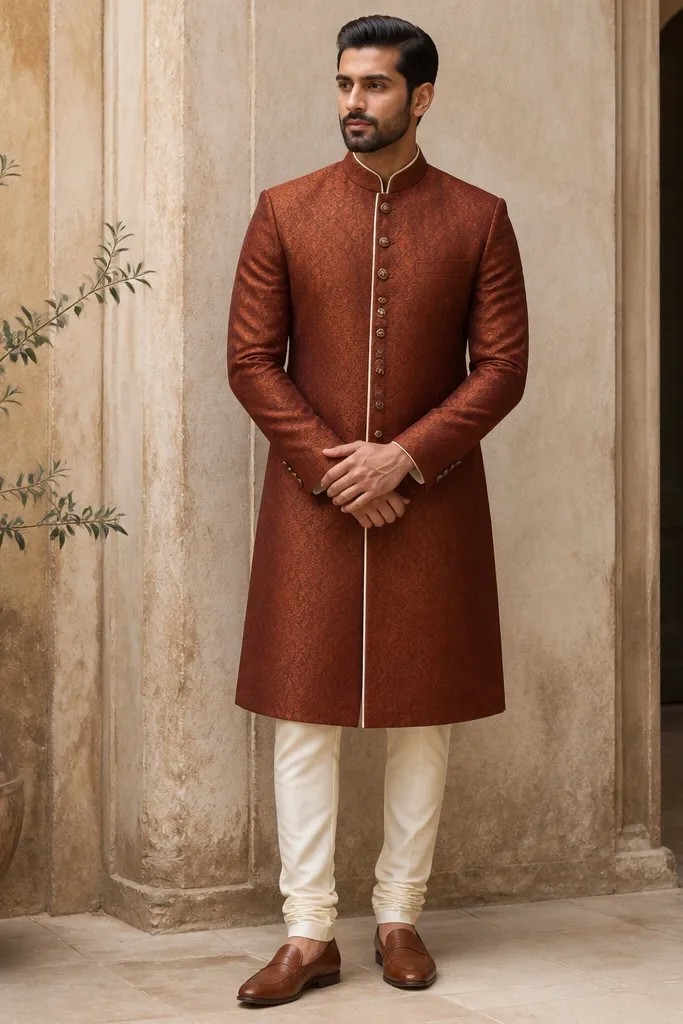
Rust-brown has warmth that brings out the golden tones in dusky skin without going orange on camera. The warm ivory piping creates a clean frame around your face, which helps the collar sit sharper in photos. A jacquard or tight-knit texture keeps the fabric looking expensive even under harsh indoor lighting.
Pick a sherwani with a stand collar and a slim placket, not a wide, boxy cut. Keep the sleeves close to the wrist with 1 cm of cuff showing over the churidar. Match with off-white churidar and a belt or brooch in matte gold tones.
Pro tipIf you're unsure, choose rust-brown over bright orange - it reads formal and flattering in daylight and indoor venues.
AvoidAvoid pairing rust with icy white accessories; it makes the outfit look mismatched and slightly washed out.
2. Deep olive velvet long coat with champagne buttons
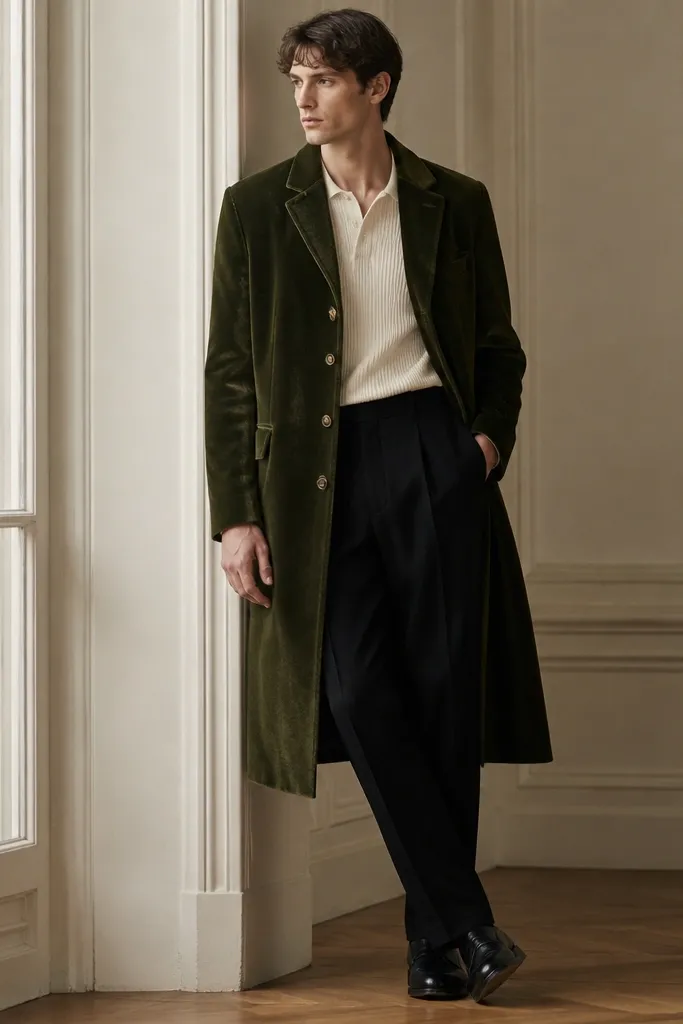
Deep olive velvet gives dusky skin a grounded, expensive look because the color sits between green and brown. Velvet also absorbs light, so it looks rich instead of shiny. Champagne buttons add warmth without turning the outfit into "holiday green" territory.
Look for a coat that falls to mid-thigh or just below the hip, with a slim shoulder and a gentle taper at the waist. Wear a cream knit or fine cotton shirt, then keep trousers black or charcoal to avoid color overload. Choose shoes in dark brown suede or polished black leather.
Pro tipUse a matte pocket square in cream or light tan; avoid bright white linen that can look harsh on velvet.
AvoidSkip emerald-green velvet and silver buttons together; the cool contrast can make dusky skin look tired.
3. Warm teal satin kurta with matte charcoal trousers
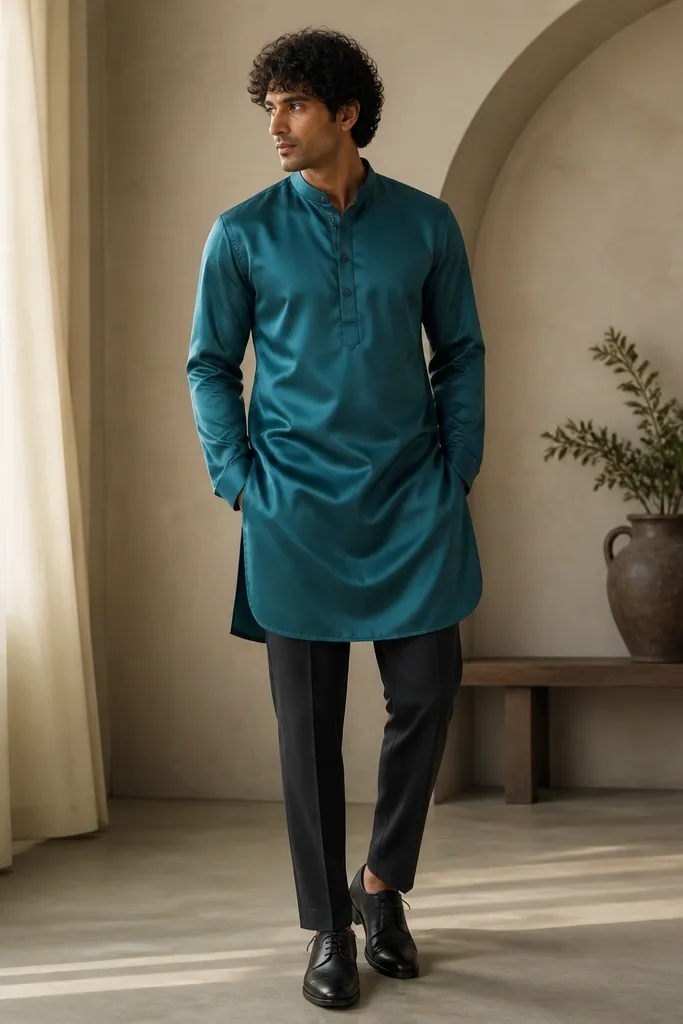
Warm teal flatters dusky men because it has a hint of green warmth, not a icy blue undertone. Satin gives the color depth, but only if the weave is tight so it doesn't look plastic. Charcoal trousers keep the teal from overpowering your face.
Choose a kurta with a clean placket and minimal embroidery so the satin can do the work. Go for mid-calf length or slightly above the knee depending on your height - avoid super short cuts. Finish with a charcoal trouser and black shoes for a crisp, formal line.
Pro tipWear a thin gold chain or a warm-toned watch strap; keep it small so the satin stays the hero.
AvoidAvoid pairing teal satin with bright white trousers; it makes the sheen look louder and cheaper.
4. Chocolate espresso waistcoat dress with black tie shirt
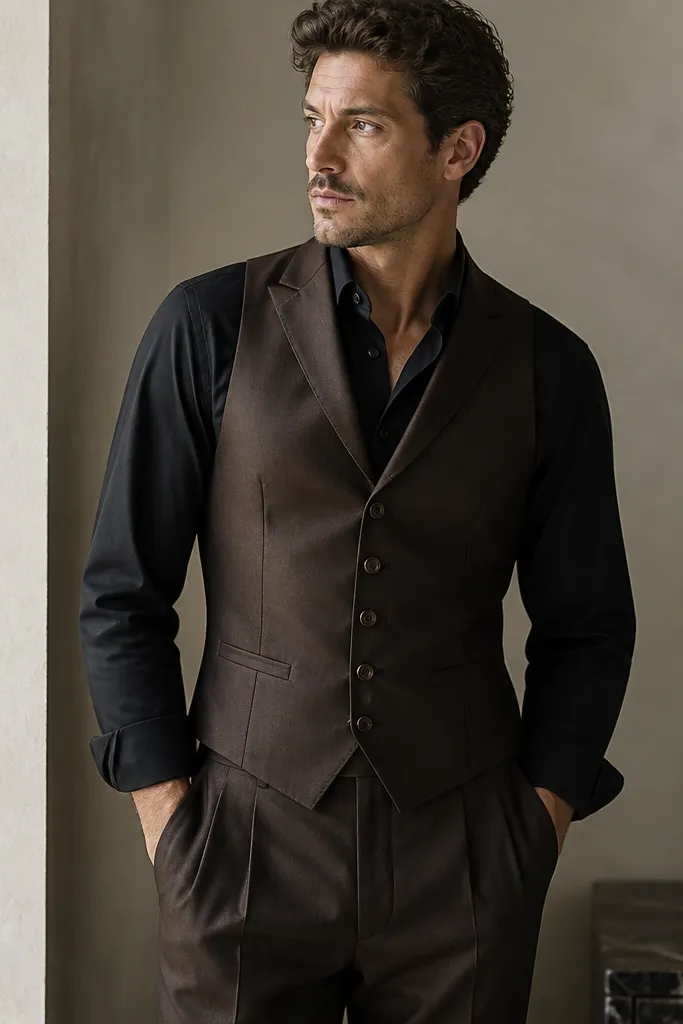
Espresso brown reads luxurious on dusky skin because it has warmth and depth. A black dress shirt adds contrast without going harsh like a stark white. The waistcoat shape gives structure around your torso, so the color sits close to your body instead of pooling away from your face.
Pick a waistcoat with a slightly higher armhole and a fitted waist - you want it to hug, not float. Keep the shirt collar crisp and the tie in black or dark brown. Brown trousers should match the waistcoat tone within a shade so it looks intentional.
Pro tipIf your espresso looks too dark in photos, add a pocket square in warm cream silk with tiny texture, not plain bright white.
AvoidDon't mix espresso with cool gray trousers; the undertones fight and the outfit looks off.
5. Burgundy maroon jacquard sherwani with antique gold buttons
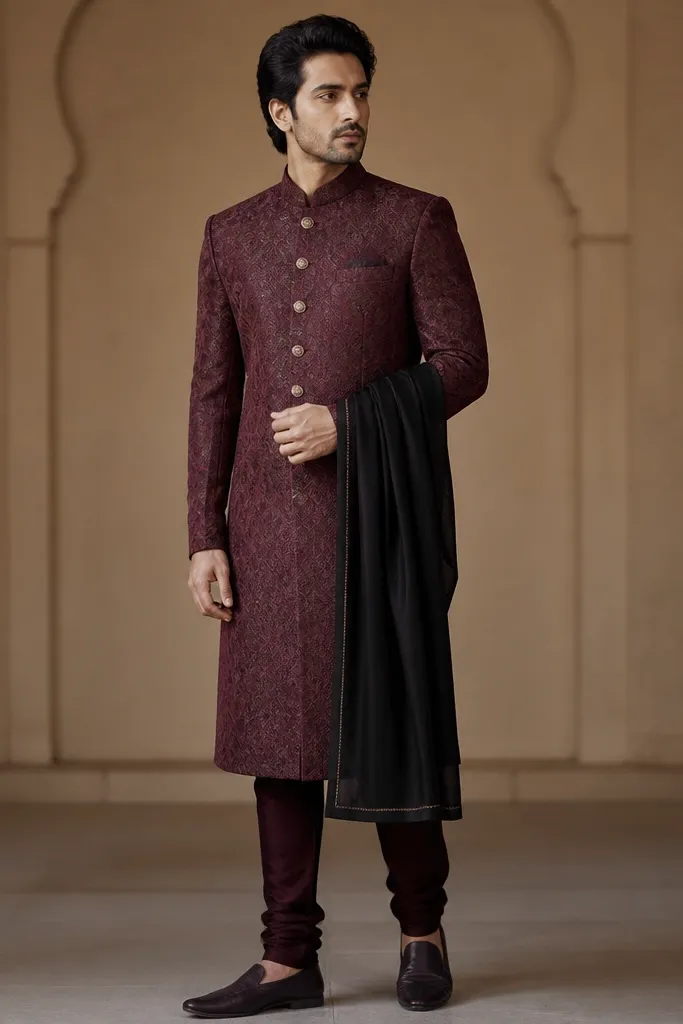
Burgundy maroon is one of the best "formal but flattering" colors for dusky skin because it deepens your complexion instead of washing it out. Jacquard texture makes the fabric look dimensional, so the color doesn't look flat under flash. Antique gold buttons add warmth and keep the outfit from reading too dark.
Choose a sherwani with subtle patterning, not heavy, high-contrast embroidery. Keep churidar in the same maroon family - a slightly darker shade works better than matching exact. Add a black or deep wine stole to keep contrast controlled.
Pro tipUse a tie or stole with a tiny pattern in gold thread; one small detail beats loud full embroidery.
AvoidAvoid pairing maroon with neon accents (bright blue, lime). It makes the maroon look muddy.
6. Navy-blue satin shirt dress with warm brass belt
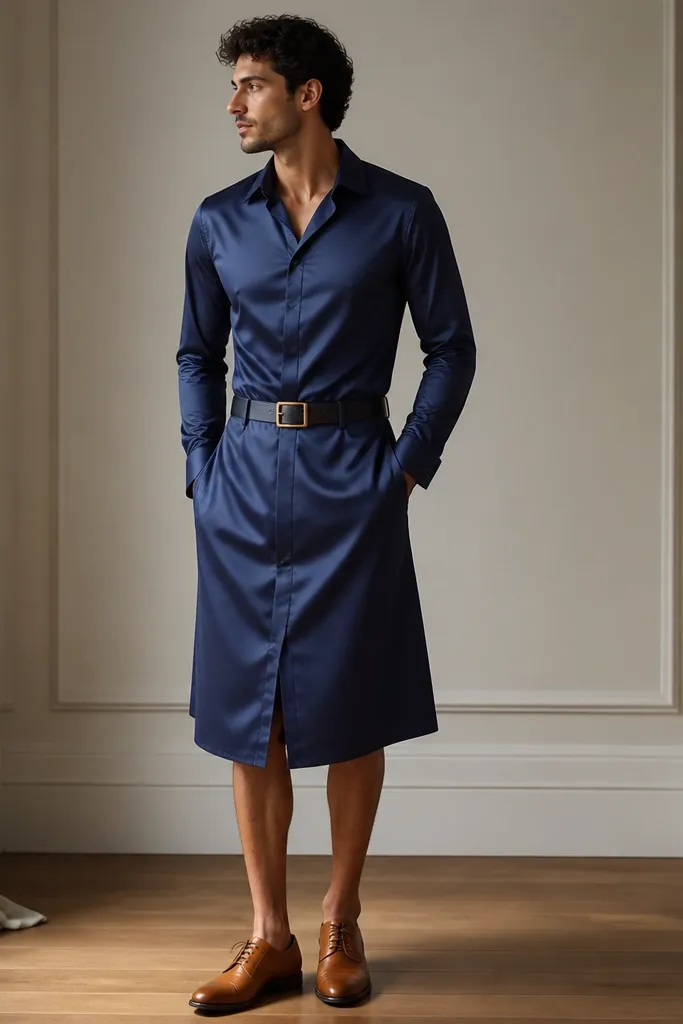
Navy is safe, but satin makes it look expensive when you match it to warm accessories. The warm brass belt pulls attention to your waist and gives a flattering glow to dusky skin. The shirt-dress shape gives you a clean formal silhouette without needing heavy layers.
Go for a fitted waist with enough structure that the fabric doesn't cling. Button the top two buttons neatly, and keep the collar crisp. Pair with tan or cognac shoes and a belt that matches the shoe tone.
Pro tipIf you're taking photos indoors, keep the satin smooth and avoid wrinkled fabric - wrinkles catch flash and cheapen the look.
AvoidSkip icy silver belts with navy satin; it makes the whole outfit feel cooler and less flattering.
7. Deep indigo embroidered kurta with black tailored trousers
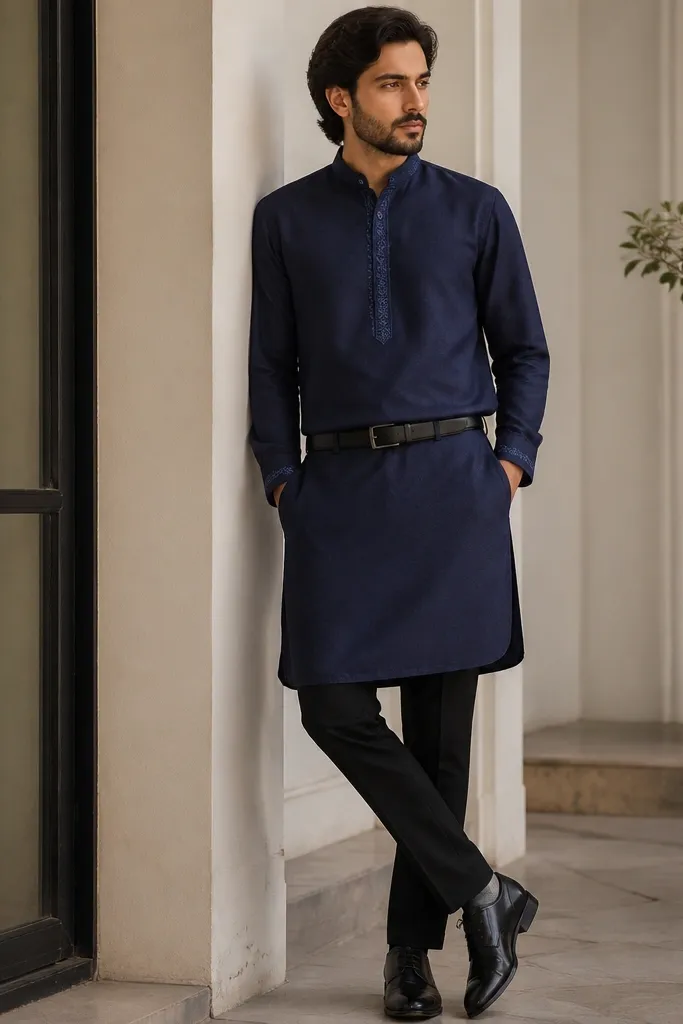
Deep indigo sits close to navy but has a softer, more natural undertone that works well for dusky skin. Because the embroidery is restrained, it reads formal without looking like costume work. Black trousers keep the indigo focused and prevent a busy color mix.
Choose embroidery that stays within 5-8 cm around the neckline and cuffs. Keep the kurta length to mid-thigh or just above the knee so the trousers stay visible. Finish with a matte black leather shoe and belt.
Pro tipPick embroidery thread in silver-gold mix tones; it catches light in a controlled way.
AvoidAvoid high-contrast embroidery across the whole front; it makes the outfit look heavy and cheap.
8. Sandstone beige linen-cotton suit dress with espresso shoes
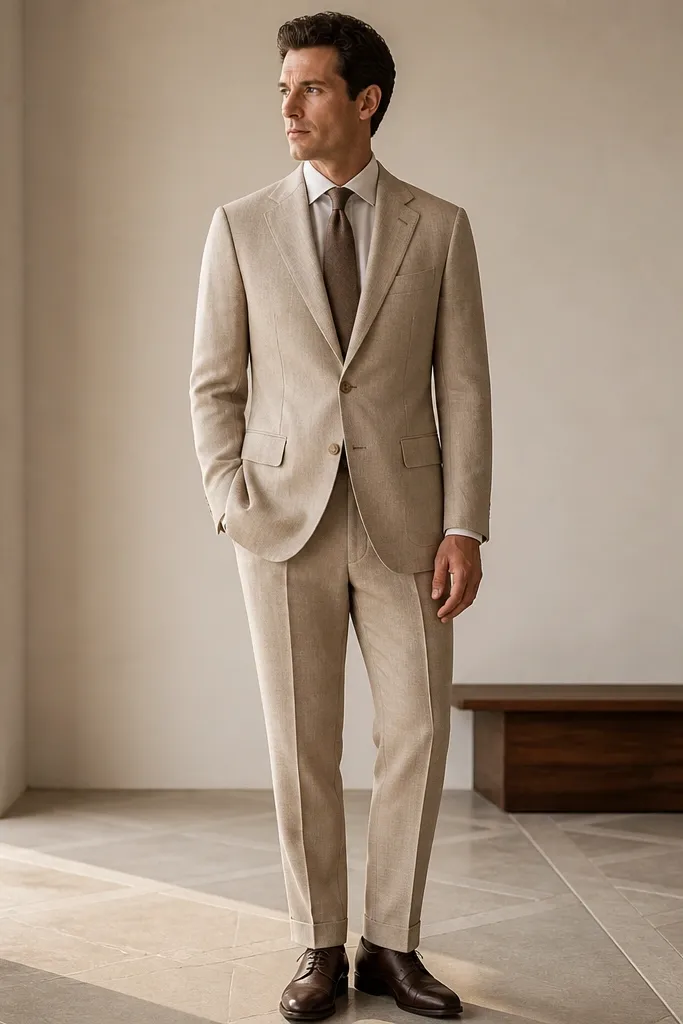
Sandstone beige is forgiving on dusky skin because it has warmth and doesn't go chalky. Linen-cotton gives a natural texture that looks expensive in daylight and feels breathable for long events. Espresso brown shoes tie the warm palette together.
Look for a suit cut that's slim through the chest with a gentle break at the waist. The jacket should be unstructured enough to drape, but not so baggy that it loses shape. Pair with a muted tie in warm taupe or dark brown.
Pro tipIf you worry about wrinkles, steam the jacket right before wearing and use a light starch spray on the collar.
AvoidSkip stark white linen; it can make dusky skin look darker and the outfit look too harsh.
9. Soft berry plum dress shirt with midnight trousers
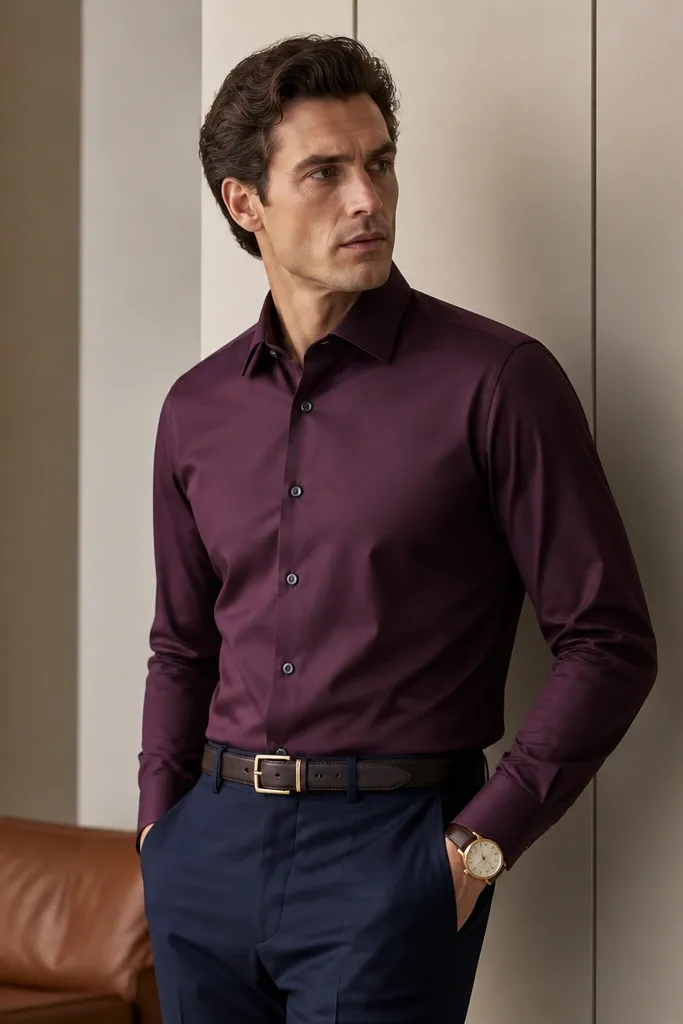
A soft berry plum sits between red and purple and usually flatters dusky skin better than bright red. The key is to keep the shirt fabric smooth and tightly woven so it looks formal, not casual. Midnight navy trousers absorb the color and make the plum look intentional.
Choose a shirt with a structured collar and no loud pattern. Keep it tucked and fitted at the waist so it doesn't create extra bulk. Add a warm gold or bronze watch and belt.
Pro tipFor a formal look, add a thin dark tie or skip the tie but keep the top button style clean, not loose.
AvoidAvoid bright magenta; it can pull focus to the wrong undertone and make skin look uneven.
10. Charcoal wool long kurta with warm ivory scarf
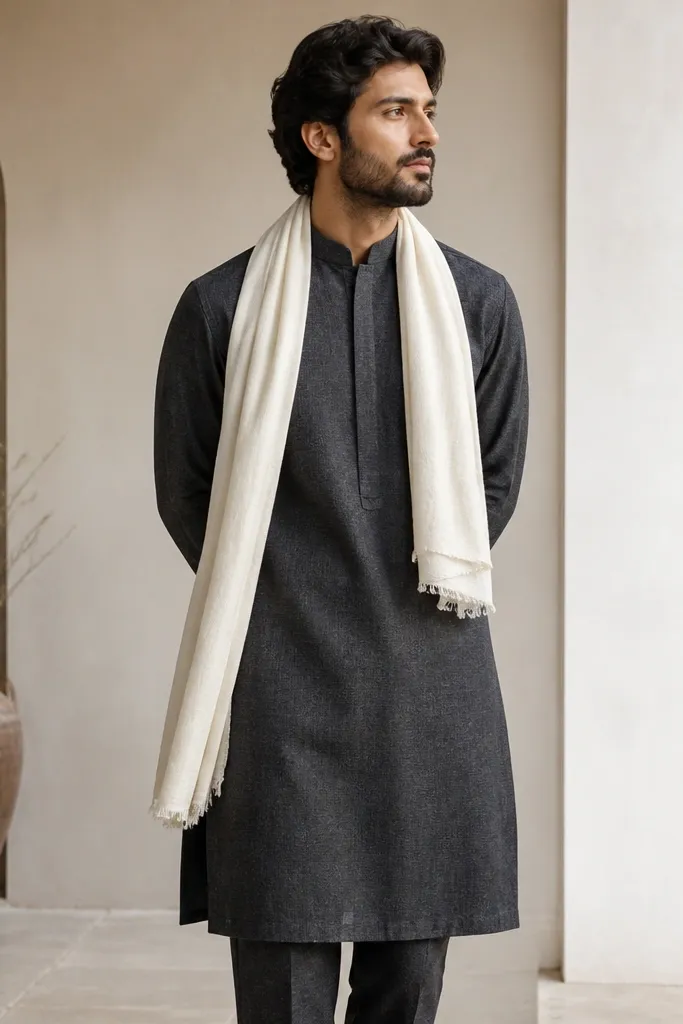
Charcoal wool looks sharp because it has texture and depth without going black. It's a strong base for dusky skin, especially in cooler evening settings. The warm ivory scarf adds face brightness and keeps the outfit from looking too heavy.
Pick a kurta with a high collar and clean seams so the wool doesn't bunch. Length should hit mid-thigh to balance your torso. Keep trousers close to the same charcoal tone and use black or dark brown shoes.
Pro tipUse a scarf with a small weave texture, not smooth satin, so it doesn't look shiny against wool.
AvoidDon't add bright white scarf with charcoal; it can make the face look washed out under indoor lights.
11. Copper-brown satin waistcoat over black dress
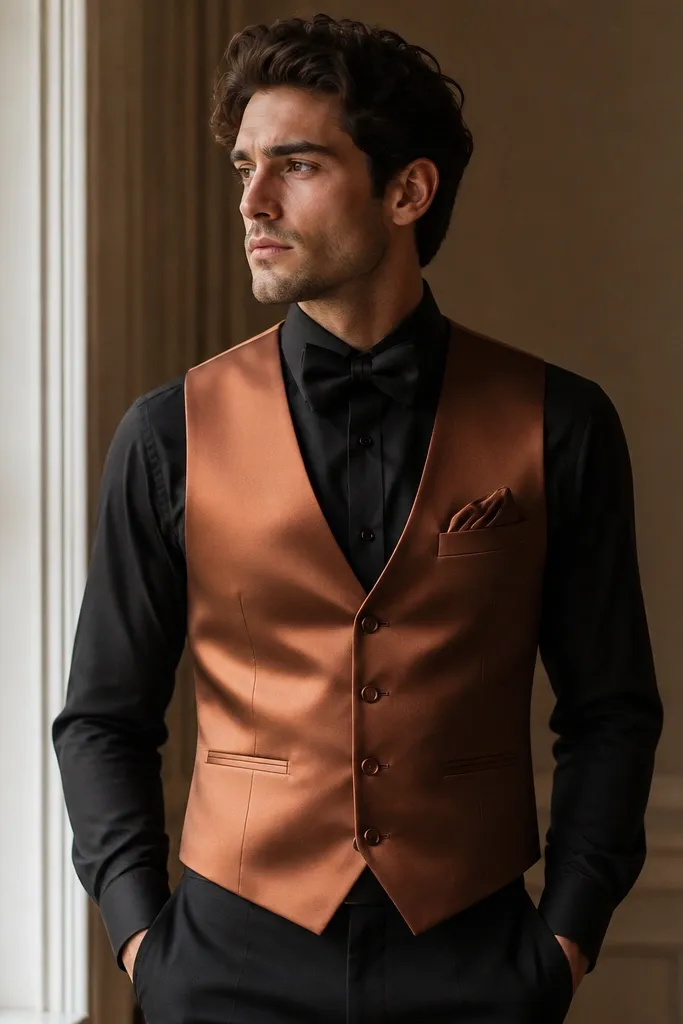
Copper-brown satin gives a warm glow that flatters dusky skin and looks great at night events. The waistcoat keeps the shine controlled because it covers the torso, not the whole body. Black underlayers keep it formal and prevent the copper from looking like party wear.
Choose a waistcoat with a structured back and a fitted chest. Keep the bow tie black or deep brown and avoid bright patterned ties. Pocket square should be matte - a silk-cotton blend in warm caramel works well.
Pro tipIf the copper looks too orange, go slightly darker - tea-brown or antique copper reads more refined.
AvoidAvoid copper satin with cream trousers; the outfit becomes too bright and loses contrast.
12. Deep plum velvet blazer with rose-gold pocket watch chain
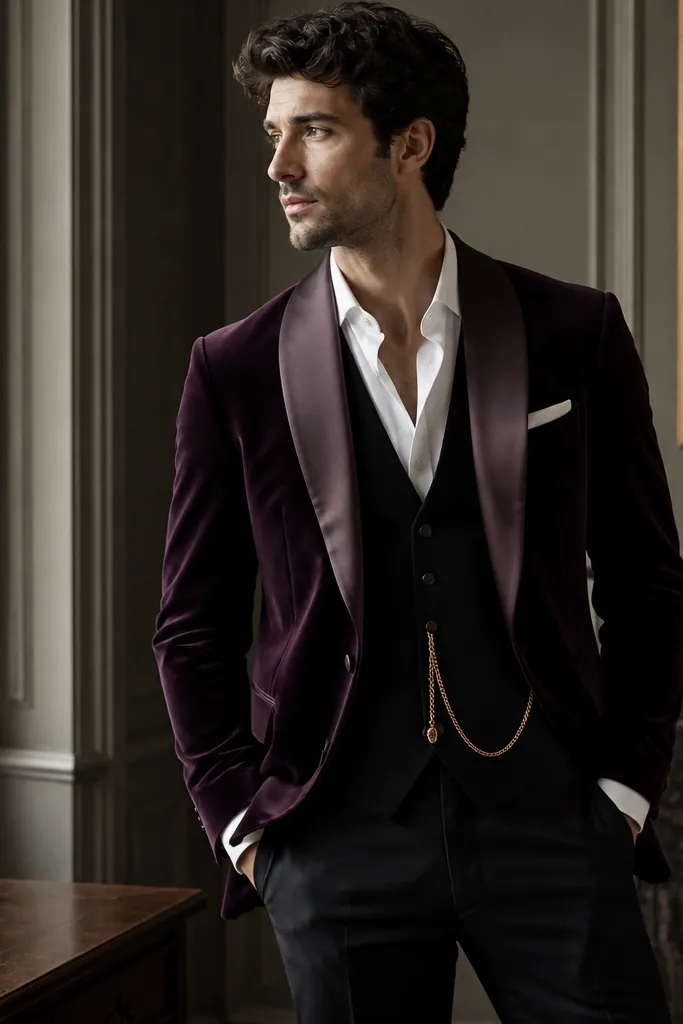
Deep plum velvet is one of my favorite "dusky-friendly" colors because it adds depth and warmth without leaning orange. Velvet also hides minor fabric texture issues and makes tailoring look more expensive. Rose-gold details keep the color temperature warm and flattering.
Use a blazer with satin lapels in a matching plum shade, not a contrasting bright gold. Keep shirt color warm white, cream, or light beige - avoid icy tones. Trousers should be black or deep charcoal to keep the blazer as the focal point.
Pro tipWear a pocket watch chain only if it sits flat and doesn't twist; a messy chain looks sloppy fast.
AvoidSkip silver chain with plum velvet; it can cool the look and make your skin look less even.
13. Olive-green embroidered dress shirt with espresso chinos
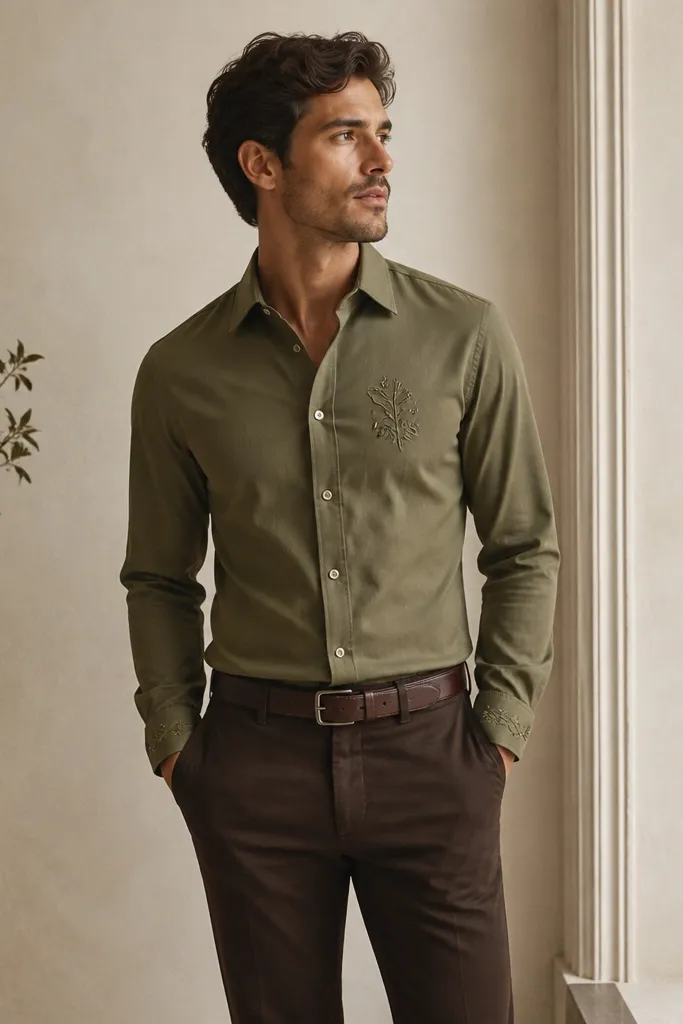
Olive-green looks natural on dusky men because it doesn't fight your skin's warmth. Small embroidery adds formality without turning it into a full ceremonial piece. Espresso chinos keep the outfit grounded and avoid the harshness of black-on-olive.
Choose embroidery that stays low-key - 2-3 motifs near the placket and one at the cuff. Fit matters: the shirt should hug the shoulders and taper slightly at the waist. Pair with a belt in dark brown and shoes in espresso leather.
Pro tipRoll sleeves only if the cuff is neat; better to keep them down for formal events.
AvoidAvoid pairing olive with gray shoes; it makes the color feel disconnected.
14. Midnight blue jacquard tunic dress with tan brogues
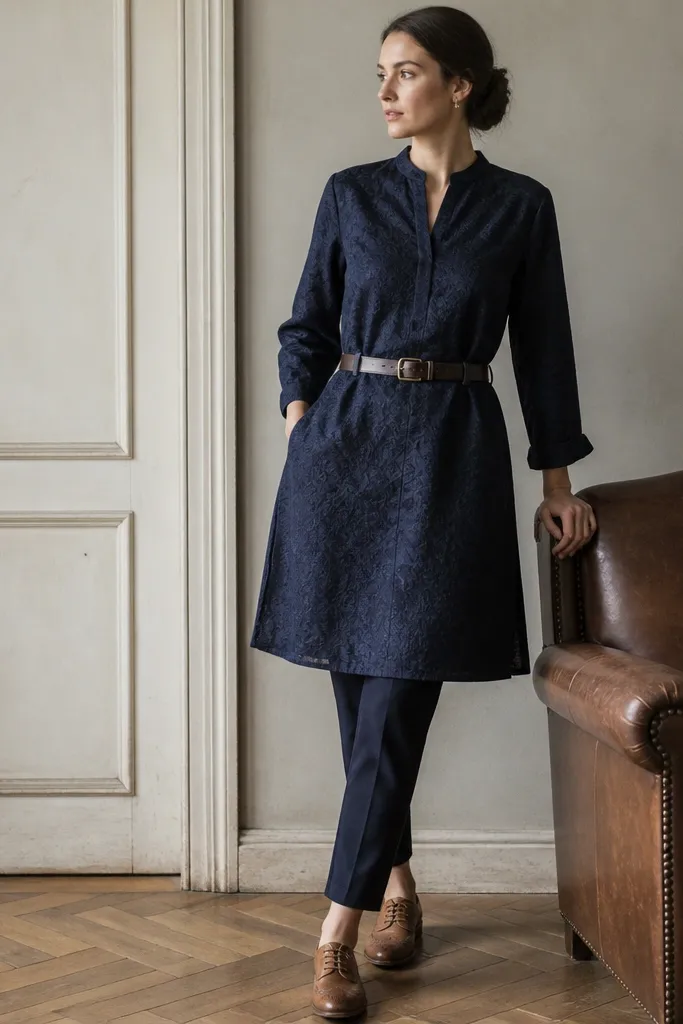
Midnight blue jacquard has a depth that plain navy can't match, and it looks great on camera because the pattern catches flash softly. Tan brogues add warmth and make the blue look richer. This combination is one of the cleanest ways to get "beautiful color" without looking loud.
Keep the tunic tailored at the waist and make sure the hem hits just around the knee for most heights. Choose trousers in the same blue family or a close neutral like charcoal. Make the tan brogues the only lighter item besides a pocket square.
Pro tipUse a pocket square in warm ivory with a tiny border so it ties to the tan shoes.
AvoidDon't add a bright white tie; it breaks the warm palette and flattens the blue.
15. Warm chocolate satin gown-style kurta with black mohair belt
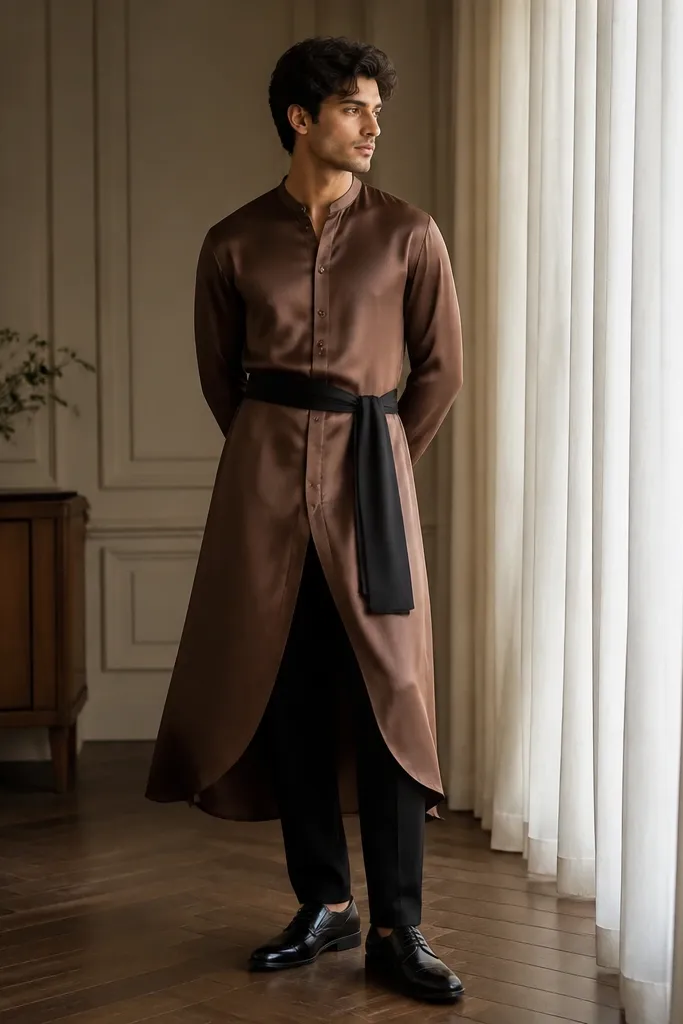
Chocolate satin looks gorgeous on dusky skin because the warmth sits close to your natural undertones. The longer, gown-style cut makes the color feel intentional and formal. A black mohair belt adds texture contrast so the outfit doesn't look one-note.
Pick a kurta length that reaches mid-calf for a dramatic formal vibe, but keep the shoulders structured. Use a minimal neckline so the satin doesn't look busy. Pair with black trousers and shoes to keep the chocolate from getting too sweet-looking.
Pro tipSteam the satin lightly and hang it after steaming; satin creases show up in flash photos.
AvoidAvoid pairing chocolate satin with brown shoes that are too similar; it can blend into a single dark block.
16. Rose-ember maroon dress for men with black lapel trim
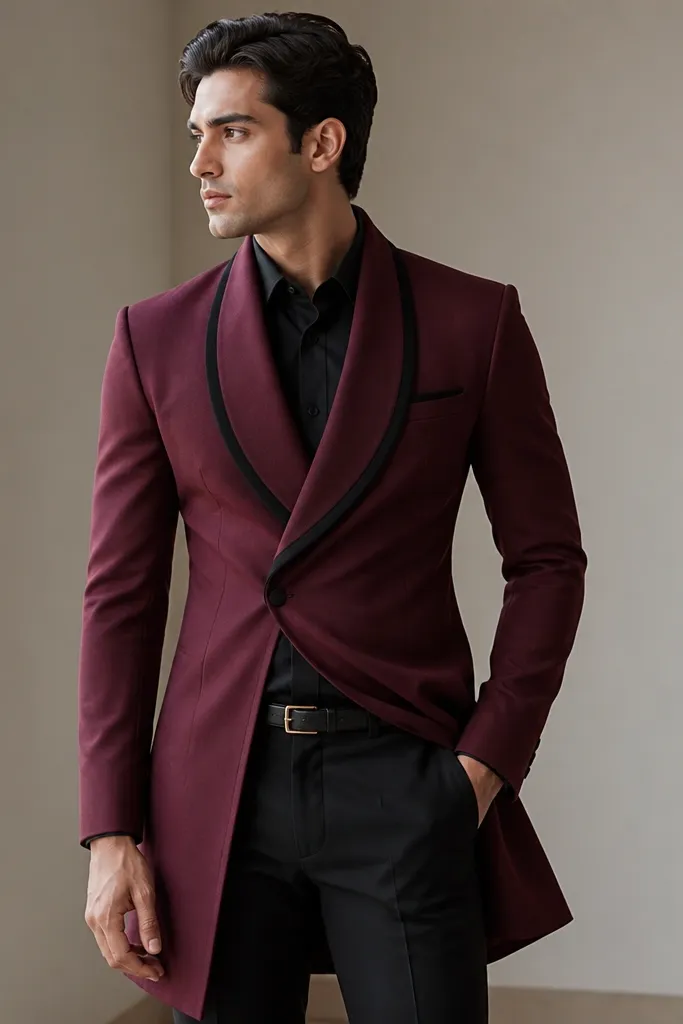
Rose-ember maroon has a warmer red tone that flatters dusky skin without going into bright red territory. Black lapel trim sharpens the face area and makes the color look cleaner. The fitted waist gives structure, so the dress reads tailored instead of drapey.
Choose a dress cut that has slight shoulder padding and a defined waist seam. Keep the shirt layer underneath in warm white or cream. Shoes should be black leather for the crisp contrast.
Pro tipIf the maroon looks too dark on you, add a small warm gold detail near the collar like a pin or button.
AvoidAvoid maroon with matching maroon shoes; the outfit turns into a single tone with no shape.
17. Deep teal crepe formal dress with bronze buttons
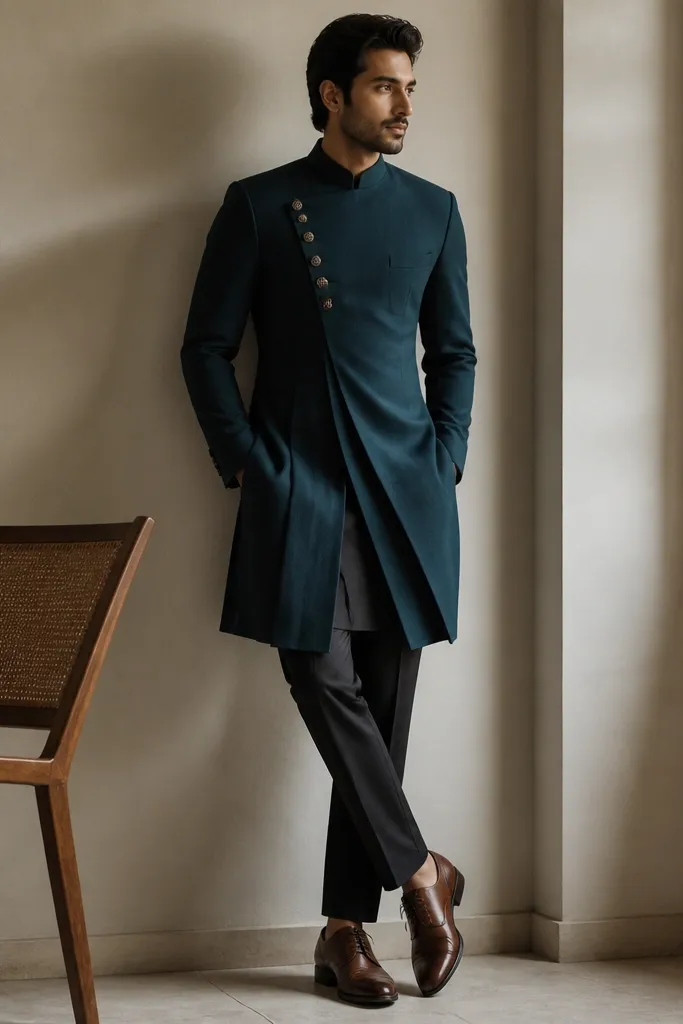
Deep teal crepe is a smart choice because crepe is matte and holds color without shine glare. Bronze buttons add warm metallic contrast that flatters dusky skin. The pleats give movement while keeping the color controlled, so it reads formal and not stiff.
Pick a dress with structured shoulders and a waist seam; crepe looks best when it's guided, not hanging. Keep the length around the knee to mid-calf depending on formality. Pair with dark trousers or a matching teal bottom and brown shoes.
Pro tipUse a bronze-toned watch or cuff links instead of silver so the metal matches the buttons.
AvoidSkip cool silver buttons with deep teal; it makes the outfit look colder and less flattering.
18. Warm sand-beige embroidered formal tunic with dark green sash
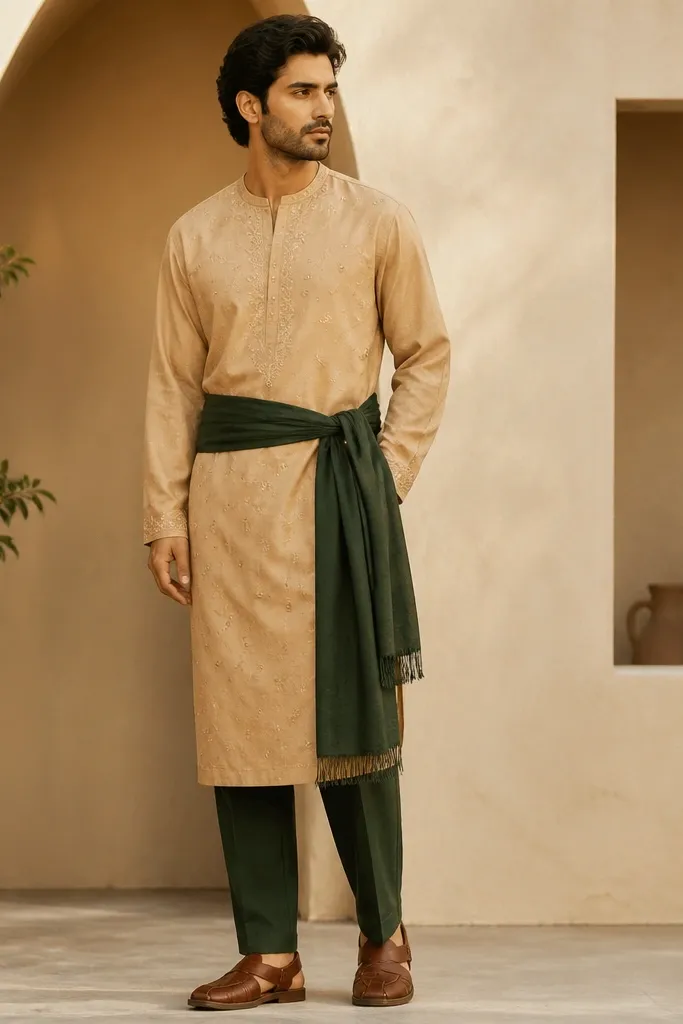
Warm sand-beige brightens dusky skin without the chalky look of off-white. Tonal embroidery keeps the formal feel while staying subtle enough for daytime events. A dark green sash brings in a complementary warmth and adds waist definition.
Choose tonal embroidery that matches the base shade by 1-2 tones, not high-contrast. Fit the tunic close at the waist so the sash doesn't bulk. Keep the trousers dark green and shoes in brown or dark tan so the palette looks connected.
Pro tipTie the sash so it sits slightly above your natural waist - it lengthens your torso visually.
AvoidAvoid bright lime-green sashes; they overpower sand-beige and look costume-like.
19. Classic black dress with warm brown satin lining at the collar
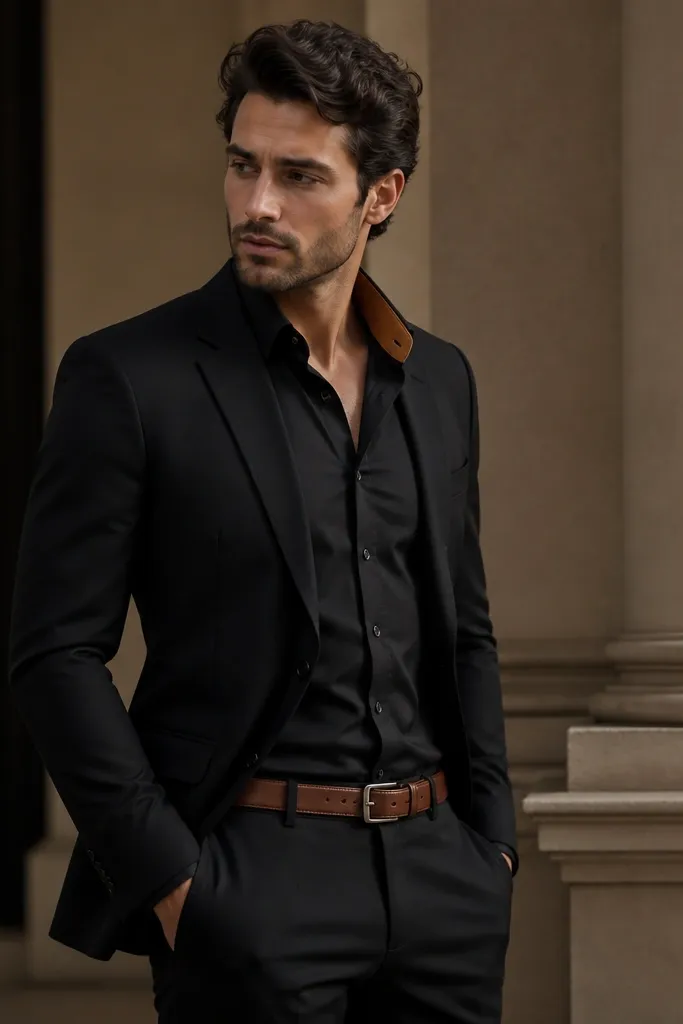
Black can look flat, but warm brown satin lining at the collar solves that in a way you can actually see. When the collar moves, you get a warm flash that flatters dusky skin and makes the outfit feel layered, not plain. It's also a good option when you want formal without taking risks on color.
Look for a jacket/dress with an inner collar lining you can see when you sit or turn. Keep the rest matte black so the lining stays the only shine. Match with warm brown belt and dark brown shoes, not black-on-black accessories.
Pro tipUse a warm-toned pocket square edge (brown or caramel) so the lining doesn't feel random.
AvoidSkip icy blue lining with black; it makes dusky skin look gray under flash.
20. Powdered cinnamon bronze dress with deep navy base layer
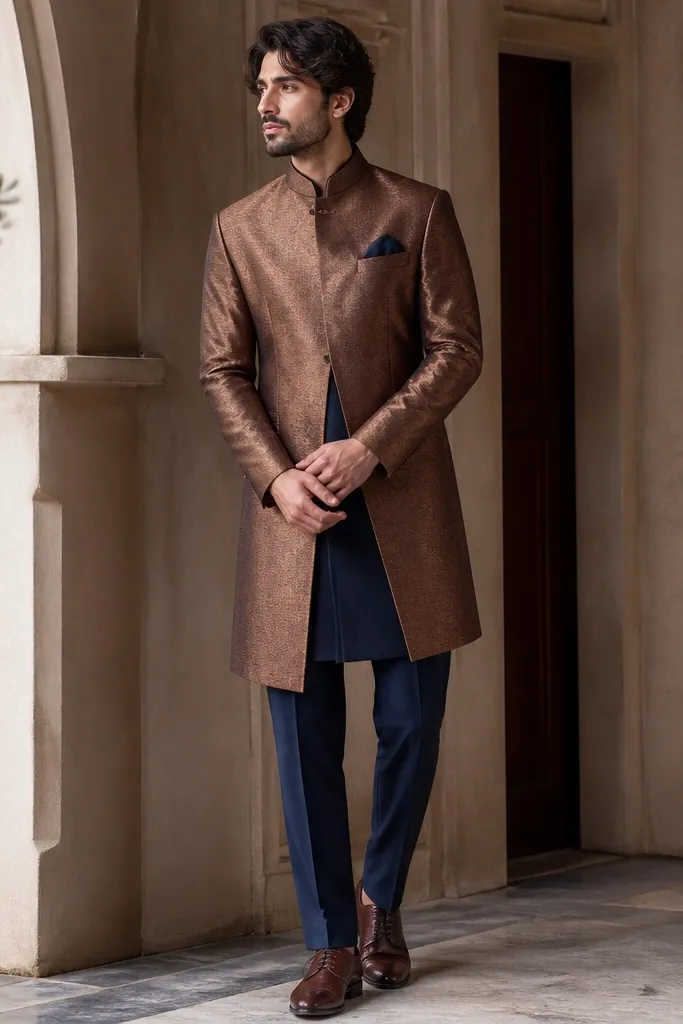
Cinnamon bronze works because it sits in the warm spectrum and looks expensive when the metallic is powdery, not mirror-like. The deep navy base layer keeps it formal and stops the bronze from looking too party. This is a great "color-forward" option for dusky men when you want compliments without going neon.
Choose a fabric that has a soft metallic finish, like brocade with a light sheen or satin with a tight weave. Keep navy trousers and a navy inner layer so the bronze reads like an outer dress, not random shine. Shoes should be dark brown to keep the warmth consistent.
Pro tipKeep jewelry minimal: one warm metal ring or a bronze watch beats stacking multiple pieces.
AvoidAvoid mirror-sheen gold dresses; they reflect flash harshly and can wash out your skin tone.