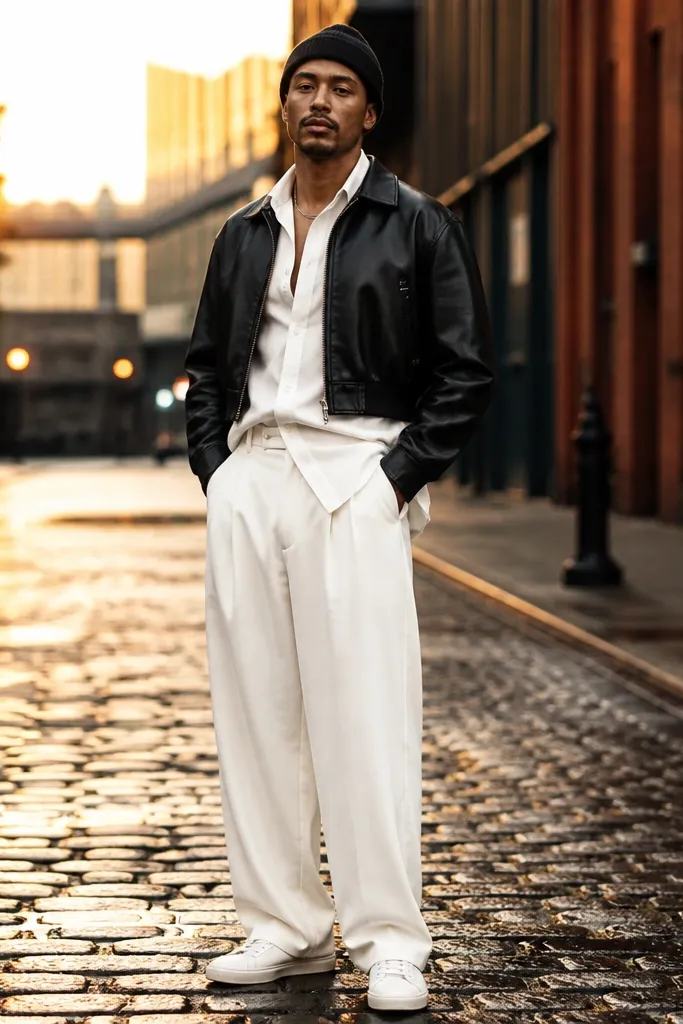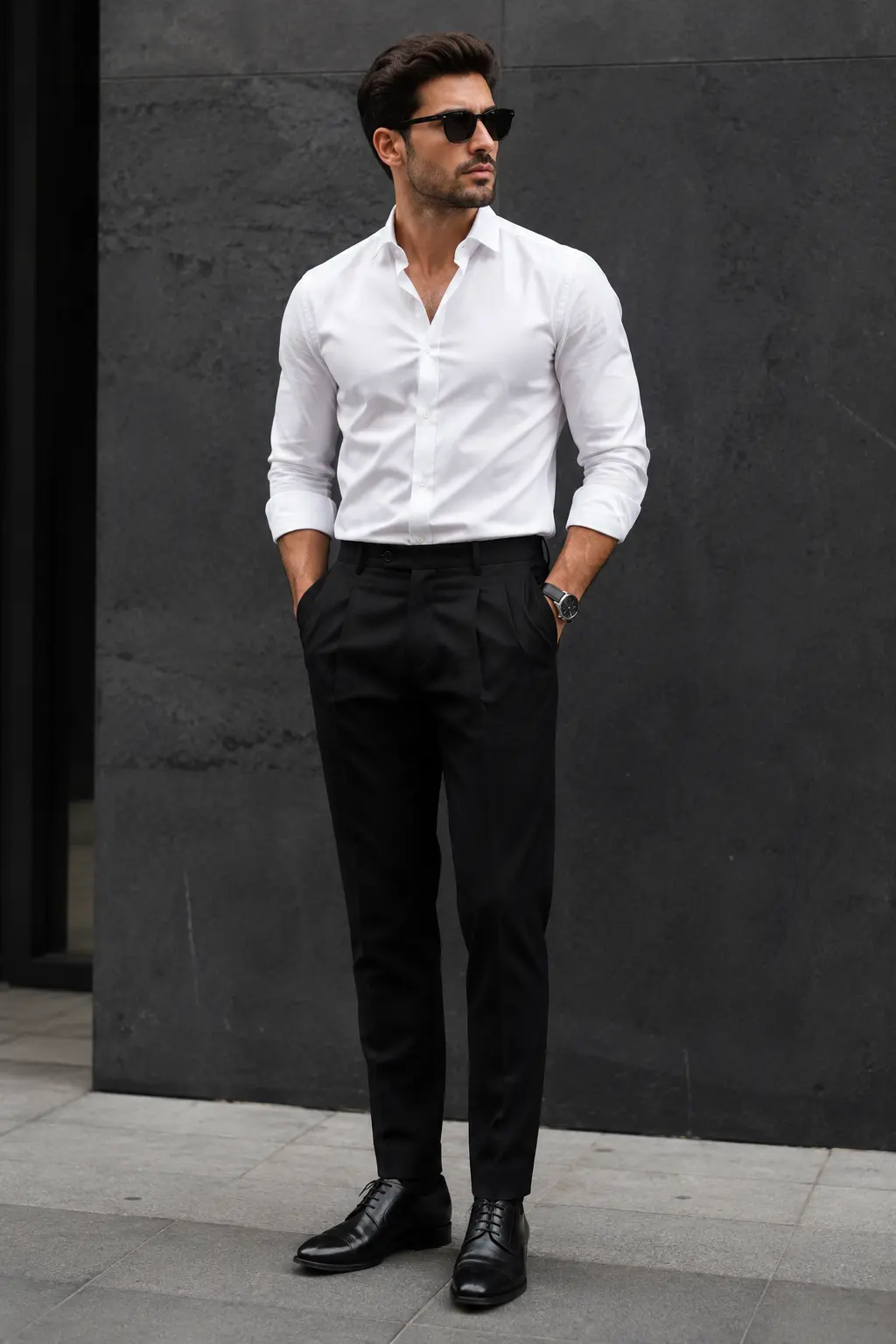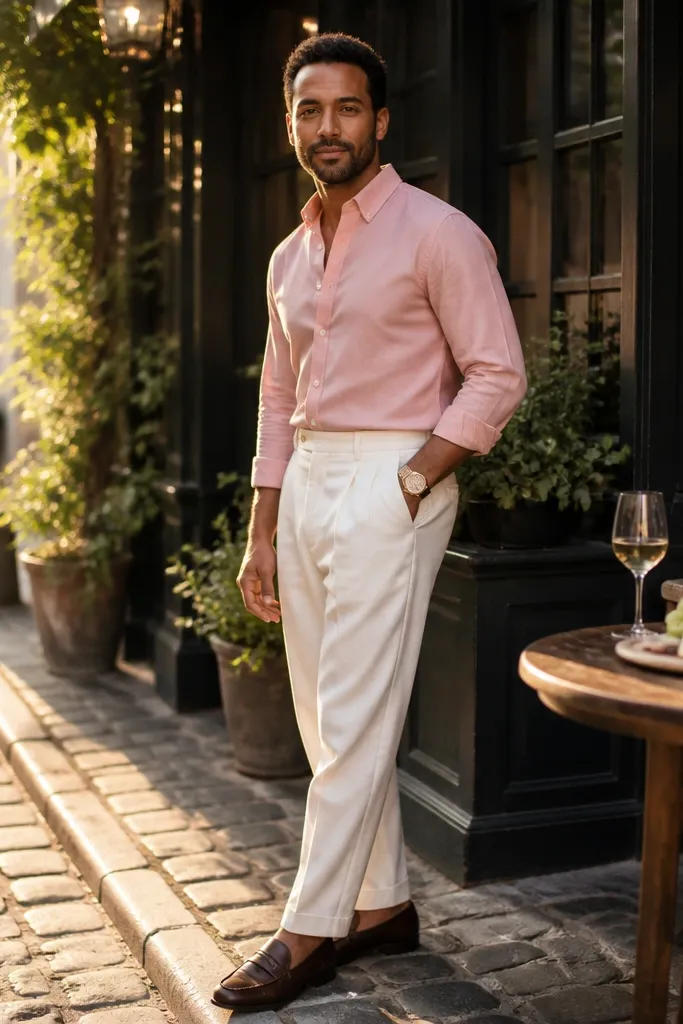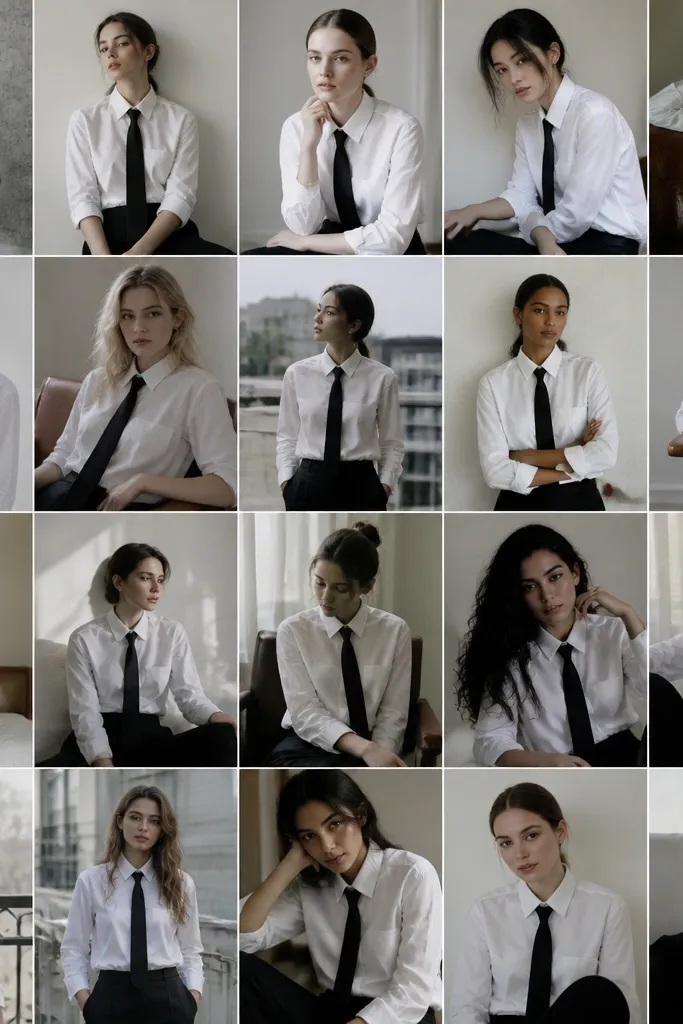
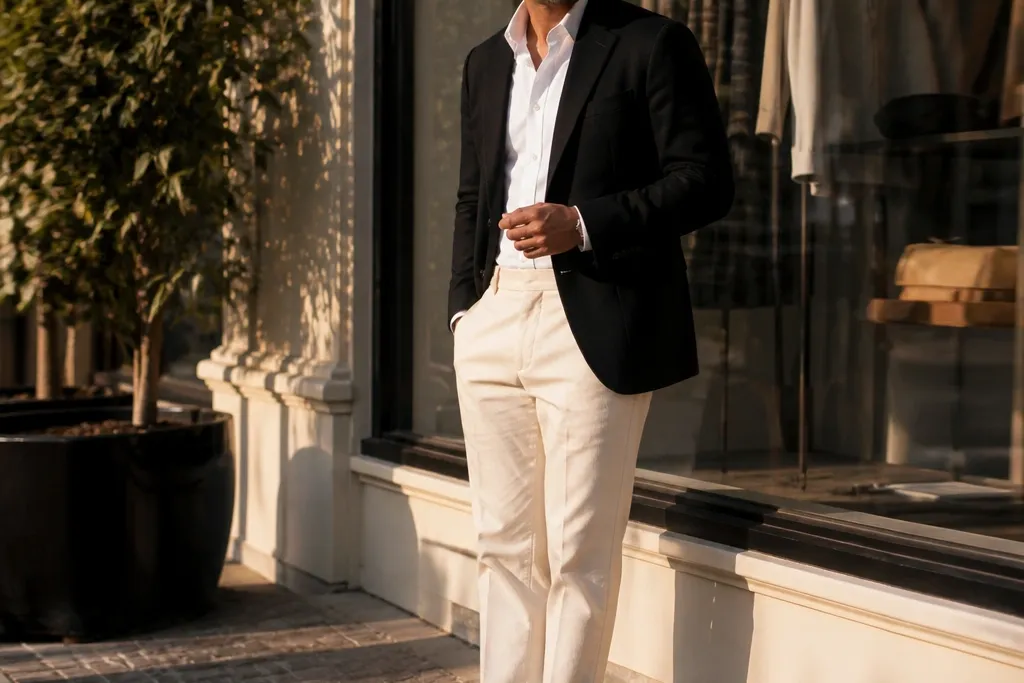
1. Matte black wool blazer with white oxford and off-white cotton twill
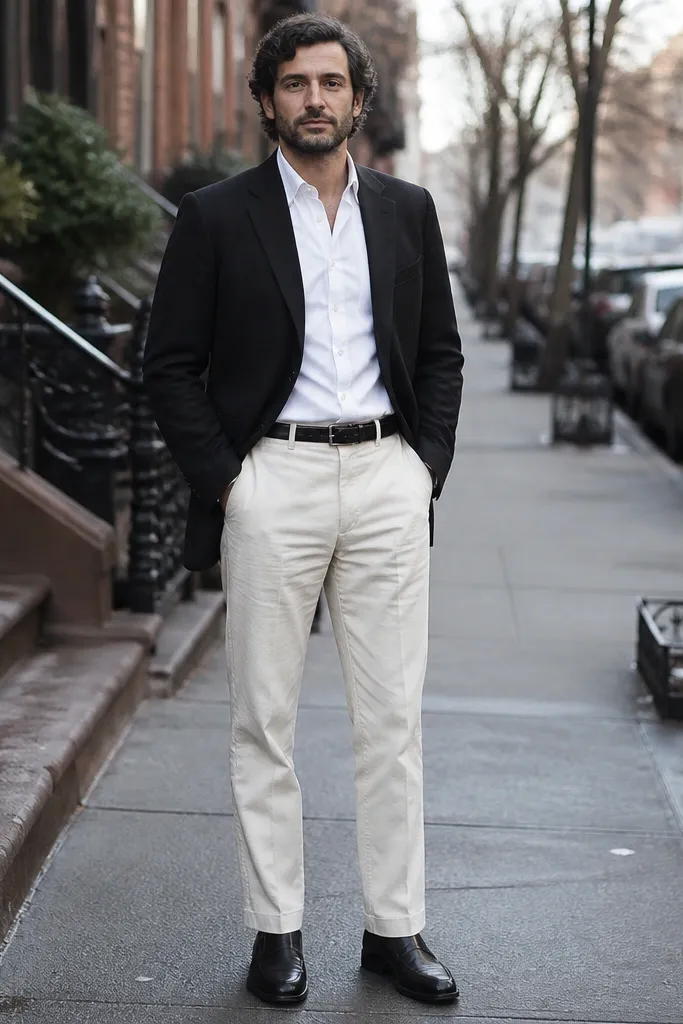
This is the clean “classic vs modern” anchor. Matte black wool keeps the blazer from looking shiny or costume-like, and the white oxford shirt gives a crisp collar shape that frames your face. Off-white cotton twill (not pure optic white) looks better in daylight because it avoids that harsh, clinical contrast. The pants should sit at your natural waist with a straight leg so the white reads intentional, not like you grabbed the wrong laundry. Pair with black leather shoes to lock the contrast and make the outfit feel sharp, not random.
Start with pants in cotton twill or a tight-weave chino, then choose a matte black blazer with structured shoulders. Next, wear a white oxford shirt with a collar that stands up (stiff collar stays help) and keep the shirt tucked fully. Finish with a black belt and black leather loafers or cap-toe oxfords. If you want it more modern, swap to a slimmer trouser break (slight stack only) and roll the sleeves once at the cuff.
Pick off-white if your skin runs warm or your lighting is bright — it looks expensive with black.
Avoid thin white pants that show texture through the fabric under indoor lights.
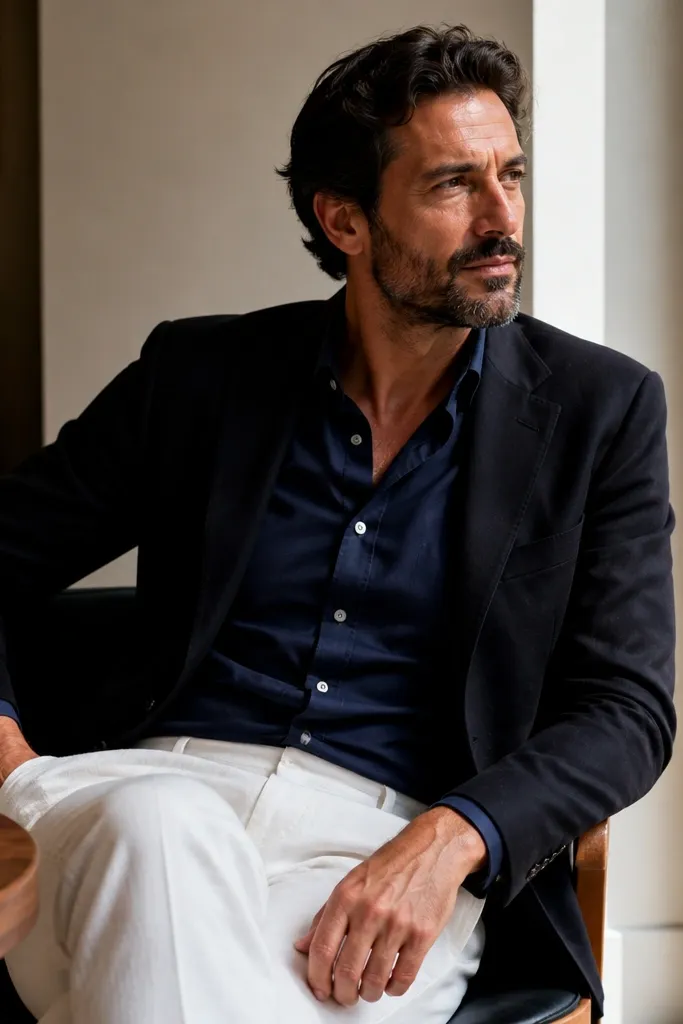
2. Black blazer + navy shirt + white linen-cotton trousers (summer contrast)
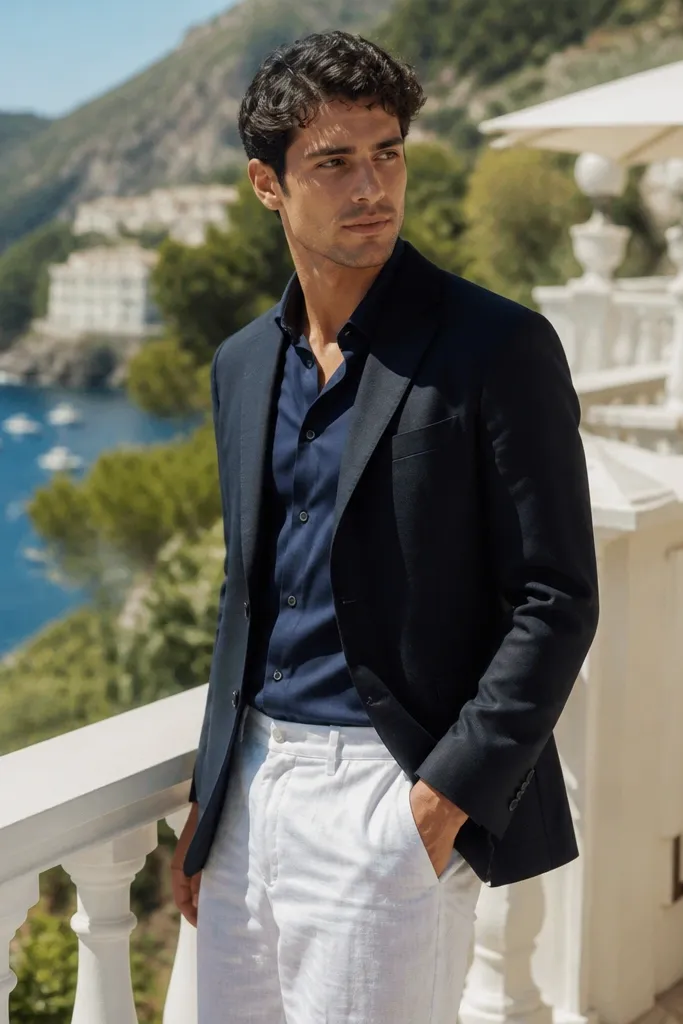
Navy next to white is the easiest way to look “designed” without trying too hard. The black blazer adds structure, while the navy shirt softens the contrast so you don’t look like you’re dressing for a TV courtroom. White linen-cotton trousers bring that summer texture, and the slight creasing reads natural instead of messy when the fabric weight is right. This combo is great for guys with medium builds because the blazer shape gives you shoulders, and the linen keeps the leg light. Keep the trouser hem clean — a small break makes the outfit look tailored.
Choose a white linen-cotton trouser with a tight weave and medium weight so it doesn’t go transparent when you move. Then pick a navy button-down or knit shirt and tuck it neatly, no bunching at the waist. Add a black blazer in wool-blend or cotton twill, and keep the sleeves unrolled for a sharper silhouette. Finish with brown leather loafers or suede chukkas and a belt in the same brown tone.
Good to knowIf the navy shirt is a knit, go with a slightly wider collar so it doesn’t collapse under the blazer.
Common mistakeSkip bright cobalt or neon navy — it competes with the white and cheapens the contrast.
3. Black blazer + black crewneck + bright white pleated trousers
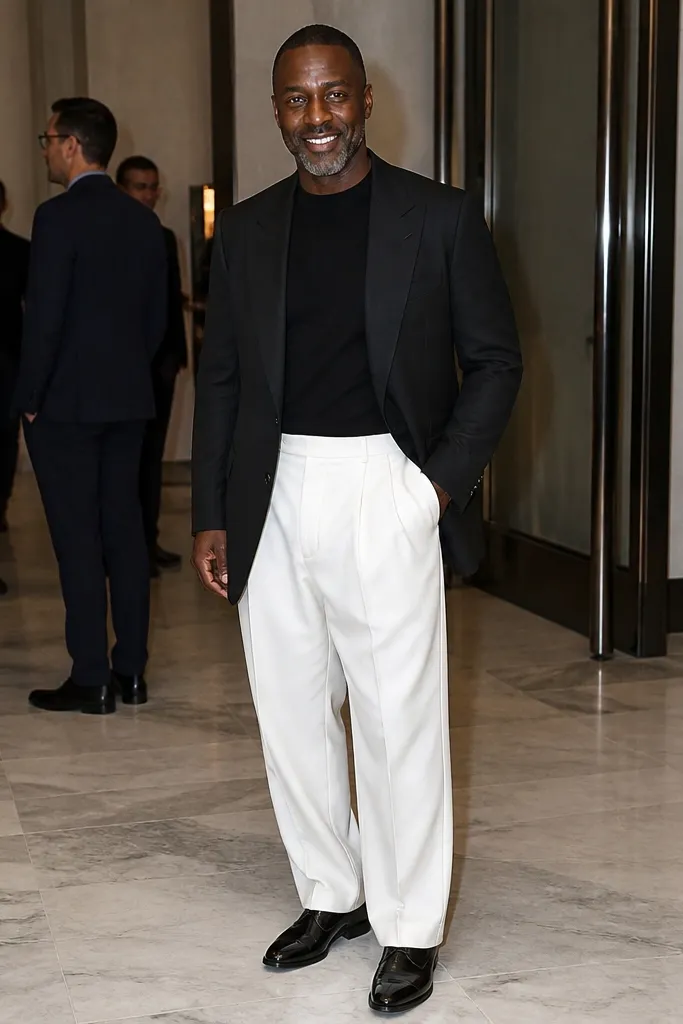
This is the highest-contrast, most photo-friendly version. A black crewneck under a black blazer creates a strong top block, and the bright white pleated trousers add shape through the waist and thigh. Pleats are doing real work here: they give volume where you need it and keep the leg from looking skinny or flimsy. This is best if you want a bold look for evening plans, because the black-on-black torso makes the white pop. Stick to a bright white that matches the blazer’s intensity — if the white is dull, the pleats look gray instead of crisp.
Start with bright white pleated trousers with a medium-high rise and a clean front crease line. Then wear a black crewneck sweater that fits close at the neck and doesn’t sag at the shoulders. Put the blazer on last and keep it lightly buttoned (or unbuttoned if the shirt layer is thick). Finish with black Chelsea boots or sleek lace-up boots and a black belt with a simple buckle.
Good to knowKeep the crewneck rib not too thick; thin rib looks more modern under a blazer.
Common mistakeAvoid bulky sweaters that add width at the chest — your shoulders should stay sharp.
4. Black blazer + white knit polo + white-on-white chinos (tone match)
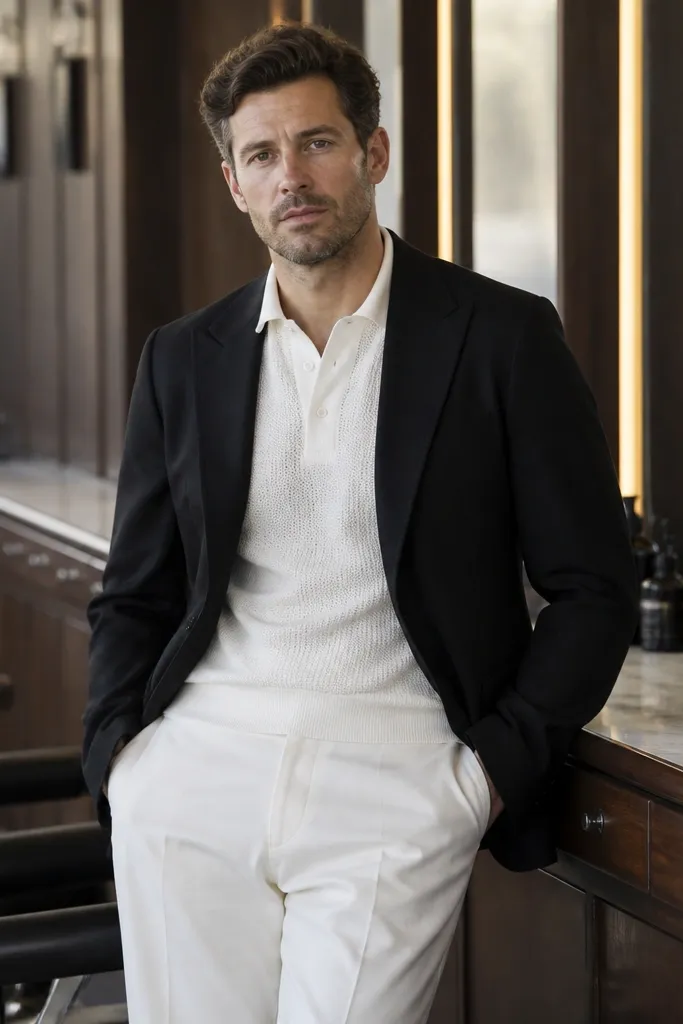
White-on-white looks clean, but only if the tones match. Use a white knit polo with a slightly different texture than the pants so the outfit has depth: think polo knit for the top and chino twill for the trousers. The black blazer makes it wearable by adding contrast and structure. This style flatters most body types because the vertical line is uninterrupted, and the blazer prevents it from turning into a casual gym outfit. It’s also great for men who don’t want too much color in their wardrobe — it reads sharp, not boring.
Pick white pants in chino twill or structured stretch and keep the hem tailored (no heavy stacking). Then choose a white knit polo in a fabric that holds shape at the collar and placket. Add a black blazer in matte wool and keep buttons minimal — one button is enough visually. Finish with white leather sneakers or low-profile trainers and a watch with a dark strap.
If your white pants are slightly off-white, match the polo to that same warmth instead of going pure optic.
Don’t wear a thin dress shirt as the “white-on-white” top — it makes the outfit look flat.
5. Black blazer + light gray dress shirt + white twill trousers (wedding-safe)
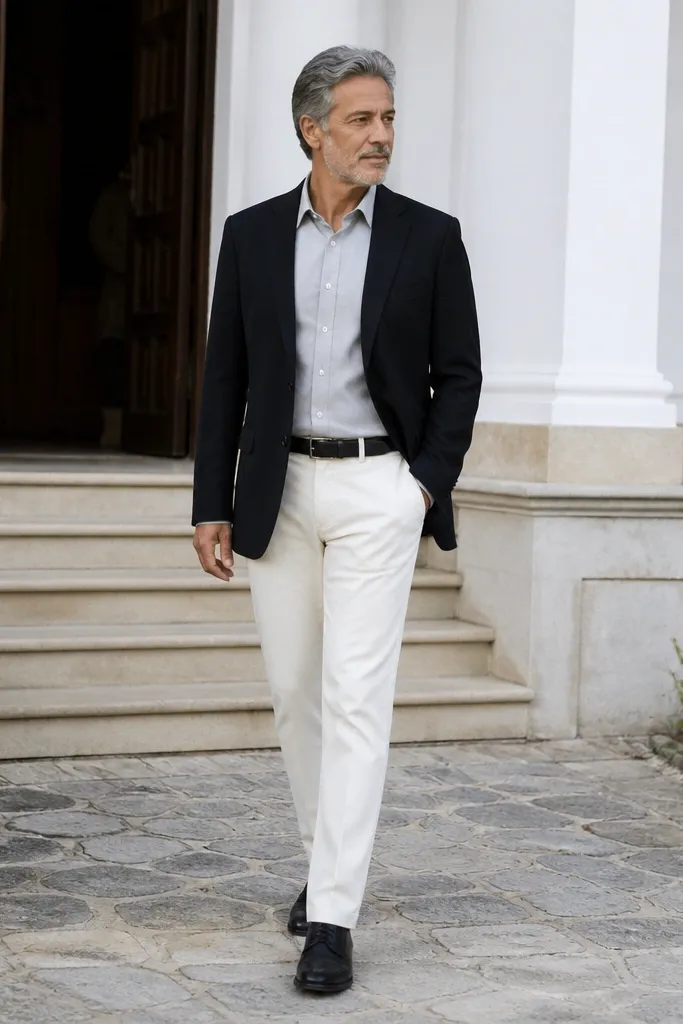
This combo is the easiest way to look formal without going full suit. Light gray dress shirt softens the harshness between black blazer and white trousers, so the outfit looks polished in photos and not too stark in indoor lighting. White twill trousers give structure and a clean crease line. This is a strong choice for weddings, ceremonies, and interviews because it looks intentional and balanced. If you have a slightly bigger midsection, the gray helps visually while the blazer’s shape controls the silhouette.
Start with white twill trousers with a mid-rise and a straight or slight taper leg. Then wear a light gray dress shirt with a collar that fits your neck (no gaping) and tuck it fully. Add a black blazer in wool-blend with a clean front — avoid overly long jackets. Finish with black loafers and a belt in the same black tone; keep the tie optional depending on the dress code.
Good to knowUse a shirt with a subtle weave (oxford or microtexture) so it doesn’t look like a flat rectangle.
Common mistakeAvoid overly bright white trousers with a very soft blazer — the contrast will look uneven.
6. Black blazer + white dress shirt open collar + white trousers (monochrome air)
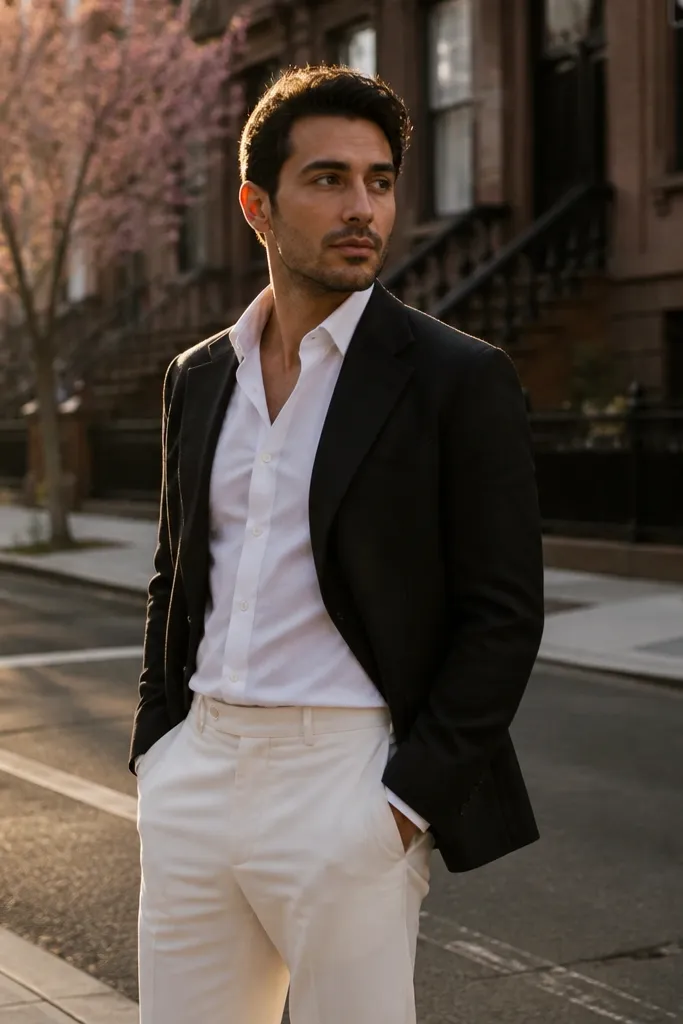
The open-collar white shirt makes the outfit feel modern while still looking dressy. The black blazer holds the structure, and the open collar adds a little breathing room at the neck, which helps if you hate tight ties. White trousers keep the look crisp and photo-ready. This version is best in spring and early fall when you want something sharper than a t-shirt but not as formal as a full buttoned shirt. It flatters average builds because the blazer defines the shoulders and the open collar adds a relaxed frame around the face.
Choose white trousers with a structured finish so the fabric holds a clean line. Then wear a white dress shirt with the top button undone and the collar sitting flat (use collar stays if needed). Add a black blazer that fits close through the chest and has sleeves that end at your wrist. Finish with dark brown boots or loafers and a belt that matches the shoe color.
If the collar stands too high, size the shirt down or adjust the collar stays — it should look intentional, not stiff.
Skip oversized shirts — open collar looks best with a fitted shirt that doesn’t billow.
7. Black blazer + black turtleneck + white trousers (sleek cold-weather look)
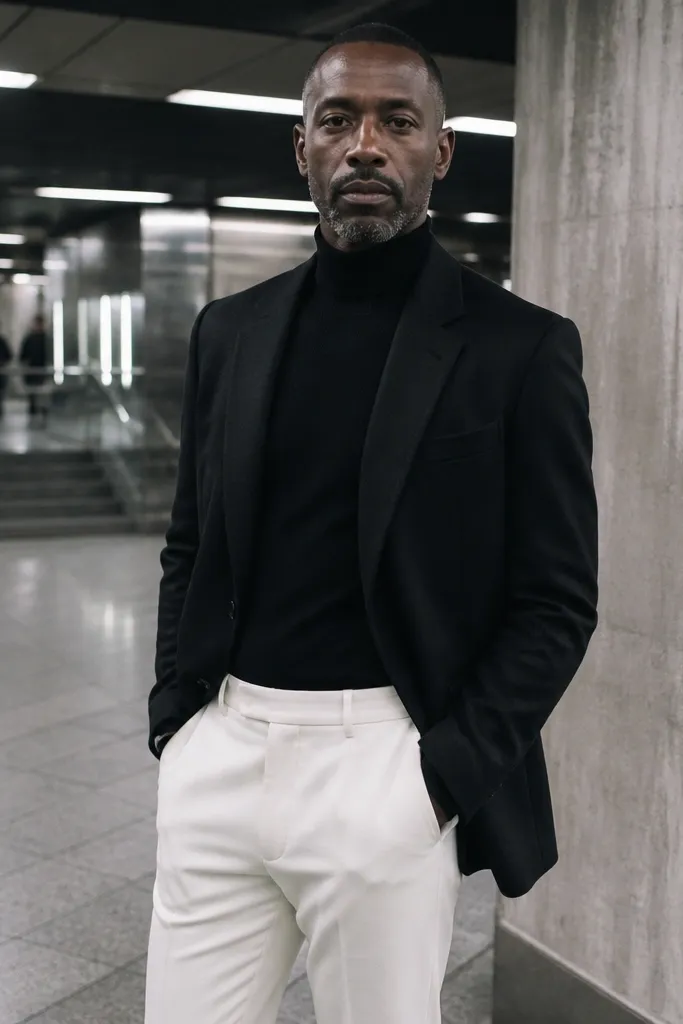
This is the most controlled, editorial-feeling outfit on the list. The black turtleneck creates a clean vertical line from neck to chest, and the white trousers add a sharp contrast band at the waist and legs. It reads expensive when the blazer is matte and structured, not shiny or too casual. This look works especially well if you have a slimmer frame or you want to sharpen your proportions. The key is fit: the turtleneck should hug without bunching, and the trousers should hang straight from the hip.
Start with a black turtleneck in a medium-weight knit so it holds shape and doesn’t sag. Then choose white trousers with a crisp front and a hem that breaks slightly at the shoe. Add a matte black blazer with clean lapels (not too wide) and a sleeve length that shows a small amount of turtleneck cuff. Finish with black leather boots and a black belt; keep accessories minimal.
Good to knowGo for a turtleneck that’s slightly thicker than a basic crew — it keeps the silhouette smooth under the blazer.
Common mistakeAvoid super-thin turtlenecks that look see-through when you layer.
8. Black blazer + white shirt + black-and-white striped tee underlayer (modern layering)
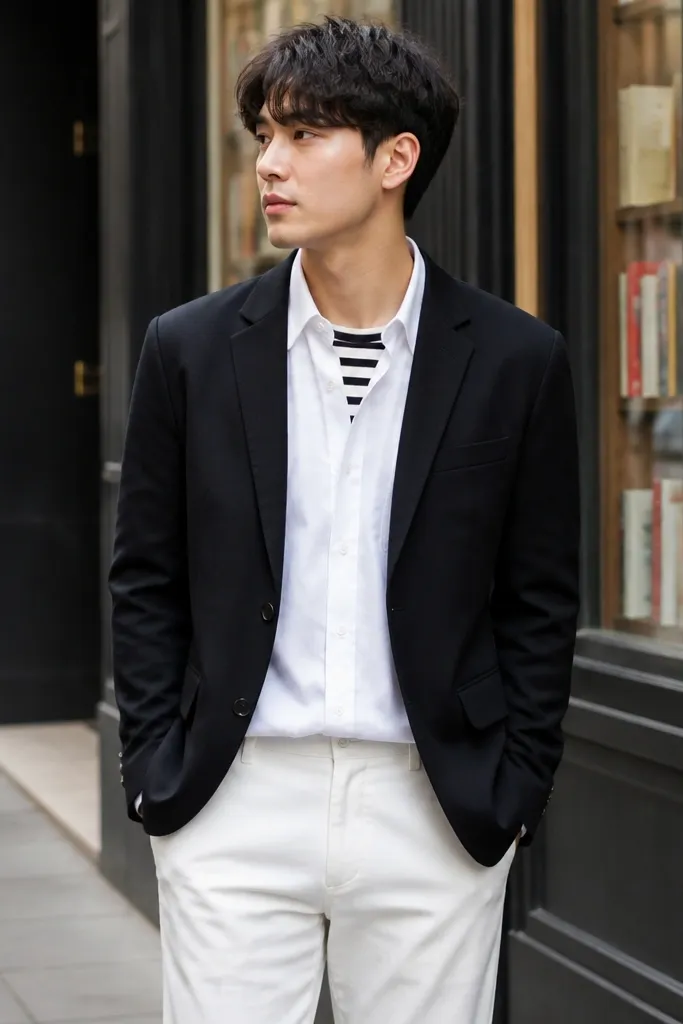
A subtle striped underlayer makes the outfit feel modern without breaking the black blazer and white pants formula. The white shirt stays the main visual, and the striping just peeks at the collar opening, giving a hint of pattern. It’s a great option for guys who want something more interesting than a plain white shirt but still want it to look clean. This combo also helps if your blazer is simple and you want texture without loud colors. Keep the stripes narrow and monochrome so the outfit stays “classic vs modern,” not “sportswear.”
Start with white trousers in cotton twill or structured stretch and keep the fit clean through the thigh. Then wear a white button-down shirt open at the top (or slightly unbuttoned) with a black-and-white striped tee underneath. Add a matte black blazer and keep the lapels clean and flat. Finish with black loafers and a simple watch; if you want extra polish, add a white pocket square that matches the shirt tone.
Use narrow stripes (like pinstripe width) so the pattern reads crisp, not loud.
Don’t let the striped tee show too far down — keep it limited to the neck opening.
9. Black blazer + white poplin shirt + white trousers with a slim belt break
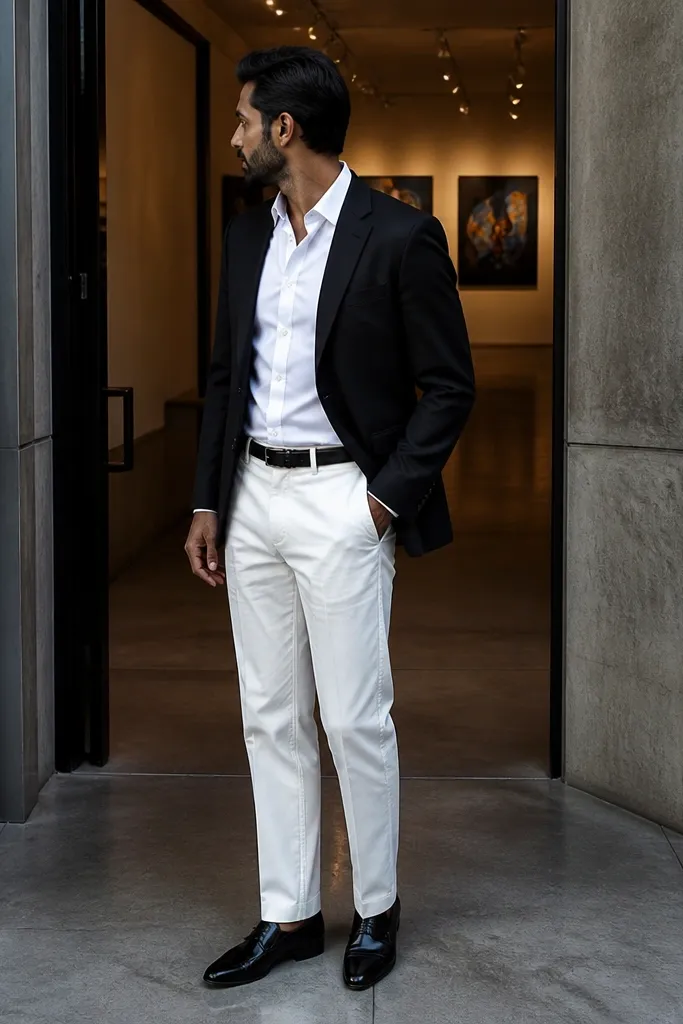
Poplin is crisp and holds shape, so it makes the monochrome look feel sharper than a soft cotton shirt. The blazer gives structure, and a slim belt creates a clean break at the waist that makes your torso look longer. This is a great choice for men who want a minimalist look without it turning into “too plain.” It also works well for lighter skin tones because the white stays bright without looking yellow. The result is a clean, tailored silhouette that looks good in street photos and indoor lighting.
Choose white trousers with a structured fabric and a rise that sits where you like your best proportions. Then add a white poplin shirt tucked in fully, with a collar that sits flat and a fitted chest. Put on a black blazer in matte wool and keep the jacket length just covering the seat — not too long. Finish with a slim black belt, black leather loafers, and a watch with a dark strap.
Slim belt + clean tuck makes this look feel intentional even with simple pieces.
Avoid thick, wide belts — they interrupt the clean white line.
10. Black blazer + white shirt + subtle black tie (no pattern) + white trousers
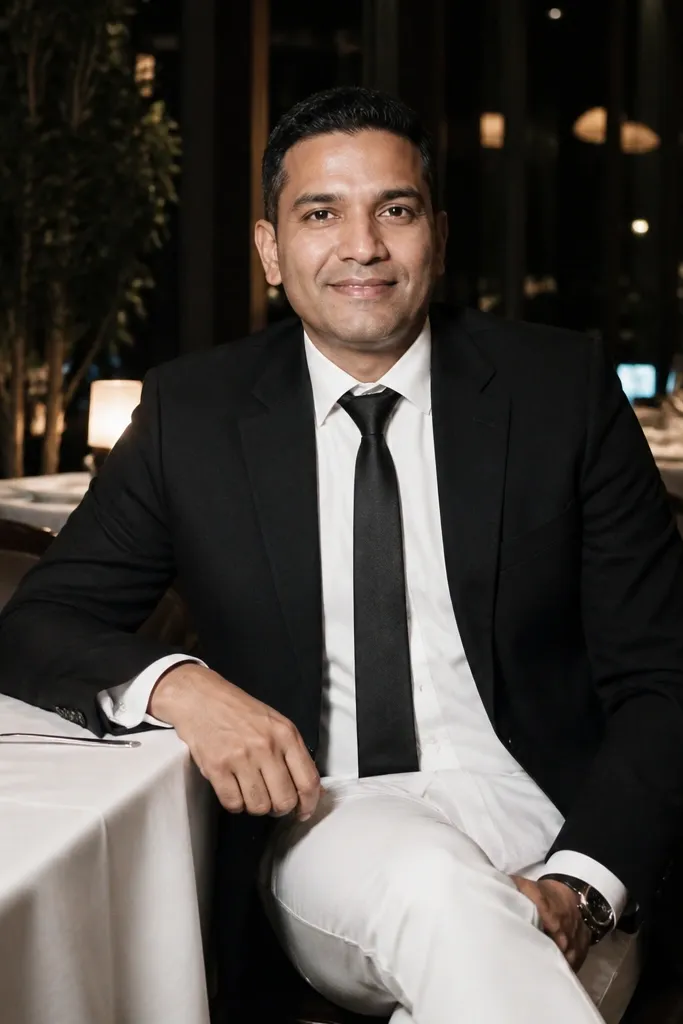
A plain black tie is the fastest way to upgrade the outfit for events that want more than casual. It balances the white pants with a controlled amount of black around the chest and neck. Keep the tie matte (silk satin can look too shiny next to white in photos). This look is especially good if you want to look tall and structured because the tie pulls the eye upward. It also flatters men with broader shoulders by adding a clean vertical line rather than adding more width.
Start with white trousers in a medium-weight fabric that holds creases. Then wear a white dress shirt and keep the collar crisp, tie knotted neatly with the tip landing around your belt line. Add a matte black blazer with standard lapels (not oversized). Finish with black leather dress shoes and a belt in the same black tone; keep pocket square minimal or matching white.
If your tie is matte, your blazer can be slightly textured — it looks balanced instead of flat.
Skip patterned ties — small patterns can clash with the strong black-white contrast.
11. Black blazer + white shirt + black pocket square edge (micro contrast)
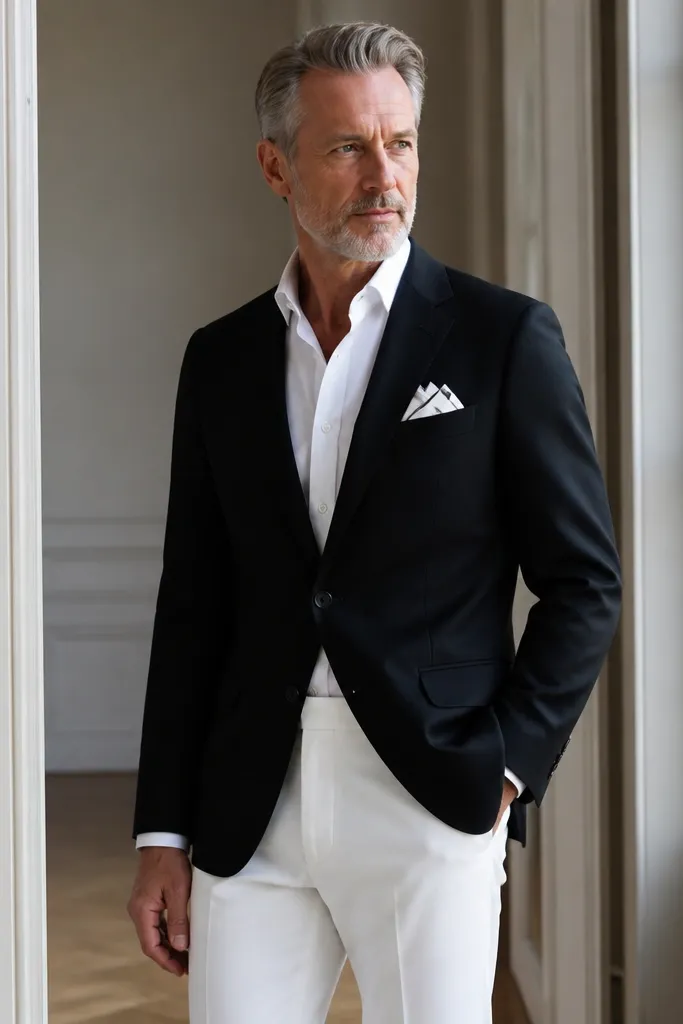
This look is for people who love the monochrome but still want a point of style. The black blazer and white pants do the big contrast. The pocket square adds a tiny second layer so the outfit looks styled, not assembled. Use a pocket square that’s white with a black border or a black corner — it’s visible, but it doesn’t fight the shirt. This is a strong choice for guys who feel plain in full monochrome, especially in photos where everything can blend into one block of white.
Start with white trousers in a structured fabric so the leg line looks clean. Then wear a crisp white shirt under a matte black blazer with a well-fitting collar. Add the pocket square by placing the black edge to peek just above the blazer pocket. Finish with black shoes and a belt matching the blazer tone; keep watch metal dark or black to stay consistent.
Keep the pocket square folded simply. A flat fold with a black border reads sharp.
Avoid big, highly patterned pocket squares — they steal attention from the blazer and pants.
12. Black blazer + white shirt + thin black suspenders + white trousers
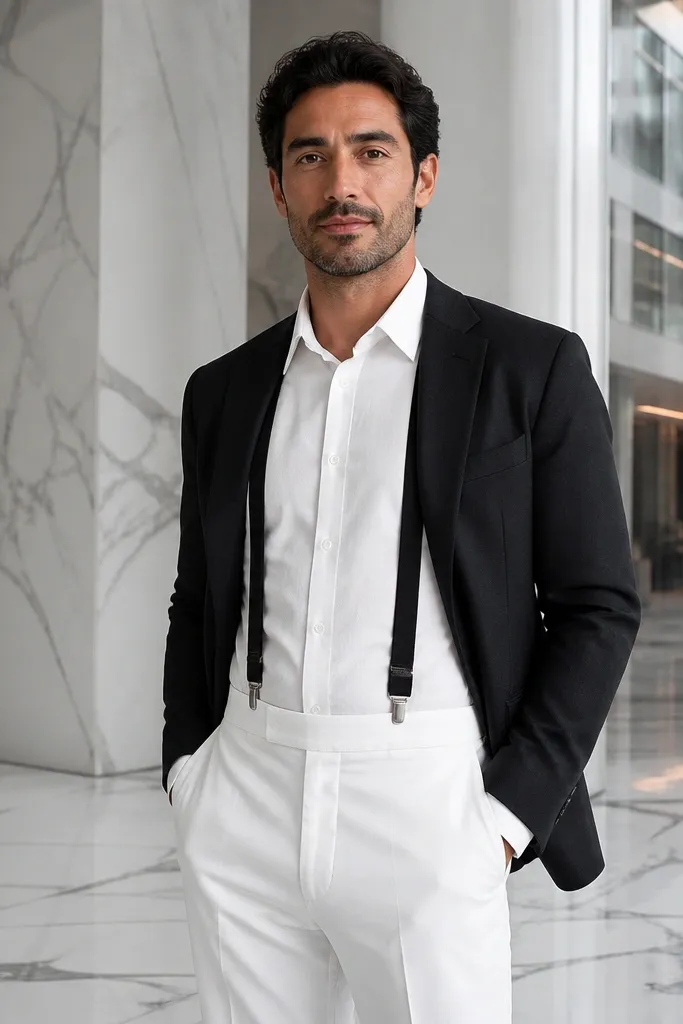
Suspenders add structure at the waist and make white trousers look tailored instead of casual. The thin black lines visually narrow and keep the white leg area clean. This combo works best when your trousers are high rise and have a neat front — no bulky belt loops showing. It’s a strong look for evening plans because it creates a more “built” silhouette even without a full suit. If you have a longer torso, suspenders help proportion by defining the midsection.
Choose white trousers with a high rise and clean front, and skip a belt if you’re using suspenders. Then wear a white shirt tucked in and add thin black suspenders with a matte finish. Put on the matte black blazer and adjust the suspender height so the shirt stays smooth. Finish with black leather loafers or oxfords and keep accessories simple — one watch or one ring, not both loud.
Use suspenders with a matte clip — shiny hardware looks cheap against white.
Avoid thick suspenders; they widen the midsection and ruin the clean contrast.
13. Black blazer + white shirt + black chinos in underlayer style (beltless look)
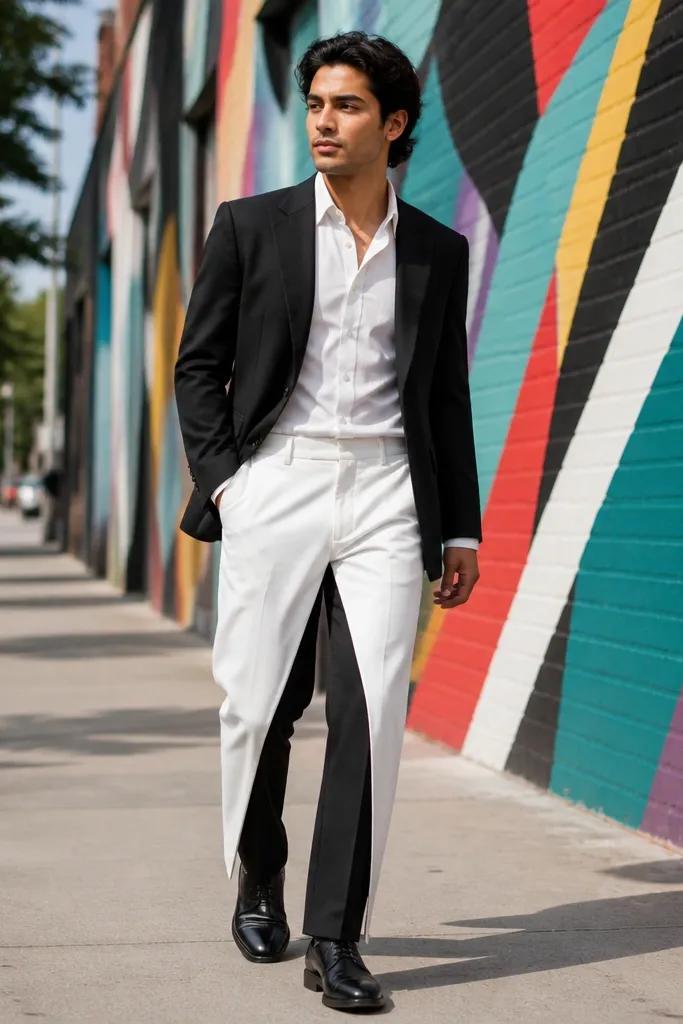
A beltless look can look sharp if the trousers fit properly at the waist. Here, the black blazer and white trousers create the contrast, while the clean waistband keeps the outfit modern and streamlined. This is especially good if you hate belt bulk or you want a slightly fashion-forward silhouette. The key is fit: the trousers must sit securely without gaps or sagging. Choose a trouser with a higher rise and a structured waistband so it doesn’t drift.
Start with white trousers that fit snugly at the waist and have belt loops removed or minimal hardware. Then wear a white shirt tucked in with a clean tuck and no bunching. Add a matte black blazer with a standard jacket length so the waist line stays visible. Finish with black leather shoes and a watch; if you need a tie, keep it plain and matte.
Good to knowIf your pants gap when you sit, beltless won’t hold — fix the fit first.
Common mistakeAvoid beltless styling with loose waist trousers — it looks like you’re borrowing clothes.
14. Black blazer + white shirt + white trousers with a black leather watch strap
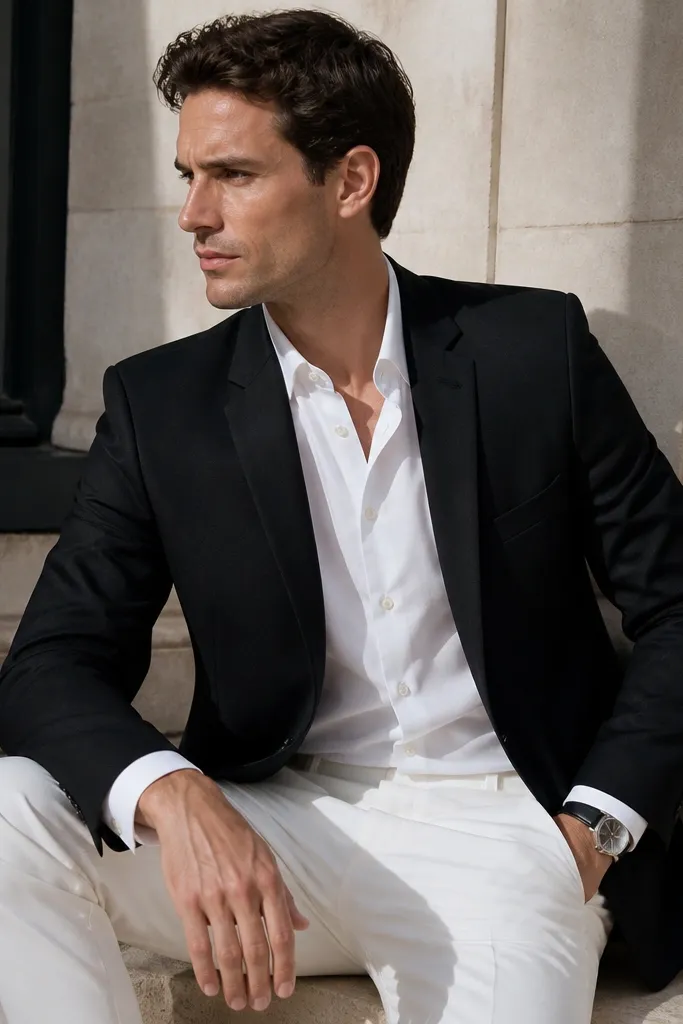
This is a small detail outfit that reads intentional. The black blazer and white trousers do the heavy lifting, but the black leather watch strap keeps the accessories grounded. When you use a watch in the same color family as your blazer and shoes, the outfit looks cohesive even if everything else is simple. It’s also a great “first try” option if you’re building a white pants wardrobe — you don’t need tie, pocket squares, or patterns. The look works for both men and women styling black blazers with white trousers, especially if you prefer clean lines.
Choose white trousers in opaque fabric and a black blazer with matte texture. Then wear a white shirt with a collar that sits flat and tuck it cleanly. Add the watch with a black leather strap and keep shoes either black leather or dark brown leather. If you want a more modern vibe, slightly shorten the trouser break and keep the blazer unbuttoned for a smoother line.
Good to knowMatch watch strap color to your belt/shoes — it’s the fastest cohesion trick.
Common mistakeAvoid silver-heavy accessories if your shoes and belt are black — mismatch looks accidental.
15. Black blazer + white shirt + micro-pattern scarf (only at the collar)
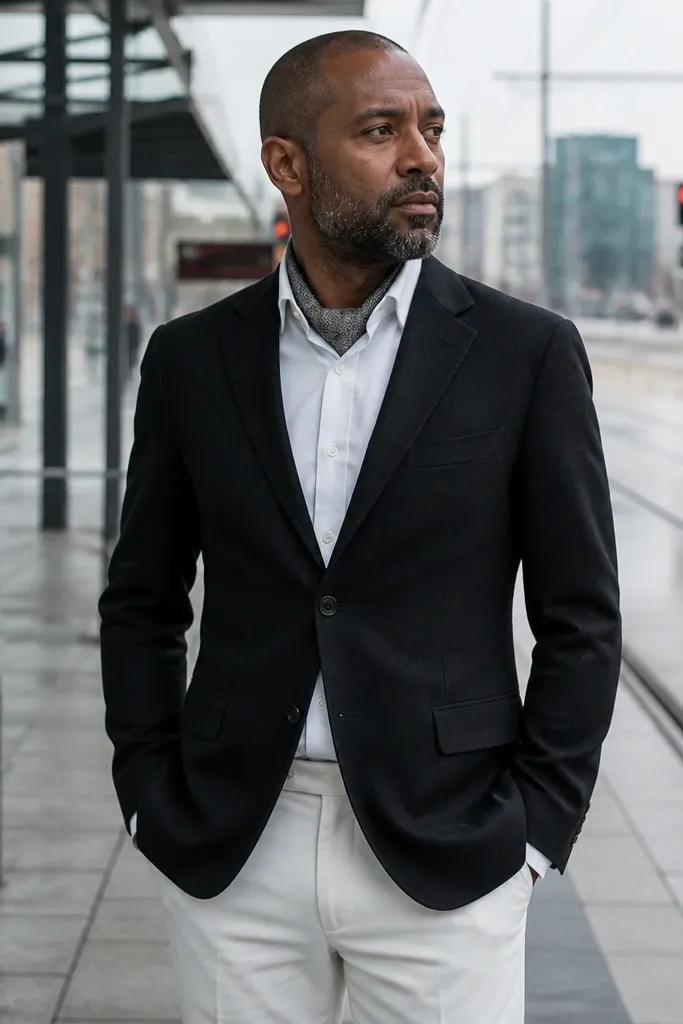
A micro-pattern scarf tucked at the collar adds personality without turning the outfit into a costume. Keep the pattern monochrome or with a tiny gray/black mix so it doesn’t fight the white trousers. This look works best when your pants are clean and solid, because the scarf is the only visual “noise.” If you’re building a modern white pants outfit men wardrobe, this is a smart way to add style for events where you want to stand out slightly. It also flatters men with broader necks because the scarf fills space without adding bulk to the shoulders.
Start with plain white trousers and a crisp white shirt under a matte black blazer. Then tuck a small scarf at the collar opening so only a narrow band shows above the shirt line. Keep the scarf fabric lightweight (cotton or thin silk) so it sits flat. Finish with black shoes and a belt that matches; don’t add a pocket square unless it’s white and simple.
Good to knowKeep scarf visibility to a few centimeters at the collar — that’s what keeps it tasteful.
Common mistakeSkip big scarves that hang down — they break the clean vertical lines.