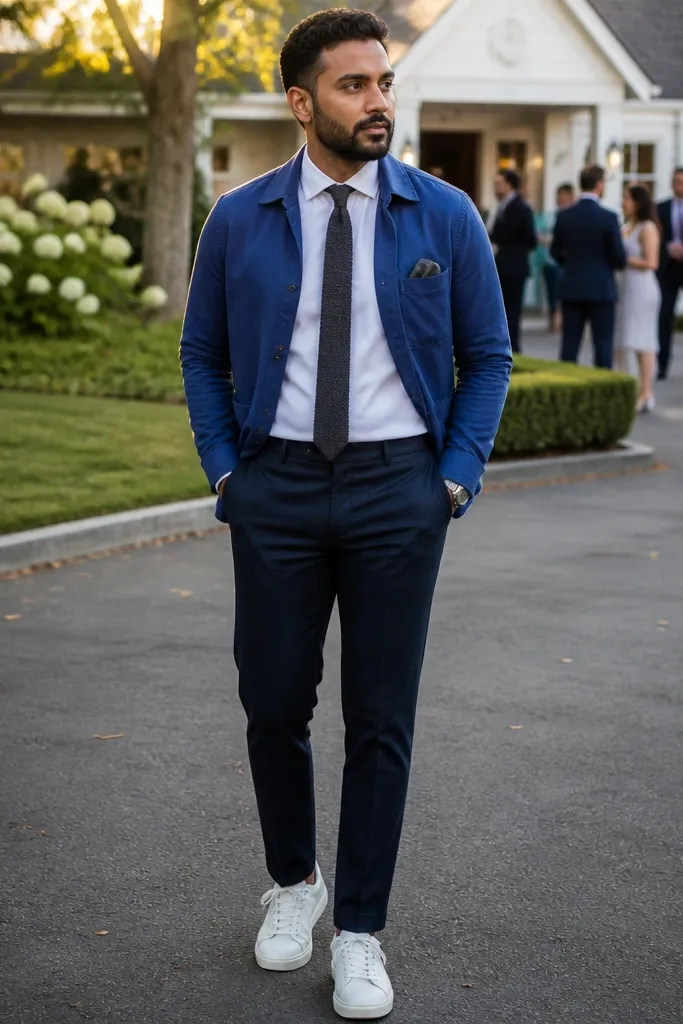
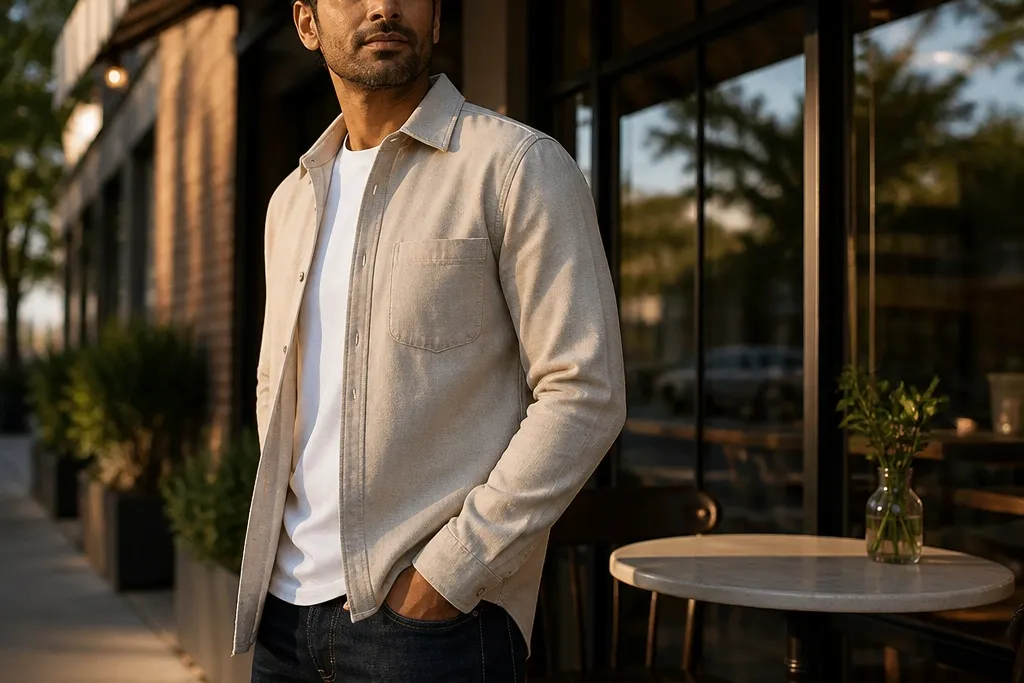
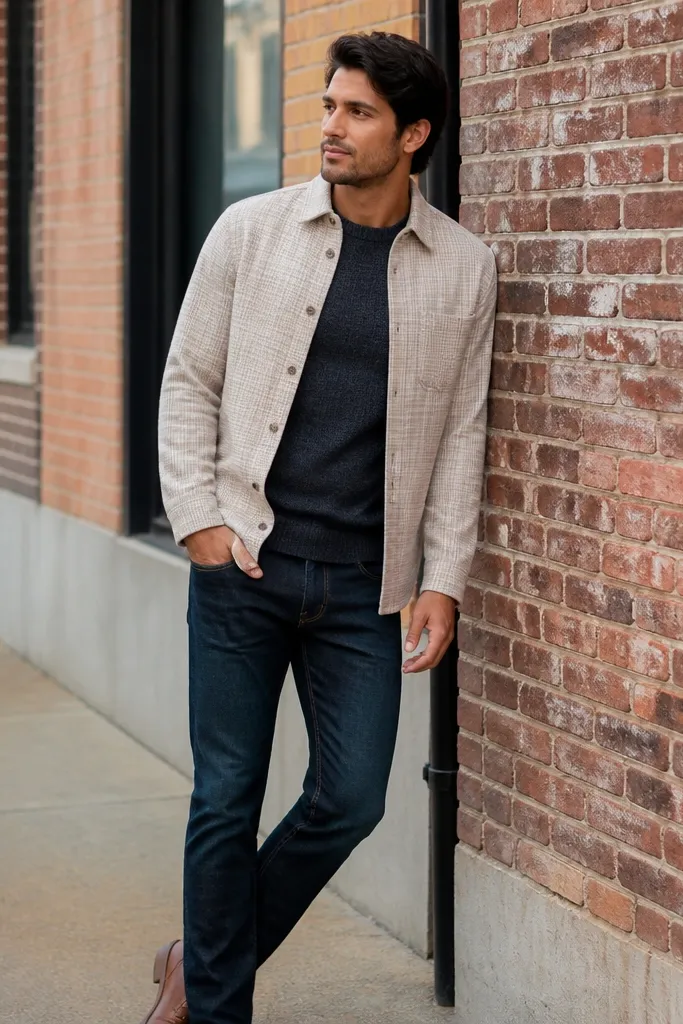
1. Pale blue flannel buttoned to mid-chest with dark indigo jeans
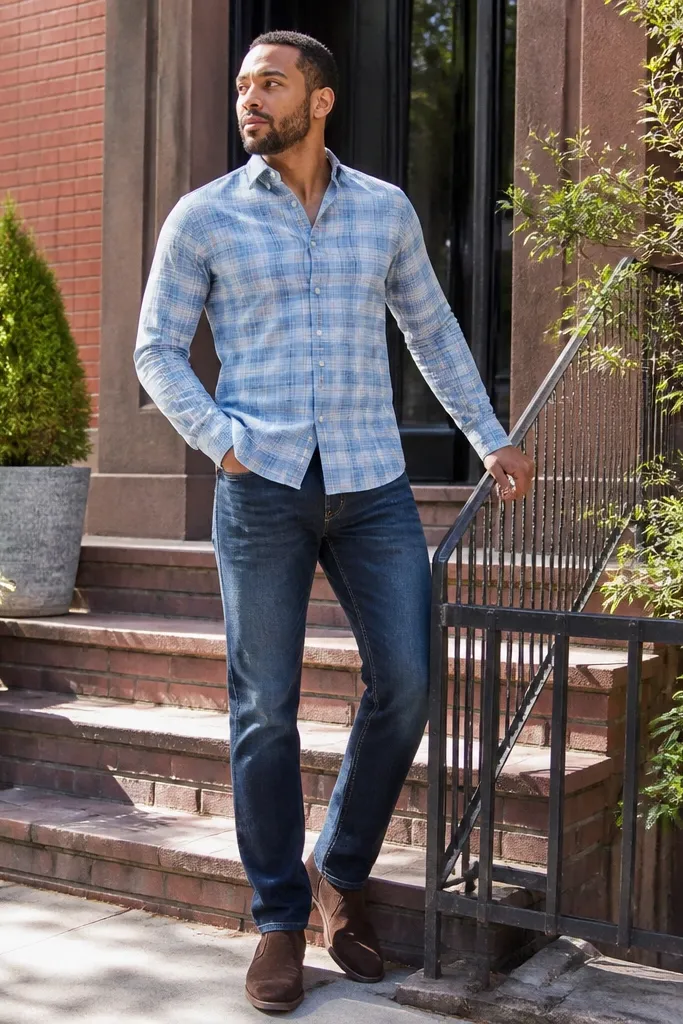
This is the cleanest light flannel styling setup because the shirt stays structured without adding bulk. Pale blue reads fresh in daylight, and dark indigo jeans ground it with contrast. Button the flannel to mid-chest so the collar sits flat and the torso looks longer. If you have a shorter torso, this helps because the button line creates a vertical rhythm. For most skin tones, pale blue also flatters better than bright red checks, which can pull attention to redness.
Good to knowChoose a flannel with a slightly higher collar stand so it doesn’t collapse when buttoned.
Start with a light blue flannel that fits the shoulders — no pulling at the seam. Then wear it buttoned to about the second or third button, with the sleeves unrolled or lightly rolled. Finish with dark indigo jeans and white low-top sneakers, plus a simple belt in brown or oxblood to keep the palette tight.
Common mistakeAvoid a flannel that hangs past your belt by more than 2-3 inches.
2. Oatmeal flannel half-tucked over straight khakis
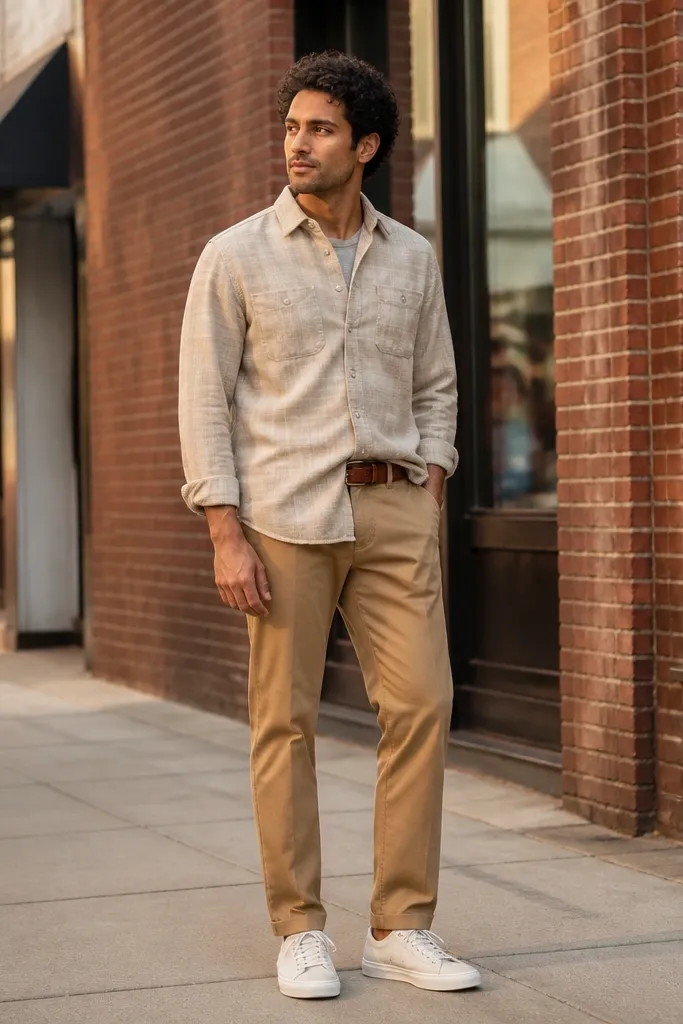
Oatmeal flannel looks expensive because it’s neutral and soft on the eye. A half-tuck adds structure without making you look like you’re trying too hard. Straight khakis keep the silhouette clean, and the warm tone pairing makes the outfit feel cohesive even when you add a simple tee. This works for lean guys because the tuck creates a waist line, and it helps broader builds by breaking up the torso with a defined front. It also photographs well because the light fabric color reduces harsh contrast.
Good to knowPick a flannel with thin lines instead of large bold checks for a cleaner half-tuck look.
Begin with an oatmeal flannel that hits at the belt line or just below. Add a plain white or cream tee underneath, then tuck the front of the flannel 2-4 inches while leaving the back untucked. Wear straight khakis and tan loafers or suede desert boots, and keep the belt the same color family as the shoes.
Common mistakeSkip a full tuck — it usually makes light flannel bunch at the waistband.
3. Light grey flannel layered over a fitted white crew tee
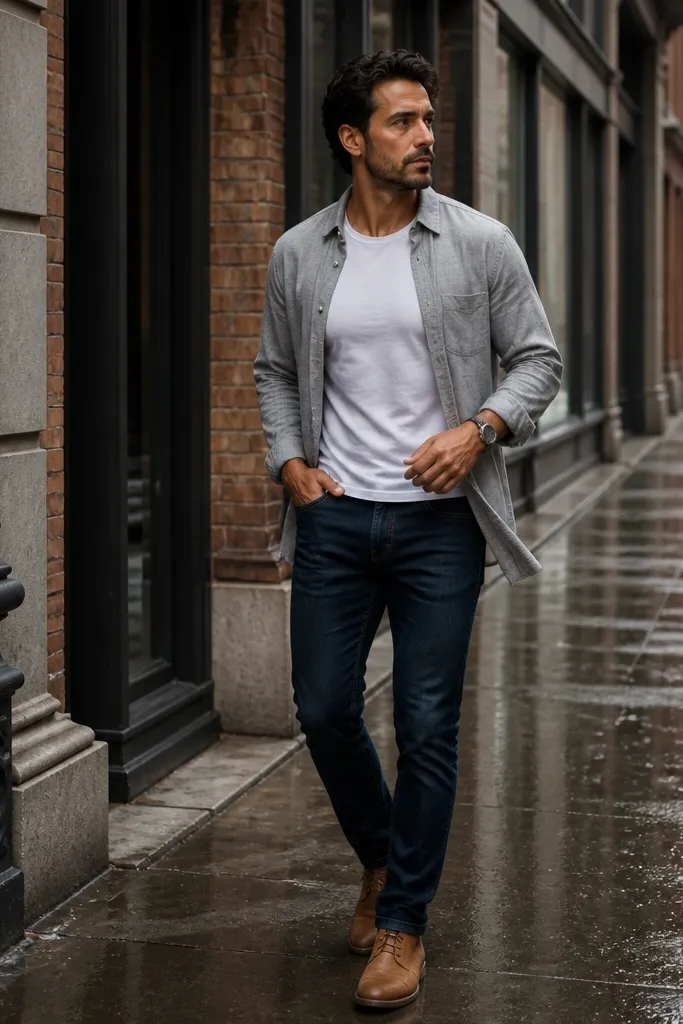
When you keep the base tee fitted and the flannel light, you get a sharp “layered” look without adding weight. Light grey is the easiest neutral that doesn’t clash with most shoes, and it makes your jeans look richer. Wear the flannel open so the tee forms a clean center line — that helps the eye move vertically and makes the outfit feel taller. This is a good move for men who hate bulk but still want texture. It’s also forgiving across skin tones because grey doesn’t pull attention the way very saturated colors can.
Start with a fitted white crew tee that doesn’t hang past your belt. Then put on a light grey flannel open, with the hem resting at your belt — adjust by choosing the right size or tailoring length. Finish with black or dark charcoal jeans and either white sneakers or black Chelsea boots for a crisp finish.
Roll the flannel sleeves once so your wrists show a little.
Don’t wear a boxy flannel over a baggy tee — the silhouette turns shapeless.
4. Forest green flannel with black denim and a simple chain
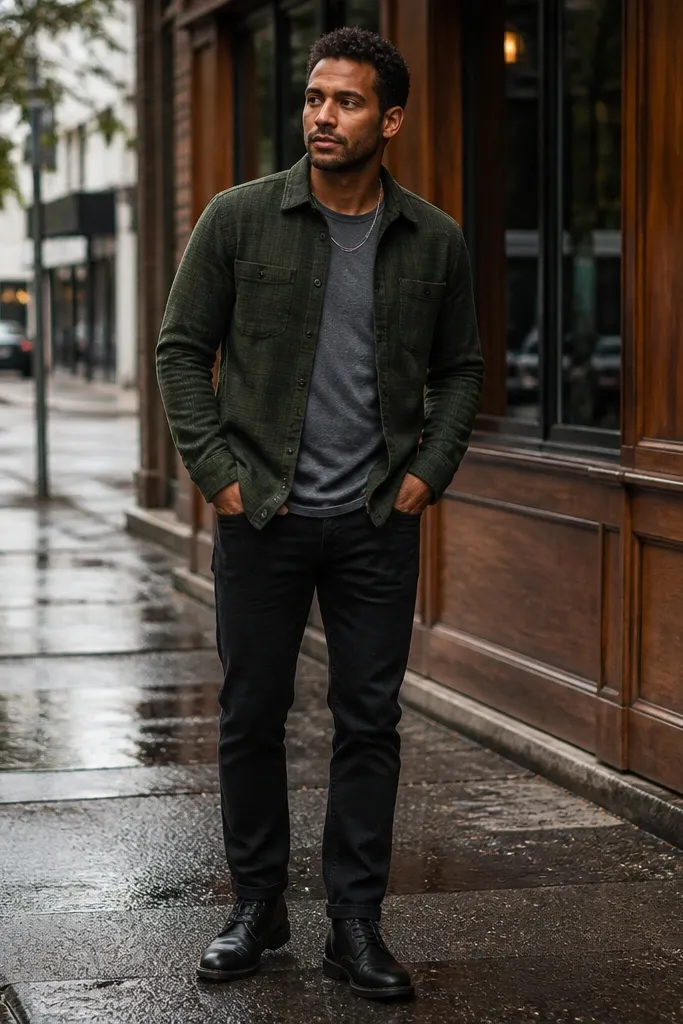
Forest green flannel is one of the best “light flannel styling tips men mistakes” fixes because it looks intentional and not like you grabbed whatever was in the closet. Black denim adds contrast and makes the green pop without needing bright accessories. Keep the flannel slightly open at the top so the neckline doesn’t feel tight, and use a plain tee underneath to keep the focus on color. This pairing works especially well for men with darker hair because the green doesn’t wash you out. In photos, the dark denim background makes the flannel’s texture show.
Good to knowMatch the shoe undertone: if your flannel leans blue-green, stick with cooler greys or whites.
Choose a forest green flannel that’s light enough to breathe — you should be able to feel your tee through it when you put your arms up. Wear it over a black or white tee, then pair with black denim in a straight or slim cut. Add white sneakers for a modern look, and if you want jewelry, keep it one small chain with a matte finish.
Common mistakeAvoid brown boots with this combo unless the flannel has obvious warm undertones.
5. Tan flannel over navy chinos with a cuffed sleeve
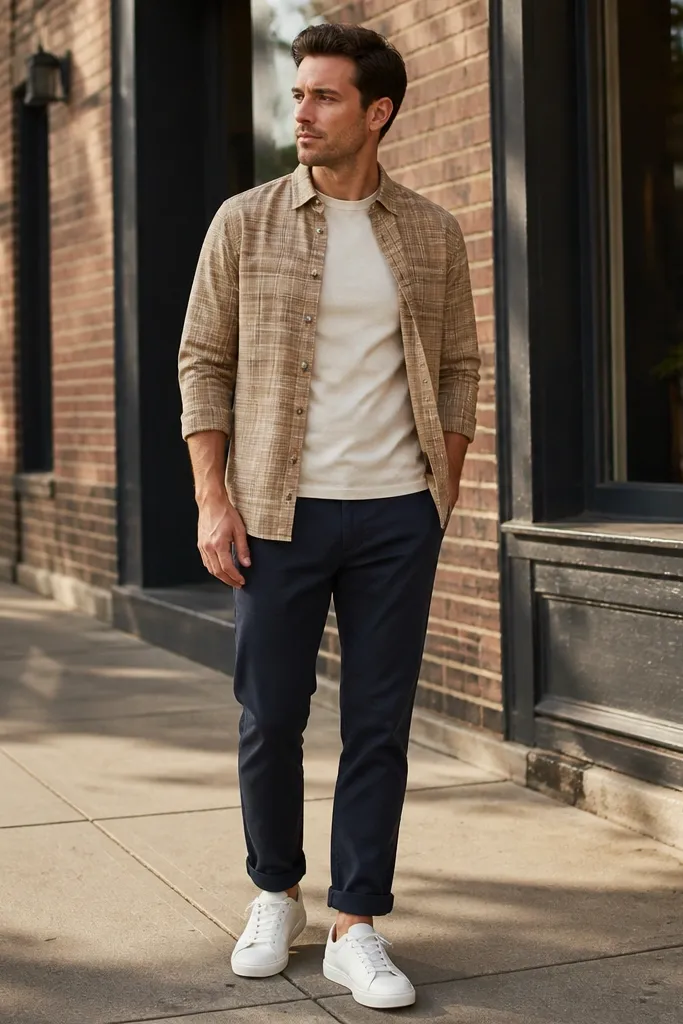
Tan and navy is a clean, classic pairing that looks sharp without being loud. The warm tan flannel adds softness, while navy chinos bring structure and a deep color base. Cuffing the sleeves is the detail that makes light flannel look “styled” rather than casual — you show a bit of forearm and the outfit reads sharper. This works well for men who are medium height because it creates a clean horizontal break at the wrist. It also flatters most skin tones since tan doesn’t compete with undertones.
Good to knowIf your chinos are slim, keep the flannel slightly open to avoid a tight waist seam.
Start with a tan flannel that lands at your belt when worn open. Add a simple tee in white or light cream, then wear navy chinos with a straight leg. Cuff sleeves once or twice depending on your arm length, and finish with brown leather boots or derby shoes.
Common mistakeSkip rolled sleeves that bunch at the cuff — it looks messy.
6. White flannel with blue jeans and a dark belt
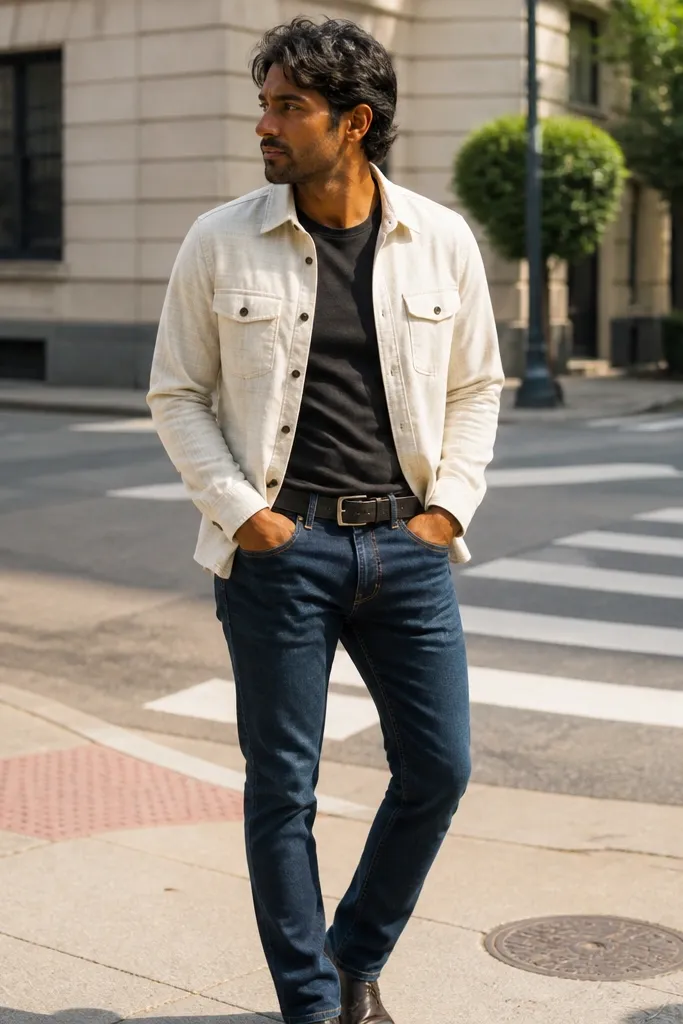
White flannel can look clean and crisp when you control what’s underneath. Pair it with blue jeans so the outfit has a strong contrast but stays light. A dark tee under the white flannel adds depth and keeps the look from washing out, especially in daylight. This setup works for men who want a “summer flannel” vibe without going full beachy. The key is that the flannel must be light in weight and not oversized — otherwise white turns into a shapeless sheet.
Good to knowLook for flannel with a slight texture but a smooth face so it doesn’t look wrinkled in photos.
Pick a white flannel that fits close through the shoulders and doesn’t gape at the buttons. Wear it open over a dark tee, then use a dark belt to anchor your waist. Choose medium or light blue jeans for the most photogenic contrast, and add clean sneakers in white or off-white.
Common mistakeDon’t wear white flannel fully buttoned if it’s see-through or thin enough to show the tee color too strongly.
7. Red-brown check flannel with dark charcoal trousers
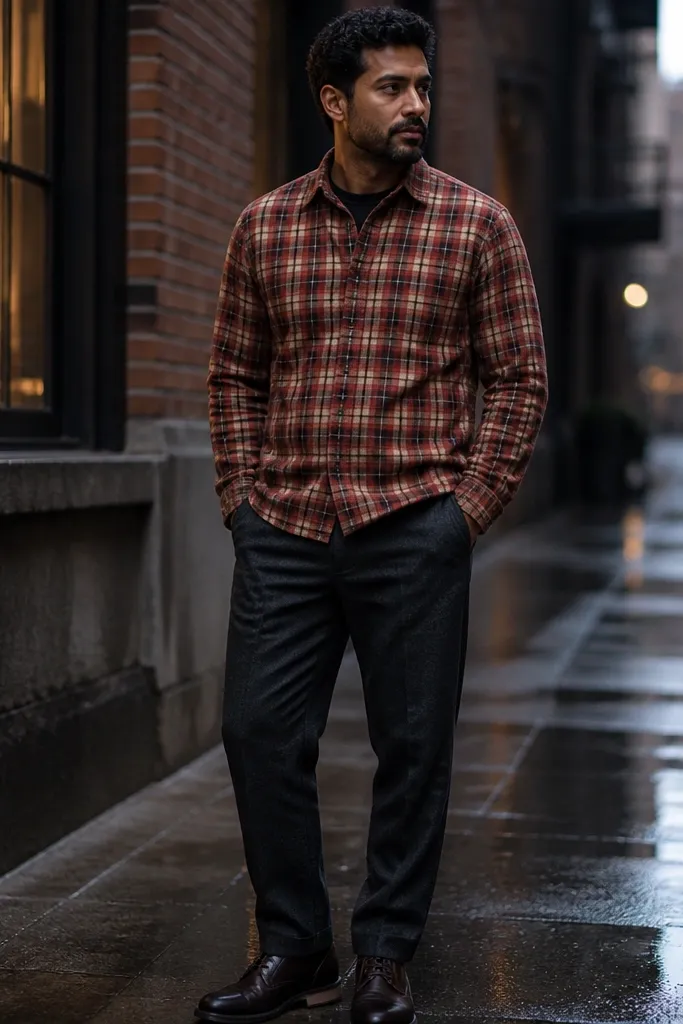
A red-brown check flannel looks best when you keep everything else dark and simple. Charcoal trousers make the warm check feel grounded, and the contrast keeps the pattern readable. Wear the flannel partly buttoned to create a neat neckline, then keep the trousers straight or tapered so the outfit doesn’t look top-heavy. This is a strong option for evenings because the warm check shows texture under indoor lighting. It also flatters men with cooler undertones because the warm red-brown adds balance.
Start with a light flannel check that has medium spacing — not tiny micro-checks. Pair it with dark charcoal trousers and a plain black or cream tee underneath. Keep the flannel hem at the belt line and add black or dark brown leather shoes, not heavy work boots.
Choose socks that match the trouser color, not the flannel, for a cleaner photo line.
Avoid pairing the check with another busy pattern like striped socks.
8. Pastel pink flannel open over a navy tee
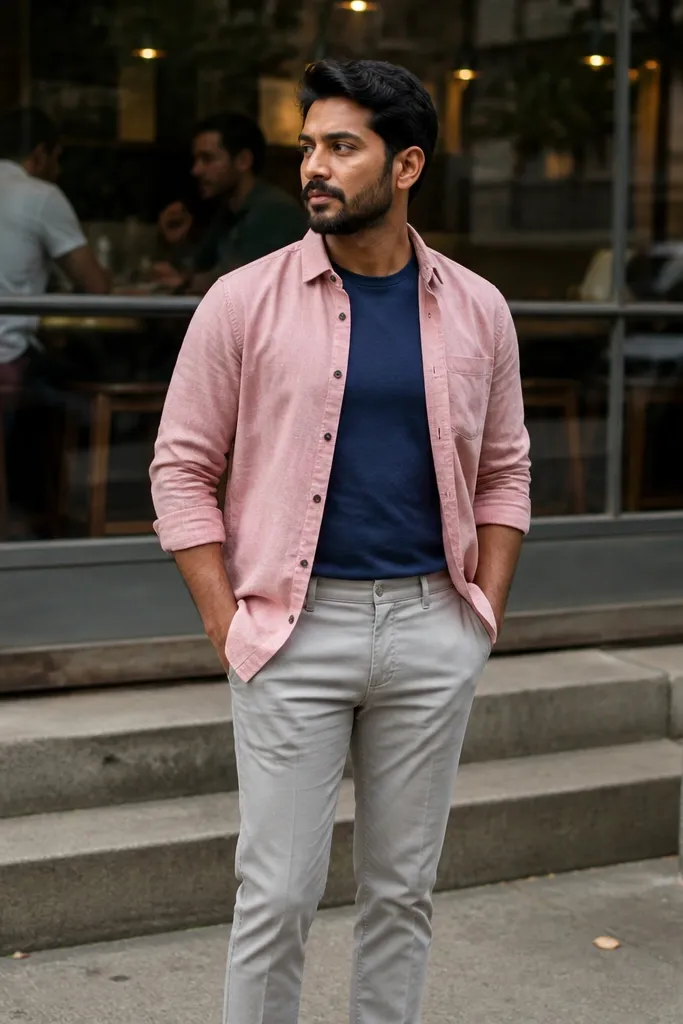
Pastel pink flannel is a high-impact color choice that still feels wearable when it’s paired correctly. Open it over a navy tee for strong contrast without looking overly sweet. Light grey pants keep the palette airy and make the pink look intentional instead of loud. This works for men who want color but don’t want to dress like it’s a themed event. In photos, pastel pink catches light nicely and makes your outfit look “fresh” even in mild weather.
Good to knowIf your pink flannel is slightly warm, use cream pants; if it’s cooler, use light grey.
Choose a pastel pink flannel that’s light enough to drape, not stand stiff. Wear it open over a fitted navy tee, then pair with light grey pants in a straight cut. Finish with clean white sneakers or tan suede low-tops to keep the look soft.
Common mistakeSkip pastels with black pants unless you keep the rest extremely minimal.
9. Blue stripe flannel with white denim and tan boots
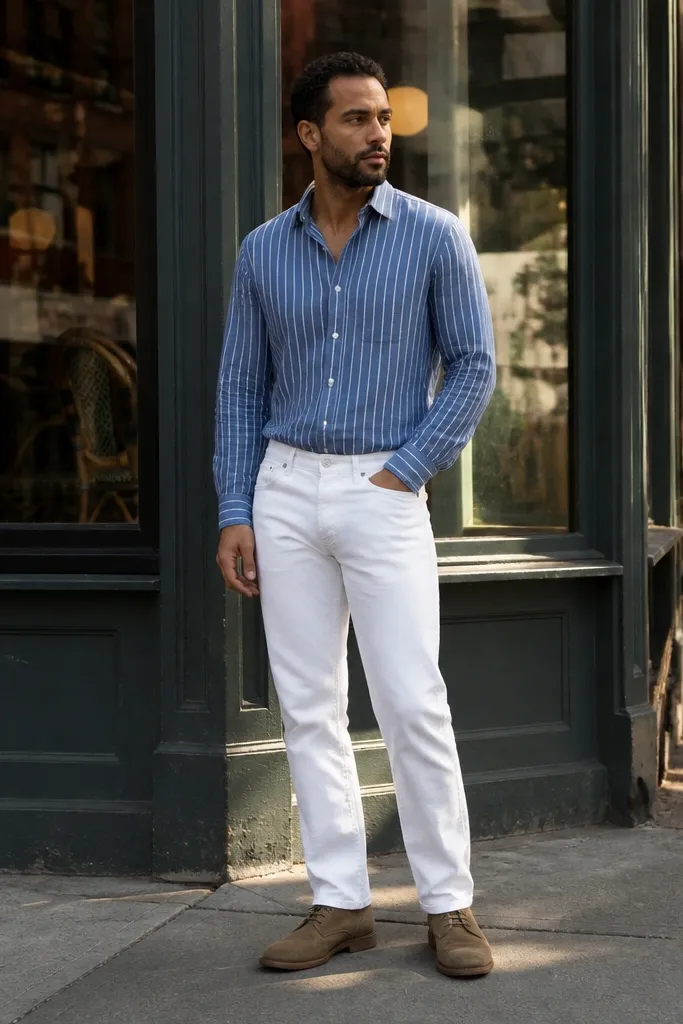
Stripe flannel is easier to style than checks because the lines guide the eye and reduce pattern clutter. Blue stripes on a light base look crisp with white denim, which is why this combo photographs so well. Tan boots add warmth and depth, turning the outfit into a full look instead of a casual top. This works best for slim to average builds because the vertical stripes create a lengthening effect. If you’re broad through the shoulders, keep the flannel size closer to your frame and avoid extra room.
Start with a blue stripe flannel that fits cleanly at the shoulders and doesn’t billow at the chest. Wear it open over a white or light tee, then pair with white denim in a straight or slim taper. Add tan boots and keep the belt in the same tan family.
Roll sleeves once and keep the flannel hem slightly shorter than your jeans rise.
Avoid pairing stripe flannel with loud graphic tees — the patterns fight.
10. Navy flannel with sand chinos and a grey knit beanie
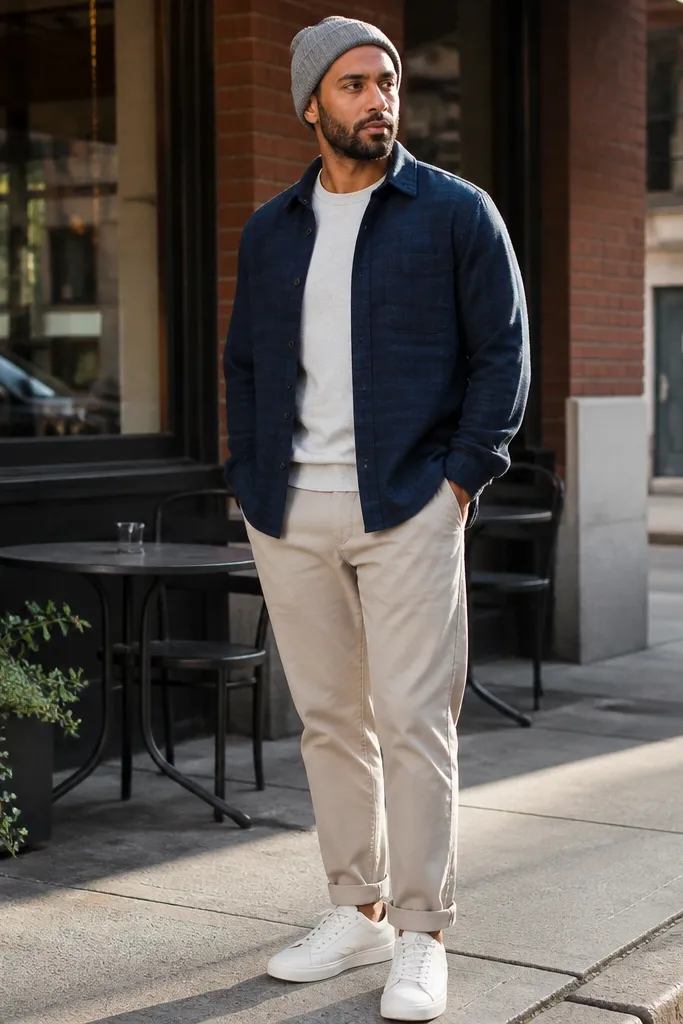
Navy flannel gives you that flannel texture with a darker base that hides wrinkles. Sand chinos keep the outfit light and warm-weather friendly, while the contrast makes the flannel look intentional. Add a simple light tee and keep the flannel open so it doesn’t feel heavy. This is a strong choice for men who want a “fall-but-not-fully” look. The sand and navy pairing also flatters most skin tones, especially if your hair is dark or your eyes are cool-toned.
Pick a navy flannel in a lighter fabric weight with a clean collar. Wear it open over a white tee, then choose sand chinos with a straight leg. Add brown loafers or suede sneakers, and keep accessories minimal — one watch or one bracelet is enough.
If your chinos are slightly warm beige, choose a flannel that leans blue, not purple.
Skip overly thick flannel in navy — it turns the outfit into winter bulk.
11. Two-tone layering with a white base and pale blue flannel
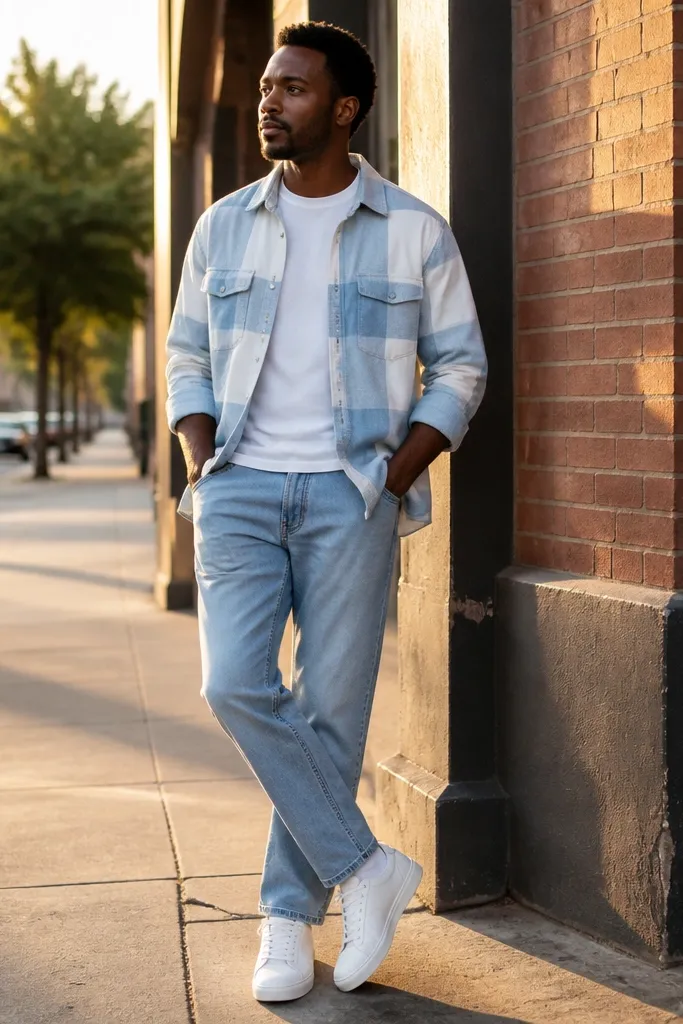
Two-tone layering makes light flannel look styled because the base color creates a clean backdrop. Use a white tee under pale blue flannel, then keep the bottom simple with light wash jeans. The contrast between white and pale blue makes the flannel read airy, not heavy. This works for men who feel flannel makes them look darker or older — the white base lifts the whole outfit. In photos, the lighter palette also keeps your face brighter.
Start with a fitted white tee that sits close to your body. Add pale blue flannel open, leaving the hem at belt level, then choose light wash jeans with a straight or slim cut. Finish with white sneakers and a watch with a neutral strap.
Choose flannel with a small scale pattern so the two-tone effect stays clean.
Don’t add a third busy color like a patterned belt.
12. Flannel over a fitted black t-shirt with olive overshirt
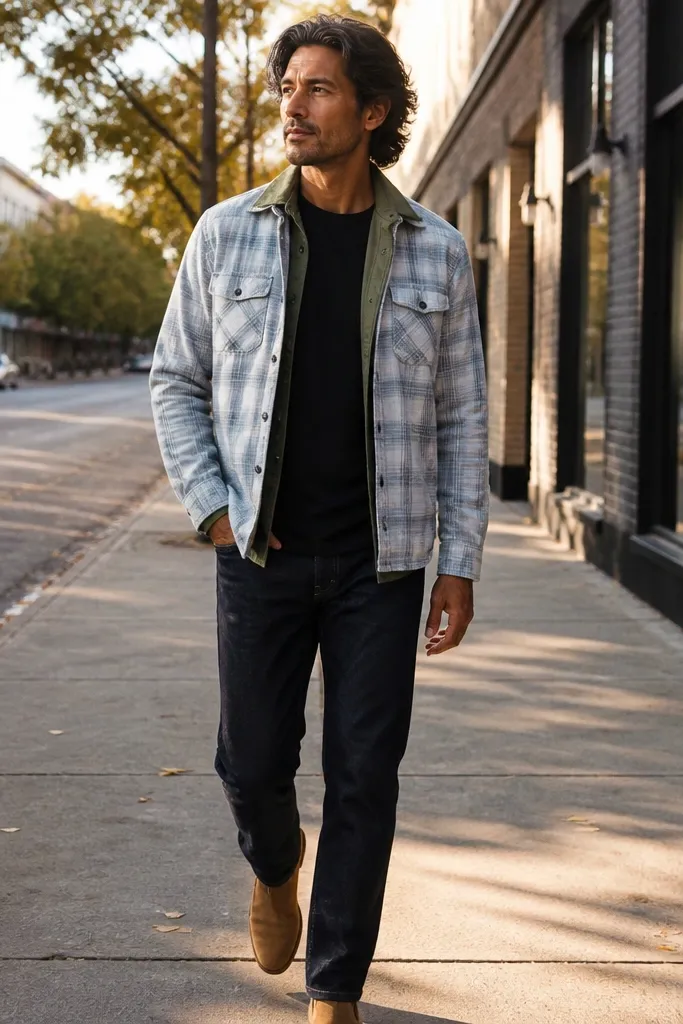
If you love layering, do it with control. Light flannel over a fitted black tee gives you texture at the center, while an olive overshirt adds a second layer without overwhelming the outfit. The key is that the outer layer should be slimmer than the flannel, so you don’t stack volume at the shoulders. Olive with black also looks grounded and masculine in photos. This setup suits tall guys because it creates a vertical block from neckline to hem, but shorter guys can wear it too by keeping the flannel hem at the belt.
Good to knowIf your overshirt has a pocket flap, keep it closed so the front stays flat.
Start with a fitted black tee, then layer a light flannel open or buttoned only at the top. Add an olive overshirt as the outer layer, leaving some flannel visible at the front placket. Finish with dark jeans and black sneakers or boots, and keep the outfit’s color palette to three tones total.
Common mistakeAvoid three layers that are all loose — that’s where the “messy” look comes from.
13. Light flannel as a jacket with a tee and chinos
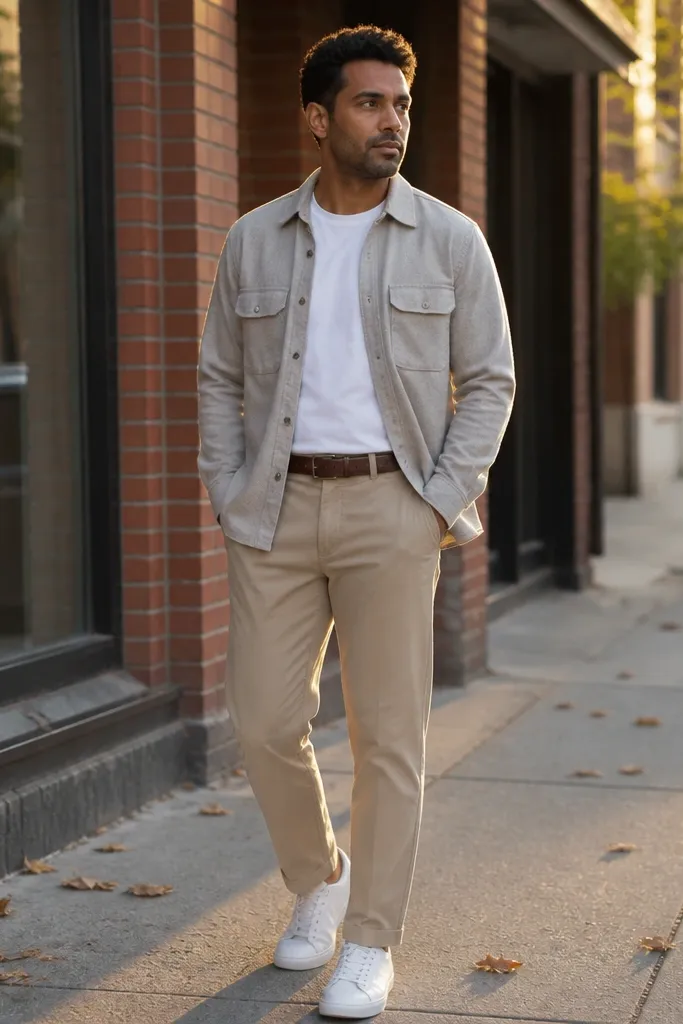
Wearing light flannel like a jacket is one of the best styling moves because it changes the silhouette. Instead of the flannel being “just a shirt,” it becomes a structured layer that frames your torso. Use a plain tee under it and keep chinos tailored so the outfit reads intentional. This works for men who hate button-up vibes but still want that flannel texture. It also photographs well because the flannel forms a defined frame around your face and upper body.
Good to knowUse a belt that matches your shoe to anchor the frame when the flannel is open.
Choose a light flannel in a slightly longer length, but not too long — aim for hem near mid-zipper area on your pants. Wear it open like a jacket over a fitted tee, then pair with chinos in navy, stone, or olive. Add loafers or clean sneakers and keep the collar visible — don’t let it collapse.
Common mistakeDon’t treat a thin flannel like a heavy coat — if it flutters, size down.
14. Check flannel with a clean quarter zip knit
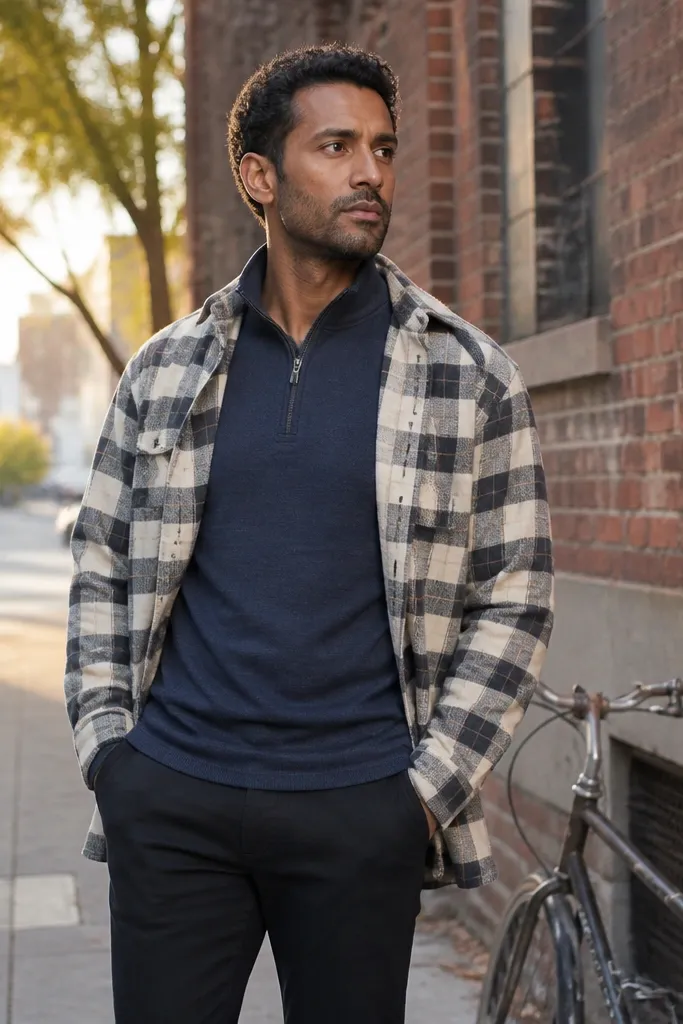
A quarter zip knit under a flannel is a smart way to make light flannel look layered without adding bulk at the shoulders. The knit adds warmth and shape, while the flannel adds texture and pattern. Keep the flannel light and open so the quarter zip neckline looks clean. This suits men who want a more polished vibe than a tee but still want the casual flannel vibe. It also works for men with broader chests because the quarter zip helps the center lay flatter.
Good to knowKeep the quarter zip collar high enough that it shows above the flannel placket.
Start by choosing a quarter zip in solid grey, cream, or navy. Put on the flannel open over it, then button only the top button or leave it fully open. Pair with straight jeans and either leather boots or minimalist sneakers, and keep the flannel pattern scale medium so it doesn’t look chaotic.
Common mistakeSkip a thick knit — it makes the flannel feel like an extra burden.
15. Chambray-blue jeans + light flannel monochrome look
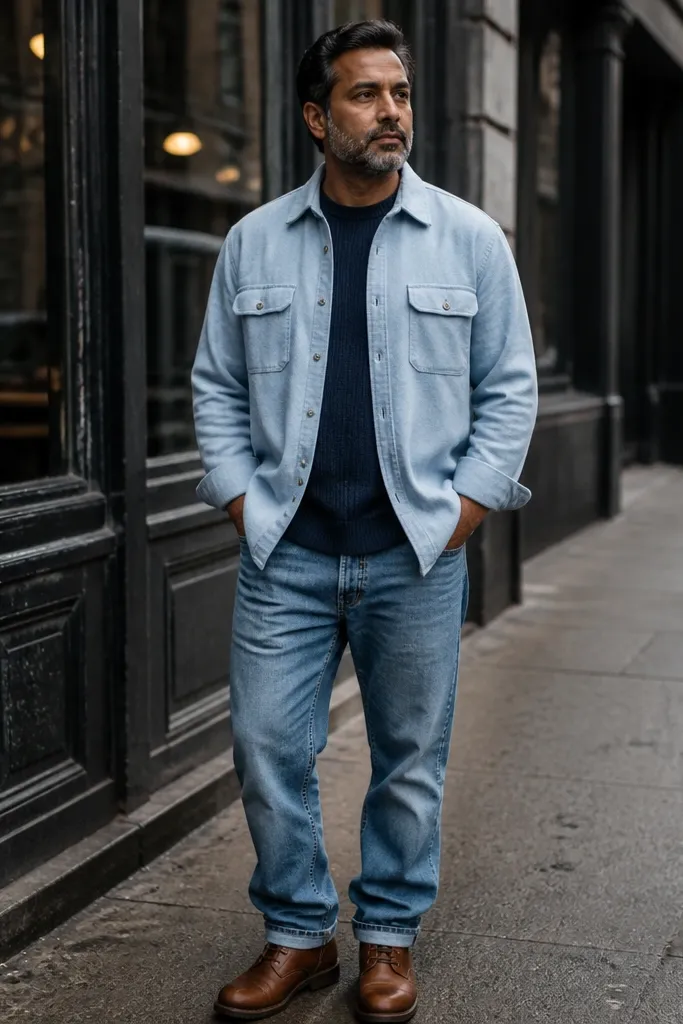
Monochrome blue is one of the easiest ways to look put together with minimal effort. Light flannel in a similar blue tone to chambray jeans creates a smooth color story, and it makes the outfit look deliberate in photos. The texture differences between chambray and flannel add interest without extra patterns. This is flattering for most body types because it reduces harsh contrast lines. If you’re trying to look slimmer, monochrome reduces visual breaks around the hips.
Good to knowIf your flannel is slightly greenish blue, avoid matching it with very pure cobalt jeans.
Choose a light flannel in a blue shade close to your jeans — not exact, just in the same family. Wear it open over a white tee, then add matching blue jeans in a straight or slim cut. Finish with white sneakers and a simple watch, and keep your belt either brown or neutral grey depending on your shoes.
Common mistakeDon’t mix too many blues at once — two shades plus shoes is enough.
16. Light flannel with rolled sleeves and a clean watch stack
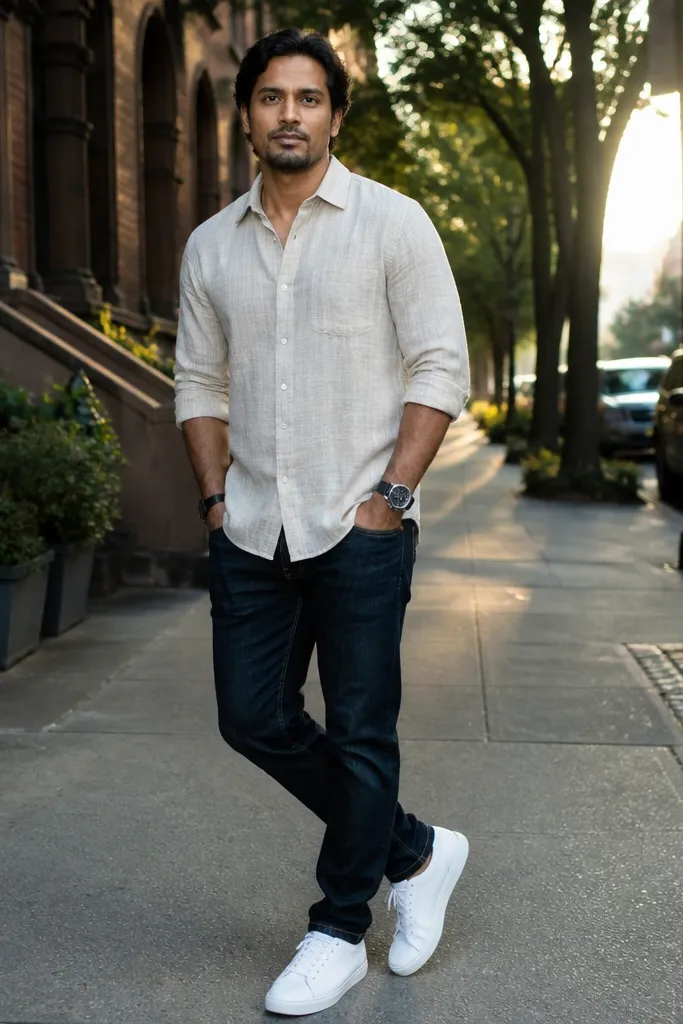
This look is about making the sleeves look intentional. Rolled sleeves pull attention to your wrists and hands, which makes a thin flannel feel sharp instead of casual. Pair it with dark jeans and clean sneakers so the outfit stays crisp and photogenic. A simple watch adds a focal point — flannel is texture, so you want one clean accessory that reads polished. This works for men of all builds because it’s mostly about proportions, not body type. In photos, rolled sleeves also help the flannel collar and front placket look more aligned.
Good to knowRoll with a firm crease — soft, uneven rolls look sloppy.
Start with a light flannel that fits the shoulder seam cleanly. Roll sleeves once or twice so the cuff sits mid-forearm, then wear the flannel open over a fitted tee. Pair with dark jeans and white sneakers, and add a watch with a neutral strap like black leather or steel.
Common mistakeAvoid sleeves that bunch at the elbow — it ruins the clean line.
17. Light flannel tucked into slim black jeans with a tapered hem
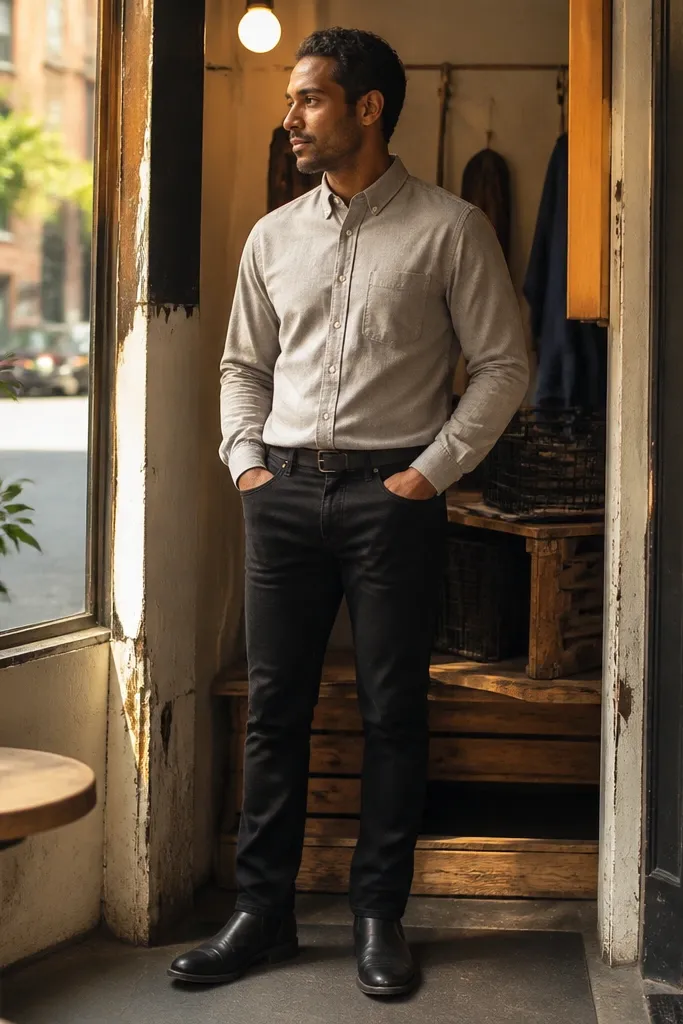
A full tuck can work for light flannel if the fit is right and the hem isn’t too long. Slim black jeans create a clean base, and the tuck makes the flannel look like it belongs to your outfit instead of hanging around. Choose a flannel that isn’t oversized through the torso, otherwise the tuck will pull fabric tight and look awkward at the buttons. This setup flatters lean to average builds because it keeps the silhouette sleek. It also looks sharp for dinner or weekend events where you want texture but not a heavy jacket.
Good to knowIf the flannel is long, hem it — don’t rely on tucking to fix length.
Start with a flannel that hits at your waistband when buttoned. Tuck it in fully, then adjust the front placket so it lies flat — smooth the fabric at the belt line. Wear slim black jeans and finish with black Chelsea boots or minimalist sneakers, plus a belt that matches the shoe color.
Common mistakeAvoid full tucks with a flannel that gaps at the buttons.
18. Light flannel and shorts combo with a longline tee
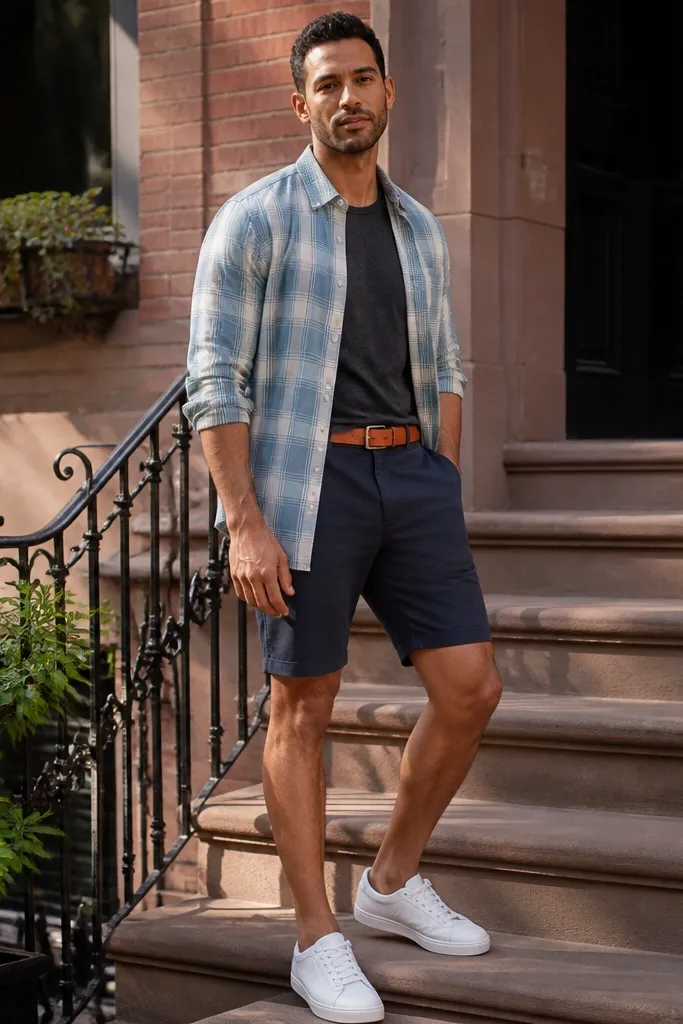
Yes, you can wear light flannel with shorts and still look good. The trick is to use a longer tee under the flannel so the center looks continuous, and keep the flannel open so it doesn’t add bulk at the waist. Tailored shorts in dark navy or olive keep it grounded, while the flannel adds texture without feeling like winter. This works for taller guys because the longline tee adds length, but shorter guys can do it with a tee that ends around the top of the waistband. The outfit looks photogenic because it has a clear vertical line from neckline to hem.
Start with tailored shorts that sit at the natural waist, not low-rise. Add a longline fitted tee under a light flannel worn open, then keep sleeve cuffs either unrolled or rolled once. Finish with clean sneakers and a simple watch, and choose a flannel color that matches your shorts undertone — tan with olive, blue with navy.
Keep the flannel hem at or just above the shorts — too long looks like a curtain.
Avoid baggy shorts — the flannel can’t save a sloppy fit.
19. Flannel with a slim overshirt in the same tone family
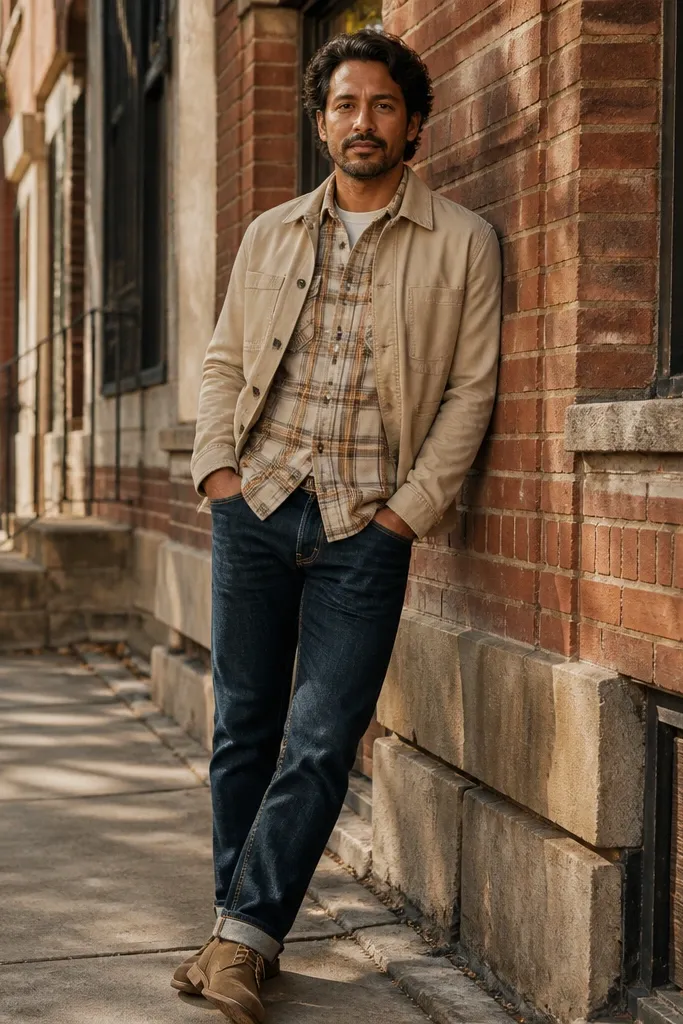
Tone-family layering is where light flannel styling gets easy. Choose a slim overshirt in a similar color family to the flannel, so you get depth without harsh contrast. For example, tan flannel under a slightly darker beige overshirt looks natural and looks intentional in photos. Keep the overshirt slimmer so it doesn’t fight the flannel’s width at the shoulders. This is flattering because the matching tones reduce visual breaks and create a smooth silhouette. It also works for men who want a more “smart casual” vibe without ditching the flannel.
Good to knowIf the overshirt has pockets, keep them closed and avoid bulky layers under it.
Start with a light flannel in tan, oatmeal, or light grey. Wear it over a plain tee, then add a slim overshirt on top with the same tone family. Pair with beige chinos or dark denim and finish with loafers or derbies in brown leather.
Common mistakeAvoid mixing warm and cool tones in the same layer set — it looks off in daylight.
20. Light flannel with a belt-forward outfit and minimal jewelry
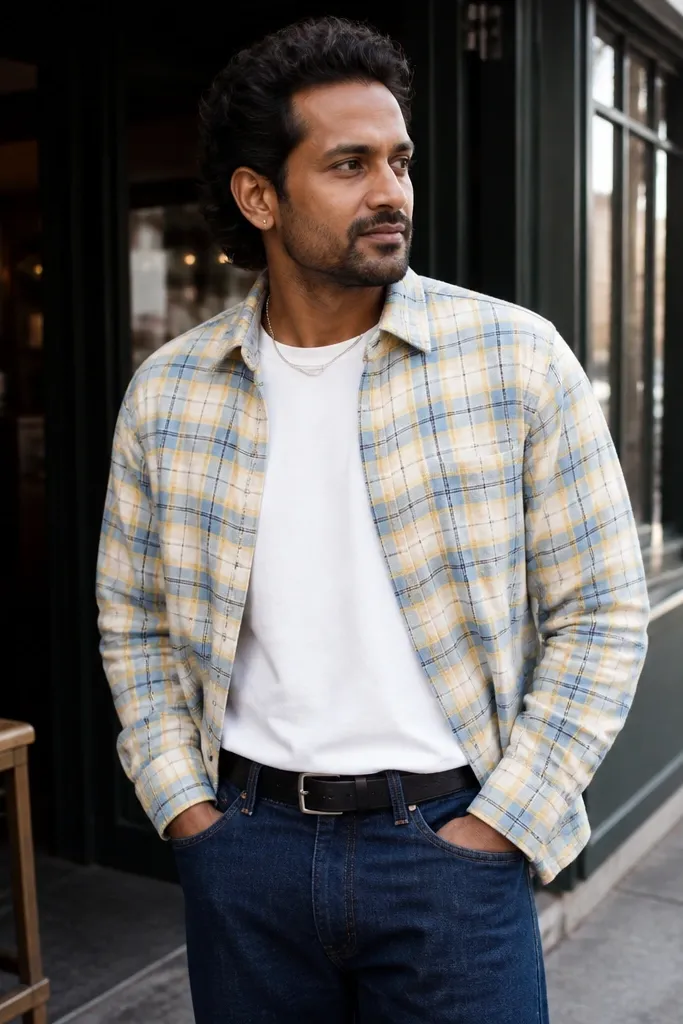
A belt-forward outfit makes light flannel look sharp because it defines the waistline. Wear the flannel open, but keep the hem aligned with your belt so the front doesn’t sag. Dark trousers or dark denim keep the belt area looking clean and intentional. Minimal jewelry keeps attention on the flannel texture and the belt line, which is what you want in photos. This works for men who feel flannel makes them look shapeless. The outfit also flatters different heights because the belt gives the eye a reliable anchor.
Good to knowUse a belt with a matte buckle so it doesn’t glare in camera flash.
Start with a flannel that lands at your belt when worn open. Add a fitted tee underneath and choose dark trousers or dark slim jeans so the belt stands out. Wear a belt that matches your shoes and add one small accessory only, then finish with leather sneakers or simple boots.
Common mistakeAvoid flannels that bunch at the waist — it kills the belt-line effect.