1. Indigo denim + red buffalo flannel snap front
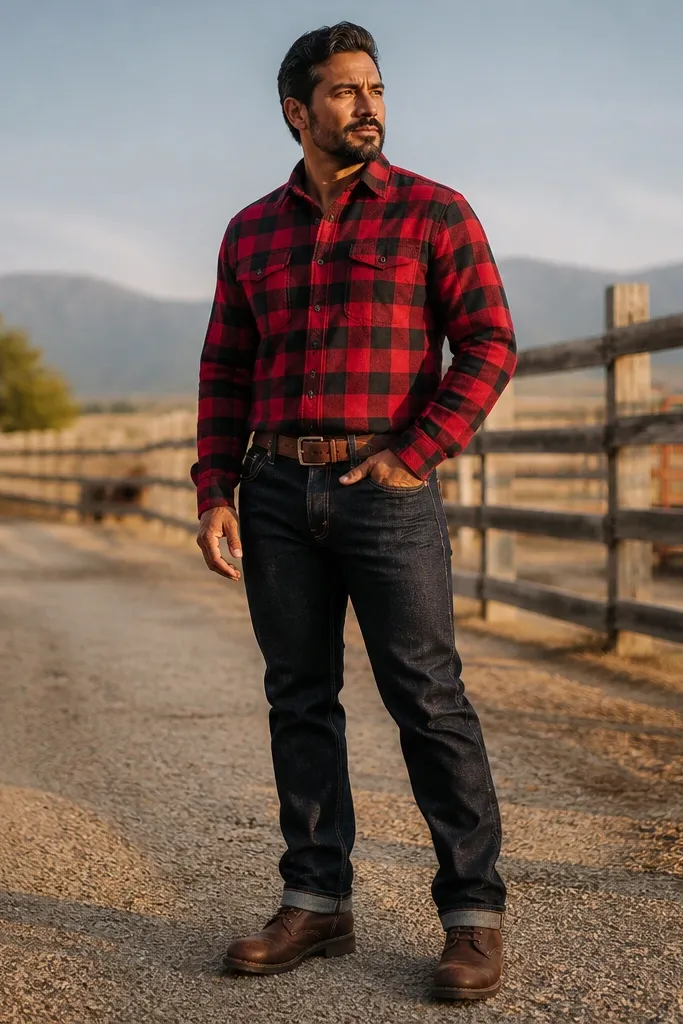
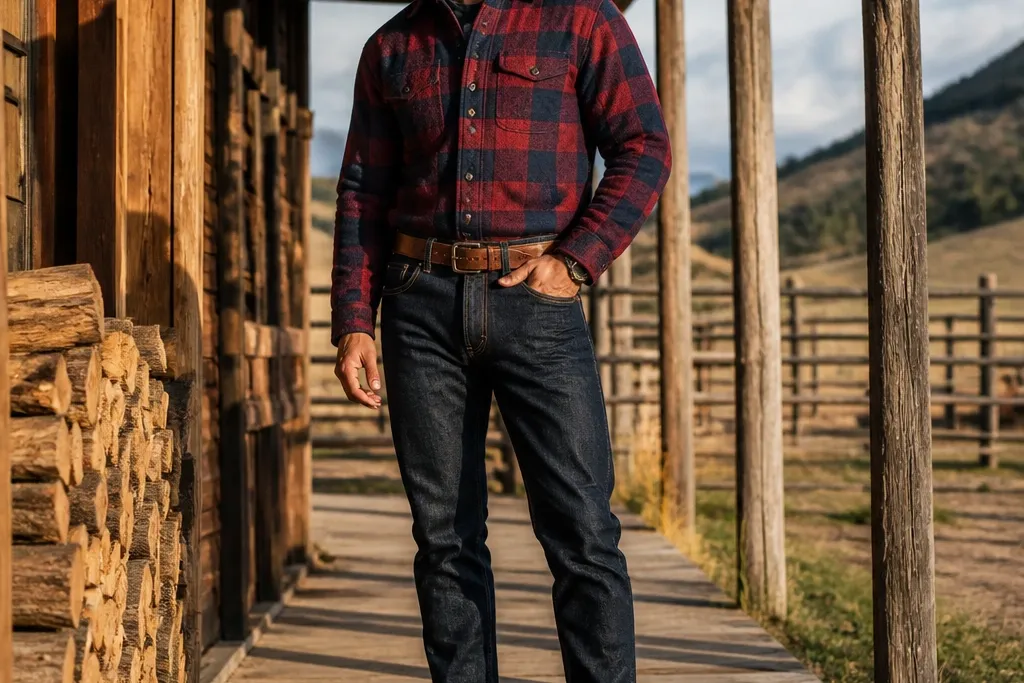
First, button the flannel to the top snap and wear it over a plain dark tee. Then tuck it fully into the jeans or do a clean full tuck with the back aligned so the waistline looks crisp. Finally, add a brown belt and boots, and keep accessories simple: a leather bracelet or a matte metal buckle works.
Go for a red buffalo plaid flannel with a snap front because it sits flatter and reads more “work shirt” than a loose button-down. Pair it with dark indigo jeans that have minimal fading around the knees so the plaid stays the loudest element. Brown leather boots with contrast stitching add warmth against the red, and a tan belt keeps the cowboy vibe grounded. If you have a shorter torso, wear the flannel slightly cropped by tucking the front and leaving the back fully tucked or fully untucked — no in-between. This combo flatters most body types because the strong plaid grid creates structure, while the dark denim narrows the overall look.
Common mistakeAvoid thin flannel that hangs open and collapses — it kills the rugged shape.
Good to knowPick jeans with a straight or bootcut leg so the boot shaft doesn’t fight the hem.
2. Olive canvas pants + black watch flannel over a henley
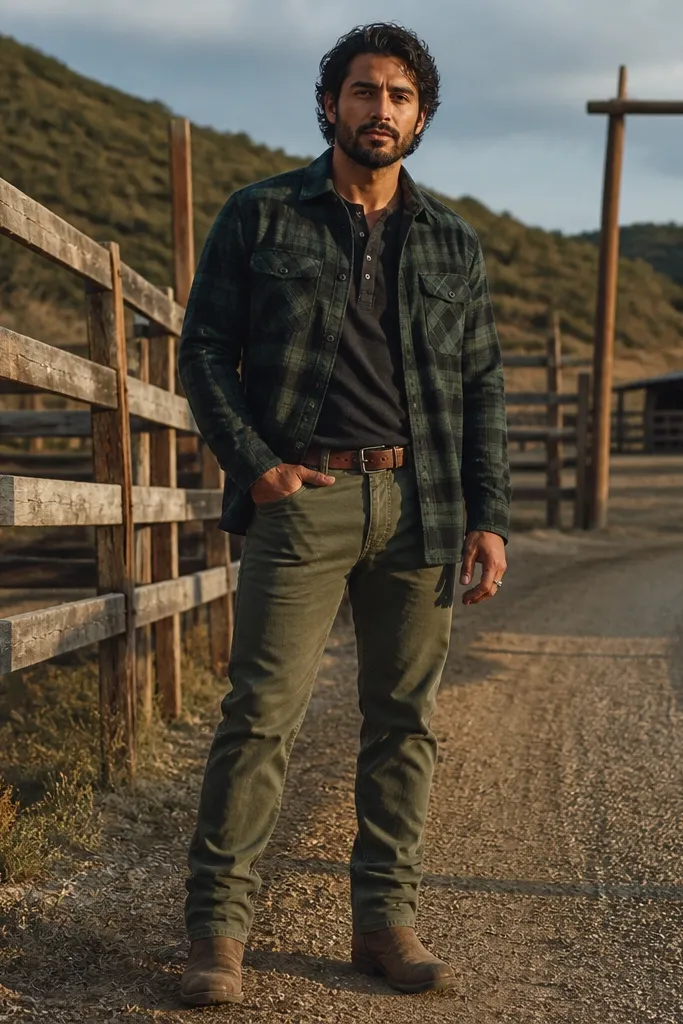
Black watch plaid is the fastest way to look rugged without going loud. Layer it over a dark henley so the collar line stays neat, and the knit texture adds depth under the plaid. Olive canvas pants bring that ranch-work color that balances black and keeps the outfit from looking too goth. A matte black or dark brown belt and boots finish the palette, making it feel intentional even in low light. This pairing works well for lean builds because olive adds warmth and the plaid provides horizontal lines that visually widen the frame slightly.
First, wear a fitted dark henley under the flannel and leave the flannel unbuttoned at the top if the collar is bulky. Then pull the hem of the flannel to sit at the natural waist; tuck it in front with the back fully tucked if you want a cleaner line. Finally, style with olive canvas pants and dark boots, and keep the jacket absent so the plaid reads clearly.
Choose canvas pants with a slight taper; it looks sharper with boots.
Don’t add a second loud pattern like a striped hat band — black watch already does the work.
3. Stonewashed denim jacket + tan plaid flannel + dark boots
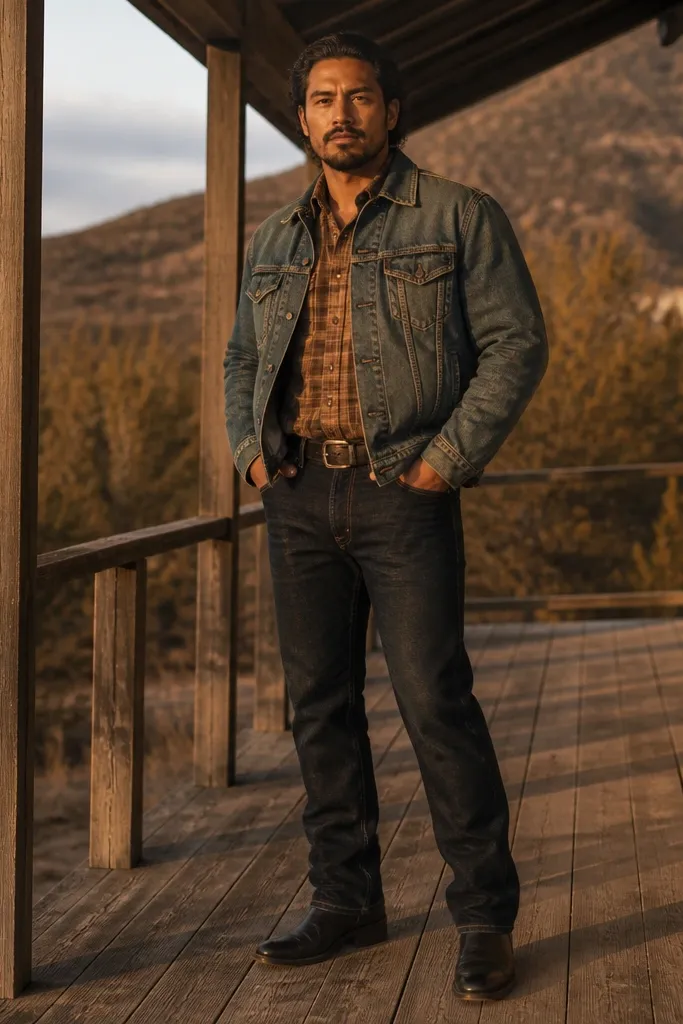
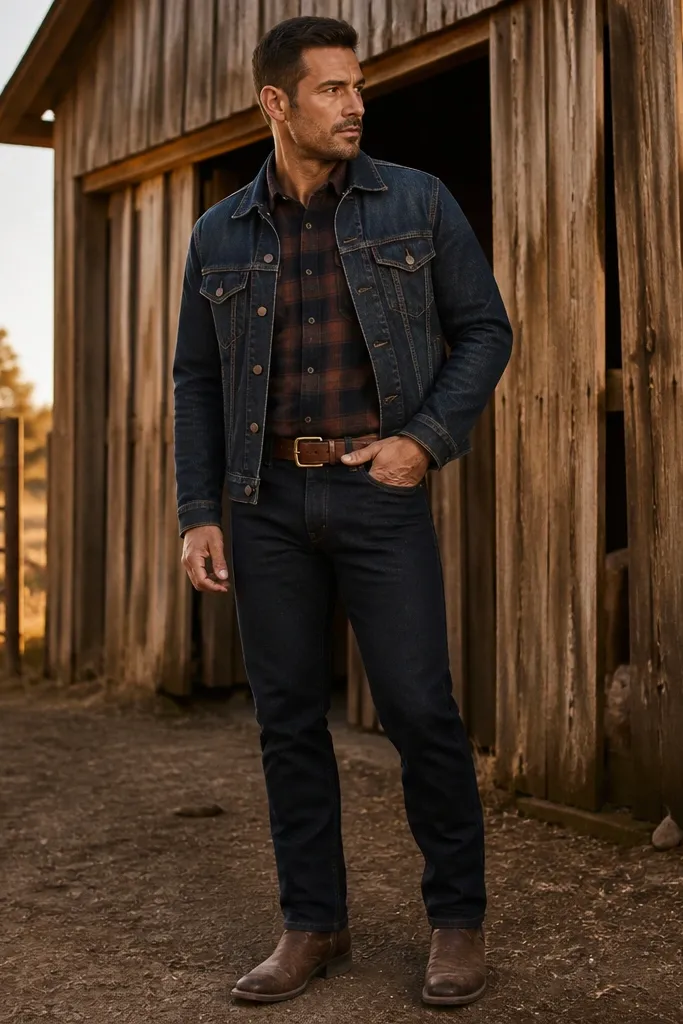
Start by layering the tan flannel under a stonewashed denim jacket, leaving the flannel visible at the collar and cuffs. Then wear dark jeans and keep the flannel hem either slightly tucked or fully tucked depending on your preference for a sharper waistline. Finish with dark brown or black boots and a belt that matches the boots.
This is the “cowboy meets weekend” formula. A tan plaid flannel under a stonewashed denim jacket keeps the outfit rugged but not heavy, and the jacket adds a frame around the plaid so it photographs cleanly. Use dark jeans to anchor the look, and choose boots with a darker sole so the bottom doesn’t look muddy. If you’re fair-skinned, tan flannel brightens you without washing you out, especially when the denim is cool-toned. If you’re deeper skin-toned, tan plaid still reads warm and gives contrast that stands out in photos.
Common mistakeAvoid over-layering with a third shirt — two layers is the sweet spot for clarity.
Good to knowRoll the flannel cuffs once so the plaid edges show when you move.
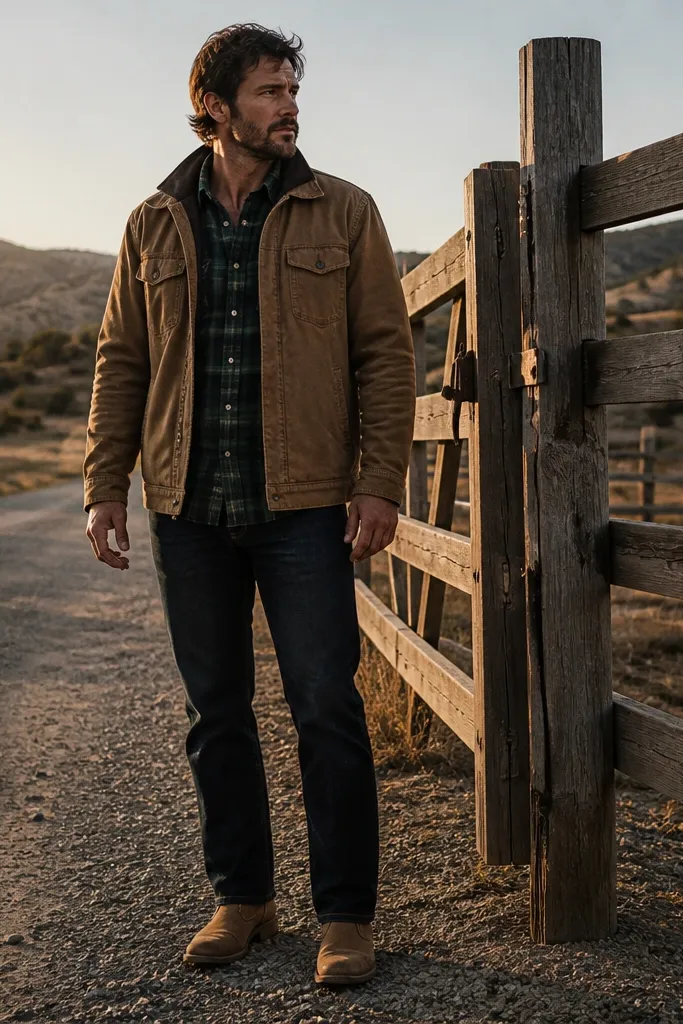
4. Brown suede jacket + navy flannel plaid + bootcut jeans
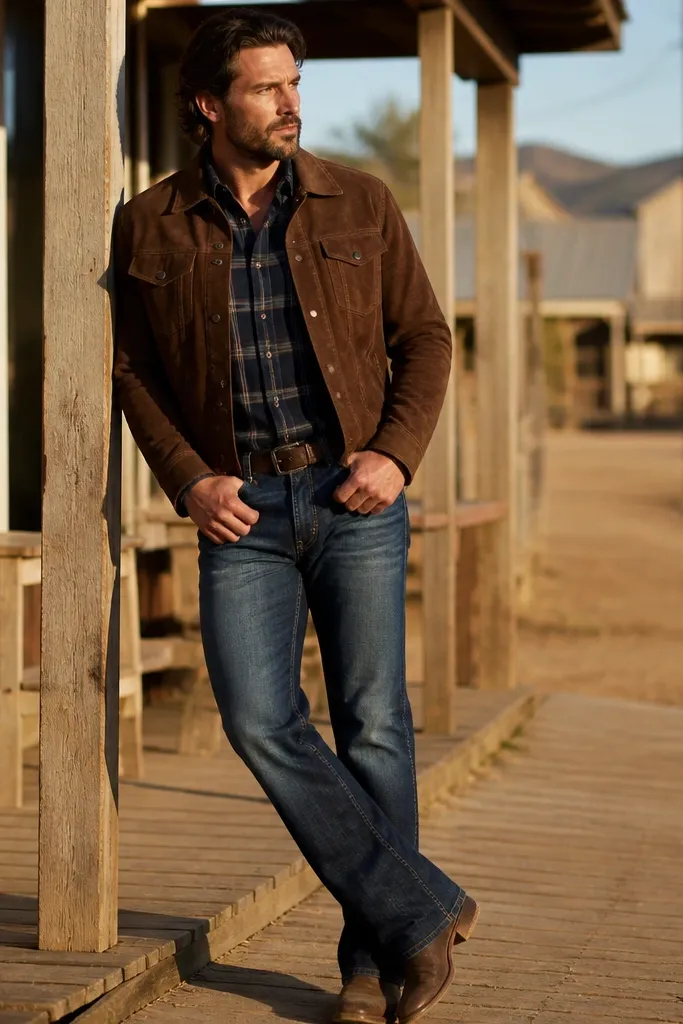
Navy plaid flannel with a brown suede jacket makes the outfit feel cowboy without turning into straight workwear. Navy adds depth and keeps the palette cooler, while suede adds texture that looks expensive in natural light. Bootcut jeans create a smooth path into the boot, so the whole silhouette looks elongated. This combo flatters medium and athletic builds because the suede jacket gives structure through the shoulders and the bootcut leg balances the torso width. In photos, the navy plaid reads crisp against the warmer suede.
First, button the navy plaid flannel and wear it as the mid-layer under the suede jacket. Then choose bootcut jeans in a dark wash and tuck the flannel fully or leave it untucked but keep the jacket covering the seat. Finish with brown boots that have a visible heel and stitching, and match your belt to the suede tone.
Pick a flannel with visible line contrast (navy plus lighter blue) so the plaid doesn’t blur.
Don’t choose faded navy flannel — it looks washed out under suede.
5. Burgundy flannel + black jeans + leather bomber
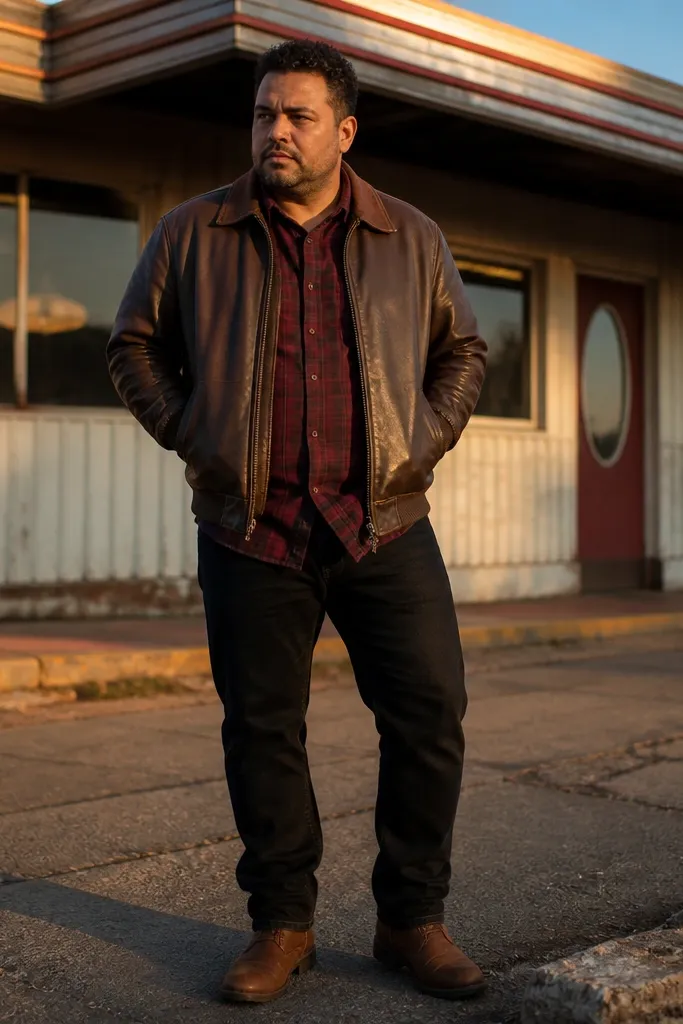
Start with a burgundy flannel shirt, buttoned at least to the collar, and wear a plain black tee underneath if needed. Next, add black jeans with a straight or slim-straight fit so the outfit doesn’t bunch at the ankle. Then finish with a brown leather belt and boots, and keep the bomber zipper closed for a clean line.
If you want rugged but sharper, burgundy flannel with black jeans is a strong move. Add a leather bomber (brown or dark tan) to keep the silhouette structured and photo-friendly, because the bomber frames your waist and shoulders. Burgundy reads rich without needing bright accessories, and the black jeans keep it grounded. This pairing works especially well for men who want a slimmer look since black jeans visually reduce contrast. It also flatters most skin tones because burgundy sits between cool and warm — it doesn’t fight your undertones.
Common mistakeAvoid pairing burgundy flannel with gray jeans — it can look flat and washed.
Good to knowUse boots with a slightly lighter toe cap to catch light and add depth.
6. Green plaid flannel + tan chore jacket + straight jeans
Green plaid flannel gives you that outdoorsy cowboy energy, and tan chore jackets match it perfectly because both read earthy and work-worn. Keep the flannel colors in the same family as the jacket: forest green plus cream or light tan. Straight jeans keep the look clean, and tan boots reinforce the ranch feel. This outfit is flattering for taller guys because the tan jacket adds a vertical frame and the straight leg keeps the proportions balanced.
First, layer the green plaid flannel under the tan chore jacket, leaving the flannel hem visible at the waist. Then wear straight dark jeans and do a full tuck if your flannel is long; if it’s short, leave it untucked but keep it centered. Finish with tan boots and a belt in the same leather color as the boots.
Choose chore jackets with flap pockets — they add extra structure under the plaid.
Don’t pick a green plaid with neon or overly bright lines; it turns from rugged to costume fast.
7. Charcoal flannel + black denim jacket + washed black boots
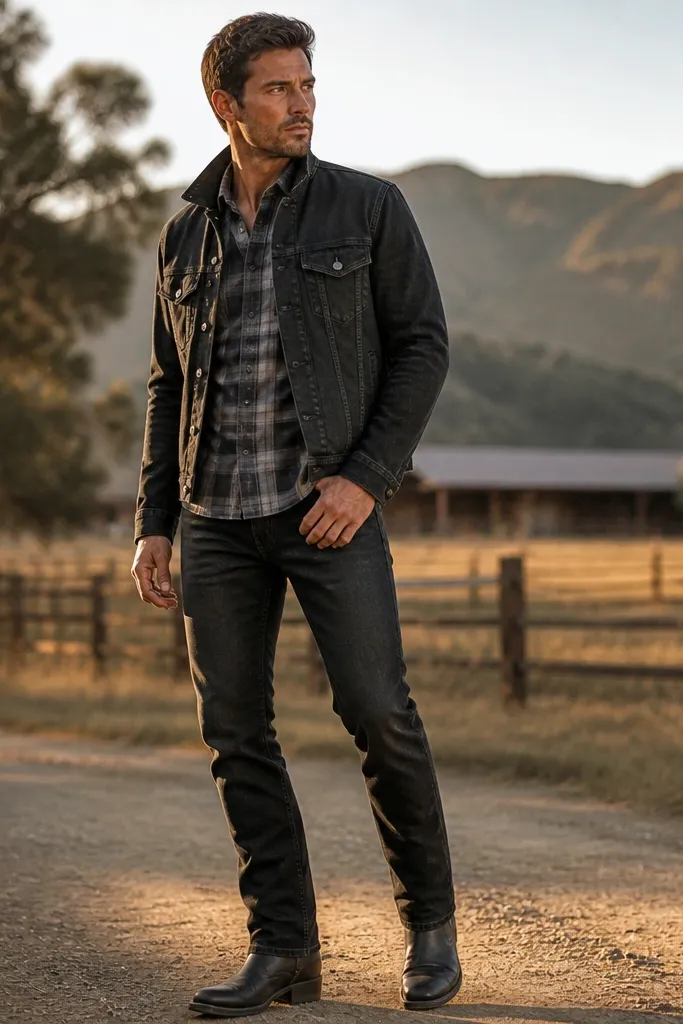
Charcoal flannel plaid is the stealth rugged option. It looks tougher than light flannel because the gray base hides dust, and it photographs with a clean, moody contrast. Pair it with a black denim jacket and washed black jeans so everything sits in the same dark family. Add boots with a worn finish and visible stitching so the texture shows even in dim lighting. This look flatters people who don’t want bold colors but still want the cowboy vibe. It also works for evening because charcoal reads darker and more intentional than standard blue denim.
Start by wearing the charcoal flannel as the outer layer with the top button done and sleeves down. Then add a black denim jacket on top, keeping the jacket hem around the same level as the flannel hem. Finish with washed black jeans and black boots, and keep your belt hardware dark or matte.
Add a dark watch with a leather strap; it matches the rugged texture.
Avoid pairing charcoal flannel with bright white sneakers — it breaks the cowboy boot look.
8. Beige flannel + indigo overalls (or workwear bibs)
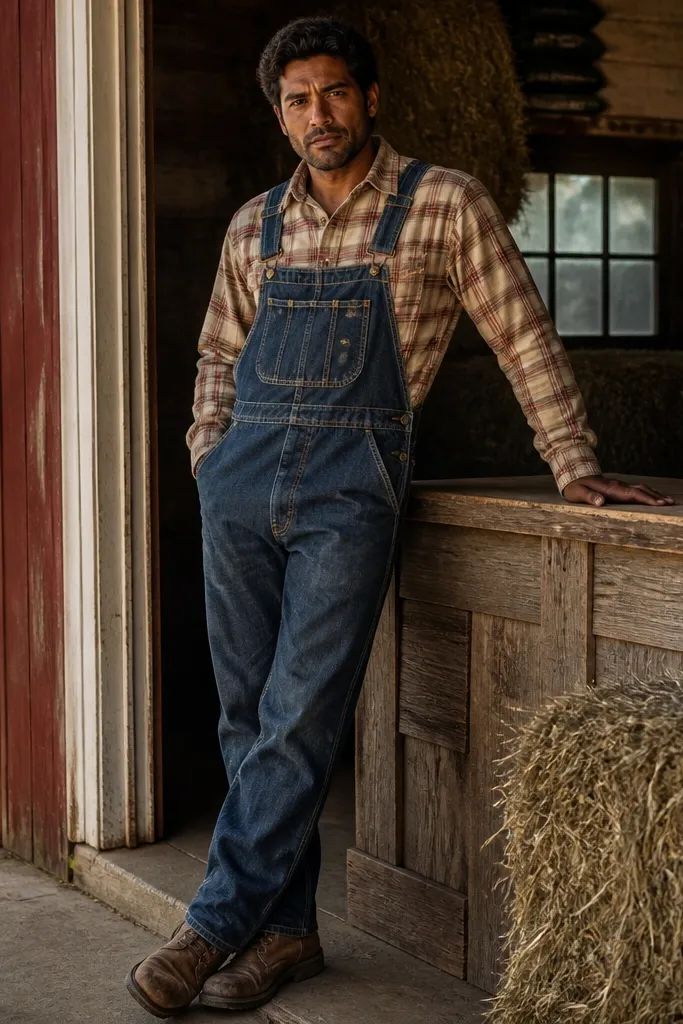
First, button the beige flannel and wear it under or over the overalls depending on your flannel length; the cleanest option is wearing it under so the collar sits tight. Then adjust the overall straps so the bib sits at mid-chest and the legs stack slightly over the boot tops. Finish with brown boots and a belt only if the overalls have belt loops; otherwise skip it.
Overalls make flannel look instantly cowboy-rugged because the bib and straps create a clear silhouette. Choose beige flannel plaid so it lights up the center of the outfit, then wear indigo overalls with a darker wash for contrast. Brown work boots tie it together and keep it from looking like a costume. This outfit flatters stockier builds because the vertical straps streamline the torso and the bib area hides midsection bulk. It also works for men of average height because the overall shape gives a stable frame in photos.
Common mistakeAvoid overalls with heavy fading patterns; let the flannel do the visual work.
Good to knowRoll the flannel sleeves once and keep the cuff width narrow for a sharper look.
9. Blue flannel + tan jeans + cowboy hat vibe (no loud patterns)
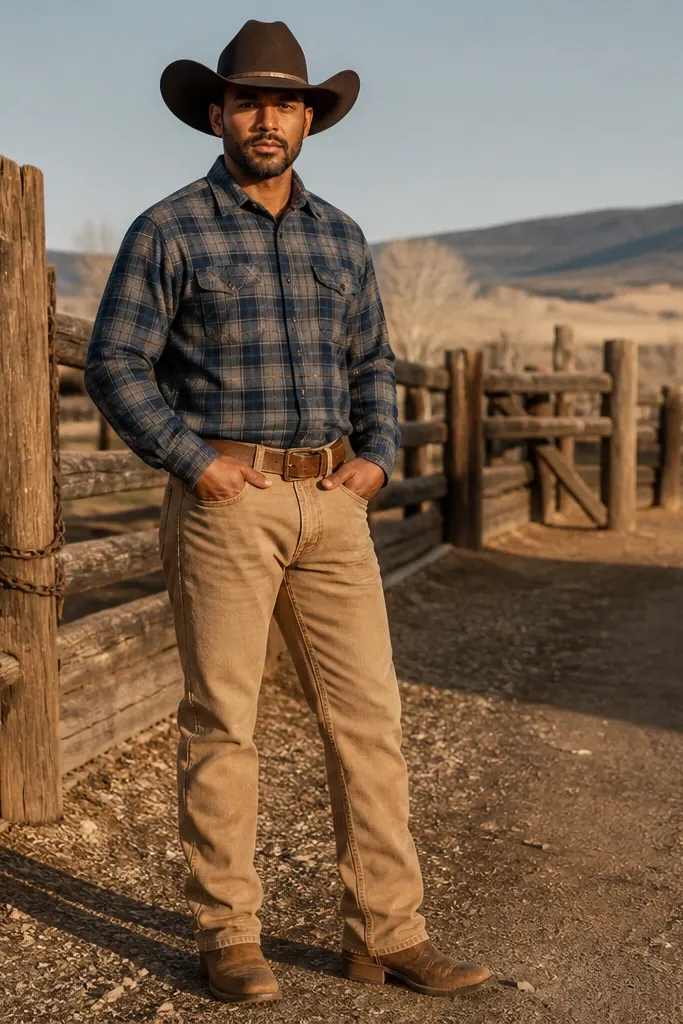
Start with a blue flannel shirt, buttoned to the collar, and wear it untucked if it hits your belt line cleanly. Then choose tan jeans in a straight or relaxed fit and keep the wash even. Finish with brown boots and a belt, and add a hat in a similar leather or felt tone if you want the full cowboy cue.
This one is all about contrast. Blue flannel with tan jeans reads cowboy instantly because tan is the “dusty trail” color and it makes blue look crisp. Keep the flannel plaid medium scale, not tiny — tiny plaid can look busy at distance. Wear a brown belt and boots, and add a structured cowboy hat if you have one, but keep everything else plain so the outfit stays rugged not chaotic. This combo flatters lighter skin tones by adding warmth, and it also looks great on deeper skin tones because tan creates a clean backdrop for the blue. The overall look stays photogenic because the color separation is strong.
Common mistakeAvoid tan jeans with heavy whiskering — it makes the rugged look feel casual.
Good to knowChoose a flannel with cream lines, not bright white, for a more rugged feel.
10. Ranch jacket + black-and-cream flannel + dark straight jeans
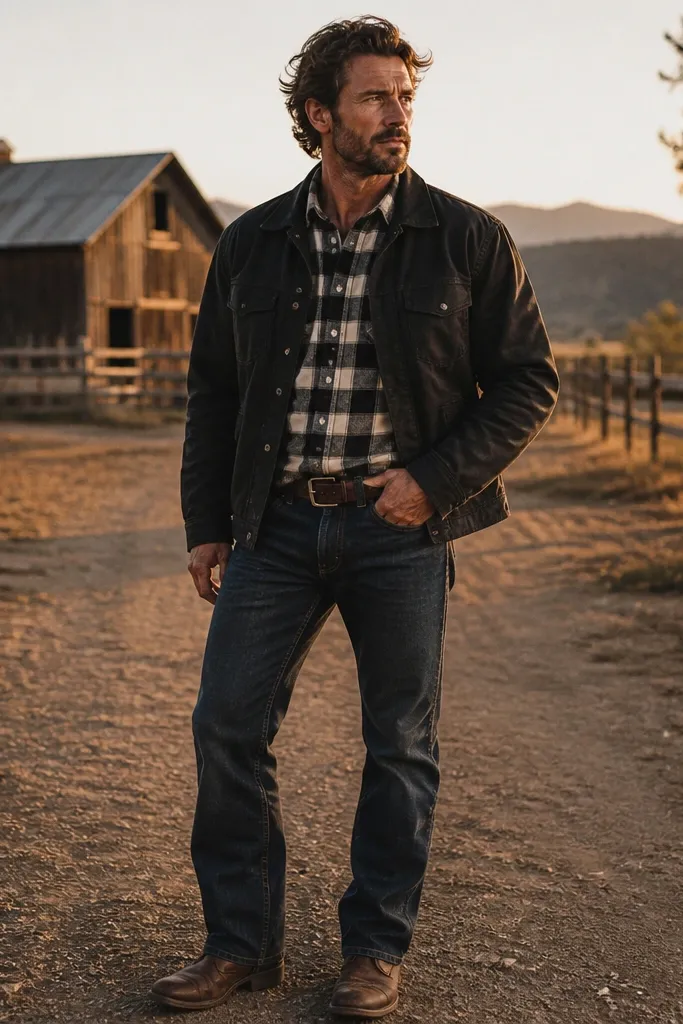
First, wear the black-and-cream flannel as the mid-layer and keep the top button closed so the collar looks sharp under the jacket. Then choose dark straight jeans and tuck the flannel if it’s long enough to bunch. Finally, add boots and match the belt to the boot color, then close the ranch jacket for a clean outer line.
A ranch jacket turns flannel into a real cowboy outfit because it gives you that outerwear silhouette people recognize. Go with black-and-cream flannel so the plaid reads bold without fighting the jacket. Dark straight jeans keep the line clean and prevent the look from getting too wide at the ankle. If you want rugged in photos, this combo works because the high-contrast plaid catches light and the ranch jacket adds structure around the shoulders. It’s flattering for almost everyone since the outer jacket hides problem areas around the waist while keeping the flannel visible at the collar.
Common mistakeDon’t pick a flannel with too many colors when you’re already wearing a jacket.
Good to knowUse a ranch jacket with a slightly higher collar; it frames the plaid better.
11. Rust plaid flannel + olive jacket + brown leather belt
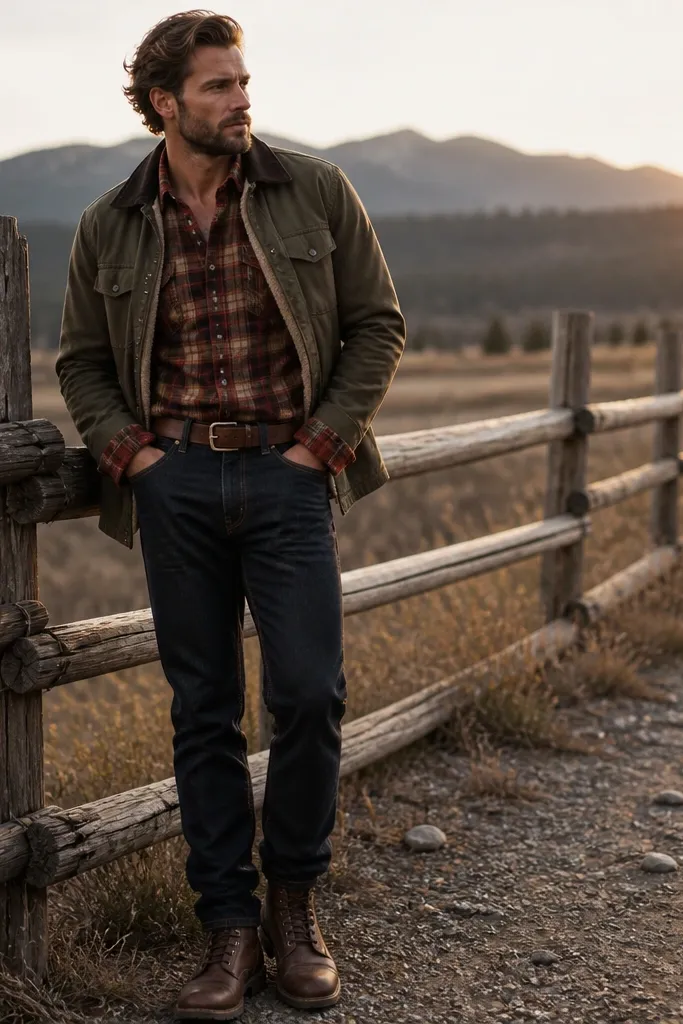
Start by layering the rust plaid flannel under an olive jacket, leaving enough plaid visible at the collar and cuffs. Then wear dark jeans and keep the flannel hem tucked to avoid bulk at the waist. Finish with brown boots and a belt, and choose accessories in brown leather only.
Rust and olive is the rugged color combo that looks like it belongs outdoors. A rust plaid flannel gives you warm texture, and an olive jacket keeps the palette cohesive. Brown leather belt and boots add the “leather work” feel, and dark jeans stop the outfit from getting too earthy and dull. This look flatters most builds because the olive jacket creates a dark frame while rust plaid draws the eye to the chest. In sunlight, rust plaid warms up your skin and makes the outfit feel alive instead of muted.
Common mistakeAvoid pairing rust flannel with cool gray outerwear; it makes the colors fight.
Good to knowLook for a jacket with matte hardware; shiny zippers can cheapen the rugged vibe.
12. White tee + pastel plaid flannel + indigo jacket
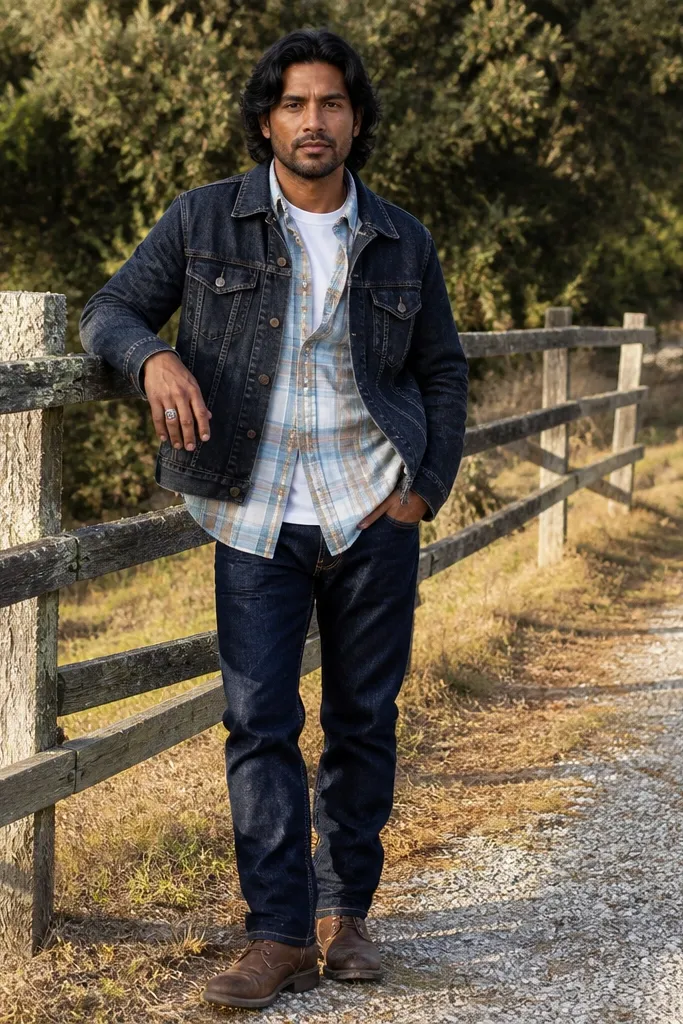
First, wear a fitted white tee and layer pastel plaid flannel unbuttoned open. Then add an indigo jacket so the flannel sits in the middle like a framed graphic. Finish with dark jeans and boots, and keep the belt leather brown or black depending on your boots.
If you think rugged has to be dark, this proves you can do it with contrast and texture. Pastel plaid flannel (light blue, cream, a touch of tan) over a crisp white tee looks clean, while an indigo jacket adds the rugged anchor. Keep the jeans dark to maintain that work-ready feel. This works for spring and summer because the lighter flannel doesn’t trap heat visually, but the denim jacket keeps the outfit grounded. It flatters slimmer builds because the pastel plaid adds gentle structure without heavy weight.
Common mistakeAvoid light-wash jeans; they make the look too casual for “rugged” styling.
Good to knowRoll the flannel sleeves to show the plaid cuff pattern against the denim jacket.
13. Sandstone flannel + dark chinos + suede desert boots
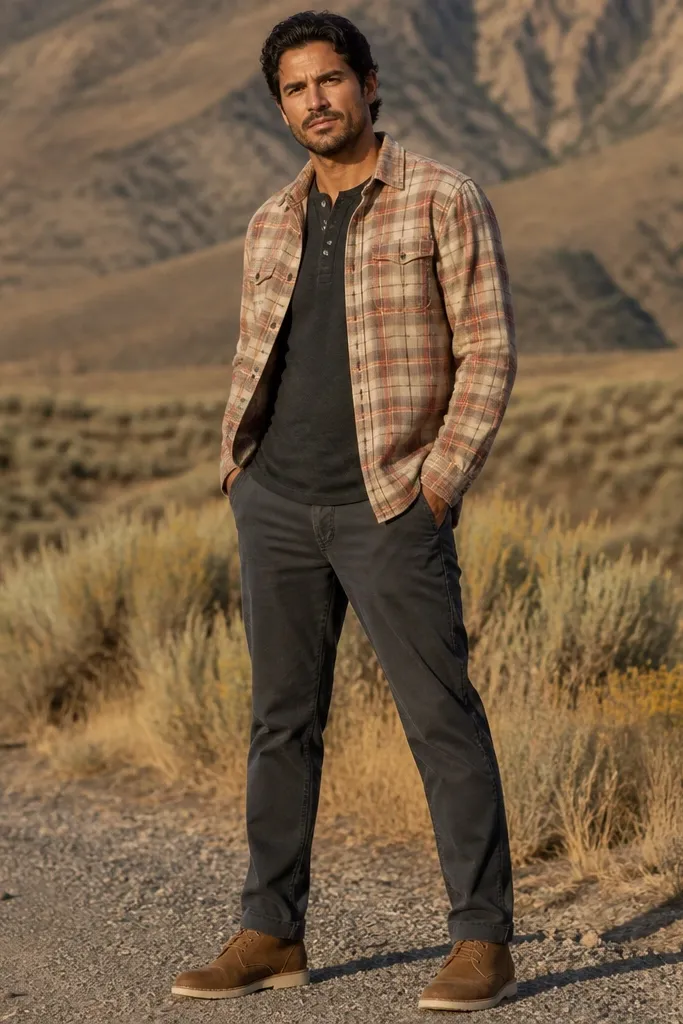
Start with a sandstone flannel shirt and wear it half buttoned or fully buttoned depending on how thick it is. Then choose dark chinos in a straight fit and either tuck the flannel fully or keep it untucked if it hits mid-zipper length. Finish with suede desert boots and a belt in a matching brown tone.
Sandstone flannel plaid reads cowboy rugged even without denim. Pair it with dark chinos for a cleaner silhouette and choose suede desert boots to keep the texture earthy and photo-friendly. The lighter flannel color highlights the chest, while the dark pants keep contrast strong and prevent the outfit from looking washed. This is a smart option for office-casual settings where you want rugged style without full-on workwear. It flatters taller guys because dark chinos narrow the legs, and sandstone flannel adds a warm top frame.
Common mistakeAvoid thin flannel against chinos; it makes the outfit look like a random shirt.
Good to knowChoose flannel with thicker yarn lines so the plaid stays visible at distance.
14. Navy flannel hoodie layer + black denim + brown logger boots
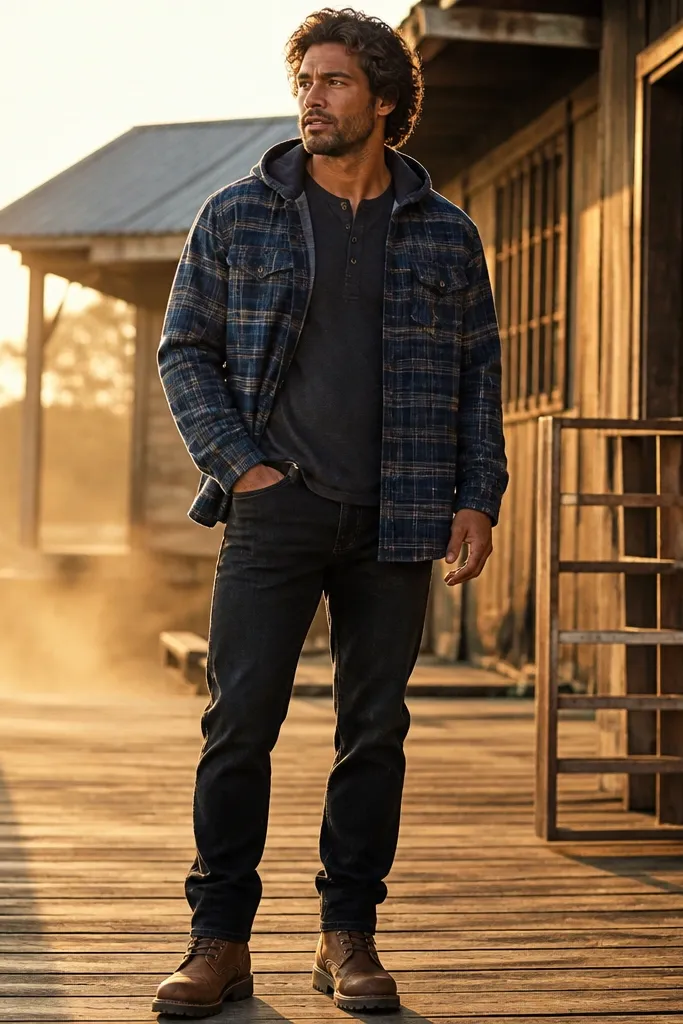
This is the rugged option for cold weather without losing the cowboy look. A flannel hoodie in navy keeps the plaid tied to one garment, so the outfit looks cohesive even if you’re moving around. Wear it with black denim jeans so everything stays dark and the hoodie reads thick. Brown logger boots add weight and a work-ready feel that matches flannel better than sleek boots. This combination flatters athletic builds because the hoodie fabric adds comfort through the torso while the black denim keeps the silhouette tight. It also photographs well because the flannel pattern is centralized around the chest and hood.
First, choose a navy flannel hoodie with the hood not too oversized; you want the hood to sit close to the face. Then wear black denim jeans and keep the hem slightly stacked over the boot tops. Finally, add brown logger boots and a simple leather belt or skip the belt if the jeans fit cleanly.
Keep your hoodie zipper closed and add a plain beanie in dark brown or black if needed.
Avoid bright graphic tees under a flannel hoodie; the pattern should be the main event.
15. Plaid flannel overshirt + leather belt + dark work pants
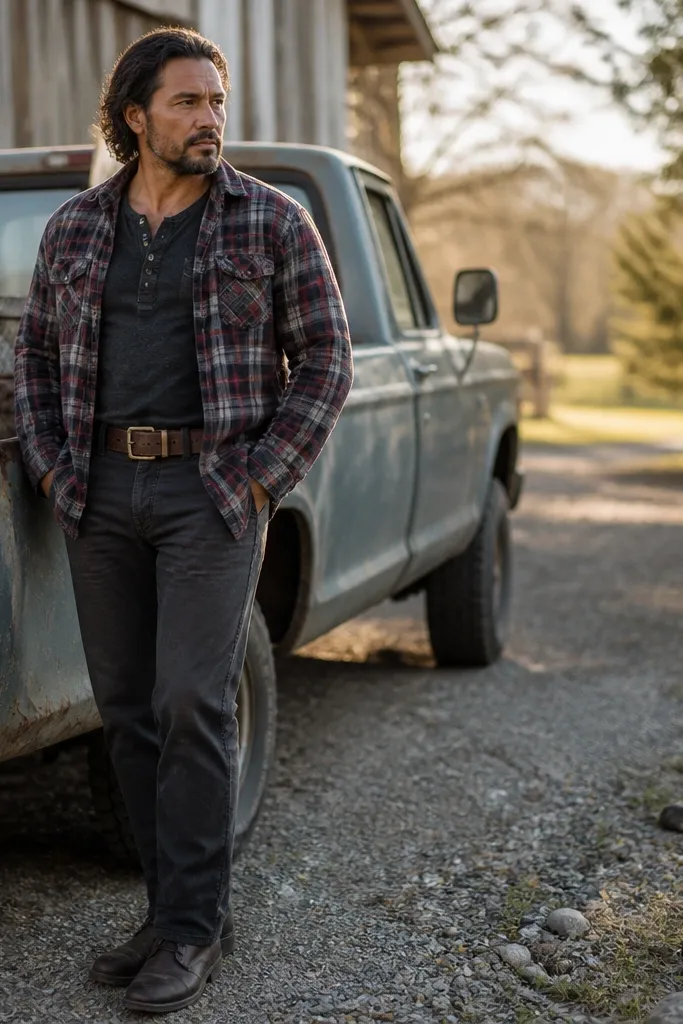
First, wear a plain tee or thermal underneath, then put the plaid flannel overshirt on and leave it open at the top. Next, add a leather belt at your natural waist and adjust it until the overshirt hangs cleanly without pulling. Finally, wear dark work pants and rugged boots, and keep the belt hardware matching the boots.
Overshirt flannels look rugged because they create a layered, uniform-like shape. Choose a plaid flannel overshirt with a slightly longer length and a belt-friendly waist — then use a leather belt to cinch the silhouette. Pair it with dark work pants in a matte fabric like twill or canvas, not shiny tech material. This gives you that “built for chores” look that still reads good in photos. It flatters most body types because the belting defines the waist and the work pants keep the bottom grounded. For men who carry weight through the midsection, belting the overshirt is the difference between sloppy and sharp.
Common mistakeAvoid cinching too tight — you want structure, not a stretched look across the buttons.
Good to knowChoose an overshirt with covered buttons; exposed shiny hardware can look too dressy.