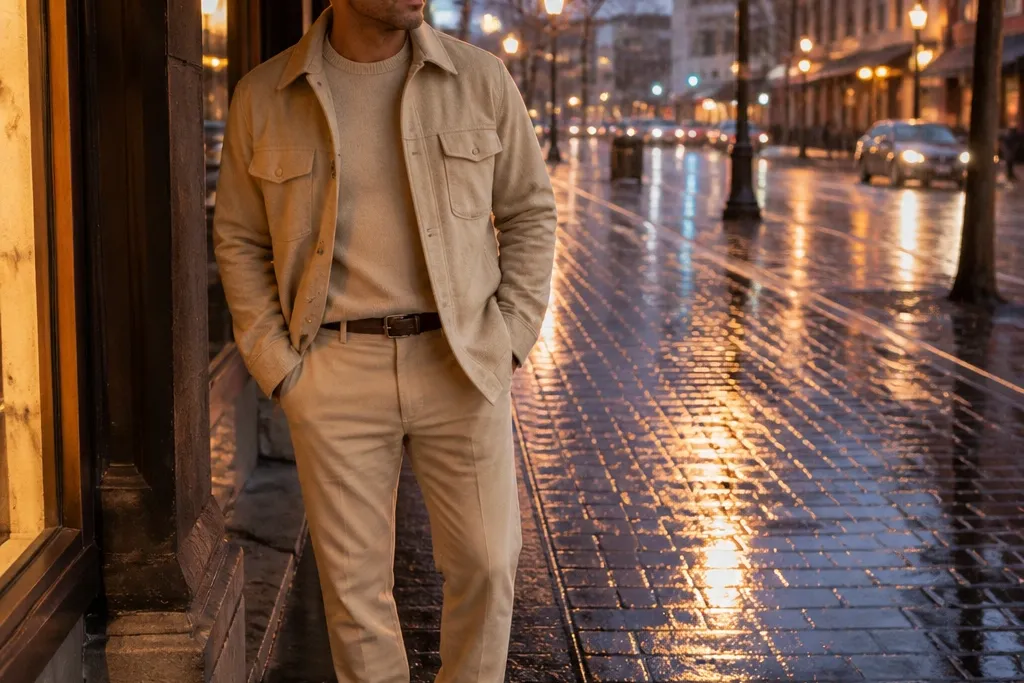
1. Cream flannel shirt + dark tan chinos + espresso boots
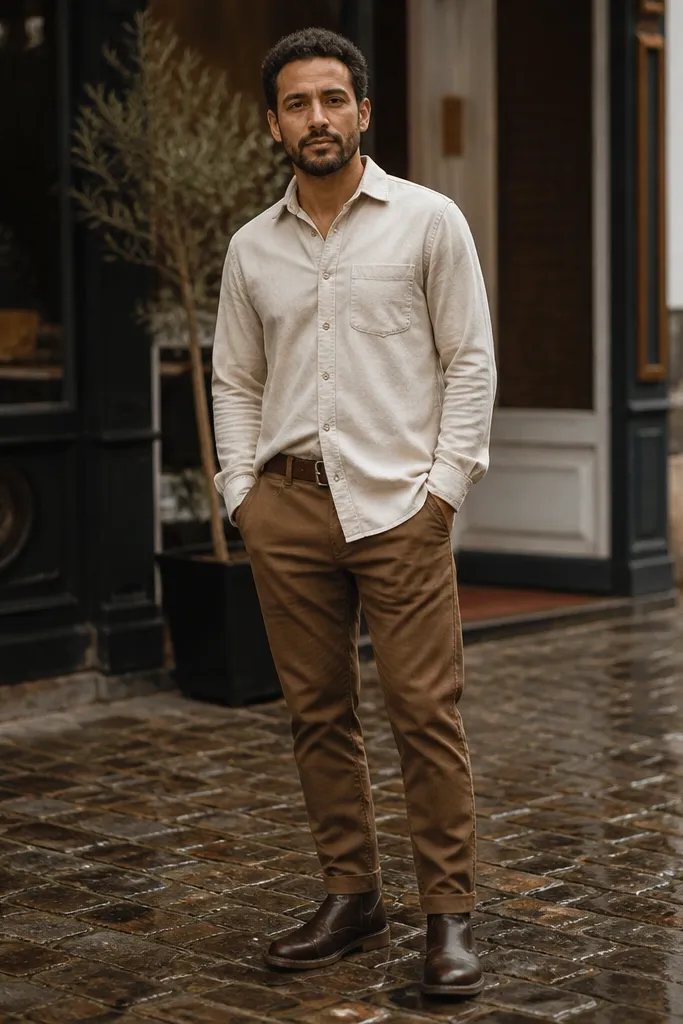
Go for a light cream flannel with a brushed finish and pair it with dark tan chinos. This keeps the outfit monochrome but still creates contrast through value: cream pops against deeper tan. The flannel reads warm and casual, while the chino gives structure and a cleaner line than jeans. Espresso-brown boots add a grounded, slightly dressy edge without introducing a new color family. This combo looks best on average and lean builds because the lighter top layer brightens the upper body and the darker pants slim the legs.
Start by wearing the cream flannel buttoned to the second button, with the hem untucked only if it sits at mid-hip. Choose dark tan chinos with a straight or slim-straight cut and a clean break at the shoe. Finish with espresso leather boots and a brown belt that matches the boot color; add a cream or tan crew sock so the ankle stays tidy.
Good to knowIf your flannel is slightly oversized, do a half-tuck on the front to keep the waistline defined.
Common mistakeDon’t pair cream flannel with pale white pants — it washes the beige out.
2. Oatmeal flannel overshirt + sand denim + tan suede chukkas
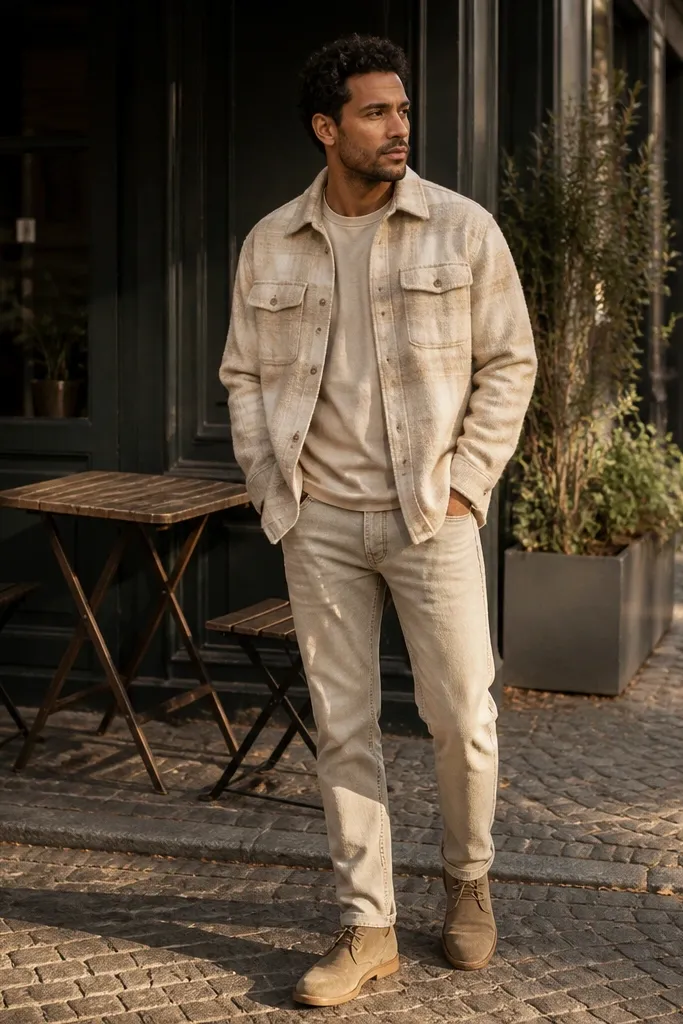
An oatmeal flannel overshirt layered over a sand tee gives you that monochrome “soft armor” look. Sand denim keeps everything in the beige family but adds denim texture so the outfit doesn’t look like pajamas. Tan suede chukkas bring a warmer, slightly matte finish that looks better with brushed flannel than shiny leather. This is a strong pick for casual weekends and campus-style days because it looks intentional even when you keep the tee plain. It flatters most body types since the overshirt frames the torso and the denim keeps the silhouette straightforward.
Layer the oatmeal flannel overshirt over a sand crew or v-neck tee, leaving the shirt unbuttoned if the overshirt is structured. Choose sand denim with a mid-rise waist and a relaxed straight leg so it doesn’t bunch at the ankle. Wear tan suede chukkas and keep accessories minimal: a simple tan watch strap or a canvas belt.
Roll the cuffs once to show the tee sleeve — it adds shape without changing the color palette.
Avoid overly faded denim; it shifts the beige toward gray.
3. Greige flannel button-up + beige knit sweater vest + sand trousers
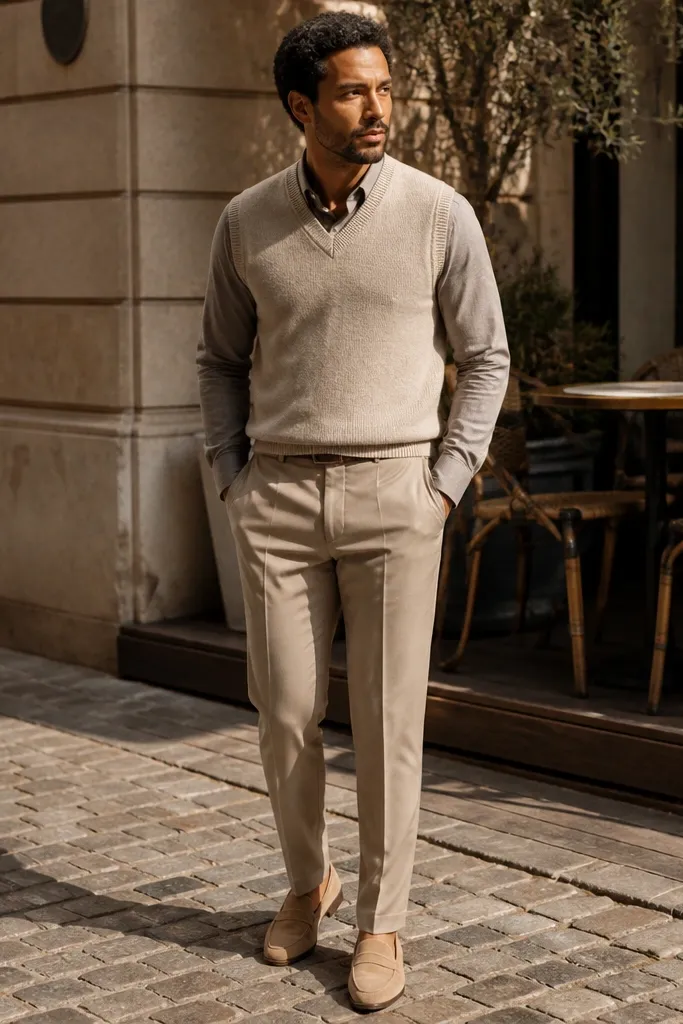
This is monochrome with a sharp, layered edge. A greige flannel button-up under a beige knit sweater vest creates depth while staying in the same color family. Sand trousers keep the outfit lighter and cleaner than denim, which makes it work for a smart casual dinner. The sweater vest adds structure at the chest so the fit looks tailored even if your flannel is casual. This combo is especially flattering if you have a broader torso — the vest breaks up the midsection and creates a more defined line.
Start by wearing the greige flannel slightly open at the collar under a beige sweater vest, with the flannel hem tucked into the trousers. Pick sand trousers in a wool or cotton blend with a straight leg and a clean crease. Finish with brown leather lace-up shoes and a belt in the same brown tone; keep your socks either beige or light tan.
Choose a sweater vest with a tighter knit so it doesn’t look bulky under the flannel.
Don’t go too dark on the trousers — it makes greige look dull.
4. Beige flannel t-shirt + caramel jeans + tan belt + brown chukka boots
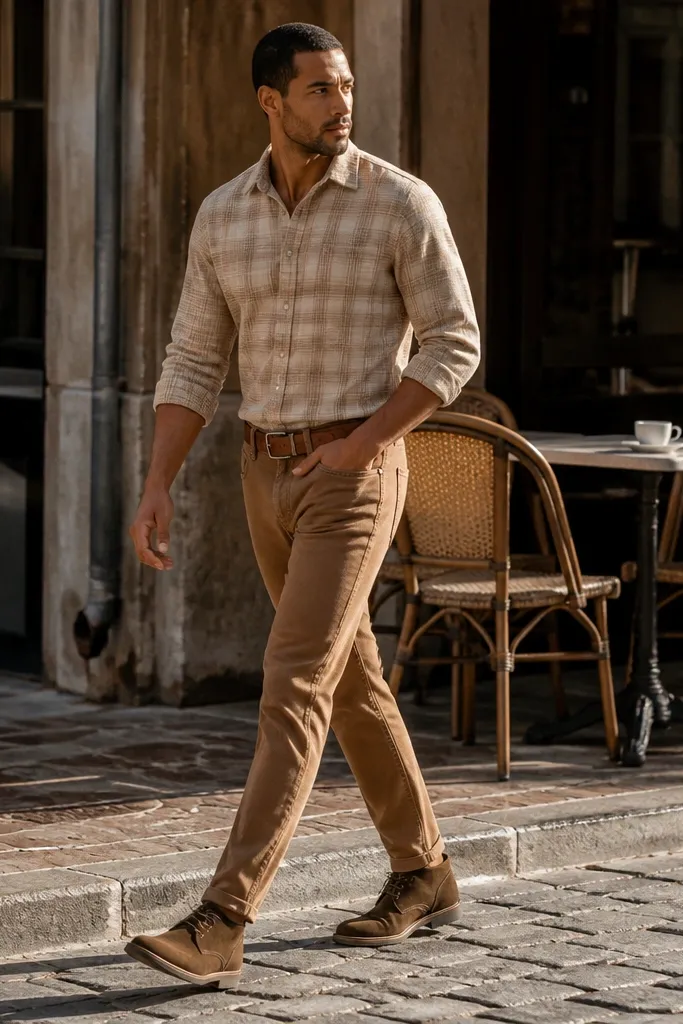
If you want monochrome that still feels relaxed, use a flannel t-shirt style (short-sleeve or henley) instead of a full button-up. Beige flannel t-shirts look soft and casual, and caramel jeans add a deeper warm tone that keeps the palette from going flat. A tan belt bridges the gap between the beige top and caramel bottom. Brown chukkas finish it with a classic silhouette that reads clean in photos. This works well for guys who want easy outfits — the color match does most of the styling work.
Wear the beige flannel t-shirt fitted through the torso, then choose caramel jeans with a medium wash and minimal distressing. Add a tan belt and keep the jeans hem clean so it doesn’t pool. Use brown chukka boots, ideally with a slightly thicker sole for balance with the casual top.
Good to knowMatch one small detail — belt buckle tone or boot color — to tighten the monochrome effect.
Common mistakeAvoid pairing beige top with very light khaki jeans; it makes the outfit look washed.
5. Stone flannel shirt + off-white chinos + dark brown derby shoes
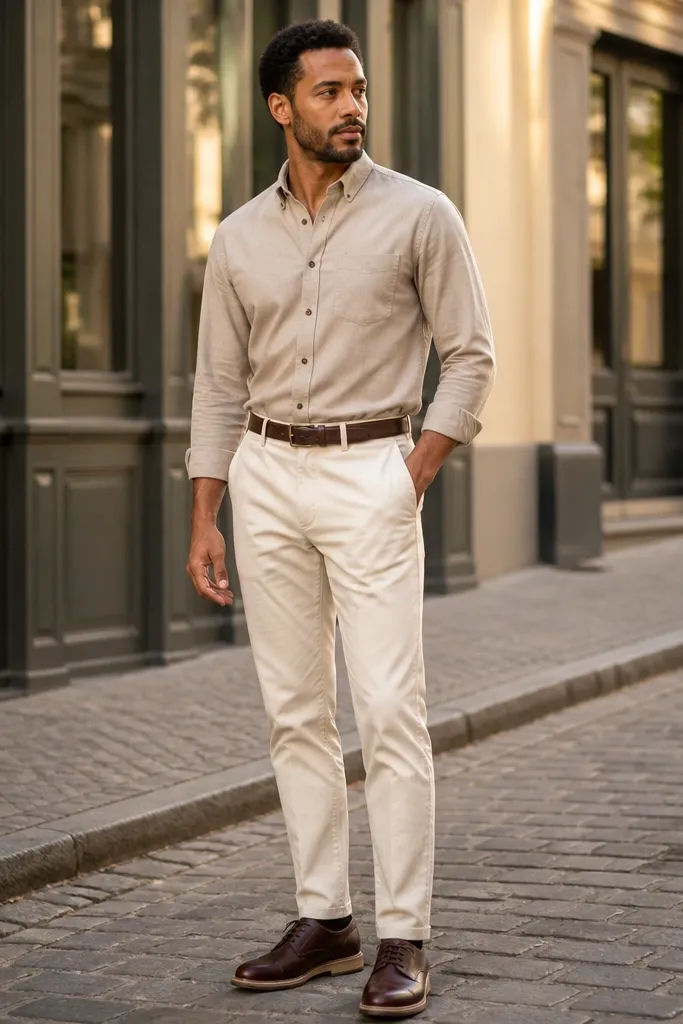
Stone flannel against off-white chinos is a clean monochrome contrast. The stone reads like a muted beige, while off-white gives you a brighter base that photographs well. Dark brown derbies add a dressier finish that makes the outfit feel intentional instead of weekend-only. This set is a good choice for dates, casual office days, and places where you want to look sharp without a blazer. It flatters taller frames because the off-white pants brighten the legs and elongate the silhouette.
Wear the stone flannel buttoned neatly, with sleeves either down or rolled to show a clean cuff. Choose off-white chinos with a straight or slim-straight cut and a slight break at the shoe. Finish with dark brown derby shoes and a belt in the same dark brown; keep the watch or ring in warm metals like gold-tone.
Good to knowUse a matte pocket square only if your flannel is open at the collar — otherwise skip accessories.
Common mistakeDon’t wear shiny dress shoes with a very wrinkled flannel — texture clash looks messy.
6. Beige flannel overshirt + oatmeal crewneck + tan workwear pants
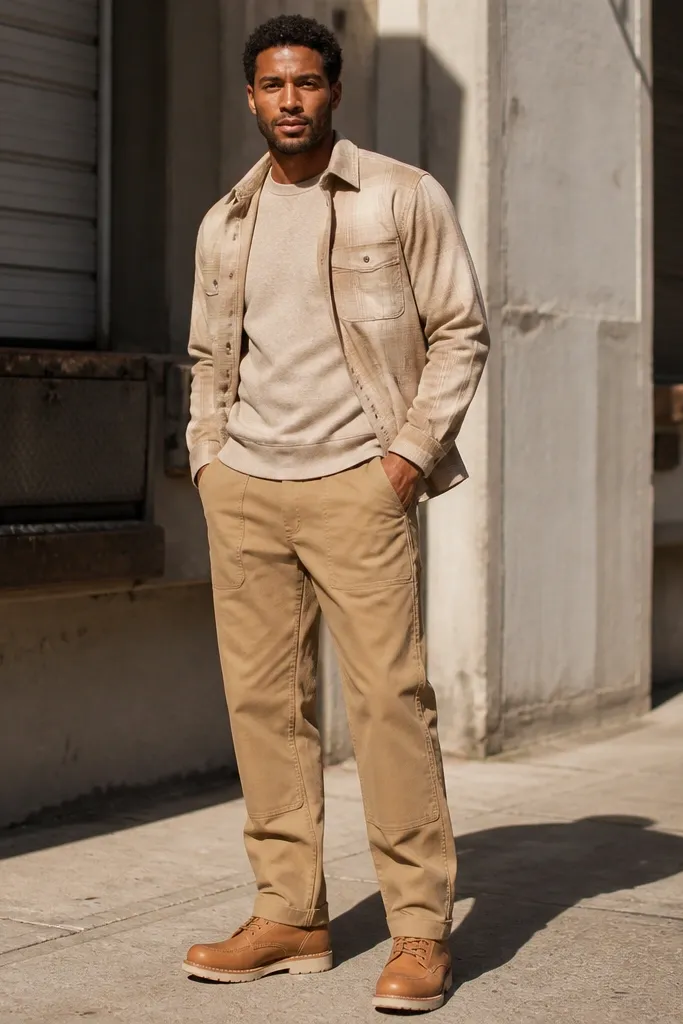
This is monochrome that looks rugged but controlled. A beige flannel overshirt on top of an oatmeal crewneck keeps the color family consistent while adding knit texture under the brushed fabric. Tan workwear pants bring structure with their heavier cotton feel and simple pocket layout. The result looks good in daylight and still holds up in darker indoor lighting because beige doesn’t turn gray like some lighter colors. It’s also forgiving on body shapes since the workwear fabric hides minor fit issues.
Start with the oatmeal crewneck fitted enough to avoid bunching at the waist, then layer the beige flannel overshirt unbuttoned. Choose tan workwear pants with a straight leg and a mid-rise waist; keep the waistband visible but not tight. Wear brown leather work boots or sturdy lace-ups, and add a simple leather belt.
Good to knowIf your overshirt is long, do a small roll at the sleeve hem to balance the length.
Common mistakeAvoid mixing beige overshirt with very slim pants — it makes the proportions look off.
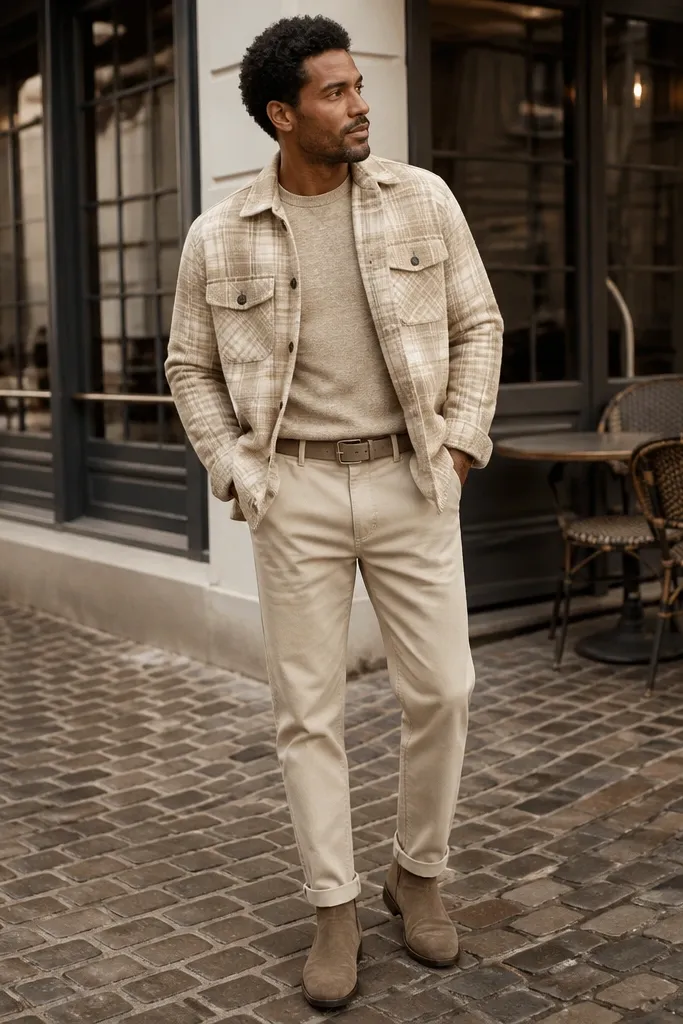
7. Monochrome plaid flannel + cream chinos + brown Chelsea boots
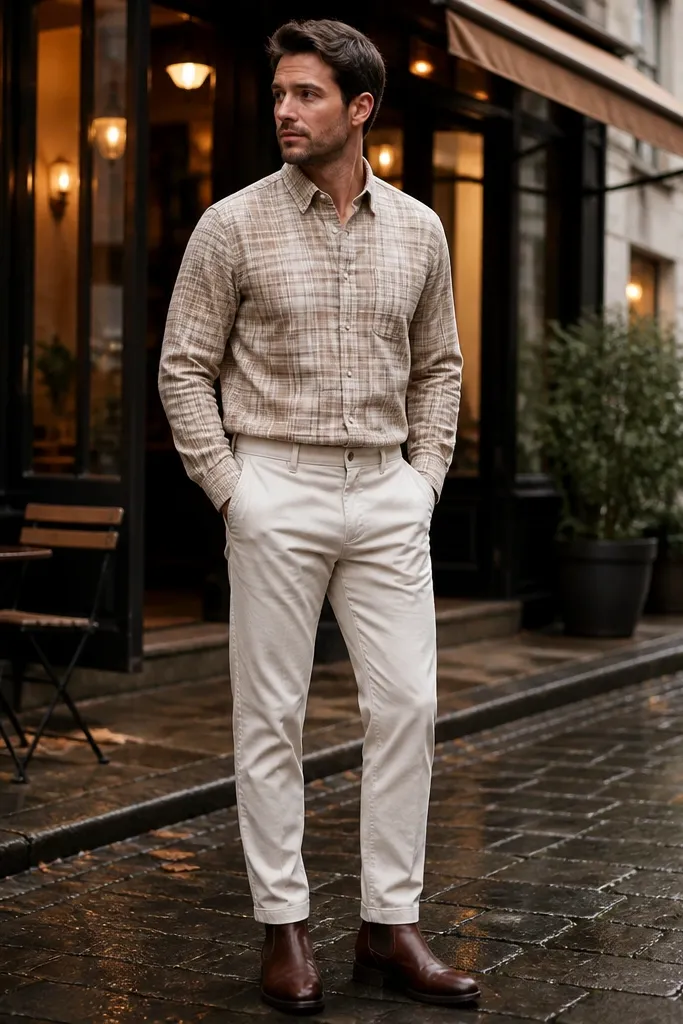
A beige plaid flannel is the fastest way to keep monochrome from feeling boring. Choose plaid where the lines are close in tone (think cream and tan lines, not high-contrast black or navy). Cream chinos lighten the outfit and make the plaid pattern readable without adding a new color. Brown Chelsea boots keep it sleek — the elastic side panel looks clean in photos and doesn’t fight the plaid. This works especially well for guys with a slimmer build because the pattern adds interest at the top while the lighter pants keep the lower half bright.
Wear the plaid flannel buttoned with the collar sitting flat, then tuck it into cream chinos for a crisp waistline. Choose chinos with a clean taper so the Chelsea boot looks intentional, not sloppy. Match your belt to the Chelsea boot color and keep socks cream or light tan.
Press the flannel collar flat before you go out; it changes the whole look.
Don’t tuck a long plaid flannel if it bunches — it ruins the clean monochrome line.
8. Tan turtleneck + beige flannel overshirt + camel straight jeans
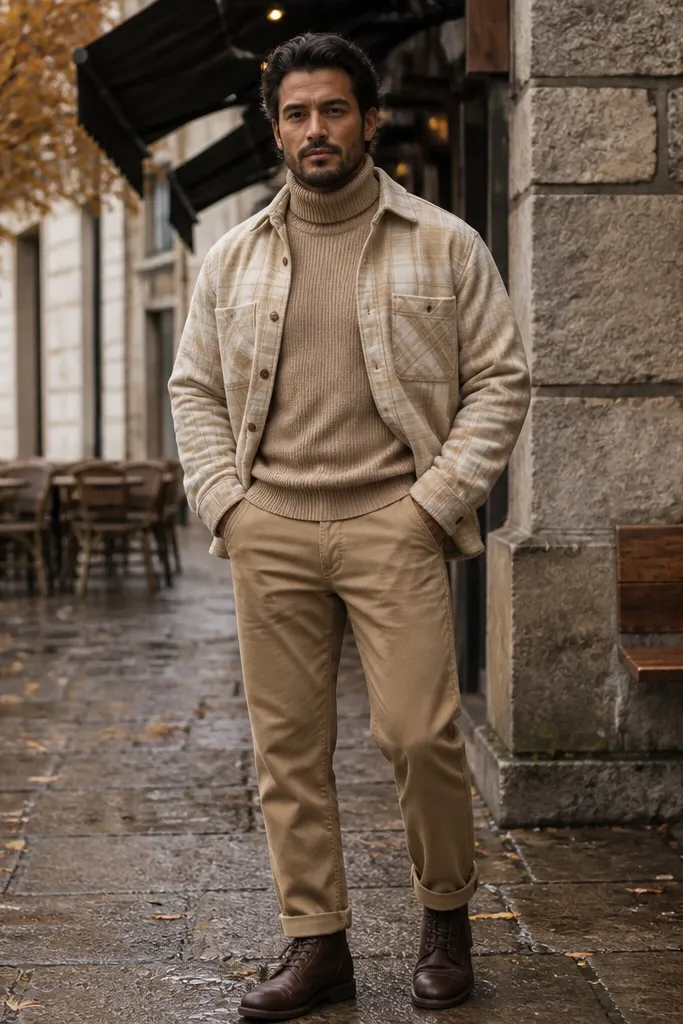
Cold-weather monochrome gets better with a turtleneck. A tan turtleneck under a beige flannel overshirt creates a strong vertical shape, and the flannel adds texture contrast over the smooth knit. Camel straight jeans keep it warm and grounded, staying in the same beige world. This outfit looks great for late fall and early winter because it reads cozy but not bulky. It flatters most guys with a longer torso too, since the turtleneck adds height and the overshirt frames the shoulders.
Start with a tan turtleneck fitted at the neck and torso, then layer the beige flannel overshirt unbuttoned with the hem covering the waistband. Pick camel straight jeans with a mid-rise waist and minimal fading. Finish with brown leather boots and a belt that matches the boots; keep hat or beanie in tan or oatmeal.
Good to knowChoose a turtleneck rib knit that’s not too thick so it doesn’t swell under the overshirt.
Common mistakeAvoid mixing greige turtleneck with sandy flannel — the neck area will look mismatched.
9. Oatmeal flannel overshirt + beige chinos + light tan sneakers
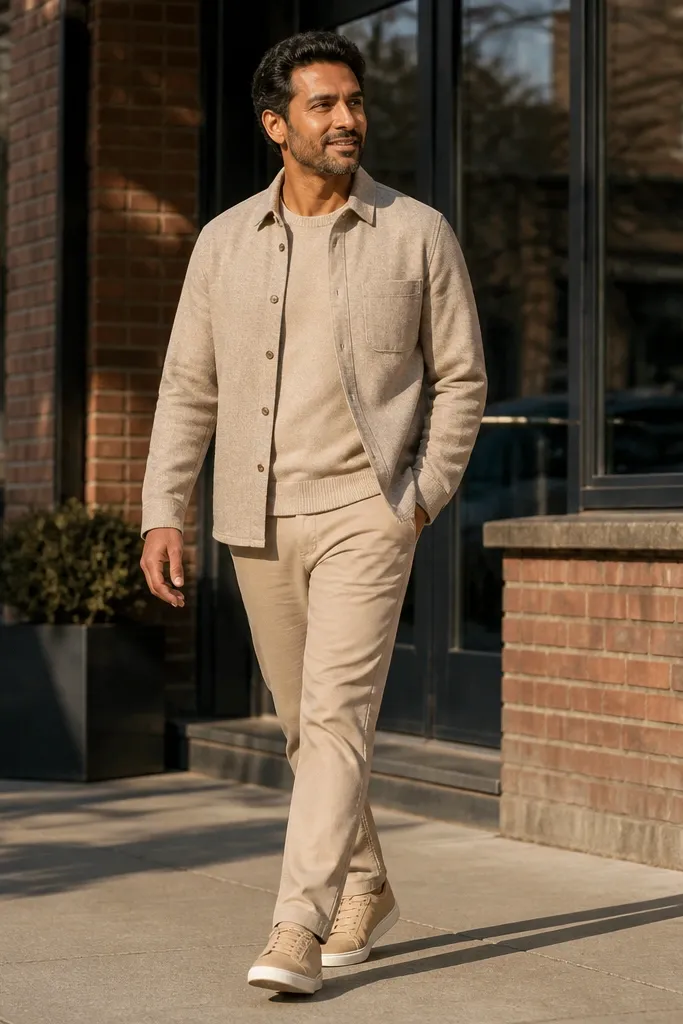
If you want monochrome that still feels modern, pair an oatmeal flannel overshirt with beige chinos and clean light tan sneakers. Sneakers keep the look youthful, and the beige-on-beige palette stays calm and photo-friendly. The key is choosing sneakers that are matte or leather-matte, not glossy. This outfit works for running errands, coffee dates, and casual travel days. It flatters average builds because the chinos keep the silhouette tidy while the overshirt adds a relaxed top layer.
Wear the flannel overshirt unbuttoned over a plain beige tee or fitted long-sleeve. Choose beige chinos with a slim-straight or straight cut and a clean hem. Add light tan sneakers and a matching belt or watch strap; keep the socks beige so the ankle doesn’t break the color flow.
Go for a sneaker with a single-tone upper to keep the monochrome effect intact.
Avoid white sneakers here; they turn the outfit into contrast, not monochrome.
10. Beige flannel shirt-jacket + cream hoodie + tan cargo pants
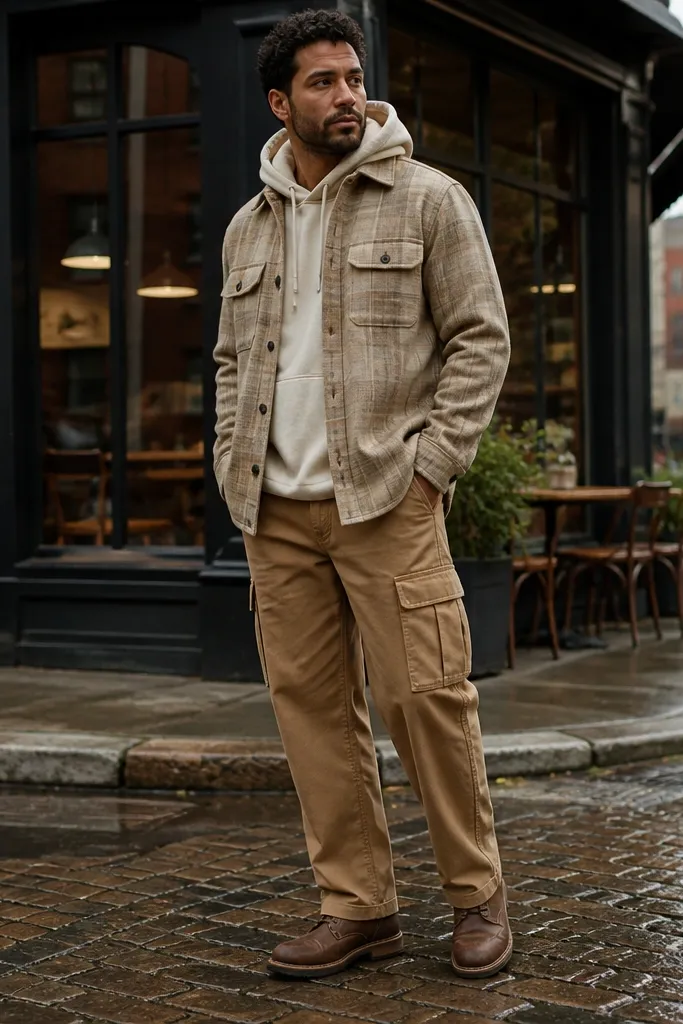
This is monochrome comfort with shape. A beige flannel shirt-jacket over a cream hoodie gives you softness at the top, while tan cargo pants add practical structure with their pocket placement. Keep the hoodie cream (not bright white) so it stays in the beige family and doesn’t look like a different outfit. Brown boots or tan sneakers can both work, but brown boots look more polished with the flannel texture. Great for days when you want to look good without thinking too hard.
Start with the cream hoodie under the beige flannel shirt-jacket, leaving the flannel open. Choose tan cargo pants that sit at the natural waist and aren’t too baggy through the knee. Finish with brown lace-up boots or tan sneakers, and match a belt or strap detail to the boot color.
If the hoodie is bulky, size the flannel jacket so it buttons without pulling.
Don’t choose cargo pants with lots of contrasting stitching — it breaks the monochrome look.
11. Greige flannel + beige overcoat + brown leather gloves
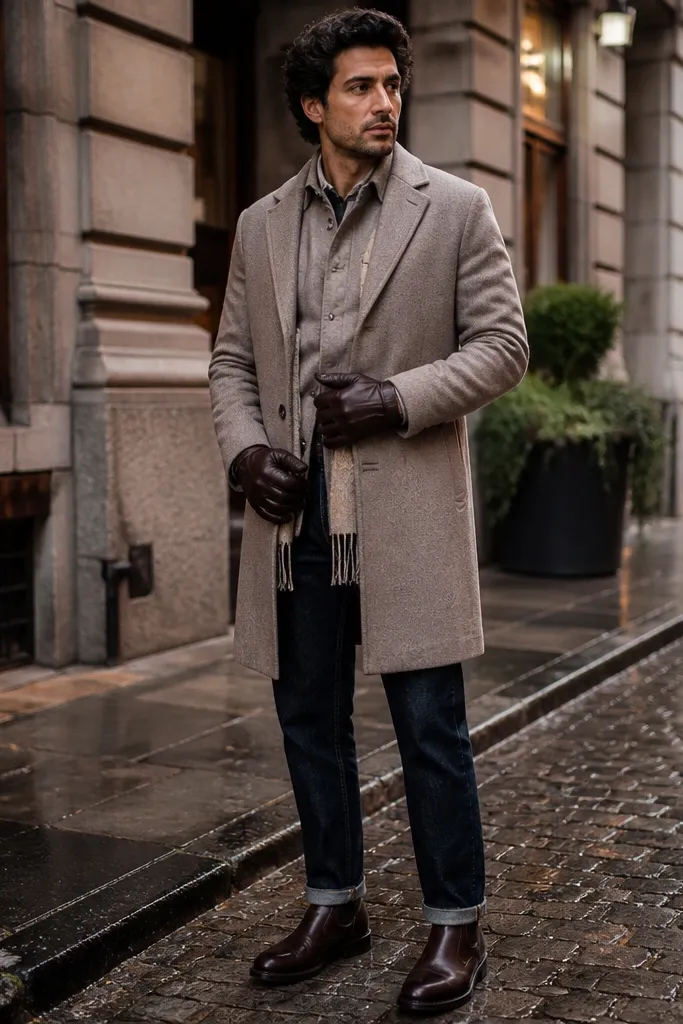
When you add a beige overcoat, beige flannel monochrome looks instantly grown-up. Use a greige flannel button-up as the base layer, then layer a beige overcoat that is slightly darker than the flannel. That value difference keeps everything readable, especially in photos. Brown leather gloves add a warm accent and make the outfit feel finished. This combo is best for evenings and cold city walks because the overcoat makes the texture look intentional, not casual. It works well for most heights since the coat length controls the proportions.
Wear the greige flannel buttoned with the collar clean, then add the beige overcoat with the flannel hem tucked or neatly straightened. Choose beige trousers in a similar tone but different fabric weight so the coat doesn’t blend completely. Finish with brown leather shoes and gloves; keep your socks beige or light tan.
Pick an overcoat with a matte finish, not glossy, so it matches flannel’s texture.
Avoid a coat the exact same shade as your flannel — it looks like one flat block.
12. Beige flannel + black-brown trousers + tan belt and boots
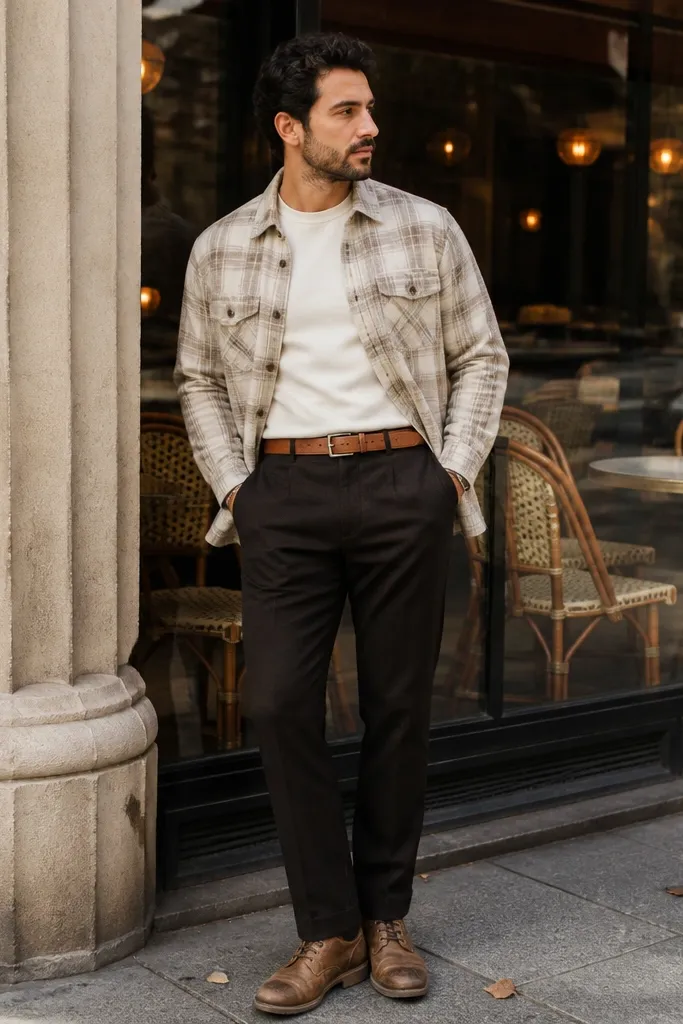
This is a smart monochrome trick: keep the beige flannel, but ground it with black-brown trousers. The trousers don’t break the palette because they read as deep warm neutral, not a new color. That contrast makes the beige look cleaner and more intentional, especially if the flannel has a subtle pattern. Brown boots bring it together and keep the outfit cohesive. This works for nights out where you want a polished look without a full suit.
Start by wearing the beige flannel buttoned and tucked into black-brown trousers. Choose trousers with a straight leg and a slight taper, then add a tan belt that matches your boot tone. Finish with brown leather boots and keep the rest minimal — no bright accessories, just warm metals if you wear them.
Use a flannel with a tighter weave if you want it to read more dressy under darker trousers.
Don’t pair beige flannel with cool charcoal — it clashes with beige undertones.
13. Cream flannel + oatmeal corduroy pants + brown lace-ups
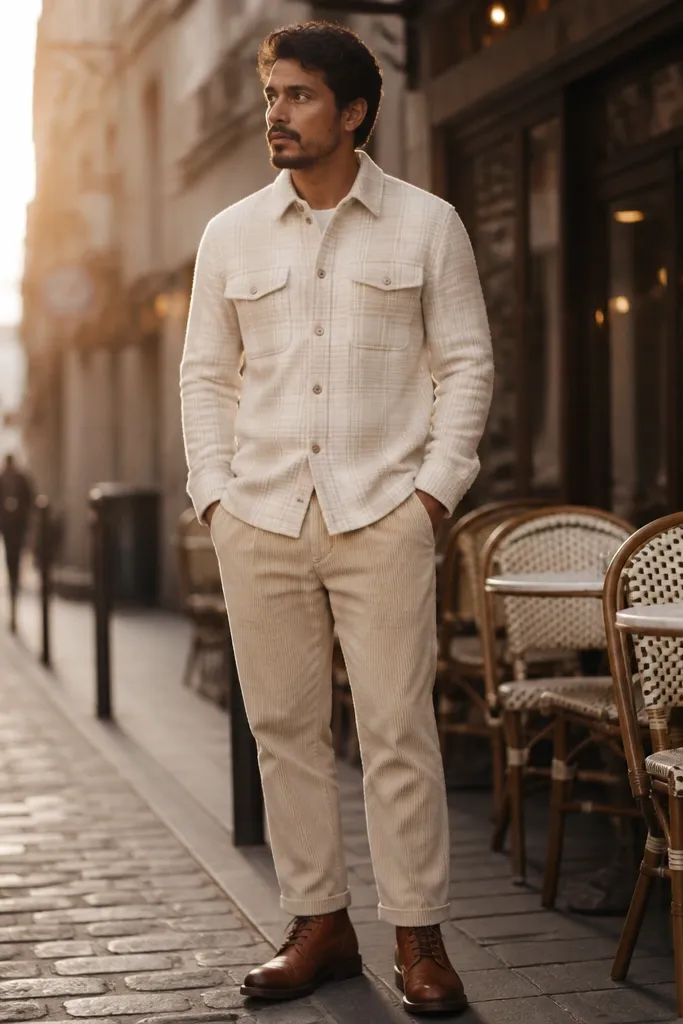
Texture stacking is the point here. Cream flannel gives you the soft brushed look, while oatmeal corduroy adds ribs and structure that still stays monochrome. The oatmeal pants make the cream feel warmer and less stark, and corduroy photographs with nice depth when light hits the ribs. Brown lace-ups keep the vibe classic and grounded. This outfit is great for fall weekends, casual dinners, and any day you want the fabric story to be the style. It flatters taller guys because corduroy adds visual weight at the legs.
Wear the cream flannel buttoned with the hem tucked into corduroy pants for a clean waistline. Choose oatmeal corduroy in a medium-wale thickness so it looks rich without being too heavy. Add brown lace-up shoes and a belt in the same brown; keep socks oatmeal or cream.
Good to knowPress the flannel flat and keep corduroy wrinkle-free at the knee for crisp photos.
Common mistakeAvoid very thin corduroy; it can look cheap next to flannel.
14. Beige flannel + sand knit beanie + tan chinos + brown loafers
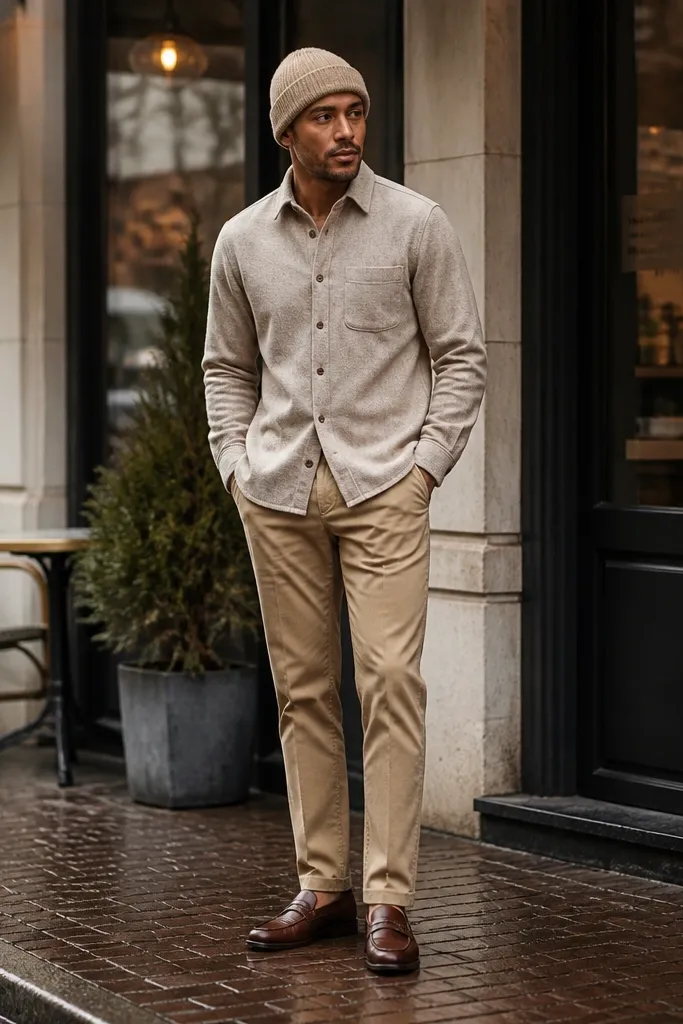
Monochrome gets more aesthetic when you add one seasonal accessory that matches the undertone. A beige flannel shirt with tan chinos is clean on its own, but the sand knit beanie makes it look styled for cold weather. Brown loafers are the upgrade here — they keep the outfit from feeling like a basic hoodie-and-chinos look. This set works best for casual outings where you want to look put-together from head to toe. It flatters most builds because the beanie adds a balanced top volume while the chinos keep the legs neat.
Start with the beige flannel buttoned and either tucked or half-tucked so the waistline is visible. Choose tan chinos with a straight or slim-straight leg and a tidy hem. Add brown loafers and a sand beanie; match the belt color to the loafers and keep socks tan.
Good to knowPick a beanie with a slightly looser knit so it looks soft, not stiff.
Common mistakeDon’t choose a beanie that reads gray — it breaks the beige family instantly.
15. Oatmeal flannel + beige suit trousers + brown oxford shoes
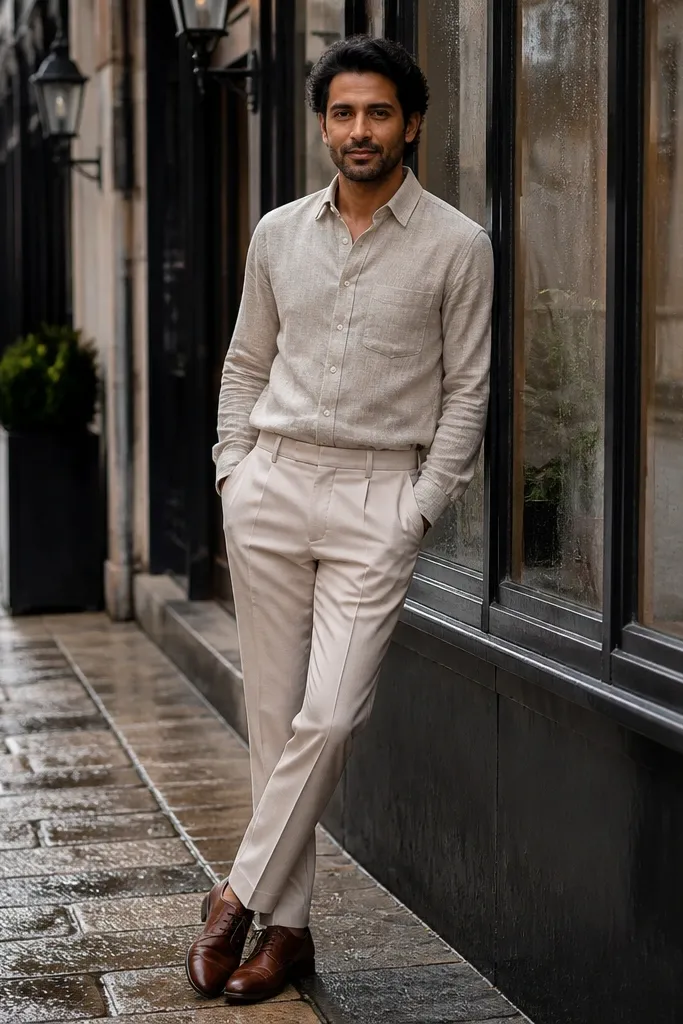
This is the monochrome beige flannel outfit for when you want to look sharp without a full suit jacket. Use an oatmeal flannel button-up with beige suit trousers in a similar undertone. The flannel adds casual texture, while the suit trousers bring structure and a cleaner crease line. Brown oxford shoes push it into smart territory. It works well for business casual, interviews in relaxed offices, and dinners where you want to stand out without looking flashy. It flatters shoulders because the flannel has body and the trousers create a crisp line.
Start with the oatmeal flannel buttoned and tucked into beige suit trousers; smooth out the fabric so the tuck line looks straight. Choose trousers with a slight taper and a defined crease, then add a brown belt and brown oxfords. Keep the socks beige or light tan so the shoe-to-sock transition stays monochrome.
Good to knowIf your flannel is very thick, leave the top button undone so the collar sits naturally.
Common mistakeDon’t wear athletic-fit trousers with this — it ruins the suit-trouser shape.
16. Beige flannel + cream longline coat + tan scarf + brown boots
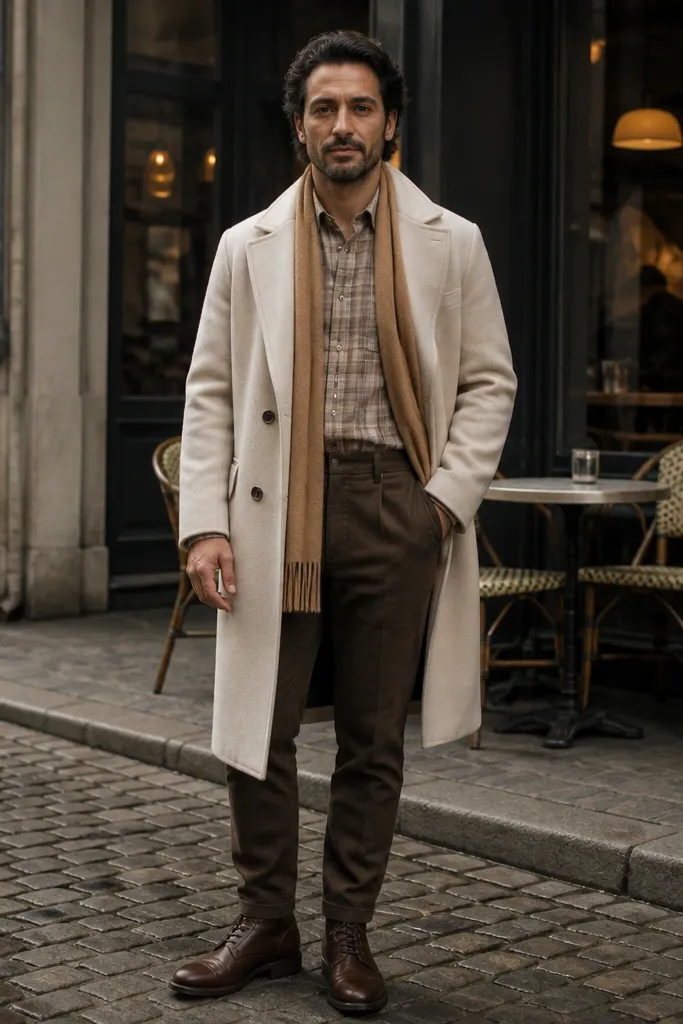
Longline outerwear makes monochrome look cinematic. Pair a beige flannel shirt with a cream longline coat that’s slightly lighter, and add a tan scarf that matches the coat undertone. The scarf is small but it ties the palette together and makes the outfit feel styled rather than random. Brown boots anchor the bottom so the outfit doesn’t look washed out. This is great for city walks, photos in overcast light, and evenings when you want a composed silhouette. It flatters most heights because the coat length controls the overall shape.
Start by wearing the beige flannel buttoned and tucked or neatly straightened under the coat. Choose cream outerwear with a matte finish and a length that hits below the hip bone. Add a tan scarf in a simple fold, then finish with brown boots and a belt if your coat has a visible waist seam.
Keep the scarf ends short and tidy; long floppy ends fight flannel bulk.
Avoid bright camel scarves — they pull the outfit away from beige monochrome.
17. Beige flannel + sand trousers + monochrome belt + brown suede boots
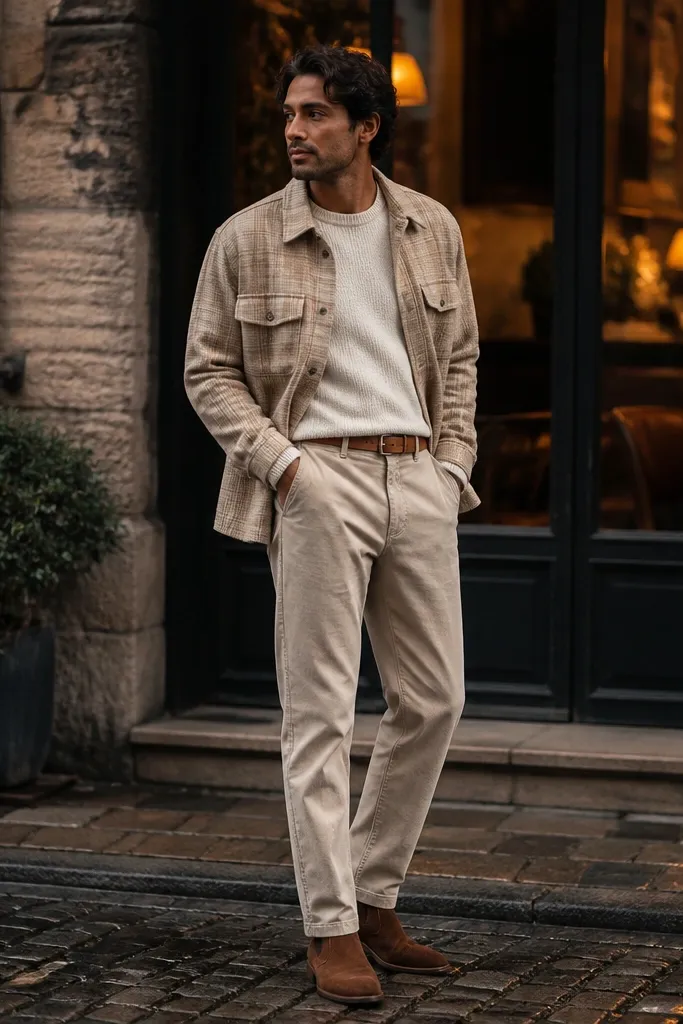
This one is about smooth harmony. Beige flannel with sand trousers keeps the palette light and cohesive, and brown suede boots add a soft, warm finish that matches flannel’s texture. The key is choosing trousers with a clean fabric — cotton twill or wool blend — so the outfit looks crisp instead of casual. This works for daytime events and travel because it stays comfortable and looks good in natural light. It’s flattering for guys who don’t want skinny silhouettes; the sand trousers keep the leg line long.
Wear the beige flannel buttoned and tucked into sand trousers, leaving the sleeves down for a clean line. Choose trousers with a straight leg and a slight break at the shoe. Add brown suede boots and a matching belt; keep the socks tan so there’s no harsh color interruption.
If your flannel is patterned, keep the trousers solid and quiet.
Don’t use glossy trousers fabric; it makes the flannel look dull by comparison.
18. Oatmeal flannel + beige sweatpants (tailored) + tan trainers
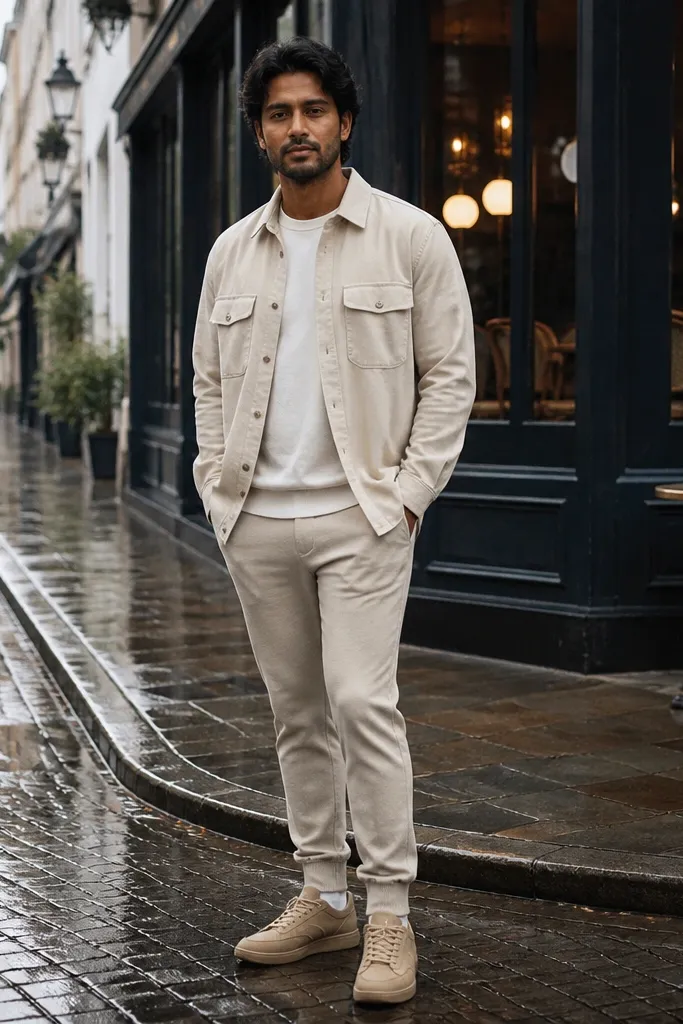
Monochrome doesn’t have to be formal. Oatmeal flannel with tailored beige sweatpants gives you a clean street look as long as the sweatpants are fitted at the ankle and not baggy. Tan trainers keep it casual and tie the palette together. The flannel texture makes the outfit look more “designed” than plain sweats. This is the easiest option when you want to look good at home, on a casual meet-up, or during travel days. It flatters most builds because the top texture adds interest while the tailored sweatpants keep the silhouette sharp.
Start with the oatmeal flannel buttoned or half-buttoned and worn untucked if the hem covers the waistband. Choose beige sweatpants with a tapered ankle and a clean waistband; avoid heavy cuffs. Add tan trainers with a single-tone upper and keep socks beige or tan.
Use a belt bag or small crossbody in tan leather to add structure without changing colors.
Avoid sweatpants with big logos or heavy graphic prints.
19. Greige flannel + beige pleated trousers + dark brown leather boots
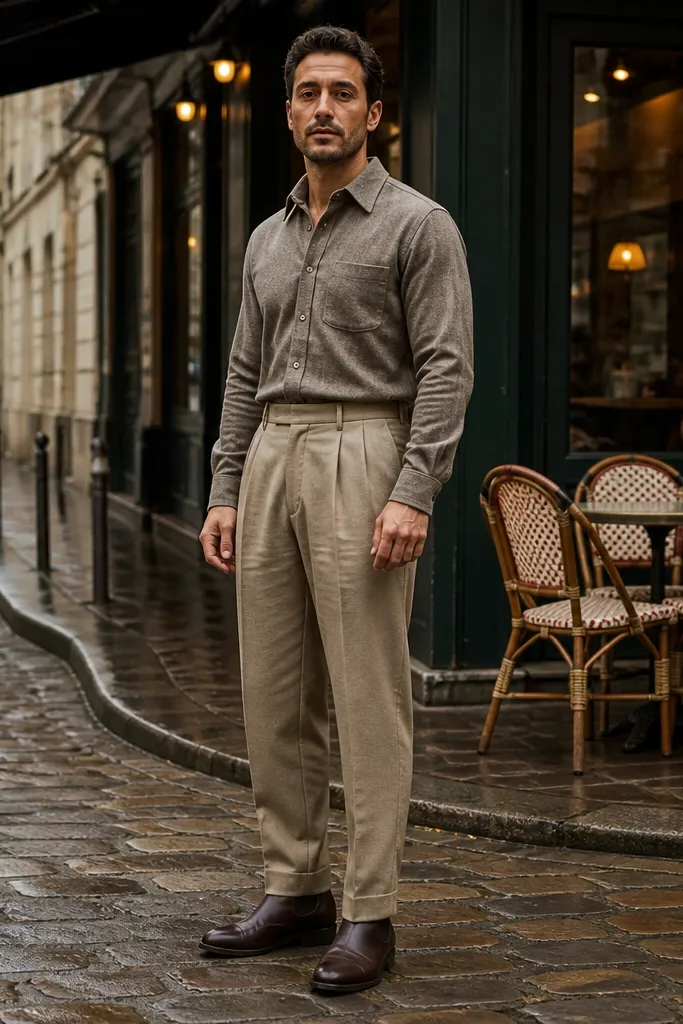
Pleats make monochrome feel intentional. A greige flannel button-up paired with beige pleated trousers gives you structure in the lower half, while the flannel keeps the top casual. The greige undertone adds a slightly cooler, more modern tone so the beige doesn’t look too soft. Dark brown leather boots ground the outfit and add contrast in a warm neutral way. This is a strong pick for dinners, galleries, and any event where you want “nice” without a jacket. It works well for guys with a wider waist because pleats give room and fall clean.
Wear the greige flannel tucked into the pleated trousers, then button it so the collar sits flat. Choose beige pleated trousers in a medium weight fabric so the pleats hold shape. Finish with dark brown leather boots and a belt in the same dark brown; keep socks beige to maintain the monochrome line.
Press the trouser crease before you go out — pleats look best when they’re sharp.
Don’t choose very thin pleated trousers; they crease badly and look sloppy next to flannel.
20. Beige flannel + tan shorts + cream overshirt (summer monochrome)
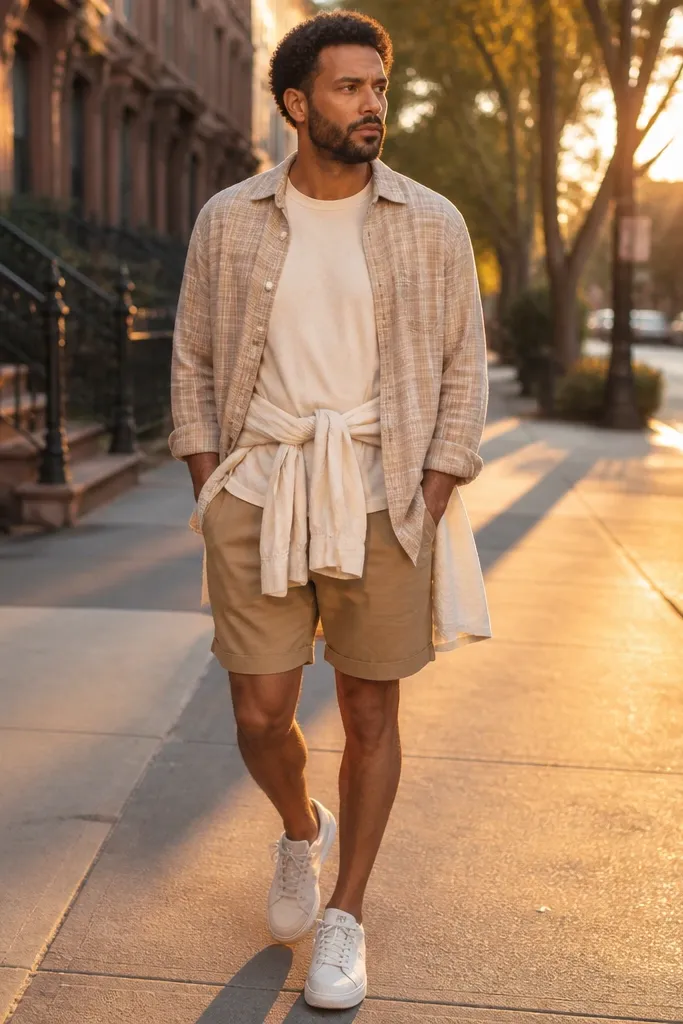
Yes, you can do monochrome beige flannel in warmer weather. Use a lighter beige flannel shirt worn open over a cream tee, then pair with tan shorts that hit mid-thigh. Add a cream overshirt only if it’s breathable and light enough to avoid bulk. The look works because flannel texture adds visual interest while the short length keeps it from feeling heavy. This is for late summer nights, festivals, and vacations when you want the flannel vibe without overheating. It flatters athletic builds because the open flannel creates a relaxed frame around the torso.
Start with a cream tee under a beige flannel worn open, sleeves rolled once. Choose tan shorts with a clean front and a tailored fit that sits at the natural waist. Wear brown sandals or lightweight brown leather sneakers, and keep accessories minimal with a tan cap or simple watch.
Pick shorts in a matte fabric like cotton twill so they match flannel’s finish.
Avoid very short shorts — they make the flannel look oversized.