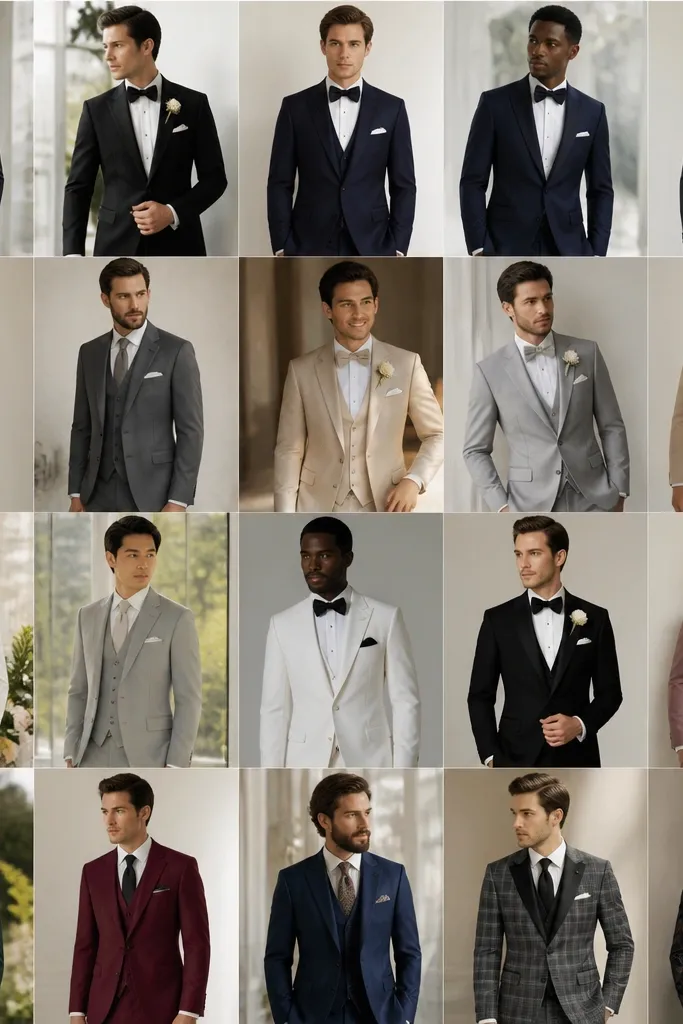
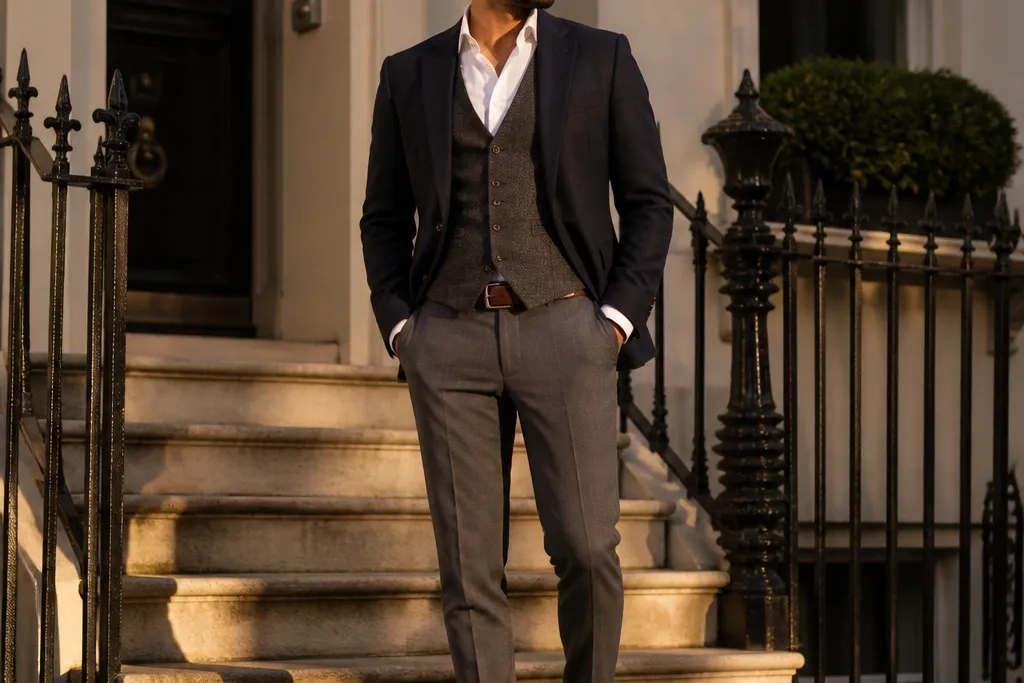
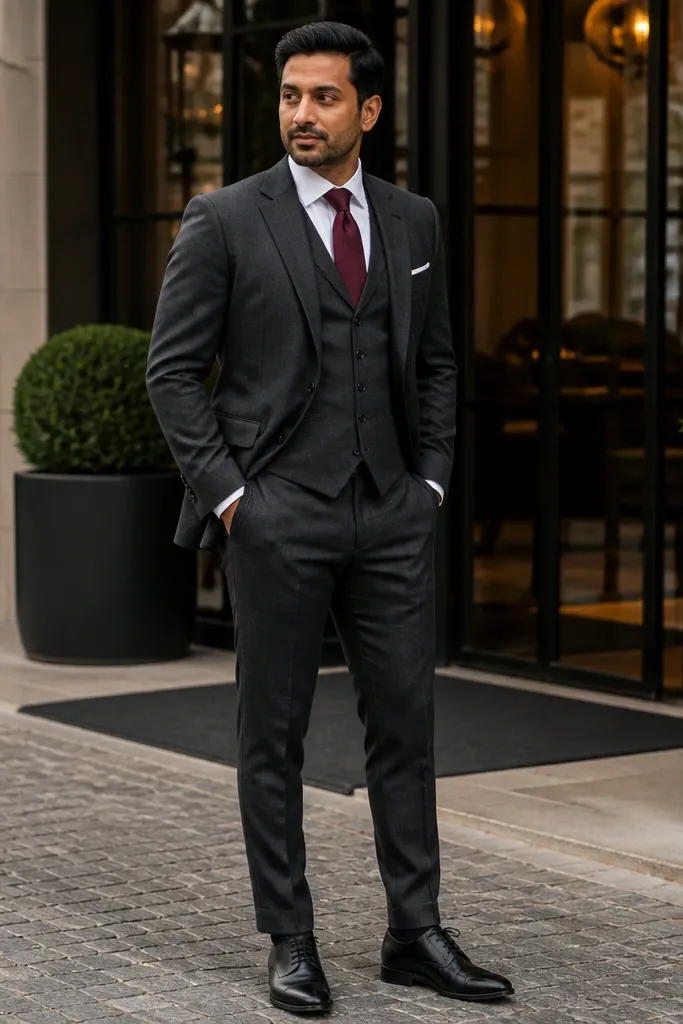
1. Navy jacket + charcoal trousers + cream waistcoat
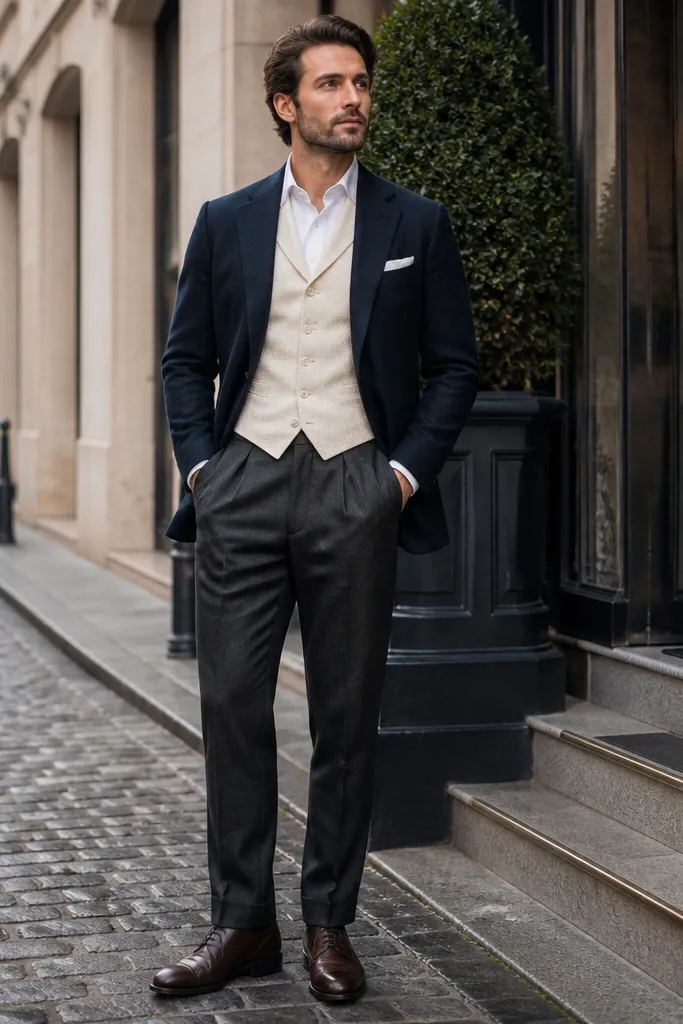
Start with a navy jacket that fits close through the chest and doesn’t pull at the buttons. Then choose charcoal trousers in the same fabric weight and a cream waistcoat that’s either solid or very subtle texture. Finish by pairing a white Oxford or pale blue poplin shirt, and wear brown leather oxfords or cap-toe derbies in dark espresso. If you add a pocket square, keep it white with a faint blue edge so the outfit stays sharp, not busy.
This is the cleanest classic combo because navy reads confident, charcoal keeps things grounded, and cream waistcoat color lifts the middle so you look taller. The contrast sits at the waist level, which is exactly where most people want definition in a three-piece. It works especially well if your skin tone is light to medium, because cream doesn’t fight the cool tones in navy. For fabric, look for medium-weight wool or wool-silk blend so the cream doesn’t go flat or look yellow. Keep the shirt crisp — white or pale blue — to keep the cream from looking dingy.
Common mistakeDon’t pair this with a warm gold-toned shirt or it will make the cream look off.
Good to knowGo for a cream waistcoat with a matte finish; shiny fabric makes the contrast look harsh.
2. Charcoal jacket + black trousers + black waistcoat
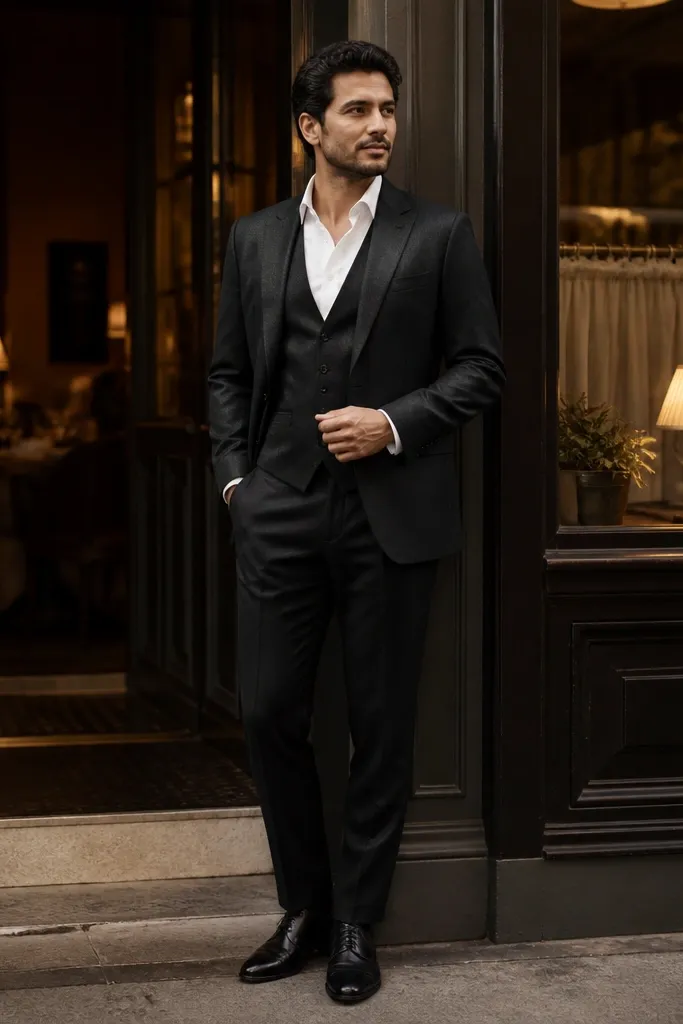
Start by matching the jacket and trousers by tone, not exact shade — charcoal can be slightly lighter than the blacks. Then wear a black waistcoat with black buttons and keep the shirt white or white with faint texture. For shoes, choose black leather oxford or a sleek derby with minimal shine. Add a black belt if any belt shows, and keep the tie optional: a black knit tie or a simple silk tie in charcoal works.
This is the “evening-ready” classic because charcoal gives depth while black keeps the lower half crisp. The waistcoat in black makes the suit feel formal without needing a tux. It flatters most builds because the monochrome lower half visually narrows your legs, while the charcoal jacket adds a softer, less harsh top. Choose smooth worsted or a fine wool with a tight weave so the charcoal doesn’t look dusty. This combo also handles cooler skin tones well, especially with white shirts and silver-toned accessories.
Common mistakeAvoid a cream pocket square with this combo; it makes the outfit look mismatched at night.
Good to knowIf you wear a pocket square, go white linen with a single fold — nothing patterned.
3. Navy jacket + navy trousers + burgundy waistcoat
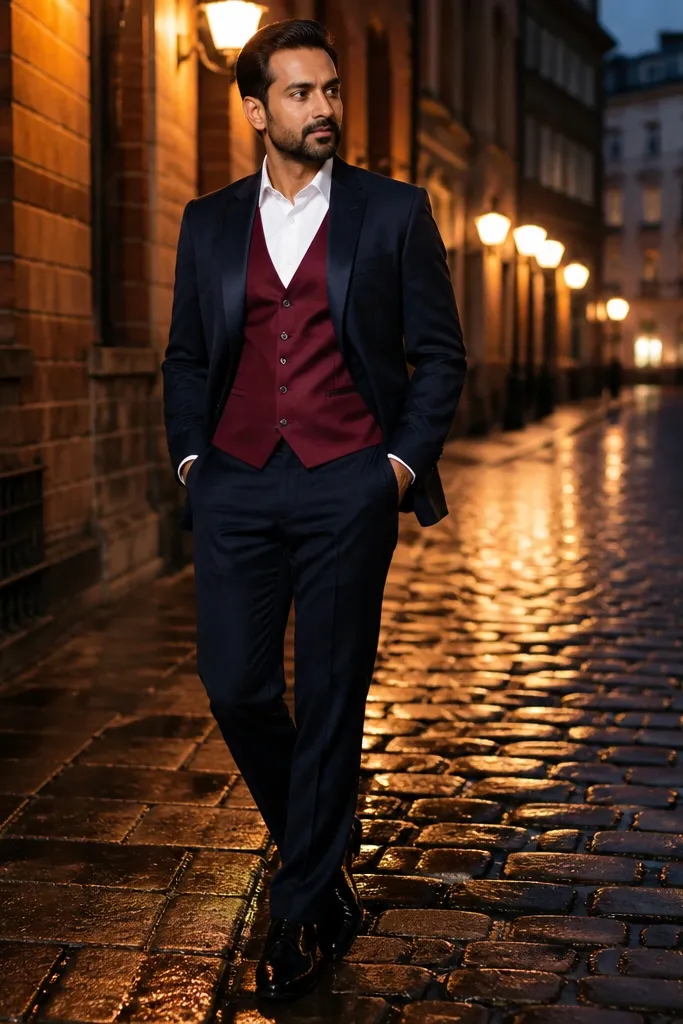
Start with a navy suit where the trousers match the jacket shade closely. Then select a burgundy waistcoat that is either a few shades darker than the tie you’d normally wear or clearly warmer than your shirt. Pair with a white shirt for maximum contrast, or a light blue shirt if you want it softer. Finish with dark brown shoes if your burgundy has more red than purple; use black shoes if the burgundy leans more plum.
This is modern because the waistcoat is the hero and it adds warmth without changing the suit’s foundation. Burgundy sits between red and plum, so it reads rich but controlled. It’s flattering for medium and deeper skin tones, especially when the shirt is white or light blue. The key is keeping the jacket and trousers fully aligned in color so the outfit doesn’t look like you bought mismatched pieces. Choose a burgundy waistcoat in wool or brushed cotton — the texture helps the color look expensive rather than flat.
Common mistakeDon’t add a patterned tie with big florals; keep any tie solid or micro-pattern.
Good to knowPick the shoe color by the burgundy’s undertone: red-leaning burgundy pairs best with dark brown.
4. Deep green jacket + tan trousers + navy waistcoat
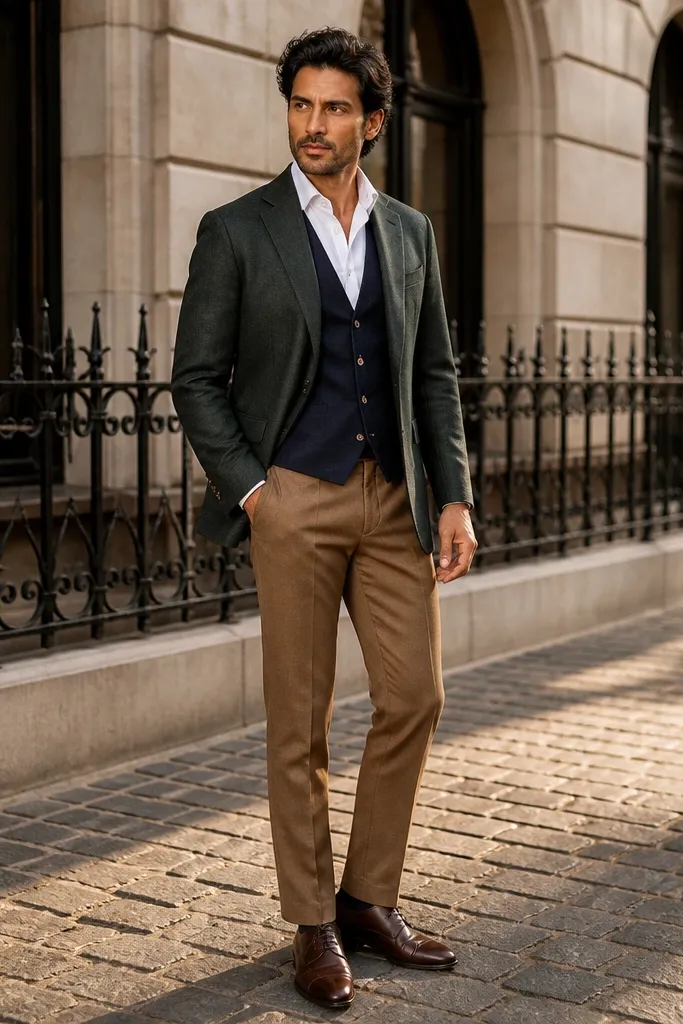
Start by picking a deep green jacket with a medium texture — avoid very shiny green suiting. Then choose tan trousers that match the warmth of the green; go for a slightly darker tan rather than pale beige. Add a navy waistcoat in wool so it blends with the jacket’s depth. Wear brown leather boots or oxfords, and keep socks in brown or olive.
This combo is modern-warm and it looks intentional because it uses a classic neutral (tan) while keeping the suit color grounded (deep green). Green can go loud, but the navy waistcoat reins it in and makes the outfit feel tailored rather than costume-like. It flatters most men because green adds color without being flashy, and tan creates a clean leg line. Choose deep forest green in wool flannel or textured wool so the color looks dimensional. White or off-white shirts keep it crisp.
Common mistakeDon’t pair tan with black shoes; it splits the outfit into two colors.
Good to knowIf you’re wearing a tie, choose navy or a muted burgundy rather than orange-brown tones.
5. Light gray jacket + white trousers + light blue waistcoat
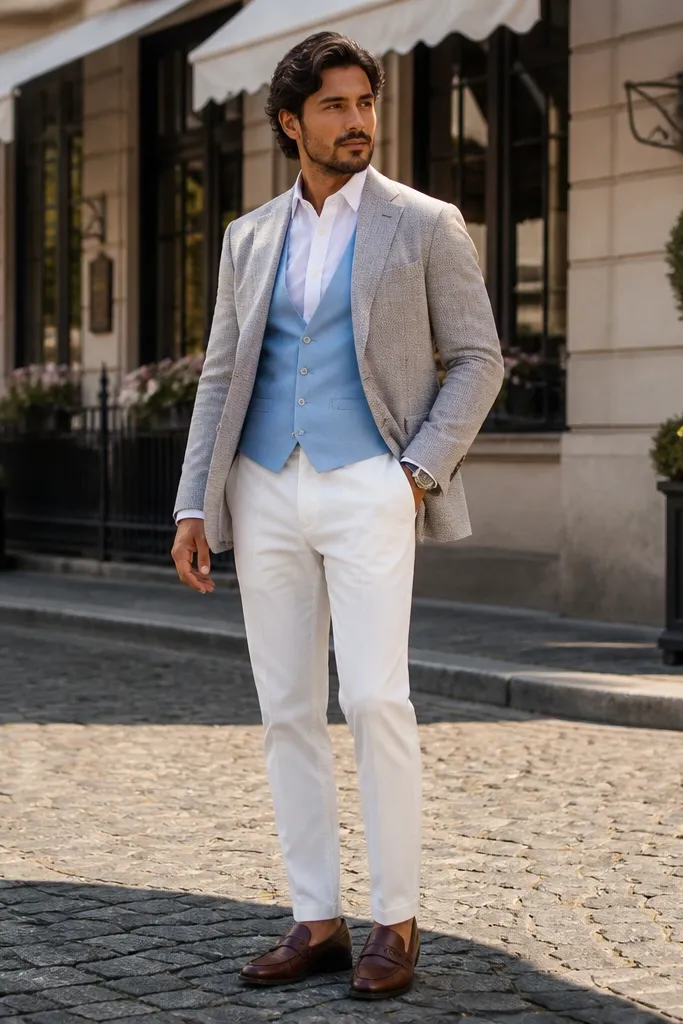
Start with a light gray jacket in breathable wool or a wool-linen blend. Then add white trousers that have a similar weight so they don’t wrinkle differently. Choose a light blue waistcoat in wool or cotton with a matte finish. Pair with a crisp white shirt and loafers in tan or light brown suede; finish with a simple knit tie in pale blue if you want extra polish.
This combo reads modern-bright because it uses a fresh summer palette but still keeps structure. Light gray is neutral enough for work-adjacent events, while white trousers make the look feel sharp and clean. The light blue waistcoat ties the cool tones together so the outfit doesn’t look like “gray top, white bottom.” This works best in warm weather and on men who want a lighter silhouette. For best results, pick a light blue waistcoat that is slightly darker than the shirt so it shows separation.
Common mistakeAvoid a waistcoat that’s the exact same shade as the shirt; it disappears visually.
Good to knowRoll the look into summer by choosing suede loafers, not glossy leather.
6. Brown tweed jacket + cream trousers + rust waistcoat
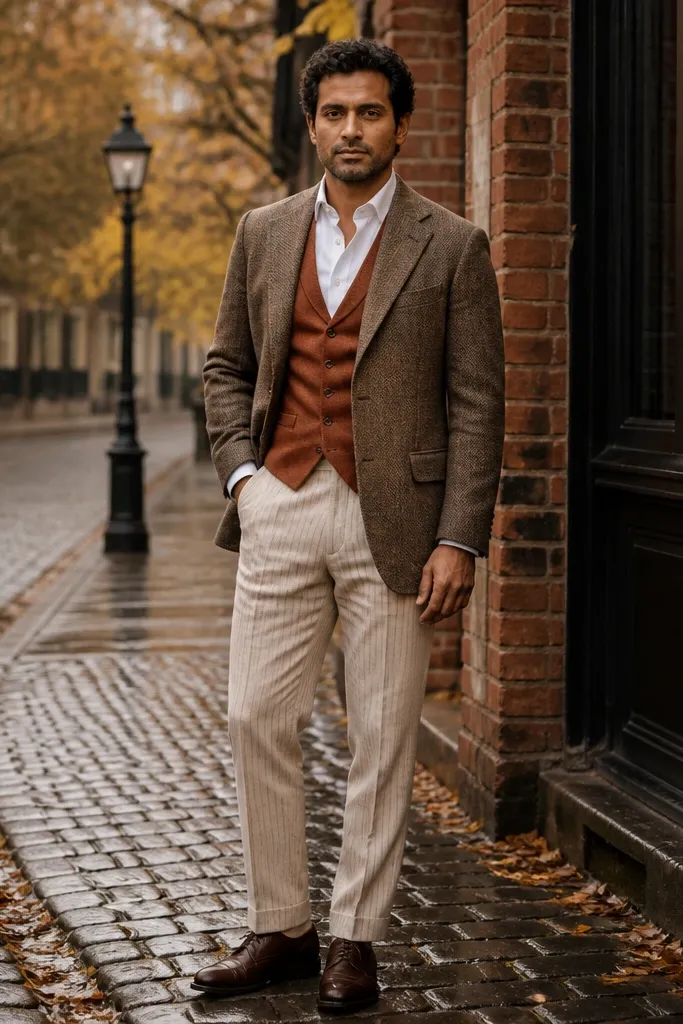
Start with a brown tweed jacket that fits cleanly at the shoulders and doesn’t pull across the chest. Then choose cream trousers with a smooth front so they contrast the tweed. Add a rust waistcoat in wool or brushed cotton, and keep the buttons in a dark tone like horn or dark brown. Pair with brown leather lace-ups or derby shoes and socks in cream with a brown line.
This is classic-rugged and it works because tweed naturally adds texture, so you don’t need loud colors to make it interesting. Cream trousers brighten the outfit, while rust in the waistcoat gives warmth that matches the brown without turning orange. It’s especially flattering for autumn and men who look good with earthy tones — think olive, warm beige, and medium skin tones. Choose tweed with a tight weave and visible flecks rather than thick, fuzzy bouclé so the jacket stays sharp. A white or cream shirt keeps the rust from getting too heavy.
Common mistakeDon’t wear black shoes with cream trousers here — brown is the only clean option.
Good to knowIf the tweed has red flecks, match the rust waistcoat undertone so the colors look like they belong together.
7. Navy jacket + light beige trousers + dark brown waistcoat
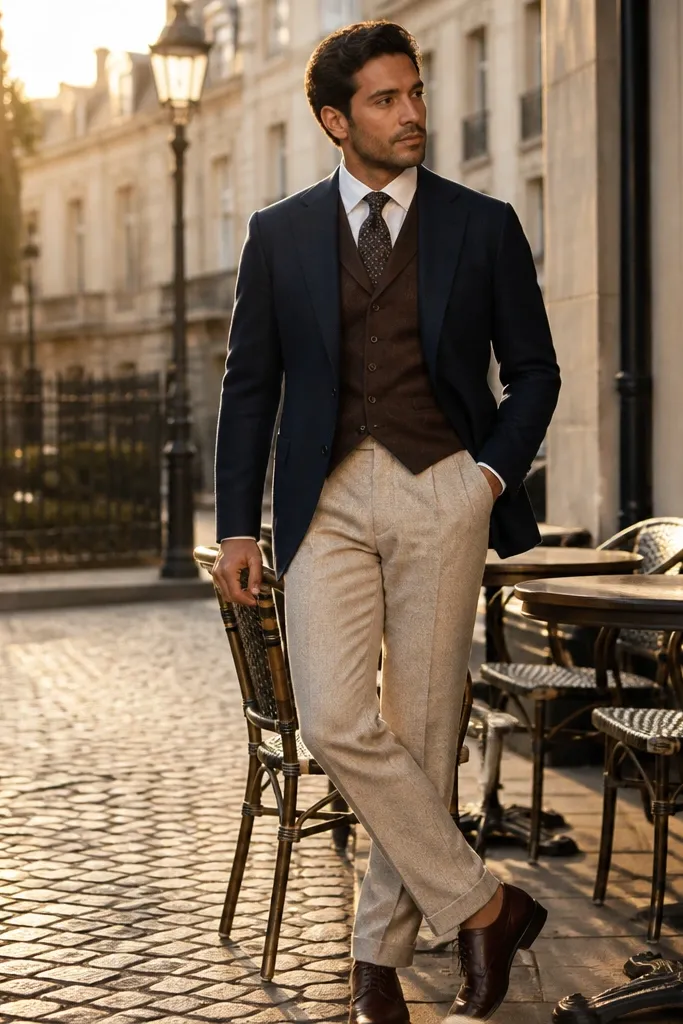
Start with a navy jacket in wool or wool-silk so it doesn’t look flat against beige. Then pick beige trousers that are warm, not gray-beige, and keep the hem break clean. Choose a dark brown waistcoat in matte wool and match the belt color to it. Finish with dark brown derbies and a tie in navy or a muted burgundy if you want a more formal read.
This one is modern because it uses a lighter trouser color while keeping the jacket cool. The dark brown waistcoat adds depth and makes the outfit look more layered than just navy and beige. It flatters men who want contrast without going full bright like white trousers. Beige is also forgiving for fabric — you can go with wool, linen-blend, or even a subtle twill. If your skin tone is warm or neutral, this combo looks especially good with off-white or light blue shirts.
Common mistakeAvoid a beige that’s too pale; it can make the navy look heavier than it should.
Good to knowUse a slightly darker belt than your trousers so the waistcoat and belt look connected.
8. Charcoal jacket + charcoal trousers + burgundy waistcoat
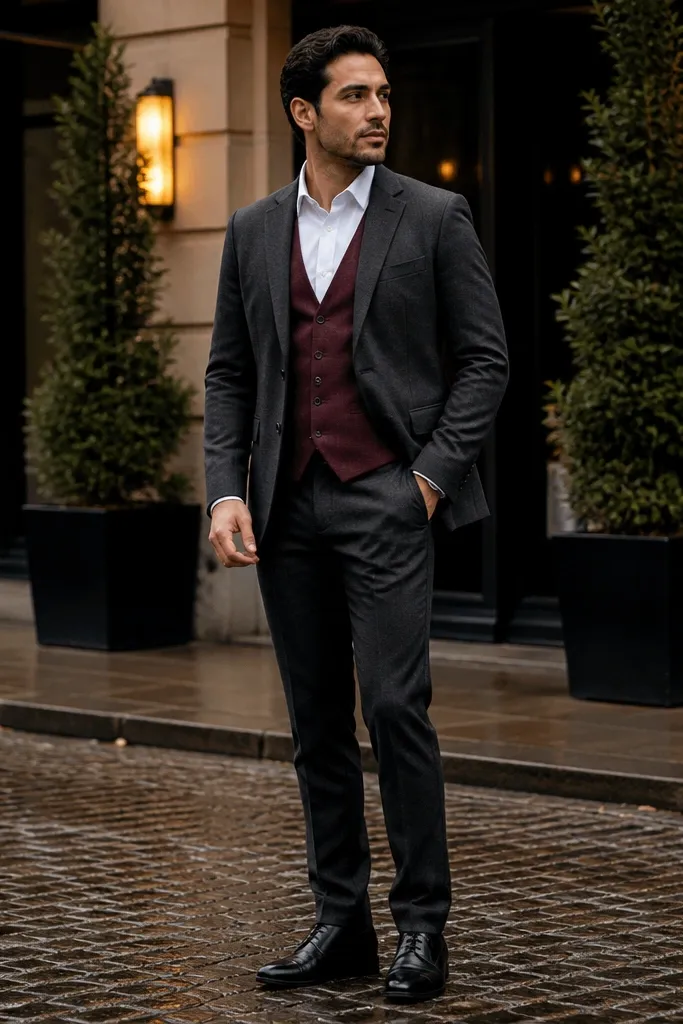
This combo is a modern twist that still feels classic because charcoal and burgundy share the same depth. The burgundy waistcoat adds color at the center, and charcoal keeps everything disciplined. It flatters almost anyone because charcoal softens the intensity of burgundy instead of letting it look loud. For shirts, go with white or pale pink; both look clean and keep the burgundy from turning muddy. Choose burgundy in wool with a tight weave so it reflects light subtly.
Start with a charcoal suit that has a consistent tone through jacket and trousers. Then pick a burgundy waistcoat that’s clearly warmer than the shirt and not too bright. Pair with a white Oxford shirt and burgundy or wine-toned socks. Shoe choice is simple: black if your charcoal is cool, dark brown if your charcoal leans warm. Add a pocket square in white linen with a faint burgundy edge.
If you want it more modern, skip a tie and wear the shirt collar clean with a small pocket square.
Don’t match burgundy with a neon red tie; it clashes at the same visual height.
9. Navy jacket + gray trousers + navy waistcoat
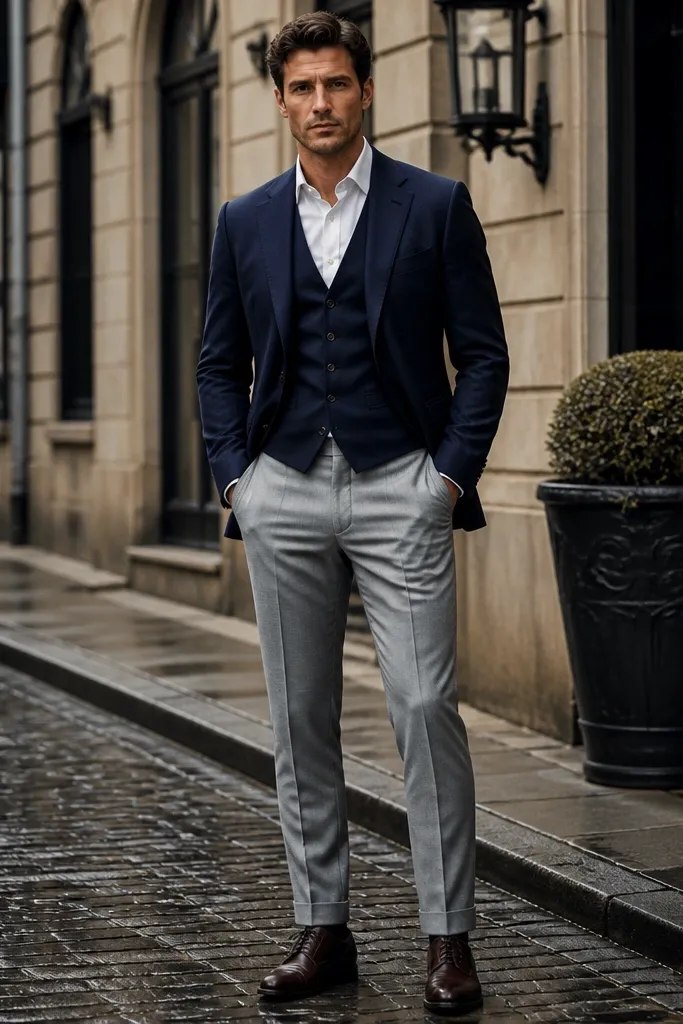
This is the “classic with a sharper edge” combo because you keep navy as the main color but add gray for modern contrast. The waistcoat in navy keeps the outfit coherent, while gray trousers give the legs a lighter tone. It works well for men who want to look more contemporary than a standard navy suit without going into bright colors. It also flatters lean builds because gray adds separation without making the outfit look bulky. A crisp white shirt makes it look intentional; light blue also works.
Start with a navy jacket and a navy waistcoat in the same fabric family, ideally both wool. Choose gray trousers in a similar weight and make sure the gray is not too close to the shirt. Pair with a white shirt and wear brown shoes for warmth — dark espresso is the best match. Keep the pocket square white and plain. If you wear a tie, choose navy with a subtle texture like knit.
Go for a slightly darker gray than you think; it looks sharper next to navy.
Don’t pick a gray that’s too light or it will make the suit look washed out.
10. Olive green jacket + cream waistcoat + olive trousers
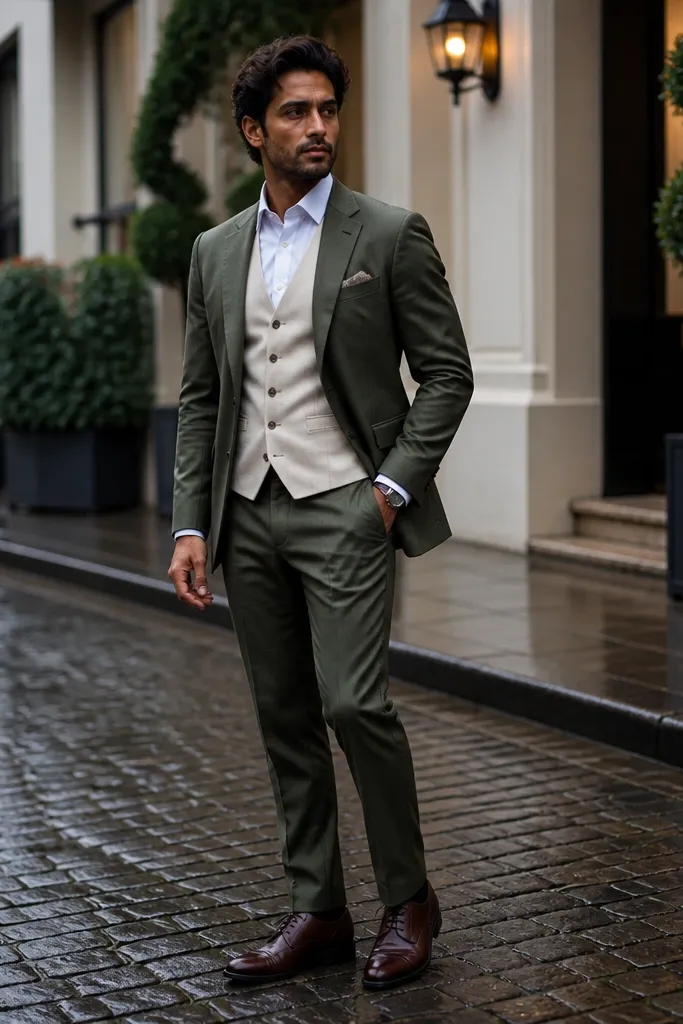
Start with an olive jacket and trousers that match in tone — don’t mix different olive shades. Then pick a cream waistcoat in matte wool so it doesn’t look shiny under light. Pair with a white shirt and brown or dark brown shoes, plus socks in olive or brown. If you add a tie, choose dark olive or burgundy in a knit for less shine.
This combo feels modern and grounded because olive is a controlled alternative to navy. The cream waistcoat brightens the center and makes the outfit feel more formal than a standard olive jacket with a plain shirt. It flatters warm and neutral skin tones, and it also works for men with darker hair because the cream adds contrast without going stark. Olive looks best in textured wool or wool-cotton blends. Keep the shirt white or cream, and avoid very warm yellow tones.
Common mistakeAvoid black shoes with olive; the contrast can look too harsh.
Good to knowTry a cream waistcoat with horn buttons; it makes the whole outfit look more grown-up.
11. Black suit base + gray waistcoat
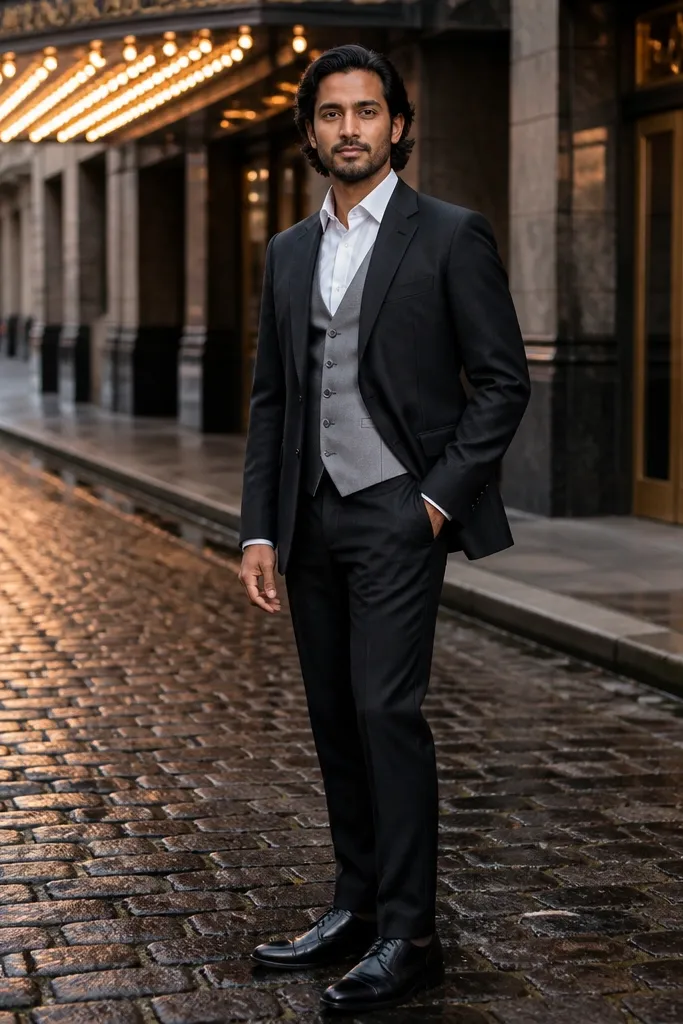
Start with a black jacket and trousers that have a similar sheen — both matte or both smooth. Then select a medium gray waistcoat in wool, ideally with a subtle texture. Pair with a white dress shirt and keep the tie optional; if you wear one, use black or dark gray. Finish with black leather oxfords and a black belt, no brown mix. Pocket square should be white linen.
This is modern because it breaks the black suit with a lighter waistcoat at the center. It looks sharper than a full black three-piece when you’re attending events where you want to stand out slightly. Gray waistcoats also photograph better than cream because they don’t blow out highlights. This combo suits men with cooler skin tones and works with white or light gray shirts. Choose a medium gray waistcoat, not steel-blue, so it reads classic and not accidental.
Common mistakeDon’t use a very light gray waistcoat with black — it can look like a mistake.
Good to knowIf you want extra modern energy, skip the tie and use a structured white shirt collar.
12. Midnight blue jacket + tan trousers + chocolate waistcoat
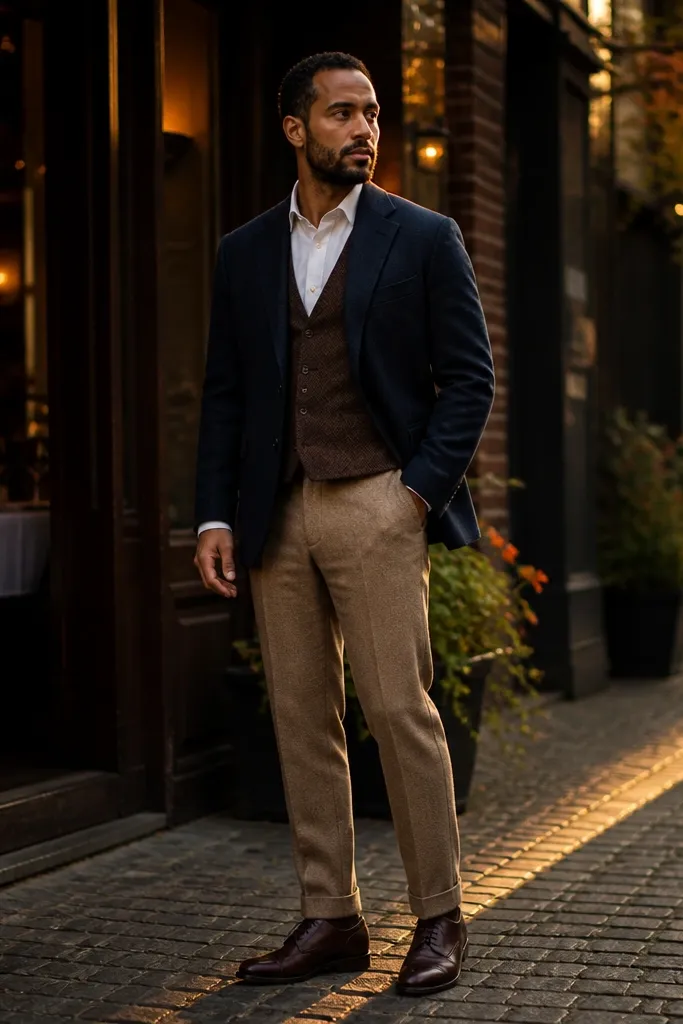
Start with a midnight blue jacket in smooth wool so the color reads deep, not dull. Then choose tan trousers with a clean front and a hem that sits just above the shoe. Add a chocolate waistcoat in matte wool and match shoes to it — dark brown lace-ups or derbies. Pair with a white shirt and a dark tie in navy or chocolate. Keep socks dark brown to keep the line continuous.
Midnight blue is deeper and more serious than navy, and it makes the tan trousers look richer. The chocolate waistcoat connects the warm trouser color with the deep blue top so the outfit doesn’t feel split. This combo is great for evening dinners and fall events because it looks dressed without being heavy. It flatters men who want color but hate bright reds and oranges. Pick a tan that’s warm and slightly darker than khaki, and keep the shirt white or light blue.
Common mistakeDon’t pick a chocolate waistcoat that’s too close to the shoes; you need a slight contrast.
Good to knowIf your tan is warm, avoid a light gray tie; chocolate or navy ties look cleaner.
13. Steel gray jacket + black trousers + off-white waistcoat
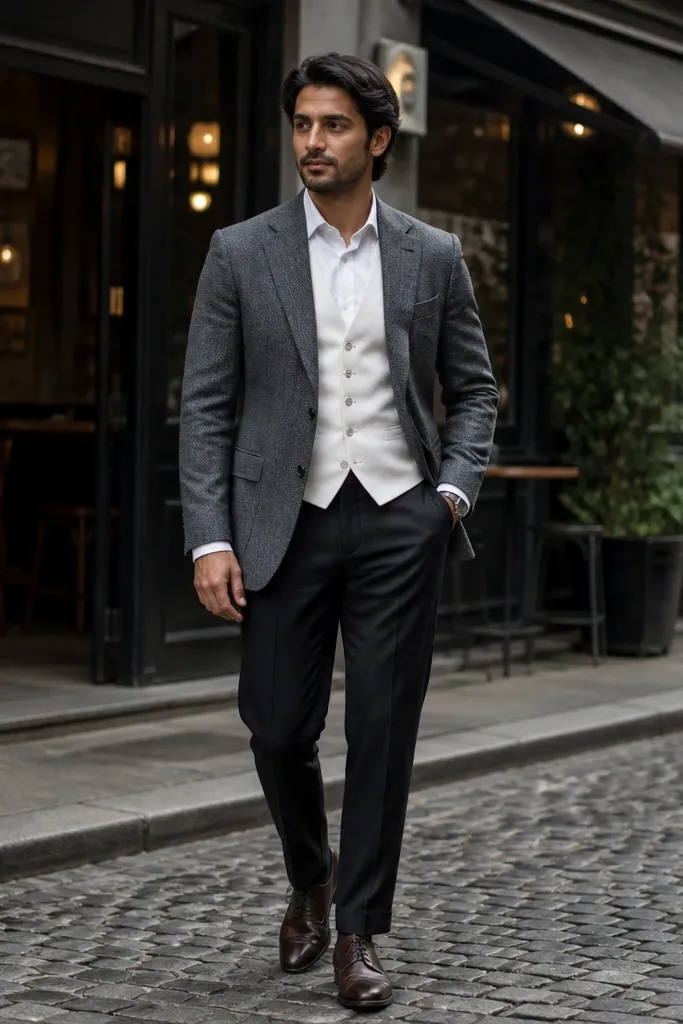
This combo is classic vs modern in a single move: steel gray and black are formal and controlled, while the off-white waistcoat modernizes the center. It’s especially good if you want a suit that looks sharp in photos because off-white adds brightness without the high contrast of cream. It works well for cooler skin tones and for men wearing glasses because the lighter center draws attention to the face. Fabric matters: choose a smooth wool so steel gray looks crisp.
Start with steel gray jacket and black trousers with matching fabric finish. Then choose an off-white waistcoat that’s slightly warmer than your shirt so it doesn’t look gray. Wear a white dress shirt and choose black shoes — oxford or sleek derby. If you add a tie, keep it black or steel gray with a subtle pattern. Pocket square should be off-white linen.
Off-white works best when the shirt is pure white; the contrast keeps it clean.
Avoid yellow-cream off-white; it can clash with steel gray and look dirty.
14. Sand brown suit jacket + navy trousers + sand waistcoat
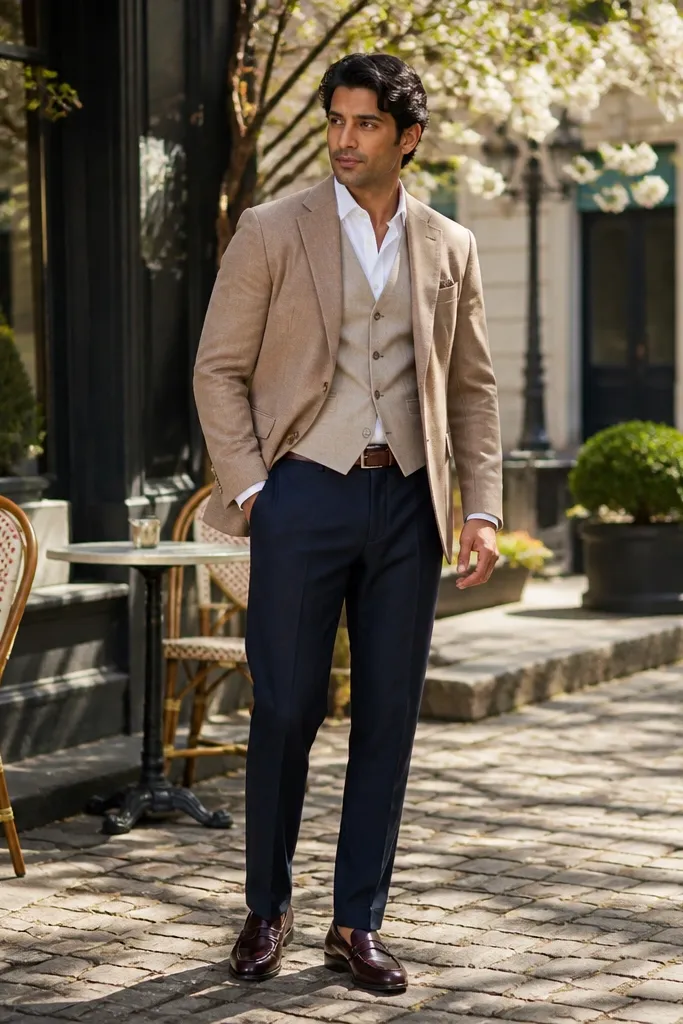
Start with a sand brown jacket in wool-linen blend or a light worsted so it drapes cleanly. Then pick navy trousers that are deep and matte, not shiny. Add a sand waistcoat and match button color to the jacket hardware. For shoes, use navy or dark brown depending on your shirt: dark brown with white shirts, and black with pale blue shirts. Keep the tie optional; if you wear one, choose navy with a subtle knit.
This is modern because it flips the usual navy-first rule and uses sand brown as the top color. The navy trousers anchor the look, so it still reads formal. Sand brown is flattering on medium and warm skin tones, and it looks great in spring and summer when you want lighter colors without going full beige. Keep the waistcoat in the same sand family as the jacket so the outfit stays cohesive. Choose a shirt in white or pale blue to control warmth.
Common mistakeDon’t pair sand with bright red accessories; it pulls focus away from the suit.
Good to knowA sand suit looks best with matte shoes, not high-shine leather.
15. Deep burgundy jacket + black trousers + burgundy waistcoat
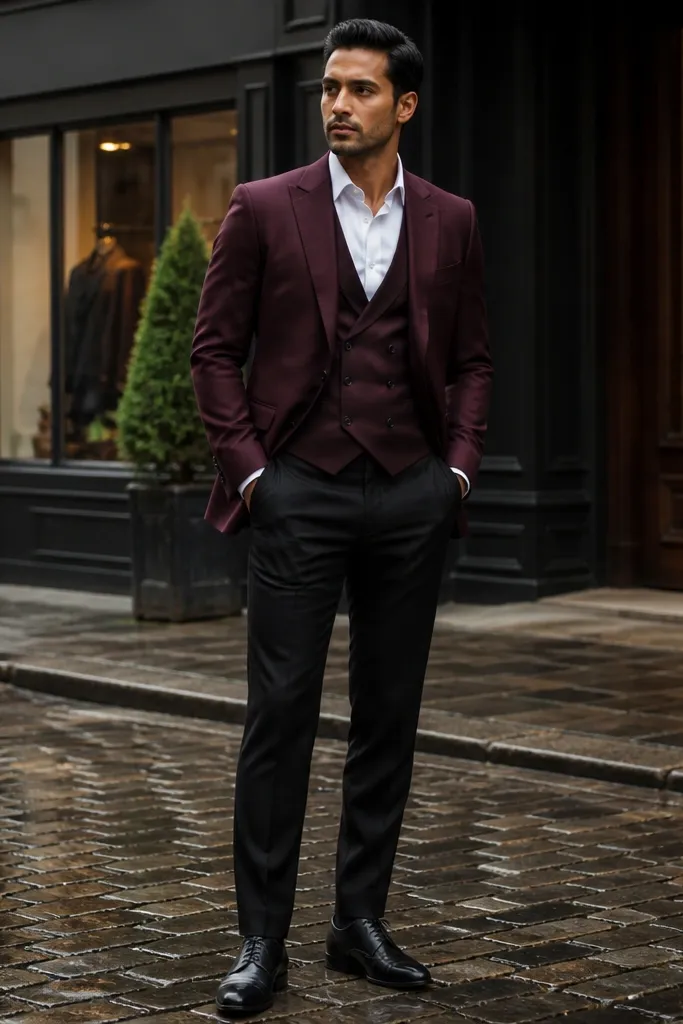
Start with a deep burgundy jacket and make sure the waistcoat matches it in tone and fabric weight. Then choose black trousers with a matte finish so the burgundy remains the main color. Pair with a white dress shirt and black leather oxford shoes. If you wear a tie, go black or deep burgundy with a subtle texture. Pocket square should be white linen or white silk with a simple fold.
This is modern and dramatic without being costume because the trousers stay black. Deep burgundy reads like a serious color in evening light, and it gives you a standout look while still feeling tailored. It flatters men with dark hair and suits well with cooler skin tones, but it also works for warm tones if the burgundy is not too orange. Choose a burgundy jacket in wool with a tight weave so it doesn’t look maroon-flat. Pair with a white shirt and minimal patterns so the color stays the focus.
Common mistakeAvoid a cream shirt with very warm undertones; it can make burgundy look too orange.
Good to knowKeep your belt and shoes black so the outfit reads intentional from the side profile.