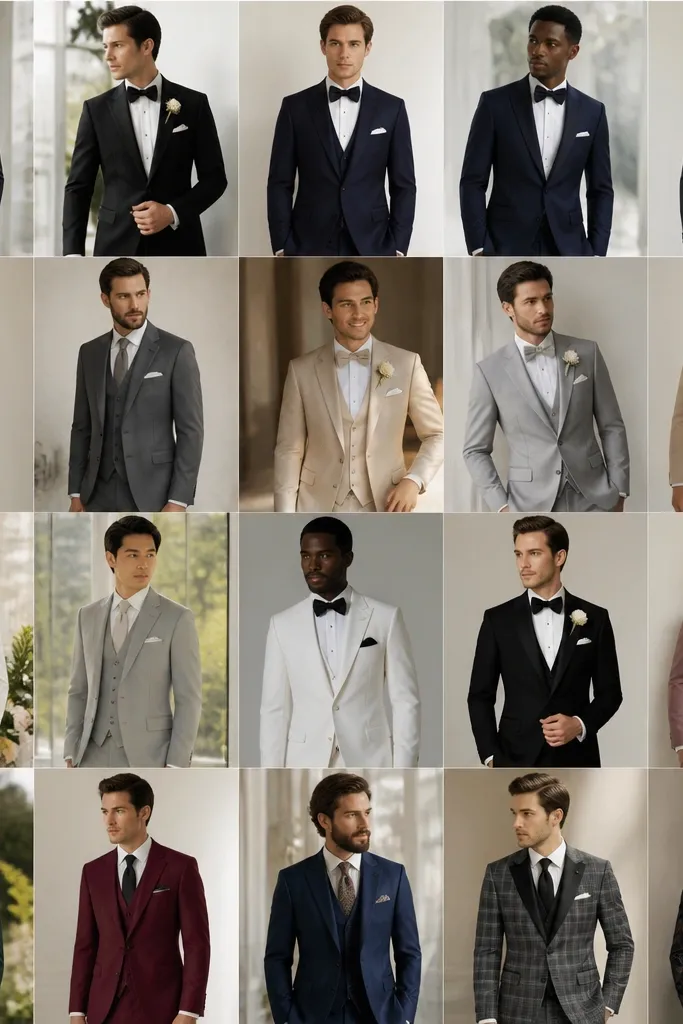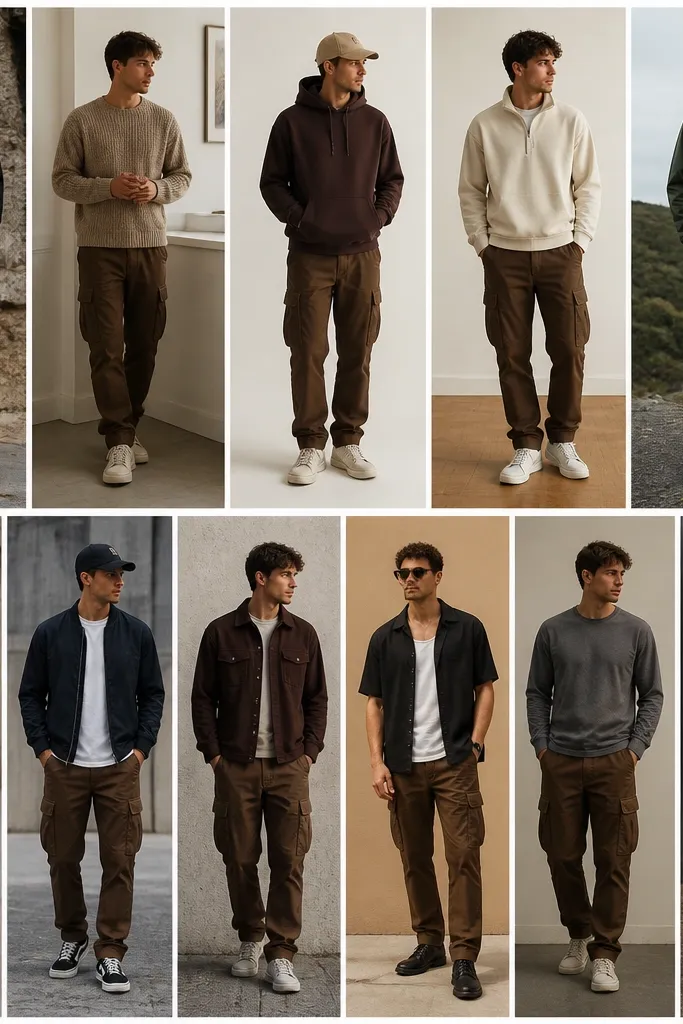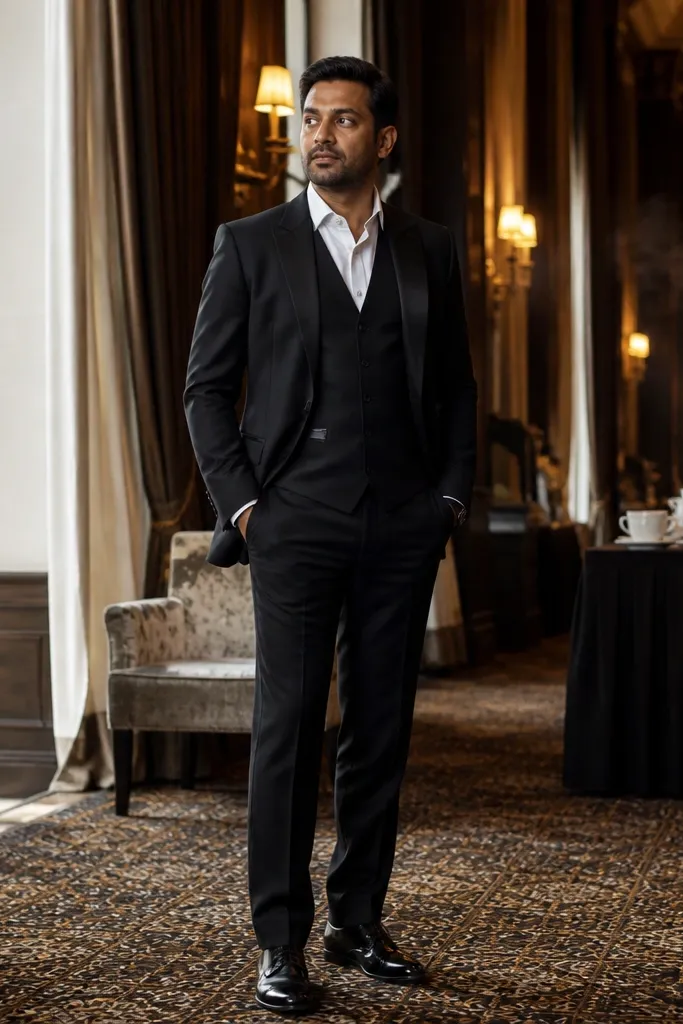
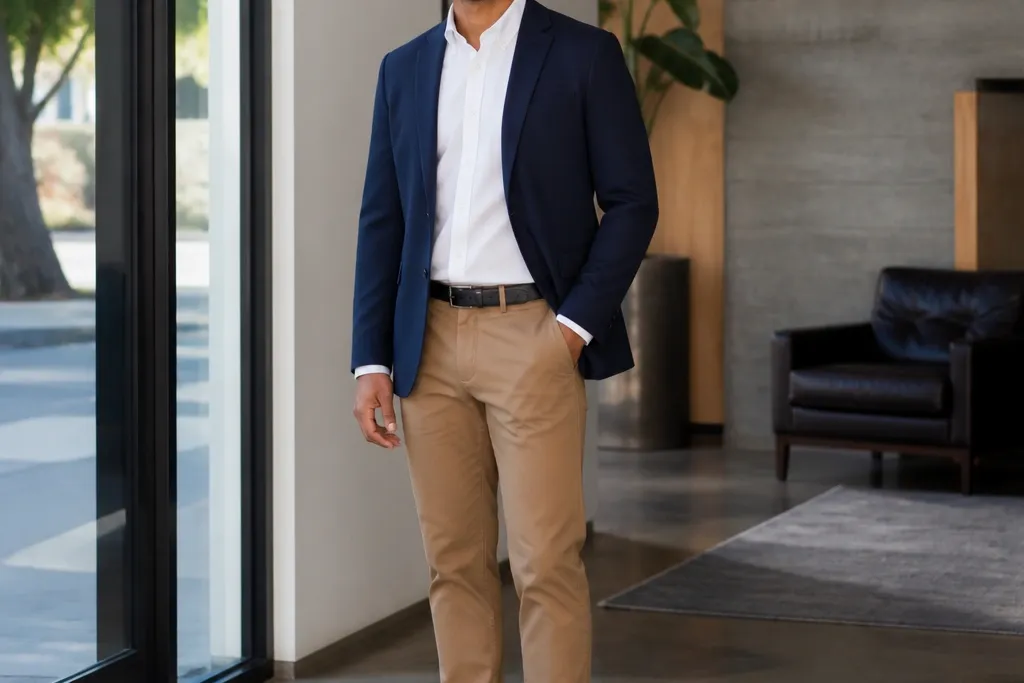

1. Navy Oxford + Stone Chinos + Brown Loafers
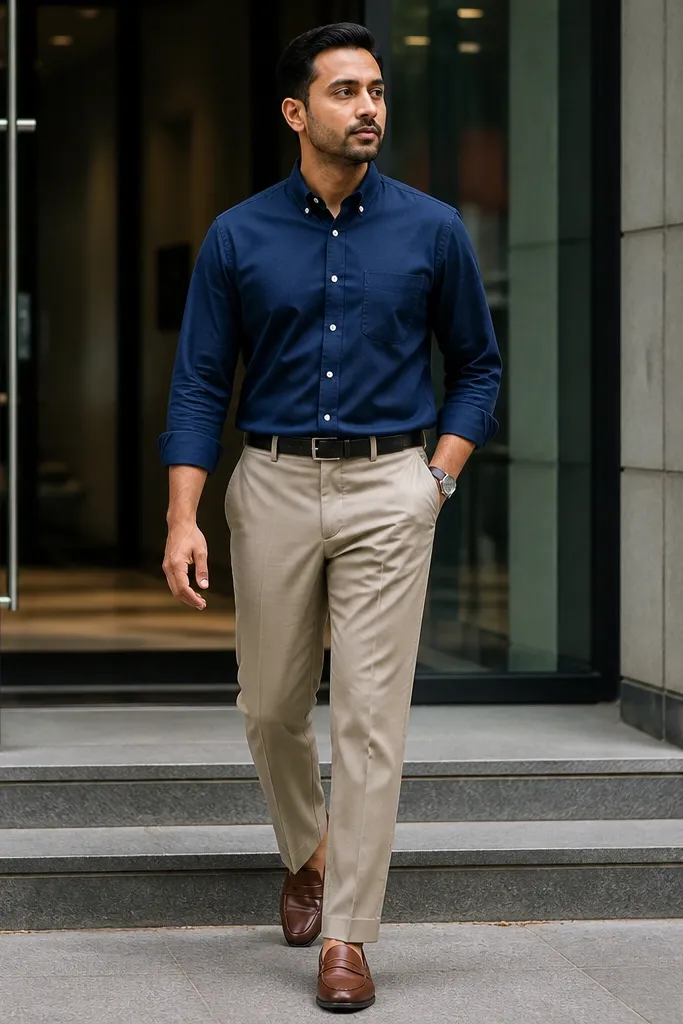
This is the cleanest “simple but looks put together” combo because navy oxford fabric reads structured, while stone chinos keep it casual. The navy gives you a sharp, professional frame; the lighter chinos add contrast so you don’t look heavy. Brown leather loafers tie it together and soften the navy instead of making it look too formal. This outfit flatters most builds because the oxford holds shape and the chinos add a lighter line at the legs. Choose a slim straight or tailored fit for the chinos so the silhouette stays crisp in photos.
First, wear a navy oxford button-down tucked with a belt (tan or cognac). Then add stone or sand chinos with a slight break at the ankle if you wear loafers; if you hate bunching, go no-break with a clean cuff. Finally, finish with brown loafers in leather and a simple watch with a brown strap.
Roll the sleeves once to mid-forearm and keep the collar crisp; it makes the look feel intentional.
Avoid wrinkled oxford fabric — steam or swap shirts before you tuck.
2. Charcoal Crewneck Sweater + Black Trousers + Chelsea Boots
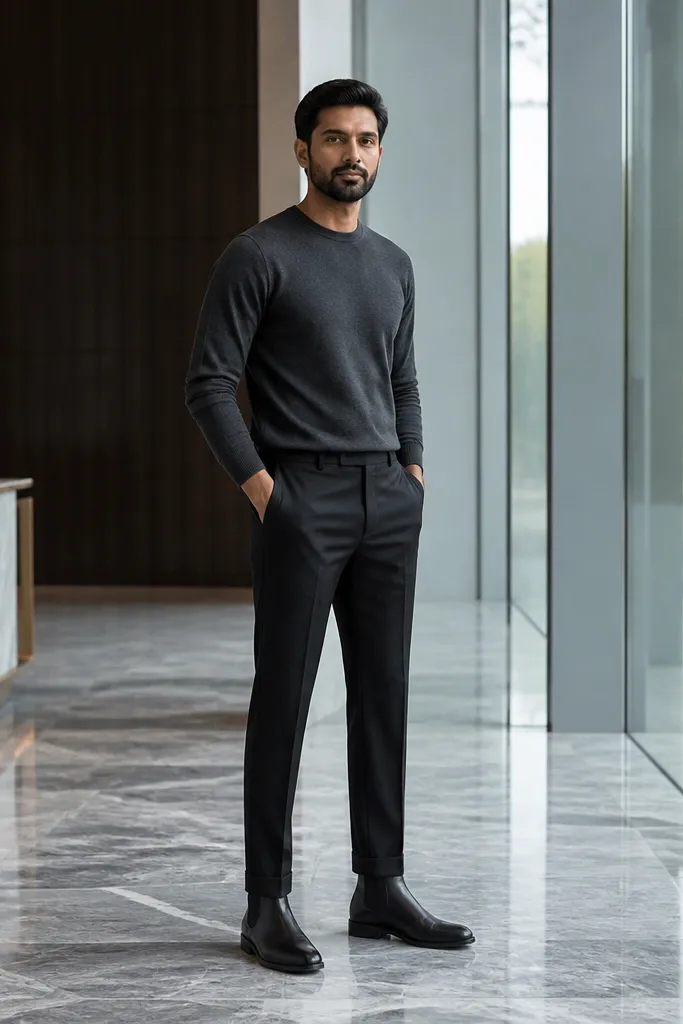
A charcoal crewneck is business casual’s best friend because it looks neat without trying to be a suit. Pair it with black trousers to keep the outfit sharp and elongated. Chelsea boots add a sleek line from ankle to calf, which reads more polished than sneakers in an office setting. This works well for taller guys because the dark pants create a continuous visual column; for shorter guys, the crewneck keeps the upper half tidy without adding extra bulk. Keep the sweater medium weight so it drapes cleanly rather than clinging.
Good to knowAdd a thin gold or steel watch — the metal pops against charcoal.
Start with a charcoal crewneck that fits close at the shoulders and isn’t stretched at the hem. Then wear flat-front black trousers with a tailored straight leg and a clean hem just above the boot opening. Finish with black or dark brown Chelsea boots and a dark belt that matches the boots.
Common mistakeSkip chunky cable knits; they read too weekend unless your office is very relaxed.
3. Olive Overshirt + White Tee + Dark Wash Jeans + White Sneakers
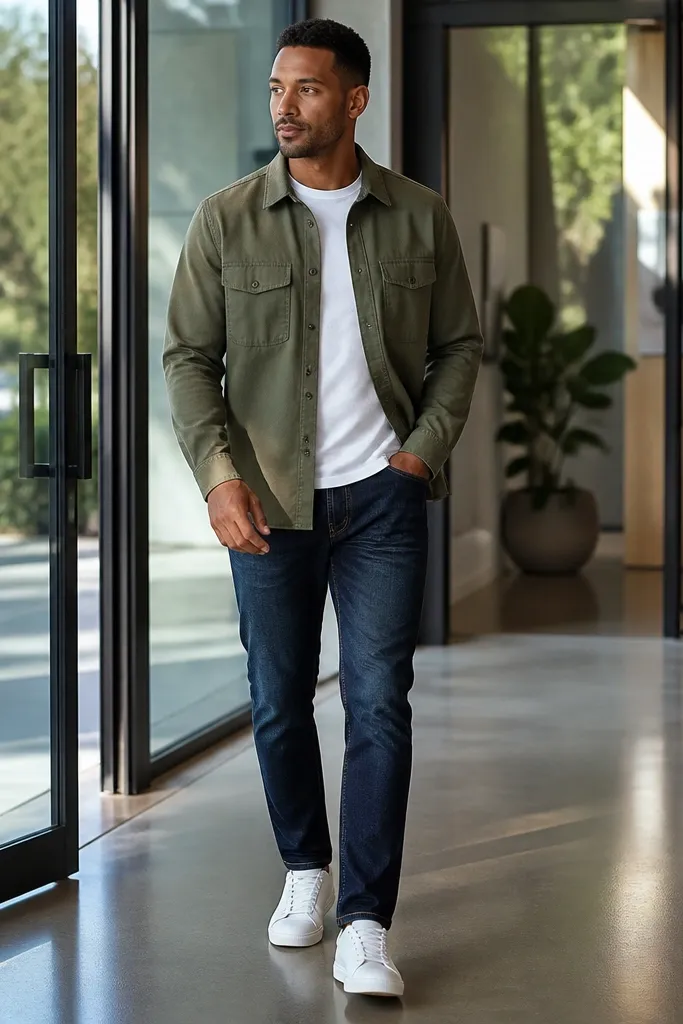
This is “business casual” for offices that allow denim, and it looks sharp because the overshirt brings structure. Olive overshirts have enough texture to photograph well, while a white tee keeps the look bright and modern. Dark wash jeans with minimal fading keep it professional; the key is low-contrast denim. White sneakers work here because the outfit already leans casual, but you need clean leather or leather-like uppers, not worn-out rubber. This setup flatters most body types because the overshirt adds a vertical shape and breaks up the torso.
Good to knowGo for a matte overshirt fabric (cotton twill or brushed flannel) so it doesn’t look shiny on camera.
First, layer an olive overshirt over a fitted white tee. Then choose dark wash jeans with a slim straight leg and minimal whiskering; keep the hem tidy. Finally, wear clean white sneakers and add a simple cap or no-accessory look if you want it extra clean.
Common mistakeDon’t use light-wash jeans; the outfit stops reading office-ready.
4. Light Blue Poplin Shirt + Beige Chinos + Cognac Belt + Loafers
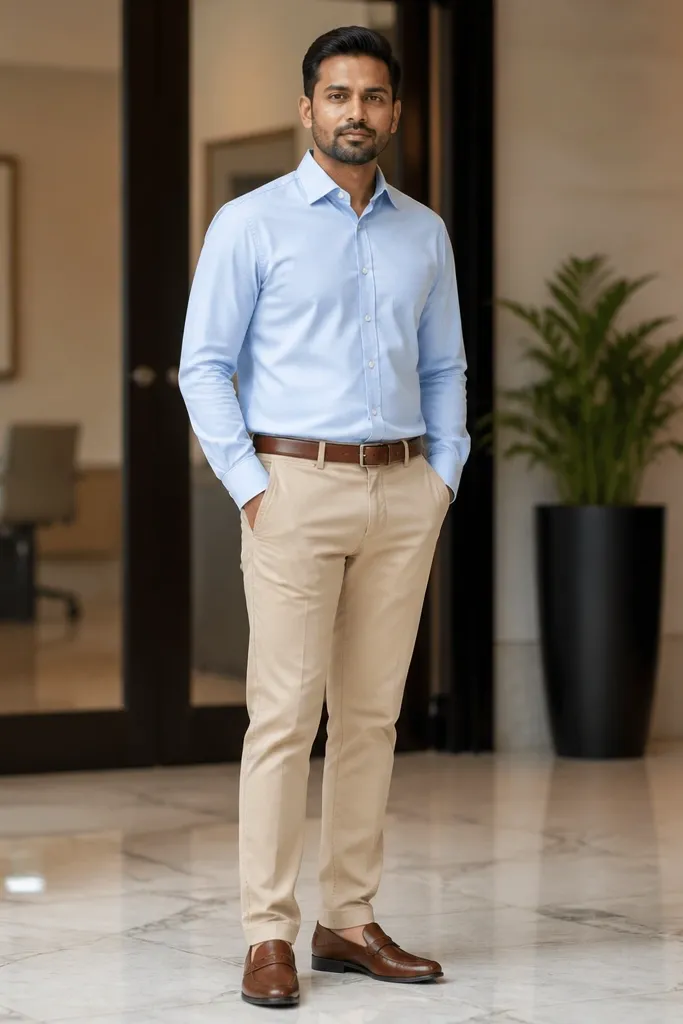
Poplin has that crisp surface that makes business casual look intentional even with simple pieces. Light blue on beige is a strong combo because it’s bright without being loud. Cognac accessories add warmth and make the outfit feel more premium than plain brown-only styling. Loafers finish the look with a classic work silhouette. This works especially well for spring and summer offices and suits guys with cooler or neutral skin tones, since blue pops without turning harsh. Keep the shirt collar clean and the chinos flat-front for the polished effect.
Good to knowUse a low-contrast pocket square only if your office is client-facing; otherwise skip it.
Start with a light blue poplin shirt and either tuck fully or do a clean half-tuck. Then pick beige chinos that sit at your natural waist and taper slightly through the ankle. Finish by matching your loafers and belt in cognac and choose a simple leather watch strap.
Common mistakeAvoid chinos that are too slim — they look tight in motion and ruin the clean line.
5. Striped Knit Polo + Navy Trousers + Brown Derbies
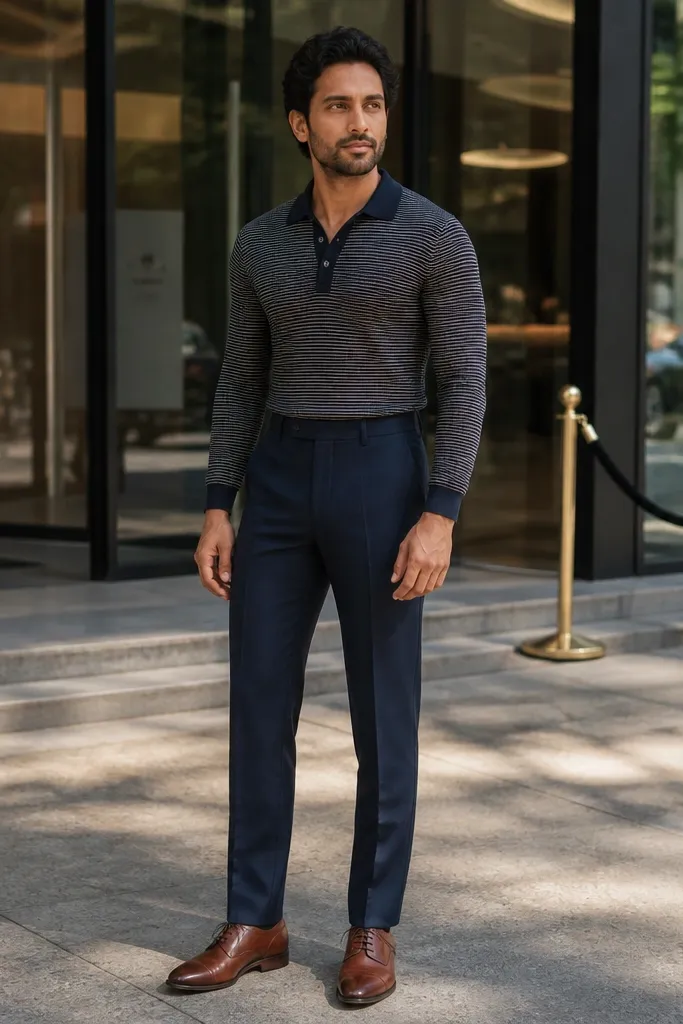
A striped knit polo gives you a smart-casual texture that reads modern, not sloppy. The key is choosing stripes that are tight and low-contrast, like navy with cream or off-white, so it stays work-safe. Navy trousers keep it grounded and make the stripes look intentional. Brown derbies add formality without going full office suit. This outfit flatters athletic builds because the knit polo sits smoothly across the chest and the trousers keep the leg line straight. It also works for guys who hate button-down collars; the polo has built-in structure.
First, wear a striped knit polo that fits the shoulders without pulling at the buttons. Then choose navy trousers with a straight or slight taper and a clean hem. Finish with brown derbies and a belt in the same shade; if the polo has lighter stripes, keep your socks neutral (cream or navy).
Keep the polo unbuttoned one notch max — it keeps the neckline from looking too casual.
Skip oversized polos; they make the stripes look like a costume.
6. Black Overshirt + White Oxford + Olive Chinos + Leather Sneakers
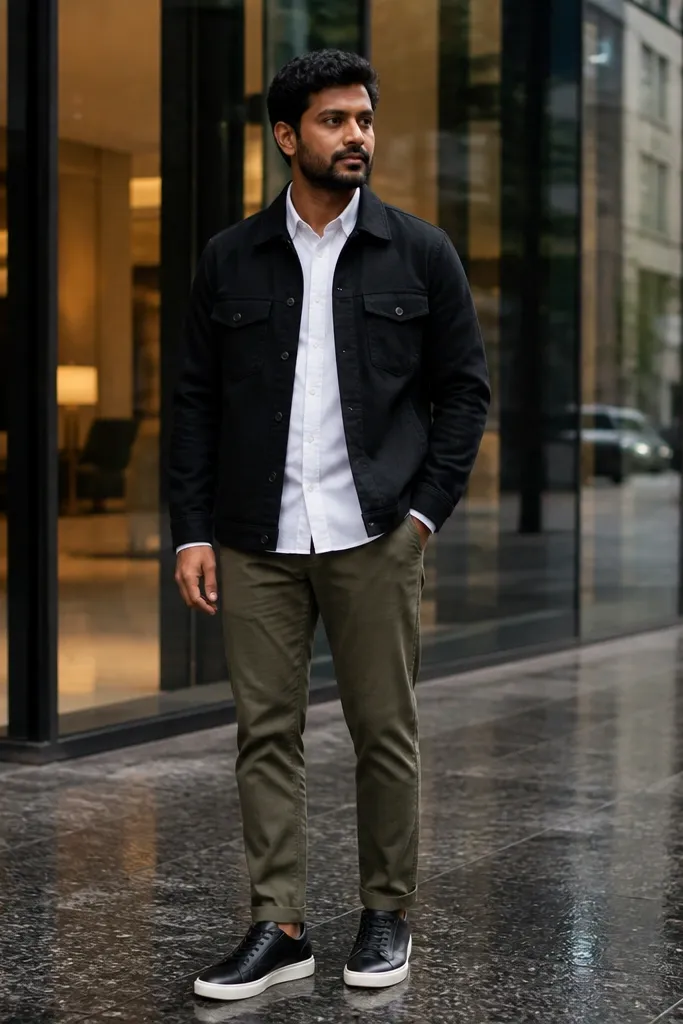
Black overshirts are underrated for business casual because they frame your outfit and hide wrinkles better than lighter jackets. A white oxford under it adds crispness, while olive chinos bring a subtle color shift that looks intentional. Leather sneakers keep the casual level right while still reading cleaner than chunky running shoes. This combo works for guys who want a stylish edge without switching to a full blazer. It also flatters different skin tones because the white top brightens the face, and olive adds depth without being harsh.
Good to knowChoose an overshirt with a clean placket and minimal hardware; bulky buttons cheapen the look.
Start with a white oxford shirt buttoned and tucked into olive chinos. Layer the black overshirt open, so the white collar shows and creates a vertical line. Finish with low-profile leather sneakers in black or dark brown and add a minimal belt if your chinos need it.
Common mistakeDon’t wear white sneakers with black overshirts if your office is strict — it can read too casual.
7. Camel Coat-Style Overcoat + Dark Denim + Black Boots
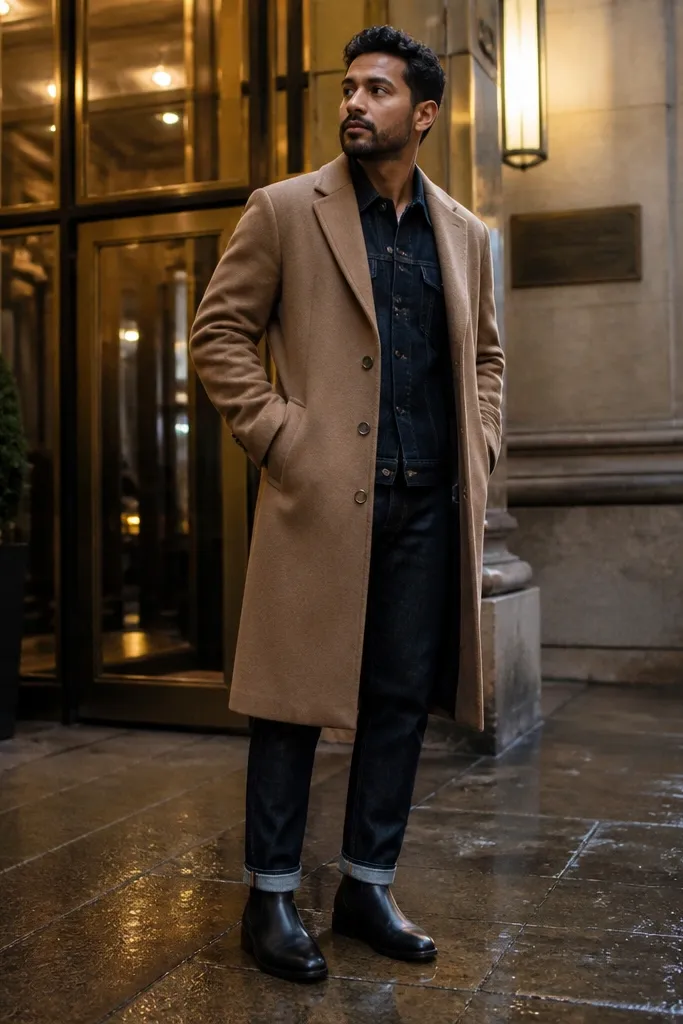
A camel overcoat is the cheat code for business casual because it instantly upgrades everything under it. Dark denim keeps it casual, but the coat makes the outfit office-appropriate. Black boots sharpen the look and keep the color palette tight. This works best for colder months when you want one statement piece that still reads clean. It flatters most body types because the overcoat adds structure through the shoulders and a smooth line down the torso. Keep the denim dark and straight so it doesn’t look like weekend wear.
First, wear a simple dark base under the coat: black or charcoal top and straight dark denim. Then add a camel overcoat with the hem around mid-hip and sleeves that hit near your wrist. Finish with black leather boots and a belt only if your shirt or coat requires it.
Choose a scarf in charcoal or black, not bright colors; it keeps the palette professional.
Avoid light blue denim — it fights the coat and reads too casual.
8. Burgundy V-Neck Sweater + Cream Shirt + Charcoal Trousers
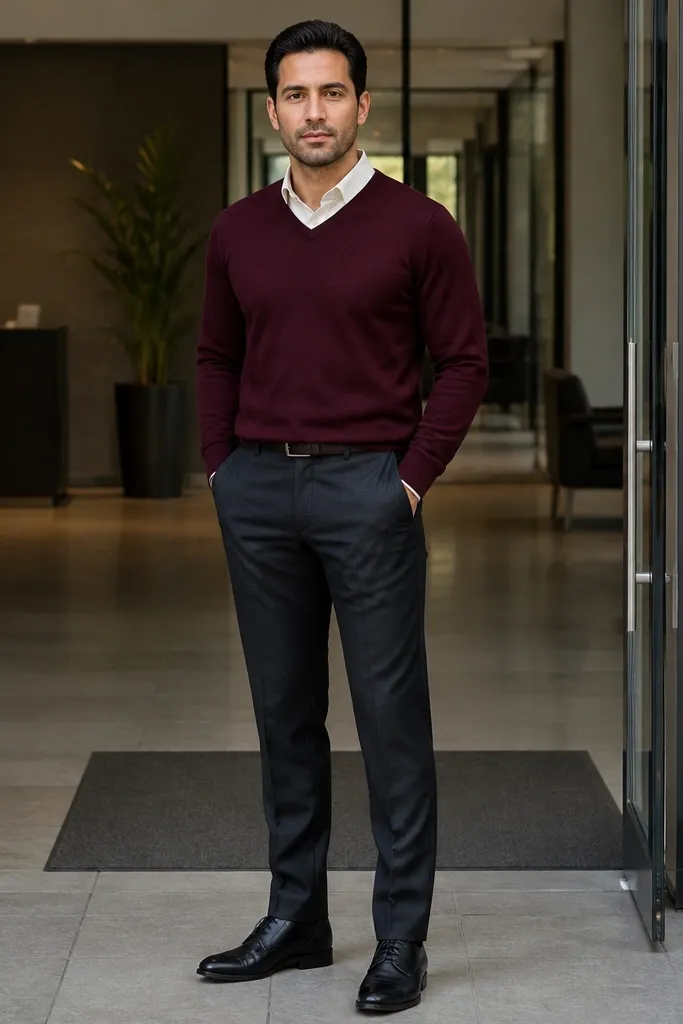
Burgundy is a standout work color because it looks intentional without screaming. The V-neck shape gives you a cleaner neckline than a crewneck and makes the outfit feel layered. A cream shirt underneath brightens your face and softens the darker burgundy. Charcoal trousers ground everything and keep the outfit from feeling too warm or too casual. This flatters men with medium to deeper skin tones most, but it works for lighter tones too if the cream shirt is truly off-white (not yellow). Keep the sweater fine-gauge so it looks smooth, not bulky.
Good to knowMatch your shoes to the belt tone; burgundy looks best with brown or dark oxblood accents.
Start with a cream dress shirt buttoned and visible at the V opening. Then layer a burgundy V-neck sweater that fits close at the chest and doesn’t bunch at the waist. Finish with charcoal flat-front trousers and dark brown or black leather shoes depending on your belt color.
Common mistakeSkip yellow-cream shirts — they can make burgundy look dingy.
9. Navy Blazer + Gray Tee + White Chinos + Loafers
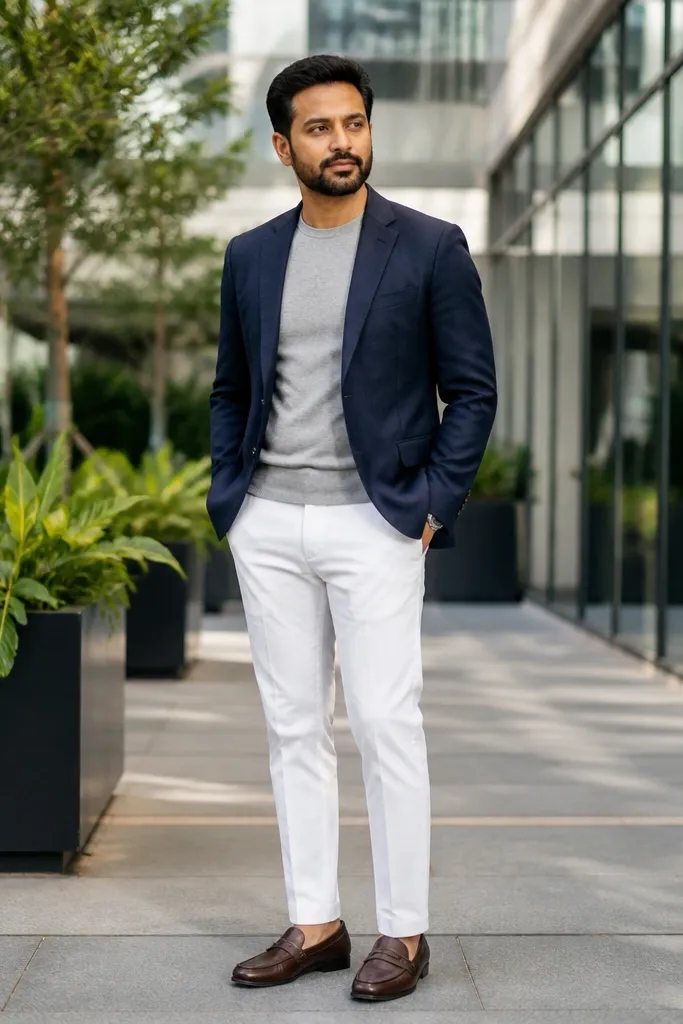
This looks like you tried, but it’s simple: a navy blazer with a tee and white chinos. The blazer does the heavy lifting for business casual, while the gray tee keeps it relaxed. White chinos brighten the outfit and make it feel crisp in photos, especially outdoors. Loafers complete the bridge between casual and office. This is great for guys who want a modern look without a button-down every day. It works best when the blazer is unstructured-ish but still tailored through the shoulders, and the chinos fit straight through the leg.
Good to knowUse a blazer with a matte fabric like wool blend — shiny blazers look cheap fast.
First, wear a plain gray tee that’s fitted at the neck and chest (no oversized drape). Then add a navy blazer with sleeves that end around the wrist and a hem that hits mid-hip. Finish with white chinos and loafers in brown or tan; keep socks minimal and neutral.
Common mistakeAvoid wrinkled white chinos; press them or swap before you go in.
10. Tweed-Textured Sport Coat + Black Jeans + White Sneakers

A tweed-textured sport coat makes business casual look stylish even with jeans. Choose a dark sport coat (charcoal or deep brown) so it stays office-safe. Black jeans with minimal distress keep it clean, and white sneakers add a modern contrast that still looks tidy. This works for creative offices or casual Fridays where you still want to look sharp. It flatters most frames because the sport coat adds shoulder structure and the black jeans keep the lower body streamlined. The texture is what makes it photogenic, so don’t go for a flat, plain jacket.
Good to knowChoose a sport coat with subtle flecks, not loud multi-color tweed.
Start with a dark tweed-textured sport coat worn open over a simple shirt (white or light gray). Then put on black jeans with a straight or slim straight fit and a clean hem. Finish with clean white sneakers and a simple watch; keep the rest of the outfit low-contrast.
Common mistakeDon’t pair it with heavily faded jeans — the outfit loses the “intentional” look.
11. White Button-Down + Navy Chinos + Brown Belt + Gray Loafers
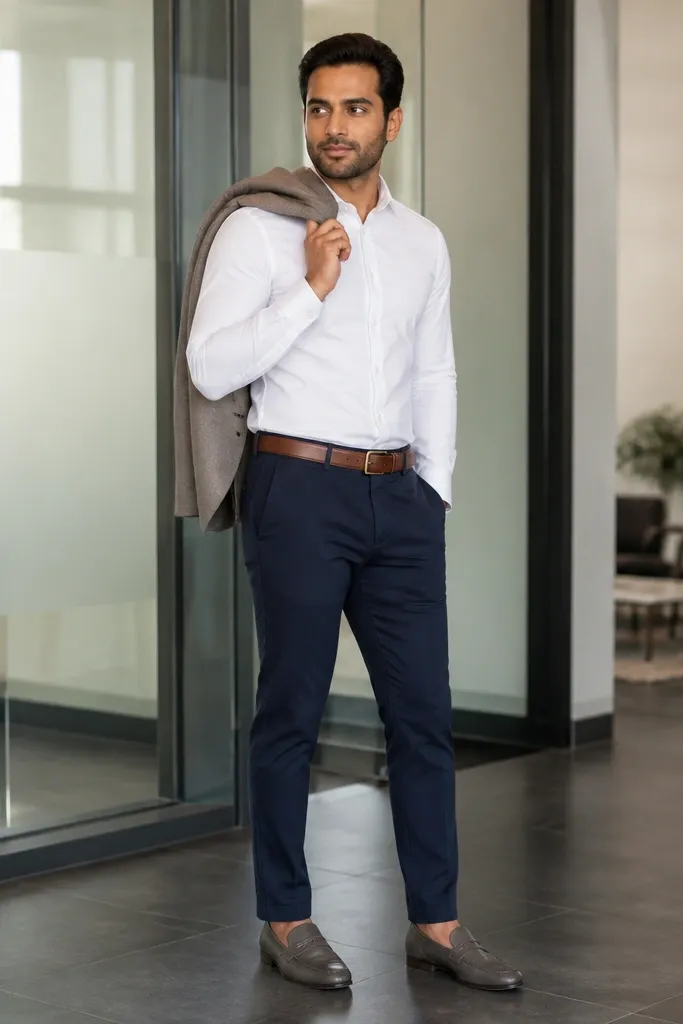
A white button-down is the simplest way to look sharp, but the trick is pairing it with the right colors so it doesn’t feel basic. Navy chinos keep the vibe business casual, and gray loafers add a fashion-forward finish without going flashy. The brown belt ties the warm and cool tones together so the outfit doesn’t look mismatched. This is flattering for most skin tones because white brightens the face and navy creates a clean silhouette. Keep the shirt lightly structured and the chinos flat-front for a crisp line.
Good to knowIf your shirt fabric is too shiny, switch to oxford or poplin so it reads crisp in photos.
First, wear a white button-down tucked into navy chinos with a clean belt at the natural waist. Then choose gray loafers in smooth leather or suede, and keep the socks either no-show or thin gray. Finally, add a simple watch and keep the collar neat — one folded collar crease can ruin the look.
Common mistakeAvoid untucked shirts with this combo — it can look like you forgot.
12. Gray Flannel Button-Down + Dark Green Trousers + Dark Brown Shoes
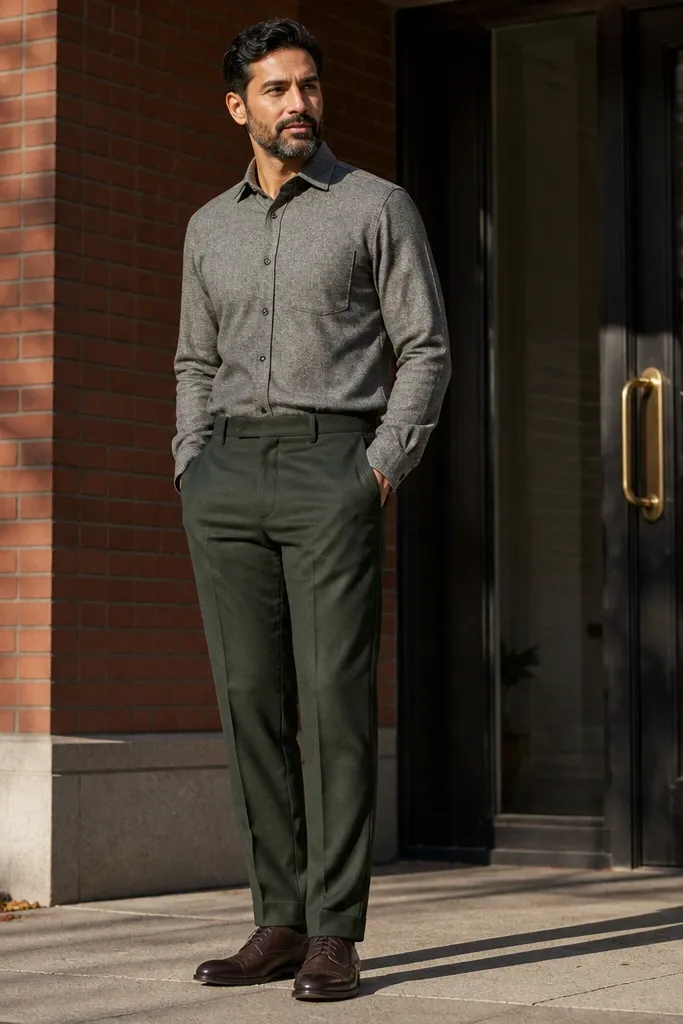
Flannel button-downs bring texture and warmth, which makes business casual look intentional in fall and winter. Gray flannel looks classy and doesn’t fight with most skin tones, while dark green trousers add depth without turning the outfit into loud streetwear. Dark brown shoes keep the palette grounded and make the green feel richer. This outfit works well for men who want a “grown-up” look without wearing a full suit. It flatters broader shoulders because the flannel drapes smoothly, and it also helps hide minor body-shape issues since the fabric has movement.
Good to knowPick trousers that are matte, not shiny; shiny green looks cheap under office lighting.
Start with a gray flannel button-down and tuck it fully for a clean silhouette. Then choose dark green tailored trousers with a straight leg and a hem that sits right above the shoe. Finish with dark brown leather shoes (derby or oxford) and a belt matching the shoe color.
Common mistakeSkip bright green pants — they look like clubwear next to flannel.
13. Denim Shirt + Slim Chinos + Suede Desert Boots
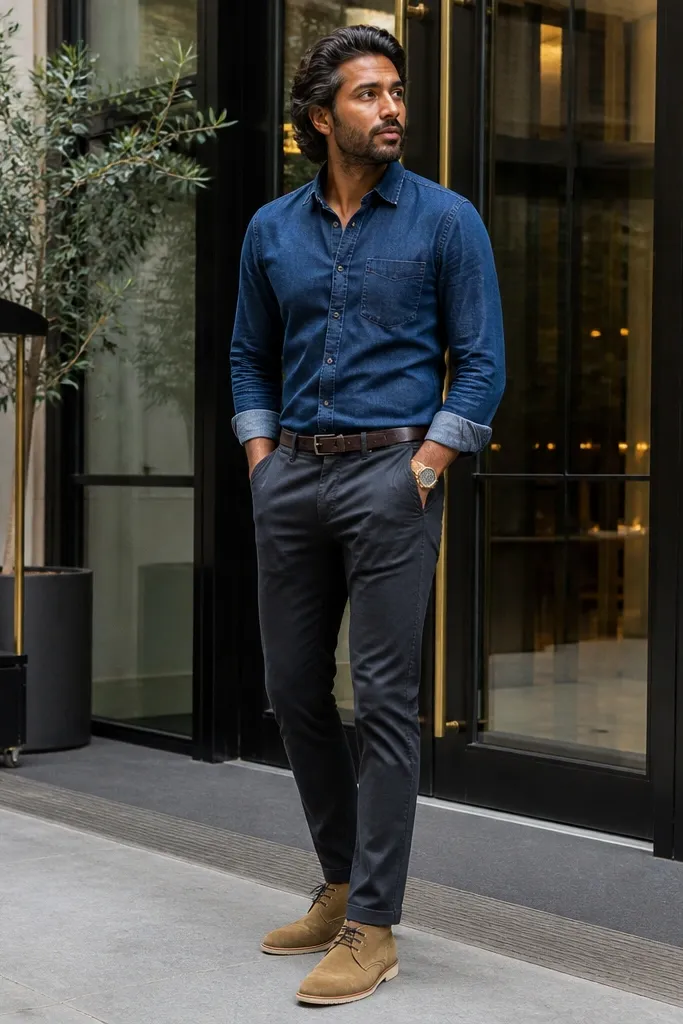
A denim shirt can be business casual when the denim is medium weight and the color is not too light. Pair it with slim chinos so the silhouette stays sharp, and finish with suede desert boots for a soft, premium look. Desert boots are less formal than loafers but more office-appropriate than most sneakers, especially with chinos. This outfit is great for transitional weather and for offices that like smart casual. It flatters lean builds because the denim adds texture, and it flatters broader frames because the slim chinos keep the leg line tight. Keep the denim shirt buttoned at least halfway and choose a clean collar.
First, wear a medium-wash denim shirt with a structured collar and tuck it slightly or fully. Then choose slim chinos in tan, olive, or charcoal and keep the hem clean with a slight break. Finish with suede desert boots and a belt in a matching tan or brown tone.
Choose a denim shirt with minimal contrast stitching; it looks more refined.
Avoid distressed denim — even small rips read too casual for business settings.
14. Black Oxford Shirt + Olive Chinos + Black Loafers
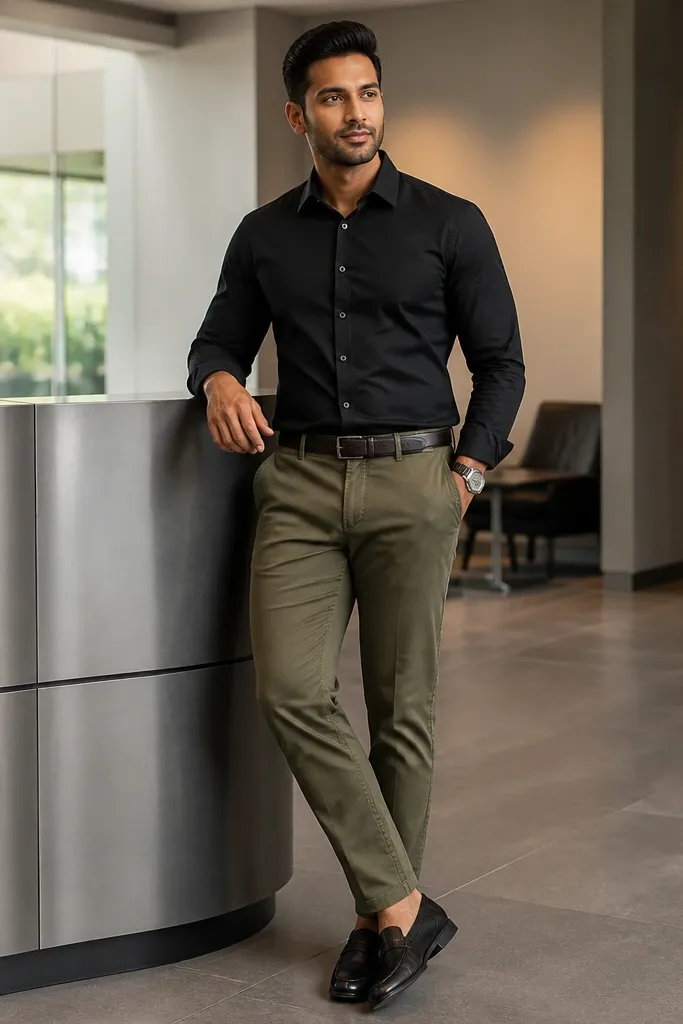
Black oxford is sleek and looks sharp under office lighting, especially when you keep the rest of the outfit grounded. Olive chinos add color and stop the look from becoming too severe. Black loafers finish it cleanly and keep it in the business casual lane. This is a great option for men who want something darker than navy but still polished. It flatters most builds because the oxford holds shape and the olive adds a softer visual break at the waist and hips. Choose a shirt that isn’t too thin — thin black fabric can look shiny and cheap.
Good to knowTry a subtle texture like micro-oxford or heavier oxford; it looks better than matte thin cotton.
Start with a black oxford shirt tucked into olive chinos with a black or dark brown belt. Then pick chinos with a tailored straight leg and a hem that lands cleanly above the loafer. Finish with black loafers and black socks or thin dark socks to keep the line uninterrupted.
Common mistakeDon’t pair black oxford with light chinos; the contrast makes it look like a night-out outfit.
15. Cream Overshirt + Blue Chambray Shirt + Navy Jeans
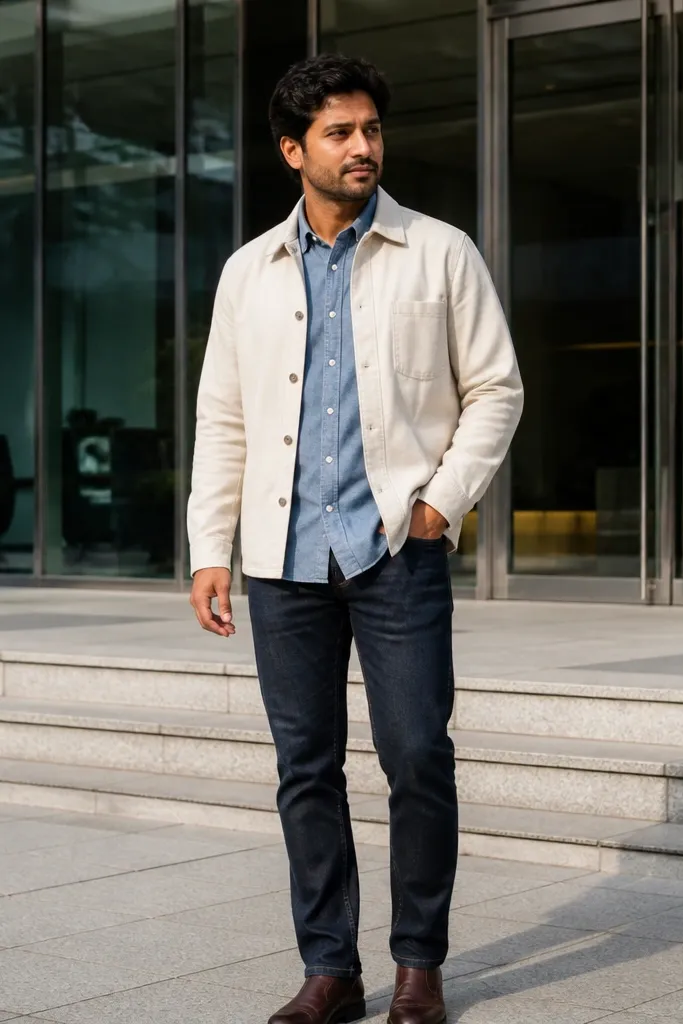
Cream overshirts look better than beige when you want a lighter, cleaner business casual vibe. Layering a blue chambray shirt under it adds a denim-like texture without looking like you’re wearing the same thing twice. Navy jeans keep the outfit dark enough for office use, and they photograph well because chambray and navy have a smooth tonal relationship. This works for creative offices and summer days when you don’t want to wear a blazer. It flatters medium and taller frames because the layered shirts create a vertical silhouette. Keep the chambray collar neat so it doesn’t look rumpled.
Good to knowUse a cream overshirt with a matte finish; it keeps the look crisp instead of washed-out.
First, wear a blue chambray shirt tucked or semi-tucked depending on your preference, then put the cream overshirt open over it. Next, choose navy jeans with minimal fading and a slim straight fit. Finish with dark brown leather shoes or clean leather sneakers, and keep your belt either brown or dark to match the shoes.
Common mistakeAvoid heavy graphic tees under chambray — it ruins the layered, office-ready feel.
16. Camel Chino Shirt Jacket + White Tee + Charcoal Pants
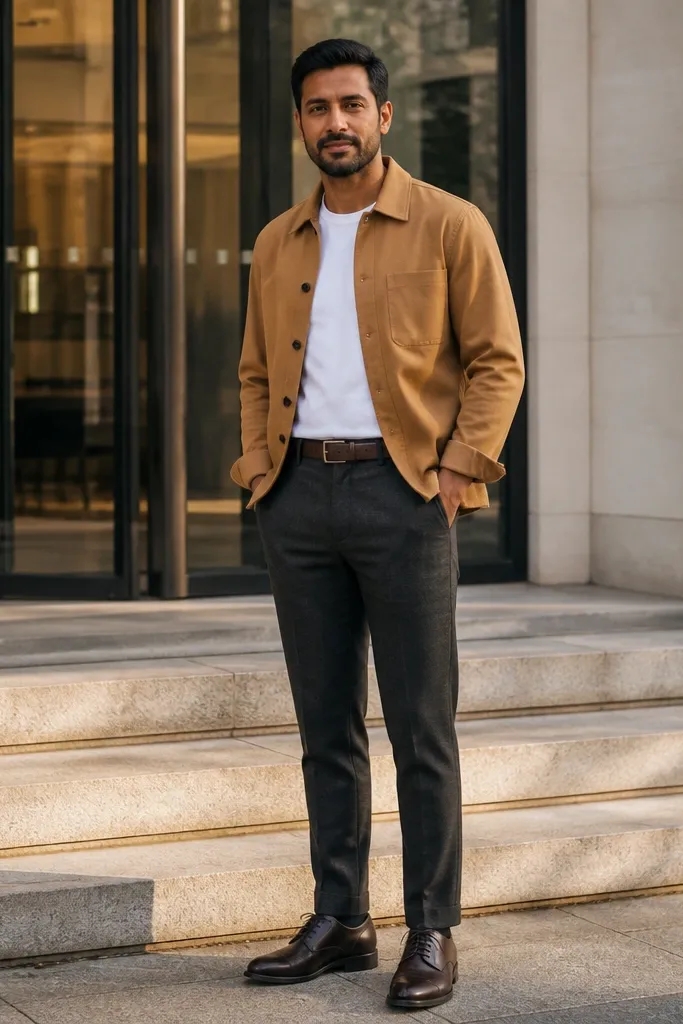
A camel chino shirt jacket gives you the structure of a jacket without the formality of a blazer. It looks especially good against charcoal pants because the colors separate cleanly and create a strong contrast that still feels work-appropriate. A white tee keeps the outfit simple and lets the jacket color be the star. This is a smart choice for men who want a one-layer look that still reads polished. It flatters most builds because the jacket adds shape through the shoulders and the charcoal pants keep the lower half grounded. Choose a shirt jacket with a clean collar and minimal pocket bulk.
Start with a white tee that fits close at the neck and chest. Then layer the camel shirt jacket open and wear charcoal flat-front or lightly tapered pants. Finally, add dark brown or black leather shoes and a matching belt; keep accessories minimal so the color combo stays the focus.
If your shirt jacket has large buttons, go smaller: they look more refined for office settings.
Skip charcoal pants that are too baggy; the outfit loses its clean line.
17. Navy Knit Blazer + Light Gray Shirt + Navy Trousers
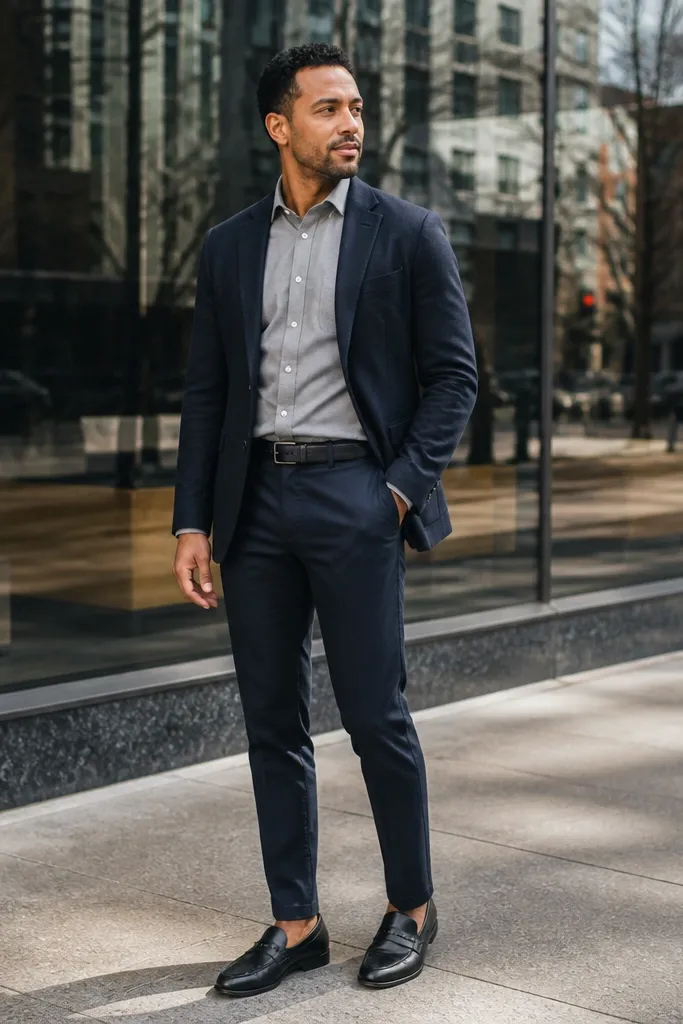
A knit blazer gives you the polish of a blazer with the comfort of a knit top. Keep it tonal: navy blazer with light gray shirt and matching navy trousers so the outfit reads cohesive. Tonal dressing looks sharp in offices because it looks intentional and clean in photos. This works for men who want to avoid stiff tailoring but still need a business casual silhouette. It flatters athletic builds because knit fabric moves with your body, and it also helps slimmer builds look fuller in the right places. Choose a knit blazer with a structured shoulder line so it doesn’t collapse.
Good to knowPick knit blazers in medium weight; thin knits look sloppy by mid-day.
First, wear a light gray button-down or fine knit shirt under the knit blazer. Then choose navy trousers that are tailored and not too thin; flat-front helps. Finish with dark brown loafers or derbies and a belt that matches your shoes.
Common mistakeAvoid mismatched textures like a glossy shirt under a matte knit blazer — it looks off.
18. White Poplin Shirt + Tan Trousers + Brown Belt + Derby Shoes
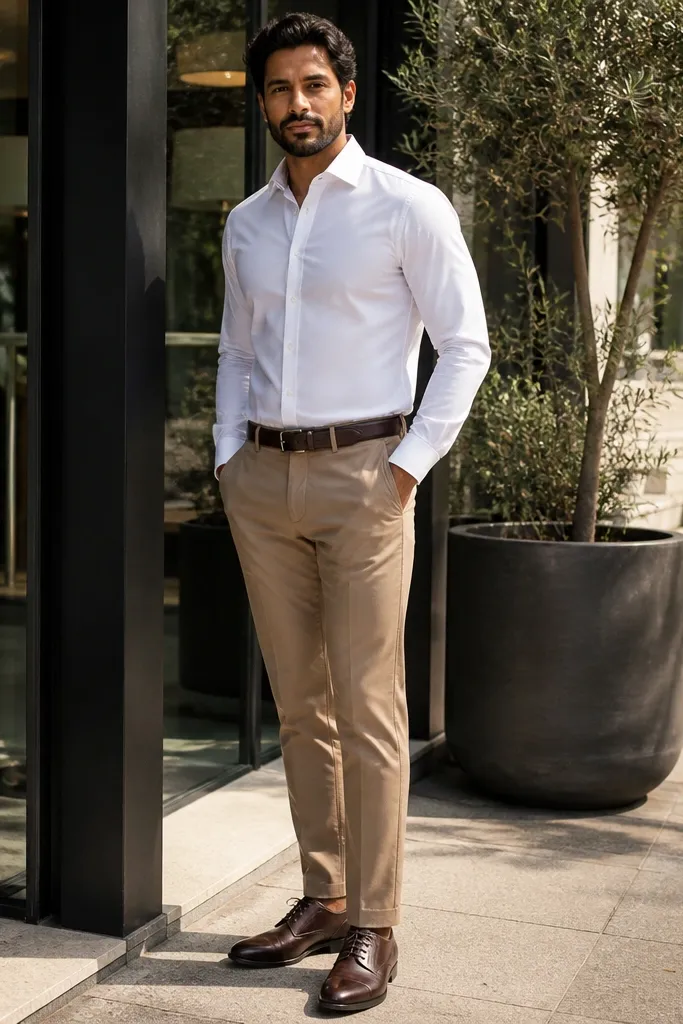
This is a classic summer business casual look with a modern edge because poplin reads crisp and tan trousers look clean instead of casual. The white shirt brightens your face, while tan creates a lighter, warmer tone that works well in bright offices and outdoors. Brown derbies add structure and make it look like you dressed for a meeting, not just errands. This outfit flatters most men because tan trousers lengthen the leg line, and poplin keeps the upper half crisp. Choose trousers in a medium tan, not pale beige, so they don’t look washed.
Start with a white poplin shirt tucked into tan trousers with a brown belt. Then match your shoes to the belt — dark brown derbies in leather. Finally, choose socks in a medium brown or neutral cream so the transition from shoe to pant looks smooth.
Keep the shirt collar unwrinkled; poplin shows every crease.
Avoid overly tapered tan pants — they can make your legs look narrow in a bad way.
19. Patterned Shirt + Solid Chinos + Minimal Loafers
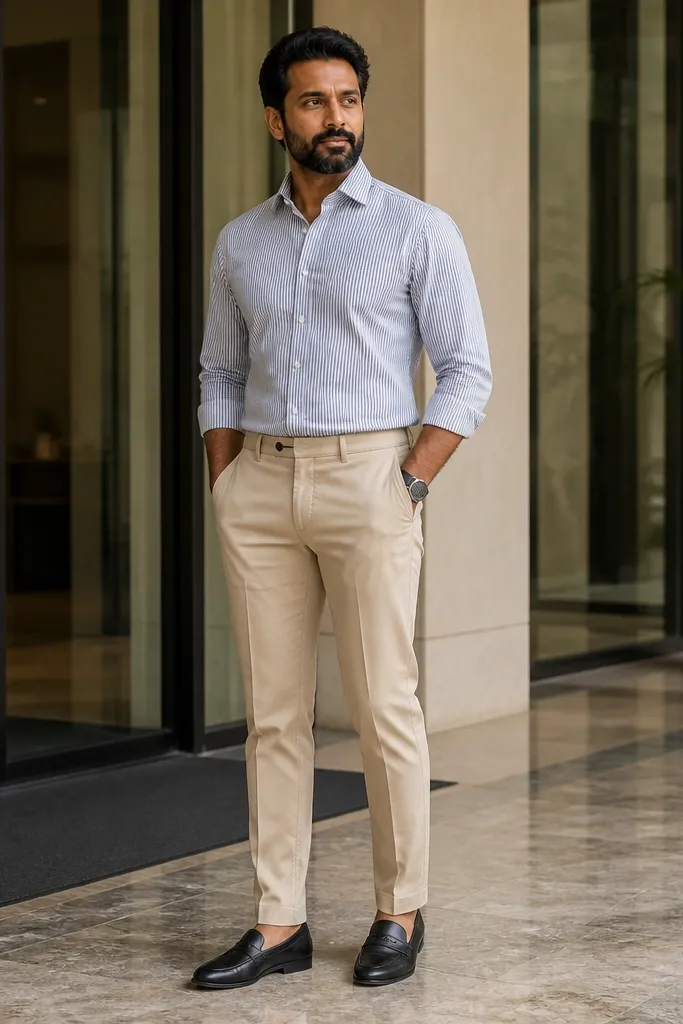
A small pattern shirt is how you make business casual look more styled without adding layers. Choose a micro-pattern like thin navy stripes or a subtle gingham, then keep the chinos solid so the outfit stays calm. Minimal loafers finish the look cleanly and keep attention on the shirt. This works best when your pattern has two tones max, like white plus navy or light blue plus gray. It flatters most guys because the pattern adds interest at the top while the solid pants keep the silhouette grounded. If your office has strict dress codes, stick to smaller patterns and darker chinos.
First, pick a patterned button-down in a tight repeat and tuck it into solid chinos. Then choose chinos in navy, olive, or charcoal and keep the fit tailored straight. Finally, wear loafers in brown or black and keep your belt and watch simple and neutral to avoid visual clutter.
Match one color from the shirt to your shoes or belt; it makes the outfit feel “assembled.”
Avoid bold large checks with light chinos — it looks too casual for work.
20. Gray Suit Separates + White Tee + Clean Sneakers
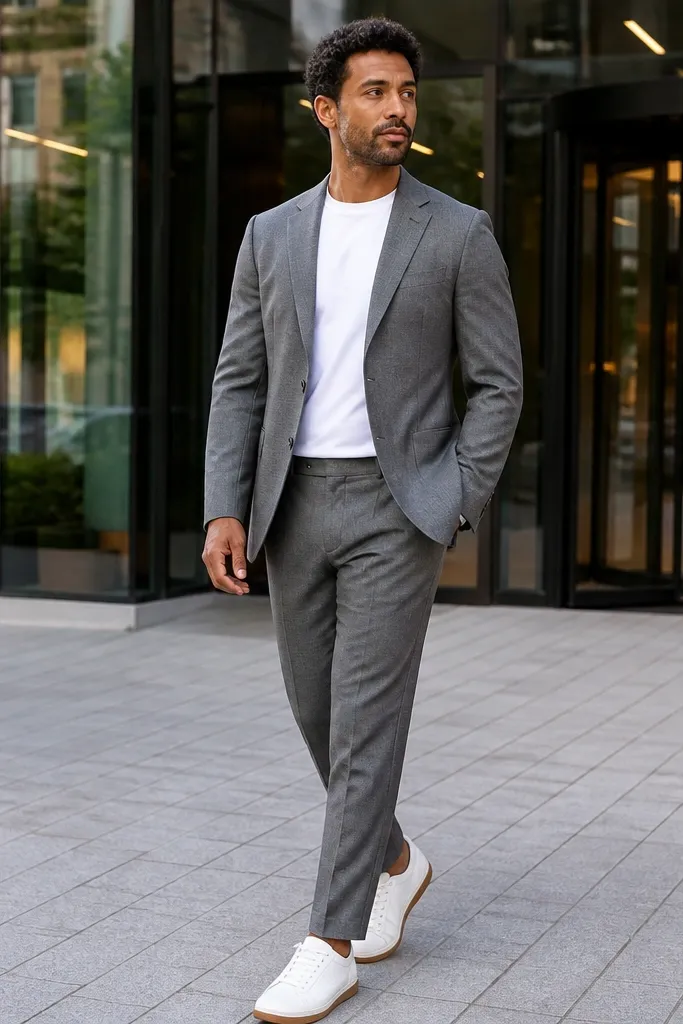
Suit separates are the fastest way to look sharp while staying simple. The trick is swapping the dress shirt for a white tee so the outfit lands in business casual, not full formal. Gray jacket and trousers keep the look controlled, and clean sneakers make it modern. This outfit is great for offices that allow smart casual and for days you want to look confident without a button-down. It flatters most builds because the tailoring defines your shoulders and waist, while the tee keeps the outfit casual. Choose a tee with a structured collar and no visible stretching at the neckline.
Good to knowPick sneakers with a leather upper and a thin sole; chunky soles wreck the tailored vibe.
First, wear a gray suit jacket with sleeves that fit and trousers that sit at your natural waist. Then put on a plain white tee inside the jacket, keeping it smooth (no bunching at the hem). Finally, add clean low-top sneakers in white or off-white and keep the socks neutral or no-show.
Common mistakeAvoid thin, clingy tees; they show shape and make the fit look sloppy.