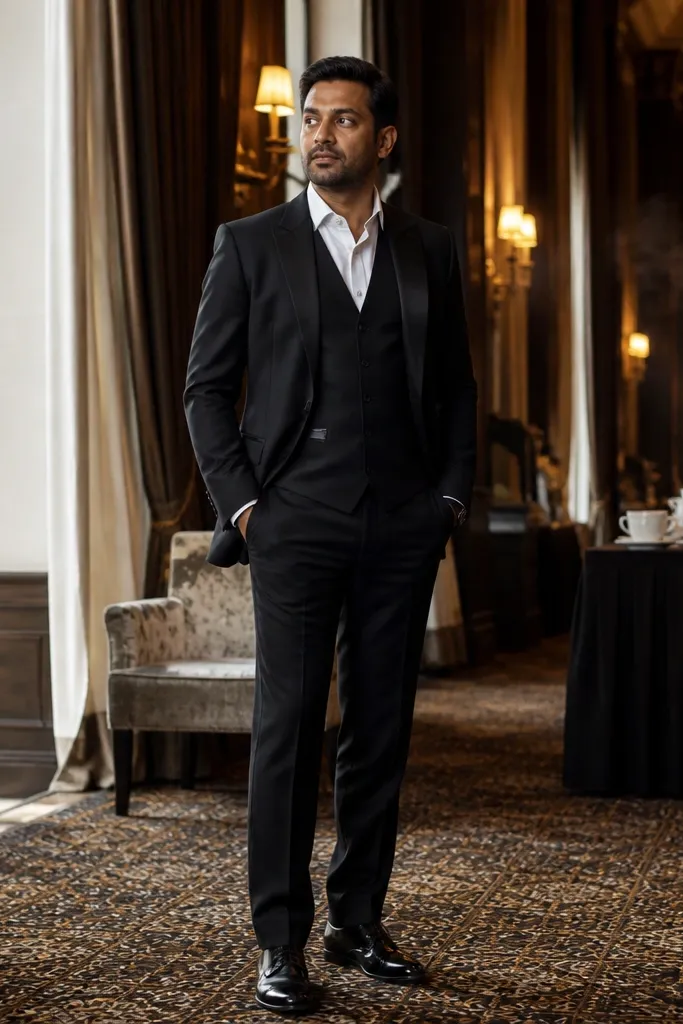
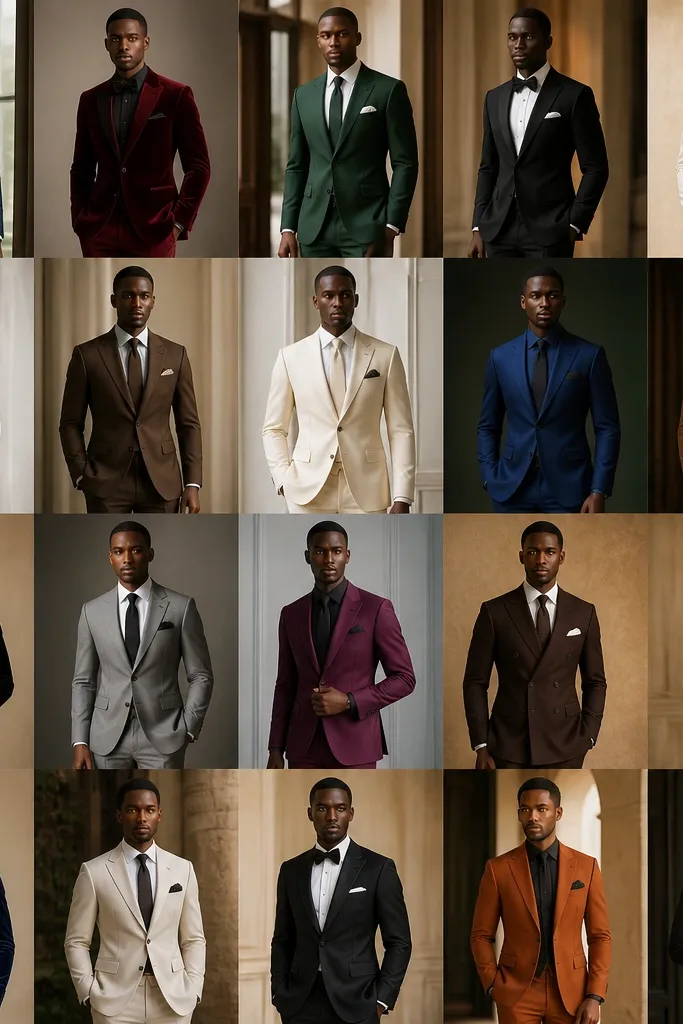
1. Navy Suit with Crisp White Shirt and Burgundy Tie
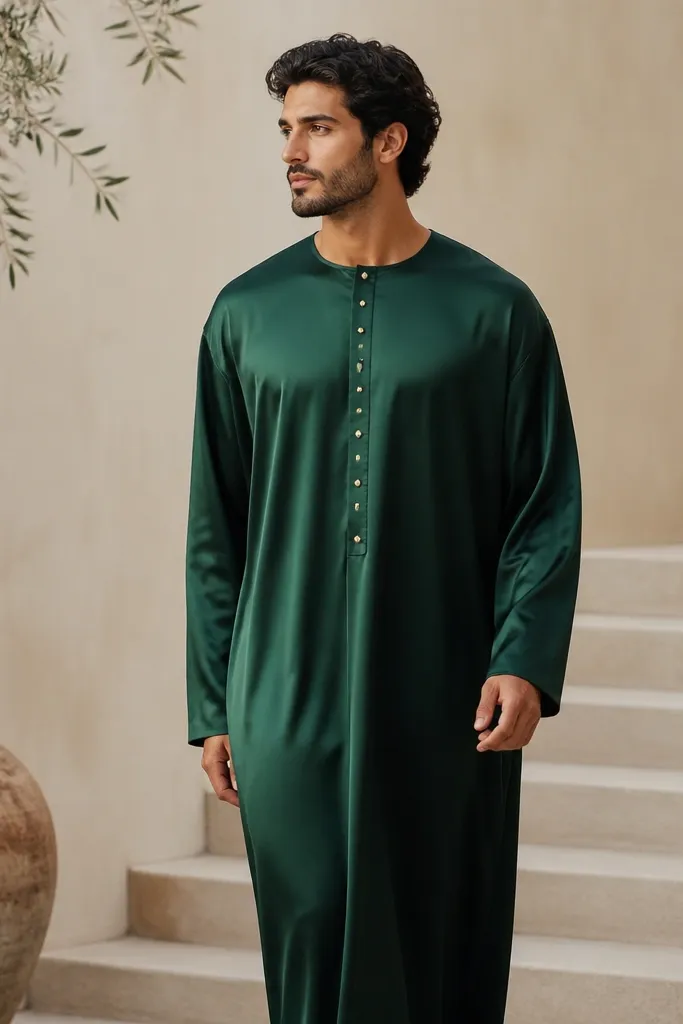
Choose a kaftan with a front placket and a clean collar or no collar at all — avoid novelty necklines. Length should hit mid-calf or slightly above the ankle depending on your height; keep the hem straight so it drapes in one plane. Pair with black or dark brown leather loafers and a slim gold watch.
Emerald sits beautifully on dark skin because it has enough Navy sits beautifully on dark skin because it has enough blue depth to create contrast without looking harsh. The crisp white shirt brightens the face, while the burgundy tie adds warmth without turning bright red. The wool finish gives a formal glow, but the key is controlled texture-you want refined depth, not streetwear gloss. Burgundy also adds richness against navy, so the whole look reads polished under warm venue lighting. Choose a navy suit with clean lapels and a structured two-button front-avoid novelty cuts. The trousers should have a slight taper and a clean break over the shoes, depending on your height. Pair with black or dark brown leather oxfords and a slim silver or gold watch.blue in it to create contrast without turning greenish. The satin sheen gives a formal glow, but the key is a controlled shine — you want “soft light” not “streetwear gloss.” Gold buttons add warmth against emerald, so the whole look reads rich under warm venue lighting.
Common mistakeAvoid bright neon green — it reads harsh and makes the skin look flat.
Good to knowTest the navy under indoor yellow light by holding the jacket near your face for 10 seconds-navy that looks gray in that light will appear dull in photos.
2. Charcoal Suit with Pale Blue Shirt and Emerald Tie
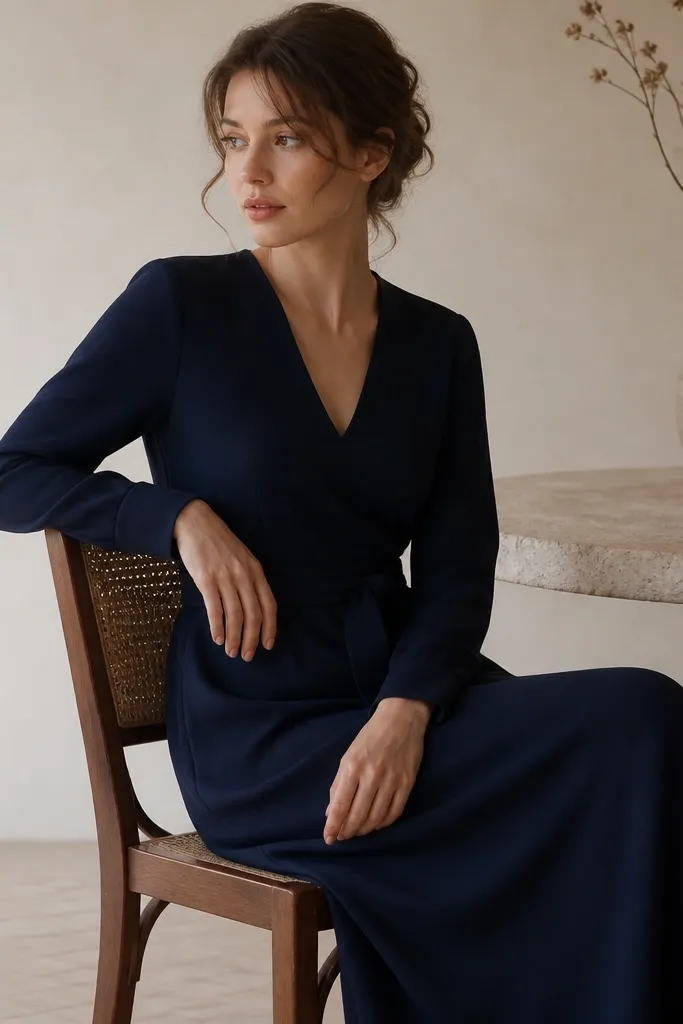
Look for a dress with a shoulder seam that sits where your shoulder ends — not dropped. The belt should sit just above your natural waist, and the fabric should skim the hips instead of clinging. Finish with black leather shoes and a navy or charcoal pocket square.
Deep charcoal is a safe formal neutral that still looks special on dark skin. Wool has a tight weave that holds its shape and avoids the cheap-shine problem. A pale blue shirt creates clean contrast, while the emerald tie adds a jewel-tone accent without breaking the silhouette. Look for a jacket with a shoulder seam that sits where your shoulder ends-not dropped. The trousers should sit cleanly at the waist, and the fabric should skim the legs instead of clinging. Finish with black leather shoes and a charcoal or emerald pocket square.
Common mistakeDon’t pick a thin, shiny navy polyester — it shows wrinkles fast and looks slick in a bad way.
Good to knowChoose charcoal that leans slightly dark rather than medium gray-it photographs with more depth than lighter grays.
3. Emerald Green Suit with White Shirt and Black Tie
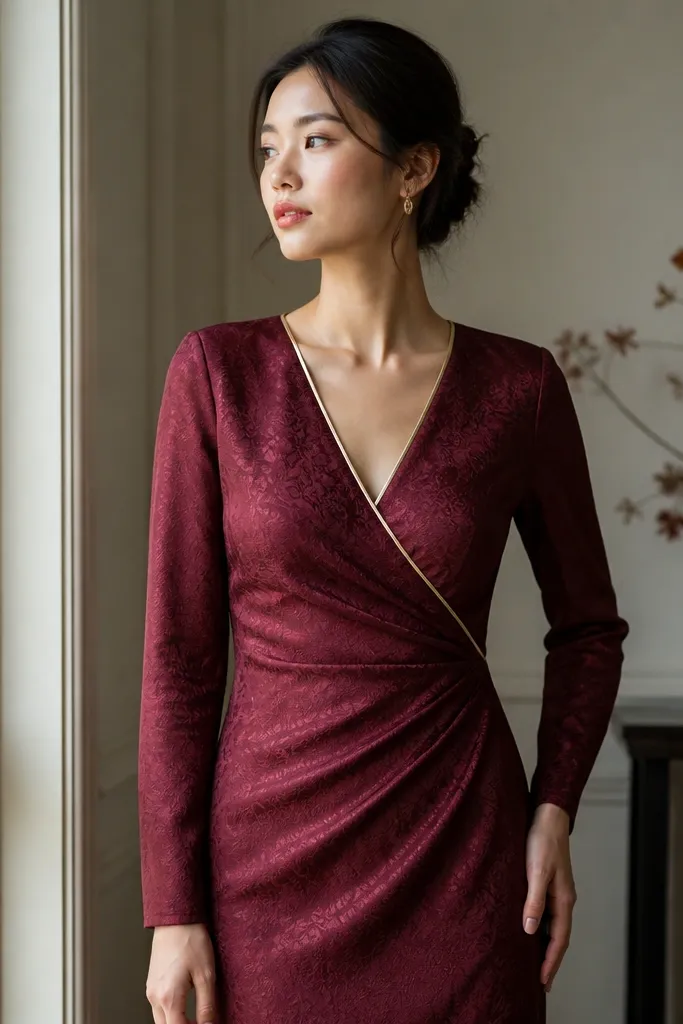
Go for a wrap that closes with an internal tie or hidden button so it doesn’t gape when you move. The hem should fall around the ankle but not pool — aim for a 1-2 inch break over your shoe. Wear with gold hoops or a slim bracelet and champagne or ivory dress shoes.
Emerald flatters dark skin because it is saturated and deep, not yellow-green. The woven texture adds dimension so the suit does not look like one flat block of color. A white shirt brightens the face, while the black tie keeps the combination formal without demanding extra accessories. Go for a suit that closes cleanly without pulling when you move. The trousers should fall neatly over the shoes without pooling-aim for a slight break at the front. Wear it with a simple black belt, polished black shoes, and a silver or gold watch.
Common mistakeAvoid loud red satin jacquard — it can overpower your skin tone under flash.
Good to knowKeep your pocket square white or cream so the emerald stays rich instead of looking too cold.
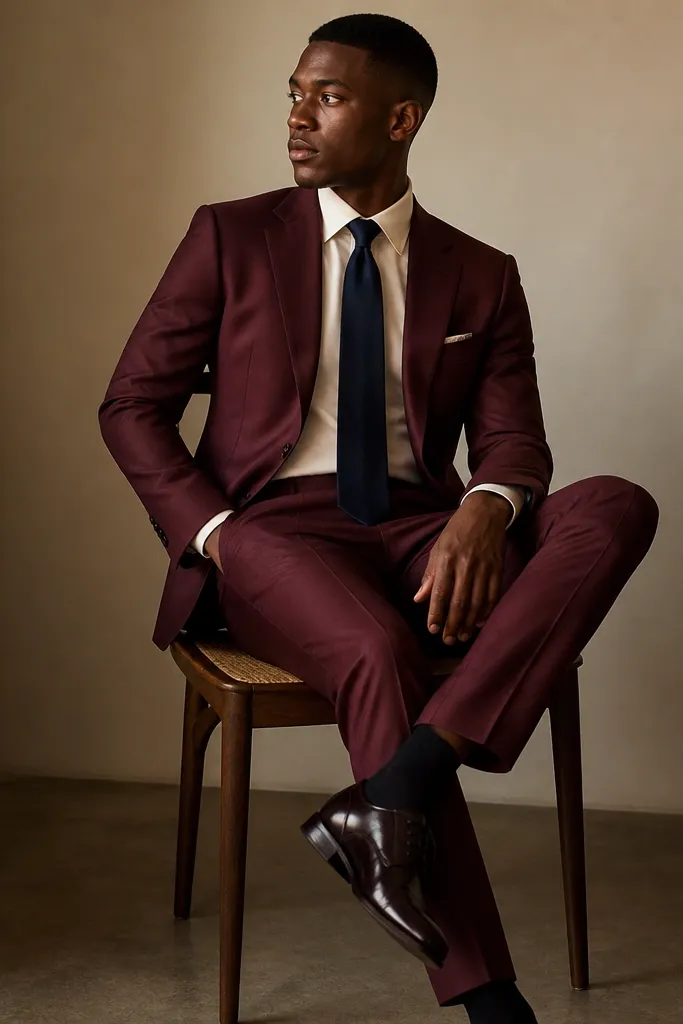
4. Burgundy Suit with Ivory Shirt and Navy Tie
Choose a shirt-dress length that lands just above the ankle or mid-calf if you want a cleaner line with loafers. The sleeve should end at the wrist bone when your arm hangs naturally. Pair with black leather shoes and a black belt that matches the shoe finish (matte or lightly polished).
Burgundy reads bold but still grounded on dark skin. A structured suit works because the lapels and fitted waist give the color a formal frame, while dense fabric keeps it from looking overly bright. The ivory shirt adds warmth, and the navy tie creates contrast that makes the outfit feel intentional instead of casual. Choose a jacket length that covers the upper seat and trousers that fall cleanly over the shoes. The sleeve should end at the wrist bone when your arm hangs naturally. Pair with black or dark brown leather shoes and a belt that matches the shoe finish.
Common mistakeAvoid khaki-green or olive drab — it can read muddy against deeper skin.
Good to knowPress the lapels flat and keep the tie centered-a slightly crooked tie line makes even excellent fabric look messy.
5. Royal Blue Suit with White Shirt and Silver Tie
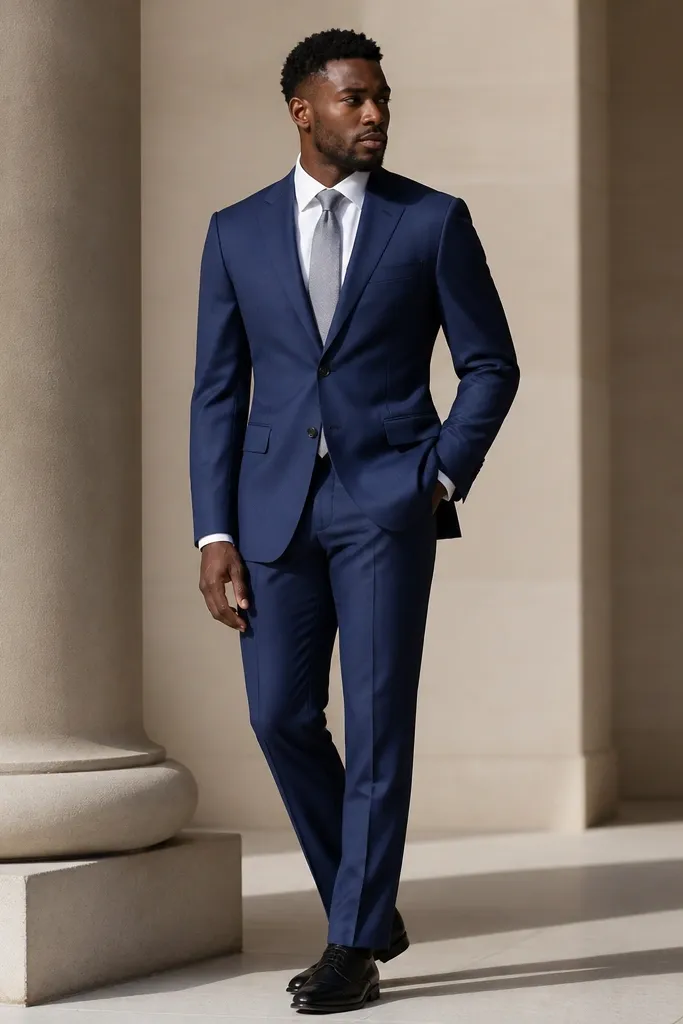
Royal blue looks expensive because the color is saturated and the smooth wool texture catches light in a controlled way. On dark skin, the blue creates strong contrast without the heaviness of black. The silver tie adds a small flash near the face, which looks especially sharp in candid photos. Pick royal blue wool with a tight weave-it should look smooth, not glossy. Keep the shirt collar simple and avoid oversized lapels that compete with the brightness of the suit. The trousers should fall with a slight break; pair with black leather shoes and a silver watch.
Pick velvet with a tight pile — it should look smooth, not fuzzy. Keep the neckline simple and avoid bulky collars that fight the velvet’s drape. Hem should land around the ankle with a slight break; pair with dark brown suede shoes and a bronze watch.
If the blue looks slightly darker indoors, that is good-it means the fabric has depth. Check it under a warm lamp before buying.
Avoid cheap crushed velvet — it looks wrinkled even when it’s new.
6. Chocolate Brown Suit with Cream Shirt and Rust Tie
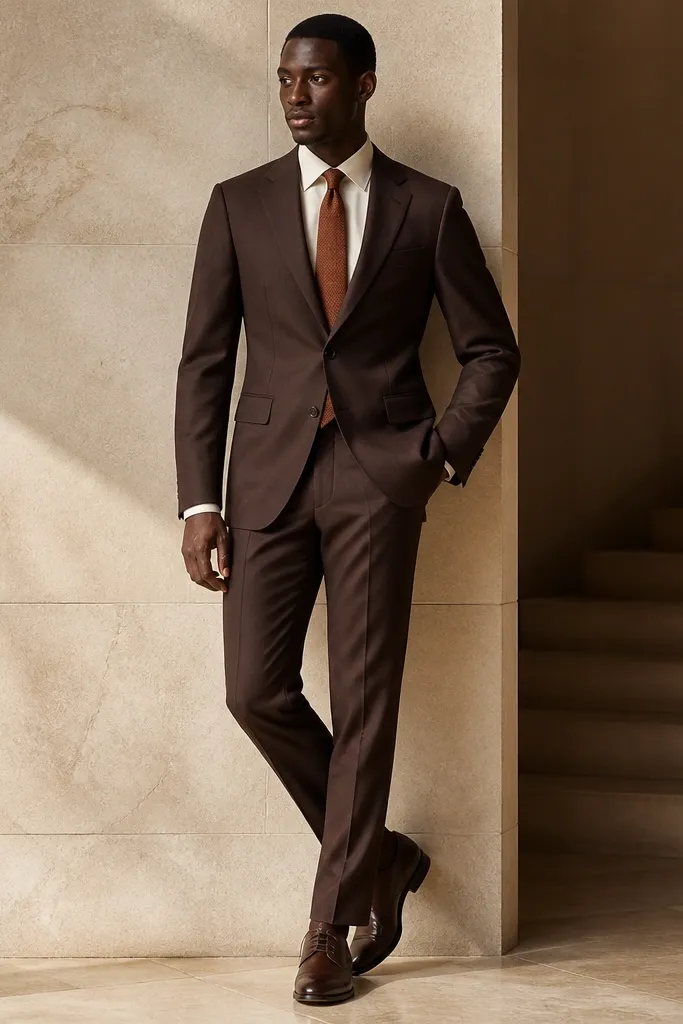
Chocolate brown makes dark skin look rich because it is warm and deep without blending completely into the complexion. The cream shirt creates a soft border that frames the face, while the rust tie adds warmth and clarifies the center of the outfit. Matte wool keeps everything refined by avoiding shine that can make earthy colors look cheap. Choose a shirt collar with enough structure to hold the tie knot cleanly. The rust tie should be muted and evenly colored; if it looks bright orange, skip it. Wear the combination with dark brown accessories, a simple watch, and a cream or brown pocket square.
Choose a neckline that has structure — V-neck or shallow round neck both work. The piping should be thin and evenly spaced; if it looks thick or uneven, skip it. Wear with white or silver accessories sparingly: a simple cufflink set and a clean white pocket square.
Match your shoe color to the deepest brown in the suit-dark chocolate shoes keep the outfit cohesive.
Avoid sky-blue pastels — they wash out under indoor lights.
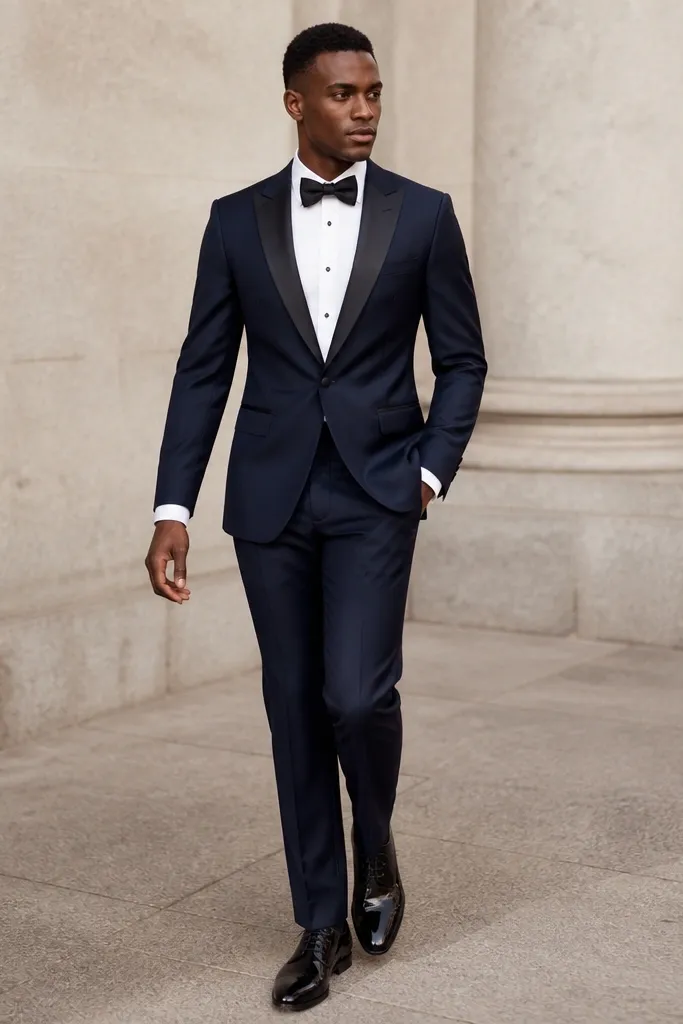
7. Midnight Blue Tuxedo with White Shirt and Black Bow Tie
Look for jacquard that’s visible only slightly — you should see it when you tilt the dress, not from across the room. Keep the hem tailored to your height so it doesn’t pool. Pair with black leather shoes and either a silver watch or a matte black belt.
Midnight blue can look almost black, but the subtle blue depth makes it more flattering on dark skin. Satin lapels add visual interest without turning the tuxedo into a loud costume. A crisp white shirt keeps the face bright, while the black bow tie gives the neckline a clean, symmetrical finish. Look for lapels that show their sheen only slightly-you should notice it when the model moves, not from across the room. Keep the trouser hem tailored to your height so it does not pool. Pair with black patent-leather shoes and either a silver watch or no visible wrist accessory.
Common mistakeAvoid plain thin black jersey — it clings and looks casual for formal events.
Good to knowUse a lint roller before leaving-dark textured fabric shows stray fibers quickly.
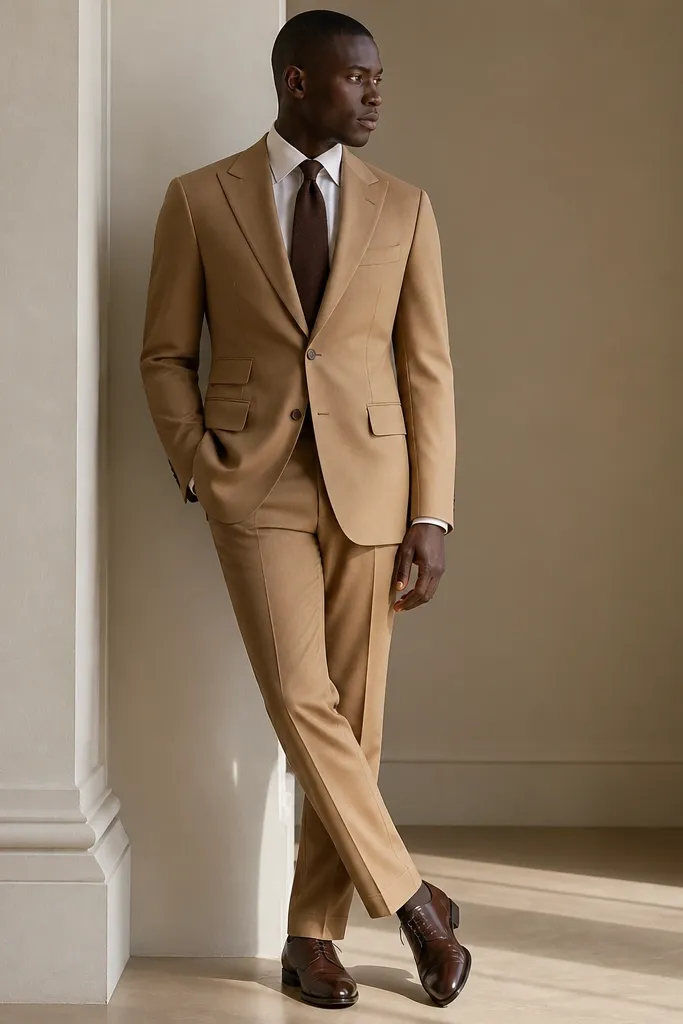
8. Camel Suit with White Shirt and Chocolate Brown Tie
Pick a dress with a defined shoulder and a slight taper at the waist so the silhouette looks tailored. The pocket square should be folded simply — one puff is enough. Shoes should be dark brown or black leather depending on your belt color.
Camel is a strong warm neutral on dark skin because it creates contrast without washing out the complexion like pale beige can. Wool makes it feel formal, and the chocolate brown tie adds depth near the face where the camera focuses. This combination works for dinners, graduations, and daytime wedding ceremonies. Pick a suit with defined shoulders and a slight taper at the waist so the silhouette looks tailored. The tie should be solid or lightly textured and tied in a simple half-Windsor. Shoes should be dark brown leather, with a belt in the same shade.
Common mistakeAvoid light gray — it often looks dull on deeper skin tones in indoor lighting.
Good to knowKeep the metal consistent: a gold watch works naturally with camel and chocolate-brown accents.
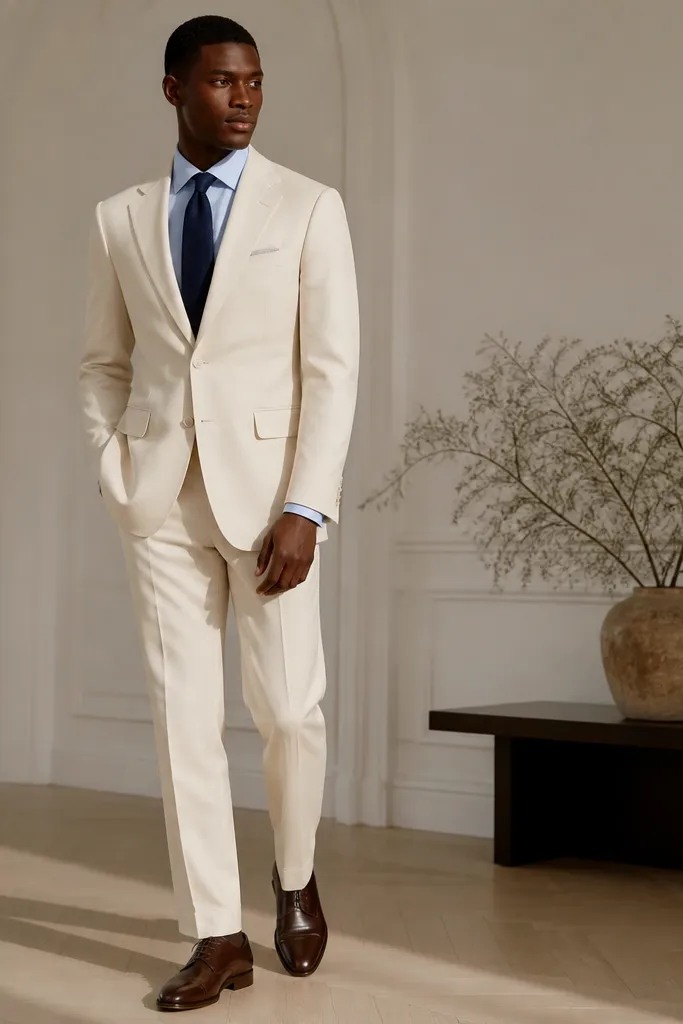
9. Cream Suit with Sky-Blue Shirt and Navy Tie
Choose an overlay that starts at the shoulder or upper chest and falls to the mid-calf or ankle. Make sure the overlay is lined or thick enough not to show through in an unflattering way. Pair with black shoes and a small burgundy or garnet accessory that matches the overlay tone.
This is a color combination that looks high-end: the cream suit keeps the silhouette light while the sky-blue shirt adds cool contrast and freshness. On dark skin, sky blue looks clearer when it is balanced by a deep navy tie. The lighter jacket catches natural light, so the outfit looks alive without being loud. Choose cream suiting with enough weight that the shirt and underlayers do not show through. Make sure the jacket is lined and structured enough to hold its shape without wrinkling. Pair with dark brown shoes and a small navy or blue-patterned pocket square that matches the tie.
Common mistakeAvoid fully sheer dresses without lining — they look risky and cheap in motion.
Good to knowKeep accessories minimal-the cream and blue contrast already provides enough visual detail.
10. Teal Suit with Crisp White Shirt and Burgundy Tie
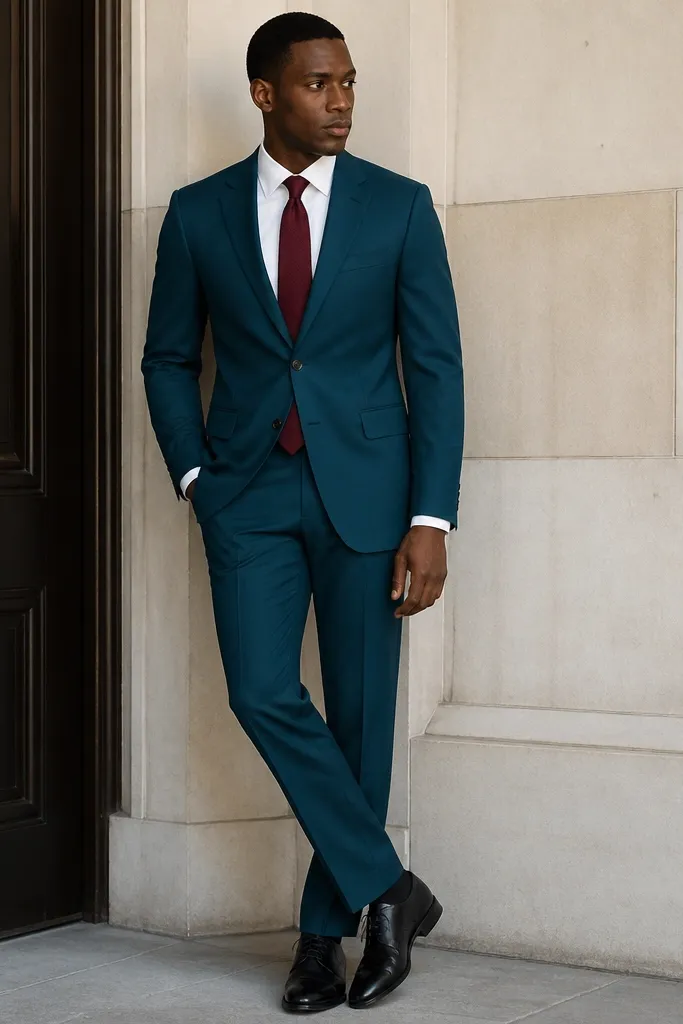
Teal works because it mixes cool blue and green tones that create strong contrast against dark skin. The dense suiting texture makes the color feel intentional, not flashy. A burgundy tie anchors the outfit and keeps it formal even when the teal shade stands out. Use a suit with structured lapels and clean shoulder lines so teal does not read too casually. The sleeves should be properly tailored and show a small amount of white shirt cuff. For footwear, go with black or very dark brown leather oxfords and a matching belt.
Use a dress with a structured collar or clean neckline so linen doesn’t read too casual. The sleeves should be slightly tailored, not floppy. For footwear, go with dark brown leather loafers or lace-ups and a matching watch strap.
If the teal looks too pale, it may wash out under venue lighting. Aim for a shade with more blue than green.
Avoid white-linen formal dresses — they show every wrinkle and can look harsh.
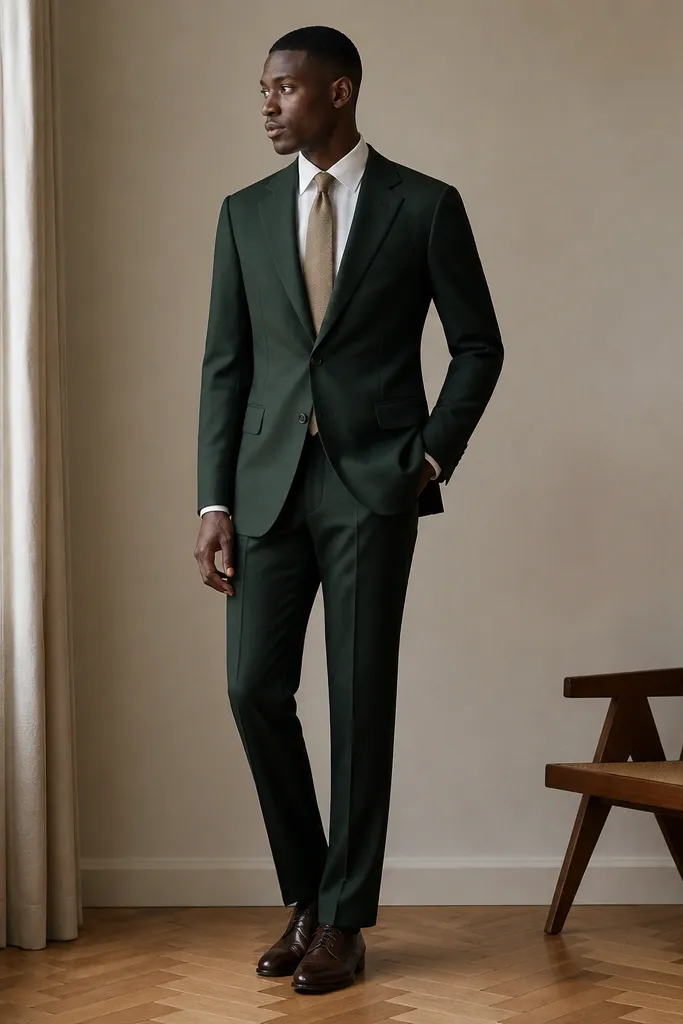
11. Forest Green Suit with Ivory Shirt and Gold Tie
Choose a dress with a smooth front and minimal extra hardware. The bow tie should sit flat and centered; if it tilts, it ruins the symmetry. Pair with black dress shoes and a black belt that matches the bow tie finish.
Forest green has enough depth to flatter dark skin under both warm and cool lighting. The ivory shirt softens the contrast, while the muted gold tie gives formal-event energy without looking like a costume. The difference between the matte suit and softly reflective tie looks crisp in photos. Choose a suit with a smooth front and minimal extra hardware. The gold tie should stay flat and centered; if it twists, it ruins the symmetry. Pair with dark brown dress shoes and a matching belt that complements the warm tie.
Common mistakeAvoid shiny silver accessories with midnight blue — it can look disconnected from the dress.
Good to knowBring a small garment steamer-dark green wool can show travel creases around the sleeves and lapels.
12. Light Gray Suit with Lavender Shirt and Plum Tie
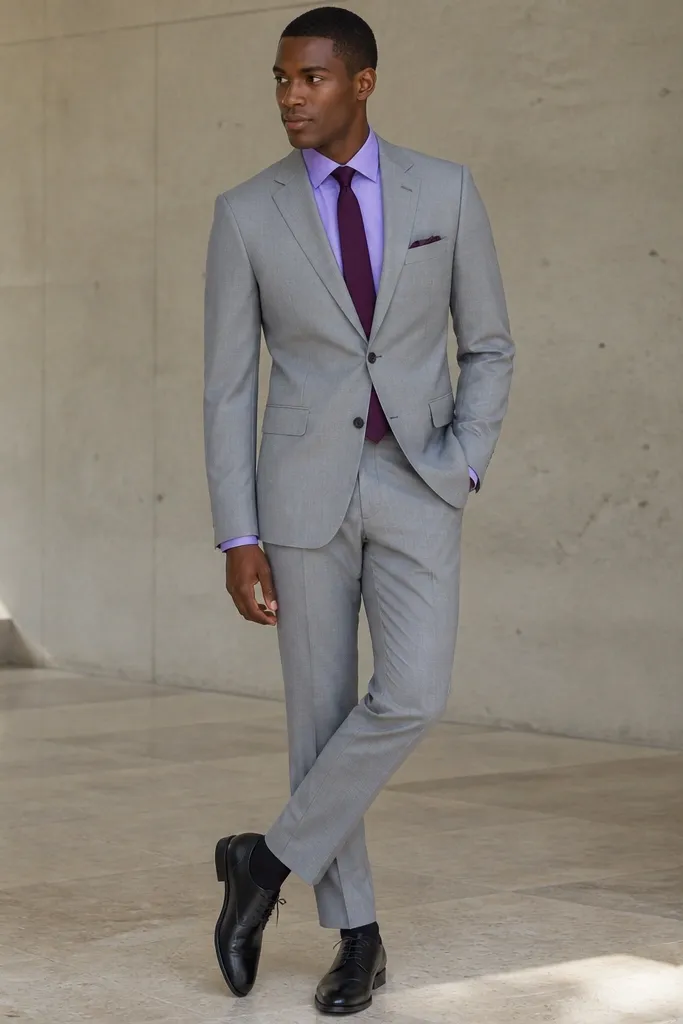
Use a reversible with hidden closures so the front looks neat on both sides. The hem should be consistent length so switching colors doesn’t change your proportions. Wear with neutral shoes: black or dark brown leather, plus one metal tone only.
Light gray can work beautifully on dark skin when it is paired with stronger colors rather than white alone. Lavender adds softness, while the plum tie gives the outfit enough depth to keep the face from looking washed out. The layered cool tones create a clean detail that reads planned, not random. Use a light gray suit with clean construction so the jacket front looks neat from every angle. The trousers should remain consistent in color and fit so the lighter shade does not change your proportions. Wear it with black leather shoes and keep all metal accessories in one tone.
Common mistakeAvoid reversible fabrics that are too thin — the seams show and the front looks uneven.
Good to knowKeep the pocket square simple so the lavender shirt and plum tie feel like one planned color story.
13. Black Tuxedo with White Shirt and Burgundy Bow Tie
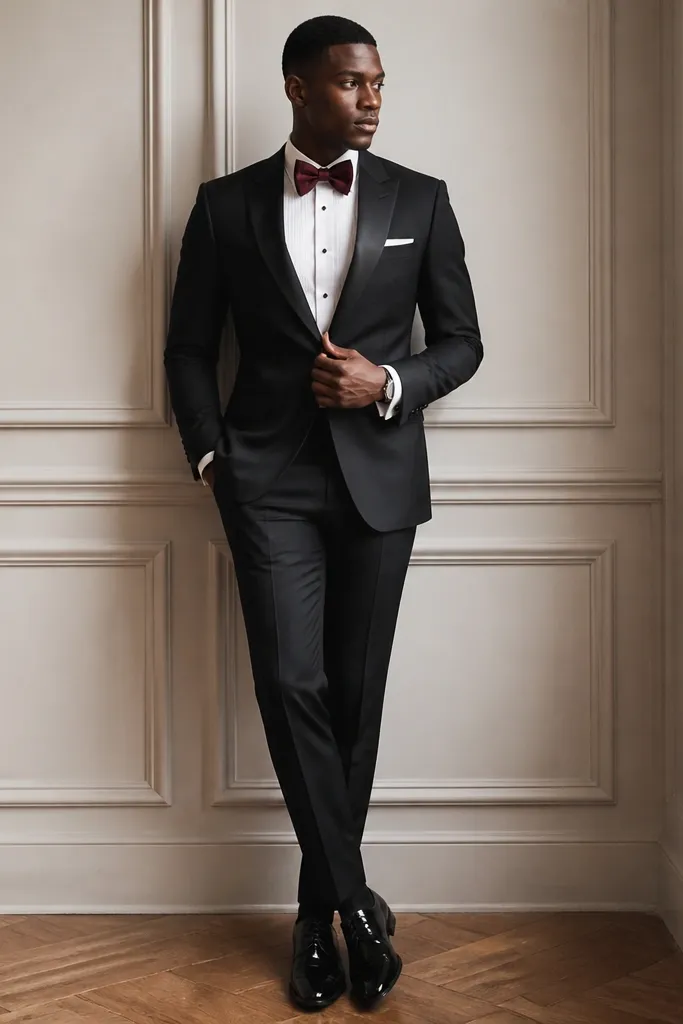
A burgundy bow tie has the right amount of warmth to flatter dark skin while still looking formal. The black tuxedo keeps the combination grounded, and the white shirt creates a clean highlight near the face. This works for evening weddings and gala events where you want to stand out without choosing a brightly colored suit. Pick burgundy that leans more wine-red than bright red so it does not look overly festive. The tuxedo should be tailored through the waist and fall straight through the trousers. Pair with black shoes and either a burgundy pocket square or a simple white one.
Pick a teal that leans more blue than green so it doesn’t turn muddy. The dress should be tailored through the waist and fall straight to the hem. Pair with black or deep brown shoes and a silver watch.
If your watch is gold, choose a warmer burgundy. With silver, pick a cooler wine-toned bow tie.
Avoid teal that looks gray in daylight — it usually looks dull in venue light too.
14. Olive Green Suit with Cream Shirt and Dark Brown Tie
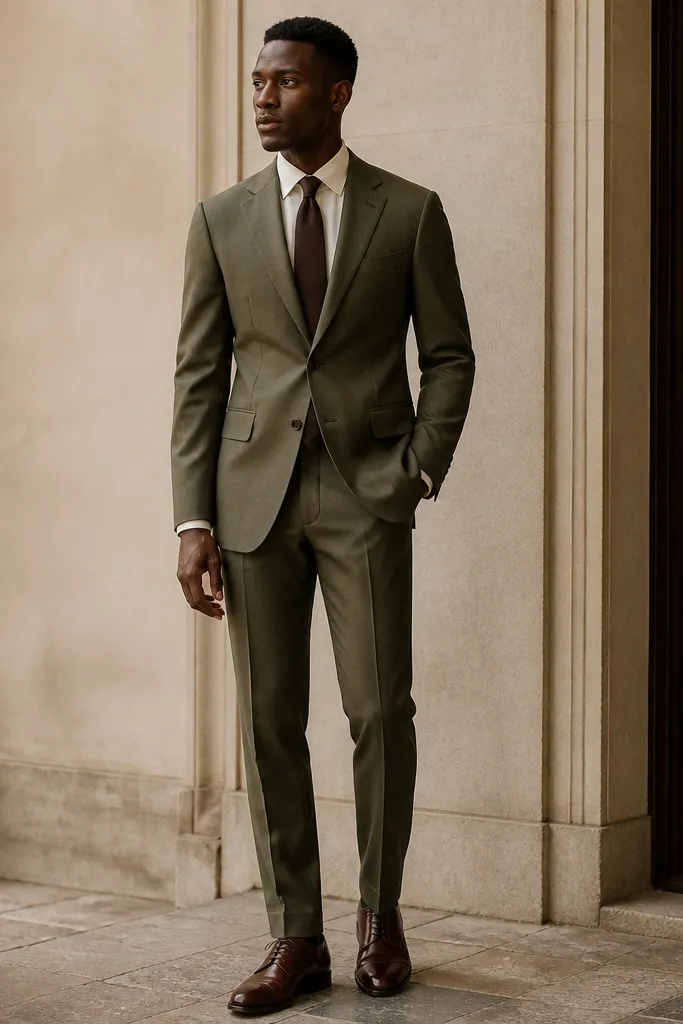
Olive green looks refined on dark skin because it is earthy and warm without overpowering the complexion. The cream shirt adds evening softness, while the dark brown tie creates a strong frame around the face. This is a great option when you want something warmer than charcoal but less dramatic than emerald. Keep the lapels proportional so the suit does not look like a costume or military uniform. The trousers should fall cleanly with a slight break, especially if the wool has a soft drape. Pair with dark brown dress shoes and a matching belt to keep everything tight.
Keep the lapel edge narrow so it doesn’t look like a costume tux. The hem should hit at the ankle with a slight break, especially if the fabric drapes. Pair with black dress shoes and a black belt — matching the lapel keeps everything tight.
Use a low-contrast pocket square, such as cream with a faint brown pattern, instead of bright white.
Avoid overly dark brown that reads flat black — you’ll lose the warmth that makes it flattering.
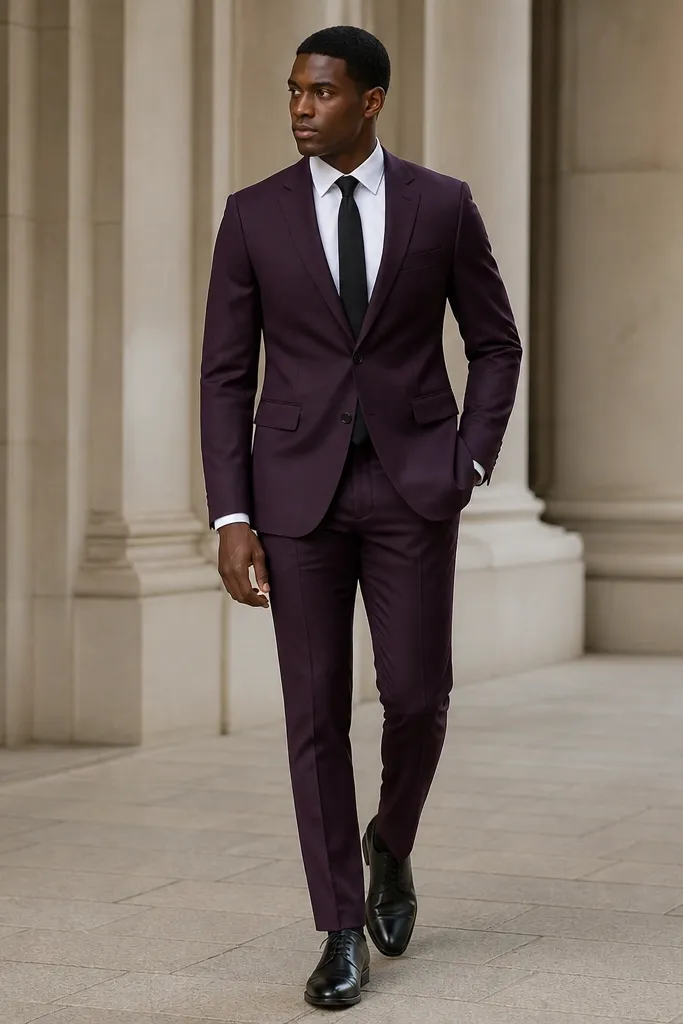
15. Deep Plum Suit with White Shirt and Black Tie
Look for embroidery placed on the chest and down the front panel, not scattered randomly. Keep the neckline modest and the fit straight through the waist. Pair with white sneakers is a no — go with tan or white leather dress shoes depending on how warm your powder blue is.
Deep plum flatters dark skin because it sits between red and violet, creating depth around the face. The black tie adds structure and contrast so the richer base color does not overwhelm the outfit. Choose fabric thick enough to hold the tailoring-thin material makes deep plum look flimsy. Look for lapels and seams that define the chest and front panel rather than decorative detailing placed randomly. Keep the shirt crisp and the jacket straight through the waist. Pair with black leather dress shoes; casual sneakers are a definite no.
Common mistakeAvoid light blue without any contrast detail — it often blends into deeper skin tones under lights.
Good to knowIf the plum fabric looks deep and crisp under natural light, it will photograph well. If it appears flat, the suit may look cheaper in person.
16. Slate Gray Suit with Pale Pink Shirt and Wine Tie
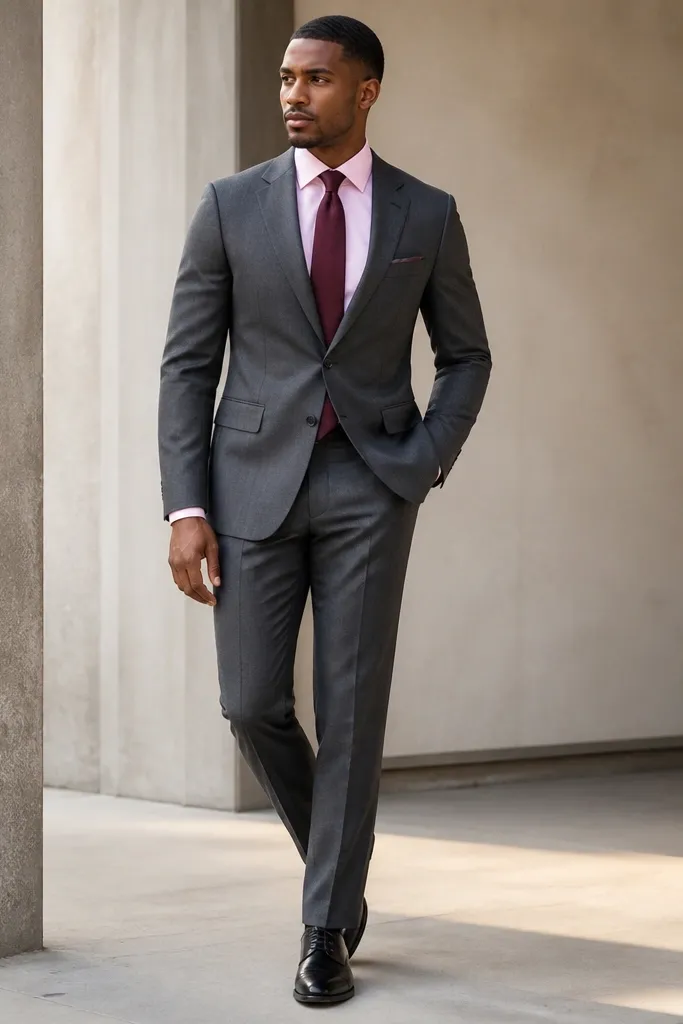
Slate gray can look sharp on dark skin when the fabric has texture instead of being completely smooth and flat. The pale pink shirt adds gentle warmth, while the wine tie creates a stronger formal center without excessive color. This is a strong choice for daytime weddings and refined evening events. Choose slate gray that reads deep and cool rather than pale silver. The suit should have a tailored waist and trousers that sit cleanly over the shoes. Footwear should be black or dark brown leather, depending on the warmth of the wine tie.
Choose an ivory that reads warm, like off-white with a slight cream tone. The dress should have a tailored waist and a hem that hits the ankle cleanly. Shoes should be black leather or dark brown leather; skip tan if your belt is black.
Use one wine-colored accessory, such as a pocket-square detail, so the tie does not feel random.
Avoid pure bright white crepe — it can look stark and make skin look darker than it is.
17. Tan Three-Piece Suit with White Shirt and Forest Green Tie
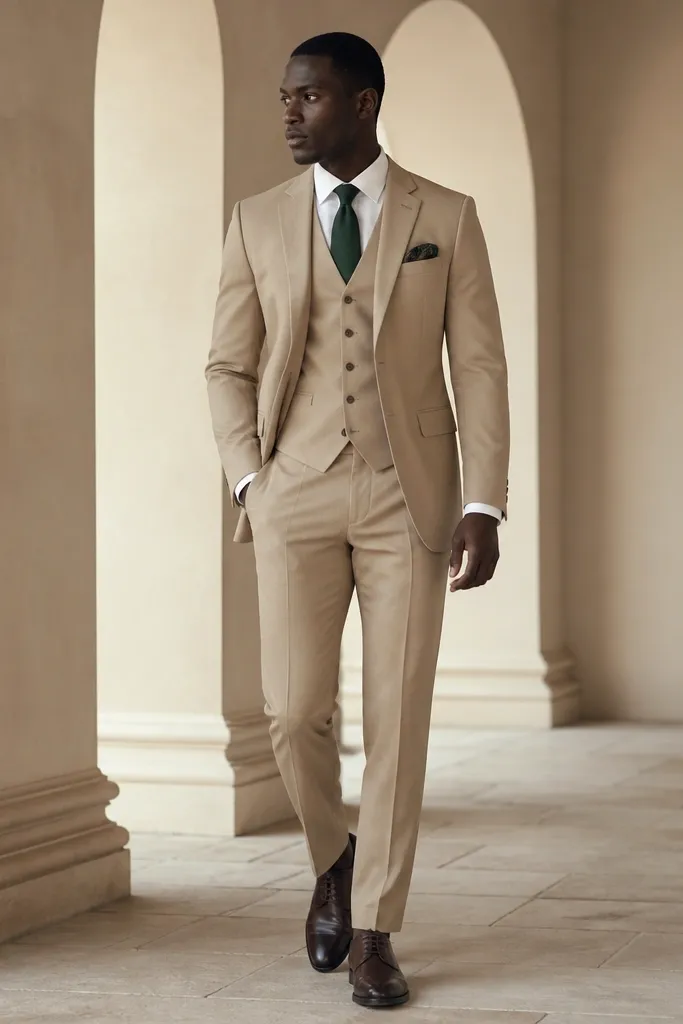
Tan flatters dark skin because it creates warm contrast near the face without feeling as light as cream. The waistcoat keeps the color grounded and expensive-looking. A forest green tie connects naturally with the warmth of tan so the combination does not look too pale or distant. Pick a suit with a neat waistcoat button line and a slightly tapered jacket waist so it does not look boxy. The sleeve length should show a small section of white cuff without bunching. Pair with dark brown leather shoes and a green or tan pocket square if you want extra polish.
Pick a dress with a neat button line and a slightly tapered waist so it doesn’t look boxy. The sleeve length should cover the wrist bone without bunching. Pair with dark brown leather shoes and a burgundy or plum pocket square if you want extra polish.
If you wear glasses, forest green adds color around the face without competing with the frames.
Avoid bright purple satin — it can look theatrical and cheap fast.
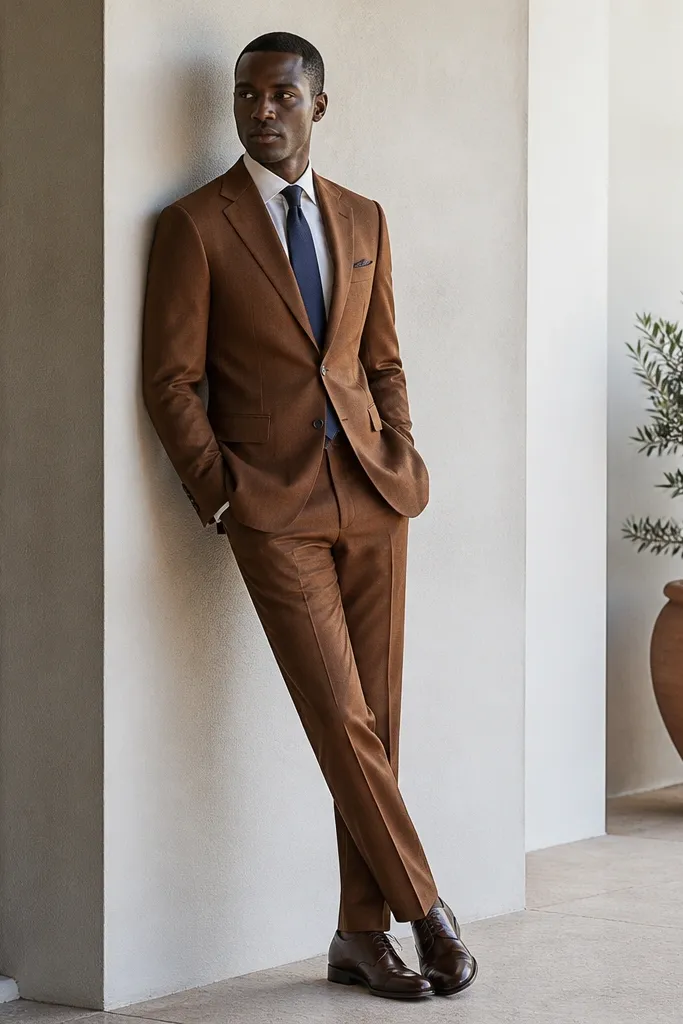
18. Copper Brown Suit with Ivory Shirt and Navy Tie
Choose a rust shade that leans more brown than orange so it stays formal. The wrap waist should close with an inner tack or hidden button so it doesn’t shift. Pair with gold jewelry and dark brown shoes; avoid black shoes if your rust is very warm.
Copper brown is one of the most flattering colors on dark skin because it echoes warm undertones without turning orange. The matte weave keeps it classy, and the navy tie defines the center so the brown does not feel like one continuous block. This is a great warm formal option when you are tired of burgundy. Choose copper brown that leans more brown than orange so it stays formal. The jacket should close cleanly without pulling, and the trousers should keep a straight tailored line. Pair with gold accessories and dark brown shoes; black shoes can look too harsh if the copper is very warm.
Common mistakeAvoid neon orange-rust — it reads casual and can clash with warm venue lighting.
Good to knowMatch your belt to the shoes, not to the suit-dark brown leather creates a cleaner finish.
19. Navy Double-Breasted Suit with Lavender Shirt and Silver Tie
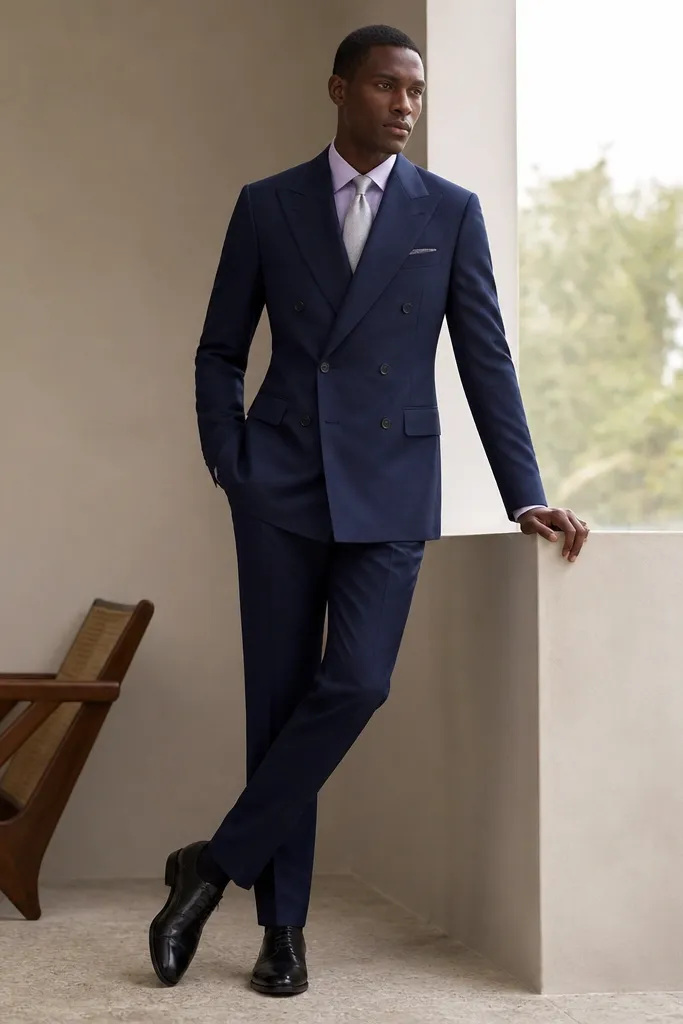
Navy gives you a deep formal base without the heaviness of pure black. Lavender lightens the face area, while the silver tie adds detail without becoming loud. The double-breasted construction matters-when the buttons and lapels frame the chest correctly, the entire combination reads intentional. Look for evenly spaced buttons and clean peak lapels that stay flat against the chest. The suit should use a smooth base fabric so the lavender and silver colors stand out. Pair with black dress shoes, and keep the watch metal silver to match the tie.
Look for embroidery that’s small-scale and evenly stitched. The dress should have a clean base fabric so the embroidery stands out. Pair with cream or tan dress shoes, and keep your watch metal in gold or bronze to match the cream thread.
If the tie fabric is delicate, press it gently with a cloth between the iron and fabric to keep the surface crisp.
Avoid huge, dense embroidery — it can look heavy and cheap up close.
20. Ivory Dinner Jacket with Black Trousers and Black Bow Tie
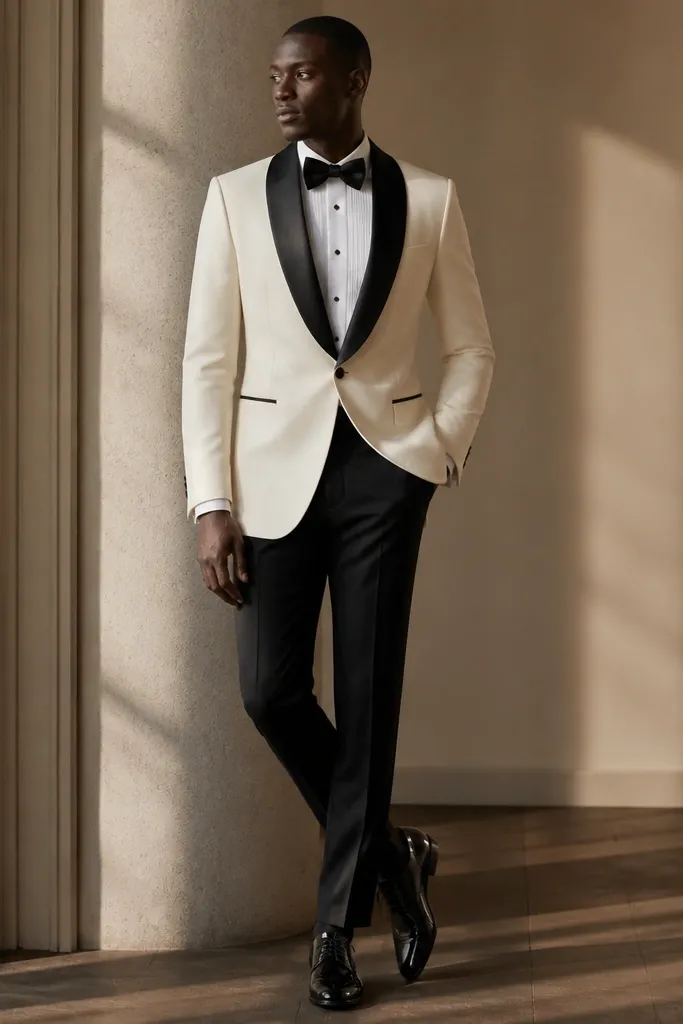
This is the safe light formal look that still feels different. The ivory jacket creates strong contrast against dark skin, especially in low light where black suits can look flat. Black lapels, trousers, and bow tie add definition without turning the ivory jacket gray or washed out. Choose a dinner jacket with a clean front and minimal seams so the pale fabric remains smooth. The jacket length and trouser hem should be tailored to your height, with no bunching or pooling. Pair with black leather shoes and a silver or gold watch depending on your preferred finish.
Choose a dress with a straight front and minimal seams so the pattern doesn’t twist around your body. The hem should be tailored to your height, no pooling. Pair with black leather shoes and a silver watch if you want that cool finish.
Check the ivory color in motion-if it turns bright white under light, it may be too stark for warm venues.
Avoid black fabric with obvious shiny dots — it reads like cheap print.