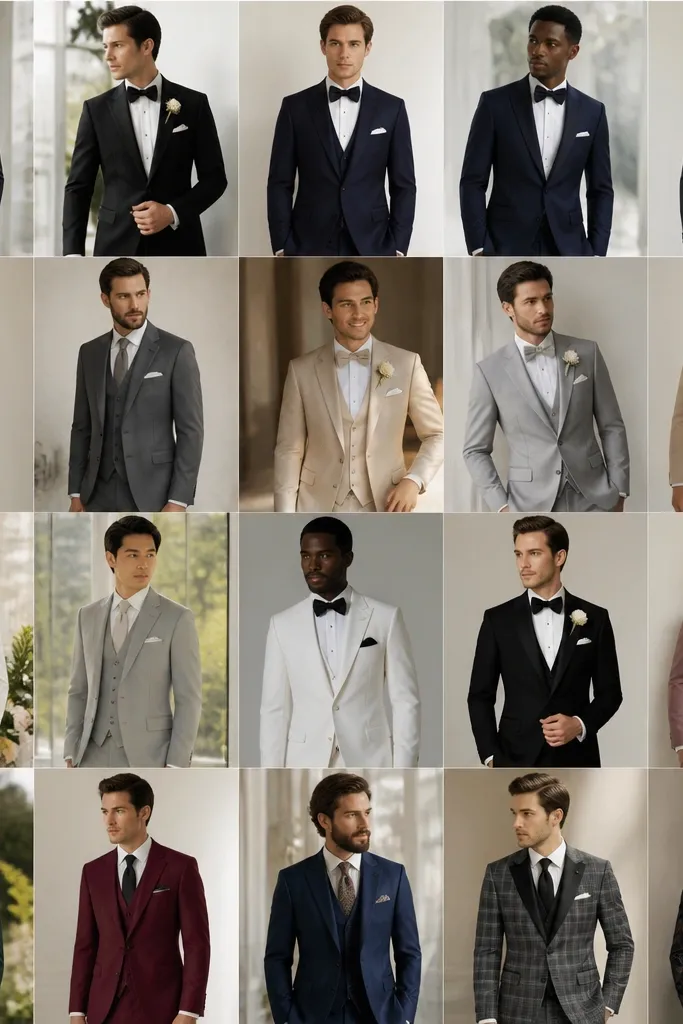
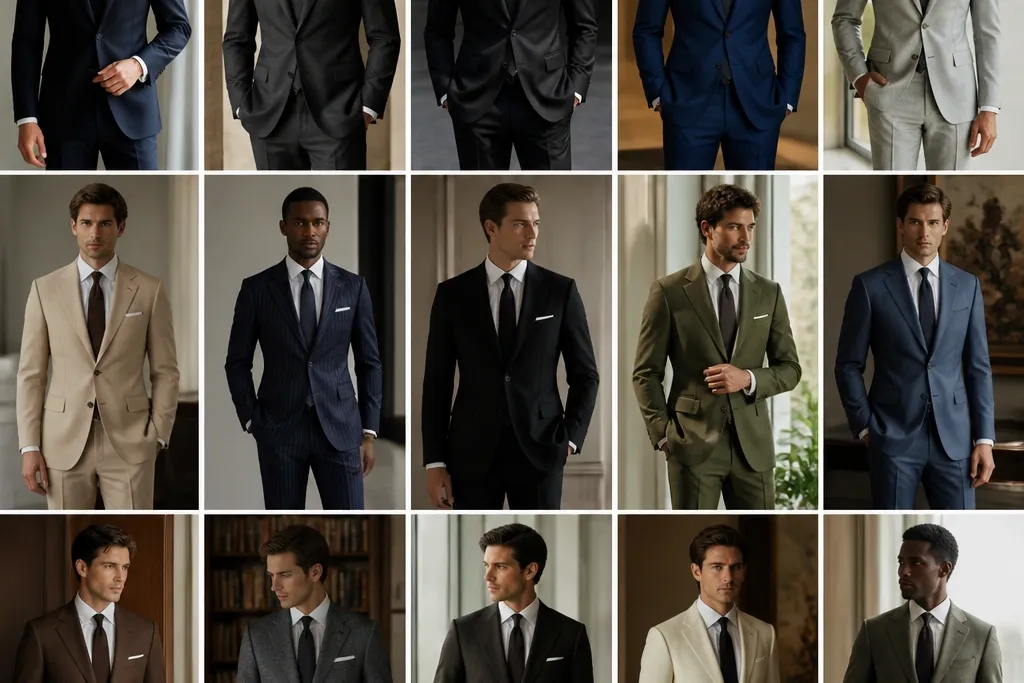
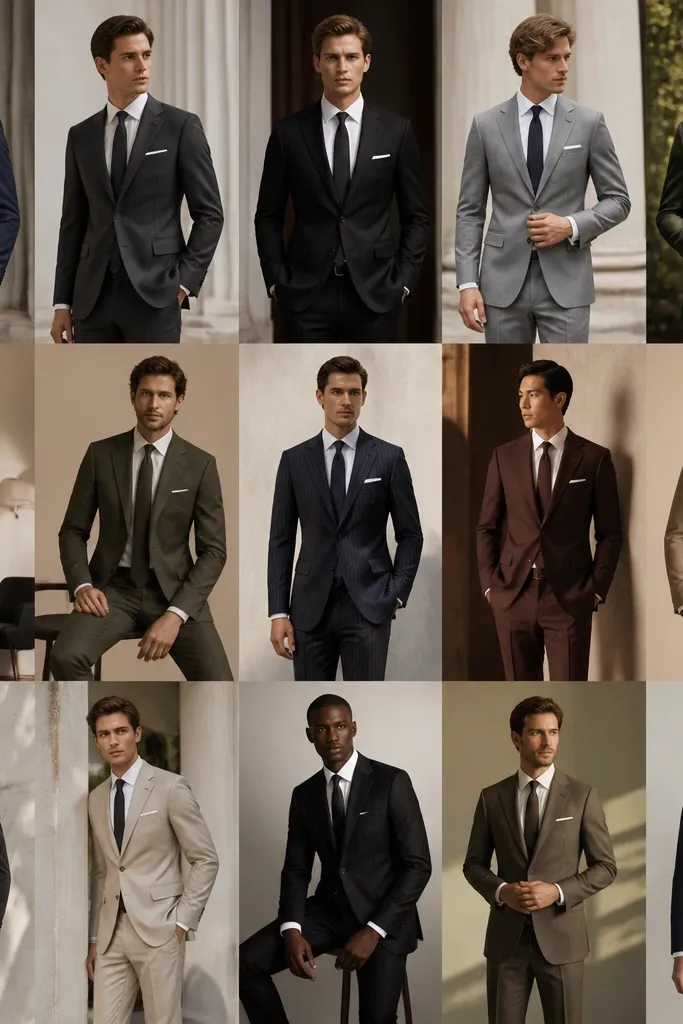
1. Navy Three-Piece Suit with White Shirt and Burgundy Tie
The midnight navy reads formal even under harsh venue lighting, and the structured waistcoat gives the tie a natural frame to sit against. A burgundy silk tie keeps the contrast rich without turning the outfit into a costume. I like this combination because the suit front looks sharply tailored from a distance, while the wool catches light only at the edges. It also photographs well since navy absorbs glare better than brighter blues. Look for a suit with a defined waistcoat front and clean jacket opening so you can center the tie. Aim for trousers with a neat break over the shoes, and wear black leather oxfords or derbies. Steam the shirt collar until it lies flat, then tie a half-Windsor to fill the neckline.
Good to knowUse a burgundy pocket square with a slight sheen-bright white can look too stark against navy in warm indoor lighting.
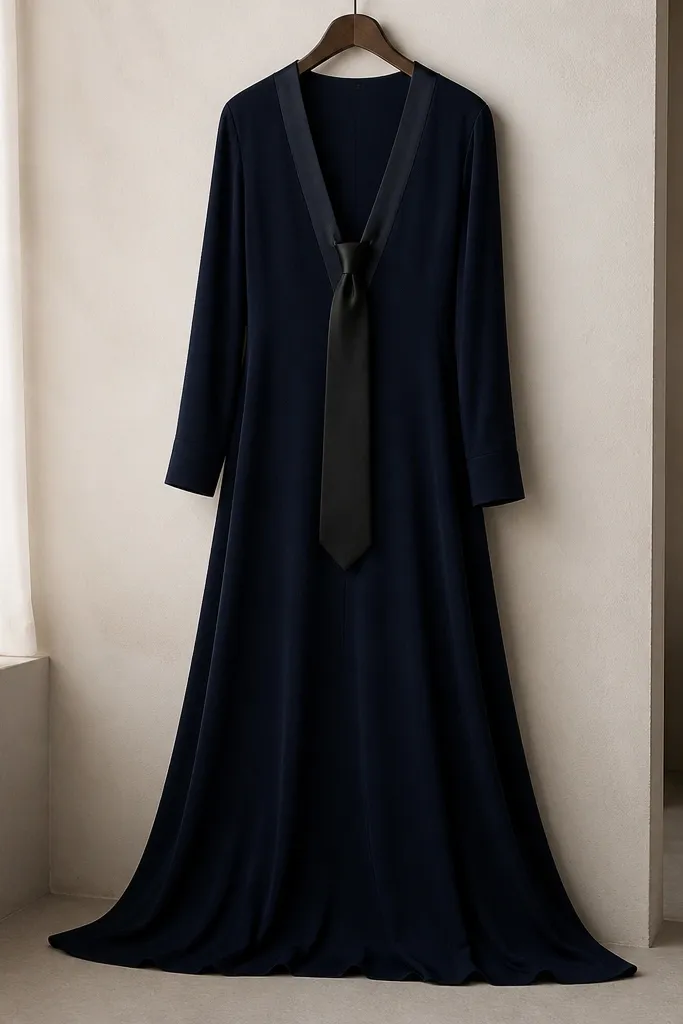
Look for a dress with a defined front panel or faux placket so you can center the tie. Aim for a hem that reaches mid-calf or lower, and wear black leather oxfords or derbies. Steam the neckline until it lies flat, then tie a half-Windsor to fill the V opening.
Common mistakeSkip matte polyester ties with shiny satin-trim dresses; the mismatch looks cheap in close-up.
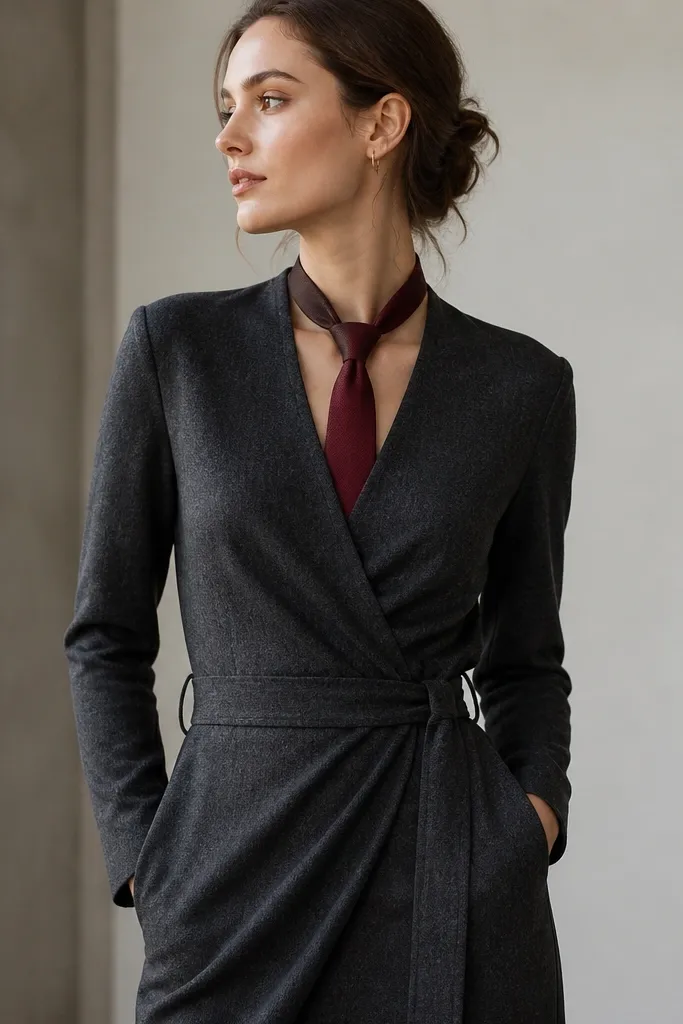
2. Charcoal wool wrap-style dress with a deep burgundy tie
Charcoal wool gives structure, so the tie knot stays neat even when you move around. Black adds sharp contrast to the gray without introducing another strong color, which looks better for evening events. The double-breasted front helps shape the tie area-you get symmetrical lapels that make the knot sit in the middle instead of floating. Wool also resists wrinkles, so the outfit stays photo-ready longer. Choose a suit with a double-breasted overlap that closes comfortably without pulling at the waist. Wear a belt only if the trousers include belt loops, but keep it subtle and black. Tie a four-in-hand for a slimmer knot and keep the tie width around 6.5 centimetres.
Choose a dress with a wrap overlap that you can tighten at the waist with an internal tie or hidden buttons. Wear a belt if the dress includes belt loops, but keep it subtle and in the same charcoal tone. Tie a four-in-hand for a slimmer knot and keep the tie width around 6.5 cm.
Match your belt color to your shoes, then let the black tie maintain the outfit’s clean monochrome contrast.
Don’t use a skinny 4 cm tie with a wrap front — it looks under-scaled against the wool volume.
3. Black Tailored Suit with Gray Shirt and Silver Tie
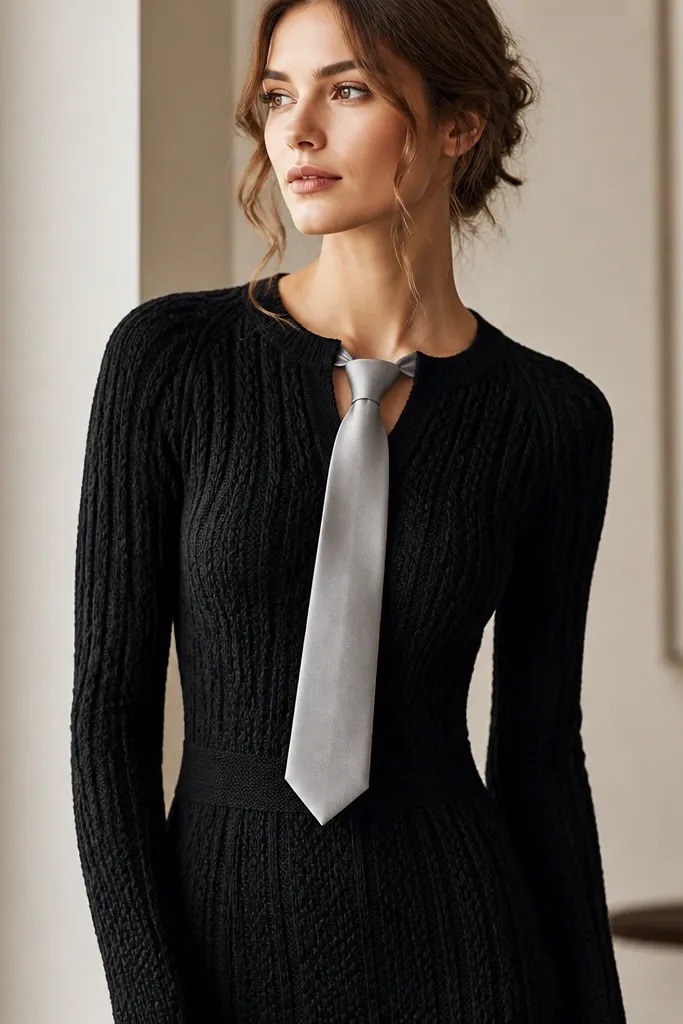
A black tailored suit is underrated for formal tie looks because the clean structure gives the silver tie a sharp background. The gray shirt lightens the center and keeps the outfit from looking flat black-on-black. I like this for holiday parties and evening dinners where people sit close-the subtle shirt texture looks expensive when the fabric is thick enough. The tie adds crisp lines against the softer gray tone. Pick a suit with a structured chest so it does not collapse around the shirt and tie. If the shirt has visible texture, use a tie with a slightly wider blade so the knot remains noticeable. Show a clean section of shirt cuff beneath the jacket sleeves, and wear black leather boots or loafers.
Good to knowUse a light starch spray on the shirt collar so it keeps a crisp fold when you move.
Pick a knit dress with a heavier gauge so it doesn’t cling too much at the chest. If the neckline is crew-ish, use a tie with a slightly wider blade so the knot fills the opening. Roll or cuff any sleeves if the dress has them, and wear black leather boots or loafers.
Common mistakeSkip thin, see-through knits; the tie won’t save the look if the fabric is too flimsy.
4. Light Gray Suit with White Shirt and Navy Tie
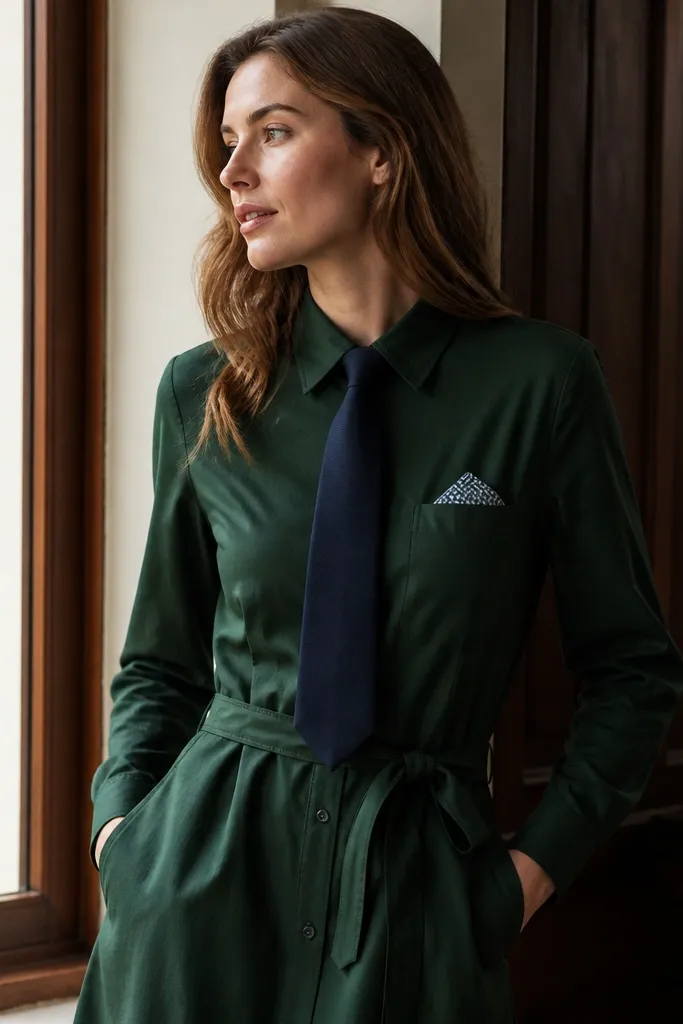
A light gray suit works because the structured jacket and shirt collar are already built for a tie. Light gray looks modern without needing bright detailing, and the navy tie keeps it classic. The clean white shirt adds contrast without overwhelming the tie-it gives your outfit a sharply tailored finish. This is one of the easiest combinations to pull off if you are new to formal suit styling. Choose a suit with a front closure you can align with the center of the tie knot. Keep the trousers lightly tapered and wear dark brown or black leather oxfords depending on the suit’s undertone. Tie a four-in-hand so the knot stays compact beneath the shirt collar.
Good to knowMatch your pocket square color to the tie shade, not the suit-navy against light gray looks intentional.
Choose a dress with a chest placket you can align with the tie knot center. Keep the hem around mid-calf and wear brown leather oxfords if the dress has any warm undertones. Tie a four-in-hand so the knot stays compact under the shirt-style neckline.
Common mistakeAvoid a tie that’s the same green family as the dress; it turns into one big block.
5. Midnight Blue Suit with Pale Blue Shirt and Patterned Tie
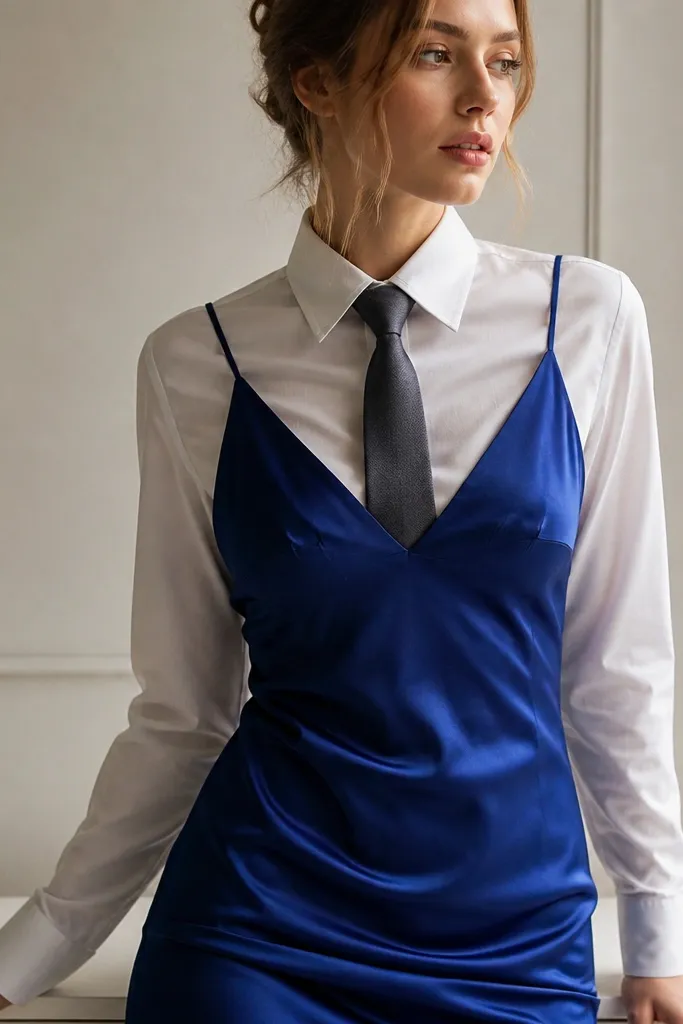
This is a styling combination I use when a dark suit needs more visual interest at the front. The pale blue shirt gives the tie a firm background and keeps the knot crisp, while the patterned tie adds controlled detail. Midnight blue reads bold in photos, but the lighter shirt prevents it from looking overly dark. The vertical tie line also breaks up the solid jacket front so it looks tailored, not plain. Use a dress shirt in crisp cotton with a collar that sits flat-no floppy collar points. The tie pattern should be small enough that the shirt and jacket remain the main structure. Keep the shoes black and sleek; the outfit already has enough visual detail.
Good to knowSteam the suit lightly and press the shirt collar firmly; the clean contrast is what makes this combination work.
Use a dress shirt in crisp cotton with a collar that sits flat — no floppy collars. The slip dress should have a deep V so the shirt placket and tie knot show cleanly. Keep shoes black and sleek; the outfit already has enough shine.
Common mistakeSkip wide, loud ties with this — the shine plus big pattern makes the look busy fast.
6. Beige Suit with White Shirt and Chocolate Brown Tie
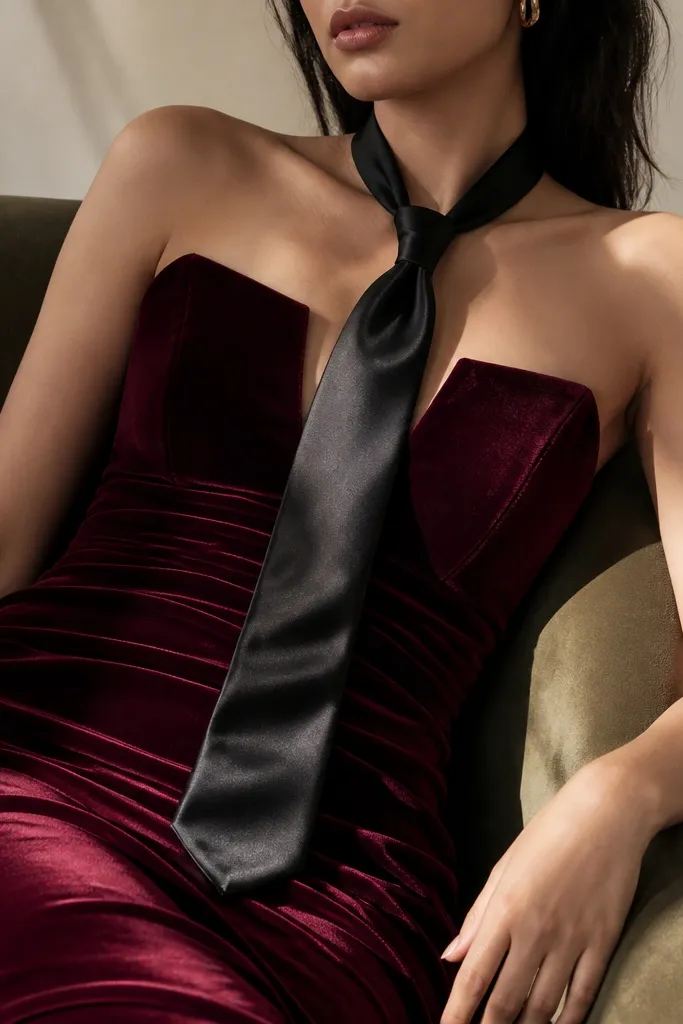
A beige suit looks formal when the tie and accessories are carefully controlled. A chocolate brown silk tie gives a clean vertical line and a rich surface that contrasts with the lighter suiting. Beige also changes tone with lighting-it can look warmer outdoors than it does inside the venue. This combination makes your chest area look intentionally styled, not randomly dressed up. Go for a beige suit with firm lapel edges so the tie knot does not disappear against the pale fabric. Wear matte brown shoes to keep the tonal contrast interesting. Tie a half-Windsor with a slightly wider blade so the knot fills the space between the collar points.
Good to knowPin these occasion & event ideas so they are waiting in your boards when you need them.
Go for a velvet dress with a firm neckline edge so the tie knot doesn’t sink into the fabric. Wear matte black shoes to keep the texture contrast interesting. Tie a half-Windsor with a slightly wider blade so the knot fills the space above the tie line.
Common mistakeDon’t pair velvet with a shiny patterned tie — the two shine types fight.
7. Burgundy Suit with White Shirt and Black Tie
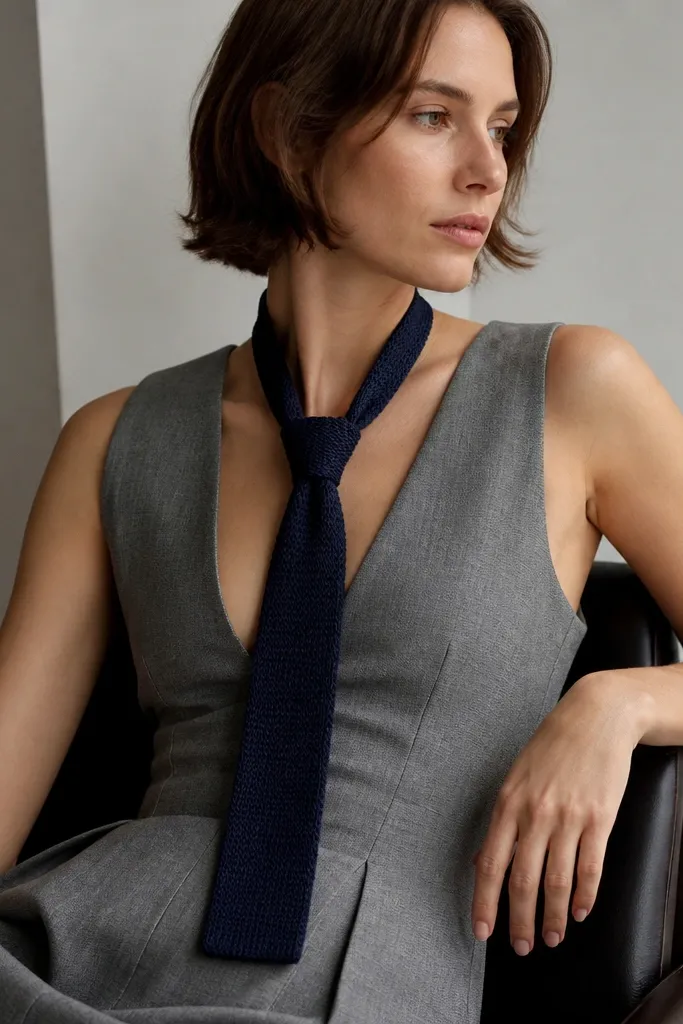
Burgundy keeps things distinctive, and the structured suiting holds its shape so the tie sits correctly. A black tie looks sharper than a tonal burgundy one but still reads formal when the suit is properly tailored. I like this for evening weddings and gallery events where black-and-white can feel too predictable. The dark tie gives a clean contrast that balances the richness of the burgundy. Pick a suit with a structured front and lapels that do not curl. Keep the tie width around 7 centimetres so it matches the jacket proportions. Wear polished black leather shoes and keep your socks close to the shoe tone.
Good to knowChoose a black tie with a tight weave-chunky knitted ties can look too casual against formal burgundy suiting.
Pick a dress with a structured front panel and a neckline that doesn’t curl. Keep the tie width around 7 cm so it matches the V opening. Wear dark brown or navy leather shoes and keep your socks close to the shoe tone.
Common mistakeAvoid a thin, shiny tie on wool — it looks like you dressed the tie separately.
8. Dark Brown Suit with Cream Shirt and Tan Tie
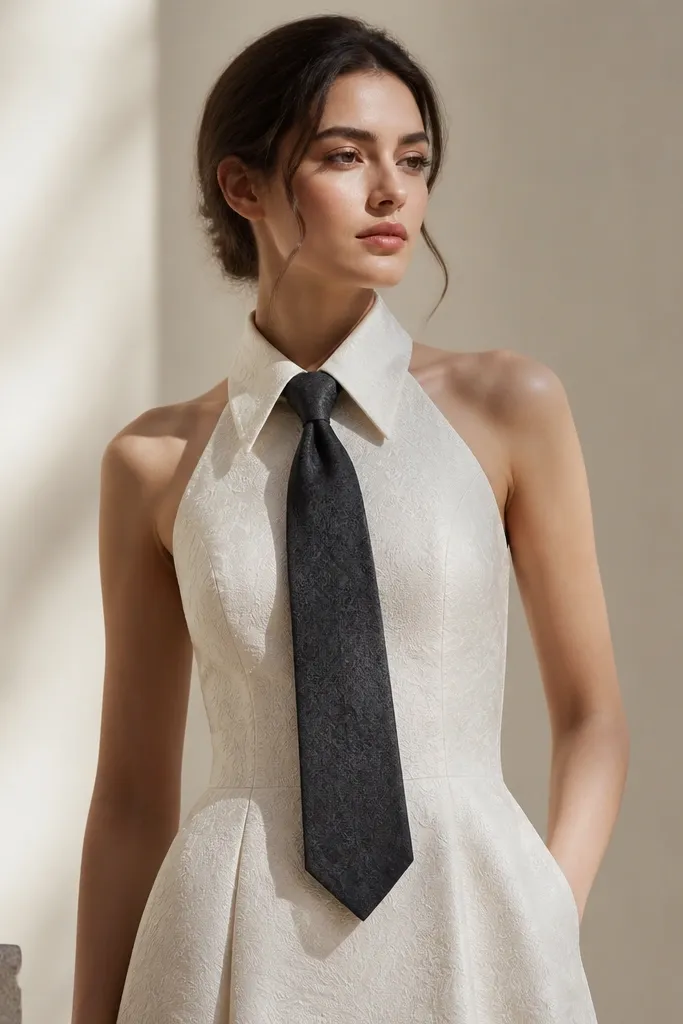
Dark brown suiting adds depth without needing loud colors, which matters when you are wearing a lighter tie-too much contrast can look chaotic. A warm tan tie complements the cream shirt and keeps the knot clearly visible. Quality wool also hides small wrinkles better than smooth synthetic fabric, so you look sharper longer. This outfit reads “winter formal” without becoming a wedding-only look. Look for a dark brown fabric with a tight weave so it does not look overly rustic. Keep the tie matte and mostly solid; warm tan works better than pale beige if the suit is deep brown. Tie a four-in-hand and let the trousers sit with a clean break over leather loafers.
Look for a jacquard with a tight pattern so it doesn’t look like upholstery. Keep the tie matte and solid; charcoal works better than black if the dress is warm ivory. Tie a four-in-hand and let the dress hem sit at mid-calf with clean leather loafers.
If the shirt is warm cream, avoid bright white accessories; tan and brown keep everything cohesive.
Don’t choose a shiny ivory fabric with a glossy tie; the contrast makes the center look messy.
9. Navy and white striped dress with a solid red tie
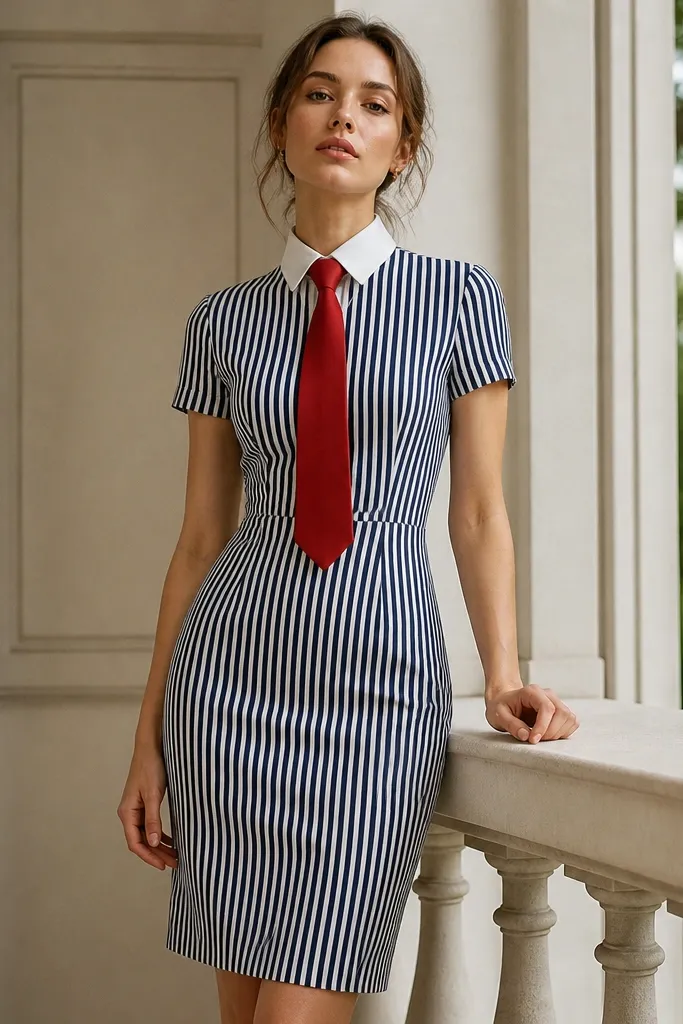
Royal blue can look too bold unless the fabric and cut are formal. When the jacket is crisp and the suit front is tailored, the color gives you a strong visual line. A solid gray tie adds one controlled neutral note and keeps attention near your face. This combination works because the tie color balances the brightness-everything else remains structured. Choose royal blue suiting with a smooth finish and shaping at the waist. Keep the tie width around 7 centimetres and use a half-Windsor so the knot looks full against the white collar. Wear black shoes and keep your socks either black or matching the suit.
Good to knowPick a gray tie that leans slightly darker, such as graphite, so it does not appear washed out against royal blue.
Choose stripes with consistent width and a dress that has shaping at the waist. Keep the tie width around 7 cm and use a half-Windsor so the knot looks full against the striped V. Wear black shoes and keep your socks either black or matching the navy stripe.
Common mistakeSkip thin, washed-out stripes; they make the dress look like a summer uniform.
10. Olive Green Suit with Beige Shirt and Dark Brown Tie
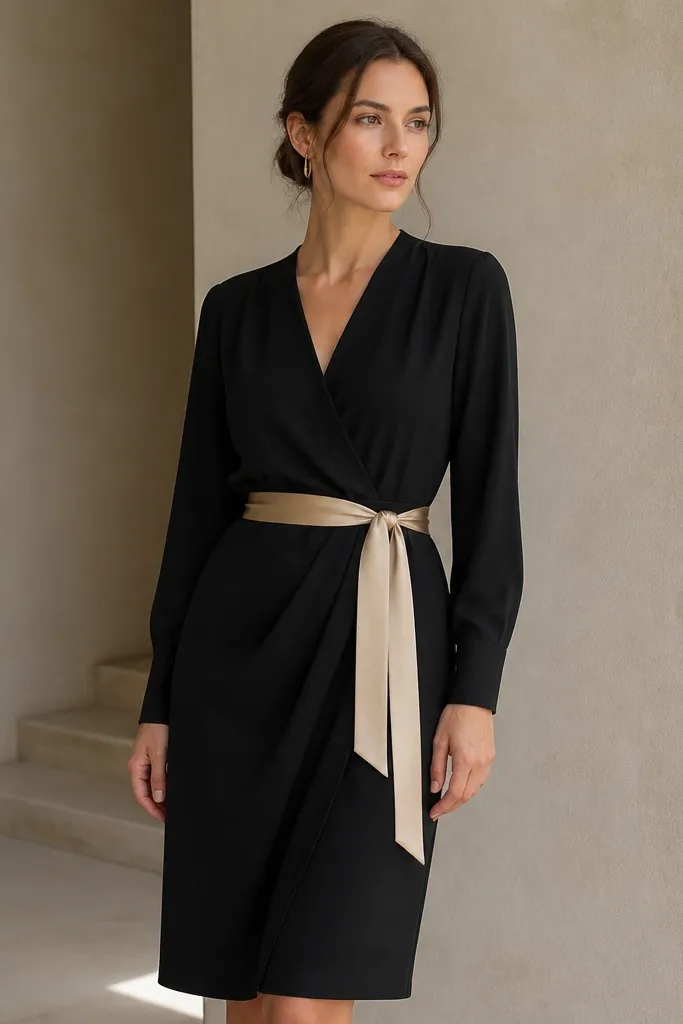
Structured olive suiting holds its shape and drapes cleanly, which matters because earthy colors can look casual if the fit is wrong. Dark brown is formal when it is deep and matte-it reads rich, not dull. The beige shirt connects the suit and tie so the outfit looks engineered, not assembled. This is a strong choice for events where you want attention without using bright colors everywhere. Use an olive suit with a jacket and trousers that share the same undertone so the eye travels smoothly across the outfit. Keep the tie solid and matte, and tie a four-in-hand for a slimmer knot. Wear dark brown pointed dress shoes and matching socks.
Good to knowLet the trousers sit slightly higher at the waist-it lengthens the leg line and balances the tie knot.
Use a wrap dress with a belt that actually matches the tie tone so the eye travels smoothly across the waist and chest. Keep the tie solid and matte, and tie a four-in-hand for a slimmer knot. Wear black pointed-toe shoes and black socks.
Common mistakeAvoid a bright metallic tie that’s too reflective; it looks like costume fabric against crepe.
11. Navy Pinstripe Suit with White Shirt and Red Tie
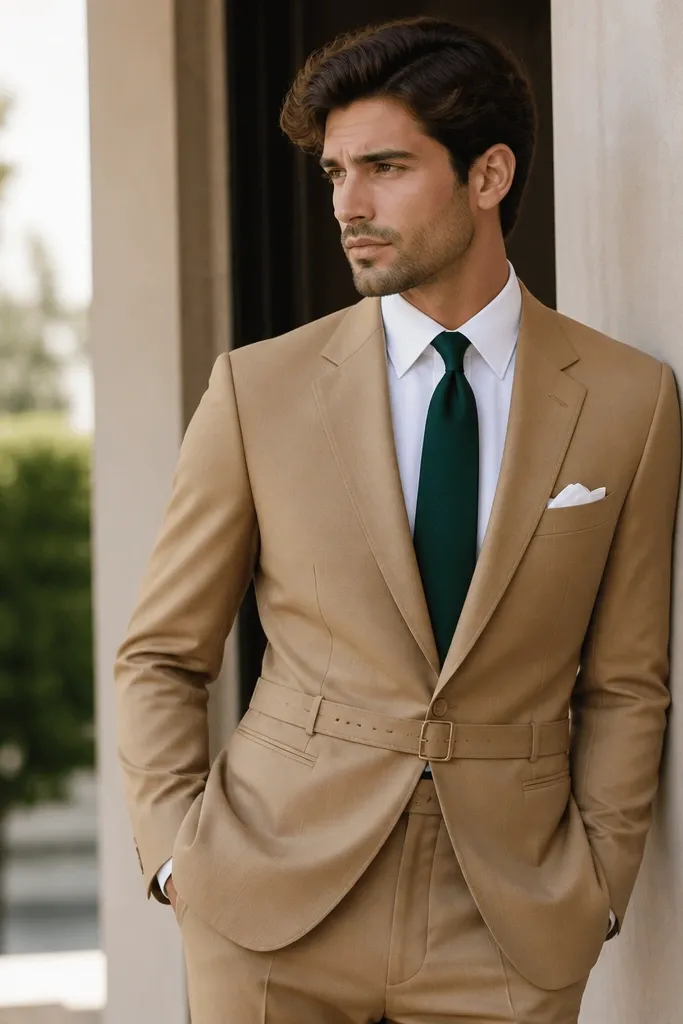
Navy pinstripes look expensive when the suit is made from wool with a dense weave. Dark red pairs well with navy because it adds warmth while keeping the outfit grounded. A white pocket square gives a crisp edge and keeps the chest from feeling too dark. I like this combination for formal weddings and evening dinners where you want color but still need to look sharp. Pick a suit that sits firmly around the chest, not a loose office-style cut. Tie a half-Windsor with a 7.5-centimetre blade so the knot fills the collar. Wear black shoes and keep the pocket square plain-no patterns that compete with the pinstripes and red tie.
Good to knowChoose red with a hint of burgundy, not bright scarlet, so it complements the navy pinstripes.
Pick a dress that sits structured around the chest, not a clingy knit. Tie a half-Windsor with a 7.5 cm blade so the knot fills the neckline. Wear dark brown shoes and keep the pocket square plain — no patterns that fight the green tie.
Common mistakeDon’t pair camel with a bright blue tie; it clashes under warm indoor lighting.
12. Slate Gray Suit with White Shirt and Wine Tie
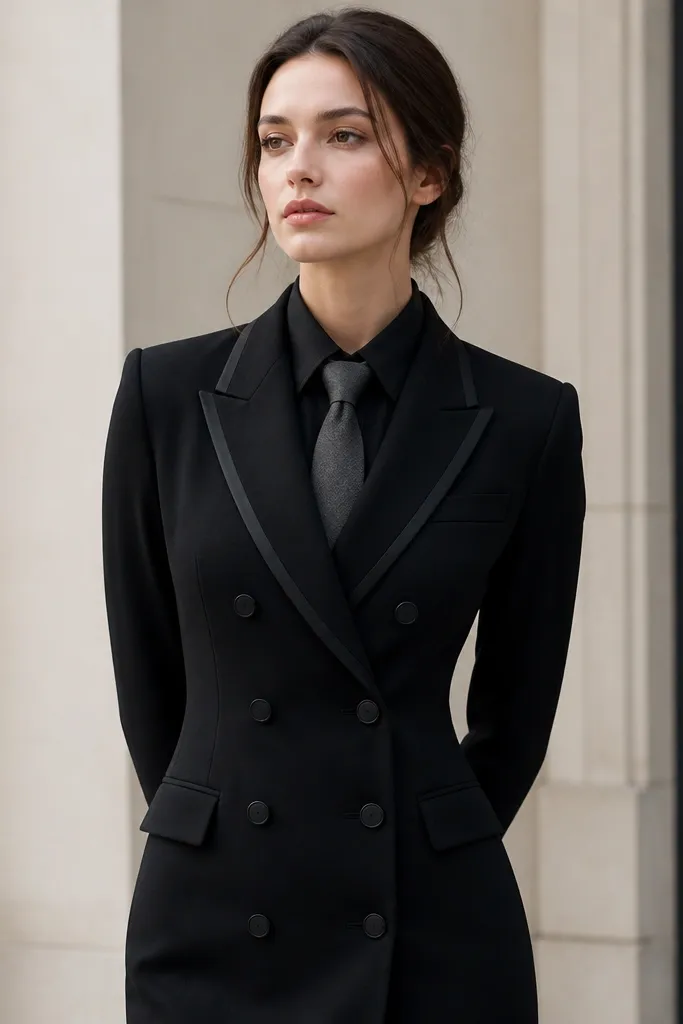
A clean suit front gives you built-in symmetry, which makes a tie look intentional even when the outfit is minimal. The wine tie keeps the combination refined but not boring, while the white shirt adds controlled brightness where the eye expects it. This outfit is great for formal dinners because it reads sophisticated without needing a three-piece suit. It also flatters more body shapes than very light or shiny suiting. Choose a suit with clean lapels and real structure through the chest. Keep the tie centered and use a half-Windsor so the knot sits neatly between the collar points. Wear black oxfords and use a wine or white pocket square, or none at all if the tie already provides enough color.
Good to knowMatch the pocket-square detail to the wine tie, not to the jacket buttons-it keeps the color story consistent.
Choose a dress with two visible button rows and real structure at the chest. Keep the tie centered and tie a half-Windsor so the knot sits between the lapels. Wear black oxfords and use a charcoal pocket square or none at all if the lapels already have shine.
Common mistakeSkip oversized knots with double-breasted fronts; they look bulky under the lapels.
13. Cream Suit with Light Blue Shirt and Navy Tie
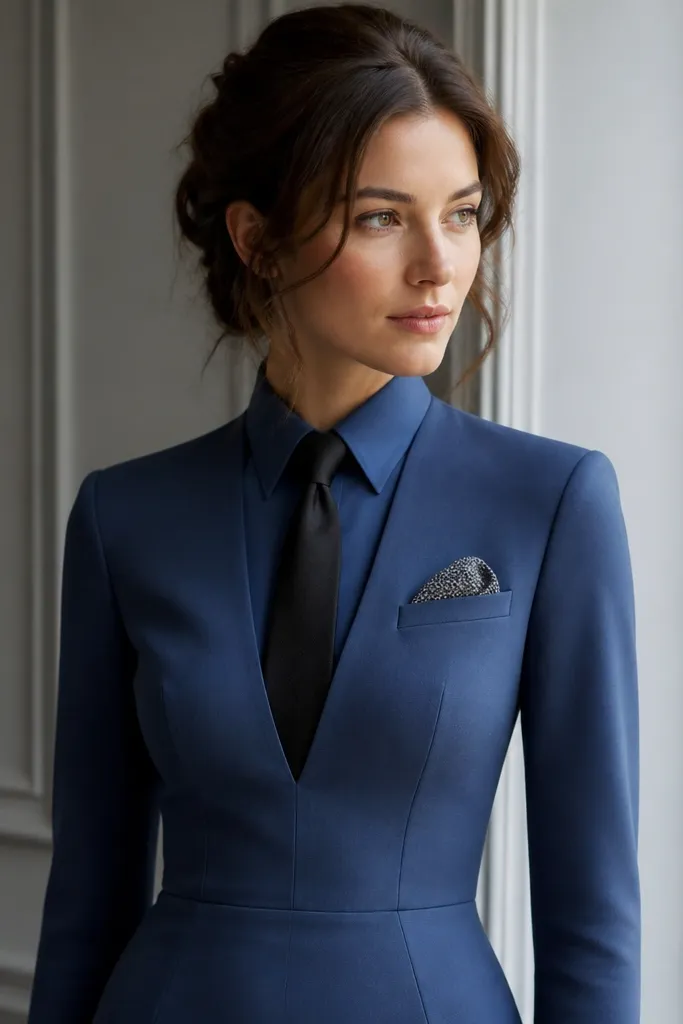
Cream is a lighter tone that looks sharp in both indoor and daylight settings. A navy tie keeps it formal and gives the knot a crisp border against the blue shirt. The small patterned pocket square adds interest without stealing attention from the tie-think tiny dots or a micro-check, not large florals. This is a strong option when you want color but do not want to look like you are dressing for a theme. Use a tailored suit with seams that keep the front flat, especially around the chest and waist. Tie a four-in-hand for a compact knot that will not crowd the shirt collar. Keep the pocket square small and folded once so it does not resemble a flag.
Good to knowWith a cream suit, choose pocket-square patterns in navy and light blue so the outfit looks deliberate.
Use a tailored dress with seams that flatten the front, especially around the chest. Tie a four-in-hand for a compact knot that won’t crowd the V. Keep the pocket square small and folded once so it doesn’t look like a flag.
Common mistakeAvoid bright white pocket squares with steel blue; the contrast can look harsh in warm venues.
14. Black Tuxedo with White Shirt and Satin Black Tie
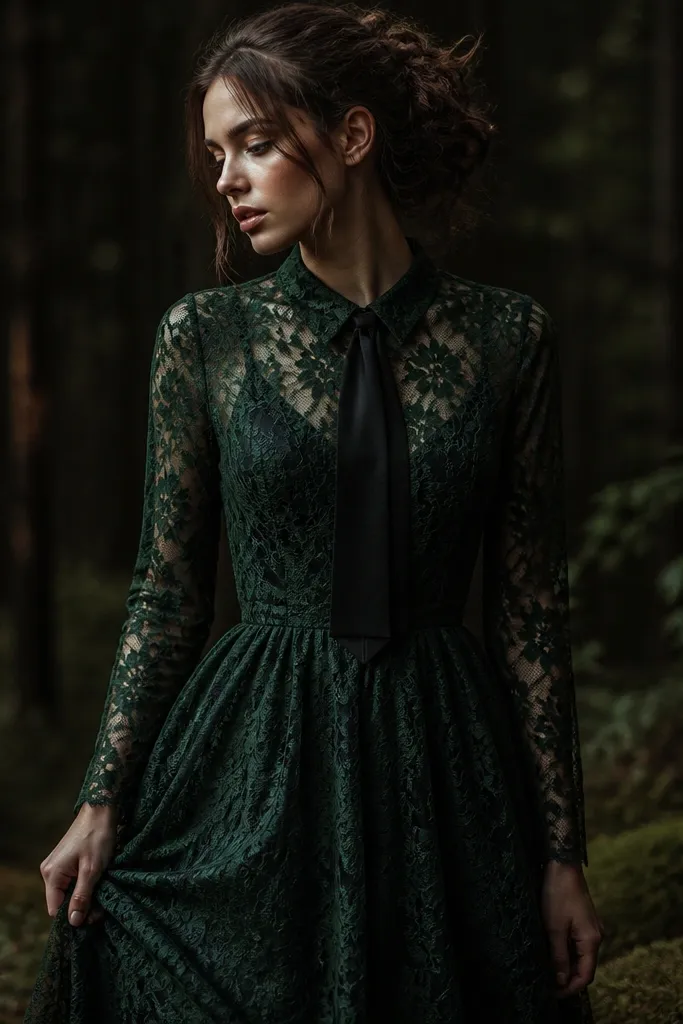
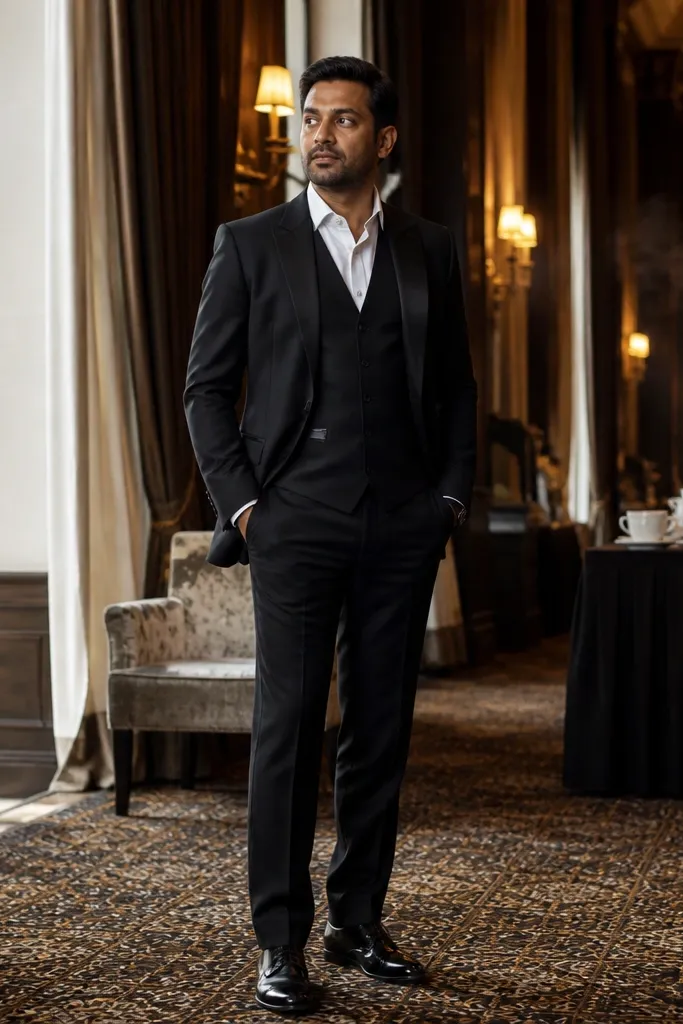
Satin can work with a black tuxedo when you treat it as controlled texture, not excessive shine. The key is the white shirt: the clean fabric supports the tie area so the knot looks flat and anchored. The black tuxedo feels sharp and formal, while the satin tie creates a clean vertical line between the lapels. I like this style for evening events where people notice details-it reads intentional when every black tone is coordinated. Use a tuxedo with structured satin lapels and a firm shirt collar at the chest. Tie a narrow 6-centimetre tie and keep the knot small so the neckline does not look crowded. Wear black dress shoes and keep the trousers full length so the tuxedo maintains a formal line.
Good to knowSteam the shirt on low heat and keep the tie dry; water spots are highly visible on satin fabrics.
Use a lace overlay dress that has a lined neckline or a solid underlayer at the chest. Tie a narrow 6 cm tie and keep the knot small so lace doesn’t bunch. Wear black dress shoes and keep the hem around mid-calf so the lace doesn’t look like a costume overlay at the legs.
Common mistakeSkip oversized knots and wide ties; lace fabric bunches and the whole front looks messy.
15. Forest Green Three-Piece Suit with White Shirt and Gold Tie
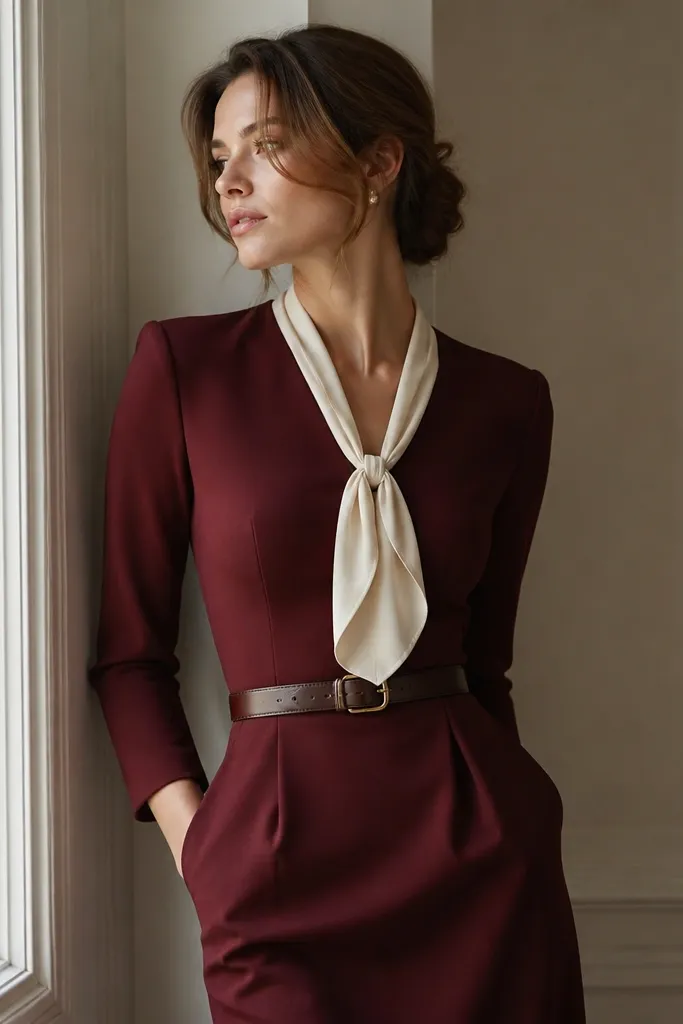
Forest green reads formal and grown-up, and it pairs beautifully with gold when the gold is muted and slightly warm. The tie becomes the focal point, so it helps to keep everything else clean and tailored. I like this outfit for winter weddings because it looks rich without being as loud as brighter greens. The waistcoat connects the jacket line to the tie line, which makes the silhouette look fitted. Choose a suit with a fitted waistcoat and defined jacket waist so the gold tie does not draw attention to a loose midsection. Use a half-Windsor with a 7-centimetre gold tie for a balanced knot. Wear dark brown leather shoes and a belt in the same shade.
Good to knowPick a gold pocket-square detail that matches the tie tone if you add one; inconsistency shows quickly.
Choose a dress with a fitted waist seam or belt placement so the cream tie doesn’t pull attention to a loose midsection. Use a half-Windsor with a 7 cm cream tie for a balanced knot. Wear dark brown leather shoes and a belt in the same shade.
Common mistakeAvoid bright white ties against oxblood; it looks like a bad contrast under tungsten lights.